


Abstract
Low-moisture meat analogs (LMMAs) typically exhibit highly expanded structures with large air cells, which differ from the dense and fibrous architecture observed in high-moisture systems. This study investigated the role of isolated pea protein (IPP) in extrusion-induced protein gelation and gel-like network formation in LMMAs produced by low-moisture extrusion. By partially substituting isolated soy protein (ISP) with IPP, changes in expansion behavior, protein network structure, and gel-related physicochemical properties were systematically evaluated. Increasing IPP content markedly reduced expansion and air-cell size, leading to the formation of a dense and continuous gel-like protein network with enhanced fibrous alignment. At IPP substitution levels of 20–30%, the extrudates exhibited gel structures and fibrous characteristics comparable to those of high-moisture meat analogs. As IPP incorporation increased, water holding capacity, springiness, and cohesiveness declined, while mechanical resistance parameters, including chewiness, cutting strength, and integrity index, progressively increased, indicating gel network densification. Nitrogen solubility index analysis further revealed distinct protein denaturation and gelation behaviors between IPP- and ISP-based systems. These results demonstrate that controlled incorporation of IPP effectively modulates extrusion-induced gelation and gel network architecture in low-moisture meat analogs, providing mechanistic insights into gel-based structuring strategies for plant-based meat systems.
1. Introduction
Ongoing population growth and rising incomes worldwide have driven a steady increase in global meat consumption. Current global meat production exceeds 350 million metric tons annually, and demand is projected to rise by 15% by 2031 [1]. The United Nations Department of Economic and Social Affairs predicts that by 2050, the global meat supply gap could exceed 38 million metric tons [2]. To meet this growing demand, the livestock industry expands, contributing significantly to environmental degradation. It is responsible for approximately 14.5% of anthropogenic greenhouse gas emissions (primarily methane and nitrous oxide), is a leading cause of deforestation (as land is cleared for pasture and feed crops), occupies about 77% of global agricultural land (including pasture and feed crops), and is a major driver of deforestation and freshwater consumption [3,4]. These impacts pose serious challenges to planetary health and sustainability. In parallel, consumers increasingly restrict meat consumption due to health, ethical, and societal considerations, driving a rising demand for meat alternatives [5]. As a result, meat alternatives formulated from plant-derived proteins have emerged as prominent alternative protein systems. However, widespread adoption hinges not only on nutritional and environmental merits but also on successfully replicating the complex sensory experience of meat, particularly its texture, flavor, and mouthfeel, which are critical for consumer liking and emotional connection to food. In this context, “artificial meat” has been proposed as a sustainable and efficient food category capable of contributing to structural changes in global meat consumption patterns [6].
For several decades (since the 1960s–1970s), soybean and wheat proteins have been widely utilized as primary protein sources in meat analog formulations [7]. Wheat is commonly applied in the form of gluten, an insoluble protein obtained as a byproduct of wheat starch processing. Because of its adhesive characteristics, film-forming ability upon hydration, and thermal stability, wheat gluten functions as an effective binder in meat analog systems [8]. However, wheat gluten exhibits limitations associated with an imbalanced amino acid composition [7]. Isolated soy protein (ISP), extracted from soybeans, is now the most extensively used ingredient in manufacturing meat alternative due to its excellent hydration capacity and functionality as a thickening agent [8]. Despite these advantages, ISP is also associated with drawbacks, including characteristic soy-derived off-flavors [9]. These limitations have prompted growing interest in alternative plant proteins that can partially or fully replace ISP and wheat gluten in meat analog formulations.
Among potential alternatives, pea, mung bean, and peanut proteins have received increasing attention. Peas (Pisum sativum L.), the fourth most widely cultivated legume crop worldwide [10], contain approximately 15–30% protein on a dry basis, primarily composed of globulin and albumin storage proteins [11]. Pea protein is considered favorable due to its low association with genetically modified organisms, hypoallergenic potential, and relatively high lysine content [12,13]. In addition, peas contribute to sustainable agriculture through biological nitrogen fixation, reducing the need for synthetic fertilizers and associated environmental impacts. Recent studies have explored the structural modification and application of pea protein in meat analog systems. Schreuders et al. [14] reported that blending isolated pea protein with wheat gluten enabled the formation of fibrous meat analogs exhibiting matrix strength comparable to cooked chicken. Furthermore, pea protein has been shown to form muscle-like fibrous structures at high moisture levels, highlighting its suitability as a raw material for fibrous meat analog development [15]. Nevertheless, pea protein is also known to exhibit relatively weak gelation behavior under high-temperature processing conditions, which presents challenges for structure formation during extrusion processing [16].
Meat analogs are typically produced by applying thermal and mechanical energy to plant proteins to mimic the texture of animal muscle fibers. Various structuring techniques, including spinning [17], extrusion [15], and freeze structuring [18], have been employed to transform plant proteins into meat-like architectures. Among these, extrusion cooking is the most widely adopted processing method. Extrusion cooking induces physical and chemical modifications of globular plant proteins through combined effects of heat, pressure, and shear, thereby enabling protein texturization and structure formation [19]. Compared to other processing techniques, extrusion is highly efficient and cost-effective, as multiple unit operations can be integrated into a single continuous process. Extrusion-based meat analog production is generally classified into low- and high-moisture extrusion cooking, which differ primarily in feed moisture content and the presence of a cooling die. During low-moisture extrusion cooking, protein melts undergo rapid expansion upon exiting the die, forming layered and cross-linked structures with large and numerous pores that require rehydration prior to consumption [20]. In contrast, high-moisture extrusion utilizes a cooling die to suppress expansion, thereby promoting phase separation and fiber alignment, resulting in dense and anisotropic fibrous structures [14,21].
Extrusion processing further enables modulation of meat analog structure and properties through control of operational parameters such as moisture content, screw speed, and barrel temperature. Moisture content critically impacts on the rheological behavior and cooking performance of protein-based dough systems [22,23,24], with optimal levels required to facilitate protein hydration, starch plasticization, and stable melt flow [25]. Barrel temperature governs protein denaturation and molecular rearrangement, thereby affecting gelation behavior, network formation, and structural integrity. Elevated temperatures promote protein unfolding and aggregation, leading to firmer and more cohesive structures [26,27]. Screw speed determines residence time and shear intensity within the extruder; increased screw speeds enhance protein deformation and alignment, which can contribute to improved texturization and network development [24]. Despite extensive use, ISP-based low-moisture meat analogs (LMMAs) often exhibit highly expanded structures characterized by large and numerous pores and limited fibrous organization, indicating a need for structural improvement.
Based on the distinct physicochemical properties of IPP compared to ISP, we hypothesized that incorporating IPP into low-moisture extrusion formulations would modulate extrusion-induced gelation, suppress excessive expansion, and promote the formation of a denser, more fibrous gel-like network, thereby improving the textural properties and structural integrity of LMMAs. Therefore, the goal of this study is to explore the effects of isolated pea protein (IPP) incorporation and extrusion operational parameters on protein gelation behavior and gel-like network formation in LMMAs produced by low-moisture extrusion cooking. By partially substituting ISP with IPP and systematically varying processing conditions, the physicochemical and textural properties of IPP-based LMMAs were evaluated to elucidate structure–property relationships and address structural limitations inherent to conventional low-moisture extrusion systems.
2. Results and Discussion
2.1. Proximate Composition and Amino Acid
Table 1 summarizes the proximate composition of the raw materials used for LMMA production, while Table 2 presents the amino acid profiles of isolated soy protein (ISP) and isolated pea protein (IPP). Compared with ISP, IPP exhibited a relatively higher carbohydrate content but lower levels of crude protein, crude ash, and crude fat. These compositional differences are expected to influence protein hydration, melt rheology, and subsequent gelation behavior during low-moisture extrusion, thereby affecting the physicochemical and textural properties of the resulting meat analog systems. Wheat gluten showed high crude protein and carbohydrate contents, which are known to enhance the development of cohesive and viscoelastic matrices during LMMA processing through extensive protein–protein interactions [5]. In addition, corn starch, characterized by a carbohydrate content of 90.44%, is commonly incorporated as a binder in meat analog formulations due to its strong water holding capacity, which enhances intermolecular cohesion and contributes to the stabilization of composite protein networks [28]. Other constituents were detected only in trace amounts.
Table 1.
Proximate composition (PC) of the raw materials for manufacturing LMMA.
Table 2.
Comparative amino acid composition of isolated soy and pea proteins.
Amino acid analysis revealed that IPP contained a lower total amino acid content than ISP, with a notably reduced level of cysteine. Cysteine, a sulfur-bearing amino acid, is essential for the formation of disulfide linkages, which is a key mechanism governing protein aggregation and gel network stabilization during thermal and mechanical processing. Previous studies have shown that higher cysteine availability facilitates intermolecular disulfide crosslinking, leading to enhanced protein aggregation and network strength [29]. Accordingly, the relatively low cysteine content of IPP suggests a reduced potential for disulfide-mediated crosslinking during extrusion, which may result in a comparatively less stable protein gel network. This compositional characteristic is expected to influence extrusion-induced gelation behavior and the structural development of IPP-based low-moisture meat analogs.
2.2. Appearance and Microstructure
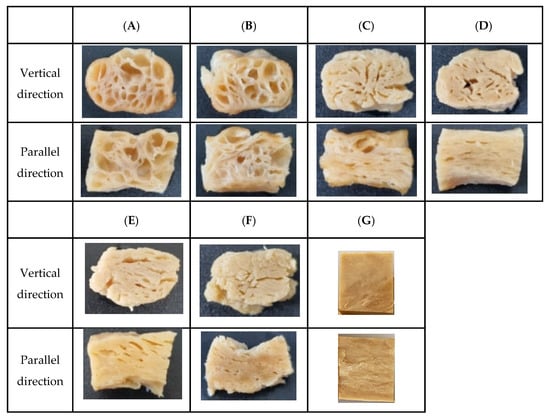
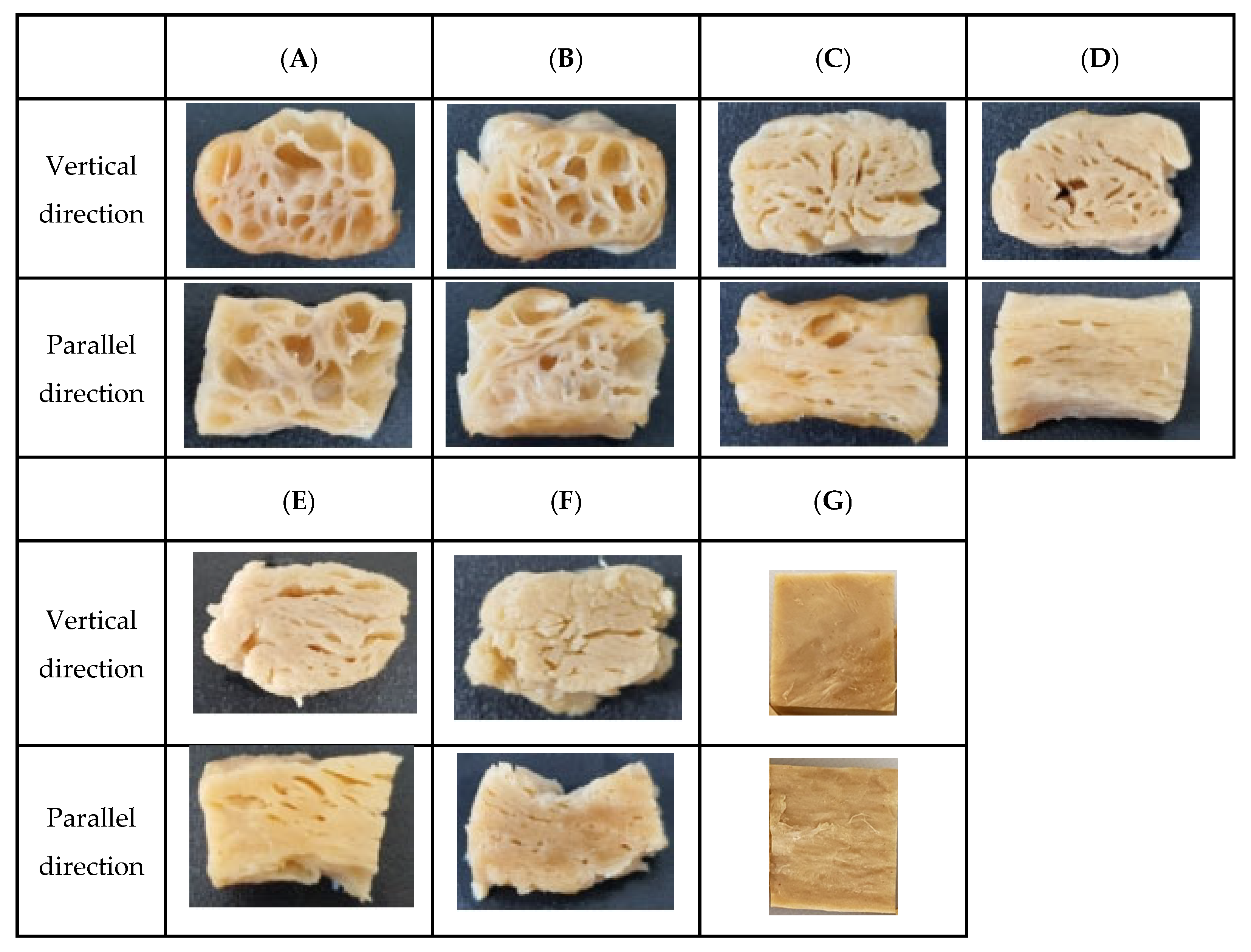
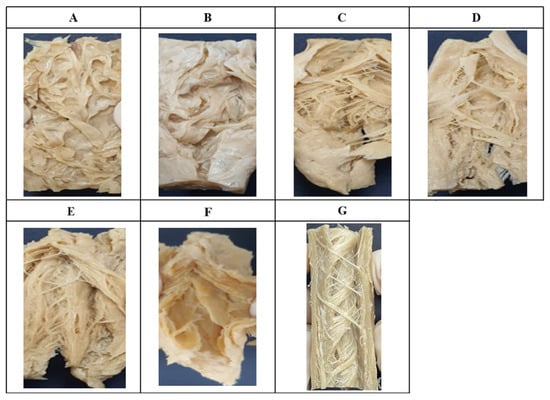
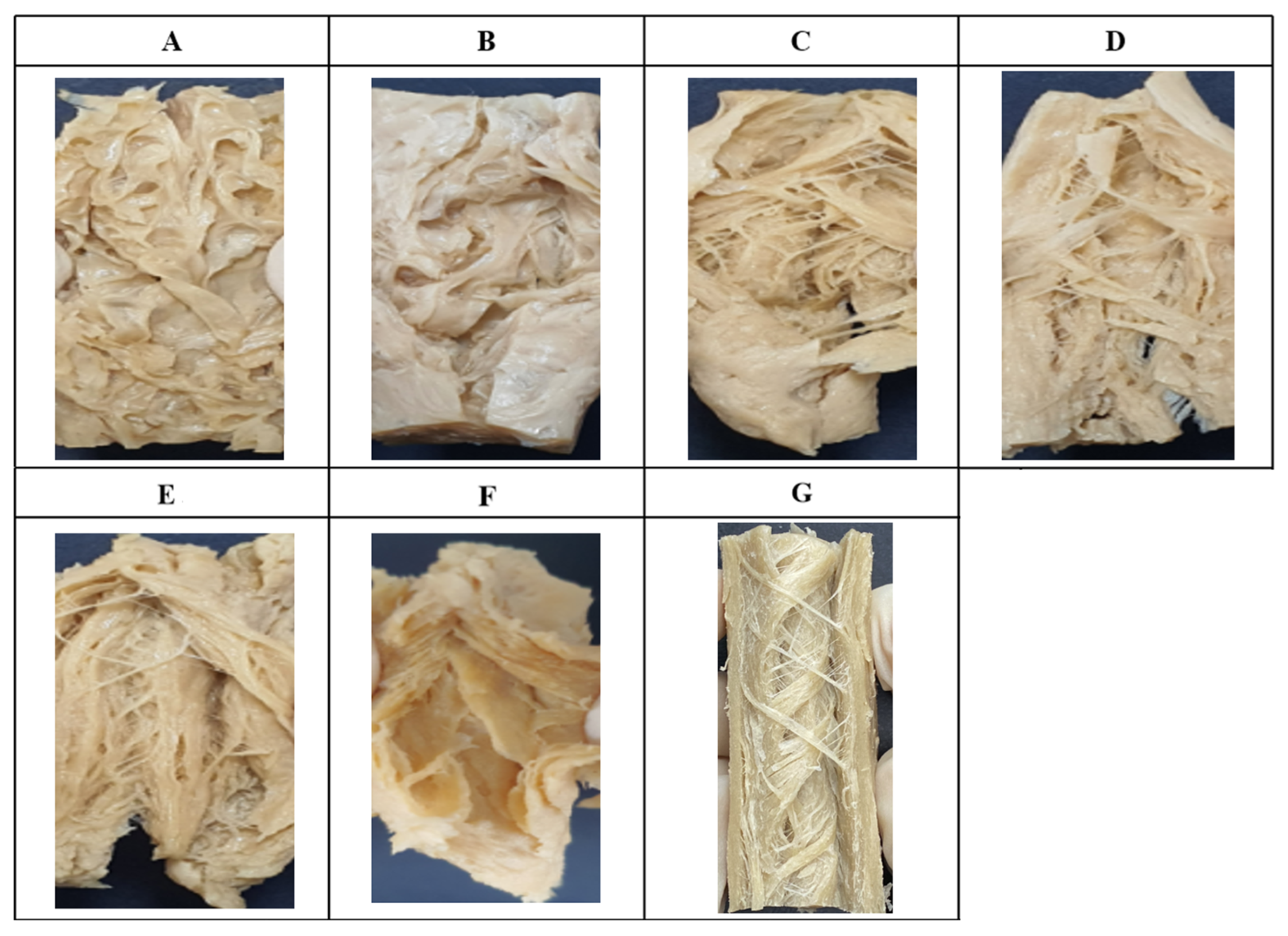
Figure 1 illustrates the vertical and parallel cross-sections of low-moisture meat analogs (LMMAs) prepared with different blending ratios of isolated soy protein (ISP) and isolated pea protein (IPP), together with a high-moisture meat analog (HMMA). The corresponding fibrous structures are shown in Figure 2. Pronounced differences in macroscopic appearance were observed as the proportion of IPP increased. As shown in Figure 1A–F, the internal structure of LMMAs exhibited varying degrees of expansion characterized by the presence of air cells. During low-moisture extrusion cooking (LMEC), the molten protein matrix undergoes rapid expansion and contraction upon exiting the die due to the steep pressure and temperature gradients between the barrel and the ambient environment, resulting in the formation of air cells within the extrudates [30]. As IPP content increased, air-cell size and frequency progressively declined, accompanied by enhanced fibrous organization within the LMMA. When the IPP content approached that of ISP, the fibrous structure became most pronounced (Figure 2C,D). However, further increases in IPP content led to a reduction in fibrous definition, as observed in Figure 2E,F. Similar compositional effects on meat analog appearance have been reported when varying the proportions of ISP and wheat gluten, indicating that raw material composition strongly influences structural development during extrusion [8]. Compared with HMMA (Figure 2G), LMMAs containing higher levels of IPP (Figure 2C–E, except Figure 2F) exhibited fibrous morphologies that more closely resembled those of dense, anisotropic protein systems. Previous studies have reported that ISP-dominant LMMAs typically display larger and more numerous pores, whereas HMMAs are characterized by compact fibrous structures with fewer air cells [30]. These observations suggest that structural differences arise from both the extrusion moisture regime and the intrinsic gelation behavior of the protein components. In the present study, LMMAs containing 30% IPP exhibited a fibrous architecture most comparable to that of HMMAs and real meat. This indicates that through IPP incorporation, the structure of our LMMAs shifts away from the highly porous, sponge-like texture typical of many commercial, ISP-dominated low-moisture extrudates, towards a denser, more meat-like fibrous structure.
Figure 1.
Cross-section of meat analog according to ISP and IPP ratios change. (A): ISP:IPP = 50:0, (B): 40:10, (C): 30:20, (D): 20:30, (E): 10:40, (F): 0:50, (G): high-moisture meat analog.
Figure 2.
The fibrous structure of meat analog according to ISP and IPP ratios change. (A): ISP:IPP = 50:0, (B): 40:10, (C): 30:20, (D): 20:30, (E): 10:40, (F): 0:50, (G): high-moisture meat analog.
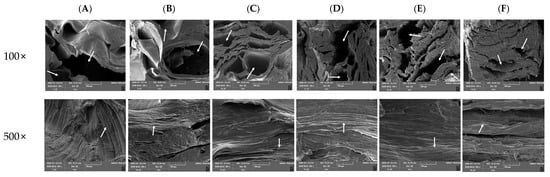
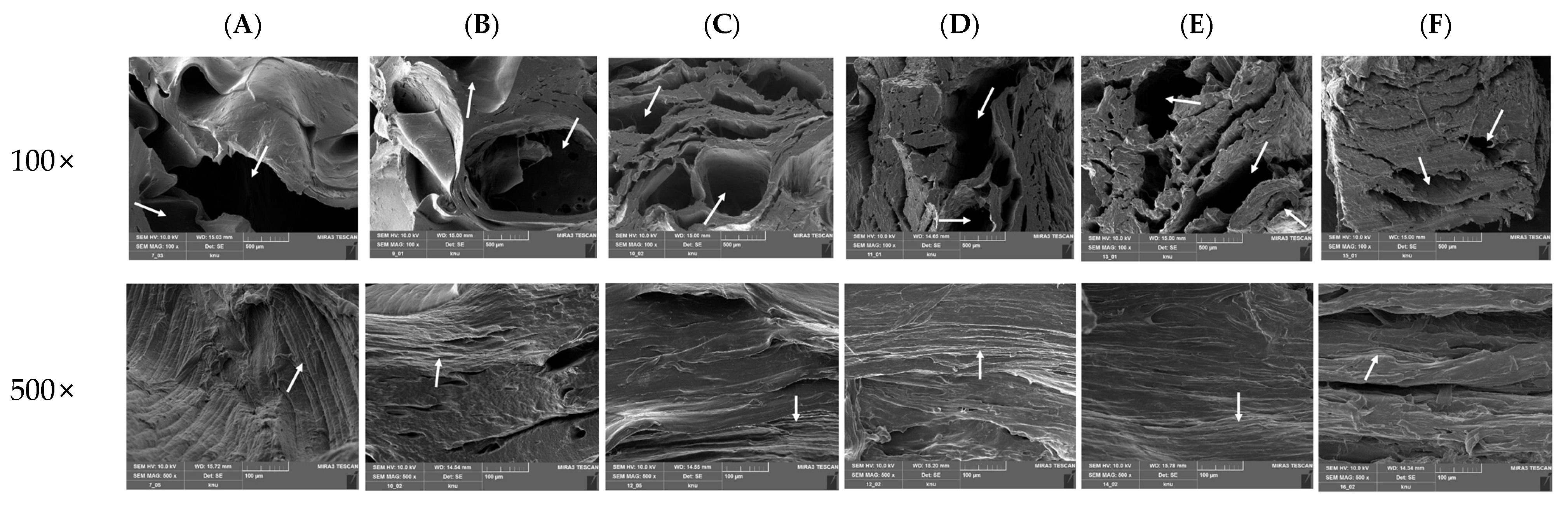
Internal microstructural features and fiber development of the extrudates were further analyzed using scanning electron microscopy. Figure 3 presents SEM images of LMMAs prepared with different IPP contents. At 100× magnification, arrows indicate representative pores within the extrudate cross-sections. Observations of the parallel sections at 100× magnification revealed a progressive decrease in pore volume as IPP content increased from 0% to 50%. A pronounced reduction in pore size and distribution was observed when the IPP content increased from 20% to 30%, as shown in Figure 3C,D. At higher magnification (500×; Figure 3C–F), arrows highlight the aligned and continuous protein networks, illustrating the development of a more organized and compact microstructure with reduced voids as IPP content increased. These microstructural features are consistent with the denser fibrous structures observed at the macroscopic scale in Figure 2. These results indicate that IPP incorporation promotes extrusion-induced protein gelation and network densification, thereby suppressing expansion and enhancing structural continuity.
Figure 3.
Scanning electron microscope (SEM) of extruded meat analog according to ISP and IPP ratios change. (A): ISP:IPP = 50:0, (B): 40:10, (C): 30:20, (D): 20:30, (E): 10:40, (F): 0:50.
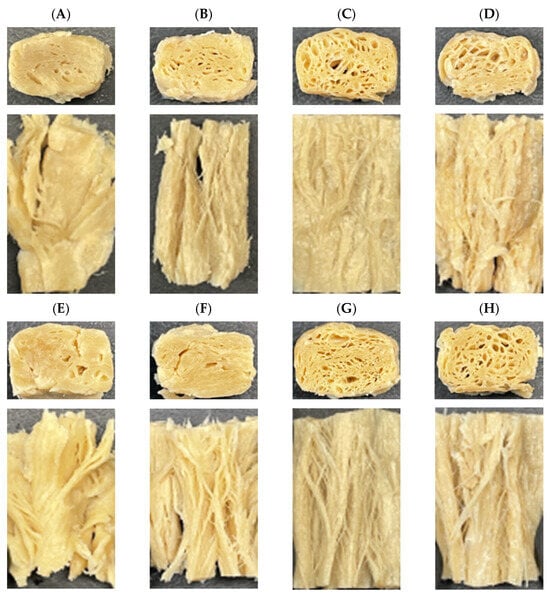
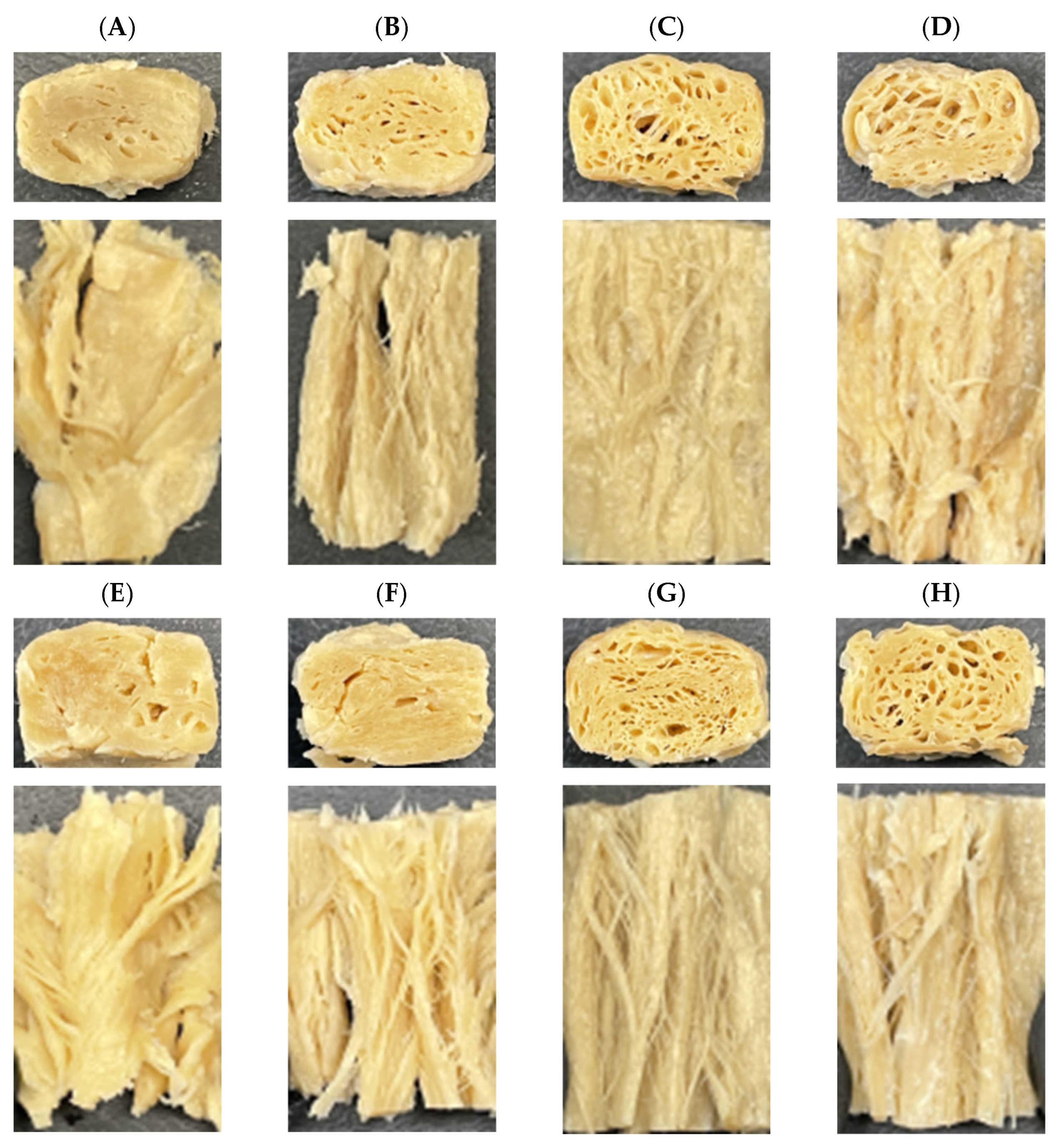
The influence of operational parameters of extruder on the cross-sectional morphology and fibrous structure of LMMAs containing 30% IPP is shown in Figure 4. Moisture content, barrel temperature, and screw speed significantly influenced expansion behavior and fiber development during low-moisture extrusion. Higher moisture levels were associated with fewer and smaller air cells, alongside enhanced development of fibrous structures, a trend attributable to reduced moisture flash-off at the die exit and improved melt flow under increased hydration. Increases in barrel temperature and screw speed further enhanced fibrous development, reflecting intensified protein denaturation, molecular alignment, and gel network formation under elevated thermal and mechanical energy inputs.
Figure 4.
Cross section and fibrous structure of LMMA according to extrusion operational parameters (moisture content-35, 40%; barrel temperature-140, 160 °C; screw speed-200, 300 rpm). (A) 35% 140 °C 200 rpm; (B) 35% 140 °C 300 rpm; (C) 35% 160 °C 200 rpm; (D) 35% 160 °C 300 rpm; (E) 40% 140 °C 200 rpm; (F) 40% 140 °C 300 rpm; (G) 40% 160 °C 200 rpm; (H) 40% 160 °C 300 rpm.
2.3. Water Holding Capacity
Water-holding behavior in extruded samples depends on pore characteristics and the availability of hydrophilic sites within the protein network. Larger and more open pore structures provide increased surface area for water retention during rehydration, resulting in higher WHC values. Previous studies have reported that meat analogs with expanded structures and large pores exhibit enhanced water absorption capacity [31]. As shown in Table 3, the WHC of LMMAs decreased progressively from 5.14 g/g to 2.01 g/g with increasing IPP content. This trend is consistent with earlier findings [32], which demonstrated that ISP-based LMMAs typically possess highly expanded, sponge-like structures with uneven pore distribution, as observed in Figure 1A,B. Such structures promote extensive protein–water interactions and contribute to higher WHC values [32]. In contrast, IPP-based LMMAs exhibited denser and more compact fibrous architectures (Figure 1C–F), characterized by reduced pore size and number, which limited the surface area accessible for water entrapment and resulted in lower WHC.
Table 3.
Water holding capacity and integrity index of meat analogs according to ISP and IPP ratios change.
Correlation analysis further revealed a strong positive relationship between WHC and elasticity-related textural parameters (r = 0.833, p < 0.01; Table 4), indicating that structural features governing pore expansion and elastic recovery also influence water retention behavior. As summarized in Table 1, differences in the proximate composition of ISP and IPP, particularly in protein, carbohydrate, and lipid contents, affect melt rheology and intermolecular binding forces during extrusion. Moreover, compositional differences in the dominant storage proteins, globulins in soybeans and vicilins in peas, have been reported to induce distinct gelation behaviors and network formation characteristics [33]. These protein-specific interactions contribute to variations in gel network density and connectivity, ultimately governing the water-holding performance of the resulting meat analog systems. The influences of the operational variables on the WHC of LMMAs containing 30% IPP are summarized in Table 5. Increasing moisture content caused a decrease in WHC, which can be attributed to reduced water evaporation at the die exit under higher hydration conditions, leading to diminished expansion and a less porous internal structure. Conversely, higher barrel temperatures and screw speeds enhanced WHC. Elevated thermal and mechanical energy inputs promote protein denaturation, molecular rearrangement, and partial network opening, thereby increasing the capacity of the gel matrix to entrap water. These trends are consistent with the cross-sectional observations shown in Figure 3, where changes in air-cell size and distribution reflected the combined effects of processing conditions on gel network structure.
Table 4.
Correlation analysis of physicochemical and textural parameters.
Table 5.
Extrusion-parameter effects on water holding capacity, integrity index, and nitrogen solubility index.
2.4. Textural Characteristics and Cutting Resistance
Springiness describes the capacity of a material to recover its initial shape after deformation, cohesiveness represents resistance to structural breakdown under applied stress, and chewiness reflects the energy required to masticate a sample [34]. Cutting strength is defined as the force per unit area required to fracture a meat analog structure [35]. Table 6 presents the textural properties and cutting strength of LMMAs formulated with varying IPP contents. At low IPP substitution levels (0% and 10%), LMMAs exhibited significantly higher springiness and cohesiveness compared with samples containing higher IPP contents (20–50%), whereas no significant differences were observed among LMMAs within the higher IPP range. In contrast, chewiness followed an opposite trend, with significantly higher values observed at increased IPP contents. This behavior can be attributed to progressive changes in the underlying protein gel network. Increasing IPP incorporation promoted the formation of denser and more compact fibrous structures, which reduced elastic recovery and cohesive deformation while increasing resistance to fracture and mastication. Beyond a critical IPP content, further increases did not result in significant changes in cohesiveness or chewiness, indicating saturation of gel network densification. As IPP content increased, the viscosity of the melt decreased due to the relatively weaker gelation behavior of IPP compared with ISP, leading to suppressed expansion and the formation of a compact gel-like structure, as shown in Figure 1. Consistent with these observations, correlation analysis revealed strong positive relationships between springiness and cohesiveness (r = 0.870, p < 0.01), while chewiness exhibited significant negative correlations with springiness (r = −0.643, p < 0.01) and cohesiveness (r = −0.640, p < 0.01) (Table 4).
Table 6.
Textural characteristics and cutting resistance of meat analogs according to ISP and IPP ratios change.
When the IPP content reached 30%, cutting strength attained its maximum values in both the vertical and parallel directions (774.33 g/cm2 and 497.84 g/cm2, respectively). Previous studies have reported that meat analogs with larger pores and greater internal voids require lower cutting energy due to structural discontinuities [23]. In agreement with this mechanism, cutting strength in the present study showed strong negative correlations with WHC (vertical: r = −0.917, p < 0.01; parallel: r = −0.877, p < 0.01) and springiness (vertical: r = −0.757, p < 0.01; parallel: r = −0.772, p < 0.01), indicating that reduced porosity and elastic recovery are associated with increased mechanical resistance. Furthermore, previous work has shown that harder meat analogs require greater cutting force [30], which is consistent with the strong positive correlations observed between cutting strength and chewiness in both directions (vertical: r = 0.905, p < 0.01; parallel: r = 0.907, p < 0.01). The effects of extrusion operational parameters on TPA parameters and cutting strength of LMMAs containing 30% IPP are presented in Table 7. Springiness and cohesiveness were not significantly influenced (p > 0.05) by variations in moisture or barrel temperature, whereas increasing screw speed led to enhanced elastic recovery and cohesiveness, likely due to intensified shear-induced molecular alignment. Chewiness reached its minimum at 35% moisture content, 140 °C barrel temperature, and 200 rpm screw speed and increased under higher moisture, temperature, and screw speed conditions. Cutting strength increased with moisture content, barrel temperature, and screw speed, reflecting progressive stiffening of the gel network under elevated thermal and mechanical energy inputs. Although IPP-based LMMAs exhibited structural response trends similar to those reported for ISP-based systems, the magnitude of textural changes induced by processing parameters was comparatively limited. This suggests that while IPP incorporation improves fibrous gel network formation, the tunable processing window for mechanical property modulation in IPP-based LMMAs may be narrower.
Table 7.
Texture profile analysis and cutting strength of LMMA according to extrusion operational parameters.
2.5. Integrity Index
The integrity index is a critical characteristic reflecting the structural stability of the extruded samples and is defined as the residual fraction remaining after sequential hydration, thermal treatment, mechanical dispersion, and drying [30]. This parameter provides an indirect measure of the resistance of the protein gel network to combined thermal and mechanical stresses. Table 3 indicates a progressive increase in the integrity index of LMMAs, rising from 62.62% to 80.61% as IPP content increased. This enhancement can be attributed to the formation of denser and more continuous fibrous gel networks in LMMAs containing higher levels of IPP, which improved resistance to high temperature, pressure, and homogenization. Consistent with these findings, previous studies have demonstrated that highly expanded meat analogs with low fiber content exhibit reduced integrity indices, whereas denser structures with limited expansion show enhanced structural stability [24]. These observations indicate that expansion degree and gel network density are key determinants of integrity retention.
Correlation analysis further supported this interpretation. As summarized in Table 5, the integrity index exhibited significant positive correlations with chewiness (r = 0.639, p < 0.01) and cutting strength in both the vertical (r = 0.776, p < 0.01) and parallel (r = 0.745, p < 0.01) directions, suggesting that increased gel network stiffness and mechanical resistance contribute directly to higher integrity values. Differences in intrinsic gelation behavior between soy and pea proteins may also account for these trends. Previous work reported that the minimum gelation concentration of soy protein (12%) is lower than that of pea protein (14%), indicating a higher gelation threshold for pea protein systems [36]. Such differences influence melt flow behavior, protein aggregation, and network consolidation during extrusion, thereby affecting hardness and the ability of the gel matrix to maintain structural integrity under imposed thermal and mechanical forces.
The impact of extrusion operational variables on the integrity index of LMMAs containing 30% IPP are presented in Table 4. During low-moisture extrusion cooking, increasing moisture content resulted in a decrease in integrity index. Although higher moisture levels reduced expansion and promoted fibrous structure formation (Figure 3), excessive hydration during subsequent thermal treatment and autoclaving led to increased mass loss, ultimately lowering integrity retention. In contrast, barrel temperature and screw speed showed positive correlations with integrity index. Elevated thermal and mechanical energy inputs enhance protein denaturation, intermolecular interactions, and internal binding forces within the gel network, resulting in improved resistance to structural disruption. These results indicate that the integrity index is governed by a balance between gel network densification during extrusion and susceptibility to hydration-induced mass loss during post-processing.
2.6. Nitrogen Solubility Index
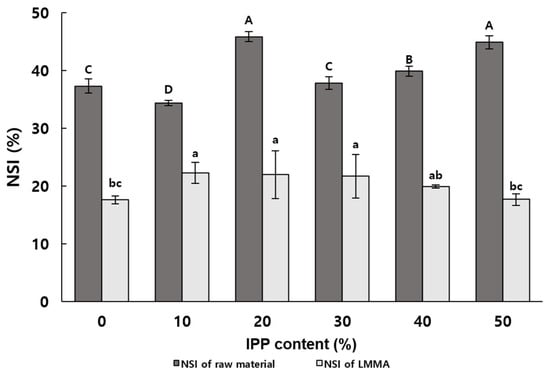
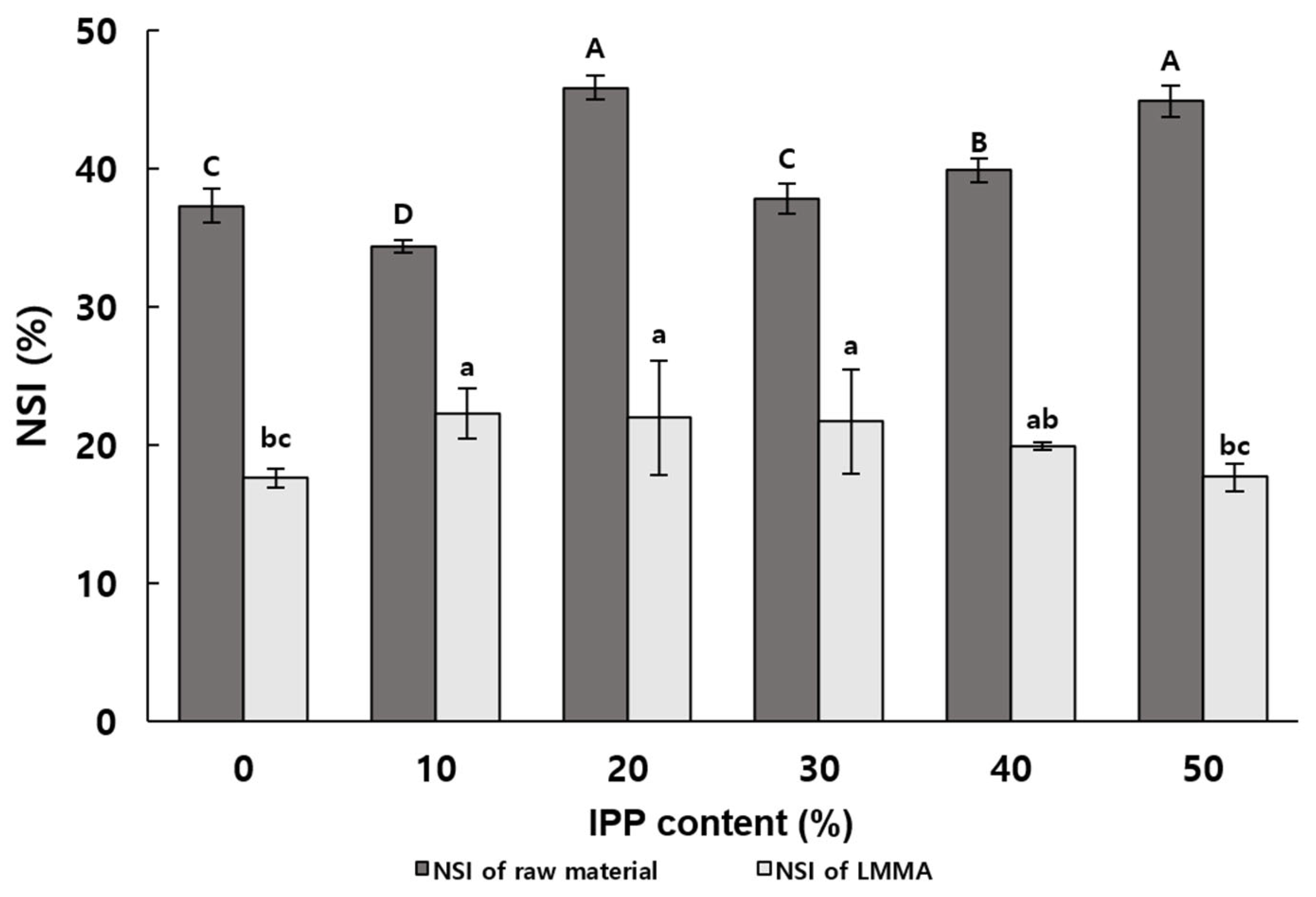
Protein denaturation and aggregation under thermal and mechanical processing can be evaluated through variations in the nitrogen solubility index (NSI) [37]. In extrusion-based meat analog systems, NSI provides insight into the extent of protein unfolding, intermolecular interaction, and gel network formation. Figure 5 presents the variation in NSI of LMMAs as a function of IPP content. The NSI of the raw materials increased with increasing IPP proportion. Despite differences in IPP content, no statistically significant variation in NSI was detected among the extruded LMMAs. At identical IPP levels, the NSI of raw materials was consistently higher than that of the corresponding extrudates. This reduction in NSI after extrusion can be attributed to the combined effects of high temperature, pressure, and shear forces acting on protein molecular chains, which promote aggregation, cleavage, and molecular rearrangement, thereby enhancing texturization and reducing protein solubility [23,31,38]. Comparison of raw materials containing 0% and 50% IPP revealed a higher NSI at 50% IPP, indicating that IPP possesses a greater fraction of water-soluble nitrogenous components than ISP. When the NSI results of the extruded samples were interpreted in conjunction with the macroscopic and microscopic observations (Figure 1 and Figure 2), LMMAs containing 40% and 50% IPP exhibited relatively higher NSI values, which corresponded to increased fiber content and tighter interconnections within the protein matrix. In contrast, LMMAs containing 0–30% IPP showed lower NSI values and more porous, sponge-like structures, suggesting that extensive expansion and discontinuous gel networks were associated with reduced protein solubility. These results indicate that NSI reflects not only protein denaturation but also the balance between network densification and expansion behavior in low-moisture extruded systems.
Figure 5.
Nitrogen solubility index (NSI) of raw materials and low-moisture meat analogs (LMMA) as affected by ISP and IPP ratios. Bars labeled with different uppercase letters (A–D) indicate significant differences among raw materials, whereas lowercase letters (a–c) indicate significant differences among LMMAs (p < 0.05), as determined by Duncan’s multiple range test.
The NSI is further influenced by changes in protein melt behavior during extrusion, which are governed by residence time and the magnitude of thermal and mechanical forces within the barrel. The impacts of extrusion operational variables on the NSI of LMMAs containing 30% IPP are summarized in Table 4. Increasing moisture content and barrel temperature reduced melt viscosity, thereby lowering shear intensity and residence time, which influenced the degree of protein denaturation and aggregation reflected by NSI values. Under low-moisture extrusion conditions, higher screw speeds were associated with reduced NSI values. Elevated screw speeds increase melt viscosity and promote the conversion of mechanical energy into thermal energy through frictional dissipation, intensifying protein denaturation and aggregation [39]. As a result, higher screw speeds favored the formation of less soluble, more extensively crosslinked protein gel networks, leading to reduced NSI values.
3. Conclusions
This study elucidated the role of isolated pea protein (IPP) in extrusion-induced protein gelation and gel-like network formation in low-moisture meat analogs (LMMAs) produced via low-moisture extrusion cooking. By systematically varying IPP content and extrusion operational parameters, the structural, physicochemical, and mechanical properties of IPP-based LMMAs were effectively modulated. Increasing IPP incorporation progressively suppressed expansion behavior, leading to reduced pore size and number and the formation of denser and more continuous fibrous gel networks. The observed structural transition coincided with reduced water holding capacity, springiness, and cohesiveness, together with elevated chewiness, cutting strength, and integrity index, indicating progressive densification and mechanical stabilization of the gel network. Notably, LMMAs containing 20–30% IPP exhibited gel-like fibrous architectures comparable to those of high-moisture meat analogs, indicating an optimal balance between expansion control and network formation under low-moisture conditions. The observed reduction in nitrogen solubility index further confirmed the progression of extrusion-induced protein denaturation, aggregation, and irreversible gel network development with increasing IPP content. Extrusion operational parameters also played a critical role in governing gel structure and functionality. Higher moisture content reduced expansion and integrity retention, whereas elevated barrel temperature and screw speed enhanced protein denaturation, molecular alignment, and internal binding forces, resulting in stiffer and more cohesive gel networks. These findings demonstrate that the gelation behavior and network architecture of IPP-based LMMAs are governed by the combined effects of protein composition and thermomechanical energy input during extrusion. It should be noted that this study primarily focused on microstructure and physicochemical properties; future research incorporating sensory evaluation and nutritional analysis would provide a more comprehensive assessment of product quality and consumer acceptability. Overall, this work provides mechanistic insight into gel-based structuring strategies for low-moisture extruded protein systems and highlights the potential of IPP to modulate extrusion-induced gelation and network formation. The results contribute to a deeper understanding of structure–property relationships in plant protein gels processed under low-moisture extrusion conditions.
4. Materials and Methods
4.1. Materials
Isolated pea protein (IPP), isolated soy protein (ISP), wheat gluten (WG), and corn starch (CS) were used as the primary raw materials in this study. IPP and ISP were obtained from Yantai Shuangta Food Co., Ltd. (Jinling, China) and Pingdingshan Tianjing Plant Albumen Co., Ltd. (Pingdingshan, China), respectively. Wheat gluten was supplied by Roquette Frères (Lestrem, France), while corn starch was provided by Samyang Ltd. (Ulsan, Republic of Korea). These ingredients were selected based on their established use in meat analog production and their distinct functional roles: ISP for its high protein content and gelation properties, WG as a vital viscoelastic binder, IPP as a plant-based protein alternative with different gelling characteristics, and CS as a common binder and texturizer. All materials were food-grade and compliant with relevant safety standards for human consumption.
4.2. Proximate Composition and Amino Acid Profile
The amino acid compositions of isolated soy protein (ISP) and isolated pea protein (IPP) were determined by ion-exchange chromatography with ninhydrin detection. Proximate composition analysis of the raw materials used for meat analog production was performed in accordance with AOAC methods [40]. Moisture content was quantified by atmospheric pressure drying (AOAC 925.10), crude protein by the Kjeldahl method (AOAC 984.13), crude fat by Soxhlet extraction (AOAC 920.39), and crude ash by dry ashing (AOAC 923.03). Carbohydrate content was calculated by difference, based on the subtraction of measured moisture, protein, fat, and ash contents from the total mass.
4.3. Extrusion Process
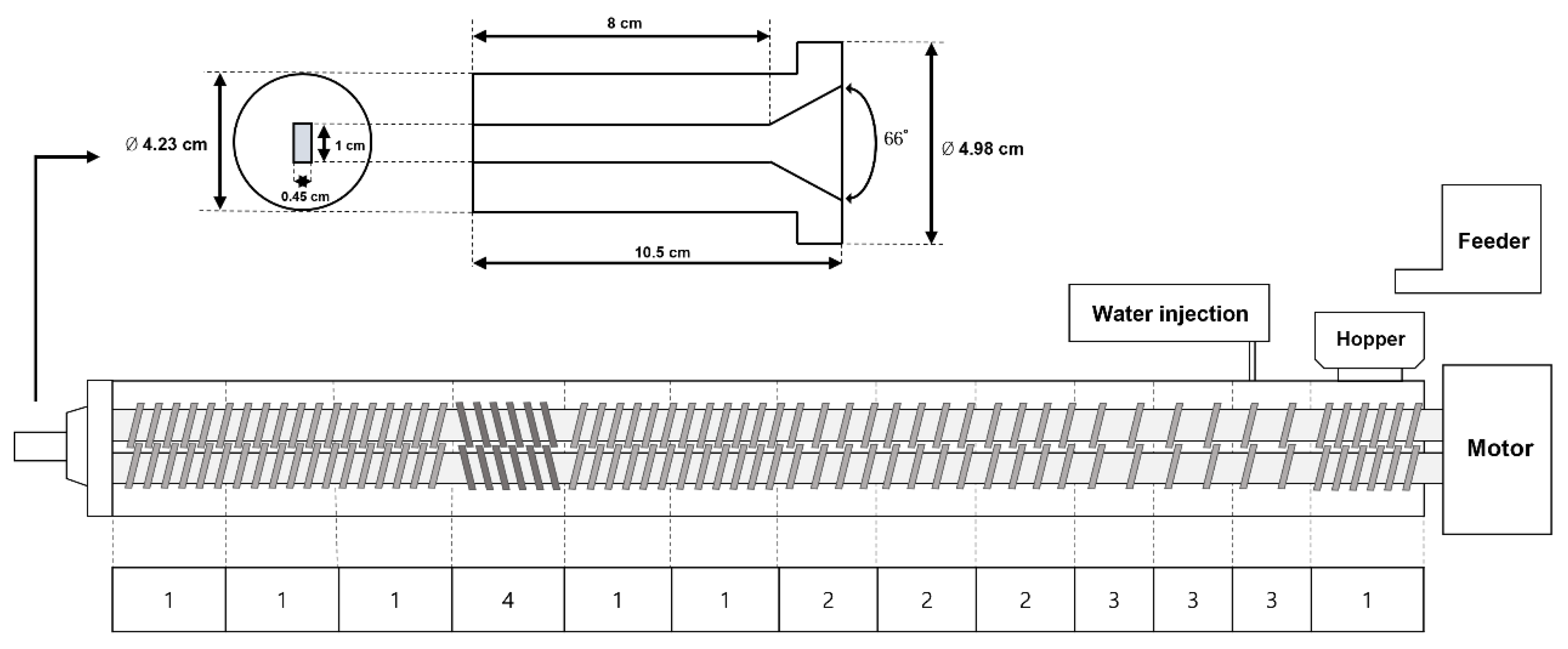
A co-rotating intermeshing twin-screw extruder (THK 31-No. 4, Incheon Machinery Company, Incheon, Republic of Korea) was used for low-moisture extrusion cooking. The extruder was equipped with screws of 3 cm diameter and a length-to-diameter ratio of 23:1, and a narrow-slit die with a length of 8 cm was employed to produce low-moisture meat analogs (LMMAs). A schematic representation of the extruder screw configuration is provided in Figure 6. Two extrusion trials were conducted. Extrusion I was performed to produce LMMAs with different formulation ratios of isolated pea protein (IPP) and isolated soy protein (ISP). Extrusion II was designed as a full 23 factorial experiment to systematically evaluate the main effects and potential interactions of three key operational parameters: moisture content (MC: 35% and 40%), barrel temperature (BT: 140 °C and 160 °C), and screw speed (SS: 200 rpm and 300 rpm). This resulted in 2 × 2 × 2 = 8 unique parameter combinations. The formulation was fixed at IPP:ISP:WG:CS = 30:20:40:10 based on preliminary results from Extrusion I. The formulations and corresponding extrusion conditions applied in both trials are summarized in Table 8. For each formulation ratio in Extrusion I and each parameter combination in Extrusion II, a separate and independent extrusion run was performed starting from dry powder mixing. Approximately 400 g of extrudate was collected per run. From this bulk extrudate, representative samples were randomly selected and cut into ~1 cm pieces for rehydration-based analyses (e.g., WHC, TPA, cutting strength, integrity index, microstructure), while the remainder was ground into powder (50–70 mesh) for NSI analysis. All subsequent physicochemical measurements were performed with at least three analytical replicates per independent extrudate batch. Similarly, for each of the eight parameter combinations in Extrusion II, an independent extrusion run was conducted. From the extrudate of each run, samples were prepared (pieces and powder) for subsequent analyses, and all measurements were performed with at least three analytical replicates.
Figure 6.
Configuration of the low-moisture extrusion setup, including the internal screw layout and die structure.
Table 8.
Formulation and operational parameter settings for extrusion cooking designs I and II.
4.4. Water Holding Capacity (WHC)
The water holding capacity was measured following the methodology outlined by [37]. Eight block-shaped samples were rehydrated in a water bath at 90 °C for 90 min, followed by drainage on a 20-mesh sieve at room temperature for 0.25 h. The water holding capacity (WHC) of LMMAs was determined according to Equation (1), and the reported value represents the mean of three independent measurements.
where Wa is the weight of dried LMMA and Wb is the weight of LMMA after rehydration.
WHC (g/g) = (Wb − Wa)/Wa
4.5. Texture Profile Analysis (TPA) and Cutting Strength
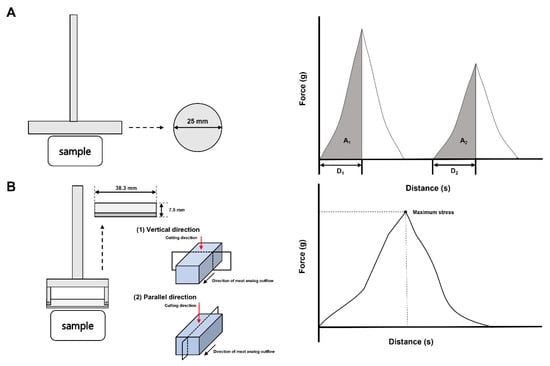
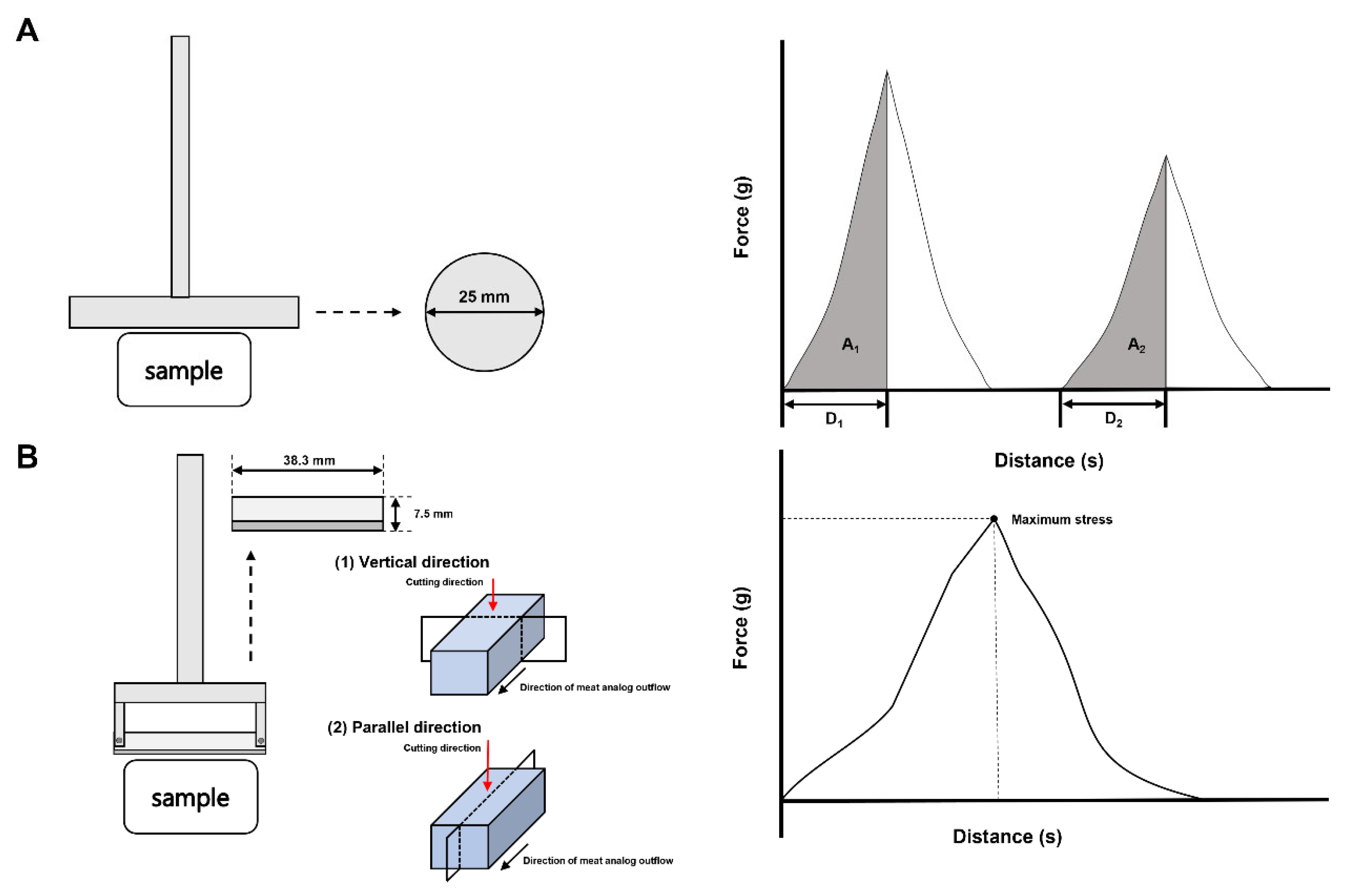
Texture profile analysis and cutting strength of the meat analogs were measured using a texture analyzer (Compac-100II, Sun Sci. Co., Tokyo, Japan) to digitally characterize the texture features. The standards and diagrams for the probes used in the measurements are detailed in Figure 7. Block-shaped LMMA was drained on a 20-mesh sieve at room temperature for 15 min after being immersed in water at 90 °C for 90 min. Texture profile analysis was conducted by compressing the rehydrated LMMAs with a cylindrical probe with a diameter of 25 mm. Springiness, cohesiveness, and chewiness were determined at a crosshead speed of 100 mm/min, with a maximum applied load of 10 kg and a fixed compression distance of 20 mm. Cutting strength was evaluated in both the vertical and parallel directions using a blade-type cutting probe (7.5 mm × 38.3 mm), under a maximum load of 10 kg. The textural parameters, including springiness, cohesiveness, and chewiness, were calculated according to Equations (2)–(4), respectively, while cutting strength was determined using Equation (5), following the definitions described in [35].
where D1 represents the compression distance applied during the first cycle, and D2 corresponds to the recovered height measured during the second compression.
where A1 corresponds to the work area obtained during the initial compression cycle, and A2 represents the work area measured during the subsequent compression.
Springiness (%) = D2/D1 × 100
Cohesiveness (%) = A2/A1 × 100
Chewiness (N) = Springiness × Cohesiveness × Hardness
Cutting strength (g/cm2) = Maximum stress/cross sectional area
Figure 7.
Probe type and force-time curves for springiness, cohesiveness, and chewiness (A) and probe type and force-time curves for cutting strength (B). Reprinted with permission from [41].
4.6. Integrity Index
To assess the structural integrity of LMMA under physical forces such as high temperature, high pressure, and homogenization, the method proposed by Samard et al. [30] was employed to determine the integrity index. An amount of 5 g of (dried) LMMA were rehydrated in a water bath at 90 °C for 90 min, followed by heating in an autoclave at 121 °C for 15 min. Subsequently, the LMMA was placed in a 20-mesh sieve and cooled under running water for 30 s. Afterward, residual remnants were rinsed off by homogenizing at 17,450 rpm for 1 min, followed by a 30 s rinse under running water and drying at 105 °C for 12 h. The integrity index was determined using Equation (6), and the average of three experiments was taken as the result.
where Wa is the weight of dried LMMA before the test and Wb is the weight of dried LMMA after the test.
Integrity index (%) = Wb/Wa × 100%
4.7. Nitrogen Solubility Index (NSI)
The NSI of LMMA was determined according to a slightly modified method by Samard et al. [30]. An amount of 0.1 g of LMMA powder was mixed with a 0.5% KOH solution (5 mL) and oscillated at 120 rpm and 30 °C for 0.5 h. After centrifugation (3000 rpm, 0.5 h), an aliquot of the supernatant (0.05 mL) was used for the determination of soluble nitrogen content by the ninhydrin method, as described in [39]. For total nitrogen determination, 0.2 g of LMMA powder was hydrolyzed in 6N HCl (5 mL) at 100 °C for 24 h, followed by dissolution in 10 mL of water. Following centrifugation at 3000 rpm for 0.5 h, an aliquot (0.05 mL) of the supernatant was collected for the determination of total nitrogen content using the ninhydrin assay. The nitrogen solubility index was subsequently calculated using Equation (7).
where Ca is the total nitrogen content of LMMA and Cb is the soluble nitrogen content of LMMA.
NSI (%) = Cb/Ca × 100%
4.8. Microstructure
Scanning electron microscopy (SEM) observations were performed to examine pore and cavity formation at low magnification and to assess the continuity and organization of protein networks at higher magnification. Prior to SEM analysis, the meat analog samples were rehydrated for 90 min in a water bath (90 °C) and subsequently dried at 60 °C for 48 h. The cross-sections of the LMMAs were coated with platinum and examined using a high-resolution scanning electron microscope (MIRA3-LMH; Tescan, Czech Republic) operated at an accelerating voltage of 10 kV. The working distance during image acquisition ranged from 14.34 to 15.78 mm depending on local surface topography and focus adjustment. SEM images were acquired from vertical sections at 100× magnification and from parallel sections at 500× magnification. All SEM images were analyzed in their raw form without applying digital noise removal.
4.9. Statistical Analysis
For statistical treatment of the results, the normality of the data distribution was first verified using the Shapiro–Wilk test. Subsequently, one-way analysis of variance (ANOVA) was performed using the Statistical Package for the Social Science (SPSS, version 26.0) program (IBM-SPSS, Thornwood, NY, USA). Statistical differences among samples were evaluated by one-way analysis of variance (ANOVA). The mean values from the analytical replicates (n ≥ 3) for each independent treatment (i.e., each formulation or process condition) were used as the input data for the ANOVA. Post hoc comparisons were conducted using Duncan’s multiple range test, with statistical significance defined at p < 0.05 and a confidence level of 95%. Relationships among measured variables were assessed by calculating Pearson’s correlation coefficients (r) based on the treatment means.
Author Contributions
Conceptualization, H.-W.C., B.-J.G. and G.-H.R.; methodology, H.-W.C., Y.Z. and B.-J.G.; validation, H.-W.C., Y.L. and H.J.; formal analysis, H.-W.C., Y.Z., Y.L. and H.J.; investigation, H.-W.C. and Y.L.; resources, G.-H.R. and B.-J.G.; data curation, Y.Z., Y.L. and H.J.; writing—original draft preparation, H.-W.C., Y.Z. and B.-J.G.; writing—review and editing, H.-W.C., Y.Z. and B.-J.G.; visualization, H.-W.C. and Y.Z.; supervision, G.-H.R. and B.-J.G.; project administration, G.-H.R. and B.-J.G.; funding acquisition, G.-H.R. and B.-J.G. All authors have read and agreed to the published version of the manuscript.
Funding
This research received no external funding.
Institutional Review Board Statement
Not applicable.
Informed Consent Statement
Not applicable.
Data Availability Statement
The original contributions presented in this study are included in the article. Further inquiries can be directed to the corresponding author.
Conflicts of Interest
The authors declare no conflicts of interest.
References
- OECD/FAO. OECD-FAO Agricultural Outlook 2022–2031; OECD Publishing: Paris, France, 2022. [Google Scholar] [CrossRef]
- United Nations Population Division. World Population Prospects 2019: Highlights; United Nations: New York, NY, USA, 2019. [Google Scholar]
- Gerber, P.J.; Steinfeld, H.; Henderson, B.; Mottet, A.; Opio, C.; Dijkman, J.; Falcucci, A.; Tempio, G. Tackling Climate Change Through Livestock—A Global Assessment of Emissions and Mitigation Opportunities; FAO: Rome, Italy, 2013. [Google Scholar]
- Machovina, B.; Feeley, K.J.; Ripple, W.J. Biodiversity conservation: The key is reducing meat consumption. Sci. Total Environ. 2015, 536, 419–431. [Google Scholar] [CrossRef] [Scilit] [PubMed]
- Asgar, M.A.; Fazilah, A.; Huda, N.; Bhat, R.; Karim, A.A. Nonmeat Protein Alternatives as Meat Extenders and Meat Analogs. Compr. Rev. Food Sci. Food Saf. 2010, 9, 513–529. [Google Scholar] [CrossRef] [Scilit] [PubMed]
- Yuan, X.; Jiang, W.; Zhang, D.; Liu, H.; Sun, B. Textural, Sensory and Volatile Compounds Analyses in Formulations of Sausages Analogue Elaborated with Edible Mushrooms and Soy Protein Isolate as Meat Substitute. Foods 2022, 11, 52. [Google Scholar] [CrossRef] [Scilit] [PubMed]
- Samard, S.; Ryu, G.H. Physicochemical and functional characteristics of plant protein-based meat analogs. J. Food Process. Preserv. 2019, 43, e14123. [Google Scholar] [CrossRef] [Scilit]
- Park, J.H.; Chatpaisarn, A.; Ryu, G.H. Effects of Gluten and Moisture Contents on Texturization of Extruded Soy Protein Isolate. J. Korean Soc. Food Sci. Nutr. 2017, 46, 473–480. [Google Scholar] [CrossRef] [Scilit]
- Lei, Q.; Boatright, W.L. Compounds Contributing to the Odor of Aqueous Slurries of Soy Protein Concentrate. J. Food Sci. 2001, 66, 1306–1310. [Google Scholar] [CrossRef] [Scilit]
- Mertens, C.; Dehon, L.; Bourgeois, A.; Verhaeghe-Cartrysse, C.; Blecker, C. Agronomical factors influencing the legumin/vicilin ratio in pea (Pisum sativum L.) seeds. J. Sci. Food Agric. 2012, 92, 1591–1596. [Google Scholar] [CrossRef] [Scilit]
- Tao, A.; Afshar, R.K.; Huang, J.; Mohammed, Y.A.; Espe, M.; Chen, C. Variation in Yield, Starch, and Protein of Dry Pea Grown Across Montana. Agron. J. 2017, 109, 1491–1501. [Google Scholar] [CrossRef] [Scilit]
- Ge, J.; Sun, C.X.; Corke, H.; Gul, K.; Gan, R.Y.; Fang, Y. The health benefits, functional properties, modifications, and applications of pea (Pisum sativum L.) protein: Current status, challenges, and perspectives. Compr. Rev. Food Sci. Food Saf. 2020, 19, 1835–1876. [Google Scholar] [CrossRef] [Scilit]
- Martínez-Villaluenga, C.; Gulewicz, P.; Frias, J.; Gulewicz, K.; Vidal-Valverde, C. Assessment of protein fractions of three cultivars of Pisum sativum L.: Effect of germination. Eur. Food Res. Technol. 2008, 226, 1465–1478. [Google Scholar] [CrossRef] [Scilit]
- Schreuders, F.K.G.; Dekkers, B.L.; Bodnár, I.; Erni, P.; Boom, R.M.; van der Goot, A.J. Comparing structuring potential of pea and soy protein with gluten for meat analogue preparation. J. Food Eng. 2019, 261, 32–39. [Google Scholar] [CrossRef] [Scilit]
- Osen, R.; Toelstede, S.; Wild, F.; Eisner, P.; Schweiggert-Weisz, U. High moisture extrusion cooking of pea protein isolates: Raw material characteristics, extruder responses, and texture properties. J. Food Eng. 2014, 127, 67–74. [Google Scholar] [CrossRef] [Scilit]
- Webb, D.; Plattner, B.J.; Donald, E.; Funk, D.; Plattner, B.S.; Alavi, S. Role of chickpea flour in texturization of extruded pea protein. J. Food Sci. 2020, 85, 4180–4187. [Google Scholar] [CrossRef] [Scilit] [PubMed]
- Joshi, K.; Shabani, E.; Kabir, S.M.F.; Zhou, H.; McClements, D.J.; Park, J.H. Optimizing Protein Fiber Spinning to Develop Plant-Based Meat Analogs via Rheological and Physicochemical Analyses. Foods 2023, 12, 3161. [Google Scholar] [CrossRef] [Scilit] [PubMed]
- Dekkers, B.L.; Boom, R.M.; van der Goot, A.J. Structuring processes for meat analogues. Trends Food Sci. Technol. 2018, 81, 25–36. [Google Scholar] [CrossRef] [Scilit]
- Singh, S.; Gamlath, S.; Wakeling, L. Nutritional aspects of food extrusion: A review. Int. J. Food Sci. Technol. 2007, 42, 916–929. [Google Scholar] [CrossRef] [Scilit]
- Malav, O.P.; Talukder, S.; Gokulakrishnan, P.; Chand, S. Meat Analog: A Review. Crit. Rev. Food Sci. Nutr. 2015, 55, 1241–1245. [Google Scholar] [CrossRef] [Scilit]
- Wittek, P.; Ellwanger, F.; Karbstein, H.P.; Emin, M.A. Morphology Development and Flow Characteristics during High Moisture Extrusion of a Plant-Based Meat Analogue. Foods 2021, 10, 1753. [Google Scholar] [CrossRef] [Scilit]
- Guerrero, P.; Beatty, E.; Kerry, J.P.; de la Caba, K. Extrusion of soy protein with gelatin and sugars at low moisture content. J. Food Eng. 2012, 110, 53–59. [Google Scholar] [CrossRef] [Scilit]
- Lin, S.; Huff, H.E.; Hsieh, F. Extrusion Process Parameters, Sensory Characteristics, and Structural Properties of a High Moisture Soy Protein Meat Analog. J. Food Sci. 2002, 67, 1066–1072. [Google Scholar] [CrossRef] [Scilit]
- Zhang, Y.; Ryu, G.H. Effects of Process Variables on the Physicochemical, Textural, and Structural Properties of an Isolated Pea Protein-Based High-Moisture Meat Analog. Foods 2023, 12, 4413. [Google Scholar] [CrossRef] [Scilit] [PubMed]
- Li, R.; Wang, C.; Wang, Y.; Xie, X.; Sui, W.; Liu, R.; Wu, T.; Zhang, M. Extrusion Modification of Wheat Bran and Its Effects on Structural and Rheological Properties of Wheat Flour Dough. Foods 2023, 12, 1813. [Google Scholar] [CrossRef] [Scilit] [PubMed]
- Choi, S.M.; Ma, C.Y. Conformational Study of Globulin from Common Buckwheat (Fagopyrum esculentum Moench) by Fourier Transform Infrared Spectroscopy and Differential Scanning Calorimetry. J. Agric. Food Chem. 2005, 53, 8046–8053. [Google Scholar] [CrossRef] [Scilit] [PubMed]
- Zhou, L.; Yang, Y.; Ren, H.; Zhao, Y.; Wang, Z.; Wu, F.; Xiao, Z. Structural Changes in Rice Bran Protein upon Different Extrusion Temperatures: A Raman Spectroscopy Study. J. Chem. 2016, 2016, e6898715. [Google Scholar] [CrossRef] [Scilit]
- Chen, Q.; Wang, S.; Meng, S.; Wang, Q. Effects of two types of corn starches on physicochemical and structural properties of red bean protein isolate acid-induced cold gels. J. Food Eng. 2024, 381, 112173. [Google Scholar] [CrossRef] [Scilit]
- Tang, C.H.; Ten, Z.; Wang, X.S.; Yang, X.Q. Physicochemical and Functional Properties of Hemp (Cannabis sativa L.) Protein Isolate. J. Agric. Food Chem. 2006, 54, 8945–8950. [Google Scholar] [CrossRef] [Scilit]
- Samard, S.; Gu, B.Y.; Ryu, G.H. Effects of extrusion types, screw speed and addition of wheat gluten on physicochemical characteristics and cooking stability of meat analogues. J. Sci. Food Agric. 2019, 99, 4922–4931. [Google Scholar] [CrossRef] [Scilit]
- Lin, S.; Huff, H.E.; Hsieh, F. Texture and Chemical Characteristics of Soy Protein Meat Analog Extruded at High Moisture. J. Food Sci. 2000, 65, 264–269. [Google Scholar] [CrossRef] [Scilit]
- Samard, S.; Ryu, G.H. A comparison of physicochemical characteristics, texture, and structure of meat analogue and meats. J. Sci. Food Agric. 2019, 99, 2708–2715. [Google Scholar] [CrossRef] [Scilit]
- O’Kane, F.E.; Happe, R.P.; Vereijken, J.M.; Gruppen, H.; van Boekel, M.A.J.S. Heat-Induced Gelation of Pea Legumin: Comparison with Soybean Glycinin. J. Agric. Food Chem. 2004, 52, 5071–5078. [Google Scholar] [CrossRef] [Scilit]
- Trinh, K.T.; Glasgow, S. On the texture profile analysis test. In Proceedings of the Chemeca; Chemeca: Wellington, New Zealand, 2012; pp. 23–26. [Google Scholar]
- Han, G.H.; Kim, B.Y. Optimization of the Extrusion Processing Conditions of Soymilk Residue and Corn Grits Mixture. J. Korean Soc. Food Sci. Nutr. 2003, 32, 706–711. [Google Scholar] [CrossRef] [Scilit]
- Zhao, H.; Shen, C.; Wu, Z.; Zhang, Z.; Xu, C. Comparison of wheat, soybean, rice, and pea protein properties for effective applications in food products. J. Food Biochem. 2020, 44, e13157. [Google Scholar] [CrossRef] [Scilit]
- Park, J.H.; Kang, D.I.; Ryu, G.H. Effects of Screw Speed, Moisture Content, and Die Temperature on Texturization of Extruded Soy Protein Isolate. J. Korean Soc. Food Sci. Nutr. 2016, 45, 1170–1176. [Google Scholar] [CrossRef] [Scilit]
- Wang, N.; Bhirud, P.R.; Tyler, R.T. Extrusion Texturization of Air-Classified Pea Protein. J. Food Sci. 1999, 64, 509–513. [Google Scholar] [CrossRef] [Scilit]
- Lee, B.J.; Chung, S.H. Stabilization of lifted tribrachial flames in a laminar nonpremixed jet. Combust. Flame 1997, 109, 163–172. [Google Scholar] [CrossRef] [Scilit]
- AOAC. Official Methods of Analysis, 15th ed.; Association of Official Analytical Chemists: Arlington, VA, USA, 1990. [Google Scholar]
- Zhang, Y.; Choi, H.-W.; Lee, Y.; Ryu, G.-H.; Gu, B.-J. Effects of Formulation and Extrusion Conditions for Isolated Pea Protein-Based High-Moisture Meat Analogs: Insights into Gelation and Structural Development. Gels 2026, 12, 42. [Google Scholar] [CrossRef] [Scilit]

Disclaimer/Publisher’s Note: The statements, opinions and data contained in all publications are solely those of the individual author(s) and contributor(s) and not of MDPI and/or the editor(s). MDPI and/or the editor(s) disclaim responsibility for any injury to people or property resulting from any ideas, methods, instructions or products referred to in the content. |
© 2026 by the authors. Licensee MDPI, Basel, Switzerland. This article is an open access article distributed under the terms and conditions of the Creative Commons Attribution (CC BY) license.