

A Comprehensive Review on Innovative Food Gelling Strategies for Sustainable Production of Meat Analogs and Restructured Meat

 ,
,  ,
,  , , , and
Abstract
1. Introduction
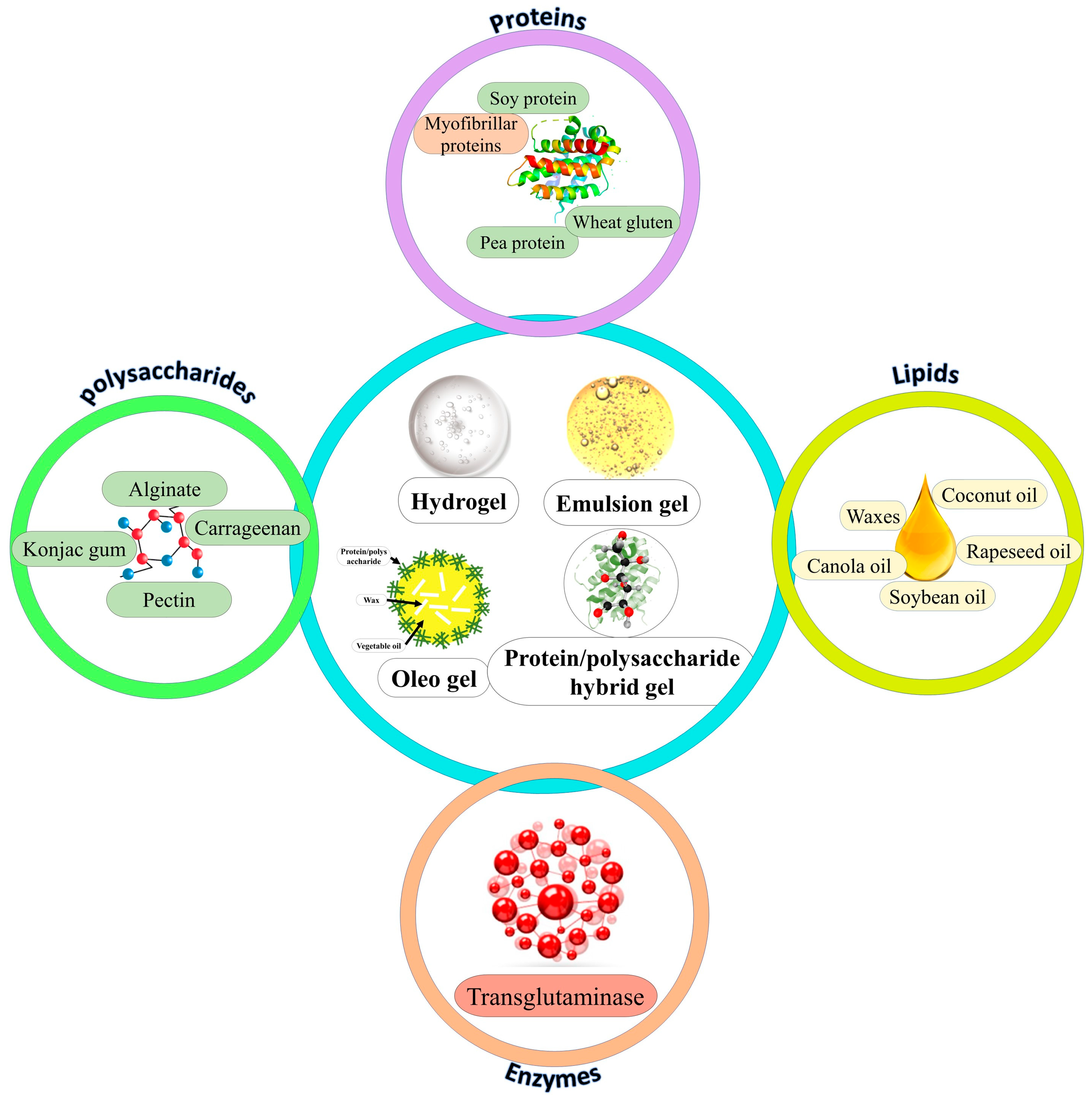
2. Gelation Ingredients
2.1. Proteins
2.2. Polysaccharides
2.3. Lipids
3. Types of Gelling Applications in Meat Analogs and Restructured Meat
3.1. Hydrogels
3.2. Oleogels
3.3. Emulsion Gels
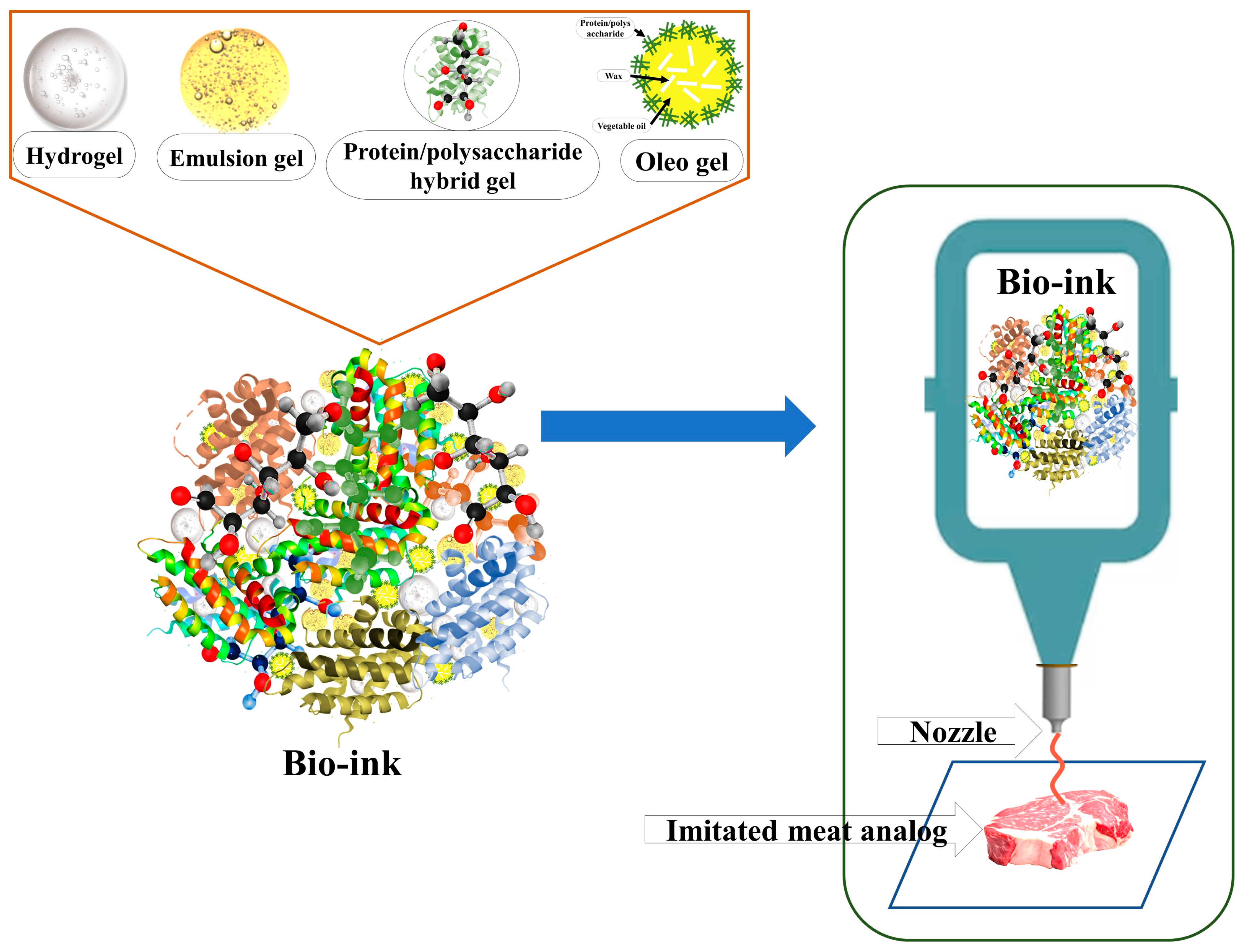
3.4. Hybrid Gels for Meat Analogs

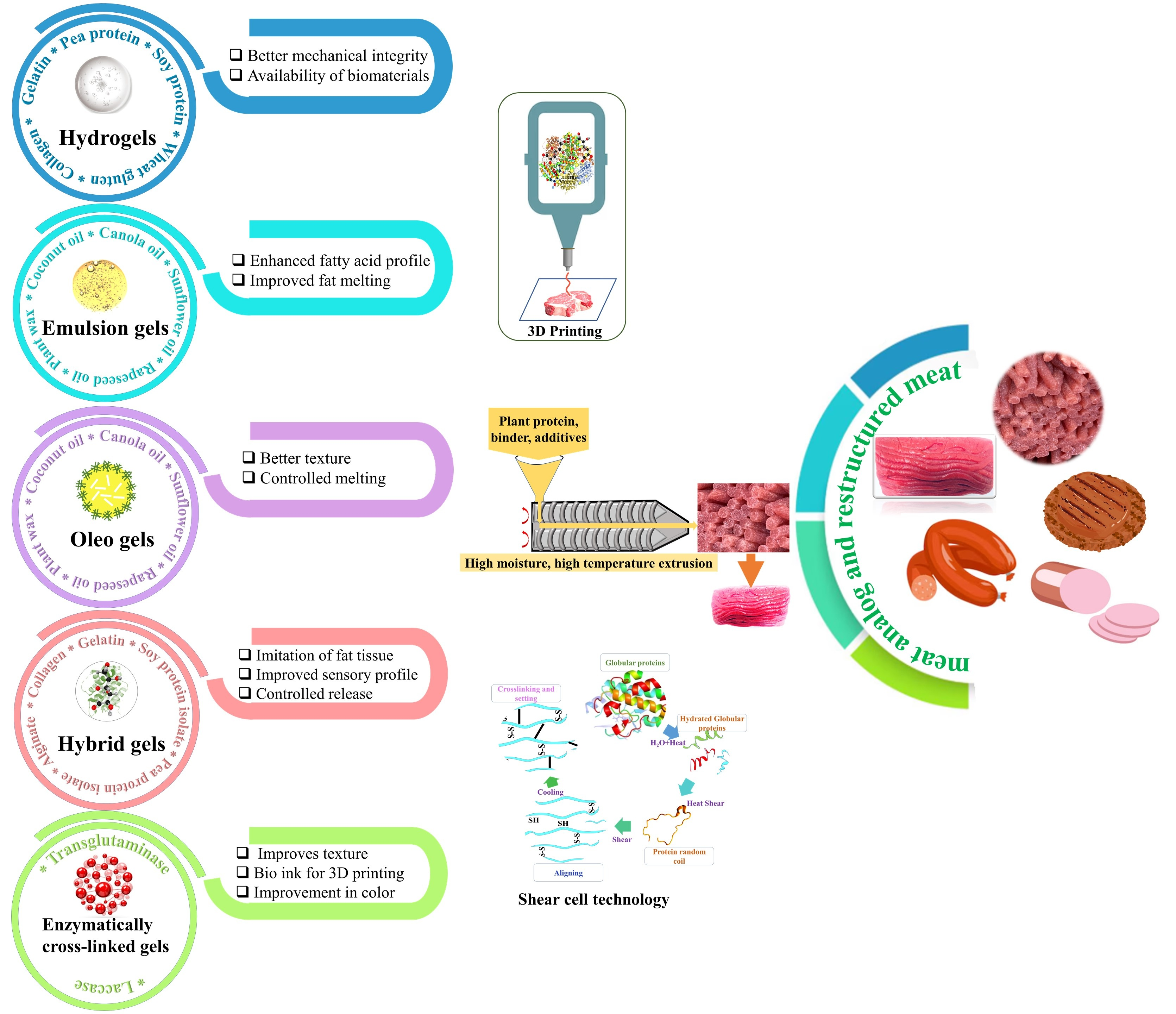
| Gel Type | Biomaterials | Primary Role | Principal Benefits | Limitations | References |
|---|---|---|---|---|---|
| Protein hydrogel | Gelatin, soy protein, pea protein, wheat gluten, myofibrillar proteins, microbial protein | Binder, structural development, and moisture retention | Better mechanical integrity, availability of biomaterials | Brittleness, weak texture compared to animal proteins | [77,78,79,80] |
| Polysaccharide hydrogel | Alginate, pectin, carrageenan, gellan, konjac gum | Thickener, moisture retention, structural retention, thermal stability | Adjustable gelation, clean-label, low production cost | Limited elasticity; requires cogelators | [81,82] |
| Emulsion gel | Vegetable oils, plant-based waxes | Fat replacer, lubricant, encapsulation of flavor materials | Enhanced fatty acid profile, improved and controlled melting | Oxidative instability, off-flavor | [82,83,84] |
| Oleogel | Ethylcellulose, proteins, sesame oil, olive oil | Fat replacer, lubricant, encapsulation of flavor materials | Better texture, controlled melting | Oxidative instability, off-flavor | [85,86] |
| Hybrid gel | Combination of all gel types | Imitation of fat tissue, controlled release of hydrophilic or lipophilic nutrients | Customizable, intricate sensory characteristics | Stability, scalability | [87,88] |
| Enzymatically and chemically crosslinked gels | Transglutaminase, Laccase | Binder, structural development, bio-ink preparation for 3D printing | Improvement in textural and chromatic profiles | Stability, cost | [89,90] |
| Protein | Polysaccharide | Cross-Linking Technique | Performance | References |
|---|---|---|---|---|
| Soy protein | Methylcellulose, carrageenan | Heat-induced gelation, thermoreversible setting | The hybrid gel system improved the textural profile, particularly in terms of hardness and chewiness. Furthermore, the cooking-related losses were decreased. | [91,92] |
| Pea protein | Pectin, xanthan, guar gum | High-pressure treatment, heat-induced gelation | Increased storage modulus, ability to form smooth emulsion, and better structural integrity | [92,93] |
| Wheat gluten | Alginate, glucomannan | Calcium crosslinking, baking | Better sliceability and elasticity in whole-cut analogs | [13] |
| Mixed legumes | Gellan gum, locust bean gum | Enzymatic crosslinking (MTGase) | Strong composite network, high water-holding ability, improved freeze–thaw stability | [79] |
3.5. Crosslinked Gels
4. Structuring Technologies Integrating Food Gels
4.1. High-Moisture Extrusion Technology
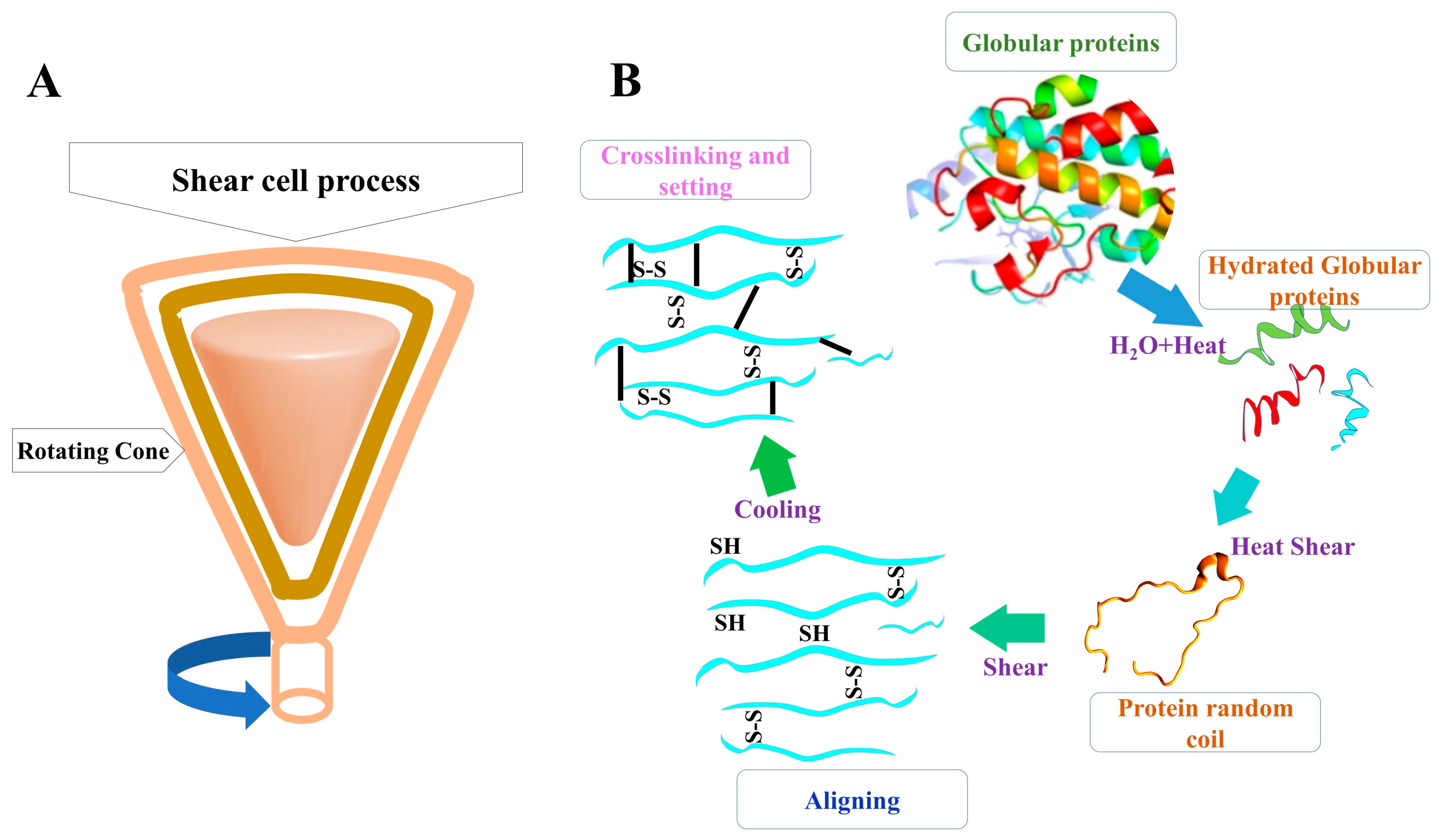
4.2. Shear Cell Technology
4.3. 3D Printing Technology
5. Significance of Gelling Processes on the Sensory and Nutritional Components
6. Limitation, Research Gaps, and Future Directions
7. Conclusions
Author Contributions
Funding
Informed Consent Statement
Data Availability Statement
Conflicts of Interest
References
- Alam, A.N.; Hwang, Y.-H.; Samad, A.; Joo, S.-T. Fabrication of gelatin-based hybrid films using solvent-casting and electrospinning to enhance the quality characteristics and shelf life of meat analog. Food Biosci. 2025, 72, 107415. [Google Scholar] [CrossRef]
- Wang, N.; Yang, X. Plant protein/carbohydrate composites-based food gels for plant-based meat alternatives production: A review. J. Sci. Food Agric. 2026, 106, 1981–1993. [Google Scholar] [CrossRef]
- Alam, A.; Hwang, Y.-H.; Samad, A.; Joo, S.-T. Meat Quality Traits Using Gelatin–Green Tea Extract Hybrid Electrospun Nanofiber Active Packaging. Foods 2025, 14, 1734. [Google Scholar] [CrossRef]
- Mathur, M.B.; Robinson, T.N.; Reichling, D.B.; Gardner, C.D.; Nadler, J.; Bain, P.A.; Peacock, J. Reducing meat consumption by appealing to animal welfare: Protocol for a meta-analysis and theoretical review. Syst. Rev. 2020, 9, 3. [Google Scholar] [CrossRef]
- Polášek, Z.; Salek, R.N.; Vašina, M.; Lyčková, A.; Gál, R.; Pachlová, V.; Buňka, F. The effect of furcellaran or κ-carrageenan addition on the textural, rheological and mechanical vibration damping properties of restructured chicken breast ham. LWT 2021, 138, 110623. [Google Scholar] [CrossRef]
- Kumari, S.; Alam, A.N.; Hossain, M.J.; Lee, E.-Y.; Hwang, Y.-H.; Joo, S.-T. Sensory Evaluation of Plant-Based Meat: Bridging the Gap with Animal Meat, Challenges and Future Prospects. Foods 2023, 13, 108. [Google Scholar] [CrossRef] [PubMed]
- Samad, A.; Muazzam, A.; Alam, A.N.; Hwang, Y.-H.; Joo, S.-T. Comprehensive review on tackling antibiotic resistance in traditional meat via innovative alternative meat solutions. Pak. Vet. J. 2025, 45, 1020–1028. [Google Scholar] [CrossRef]
- Samad, A.; Kim, S.; Kim, C.J.; Lee, E.-Y.; Kumari, S.; Hossain, M.J.; Alam, A.N.; Muazzam, A.; Bilal, U.; Hwang, Y.-H.; et al. Revolutionizing cell-based protein: Innovations, market dynamics, and future prospects in the cultivated meat industry. J. Agric. Food Res. 2024, 18, 101345. [Google Scholar] [CrossRef]
- Alam, A.; Hossain, M.J.; Lee, E.-Y.; Kim, S.-H.; Hwang, Y.-H.; Joo, S.-T. Characterization of imitated hybrid cultured meat patty to compare with beef meat. Food Sci. Anim. Resour. 2024, 45, 775–793. [Google Scholar] [CrossRef]
- Samad, A.; Alam, A.N.; Kumari, S.; Hossain, M.J.; Lee, E.-Y.; Hwang, Y.-H.; Joo, S.-T. Modern Concepts of Restructured Meat Production and Market Opportunities. Food Sci. Anim. Resour. 2024, 44, 284. [Google Scholar] [CrossRef] [PubMed]
- Kim, S.-H.; Kumari, S.; Kim, C.-J.; Lee, E.-Y.; Alam, A.N.; Chung, Y.-S.; Hwang, Y.-H.; Joo, S.-T. Effect of adding cultured meat tissue on physicochemical and taste characteristics of hybrid cultured meat manufactured using wet-spinning. Food Sci. Anim. Resour. 2024, 44, 1440. [Google Scholar] [CrossRef] [PubMed]
- Santo, R.E.; Kim, B.F.; Goldman, S.E.; Dutkiewicz, J.; Biehl, E.; Bloem, M.W.; Neff, R.A.; Nachman, K.E. Considering plant-based meat substitutes and cell-based meats: A public health and food systems perspective. Front. Sustain. Food Syst. 2020, 4, 569383. [Google Scholar] [CrossRef]
- Baig, M.A.; Ajayi, F.F.; Hamdi, M.; Baba, W.; Brishti, F.H.; Khalid, N.; Zhou, W.; Maqsood, S. Recent research advances in meat analogues: A comprehensive review on production, protein sources, quality attributes, analytical techniques used, and consumer perception. Food Rev. Int. 2025, 41, 236–267. [Google Scholar] [CrossRef]
- Tubb, C.; Seba, T. Rethinking food and agriculture 2020–2030: The second domestication of plants and animals, the disruption of the cow, and the collapse of industrial livestock farming. Ind. Biotechnol. 2021, 17, 57–72. [Google Scholar] [CrossRef]
- Du, Q.; Tu, M.; Liu, J.; Ding, Y.; Zeng, X.; Pan, D. Plant-based meat analogs and fat substitutes, structuring technology and protein digestion: A review. Food Res. Int. 2023, 170, 112959. [Google Scholar] [CrossRef] [PubMed]
- McClements, D.J.; Grossmann, L. Next-generation plant-based foods: Challenges and opportunities. Annu. Rev. Food Sci. Technol. 2024, 15, 79–101. [Google Scholar] [CrossRef]
- Szenderak, J.; Frona, D.; Rakos, M. Consumer acceptance of plant-based meat substitutes: A narrative review. Foods 2022, 11, 1274. [Google Scholar] [CrossRef]
- Wickramasinghe, K.; Breda, J.; Berdzuli, N.; Rippin, H.; Farrand, C.; Halloran, A. The shift to plant-based diets: Are we missing the point? Glob. Food Secur. 2021, 29, 100530. [Google Scholar] [CrossRef]
- McClements, D.J. Ultraprocessed plant-based foods: Designing the next generation of healthy and sustainable alternatives to animal-based foods. Compr. Rev. Food Sci. Food Saf. 2023, 22, 3531–3559. [Google Scholar] [CrossRef]
- Samad, A.; Kumari, S.; Hossain, M.J.; Alam, A.; Kim, S.-H.; Kim, C.-J.; Lee, E.-Y.; Hwang, Y.-H.; Joo, S.-T. Recent market analysis of plant protein-based meat alternatives and future prospect. JAPS J. Anim. Plant Sci. 2024, 34, 977–987. [Google Scholar] [CrossRef]
- Ladha-Sabur, A.; Bakalis, S.; Fryer, P.J.; Lopez-Quiroga, E. Mapping energy consumption in food manufacturing. Trends Food Sci. Technol. 2019, 86, 270–280. [Google Scholar] [CrossRef]
- Zhao, Y.; Shan, Y.; Wang, H.; Zhang, Z.; Wang, C.; Dai, L.; Wang, Y.; Sun, Q.; McClements, D.J.; Cheng, Y.; et al. Interpenetrating network hydrogels based on soy protein isolate and sanxan: Structure, mechanical properties, and freeze-thaw stability. Carbohydr. Polym. 2025, 375, 124759. [Google Scholar] [CrossRef] [PubMed]
- Li, E.; Zhang, Y.; Zhang, X.; Zhang, R.; Kang, D.; Mao, L. Improving Physicochemical and Sensory Properties of Plant-Based Meat Patties with Canola Oil Oleogels: A Sustainable Fat Alternative. J. Future Foods 2025, in press. [Google Scholar] [CrossRef]
- Shaghaghian, S.; McClements, D.J.; Khalesi, M.; Garcia-Vaquero, M.; Mirzapour-Kouhdasht, A. Digestibility and bioavailability of plant-based proteins intended for use in meat analogues: A review. Trends Food Sci. Technol. 2022, 129, 646–656. [Google Scholar] [CrossRef]
- Kyriakopoulou, K.; Keppler, J.K.; van Der Goot, A.J. Functionality of ingredients and additives in plant-based meat analogues. Foods 2021, 10, 600. [Google Scholar] [CrossRef] [PubMed]
- Lombardi, L.; Consalvo, S.; Esposito, C.; Tammaro, D. Tailoring texture and functionality of vegetable protein meat analogues through 3D printed porous structures. Food Hydrocoll. 2025, 159, 110611. [Google Scholar] [CrossRef]
- Fu, J.; Sun, C.; Chang, Y.; Li, S.; Zhang, Y.; Fang, Y. Structure analysis and quality evaluation of plant-based meat analogs. J. Texture Stud. 2023, 54, 383–393. [Google Scholar] [CrossRef]
- Ghimire, S.; Gamonpilas, C.; Umar, M.; Anal, A.K. Production of 3D-printed meat analogues using pea, fava, and mung bean proteins: A comparison study. Food Struct. 2025, 44, 100419. [Google Scholar] [CrossRef]
- Zhao, Y.; Zhang, M.; Bhandari, B.; Li, C. Development of special nutritional balanced food 3D printing products based on the mixing of animals/plants materials: Research progress, applications, and trends. Crit. Rev. Food Sci. Nutr. 2025, 65, 6985–7009. [Google Scholar] [CrossRef]
- Khalesi, M.; Glenn-Davi, K.; Mohammadi, N.; FitzGerald, R.J. Key factors influencing gelation in plant vs. animal proteins: A comparative mini-review. Gels 2024, 10, 575. [Google Scholar] [CrossRef]
- Guo, J.; Cui, L.; Meng, Z. Oleogels/emulsion gels as novel saturated fat replacers in meat products: A review. Food Hydrocoll. 2023, 137, 108313. [Google Scholar] [CrossRef]
- Yu, C.; Hu, W.; Chen, L.; Ouyang, K.; Chen, H.; Lin, S.; Wang, W. Basic Amino Acids as Salt Substitutes in Low-Salt Gel-Based Meat Products: A Comprehensive Review of Mechanisms, Benefits, and Future Perspectives. Foods 2025, 14, 637. [Google Scholar] [CrossRef]
- Gulzar, S.; Hosseini, A.F.; Martín-Belloso, O.; Soliva-Fortuny, R.; Rizvi, S.S. Engineering Processes for Plant-Based Meat Analogs: Current Status and Future Outlook. Compr. Rev. Food Sci. Food Saf. 2025, 24, e70322. [Google Scholar] [CrossRef] [PubMed]
- Ma, Y.; Chen, F. Plant protein heat-induced gels: Formation mechanisms and regulatory strategies. Coatings 2023, 13, 1899. [Google Scholar] [CrossRef]
- Kong, D.; Liu, Q.; Chen, Q.; Zhang, C.; Liu, H.; Kong, B. A Comprehensive Review on Physical Modifications of Plant Proteins: Mechanism, Influencing Factors, Structural and Functional Properties. Compr. Rev. Food Sci. Food Saf. 2025, 24, e70273. [Google Scholar] [CrossRef]
- Pan, M.; Wang, P.; Xu, Z.; Kuai, Y. High-strength, ultrastretchable hydrophobic association hydrogel reinforced by tailored modified carboxymethyl cellulose. J. Appl. Polym. Sci. 2023, 140, e53287. [Google Scholar] [CrossRef]
- Ali, A.; Ahmed, S. Recent advances in edible polymer based hydrogels as a sustainable alternative to conventional polymers. J. Agric. Food Chem. 2018, 66, 6940–6967. [Google Scholar] [CrossRef] [PubMed]
- Patel, P.; Mujmer, K.; Aswal, V.K.; Gupta, S.; Thareja, P. Structure, rheology, and 3D printing of salt-induced κ-carrageenan gels. Mater. Today Commun. 2023, 35, 105807. [Google Scholar] [CrossRef]
- Li, W.; Fang, K.; Yuan, H.; Li, D.; Li, H.; Chen, Y.; Luo, X.; Zhang, L.; Ye, X. Acid-induced Poria cocos alkali-soluble polysaccharide hydrogel: Gelation behaviour, characteristics, and potential application in drug delivery. Int. J. Biol. Macromol. 2023, 242, 124383. [Google Scholar] [CrossRef]
- Chen, M.; Yu, P.; Ao, C.; Zhang, M.; Xing, J.; Ding, C.; Xie, J.; Li, J. Ethanol-induced responsive behavior of natural polysaccharide hydrogels. Ind. Eng. Chem. Res. 2022, 61, 13145–13153. [Google Scholar] [CrossRef]
- Li, K.; Liu, X.; Jiang, F.; Zhang, B.; Qiao, D.; Xie, F. In the process of polysaccharide gel formation: A review of the role of competitive relationship between water and alcohol molecules. Int. J. Biol. Macromol. 2024, 281, 136398. [Google Scholar] [CrossRef] [PubMed]
- Kothuri, V.; Han, J.H.; Keum, D.H.; Kwon, H.C.; Kim, D.H.; Han, S.G. Utilization of emulsion gels in plant-based meat analog formulations: A review. Food Hydrocoll. 2025, 158, 110499. [Google Scholar] [CrossRef]
- Tan, Y.; McClements, D.J. Plant-based colloidal delivery systems for bioactives. Molecules 2021, 26, 6895. [Google Scholar] [CrossRef]
- Tan, Y.; Zhang, Z.; McClements, D.J. Preparation of plant-based meat analogs using emulsion gels: Lipid-filled RuBisCo protein hydrogels. Food Res. Int. 2023, 167, 112708. [Google Scholar] [CrossRef]
- Blebea, N.-M.; Pușcașu, C.; Vlad, R.-A.; Hancu, G. Chitosan-based gel development: Extraction, gelation mechanisms, and biomedical applications. Gels 2025, 11, 275. [Google Scholar] [CrossRef]
- Gordon, E.B.; Choi, I.; Amanipour, A.; Hu, Y.; Nikkhah, A.; Koysuren, B.; Jones, C.; Nitin, N.; Ovissipour, R.; Buehler, M.J.; et al. Biomaterials in cellular agriculture and plant-based foods for the future. Nat. Rev. Mater. 2025, 10, 500–518. [Google Scholar] [CrossRef]
- Yu, K.; Yang, L.; Zhang, N.; Wang, S.; Liu, H. Development of nanocellulose hydrogels for application in the food and biomedical industries: A review. Int. J. Biol. Macromol. 2024, 272, 132668. [Google Scholar] [CrossRef] [PubMed]
- Yuliarti, O.; Ng, L.; Koh, W.M.; Abdullah, M.F.B.M.F.; Sentana, A.D. Structural properties of meat analogue with added konjac gels. Food Hydrocoll. 2023, 142, 108716. [Google Scholar] [CrossRef]
- Basak, S.; Singhal, R.S. Inclusion of konjac glucomannan in pea protein hydrogels improved the rheological and in vitro release properties of the composite hydrogels. Int. J. Biol. Macromol. 2024, 257, 128689. [Google Scholar] [CrossRef]
- Liu, Y.; Zhang, Y.; Cai, L.; Zeng, Q.; Wang, P. Protein and protein-polysaccharide composites-based 3D printing: The properties, roles and opportunities in future functional foods. Int. J. Biol. Macromol. 2024, 272, 132884. [Google Scholar] [CrossRef]
- Katona, G.; Sipos, B.; Csóka, I. Advancements in the Field of Protein-Based Hydrogels: Main Types, Characteristics, and Their Applications. Gels 2025, 11, 306. [Google Scholar] [CrossRef]
- Zhou, H.; Hu, X.; Xiang, X.; McClements, D.J. Modification of textural attributes of potato protein gels using salts, polysaccharides, and transglutaminase: Development of plant-based foods. Food Hydrocoll. 2023, 144, 108909. [Google Scholar] [CrossRef]
- Hu, X.; Xiang, X.; Cao, M.; Li, S.; McClements, D.J. Plant-based marbled salami analogs: Emulsion-loaded microgels embedded within protein-polysaccharide hydrogel matrices. Food Hydrocoll. 2025, 159, 110638. [Google Scholar] [CrossRef]
- Ryu, J.; McClements, D.J. Cellulose reinforcement of plant-based protein hydrogels: Effects of cellulose nanofibers and nanocrystals on physicochemical properties. Food Hydrocoll. 2025, 158, 110541. [Google Scholar] [CrossRef]
- de Lima Guterres, L.; Pinton, M.B.; Dos Santos, B.A.; Correa, L.P.; Cordeiro, M.W.S.; Wagner, R.; Cichoski, A.J.; Lorenzo, J.M.; Campagnol, P.C.B. Hydrogelled emulsion from linseed oil and pea protein as a strategy to produce healthier pork burgers with high technological and sensory quality. Meat Sci. 2023, 195, 109028. [Google Scholar] [CrossRef] [PubMed]
- Saqib, M.N.; Khaled, B.; Liu, F.; Zhong, F. Hydrogel beads for designing future foods: Structures, mechanisms, applications, and challenges. Food Hydrocoll. Health 2022, 2, 100073. [Google Scholar] [CrossRef]
- Wang, Y.; Kim, W.; Naik, R.R.; Spicer, P.T.; Selomulya, C. Tuning the pea protein gel network to mimic the heterogenous microstructure of animal protein. Food Hydrocoll. 2023, 140, 108611. [Google Scholar] [CrossRef]
- Wang, Y.; Jiao, A.; Qiu, C.; Liu, Q.; Yang, Y.; Bian, S.; Zeng, F.; Jin, Z. A combined enzymatic and ionic cross-linking strategy for pea protein/sodium alginate double-network hydrogel with excellent mechanical properties and freeze-thaw stability. Food Hydrocoll. 2022, 131, 107737. [Google Scholar] [CrossRef]
- Chen, J.; Zhao, J.; Li, X.; Liu, Q.; Kong, B. Composite gel fabricated with konjac glucomannan and carrageenan could be used as a cube fat substitute to partially replace pork fat in harbin dry sausages. Foods 2021, 10, 1460. [Google Scholar] [CrossRef]
- Keum, D.H.; Han, J.H.; Kwon, H.C.; Park, S.M.; Kim, H.Y.; Han, S.G. Enhancing the flavor of plant-based meat analogues using flavor-capturing alginate/β-cyclodextrin hydrogel beads. Int. J. Biol. Macromol. 2025, 309, 142930. [Google Scholar] [CrossRef]
- Sivakanthan, S.; Fawzia, S.; Madhujith, T.; Karim, A. Synergistic effects of oleogelators in tailoring the properties of oleogels: A review. Compr. Rev. Food Sci. Food Saf. 2022, 21, 3507–3539. [Google Scholar] [CrossRef]
- McClements, D.J.; Grossmann, L. The science of plant-based foods: Constructing next-generation meat, fish, milk, and egg analogs. Compr. Rev. Food Sci. Food Saf. 2021, 20, 4049–4100. [Google Scholar] [CrossRef] [PubMed]
- Chen, Y.P.; Feng, X.; Blank, I.; Liu, Y. Strategies to improve meat-like properties of meat analogs meeting consumers’ expectations. Biomaterials 2022, 287, 121648. [Google Scholar] [CrossRef]
- Espert, M.; Salvador, A.; Sanz, T. Cellulose ether oleogels obtained by emulsion-templated approach without additional thickeners. Food Hydrocoll. 2020, 109, 106085. [Google Scholar] [CrossRef]
- Flores, M.; Belloch, C.; Salvador, A. Sunflower oil oleogels as alternative fat in hybrid meat patties. J. Agric. Food Res. 2025, 19, 101728. [Google Scholar] [CrossRef]
- Huang, E.L.; Ozturk, O.K. Zein-based oleogels: Oil type impact on functionality in plant-based fat alternatives in 3D printing. Int. J. Biol. Macromol. 2025, 329, 147840. [Google Scholar] [CrossRef]
- Abdullah; Liu, L.; Javed, H.U.; Xiao, J. Engineering emulsion gels as functional colloids emphasizing food applications: A review. Front. Nutr. 2022, 9, 890188. [Google Scholar] [CrossRef] [PubMed]
- Hou, Y.; Sun, Y.; Zhang, P.; Wang, H.; Tan, M. Development and characterization of emulsion gels prepared via gliadin-based colloidal particles and gellan gum with tunable rheological properties for 3D printed dysphagia diet. Int. J. Biol. Macromol. 2023, 253, 126839. [Google Scholar] [CrossRef] [PubMed]
- Botella-Martinez, C.; Viuda-Martos, M.; Fernández-López, J.A.; Perez-Alvarez, J.A.; Fernandez-Lopez, J. Development of plant-based burgers using gelled emulsions as fat source and beetroot juice as colorant: Effects on chemical, physicochemical, appearance and sensory characteristics. LWT 2022, 172, 114193. [Google Scholar] [CrossRef]
- Corrêa, P.F.; da Silva, C.F.; Ferreira, J.P.; Guerra, J.M.C. Vegetable-based frankfurter sausage production by different emulsion gels and assessment of physical-chemical, microbiological and nutritional properties. Food Chem. Adv. 2023, 3, 100354. [Google Scholar] [CrossRef]
- Zo, S.M.; Sood, A.; Won, S.Y.; Choi, S.M.; Han, S.S. Structuring the future of cultured meat: Hybrid gel-based scaffolds for edibility and functionality. Gels 2025, 11, 610. [Google Scholar] [CrossRef]
- Grossmann, L.; McClements, D.J. The science of plant-based foods: Approaches to create nutritious and sustainable plant-based cheese analogs. Trends Food Sci. Technol. 2021, 118, 207–229. [Google Scholar] [CrossRef]
- Giezenaar, C.; Orr, R.E.; Godfrey, A.J.R.; Maggs, R.; Foster, M.; Hort, J. Profiling the novel plant-based meat alternative category: Consumer affective and sensory response in the context of perceived similarity to meat. Food Res. Int. 2024, 188, 114465. [Google Scholar] [CrossRef] [PubMed]
- Moll, P.; Salminen, H.; Stadtmueller, L.; Schmitt, C.; Weiss, J. Comparison of binding properties of a laccase-treated pea protein–sugar beet pectin mixture with methylcellulose in a bacon-type meat analogue. Foods 2022, 12, 85. [Google Scholar] [CrossRef]
- Sun, L.; Ye, X.; Liu, S.; Safdar, B.; Li, J.; Liu, X.; Li, H. Study on the mechanism of protein-polysaccharide complex high viscosity gel and its adhesion in plant meat substitute. Int. J. Biol. Macromol. 2025, 311, 143547. [Google Scholar] [CrossRef]
- Ryu, J.; Rosenfeld, S.E.; McClements, D.J. Creation of plant-based meat analogs: Effects of calcium salt type on structure and texture of potato protein-alginate composite gels. Food Hydrocoll. 2024, 156, 110312. [Google Scholar] [CrossRef]
- Hui, D.; Liang, W.; Wang, R.; Feng, X.; Tang, X. A Review of Gelation of Plant Proteins and Their Influencing Factors. Sustain. Food Proteins 2025, 3, e70037. [Google Scholar] [CrossRef]
- Codină, G.G.; Dabija, A. Food Gels: New Trends, Applications, and Challenges in the Food Industry. Gels 2025, 11, 899. [Google Scholar] [CrossRef] [PubMed]
- Prajapati, P.; Garg, M.; Singh, N.; Chopra, R.; Mittal, A.; Sabharwal, P.K. Transforming plant proteins into plant-based meat alternatives: Challenges and future scope. Food Sci. Biotechnol. 2024, 33, 3423–3443. [Google Scholar] [CrossRef]
- Muazzam, A.; Samad, A.; Alam, A.N.; Hwang, Y.-H.; Joo, S.-T. Microbial Proteins: A Green Approach Towards Zero Hunger. Foods 2025, 14, 2636. [Google Scholar] [CrossRef] [PubMed]
- Fu, K.; Wang, H.; Pan, T.; Cai, Z.; Yang, Z.; Liu, D.; Wang, W. Gel-forming polysaccharides of traditional gel-like foods: Sources, structure, gelling mechanism, and advanced applications. Food Res. Int. 2024, 198, 115329. [Google Scholar] [CrossRef]
- Liu, X.; Cheng, Y.; Sun, T.; Lu, Y.; Huan, S.; Liu, S.; Li, W.; Li, Z.; Liu, Y.; Rojas, O.J.; et al. Recent Advances in Plant-Based Edible Emulsion Gels for 3D-Printed Foods. Annu. Rev. Food Sci. Technol. 2025, 16, 63–79. [Google Scholar] [CrossRef] [PubMed]
- Zhang, T.; Zhang, X.; Zhou, X.; Tian, R.; Tang, X.; Zhang, Y.; Jiang, L.; Sui, X. Plant-based fat substitutes with promising functional properties and health benefits. J. Am. Oil Chem. Soc. 2024, 101, 1183–1196. [Google Scholar] [CrossRef]
- Ren, Y.; Huang, L.; Zhang, Y.; Li, H.; Zhao, D.; Cao, J.; Liu, X. Application of emulsion gels as fat substitutes in meat products. Foods 2022, 11, 1950. [Google Scholar] [CrossRef]
- Moghtadaei, M.; Soltanizadeh, N.; Goli, S.A.H.; Sharifimehr, S. Physicochemical properties of beef burger after partial incorporation of ethylcellulose oleogel instead of animal fat. J. Food Sci. Technol. 2021, 58, 4775–4784. [Google Scholar] [CrossRef] [PubMed]
- Gómez-Estaca, J.; Pintado, T.; Jiménez-Colmenero, F.; Cofrades, S. Assessment of a healthy oil combination structured in ethyl cellulose and beeswax oleogels as animal fat replacers in low-fat, PUFA-enriched pork burgers. Food Bioprocess Technol. 2019, 12, 1068–1081. [Google Scholar] [CrossRef]
- Huang, Y.; Li, C.; McClements, D.J. Recent Advances in Plant-Based Emulsion Gels: Preparation, Characterization, Applications, and Future Perspectives. Gels 2025, 11, 641. [Google Scholar] [CrossRef]
- Srivastava, Y.; Awasthi, A.; Sahu, J.K.; Kesharwani, T. A Comprehensive Review on Plant-Originated Versatile Gels: Mechanism, Characterization, and Applications. Food Bioprocess Technol. 2025, 18, 2236–2268. [Google Scholar] [CrossRef]
- Cheng, Z.; Qiu, Y.; Ahmad, I.; Pang, Y.; Yue, A.; Chen, Z.; Zhang, G.; Ding, Y.; Lyu, F. Enhancement of structural properties of 3D-printed plant-based meat analogs by TGase/laccase. J. Food Eng. 2025, 387, 112352. [Google Scholar] [CrossRef]
- Farooq, S.; Ahmad, M.I.; Zheng, S.; Ali, U.; Xue, J.; Li, Y.; Shixiu, C.; Zhang, H. Fabrication and characterization of double-network meat analogs based on camellia oleosomes and soy protein-wheat gluten induced by transglutaminase and calcium alginate. Int. J. Biol. Macromol. 2025, 310, 143322. [Google Scholar] [CrossRef]
- Jang, J.; Lee, D.-W. Advancements in plant based meat analogs enhancing sensory and nutritional attributes. npj Sci. Food 2024, 8, 50. [Google Scholar] [CrossRef]
- Dinani, S.T.; Broekema, N.L.; Boom, R.; van der Goot, A.J. Investigation potential of hydrocolloids in meat analogue preparation. Food Hydrocoll. 2023, 135, 108199. [Google Scholar] [CrossRef]
- Dreher, J.; Blach, C.; Terjung, N.; Gibis, M.; Weiss, J. Influence of protein content on plant-based emulsified and crosslinked fat crystal networks to mimic animal fat tissue. Food Hydrocoll. 2020, 106, 105864. [Google Scholar] [CrossRef]
- Farooq, S.; Ahmad, M.I.; Ali, U.; Wei, S.; Xue, J.; Hlaing, T.N.N.; Sun, Q.; Peng, Y.; Zhang, H. Exploring the mechanisms of charged polysaccharides in regulating the microstructure, texture, and rheology of camellia oleosomes-based meat analogs. Food Hydrocoll. 2025, 172, 111965. [Google Scholar] [CrossRef]
- Alam, A.N.; Lee, E.-Y.; Hossain, M.J.; Kim, S.-H.; Kim, C.-J.; Hwang, Y.-H.; Joo, S.-T. Physicochemical and sensory characteristics of hybrid flexitarian pork loin steak combined with different plant ingredients. Food Sci. Anim. Resour. 2025, 45, 468. [Google Scholar] [CrossRef] [PubMed]
- Herz, E.; Kinne, T.; Terjung, N.; Gibis, M.; Weiss, J. Influence of extrudate to SPI-gel-binder ratios and transglutaminase crosslinking on texture of a plant-based salami analogue. Future Foods 2023, 7, 100235. [Google Scholar] [CrossRef]
- Huang, J.; Ying, C.; Li, X.; Kuang, J.; Li, J.; Huang, T.; Li, J. Study on structure, properties and formation mechanism of cassava starch-faba bean protein heat-induced gel. Int. J. Biol. Macromol. 2025, 300, 140216. [Google Scholar] [CrossRef]
- Xu, K.; Zhang, M.; Bhandari, B. Effect of novel ultrasonic-microwave combined pretreatment on the quality of 3D printed wheat starch-papaya system. Food Biophys. 2020, 15, 249–260. [Google Scholar] [CrossRef]
- Schmid, E.M.; Farahnaky, A.; Adhikari, B.; Torley, P.J. High moisture extrusion cooking of meat analogs: A review of mechanisms of protein texturization. Compr. Rev. Food Sci. Food Saf. 2022, 21, 4573–4609. [Google Scholar] [CrossRef]
- Zhang, Z.; Zhang, L.; He, S.; Li, X.; Jin, R.; Liu, Q.; Chen, S.; Sun, H. High-moisture extrusion technology application in the processing of textured plant protein meat analogues: A review. Food Rev. Int. 2023, 39, 4873–4908. [Google Scholar] [CrossRef]
- Aghagholizadeh, R.; Rigi, A.A. High-Moisture Extrusion in Plant-Based Meat: Challenges and Emerging Trends. J. Food Process Eng. 2025, 48, e70107. [Google Scholar] [CrossRef]
- Plattner, B.J.; Hong, S.; Li, Y.; Talavera, M.J.; Dogan, H.; Plattner, B.S.; Alavi, S. Use of pea proteins in high-moisture meat analogs: Physicochemical properties of raw formulations and their texturization using extrusion. Foods 2024, 13, 1195. [Google Scholar] [CrossRef] [PubMed]
- Liu, B.; Kitamura, Y.; Kokawa, M. Effects of different emulsion gels and extrusion temperature on structural properties of meat substitutes processed by high-moisture extrusion of soybean protein. Food Hydrocoll. 2025, 172, 111909. [Google Scholar] [CrossRef]
- Dinali, M.; Liyanage, R.; Silva, M.; Newman, L.; Adhikari, B.; Wijesekara, I.; Chandrapala, J. Fibrous structure in plant-based meat: High-moisture extrusion factors and sensory attributes in production and storage. Food Rev. Int. 2024, 40, 2940–2968. [Google Scholar] [CrossRef]
- Lee, C.H.; Chin, K.B. Evaluation of physicochemical and textural properties of myofibrillar protein gels and low-fat model sausage containing various levels of curdlan. Asian-Australas. J. Anim. Sci. 2018, 32, 144. [Google Scholar] [CrossRef]
- Cornet, S.H.; Snel, S.J.; Schreuders, F.K.; van der Sman, R.G.; Beyrer, M.; van der Goot, A.J. Thermo-mechanical processing of plant proteins using shear cell and high-moisture extrusion cooking. Crit. Rev. Food Sci. Nutr. 2022, 62, 3264–3280. [Google Scholar] [CrossRef]
- Sägesser, C.; Mair, T.; Braun, A.; Dumpler, J.; Fischer, P.; Mathys, A. Application of a shear cell for the simulation of extrusion to test the structurability of raw materials. Food Hydrocoll. 2025, 160, 110736. [Google Scholar] [CrossRef]
- Raghav Hegde, K.; Sarvanan, S.; Hema, V. Shear Cell Technology and the Role of Ingredients in Developing Fibrous Plant-Based Meat Analogs. ACS Food Sci. Technol. 2025, 5, 2877–2891. [Google Scholar] [CrossRef]
- Dekkers, B.L.; Boom, R.M.; van der Goot, A.J. Structuring processes for meat analogues. Trends Food Sci. Technol. 2018, 81, 25–36. [Google Scholar] [CrossRef]
- Nowacka, M.; Trusinska, M.; Chraniuk, P.; Drudi, F.; Lukasiewicz, J.; Nguyen, N.P.; Przybyszewska, A.; Pobiega, K.; Tappi, S.; Tylewicz, U.; et al. Developments in plant proteins production for meat and fish analogues. Molecules 2023, 28, 2966. [Google Scholar] [CrossRef]
- Krintiras, G.A.; Göbel, J.; Van der Goot, A.J.; Stefanidis, G.D. Production of structured soy-based meat analogues using simple shear and heat in a Couette Cell. J. Food Eng. 2015, 160, 34–41. [Google Scholar] [CrossRef]
- Mittal, S.; Bhuiyan, M.H.R.; Ngadi, M.O. Challenges and prospects of plant-protein-based 3D printing. Foods 2023, 12, 4490. [Google Scholar] [CrossRef]
- Alam, A.N.; Kim, C.-J.; Kim, S.-H.; Kumari, S.; Lee, E.-Y.; Hwang, Y.-H.; Joo, S.-T. Scaffolding fundamentals and recent advances in sustainable scaffolding techniques for cultured meat development. Food Res. Int. 2024, 189, 114549. [Google Scholar] [CrossRef]
- Fribus, R.; Fahmy, A.R.; Jekle, M. Structure design in food 3D printing–Anisotropy formation and spatial distribution of fibrous structures using combined dual and coaxial extrusion for meat alternatives. Food Res. Int. 2025, 223, 117834. [Google Scholar] [CrossRef]
- Park, J.W.; Lee, S.H.; Kim, H.W.; Park, H.J. Application of extrusion-based 3D food printing to regulate marbling patterns of restructured beef steak. Meat Sci. 2023, 202, 109203. [Google Scholar] [CrossRef]
- Lee, S.H.; Kim, H.W.; Park, H.J. Integrated design of micro-fibrous food with multi-materials fabricated by uniaxial 3D printing. Food Res. Int. 2023, 165, 112529. [Google Scholar] [CrossRef]
- Ko, H.J.; Wen, Y.; Choi, J.H.; Park, B.R.; Kim, H.W.; Park, H.J. Meat analog production through artificial muscle fiber insertion using coaxial nozzle-assisted three-dimensional food printing. Food Hydrocoll. 2021, 120, 106898. [Google Scholar] [CrossRef]
- Broucke, K.; Van Poucke, C.; Duquenne, B.; De Witte, B.; Baune, M.-C.; Lammers, V.; Terjung, N.; Ebert, S.; Gibis, M.; Weiss, J.; et al. Ability of (extruded) pea protein products to partially replace pork meat in emulsified cooked sausages. Innov. Food Sci. Emerg. Technol. 2022, 78, 102992. [Google Scholar] [CrossRef]
- Shen, Y.; Hong, S.; Du, Z.; Chao, M.; O’Quinn, T.; Li, Y. Effect of adding modified pea protein as functional extender on the physical and sensory properties of beef patties. LWT 2022, 154, 112774. [Google Scholar] [CrossRef]
- Hadi, J.; Brightwell, G. Safety of alternative proteins: Technological, environmental and regulatory aspects of cultured meat, plant-based meat, insect protein and single-cell protein. Foods 2021, 10, 1226. [Google Scholar] [CrossRef]
- Wang, F.; Zhang, Y.; Xu, L.; Ma, H. An efficient ultrasound-assisted extraction method of pea protein and its effect on protein functional properties and biological activities. LWT 2020, 127, 109348. [Google Scholar] [CrossRef]
- Zhao, M.; Xiong, W.; Chen, B.; Zhu, J.; Wang, L. Enhancing the solubility and foam ability of rice glutelin by heat treatment at pH12: Insight into protein structure. Food Hydrocoll. 2020, 103, 105626. [Google Scholar] [CrossRef]
- Hwang, Y.-H.; Samad, A.; Muazzam, A.; Alam, A.; Joo, S.-T. A Comprehensive Review of AI-Driven Approaches to Meat Quality and Safety. Food Sci. Anim. Resour. 2025, 45, 998–1013. [Google Scholar] [CrossRef]
- Lee, S.Y.; Lee, D.Y.; Mariano, E., Jr.; Park, J.; Han, D.; Choi, Y.; Kim, J.S.; Park, J.W.; Namkung, S.; Venter, C.; et al. Cutting-Edge Technologies of Meat Analogs: A Review. Food Sci. Anim. Resour. 2025, 45, 223–242. [Google Scholar] [CrossRef] [PubMed]
Disclaimer/Publisher’s Note: The statements, opinions and data contained in all publications are solely those of the individual author(s) and contributor(s) and not of MDPI and/or the editor(s). MDPI and/or the editor(s) disclaim responsibility for any injury to people or property resulting from any ideas, methods, instructions or products referred to in the content. |
© 2026 by the authors. Licensee MDPI, Basel, Switzerland. This article is an open access article distributed under the terms and conditions of the Creative Commons Attribution (CC BY) license.
Share and Cite
Alam, A.N.; Samad, A.; Muazzam, A.; Kim, S.-H.; Kim, C.-J.; Hwang, Y.-H.; Joo, S.-T. A Comprehensive Review on Innovative Food Gelling Strategies for Sustainable Production of Meat Analogs and Restructured Meat. Gels 2026, 12, 147. https://doi.org/10.3390/gels12020147
Alam AN, Samad A, Muazzam A, Kim S-H, Kim C-J, Hwang Y-H, Joo S-T. A Comprehensive Review on Innovative Food Gelling Strategies for Sustainable Production of Meat Analogs and Restructured Meat. Gels. 2026; 12(2):147. https://doi.org/10.3390/gels12020147
Chicago/Turabian StyleAlam, AMM Nurul, Abdul Samad, Ayesha Muazzam, So-Hee Kim, Chan-Jin Kim, Young-Hwa Hwang, and Seon-Tea Joo. 2026. "A Comprehensive Review on Innovative Food Gelling Strategies for Sustainable Production of Meat Analogs and Restructured Meat" Gels 12, no. 2: 147. https://doi.org/10.3390/gels12020147
APA StyleAlam, A. N., Samad, A., Muazzam, A., Kim, S.-H., Kim, C.-J., Hwang, Y.-H., & Joo, S.-T. (2026). A Comprehensive Review on Innovative Food Gelling Strategies for Sustainable Production of Meat Analogs and Restructured Meat. Gels, 12(2), 147. https://doi.org/10.3390/gels12020147