

Nanostructured Hydrogels: A Method to Prevent Biofilms on Implantable Medical Devices



Abstract
1. Introduction
2. Biofilms on Medical Devices and Implants
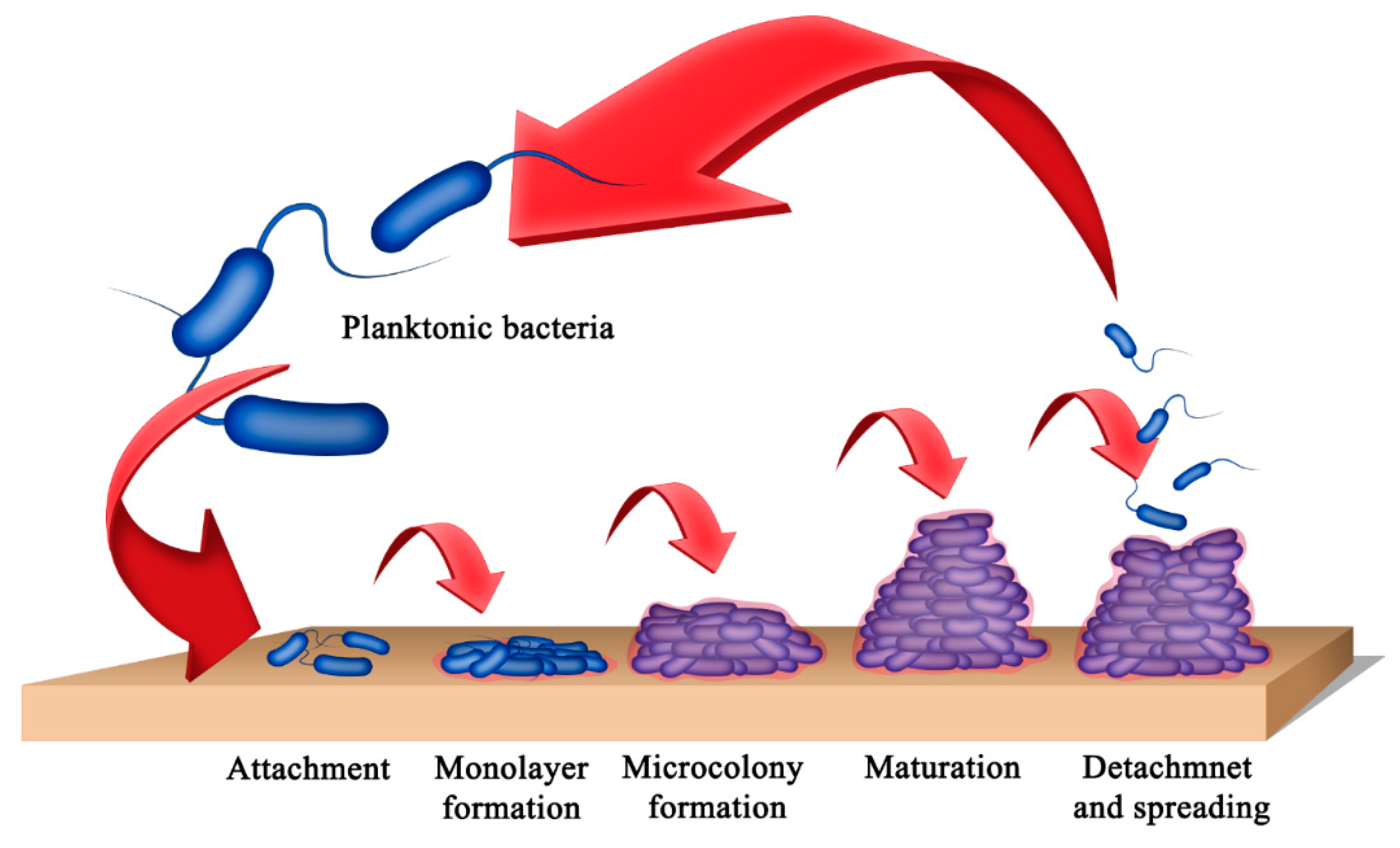
2.1. Formation of Microbial Biofilms
2.2. Biomaterials, Biofilms, and Influence on Human Health
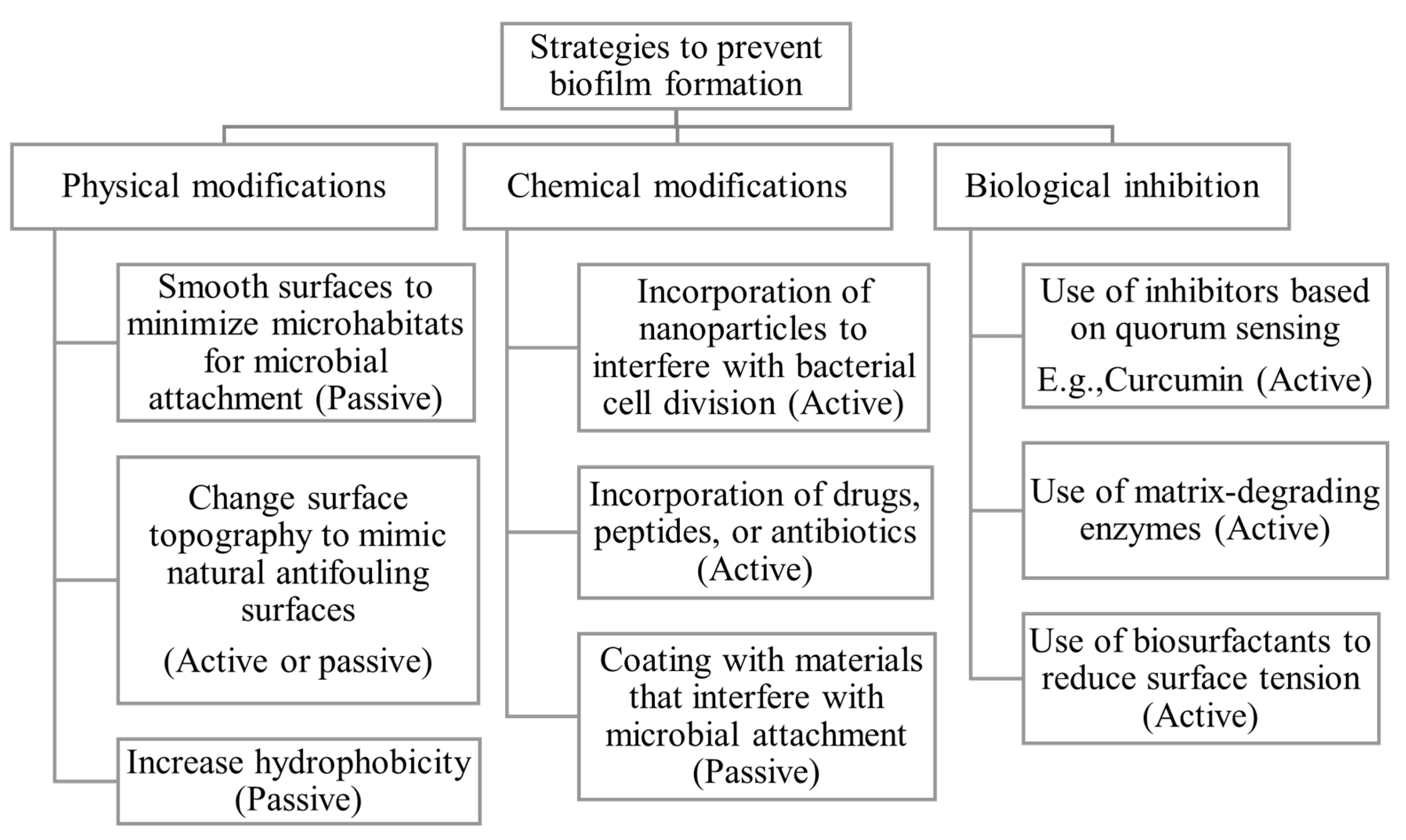
3. Strategies That Can Prevent the Formation of Biofilms
4. Nanotechnology-Based Methods to Prevent the Formation of Biofilms
4.1. Incorporation of Nanoparticles
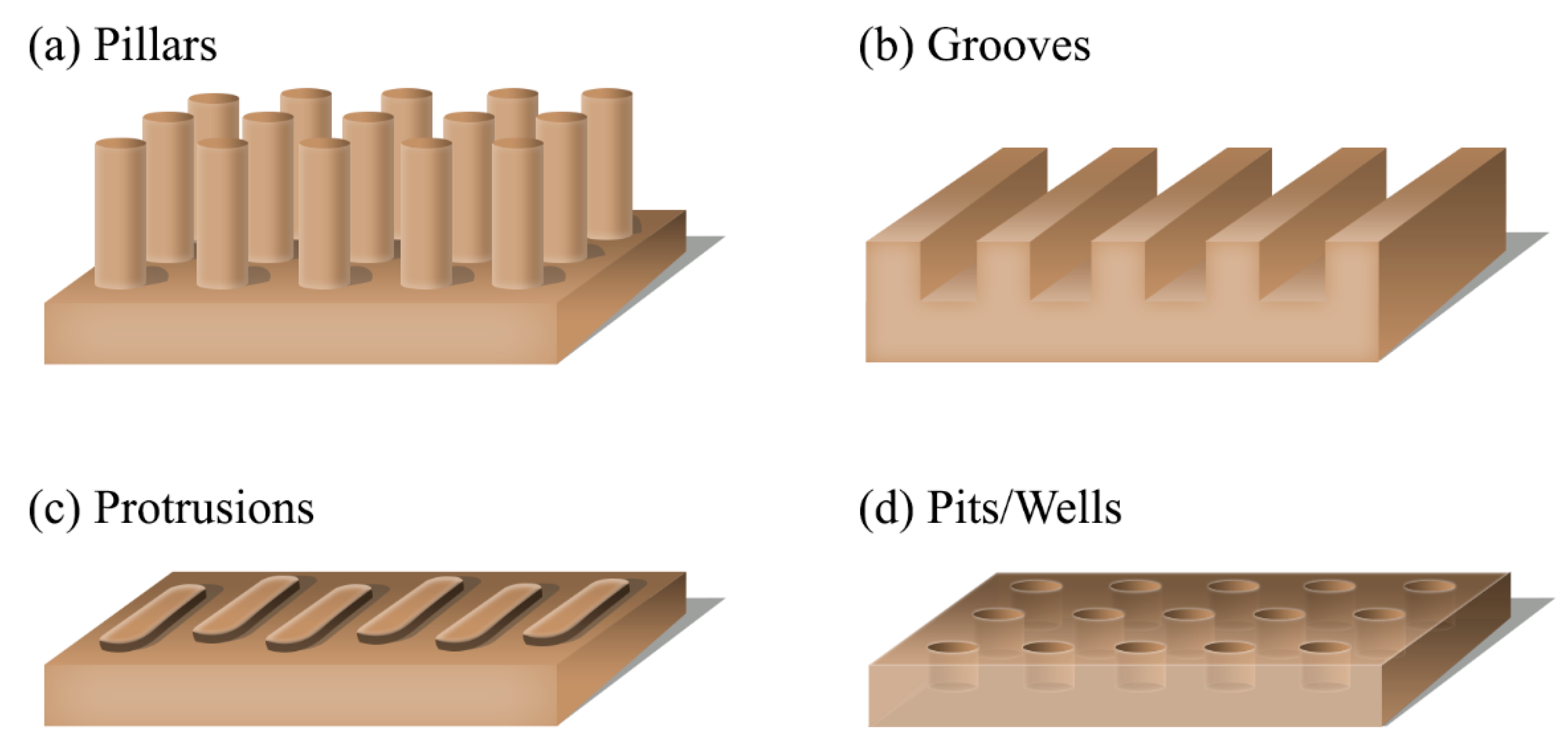
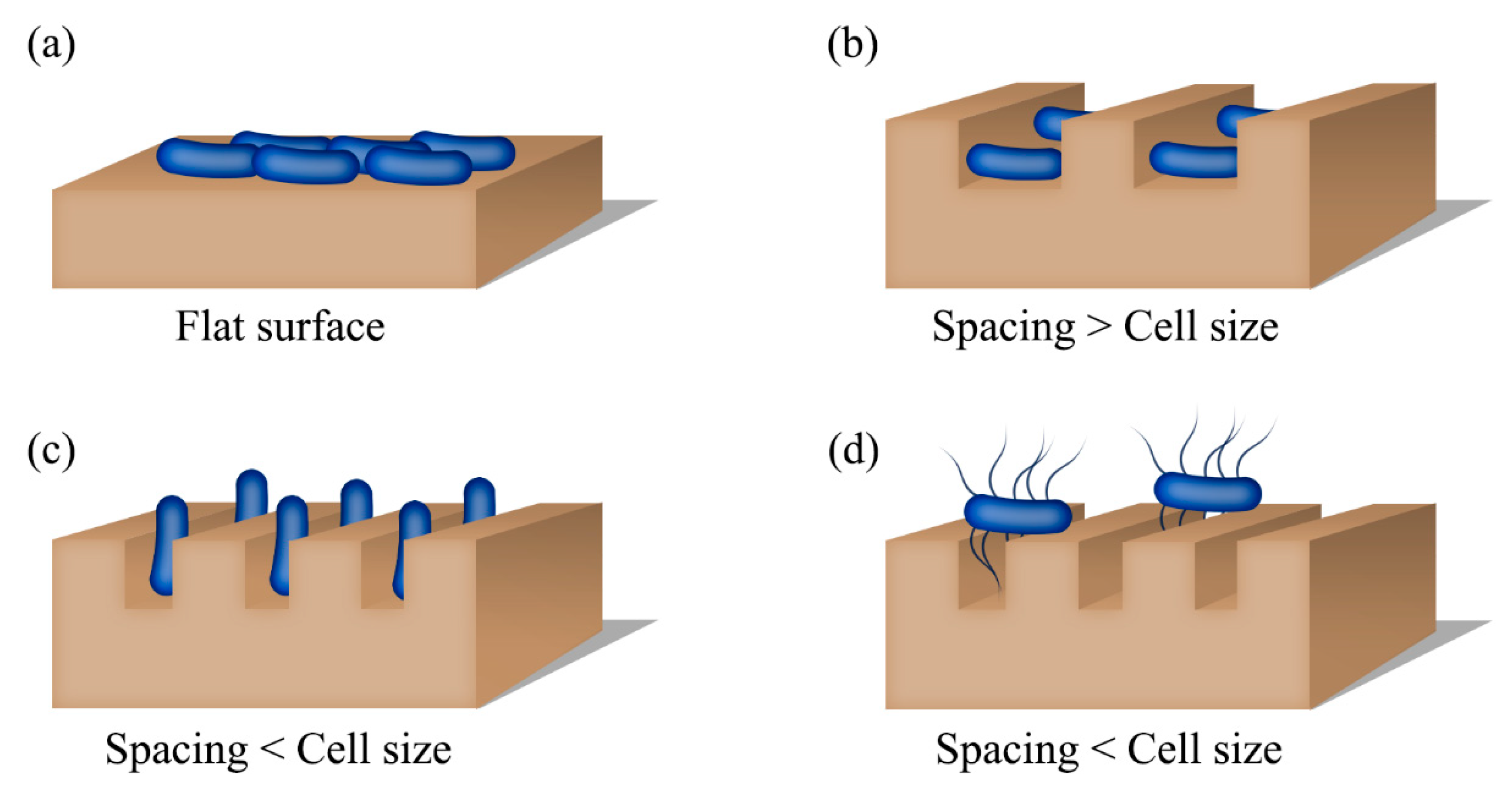
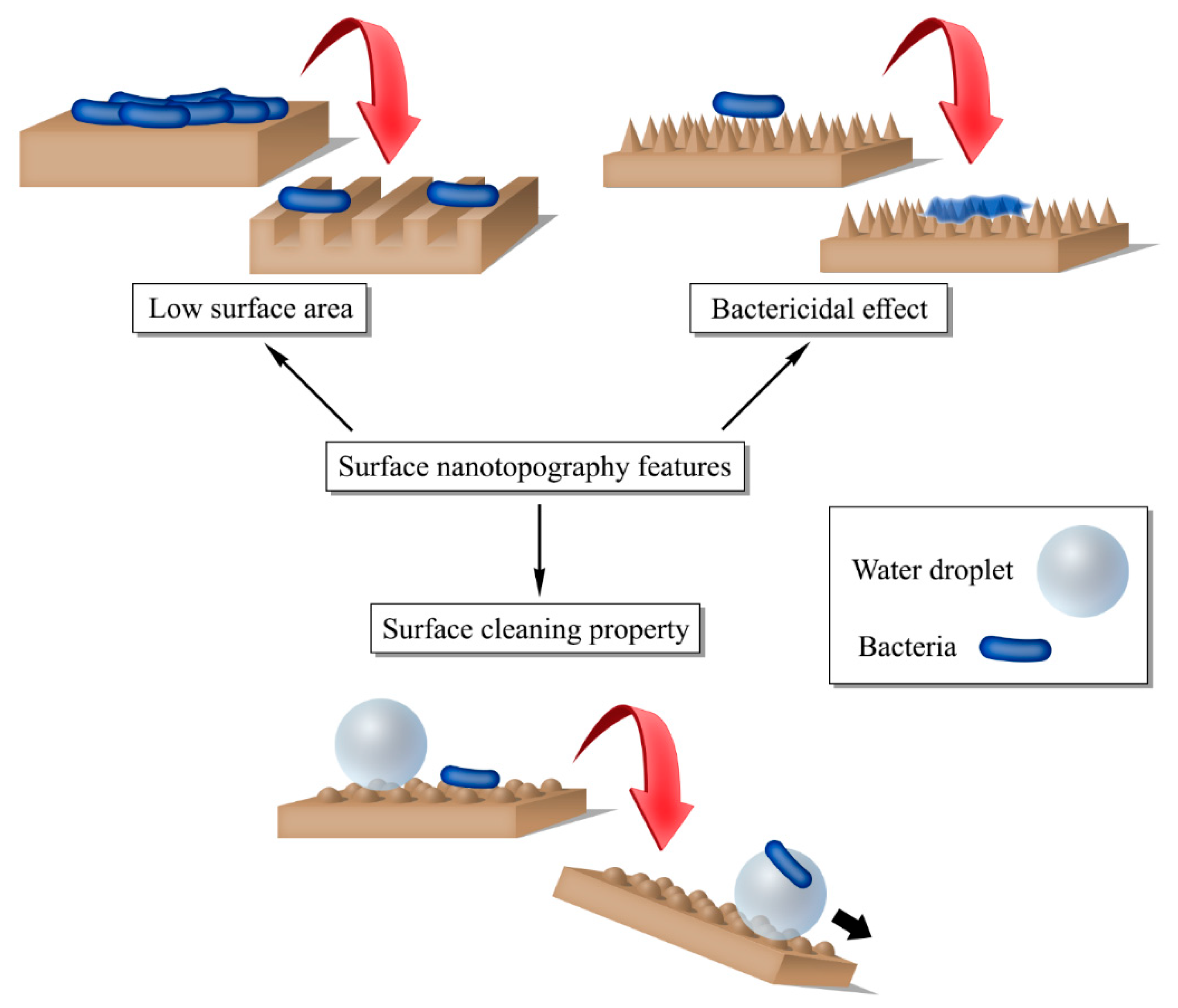
4.2. Surface Patterning, Nanotopography, and Microbial Attachment
5. Hydrogels as Biomaterials
5.1. Current Status and Novel Trends in Surface-Patterned Hydrogels as Antibiofouling Materials
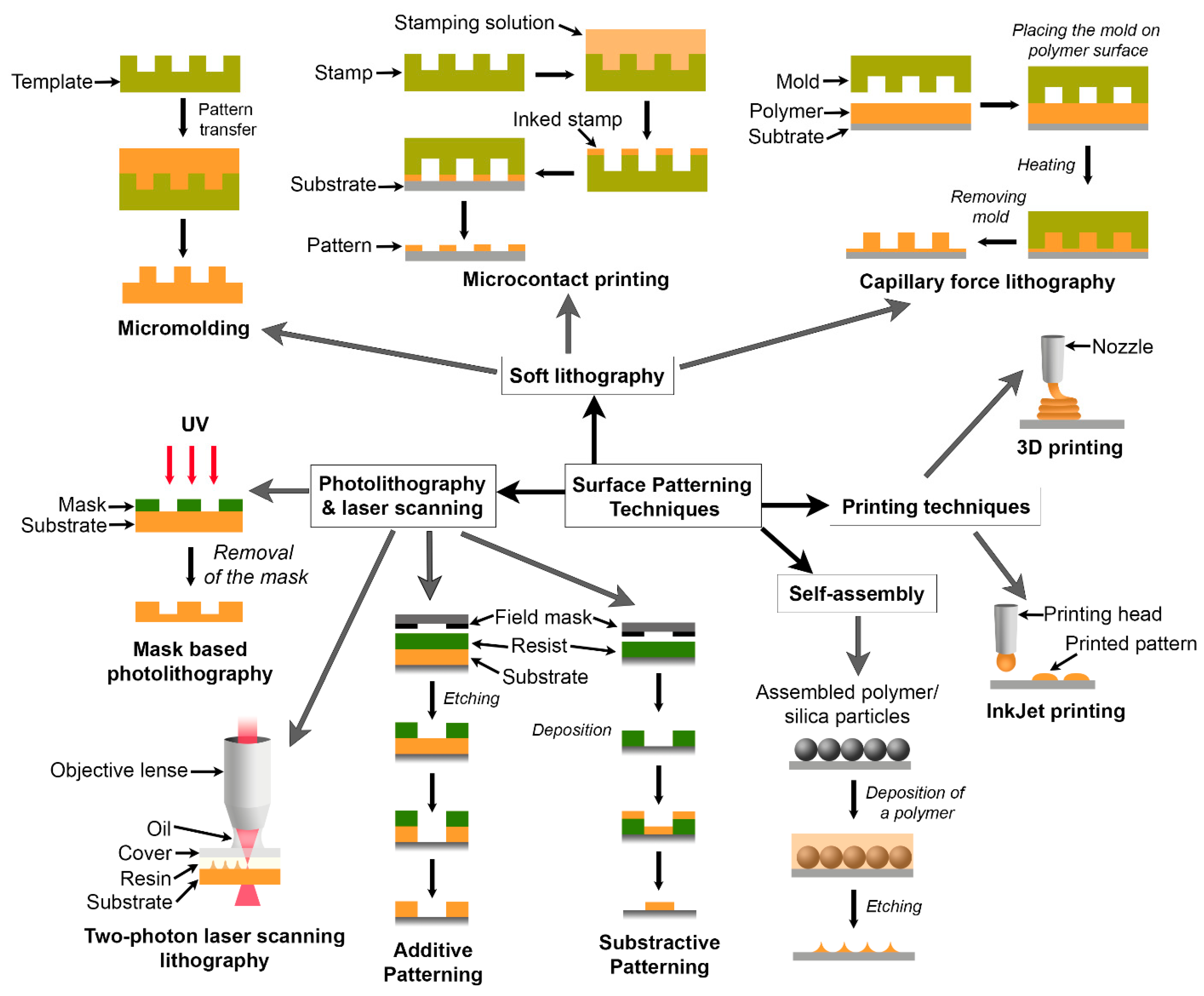
5.2. Fabrication of Surface-Patterned Hydrogels
5.3. Limitations of Surface-Patterned Hydrogels
6. Future Perspective
Author Contributions
Funding
Data Availability Statement
Conflicts of Interest
References
- Bjarnsholt, T. Introduction to Biofilms. In Biofilm Infections; Bjarnsholt, T., Jensen, P.Ø., Moser, C., Høiby, N., Eds.; Springer: New York, NY, USA, 2011; pp. 1–9. [Google Scholar]
- Costerton, J.W.; Stewart, P.S.; Greenberg, E.P. Bacterial Biofilms: A Common Cause of Persistent Infections. Science 1999, 284, 1318–1322. [Google Scholar] [CrossRef] [PubMed]
- Ramasamy, M.; Lee, J. Recent Nanotechnology Approaches for Prevention and Treatment of Biofilm-Associated Infections on Medical Devices. Biomed Res. Int. 2016, 2016, 1851242. [Google Scholar] [CrossRef]
- Khatoon, Z.; McTiernan, C.D.; Suuronen, E.J.; Mah, T.-F.; Alarcon, E.I. Bacterial biofilm formation on implantable devices and approaches to its treatment and prevention. Heliyon 2018, 4, e01067. [Google Scholar] [CrossRef]
- He, M.; Huang, Y.; Wang, J.; Chen, Z.; Xie, J.; Cui, Z.; Xu, D.; Zhang, X.; Yao, W. Advances in polysaccharide-based antibacterial materials. Int. J. Biol. Macromol. 2025, 308, 142598. [Google Scholar] [CrossRef]
- Murosaki, T.; Ahmed, N.; Gong, J.P. Antifouling properties of hydrogels. Sci. Technol. Adv. Mater. 2011, 12, 064706. [Google Scholar] [CrossRef]
- Nwuzor, I.C.; Idumah, C.I.; Nwanonenyi, S.C.; Ezeani, O.E. Emerging trends in self-polishing anti-fouling coatings for marine environment. Saf. Extrem. Environ. 2021, 3, 9–25. [Google Scholar]
- Kio, M.; Klauda, J. Advances in emerging hydrogel fouling-release coatings for marine applications. J. Coat. Technol. Res. 2024, 21, 827–856. [Google Scholar]
- Wang, Y.; Zhou, X.; He, L.; Zhou, X.; Wang, Y.; Zhou, P. Research Progress on Using Modified Hydrogel Coatings as Marine Antifouling Materials. Mar. Drugs 2024, 22, 546. [Google Scholar] [CrossRef]
- Li, X.; Yu, Z.; Wang, J.; Zhang, J.; Zhao, W.; Wang, L.; Wang, F.; Xu, D. Nanomaterials Reinforced Antifouling Coatings: From Strategic Design to Potential Applications. Adv. Mater. 2026, 38, e14795. [Google Scholar]
- Xu, Y.; Luan, X.; He, P.; Zhu, D.; Mu, R.; Wang, Y.; Wei, G. Fabrication and Functional Regulation of Biomimetic Interfaces and Their Antifouling and Antibacterial Applications: A Review. Small 2024, 20, 2308091. [Google Scholar]
- Tullii, G.; Donini, S.; Bossio, C.; Lodola, F.; Pasini, M.; Parisini, E.; Galeotti, F.; Antognazza, M.R. Micro- and Nanopatterned Silk Substrates for Antifouling Applications. ACS Appl. Mater. Interfaces 2020, 12, 5437–5446. [Google Scholar] [CrossRef]
- Kim, T.; Kwon, S.; Lee, J.; Lee, J.S.; Kang, S. A metallic anti-biofouling surface with a hierarchical topography containing nanostructures on curved micro-riblets. Microsyst. Nanoeng. 2022, 8, 6. [Google Scholar]
- Priya, S.; Malviya, R.; Srivastava, S.; Siang, T.C.; Aseeri, A.A. Bioinspired nanostructured surfaces for antimicrobial and antifouling applications. Colloid Interface Sci. Commun. 2026, 70, 100863. [Google Scholar]
- Donnelly, B.; Sammut, K.; Tang, Y. Materials Selection for Antifouling Systems in Marine Structures. Molecules 2022, 27, 3408. [Google Scholar] [CrossRef]
- Donlan, R.M. Biofilm Formation: A Clinically Relevant Microbiological Process. Clin. Infect. Dis. 2001, 33, 1387–1392. [Google Scholar] [CrossRef]
- Gupta, P.; Sarkar, S.; Das, B.; Bhattacharjee, S.; Tribedi, P. Biofilm, pathogenesis and prevention—A journey to break the wall: A review. Arch. Microbiol. 2016, 198, 1–15. [Google Scholar] [PubMed]
- Hall-Stoodley, L.; Costerton, J.W.; Stoodley, P. Bacterial biofilms: From the Natural environment to infectious diseases. Nat. Rev. Microbiol. 2004, 2, 95–108. [Google Scholar] [CrossRef] [PubMed]
- Tuson, H.H.; Weibel, D.B. Bacteria–surface interactions. Soft Matter 2013, 9, 4368–4380. [Google Scholar] [CrossRef]
- Cheng, Y.; Feng, G.; Moraru, C.I. Micro- and Nanotopography Sensitive Bacterial Attachment Mechanisms: A Review. Front. Microbiol. 2019, 10, 191. [Google Scholar] [CrossRef] [PubMed]
- Fletcher, M.; Marshall, K.C. Are Solid Surfaces of Ecological Significance to Aquatic Bacteria? In Advances in Microbial Ecology: Volume 6; Marshall, K.C., Ed.; Springer: Boston, MA, USA, 1982; pp. 199–236. [Google Scholar]
- Nevin, K.P.; Kim, B.C.; Glaven, R.H.; Johnson, J.P.; Woodard, T.L.; Methé, B.A.; Didonato, R.J.; Covalla, S.F.; Franks, A.E.; Liu, A.; et al. Anode biofilm transcriptomics reveals outer surface components essential for high density current production in Geobacter sulfurreducens fuel cells. PLoS ONE 2009, 4, e5628. [Google Scholar] [CrossRef]
- Simões, M.; Pereira, M.O.; Vieira, M.J. Effect of mechanical stress on biofilms challenged by different chemicals. Water Res. 2005, 39, 5142–5152. [Google Scholar] [CrossRef]
- Costerton, J.W.; Lewandowski, Z.; Caldwell, D.E.; Korber, D.R.; Lappin-Scott, H.M. Microbial Biofilms. Annu. Rev. Microbiol. 1995, 49, 711–745. [Google Scholar] [CrossRef]
- Chen, M.; Yu, Q.; Sun, H. Novel strategies for the prevention and treatment of biofilm related infections. Int. J. Mol. Sci. 2013, 14, 18488–18501. [Google Scholar] [CrossRef] [PubMed]
- Orenstein, R.; Wong, E.S. Urinary tract infections in adults. Am. Fam. Physician 1999, 59, 1225–1234, 1237. [Google Scholar] [PubMed]
- Soto, S.M. Importance of Biofilms in Urinary Tract Infections: New Therapeutic Approaches. Adv. Biol. 2014, 2014, 543974. [Google Scholar] [CrossRef]
- Weinstein, R.A.; Darouiche, R.O. Device-Associated Infections: A Macroproblem that Starts with Microadherence. Clin. Infect. Dis. 2001, 33, 1567–1572. [Google Scholar]
- Jamal, M.; Ahmad, W.; Andleeb, S.; Jalil, F.; Imran, M.; Nawaz, M.A.; Hussain, T.; Ali, M.; Rafiq, M.; Kamil, M.A. Bacterial biofilm and associated infections. J. Chin. Med. Assoc. 2018, 81, 7–11. [Google Scholar] [CrossRef]
- Gominet, M.; Compain, F.; Beloin, C.; Lebeaux, D. Central venous catheters and biofilms: Where do we stand in 2017? APMIS 2017, 125, 365–375. [Google Scholar] [CrossRef] [PubMed]
- Szczotka-Flynn, L.B.; Imamura, Y.; Chandra, J.; Yu, C.; Mukherjee, P.K.; Pearlman, E.; Ghannoum, M.A. Increased resistance of contact lens-related bacterial biofilms to antimicrobial activity of soft contact lens care solutions. Cornea 2009, 28, 918–926. [Google Scholar] [CrossRef]
- Arciola, C.R.; Campoccia, D.; Montanaro, L. Implant infections: Adhesion, biofilm formation and immune evasion. Nat. Rev. Microbiol. 2018, 16, 397–409. [Google Scholar] [CrossRef]
- Davidson, D.J.; Spratt, D.; Liddle, A.D. Implant materials and prosthetic joint infection: The battle with the biofilm. EFORT Open Rev. 2019, 4, 633–639. [Google Scholar] [CrossRef] [PubMed]
- Okada, M.; Kashiwase, K.; Hirata, A.; Nemoto, T.; Matsuo, K.; Murakami, A.; Ueda, Y. Bacterial Contamination During Pacemaker Implantation Is Common and Does Not Always Result in Infection. Circ. J. 2015, 79, 1712–1718. [Google Scholar] [CrossRef]
- Leonhard, M.; Schneider-Stickler, B. Voice Prostheses, Microbial Colonization and Biofilm Formation. In Biofilm-Based Healthcare-Associated Infections: Volume I; Donelli, G., Ed.; Springer International Publishing: Cham, Switzerland, 2015; pp. 123–136. [Google Scholar]
- Bauters, T.G.M.; Moerman, M.; Vermeersch, H.; Nelis, H.J. Colonization of Voice Prostheses by Albicans and Non-Albicans Candida Species. Laryngoscope 2002, 112, 708–712. [Google Scholar]
- Elving, G.J.; van der Mei, H.C.; Busscher, H.J.; van Weissenbruch, R.; Albers, F.W. Comparison of the microbial composition of voice prosthesis biofilms from patients requiring frequent versus infrequent replacement. Ann. Otol. Rhinol. Laryngol. 2002, 111, 200–203. [Google Scholar] [CrossRef] [PubMed]
- Gil-Perotin, S.; Ramirez, P.; Marti, V.; Sahuquillo, J.M.; Gonzalez, E.; Calleja, I.; Menendez, R.; Bonastre, J. Implications of endotracheal tube biofilm in ventilator-associated pneumonia response: A state of concept. Crit. Care 2012, 16, R93. [Google Scholar] [CrossRef]
- Vandecandelaere, I.; Matthijs, N.; Van Nieuwerburgh, F.; Deforce, D.; Vosters, P.; De Bus, L.; Nelis, H.J.; Depuydt, P.; Coenye, T. Assessment of Microbial Diversity in Biofilms Recovered from Endotracheal Tubes Using Culture Dependent and Independent Approaches. PLoS ONE 2012, 7, e38401. [Google Scholar]
- Thomas, M.; D’Silva, J.A.; Borole, A.J.; Chilgar, R.M. Periprosthetic atypical mycobaterial infection in breast implants: A new kid on the block! J. Plast. Reconstr. Aesthetic Surg. 2013, 66, e16–e19. [Google Scholar] [CrossRef]
- Feldman, E.M.; Kontoyiannis, D.P.; Sharabi, S.E.; Lee, E.; Kaufman, Y.; Heller, L. Breast Implant Infections: Is Cefazolin Enough? Plast. Reconstr. Surg. 2010, 126, 779–785. [Google Scholar] [CrossRef]
- Fleming, D.; Rumbaugh, K.P. Approaches to Dispersing Medical Biofilms. Microorganisms 2017, 5, 15. [Google Scholar] [CrossRef]
- Rumbaugh, K.P. How well are we translating biofilm research from bench-side to bedside? Biofilm 2020, 2, 100028. [Google Scholar] [CrossRef]
- Zhao, A.; Sun, J.; Liu, Y. Understanding bacterial biofilms: From definition to treatment strategies. Front. Cell. Infect. Microbiol. 2023, 13, 1137947. [Google Scholar] [CrossRef] [PubMed]
- Oliva, A.; Stefani, S.; Venditti, M.; Di Domenico, E.G. Biofilm-Related Infections in Gram-Positive Bacteria and the Potential Role of the Long-Acting Agent Dalbavancin. Front. Microbiol. 2021, 12, 749685. [Google Scholar]
- Pompilio, A.; Scribano, D.; Sarshar, M.; Di Bonaventura, G.; Palamara, A.T.; Ambrosi, C. Gram-Negative Bacteria Holding Together in a Biofilm: The Acinetobacter baumannii Way. Microorganisms 2021, 9, 1353. [Google Scholar] [CrossRef]
- Iñigo, M.; Del Pozo, J.L. Fungal biofilms: From bench to bedside. Rev. Esp. Quimioter. 2018, 31, 35–38. [Google Scholar]
- Jeong, G.-J.; Khan, F.; Tabassum, N.; Cho, K.-J.; Kim, Y.-M. Strategies for controlling polymicrobial biofilms: A focus on antibiofilm agents. Int. J. Antimicrob. Agents 2024, 64, 107243. [Google Scholar] [CrossRef]
- Anju, V.T.; Busi, S.; Imchen, M.; Kumavath, R.; Mohan, M.S.; Salim, S.A.; Subhaswaraj, P.; Dyavaiah, M. Polymicrobial Infections and Biofilms: Clinical Significance and Eradication Strategies. Antibiotics 2022, 11, 1731. [Google Scholar] [CrossRef]
- Rajagopal, M.; Walker, S. Envelope Structures of Gram-Positive Bacteria. Curr. Top. Microbiol. Immunol. 2017, 404, 1–44. [Google Scholar]
- Ruhal, R.; Kataria, R. Biofilm patterns in gram-positive and gram-negative bacteria. Microbiol. Res. 2021, 251, 126829. [Google Scholar] [CrossRef]
- Zarnowski, R.; Westler, W.M.; Lacmbouh, G.A.; Marita, J.M.; Bothe, J.R.; Bernhardt, J.; Lounes-Hadj Sahraoui, A.; Fontaine, J.; Sanchez, H.; Hatfield, R.D.; et al. Novel entries in a fungal biofilm matrix encyclopedia. mBio 2014, 5, e01333-14. [Google Scholar] [CrossRef]
- Martinez, L.R.; Fries, B.C. Fungal Biofilms: Relevance in the Setting of Human Disease. Curr. Fungal Infect. Rep. 2010, 4, 266–275. [Google Scholar] [CrossRef] [PubMed]
- Sadiq, F.A.; Burmølle, M.; Heyndrickx, M.; Flint, S.; Lu, W.; Chen, W.; Zhao, J.; Zhang, H. Community-wide changes reflecting bacterial interspecific interactions in multispecies biofilms. Crit. Rev. Microbiol. 2021, 47, 338–358. [Google Scholar] [CrossRef]
- Kernien, J.F.; Snarr, B.D.; Sheppard, D.C.; Nett, J.E. The Interface between Fungal Biofilms and Innate Immunity. Front. Immunol. 2017, 8, 1968. [Google Scholar] [CrossRef]
- Peters Brian, M.; Jabra-Rizk Mary, A.; O’May Graeme, A.; Costerton, J.W.; Shirtliff Mark, E. Polymicrobial Interactions: Impact on Pathogenesis and Human Disease. Clin. Microbiol. Rev. 2012, 25, 193–213. [Google Scholar] [CrossRef]
- Bjarnsholt, T. The role of bacterial biofilms in chronic infections. APMIS 2013, 121, 1–58. [Google Scholar] [CrossRef]
- Srivastava, S.; Bhargava, A. Biofilms and human health. Biotechnol. Lett. 2016, 38, 1–22. [Google Scholar] [CrossRef]
- Rimondini, L.; Cochis, A.; Varoni, E.; Azzimonti, B.; Carrassi, A. Biofilm Formation on Implants and Prosthetic Dental Materials. In Handbook of Bioceramics and Biocomposites; Antoniac, I.V., Ed.; Springer International Publishing: Cham, Switzerland, 2014; pp. 1–37. [Google Scholar]
- Veerachamy, S.; Yarlagadda, T.; Manivasagam, G.; Yarlagadda, P.K. Bacterial adherence and biofilm formation on medical implants: A review. Proc. Inst. Mech. Eng. H 2014, 228, 1083–1099. [Google Scholar] [CrossRef]
- Habash, M.; Reid, G. Microbial biofilms: Their development and significance for medical device-related infections. J. Clin. Pharmacol. 1999, 39, 887–898. [Google Scholar] [CrossRef] [PubMed]
- Oliveira, W.F.; Silva, P.M.S.; Silva, R.C.S.; Silva, G.M.M.; Machado, G.; Coelho, L.C.B.B.; Correia, M.T.S. Staphylococcus aureus and Staphylococcus epidermidis infections on implants. J. Hosp. Infect. 2018, 98, 111–117. [Google Scholar] [CrossRef] [PubMed]
- Yang, L.; Liu, Y.; Wu, H.; Song, Z.; Høiby, N.; Molin, S.; Givskov, M. Combating biofilms. FEMS Immunol. Med. Microbiol. 2012, 65, 146–157. [Google Scholar] [CrossRef]
- Blackledge, M.S.; Worthington, R.J.; Melander, C. Biologically inspired strategies for combating bacterial biofilms. Curr. Opin. Pharmacol. 2013, 13, 699–706. [Google Scholar] [CrossRef] [PubMed]
- Masák, J.; Čejková, A.; Schreiberová, O.; Řezanka, T. Pseudomonas biofilms: Possibilities of their control. FEMS Microbiol. Ecol. 2014, 89, 1–14. [Google Scholar] [CrossRef]
- Yin, W.; Xu, S.; Wang, Y.; Zhang, Y.; Chou, S.H.; Galperin, M.Y.; He, J. Ways to control harmful biofilms: Prevention, inhibition, and eradication. Crit. Rev. Microbiol. 2021, 47, 57–78. [Google Scholar] [CrossRef]
- Sonnleitner, D.; Sommer, C.; Scheibel, T.; Lang, G. Approaches to inhibit biofilm formation applying natural and artificial silk-based materials. Mater. Sci. Eng. C 2021, 131, 112458. [Google Scholar] [CrossRef]
- Hindieh, P.; Yaghi, J.; Assaf, J.C.; Chokr, A.; Atoui, A.; Tzenios, N.; Louka, N.; Khoury, A.E. Emerging Multimodal Strategies for Bacterial Biofilm Eradication: A Comprehensive Review. Microorganisms 2025, 13, 2796. [Google Scholar] [CrossRef]
- Balaure, P.C.; Grumezescu, A.M. Recent Advances in Surface Nanoengineering for Biofilm Prevention and Control. Part I: Molecular Basis of Biofilm Recalcitrance. Passive Anti-Biofouling Nanocoatings. Nanomaterials 2020, 10, 1230. [Google Scholar] [CrossRef]
- Banerjee, I.; Pangule, R.C.; Kane, R.S. Antifouling coatings: Recent developments in the design of surfaces that prevent fouling by proteins, bacteria, and marine organisms. Adv. Mater. 2011, 23, 690–718. [Google Scholar] [CrossRef]
- De Prijck, K.; De Smet, N.; Coenye, T.; Schacht, E.; Nelis, H.J. Prevention of Candida albicans Biofilm Formation by Covalently Bound Dimethylaminoethylmethacrylate and Polyethylenimine. Mycopathologia 2010, 170, 213–221. [Google Scholar] [CrossRef] [PubMed]
- Lichter, J.A.; Thompson, M.T.; Delgadillo, M.; Nishikawa, T.; Rubner, M.F.; Van Vliet, K.J. Substrata Mechanical Stiffness Can Regulate Adhesion of Viable Bacteria. Biomacromolecules 2008, 9, 1571–1578. [Google Scholar] [CrossRef] [PubMed]
- Barraud, N.; Hassett, D.J.; Hwang, S.-H.; Rice, S.A.; Kjelleberg, S.; Webb, J.S. Involvement of Nitric Oxide in Biofilm Dispersal of Pseudomonas aeruginosa. J. Bacteriol. 2006, 188, 7344–7353. [Google Scholar] [CrossRef]
- Chelmowski, R.; Köster, S.D.; Kerstan, A.; Prekelt, A.; Grunwald, C.; Winkler, T.; Metzler-Nolte, N.; Terfort, A.; Wöll, C. Peptide-Based SAMs that Resist the Adsorption of Proteins. J. Am. Chem. Soc. 2008, 130, 14952–14953. [Google Scholar] [CrossRef] [PubMed]
- Chen, S.; Cao, Z.; Jiang, S. Ultra-low fouling peptide surfaces derived from natural amino acids. Biomaterials 2009, 30, 5892–5896. [Google Scholar] [CrossRef]
- Cassinelli, C.; Morra, M.; Pavesio, A.; Renier, D. Evaluation of interfacial properties of hyaluronan coated poly(methylmethacrylate) intraocular lenses. J. Biomater. Sci. Polym. Ed. 2000, 11, 961–977. [Google Scholar] [CrossRef]
- Boelens, J.J.; Tan, W.-F.; Dankert, J.; Zaat, S.A.J. Antibacterial activity of antibiotic-soaked polyvinylpyrrolidone-grafted silicon elastomer hydrocephalus shunts. J. Antimicrob. Chemother. 2000, 45, 221–224. [Google Scholar] [CrossRef]
- Gottenbos, B.; van der Mei, H.C.; Klatter, F.; Nieuwenhuis, P.; Busscher, H.J. In vitro and in vivo antimicrobial activity of covalently coupled quaternary ammonium silane coatings on silicone rubber. Biomaterials 2002, 23, 1417–1423. [Google Scholar] [CrossRef]
- Francolini, I.; Donelli, G. Prevention and control of biofilm-based medical-device-related infections. FEMS Immunol. Med. Microbiol. 2010, 59, 227–238. [Google Scholar] [CrossRef]
- Li, P.; Yin, R.; Cheng, J.; Lin, J. Bacterial Biofilm Formation on Biomaterials and Approaches to Its Treatment and Prevention. Int. J. Mol. Sci. 2023, 24, 11680. [Google Scholar] [CrossRef] [PubMed]
- Alum, E.U.; Gulumbe, B.H.; Izah, S.C.; Uti, D.E.; Aja, P.M.; Igwenyi, I.O.; Offor, C.E. Natural product-based inhibitors of quorum sensing: A novel approach to combat antibiotic resistance. Biochem. Biophys. Rep. 2025, 43, 102111. [Google Scholar] [CrossRef] [PubMed]
- Ye, J.; Qiu, W.; Xie, J. Quorum sensing systems in biofilm formation and the potential application of natural quorum sensing inhibitors in aquatic product preservation. Food Res. Int. 2025, 221, 117623. [Google Scholar] [CrossRef]
- Damodaran, V.B.; Murthy, N.S. Bio-inspired strategies for designing antifouling biomaterials. Biomater. Res. 2016, 20, 18. [Google Scholar] [CrossRef] [PubMed]
- Malaekeh-Nikouei, B.; Fazly Bazzaz, B.S.; Mirhadi, E.; Tajani, A.S.; Khameneh, B. The role of nanotechnology in combating biofilm-based antibiotic resistance. J. Drug Deliv. Sci. Technol. 2020, 60, 101880. [Google Scholar] [CrossRef]
- Baptista, P.V.; McCusker, M.P.; Carvalho, A.; Ferreira, D.A.; Mohan, N.M.; Martins, M.; Fernandes, A.R. Nano-Strategies to Fight Multidrug Resistant Bacteria—“A Battle of the Titans”. Front. Microbiol. 2018, 9, 1441. [Google Scholar]
- Bharathi, D.; Lee, J. Polysaccharide-based nanomaterials and hydrogels for antibiofilm and wound healing applications. Int. J. Biol. Macromol. 2025, 320, 145899. [Google Scholar] [CrossRef]
- Silver, S.; Phung, L.T.; Silver, G. Silver as biocides in burn and wound dressings and bacterial resistance to silver compounds. J. Ind. Microbiol. Biotechnol. 2006, 33, 627–634. [Google Scholar] [CrossRef]
- Trevors, J.T. Silver resistance and accumulation in bacteria. Enzym. Microb. Technol. 1987, 9, 331–333. [Google Scholar] [CrossRef]
- Epstein, A.K.; Hochbaum, A.I.; Kim, P.; Aizenberg, J. Control of bacterial biofilm growth on surfaces by nanostructural mechanics and geometry. Nanotechnology 2011, 22, 494007. [Google Scholar] [CrossRef]
- Joshi, A.A.; Patil, R.H. Nanoparticles targeting biofilms: A new era in combating antimicrobial resistance. Med. Microecol. 2025, 26, 100156. [Google Scholar] [CrossRef]
- Sedighi, O.; Bednarke, B.; Sherriff, H.; Doiron, A.L. Nanoparticle-Based Strategies for Managing Biofilm Infections in Wounds: A Comprehensive Review. ACS Omega 2024, 9, 27853–27871. [Google Scholar] [CrossRef] [PubMed]
- Aflakian, F.; Hashemitabar, G. Biosynthesized silver nanoparticles at subinhibitory concentrations as inhibitors of quorum sensing, pathogenicity, and biofilm formation in Pseudomonas aeruginosa PAO1. Heliyon 2025, 11, e42899. [Google Scholar] [CrossRef]
- Rai, M.; Yadav, A.; Gade, A. Silver nanoparticles as a new generation of antimicrobials. Biotechnol. Adv. 2009, 27, 76–83. [Google Scholar] [CrossRef] [PubMed]
- Ma, X.; Tang, W.; Yang, R. Bioinspired nanomaterials for the treatment of bacterial infections. Nano Res. 2024, 17, 691–714. [Google Scholar]
- Zafar, N.; Madni, A.; Khalid, A.; Khan, T.; Kousar, R.; Naz, S.S.; Wahid, F. Pharmaceutical and Biomedical Applications of Green Synthesized Metal and Metal Oxide Nanoparticles. Curr. Pharm. Des. 2020, 26, 5844–5865. [Google Scholar] [CrossRef] [PubMed]
- Vahedi, M.; Hosseini-Jazani, N.; Yousefi, S.; Ghahremani, M. Evaluation of anti-bacterial effects of nickel nanoparticles on biofilm production by Staphylococcus epidermidis. Iran. J. Microbiol. 2017, 9, 160–168. [Google Scholar]
- Swolana, D.; Kępa, M.; Idzik, D.; Dziedzic, A.; Kabała-Dzik, A.; Wąsik, T.J.; Wojtyczka, R.D. The Antibacterial Effect of Silver Nanoparticles on Staphylococcus Epidermidis Strains with Different Biofilm-Forming Ability. Nanomaterials 2020, 10, 1010. [Google Scholar] [CrossRef]
- da Cunha, K.F.; Albernaz, D.T.F.; Garcia, M.d.O.; Allend, S.O.; Hartwig, D.D. Silver nanoparticles (AgNPs) in the control of Staphylococcus spp. Lett. Appl. Microbiol. 2022, 76, ovac032. [Google Scholar]
- Ali, S.; Sudha, K.G.; Thirumalaivasan, N.; Ahamed, M.; Pandiaraj, S.; Rajeswari, V.D.; Vinayagam, Y.; Thiruvengadam, M.; Govindasamy, R. Green Synthesis of Magnesium Oxide Nanoparticles by Using Abrus precatorius Bark Extract and Their Photocatalytic, Antioxidant, Antibacterial, and Cytotoxicity Activities. Bioengineering 2023, 10, 302. [Google Scholar] [CrossRef] [PubMed]
- Applerot, G.; Lipovsky, A.; Dror, R.; Perkas, N.; Nitzan, Y.; Lubart, R.; Gedanken, A. Enhanced Antibacterial Activity of Nanocrystalline ZnO Due to Increased ROS-Mediated Cell Injury. Adv. Funct. Mater. 2009, 19, 842–852. [Google Scholar] [CrossRef]
- Radulescu, D.-M.; Surdu, V.-A.; Ficai, A.; Ficai, D.; Grumezescu, A.-M.; Andronescu, E. Green Synthesis of Metal and Metal Oxide Nanoparticles: A Review of the Principles and Biomedical Applications. Int. J. Mol. Sci. 2023, 24, 15397. [Google Scholar] [CrossRef]
- Dwivedi, S.; Wahab, R.; Khan, F.; Mishra, Y.K.; Musarrat, J.; Al-Khedhairy, A.A. Reactive Oxygen Species Mediated Bacterial Biofilm Inhibition via Zinc Oxide Nanoparticles and Their Statistical Determination. PLoS ONE 2014, 9, e111289. [Google Scholar]
- Friedman, A.J.; Phan, J.; Schairer, D.O.; Champer, J.; Qin, M.; Pirouz, A.; Blecher-Paz, K.; Oren, A.; Liu, P.T.; Modlin, R.L.; et al. Antimicrobial and Anti-Inflammatory Activity of Chitosan–Alginate Nanoparticles: A Targeted Therapy for Cutaneous Pathogens. J. Investig. Dermatol. 2013, 133, 1231–1239. [Google Scholar] [CrossRef]
- Mazzantini, D.; Massimino, M.; Calvigioni, M.; Rossi, V.; Celandroni, F.; Lupetti, A.; Batoni, G.; Ghelardi, E. Anti-Staphylococcal Biofilm Effects of a Liposome-Based Formulation Containing Citrus Polyphenols. Antibiotics 2024, 13, 318. [Google Scholar] [CrossRef]
- Wang, X.; Hu, J.; Chen, C.; Lu, J.; Liu, C.; Ning, Y.; Lu, F. Berberine@AgNPs@Carboxylated chitosan hydrogel dressing with immunomodulatory and anti-biofilm properties promotes wound repair in drug-resistant bacterial infections. Int. J. Biol. Macromol. 2025, 315, 144496. [Google Scholar] [CrossRef]
- Xu, L.-C.; Siedlecki, C.A. Submicron-textured biomaterial surface reduces staphylococcal bacterial adhesion and biofilm formation. Acta Biomater. 2012, 8, 72–81. [Google Scholar] [CrossRef] [PubMed]
- Basak, P.; Adhikari, B.; Banerjee, I.; Maiti, T.K. Sustained release of antibiotic from polyurethane coated implant materials. J. Mater. Sci. Mater. Med. 2008, 20, 213–221. [Google Scholar] [CrossRef] [PubMed]
- Mann, E.E.; Manna, D.; Mettetal, M.R.; May, R.M.; Dannemiller, E.M.; Chung, K.K.; Brennan, A.B.; Reddy, S.T. Surface micropattern limits bacterial contamination. Antimicrob. Resist. Infect. Control 2014, 3, 28. [Google Scholar] [CrossRef]
- Gordon, A.T.; Lutz, G.E.; Boninger, M.L.; Cooper, R.A. Introduction to Nanotechnology: Potential Applications in Physical Medicine and Rehabilitation. Am. J. Phys. Med. Rehabil. 2007, 86, 225–241. [Google Scholar] [PubMed]
- Crawford, R.J.; Webb, H.K.; Truong, V.K.; Hasan, J.; Ivanova, E.P. Surface topographical factors influencing bacterial attachment. Adv. Colloid Interface Sci. 2012, 179–182, 142–149. [Google Scholar] [CrossRef]
- Perera-Costa, D.; Bruque, J.M.; González-Martín, M.L.; Gómez-García, A.C.; Vadillo-Rodríguez, V. Studying the Influence of Surface Topography on Bacterial Adhesion using Spatially Organized Microtopographic Surface Patterns. Langmuir 2014, 30, 4633–4641. [Google Scholar] [CrossRef]
- Hsu, L.C.; Fang, J.; Borca-Tasciuc, D.A.; Worobo, R.W.; Moraru, C.I. Effect of Micro- and Nanoscale Topography on the Adhesion of Bacterial Cells to Solid Surfaces. Appl. Environ. Microbiol. 2013, 79, 2703–2712. [Google Scholar] [CrossRef] [PubMed]
- Mitik-Dineva, N.; Wang, J.; Mocanasu, R.C.; Stoddart, P.R.; Crawford, R.J.; Ivanova, E.P. Impact of nano-topography on bacterial attachment. Biotechnol. J. 2008, 3, 536–544. [Google Scholar] [CrossRef]
- Bollenl, C.M.L.; Lambrechts, P.; Quirynen, M. Comparison of surface roughness of oral hard materials to the threshold surface roughness for bacterial plaque retention: A review of the literature. Dent. Mater. 1997, 13, 258–269. [Google Scholar] [CrossRef]
- Medilanski, E.; Kaufmann, K.; Wick, L.Y.; Wanner, O.; Harms, H. Influence of the Surface Topography of Stainless Steel on Bacterial Adhesion. Biofouling 2002, 18, 193–203. [Google Scholar] [CrossRef]
- Puckett, S.D.; Taylor, E.; Raimondo, T.; Webster, T.J. The relationship between the nanostructure of titanium surfaces and bacterial attachment. Biomaterials 2010, 31, 706–713. [Google Scholar] [CrossRef]
- Singh, A.V.; Vyas, V.; Patil, R.; Sharma, V.; Scopelliti, P.E.; Bongiorno, G.; Podestà, A.; Lenardi, C.; Gade, W.N.; Milani, P. Quantitative characterization of the influence of the nanoscale morphology of nanostructured surfaces on bacterial adhesion and biofilm formation. PLoS ONE 2011, 6, e25029. [Google Scholar] [CrossRef]
- Truong, V.K.; Lapovok, R.; Estrin, Y.S.; Rundell, S.; Wang, J.Y.; Fluke, C.J.; Crawford, R.J.; Ivanova, E.P. The influence of nano-scale surface roughness on bacterial adhesion to ultrafine-grained titanium. Biomaterials 2010, 31, 3674–3683. [Google Scholar] [CrossRef]
- Park, M.R.; Banks, M.K.; Applegate, B.; Webster, T.J. Influence of nanophase titania topography on bacterial attachment and metabolism. Int. J. Nanomed. 2008, 3, 497–504. [Google Scholar] [CrossRef][Green Version]
- Mitik-Dineva, N.; Wang, J.; Truong, V.K.; Stoddart, P.; Malherbe, F.; Crawford, R.J.; Ivanova, E.P. Escherichia coli, Pseudomonas aeruginosa, and Staphylococcus aureus Attachment Patterns on Glass Surfaces with Nanoscale Roughness. Curr. Microbiol. 2009, 58, 268–273. [Google Scholar] [CrossRef]
- An, Y.H.; Friedman, R.J.; Draughn, R.A.; Smith, E.A.; Nicholson, J.H.; John, J.F. Rapid quantification of staphylococci adhered to titanium surfaces using image analyzed epifluorescence microscopy. J. Microbiol. Methods 1995, 24, 29–40. [Google Scholar] [CrossRef]
- Li, B.; Logan, B.E. Bacterial adhesion to glass and metal-oxide surfaces. Colloids Surf. B Biointerfaces 2004, 36, 81–90. [Google Scholar]
- Boulangé-Petermann, L.; Rault, J.; Bellon-Fontaine, M.N. Adhesion of streptococcus thermophilus to stainless steel with different surface topography and roughness. Biofouling 1997, 11, 201–216. [Google Scholar] [CrossRef]
- Whitehead, K.A.; Colligon, J.; Verran, J. Retention of microbial cells in substratum surface features of micrometer and sub-micrometer dimensions. Colloids Surf. B Biointerfaces 2005, 41, 129–138. [Google Scholar] [PubMed]
- Dickson, M.N.; Liang, E.I.; Rodriguez, L.A.; Vollereaux, N.; Yee, A.F. Nanopatterned polymer surfaces with bactericidal properties. Biointerphases 2015, 10, 021010. [Google Scholar] [CrossRef] [PubMed]
- Chung, K.K.; Schumacher, J.F.; Sampson, E.M.; Burne, R.A.; Antonelli, P.J.; Brennan, A.B. Impact of engineered surface microtopography on biofilm formation of Staphylococcus aureus. Biointerphases 2007, 2, 89–94. [Google Scholar] [CrossRef]
- Díaz, C.; Schilardi, P.L.; Salvarezza, R.C.; de Mele, M.F.L. Nano/Microscale Order Affects the Early Stages of Biofilm Formation on Metal Surfaces. Langmuir 2007, 23, 11206–11210. [Google Scholar] [CrossRef] [PubMed]
- Friedlander, R.S.; Vlamakis, H.; Kim, P.; Khan, M.; Kolter, R.; Aizenberg, J. Bacterial flagella explore microscale hummocks and hollows to increase adhesion. Proc. Natl. Acad. Sci. USA 2013, 110, 5624–5629. [Google Scholar]
- Hochbaum, A.I.; Aizenberg, J. Bacteria Pattern Spontaneously on Periodic Nanostructure Arrays. Nano Lett. 2010, 10, 3717–3721. [Google Scholar] [CrossRef]
- Hou, S.; Gu, H.; Smith, C.; Ren, D. Microtopographic Patterns Affect Escherichia coli Biofilm Formation on Poly(dimethylsiloxane) Surfaces. Langmuir 2011, 27, 2686–2691. [Google Scholar] [CrossRef]
- Wang, L.; Wong, Y.-C.; Correira, J.M.; Wancura, M.; Geiger, C.J.; Webster, S.S.; Touhami, A.; Butler, B.J.; O’Toole, G.A.; Langford, R.M.; et al. The accumulation and growth of Pseudomonas aeruginosa on surfaces is modulated by surface mechanics via cyclic-di-GMP signaling. npj Biofilms Microbiomes 2023, 9, 78. [Google Scholar] [CrossRef]
- Tripathy, A.; Pahal, S.; Mudakavi, R.J.; Raichur, A.M.; Varma, M.M.; Sen, P. Impact of Bioinspired Nanotopography on the Antibacterial and Antibiofilm Efficacy of Chitosan. Biomacromolecules 2018, 19, 1340–1346. [Google Scholar] [CrossRef] [PubMed]
- Campoccia, D.; Montanaro, L.; Agheli, H.; Sutherland, D.S.; Pirini, V.; Donati, M.E.; Arciola, C.R. Study of Staphylococcus aureus adhesion on a novel nanostructured surface by chemiluminometry. Int. J. Artif. Organs 2006, 29, 622–629. [Google Scholar] [CrossRef]
- Ivanova, E.P.; Hasan, J.; Webb, H.K.; Gervinskas, G.; Juodkazis, S.; Truong, V.K.; Wu, A.H.F.; Lamb, R.N.; Baulin, V.A.; Watson, G.S.; et al. Bactericidal activity of black silicon. Nat. Commun. 2013, 4, 2838. [Google Scholar] [CrossRef]
- Kyle, N.; Adam, B.; Alan, C.; Dennis, L. Adhesion-dependent rupturing of Saccharomyces cerevisiae on biological antimicrobial nanostructured surfaces. J. R. Soc. Interface 2015, 12, 20140999. [Google Scholar] [CrossRef]
- Ivanova, E.P.; Hasan, J.; Webb, H.K.; Truong, V.K.; Watson, G.S.; Watson, J.A.; Baulin, V.A.; Pogodin, S.; Wang, J.Y.; Tobin, M.J.; et al. Natural Bactericidal Surfaces: Mechanical Rupture of Pseudomonas aeruginosa Cells by Cicada Wings. Small 2012, 8, 2489–2494. [Google Scholar] [CrossRef]
- Ma, J.; Sun, Y.; Gleichauf, K.; Lou, J.; Li, Q. Nanostructure on Taro Leaves Resists Fouling by Colloids and Bacteria under Submerged Conditions. Langmuir 2011, 27, 10035–10040. [Google Scholar] [CrossRef]
- Crick, C.R.; Ismail, S.; Pratten, J.; Parkin, I.P. An investigation into bacterial attachment to an elastomeric superhydrophobic surface prepared via aerosol assisted deposition. Thin Solid Film. 2011, 519, 3722–3727. [Google Scholar] [CrossRef]
- Fadeeva, E.; Truong, V.K.; Stiesch, M.; Chichkov, B.N.; Crawford, R.J.; Wang, J.; Ivanova, E.P. Bacterial Retention on Superhydrophobic Titanium Surfaces Fabricated by Femtosecond Laser Ablation. Langmuir 2011, 27, 3012–3019. [Google Scholar] [CrossRef]
- Peppas, N.A.; Bures, P.; Leobandung, W.; Ichikawa, H. Hydrogels in pharmaceutical formulations. Eur. J. Pharm. Biopharm. 2000, 50, 27–46. [Google Scholar] [CrossRef]
- Peppas, N.A.; Hilt, J.Z.; Khademhosseini, A.; Langer, R. Hydrogels in biology and medicine: From molecular principles to bionanotechnology. Adv. Mater. 2006, 18, 1345–1360. [Google Scholar] [CrossRef]
- Kopeček, J. Hydrogel biomaterials: A smart future? Biomaterials 2007, 28, 5185–5192. [Google Scholar] [CrossRef]
- Koehler, J.; Brandl, F.P.; Goepferich, A.M. Hydrogel wound dressings for bioactive treatment of acute and chronic wounds. Eur. Polym. J. 2018, 100, 1–11. [Google Scholar] [CrossRef]
- Gupta, A.; Kowalczuk, M.; Heaselgrave, W.; Britland, S.T.; Martin, C.; Radecka, I. The production and application of hydrogels for wound management: A review. Eur. Polym. J. 2019, 111, 134–151. [Google Scholar] [CrossRef]
- Hockaday, L.A.; Duan, B.; Kang, K.H.; Butcher, J.T. 3D-Printed Hydrogel Technologies for Tissue-Engineered Heart Valves. 3D Print. Addit. Manuf. 2014, 1, 122–136. [Google Scholar] [CrossRef]
- Zhang, X.; Xu, B.; Puperi, D.S.; Wu, Y.; West, J.L.; Grande-Allen, K.J. Application of hydrogels in heart valve tissue engineering. J. Long Term Eff. Med. Implant. 2015, 25, 105–134. [Google Scholar]
- Caló, E.; Khutoryanskiy, V.V. Biomedical applications of hydrogels: A review of patents and commercial products. Eur. Polym. J. 2015, 65, 252–267. [Google Scholar] [CrossRef]
- Ng, V.W.L.; Chan, J.M.W.; Sardon, H.; Ono, R.J.; García, J.M.; Yang, Y.Y.; Hedrick, J.L. Antimicrobial hydrogels: A new weapon in the arsenal against multidrug-resistant infections. Adv. Drug Deliv. Rev. 2014, 78, 46–62. [Google Scholar] [CrossRef] [PubMed]
- Alarcon, E.I.; Udekwu, K.I.; Noel, C.W.; Gagnon, L.B.P.; Taylor, P.K.; Vulesevic, B.; Simpson, M.J.; Gkotzis, S.; Islam, M.M.; Lee, C.-J.; et al. Safety and efficacy of composite collagen–silver nanoparticle hydrogels as tissue engineering scaffolds. Nanoscale 2015, 7, 18789–18798. [Google Scholar] [CrossRef]
- Wahid, F.; Zhong, C.; Wang, H.-S.; Hu, X.-H.; Chu, L.-Q. Recent Advances in Antimicrobial Hydrogels Containing Metal Ions and Metals/Metal Oxide Nanoparticles. Polymers 2017, 9, 636. [Google Scholar] [CrossRef] [PubMed]
- Nešović, K.; Janković, A.; Radetić, T.; Vukašinović-Sekulić, M.; Kojić, V.; Živković, L.; Perić-Grujić, A.; Rhee, K.Y.; Mišković-Stanković, V. Chitosan-based hydrogel wound dressings with electrochemically incorporated silver nanoparticles—In vitro study. Eur. Polym. J. 2019, 121, 109257. [Google Scholar]
- Lopez-Carrizales, M.; Mendoza-Mendoza, E.; Peralta-Rodriguez, R.D.; Pérez-Díaz, M.A.; Portales-Pérez, D.; Magaña-Aquino, M.; Aragón-Piña, A.; Infante-Martínez, R.; Barriga-Castro, E.D.; Sánchez-Sánchez, R.; et al. Characterization, antibiofilm and biocompatibility properties of chitosan hydrogels loaded with silver nanoparticles and ampicillin: An alternative protection to central venous catheters. Colloids Surf. B Biointerfaces 2020, 196, 111292. [Google Scholar] [CrossRef]
- Yazdimamaghani, M.; Vashaee, D.; Assefa, S.; Walker, K.J.; Madihally, S.V.; Köhler, G.A.; Tayebi, L. Hybrid macroporous gelatin/bioactive-glass/nanosilver scaffolds with controlled degradation behavior and antimicrobial activity for bone tissue engineering. J. Biomed. Nanotechnol. 2014, 10, 911–931. [Google Scholar] [CrossRef]
- You, J.; Raghunathan, V.K.; Son, K.J.; Patel, D.; Haque, A.; Murphy, C.J.; Revzin, A. Impact of nanotopography, heparin hydrogel microstructures, and encapsulated fibroblasts on phenotype of primary hepatocytes. ACS Appl. Mater. Interfaces 2015, 7, 12299–12308. [Google Scholar] [CrossRef]
- Hu, Y.; You, J.-O.; Aizenberg, J. Micropatterned hydrogel surface with high-aspect-ratio features for cell guidance and tissue growth. ACS Appl. Mater. Interfaces 2016, 8, 21939–21945. [Google Scholar]
- Santander-Borrego, M.; Taran, E.; Shadforth, A.M.A.; Whittaker, A.K.; Chirila, T.V.; Blakey, I. Hydrogels with Lotus Leaf Topography: Investigating Surface Properties and Cell Adhesion. Langmuir 2017, 33, 485–493. [Google Scholar] [CrossRef] [PubMed]
- Guvendiren, M.; Burdick, J.A. The control of stem cell morphology and differentiation by hydrogel surface wrinkles. Biomaterials 2010, 31, 6511–6518. [Google Scholar] [CrossRef]
- Vignesh, S.; Gopalakrishnan, A.; M.R., P.; Nair, S.V.; Jayakumar, R.; Mony, U. Fabrication of micropatterned alginate-gelatin and k-carrageenan hydrogels of defined shapes using simple wax mould method as a platform for stem cell/induced Pluripotent Stem Cells (iPSC) culture. Int. J. Biol. Macromol. 2018, 112, 737–744. [Google Scholar] [CrossRef]
- Jayasinghe, H.G.; Madihally, S.V.; Vasquez, Y. Formation of stem cell aggregates and their differentiation on surface-patterned hydrogels based on poly(2-hydroxyethyl methacrylate). ACS Appl. Bio Mater. 2019, 2, 4911–4921. [Google Scholar] [CrossRef]
- Pocivavsek, L.; Ye, S.-H.; Pugar, J.; Tzeng, E.; Cerda, E.; Velankar, S.; Wagner, W.R. Active wrinkles to drive self-cleaning: A strategy for anti-thrombotic surfaces for vascular grafts. Biomaterials 2019, 192, 226–234. [Google Scholar] [PubMed]
- Epstein, A.K.; Hong, D.; Kim, P.; Aizenberg, J. Biofilm attachment reduction on bioinspired, dynamic, micro-wrinkling surfaces. New J. Phys. 2013, 15, 095018. [Google Scholar] [CrossRef]
- Shivapooja, P.; Wang, Q.; Orihuela, B.; Rittschof, D.; López, G.P.; Zhao, X. Bioinspired Surfaces with Dynamic Topography for Active Control of Biofouling. Adv. Mater. 2013, 25, 1430–1434. [Google Scholar] [CrossRef] [PubMed]
- Zarzar, L.D.; Aizenberg, J. Stimuli-Responsive Chemomechanical Actuation: A Hybrid Materials Approach. Acc. Chem. Res. 2014, 47, 530–539. [Google Scholar] [CrossRef]
- Thompson, L.F. An Introduction to Lithography. In Introduction to Microlithography; American Chemical Society: Washington, DC, USA, 1983; Volume 219, pp. 1–13. [Google Scholar]
- Zhao, X.-M.; Xia, Y.; Whitesides, G.M. Soft lithographic methods for nano-fabrication. J. Mater. Chem. 1997, 7, 1069–1074. [Google Scholar] [CrossRef]
- Xia, Y.; Whitesides, G.M. Soft lithography. Annu. Rev. Mater. Sci. 1998, 28, 153–184. [Google Scholar] [CrossRef]
- del Campo, A.; Arzt, E. Fabrication approaches for generating complex micro- and nanopatterns on polymeric surfaces. Chem. Rev. 2008, 108, 911–945. [Google Scholar] [CrossRef]
- Cutiongco, M.F.A.; Goh, S.H.; Aid-Launais, R.; Le Visage, C.; Low, H.Y.; Yim, E.K.F. Planar and tubular patterning of micro and nano-topographies on poly(vinyl alcohol) hydrogel for improved endothelial cell responses. Biomaterials 2016, 84, 184–195. [Google Scholar]
- Kim, J.; Minh, N.H.; Kwon, D.I.; Kim, K.; Kang, D.H.; Yeong-Eun, Y.; Yoon, J.S. Photonic crystal hydrogels based on highly reproducible molding method. Sci. Rep. 2025, 15, 26044. [Google Scholar] [CrossRef]
- Hribar, K.C.; Choi, Y.S.; Ondeck, M.; Engler, A.J.; Chen, S. Digital Plasmonic Patterning for Localized Tuning of Hydrogel Stiffness. Adv. Funct. Mater. 2014, 24, 4922–4926. [Google Scholar] [CrossRef]
- Posada, V.M.; Ramírez, J.; Civantos, A.; Fernández-Morales, P.; Allain, J.P. Ion-bombardment-driven surface modification of porous magnesium scaffolds: Enhancing biocompatibility and osteoimmunomodulation. Colloids Surf. B Biointerfaces 2024, 234, 113717. [Google Scholar] [PubMed]
- Posada, V.M.; Marin, A.; Mesa-Restrepo, A.; Nashed, J.; Allain, J.P. Enhancing silk fibroin structures and applications through angle-dependent Ar+ plasma treatment. Int. J. Biol. Macromol. 2024, 257, 128352. [Google Scholar]
- Tang, M.D.; Golden, A.P.; Tien, J. Molding of three-dimensional microstructures of gels. J. Am. Chem. Soc. 2003, 125, 12988–12989. [Google Scholar] [CrossRef] [PubMed]
- Kim, H.N.; Kang, D.-H.; Kim, M.S.; Jiao, A.; Kim, D.-H.; Suh, K.-Y. Patterning methods for polymers in cell and tissue engineering. Ann. Biomed. Eng. 2012, 40, 1339–1355. [Google Scholar] [CrossRef]
- Jayasinghe, H.G.; Tormos, C.J.; Khan, M.; Madihally, S.; Vasquez, Y. A soft lithography method to generate arrays of microstructures onto hydrogel surfaces. J. Polym. Sci. Part B Polym. Phys. 2018, 56, 1144–1157. [Google Scholar] [CrossRef]
- Chandra, D.; Taylor, J.A.; Yang, S. Replica molding of high-aspect-ratio (sub-)micron hydrogel pillar arrays and their stability in air and solvents. Soft Matter 2008, 4, 979–984. [Google Scholar]
- Cui, L.; Yao, Y.; Yim, E.K.F. The effects of surface topography modification on hydrogel properties. APL Bioeng. 2021, 5, 031509. [Google Scholar] [CrossRef]
- He, G.; Liu, W.; Liu, Y.; Wei, S.; Yue, Y.; Dong, L.; Yu, L. Antifouling hydrogel with different mechanisms: Antifouling mechanisms, materials, preparations and applications. Adv. Colloid Interface Sci. 2025, 335, 103359. [Google Scholar]
- Dundar Arisoy, F.; Kolewe, K.W.; Homyak, B.; Kurtz, I.S.; Schiffman, J.D.; Watkins, J.J. Bioinspired Photocatalytic Shark-Skin Surfaces with Antibacterial and Antifouling Activity via Nanoimprint Lithography. ACS Appl. Mater. Interfaces 2018, 10, 20055–20063. [Google Scholar] [CrossRef] [PubMed]
- Arias, S.L.; Cheng, M.K.; Civantos, A.; Devorkin, J.; Jaramillo, C.; Allain, J.P. Ion-Induced Nanopatterning of Bacterial Cellulose Hydrogels for Biosensing and Anti-Biofouling Interfaces. ACS Appl. Nano Mater. 2020, 3, 6719–6728. [Google Scholar]
- Park, H.-H.; Sun, K.; Seong, M.; Kang, M.; Park, S.; Hong, S.; Jung, H.; Jang, J.; Kim, J.; Jeong, H.E. Lipid-Hydrogel-Nanostructure Hybrids as Robust Biofilm-Resistant Polymeric Materials. ACS Macro Lett. 2019, 8, 64–69. [Google Scholar]
- Heedy, S.; Marshall, M.E.; Pineda, J.J.; Pearlman, E.; Yee, A.F. Synergistic Antimicrobial Activity of a Nanopillar Surface on a Chitosan Hydrogel. ACS Appl. Bio Mater. 2020, 3, 8040–8048. [Google Scholar] [CrossRef]
- Wang, M.; Zheng, Y.; Yin, C.; Dai, S.; Fan, X.; Jiang, Y.; Liu, X.; Fang, J.; Yi, B.; Zhou, Q.; et al. Recent Progress in antibacterial hydrogel coatings for targeting biofilm to prevent orthopedic implant-associated infections. Front. Microbiol. 2023, 14, 1343202. [Google Scholar] [CrossRef]
- Chandra, D.; Yang, S. Stability of High-Aspect-Ratio Micropillar Arrays against Adhesive and Capillary Forces. Acc. Chem. Res. 2010, 43, 1080–1091. [Google Scholar] [PubMed]
- Ullah, A.; Kim, D.Y.; Lim, S.I.; Lim, H.-R. Hydrogel-Based Biointerfaces: Recent Advances, Challenges, and Future Directions in Human–Machine Integration. Gels 2025, 11, 232. [Google Scholar] [PubMed]



| Medical Device/Implant | Type of Microorganism | References |
|---|---|---|
| Urinary catheters | E. coli, Providencia stuartii, Enterococcus, Pseudomonas, Enterobacter, Candida, and Serratia species | [26,27,28] |
| Central venous catheters | S. aureus, S. epidermidis, P. aeruginosa, Bacilli, Klebsiella, and Candida species | [29,30] |
| Contact lenses | P. aeruginosa, Serratia marcescens, S. aureus | [31] |
| Prosthetic joints | S. aureus, S. epidermidis, P. aeruginosa, E. coli, Streptococcus, and Enterococcus species | [32,33] |
| Mechanical heart valves | S. aureus, S. epidermidis, Streptococcus, Bacillus, Enterococcus, and Candida species | [29] |
| Intravascular devices (cardiac pacemakers) | S. aureus, S. epidermidis, Propionibacterium acnes | [28,34] |
| Voice prostheses | Rothia dentocariosa, Staphylococcus, Streptococcus, Escherichia, Enterobacter, Proteus, Pseudomonas, and Candida species | [35,36,37] |
| Endotracheal tube | S. aureus, S. epidermidis, Kocuria varians, Acinetobacter baumannii, P. aeruginosa | [38,39] |
| Breast implants | S. aureus and S. epidermidis | [40,41] |
| Bacterial Biofilms | Fungal Biofilms | Mixed (Polymicrobial) Biofilms | |
|---|---|---|---|
| Gram-Positive | Gram-Negative | ||
| Contains species such as S. aureus, S. epidermidis, E. faecalis, and Streptococcus pneumoniae [45] | Contains species such as E. coli, K. pneumoniae, A. baumannii, P. mirabilis, and P. aeruginosa [46] | Contains Candida species, including C. parapsilosis, C. tropicalis, C. krusei, and C. glabrata, and other species such as Cryptococcus neoformans, Coccidioides immitis, Aspergillus species, Fusarium species, Blastoschizomyces capitatus, Malassezia pachydermatis, Pneumocystis species, Trichosporon asahii, Rhizopus species, and Rhizomucor species [47] | Contain bacteria (Gram-positive/negative) and fungi, may contain viruses or algae [48,49] |
| Secrete polysaccharides, proteins, teichoic and lipoteichoic acids, membrane vesicles (MV), and extracellular DNA (eDNA) [50,51] | Secrete polysaccharides, amyloid proteins, lipopolysaccharides (LPS), outer membrane vesicles (OMVs), and specific types of amyloid fibers [51] | Polysaccharides, proteins, lipids, and Edna [52]. For example, biofilms of C. albicans contain proteins, chitins, DNA, and β-1,3 glucan carbohydrates. C. neoformans biofilms consist of xylose, mannose, glucose, and several minor sugars. A. fumigatus produces galactosaminogalactan and galactomannan as the major polysaccharides [53] | Compared to other types, they have higher biofilm masses, higher community cell count, enhanced metabolic activity, prominent antimicrobial tolerance, and changes in spatial organization and structure [54] |
| Can grow on catheters and prosthetic implants [45] | Can be found in water bodies and mammalian intestine [51] | Can grow on central urinary catheters, venous catheters, prosthetic valves, left ventricular assist devices, and oral devices, such as dentures [55] | Found in the oral cavity, mammalian intestines, and implantable medical devices [48] |
| Method | Advantages | Disadvantages |
|---|---|---|
| Surface topographical modifications | Do not use antibiotics or any other drugs that can be toxic to host tissues (morphologically disturb microbial attachment). No antibiotic resistance. Do not affect the properties of the bulk material (e.g., biocompatibility) | There is a chance to form the biofilm if host proteins (in blood and serum) are attached to the surface. |
| Antimicrobial coatings (antibiotics, antimicrobial peptides (AMPs), etc.) | Active only on the site of application. Increases the concentration of the antimicrobial agent locally. Low chance of antimicrobial resistance when AMPs are used | Effective only for a short time due to the limited supply of the antimicrobial agent |
| Incorporation of antibiotics | Can locally increase the antibiotic concentration | May be effective only for a short period due to the depletion of materials. May cause local toxicity to the host tissues |
| Incorporation of nanoparticles | Preferential and controlled delivery over a long period of time. Delivery of multiple agents simultaneously improved efficacy | Can be incompatible and toxic to the host tissue. Environmental safety issues |
| Use of biological inhibitors | Some agents exhibit multiple effects, such as interfering with signaling pathways and destroying mature biofilms. Low toxicity to the host tissue | May become cytotoxic at high concentrations. Poor solubility and rapid metabolic degradation may cause issues. |
| Type of Nanoparticles | Mechanism | Tested Organism | Refs. |
|---|---|---|---|
| Metal nanoparticles (e.g., Ag, Au, Pt, Ni, Cu, etc.) | Generation of ROS, disruption of biofilm matrix, membrane disruption, and inhibition of biofilm adhesion proteins | Various Gram-positive and negative bacteria, S. aureus, S. epidermidis, E. coli, Bacillus subtilis | [93,94,95,96,97,98] |
| Metal oxide nanoparticles (e.g., ZnO, Fe3O4, MgO) | Generation of ROS, Immune modulation, Disruption of established biofilms, Membrane disruption | P. aeruginosa, S. aureus, E. coli | [99,100,101,102] |
| Polymers (e.g., Chitosan-alginate) | Membrane disruption | S. aureus, P. acnes | [103] |
| Liposome-based nanoparticles | Target delivery of antibiofilm agents, Enhanced penetration | S. aureus | [104] |
| Composites (e.g., Berberine, silver nanoparticles, and carboxylated chitosan) | Membrane disruption | S. aureus | [105] |
| Patterning Technique | Advantages | Disadvantages | Refs. |
|---|---|---|---|
| Casting Crosslinking of the hydrogel in a patterned mold | Simple, economical, and versatile method. Has the potential to pattern non-planar surfaces | Limited to micron-sized patterns due to the low wetting properties between the hydrogel and the mold | [168] |
| Nanoimprint lithography (NIL) A hot embossing process conducted at high pressure | A low-cost, high-throughput patterning method | Limited use with hydrogel materials due to required high pressure and high temperature conditions, a complex imprinting process, high mold-fabrication costs, demolding that can cause pattern distortion or sticking, and molds that are prone to wear or contamination over repeated cycles. | [169] |
| Digital plasmonic patterning (DPP) Uses nanoparticles with plasmonic resonance to pattern a computer-generated pattern on hydrogel | Stiffness can be modulated by varying the laser intensity, writing speed, and digital pattern, thereby providing greater flexibility and eliminating the need for multiple polymer solutions or physical masks. | High cost Time consuming | [170] |
| Directed plasma nanosynthesis (DPNS) Uses Ion bombardment to generate nanostructures on hydrogels | Can fabricate high-precision nanostructures, a cost-effective, eco-friendly solution due to the use of non-toxic Argon plasma | Expensive | [171,172] |
| Polymer | Feature Size | Fabrication Method | Tested Organism | Ref. |
|---|---|---|---|---|
| poly(ethylene terephthalate) shark skin patterns combined with titanium dioxide (TiO2) nanoparticles | Mold 1: height: 3 µm, width: 2 µm, pitch: 4 µm Mold 2: height: 1.6 μm, width: 1.3 μm, pitch: 4 μm | Shark skin patterns were made with solvent-assisted soft nanoimprint lithography | E. coli K12 MG1655 | [179] |
| Bacterial cellulose | 493 nm (etched thickness) | Directed plasma nanosynthesis (DPNS) | None (Mentioned the potential of antifouling applications) | [180] |
| polyethylene glycol-based polymer grafted with 2-methacryloyloxyethyl phosphorylcholine (nano needles) | 50 nm in tip diameter, 200 nm in bottom diameter, 300 nm in height, and 500 nm in center-to-center pitch | Ultraviolet (UV) replica molding technique | E. coli, B. subtilis | [181] |
| Chitosan hydrogel films with nanopillars | Pattern 1: Periodicity 320 nm, diameter 120 nm, height 230 nm, aspect ratio 1:9; pattern 2: Periodicity 500 nm, diameter 190 nm, height 400 nm, aspect ratio 2:1 | solvent-assisted dropcast lithography | P. aeruginosa (bacteria) and Fusarium oxysporum (Fungi) | [182] |
Disclaimer/Publisher’s Note: The statements, opinions and data contained in all publications are solely those of the individual author(s) and contributor(s) and not of MDPI and/or the editor(s). MDPI and/or the editor(s) disclaim responsibility for any injury to people or property resulting from any ideas, methods, instructions or products referred to in the content. |
© 2026 by the authors. Licensee MDPI, Basel, Switzerland. This article is an open access article distributed under the terms and conditions of the Creative Commons Attribution (CC BY) license.
Share and Cite
Jayasinghe, H.G.; Madduma-Bandarage, U.S.K.; Madihally, S.V. Nanostructured Hydrogels: A Method to Prevent Biofilms on Implantable Medical Devices. Gels 2026, 12, 146. https://doi.org/10.3390/gels12020146
Jayasinghe HG, Madduma-Bandarage USK, Madihally SV. Nanostructured Hydrogels: A Method to Prevent Biofilms on Implantable Medical Devices. Gels. 2026; 12(2):146. https://doi.org/10.3390/gels12020146
Chicago/Turabian StyleJayasinghe, Hasani G., Ujith S. K. Madduma-Bandarage, and Sundar V. Madihally. 2026. "Nanostructured Hydrogels: A Method to Prevent Biofilms on Implantable Medical Devices" Gels 12, no. 2: 146. https://doi.org/10.3390/gels12020146
APA StyleJayasinghe, H. G., Madduma-Bandarage, U. S. K., & Madihally, S. V. (2026). Nanostructured Hydrogels: A Method to Prevent Biofilms on Implantable Medical Devices. Gels, 12(2), 146. https://doi.org/10.3390/gels12020146