
Emerging Gel Technologies for Atherosclerosis Research and Intervention



Abstract
1. Introduction
2. Gel-Based In Vitro Models for Atherosclerosis Research
2.1. Hydrogel Matrices for Plaque Microenvironment Simulation
2.2. Three-Dimensional Cellular Models in Gel Platforms
2.3. Microfluidic and Organ-on-Chip Gel Systems
3. Gel-Based Therapeutic Strategies for Atherosclerosis
3.1. Macroscopic Gels for Localized Treatment
3.1.1. Natural Polymer-Based Hydrogels
3.1.2. Synthetic Polymer-Based Hydrogels
3.1.3. Composite and Multifunctional Hydrogels
3.2. Nano- and Microgels for Systemic Delivery
3.2.1. Polymer-Based Nanogels
3.2.2. Inorganic–Organic Composite Nanogels
3.3. Comparative Analysis of Gel Platforms for Atherosclerosis Treatment
4. Challenges and Future Perspectives
4.1. Current Challenges and Limitations
4.2. Future Directions and Opportunities
5. Conclusions
Author Contributions
Funding
Institutional Review Board Statement
Informed Consent Statement
Data Availability Statement
Conflicts of Interest
References
- Libby, P.; Buring, J.E.; Badimon, L.; Hansson, G.K.; Deanfield, J.; Bittencourt, M.S.; Tokgözoğlu, L.; Lewis, E.F. Atherosclerosis. Nat. Rev. Dis. Primers 2019, 5, 56. [Google Scholar] [CrossRef] [Scilit]
- Fredman, G. Devouring Atherosclerotic Plaques. Nat. Nanotechnol. 2020, 15, 84–85. [Google Scholar] [CrossRef] [Scilit]
- Le Bras, A. Chronotherapy for Atherosclerosis. Nat. Rev. Cardiol. 2018, 15, 440–441. [Google Scholar] [CrossRef] [Scilit]
- Hetherington, I.; Totary-Jain, H. Anti-Atherosclerotic Therapies: Milestones, Challenges, and Emerging Innovations. Mol. Ther. 2022, 30, 3106–3117. [Google Scholar] [CrossRef] [Scilit] [PubMed]
- Andreou, I.; Stone, P.H. In-Stent Atherosclerosis at a Crossroads: Neoatherosclerosis … or Paleoatherosclerosis? Circulation 2016, 134, 1413–1415. [Google Scholar] [CrossRef] [Scilit]
- Joner, M.; Koppara, T.; Byrne, R.A.; Castellanos, M.I.; Lewerich, J.; Novotny, J.; Guagliumi, G.; Xhepa, E.; Adriaenssens, T.; Godschalk, T.C.; et al. Neoatherosclerosis in Patients With Coronary Stent Thrombosis. JACC Cardiovasc. Interv. 2018, 11, 1340–1350. [Google Scholar] [CrossRef] [Scilit]
- Liu, X.; Inda, M.E.; Lai, Y.; Lu, T.K.; Zhao, X. Engineered Living Hydrogels. Adv. Mater. 2022, 34, 2201326. [Google Scholar] [CrossRef] [Scilit] [PubMed]
- Kuzina, M.A.; Kartsev, D.D.; Stratonovich, A.V.; Levkin, P.A. Organogels versus Hydrogels: Advantages, Challenges, and Applications. Adv. Funct. Mater. 2023, 33, 2301421. [Google Scholar] [CrossRef] [Scilit]
- Sun, F.; Zhang, Y.; Zhang, B.; Qiao, D.; Xie, F. Fibrous Protein Gels: Nanoscale Features Governing Gelation Behavior and Gel Properties. Adv. Colloid Interface Sci. 2025, 344, 103596. [Google Scholar] [CrossRef] [Scilit]
- Liu, W.; Gong, X.; Zhu, Y.; Wang, J.; Ngai, T.; Wu, C. Probing Sol–Gel Matrices and Dynamics of Star PEG Hydrogels Near Overlap Concentration. Macromolecules 2019, 52, 8956–8966. [Google Scholar] [CrossRef] [Scilit]
- Gu, X.; Du, L.; Lin, R.; Ding, Z.; Guo, Z.; Wei, J.; Li, Y. How Advanced Is Nanomedicine for Atherosclerosis? Int. J. Nanomed. 2025, 20, 3445–3470. [Google Scholar] [CrossRef] [Scilit] [PubMed]
- Chen, J.; Zhang, X.; Millican, R.; Lynd, T.; Gangasani, M.; Malhotra, S.; Sherwood, J.; Hwang, P.T.; Cho, Y.; Brott, B.C.; et al. Recent Progress in in Vitro Models for Atherosclerosis Studies. Front. Cardiovasc. Med. 2022, 8, 790529. [Google Scholar] [CrossRef] [Scilit] [PubMed]
- Guan, S.; Li, J.; Zhang, K.; Li, J. Environmentally Responsive Hydrogels for Repair of Cardiovascular Tissue. Heart Fail. Rev. 2021, 26, 1273–1285. [Google Scholar] [CrossRef] [Scilit]
- Grimaudo, M.A.; Concheiro, A.; Alvarez-Lorenzo, C. Nanogels for Regenerative Medicine. J. Control. Release 2019, 313, 148–160. [Google Scholar] [CrossRef] [Scilit]
- Lei, C.; Li, Q.; Chen, W.; Yu, G. Biopolymeric Gels: Advancements in Sustainable Multifunctional Materials. Adv. Mater. 2025, 37, 2419906. [Google Scholar] [CrossRef] [Scilit] [PubMed]
- Zhao, L.; Zhou, Y.; Zhang, J.; Liang, H.; Chen, X.; Tan, H. Natural Polymer-Based Hydrogels: From Polymer to Biomedical Applications. Pharmaceutics 2023, 15, 2514. [Google Scholar] [CrossRef] [Scilit]
- Zhang, H.; Gao, X.; Wang, Y.; Wu, J.; Zhang, H.; Jiang, M.; Wang, W.; Yan, C. Natural Source Protein Hydrogels: Emerging Materials for Sports Injury Management and Protection. Int. J. Biol. Macromol. 2025, 329, 147887. [Google Scholar] [CrossRef] [Scilit]
- Ajoolabady, A.; Pratico, D.; Lin, L.; Mantzoros, C.S.; Bahijri, S.; Tuomilehto, J.; Ren, J. Inflammation in Atherosclerosis: Pathophysiology and Mechanisms. Cell Death Dis. 2024, 15, 817. [Google Scholar] [CrossRef] [Scilit]
- Theofilis, P.; Oikonomou, E.; Tsioufis, K.; Tousoulis, D. The Role of Macrophages in Atherosclerosis: Pathophysiologic Mechanisms and Treatment Considerations. Int. J. Mol. Sci. 2023, 24, 9568. [Google Scholar] [CrossRef] [Scilit]
- Gurgoglione, F.L.; Denegri, A.; Russo, M.; Calvieri, C.; Benatti, G.; Niccoli, G. Intracoronary Imaging of Coronary Atherosclerotic Plaque: From Assessment of Pathophysiological Mechanisms to Therapeutic Implication. Int. J. Mol. Sci. 2023, 24, 5155. [Google Scholar] [CrossRef] [Scilit]
- Vu, L.T.; Jain, G.; Veres, B.D.; Rajagopalan, P. Cell Migration on Planar and Three-Dimensional Matrices: A Hydrogel-Based Perspective. Tissue Eng. Part B Rev. 2015, 21, 67–74. [Google Scholar] [CrossRef] [Scilit]
- Jordan, A.M.; Kim, S.-E.; Van De Voorde, K.; Pokorski, J.K.; Korley, L.T.J. In Situ Fabrication of Fiber Reinforced Three-Dimensional Hydrogel Tissue Engineering Scaffolds. ACS Biomater. Sci. Eng. 2017, 3, 1869–1879. [Google Scholar] [CrossRef] [Scilit]
- Bronner-Shtrauchler, O.; Nativ-Roth, E.; Sanchez, D.S.; Zaiden, M.; Vidavsky, N. Multimodal Characterization of the Collagen Hydrogel Structure and Properties in Response to Physiologically Relevant pH Fluctuations. Acta Biomater. 2024, 178, 170–180. [Google Scholar] [CrossRef] [Scilit]
- Zuniga, K.; Ghousifam, N.; Shaffer, L.; Brocklehurst, S.; Van Dyke, M.; Christy, R.; Natesan, S.; Rylander, M.N. Development of a Static Avascular and Dynamic Vascular Human Skin Equivalent Employing Collagen/Keratin Hydrogels. Int. J. Mol. Sci. 2024, 25, 4992. [Google Scholar] [CrossRef] [Scilit]
- Ruiz, J.L.; Hutcheson, J.D.; Cardoso, L.; Bakhshian Nik, A.; Condado De Abreu, A.; Pham, T.; Buffolo, F.; Busatto, S.; Federici, S.; Ridolfi, A.; et al. Nanoanalytical Analysis of Bisphosphonate-Driven Alterations of Microcalcifications Using a 3D Hydrogel System and in Vivo Mouse Model. Proc. Natl. Acad. Sci. USA 2021, 118, e1811725118. [Google Scholar] [CrossRef] [Scilit]
- Hutcheson, J.D.; Goettsch, C.; Bertazzo, S.; Maldonado, N.; Ruiz, J.L.; Goh, W.; Yabusaki, K.; Faits, T.; Bouten, C.; Franck, G.; et al. Genesis and Growth of Extracellular-Vesicle-Derived Microcalcification in Atherosclerotic Plaques. Nat. Mater. 2016, 15, 335–343. [Google Scholar] [CrossRef] [Scilit] [PubMed]
- Jia, Y.-G.; Jin, J.; Liu, S.; Ren, L.; Luo, J.; Zhu, X.X. Self-Healing Hydrogels of Low Molecular Weight Poly(Vinyl Alcohol) Assembled by Host–Guest Recognition. Biomacromolecules 2018, 19, 626–632. [Google Scholar] [CrossRef] [Scilit] [PubMed]
- Mahamoud, M.M.; Ketema, T.M.; Kuwahara, Y.; Takafuji, M. Enhancement of Mechanical Properties of Benign Polyvinyl Alcohol/Agar Hydrogel by Crosslinking Tannic Acid and Applying Multiple Freeze/Thaw Cycles. Gels 2024, 10, 527. [Google Scholar] [CrossRef] [Scilit]
- Poree, J.; Chayer, B.; Soulez, G.; Ohayon, J.; Cloutier, G. Noninvasive Vascular Modulography Method for Imaging the Local Elasticity of Atherosclerotic Plaques: Simulation and In Vitro Vessel Phantom Study. IEEE Trans. Ultrason. Ferroelectr. Freq. Control. 2017, 64, 1805–1817. [Google Scholar] [CrossRef] [Scilit]
- Chueh, J.-Y.; Van Der Marel, K.; Gounis, M.J.; LeMatty, T.; Brown, T.R.; Ansari, S.A.; Carroll, T.J.; Buck, A.K.; Zhou, X.J.; Chatterjee, A.R.; et al. Development of a High Resolution MRI Intracranial Atherosclerosis Imaging Phantom. J. NeuroInterventional Surg. 2018, 10, 143–149. [Google Scholar] [CrossRef] [Scilit] [PubMed]
- Razzi, F.; Lovrak, M.; Gruzdyte, D.; Den Hartog, Y.; Duncker, D.J.; Van Esch, J.H.; Van Steijn, V.; Van Beusekom, H.M.M. An Implantable Artificial Atherosclerotic Plaque as a Novel Approach for Drug Transport Studies on Drug-Eluting Stents. Adv. Healthc. Mater. 2022, 11, 2101570. [Google Scholar] [CrossRef] [Scilit] [PubMed]
- Skelton, M.L.; Gentry, J.L.; Astrab, L.R.; Goedert, J.A.; Earl, E.B.; Pham, E.L.; Bhat, T.; Caliari, S.R. Modular Multiwell Viscoelastic Hydrogel Platform for Two- and Three-Dimensional Cell Culture Applications. ACS Biomater. Sci. Eng. 2024, 10, 3280–3292. [Google Scholar] [CrossRef] [Scilit] [PubMed]
- Canadas, R.F.; Liu, Z.; Gasperini, L.; Fernandes, D.C.; Maia, F.R.; Reis, R.L.; Marques, A.P.; Liu, C.; Oliveira, J.M. Numerical and Experimental Simulation of a Dynamic-Rotational 3D Cell Culture for Stratified Living Tissue Models. Biofabrication 2022, 14, 025022. [Google Scholar] [CrossRef] [Scilit]
- Costa, A.D.S.D.; Vadym, K.; Park, K. Engineered Endothelium Model Enables Recapitulation of Vascular Function and Early Atherosclerosis Development. Biomaterials 2025, 314, 122889. [Google Scholar] [CrossRef] [Scilit]
- Kim, K.S.; Choi, S.-C.; Noh, J.-M.; Song, M.-H.; Jun, S.; Na, J.E.; Rhyu, I.J.; Lim, D.-S. Validation of the Exosomal Protein SERPINA11 as a Potential Atherosclerosis Marker via Bioprinted Scaffold. Biofabrication 2025, 17, 035026. [Google Scholar] [CrossRef] [Scilit] [PubMed]
- Echrish, J.; Pasca, M.-I.; Cabrera, D.; Yang, Y.; Harper, A.G.S. Developing a Biomimetic 3D Neointimal Layer as a Prothrombotic Substrate for a Humanized In Vitro Model of Atherothrombosis. Biomimetics 2024, 9, 372. [Google Scholar] [CrossRef] [Scilit]
- Zhu, J.; Liu, B.; Wang, Z.; Wang, D.; Ni, H.; Zhang, L.; Wang, Y. Exosomes from Nicotine-Stimulated Macrophages Accelerate Atherosclerosis through miR-21-3p/PTEN-Mediated VSMC Migration and Proliferation. Theranostics 2019, 9, 6901–6919. [Google Scholar] [CrossRef] [Scilit]
- Na, J.-T.; Xue, C.D.; Wang, Y.-X.; Li, Y.-J.; Wang, Y.; Liu, B.; Qin, K.-R. Fabricating a Multi-Component Microfluidic System for Exercise-Induced Endothelial Cell Mechanobiology Guided by Hemodynamic Similarity. Talanta 2023, 253, 123933. [Google Scholar] [CrossRef] [Scilit]
- Netala, V.R.; Hou, T.; Zhang, Z. Microfluidics in Biomedicine: Heart-on-Chip Platforms for Cardiovascular Disease Modeling and Therapeutic Innovation. J. Drug Deliv. Sci. Technol. 2025, 111, 107171. [Google Scholar] [CrossRef] [Scilit]
- Cheng, L.; Chen, Z.; Yang, F.; Zheng, R.; He, W.; Shi, F.; Liu, C.; Wang, F.; Wang, L.; Xie, Y.; et al. Coronary Hemodynamic Simulation Study. Proc. Inst. Mech. Eng. Part H 2024, 238, 444–454. [Google Scholar] [CrossRef] [Scilit]
- Chen, R.; Wang, B.; Liu, Y.; He, J.; Lin, R.; Li, D. Gelatin-Based Perfusable, Endothelial Carotid Artery Model for the Study of Atherosclerosis. BioMed. Eng. OnLine 2019, 18, 87. [Google Scholar] [CrossRef] [Scilit]
- Shin, Y.; Lim, S.; Kim, J.; Jeon, J.S.; Yoo, H.; Gweon, B. Emulating Endothelial Dysfunction by Implementing an Early Atherosclerotic Microenvironment within a Microfluidic Chip. Lab Chip 2019, 19, 3664–3677. [Google Scholar] [CrossRef] [Scilit]
- Jiang, Y.; Wang, Y.; Li, Q.; Yu, C.; Chu, W. Natural Polymer-Based Stimuli-Responsive Hydrogels. Curr. Med. Chem. 2020, 27, 2631–2657. [Google Scholar] [CrossRef] [Scilit] [PubMed]
- Han, X.; Lu, B.; Zou, D.; Luo, X.; Liu, L.; Maitz, M.F.; Yang, P.; Huang, N.; Zhao, A.; Chen, J. Allicin-Loaded Intelligent Hydrogel Coating Improving Vascular Implant Performance. ACS Appl. Mater. Interfaces 2023, 15, 38247–38263. [Google Scholar] [CrossRef] [Scilit] [PubMed]
- Yao, S.Y.; Shen, M.L.; Li, S.J.; Wu, X.D.; Zhang, M.M.; Ma, L.N.; Li, Y.P. Application of a Mechanically Responsive, Inflammatory Macrophage-Targeted Dual-Sensitive Hydrogel Drug Carrier for Atherosclerosis. Colloids Surf. B Biointerfaces 2020, 186, 110718. [Google Scholar] [CrossRef] [Scilit]
- Shi, P.; Sun, P.; Lou, C.; Fang, J.; Zhang, L.; Xie, B.; Zhang, C. Adventitial Injection of Hyaluronic Acid/Sodium Alginate Hydrogel Loaded with IL-33 Antibody Decreases Neointimal Hyperplasia. J. Surg. Res. 2025, 305, 107–117. [Google Scholar] [CrossRef] [Scilit]
- Wang, J.; Yin, G.; Janghour, L.M.; Dai, S.; Akhavan, B.; Sun, M.; Zhao, A. Plasma-Reinforced Dual-Crosslinked Pueraria Hydrogel Coating for Synergistic Atherosclerosis Intervention. Mater. Today Bio 2025, 35, 102313. [Google Scholar] [CrossRef] [Scilit] [PubMed]
- Mahmoud, D.M.; El-Ela, F.I.A.; Fouad, A.G.; Belal, A.; Ali, M.A.M.; Ghoneim, M.M.; Almeheyawi, R.N.; Attia, M.E.; Mahmoud, T.M. Improving the Bioavailability and Therapeutic Efficacy of Felodipine for the Control of Diabetes-Associated Atherosclerosis: In Vitro and in Vivo Characterization. Int. J. Pharm. 2024, 661, 124395. [Google Scholar] [CrossRef] [Scilit]
- Shang, Y.; Ma, C.; Zhang, J.; Wang, Z.; Ren, C.; Luo, X.; Peng, R.; Liu, J.; Mao, J.; Shi, Y.; et al. Bifunctional Supramolecular Nanofiber Inhibits Atherosclerosis by Enhancing Plaque Stability and Anti-Inflammation in apoE-/- Mice. Theranostics 2020, 10, 10231–10244. [Google Scholar] [CrossRef] [Scilit]
- Ma, C.; Feng, K.; Yang, X.; Yang, Z.; Wang, Z.; Shang, Y.; Fan, G.; Liu, L.; Yang, S.; Li, X.; et al. Targeting Macrophage Liver X Receptors by Hydrogel-encapsulated T0901317 Reduces Atherosclerosis without Effect on Hepatic Lipogenesis. Br. J. Pharmacol. 2021, 178, 1620–1638. [Google Scholar] [CrossRef] [Scilit]
- Chen, M.; Li, J.-T.; Gao, J.-B.; Zhang, L.; Gao, Q.-H.; Zeng, X.; Liu, Q. Autologous Platelet Rich Gel in Treatment of Lower Limb Atherosclerotic Occlusive Disease in Diabetic Patients. World J. Diabetes 2025, 16, 106215. [Google Scholar] [CrossRef] [Scilit]
- Mukheja, Y.; Sarkar, A.; Arora, R.; Pal, K.; Ahuja, A.; Vashishth, A.; Kuhad, A.; Chopra, K.; Jain, M. Unravelling the Progress and Potential of Drug-Eluting Stents and Drug-Coated Balloons in Cardiological Insurgencies. Life Sci. 2024, 352, 122908. [Google Scholar] [CrossRef] [Scilit] [PubMed]
- Lopez-Sanchez, P.; Fredriksson, N.; Larsson, A.; Altskär, A.; Ström, A. High Sugar Content Impacts Microstructure, Mechanics and Release of Calcium-Alginate Gels. Food Hydrocoll. 2018, 84, 26–33. [Google Scholar] [CrossRef] [Scilit]
- Oaks, M.; Michel, K.; Downey, F.X.; Thohan, V. Xenoreactive Antibodies and Latent Fibrin Formation in VAD and Cardiac Transplant Recipients Can Confound the Detection and Measurement of Anti-AT1R Antibodies. Am. J. Transplant. 2018, 18, 2763–2771. [Google Scholar] [CrossRef] [Scilit]
- Zhang, B.; Li, C.; Lei, D.; Fan, X.; Wu, Z.; He, C.; Guan, Q.; Zhang, G.; Zhang, P. Fast Expandable Polysaccharide-Based Cryogel Derived from Mushroom for Noncompressible Bleeding. Int. J. Biol. Macromol. 2025, 319, 145542. [Google Scholar] [CrossRef] [Scilit]
- Kroger, S.M.; Hill, L.; Jain, E.; Stock, A.; Bracher, P.J.; He, F.; Zustiak, S.P. Design of Hydrolytically Degradable Polyethylene Glycol Crosslinkers for Facile Control of Hydrogel Degradation. Macromol. Biosci. 2020, 20, 2000085. [Google Scholar] [CrossRef] [Scilit]
- Bramhe, P.; Rarokar, N.; Kumbhalkar, R.; Saoji, S.; Khedekar, P. Natural and Synthetic Polymeric Hydrogel: A Bioink for 3D Bioprinting of Tissue Models. J. Drug Deliv. Sci. Technol. 2024, 101, 106204. [Google Scholar] [CrossRef] [Scilit]
- Kumar, A.; Sood, A.; Agrawal, G.; Thakur, S.; Thakur, V.K.; Tanaka, M.; Mishra, Y.K.; Christie, G.; Mostafavi, E.; Boukherroub, R.; et al. Polysaccharides, Proteins, and Synthetic Polymers Based Multimodal Hydrogels for Various Biomedical Applications: A Review. Int. J. Biol. Macromol. 2023, 247, 125606. [Google Scholar] [CrossRef] [Scilit] [PubMed]
- Longoni, A.; Major, G.S.; Jiang, S.; Farrugia, B.L.; Kieser, D.C.; Woodfield, T.B.F.; Rnjak-Kovacina, J.; Lim, K.S. Pristine Gelatin Incorporation as a Strategy to Enhance the Biofunctionality of Poly(Vinyl Alcohol)-Based Hydrogels for Tissue Engineering Applications. Biomater. Sci. 2024, 12, 134–150. [Google Scholar] [CrossRef] [Scilit]
- Zhao, J.; Jia, F.; Li, J.; Tao, Y.; Hu, J.; Ren, K.; Ji, J.; Fu, J.; Fu, G.; Huang, H. Sprayable Reactive Oxygen Species-Responsive Hydrogel Coatings Restore Endothelial Barrier Integrity for Functional Vascular Healing. ACS Nano 2025, 19, 21757–21774. [Google Scholar] [CrossRef] [Scilit]
- Rolland, P.H.; Mekkaoui, C.; Palassi, M.; Friggi, A.; Moulin, G.; Piquet, P.; Bartoli, J.-M. Efficacy of Local Molsidomine Delivery from a Hydrogel-Coated Angioplasty Balloon Catheter in the Atherosclerotic Porcine Model. Cardiovasc. Interv. Radiol. 2003, 26, 65–72. [Google Scholar] [CrossRef] [Scilit]
- Yi, S.; Karabin, N.B.; Zhu, J.; Bobbala, S.; Lyu, H.; Li, S.; Liu, Y.; Frey, M.; Vincent, M.; Scott, E.A. An Injectable Hydrogel Platform for Sustained Delivery of Anti-Inflammatory Nanocarriers and Induction of Regulatory T Cells in Atherosclerosis. Front. Bioeng. Biotechnol. 2020, 8, 542. [Google Scholar] [CrossRef] [Scilit]
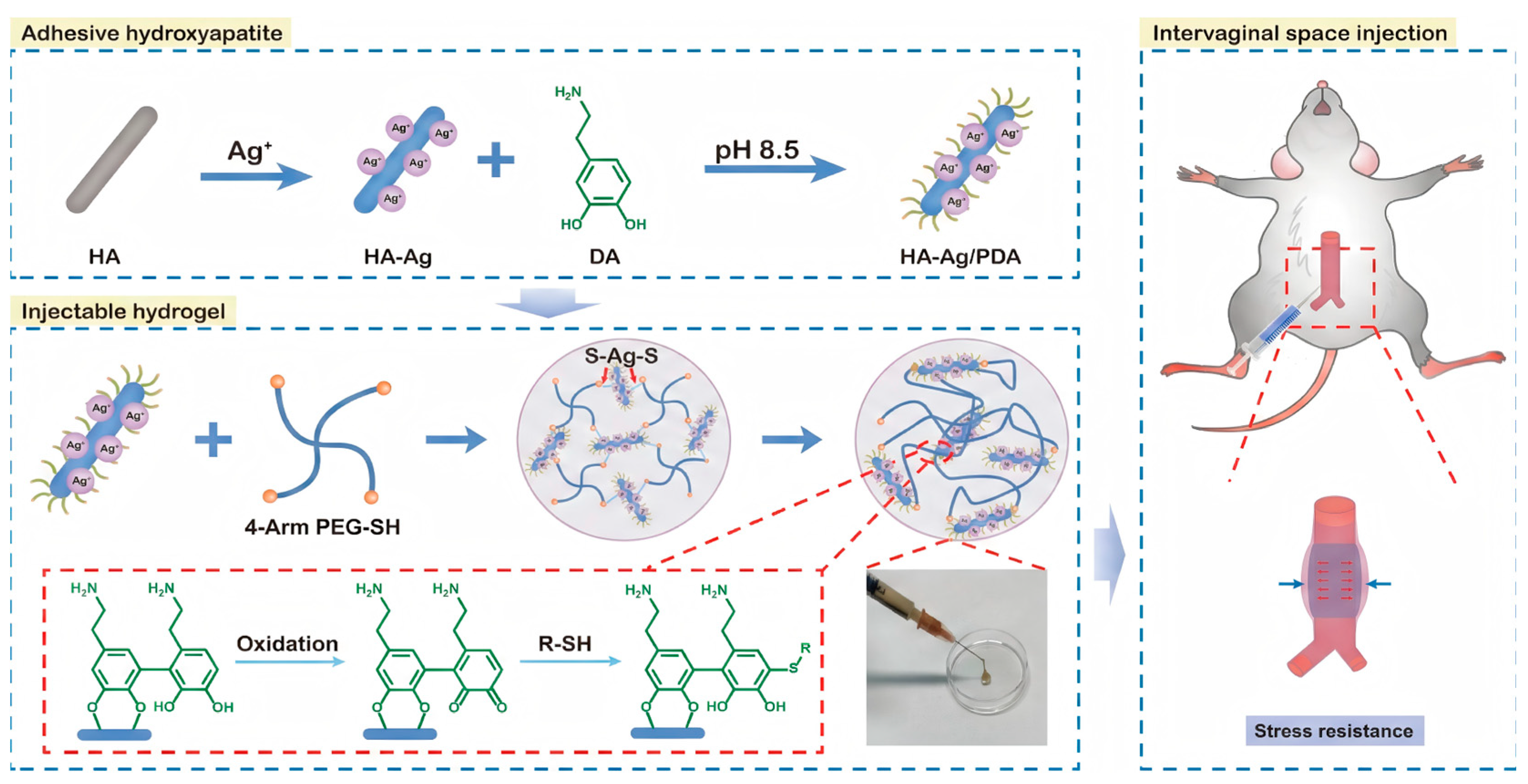
- Zhu, Y.; Li, K.; Zhang, Q.; Nie, Y.; Yan, T.; Shi, X.; Han, D. High-Strength Injectable Hydrogel into Perivascular Interstitial Space Enhances Arterial Adventitial Stress. Langmuir 2023, 39, 1529–1537. [Google Scholar] [CrossRef] [Scilit] [PubMed]
- Yang, Y.; Wang, X.; Yang, F.; Shen, H.; Wu, D. A Universal Soaking Strategy to Convert Composite Hydrogels into Extremely Tough and Rapidly Recoverable Double-Network Hydrogels. Adv. Mater. 2016, 28, 7178–7184. [Google Scholar] [CrossRef] [Scilit]
- Fan, Z.; Cheng, P.; Gao, Y.; Wang, D.; Jia, G.; Zhang, P.; Prakash, S.; Wang, Z.; Han, J. Understanding the Rheological Properties of a Novel Composite Salecan/Gellan Hydrogels. Food Hydrocoll. 2022, 123, 107162. [Google Scholar] [CrossRef] [Scilit]
- Lavrador, P.; Esteves, M.R.; Gaspar, V.M.; Mano, J.F. Stimuli-Responsive Nanocomposite Hydrogels for Biomedical Applications. Adv. Funct. Mater. 2021, 31, 2005941. [Google Scholar] [CrossRef] [Scilit]
- Hu, J.; Altun, I.; Zhang, Z.; Albadawi, H.; Salomao, M.A.; Mayer, J.L.; Hemachandra, L.P.M.P.; Rehman, S.; Oklu, R. Bioactive-Tissue-Derived Nanocomposite Hydrogel for Permanent Arterial Embolization and Enhanced Vascular Healing. Adv. Mater. 2020, 32, 2002611. [Google Scholar] [CrossRef] [Scilit] [PubMed]
- Bakhrushina, E.O.; Novozhilova, E.V.; Shumkova, M.M.; Pyzhov, V.S.; Nikonenko, M.S.; Bardakov, A.I.; Demina, N.B.; Krasnyuk, I.I.; Krasnyuk, I.I. New Biopharmaceutical Characteristics of In Situ Systems Based on Poloxamer 407. Gels 2023, 9, 508. [Google Scholar] [CrossRef] [Scilit] [PubMed]
- Milocco, A.; Scuor, N.; Lughi, V.; Lamberti, G.; Barba, A.A.; Divittorio, R.; Grassi, G.; Perkan, A.; Grassi, M.; Abrami, M. Thermal Gelation Modeling of a Pluronic-alginate Blend Following Coronary Angioplasty. J. Appl. Polym. Sci. 2020, 137, 48539. [Google Scholar] [CrossRef] [Scilit]
- Wang, Q.; He, Y.; Shen, M.; Huang, L.; Ding, L.; Hu, J.; Dong, Y.; Fu, H.; Wang, Q.; Sun, Y.; et al. Precision Embolism: Biocompatible Temperature-Sensitive Hydrogels as Novel Embolic Materials for Both Mainstream and Peripheral Vessels. Adv. Funct. Mater. 2021, 31, 2011170. [Google Scholar] [CrossRef] [Scilit]
- Duan, Y.; Lin, J.; Yue, J.; Li, Y.; Liao, J.; Sun, Y.; Wang, Q.; Duan, Y.; Li, Z. Temperature-Sensitive Hydrogel Inhibits VEGFA-Dependent Neovascularization in Atherosclerosis Progression. Sci. China Mater. 2025, 68, 280–291. [Google Scholar] [CrossRef] [Scilit]
- Xu, H.; Zhao, Z.; She, P.; Ren, X.; Li, A.; Li, G.; Wang, Y. Salvaging Myocardial Infarction with Nanoenzyme-Loaded Hydrogels: Targeted Scavenging of Mitochondrial Reactive Oxygen Species. J. Control. Release 2024, 375, 788–801. [Google Scholar] [CrossRef] [Scilit]
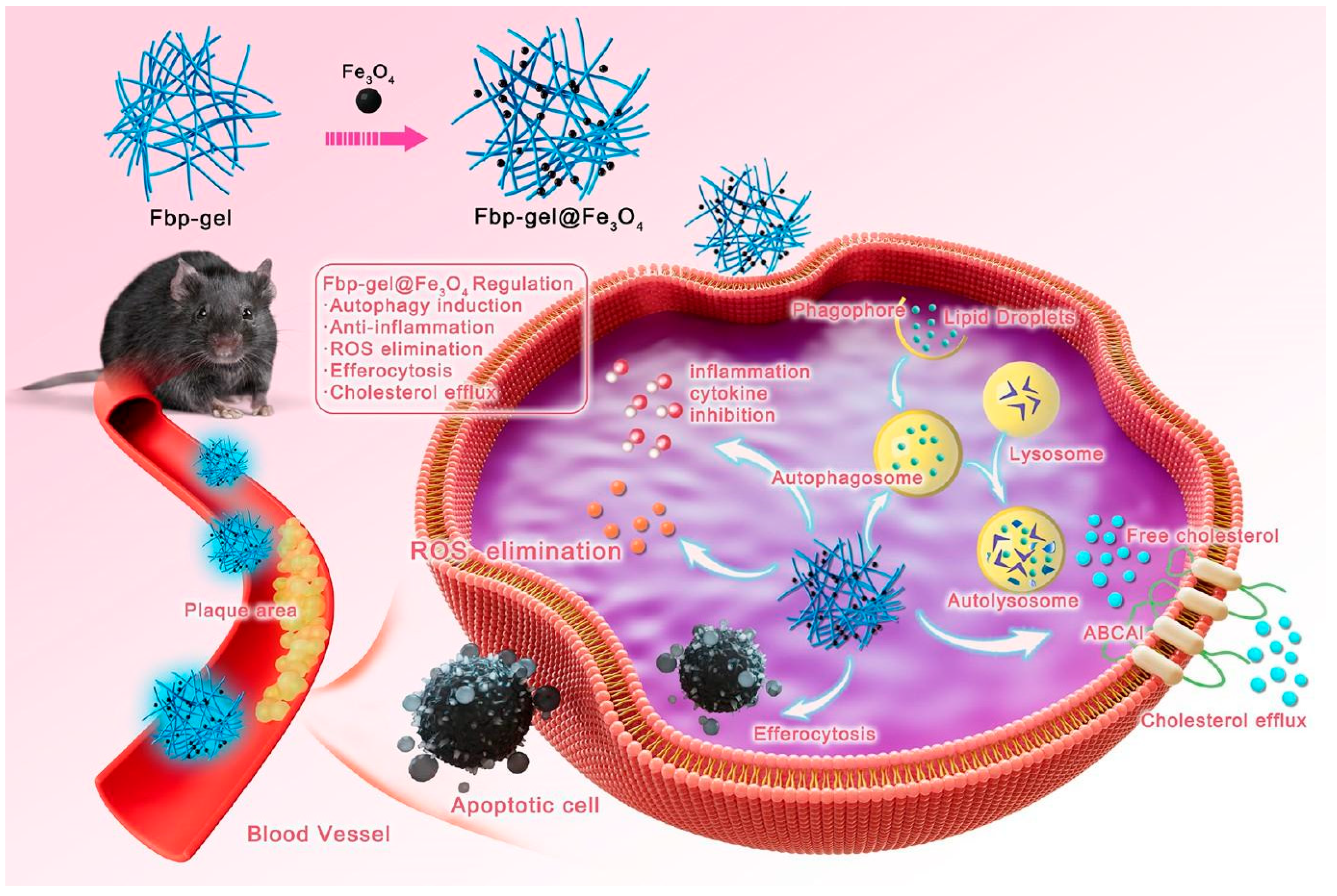
- Xing, M.; Bian, S.; Li, B.; Wei, M.; Yang, Z.; Li, J. Functional Peptide Hydrogel for the Synergistic Treatment of Atherosclerosis Based on Macrophage Autophagy Induction and Anti-Inflammation. ACS Mater. Lett. 2024, 6, 384–399. [Google Scholar] [CrossRef] [Scilit]
- Shao, J.; Liu, Y.; Li, R.; Deng, Z.; Liu, L.; Wang, J.; Dai, S.; Su, Z.; Cui, J.; Chen, Y.; et al. Poly(Ethylene Glycol)-Norbornene-Heparin-Piposome Composite Hydrogels for in Situ Spraying and Ultra-Fast Adhesion: Meeting the Challenges of Endothelial Repair of Vascular Injury. Acta Biomater. 2025, 200, 489–507. [Google Scholar] [CrossRef] [Scilit] [PubMed]
- Bai, H.; Wu, H.; Zhang, L.; Sun, P.; Liu, Y.; Xie, B.; Zhang, C.; Wei, S.; Wang, W.; Li, J. Adventitial Injection of HA/SA Hydrogel Loaded with PLGA Rapamycin Nanoparticle Inhibits Neointimal Hyperplasia in a Rat Aortic Wire Injury Model. Drug Deliv. Transl. Res. 2022, 12, 2950–2959. [Google Scholar] [CrossRef] [Scilit]
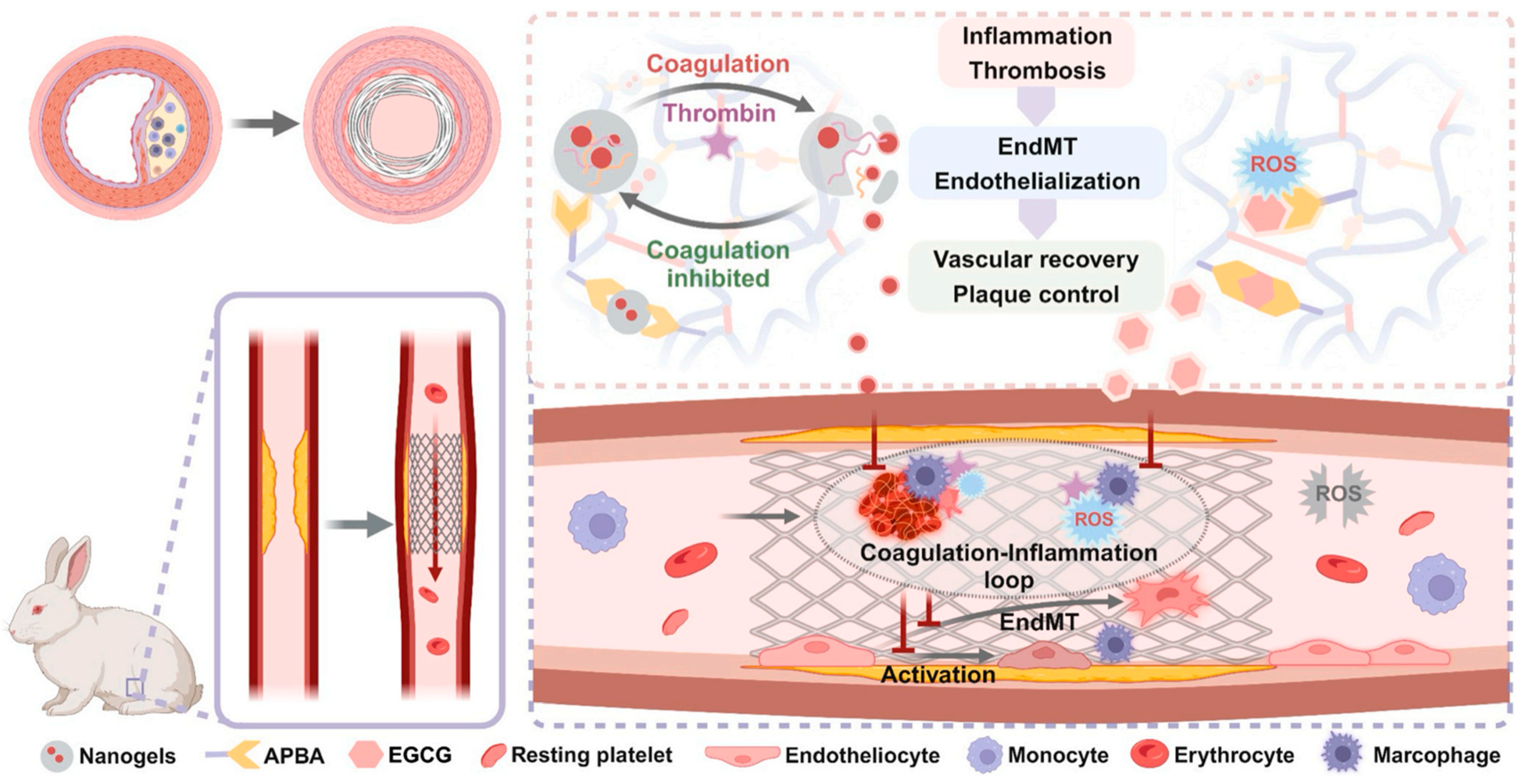
- Wang, Y.; Zhu, Q.; Chen, Z.; Wang, X.; Ma, B.; Wang, Y.; Xiao, Y.; Luo, R.; Zhang, W.; Wang, Y.; et al. Self-Adaptive Covalent Coating for Vascular Stents: Coordinated Coagulation-Inflammation Regulation to Support Re-Endothelialization for Atherosclerosis Control. Biomaterials 2026, 325, 123600. [Google Scholar] [CrossRef] [Scilit]
- Mann, D.L.; Lee, R.J.; Coats, A.J.S.; Neagoe, G.; Dragomir, D.; Pusineri, E.; Piredda, M.; Bettari, L.; Kirwan, B.; Dowling, R.; et al. One-year Follow-up Results from AUGMENT-HF: A Multicentre Randomized Controlled Clinical Trial of the Efficacy of Left Ventricular Augmentation with Algisyl in the Treatment of Heart Failure. Eur. J. Heart Fail. 2016, 18, 314–325. [Google Scholar] [CrossRef] [Scilit] [PubMed]
- Rao, S.V.; Zeymer, U.; Douglas, P.S.; Al-Khalidi, H.; White, J.A.; Liu, J.; Levy, H.; Guetta, V.; Gibson, C.M.; Tanguay, J.-F.; et al. Bioabsorbable Intracoronary Matrix for Prevention of Ventricular Remodeling After Myocardial Infarction. J. Am. Coll. Cardiol. 2016, 68, 715–723. [Google Scholar] [CrossRef] [Scilit]
- Traverse, J.H.; Henry, T.D.; Dib, N.; Patel, A.N.; Pepine, C.; Schaer, G.L.; DeQuach, J.A.; Kinsey, A.M.; Chamberlin, P.; Christman, K.L. First-in-Man Study of a Cardiac Extracellular Matrix Hydrogel in Early and Late Myocardial Infarction Patients. JACC Basic Transl. Sci. 2019, 4, 659–669. [Google Scholar] [CrossRef] [Scilit]
- Scotti, A.; Schulte, M.F.; Lopez, C.G.; Crassous, J.J.; Bochenek, S.; Richtering, W. How Softness Matters in Soft Nanogels and Nanogel Assemblies. Chem. Rev. 2022, 122, 11675–11700. [Google Scholar] [CrossRef] [Scilit]
- Delgado-Pujol, E.J.; Martínez, G.; Casado-Jurado, D.; Vázquez, J.; León-Barberena, J.; Rodríguez-Lucena, D.; Torres, Y.; Alcudia, A.; Begines, B. Hydrogels and Nanogels: Pioneering the Future of Advanced Drug Delivery Systems. Pharmaceutics 2025, 17, 215. [Google Scholar] [CrossRef] [Scilit]
- Maddiboyina, B.; Desu, P.K.; Vasam, M.; Challa, V.T.; Surendra, A.V.; Rao, R.S.; Alagarsamy, S.; Jhawat, V. An Insight of Nanogels as Novel Drug Delivery System with Potential Hybrid Nanogel Applications. J. Biomater. Sci. Polym. Ed. 2022, 33, 262–278. [Google Scholar] [CrossRef] [Scilit] [PubMed]
- Saraogi, G.K.; Tholiya, S.; Mishra, Y.; Mishra, V.; Albutti, A.; Nayak, P.; Tambuwala, M.M. Formulation Development and Evaluation of Pravastatin-Loaded Nanogel for Hyperlipidemia Management. Gels 2022, 8, 81. [Google Scholar] [CrossRef] [Scilit]
- Shoukat, H.; Pervaiz, F.; Rehman, S.; Akram, F.; Noreen, S.; Khan, K.U.; Basit, A.; Ashraf, M.A. Development, in Vitro and in Vivo Evaluation of β-Cyclodextrin/Polyvinyl Alcohol-Co-Poly (2-Acrylamide-2-Methylpropane Sulfonic Acid) Cross-Linked Hybrid IPN-Nanogels to Improve the Dissolution and Absorption of Anti-Hyperlipidemic Drug. Polym.-Plast. Technol. Mater. 2023, 62, 1945–1967. [Google Scholar] [CrossRef] [Scilit]
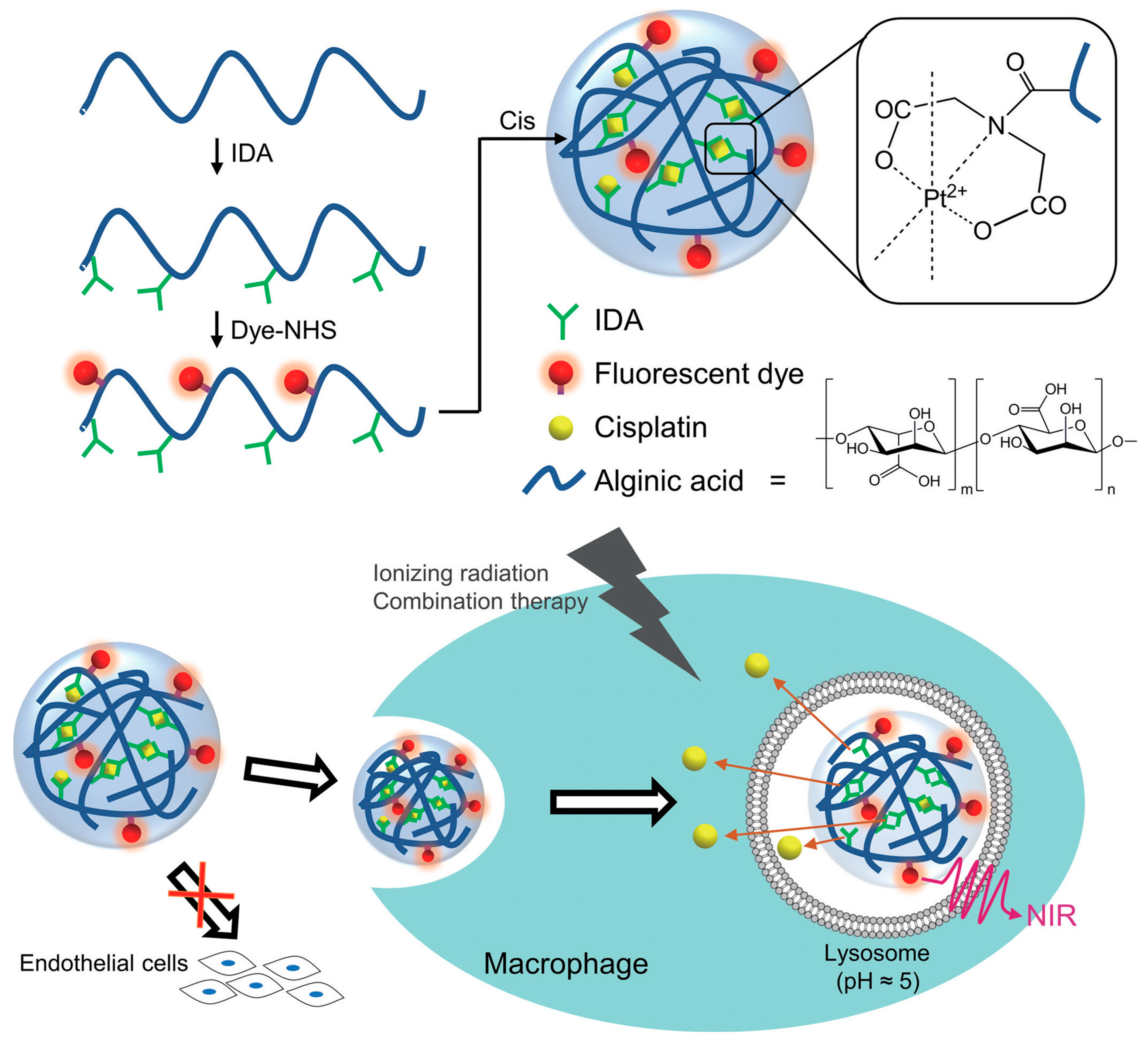
- Hong, S.; Li, Y.; Eom, J.B.; Choi, Y. Responsive Alginate-Cisplatin Nanogels for Selective Imaging and Combined Chemo/Radio Therapy of Proliferating Macrophages. Quant. Imaging Med. Surg. 2018, 8, 733–742. [Google Scholar] [CrossRef] [Scilit]
- Zhong, Y.; Maruf, A.; Qu, K.; Milewska, M.; Wandzik, I.; Mou, N.; Cao, Y.; Wu, W. Nanogels with Covalently Bound and Releasable Trehalose for Autophagy Stimulation in Atherosclerosis. J. Nanobiotechnol. 2023, 21, 472. [Google Scholar] [CrossRef] [Scilit]
- Basak, S.; Mukherjee, I.; Das, T.K. Injectable Biocompatible RAFT Mediated Nitroxide Nanogels: A Robust ROS-Reduction Antioxidant Approach. Colloids Surf. B Biointerfaces 2024, 236, 113790. [Google Scholar] [CrossRef] [Scilit]
- Basak, S.; Khare, H.A.; Roursgaard, M.; Kempen, P.J.; Lee, J.H.; Bazban-Shotorbani, S.; Kræmer, M.; Chernyy, S.; Andresen, T.L.; Almdal, K.; et al. Simultaneous Cross-Linking and Cross-Polymerization of Enzyme Responsive Polyethylene Glycol Nanogels in Confined Aqueous Droplets for Reduction of Low-Density Lipoprotein Oxidation. Biomacromolecules 2021, 22, 386–398. [Google Scholar] [CrossRef] [Scilit] [PubMed]
- Zhang, M.; Xiao, X.; Li, X.; Shi, X.; Li, Z. pH-Sensitive Fibronectin Nanogels Combined with UTMD for Anti-Atherosclerosis Treatment through Anti-Inflammatory and Antioxidant Effects. Mater. Today Bio 2025, 33, 102044. [Google Scholar] [CrossRef] [Scilit]
- Kimna, C.; Miller Naranjo, B.; Eckert, F.; Fan, D.; Arcuti, D.; Mela, P.; Lieleg, O. Tailored Mechanosensitive Nanogels Release Drugs upon Exposure to Different Levels of Stenosis. Nanoscale 2022, 14, 17196–17209. [Google Scholar] [CrossRef] [Scilit]
- Wan, S.; Guo, Y.; Liu, X.; Huang, Y.; Yao, T.; Wang, M.; Zhang, Q.; Wei, X.; Yu, X.; Hu, J.; et al. A MicroRNA and ROS-Scavenger Co-Loaded Nanogel for in Situ Macrophage Regulation and MR-Visualized Treatment of Atherosclerosis. Adv. Healthc. Mater. 2025, e02534. [Google Scholar] [CrossRef] [Scilit] [PubMed]
- Guo, Y.; Wang, F.; Wan, S.; Liu, X.; Huang, Y.; Xie, M.; Wei, X.; Zhu, W.; Yao, T.; Li, Y.; et al. Endothelium-Targeted NF-κB siRNA Nanogel for Magnetic Resonance Imaging and Visualized-Anti-Inflammation Treatment of Atherosclerosis. Biomaterials 2025, 314, 122897. [Google Scholar] [CrossRef] [Scilit] [PubMed]
- Huang, Q.; Gao, H.; Yang, S.; Ding, D.; Lin, Z.; Ling, Q. Ultrastable and Colorful Afterglow from Organic Luminophores in Amorphous Nanocomposites: Advanced Anti-Counterfeiting and in Vivo Imaging Application. Nano Res. 2020, 13, 1035–1043. [Google Scholar] [CrossRef] [Scilit]
- Li, F.; Liang, Z.; Ling, D. Smart Organic-Inorganic Nanogels for Activatable Theranostics. Curr. Med. Chem. 2019, 26, 1366–1376. [Google Scholar] [CrossRef] [Scilit] [PubMed]
- Wang, X.; Wei, W.; Guo, Z.; Liu, X.; Liu, J.; Bing, T.; Yu, Y.; Yang, X.; Cai, Q. Organic–Inorganic Composite Hydrogels: Compositions, Properties, and Applications in Regenerative Medicine. Biomater. Sci. 2024, 12, 1079–1114. [Google Scholar] [CrossRef] [Scilit]
- Zare, I.; Taheri-Ledari, R.; Esmailzadeh, F.; Salehi, M.M.; Mohammadi, A.; Maleki, A.; Mostafavi, E. DNA Hydrogels and Nanogels for Diagnostics, Therapeutics, and Theragnostics of Various Cancers. Nanoscale 2023, 15, 10882–10903. [Google Scholar] [CrossRef] [Scilit]
- Cao, Q.-C.; Wang, X.; Wu, D.-C. Controlled Cross-Linking Strategy for Formation of Hydrogels, Microgels and Nanogels. Chin. J. Polym. Sci. 2018, 36, 8–17. [Google Scholar] [CrossRef] [Scilit]
- Kumar, R.; Parashar, A. Atomistic Simulations of Pristine and Nanoparticle Reinforced Hydrogels: A Review. WIREs Comput. Mol. Sci. 2023, 13, e1655. [Google Scholar] [CrossRef] [Scilit]
- Wang, L.; Liu, J.; Long, Y. Delayed Gelation Kinetics of Hydrogel Formation by Ionic Nano-Gel Cross-Linkers. J. Mater. Sci. 2018, 53, 14789–14800. [Google Scholar] [CrossRef] [Scilit]
- Calistri, S.; Ciantelli, C.; Cataldo, S.; Cuzzola, V.; Guzzinati, R.; Busi, S.; Ubaldini, A. Simple Spin-Coating Preparation of Hydrogel and Nanoparticle-Loaded Hydrogel Thin Films. Coatings 2025, 15, 859. [Google Scholar] [CrossRef] [Scilit]
- Abaee, A.; Mohammadian, M.; Jafari, S.M. Whey and Soy Protein-Based Hydrogels and Nano-Hydrogels as Bioactive Delivery Systems. Trends Food Sci. Technol. 2017, 70, 69–81. [Google Scholar] [CrossRef] [Scilit]
- Yuniarsih, N.; Chaerunisaa, A.; Elamin, K.; Wathoni, N. Polymeric Nanohydrogel in Topical Drug Delivery System. Int. J. Nanomed. 2024, 19, 2733–2754. [Google Scholar] [CrossRef] [Scilit]
- Qiu, B.; Cheng, Q.; Chen, R.; Liu, C.; Qin, J.; Jiang, Q. Mussel-Mimetic Hydrogel Coating with Anticoagulant and Antiinflammatory Properties on a Poly(Lactic Acid) Vascular Stent. Biomacromolecules 2024, 25, 3098–3111. [Google Scholar] [CrossRef] [Scilit]
- Chen, G.; Chen, C.; Dong, Z.; Li, X.; Han, C.; Zhang, Y.; Liu, B.; Wen, Z.; Wang, Y.; Zhang, Q.; et al. Enhancing Degradation Behaviour, Osteogenic Capacity and Angiogenic Performance of Additively Manufactured Porous Zn-Mg Scaffold via a Neobavaisoflavone-Doped GelMA Composite Hydrogel Coating. Virtual Phys. Prototyp. 2025, 20, e2500673. [Google Scholar] [CrossRef] [Scilit]
- Chen, Y.; Gao, P.; Huang, L.; Tan, X.; Zhou, N.; Yang, T.; Qiu, H.; Dai, X.; Michael, S.; Tu, Q.; et al. A Tough Nitric Oxide-Eluting Hydrogel Coating Suppresses Neointimal Hyperplasia on Vascular Stent. Nat. Commun. 2021, 12, 7079. [Google Scholar] [CrossRef] [Scilit]
- Illanes-Bordomás, C.; Landin, M.; García-González, C.A. Novel Core–Shell Aerogel Formulation for Drug Delivery Based on Alginate and Konjac Glucomannan: Rational Design Using Artificial Intelligence Tools. Polymers 2025, 17, 1919. [Google Scholar] [CrossRef] [Scilit]
- Carracedo-Pérez, M.; Ardao, I.; López-Iglesias, C.; Magariños, B.; García-González, C.A. Direct and Green Production of Sterile Aerogels Using Supercritical Fluid Technology for Biomedical Applications. J. CO2 Util. 2024, 86, 102891. [Google Scholar] [CrossRef] [Scilit]
- More, A.P.; Chapekar, S. Irradiation Assisted Synthesis of Hydrogel: A Review. Polym. Bull. 2024, 81, 5839–5908. [Google Scholar] [CrossRef] [Scilit]
- Pham, T.T.; Tran, P.L.; Phung, C.D.; Nguyen, H.T.; Nguyen, C.H.; Yong, C.S.; Kim, J.O.; Yook, S.; Jeong, J. Surface-Triggered In Situ Gelation for Tunable Conformal Hydrogel Coating of Therapeutic Cells and Biomedical Devices. Adv. Funct. Mater. 2021, 31, 2010169. [Google Scholar] [CrossRef] [Scilit]
- Zhong, H.; Chen, J.; Jia, S.; Chen, H.; Xi, Y.; Yan, Y.; Lu, Z.; Xiao, C.; Xu, F.; Tang, J.; et al. Prospective Associations of Obesity Heterogeneity, Serum Proteins, and Carotid Atherosclerosis Risk. eBioMedicine 2025, 120, 105935. [Google Scholar] [CrossRef] [Scilit] [PubMed]
- Li, W.; Luo, J.; Peng, F.; Liu, R.; Bai, X.; Wang, T.; Zhang, X.; Zhu, J.; Li, X.-Y.; Wang, Z.; et al. Spatial Metabolomics Identifies Lipid Profiles of Human Carotid Atherosclerosis. Atherosclerosis 2023, 364, 20–28. [Google Scholar] [CrossRef] [Scilit]
- Mocci, G.; Sukhavasi, K.; Örd, T.; Bankier, S.; Singha, P.; Arasu, U.T.; Agbabiaje, O.O.; Mäkinen, P.; Ma, L.; Hodonsky, C.J.; et al. Single-Cell Gene-Regulatory Networks of Advanced Symptomatic Atherosclerosis. Circ. Res. 2024, 134, 1405–1423. [Google Scholar] [CrossRef] [Scilit]
- Johnbosco, C.; Zschoche, S.; Nitschke, M.; Hahn, D.; Werner, C.; Maitz, M.F. Bioresponsive starPEG-Heparin Hydrogel Coatings on Vascular Stents for Enhanced Hemocompatibility. Mater. Sci. Eng. C 2021, 128, 112268. [Google Scholar] [CrossRef] [Scilit]
- Timoshina, P.A.; Surkov, Y.I.; Lugovtsov, A.E.; Priezzhev, A.V.; Tuchin, V.V. Transmission Laser Speckle Contrast Imaging Combined With Optical Clearing Using Magnetic Resonance Contrast Agents. Lasers Surg. Med. 2025, 57, 625–636. [Google Scholar] [CrossRef] [Scilit]
- Catoira, M.C.; González-Payo, J.; Fusaro, L.; Ramella, M.; Boccafoschi, F. Natural Hydrogels R&D Process: Technical and Regulatory Aspects for Industrial Implementation. J. Mater. Sci. Mater. Med. 2020, 31, 64. [Google Scholar] [CrossRef] [Scilit] [PubMed]
- Mohapatra, S.; Mirza, M.A.; Hilles, A.R.; Zakir, F.; Gomes, A.C.; Ansari, M.J.; Iqbal, Z.; Mahmood, S. Biomedical Application, Patent Repository, Clinical Trial and Regulatory Updates on Hydrogel: An Extensive Review. Gels 2021, 7, 207. [Google Scholar] [CrossRef] [Scilit] [PubMed]
- Zhang, S.; Wang, H.; Liu, F.; Su, Y.; Han, K.; Liu, Y.; Guan, F.; Liu, H.; Ma, S. Artificial Intelligence-Enabled Hydrogels: Innovations and Applications. J. Mater. Chem. B 2025, 13, 14967–14981. [Google Scholar] [CrossRef] [Scilit]
- Xu, Y.; Yang, N.; Dong, S.; Wang, L.; Qian, Z.; Ma, R.; Zhang, Q.; Liu, Y.; Chen, J.; Pan, C. A Hydrogel Coating Mimicking the Cell Membrane for Enhancing the Corrosion Resistance and Biocompatibility of the Magnesium Alloy. Appl. Surf. Sci. 2025, 713, 164349. [Google Scholar] [CrossRef] [Scilit]





| Material System | Crosslinking and Responsiveness | Application Route | Key Material Properties | Reference |
|---|---|---|---|---|
| Catechol-modified HA with cystamine | Amide bonding with disulfide bonds, redox-responsive to oxidative stress | stent coating | H2S release from allicin, intelligent inflammation response, endothelial repair promotion | [44] |
| HA/SA blend | Ionic gelation with CaCO3/Ca2+ | adventitial injection | IL-33 antibody delivery, controlled degradation, neointimal hyperplasia inhibition | [46] |
| Methacrylated Pueraria polysaccharide | Dual-network, plasma-reinforced interface | Stent coating | Controlled flavonoid release, endothelial recovery, SMC phenotype modulation | [47] |
| Chitosan-based with glyceryl monooleate | pH-sensitive, nasal mucoadhesive | Nasal administration | Felodipine-loaded invasomes, 3.37-fold bioavailability increase, enhanced permeation | [48] |
| D-Nap-GFFY peptide nanofibers | Self-assembly into supramolecular nanofibers, scavenger receptor-mediated | Subcutaneous injection | IGF-1 mimetic with anti-inflammatory naproxen, macrophage-selective uptake, no hepatic lipogenesis | [49] |
| D-Nap-GFFY peptide with T0901317 | Self-assembled peptide nanofibers | Subcutaneous injection | Macrophage LXR activation, ABCA1/G1 upregulation, Kupffer cell M2 polarization | [50] |
| Oxidized dextran with caffeate prodrug (B-EC) and G-NO donor | Dual-dynamic covalent, ROS-responsive | Ultrasonic spray on balloon | Self-healing, controlled antioxidant/NO release, tight junction restoration, wet adhesion | [60] |
| Hydrogel-coated angioplasty balloon | Stable coating with >72 h arterial retention | Balloon catheter delivery | Molsidomine delivery, slow NO release, vasodilation, anti-thrombotic and anti-proliferative | [61] |
| Pluronic F407/Alginate blend | Thermal gelation + ionic Ca2+ crosslinking | Catheter delivery for endoluminal gel paving | Temperature-responsive gelation, nucleic acid drug compatibility, soft gel formation | [69] |
| Poloxamer 407/SA | Thermal gelation + ionic Ca2+ crosslinking, self-healing | Ultrasound-guided abdominal aorta injection | PEDF delivery, VEGFA-dependent neovascularization inhibition, CD31 and MMP-2/9 modulation | [71] |
| Short peptide hydrogel with Fe3O4 and NSAID | Self-assembly with naproxen as crosslinker | Subcutaneous injection | Autophagy induction via Fe3O4, anti-inflammatory synergy, foam cell reduction, ROS suppression | [73] |
| PEG-norbornene with heparin and liposomes | Photoinitiated click chemistry, PVB-incorporated | Spray application for CEA repair | Ultra-fast wet adhesion, rapamycin-loaded liposomes, anti-coagulation, blood flow resistance | [74] |
| Nanogel-composite coating with EGCG | Thrombin-responsive apixaban release + ROS-responsive EGCG detachment | Stent coating | Self-adaptive dual-responsive, coagulation-inflammation loop regulation, EndMT inhibition | [76] |
| Nanogel Type | Size and Responsive Trigger | Therapeutic Cargo | Functional Integration | Reference |
|---|---|---|---|---|
| Chitosan nanoparticles converted to nanogel with poloxamer | Ionic gelation, sustained release | Pravastatin sodium | Oral delivery, high entrapment, reduced hemolytic toxicity, hyperlipidemia management | [83] |
| β-Cyclodextrin/PVA-co-AMPS IPN nanogels | Free radical polymerization with MBA crosslinking, rapid dissolution | Rosuvastatin | >70% entrapment efficiency, >90% release in 5–30 min, improved pharmacodynamic efficacy | [84] |
| Alginate modified with iminodiacetic acid, ATTO655-labeled | ~100 nm, highly pH-responsive | Cisplatin | Macrophage-selective uptake, NIR fluorescence imaging, combined chemo/radiotherapy, reduced therapeutic dose | [85] |
| 6-O-Acryloyl-trehalose copolymer nanogels | 67 nm, ester bond cleavage for trehalose release, ~58% w/w conjugation | Trehalose | Autophagy stimulation in foam cells, lipid efflux enhancement, non-hemolytic, excellent colloidal stability in serum | [86] |
| RAFT-mediated nitroxide nanogels | 30–40 nm, oxidation-responsive | Nitroxide radicals | SOD enzymatic mimicry, multi-ROS scavenging, LDL protection for 1 month, foam cell inhibition | [87] |
| PEG crosslinked with MMP-responsive elements | Confined aqueous droplet synthesis, MMP-triggered release | Paraoxonase-1 enzyme | Electrostatically driven template polymerization, ox-LDL reduction, macrophage foam cell prevention | [88] |
| Fibronectin-modified phenylboronic acid-PEG nanogels | pH-sensitive Schiff base linkages | Curcumin | RGD sequence-integrin targeting, UTMD-enhanced delivery, anti-inflammatory + antioxidant, plaque progression attenuation | [89] |
| Mechanosensitive PEG-based nanogels | Tunable disintegration upon stenotic shear stress levels, size-adjustable | Heparin | Stenosis-activated release, minimal passive leakage, similar clot lysis efficiency as free drug, hemocompatible | [90] |
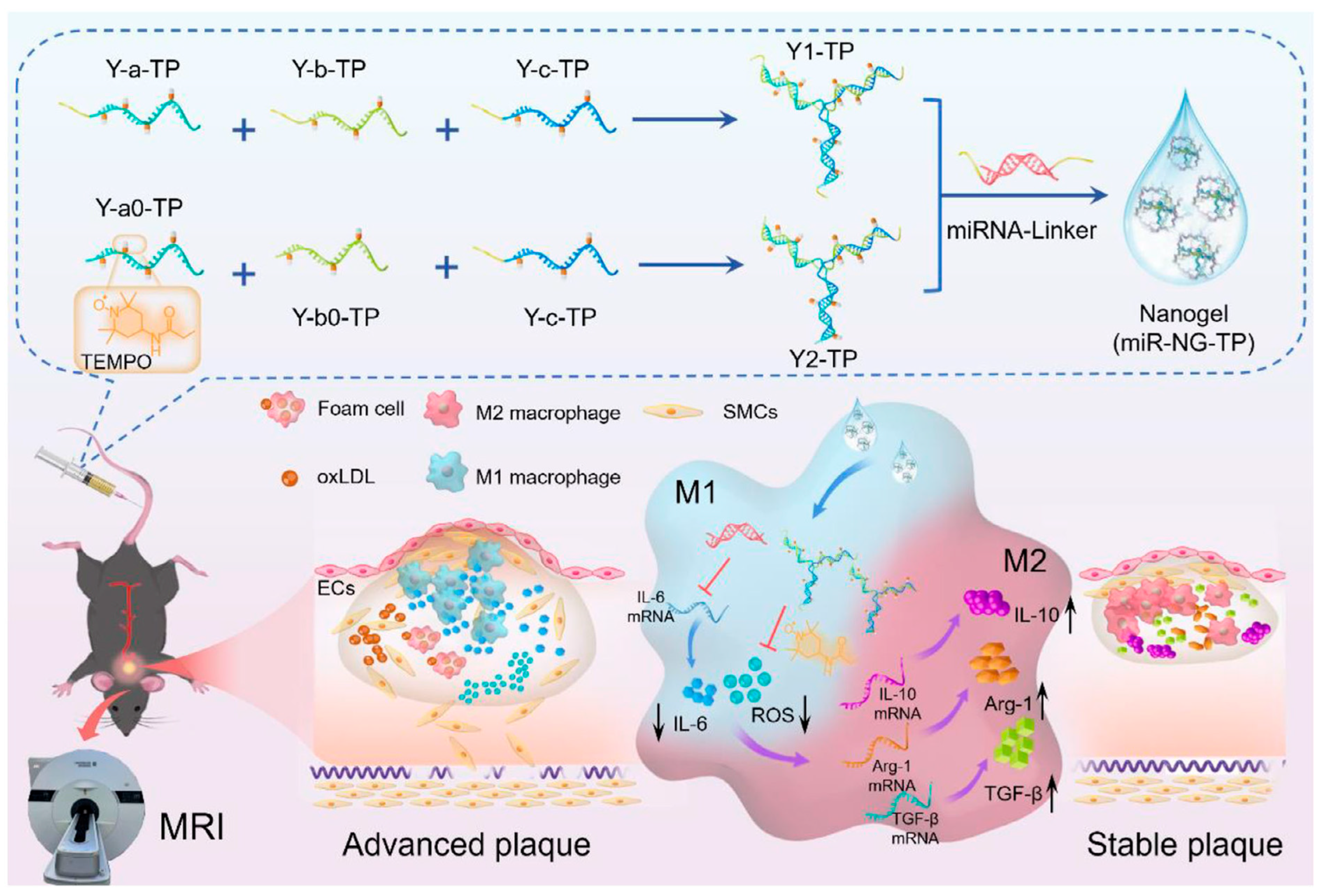
| TEMPO-grafted Y-shaped DNA blocks crosslinked by miRNA | Paramagnetic TEMPO via phosphorothioate groups, ROS-scavenging | miR-146a-5p | MRI contrast, dynamic disease monitoring, oxidative stress relief, plaque regression and stabilization | [91] |
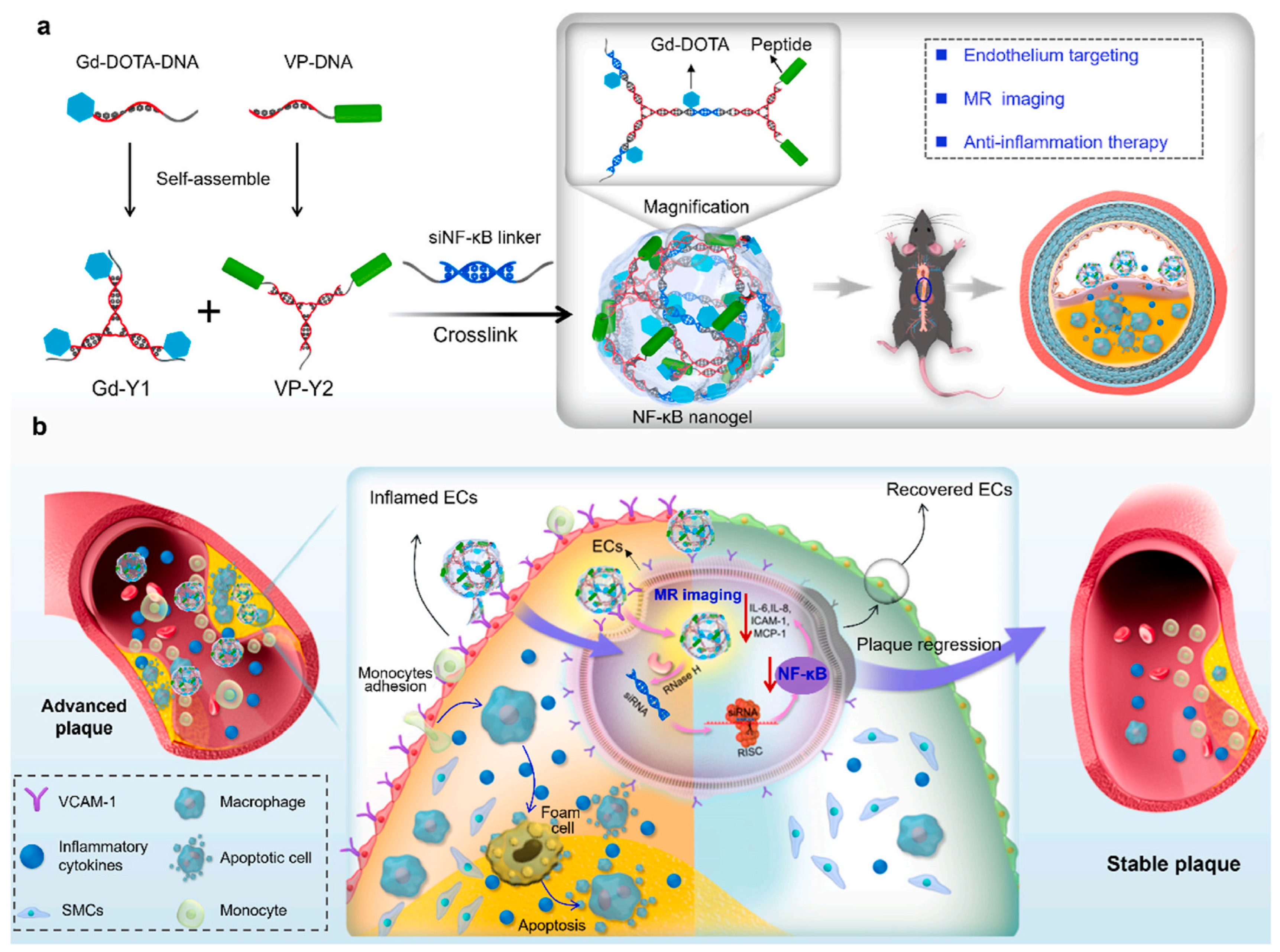
| Gd-DOTA and VCAM-1 peptide-conjugated Y-DNA assembled with siRNA | Nucleic acid self-assembly, inflamed endothelium-targeted | siNF-κB | MRI-based visualization, VCAM-1 targeting to inflammatory endothelium | [92] |
Disclaimer/Publisher’s Note: The statements, opinions and data contained in all publications are solely those of the individual author(s) and contributor(s) and not of MDPI and/or the editor(s). MDPI and/or the editor(s) disclaim responsibility for any injury to people or property resulting from any ideas, methods, instructions or products referred to in the content. |
© 2026 by the authors. Licensee MDPI, Basel, Switzerland. This article is an open access article distributed under the terms and conditions of the Creative Commons Attribution (CC BY) license.
Share and Cite
Tong, S.; Chen, J.; Li, Y.; Zhao, W. Emerging Gel Technologies for Atherosclerosis Research and Intervention. Gels 2026, 12, 80. https://doi.org/10.3390/gels12010080
Tong S, Chen J, Li Y, Zhao W. Emerging Gel Technologies for Atherosclerosis Research and Intervention. Gels. 2026; 12(1):80. https://doi.org/10.3390/gels12010080
Chicago/Turabian StyleTong, Sen, Jiaxin Chen, Yan Li, and Wei Zhao. 2026. "Emerging Gel Technologies for Atherosclerosis Research and Intervention" Gels 12, no. 1: 80. https://doi.org/10.3390/gels12010080
APA StyleTong, S., Chen, J., Li, Y., & Zhao, W. (2026). Emerging Gel Technologies for Atherosclerosis Research and Intervention. Gels, 12(1), 80. https://doi.org/10.3390/gels12010080