2.1. Preparation Process and Crosslinking Mechanism of the PIAs-A Series
The synthetic route to obtain the PIAs-A series is schematically illustrated in
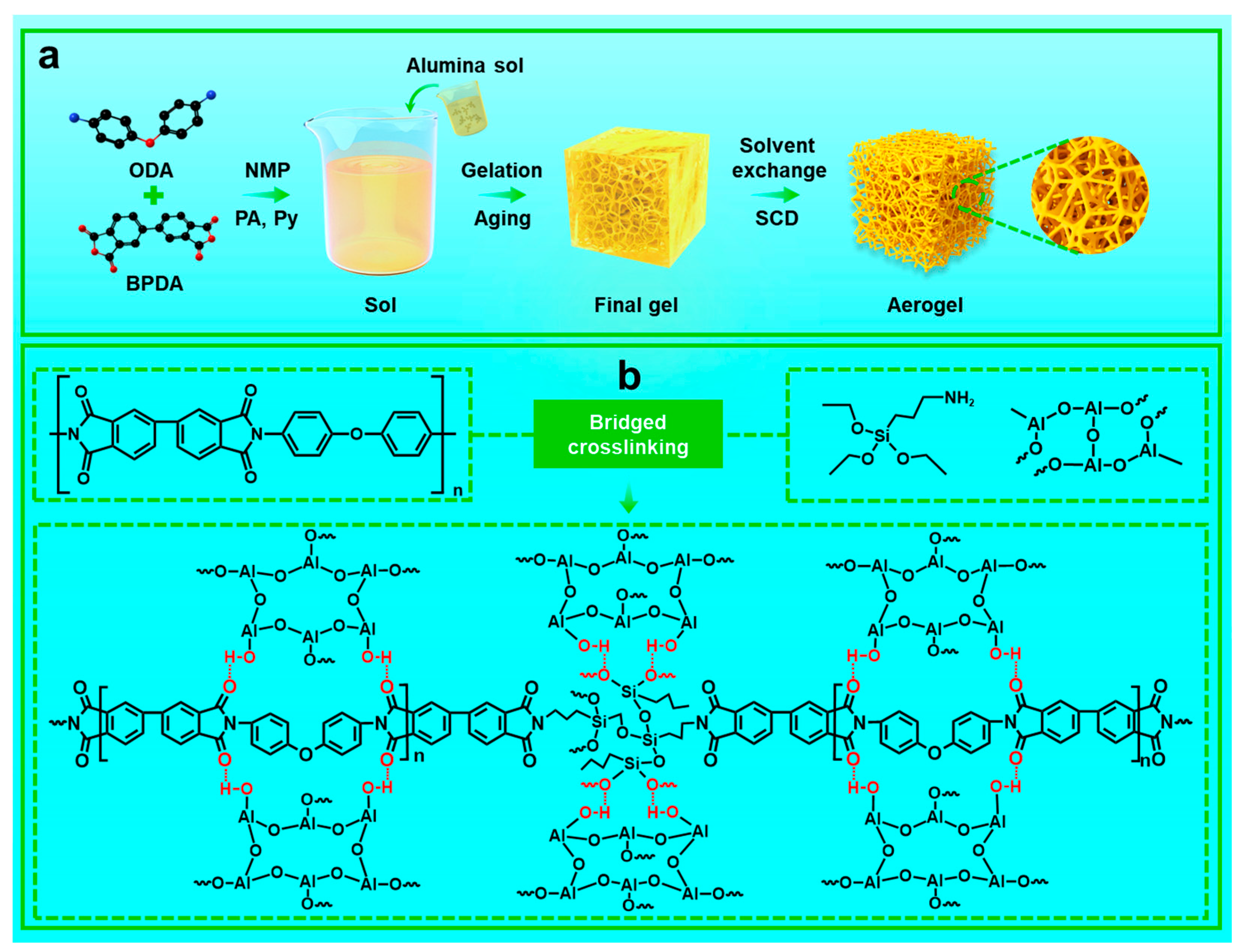
Figure 1a. In the selection of diamine and dianhydride monomers, 4,4′-oxidianiline (ODA) and 3,3′, 4,4′-biphenyltetracarboxylic dianhydride (BPDA) were chosen, and a strong polar solvent, N-methylpyrrolidone (NMP), was used to synthesize a polyamide acid (PAA) solution. As a crosslinking agent, 3-aminopropyltriethoxysilane (APTES) was introduced into the acidic PAA solution. Thereafter, alumina sol was added and PAA solution was chemically imidized to form polyimide by adding propionic anhydride as a dehydrating agent and pyridine as a catalyst. During the reaction, the introduced alumina sol strongly interacts with the carbonyl and hydroxyl groups contained in the polyimide chain (
Figure 1a) through hydrogen bonding. After forming the initial gel, ethanol was used to replace the residual NMP, propionic anhydride, and pyridine in the initial gel, and finally obtain the polyimide aerogel by supercritical CO
2-fluid drying (
Figure 1a).
It is worth noting that the addition of excessive alumina sol leads to the deterioration of the macroscopic morphology of the polyimide aerogel, which is reflected in an increase in thermal conductivity and bulk density and a decrease in temperature resistance. We believe that the introduction of excess alumina sol will introduce excess water into the PAA solution at the same time, which may lead to the hydrolysis of a dianhydride monomer and the formation of a carboxylic anhydride group, thus affecting the reaction and damaging the stability of the aerogel skeleton structure. As a silane coupling agent, the –NH
2 group of APTES reacts with anhydride end-caps present in the PAA solution. The subsequent addition of the base catalyst (pyridine) and dehydrating agent then promotes not only the imidization of the polyamic acid, but also the hydrolysis and condensation of the ethoxysilane groups on APTES, ultimately forming a 3D covalently crosslinked network. This process involves two concurrent steps: (1) condensation to establish a covalent backbone, and (2) hydrolysis-polycondensation, ultimately yielding a bridged crosslinked structure (
Figure 1b). The choice of aluminum sol is attributed to the high density of surface hydroxyl groups on the in situ-formed alumina network, which, integrated into an internal network of Al–O bonds, coordinate with multiple hydroxyl groups and engage in hydrogen bonding with polyimide chains. This interaction significantly enhances the structural integrity of the polyimide aerogel.
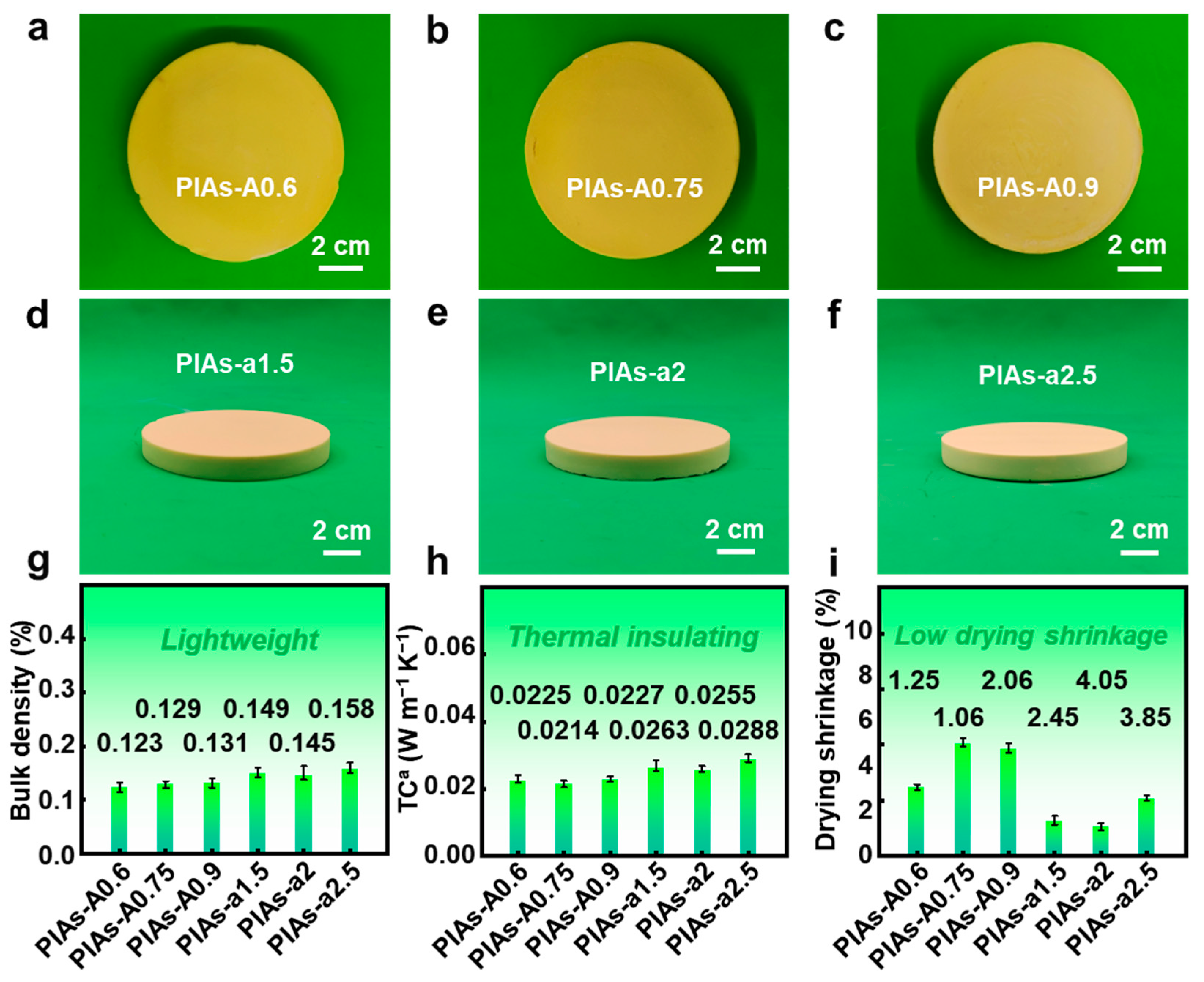
Figure 2a–c displays physical images of the PIAs-A series, with all samples showing excellent formability. Shrinkage during the polyimide aerogel preparation process primarily occurs during the supercritical drying stage. As seen in
Figure 2i, the PIAs-A series exhibits relatively minimal linear drying shrinkage, with PIAs-A0.75 showing only 1.06% drying shrinkage, thus enabling the controlled fabrication of these polyimide aerogels.
Figure 2g shows that, as the aluminum oxide sol content increases, the bulk density of the polyimide aerogel increases slightly. Room temperature thermal conductivity tests indicate that the aerogels generally have low thermal conductivity, as shown in
Figure 2h, with PIAs-A0.75 showing the lowest thermal conductivity (0.0214 W m
−1 K
−1), which contributes to its excellent thermal insulation properties. Taking bulk density, thermal conductivity, and drying shrinkage into account, PIAs-A0.75 is the highest-performing material. A key trend observed in
Figure 2g is the systematic increase in bulk density with increasing alumina sol content, rising from 0.123 g cm
−3 for PIAs-A0.6 to 0.149 g cm
−3 for PIAs-A0.9. This suggests that a higher concentration of the in situ-generated Al–O network leads to a more compact packing of the solid skeleton and a corresponding compaction of the overall nanoporosity.
To compare the effects of different types of aluminum oxide on thermal performance, polyimide aerogels containing nano-aluminum oxide are shown in
Figure 2d–f. The experimental results show that the PIAs-a series also exhibits good formability.
Figure 2i shows the drying shrinkage rates, and, compared to PIAs-A series, the PIAs-a series experienced greater drying shrinkage during the preparation process, leading to a higher bulk density. As depicted in
Figure 2h, the PIAs-a series exhibits a relatively low thermal conductivity at room temperature, which can be attributed to the nanoporosity from the nano-aluminum oxide, which helps to reduce heat transfer through the polyimide aerogels. Increasing the nano-aluminum oxide content leads to minor fluctuations in both thermal conductivity and bulk density.
The successful synthesis of the polyimide structure was subsequently verified using Fourier transform infrared (FTIR) analysis for both series. The spectra in
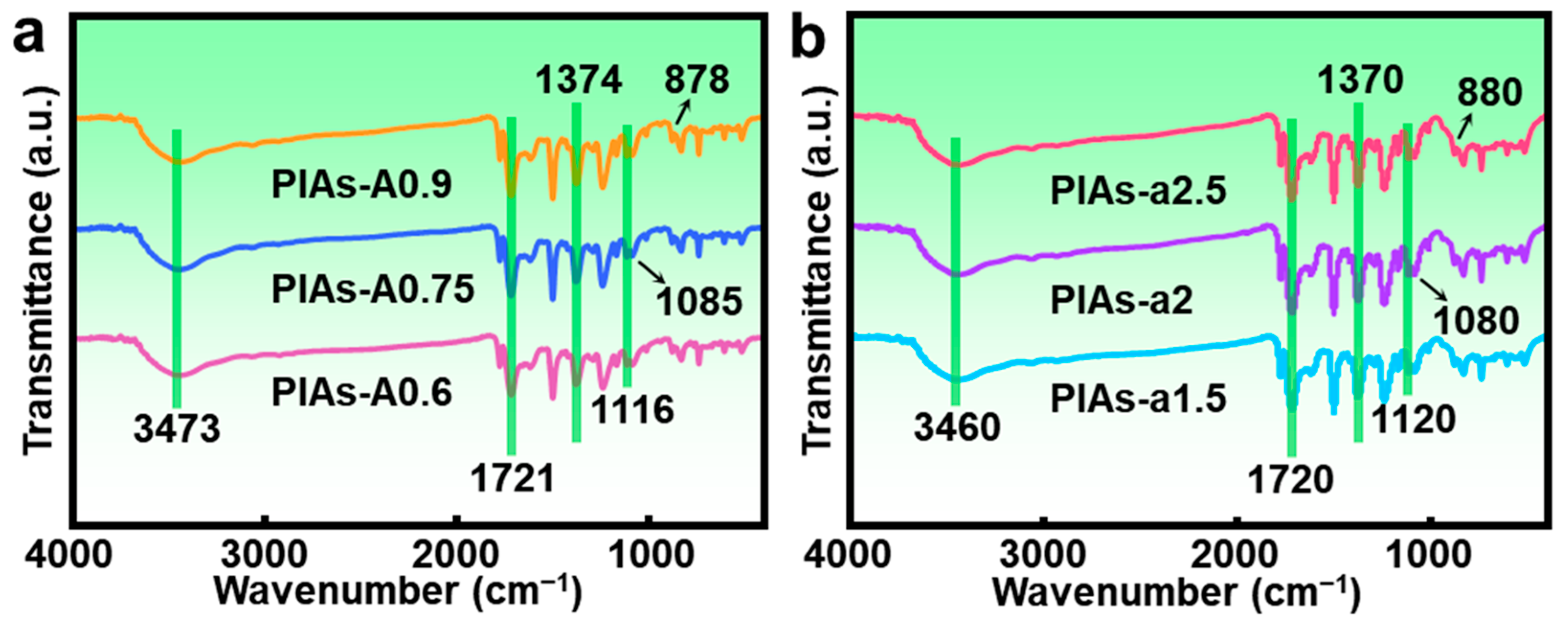
Figure 3 confirm the formation of the imide ring, showing characteristic peaks near 3470, 1720, and 1370 cm
−1. A detailed analysis of PIAs-A series identified N–H bond stretching at 3473 cm
−1, symmetric C=O stretching at 1721 cm
−1, and C–N stretching of the imide ring at 1374 cm
−1. The successful introduction of APTES into the polymer backbone was also confirmed by the observation of Si–O bond vibration at 1116 cm
−1. Both series of polyimide aerogels did not show significant absorption peaks at 1625 cm
−1, indicating that most of the polyamic acid was imidized, forming long chains composed of phenyl ring structures. The characteristic peaks at 1085 and 878 cm
−1 in the PIAs-A series correspond to Al–O vibrations, indicating the presence of Al
3+ and O
2− ions on the surface. These results, along with the elemental confirmation by EDS, further confirm the successful preparation of the hybrid polyimide aerogels.
2.2. Pore Structure of the PIAs-A Series
A comparison of the physical properties between the PIAs-A and PIAs-a series reveals that the PIAs-A series exhibits a smaller bulk density and drying shrinkage. To further investigate the impact of alumina incorporation on the structure of polyimide aerogels, the analysis below will focus on the performance of PIAs-A0.6, PIAs-A0.75, and PIAs-A0.9.
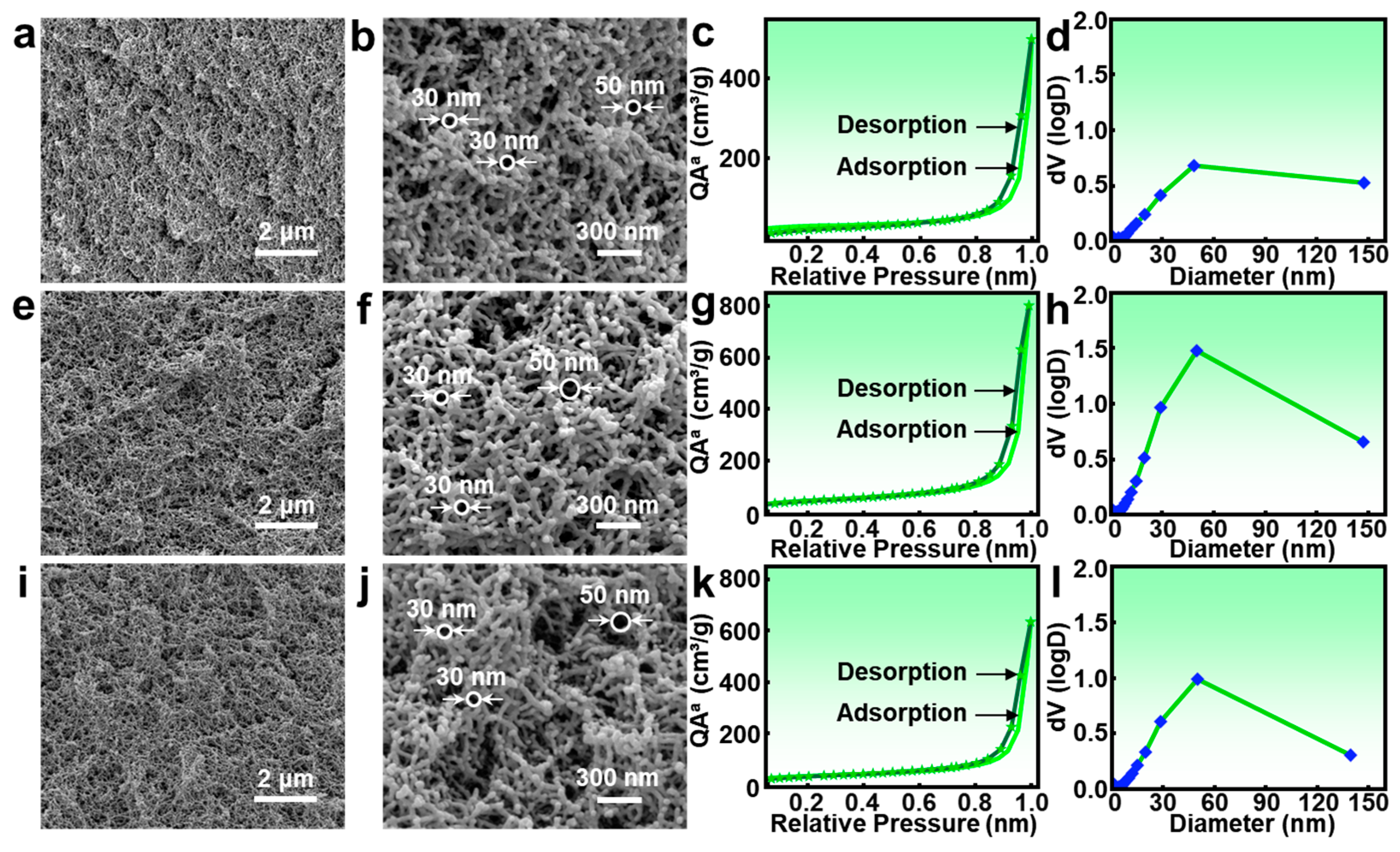
Pore structure was systematically investigated using nitrogen adsorption–desorption analysis and field emission scanning electron microscope (FESEM), as shown in
Figure 4. The nitrogen adsorption–desorption isotherms for all samples (
Figure 4c,g,k) exhibited a distinct Type IV profile with an H1-type hysteresis loop at high relative pressures. This is a characteristic feature of mesoporous materials with uniform, interconnected pores, which is consistent with the network structure of the aerogel. The sharp uptake in the high-pressure region is due to capillary condensation within the mesopores, further confirming this morphology.
FESEM images provide direct, visual evidence of this structure. High-magnification images (
Figure 4a,b,e,f,i,j) reveal that the network is composed of randomly entangled, pearl-chain-like nanoparticles. These images allow for a qualitative visual estimation of the pore sizes; for example, in PIAs-A0.75 (
Figure 4f), many pores appear to be in the range of 30–50 nm.
To quantitatively verify these visual observations, the pore size distribution was determined using the Barrett–Joyner–Halenda (BJH) method. The results (
Figure 4d,h,l) show that the majority of the pores are concentrated between 10 and 60 nm, with a peak distribution around 30–50 nm. This quantitative data strongly corroborates the visual information from FESEM images, providing a comprehensive and consistent picture of the porous architecture. The data reveal that PIAs-A0.75 exhibits a more uniform pore size distribution compared to PIAs-A0.6 and PIAs-A0.9. This superior pore structure, confirmed by both FESEM and BJH analysis, accounts for its lower thermal conductivity and smaller drying shrinkage. Quantitative analysis of the pore structure confirms that all samples in the PIAs-A series are highly porous. The specific surface areas, as determined using the Brunauer–Emmett–Teller (BET) method, range from 100.4 to 158.2 m
2 g
−1, and the total pore volumes range from 0.77 to 1.24 cm
3 g
−1. The calculated porosities for all samples are above 89.40%, confirming their rich nanoporous architecture. Notably, the optimal sample, PIAs-A0.75, exhibits the highest specific surface area and total pore volume, which is consistent with its superior thermal and mechanical performance.
2.3. High-Temperature Resistance Properties
To evaluate the high-temperature performance of the PIAs-A series, high-temperature tests were conducted on PIAs-A0.6, PIAs-A0.75, and PIAs-A0.9. In the experiment, polyimide aerogel samples were first processed into relatively uniform cubic blocks, and their dimensions and mass were measured before high-temperature treatment. The oven temperature was then raised to 200 °C and stabilized. The polyimide aerogel samples were then placed in a muffle furnace for 2400 s of high-temperature treatment. After the high-temperature test, the samples were immediately removed. Once the aerogels cooled to room temperature, their dimensions and mass were re-measured.
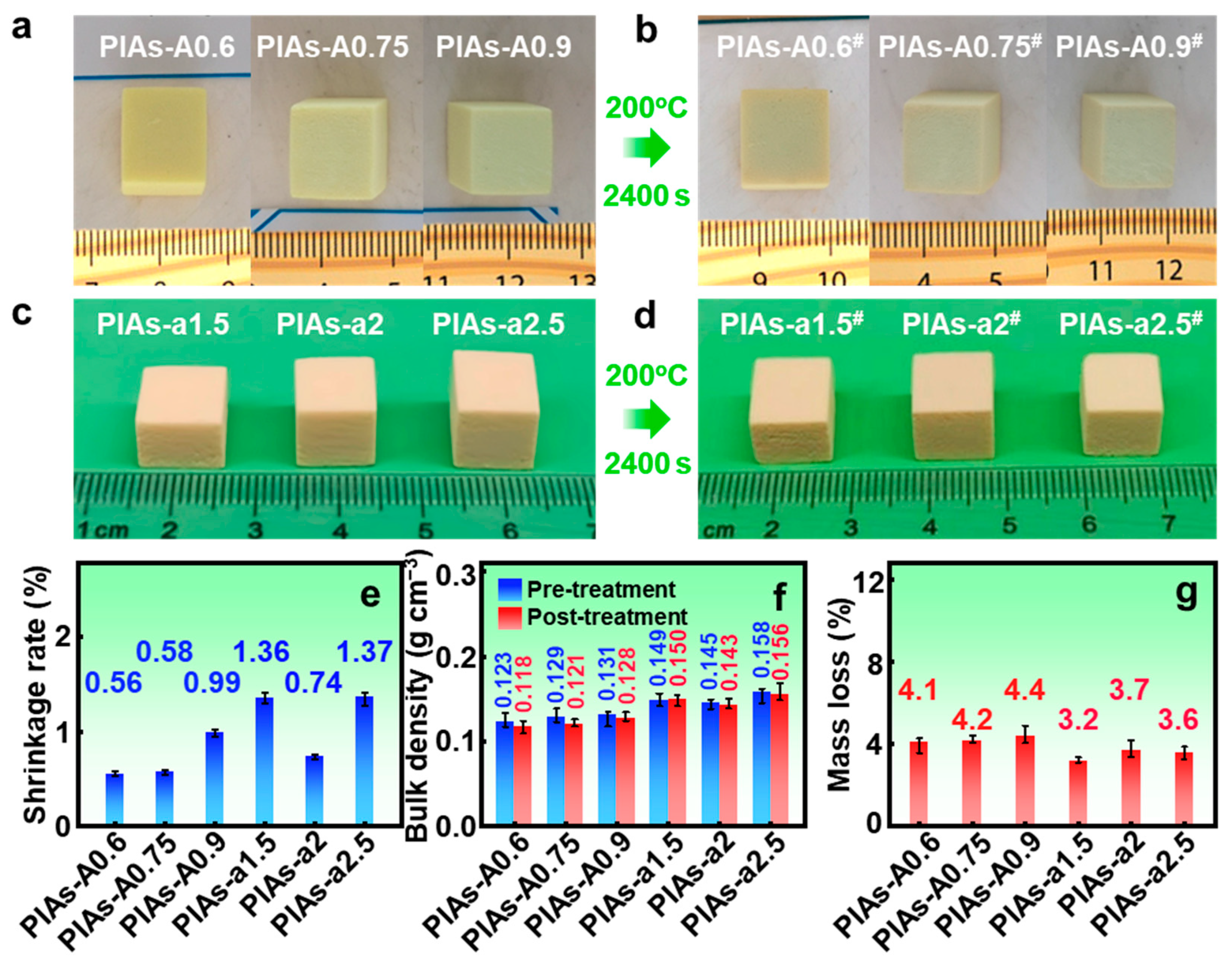
As shown in
Figure 5b, after the high-temperature testing, no significant deformation or cracking was observed in the PIAs-A0.6, PIAs-A0.75, or PIAs-A0.9 sample, indicating that the PIAs-A series of aerogels possess excellent thermal stability. To evaluate their high-temperature stability more quantitatively, the thermal shrinkage rate was a key parameter.
Figure 5e presents the thermal shrinkage data of the polyimide aerogels after 200 °C treatment. The results show that the thermal shrinkage rates of the PIAs-A series are all below 1.00%, with PIAs-A0.6 and PIAs-A0.75 exhibiting particularly low shrinkage rates. This phenomenon can be attributed to the robust nanonetwork structures in PIAs-A0.6 and PIAs-A0.75, which effectively suppress the free movement of polyimide molecular chains, thereby reducing thermal shrinkage. Moreover, the Al–O network structure present in PIAs-A0.6 and PIAs-A0.75 helps to dissipate thermal stress during thermal treatment, further reducing the thermal shrinkage rate. Therefore, the PIAs-A0.6 and PIAs-A0.75 samples exhibit superior stability and resistance to thermal shrinkage under high-temperature conditions.
To compare the high-temperature performance of the PIAs-A and PIAs-a series, high-temperature tests were also performed on PIAs-a1.5, PIAs-a2, and PIAs-a2.5, with thermal treatment at 200 °C for 2400 s. As shown in
Figure 5d, after high-temperature treatment, no noticeable shrinkage or cracking was observed in the PIAs-a series, indicating their excellent thermal stability. As shown in
Figure 5c–e, the thermal shrinkage rate of the PIAs-a series was limited to a maximum of only 1.37%, further illustrating the reinforcement of their nanonetwork structure. Furthermore, the introduction of nano-alumina creates structural reinforcement points within nanoporous network, which effectively restricts molecular chain movement and enhances thermal stability through interfacial interactions.
After the 200 °C thermal treatment, a slight but consistent decrease in bulk density was observed for all samples (
Figure 5f). This phenomenon is the net result of two competing effects. The dominant effect at this temperature is a mass loss of approximately 4% (
Figure 5g), which is attributed to the evaporation of physically adsorbed water from the high-surface-area network of the aerogel. Concurrently, the robust hybrid network undergoes only a very small volume shrinkage (corresponding to a linear shrinkage of ~1%,
Figure 5e). Because the percentage of mass loss is greater than the percentage of volume shrinkage, the overall bulk density slightly decreases after the 200 °C treatment. The results of the high-temperature tests on both the PIAs-A and PIAs-a series indicate that the incorporation of aluminum oxide enhanced the thermal resistance of the polyimide aerogels. The Al–O network structure imparts thermal stability to the polyimide molecular chains and suppresses high-temperature shrinking of the aerogel network. Notably, the thermal shrinkage rate of the PIAs-A series is lower than that of the PIAs-a series, providing a foundation for further investigation to improve the high-temperature performance of polyimide aerogels.
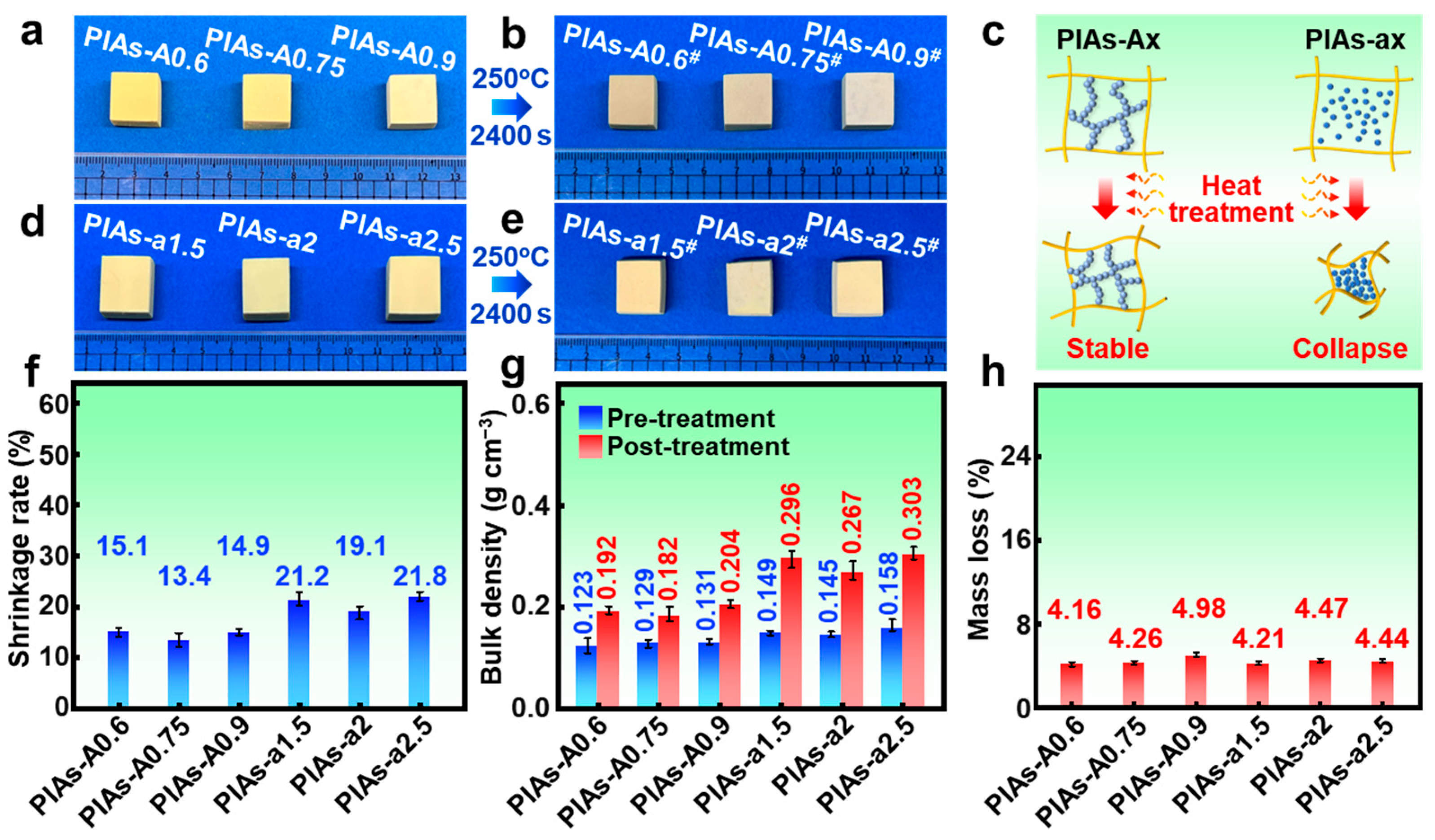
High-temperature tests were then performed at 250 °C to further investigate the thermal performance of the polyimide aerogels for their application as thermal protection materials in aerospace. As shown in
Figure 6a,b, after 2400 s of thermal treatment at 250 °C, no macroscopic cracking or sintering was observed in the PIAs-A series, further confirming their excellent high-temperature resistance. Following the 250 °C thermal treatment, the PIAs-A series exhibited a low mass loss rate (at most 4.98%), showing only a slight decrease compared to the aerogels treated at 200 °C. This result demonstrates the outstanding thermal stability of the polyimide aerogels. As shown in
Figure 6g, the bulk densities of the PIAs-A series increase after 250 °C treatment, mainly due to insufficient dimensional stability at higher temperatures, leading to more significant volume shrinkage.
Figure 6f reveals that the thermal shrinkage rates of PIAs-A0.6, PIAs-A0.75, and PIAs-A0.9 were 15.10%, 13.40%, and 14.90%, respectively. Compared to the thermal shrinkage rates observed after the 200 °C high-temperature exposure, these values show a notable increase. The Si–O bonds in APTES form a network with the polyimide main chain, and the introduction of the Al–O network structure further strengthens this nanonetwork.
However, the connections between the polyimide molecular chains are not sufficiently strong, and, at this high temperature, they are unable to effectively restrain the movement of the molecular chains. Nevertheless, compared to pure polyimide aerogels, which exhibit a thermal shrinkage rate of ~40% at 250 °C, the PIAs-A series demonstrates significantly improved high-temperature performance. Similarly, the PIAs-a series underwent high-temperature tests at 250 °C under the same thermal treatment conditions and duration as the PIAs-A series. As shown in
Figure 6d,e, the PIAs-a series exhibited significant thermal shrinkage and slight deformation in appearance after the 250 °C high-temperature test. This result suggests that the network structure of the PIAs-a series is less thermally stable compared to that of the PIAs-A series. This difference may be attributed to the fact that, while nano-alumina provides porosity, reducing the thermal conductivity of the polyimide aerogel, it does not form a self-supporting and integrated network structure within the polyimide skeleton. As schematically illustrated in
Figure 6c, unlike the in situ-formed alumina sol network, nano-alumina particles do not offer the same structural support to the polyimide skeleton at high temperatures. The loose distribution of nano-alumina in the aerogel network leads to the significant collapse of the pores during shrinkage, resulting in noticeable volume reduction at the macroscopic level.
In contrast, PIAs-A series, which incorporates alumina sol, benefits from a secondary network structure strengthened by the in situ-formed alumina sol network, greatly enhancing its high-temperature performance.
Figure 6f shows the thermal shrinkage rates of the PIAs-a series after the 250 °C high-temperature test, with an average value of approximately 20%. However, compared to pure polyimide aerogels, the temperature resistance of the PIAs-a series has also improved to some extent. As shown in
Figure 6h, the PIAs-a series also exhibits a relatively low mass loss, primarily due to the intrinsic excellent thermal stability of polyimide. The bulk density increased by nearly 50%, which is a result of the significant thermal shrinkage observed in the PIAs-a series at high temperatures. With the high-temperature tests on both the PIAs-A and PIAs-a series, it is evident that the introduction of Al–O network structure improves the thermal resistance of polyimide aerogels. Alumina helps to alleviate thermal stress within the aerogel network, enhancing its high-temperature dimensional stability. Among the two series, the PIAs-A series exhibited superior high-temperature performance.
To further confirm and quantify the elemental composition, particularly the aluminum content, energy dispersive X-ray spectroscopy (EDS) analysis was performed. The results are summarized in
Table 1. The data clearly confirms that the aluminum (Al) element was successfully incorporated into all hybrid aerogel skeletons. For the PIAs-A series, the measured Al content (wt.%) systematically increased with the sol addition amount (PIAs-A0.6: 0.45% < PIAs-A0.75: 0.57% < PIAs-A0.9: 0.80%), which validates the controllability of our experimental design. Furthermore, as expected, the PIAs-a series, which used 100% solid powder, shows a significantly higher “real aluminum content” (e.g., PIAs-a2: 6.61 wt.%). Most importantly, by comparing the samples before (e.g., PIAs-a2.5: 2.67 wt.%) and after heat treatment (e.g., PIAs-a2.5*−200 °C: 2.60 wt.%), the EDS data indicates that the Al element content showed almost no significant change. This provides critical chemical evidence for the thermal stability of the Al-O network, supporting the macroscopic dimensional stability previously observed.
2.4. Thermal Insulation Performance of the PIAs-A Series
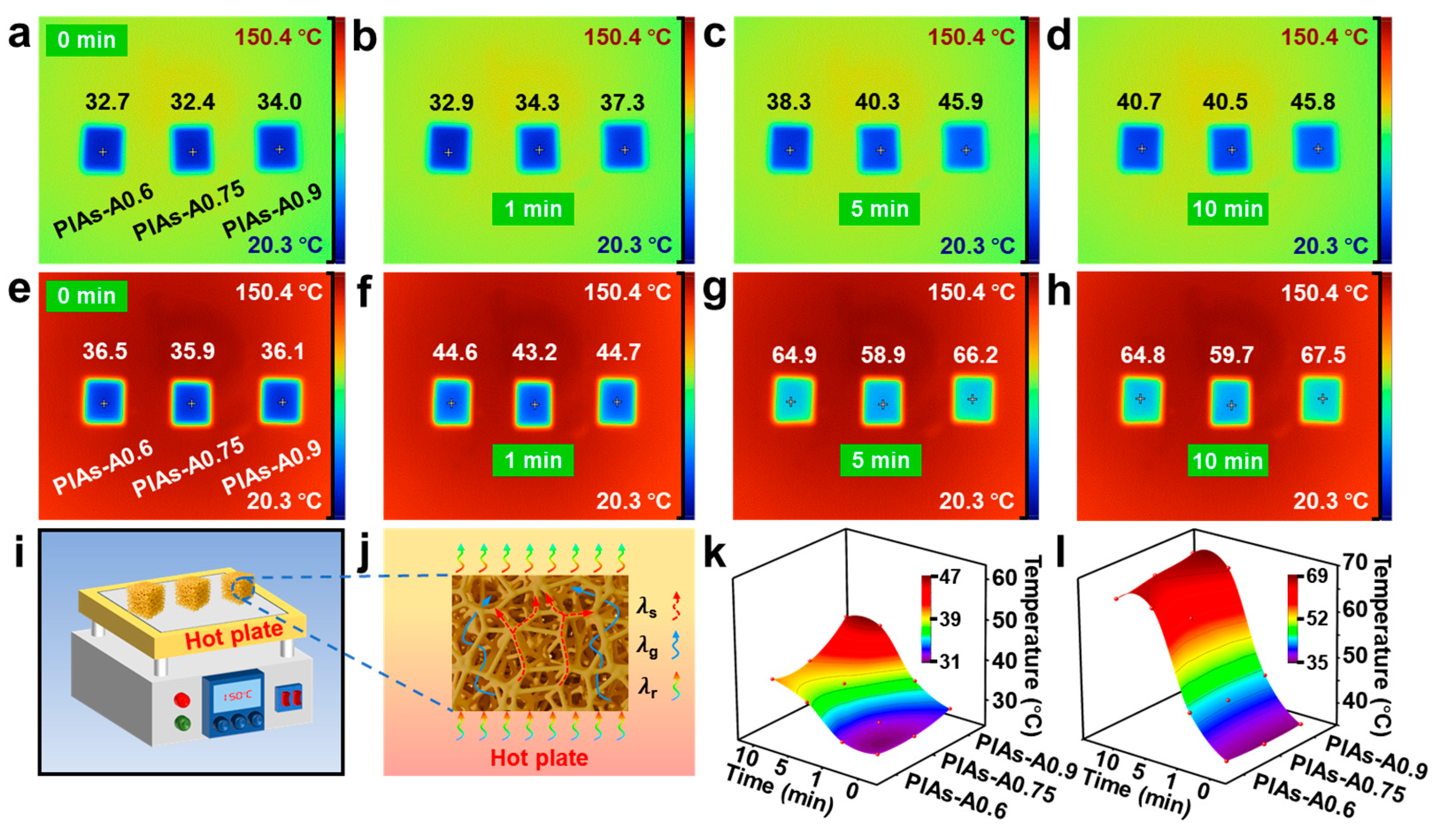
To quantitatively evaluate the thermal insulation performance of the polyimide aerogels, tests were performed on the PIAs-A series, as their thermal resistance significantly surpassed that of the PIAs-a series. Samples of PIAs-A0.6, PIAs-A0.75, and PIAs-A0.9 were placed horizontally on a hot-plate with temperature control. The side in contact with the heat source was termed as the ‘hot side’, while the opposite surface was referred to as the ‘cold side’. A thermal imaging camera was employed to record the temperature changes on the cold side. The platform was first set to 100 °C, reaching an actual temperature of 100.7 °C. When the polyimide aerogel samples were placed on the platform, measurements began, and the cold-side temperature was recorded using an infrared thermal imaging camera. As shown in
Figure 7a, the initial cold-side temperatures for PIAs-A0.6, PIAs-A0.75, and PIAs-A0.9 were 32.7, 32.4, and 34.0 °C, respectively. Over time, the cold-side temperature gradually increased. After 5 min, a thermal equilibrium was achieved, and the cold-side temperatures stabilized. The criterion for reaching thermal equilibrium was defined as the point at which the rate of temperature change on the cold side became negligible. As observed in the thermographic images from the 150 °C test (
Figure 7h), the cold-side temperature for PIAs-A0.75 was 58.9 °C at the 5 min mark and 59.7 °C at the 10 min mark. The minimal temperature increase of only 0.8 °C over this subsequent 5 min interval confirms that the heat flow had effectively stabilized and that the system had reached a state of thermal equilibrium. Once the thermal equilibrium was reached, the cold-side temperatures were recorded as 40.7, 40.5, and 45.8 °C for PIAs-A0.6, PIAs-A0.75, and PIAs-A0.9, respectively (
Figure 7d). These results demonstrate the excellent thermal insulation performance of the PIAs-A series. The thermal insulation performance of PIAs-A0.75 was notably superior to that of PIAs-A0.6 and PIAs-A0.9, primarily due to its more uniform and abundant nanopores, which effectively hindered heat transfer.
Using the same testing procedure, the temperature of the hot-plate was set to 150 °C, with an actual temperature of 148.7 °C. As shown in
Figure 7e, when the samples were placed horizontally on the hot-plate, the initial cold-side temperatures of PIAs-A0.6, PIAs-A0.75, and PIAs-A0.9 were 36.5, 35.9, and 36.1 °C, respectively. The cold-side temperature increased over time. After 5 min, the cold-side temperatures of PIAs-A0.6, PIAs-A0.75, and PIAs-A0.9 were 64.9, 58.9, and 66.2 °C, respectively. Using an infrared thermal camera to monitor the temperature changes, it was observed that, after 10 min, the heat flow reached equilibrium, and the cold-side temperature stabilized.
Figure 7h shows that, after 10 min, the final steady state cold-side temperatures of PIAs-A0.6, PIAs-A0.75, and PIAs-A0.9 were 64.8, 59.7, and 67.5 °C, respectively.
The temperature difference between the hot and cold sides of the polyimide aerogels reached nearly 90 °C, indicating that the thermal insulation performance of the PIAs-A series became more pronounced at higher temperatures.
Figure 7k,l shows temperature-rise diagrams for the 100 and 150 °C hot-plate tests; among the PIAs-A series, PIAs-A0.75 exhibited superior thermal insulation compared to PIAs-A0.6 and PIAs-A0.9 at different heat-source temperatures, which also explains why PIAs-A0.75 has a lower thermal shrinkage rate. The excellent thermal insulation performance is attributed to the polyimide aerogel network structure. The thermal conductivity of aerogel is mainly composed of solid thermal conductivity (λ
s), gas thermal conductivity (λ
g), and radiation thermal conductivity (λ
r). As illustrated in
Figure 7j, its rich pore structure forms an extremely tortuous thermal conduction path, which significantly impedes heat transfer and gives the polyimide aerogel its outstanding thermal insulation properties.
2.5. Enhanced Compressive Strength at Elevated Temperatures
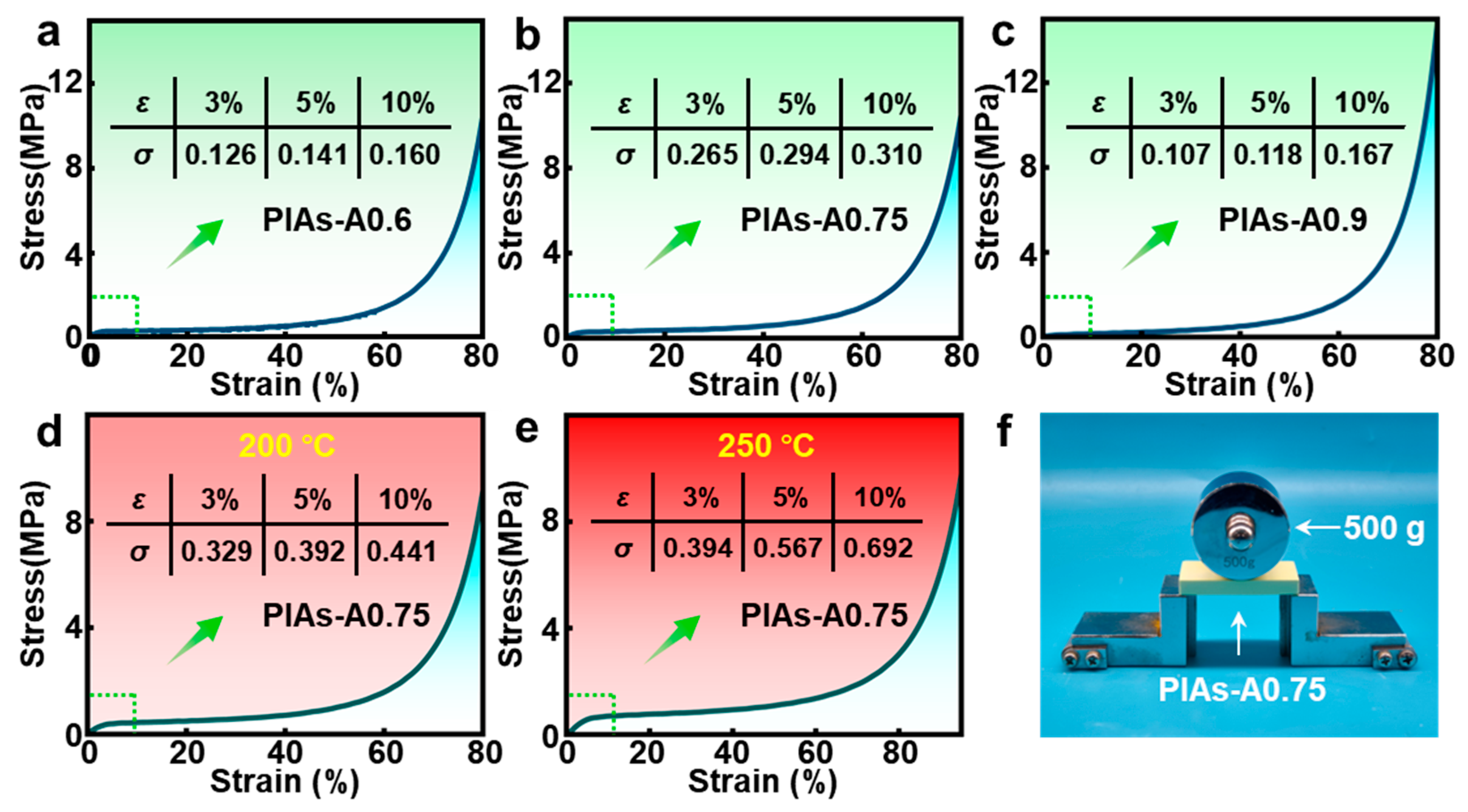
To investigate the mechanical properties of polyimide aerogels, compression tests were conducted on both the PIAs-A and PIAs-a series. As shown in
Figure 8a–c, PIAs-A0.75 in the PIAs-A series exhibited the best compression performance. With increasing alumina sol content, the compression performance of PIAs-A series first improved and then declined. This trend is primarily attributed to excessive alumina sol causing the polyimide aerogel nanonetwork to aggregate into particulate clusters, leading to increased brittleness and reduced compressive strength at the macroscopic level.
To study the mechanical strength of the PIAs-A series aerogels after high-temperature treatment, compression tests were performed on the optimal PIAs-A0.75 samples post-thermal treatment.
Figure 8d illustrates the compressive performance of PIAs-A0.75 after thermal treatment at 200 °C for 2400 s. At a compressive strain of 3%, the compressive stress reached 0.329 MPa, representing a significant increase from the original compressive stress of 0.265 MPa for PIAs-A0.75. This pronounced enhancement in mechanical properties is a direct macroscopic manifestation of a more robust and stable underlying network. Crucially, this strengthening is not due to crystallization, as the treatment temperatures (from 200 to 250 °C) are well below the glass transition temperature of the rigid polyimide backbone, meaning that the chains lack the mobility to form an ordered crystalline structure. Instead, the enhancement is attributed to nanoscale phenomena within the amorphous network, primarily the further condensation of the inorganic Al-O network and the relaxation of internal stresses, which collectively create a more effectively crosslinked and stable skeletal structure.
Figure 8e shows the compressive performance of PIAs-A0.75 after thermal treatment at 250 °C. Despite the significant thermal shrinkage, the increased bulk density resulted in higher compressive strength. This finding suggests that the network structure of PIAs-A0.75 remained largely intact, even after the 250 °C heat test.
To further evaluate the compressive performance, a test setup was arranged, as shown in
Figure 8f. A sample of PIAs-A0.75 was placed horizontally between two L-shaped iron frames with a span of 50 mm. A 500 g weight is placed sideways against the center of the aerogel, such that a concentrated bending force was applied to the center. The aerogel edges are placed on the frame to maximize force arm applied by the weight. The PIAs-A0.75 sample shows excellent toughness, without any signs of fracture or obvious deformation.
2.6. Flame Retardancy and Thermal Stability
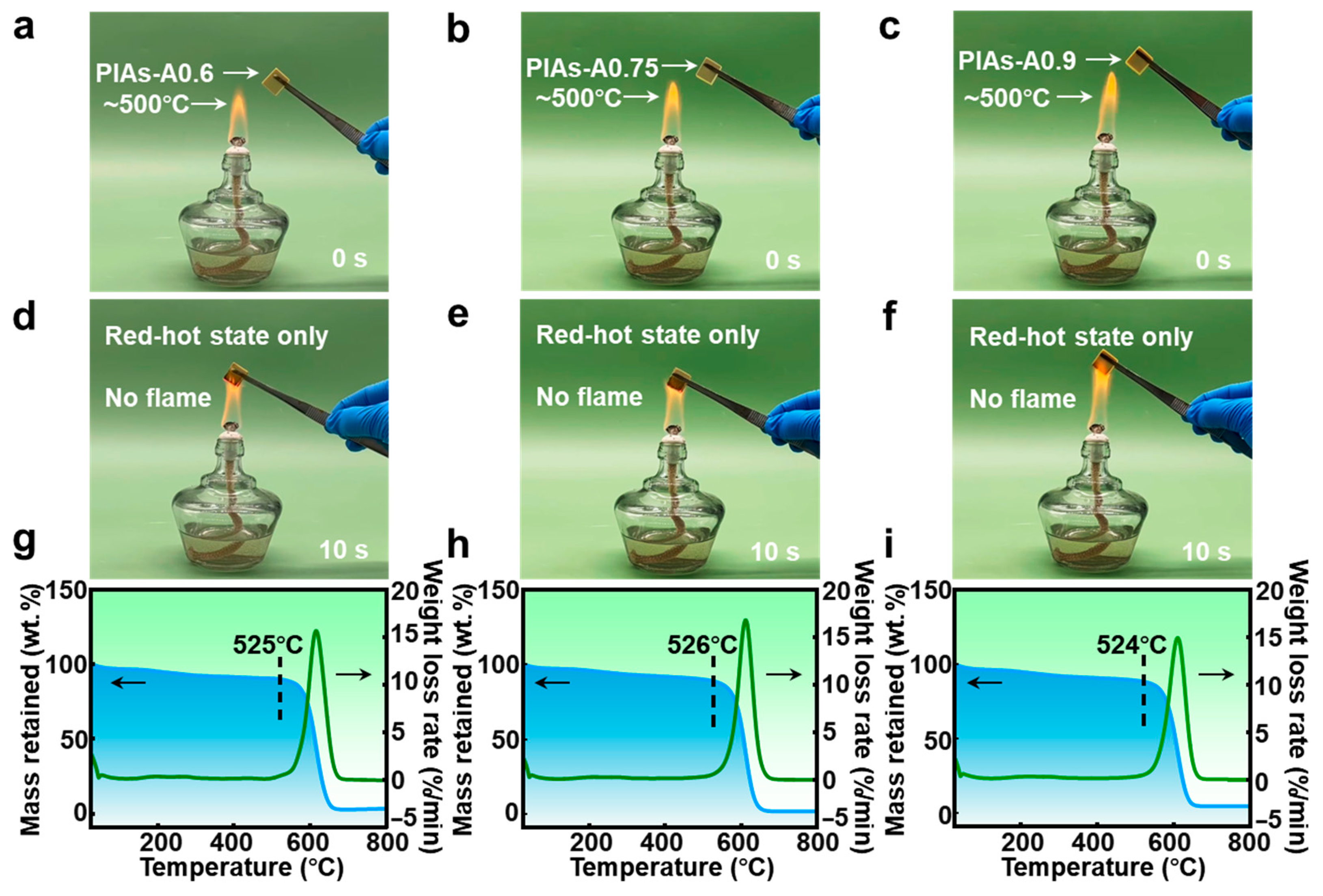
To investigate the flame-retardant and fire-resistant properties of the polyimide aerogels, PIAs-A0.6, PIAs-A0.75, and PIAs-A0.9 were processed into standard small cubic samples. The small polyimide aerogel cubes were then exposed to the outer flame of an alcohol burner (with an outer flame temperature of approximately 500 °C) to test their flame-retardant performance.
Figure 9d–f shows the combustion behavior of PIAs-A0.6, PIAs-A0.75, and PIAs-A0.9. Upon contact with the outer flame of the alcohol burner, the polyimide aerogel cubes exhibit only partial volume shrinkage and begin to glow red, with no obvious visible combustion flames. This observation indicates that the PIAs-A series possesses inherent flame-retardant properties.
The flame-retardant performance of polyimide aerogels is mainly attributed to their molecular structure. The PIAs-A series contains numerous aromatic ring structures which that C–C and C–H bonds. These bonds have high dissociation energies, making the polyimide aerogel molecular structure resistant to thermal cleavage and combustion at high temperatures. Additionally, the presence of C=O bonds in the molecular structure of the PIAs-A series contributes to its flame resistance. These bonds can promote the formation of a stable char layer during combustion, which suppresses the combustion reaction. Consequently, the PIAs-A series exhibits excellent flame-retardant and fire-resistant performance. Moreover, the nanoporous network structure of the PIAs-A series also imparts flame-retardant properties. At high temperatures, the nanoporous network structure can inhibit the spread of flames and limit oxygen diffusion, further enhancing the combustion resistance of the aerogels. This combination of molecular and structural characteristics makes the PIAs-A series highly effective as a flame-retardant material.
Excellent thermal stability is a crucial property for thermal protection materials used in aerospace applications. To investigate the thermal stability of the PIAs-A series, thermogravimetric analysis (TG) and derivative thermogravimetry (DTG) were conducted under an air atmosphere, measuring the mass evolution of polyimide aerogels from room temperature to 800 °C.
Figure 9g–i displays the TG-DTG curves of PIAs-A0.6, PIAs-A0.75, and PIAs-A0.9. In the first stage, from room temperature to approximately 300 °C, the TG curves of all three samples showed a slight decrease in mass. This initial weight loss was likely due to the evaporation of absorbed water and the decomposition of residual solvents within the porous structure. As the temperature increased beyond 500 °C, the TG curves of the PIAs-A series began to exhibit a sharp decline. This rapid weight loss can be attributed to the decomposition of the polymer molecular chains and the breaking of weak bonds in PIAs-A0.6, PIAs-A0.75, and PIAs-A0.9. The DTG curves reveal distinct endothermic peaks around 600 °C for all three polyimide aerogels, corresponding to the thermal decomposition process. As shown in
Figure 9g–i, the maximum thermal decomposition rates of PIAs-A0.6, PIAs-A0.75, and PIAs-A0.9 occurred at 525, 526, and 524 °C, respectively. This quantitatively determined decomposition temperature provides a clear scientific explanation for the phenomenon observed in the preceding flame test. The test, conducted in an alcohol burner flame of approximately 500 °C, operates just below this critical decomposition threshold. This explains why the material remains structurally stable enough to exhibit a “red-hot state only” rather than active combustion, demonstrating a strong consistency between the two characterization methods. Among these samples, PIAs-A0.75 exhibited the highest thermal decomposition temperature. This can be credited to its stable molecular structure and uniform nanoporous architecture, which renders the overall network structure more robust. Moreover, the polyimide molecular chains of PIAs-A0.75 are connected to abundant benzene rings, enhancing its intermolecular crosslinking interactions. The molecular structure of the PIAs-A series also contains a high density of aromatic rings, whose π-π stacking interactions further reinforce intermolecular forces. This reinforcement contributes to the improved thermal stability of the polyimide aerogels in the PIAs-A series.