Article

Genome-Scale Phylogenetic Evidence Supports the Synonymy of Lasiodiplodia brasiliensis with Lasiodiplodia theobromae


1
Graduate School of Agriculture, Tamagawa University, Tamagawa-Gakuen 6-1-1, Machida 194-8610, Japan
2
Department of Crop Protection, College of Agriculture, Central Luzon State University, Science City of Muñoz 3120, Nueva Ecija, Philippines
3
College of Agriculture, Tamagawa University, Tamagawa-Gakuen 6-1-1, Machida 194-8610, Japan
*
Author to whom correspondence should be addressed.
J. Fungi 2026, 12(4), 270; https://doi.org/10.3390/jof12040270
Submission received: 26 January 2026 / Revised: 19 March 2026 / Accepted: 19 March 2026 / Published: 8 April 2026
(This article belongs to the Section Fungal Evolution, Biodiversity and Systematics)

Abstract

The genus Lasiodiplodia includes numerous plant-pathogenic species whose delimitation is complicated by overlapping morphological traits and limited resolution of common genetic markers. Lasiodiplodia brasiliensis was described as a species closely related to L. theobromae; however, its taxonomic status remains controversial. In this study, we re-evaluated the species boundaries between L. theobromae and L. brasiliensis using an integrative approach that combined multilocus and genome-scale phylogenetic analyses with morphological comparisons. Multilocus phylogenetic analyses based on ITS, tef1-α, tub2, and rpb2 revealed an unresolved relationship between the two taxa. The L. theobromae clade had low bootstrap support, whereas the ancestral node connecting both species had high support. In contrast, genome-scale phylogenetic analysis using hundreds of single-copy orthologous genes strongly supported a single monophyletic clade encompassing isolates assigned to both L. theobromae and L. brasiliensis. Morphological analyses further revealed that conidial dimensions and other diagnostic characteristics largely overlapped between the two taxa, rendering them unreliable criteria for species separation. Considering the combined molecular and morphological evidence, our results support treating L. brasiliensis as a synonym of L. theobromae. Clarifying species boundaries within this group helps stabilize the taxonomy of Lasiodiplodia and provides a reliable foundation for accurate pathogen identification and disease management.

1. Introduction

Lasiodiplodia is a genus belonging to the family Botryosphaeriaceae (order Botryosphaeriales, phylum Ascomycota). Although once considered monotypic, the genus now comprises more than 80 described species, with approximately 70 species delimited based on morphological characteristics and molecular data [1,2]. However, many Lasiodiplodia species exhibit overlapping morphological traits, making identification based solely on morphology unreliable [3]. Consequently, molecular approaches have become essential for accurate species identification within the genus.
Accurate identification of plant pathogens is critical for effective disease management in agriculture. In the Philippines, species of Lasiodiplodia have recently been recognized as important pathogens of cacao (Theobroma cacao L.), a high-value crop for which species-specific management strategies have not yet been established. During investigations of cacao diseases, two species of Lasiodiplodia, L. theobromae (Pat.) Griffon & Maubl. and L. brasiliensis M.S.B. Netto, M.W. Marques & A.J.L. Phillips, were consistently isolated. These taxa are morphologically indistinguishable and form a single clade in multilocus phylogenetic analyses, raising questions regarding their taxonomic separation.
Resolving species boundaries in Lasiodiplodia is challenging. This is due to limited phylogenetic resolution from commonly used loci and high levels of intraspecific variation [2]. Particularly, species described based on subtle morphological differences and limited sampling may represent conspecific lineages rather than distinct taxa. Such taxonomic ambiguity is not only a systematic concern but also hampers accurate pathogen identification and communication in plant disease research and management.
L. theobromae is one of the most frequently reported species in the genus and occurs across a wide range of hosts and geographic regions [3,4]. In contrast, L. brasiliensis was described more recently [5,6,7] and has been reported from a narrower host range. Previous phylogenetic studies have shown that these two taxa are closely related and often unresolved in multilocus analyses, suggesting their potential conspecificity. However, a comprehensive reassessment incorporating multiple lines of evidence remains limited. Therefore, we addressed this gap by applying an integrative taxonomic approach, combining multilocus and genome-scale phylogenetic analyses and morphological comparisons to evaluate the taxonomic relationship between L. theobromae and L. brasiliensis isolated from cacao in the Philippines. By clarifying species boundaries within this complex, our study aims to stabilize Lasiodiplodia taxonomy and improve the accuracy of pathogen identification.

2. Materials and Methods

2.1. Sampling and Fungal Isolation

Cacao diseases, including leaf blight, vascular streak, and pod rot, as well as asymptomatic flowers, were collected from cacao fields in Nueva Ecija, Pangasinan, and Davao, Philippines. Sample tissues were cut into small pieces (approximately 5 mm2), surface-sterilized with 1% sodium hypochlorite for 2 min, rinsed twice in sterile distilled water, and dried on sterilized paper. The tissues were plated onto water agar (WA) and incubated at 25 °C for 7 days. Hyphae emerging from the tissues were transferred onto potato dextrose agar (PDA; Eiken Chemical Co., Ltd., Tokyo, Japan) plates and incubated for 3–14 days under ambient light near a window to induce sporulation. Fungi exhibiting diagnostic characteristics of the genus Lasiodiplodia, such as septate conidia with longitudinal striations [8], were selected for further experiments. Monocultures were obtained by single-spore isolation and maintained on one-fifth-strength PDA. Each isolate was preserved in 10% glycerol and stored at −80 °C at Tamagawa University, Tokyo, Japan.

2.2. DNA Extraction and Amplification

Genomic DNA was extracted from 4–7-day-old cultures of each Lasiodiplodia isolate using the cetyltrimethylammonium bromide (CTAB) method [9]. Four loci were targeted for multilocus analysis: the rDNA internal transcribed spacer region (ITS1, 5.8S rDNA, ITS2), β-tubulin (tub2), RNA polymerase subunit II (rpb2), and translation elongation factor 1-alpha (tef1-α). These loci were amplified using the primer pairs ITS4/ITS5 [10], Bt2a/Bt2b [11] or btLasF/btLasR (this study), rpb2-LasF/rpb2-LasR [12], and EF1-LasioF/EF1-LasioR [13] (Table S1). The primers btLasF/R and EF1-LasioF/R, designed from NGS-derived genomic data of Lasiodiplodia spp., were developed to improve amplification efficiency and sequence quality in isolates where previously published primers occasionally produced weak amplification or noisy chromatograms.
PCR reactions were performed in 10 μL volumes, consisting of 1 μL of 10× Taq buffer, 0.8 μL of dNTPs (2.5 mM each), 0.1 μL of each primer, 0.05 μL of Ex Taq polymerase (TaKaRa Ex Taq™, Takara, Shiga, Japan), 7 μL of double-distilled water, and 1 μL of genomic DNA. Specific PCR conditions for each locus are provided in Supplementary Table S2. PCR products were purified using ExoSAP-IT (GE Healthcare, Tokyo, Japan). Cycle sequencing was conducted using the Quantum Dye Terminator Cycle Sequencing Kit (SureFire Biosciences, Sheridan, WY, USA), and DNA sequences were obtained from the FASMAC DNA sequencing service (Kanagawa, Japan). All sequences generated in this study were deposited in the DNA Data Bank of Japan (DDBJ; Supplementary Table S3).

2.3. Genome Sequencing and Assembly

For genome-scale analysis, genomic DNA was extracted from 32 strains, including six isolates obtained in this study (TAP23C-1288, TAP23C-1289, TAP24C-0111, TAP24C-0116, TAP24C-0119, and TAP25C-0100), four isolates from a previous study (PH22-014, PH22-060, PH22-080, and PH22-120) [13], 16 strains from the Westerdijk Fungal Biodiversity Institute (WI-KNAW) culture collection, and six strains from the National Agriculture and Food Research Organization (NARO) Genebank (Table 1). Approximately 0.6–0.8 g of dried mycelium was processed using the CTAB method combined with the Maxwell® RSC PureFood GMO and Authentication Kit on a Maxwell® RSC instrument (Promega Corporation, Fitchburg, WI, USA). DNA concentration and quality were assessed using a NanoDrop spectrophotometer (Thermo Fisher Scientific, Waltham, MA, USA) and 1% agarose gel electrophoresis.
Genome sequencing was performed by Gene Nex using Illumina high-throughput sequencing technology (NovaSeq X). Raw sequencing reads were trimmed to remove adapter sequences and low-quality bases using Trimmomatic v0.40, and read quality was evaluated using FastQC v0.11.5 [14]. Genome assemblies were generated using Platanus allee v2.0.2 [15].

2.4. Molecular Phylogenetic Analysis

For multilocus phylogenetic analysis, we used sequence data from 62 reference strains of Lasiodiplodia, including ex-type strains, and 41 isolates obtained in this study. Botryosphaeria dothidea CBS 115476 was used as an outgroup (Supplementary Table S3). Accession numbers for reference strains were obtained from Huda-Shakirah et al. (2022) [16] and our previous study [13]. Sequences were aligned using ClustalW, which was implemented in MEGA v7 [17]. Phylogenetic trees were inferred using neighbor-joining (NJ), maximum likelihood (ML), and maximum parsimony (MP) methods based on concatenated alignments of ITS, tef1-α, tub2, and rpb2. For ML analysis, the Tamura three-parameter model with a gamma distribution (T92 + G) was selected based on the Akaike information criterion. Gaps were considered missing data. Branch support was assessed using bootstrap analysis with 1000 replicates [18].
Genome-scale phylogenetic analysis was performed using genomic data from 64 strains representing 19 species of Lasiodiplodia, with Fusarium graminearum PH-1 and Lecanosticta acicola CBS 871.95 included as outgroup taxa (Table 1). Genome sequences of 32 strains were retrieved from NCBI [19], whereas the remaining 32 genomes were generated in this study. Single-copy orthologs were identified using OrthoFinder v2.5.4 [20] with default parameters. Orthologous sequences were aligned using MAFFT v7.505 [21] and trimmed with trimAl v1.4 [22] using the option −g 10. An NJ tree was inferred from the concatenated alignment using MEGA v11 [23] to provide an overview of the genome-scale relationships. Bootstrap analysis was performed with 100 replicates.

2.5. Morphological Analysis

Colony morphology of L. theobromae and L. brasiliensis was examined on PDA after incubation at 25 °C for 7 days under a 12 h light/12 h dark cycle. Pycnidia were induced on autoclaved cacao leaves and stems placed on WA plates and incubated at 25 °C under ambient light conditions for 7–21 days. Fungal structures were observed and photographed using a Leica Wild Stereo Microscope MDG-17 (Leica Microsystems GmbH, Wetzlar, Germany). Conidia (n = 30 or 50), conidiogenous cells (n = 30), and paraphyses (n = 30) were examined using an Olympus BX51 light microscope (Olympus, Tokyo, Japan) and measured using ImageJ v1.53.
Differences in conidial dimensions among isolates were statistically evaluated using Welch’s one-way analysis of variance (Welch ANOVA) owing to unequal sample sizes among isolates. Test statistics were calculated using the Welch–Satterthwaite approximation, and significance was assessed at α = 0.05. Pairwise comparisons were performed using the Games–Howell post hoc test, and isolates were grouped accordingly, with identical letters indicating no significant differences. All statistical analyses were conducted in R v4.5.2 [24] using the rstatix [25] and multcompView packages [26].
To determine optimal growth temperatures, 5-mm-diameter mycelial plugs from the margins of 4-day-old colonies were transferred onto PDA plates and incubated at 4, 10, 15, 20, 25, 30, and 35 °C. Colony diameter was measured after 24 h of incubation, with five replicate plates per isolate at each temperature.

3. Results

3.1. Sampling and Fungal Isolation

We obtained 41 isolates of Lasiodiplodia from three sampling sites: 21 from Pangasinan, 19 from Davao, and one from Nueva Ecija. Among these, 12 isolates were obtained from symptomatic leaves, 17 from symptomatic stems, four from symptomatic flowers, four from asymptomatic flowers, three from symptomatic pods, and one from leaf litter (Supplementary Table S4).

3.2. Molecular Phylogenetic Analysis

For multilocus phylogenetic analysis, the relationships among the 41 Lasiodiplodia isolates were inferred using NJ, ML, and MP methods based on a concatenated dataset of four loci: ITS (495 bp), rpb2 (465 bp), tef1-α (408 bp), and tub2 (455 bp).
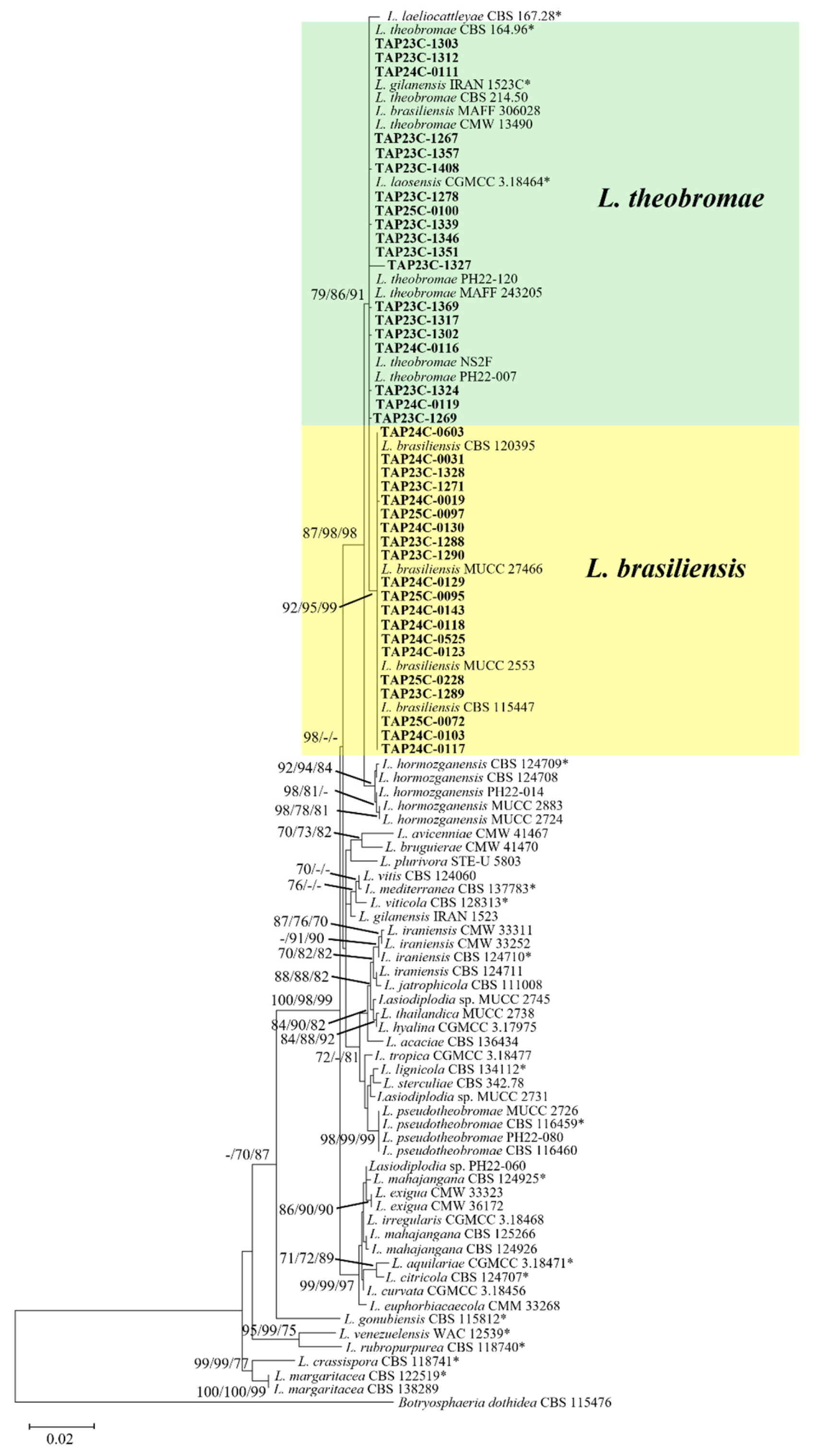
Among the 41 isolates analyzed, 21 clustered with L. theobromae, with relatively low bootstrap support (ML/NJ/MP = 69/39/0), whereas 20 clustered with L. brasiliensis with high bootstrap support (ML/NJ/MP = 95/94/99). The node uniting these two taxa was supported by bootstrap values of 86/81/92 (ML/NJ/MP; Figure 1).
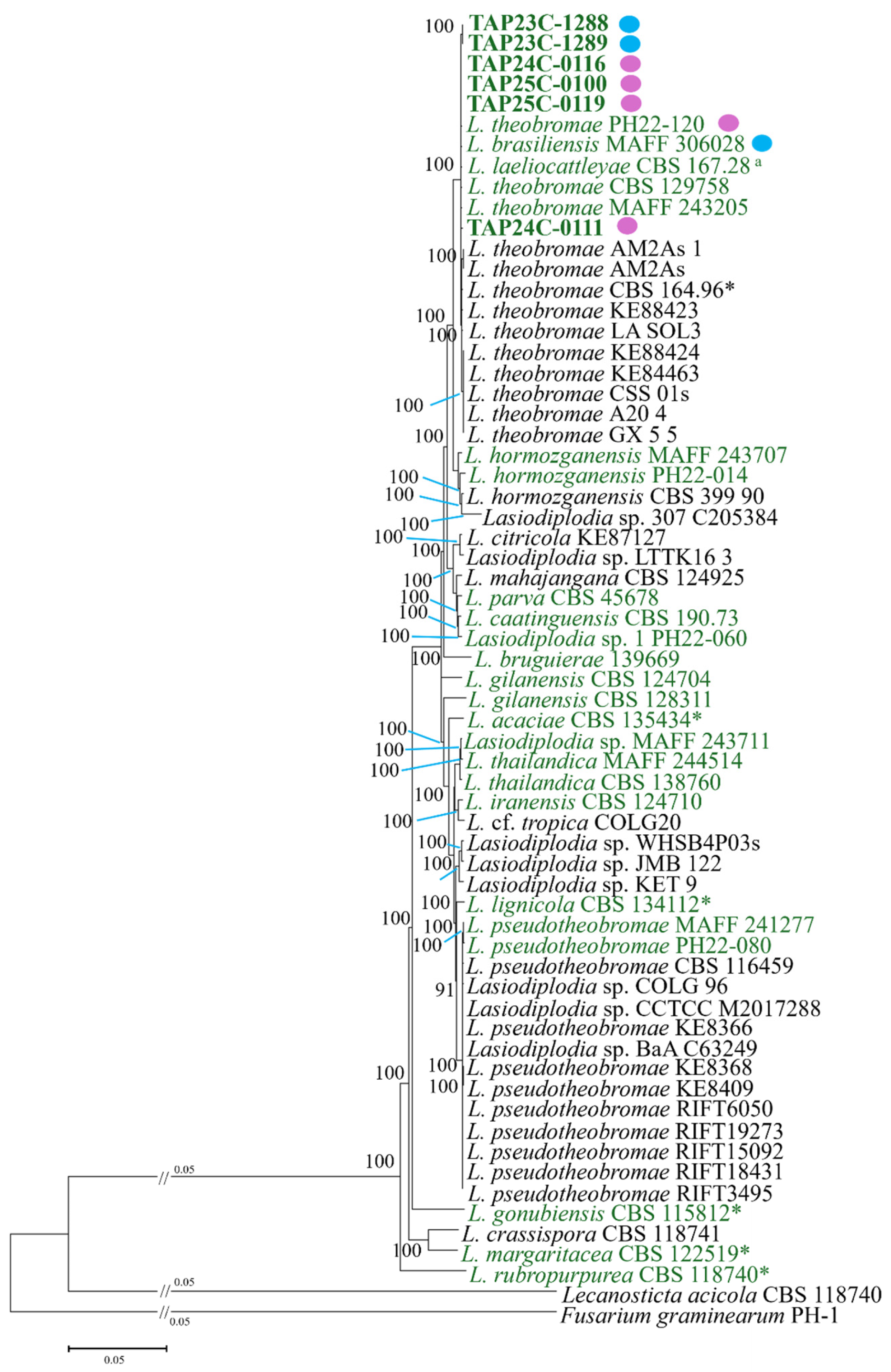
Genome-scale phylogenetic analysis was conducted to further resolve the relationship between L. theobromae and L. brasiliensis. The concatenated alignment of 663 predicted single-copy orthologous genes comprised 645,633 bp, including 389,189 variable and parsimony-informative sites. In the resulting NJ tree, isolates identified as L. theobromae and L. brasiliensis clustered within a single highly supported clade (Figure 2). The seven isolates assigned in this study (TAP24C-0116, TAP24C-0111, TAP25C-0100, TAP25C-0119, PH22-120, TAP23C-1288, and TAP23C-1289) were distributed within this lineage, consistent with the multilocus phylogeny (Figure 1). Notably, the reference isolate L. brasiliensis MAFF 306028 was nested within the L. theobromae clade.

3.3. Morphological Analysis

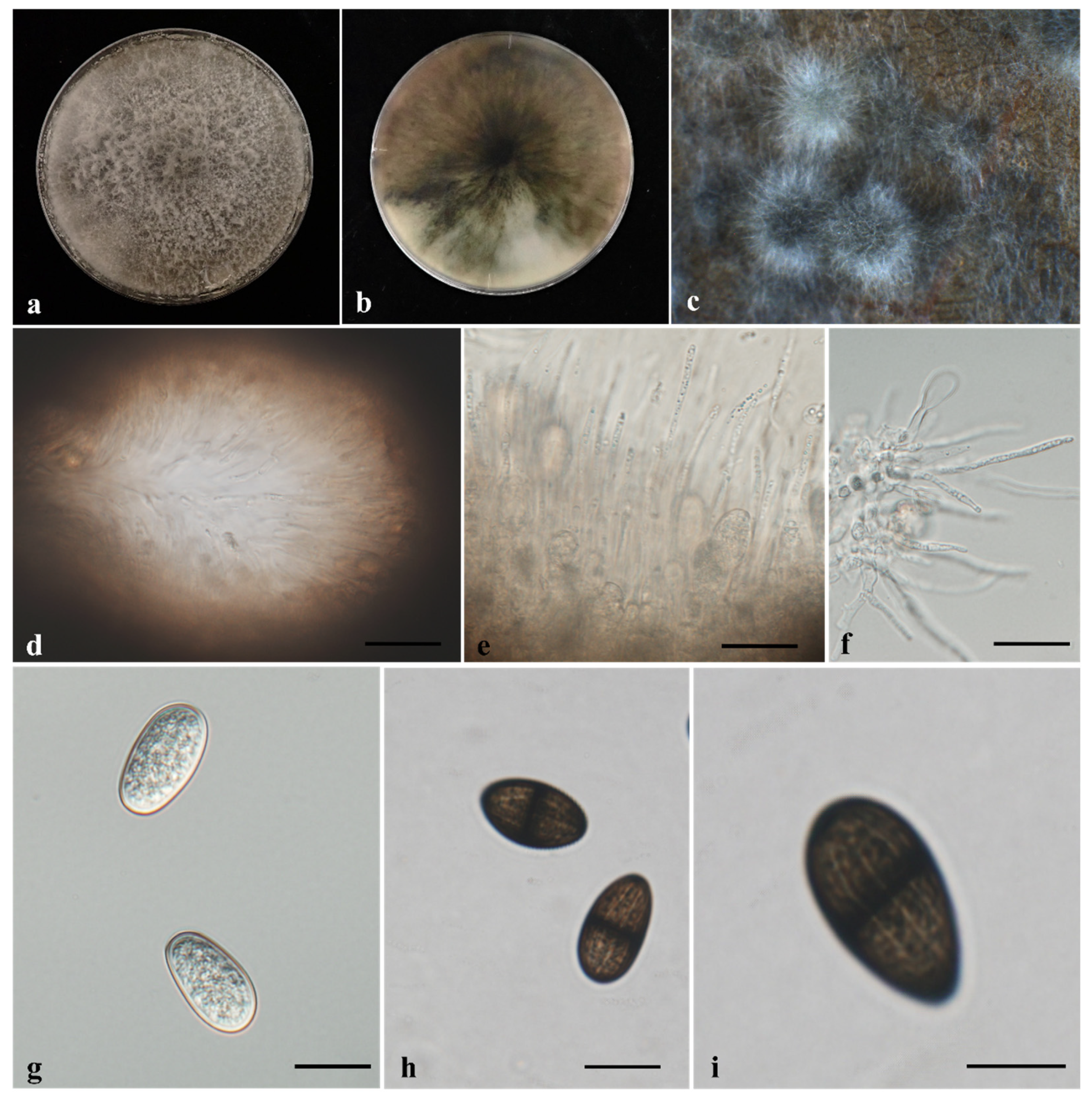
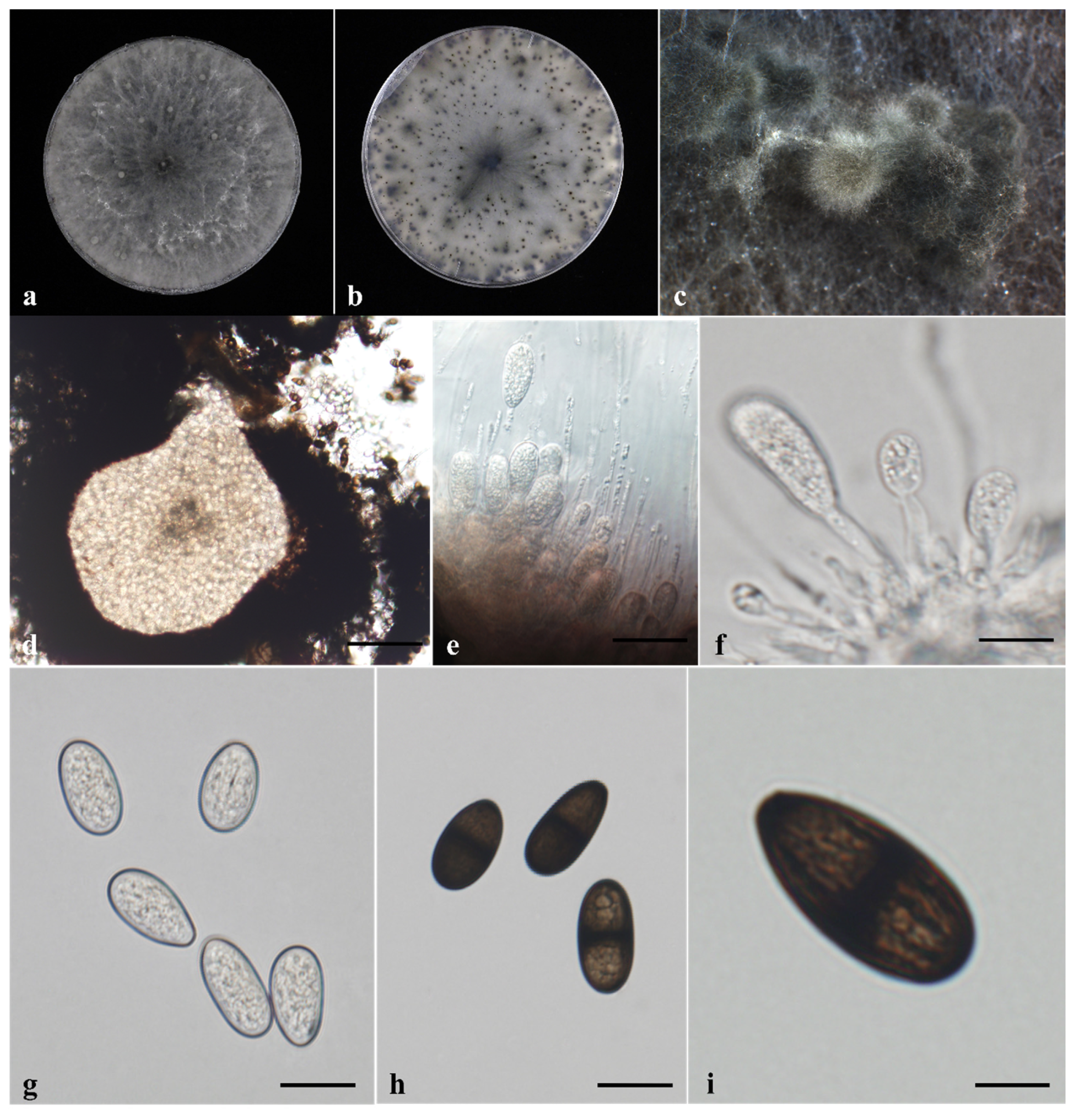
Overall, the isolates examined in this study exhibited morphological characteristics consistent with those of Lasiodiplodia. Pycnidia formed on sterilized cacao leaves and stems placed on PDA were aggregated, globose, gray to black, and covered with hyphae (Figure 3c and Figure 4c). Paraphyses in the pycnidial conidiomata were hyaline, septate or aseptate, smooth-walled, and had rounded apices (Figure 3e and Figure 4e). Conidiogenous cells were hyaline, smooth, thin-walled, cylindrical, and holoblastic (Figure 3f and Figure 4f). Both immature and mature conidia were observed; conidia were subovoid to ellipsoid-ovoid in shape, with a rounded apex and a truncated base. Immature conidia were hyaline, aseptate, and smooth-walled, containing granular contents (Figure 3g and Figure 4g), whereas mature conidia were light to dark brown, one-septate with a median septum, exhibited longitudinal striations, and were widest at the center (Figure 3h,i and Figure 4h,i). Conidial dimensions are summarized in Table 2.
Furthermore, conidial dimensions were measured and statistically analyzed using R version 4.5.2 [23]. Welch ANOVA revealed highly significant differences among isolates for both conidial length (F = 41, p < 0.001) and width (F = 41, p < 0.001), indicating substantial variation in conidial size among individual isolates. Games–Howell post hoc tests further identified isolate pairs within each phylogenetic clade that differed significantly in mean conidial length and width (Table 2). In contrast, most isolate pairs between the two clades defined in the ML phylogenetic tree (Figure 1) did not show significant differences in conidial dimensions.
Comparison of conidial sizes of isolates assigned to the L. theobromae and L. brasiliensis clades with published descriptions of the ex-type strain of L. theobromae (24.49–27.49 × 13.3–14.79 μm) [27] and L. brasiliensis (22.7–29.2 × 11.7–17.0 μm) [7] revealed overlapping size ranges, including isolates forming the smallest and largest conidia within the two clades (Table 2). Measurements of paraphyses and conidiogenous cells were (22.5–)38.8–49.7(–66.0) × (1.5–)2.3–2.8(–3.7) μm (mean ± SD: 45.1 ± 7.6 × 2.6 ± 0.4; L/W = 17.2) and (5.3–)9.3–12.0(–16.0) × (1.0–)2.9–4.1(–6.0) μm (mean ± SD: 10.8 ± 2.1 × 3.5 ± 0.8; L/W = 3.1), respectively. Direct comparisons of these measurements with those of the ex-type strain of L. theobromae were not possible due to the absence of corresponding morphological data in previous studies.
Colony growth of L. theobromae and L. brasiliensis was examined on PDA for 7 days. Colonies of both species produced aerial mycelium that was initially white and gradually became light gray to gray at 25 °C under a 12 h light/12 h dark photoperiod. Under continuous darkness, colonies grown at 30 °C reached the edge of 90-mm Petri dishes within 2 days, indicating this temperature as optimal for mycelial growth. The minimum and maximum growth temperatures observed were 10 and 35 °C, respectively.

4. Discussion

The genus Lasiodiplodia has undergone a rapid increase in the number of recognized species in recent years. However, species delimitation within the genus remains challenging owing to extensive overlap in morphological characters and the frequent occurrence of cryptic species complexes. Consequently, identification based solely on traditional morphological criteria is often unreliable. Although integrative approaches combining morphology with multilocus phylogenetic analyses are now widely used [3,28], the taxonomic boundaries between L. theobromae and L. brasiliensis have remained unclear since L. brasiliensis was described as a closely related taxon.
In the present study, we re-evaluated the species boundaries between L. theobromae and L. brasiliensis using multilocus and genome-scale phylogenetic analyses in combination with conidial morphology. In the multilocus phylogeny, the L. brasiliensis clade was well supported, whereas the L. theobromae clade showed low bootstrap support. Simultaneously, the ancestral node uniting the two taxa received high support, indicating unresolved phylogenetic relationships. Taken together, these results provide limited evidence for treating L. theobromae and L. brasiliensis as distinct species based solely on multilocus data. This interpretation is consistent with that of Ko et al. (2023) [2], who suggested that L. brasiliensis represents intraspecific variation within L. theobromae rather than a separate evolutionary lineage.
Although computational species delimitation methods are often used to explore potential species boundaries in multilocus datasets, the objective of this study was to reassess the taxonomic status of L. brasiliensis relative to L. theobromae using genome-scale phylogenomic data and morphological comparisons. Genome-scale phylogenomic analysis provided additional resolution for evaluating the relationship between L. theobromae and L. brasiliensis. The phylogeny inferred from hundreds of single-copy orthologous loci consistently recovered isolates previously identified as L. theobromae and L. brasiliensis within a single well-supported clade, within which, isolates assigned to the two taxa were intermingled. In addition, no consistent morphological differences were observed between these taxa. Taken together, these results do not support their recognition as separate species. Therefore, L. brasiliensis is best interpreted as a synonym of L. theobromae. Similar patterns have been reported in fungi, where genome-scale or multilocus phylogenomic datasets provide greater resolution for evaluating species boundaries and evolutionary relationships than analyses based on a small number of loci [29].
Further support comes from the phylogenetic placement of key reference strains. Strain MAFF 306028, originally identified as L. theobromae by Sato et al. (2016) [30] and later reassigned to L. brasiliensis by Hattori et al. (2023) [31], consistently clustered with L. theobromae in both multilocus and genome-scale analyses in the present study. Similarly, strain CBS 167.28, the ex-type strain of L. laeliocattleyae, which has been reported as closely related to L. theobromae in multilocus analyses, also formed a monophyletic group with L. theobromae in the genome-scale phylogeny. These findings suggest that species boundaries within the L. theobromae complex have been inconsistently interpreted and remain unstable when based on single- or few-locus datasets compared to genome-scale analysis.
Morphological evidence further supports the lack of a clear separation between L. theobromae and L. brasiliensis. Conidial dimensions measured in this study showed no significant differences between isolates assigned to the two clades, indicating that conidial size alone cannot reliably distinguish them. The original description of L. brasiliensis relied on morphological characteristics that largely overlap with those of L. theobromae and lacked strong diagnostic features [5,7,32].
Taken together, the combined multilocus, genome-scale phylogenetic, and morphological evidence supports the conclusion that L. brasiliensis does not represent a species distinct from L. theobromae. Accordingly, and following the principle of nomenclatural priority, L. brasiliensis is best treated as a synonym of L. theobromae.
Despite the strong concordance among multilocus, genome-scale phylogenetic, and morphological data, certain limitations to this study should be acknowledged. The ex-type strain of L. brasiliensis (CMM 4015) was not available for analysis, and genome sequence data remain unavailable for several species within the genus Lasiodiplodia.
Accurate species identification within Lasiodiplodia is essential because members of this genus include important plant pathogens that affect a wide range of hosts. Clarifying the taxonomic status of L. theobromae and its synonyms provides a more stable framework for understanding disease etiology, host range, and epidemiology, and supports more reliable disease diagnosis and management strategies.

5. Conclusions

In conclusion, this study proved that L. brasiliensis should be treated as a synonym for L. theobromae based on integrated molecular and morphological analyses. Furthermore, genome-scale phylogenetic inference offers high-resolution support, with both taxa forming a strongly supported monophyletic clade with high bootstrap values. The absence of significant differences in spore dimensions among the examined isolates further corroborates that the two taxa represent a single species. The consistency between genomic data and morphological observations provides compelling evidence for synonymizing these taxa. This taxonomic clarification contributes to improved species delimitation within the genus and has important implications for accurate identification and effective management strategies for diseases caused by L. theobromae.

Supplementary Materials

The following supporting information can be downloaded at: https://www.mdpi.com/article/10.3390/jof12040270/s1, Table S1: Primers used in phylogenetic analysis of Lasiodiplodia spp.; Table S2: PCR conditions used for each region; Table S3: List of Lasiodiplodia spp. and their GenBank accessions used in this study; Table S4: Isolates of Lasiodiplodia obtained from different cacao farms in the Philippines. References [8,12,13,16,33,34,35,36,37,38,39,40,41,42,43,44,45] are cited in the Supplementary Materials.

Author Contributions

Conceptualization, C.O.-P., S.N. and K.W.; Methodology, C.O.-P., S.N., Y.H., Y.T. and K.W.; Formal analysis, C.O.-P., Y.T., Y.H., S.N. and K.W.; Investigation, C.O.-P., S.N. and K.W.; Writing—original draft, C.O.-P.; Writing—Review and Editing: K.W. and K.A.; Supervision: K.W. and K.A.; Funding Acquisition, K.W. All authors have read and agreed to the published version of the manuscript.

Funding

This research was funded by the Science and Technology Research Partnership for Sustainable Development (SATREPS) program (grant No. JPMJSA2007) of the Japan Science and Technology Agency (JST) and the Japan International Cooperation Agency (JICA).

Institutional Review Board Statement

Not applicable.

Informed Consent Statement

Not applicable.

Data Availability Statement

Genome sequence data generated in this study will be deposited in a public repository (DBBJ) upon acceptance of the manuscript. Other data supporting the findings of this study are available from the corresponding author upon reasonable request.

Acknowledgments

We would like to thank Mike Andre Malonzo, Parsons Hail, Jerwin Undan, Garry Benico and Elaida R. Fiegalan for accompanying us during sample collection.

Conflicts of Interest

The authors declare no conflicts of interest.

Abbreviations

The following abbreviations are used in this manuscript:
ITSinternal transcribed spacer
CTABcetyltrimethylammonium bromide
PDApotato dextrose agar
WAwater agar
NJneighbor-joining
MLmaximum likelihood
MPmaximum parsimony
ANOVAanalysis of variance

References

  1. MycoBank. Available online: https://www.mycobank.org (accessed on 15 November 2025).
  2. Ko, Y.Z.; Liyanage, W.K.; Shih, H.C.; Tseng, M.N.; Shiao, M.S.; Chiang, Y.C. Unveiling cryptic species diversity and genetic variation of Lasiodiplodia infecting fruit crops in Taiwan. J. Fungi 2023, 9, 950. [Google Scholar] [CrossRef]
  3. Phillips, A.J.L.; Alves, A.; Abdollahzadeh, J.; Slippers, B.; Wingfield, M.J.; Groenewald, J.Z.; Crous, P.W. The Botryosphaeriaceae: Genera and species known from culture. Stud. Mycol. 2013, 76, 51–167. [Google Scholar] [CrossRef]
  4. Mehl, J.; Wingfield, M.J.; Roux, J.; Slippers, B. Invasive everywhere? Phylogeographic analysis of the globally distributed tree pathogen Lasiodiplodia theobromae. Forests 2017, 8, 145. [Google Scholar] [CrossRef]
  5. Ferreira de Souza, J.F.; Romulo da Silva França, K.; Machado de Medeiros Ferro, M.; Figueredo de Oliveira Costa, J.; Assunção, I.P.; Silvestre de Andrade Lima, G.; de Alcântara Neto, F.; da Silva Matos, K.; Pereira de Melo, M. Lasiodiplodia theobromae and Lasiodiplodia brasiliensis associated with dieback and canker in cupuaçu trees (Theobroma grandiflorum) in Brazil. Physiol. Mol. Plant Pathol. 2025, 139, 102759. [Google Scholar] [CrossRef]
  6. Mannaa, M.; Jung, T.; Kim, A.; Lee, D.; Seo, Y.-S. Characterization of Lasiodiplodia brasiliensis causing banana black rot in Korea and its biocontrol by Paraburkholderia busanensis P39 through volatile-mediated microbiome modulation. Postharvest Biol. Technol. 2025, 227, 113621. [Google Scholar] [CrossRef]
  7. Netto, M.S.B.; Assunção, I.P.; Lima, G.S.A.; Marques, M.W.; Lima, W.G.; Monteiro, J.H.A.; de Queiroz Balbino, V.; Michereff, S.J.; Phillips, A.J.L.; Câmara, M.P.S. Species of Lasiodiplodia associated with papaya stem-end rot in Brazil. Fungal Divers. 2014, 67, 127–141. [Google Scholar] [CrossRef]
  8. Dou, Z.; He, W.; Zhang, Y. Does morphology matter in taxonomy of Lasiodiplodia? An answer from Lasiodiplodia hyalina sp. nov. Mycosphere 2017, 8, 1014–1027. [Google Scholar] [CrossRef]
  9. Doyle, J.J.; Doyle, J.L. A rapid DNA isolation procedure for small quantities of fresh leaf tissue. Phytochem. Bull. 1987, 19, 11–15. [Google Scholar]
  10. White, T.J.; Bruns, T.; Lee, S.; Taylor, J. Amplification and direct sequencing of fungal ribosomal RNA genes for phylogenetics. In PCR Protocols: A Guide to Methods and Applications; Innis, M.A., Gelfand, D.H., Sninsky, J.J., White, T.J., Eds.; Academic Press: San Diego, CA, USA, 1990; pp. 315–322. [Google Scholar] [CrossRef]
  11. Glass, N.L.; Donaldson, G.C. Development of primer sets designed for use with the PCR to amplify conserved genes from filamentous ascomycetes. Appl. Environ. Microbiol. 1995, 61, 1323–1330. [Google Scholar] [CrossRef]
  12. Cruywagen, E.M.; Slippers, B.; Roux, J.; Wingfield, M.J. Phylogenetic species recognition and hybridisation in lasiodiplodia: A case study on species from baobabs. Fungal Biol. 2017, 121, 420–436. [Google Scholar] [CrossRef]
  13. Ocampo-Padilla, C.; Malonzo, M.A.C.; Grospe, R.A.F.; Bagsic, J.T.A.; Nozawa, S.; Tsurumi, Y.; Watanabe, K. Lasiodiplodia species isolated from Theobroma cacao in the Philippines and their pathogenicity. J. Gen. Plant Pathol. 2024, 90, 254–266. [Google Scholar] [CrossRef]
  14. Andrews, S. FastQC: A Quality Control Tool for High Throughput Sequence Data, 2010. Available online: http://www.bioinformatics.babraham.ac.uk/projects/fastqc/ (accessed on 15 November 2025).
  15. Kajitani, R.; Yoshimura, D.; Okuno, M.; Minakuchi, Y.; Kagoshima, H.; Fujiyama, A.; Kubokawa, K.; Kohara, Y.; Toyoda, A.; Itoh, T. Platanus-allee is a de novo haplotype assembler enabling a comprehensive access to divergent heterozygous regions. Nat. Commun. 2019, 10, 1702. [Google Scholar] [CrossRef] [PubMed]
  16. Huda-Shakirah, A.R.; Mohamed Nor, N.M.I.; Zakaria, L.; Leong, Y.H.; Mohd, M.H. Lasiodiplodia theobromae as a causal pathogen of leaf blight, stem canker, and pod rot of Theobroma cacao in Malaysia. Sci. Rep. 2022, 12, 8966. [Google Scholar] [CrossRef] [PubMed]
  17. Kumar, S.; Stecher, G.; Tamura, K. MEGA7: Molecular evolutionary genetics analysis version 7.0 for bigger datasets. Mol. Biol. Evol. 2016, 33, 1870–1874. [Google Scholar] [CrossRef]
  18. Felsenstein, J. Confidence limits on phylogenies: An approach using the bootstrap. Evolution 1985, 39, 783–791. [Google Scholar] [CrossRef]
  19. GenBank. Available online: https://www.ncbi.nlm.nih.gov/genbank (accessed on 15 November 2025).
  20. Emms, D.M.; Kelly, S. OrthoFinder: Phylogenetic orthology inference for comparative genomics. Genome Biol. 2019, 20, 238. [Google Scholar] [CrossRef]
  21. Katoh, K.; Standley, D.M. MAFFT multiple sequence alignment software version 7: Improvements in performance and usability. Mol. Biol. Evol. 2013, 30, 772–780. [Google Scholar] [CrossRef]
  22. Capella-Gutiérrez, S.; Silla-Martínez, J.M.; Gabaldón, T. trimAl: A tool for automated alignment trimming in large-scale phylogenetic analyses. Bioinformatics 2009, 25, 1972–1973. [Google Scholar] [CrossRef]
  23. Tamura, K.; Stecher, G.; Kumar, S. MEGA11: Molecular evolutionary genetics analysis version 11. Mol. Biol. Evol. 2021, 38, 3022–3027. [Google Scholar] [CrossRef]
  24. R Core Team. R: A Language and Environment for Statistical Computing; R Foundation for Statistical Computing: Vienna, Austria, 2025; Available online: https://www.R-project.org/ (accessed on 6 January 2026).
  25. Kassambara, A. Rstatix: Pipe-Friendly Framework for Basic Statistical Tests, R Package Version 0.7.3; CRAN: Vienna, Austria, 2025. [Google Scholar] [CrossRef]
  26. Graves, S.; Piepho, H.; Dorai-Raj, S. multcompView: Visualizations of Paired Comparisons, R Package 0.1-11; CRAN: Vienna, Austria, 2024. [Google Scholar] [CrossRef]
  27. Marques, M.W.; Lima, N.B.; de Morais, M.A., Jr.; Barbosa, M.A.G.; Souza, B.O.; Michereff, S.J.; Phillips, A.J.L.; Câmara, M.P.S. Species of lasiodiplodia associated with mango in Brazil. Fungal Divers. 2013, 61, 181–193. [Google Scholar] [CrossRef]
  28. Alves, A.; Crous, P.W.; Correia, A.; Phillips, A.J.L. Morphological and molecular data reveal cryptic speciation in Lasiodiplodia theobromae. Fungal Divers. 2008, 28, 1–13. [Google Scholar]
  29. Xu, J. Fungal species concepts in the genomics era. Genome 2020, 63, 459–468. [Google Scholar] [CrossRef] [PubMed]
  30. Sato, T.; Ono, T.; Tanaka, K.; Hattori, T. Fungi isolated mainly from woody plants in the Bonin Islands. Microb. Resour. Syst. 2016, 32, 163–178. [Google Scholar]
  31. Hattori, Y.; Nakano, L.; Nakashima, C. Taxonomic re-examination of Japanese isolates of the genus Lasiodiplodia. Mycoscience 2023, 64, 74–82. [Google Scholar] [CrossRef]
  32. Netto, M.S.B.; Lima, W.G.; Correia, K.C.; da Silva, C.F.B.; Thon, M.; Martins, R.B.; Miller, R.N.G.; Michereff, S.J.; Câmara, M.P.S. Phylogeny, distribution, and pathogenicity of Botryosphaeriaceae species associated with gummosis of Anacardium in Brazil, including a new Lasiodiplodia species. Fungal Biol. 2017, 121, 437–451. [Google Scholar] [CrossRef]
  33. Zhang, W.; Groenewald, J.Z.; Lombard, L.; Schumacher, R.K.; Phillips, A.J.L.; Crous, P.W. Evaluating species in Botryosphaeriales. Persoonia 2021, 46, 63–115. [Google Scholar] [CrossRef]
  34. Wang, Y.; Li, S.; Zhao, L.; Sun, X.; He, W.; Zhang, Y.; Dai, Y.C. Lasiodiplodia spp. associated with Aquilaria crassna in Laos. Mycol. Prog. 2019, 18, 683–701. [Google Scholar] [CrossRef]
  35. Osorio, J.A.; Crous, C.J.; de Beer, Z.W.; Wingfield, M.J.; Roux, J. Endophytic Botryosphaeriaceae, including five new species, associated with mangrove trees in South Africa. Fungal Biol. 2017, 121, 361–393. [Google Scholar] [CrossRef]
  36. Abdollahzadeh, J.; Javadi, A.; Mohammadi Goltapeh, E.M.; Zare, R.; Phillips, A.J.L. Phylogeny and morphology of four new species of Lasiodiplodia from Iran. Persoonia 2010, 25, 1–10. [Google Scholar] [CrossRef]
  37. Machado, A.R.; Pinho, D.B.; Pereira, O.L. Phylogeny, identification and pathogenicity of the Botryosphaeriaceae associated with collar and root rot of the biofuel plant Jatropha curcas in Brazil, with a description of new species of Lasiodiplodia. Fungal Divers. 2014, 67, 231–247. [Google Scholar] [CrossRef]
  38. Rodríguez-Gálvez, E.; Guerrero, P.; Barradas, C.; Crous, P.W.; Alves, A. Phylogeny and pathogenicity of Lasiodiplodia species associated with dieback of mango in Peru. Fungal Biol. 2017, 121, 452–465. [Google Scholar] [CrossRef]
  39. Liu, J.-K.; Phookamsak, R.; Doilom, M.; Wikee, S.; Li, Y.-M.; Ariyawansha, H.; Boonmee, S.; Chomnunti, P.; Dai, D.-Q.; Bhat, J.D.; et al. Towards a natural classification of Botryosphaeriales. Fungal Divers. 2012, 57, 149–210. [Google Scholar] [CrossRef]
  40. Begoude, B.A.D.; Slippers, B.; Wingfield, M.J.; Roux, J. Botryosphaeriaceae associated with Terminalia catappa in Cameroon, South Africa and Madagascar. Mycol. Prog. 2010, 9, 101–123. [Google Scholar] [CrossRef]
  41. Linaldeddu, B.T.; Deidda, A.; Scanu, B.; Franceschini, A.; Serra, S.; Berraf-Tebbal, A.; Boutiti, M.Z.; Jamâa, M.L.B.; Phillips, A.J.L. Diversity of Botryosphaeriaceae species associated with grapevine and other woody hosts in Italy, Algeria and Tunisia, with descriptions of Lasiodiplodia exigua and Lasiodiplodia mediterranea sp. nov. Fungal Divers. 2015, 71, 201–214. [Google Scholar] [CrossRef]
  42. Damm, U.; Crous, P.W.; Fourie, P.H. Botryosphaeriaceae as potential pathogens of Prunus species in South Africa, with descriptions of Diplodia africana and Lasiodiplodia plurivora spp. nov. Mycologia 2007, 99, 664–680. [Google Scholar] [CrossRef] [PubMed]
  43. Burgess, T.I.; Sakalidis, M.L.; Hardy, G.E.S. Gene flow of the canker pathogen Botryosphaeria australis between Eucalyptus globulus plantations and native eucalypt forests in Western Australia. Austral Ecol. 2006, 31, 559–566. [Google Scholar] [CrossRef]
  44. Yang, T.; Groenewald, J.Z.; Cheewangkoon, R.; Jami, F.; Abdollahzadeh, J.; Lombard, L.; Crous, P.W. Families, genera, and species of Botryosphaeriales. Fungal Biol. 2017, 121, 322–346. [Google Scholar] [CrossRef]
  45. Slippers, B.; Boissin, E.; Phillips, A.J.L.; Groenewald, J.Z.; Lombard, L.; Wingfield, M.J.; Postma, A.; Burgess, T.; Crous, P.W. Phylogenetic lineages in the Botryosphaeriales: A systematic and evolutionary framework. Stud. Mycol. 2013, 76, 31–49. [Google Scholar] [CrossRef]
Figure 1. Maximum likelihood (ML) phylogenetic tree of Lasiodiplodia spp. based on concatenated sequences of ITS, tub2, tef1-α, and rpb2. Bootstrap support values ≥ 70% from ML, neighbor-joining (NJ), and maximum parsimony (MP) analyses are shown above or below the corresponding nodes in the order ML/NJ/MP. Ex-type strains are indicated by asterisk. Isolates obtained in this study are shown in bold.
Jof 12 00270 g001
Figure 2. Genome-scale phylogenetic tree of Lasiodiplodia spp. inferred using the neighbor-joining (NJ) method. Isolates newly obtained in this study are indicated in bold green, whereas isolates for which genome data were generated in this study are written in green. Ex-type strains are indicated by an asterisk. The ex-type isolate corresponding to the previously named L. laeliocattleyae is marked as a superscript “a”. Pink and blue circles indicate isolates assigned to the L. theobromae and L. brasiliensis clades, respectively, based on multilocus phylogenetic analysis.
Jof 12 00270 g002
Figure 3. Morphological characteristics of Lasiodiplodia theobromae PH22-120. (a) Upper view and (b) reverse view of colony growth on potato dextrose agar (PDA) after 7 days under a 12 h light/12 h dark photoperiod; (c) conidiomata formed on cacao stem on water agar (WA); (d) conidiomata; (e) hyaline paraphyses formed among conidiogenous cells; (f) conidiogenous cells producing conidia; (g) hyaline, immature, smooth-walled conidia; (h) dark, mature, septate conidia; (i) mature conidia at different focal planes showing longitudinal striations. Scale bars: (dh) = 20 μm.
Jof 12 00270 g003
Figure 4. Morphological characteristics of Lasiodiplodia brasiliensis TAP23C-1289. (a) Upper view and (b) reverse view of colony growth on potato dextrose agar (PDA) after 7 days under 12 h light/12 h dark photoperiod; (c) conidiomata formed on cacao stem on water agar (WA); (d) conidiomata; (e) hyaline paraphyses formed between conidiogenous cells; (f) conidiogenous cells producing conidia; (g) hyaline immature smooth-walled conidia; (h) dark mature septate conidia; (i) mature conidia at different focal plane showing longitudinal striations. Scale bars: (dh) = 20 μm.
Jof 12 00270 g004
Table 1. Strains used in genome-scale phylogenetic analysis and their corresponding gene accession numbers.
Species NameStrain NameAccession Number
Lasiodiplodia acaciaeCBS 136434 *a
L. bruguieraeCBS 139669a
L. caatinguensisCBS 190.73a
L. citricolaKE87127JAJNLL01
L. crassisporaCBS 118741 *a
L. gilanensisCBS 124704a
CBS 128311a
L. gonubiensisCBS 115812 *a
L. hormozganensisCBS 339.90JAUJDW01
MAFF243707a
PH22-014a
L. iranensisCCTCC M2017288JACEOI01
CBS 124710a
L. laeliocattleyaeCBS 167.28a
L. lignicolaCBS 134112a
L. mahajanganaCBS 124925a
L. margaritaceaCBS 122519 *a
L. parvaCBS 456.78a
L. pseudotheobromaeWHSB4P03sJAJQJY01
RIFT6050JAWMWL01
RIFT3495JAWMWM01
RIFT19273JAWMWI01
RIFT18431JAWMWJ01
RIFT15092JAWMWK01
CBS 116459 *RHKG01
BaA C63249JAMJPI01
KET9JAJMYY01
PH22C-080a
MAFF241277a
L. rubropurpureaCBS 118740 *a
L. thailandicaMAFF244514a
CBS 138760a
L. theobromaeLA-SOL3VCHE01
KE88424JAJMYP01
KE84463JAJMXW01
KE8366JAJMYM01
JMB122JAJSDP01
GX.5.5JAJQJZ01
CSS-01sKZ107826
CBS 164.96 *RHKF01000148
L. theobromaeKE88423JAJMYQ01
AM2AsQCYV01
AM2As_1NW_023336399
LTTK16-3CP141755
A20-4WUMH01
307VOPK01
PH22-120a
MAFF 243205a
TAP25C-0100a
TAP24C-0116a
TAP24C-0111a
TAP24C-0119a
CBS 129758a
L. theobromae
(syn. L. brasiliensis)
TAP24C-1289a
TAP24C-1288a
MAFF306028a
Lasiodiplodia sp.COLG20VNWV01
Lasiodiplodia sp.COLG96VNWU01
Lasiodiplodia sp.KE8409JAJMVG01
Lasiodiplodia sp.KE8368JAJMYN01
Lasiodiplodia sp.TAP22C-060a
Lasiodiplodia sp.MAFF243711a
Fusarium graminearumPH-1CM000574
Lecanosticta acicolaCBS 871.95AWYC02
* indicates ex-type strain. a indicates strains with genomic data generated in this study
Table 2. Conidial size ranges and mean dimensions of isolates of Lasiodiplodia classified by clade.
Clade aStrainLength (Mean ± sd)Width (Mean ± sd)
L. theobromaeTAP22C-000721.1–25.8 (23.5 ± 1.2)a12.3–18.4 (14.5 ± 1.4)abefghijk
TAP22C-012023–32.5 (27.4 ± 1.9)cdefghij12.2–18.3 (14.6 ± 1.1)aefghi
TAP23C-126721.3–30.5 (27.2 ± 2.1)cdefghijkl13.7–17.3 (14.8 ± 0.9)efghj
TAP23C-126920.5–26.9 (24.5 ± 1.5)abm11.0–16.7 (13.5 ± 1.1)bcd
TAP23C-127824.1–29.0 (26.1 ± 1.2)ejklp12.8–17.6 (14.8 ± 1.0)efhj
TAP23C-130223.1–28.0 (25.9 ± 1.1)ekp12.9–16.8 (14.9 ± 1.0)ehj
TAP23C-130324.1–29.7 (26.8 ± 1.4)cdehijkl10.2–15.7 (13.2 ± 1.1)cd
TAP23C-131221.2–29.4 (25.3 ± 1.3)mp12.1–17.1 (14.0 ± 1.1)abcfgi
TAP23C-131723.9–29.9 (27 ± 1.6)cdeghijkl11.2–16.8 (14.3 ± 1.4)abcdefghi
TAP23C-132423.1–30.0 (27.3 ± 1.5)cdghi11.5–16.1 (14.0 ± 1.1)abcfgi
TAP23C-132723.2–28.5 (26.8 ± 1.4)cdehijkl13.5–16.8 (14.9 ± 0.9)efhjk
TAP23C-133924.8–29.5 (27.3 ± 1.2)cdgh11.6–16.6 (13.6 ± 1.0)bcd
TAP23C-134624.4–29.3 (26.9 ± 1.1)cdhijl11.7–16.7 (14.5 ± 0.9)aefgi
TAP23C-135125–30 (26.7 ± 1.3)cdehijkl12.8–15.6 (14 ± 0.7)abcgi
TAP23C-135724.2–30.2 (27 ± 1.8)cdeghijkl11.7–15.4 (14.2 ± 0.9)abefgi
TAP23C-136920.8–29.5 (27 ± 2)cdeghijklp12.3–14.9 (13.9 ± 0.7)abci
TAP23C-140819.3–29.5 (24.8 ± 2.8)abklmp11.3–15.2 (13 ± 1)d
TAP24C-011124.0–20.3 (26.7 ± 1.3)cdehijkl13.7–17.6 (15.5 ± 1.0)hjklm
TAP24C-011622.4–30.2 (26.2 ± 2.2)cdehijklmp12.5–16.6 (14.3 ± 1.1)abefgi
TAP24C-011924.6–31.6 (27.8 ± 1.7)cdfghin12.3–16.3 (14.2 ± 0.8)abefgi
TAP25C-010023.9–30.5 (27.6 ± 1.6)cdfghi12.6–15.6 (14.1 ± 0.7)abfgi
L. brasiliensisMAFF30602819.8–26.7 (23.1 ± 1.5)ab12.1–16.1 (13.6 ± 0.8)abcd
TAP23C-127124.7–32.9 (28 ± 2)cdfghino13.0–17.0 (14.5 ± 0.9)aefghi
TAP23C-128814.8–29.2 (25.9 ± 2.7)bcdehijklmp12.3–25.2 (14.5 ± 2.3)abcdefghijklm
TAP23C-128924.4–29.9 (26.5 ± 1.3)cehijklp11.6–16.5 (14.2 ± 1.1)abcefgi
TAP23C-129023.5–29.7 (26.8 ± 1.3)cdehijkl12.6–17.1 (14.7 ± 1.1)efghi
TAP23C-132824.5–34 (29.7 ± 2.7)fno13.8–17.4 (15.9 ± 0.8)ln
TAP24C-001924.1–29.8 (27.3 ± 1.2)cdgh12.9–16.1 (14.4 ± 0.7)aefgi
TAP24C-010325.5–30.2 (27.8 ± 1.3)dfg13.0–15.9 (14.4 ± 0.7)aefgi
TAP24C-011723.8–31.7 (29.1 ± 1.7)fno13.8–17.8 (15.9 ± 1)lmno
TAP24C-011825.0–30.0 (27.5 ± 1.2)cdgh12.9–17.2 (15.0 ± 1.0)ehjkm
TAP24C-012324.8–29.9 (27.7 ± 1.2)cdfg12.4–16.6 (14.3 ± 0.9)abefgi
TAP24C-012923.1–29.8 (26.5 ± 1.6)ehijkl12.3–16.1 (14.1 ± 0.9)abfgi
TAP24C-013024.5–29.2 (27.1 ± 1.1)cdghi12.7–16.9 (14.8 ± 0.9)efh
TAP24C-014323.6–30.4 (27.2 ± 1.5)cdghi13.3–17.4 (15.6 ± 0.9)jklm
TAP24C-022823.7–30.4 (27.4 ± 1.4)cdgh12.2–16.9 (14.8 ± 1.0)efh
TAP24C-052523.867–29.0 (26.3 ± 1.1)eijkl13.8–17.2 (15.7 ± 0.8)klm
TAP24C-060326.2–31.5 (29.6 ± 1.6)o11.6–17.8 (14.6 ± 1.5)abefghijkm
TAP24C-003124.7–31.1 (28.4 ± 1.7)fgno15.5–17.6 (16.4 ± 0.6)no
TAP25C-007222.4–30.3 (27.4 ± 1.9)cdefghijkl13.1–17.1 (14.9 ± 1.1)efhjklm
TAP25C-009523–31 (27.9 ± 1.6)cdfghn12.3–19.2 (14.8 ± 1.3)aefghijklm
TAP25C-009726.6–32.9 (29.5 ± 1.8)no14.2–19.3 (17.1 ± 1.2)o
a Clades shown on the ML phylogenetic tree in Figure 1. Data with same letters are significantly different (p < 0.05).
Disclaimer/Publisher’s Note: The statements, opinions and data contained in all publications are solely those of the individual author(s) and contributor(s) and not of MDPI and/or the editor(s). MDPI and/or the editor(s) disclaim responsibility for any injury to people or property resulting from any ideas, methods, instructions or products referred to in the content.