Communication

Agrobacterium-Mediated Genetic Transformation of the Edible and Medicinal Cauliflower Mushroom Sparassis latifolia


1
College of Food Science, Shanghai Ocean University, Shanghai 201306, China
2
Key Laboratory of Edible Fungi Resources and Utilization (South), Ministry of Agriculture, National Engineering Research Center of Edible Fungi, National R&D Center for Edible Fungi Processing, Institute of Edible Fungi, Shanghai Academy of Agricultural Sciences, Shanghai 201403, China
3
Institute of Plant Protection, Institute of Mycology, Jilin Agricultural University, Changchun 130118, China
4
Yunnan Junshijie Biotechnology Ltd., Kunming 650200, China
*
Authors to whom correspondence should be addressed.
These authors contributed equally to this work.
J. Fungi 2026, 12(4), 255; https://doi.org/10.3390/jof12040255
Submission received: 27 February 2026 / Revised: 12 March 2026 / Accepted: 26 March 2026 / Published: 1 April 2026
(This article belongs to the Section Fungal Genomics, Genetics and Molecular Biology)

Abstract

Sparassis latifolia is an edible and medicinal mushroom with significant economic value, now commercially cultivated on a large scale in China. However, current cultivars face challenges, including an extended mycelial growth period and unstable fruiting body yields. Advances in molecular breeding and functional genomics for this species are hindered by the absence of a reliable genetic transformation system. In this study, we first determined that S. latifolia is highly sensitive to carboxin and hygromycin, two selective agents commonly used in fungal genetics. We subsequently constructed a novel binary vector, pCbxHyg, harboring a carboxin resistance cassette driven by its native Pleurotus eryngii promoter and a hygromycin resistance cassette under the control of the P. eryngii Glycerol 3-phosphate dehydrogenase (GPD) gene promoter. Initial transformation attempts using Agrobacterium-mediated transformation of liquid-cultured mycelial pellets were unsuccessful. During microscopic examination, we discovered that S. latifolia mycelia produce abundant asexual chlamydospores. Using these chlamydospores as recipient material, we efficiently and reproducibly obtained transformants with the pCbxHyg vector under both carboxin and hygromycin selection. This method highlights the advantage of using asexual spores of Basidiomycetes as recipients for genetic transformation. PCR analysis confirmed the stable integration of the exogenous resistance genes into the fungal genome. The functionality of the system was further validated by transforming chlamydospores with a vector carrying a β-glucuronidase (GUS) reporter gene, whose expression was confirmed via histochemical staining of the resulting transformant mycelia. This work establishes the first successful Agrobacterium-mediated genetic transformation system for S. latifolia, providing a foundational platform for future gene function studies and molecular breeding efforts.

1. Introduction

Sparassis latifolia is a tetrapolar heterothallic basidiomycete belonging to the order Polyporales, family Sparassidaceae [1]. Its distinctive, cauliflower-like fruiting body is prized for both its culinary flavor and medicinal properties [2,3,4,5]. The cell wall is rich in bioactive polysaccharides [6,7] that inhibit colon cancer by modulating gut microbiota [8], alleviate side effects of cancer therapies [9], improve intestinal health under high-fat diets [10,11], and exhibit immunomodulatory [12,13,14] and anti-oxidative stress activities [15].
While commercial cultivation of S. latifolia has been achieved in China, South Korea, and Japan [16], its industrial development is constrained by an unusually long mycelial growth cycle, high production costs, and inconsistent fruiting body formation [17]. Research efforts to overcome these challenges have included optimizing cultivation techniques [18], cross-breeding [19], and employing genomic and transcriptomic sequencing to elucidate the genetic basis of key agronomic traits [20,21,22,23,24,25]. However, functional validation of candidate genes and molecular breeding require an efficient genetic transformation system, which has not been reported for this species.
Several transformation methods developed for other edible fungi offer valuable precedents. Protoplast transformation mediated by polyethylene glycol (PEG) has been successful in species like Pleurotus eryngii [26], Pleurotus ostreatus [27] and Flammulina filiformis [28]. Agrobacterium-mediated transformation (ATMT), which leverages the Ti plasmid to transfer T-DNA into the fungal genome, is a particularly attractive method due to its high efficiency, low transgene copy number, and operational simplicity. It has been widely applied in basidiomycetes such as Hypsizygus marmoreus [29], Lentinula edodes [30], and Ganoderma lucidum [31]. Successful transformation also relies on effective selectable markers, including antibiotic [32] and fungicide resistance genes [33], and reporter genes like Green fluorescent protein (GFP) [34] and β-glucuronidase (GUS) [35] for monitoring transgene expression.
In this study, we aimed to develop a reliable genetic transformation system for S. latifolia. We began by assessing its sensitivity to hygromycin and carboxin. After initial failures with mycelial pellets, we discovered that the mycelia produce chlamydospores. Using these spores as recipients, we successfully established a stable ATMT system, confirmed by molecular analysis and functional GUS expression.

2. Materials and Methods

2.1. Strains and Plasmid Construction

The wild-type S. latifolia strain sp11-1 was a commercially cultivated strain from Yunnan Junshijie Biotechnology Ltd. (Kunming, China) and was maintained in our laboratory. Escherichia coli DH5α was used for cloning, and Agrobacterium tumefaciens strain EHA105 was used for transformation. To construct the binary vector pCbxHyg, the pCAMBIA1300 backbone (CSIRO, Canberra, Australia) was digested with AseI to remove the existing CaMV35S-hygromycin resistance cassette and gel-purified. The carboxin resistance gene (CbxR), encoding a mutated succinate dehydrogenase iron-sulfur subunit from P. eryngii under the control of its native promoter, was amplified from plasmid pTSdi [26]. The P. eryngii Glycerol 3-phosphate dehydrogenase (GPD) gene promoter (PeGPDp) and terminator (PeGPDt) were amplified from genomic DNA [36] to drive the hygromycin resistance gene (HygR), which was amplified from pCAMBIA1300. These fragments were assembled into the purified backbone using the ClonExpress™ MultiS One Step Cloning Kit (Vazyme Biotech, Nanjing, China).

2.2. Culture Conditions and Preparation of Recipient Material

S. latifolia was routinely cultured on YMG medium (1% glucose, 1% malt extract, 0.4% yeast extract, 2% agar for solid media) at 25 °C in the dark.
For mycelial pellets, plugs from a one-month-old colony were inoculated into 100 mL of liquid YMG in 250 mL flasks and incubated at 25 °C with shaking at 150 rpm for 14 days. A 30 mL aliquot was then transferred to 70 mL of fresh medium and cultured for another 14 days.
For chlamydospore isolation, mycelia from plate cultures were gently ground in a 5 mL manual glass cell homogenizer with 2 mL of 0.05% Tween-20. The resulting suspension was filtered through non-woven fabric with a pore size of 22–25 μM to collect the chlamydospores.

2.3. Agrobacterium-Mediated Transformation (ATMT)

The pCbxHyg plasmid was introduced into A. tumefaciens EHA105 via the freeze–thaw method. A single colony was cultured in LB broth with appropriate antibiotics (rifampicin 50 µg/mL, kanamycin 50 µg/mL) at 28 °C, 200 rpm for 24 h. Bacterial cells were harvested by centrifugation, washed, and resuspended in induction medium (IM: 10 mM K2HPO4, 10 mM KH2PO4, 2.5 mM NaCl, 2 mM MgSO4•7H2O, 0.7 mM CaCl2, 9 µM FeSO4•7H2O, 4 mM (NH4)2SO4, 10 mM glucose, 0.5% glycerol, 0.2 mM acetosyringone, 40 mM MES, pH 5.6) to an OD600 of 0.4–0.6 after 6 h of pre-induction.
A 500 µL aliquot of the induced Agrobacterium suspension was mixed with an equal volume of either mycelial pellets or a chlamydospore suspension. The mixture was incubated at 28 °C with gentle shaking (80 rpm) for 20 min, then spread onto cellophane-overlaid IM solid plates and co-cultivated at 28 °C for 2 days. After co-cultivation, the recipient material was washed with sterile water and transferred to YMG selection plates containing 300 μg/mL cefotaxime, along with either 2 µg/mL carboxin or 25 µg/mL hygromycin. Plates were incubated at 25 °C until transformant colonies appeared.

2.4. Molecular Identification of Transformants

Genomic DNA was extracted from putative transformants that grew stably on selective media. Transformants obtained on hygromycin were screened by PCR with primers HygF-778 (5′-TAAATAGCTGCGCCGATGGT-3′) and HygR-778 (5′-ATTTGTGTACGCCCGACAGT-3′) targeting a 778 bp fragment of HygR. Transformants from carboxin selection were screened with primers CbxF-564 (5′-TCACATTCCGTCGTTCGTGT-3′) and CbxR-564 (5′-GGCAGCGGAACAAACTCATC-3′) targeting a 564 bp fragment of CbxR. Plasmid pCbxHyg and wild-type S. latifolia DNA served as positive and negative controls, respectively.

2.5. GUS Reporter Gene Assay

Mycelial pellets from PCR-positive pSdi-GUS transformants and the wild-type strain were immersed in GUS staining solution (Zhongke Tairui Biotech, Beijing, China) and incubated at 37 °C for 24 h. The development of blue coloration was assessed visually.

3. Results

3.1. Growth Characteristics of S. latifolia

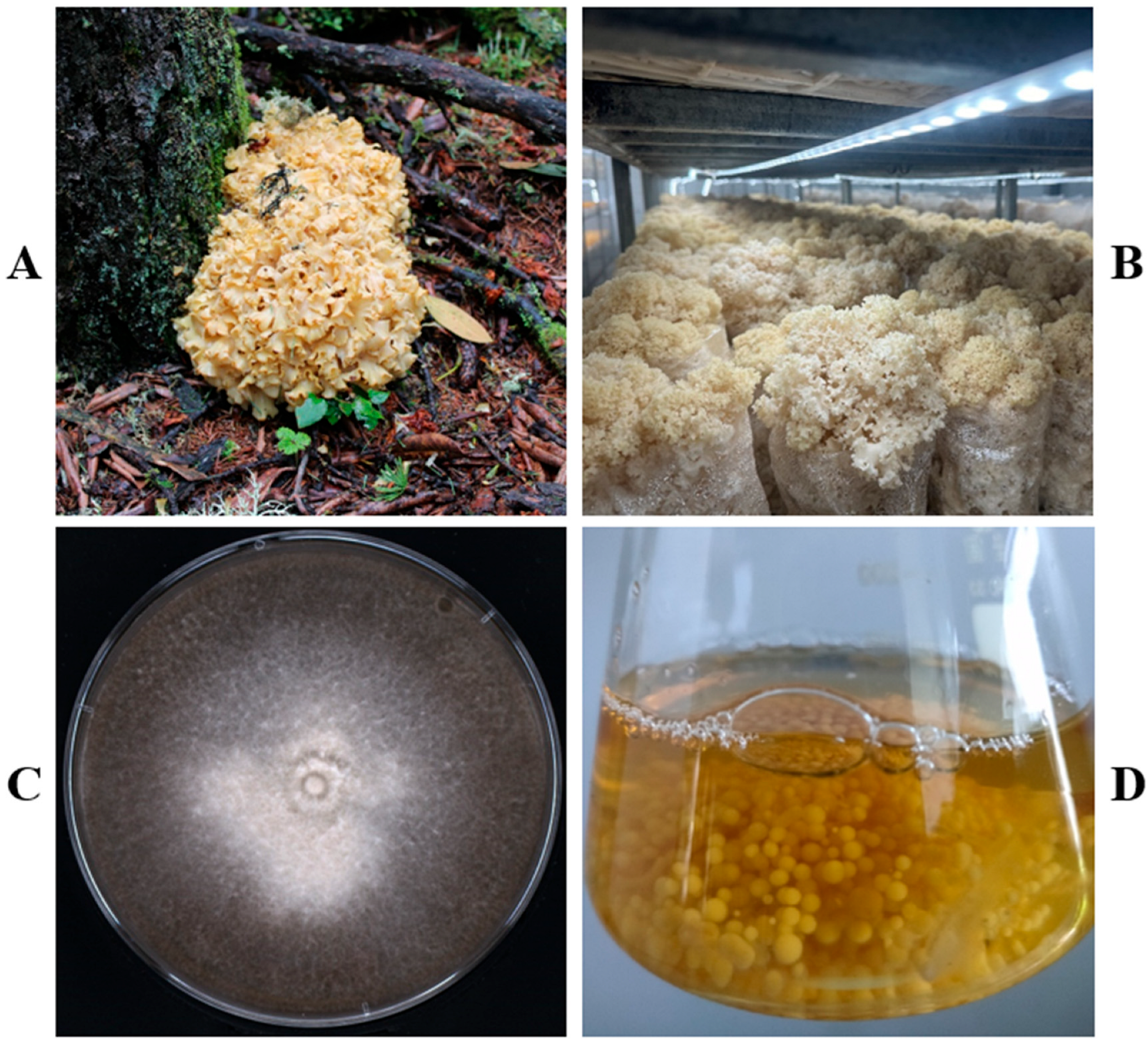
In its natural habitat, S. latifolia is a wood-decomposing fungus, typically solitary or cespitose at the base or on stumps of tall trees in coniferous or mixed coniferous–broadleaf forests. Figure 1A shows a wild S. latifolia specimen photographed on Haba Snow Mountain, Yunnan Province, China. Under industrial cultivation conditions, the full cultivation cycle of S. latifolia from inoculation to harvest is approximately 120 days (Figure 1B), nearly double that of other industrially cultivated mushroom like P. eryngii, highlighting the need for genetic improvement.
In laboratory culture, mycelial growth on solid YMG medium is also slow, requiring about 30 days to fully colonize a 9 cm plate (Figure 1C). Liquid shake culture significantly accelerated biomass production, yielding uniform, smooth-surfaced mycelial pellets (2–5 mm in diameter) after 14 days (Figure 1D), which were initially used as transformation recipients.

3.2. Sensitivity to Carboxin and Hygromycin

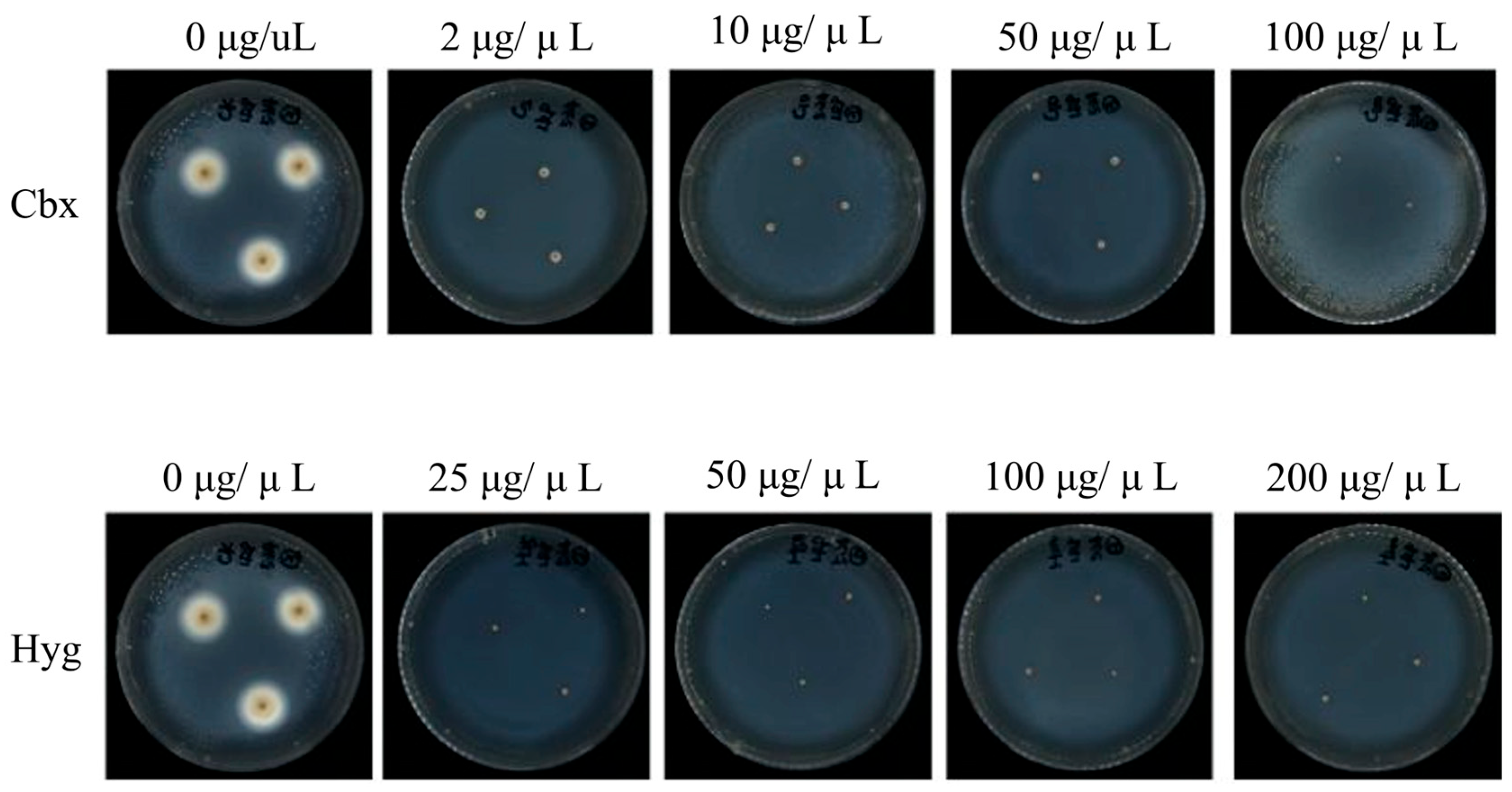
Carboxin, an efficient fungicide, is widely used as a selective agent in the genetic transformation of basidiomycetes. To establish a robust selection system, we determined the minimum inhibitory concentration (MIC) of carboxin and hygromycin for wild-type S. latifolia. The concentration ranges of selective agents for testing were determined based on our previous experience with genetic transformation in H. marmoreus and P. eryngii. Mycelial growth was completely inhibited on medium containing 2 µg/mL carboxin (Figure 2 up) and 25 µg/mL hygromycin (Figure 2 down). We performed three biological replicates of this sensitivity experiment and obtained consistent results. These MIC values were used for all subsequent selection experiments.

3.3. Construction of the Binary Vector pCbxHyg

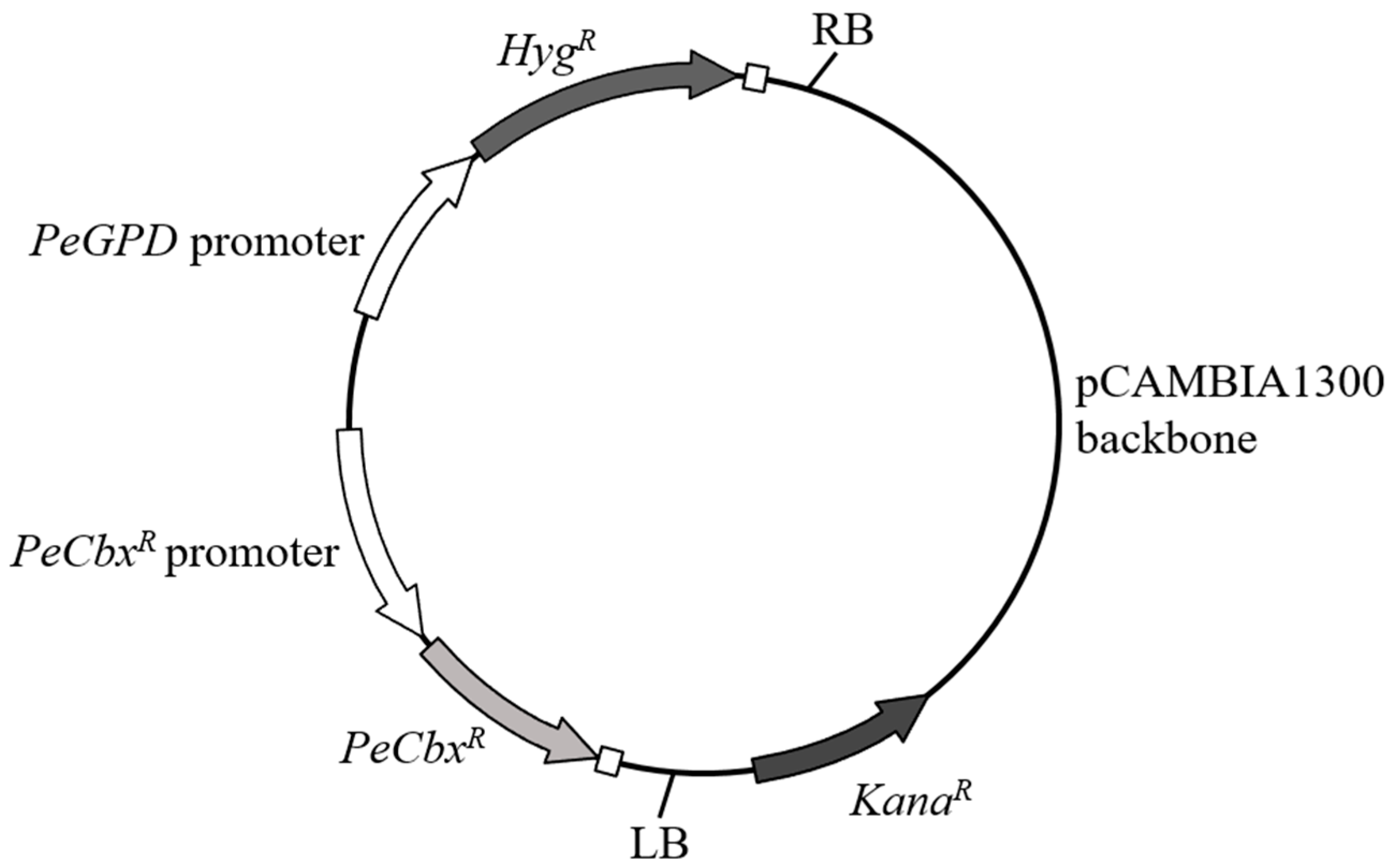
To provide flexibility in selection, we constructed the binary vector pCbxHyg (Figure 3). Its T-DNA contains two expression cassettes: a P. eryngii-derived carboxin resistance gene (CbxR) under the control of its native promoter, and a hygromycin resistance gene (HygR) driven by the strong constitutive P. eryngii GPD promoter (PeGPDp).

3.4. Transformation Attempts Using Mycelial Pellets Are Unsuccessful

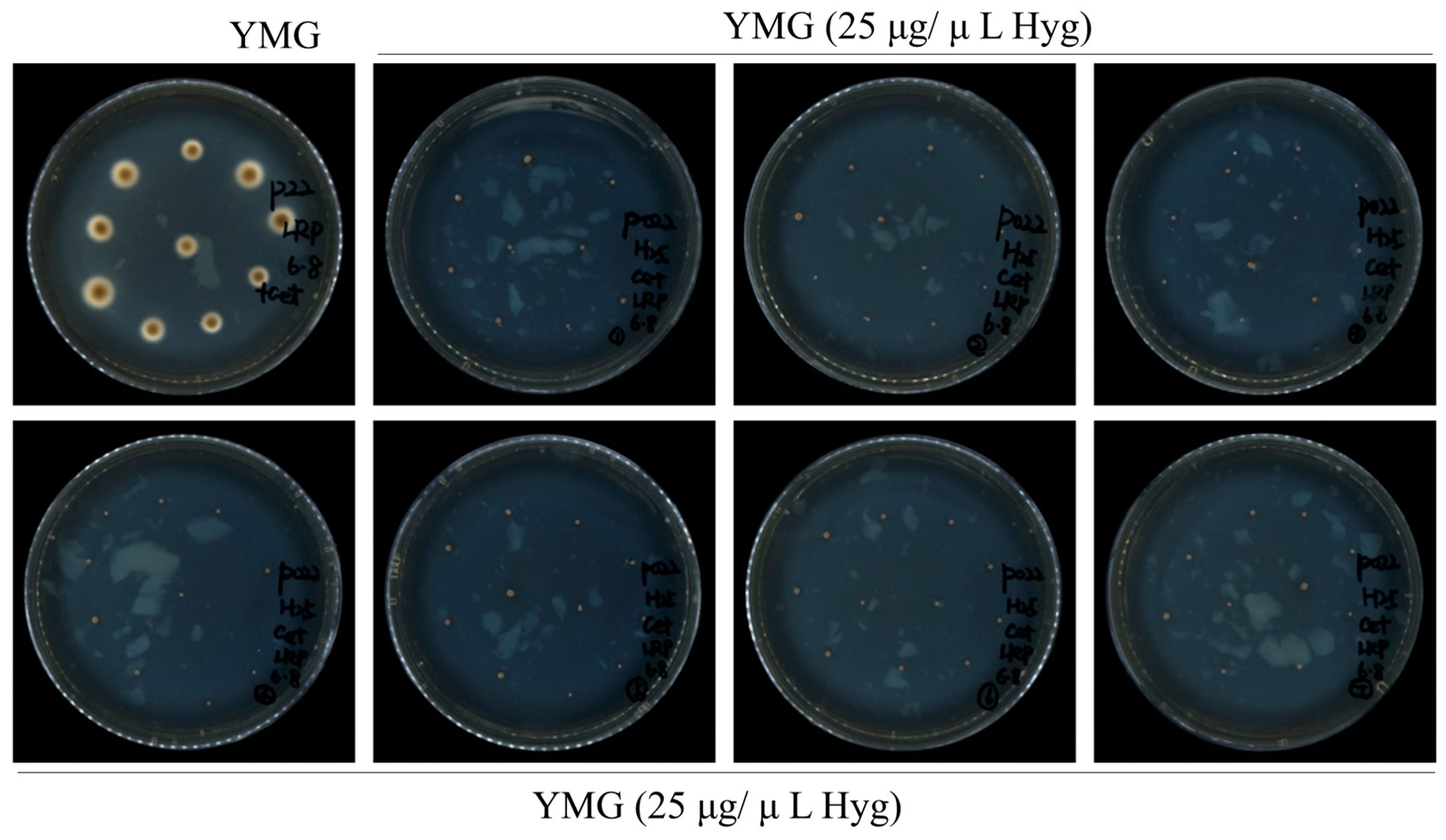
Despite repeated attempts, no transformants were obtained when using mycelial pellets as recipient material for ATMT with pCbxHyg, under either carboxin or hygromycin selection (Figure 4). Control pellets plated on non-selective medium grew normally, indicating that the co-cultivation process was not inherently lethal. This suggested that the dense, multicellular structure of the pellets might be a physical barrier to efficient Agrobacterium infection and T-DNA delivery.

3.5. Successful Transformation Using Chlamydospores

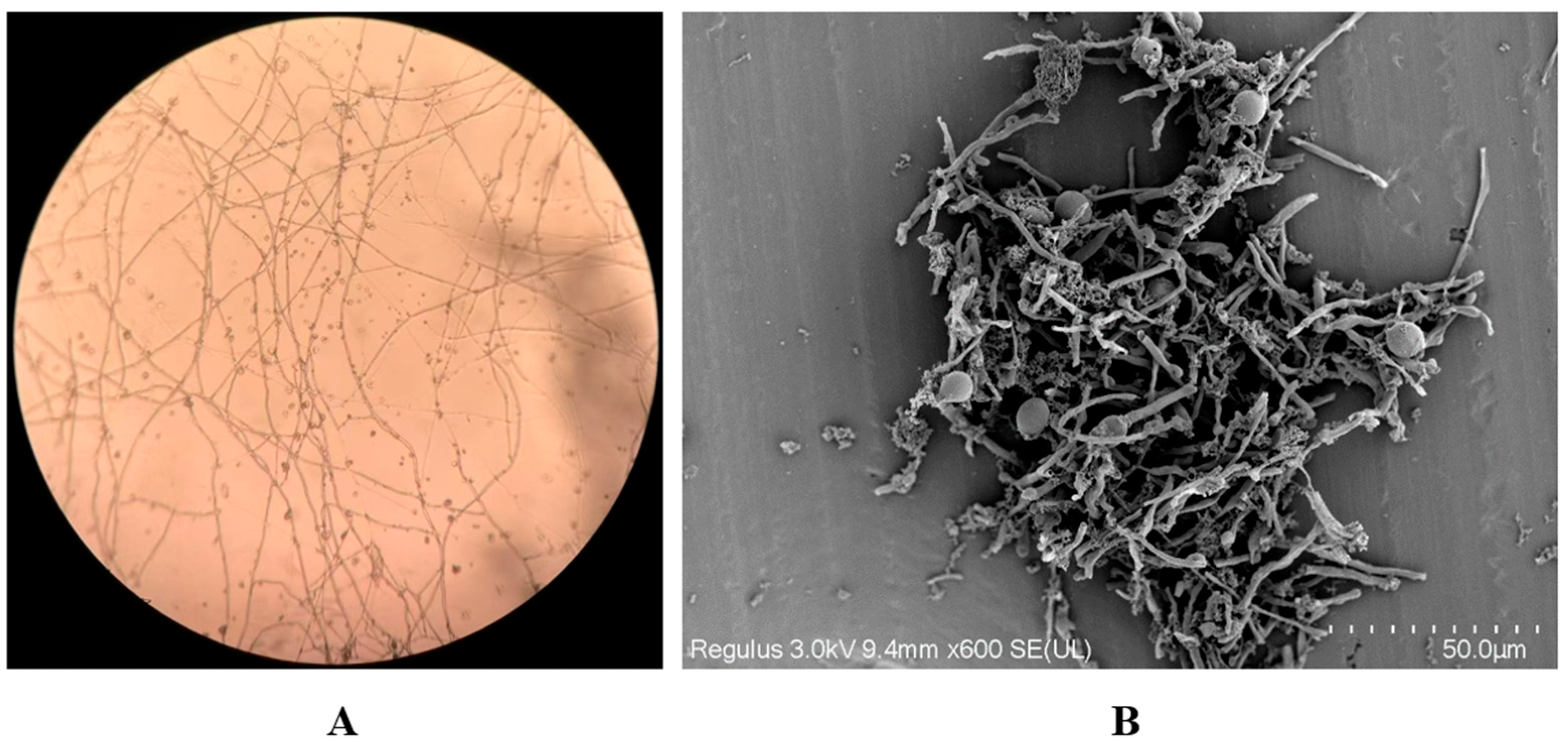
Microscopic examination of plate-cultured mycelia revealed the presence of numerous thick-walled, oval structures, which were identified as chlamydospores by scanning electron microscopy (Figure 5). These spores were approximately 5–8 µm in length, with a smooth surface and a diameter larger than that of vegetative hyphae.
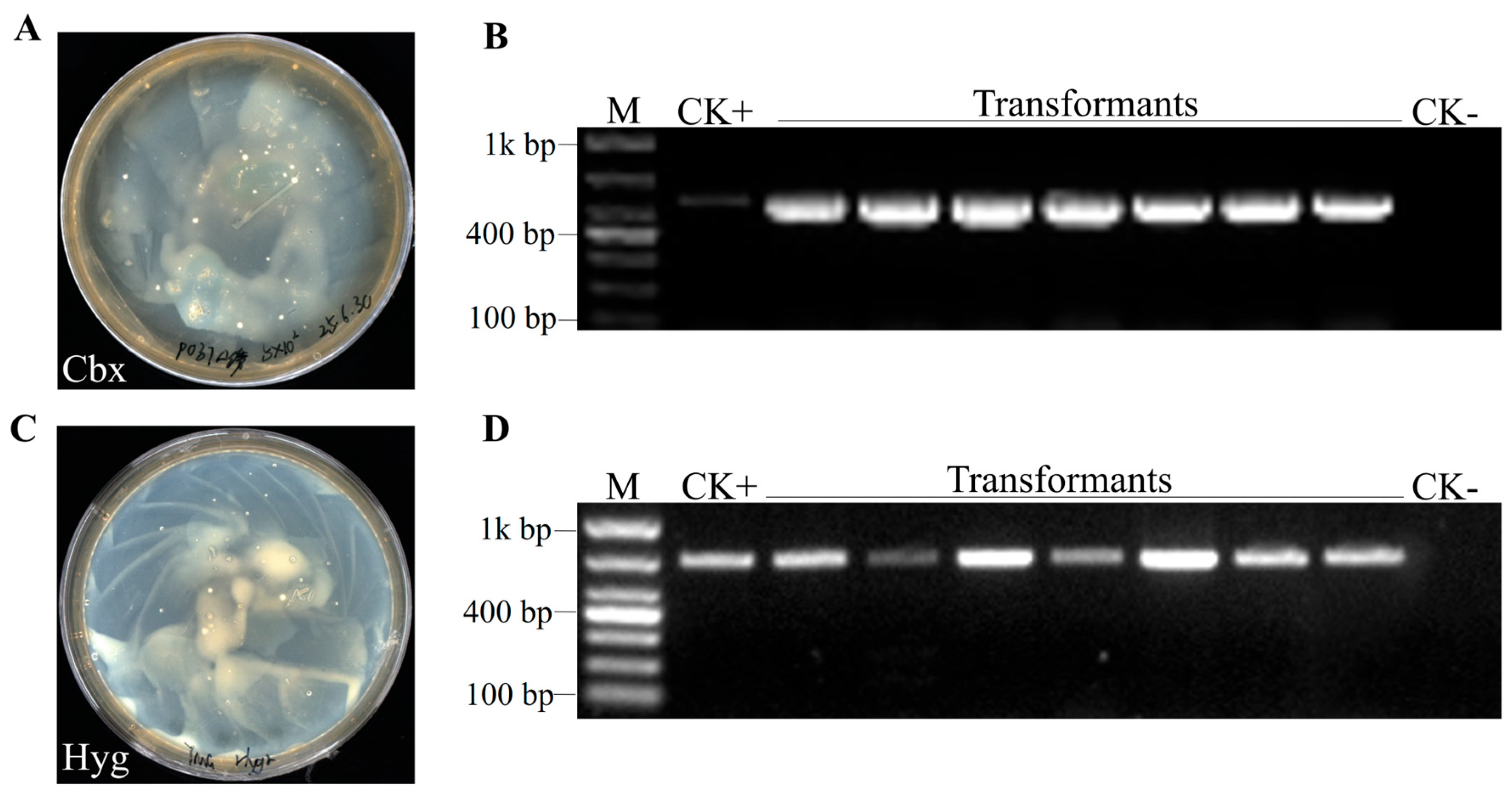
When chlamydospores were used as recipients for ATMT with pCbxHyg, transformant colonies appeared on both carboxin and hygromycin selection plates within 3–4 weeks (Figure 6A,C). In three independent genetic transformation experiments using 106 chlamydospores, we obtained 49, 28, and 37 transformants, respectively. Since 106 chlamydospores are readily available, we deemed such transformation efficiency acceptable. We selected 7 transformants each from the carboxin selection plate and the hygromycin selection plate for PCR verification, and the results confirmed the presence of the respective resistance genes in the genomes of all tested transformants, while no amplification was observed in the wild-type control (Figure 6B,D). The selected transformants were subcultured on plates without selection agents. After five rounds of subculture, they were transferred back to plates containing the corresponding selection agents. The results showed that all transformants retained resistance to the respective selection agents, and the introduced foreign genes could still be detected by PCR. This demonstrates that the T-DNA was successfully integrated into the S. latifolia genome.

3.6. Functional Expression of a GUS Reporter Gene

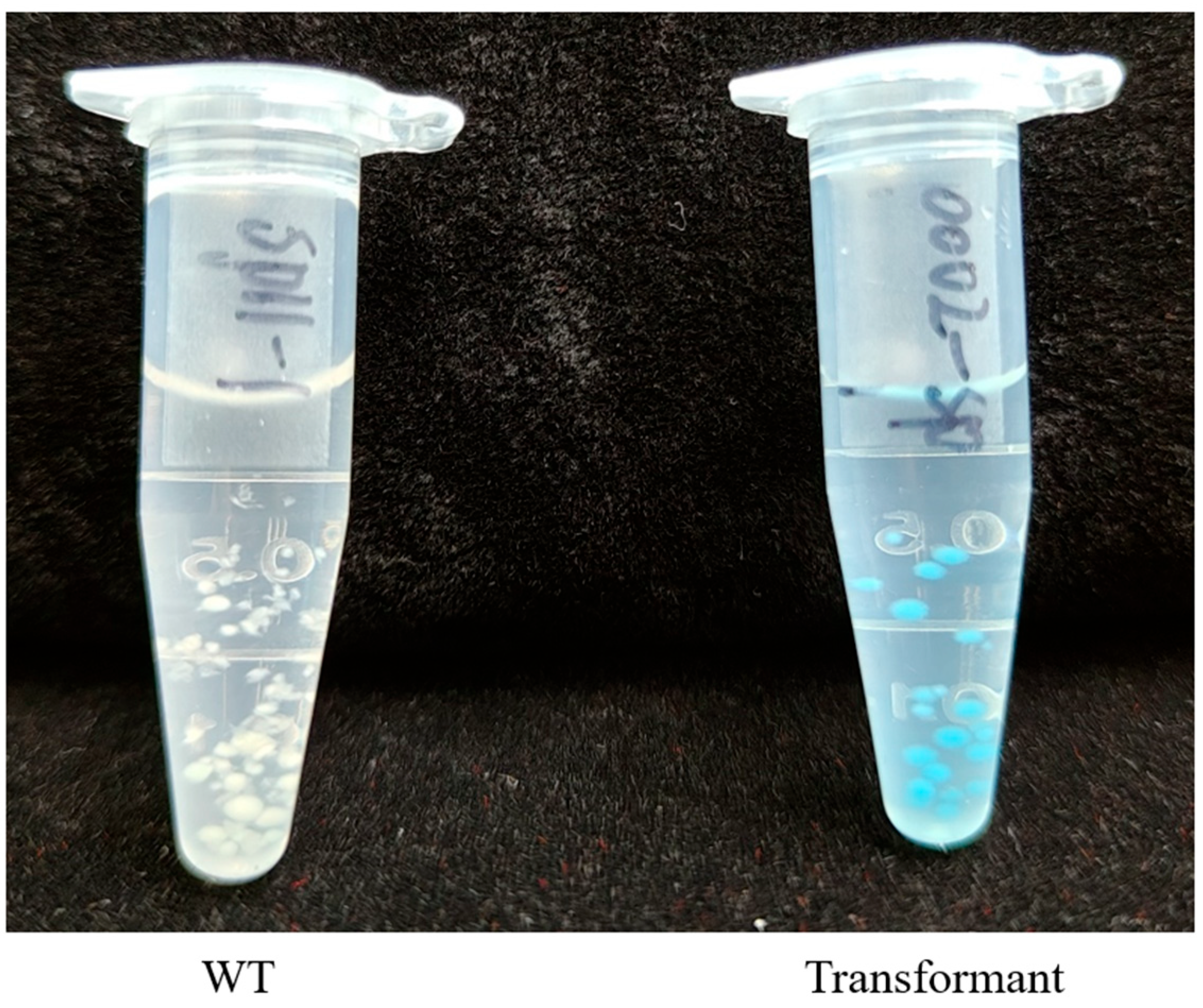
To validate that the introduced foreign genes are not only present but also functional, we transformed chlamydospores with the vector pSdi-GUS, which contains a CbxR cassette and a GUS reporter gene [29]. Carboxin-resistant transformants were readily obtained. Mycelial pellets from these transformants stained intensely blue in a GUS assay, while wild-type pellets showed no color change (Figure 7). This result confirms that the exogenous GUS gene is actively transcribed and translated into a functional enzyme in S. latifolia.

4. Discussion

Agrobacterium-mediated transformation has become an important tool for functional genomics research in filamentous fungi due to its advantages, including the ability to efficiently transfer large DNA fragments, typically generate single-copy integrations, and its relatively simple operation. This study reports the first successful establishment of an Agrobacterium-mediated genetic transformation system for the economically important mushroom Sparassis latifolia. The critical factor enabling this success was the identification and use of asexual chlamydospores as the recipient material, which proved to be highly efficient compared to the use of mycelial pellets.
The failure of transformation with mycelial pellets can be attributed to their complex, three-dimensional structure. The dense network of intertwined, multinucleate hyphae likely presents a physical barrier that prevents uniform attachment of Agrobacterium and subsequent T-DNA delivery to a sufficient number of competent cells. In contrast, chlamydospores, as unicellular, thick-walled structures poised for germination, provide a uniform and accessible target. Their cell wall remodeling during germination may facilitate T-DNA integration, highlighting a principle common in fungal transformation: the superiority of using single cells over multicellular tissues as recipients. In P. eryngii, protoplasts were used as recipients to establish a PEG-mediated genetic transformation system [26], and in H. marmoreus, arthroconidia were used as recipients to establish an Agrobacterium-mediated genetic transformation system [29], both demonstrating the advantage of using single-cell recipients.
The successful expression of heterologous genetic elements from P. eryngii in S. latifolia is another notable finding. The P. eryngii GPD promoter efficiently drove HygR expression, and the CbxR gene also functioned effectively. This suggests a high degree of functional conservation in core regulatory and metabolic machinery within basidiomycetes, despite their phylogenetic distance. This cross-species functionality has practical implications, as it allows researchers to leverage well-characterized genetic tools from model species without the need to clone and test native sequences from every new target fungus, thereby accelerating research in non-model systems.
In conclusion, the chlamydospore-based ATMT system developed here is robust, efficient, and reproducible. It enables both stable integration and functional expression of foreign genes in S. latifolia. This platform will be instrumental for future functional genomics studies, such as gene knockout and overexpression, to dissect the molecular basis of its long life cycle and other agronomic traits. Ultimately, this system paves the way for the molecular breeding of improved S. latifolia cultivars with shorter cultivation cycles, higher yields, and enhanced traits.

Author Contributions

Conceptualization: J.S.; Methodology, Formal analysis, and Validation: W.C., X.Z., R.Y., Y.W., Y.L., C.Z. and J.W.; investigation and resources: W.C., X.Z., R.L., X.L. and Z.S.; writing—original draft preparation: W.C. and X.Z.; writing—review and editing, D.B., L.T. and J.S.; supervision and project administration: D.B., L.T. and J.S.; funding acquisition: J.S. All authors have read and agreed to the published version of the manuscript.

Funding

This study was supported by the Science and Technology Commission of Shanghai Municipality (25N22800500), the National Natural Science Foundation of China (32172649), the Shanghai “Science and Technology Innovation Action Plan” International Science and Technology Cooperation Project (24390741800), and the Shanghai Natural Science Foundation (21ZR1456600).

Institutional Review Board Statement

Not applicable.

Informed Consent Statement

Not applicable.

Data Availability Statement

The original contributions presented in this study are included in the article. Further inquiries can be directed to the corresponding authors.

Conflicts of Interest

Authors Rongping Li, Xiangying Luo and Zhenhui Shen were employed by the company Yunnan Junshijie Biotechnology Ltd. The remaining authors declare that the research was conducted in the absence of any commercial or financial relationships that could be construed as a potential conflict of interest.

References

  1. Li, Y.; Yang, Y.; Huang, X.; Huang, J.; Dong, C. Molecular and genetic evidence for a tetrapolar mating system in Sparassis latifolia. Fungal Biol. 2020, 124, 1004–1012. [Google Scholar] [CrossRef] [PubMed]
  2. Dai, Y.C.; Wang, Z.; Binder, M.; Hibbett, D.S. Phylogeny and a new species of Sparassis (Polyporales, Basidiomycota): Evidence from mitochondrial atp6, nuclear rDNA and rpb2 genes. Mycologia 2006, 98, 584–592. [Google Scholar] [CrossRef]
  3. Ghafoor, A.; Niazi, A.R. Culturability, Cultivation Potential, and Element Analysis of the Culinary-Medicinal Cauliflower Mushroom Sparassis latifolia (Agaricomycetes) from Pakistan. Int. J. Med. Mushrooms 2023, 25, 85–95. [Google Scholar] [CrossRef]
  4. Ryoo, R.; Sou, H.D.; Ka, K.H.; Park, H. Phylogenetic relationships of Korean Sparassis latifolia based on morphological and ITS rDNA characteristics. J. Microbiol. 2013, 51, 43–48. [Google Scholar] [CrossRef]
  5. Zhao, Q.; Feng, B.; Yang, Z.L.; Dai, Y.C.; Wang, Z.; Tolgor, B. New species and distinctive geographical divergences of the genus Sparassis (Basidiomycota): Evidence from morphological and molecular data. Mycol. Prog. 2013, 12, 445–454. [Google Scholar] [CrossRef]
  6. Duan, G.-L.; Yu, X.-B. Isolation, purification, characterization, and antioxidant activity of low-molecular-weight polysaccharides from Sparassis latifolia. Int. J. Biol. Macromol. 2019, 137, 1112–1120. [Google Scholar] [CrossRef]
  7. Liu, J.; Zhang, X.; Zhang, J.; Yan, M.; Li, D.; Zhou, S.; Feng, J.; Liu, Y. Research on Extraction, Structure Characterization and Immunostimulatory Activity of Cell Wall Polysaccharides from Sparassis latifolia. Polymers 2022, 14, 549. [Google Scholar] [CrossRef] [PubMed]
  8. Wei, X.; Cheng, F.; Liu, J.; Cheng, Y.; Yun, S.; Meng, J.; Chang, M.; Geng, X.; Xu, L.; Cao, J.; et al. Sparassis latifolia polysaccharides inhibit colon cancer in mice by modulating gut microbiota and metabolism. Int. J. Biol. Macromol. 2023, 232, 123299. [Google Scholar] [CrossRef] [PubMed]
  9. Abedpoor, N.; Taghian, F.; Jalali Dehkordi, K.; Safavi, K. Sparassis latifolia and exercise training as complementary medicine mitigated the 5-fluorouracil potent side effects in mice with colorectal cancer: Bioinformatics approaches, novel monitoring pathological metrics, screening signatures, and innovative management tactic. Cancer Cell Int. 2024, 24, 141. [Google Scholar] [CrossRef]
  10. Choi, J.W.; Choi, H.J.; Ryoo, R.; Park, Y.; Lee, K.T.; Jeong, J.B. Inhibitory Activity of Sparassis latifolia on the Lipid Accumulation through Suppressing Adipogenesis and Activating Lipolysis in 3T3-L1 Cells. J. Microbiol. Biotechnol. 2024, 34, 2070–2078. [Google Scholar] [CrossRef]
  11. Wei, X.; Gao, Y.; Cheng, F.; Yun, S.; Chang, M.; Cao, J.; Cheng, Y.; Feng, C. The Effects of a High-Fat/Cholesterol Diet on the Intestine of Rats Were Attenuated by Sparassis latifolia Polysaccharides. Food Technol. Biotechnol. 2022, 60, 469–487. [Google Scholar] [CrossRef]
  12. Qiao, Z.; Zhao, Y.; Wang, M.; Cao, J.; Chang, M.; Yun, S.; Cheng, Y.; Cheng, F.; Feng, C. Effects of Sparassis latifolia neutral polysaccharide on immune activity via TLR4-mediated MyD88-dependent and independent signaling pathways in RAW264.7 macrophages. Front. Nutr. 2022, 9, 994971. [Google Scholar] [CrossRef]
  13. Wu, J.; Qiao, Y.; Jin, W.; Jia, F.; Wang, Z.; Li, L.; Cheng, F.; Zhao, W.; Cheng, Y.; Zhao, L.; et al. Metabolomics and 16S rDNA sequencing of intestinal flora reveal the regulation of Sparassis latifolia polysaccharides on splenic immune function in lead-exposed mice. Int. J. Biol. Macromol. 2024, 280, 136084. [Google Scholar] [CrossRef]
  14. Jin, W.; Cui, F.; Li, J.; Li, J.; Li, K.; Cheng, Y.; Cheng, F.; Cao, J.; Zhao, W.; Zhao, L.; et al. Multi-omics reveals the mechanism of Sparassis latifolia polysaccharides to relieve cyclophosphamide-induced immune injury in liver of mice. Int. J. Biol. Macromol. 2025, 292, 139197. [Google Scholar] [CrossRef] [PubMed]
  15. Lu, X.; Wu, S.; Ai, H.; Wu, R.; Cheng, Y.; Yun, S.; Chang, M.; Liu, J.; Meng, J.; Cheng, F.; et al. Sparassis latifolia polysaccharide alleviated lipid metabolism abnormalities in kidney of lead-exposed mice by regulating oxidative stress-mediated inflammation and autophagy based on multi-omics. Int. J. Biol. Macromol. 2024, 278, 134662. [Google Scholar] [CrossRef] [PubMed]
  16. Weng, M.; Zhang, D.; Wang, H.; Yang, C.; Lin, H.; Pan, Y.; Lin, Y. Long non-coding RNAs and their potential function in response to postharvest senescence of Sparassis latifolia during cold storage. Sci. Rep. 2024, 14, 747. [Google Scholar] [CrossRef]
  17. Qiu, Z.; Wang, X.; Wang, S.; Cai, N.; Huang, J.; Wang, M.; Shu, L.; Li, T. Transcriptome Analysis Revealed the Mechanism of Inhibition of Saprophytic Growth of Sparassis latifolia by Excessive Oxalic Acid. Cells 2022, 11, 3636. [Google Scholar] [CrossRef] [PubMed]
  18. Shu, L.; Wang, M.; Wang, S.; Li, Y.; Xu, H.; Qiu, Z.; Li, T. Excessive Oxalic Acid Secreted by Sparassis latifolia Inhibits the Growth of Mycelia during Its Saprophytic Process. Cells 2022, 11, 2423. [Google Scholar] [CrossRef]
  19. Sou, H.D.; Ryoo, R.; Ryu, S.R.; Ka, K.H.; Park, H.; Joo, S.H. Morphological and genetic characteristics of newly crossbred cauliflower mushroom (Sparassis latifolia). J. Microbiol. 2013, 51, 552–557. [Google Scholar] [CrossRef]
  20. Xiao, D.; Ma, L.; Yang, C.; Ying, Z.; Jiang, X.; Lin, Y.Q. De Novo Sequencing of a Sparassis latifolia Genome and Its Associated Comparative Analyses. Can. J. Infect. Dis. Med. Microbiol. 2018, 2018, 1857170. [Google Scholar] [CrossRef]
  21. Yang, C.; Ma, L.; Xiao, D.; Liu, X.; Jiang, X.; Ying, Z.; Lin, Y. Chromosome-scale assembly of the Sparassis latifolia genome obtained using long-read and Hi-C sequencing. G3 2021, 11, jkab173. [Google Scholar] [CrossRef]
  22. Yang, C.; Ma, L.; Xiao, D.; Ying, Z.; Jiang, X.; Lin, Y. Identification and Evaluation of Reference Genes for qRT-PCR Normalization in Sparassis latifolia (Agaricomycetes). Int. J. Med. Mushrooms 2019, 21, 301–309. [Google Scholar]
  23. Yang, C.; Ma, L.; Xiao, D.; Ying, Z.; Jiang, X.; Lin, Y. Integration of ATAC-Seq and RNA-Seq Identifies Key Genes in Light-Induced Primordia Formation of Sparassis latifolia. Int. J. Mol. Sci. 2019, 21, 185. [Google Scholar] [CrossRef]
  24. Yang, C.; Ma, L.; Ying, Z.; Jiang, X.; Lin, Y. Sequence Analysis and Expression of a Blue-light Photoreceptor Gene, Slwc-1 from the Cauliflower Mushroom Sparassis latifolia. Curr. Microbiol. 2017, 74, 469–475. [Google Scholar] [CrossRef] [PubMed]
  25. Yang, C.; Ma, L.; Xiao, D.; Liu, X.; Jiang, X.; Lin, Y. Comparative transcriptomics reveals unique pine wood decay strategies in the Sparassis latifolia. Sci. Rep. 2022, 12, 19875. [Google Scholar] [CrossRef]
  26. Shang, J.; Li, Y.; Yang, R.; Wang, Y.; Mao, W.; Tang, L.; Wu, Y.; Nakazawa, T.; Honda, Y.; Bao, D. Efficient transformation of Pleurotus eryngii with a safe selective marker mutated from the Pesdi1 gene. J. Microbiol. Methods 2018, 152, 7–9. [Google Scholar] [CrossRef]
  27. Matsunaga, Y.; Ando, M.; Izumitsu, K.; Suzuki, K.; Honda, Y.; Irie, T. A development and an improvement of selectable markers in Pleurotus ostreatus transformation. J. Microbiol. Methods 2017, 134, 27–29. [Google Scholar] [CrossRef]
  28. Meng, L.; Lyu, X.; Shi, L.; Wang, Q.; Wang, L.; Zhu, M.; Mukhtar, I.; Xie, B.; Wang, W. The transcription factor FvHmg1 negatively regulates fruiting body development in Winter Mushroom Flammulina velutipes. Gene 2021, 785, 145618. [Google Scholar] [CrossRef] [PubMed]
  29. Bao, D.; Huang, Z.; Li, Y.; Zhou, C.; Wan, J.; Tang, L.; Mao, W.; Wang, Y.; Gong, M.; Zou, G.; et al. Agrobacterium-mediated transformation of arthroconidia obtained from the edible mushroom Hypsizygus marmoreus. J. Microbiol. Methods 2020, 171, 105878. [Google Scholar] [CrossRef]
  30. Yan, L.; Xu, R.; Zhou, Y.; Gong, Y.; Dai, S.; Liu, H.; Bian, Y. Effects of Medium Composition and Genetic Background on Agrobacterium-Mediated Transformation Efficiency of Lentinula edodes. Genes 2019, 10, 467. [Google Scholar] [CrossRef] [PubMed]
  31. Yu, X.; Ji, S.L.; He, Y.L.; Ren, M.F.; Xu, J.W. Development of an expression plasmid and its use in genetic manipulation of Lingzhi or Reishi medicinal mushroom, Ganoderma lucidum (higher Basidiomycetes). Int. J. Med. Mushrooms 2014, 16, 161–168. [Google Scholar] [CrossRef]
  32. Noh, W.; Kim, S.W.; Dong-Won, B.; Kim, J.Y.; Ro, H.S. Genetic introduction of foreign genes to Pleurotus eryngii by restriction enzyme-mediated integration. J. Microbiol. 2010, 48, 253–256. [Google Scholar] [CrossRef]
  33. Honda, Y.; Matsuyama, T.; Irie, T.; Watanabe, T.; Kuwahara, M. Carboxin resistance transformation of the homobasidiomycete fungus Pleurotus ostreatus. Curr. Genet. 2000, 37, 209. [Google Scholar] [CrossRef] [PubMed]
  34. Burns, C.; Gregory, K.E.; Kirby, M.; Cheung, M.K.; Riquelme, M.; Elliott, T.J.; Challen, M.P.; Bailey, A.; Foster, G.D. Efficient GFP expression in the mushrooms Agaricus bisporus and Coprinus cinereus requires introns. Fungal Genet. Biol. 2005, 42, 191–199. [Google Scholar] [CrossRef] [PubMed]
  35. Yin, D.; Xiong, H. The Transformation and Protein Expression of the Edible Mushroom Stropharia rugosoannulata Protoplasts by Agrobacterium-tumefaciens-Mediated Transformation. J. Fungi 2025, 11, 674. [Google Scholar] [CrossRef] [PubMed]
  36. Shang, J.; Yang, R.; Tang, L.; Li, Y.; Li, Y.; Mao, W.; Gong, M.; Wang, Y.; Honda, Y.; Bao, D. Differential expression of two gpd genes in the cultivated mushroom Pleurotus eryngii using RNA sequencing analysis. Mycoscience 2019, 60, 351–353. [Google Scholar] [CrossRef]
Figure 1. Culture of S. latifolia. (A) Wild fruiting body. (B) Industrially cultivated fruiting body. (C) Mycelia grown on solid YMG medium for one month. (D) Mycelial pellets obtained from liquid shake culture.
Jof 12 00255 g001
Figure 2. Sensitivity of S. latifolia to selective agents. Mycelial growth was completely inhibited on YMG plates containing (up) 2 µg/mL carboxin and (down) 25 µg/mL hygromycin. This sensitivity experiment underwent three biological replicates.
Jof 12 00255 g002
Figure 3. Schematic map of the binary vector pCbxHyg. The T-DNA region (between LB and RB) contains the CbxR and HygR expression cassettes. The P. eryngii-derived carboxin resistance gene (CbxR) was driven by its native promoter, and the hygromycin resistance gene (HygR) was driven by the strong constitutive P. eryngii GPD promoter (PeGPDp).
Jof 12 00255 g003
Figure 4. Unsuccessful transformation of mycelial pellets. No resistant colonies regenerated on YMG plates containing 25 µg/mL hygromycin after co-cultivation with Agrobacterium.
Jof 12 00255 g004
Figure 5. Chlamydospores produced by S. latifolia. (A) Light micrograph and (B) scanning electron micrograph showing chlamydospores associated with mycelia.
Jof 12 00255 g005
Figure 6. Successful transformation of chlamydospores and molecular confirmation. (A,C) Transformants obtained on carboxin and hygromycin selection plates. PCR detection of CbxR (B) and HygR (D) in representative transformants. M: marker; CK+: positive control (plasmid DNA); CK-: negative control (wild-type DNA).
Jof 12 00255 g006
Figure 7. Functional expression of the GUS reporter gene. Wild-type mycelial pellets (left) show no staining, while pellets from a pSdi-GUS transformant (right) stain blue, indicating GUS activity.
Jof 12 00255 g007
Disclaimer/Publisher’s Note: The statements, opinions and data contained in all publications are solely those of the individual author(s) and contributor(s) and not of MDPI and/or the editor(s). MDPI and/or the editor(s) disclaim responsibility for any injury to people or property resulting from any ideas, methods, instructions or products referred to in the content.