Review

Mitral Transcatheter Edge-to-Edge Repair in Non-Surgical Candidates with Hypertrophic Obstructive Cardiomyopathy: Clip It, or Ablate It?


by
Emmanouil Chourdakis
1,2,*,
Kambis Mashayekhi
1,
Ulrich Schäfer
3 and
Christos Katsouras
2
1
Internal Medicine and Cardiology, Heart Center Lahr, 77933 Lahr, Germany
2
First Department of Cardiology, Faculty of Medicine, School of Health Sciences, University of Ioannina, 45110 Ioannina, Greece
3
First Department of Cardiology, Faculty Heart and Vascular Centre, 29549 Bad Bevensen, Germany
*
Author to whom correspondence should be addressed.
J. Cardiovasc. Dev. Dis. 2026, 13(6), 255; https://doi.org/10.3390/jcdd13060255 (registering DOI)
Submission received: 18 May 2026 / Accepted: 4 June 2026 / Published: 8 June 2026

Abstract

Hypertrophic cardiomyopathy (HCM), with or without obstructive phenomena, remains underdiagnosed and undertreated. This condition often involves pathological changes in the mitral valve leaflets and apparatus, which can lead to relevant mitral regurgitation (MR). The mechanism of MR is mostly related to the systolic anterior motion (SAM) of the anterior mitral leaflet. The treatment of patients with hypertrophic obstructive cardiomyopathy (HOCM) with persistent symptoms despite optimal pharmacological therapy includes septal myectomy or transcoronary ablation of septal hypertrophy (TASH). Percutaneous edge-to-edge repair of the mitral valve represents an innovative alternative therapy with promising results regarding clinical symptoms and echocardiographic findings. In this article, we provide a concise, critical overview of the current evidence on this technique in HOCM and delineate future perspectives and unresolved issues.

1. Introduction

Hypertrophic cardiomyopathy (HCM) is an inherited cardiomyopathy with a prevalence of approximately 1:500 and is characterized by left ventricular hypertrophy, typically diagnosed using two-dimensional echocardiography or cardiac magnetic resonance imaging [1]. A subgroup of HCM patients presented with a dynamic left ventricular outflow tract (LVOT) obstruction, at rest in 30% and after provocation in an additional 30% [2,3]. The most common symptoms of HCM patients are dyspnea, syncope, and palpitations, although malignant arrhythmia leading to sudden cardiac death can be the first manifestation of the disease [4]. The subtype of HCM with obstructive phenomena has a higher rate of heart failure progression compared with the non-obstructive subtype [4].
In symptomatic patients with obstructive HCM, the European Society of Cardiology guidelines recommend, as first-line treatment (I Class, B Level), a non-vasodilating beta-blocker or verapamil (in patients who are intolerant to or have contraindications to beta-blockers), or, in addition, disopyramide [5]. In patients with persistent symptoms despite the maximum tolerated doses, the addition of mavacamten (a cardiac myosin ATPase inhibitor) is recommended (IIa Class, A Level) [5]. Based on current guidelines, surgical myectomy or transcoronary ablation for septal hypertrophy (TASH) (I Class, B Level) is considered the preferred invasive septal reduction therapy for patients with hypertrophic obstructive cardiomyopathy (HOCM) who remain symptomatic [5,6].
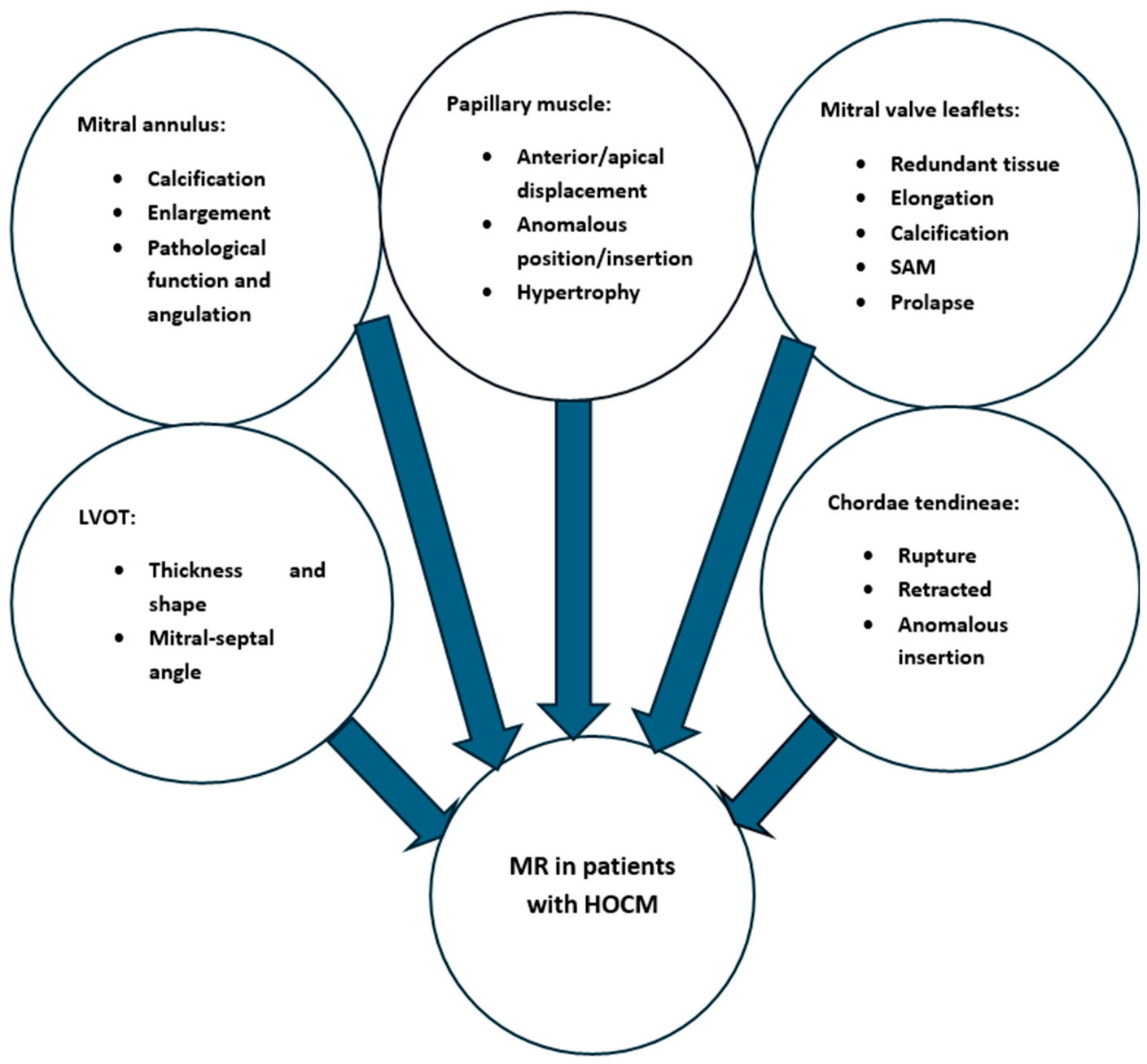
Mitral regurgitation (MR) is commonly observed in patients with HOCM (Figure 1). In most cases, MR results from the secondary to systolic anterior motion (SAM) of the anterior mitral leaflet, which is associated with dynamic outflow tract obstruction and is typically characterized by a posteriorly directed jet [7]. However, MR in HOCM is not solely associated with SAM, and other mechanisms may also be involved. The presence of more centrally or anteriorly directed regurgitation jets should be a red flag, indicating additional mitral valve pathology beyond SAM [7]. The mitral valve apparatus and its substructures, such as anterior displacement of the papillary muscles, abnormal secondary chordae attachment to the anterior mitral leaflet, and elongated redundant leaflets, can contribute to failed TASH and promote further LVOT obstruction [8,9]. Moreover, significant primary MR caused by mitral valve chordal rupture or prolapse, as a concurrent mitral valve disease in HOCM patients, is a rare finding, occurring in 1% of the HCM population. This should not be overlooked and may require a completely different interventional approach [10]. Mitral annular shape, size, angulation, and function can also be assessed by 3D echocardiography and cardiac magnetic resonance imaging in patients with HOCM [11,12,13]. These patients exhibit mitral annular dilatation and reduced fractional shortening compared to control subjects. Moreover, posterior mitral annulus or leaflet calcification is a common finding in patients with HOCM due to mechanical stress on the mitral annulus [11,12,13].
The mitral transcatheter edge-to-edge repair (M-TEER) in HOCM patients represents an area of growing interest, particularly for patients who are not candidates for established septal reduction therapies and who have failed TASH or surgical myectomy. Our manuscript is descriptive rather than analytical. It reflects the limited number of randomized studies and aims to evaluate the emerging role of this treatment while identifying gaps in the current evidence, especially in comparison with established septal reduction therapies. Nevertheless, we have detailed this topic and proposed an algorithm that we believe will be valuable for cardiologists and interventionalists who are exploring this approach.

2. Mitral Transcatheter Edge-to-Edge Repair in HOCM Patients

M-TEER is a well-established treatment for mitral valve disease [14]. According to guidelines from the European Society of Cardiology, M-TEER should be considered in selected symptomatic patients with chronic severe atrial secondary MR who are not eligible for surgery, despite optimal medical treatment and meeting the echocardiographic eligibility criteria, with II B level, class B [15].
A new off-label application of M-TEER may be for patients with HOCM. In 2014 Schäfer and colleges described for the first time a meaningful reduction of LVOTO related to SAM after M-TEER [15,16]. Unfortunately, the number of cases and long-term outcome data on the use of M-TEER as an interventional approach in HOCM are limited. The narrowing of the LVOT mainly depends on the degree of septal hypertrophy, but it is also influenced by the mitral valve apparatus, particularly the redundant anterior mitral leaflet and its abnormal movement. In HOCM, M-TEER may functionally mimic surgical anterior leaflet plication by restricting leaflet mobility and shifting the coaptation zone posteriorly, thereby reducing SAM and LVOT obstruction. In our view, M-TEER might be a safer or more effective option for patients who are poor surgical candidates, either as a stand-alone alternative or as an adjunctive therapy to TASH. The patient’s anatomical suitability for percutaneous edge-to-edge repair is a key factor when considering M-TEER as an alternative treatment option in patients with HOCM.
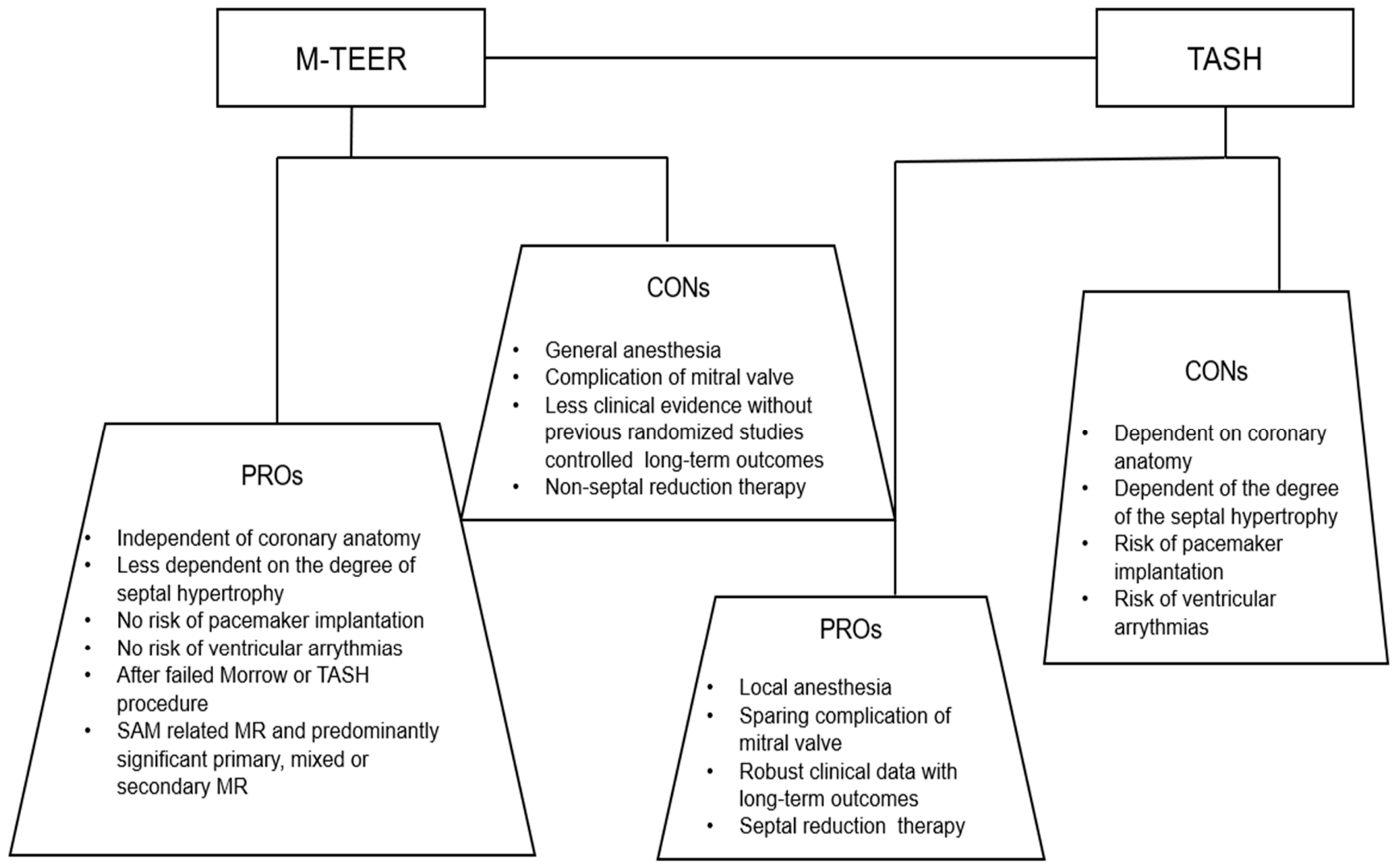
The disadvantages of TASH, compared to M-TEER, include the risk of cardiac conduction abnormalities that may require a pacemaker or lead to life- threatening arrhythmias or even sudden cardiac death, especially on the substrate of infarcted myocardium [17,18]. The risk of complete atrioventricular block (AV block) after TASH is 10–20%, and one in three patients will develop right bundle branch block (RBBB) [19,20]. A newly detected RBBB in a patient with pre-existing left bundle branch block (LBBB) can significantly increase the risk of complete cardiac block. Clip-associated conduction abnormalities are rare in non-HCM patients with severe MR. Eggebrecht et al. reported a 0.2% incidence of permanent pacemaker implantation following MitraClip, without detailed information on the underlying indications [21]. In a meta-analysis, Wang et al. found no significant need for pacemaker implantation, whereas Schnitzler et al. did not consider it a noteworthy complication [22,23]. Obviously, there are no relevant details in HOCM patients after M-TEER procedures. If data support that M-TEER can be performed in these patients without the need for a permanent pacemaker, it would be reasonable to consider the method as a first-line approach instead of TASH for patients at risk of pacemaker implantation. Additionally, in non-HCM patients, sudden cardiac death or life-threatening ventricular arrhythmias appear to be uncommon after MitraClip implantation, based on a systematic review by Cameron et al. published in Heart, Lung and Circulation [24]. A meta-analysis of five studies involving patients undergoing MitraClip who reported ventricular arrhythmia rates before and after the procedure showed a significant reduction in ventricular arrhythmias, non-sustained VT, and VT/VF [24]. These findings support the hypothesis that correcting MR, which reduces mechanical cardiac stress, may help lower the risk of sudden cardiac death [24]. Nevertheless, there remains a residual risk of life- threatening arrhythmias, largely influenced by patient-specific factors such as advanced age, reduced ejection fraction, elevated EuroScore, end-stage renal disease, pulmonary hypertension, and atrial fibrillation [25]. Importantly, current evidence on ventricular arrhythmias following MitraClip is limited, underscoring the need for larger, well-designed studies. Clearly, there is no available data on the risk of SCD in HOCM patients after MR repair with M-TEER. LVOT thickness for TASH is generally considered to be greater than 17 mm to ensure a safe procedure and minimize the risk of iatrogenic ventricular septal rupture. In contrast, basal septal thickness greater than 25 mm is a predisposing factor for TASH failure [26,27]. Septum hypertrophy measuring about 15–17 mm is a more borderline anatomy, indicating the need for alternative septal reduction therapy [26,27]. The inability to identify a target septal branch occurs in up to 10% of TASH patients and should also be considered an important factor in procedural planning [28]. From our perspective, unsuitable LVOT geometry, coronary septal branch anatomy, or pre-existing bundle branch block make M-TEER a more favourable therapeutic strategy, especially in patients with SAM. It should be highlighted that M-TEER is more appropriate for patients with significant MR who present with a more dynamic LVOTO, than for patients with LVOT narrowing due to significant left ventricular hypertrophy.
Another important aspect is the management of HOCM patients after failed TASH. Redo TASH is required in approximately 6.6% of patients, and surgical myectomy is performed in 1.9% to address persistent symptoms [29,30]. Importantly, perioperative mortality of surgical myectomy after failed TASH is substantially higher (6%) than in matched patients undergoing septal myectomy as the first and only treatment [31]. In this challenging clinical setting, M-TEER applied within the SESAME (septal reduction by edge-to-edge repair and systolic anterior motion elimination) concept may represent a potential alternative for carefully selected patients who are not candidates for redo TASH, while avoiding the need for high-risk surgical myectomy [32,33]. However, SESAME is a novel, technically demanding approach, currently supported only by limited case-based experience, and should therefore be restricted to rare, highly selected HOCM patients treated at specialized expert centers. In addition, in the presence of concomitant primary mitral valve disease, an M-TEER-based strategy may allow simultaneous treatment of both pathomechanisms, namely SAM-related LVOT obstruction and primary MR, within a single procedure. Therefore, M-TEER may be a game changer for patients with failed TASH who are ineligible for redo TASH, while also avoiding the need for high-risk procedures like surgical myectomy or SESAME after failed TASH. Furthermore, the presence of relevant concomitant primary mitral valve disease can be considered when choosing M-TEER over TASH as a first-line treatment, thereby targeting both pathomechanisms in a single procedure: first, SAM with LVOT obstruction; and second, the component of primary MR.
In conclusion, the following clinical factors may even support considering M-TEER instead of TASH as a primary therapeutic option (Figure 2): 1. lower risk of conduction abnormalities or pacemaker implantation, especially in high-risk patients with previous LBBB; 2. suitability for patients with septal hypertrophy of less than 15–17 mm; 3. patients who lack a suitable septal branch or have unfavorable LVOT geometry for TASH; 4. presence of relevant concomitant primary mitral valve disease; or 5. previous unsuccessful TASH.

3. Clinical Evidence for M-TEER in HOCM

Schäfer and colleagues reported, for the first time, the successful use of M-TEER in HOCM patients in 2014 and 2015. They treated three HOCM patients with MitraClip, resulting in improvements in rest peak gradients (before M-TEER: 65 ± 25.5 mmHg; after M-TEER: 7.7 ± 5.0 mmHg) and provoked pressure gradients (before M-TEER: 145.3 ± 8.1 mmHg; after M-TEER: 23.2 ± 7.6 mmHg) [16]. One of these patients had previously undergone a Morrow operation and mitral valve reconstruction, and another had previous TASH. The clinical and hemodynamic improvements were observed at a six-week follow-up [16]. These initial findings supported M-TEER as a viable option after failure of standard septal reduction therapies. Additionally, Kimmelstiel et al. observed a reduction in cardiac workload, assessed by pressure–volume loops, after successful M-TEER intervention in two patients with symptomatic HOCM who were not candidates for standard septal reduction therapies [34].
Sorajja et al. reported early success in HOCM patients who underwent MitraClip for symptom relief, MR, and LVOT reduction, with consistent results observed during the follow-up period (10–19 months) [35]. Eight years ago, Thomas et al. analyzed the beneficial role of M-TEER improving symptoms and hemodynamics in 15 HOCM patients with SAM across four studies [36]. Generally, M-TEER was adopted as the first-line strategy, with only one patient having failed a previous surgical myectomy and another failing an ASA attempt [36]. He also demonstrated elimination of SAM, a reduction in MR grade, and a significant decrease in the LVOT gradient from a mean of 75.8 ± 39.7 to 11.0 ± 5.6 mm Hg. After reviewing these two publications, M-TEER represents a valuable ‘arrow’ in our ‘quiver’ as a first-line approach [36].
Recently, Mascarenhas et al. published a patient-level meta-analysis after reviewing nineteen publications involving 37 HCM patients who underwent edge-to-edge repair of the mitral valve [37]. M-TEER not only reduced LVOT obstruction phenomena (the mean peak resting and provoked LVOT gradient: 69.2 ± 40.3 mmHg vs. 11.7 ± 8.6 mmHg and 98.2 ± 53.4 mmHg vs. 14.1 ± 13.9 mmHg, respectively) but also decreased the median MR grade (4.0 [3.0–4.0] vs. 1.0 [1.0–1.0]) [37]. The echocardiographic improvements were accompanied by a clinical improvement in NYHA functional class, from 3 to 1 (post-TEER: 100% vs. 7%; all p < 0.001) [37].
The decision to perform M-TEER versus TASH or myectomy, based on the evidence of isolated cases in Table 1, was supported by the clinical conditions of the patients (such as previous aortocoronary bypass surgery and stage IV cirrhosis), anatomical features (including prior TASH, Morrow operation, or jailed septal branch with stent), and the decision of the heart team, considering high perioperative risk, comorbidities, increased age, and frailty. After analysing the baseline characteristics (Table 1), most patients had severe symptomatic MR (NYHA III) with concurrent SAM, despite being on negative inotropic pharmacologic treatment. The median age was 71 years. Six of the 29 patients (20%) had previously undergone a Morrow or TASH attempt. A subgroup analysis comparing outcomes, pooled insights, and complications is unattainable due to the small number of cases and varying baseline characteristics, as the data are predominantly from case reports. In our view, the manuscript highlights that M-TEER was safe, feasible, and effective without major complications. A deeper subgroup analysis would still not provide properly powered data or reliable results. According to published data, most patients with HOCM underwent MitraClip implantation rather than the PASCAL device. Possible reasons for preferring the MitraClip system include its broader worldwide availability and longer data history, as well as more extensive anterior-to-posterior mitral leaflet plication, causing more leaflet tension. Most patients treated with MitraClip showed clinical improvement, along with echocardiographic reduction in MR and a decrease in the resting LVOT gradient during follow-up (Table 2). Extensively, the MR was quantified as trace, mild, or moderate in 28 of 29 patients, with only one patient having moderate to severe MR postprocedurally. Recurrence of MR occurred in only two cases. Regarding high-grade AV block or life-threatening arrhythmias, the rate was zero. No severe procedure-related complications were observed. LVOT gradients after the procedure were significantly reduced and remained consistently low on follow-up. Particularly, three cases had gradients above 20 mmHg and below 50 mmHg, and only two patients experienced extreme high gradients. In seven cases, no data were stated. The remaining patients, about 17, showed very low LVOT gradients.
The manuscript summarizes isolated cases or small case series in our Table 1 and Table 2. It is very challenging to compare individual cases and discuss biases due to the absence of randomized studies. Clearly, the current critical appraisal is difficult and limited to isolated cases. Designing randomized studies that compare the two strategies—M-TEER versus TASH—in HOCM patients who are not surgical candidates would be helpful. Such studies would raise the level of evidence and clarify the roles and scopes of each approach.

4. Selection of Percutaneous Strategies for HOCM Patients with MR

The percutaneous edge-to-edge repair of the mitral valve appears to be an alternative treatment option for patients who are not candidates for surgery or belong to a high surgical-risk group, especially those with a significantly increased LVOT gradient and SAM, and favorable anatomy for classical TASH treatment.
The hemodynamic success rate after TASH is reported to be 70%, with 20% of those patients experiencing severe symptoms due to residual obstruction, which may require another septal reduction therapy in the range of 15–18% [32,50]. The re-operation rate following septal myectomy, as documented below, is under 2% [50]. Valeti et al. also showed that up to 25% of patients undergoing TASH had a residual LVOT gradient on postprocedural cardiac magnetic resonance imaging, attributable to sparing of the basal septum [51]. At this point, the possibility of redoing the TASH or SESAME based on echocardiographic and anatomical criteria should be considered, as should the determination of which component—SAM-associated MR or the LVOT gradient—is primarily responsible for the patient’s symptoms.
HOCM patients can be classified by the severity of obstruction at rest or after provocation, with this classification correlating with long-term cardiovascular events [52]. Patients with resting or provoked LVOT gradients above 30 mmHG, or resting LVOT gradients below 30 mmHg but a gradient of ≥90 mmHG after provocation, are considered a high-risk cohort with clear clinical therapeutic implications [53]. Furthermore, MR severity in HOCM patients should be thoroughly quantified based on echocardiographic criteria before decision-making, with initial treatment of MR using M-TEER against TASH [52,53]. It is questionable whether the standard criteria [53], with an effective regurgitant orifice area ≥0.4 cm2, an MR volume of 60 mL, and a regurgitant fraction above 50% define severe MR, as opposed to moderate MR, which is characterized by an effective regurgitant orifice between 0.2–0.39 cm2, MR volume of 30–59 mL, and a regurgitant fraction between 30–49%, should be applied for the utilization of M-TEER against TASH [53]. In cases with a proportionate MR (moderate to severe) relative to the degree of LVOT gradient (at least 30 mmHG at resting or more than 90 mmHg after provocation) and the presence of a septal branch as an additional target, current literature would support a redo TASH over M-TEER. Conversely, a disproportional relationship between significant MR (severe) and the LVOT gradient (maximal 30 mmHg or provoked gradient <90 mmHg) favours adopting M-TEER rather than redoing TASH. Diagnostic assessment can be quite complex in most patients because LVOT obstruction is dynamic (often related to SAM). The cornerstone is to detect signs of dynamic LVOT obstruction, especially using high positive Brockenbrough–Braunwald–Morro signs.
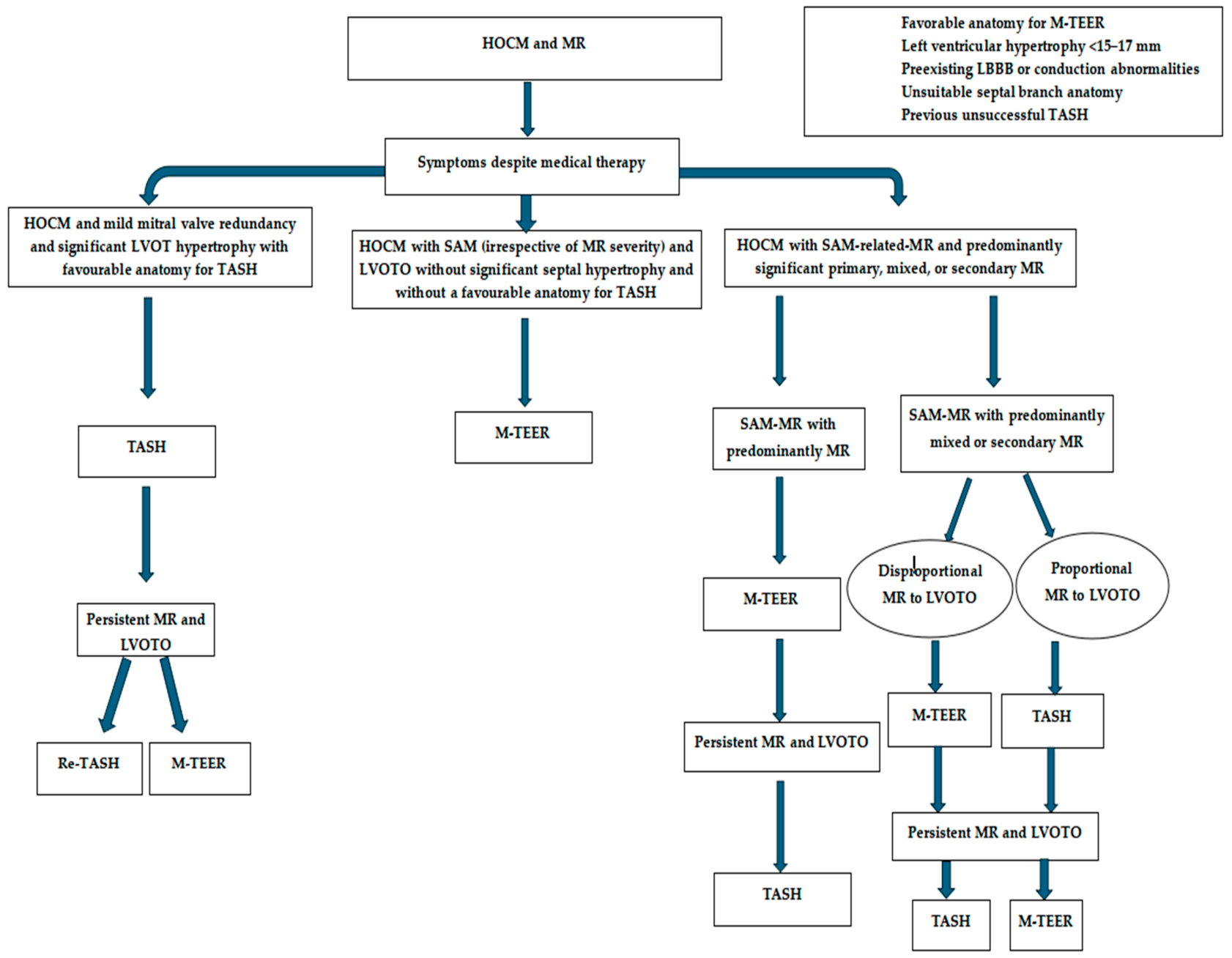
We propose dividing HOCM patients into three most commonly documented scenarios (Figure 3), which are as follows:
A.
HOCM and mild mitral valve redundancy and significant LVOT hypertrophy with favourable anatomy for TASH
This type of obstruction almost always occurs with midcavity obstruction (also called midventricular obstruction) and is reported in 10–15% of patients with HCM. TASH remains the preferred approach in symptomatic patients despite optimal medical therapy, when coronary and septal anatomy are favourable, as recommended by guidelines.
B.
HOCM with SAM (irrespective of MR severity) and LVOTO without significant septal hypertrophy and without a favourable anatomy for TASH
If there is a significant SAM phenomenon (with or without a redundant anterior mitral leaflet) combined with a mitral valve area exceeding 3.5–4 cm2, borderline LVOT hypertrophy, and not suitable coronary anatomy, primary M-TEER might be advantageous. This procedure can help lower the LVOT gradient and reduce MR.
C.
HOCM with SAM-related MR and predominantly significant primary, mixed, or secondary MR
In our view, M-TEER emerged as a reasonable approach for patients with HOCM or those with hypertensive heart disease and concurrent primary mitral valve disease before performing TASH. In this cohort, those who develop a flail leaflet or mitral valve prolapse while in a long-term, stable anatomical and hemodynamic HOCM state will benefit from M-TEER, with TASH playing a complementary role in persistent symptoms.
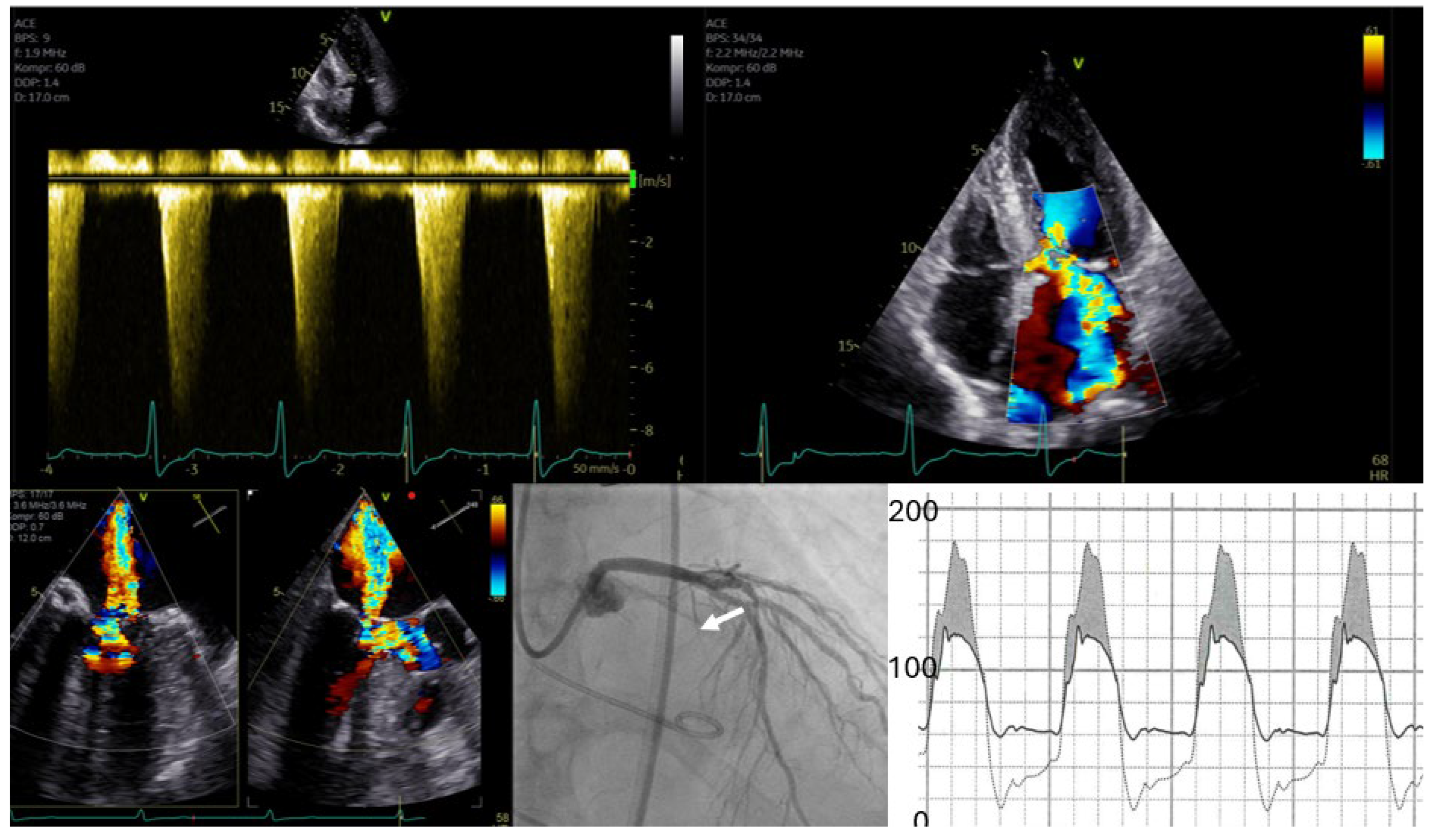
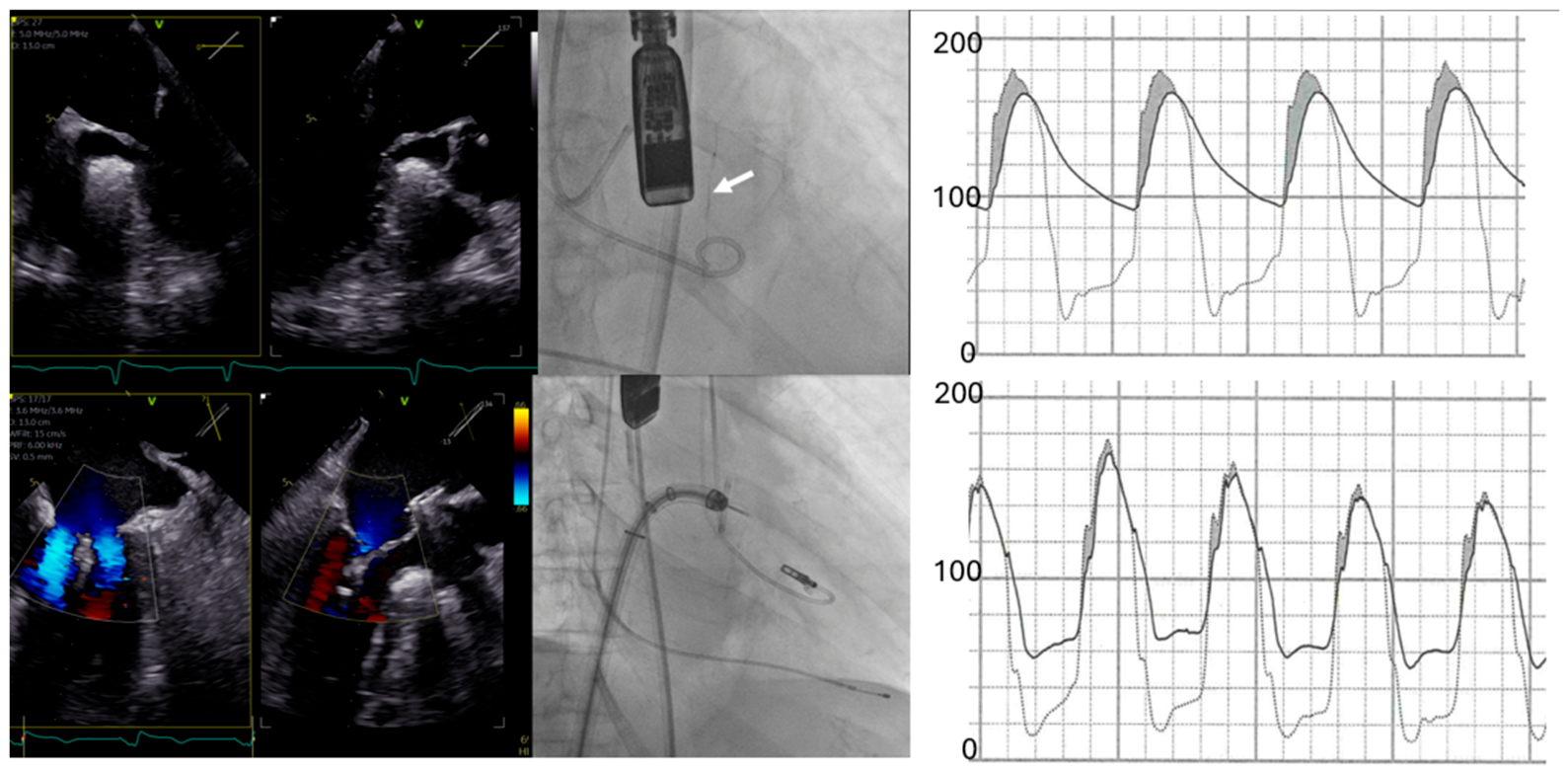
If the primary mechanism of MR is the SAM with a high LVOT gradient, proceeding with TASH in patients with suitable coronary anatomy is appropriate. A stepwise approach, such as M-TEER, can be considered and implemented after a successful TASH, particularly when the LVOT gradient and SAM are eliminated, but moderate-to-severe secondary MR persists (Figure 4 and Figure 5). From our point of view, M-TEER should be considered as first-line treatment in the subgroup of patients suffering from coexisting severe secondary MR and disproportional lower LVOTO (maximal 30 mmHg or provoked gradient under 90 mmHg). If the LVOT gradient persists after M-TEER, TASH should be adopted to treat the remaining obstructive phenomena.
The choice between TASH and M-TEER should be tailored to the individual patient’s left ventricular morphology, considering echocardiographic and anatomical factors characteristics. When the cause of symptoms is unclear, and a complex, mixed mitral valve disease is present, a combined staged approach using both TASH and M-TEER may be beneficial for the patient’s symptoms. This strategy not only alleviates symptoms but also improves the patient’s hemodynamic status. Most patients with HOCM who underwent edge-to-edge repair benefited in terms of symptoms, and this was associated not only with MR reduction but also with near-complete elimination of the LVOT gradient. This alternative appears to work relatively well. According to published data, none of the patients underwent TASH after M-TEER, supporting this approach as relatively efficient. Nevertheless, it should keep the door open to using TASH in post–M–TEER patients with a significant residual LVOT gradient. A direct comparison study between M-TEER and TASH has not yet been conducted. More data are needed to answer key questions: which HOCM patient profile might benefit most from M-TEER; whether combining TASH and M-TEER offers superior results compared to monotherapy; when monotherapy is sufficient; what should be the first- and second-line percutaneous treatments; and how the LVOT gradient and mitral regurgitation behave over the long term in HOCM patients treated initially with M-TEER alone.

5. Conclusions

Extensive experience with TASH suggests it is a first-line treatment for patients with HOCM and mild intrinsic mitral valve disease, especially SAM-related cases, rather than for those with a redundant anterior mitral leaflet or mild primary or secondary MR. M-TEER can be used as an alternative treatment for well-selected patients with HOCM, without primarily addressing the septal hypertrophy. A careful functional and anatomical assessment using transthoracic and transesophageal echocardiography, or even cardiac magnetic resonance imaging, is essential for identifying redundant anterior mitral valve leaflet. It should be emphasized that the presence of mitral valve redundancy can be the major pathomechanism of SAM-related mitral regurgitation and resultant obstruction, which can be targeted by primary M-TEER. M-TEER could eventually be incorporated into our treatment options for patients with borderline septal hypertrophy, severe primary or secondary MR, previous TASH failure, conduction abnormalities, absence of a suitable culprit septal branch, and echocardiographic features appropriate for M-TEER.
M-TEER is currently used off-label for patients with HOCM, with encouraging and promising results, although the available data come from case reports. Our enthusiasm for this no-touch septal technique should be supported subsequently by randomized controlled studies before it is adopted into our routine clinical practice.

Author Contributions

Conceptualization, Methodology, Investigation, Administration and Software: E.C.; Validation: E.C., K.M., U.S. and C.K.; Formal analysis: E.C., K.M., U.S. and C.K.; Resources: E.C. and U.S.; Data curation: U.S. and E.C.; Writing—original draft preparation: E.C., K.M., U.S. and C.K.; Writing—review and editing: K.M., U.S. and C.K.; Visualization: E.C. and K.M.; Supervision: K.M., U.S. and C.K. All authors have read and agreed to the published version of the manuscript.

Funding

This research received no external funding.

Institutional Review Board Statement

Not applicable.

Informed Consent Statement

Not applicable.

Data Availability Statement

The data presented in this study are available on reasonable request from the corresponding author.

Conflicts of Interest

The authors declare no conflicts of interest.

Abbreviations

The following abbreviations are used in this manuscript:
AV blockAtrioventricular block
HCMHypertrophic cardiomyopathy
HOCMHypertrophic obstructive cardiomyopathy
LBBBLeft bundle branch block
LVOTLeft ventricular outflow tract
LVOTOLeft ventricular outflow tract obstruction
MRMitral regurgitation
M-TEERMitral transcatheter edge to edge repair
NYHANew York Heart Association
SAMSystolic anterior motion
SESAMESeptal Scoring Along Midline Endocardium
SLDASingle leaflet device attachment
TASHTranscoronary ablation of septal hypertrophy

References

  1. Massera, D.; Sherrid, M.V.; Maron, M.S.; Rowin, E.J.; Maron, B.J. How common is hypertrophic cardiomyopathy… really?: Disease prevalence revisited 27 years after CARDIA. Int. J. Cardiol. 2023, 382, 64–67. [Google Scholar] [CrossRef] [PubMed]
  2. Maron, M.S.; Olivotto, I.; Zenovich, A.G.; Link, M.S.; Pandian, N.G.; Kuvin, J.T.; Nistri, S.; Cecchi, F.; Udelson, J.E.; Maron, B.J. Hypertrophic cardiomyopathy is predominantly a disease of left ventricular outflow tract obstruction. Circulation 2006, 114, 2232–2239. [Google Scholar] [CrossRef] [PubMed]
  3. Ommen, S.R.; Mital, S.; Burke, M.A.; Day, S.M.; Deswal, A.; Elliott, P.; Evanovich, L.L.; Hung, J.; Joglar, J.A.; Kantor, P.; et al. 2020 AHA/ACC Guideline for the Diagnosis and Treatment of Patients with Hypertrophic Cardiomyopathy: A Report of the American College of Cardiology/American Heart Association Joint Committee on Clinical Practice Guidelines. Circulation 2020, 142, e558–e631, Erratum in Circulation 2020, 142, e633. https://doi.org/10.1161/CIR.0000000000000945. PMID: 33215931. [Google Scholar] [CrossRef]
  4. Maron, B.J.; Desai, M.Y.; Nishimura, R.A.; Spirito, P.; Rakowski, H.; Towbin, J.A.; Rowin, E.J.; Maron, M.S.; Sherrid, M.V. Diagnosis and Evaluation of Hypertrophic Cardiomyopathy: JACC State-of-the-Art Review. J. Am. Coll. Cardiol. 2022, 79, 372–389. [Google Scholar] [CrossRef] [PubMed]
  5. Arbelo, E.; Protonotarios, A.; Gimeno, J.R.; Arbustini, E.; Barriales-Villa, R.; Basso, C.; Bezzina, C.R.; Biagini, E.; Blom, N.A.; de Boer, R.A.; et al. 2023 ESC Guidelines for the management of cardiomyopathies: Developed by the task force on the management of cardiomyopathies of the European Society of Cardiology (ESC). Eur. Heart J. 2023, 44, 3503–3626. [Google Scholar] [CrossRef] [PubMed]
  6. Ommen, S.R.; Ho, C.Y.; Asif, I.M.; Balaji, S.; Burke, M.A.; Day, S.M.; Dearani, J.A.; Epps, K.C.; Evanovich, L.; Ferrari, V.A.; et al. 2024 AHA/ACC/AMSSM/HRS/PACES/SCMR Guideline for the Management of Hypertrophic Cardiomyopathy: A Report of the American Heart Association/American College of Cardiology Joint Committee on Clinical Practice Guidelines. Circulation 2024, 149, e1239–e1311, Erratum in Circulation 2024, 150, e198. [Google Scholar] [CrossRef] [PubMed]
  7. Hang, D.; Schaff, H.V.; Nishimura, R.A.; Lahr, B.D.; Abel, M.D.; Dearani, J.A.; Ommen, S.R. Accuracy of Jet Direction on Doppler Echocardiography in Identifying the Etiology of Mitral Regurgitation in Obstructive Hypertrophic Cardiomyopathy. J. Am. Soc. Echocardiogr. 2019, 32, 333–340. [Google Scholar] [CrossRef] [PubMed]
  8. Troy, A.L.; Narula, N.; Massera, D.; Adlestein, E.; Alvarez, I.C.; Janssen, P.M.L.; Moreira, A.L.; Olivotto, I.; Stepanovic, A.; Thomas, K.; et al. Histopathology of the Mitral Valve Residual Leaflet in Obstructive Hypertrophic Cardiomyopathy. JACC Adv. 2023, 2, 100308. [Google Scholar] [CrossRef] [PubMed] [PubMed Central]
  9. Woo, A.; Jedrzkiewicz, S. The mitral valve in hypertrophic cardiomyopathy: It’s a long story. Circulation 2011, 124, 9–12. [Google Scholar] [CrossRef] [PubMed]
  10. Boissier, F.; Achkouty, G.; Bruneval, P.; Fabiani, J.N.; Nguyen, A.T.; Riant, E.; Desnos, M.; Hagège, A. Rupture of mitral valve chordae in hypertrophic cardiomyopathy. Arch. Cardiovasc. Dis. 2015, 108, 244–249. [Google Scholar] [CrossRef] [PubMed]
  11. Silbiger, J.J. Abnormalities of the Mitral Apparatus in Hypertrophic Cardiomyopathy: Echocardiographic, Pathophysiologic, and Surgical Insights. J. Am. Soc. Echocardiogr. 2016, 29, 622–639. [Google Scholar] [CrossRef] [PubMed]
  12. Anwar, A.M.; Soliman, O.I.; Nemes, A.; Germans, T.; Krenning, B.J.; Geleijnse, M.L.; Van Rossum, A.C.; ten Cate, F.J. Assessment of mitral annulus size and function by real-time 3-dimensional echocardiography in cardiomyopathy: Comparison with magnetic resonance imaging. J. Am. Soc. Echocardiogr. 2007, 20, 941–948. [Google Scholar] [CrossRef] [PubMed]
  13. Molisana, M.; Selimi, A.; Gizzi, G.; D’Agostino, S.; Ianni, U.; Parato, V.M. Different mechanisms of mitral regurgitation in hypertrophic cardiomyopathy: A clinical case and literature review. Front. Cardiovasc. Med. 2022, 9, 1020054. [Google Scholar] [CrossRef] [PubMed] [PubMed Central]
  14. Hausleiter, J.; Stocker, T.J.; Adamo, M.; Karam, N.; Swaans, M.J.; Praz, F. Mitral valve transcatheter edge-to-edge repair. EuroIntervention 2023, 18, 957–976. [Google Scholar] [CrossRef] [PubMed] [PubMed Central]
  15. Praz, F.; Borger, M.A.; Lanz, J.; Marin-Cuartas, M.; Abreu, A.; Adamo, M.; Marsan, N.A.; Barili, F.; Bonaros, N.; Cosyns, B. 2025 ESC/EACTS Guidelines for the management of valvular heart disease: Developed by the task force for the management of valvular heart disease of the European Society of Cardiology (ESC) and the European Association for Cardio-Thoracic Surgery (EACTS). Eur. Heart J. 2026, 1, xwag001. [Google Scholar]
  16. Schäfer, U.; Frerker, C.; Thielsen, T.; Schewel, D.; Bader, R.; Kuck, K.H.; Kreidel, F. Targeting systolic anterior motion and left ventricular outflow tract obstruction in hypertrophic obstructed cardiomyopathy with a MitraClip. EuroIntervention 2015, 11, 942–947. [Google Scholar] [CrossRef] [PubMed]
  17. Liebregts, M.; Vriesendorp, P.A.; Mahmoodi, B.K.; Schinkel, A.F.; Michels, M.; ten Berg, J.M. A Systematic Review and Meta-Analysis of Long-Term Outcomes After Septal Reduction Therapy in Patients with Hypertrophic Cardiomyopathy. JACC Heart Fail. 2015, 3, 896–905. [Google Scholar] [CrossRef] [PubMed]
  18. Maron, B.J.; Nishimura, R.A. Revisiting arrhythmic risk after alcohol septal ablation: Is the pendulum finally swinging … back to myectomy? JACC Heart Fail. 2014, 2, 637–640. [Google Scholar] [CrossRef] [PubMed]
  19. Talreja, D.R.; Nishimura, R.A.; Edwards, W.D.; Valeti, U.S.; Ommen, S.R.; Tajik, A.J.; Dearani, J.A.; Schaff, H.V.; Holmes, D.R., Jr. Alcohol septal ablation versus surgical septal myectomy: Comparison of effects on atrioventricular conduction tissue. J. Am. Coll. Cardiol. 2004, 44, 2329–2332. [Google Scholar] [CrossRef] [PubMed]
  20. Quintana, E.; Bajona, P.; Arguis, M.J.; Prat-González, S. Septal myectomy after failed septal alcohol ablation. Ann. Cardiothorac. Surg. 2017, 6, 394–401. [Google Scholar] [CrossRef] [PubMed] [PubMed Central]
  21. Eggebrecht, H.; Schelle, S.; Puls, M.; Plicht, B.; von Bardeleben, R.S.; Butter, C.; May, A.E.; Lubos, E.; Boekstegers, P.; Ouarrak, T.; et al. Risk and outcomes of complications during and after MitraClip implantation: Experience in 828 patients from the German TRAnscatheter mitral valve interventions (TRAMI) registry. Catheter. Cardiovasc. Interv. 2015, 86, 728–735. [Google Scholar] [CrossRef] [PubMed]
  22. Schnitzler, K.; Hell, M.; Geyer, M.; Kreidel, F.; Münzel, T.; von Bardeleben, R.S. Complications Following MitraClip Implantation. Curr. Cardiol. Rep. 2021, 23, 131. [Google Scholar] [CrossRef] [PubMed] [PubMed Central]
  23. Wang, T.K.M.; Chatfield, A.; Wang, M.T.M.; Ruygrok, P. Comparison of percutaneous MitraClip versus mitral valve surgery for severe mitral regurgitation: A meta-analysis: Mitraclip and mitral valve surgery meta-analysis. AsiaIntervention 2020, 6, 77–84. [Google Scholar] [CrossRef] [PubMed] [PubMed Central]
  24. Cameron, J.; Sutherland, N.; Chow, C.; Han, H.; Yudi, M.; Sabbag, A.; Raman, J.; Sanders, P.; Farouque, O.; Lim, H. Ventricular Arrhythmia and Sudden Death Outcomes Before and After Percutaneous Valve Repair for Mitral Regurgitation. Heart Lung Circ. 2025, 34, S726–S727. [Google Scholar] [CrossRef]
  25. Verma, B.R.; Shekhar, S.; Isogai, T.; Chava, R.; Raeisi-Giglou, P.; Bansal, A.; Khubber, S.; Montane, B.; Vaidya, P.; Kaur, S.; et al. Postdischarge-to-30-Day Mortality Among Patients Receiving MitraClip: A Systematic Review and Meta-Analysis. Struct. Heart 2022, 6, 100011. [Google Scholar] [CrossRef] [PubMed] [PubMed Central]
  26. Pelliccia, F.; Niccoli, G.; Gragnano, F.; Limongelli, G.; Moscarella, E.; Andò, G.; Esposito, A.; Stabile, E.; Ussia, G.P.; Tarantini, G.; et al. Alcohol septal ablation for hypertrophic obstructive cardiomyopathy: A contemporary reappraisal. EuroIntervention 2019, 15, 411–417. [Google Scholar] [CrossRef] [PubMed]
  27. Veselka, J.; Jensen, M.; Liebregts, M.; Cooper, R.M.; Januska, J.; Kashtanov, M.; Dabrowski, M.; Hansen, P.R.; Seggewiss, H.; Hansvenclova, E.; et al. Alcohol septal ablation in patients with severe septal hypertrophy. Heart 2020, 106, 462–466. [Google Scholar] [CrossRef] [PubMed]
  28. Angelini, P. The “1st septal unit” in hypertrophic obstructive cardiomyopathy: A newly recognized anatomo-functional entity, identified during recent alcohol septal ablation experience. Tex. Heart Inst. J. 2007, 34, 336–346. [Google Scholar] [PubMed] [PubMed Central]
  29. Lawrenz, T.; Lieder, F.; Bartelsmeier, M.; Leuner, C.; Borchert, B.; Meyer zu Vilsendorf, D.; Strunk-Mueller, C.; Reinhardt, J.; Feuchtl, A.; Stellbrink, C.; et al. Predictors of complete heart block after transcoronary ablation of septal hypertrophy: Results of a prospective electrophysiological investigation in 172 patients with hypertrophic obstructive cardiomyopathy. J. Am. Coll. Cardiol. 2007, 49, 2356–2363. [Google Scholar] [CrossRef] [PubMed]
  30. Alam, M.; Dokainish, H.; Lakkis, N.M. Hypertrophic obstructive cardiomyopathy-alcohol septal ablation vs. myectomy: A meta-analysis. Eur. Heart J. 2009, 30, 1080–1087. [Google Scholar] [CrossRef] [PubMed]
  31. Quintana, E.; Sabate-Rotes, A.; Maleszewski, J.J.; Ommen, S.R.; Nishimura, R.A.; Dearani, J.A.; Schaff, H.V. Septal myectomy after failed alcohol ablation: Does previous percutaneous intervention compromise outcomes of myectomy? J. Thorac. Cardiovasc. Surg. 2015, 150, 159–167.e1. [Google Scholar] [CrossRef] [PubMed]
  32. Greenbaum, A.B.; Ueyama, H.A.; Gleason, P.T.; Khan, J.M.; Bruce, C.G.; Halaby, R.N.; Rogers, T.; Hanzel, G.S.; Xie, J.X.; Byku, I.; et al. Transcatheter Myotomy to Reduce Left Ventricular Outflow Obstruction. J. Am. Coll. Cardiol. 2024, 83, 1257–1272. [Google Scholar] [CrossRef] [PubMed] [PubMed Central]
  33. McCabe, J.M.; Newton, S.; Danek, B.A.; Elison, D.; Chung, C.J.; Sheu, R.; Jelacic, S.; Condos, G.J.; Canovas, E.; Greenbaum, A.B.; et al. SESAME technique: Septal scoring along the midline endocardium. EuroIntervention 2025, 21, 942–951. [Google Scholar] [CrossRef] [PubMed] [PubMed Central]
  34. Kimmelstiel, C.; Everett, K.D.; Jain, P.; Miyashita, S.; Botto, R.; Resor, C.; Rowin, E.; Maron, M.; Kapur, N.K. Transcatheter Mitral Intervention Relieves Dynamic Outflow Obstruction and Reduces Cardiac Workload in Hypertrophic Cardiomyopathy. Circ. Heart Fail. 2022, 15, e009171. [Google Scholar] [CrossRef] [PubMed]
  35. Sorajja, P.; Pedersen, W.A.; Bae, R.; Lesser, J.R.; Jay, D.; Lin, D.; Harris, K.; Maron, B.J. First Experience With Percutaneous Mitral Valve Plication as Primary Therapy for Symptomatic Obstructive Hypertrophic Cardiomyopathy. J. Am. Coll. Cardiol. 2016, 67, 2811–2818. [Google Scholar] [CrossRef] [PubMed]
  36. Thomas, F.; Rader, F.; Siegel, R.J. The Use of MitraClip for Symptomatic Patients with Hypertrophic Obstructive Cardiomyopathy. Cardiology 2017, 137, 58–61. [Google Scholar] [CrossRef] [PubMed]
  37. Mascarenhas, L.; Yang, G.; Sharma, A.; Bertog, S.; Hubers, S.; Adabag, S. Outcomes of Transcatheter Edge-to-Edge Mitral Valve Repair in Hypertrophic Cardiomyopathy: A Patient-Level Meta-Analysis. Struct. Heart 2025, 9, 100664. [Google Scholar] [CrossRef] [PubMed] [PubMed Central]
  38. Long, A.; Mahoney, P. Use of MitraClip to Target Obstructive SAM in Severe Diffuse-Type Hypertrophic Cardiomyopathy: Case Report and Review of Literature. J. Invasive Cardiol. 2020, 32, E228–E232. [Google Scholar] [CrossRef] [PubMed]
  39. Al Turk, A.A.; Ibrahim, A.W.; Eng, M.H. Acute Hemodynamic Impact of Transcatheter Edge-to-Edge Repair in Hypertrophic Cardiomyopathy. J. Soc. Cardiovasc. Angiogr. Interv. 2023, 2, 100635. [Google Scholar] [CrossRef] [PubMed] [PubMed Central]
  40. Schäfer, U.; Kreidel, F.; Frerker, C. MitraClip implantation as a new treatment strategy against systolic anterior motion-induced outflow tract obstruction in hypertrophic obstructive cardiomyopathy. Heart Lung Circ. 2014, 23, e131–e135. [Google Scholar] [CrossRef] [PubMed]
  41. Gupta, S.; Slater, M.; Heitner, S.; Wei, K. TCT-810 Percutaneous Mitral Valve Repair for Management of Systolic Anterior Motion and Mitral Regurgitation Associated with Hypertrophic Cardiomyopathy. J. Am. Coll. Cardiol. 2016, 68, B327–B328. [Google Scholar] [CrossRef]
  42. Coylewright, M.; O’Neill, E.S.; Robb, J.F.; McCullough, J.N.; Tighe, C.M.; Callahan, J.M.; Beaver, T.A. Reduction of left ventricular outflow tract obstruction with transcatheter mitral valve repair. Echocardiography 2017, 34, 625–626. [Google Scholar] [CrossRef] [PubMed]
  43. Harrison, D.; Montano, S.; Kessler, W.; Vakamudi, S.; Gajjar, M.M.; Cauthen, C.; Pirwitz, M.J. An off-label lifesaver: Transcatheter mitral valve repair for severe mitral regurgitation associated with hypertrophic cardiomyopathy. J. Am. Coll. Cardiol. 2022, 79, 2806. [Google Scholar] [CrossRef]
  44. Wong, N.; Hamid, N.; Tang, H.C.; Yeo, K.K. Killing two birds with one stone-MitraClip for flail P2 and systolic anterior motion of mitral valve: A case report. Eur. Heart J. Case Rep. 2018, 2, yty146. [Google Scholar] [CrossRef] [PubMed] [PubMed Central]
  45. Huang, X.; Sung, S.H.; Su, M.; Wang, Y. One stone hits two birds: Transcatheter mitral valve edge-to-edge repair for hypertrophic obstructive cardiomyopathy and severe mitral regurgitation. Eur. Heart J. 2023, 44, 904. [Google Scholar] [CrossRef] [PubMed]
  46. Rezkalla, J.; Eleid, M.F. Transcatheter Treatment of Residual Systolic-Anterior Motion and Severe Mitral Regurgitation in Hypertrophic Cardiomyopathy. JACC Cardiovasc. Interv. 2023, 16, 2053–2055. [Google Scholar] [CrossRef] [PubMed]
  47. Rabi, O.; Carasso, S.; Helviz, Y.; Karmi, M.; Levin, P.; Shuvy, M. Rescue Mitral Clip Therapy in Hypertrophic Obstructive Cardiomyopathy with Severe Mitral Regurgitation and Combined Shock. CJC Open 2025, 8, 127–130. [Google Scholar] [CrossRef]
  48. Bourque, C.; Dijos, M.; Leroux, L.; Labrousse, L.; Metras, A.; Michaud, M.; Hébert, M.; Réant, P.; Lafitte, S. Eclipsed Functional Mitral Regurgitation Destabilizing Hypertrophic Cardiomyopathy: An Unusual Case Treated with MitraClip. CJC Open 2020, 3, 680–683. [Google Scholar] [CrossRef] [PubMed] [PubMed Central]
  49. Pantazis, A.; Cheang, M.H.; Mullen, M.; Elliott, P.; Mckenna, W.; Aggarwal, S.K.; TomeEsteban, M.T.; Reinthaler, M.; Delahunty, N. 94 Percutaneous Mitral Repair in Hypertrophic Cardiomyopathy. Heart 2014, 100, A54–A55. [Google Scholar] [CrossRef]
  50. Sorajja, P.; Binder, J.; Nishimura, R.A.; Holmes, D.R., Jr.; Rihal, C.S.; Gersh, B.J.; Bresnahan, J.F.; Ommen, S.R. Predictors of an optimal clinical outcome with alcohol septal ablation for obstructive hypertrophic cardiomyopathy. Catheter. Cardiovasc. Interv. 2013, 81, E58–E67. [Google Scholar] [CrossRef] [PubMed]
  51. Valeti, U.S.; Nishimura, R.A.; Holmes, D.R.; Araoz, P.A.; Glockner, J.F.; Breen, J.F.; Ommen, S.R.; Gersh, B.J.; Tajik, A.J.; Rihal, C.S.; et al. Comparison of surgical septal myectomy and alcohol septal ablation with cardiac magnetic resonance imaging in patients with hypertrophic obstructive cardiomyopathy. J. Am. Coll. Cardiol. 2007, 49, 350–357. [Google Scholar] [CrossRef] [PubMed]
  52. Lu, D.Y.; Hailesealassie, B.; Ventoulis, I.; Liu, H.; Liang, H.Y.; Nowbar, A.; Pozios, I.; Canepa, M.; Cresswell, K.; Luo, H.C.; et al. Impact of peak provoked left ventricular outflow tract gradients on clinical outcomes in hypertrophic cardiomyopathy. Int. J. Cardiol. 2017, 243, 290–295. [Google Scholar] [CrossRef] [PubMed]
  53. Faza, N.N.; Chebrolu, L.B.; El-Tallawi, K.C.; Zoghbi, W.A. An Integrative, Multiparametric Approach to Mitral Regurgitation Evaluation: A Case-Based Illustration. JACC Case Rep. 2022, 4, 1231–1241. [Google Scholar] [CrossRef] [PubMed] [PubMed Central]
Figure 1. Different pathomechanisms of MR in patients with HOCM. The mitral valve, including the mitral annulus, chordae tendineae, papillary muscles, and leaflets, shows changes in patients with HCM compared with the normal population. In particular, leaflet redundancy arises from excess tissue and leaflet elongation. Degeneration of the leaflets with signs of calcification and prolapse can also be documented. Another interesting finding in HCM patients is elongation, hypertrophy, and apical displacement of the papillary muscles. Mitral annular dilatation, calcification, or pathological angulation are also noted. These alterations of the mitral valve apparatus, in combination with LVOT hypertrophy and the overall shape, as well as the mitral–septal angle, are important factors related to the exacerbation of SAM and MR severity. HOCM: hypertrophic obstructive cardiomyopathy, LVOT: left ventricular outflow tract, MR: mitral regurgitation, SAM: systolic anterior motion.
Jcdd 13 00255 g001
Figure 2. M-TEER versus TASH in poor surgical HOCM candidates despite optimal medical treatment. M-TEER: mitral transcatheter edge to edge repair, MR: mitral regurgitation, SAM: systolic anterior motion, TASH: transcoronary ablation of septal hypertrophy.
Jcdd 13 00255 g002
Figure 3. Percutaneous approach of non-surgical candidates with obstructive hypertrophic cardiomyopathy and concomitant mitral regurgitation.
Jcdd 13 00255 g003
Figure 4. Hypertrophic obstructive cardiomyopathy with obstructive phenomena in the left ventricular outflow tract, with a peak velocity (Vmax) of about 7 m/s and systolic anterior motion of the mitral valve, resulting in an eccentric mitral regurgitation jet extending to the roof of the left atrium. (left and right upper, left bottom). A suitable first septal branch (white arrow) for TASH (bottom-middle). An increased rest gradient documented invasively (right bottom). (Courtesy of Ulrich Schäfer).
Jcdd 13 00255 g004
Figure 5. Successful TASH procedure with alcohol injection targeted at the first septal branch (white arrow, top-middle), after excluding the second and third septal branches as unsuitable, resulting in a substantial reduction of the LVOT gradient while the MR remained moderate to severe (left and right upper). In the same procedure, a single NT MitraClip (bottom-middle) was implanted in the A2/P2 segment, achieving near elimination of the MR and a residual LVOT gradient (left and right bottom). (Courtesy of Ulrich Schäfer). LVOT: left ventricular outflow tract, MR: mitral regurgitation, TASH: transcoronary ablation of septal hypertrophy.
Jcdd 13 00255 g005
Table 1. Baseline characteristics.
CaseAgeGenderEuroScoreNYHALVOT Obstruction: Resting Gradient, Provoked GradientIVSDSAMMR (Grade)Medical TreatmentPrevious Treatment
U. Schaefer [16], Case 169Male15.80%III36 mmHg, 136 mmHg19 mmYesSevereBeta-blockerMorrow and MVR two years before
U. Schaefer [16], Case 278Female30.30%IV75 mmHg, 155 mmHg21 mmYes, but also mid-ventricularSevereVerapamilTASH 6 months before
U. Schaefer [16], Case 376Male7.60%III84 mmHg, 145 mmHg24 mmYesSevereVerapamilPCI of LCMA with stent crossing the first septal branch
C. Kimmelstein [34], Case 168Malen.a.III39 mmHg, 88 mmHgn.a.YesModerate to severeYes, n.a.Failed TASH attempt (septal jailed with previous stent)
C. Kimmelstein [34], Case 266Malen.a.III80 mmHg, n.a.n.a.YesSevereYes, n.a.Not suitable coronary anatomy
P. Sorajja [35], Case 187Femalen.a.III61 mmHg, n.a.18 mmYesSevereNegative inotropic agentsNo
P. Sorajja [35], Case 290Femalen.a.III44 mmHg, 81 mmHg16 mmYesSevereNegative inotropic agentsNo
P. Sorajja [35], Case 375Malen.a.III20 mmHg, 100 mmHg17 mmYesSevereNegative inotropic agentsNo
P. Sorajja [35], Case 472femalen.a.III144 mmHg, not performed23 mmYesSevereNegative inotropic agentsNo
P. Sorajja [35], Case 589Femalen.a.III36 mmHg, 92 mmHg18 mmYesMassiveNegative inotropic agentsNo
A. Long [38], Case 172Femalen.a.III-IVn.a., 94 mmHgn.a.YesModerate to severeVerapamilNo
A. Al Turk [39], Case 182Malen.an.a.Not relevant, 120 mmHgn.a.YesSeveren.a.No
U. Schaefer [40], Case 1 69Male(logEUROscore
15.8%)
II-III59–83 mmHg, >150 mmHgn.aYesSeveren.a.Surgical myectomy and mitral ring annuloplasty
S. Gupta [41], Case 176Male n.a.III74 mmHg (unknown if rest or provoked)20 mmYesSeveren.a.No
S. Gupta [41], Case 245Malen.a.IV85 mmHg (unknown if rest or provoked)23 mmYesSeveren.a.No
S. Gupta [41], Case 381Femalen.aIII130 mmHg (unknown if rest or provoked)14 mmYesSeveren.a.No
M. Coylewright [42], Case 184Femalen.a.II-III20 mmHg, > 40 mmHgn.a.YesSevere, prolapse p2n.a.No
D. Harrison [43], Case 126Malen.a.IV95 mmHg, n.a.n.a.YesSeveren.a.Surgical myectomy
N. Wong [44], Case 1 76Female7.64%III76 mmHg, n.a.23 mmYesSevere (Flail P2)Verapamil and beta-blockerNo
X. Huang [45], Case 168Femalen.a.II-III107 mmHg
(unknown if rest or provoked)
15.2 mmYesSevere (degenerative A2/A3)n.a.No
J. Rezkalla [46], Case 171Malen.a.II-IIIn.a., 150 mmHg (dobutamine)n.a.YesDynamic severeBeta-blockerTASH (2015), surgical myectomy (2021)
O. Rabi [47], Case 153Femalen.a.IV154 mmHg (unknown if rest or provoked)24 mmYesSevereBeta-blockerNo
C. Bourque [48], Case 168Malen.a.III40 mmHg (unknown if rest or provoked)n.a.Yes, acuteSevere dynamic annular dilatationn.a.No
A. Pantazis [49], Case 1n.a.n.a.n.a.n.a.n.a.n.a.n.a.Moderate to
severe
n.a.n.a.
A. Pantazis [49], Case 2n.a.n.a.n.a.n.a.n.a.n.a.n.a.Severen.a.n.a.
A. Pantazis [49], Case 3n.a.n.a.n.a.n.a.n.a.n.a.n.a.Severen.a.n.a.
A. Pantazis [49], Case 4n.a.n.a.n.a.n.a.n.a.n.a.n.a.Moderate to severen.a.n.a.
A. Pantazis [49], Case 5n.a.n.a.n.a.n.a.n.a.n.a.n.a.Severen.a.n.a.
A. Pantazis [49], Case 6n.a.n.a.n.a.n.a.n.a.n.a.n.a.Moderate to severen.a.n.a.
IVSD: intraventricular septal interventricular septum thickness at end-diastole, LCMA: left coronary main artery, LVOT: left ventricular outflow tract, MR: mitral regurgitation, MVR: mitral valve reconstruction, n.a.: not available, PCI: percutaneous coronary intervention, NYHA: New York Heart Association, SAM: systolic anterior motion, TASH: transcoronary ablation of septal hypertrophy.
Table 2. Post MitraClip.
CaseMR GradeMV GradientLVOT GradientFollow UpAsystole, Av BlockPacemaker/AICD
U. Schaefer [16], Case 1Trace5 mmHg3 mmHgSix weeks later: trace MR, reduced LVOT gradient, NYHA I-IINoNo
U. Schaefer [16], Case 2Trace3 mmHg7 mmHgSix weeks later: trace MR, reduced LVOT gradient, NYHA I-IINoNo
U. Schaefer [16], Case 3Trace3 mmHg13 mmHgSix weeks later: trace MR, reduced LVOT gradient, NYHA I-IINoNo
C. Kimmelstein [34], Case 1Trace3 mmHgNo obstruction1 and 2 months later: NYHA INoNo
C. Kimmelstein [34], Case 2Trace4 mmHgNo obstruction1 and 2 months later: NYHA INoNo
P. Sorajja [35], Case 1Mild6 mmHg17 mmHg19 months later: mild MR, PGmean 8 mmHg, Vmax 5.2 m/s, NYHA IINoNo
P. Sorajja [35], Case 2Mild2 mmHg3 mmHg16 months later: trace MR, PGmean 3 mmHg, Vmax 0.8 m/s, NYHA INoNo
P. Sorajja [35], Case 3Trace3 mmHg13 mmHg12 months later: trace MR, PGmean 3 mmHg, Vmax 5.1 m/s, NYHA INoNo
P. Sorajja [35], Case 4Mild4 mmHg10 mmHg16 months later: mild MR, PGmean 5 mmHg, Vmax. 6.2 m/s, NYHA IINoNo
P.Sorajja [35], Case 5Mild3 mmHg16 mmHg10 months later: mild MR, PGmean 3 mmHg, Vmax. 1.9 m/s, NYHA INoNo
A. Long [38], Case 1Mild5 mmHg27 mmHg1 month later: mild MR, PGmean 5 mmHg, LVOT gradient at rest/provoked 27 mmHg, no evidence of SAMNoNo
A. Al Turk [39], Case 1Tracen.a.<5 mmHgn.a. symptom resolutionNoNo
U. Schaefer [40], Case 1Mild3 mmHgNo obstruction12 months later: mild MR, no relevant gradient, NYHA INoNo
S. Gupta [41], Case 1Mild5 mmHg13 mmHgn.a.NoNo
S. Gupta [41], Case 2Mild4 mmHg12 mmHgn.a.NoNo
S. Gupta [41], Case 3Mild4 mmHg10 mmHgn.a.NoNo
M. Coylewright [42], Case 1Moderate6 mmHgNo obstructionn.a.NoNo
D. Harrison [43], Case 1Moderaten.a.10 mmHgn.a.NoNo
N. Wong [44], Case 1Mild to moderaten.a.33 mmHg1 and 6 months later: moderate MR, LVOT gradient 38 mmHg, symptoms improvedNoNo
X. Huang [45], Case 1Tracen.a.13 mmHgn.a.NoNo
J. Rezkalla [46], Case 1Mild5 mmHgComplete resolution1 month later: no MR, without LVOT Gradient, NYHA INoNo
O. Rabi [47], Case 1Reducedn.a.90 mmHg1 month later: moderate to severe MR, PGmean 7 mmHg, LVOT gradient 29 mmHg, NYHA I-IINoNo
C. Bourque [48], Case 1Moderaten.a.n.a.6 months later: MR mild, symptoms improvedNoYes
A. Pantazis [49], Case 1Mildn.a.n.a.12 months later: no MR recurrenceNoNo
A. Pantazis [49], Case 2Moderaten.a.n.a.12 months later: no MR recurrenceNoNo
A. Pantazis [49], Case 3Moderate to severen.a.n.a.1 month later: MR recurrenceNoNo
A. Pantazis [49], Case 4Mildn.a.n.a.8 months later: MR recurrenceNoNo
A. Pantazis [49], Case 5Mildn.a.n.a.12 months later: no MR recurrenceNoNo
A. Pantazis [49], Case 6Mildn.a.n.a.12 months later: no MR recurrenceNoNo
AICD: automatic implantable cardioverter-defibrillator, Av-block: atrioventricular block, LVOT: left ventricular outflow tract, MR: mitral regurgitation, MV: mitral valve, n.a.: not available, NYHA: New York Heart Association.
Disclaimer/Publisher’s Note: The statements, opinions and data contained in all publications are solely those of the individual author(s) and contributor(s) and not of MDPI and/or the editor(s). MDPI and/or the editor(s) disclaim responsibility for any injury to people or property resulting from any ideas, methods, instructions or products referred to in the content.