1. Introduction
Carcinoid heart disease (CaHD) is a clinically significant complication of metastatic neuroendocrine tumour (NET) disease, occurring in approximately 50–70% of patients with carcinoid syndrome [
1,
2]. It results from chronic exposure of right-sided cardiac endocardium to serotonin, tachykinins, and transforming growth factor-β released by hepatic metastases, inducing fibrous plaque deposition and progressive tricuspid and pulmonary valve dysfunction [
3,
4].
Historically, cardiac surgery in CaHD carried perioperative mortality exceeding 20% [
5]. Advances in somatostatin analogue therapy and peptide receptor radionuclide therapy (PRRT) have substantially extended survival, and cardiac disease has consequently emerged as a leading determinant of mortality [
6,
7]. In parallel, improvements in surgical technique, anaesthetic management, and critical care have reduced operative risk substantially. Despite these advances, many patients continue to be referred late, with advanced right ventricular (RV) dysfunction, at which point operative risk is elevated and postoperative recovery is impaired. No validated, CaHD-specific framework for surgical timing currently exists, and clinical decision-making relies on extrapolation from general valve disease guidelines and expert consensus [
8,
9].
This narrative review synthesises the published evidence on surgical timing, operative strategy, prosthesis selection, perioperative management, and emerging transcatheter options in CaHD, and proposes structured decision frameworks for contemporary multidisciplinary practice. The literature was identified through PubMed, Embase, and Cochrane Library searches using the terms “carcinoid heart disease,” “neuroendocrine tumour cardiac surgery,” and “carcinoid valve surgery,” supplemented by reference list review. Studies were prioritised on the basis of sample size, recency, and relevance to surgical decision-making. As a narrative review, formal systematic methodology was not employed, and selection reflects the authors’ judgement. Throughout this review, recommendations are distinguished as based on published evidence, expert consensus, or the authors’ proposed practice framework.
2. Pathophysiology Relevant to Surgical Management
The tricuspid valve is most frequently and severely affected, developing fibrous retraction and immobility that produces severe regurgitation. The pulmonary valve is involved in up to 50% of cases, developing stenosis, regurgitation, or mixed disease [
10]. Left-sided involvement is unusual because serotonin is effectively inactivated in the pulmonary vascular bed; exceptions include bronchial carcinoid and patent foramen ovale [
11].
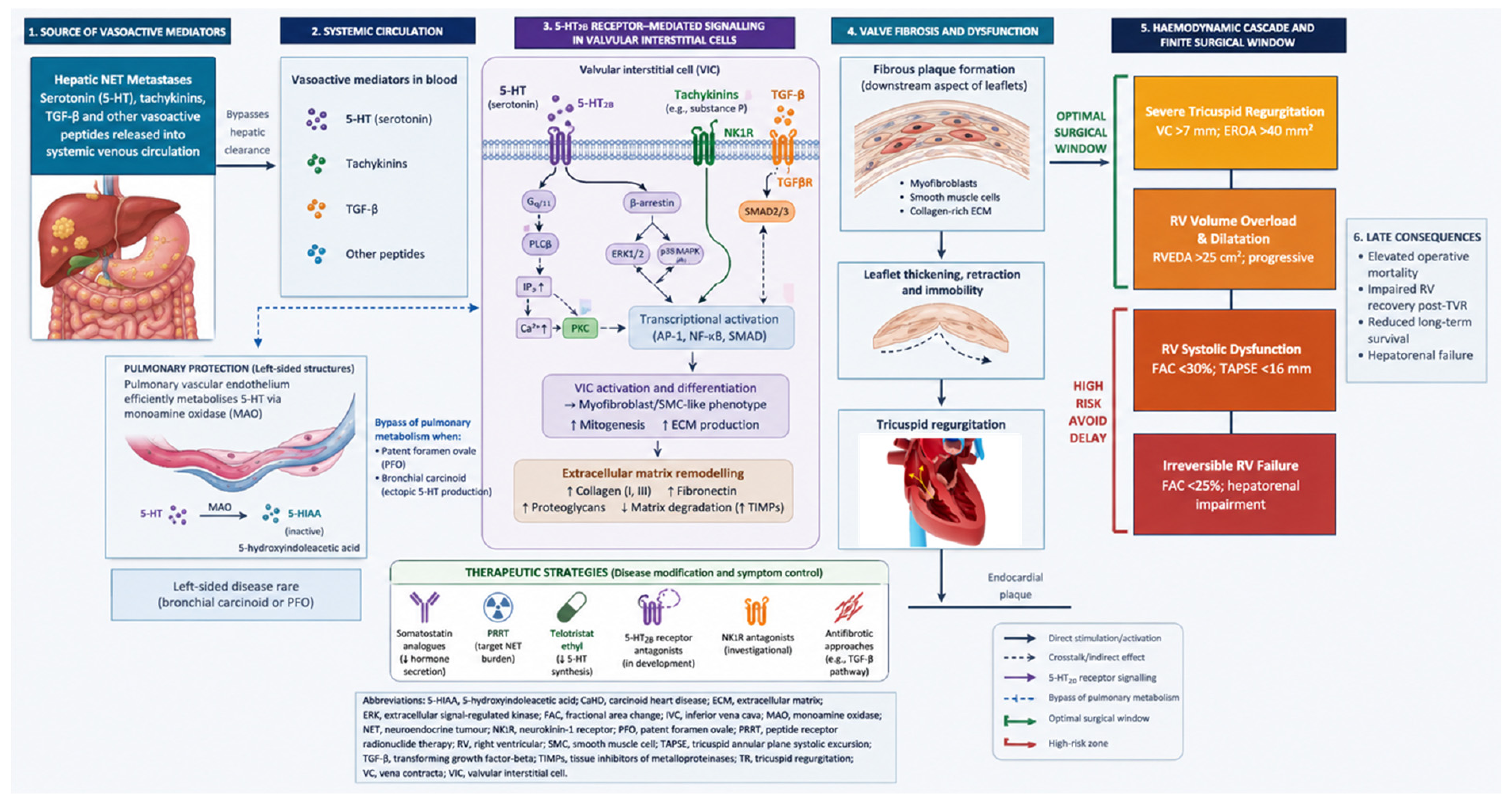
The fibrous plaques are histologically distinctive, comprising myofibroblasts, smooth muscle cells, and an extracellular matrix rich in collagen, deposited on the endocardial surface in a pattern that preferentially affects the downstream aspect of valve leaflets. Serotonin acts primarily through 5-HT2B receptors on valvular interstitial cells, stimulating mitogenesis and extracellular matrix production. This receptor-mediated mechanism explains the clinical observation that urinary 5-hydroxyindoleacetic acid levels correlate with the risk of developing CaHD, and underpins the rationale for somatostatin analogue therapy in slowing cardiac disease progression. The selective right-sided involvement is explained by the anatomical pathway: serotonin and tachykinins from hepatic metastases enter the inferior vena cava and reach right-sided structures in high concentration, while pulmonary vascular endothelium efficiently metabolises serotonin via monoamine oxidase, protecting left-sided structures. Left-sided carcinoid heart disease, while uncommon, should be actively sought in any patient with carcinoid syndrome and unexplained left-sided valvular pathology.
The critical haemodynamic consequence is progressive RV volume and pressure overload. Sustained tricuspid regurgitation produces RV dilatation, secondary annular dilatation, hepatic congestion, and ultimately irreversible RV failure (
Figure 1). This cascade defines the importance of surgical timing: once advanced RV dysfunction has occurred—characterised by severe dilatation, reduced fractional area change (FAC), and hepatorenal dysfunction—postoperative recovery is substantially impaired, even after technically successful valve replacement [
7,
12].
This pathophysiological cascade defines a finite surgical window during which intervention can be performed with acceptable risk. Identifying and acting within this window, before irreversible RV dysfunction and hepatorenal impairment have developed, requires structured echocardiographic surveillance and a proactive multidisciplinary approach rather than passive symptom-based referral.
3. Timing of Surgery
3.1. Inadequacy of Symptom-Based Referral
Multiple contemporary series suggest that symptom-based referral alone is associated with inferior outcomes [
7,
8]. Many patients with severe tricuspid regurgitation remain minimally symptomatic—due to compensatory RV dilatation—until ventricular dysfunction is advanced and surgical risk has risen substantially. The Mayo Clinic analysis of 195 patients over 40 years demonstrated perioperative mortality improving from approximately 10% overall to 6% in the modern era, with patients operated upon earlier showing substantially improved long-term survival (10-year actuarial survival 24%, limited predominantly by tumour progression) [
5].
The era effect within this series is striking: perioperative mortality decreased from over 20% in the pre-2000 cohort to 6% in the modern era, reflecting improvements in surgical technique, critical care, earlier referral, structured perioperative octreotide protocols, and advances in oncological disease control. This temporal improvement provides the strongest observational evidence that a systematic approach to CaHD management substantially improves outcomes.
3.2. Right Ventricular Function as the Dominant Predictor
Preoperative RV function has emerged as the strongest reported predictor of operative and long-term survival in contemporary retrospective series. Nguyen and colleagues reported 240 patients (2000–2017) with 5% operative mortality in the modern era; preoperative RV dysfunction was independently associated with mortality on multivariate analysis [
12]. Sawma and colleagues reported eight highly selected patients with early-stage disease (2010–2023) achieving 0% operative mortality and 86% 10-year survival, reinforcing the principle that timely intervention produces markedly superior results [
13]. NT-proBNP elevation is independently associated with CaHD severity and is a useful serial biomarker alongside echocardiographic parameters to guide referral timing [
14].
Beyond conventional echocardiographic parameters, newer imaging techniques offer incremental value in assessing RV function in CaHD. Right ventricular free-wall longitudinal strain assessed by speckle-tracking echocardiography has been shown to be reduced in patients with intestinal carcinoid disease independently of overt valvular involvement, suggesting subclinical myocardial impairment that precedes haemodynamically significant valve disease [
15]. Furthermore, two-dimensional speckle-tracking echocardiography-derived myocardial strain, combined with the biomarker activin A, has been demonstrated to predict mortality in patients with carcinoid intestinal disease, providing prognostic information beyond that available from standard echocardiographic assessment [
16]. Cardiac magnetic resonance imaging (CMR) provides complementary assessment, enabling accurate quantification of RV volumes and ejection fraction, characterisation of valve morphology including pulmonary valve disease that may be underestimated by transthoracic echocardiography, and detection of myocardial metastases and endocardial fibrosis using late gadolinium enhancement sequences [
17,
18]. A multimodality imaging approach incorporating conventional echocardiography, strain assessment, and CMR where available is therefore recommended for the comprehensive preoperative evaluation of RV function in CaHD patients being considered for surgical intervention.
3.3. Echocardiographic Triggers for Referral
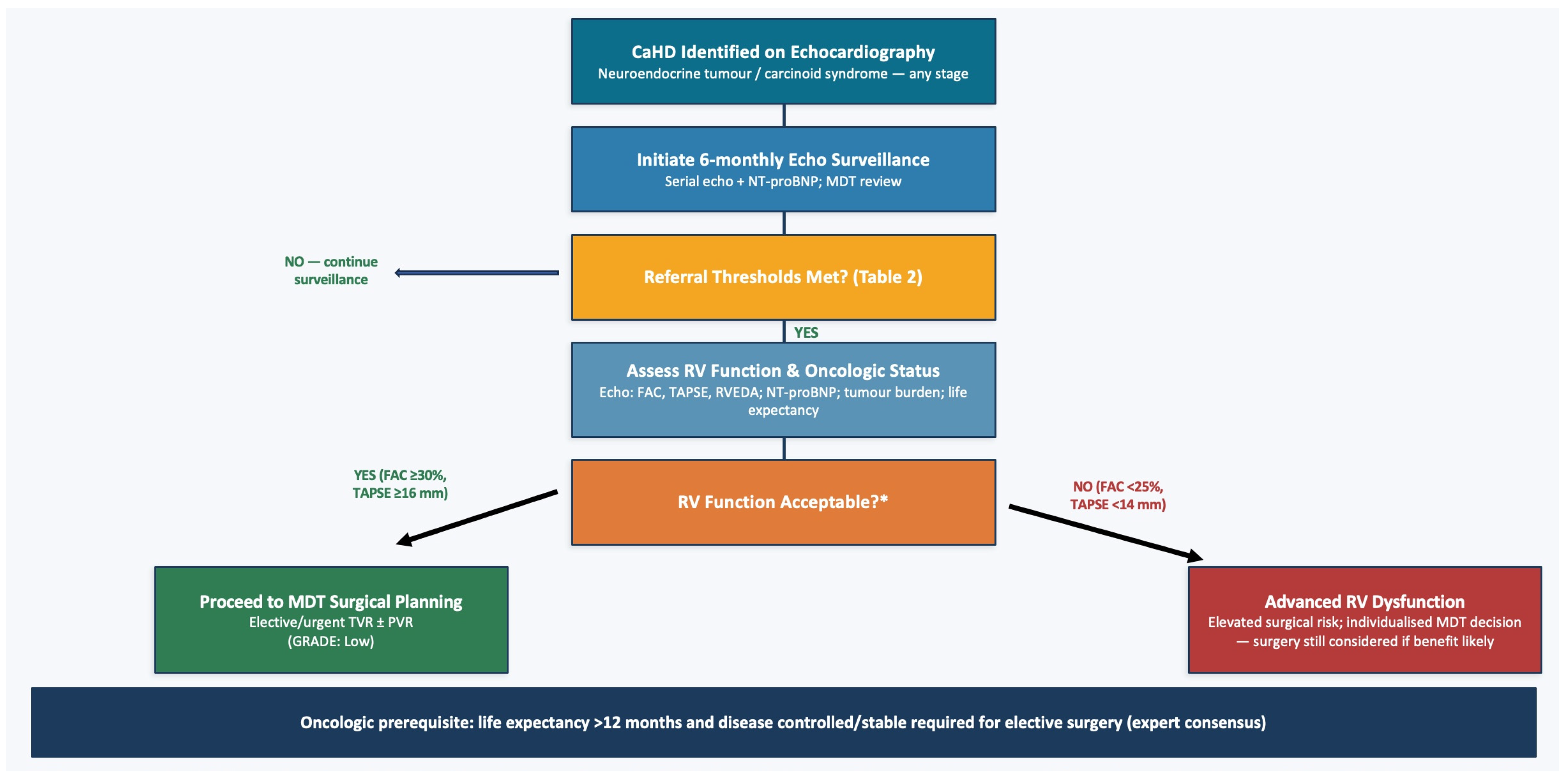
Current practice increasingly advocates referral based on imaging progression rather than symptoms alone (
Table 1,
Figure 2). Criteria integrating echocardiographic parameters (vena contracta > 7 mm, effective regurgitant orifice area > 40 mm
2, FAC ≥ 30%, TAPSE ≥ 16 mm), NT-proBNP trajectory, and oncological status represent contemporary guidance for optimal surgical referral [
7,
19,
20]. These thresholds are adapted from general tricuspid regurgitation and RV dysfunction criteria; they have not been prospectively validated in CaHD-specific cohorts and should be interpreted as consensus-informed guidance rather than evidence-based cutoffs.
The practical implication of these thresholds is that all patients with carcinoid syndrome and elevated urinary 5-HIAA should undergo baseline echocardiographic screening at diagnosis, with repeat imaging at 6–12-month intervals depending on the trajectory of echocardiographic findings and biomarker levels. Patients with normal baseline echocardiography and well-controlled tumour biology (stable or falling 5-HIAA, stable chromogranin A) may be rescreened annually. Those with established valve thickening or mild regurgitation require closer surveillance at six-monthly intervals, with referral for surgical assessment triggered by the imaging and biomarker criteria described above. This structured surveillance approach, while resource-intensive, is the only means of identifying the optimal surgical window before it has passed.
4. Operative Strategy
4.1. Tricuspid Valve Replacement
Tricuspid valve repair has yielded poor results in CaHD because the dominant pathology is leaflet fibrosis, retraction, and immobility rather than isolated annular dilatation; annuloplasty techniques are associated with early recurrence in published series [
22]. Tricuspid valve replacement (TVR) is therefore required in the vast majority of patients. In the series by Connolly and colleagues, TVR was performed in all 195 patients; in the Nguyen series, TVR constituted the principal procedure in 240 cases [
5,
12].
Operative technique requires attention to the right coronary artery and the atrioventricular node conduction pathway. Suture placement with appropriate pledget buttressing of the fibrotic annulus is important, as degenerated tissue may hold sutures poorly. Permanent pacemaker implantation rates are higher in CaHD than in non-carcinoid tricuspid surgery, reflecting the fragility of the conduction tissue in the fibrotic annular environment. The choice of prosthesis size requires careful consideration: a prosthesis that is too small risks patient–prosthesis mismatch, which is poorly tolerated by the dysfunctional right ventricle, while oversizing risks conduction injury and paravalvular leak. Intraoperative transoesophageal echocardiography is essential to confirm prosthesis function before chest closure.
4.2. Pulmonary Valve Intervention
Pulmonary valve disease is frequently underestimated, partly because transthoracic echocardiographic assessment of the pulmonary valve is technically challenging and may underrepresent the severity of disease. Concurrent pulmonary valve dysfunction is present in up to 50% of patients at surgery, and systematic intraoperative inspection is therefore recommended [
10]. Persistent uncorrected pulmonary valve disease after isolated TVR may impair RV recovery. Multiple centres advocate routine intraoperative inspection and a low threshold for concomitant pulmonary valve replacement (PVR); in the Nguyen series, omission of PVR in the presence of significant disease was associated with inferior RV functional recovery [
12].
The rationale for a low threshold is that the haemodynamic cost of adding pulmonary valve replacement to an already-planned tricuspid procedure is modest—typically adding 20 min of cross-clamp time—whereas leaving significant pulmonary valve disease uncorrected imposes a persistent afterload and volume burden on an already-compromised right ventricle. Furthermore, reoperation for isolated pulmonary valve disease after prior tricuspid replacement carries substantially higher risk than concomitant correction at the index procedure.
4.3. Prosthesis Selection
Bioprosthetic valves are generally favoured in contemporary practice on the basis of anticoagulation avoidance (problematic given frequent oncological procedures and hepatic dysfunction), and the demonstrated feasibility of transcatheter valve-in-valve therapy for degenerated bioprostheses [
23]. Veen and colleagues reported comparable early outcomes and three-year survival of 73% versus 56% for bioprosthetic and mechanical valves, respectively (non-significant) [
23].
The durability of bioprosthetic valves in the tricuspid position is generally favourable, with freedom from structural valve degeneration exceeding 80% at 10 years in non-carcinoid populations. In CaHD patients, however, prosthetic valve degeneration may be accelerated by ongoing serotonin exposure if the underlying tumour remains active, though this concern is increasingly mitigated by effective somatostatin analogue therapy and PRRT. The emerging availability of transcatheter valve-in-valve therapy provides an additional safety net: patients who develop bioprosthetic degeneration can be treated percutaneously without the need for redo sternotomy, which is particularly valuable in this oncologically compromised population. This consideration substantially reinforces the preference for bioprosthetic over mechanical prostheses at the index operation.
4.4. Transcatheter Options
With increasing numbers of CaHD patients surviving long enough to develop bioprosthetic valve degeneration, transcatheter valve-in-valve therapy has emerged as an important option [
24,
25]. Khan and colleagues reported technically successful transcatheter pulmonary and tricuspid valve-in-valve replacement; Barbier and colleagues described a small case series with acceptable short-term outcomes, though follow-up data remain limited [
25,
26]. These approaches are particularly attractive in patients with high reoperative risk. Primary transcatheter TVR using dedicated systems is under clinical evaluation; current evidence in CaHD is absent, and surgical replacement remains the standard of care for operable patients. More recently, Barbier and colleagues reported the first dedicated series of transcatheter valve replacements in CaHD, comprising 15 procedures in nine patients (2021–2025) involving pulmonary, tricuspid, and aortic positions using SAPIEN 3, TOPAZ, and LUX devices, with 100% procedural success and significant improvement in NYHA class [
26]. These emerging data, together with a recent comprehensive review of evolving transcatheter strategies in carcinoid syndrome [
27], suggest that the therapeutic landscape is evolving rapidly, though longer follow-up and larger cohorts are required before transcatheter approaches can be recommended as alternatives to surgery in operable patients.
The anatomical and haemodynamic features of CaHD require cautious interpretation of transcatheter valve-in-valve outcomes. Carcinoid fibrous plaque deposition may distort the geometry of the previously implanted bioprosthesis, alter the landing zone for transcatheter devices, and create unpredictable interactions between the transcatheter valve frame and the rigid carcinoid-affected tissue. Furthermore, many CaHD patients have concurrent hepatic dysfunction that alters the pharmacokinetics of antiplatelet and anticoagulant agents required after transcatheter valve implantation. Despite these caveats, the accumulating case-based evidence supports valve-in-valve therapy as a valuable option for patients with degenerated bioprostheses who are at prohibitive surgical risk for redo sternotomy, and the availability of this option strengthens the argument for bioprosthetic valve selection at the index procedure.
5. Perioperative Management
The principal perioperative risk is carcinoid crisis: a life-threatening syndrome characterised by profound hypotension, flushing, bronchospasm, and dysrhythmia triggered by massive vasoactive mediator release during anaesthesia or surgery [
28]. Continuous perioperative octreotide infusion (100–500 micrograms/hour, commenced 12–24 h preoperatively, maintained intraoperatively, continued 24–48 h postoperatively) is widely adopted as standard practice at experienced centres (
Table 2) [
29].
Table 2.
Recommended perioperative management protocol.
Table 2.
Recommended perioperative management protocol.
| Phase | Management | Source |
|---|
| Preoperative (12–24 h) | IV octreotide 100–500 mcg/h; depot injection as scheduled; avoid histamine-releasing agents | Baron 2020; Steeds 2019 [21,28] |
| Intraoperative | Maintain IV octreotide; vasopressin/phenylephrine for instability (avoid catecholamines); cell salvage if appropriate | Baron 2020; Steeds 2019 [21,28] |
| Postoperative (24–48 h) | Continue IV octreotide 24–48 h; resume depot analogue promptly; cardiac monitoring for arrhythmia and RV recovery | Baron 2020; Das 2023 [20,28] |
Agents known to provoke histamine release—including morphine, atracurium, and succinylcholine—should be avoided. Haemodynamic instability should be treated with vasopressin or phenylephrine as first-line agents. Catecholamines should be minimised and used with caution, as they may paradoxically worsen vasodilation by stimulating tumour mediator release. Patients on long-acting somatostatin analogues should receive their usual depot injection as scheduled, with supplemental intravenous octreotide for the perioperative period [
29].
Cardiopulmonary bypass management in CaHD requires specific attention. The initiation of bypass and the manipulation of the heart and great vessels during cannulation are recognised triggers for mediator release. Some centres supplement the bypass circuit prime with octreotide to maintain serotonin receptor blockade throughout perfusion. Weaning from bypass may be complicated by right ventricular dysfunction, particularly in patients with preoperatively impaired function; inotropic support with milrinone (which provides both inotropy and pulmonary vasodilation) and inhaled nitric oxide or prostacyclin for pulmonary vasodilation should be available. Noradrenaline should be used with caution, as catecholamine-mediated stimulation of tumour mediator release may worsen haemodynamic instability. Temporary right ventricular mechanical support has been reported in refractory cases but remains anecdotal.
6. Surgical Outcomes
Contemporary series consistently report that operative mortality has decreased substantially in experienced centres (
Table 3). Connolly and colleagues reported 10% overall and 6% post-2000 mortality in 195 patients, with 10-year survival of 24% [
5]. Mokhles and colleagues reported comparable outcomes in 19 patients, with 1-year survival of 71% and 5-year survival of 43%, with late mortality driven predominantly by NET progression [
30]. Nguyen and colleagues reported 5% modern-era mortality in 240 patients [
13]. Late mortality was predominantly related to NET progression rather than cardiac failure in patients undergoing timely intervention, though these observations derive from retrospective series at high-volume referral centres and may not be generalisable. Functional outcomes are favourable, with significant improvement in NYHA class, reduced hepatic congestion, and regression of RV dilatation on postoperative echocardiography.
The pattern of late mortality is informative: in patients undergoing timely surgery with preserved RV function, the dominant mode of death is tumour progression rather than cardiac failure, confirming that successful valve surgery effectively removes cardiac disease as a competing cause of mortality. This observation has important implications for patient counselling: operative intervention does not cure the underlying malignancy, but it does restore cardiac reserve, alleviate right-heart failure symptoms, and permit patients to tolerate subsequent oncological therapies; including hepatic-directed therapies, PRRT, and systemic chemotherapy, that would otherwise be contraindicated in the setting of decompensated right-heart failure.
7. Multidisciplinary Management
Optimal care requires the integration of cardiology, cardiac surgery, oncology, endocrinology, and specialist anaesthesia [
26]. On current evidence, cardiac surgery is best considered when RV function remains preserved and oncological disease is controlled or stable, rather than waiting for further tumour response at the cost of progressive RV dysfunction [
7,
21]. Somatostatin analogue therapy should be reinitiated promptly postoperatively; PRRT can typically resume several weeks after uncomplicated cardiac surgery.
The sequencing of cardiac surgery relative to oncological therapy requires careful planning. In patients with progressive hepatic metastatic disease, hepatic-directed therapy (transarterial embolisation, radiofrequency ablation, or surgical debulking) may be considered before or after cardiac surgery depending on the relative urgency of each. In general, cardiac surgery takes priority when RV function is declining, because progressive right-heart failure limits the ability of the patient to tolerate the haemodynamic stress of hepatic interventions and systemic oncological therapy. Conversely, in patients with stable cardiac disease but rapidly progressive tumour burden, oncological treatment may appropriately precede cardiac intervention provided RV function is monitored closely during the interval. These decisions require case-by-case adjudication by the MDT and cannot be reduced to a simple algorithmic sequence.
8. Limitations
The evidence base comprises exclusively retrospective, single-centre series subject to referral and survivor bias. Referral bias is pervasive: patients reaching surgery were those who survived long enough and remained fit for operative assessment. The echocardiographic referral thresholds proposed derive from expert consensus rather than CaHD-specific prospective validation, as discussed further below. Formal meta-analysis is precluded by substantial heterogeneity in patient selection, era effects, and outcome reporting.
Several additional limitations warrant acknowledgement. Publication bias may affect the literature: favourable outcomes from experienced centres are more likely to be published than adverse outcomes. The echocardiographic thresholds for referral proposed in this review derive from expert consensus and extrapolation from general valve disease guidelines rather than prospective validation in CaHD-specific cohorts; they should be regarded as guidance rather than validated evidence-based cutoffs. This review was conducted by a single author without independent dual screening; while pre-specified inclusion criteria were applied, the risk of selection bias is greater than in dual-screened reviews. Finally, the clinical heterogeneity across published series—reflecting differences in centre volume, era, oncological treatment intensity, and patient selection—means that pooling of data across studies, even narratively, requires caution. Prospective multicentre registries with standardised data collection represent the most important future contribution to this field.
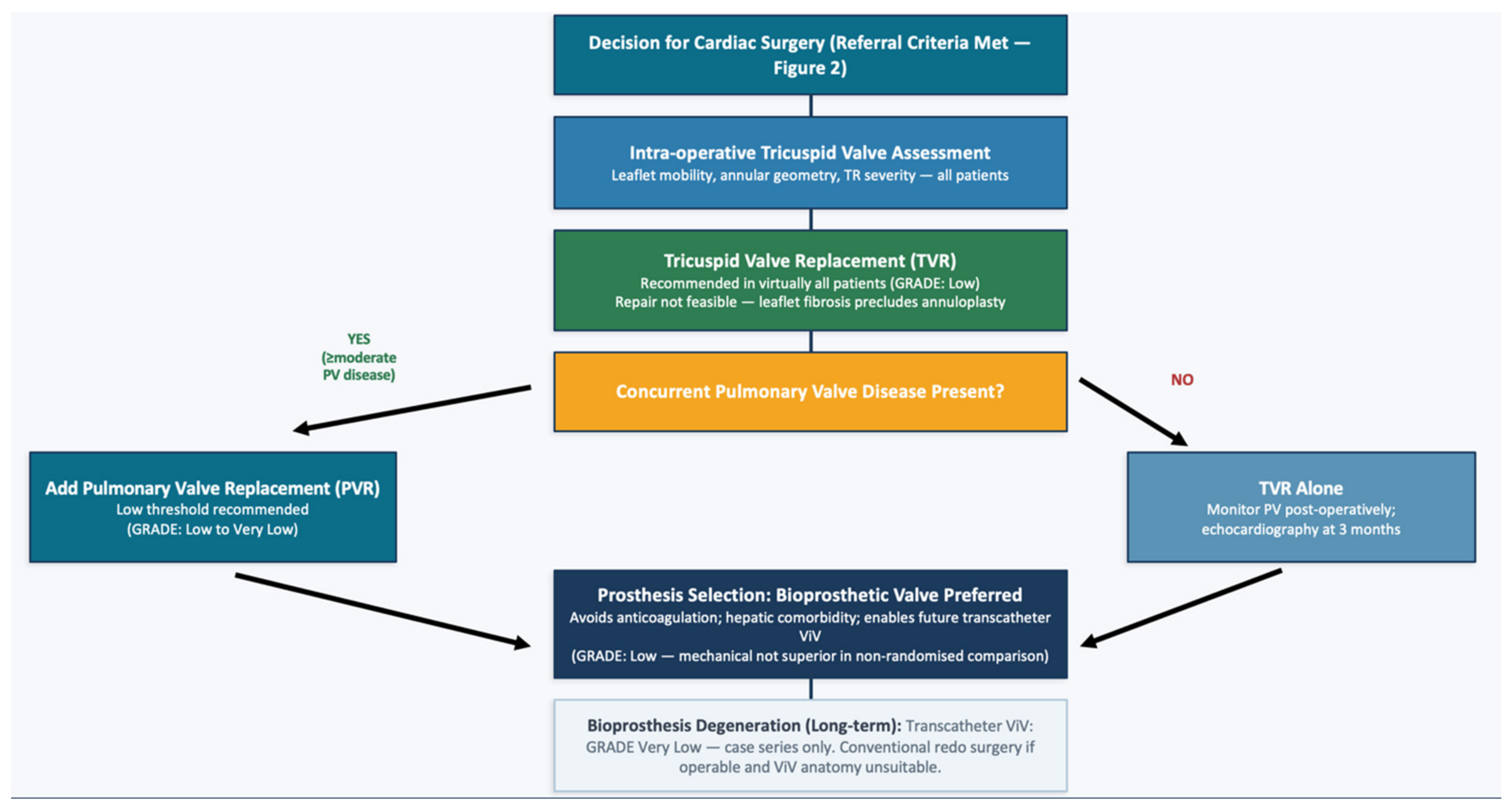
Importantly, all proposed echocardiographic thresholds and algorithmic frameworks in this review (
Figure 2 and
Figure 3) lack prospective CaHD-specific validation and should be regarded as the authors’ proposed consensus-informed framework rather than evidence-based guidelines. The referral criteria are largely adapted from general tricuspid regurgitation and right ventricular dysfunction literature rather than derived from CaHD-specific prospective cohort studies, and this limitation must be acknowledged when applying these thresholds in clinical practice.
9. Future Perspectives
Several areas merit future investigation. First, prospective multicentre registries with standardised echocardiographic, biomarker, and outcome endpoints are essential to validate the proposed referral thresholds and algorithmic frameworks. Second, the role of RV free-wall longitudinal strain by speckle-tracking echocardiography deserves prospective evaluation as a tool for refining surgical timing; the demonstration that RV strain is reduced independently of overt valvular disease in carcinoid patients suggests potential for earlier identification of myocardial impairment before conventional parameters deteriorate [
15,
16]. Third, cardiac MRI may become increasingly important for comprehensive preoperative assessment, particularly for quantifying RV volumes and detecting pulmonary valve disease underestimated by echocardiography [
17,
18]. Fourth, the evolving landscape of transcatheter valve replacement using dedicated tricuspid and pulmonary valve devices offers the prospect of less invasive primary intervention in high-risk patients, complementing the established valve-in-valve approach for degenerated bioprostheses [
26,
27]. Finally, novel biomarkers such as activin A, which has been shown to predict mortality in carcinoid intestinal disease independently of established cardiac parameters, may complement NT-proBNP in the risk stratification algorithm and deserve validation in larger cohorts [
16].
10. Conclusions
Retrospective evidence supports that CaHD is surgically treatable with clinically important symptomatic and survival benefit when intervention is appropriately timed. Operative timing, guided by echocardiographic and biomarker surveillance rather than symptoms alone, appears to be the most important modifiable determinant of outcome on current evidence. Comprehensive right-sided valve surgery—TVR with concomitant PVR where indicated—using bioprosthetic valves, combined with structured perioperative octreotide protocols, represents current best practice at experienced centres. Transcatheter valve-in-valve therapy offers a valuable option for degenerated bioprostheses. Prospective multicentre registries are needed to strengthen the evidence base for this rare condition.
The algorithms proposed in this review (
Figure 2 and
Figure 3) are intended as practical decision-support tools rather than prescriptive guidelines, and should be adapted to individual patient circumstances and institutional expertise. Their core principles—proactive echocardiographic surveillance, timely referral before irreversible RV dysfunction, comprehensive right-sided valve surgery, and structured perioperative endocrine management—represent the strongest consensus that the current evidence permits.
Author Contributions
H.A.-G.: manuscript writing, literature review; F.L.: literature review, collating data; J.K.: literature review, collating data; S.A.: concept, literature review, manuscript drafting, final approval; G.T.: concept, literature review, manuscript drafting, final approval; S.K.O.: concept, literature review, manuscript drafting, final approval. All authors have read and agreed to the published version of the manuscript.
Funding
This research received no external funding.
Institutional Review Board Statement
Not applicable.
Informed Consent Statement
Not applicable.
Data Availability Statement
No new data were created or analysed in this study. Data sharing is not applicable to this article.
Conflicts of Interest
The authors declare no conflicts of interest.
References
- Modlin, I.M.; Kidd, M.; Latich, I.; Zikusoka, M.N.; Shapiro, M.D. Current status of gastrointestinal carcinoids. Gastroenterology 2005, 128, 1717–1751. [Google Scholar] [CrossRef]
- Pellikka, P.A.; Tajik, A.J.; Khandheria, B.K.; Seward, J.B.; A Callahan, J.; Pitot, H.C.; Kvols, L.K. Carcinoid heart disease: Clinical and echocardiographic spectrum in 74 patients. Circulation 1993, 87, 1188–1196. [Google Scholar] [CrossRef]
- Bernheim, A.M.; Connolly, H.M.; Pellikka, P.A. Carcinoid heart disease. Prog. Cardiovasc. Dis. 2007, 49, 439–451. [Google Scholar] [CrossRef] [PubMed]
- Gustafsson, B.I.; Hauso, O.; Drozdov, I.; Kidd, M.; Modlin, I.M. Carcinoid heart disease. Int. J. Cardiol. 2008, 129, 318–324. [Google Scholar] [CrossRef]
- Connolly, H.M.; Schaff, H.V.; Abel, M.D.; Rubin, J.; Askew, J.W.; Li, Z.; Inda, J.J.; Luis, S.A.; Nishimura, R.A.; Pellikka, P.A. Early and late outcomes of surgical treatment in carcinoid heart disease. J. Am. Coll. Cardiol. 2015, 66, 2189–2196. [Google Scholar] [CrossRef]
- Caplin, M.E.; Baudin, E.; Ferolla, P.; Filosso, P.; Garcia-Yuste, M.; Lim, E.; Oberg, K.; Pelosi, G.; Perren, A.; Rossi, R.E.; et al. Pulmonary neuroendocrine tumors: European Neuroendocrine Tumor Society expert consensus. Ann. Oncol. 2015, 26, 1604–1620. [Google Scholar] [CrossRef]
- Davar, J.; Connolly, H.M.; Caplin, M.E.; Pavel, M.; Zacks, J.; Bhattacharyya, S.; Cuthbertson, D.J.; Dobson, R.; Grozinsky-Glasberg, S.; Steeds, R.P.; et al. Diagnosing and managing carcinoid heart disease. J. Am. Coll. Cardiol. 2017, 69, 1288–1304. [Google Scholar] [CrossRef] [PubMed]
- Møller, J.E.; Pellikka, P.A.; Bernheim, A.M.; Schaff, H.V.; Rubin, J.; Connolly, H.M. Prognosis of carcinoid heart disease: Analysis of 200 cases. Circulation 2005, 112, 3320–3327. [Google Scholar] [CrossRef]
- Ram, P.; Penalver, J.L.; Lo, K.B.U.; Rangaswami, J.; Pressman, G.S. Carcinoid heart disease: Review of current knowledge. Tex. Heart Inst. J. 2019, 46, 21–27. [Google Scholar] [CrossRef] [PubMed]
- Patel, C.; Mathur, M.; Escarcega, R.O.; Bove, A.A. Carcinoid heart disease: Current understanding and future directions. Am. Heart J. 2014, 167, 789–795. [Google Scholar] [CrossRef]
- Møller, J.E.; Connolly, H.M.; Rubin, J.; Seward, J.B.; Modesto, K.; Pellikka, P.A. Factors associated with progression of carcinoid heart disease. N. Engl. J. Med. 2003, 348, 1005–1015. [Google Scholar] [CrossRef]
- Nguyen, A.; Schaff, H.V.; Abel, M.D.; Luis, S.A.; Lahr, B.D.; Halfdanarson, T.R.; Connolly, H.M. Improving outcome of valve replacement for carcinoid heart disease. J. Thorac. Cardiovasc. Surg. 2019, 158, 99–107. [Google Scholar] [CrossRef]
- Sawma, T.; Schaff, H.V.; Zheng, A.; Bilgin, G.B.; Halfdanarson, T.R.; Luis, S.; Pellikka, P.A.; Connolly, H.M.; Crestanello, J.A. Outcomes of surgical management of carcinoid heart disease. JTCVS Open 2025, 26, 115–121. [Google Scholar] [CrossRef]
- Bhattacharyya, S.; Toumpanakis, C.; Caplin, M.E.; Davar, J. Usefulness of NT-proBNP as a biomarker of carcinoid heart disease. Am. J. Cardiol. 2008, 102, 938–942. [Google Scholar] [CrossRef]
- Haugaa, K.H.; Bergestuen, D.S.; Sahakyan, L.G.; Skulstad, H.; Aakhus, S.; Thiis-Evensen, E.; Edvardsen, T. Evaluation of right ventricular dysfunction by myocardial strain echocardiography in patients with intestinal carcinoid disease. J. Am. Soc. Echocardiogr. 2011, 24, 644–650. [Google Scholar] [CrossRef]
- Zahid, W.; Bergestuen, D.; Haugaa, K.H.; Ueland, T.; Thiis-Evensen, E.; Aukrust, P.; Fosse, E.; Edvardsen, T. Myocardial function by two-dimensional speckle tracking echocardiography and activin A may predict mortality in patients with carcinoid intestinal disease. Cardiology 2015, 132, 81–90. [Google Scholar] [CrossRef] [PubMed]
- Bhattacharyya, S.; Toumpanakis, C.; Burke, M.; Taylor, A.M.; Caplin, M.E.; Davar, J. Features of carcinoid heart disease identified by 2- and 3-dimensional echocardiography and cardiac MRI. Circ. Cardiovasc. Imaging 2010, 3, 103–111. [Google Scholar] [CrossRef] [PubMed]
- Baron, T.; Bergsten, J.; Albåge, A.; Lundin, L.; Sörensen, J.; Öberg, K.; Flachskampf, F.A. Cardiac imaging in carcinoid heart disease. JACC Cardiovasc. Imaging 2021, 14, 2240–2253. [Google Scholar] [CrossRef]
- Otto, C.M.; Nishimura, R.A.; Bonow, R.O.; Carabello, B.A.; Erwin, J.P., III; Gentile, F.; Jneid, H.; Krieger, E.V.; Mack, M.; McLeod, C.; et al. 2020 ACC/AHA Guideline for the Management of Patients with Valvular Heart Disease. J. Am. Coll. Cardiol. 2021, 77, e25–e197. [Google Scholar] [CrossRef]
- Das, S.; Stockton, S.S.; Hassan, S.A. Carcinoid heart disease management: A multi-disciplinary collaboration. Oncologist 2023, 28, 575–583. [Google Scholar] [CrossRef] [PubMed]
- Steeds, R.P.; Sagar, V.; Shetty, S.; Oelofse, T.; Singh, H.; Ahmad, R.; Bradley, E.; Moore, R.; Vickrage, S.; Smith, S.; et al. Multidisciplinary team management of carcinoid heart disease. Endocr. Connect. 2019, 8, R184–R199. [Google Scholar] [CrossRef]
- Albåge, A.; Montibello, M. Surgical aspects of valve replacement in carcinoid heart disease. J. Card. Surg. 2021, 36, 290–294. [Google Scholar] [CrossRef]
- Veen, K.M.; Hart, E.A.; Mokhles, M.M.; de Jong, P.L.; de Heer, F.; van Boven, W.J.P.; van den Heuvel, T.; Siregar, S.; Braun, J.; Chamuleau, S.A.J.; et al. Outcomes after tricuspid valve replacement for carcinoid heart disease: A Multicenter Study. Struct. Heart 2020, 4, 122–130. [Google Scholar] [CrossRef]
- Luthra, S.; Olevano, C.; Richens, T.; Tsang, G.M. Percutaneous transcatheter valve-in-valve pulmonary and tricuspid replacement in carcinoid heart disease. JACC Case Rep. 2020, 2, 533–536. [Google Scholar] [CrossRef]
- Khan, J.N.; Doshi, S.N.; Rooney, S.J.; Bhabra, M.S.; Steeds, R.P. Transcatheter pulmonary and tricuspid valve-in-valve replacement for bioprosthesis degeneration in carcinoid heart disease. Eur. Heart J. Cardiovasc. Imaging 2016, 17, 114. [Google Scholar] [CrossRef][Green Version]
- Barbier, M.A.; Gerard, L.; Grinberg, D.; François, L.; Walter, T.; Obadia, J.F.; Rioufol, G. Transcatheter valve replacement in carcinoid heart disease: A potential change of paradigm. Interdiscip. Cardiovasc. Thorac. Surg. 2026, 41, ivag001. [Google Scholar] [CrossRef]
- Piscione, M.; Cammalleri, V.; Antonelli, G.; De Luca, V.M.; Carpenito, M.; Gaudio, D.; Cocco, N.; Nenna, A.; Dominici, C.; Bianchi, A.; et al. Cardiac surgery and transcatheter intervention for valvular heart disease in carcinoid syndrome: Risk factors, outcomes, and evolving therapeutic strategies. J. Cardiovasc. Dev. Dis. 2024, 11, 359. [Google Scholar] [CrossRef] [PubMed]
- Castillo, J.; Silvay, G.; Weiner, M. Anesthetic management of patients with carcinoid syndrome and carcinoid heart disease: The Mount Sinai algorithm. J. Cardiothorac. Vasc. Anesth. 2018, 32, 1023–1031. [Google Scholar] [CrossRef] [PubMed]
- Castillo, J.G.; Silvay, G.; Solís, J. Current concepts in diagnosis and perioperative management of carcinoid heart disease. Semin. Cardiothorac. Vasc. Anesth. 2013, 17, 212–223. [Google Scholar] [CrossRef] [PubMed]
- Mokhles, P.; van Herwerden, L.A.; de Jong, P.L.; de Herder, W.W.; Siregar, S.; Constantinescu, A.A.; van Domburg, R.T.; Roos-Hesselink, J.W. Carcinoid heart disease: Outcomes after surgical valve replacement. Eur. J. Cardiothorac. Surg. 2012, 41, 1278–1283. [Google Scholar] [CrossRef]
| Disclaimer/Publisher’s Note: The statements, opinions and data contained in all publications are solely those of the individual author(s) and contributor(s) and not of MDPI and/or the editor(s). MDPI and/or the editor(s) disclaim responsibility for any injury to people or property resulting from any ideas, methods, instructions or products referred to in the content. |