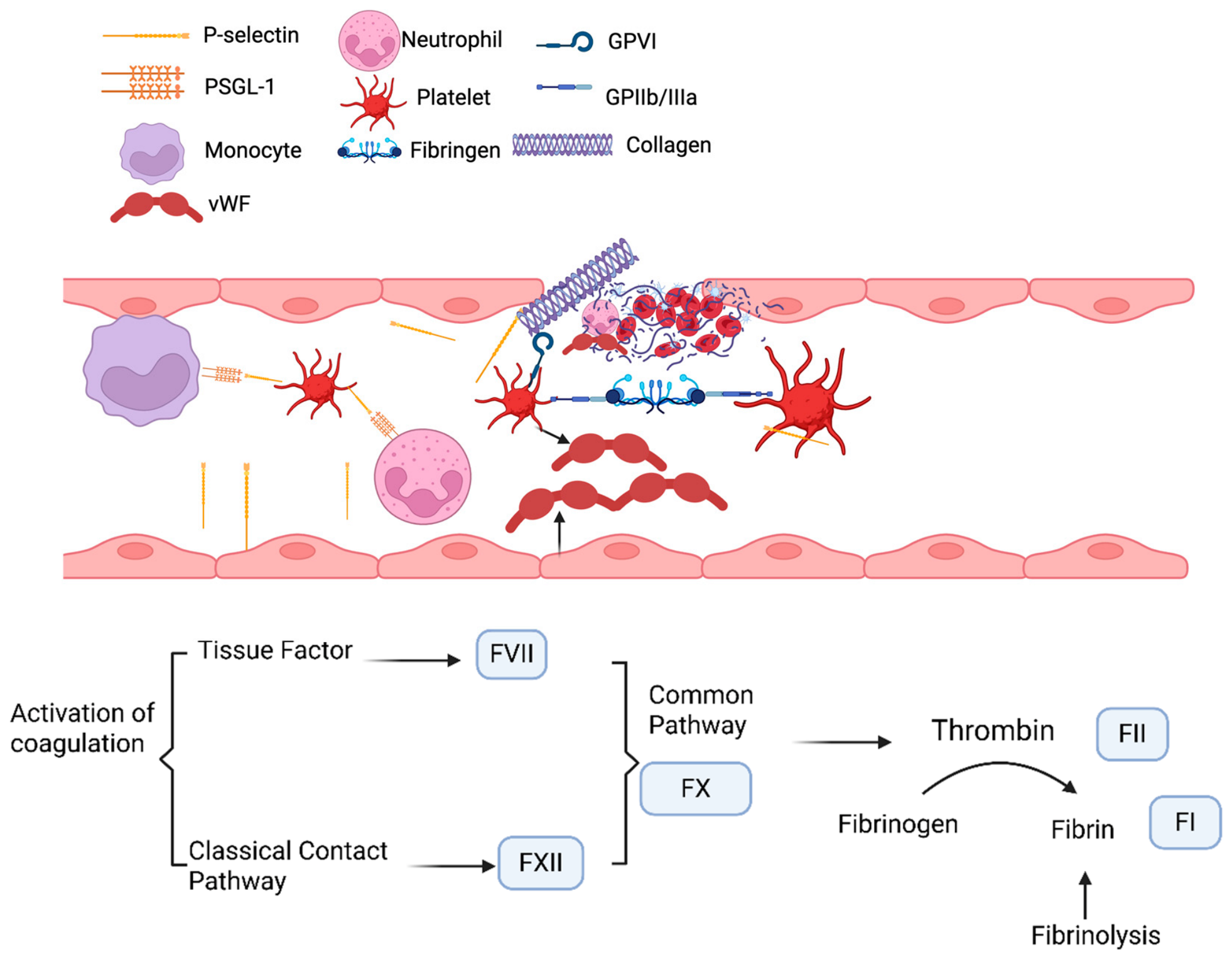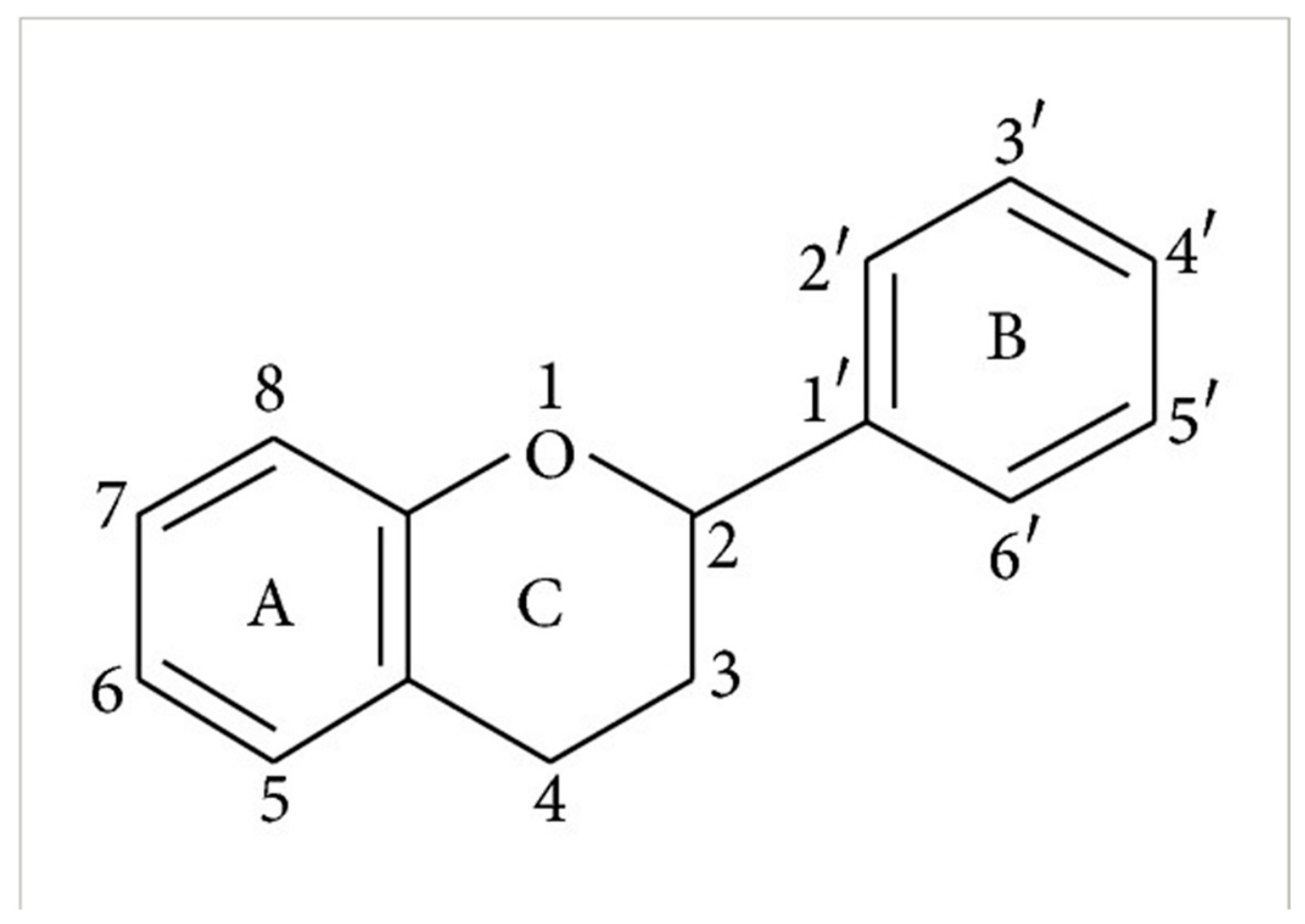

Potential Role of Polyphenols in Platelet Aggregation and Blood Coagulation


Abstract
1. Introduction
2. Methodology
3. Polyphenols
Polyphenol Structure and Subclasses
4. Polyphenols and Thrombosis
4.1. Vascular System and Endothelial Function
4.2. Platelet Function
4.3. Coagulation
4.4. Fibrinolysis
5. Clinical Relevance and Translational Potential
5.1. Polyphenol Absorption, Metabolism and Bioavailability
5.2. Important Considerations for Clinical Implementation
6. Conclusions
Author Contributions
Funding
Institutional Review Board Statement
Informed Consent Statement
Data Availability Statement
Conflicts of Interest
References
- Triposkiadis, F.; Giamouzis, G.; Parissis, J.; Starling, R.C.; Boudoulas, H.; Skoularigis, J.; Butler, J.; Filippatos, G. Reframing the Association and Significance of Co-Morbidities in Heart Failure. Eur. J. Heart Fail. 2016, 18, 744–758. [Google Scholar] [CrossRef] [Scilit]
- Buddeke, J.; Bots, M.L.; Van Dis, I.; Liem, A.; Visseren, F.L.J.; Vaartjes, I. Trends in comorbidity in patients hospitalised for cardiovascular disease. Int. J. Cardiol. 2017, 248, 382–388. [Google Scholar] [CrossRef] [Scilit]
- Koliaki, C.; Liatis, S.; Kokkinos, A. Obesity and cardiovascular disease: Revisiting an old relationship. Metabolism 2019, 92, 98–107. [Google Scholar] [CrossRef] [Scilit]
- Mozaffarian, D.; Benjamin, E.J.; Go, A.S.; Arnett, D.K.; Blaha, M.J.; Cushman, M.; Das, S.R.; De Ferranti, S.; Després, J.-P.; Fullerton, H.J.; et al. Heart Disease and Stroke Statistics—2016 Update: A Report from the American Heart Association. Circulation 2016, 133, e38–e360. [Google Scholar] [CrossRef] [Scilit] [PubMed]
- Yamashita, A.; Asada, Y. Underlying mechanisms of thrombus formation/growth in atherothrombosis and deep vein thrombosis. Pathol. Int. 2023, 73, 65–80. [Google Scholar] [CrossRef] [Scilit] [PubMed]
- Townsend, N.; Kazakiewicz, D.; Lucy Wright, F.; Timmis, A.; Huculeci, R.; Torbica, A.; Gale, C.P.; Achenbach, S.; Weidinger, F.; Vardas, P. Epidemiology of cardiovascular disease in Europe. Nat. Rev. Cardiol. 2022, 19, 133–143. [Google Scholar] [CrossRef] [Scilit]
- Pham-Huy, L.A.; He, H.; Pham-Huy, C. Free Radicals, Antioxidants in Disease and Health. Int. J. Biomed. Sci. IJBS 2008, 4, 89–96. [Google Scholar] [CrossRef] [PubMed]
- Erlund, I.; Koli, R.; Alfthan, G.; Marniemi, J.; Puukka, P.; Mustonen, P.; Mattila, P.; Jula, A. Favorable effects of berry consumption on platelet function, blood pressure, and HDL cholesterol. Am. J. Clin. Nutr. 2008, 87, 323–331. [Google Scholar] [CrossRef] [Scilit]
- Ciumărnean, L.; Milaciu, M.V.; Runcan, O.; Vesa Ștefan, C.; Răchișan, A.L.; Negrean, V.; Perné, M.-G.; Donca, V.I.; Alexescu, T.-G.; Para, I.; et al. The Effects of Flavonoids in Cardiovascular Diseases. Molecules 2020, 25, 4320. [Google Scholar] [CrossRef] [Scilit]
- Alkarithi, G.; Duval, C.; Shi, Y.; Macrae, F.L.; Ariëns, R.A.S. Thrombus Structural Composition in Cardiovascular Disease. Arter. Thromb. Vasc. Biol. 2021, 41, 2370–2383. [Google Scholar] [CrossRef] [Scilit]
- Chee, Y. Coagulation. J. R. Coll. Physicians Edinb. 2014, 44, 42–45. [Google Scholar] [CrossRef] [Scilit] [PubMed]
- Mohd Sabri, N.A.; Lee, S.-K.; Murugan, D.D.; Ling, W.C. Epigallocatechin gallate (EGCG) alleviates vascular dysfunction in angiotensin II-infused hypertensive mice by modulating oxidative stress and eNOS. Sci. Rep. 2022, 12, 17633. [Google Scholar] [CrossRef] [Scilit]
- Yamagata, K. Polyphenols Regulate Endothelial Functions and Reduce the Risk of Cardiovascular Disease. J. Cardiovasc. Pharmacol. 2019, 25, 2443–2458. [Google Scholar] [CrossRef] [Scilit] [PubMed]
- Kaur, R.; Kaur, M.; Singh, J. Endothelial dysfunction and platelet hyperactivity in type 2 diabetes mellitus: Molecular insights and therapeutic strategies. Cardiovasc. Diabetol. 2018, 17, 121. [Google Scholar] [CrossRef] [Scilit]
- Nieswandt, B.; Pleines, I.; Bender, M. Platelet adhesion and activation mechanisms in arterial thrombosis and ischaemic stroke. J. Thromb. Haemost. 2011, 9, 92–104. [Google Scholar] [CrossRef] [Scilit] [PubMed]
- Freedman, J.E. Oxidative Stress and Platelets. Arterioscler. Thromb. Vasc. Biol. 2008, 28, s11–s16. [Google Scholar] [CrossRef] [Scilit]
- Hovens, M.M.C.; Snoep, J.D.; Tamsma, J.T.; Huisman, M.V. Aspirin in the prevention and treatment of venous thromboembolism. J. Thromb. Haemost. 2006, 4, 1470–1475. [Google Scholar] [CrossRef] [Scilit]
- Weber, A.; Reimann, S.; Schrör, K. Specific inhibition of ADP-induced platelet aggregation by clopidogrel in vitro. Br. J. Pharmacol. 1999, 126, 415–420. [Google Scholar] [CrossRef] [Scilit]
- Dunois, C. Laboratory Monitoring of Direct Oral Anticoagulants (DOACs). Biomedicines 2021, 9, 445. [Google Scholar] [CrossRef] [Scilit]
- Stef, G.; Csiszar, A.; Lerea, K.; Ungvari, Z.; Veress, G. Resveratrol Inhibits Aggregation of Platelets from High-risk Cardiac Patients with Aspirin Resistance. J. Cardiovasc. Pharmacol. 2006, 48, 1–5. [Google Scholar] [CrossRef] [Scilit]
- Zuo, W.; Chen, S.; Lin, J.; Wan, Y.; Cao, F.; Hu, B. Cerebral Venous Thrombosis:Current Status and Challenges. Brain Behav. 2025, 15, e70844. [Google Scholar] [CrossRef] [Scilit]
- Gum, P.A.; Kottke-Marchant, K.; Poggio, E.D.; Gurm, H.; Welsh, P.A.; Brooks, L.; Sapp, S.K.; Topol, E.J. Profile and prevalence of aspirin resistance in patients with cardiovascular disease. Am. J. Cardiol. 2001, 88, 230–235. [Google Scholar] [CrossRef] [Scilit]
- Grundmann, K.; Jaschonek, K.; Kleine, B.; Dichgans, J.; Topka, H. Aspirin non-responder status in patients with recurrent cerebral ischemic attacks. J. Neurol. 2003, 250, 63–66. [Google Scholar] [CrossRef] [Scilit]
- Qu, Z.; Liu, A.; Li, P.; Liu, C.; Xiao, W.; Huang, J.; Liu, Z.; Zhang, S. Advances in physiological functions and mechanisms of (−)-epicatechin. Crit. Rev. Food Sci. Nutr. 2021, 61, 211–233. [Google Scholar] [CrossRef] [Scilit]
- Montané, X.; Kowalczyk, O.; Reig-Vano, B.; Bajek, A.; Roszkowski, K.; Tomczyk, R.; Pawliszak, W.; Giamberini, M.; Mocek-Płóciniak, A.; Tylkowski, B. Current Perspectives of the Applications of Polyphenols and Flavonoids in Cancer Therapy. Molecules 2020, 25, 3342. [Google Scholar] [CrossRef] [Scilit]
- Ren, B.; Kwah, M.X.-Y.; Liu, C.; Ma, Z.; Shanmugam, M.K.; Ding, L.; Xiang, X.; Ho, P.C.-L.; Wang, L.; Ong, P.S.; et al. Resveratrol for cancer therapy: Challenges and future perspectives. Cancer Lett. 2021, 515, 63–72. [Google Scholar] [CrossRef] [Scilit] [PubMed]
- Chagas, M.D.S.S.; Behrens, M.D.; Moragas-Tellis, C.J.; Penedo, G.X.M.; Silva, A.R.; Gonçalves-de-Albuquerque, C.F. Flavonols and Flavones as Potential anti-Inflammatory, Antioxidant, and Antibacterial Compounds. Oxid. Med. Cell. Longev. 2022, 2022, 9966750. [Google Scholar] [PubMed]
- Wendlocha, D.; Krzykawski, K.; Mielczarek-Palacz, A.; Kubina, R. Selected Flavonols in Breast and Gynecological Cancer: A Systematic Review. Nutrients 2023, 15, 2938. [Google Scholar] [CrossRef] [Scilit]
- Dias, M.C.; Pinto, D.C.G.A.; Silva, A.M.S. Plant Flavonoids: Chemical Characteristics and Biological Activity. Molecules 2021, 26, 5377. [Google Scholar] [CrossRef] [Scilit] [PubMed]
- Kumar, S.; Pandey, A.K. Chemistry and Biological Activities of Flavonoids: An Overview. Sci. World J. 2013, 2013, 162750. [Google Scholar] [CrossRef] [Scilit]
- Safe, S.; Jayaraman, A.; Chapkin, R.S.; Howard, M.; Mohankumar, K.; Shrestha, R. Flavonoids: Structure–function and mechanisms of action and opportunities for drug development. Toxicol. Res. 2021, 37, 147–162. [Google Scholar] [CrossRef] [Scilit] [PubMed]
- Hollman, P.C.; Arts, I.C. Flavonols, flavones and flavanols—Nature, occurrence and dietary burden. J. Sci. Food Agric. 2000, 80, 1081–1093. [Google Scholar] [CrossRef] [Scilit]
- Brodowska, K.M. Natural Flavonoids: Classification, Potential Role, and Application of Flavonoid Analogues. Eur. J. Biol. Res. Zenodo 2017, 7, 108–123. [Google Scholar]
- Shen, N.; Wang, T.; Gan, Q.; Liu, S.; Wang, L.; Jin, B. Plant flavonoids: Classification, distribution, biosynthesis, and antioxidant activity. Food Chem. 2022, 383, 132531. [Google Scholar] [CrossRef] [Scilit] [PubMed]
- Panche, A.N.; Diwan, A.D.; Chandra, S.R. Flavonoids: An overview. J. Nutr. Sci. 2016, 5, e47. [Google Scholar] [CrossRef] [Scilit] [PubMed]
- Pereira, V.; Figueira, O.; Castilho, P.C. Hesperidin: A flavanone with multifaceted applications in the food, animal feed, and environmental fields. Phytochem. Rev. 2025, 24, 3291–3305. [Google Scholar] [CrossRef] [Scilit]
- Sim, H.-H.; Ko, J.-Y.; Gong, D.-S.; Kim, D.-W.; Kim, J.J.; Lim, H.-K.; Kim, H.J.; Oak, M.-H. Exploring the Protective Effects of Taxifolin in Cardiovascular Health: A Comprehensive Review. Int. J. Mol. Sci. 2025, 26, 8051. [Google Scholar] [CrossRef] [Scilit]
- Feng, W.; Hao, Z.; Li, M. Isolation and Structure Identification of Flavonoids. In Flavonoids—From Biosynthesis to Human Health; Justino, G.C., Ed.; InTech: London, UK, 2017. [Google Scholar]
- Khoo, H.E.; Azlan, A.; Tang, S.T.; Lim, S.M. Anthocyanidins and anthocyanins: Colored pigments as food, pharmaceutical ingredients, and the potential health benefits. Food Nutr. Res. 2017, 61, 1361779. [Google Scholar] [CrossRef] [Scilit]
- Chandra Singh, M.; Price, W.E.; Kelso, C.; Arcot, J.; Probst, Y. Measuring the anthocyanin content of the Australian fruit and vegetables for the development of a food composition database. J. Food Compos. Anal. 2022, 112, 104697. [Google Scholar] [CrossRef] [Scilit]
- Bohn, T. Dietary factors affecting polyphenol bioavailability. Nutr. Rev. 2014, 72, 429–452. [Google Scholar] [CrossRef] [Scilit]
- Qi, Q.; Chu, M.; Yu, X.; Xie, Y.; Li, Y.; Du, Y.; Liu, X.; Zhang, Z.; Shi, J.; Yan, N. Anthocyanins and Proanthocyanidins: Chemical Structures, Food Sources, Bioactivities, and Product Development. Food Rev. Int. 2023, 39, 4581–4609. [Google Scholar]
- Mirzavalievich, M.M.; Abduxolikovich, K.M.; Adashaliyevich, N.Q. Soy Protein, Isoflavones, and Cardiovascular Health. Open Access 2023, 2, 10–18. [Google Scholar]
- Kciuk, M.; Kruczkowska, W.; Wanke, K.; Gałęziewska, J.; Kołat, D.; Mujwar, S.; Kontek, R. The Role of Genistein in Type 2 Diabetes and Beyond: Mechanisms and Therapeutic Potential. Molecules 2025, 30, 1068. [Google Scholar] [CrossRef] [Scilit]
- Rizzo, G.; Baroni, L. Soy, Soy Foods and Their Role in Vegetarian Diets. Nutrients 2018, 10, 43. [Google Scholar] [CrossRef] [Scilit]
- Liu, H.; Wang, Y.; Zhu, D.; Xu, J.; Xu, X.; Liu, J. Bioaccessibility and Application of Soybean Isoflavones: A Review. Food Rev. Int. 2023, 39, 5948–5967. [Google Scholar]
- Sharifi-Rad, J.; Quispe, C.; Zam, W.; Kumar, M.; Cardoso, S.M.; Pereira, O.R.; Ademiluyi, A.O.; Adeleke, O.; Moreira, A.C.; Živković, J.; et al. Phenolic Bioactives as Antiplatelet Aggregation Factors: The Pivotal Ingredients in Maintaining Cardiovascular Health. Oxid. Med. Cell. Longev. 2021, 2021, 2195902. [Google Scholar] [CrossRef] [Scilit]
- D’Amelia, V.; Aversano, R.; Chiaiese, P.; Carputo, D. The antioxidant properties of plant flavonoids: Their exploitation by molecular plant breeding. Phytochem. Rev. 2018, 17, 611–625. [Google Scholar] [CrossRef] [Scilit]
- Wang, X.; Cao, Y.; Chen, S.; Lin, J.; Bian, J.; Huang, D. Anti-Inflammation Activity of Flavones and Their Structure–Activity Relationship. J. Agric. Food Chem. 2021, 69, 7285–7302. [Google Scholar] [PubMed]
- Bojić, M.; Debeljak, Ž.; Tomičić, M.; Medić-Šarić, M.; Tomić, S. Evaluation of antiaggregatory activity of flavonoid aglycone series. Nutr. J. 2011, 10, 73. [Google Scholar] [CrossRef] [Scilit]
- Ohinata, H.; Phimarn, W.; Mizuno, M.; Obama, T.; Fukuhara, K.; Makiyama, T.; Watanabe, Y.; Itabe, H. Suppressive effect of resveratrol, catechin and their conformationally constrained analogs on neutrophil extracellular trap formation by HL-60-derived neutrophils. J. Clin. Biochem. Nutr. 2024, 75, 17–23. [Google Scholar] [CrossRef] [Scilit] [PubMed]
- Donadini, M.P.; Calcaterra, F.; Romualdi, E.; Ciceri, R.; Cancellara, A.; Lodigiani, C.; Bacci, M.; Della Bella, S.; Ageno, W.; Mavilio, D. The Link Between Venous and Arterial Thrombosis: Is There a Role for Endothelial Dysfunction? Cells 2025, 14, 144. [Google Scholar] [CrossRef] [Scilit] [PubMed]
- Verhamme, P.; Hoylaerts, M.F. The Pivotal Role of The Endothelium in Haemostasis and Thrombosis. Acta Clin. Belg. 2006, 61, 213–219. [Google Scholar] [CrossRef] [Scilit]
- Tillman, L.; Margalef Rieres, J.; Ahjem, E.; Bishop-Guest, F.; McGrath, M.; Hatrick, H.; Pranjol, M.Z.I. Thinking Outside the Therapeutic Box: The Potential of Polyphenols in Preventing Chemotherapy-Induced Endothelial Dysfunction. Cells 2025, 14, 566. [Google Scholar] [CrossRef] [Scilit] [PubMed]
- Mills, C.E.; Flury, A.; Marmet, C.; Poquet, L.; Rimoldi, S.F.; Sartori, C.; Rexhaj, E.; Brenner, R.; Allemann, Y.; Zimmermann, D.; et al. Mediation of coffee-induced improvements in human vascular function by chlorogenic acids and its metabolites: Two randomized, controlled, crossover intervention trials. Clin. Nutr. 2017, 36, 1520–1529. [Google Scholar] [CrossRef] [Scilit]
- Heiss, C.; Schroeter, H.; Balzer, J.; Kleinbongard, P.; Matern, S.; Sies, H.; Kelm, M. Endothelial Function, Nitric Oxide, and Cocoa Flavanols. J. Cardiovasc. Pharmacol. 2006, 47, S128–S135. [Google Scholar] [CrossRef] [Scilit] [PubMed]
- Batty, M.; Bennett, M.R.; Yu, E. The Role of Oxidative Stress in Atherosclerosis. Cells 2022, 11, 3843. [Google Scholar] [CrossRef] [Scilit]
- Gauer, J.S.; Ajanel, A.; Kaselampao, L.M.; Candir, I.; MacCannell, A.D.V.; Roberts, L.D.; Campbell, R.A.; Ariëns, R.A.S. Plant-derived compounds normalize platelet bioenergetics and function in hyperglycemia. Res. Pract. Thromb. Haemost. 2024, 8, 102548. [Google Scholar] [CrossRef] [Scilit]
- Alizadeh, S.R.; Ebrahimzadeh, M.A. Quercetin derivatives: Drug design, development, and biological activities, a review. Eur. J. Med. Chem. 2022, 229, 114068. [Google Scholar] [CrossRef] [Scilit]
- Kim, I.-S. Current Perspectives on the Beneficial Effects of Soybean Isoflavones and Their Metabolites for Humans. Antioxidants 2021, 10, 1064. [Google Scholar] [CrossRef] [Scilit]
- Zhang, L.-X.; Li, C.-X.; Kakar, M.U.; Khan, M.S.; Wu, P.-F.; Amir, R.M.; Dai, D.-F.; Naveed, M.; Li, Q.-Y.; Saeed, M.; et al. Resveratrol (RV): A pharmacological review and call for further research. Biomed. Pharmacother. 2021, 143, 112164. [Google Scholar] [CrossRef] [Scilit] [PubMed]
- Sutrisno, S.; Miryani, I.; Made Dwijayasa, P.; Rini Suprobo, N.; Arsana Wiyasa, I.W. Genistein administration increases the level of superoxide dismutase and glutathione peroxidase in the endometriosis mice model: An experimental study. Int. J. Reprod. Biomed. IJRM 2022, 20, 873–882. [Google Scholar] [CrossRef] [Scilit]
- Sun, X.; Chen, R.; Yang, Z.; Sun, G.; Wang, M.; Ma, X.; Yang, L.; Sun, X. Taxifolin prevents diabetic cardiomyopathy in vivo and in vitro by inhibition of oxidative stress and cell apoptosis. Food Chem. Toxicol. 2014, 63, 221–232. [Google Scholar] [CrossRef] [Scilit] [PubMed]
- Ren, H.; Hao, J.; Liu, T.; Zhang, D.; Lv, H.; Song, E.; Zhu, C. Hesperetin Suppresses Inflammatory Responses in Lipopolysaccharide-Induced RAW 264.7 Cells via the Inhibition of NF-κB and Activation of Nrf2/HO-1 Pathways. Inflammation 2016, 38, 964–973. [Google Scholar] [CrossRef] [Scilit]
- Dai, C.; Zhang, Q.; Shen, L.; Sharma, G.; Jiang, H.; Wang, Z.; Shen, J. Quercetin Attenuates Quinocetone-Induced Cell Apoptosis In Vitro by Activating the P38/Nrf2/HO-1 Pathway and Inhibiting the ROS/Mitochondrial Apoptotic Pathway. Antioxidants 2022, 11, 1498. [Google Scholar] [CrossRef] [Scilit]
- Meng, T.; Xiao, D.; Muhammed, A.; Deng, J.; Chen, L.; He, J. Anti-Inflammatory Action and Mechanisms of Resveratrol. Molecules 2021, 26, 229. [Google Scholar] [CrossRef] [Scilit] [PubMed]
- Kim, J.H.; Choi, M.S.; Auger, C.; Lee, K.W.; Schini-Kerth, V.B. Polyphenol-rich Aronia melanocarpa juice sustains eNOS activation through phosphorylation and expression via redox-sensitive pathways in endothelial cells. Food Sci. Biotechnol. 2024, 33, 2865–2875. [Google Scholar] [CrossRef] [Scilit]
- Huang, J.; Xie, M.; He, L.; Song, X.; Cao, T. Chlorogenic acid: A review on its mechanisms of anti-inflammation, disease treatment, and related delivery systems. Front. Pharmacol. 2023, 14, 1218015. [Google Scholar] [CrossRef] [Scilit]
- Kang, J.; Zhang, Y.; Cao, X.; Fan, J.; Li, G.; Wang, Q.; Diao, Y.; Zhao, Z.; Luo, L.; Yin, Z. Lycorine inhibits lipopolysaccharide-induced iNOS and COX-2 up-regulation in RAW264.7 cells through suppressing P38 and STATs activation and increases the survival rate of mice after LPS challenge. Int. Immunopharmacol. 2012, 12, 249–256. [Google Scholar] [CrossRef] [Scilit]
- Hui, H.; Chen, Q.; Tian, G.; Shan, Q.; Qin, L. Study on anti-inflammatory quality markers of Euodia rutaecarpa based on spectrum-efficacy correlation analysis. Chin. Tradit. Herb. Drugs 2021, 52, 2589–2596. [Google Scholar]
- Mubarak, A.; Bondonno, C.P.; Liu, A.H.; Considine, M.J.; Rich, L.; Mas, E.; Croft, K.D.; Hodgson, J.M. Acute Effects of Chlorogenic Acid on Nitric Oxide Status, Endothelial Function, and Blood Pressure in Healthy Volunteers: A Randomized Trial. J. Agric. Food Chem. 2012, 60, 9130–9136. [Google Scholar] [CrossRef] [Scilit] [PubMed]
- Heiss, C.; Lauer, T.; Dejam, A.; Kleinbongard, P.; Hamada, S.; Rassaf, T.; Matern, S.; Feelisch, M.; Kelm, M. Plasma Nitroso Compounds Are Decreased in Patients with Endothelial Dysfunction. J. Am. Coll. Cardiol. 2006, 47, 573–579. [Google Scholar] [CrossRef] [Scilit] [PubMed]
- Anavi, S.; Tirosh, O. iNOS as a metabolic enzyme under stress conditions. Free Radic. Biol. Med. 2020, 146, 16–35. [Google Scholar] [CrossRef] [Scilit]
- Liskova, S.; Cacanyiova, S.; Cebova, M.; Berenyiova, A.; Kluknavsky, M.; Micurova, A.; Valachova, K.; Soltes, L.; Bernatova, I. Taxifolin Reduces Blood Pressure via Improvement of Vascular Function and Mitigating the Vascular Inflammatory Response in Spontaneously Hypertensive Rats. Int. J. Mol. Sci. 2023, 24, 12616. [Google Scholar] [CrossRef] [Scilit]
- He, L.; Zhang, C.-L.; Chen, Q.; Wang, L.; Huang, Y. Endothelial shear stress signal transduction and atherogenesis: From mechanisms to therapeutics. Pharmacol. Ther. 2022, 235, 108152. [Google Scholar] [CrossRef] [Scilit] [PubMed]
- Seong, E.-H.; Gong, D.-S.; Shiwakoti, S.; Adhikari, D.; Kim, H.J.; Oak, M.-H. Taxifolin as a Major Bioactive Compound in the Vasorelaxant Effect of Different Pigmented Rice Bran Extracts. Front. Pharmacol. 2022, 13, 799064. [Google Scholar] [CrossRef] [Scilit]
- Moschona, A.; Kyriakidis, K.D.; Kleontas, A.D.; Liakopoulou, M. Comparative Study of Natural Phenolic Acids and Flavonols as Antiplatelet and Anti-Inflammatory Agents. Grant Med. J. 2017, 2, 057–066. [Google Scholar]
- Shahidi, M.; Parhizkary, F.; Sharifi, R.; Ghotaslou, A.; Barati, M. Effects of resveratrol on coagulative, fibrinolytic, and inflammatory marker expression and secretion by endothelial cells (human umbilical vein endothelial cells). Blood Coagul. Fibrinolysis 2020, 31, 207–212. [Google Scholar] [CrossRef] [Scilit] [PubMed]
- Mosawy, S.; Jackson, D.E.; Woodman, O.L.; Linden, M.D. Inhibition of platelet-mediated arterial thrombosis and platelet granule exocytosis by 3′,4′-dihydroxyflavonol and quercetin. Platelets 2013, 24, 594–604. [Google Scholar] [CrossRef] [Scilit]
- Guerrero, J.A.; Navarro-Nuñez, L.; Lozano, M.L.; Martínez, C.; Vicente, V.; Gibbins, J.M.; Rivera, J. Flavonoids inhibit the platelet TxA2 signalling pathway and antagonize TxA2 receptors (TP) in platelets and smooth muscle cells. Br. J. Clin. Pharmacol. 2007, 64, 133–144. [Google Scholar] [CrossRef] [Scilit]
- Ed Nignpense, B.; Chinkwo, K.A.; Blanchard, C.L.; Santhakumar, A.B. Black Sorghum Phenolic Extract Modulates Platelet Activation and Platelet Microparticle Release. Nutrients 2020, 12, 1760. [Google Scholar] [CrossRef] [Scilit]
- Sinegre, T.; Teissandier, D.; Milenkovic, D.; Morand, C.; Lebreton, A. Epicatechin influences primary hemostasis, coagulation and fibrinolysis. Food Funct. 2019, 10, 7291–7298. [Google Scholar] [CrossRef] [Scilit] [PubMed]
- Chen, X.-Q.; Wang, X.-B.; Guan, R.-F.; Tu, J.; Gong, Z.-H.; Zheng, N.; Yang, J.-H.; Zhang, Y.-Y.; Ying, M.-M. Blood anticoagulation and antiplatelet activity of green tea (−)-epigallocatechin (EGC) in mice. Food Funct. 2013, 4, 1521. [Google Scholar] [CrossRef] [Scilit]
- Ku, S.-K.; Yoon, E.-K.; Lee, W.; Kwon, S.; Lee, T.; Bae, J.-S. Antithrombotic and antiplatelet activities of pelargonidin in vivo and in vitro. Arch. Pharm. Res. 2016, 39, 398–408. [Google Scholar] [CrossRef] [Scilit] [PubMed]
- Kim, K.; Bae, O.-N.; Lim, K.-M.; Noh, J.-Y.; Kang, S.; Chung, K.Y.; Chung, J.-H. Novel Antiplatelet Activity of Protocatechuic Acid through the Inhibition of High Shear Stress-Induced Platelet Aggregation. J. Pharmacol. Exp. Ther. 2012, 343, 704–711. [Google Scholar] [CrossRef] [Scilit]
- Marumo, M.; Ekawa, K.; Wakabayashi, I. Resveratrol inhibits Ca2+ signals and aggregation of platelets. Environ. Health Prev. Med. 2020, 25, 70. [Google Scholar] [CrossRef] [Scilit]
- Sinegre, T.; Milenkovic, D.; Teissandier, D.; Fully, P.; Bourdin, J.; Morand, C.; Lebreton, A. Impact of epicatechin on fibrin clot structure. Eur. J. Pharmacol. 2021, 893, 173830. [Google Scholar] [CrossRef] [Scilit] [PubMed]
- Ed Nignpense, B.; Chinkwo, K.A.; Blanchard, C.L.; Santhakumar, A.B. Polyphenols: Modulators of Platelet Function and Platelet Microparticle Generation? Int. J. Mol. Sci. 2019, 21, 146. [Google Scholar] [CrossRef] [Scilit]
- Michno, A.; Grużewska, K.; Ronowska, A.; Gul-Hinc, S.; Zyśk, M.; Jankowska-Kulawy, A. Resveratrol Inhibits Metabolism and Affects Blood Platelet Function in Type 2 Diabetes. Nutrients 2022, 14, 1633. [Google Scholar] [CrossRef] [Scilit]
- Vilahur, G.; Fuster, V. Interplay between platelets and coagulation: From protective haemostasis to pathological arterial thrombosis. Eur. Heart J. 2025, 46, 413–423. [Google Scholar] [CrossRef] [Scilit]
- Clemetson, K.J. Platelets and Primary Haemostasis. Thromb. Res. 2012, 129, 220–224. [Google Scholar] [CrossRef] [Scilit]
- Siediecki, C.; Lestini, B.; Kottke-Marchant, K.; Eppell, S.; Wilson, D.; Marchant, R. Shear-dependent changes in the three-dimensional structure of human von Willebrand factor. Blood 1996, 88, 2939–2950. [Google Scholar] [CrossRef] [Scilit]
- Giacomazzi, A.; Degan, M.; Calabria, S.; Meneguzzi, A.; Minuz, P. Antiplatelet Agents Inhibit the Generation of Platelet-Derived Microparticles. Front. Pharmacol. 2016, 7, 314. [Google Scholar] [CrossRef] [Scilit]
- Sinegre, T.; Milenkovic, D.; Bourgne, C.; Teissandier, D.; Nasri, Y.; Dannus, L.-T.; Morand, C.; Lebreton, A. Impact of Epicatechin on the Procoagulant Activities of Microparticles. Nutrients 2020, 12, 2935. [Google Scholar] [CrossRef] [Scilit]
- Paniccia, R.; Priora, R.; Alessandrello Liotta, A.; Abbate, R. Platelet function tests: A comparative review. Vasc. Health Risk Manag. 2015, 11, 133–148. [Google Scholar] [CrossRef] [Scilit]
- Caron, A.; Théorêt, J.-F.; Mousa, S.A.; Merhi, Y. Anti-platelet Effects of GPIIb/IIIa and P-Selectin Antagonism, Platelet Activation, and Binding to Neutrophils. J. Cardiovasc. Pharmacol. 2002, 40, 296–306. [Google Scholar] [CrossRef] [Scilit]
- Jin, J.; Quinton, T.M.; Zhang, J.; Rittenhouse, S.E.; Kunapuli, S.P. Adenosine diphosphate (ADP)–induced thromboxane A2 generation in human platelets requires coordinated signaling through integrin IIb 3 and ADP receptors. Blood 2002, 99, 193–198. [Google Scholar] [CrossRef] [Scilit]
- De Gaetano, G.; Donati, M.B.; Cerletti, C. Prevention of thrombosis and vascular inflammation: Benefits and limitations of selective or combined COX-1, COX-2 and 5-LOX inhibitors. Trends Pharmacol. Sci. 2003, 24, 245–252. [Google Scholar] [CrossRef] [Scilit]
- Flavahan, N.A. Balancing prostanoid activity in the human vascular system. Trends Pharmacol. Sci. 2007, 28, 106–110. [Google Scholar] [CrossRef] [Scilit]
- Toniolo, A.; Buccellati, C.; Pinna, C.; Gaion, R.M.; Sala, A.; Bolego, C. Cyclooxygenase-1 and Prostacyclin Production by Endothelial Cells in the Presence of Mild Oxidative Stress. PLoS ONE 2013, 8, e56683. [Google Scholar] [CrossRef] [Scilit]
- Mitchell, J.A.; Shala, F.; Elghazouli, Y.; Warner, T.D.; Gaston-Massuet, C.; Crescente, M.; Armstrong, P.C.; Herschman, H.R.; Kirkby, N.S. Cell-Specific Gene Deletion Reveals the Antithrombotic Function of COX1 and Explains the Vascular COX1/Prostacyclin Paradox. Circ. Res. 2019, 125, 847–854. [Google Scholar] [CrossRef] [Scilit]
- Starikova, E.A.; Mammedova, J.T.; Rubinstein, A.A.; Sokolov, A.V.; Kudryavtsev, I.V. Activation of the Coagulation Cascade as a Universal Danger Sign. Curr. Issues Mol. Biol. 2025, 47, 108. [Google Scholar] [CrossRef] [Scilit]
- Lange, D.W.D.; Scholman, W.L.G.; Kraaijenhagen, R.J.; Akkerman, J.W.N.; Van De Wiel, A. Alcohol and polyphenolic grape extract inhibit platelet adhesion in flowing blood. Eur. J. Clin. Investig. 2004, 34, 818–824. [Google Scholar] [CrossRef] [Scilit]
- Shi, Y.; Gauer, J.S.; Baker, S.R.; Philippou, H.; Connell, S.D.; Ariëns, R.A.S. Neutrophils can promote clotting via FXI and impact clot structure via neutrophil extracellular traps in a distinctive manner in vitro. Sci. Rep. 2021, 11, 1718. [Google Scholar] [CrossRef] [Scilit]
- Weisel, J.W.; Litvinov, R.I. Red blood cells: The forgotten player in hemostasis and thrombosis. J. Thromb. Haemost. 2019, 17, 271–282. [Google Scholar] [CrossRef] [Scilit]
- Weisel, J.W.; Litvinov, R.I. Mechanisms of fibrin polymerization and clinical implications. Blood 2013, 121, 1712–1719. [Google Scholar] [CrossRef] [Scilit]
- Collet, J.P.; Montalescot, G.; Lesty, C.; Soria, J.; Mishal, Z.; Thomas, D.; Soria, C. Disaggregation of In Vitro Preformed Platelet-Rich Clots by Abciximab Increases Fibrin Exposure and Promotes Fibrinolysis. Arter. Thromb. Vasc. Biol. 2001, 21, 142–148. [Google Scholar] [CrossRef] [Scilit]
- Wolberg, A.S. Plasma and cellular contributions to fibrin network formation, structure and stability. Haemophilia 2010, 16, 7–12. [Google Scholar] [CrossRef] [Scilit]
- Lila, M.A.; Burton-Freeman, B.; Grace, M.; Kalt, W. Unraveling Anthocyanin Bioavailability for Human Health. Annu. Rev. Food Sci. Technol. 2016, 7, 375–393. [Google Scholar] [CrossRef] [Scilit]
- Gonzales, G.B.; Smagghe, G.; Grootaert, C.; Zotti, M.; Raes, K.; Camp, J.V. Flavonoid interactions during digestion, absorption, distribution and metabolism: A sequential structure–activity/property relationship-based approach in the study of bioavailability and bioactivity. Drug Metab. Rev. 2015, 47, 175–190. [Google Scholar] [CrossRef] [Scilit]
- Nielsen, I.L.F.; Chee, W.S.S.; Poulsen, L.; Offord-Cavin, E.; Rasmussen, S.E.; Frederiksen, H.; Enslen, M.; Barron, D.; Horcajada, M.-N.; Williamson, G. Bioavailability Is Improved by Enzymatic Modification of the Citrus Flavonoid Hesperidin in Humans: A Randomized, Double-Blind, Crossover Trial. J. Nutr. 2006, 136, 404–408. [Google Scholar] [CrossRef] [Scilit]
- Sandoval, V.; Sanz-Lamora, H.; Arias, G.; Marrero, P.F.; Haro, D.; Relat, J. Metabolic Impact of Flavonoids Consumption in Obesity: From Central to Peripheral. Nutrients 2020, 12, 2393. [Google Scholar] [CrossRef] [Scilit]
- Visvanathan, R.; Williamson, G. Review of factors affecting citrus polyphenol bioavailability and their importance in designing in vitro, animal, and intervention studies. Compr. Rev. Food Sci. Food Saf. 2022, 21, 4509–4545. [Google Scholar] [CrossRef] [Scilit]
- Loo, B.-M.; Erlund, I.; Koli, R.; Puukka, P.; Hellström, J.; Wähälä, K.; Mattila, P.; Jula, A. Consumption of chokeberry (Aronia mitschurinii) products modestly lowered blood pressure and reduced low-grade inflammation in patients with mildly elevated blood pressure. Nutr. Res. 2016, 36, 1222–1230. [Google Scholar] [CrossRef] [Scilit]
- Hellström, J.K.; Shikov, A.N.; Makarova, M.N.; Pihlanto, A.M.; Pozharitskaya, O.N.; Ryhänen, E.-L.; Kivijärvi, P.; Makarov, V.G.; Mattila, P.H. Blood pressure-lowering properties of chokeberry (Aronia mitchurinii, var. Viking). J. Funct. Foods 2010, 2, 163–169. [Google Scholar] [CrossRef] [Scilit]
- Upadhyay, R.; Mohan Rao, L.J. An Outlook on Chlorogenic Acids—Occurrence, Chemistry, Technology, and Biological Activities. Crit. Rev. Food Sci. Nutr. 2013, 53, 968–984. [Google Scholar] [CrossRef] [Scilit]
- Hertog, M.G.L. Flavonoid Intake and Long-term Risk of Coronary Heart Disease and Cancer in the Seven Countries Study. Arch. Intern. Med. 1995, 155, 381. [Google Scholar]
- Kandemir, K.; Tomas, M.; McClements, D.J.; Capanoglu, E. Recent advances on the improvement of quercetin bioavailability. Trends Food Sci. Technol. 2022, 119, 192–200. [Google Scholar] [CrossRef] [Scilit]
- Frenț, O.-D.; Stefan, L.; Morgovan, C.M.; Duteanu, N.; Dejeu, I.L.; Marian, E.; Vicaș, L.; Manole, F. A Systematic Review: Quercetin—Secondary Metabolite of the Flavonol Class, with Multiple Health Benefits and Low Bioavailability. Int. J. Mol. Sci. 2024, 25, 12091. [Google Scholar] [CrossRef] [Scilit]
- Di Pierro, F.; Iqtadar, S.; Khan, A.; Ullah Mumtaz, S.; Masud Chaudhry, M.; Bertuccioli, A.; Derosa, G.; Maffioli, P.; Togni, S.; Riva, A.; et al. Potential Clinical Benefits of Quercetin in the Early Stage of COVID-19: Results of a Second, Pilot, Randomized, Controlled and Open-Label Clinical Trial. Int. J. Gen. Med. 2021, 14, 2807–2816. [Google Scholar] [CrossRef] [Scilit]
- Lafay, S.; Gil-Izquierdo, A. Bioavailability of phenolic acids. Phytochem. Rev. 2008, 7, 301–311. [Google Scholar]
- Clifford, M.N. Chlorogenic acids and other cinnamates—Nature, occurrence, dietary burden, absorption and metabolism. J. Sci. Food Agric. 2000, 80, 1033–1043. [Google Scholar] [CrossRef]
- Cottart, C.; Nivet-Antoine, V.; Laguillier-Morizot, C.; Beaudeux, J. Resveratrol bioavailability and toxicity in humans. Mol. Nutr. Food Res. 2010, 54, 7–16. [Google Scholar] [CrossRef] [Scilit] [PubMed]
- Johnson, J.J.; Nihal, M.; Siddiqui, I.A.; Scarlett, C.O.; Bailey, H.H.; Mukhtar, H.; Ahmad, N. Enhancing the bioavailability of resveratrol by combining it with piperine. Mol. Nutr. Food Res. 2011, 55, 1169–1176. [Google Scholar] [CrossRef] [Scilit] [PubMed]
- Ispiryan, A.; Kraujutiene, I.; Viskelis, J. Retaining Resveratrol Content in Berries and Berry Products with Agricultural and Processing Techniques: Review. Processes 2024, 12, 1216. [Google Scholar] [CrossRef] [Scilit]
- Xu, Y.; Fang, M.; Li, X.; Wang, D.; Yu, L.; Ma, F.; Jiang, J.; Zhang, L.; Li, P. Contributions of Common Foods to Resveratrol Intake in the Chinese Diet. Foods 2024, 13, 1267. [Google Scholar] [CrossRef] [Scilit]
- Walle, T.; Hsieh, F.; DeLegge, M.H.; Oatis, J.E.; Walle, U.K. High Absorption but Very Low Bioavailability of Oral Resveratrol in Humans. Drug Metab. Dispos. 2004, 32, 1377–1382. [Google Scholar] [CrossRef] [Scilit]
- Udani, J.K.; Brown, D.J.; Tan, M.O.C.; Hardy, M. Pharmacokinetics and Bioavailability of Plant Lignan 7-Hydroxymatairesinol and Effects on Serum Enterolactone and Clinical Symptoms in Postmenopausal Women: A Single-Blinded, Parallel, Dose—Comparison Study. J. Am. Coll. Nutr. 2013, 32, 428–435. [Google Scholar] [CrossRef] [Scilit]
- Laveriano-Santos, E.P.; Luque-Corredera, C.; Trius-Soler, M.; Lozano-Castellón, J.; Dominguez-López, I.; Castro-Barquero, S.; Vallverdú-Queralt, A.; Lamuela-Raventós, R.M.; Pérez, M. Enterolignans: From natural origins to cardiometabolic significance, including chemistry, dietary sources, bioavailability, and activity. Crit. Rev. Food Sci. Nutr. 2025, 65, 3764–3784. [Google Scholar] [CrossRef] [Scilit]
- Boocock, D.J.; Faust, G.E.S.; Patel, K.R.; Schinas, A.M.; Brown, V.A.; Ducharme, M.P.; Booth, T.D.; Crowell, J.A.; Perloff, M.; Gescher, A.J.; et al. Phase I Dose Escalation Pharmacokinetic Study in Healthy Volunteers of Resveratrol, a Potential Cancer Chemopreventive Agent. Cancer Epidemiol. Biomark. Prev. 2007, 16, 1246–1252. [Google Scholar] [CrossRef] [Scilit]
- Huang, M.; Wang, J.; Tan, C.; Ying, R.; Wu, X.; Chen, W.; Liu, J.; Ahmad, M. Liposomal co-delivery strategy to improve stability and antioxidant activity of trans-resveratrol and naringenin. Int. J. Food Sci. Technol. 2022, 57, 2701–2714. [Google Scholar] [CrossRef] [Scilit]
- Wu, H.; Oliveira, G.; Lila, M.A. Protein-binding approaches for improving bioaccessibility and bioavailability of anthocyanins. Compr. Rev. Food Sci. Food Saf. 2023, 22, 333–354. [Google Scholar]
- Conquer, J.A.; Maiani, G.; Azzini, E.; Raguzzini, A.; Holub, B.J. Supplementation with Quercetin Markedly Increases Plasma Quercetin Concentration without Effect on Selected Risk Factors for Heart Disease in Healthy Subjects. J. Nutr. 1998, 128, 593–597. [Google Scholar] [CrossRef] [Scilit]
- Knarik, S.; Hakob, T.; Arusyak, Z.; Varduhi, P.; Taguhi, P.; Melina, A.; Arthur, M.; Marine, B. Effects of sour cherry fruits on platelet aggregation and arterialblood pressure. Funct. Foods Health Dis. 2024, 14, 630–638. [Google Scholar] [CrossRef] [Scilit]
- Ferguson, J.J.A.; Oldmeadow, C.; Bentley, D.; Garg, M.L. Antioxidant Effects of a Polyphenol-Rich Dietary Supplement Incorporating Pinus massoniana Bark Extract in Healthy Older Adults: A Two-Arm, Parallel Group, Randomized Placebo-Controlled Trial. Antioxidants 2022, 11, 1560. [Google Scholar] [CrossRef] [Scilit]
- Amini, A.M.; Zhou, R.; Austermann, K.; Králová, D.; Serra, G.; Ibrahim, I.S.; Corona, G.; Bergillos-Meca, T.; Aboufarrag, H.; Kroon, P.A.; et al. Acute Effects of an Anthocyanin-Rich Blackcurrant Beverage on Markers of Cardiovascular Disease Risk in Healthy Adults: A Randomized, Double-Blind, Placebo-Controlled, Crossover Trial. J. Nutr. 2025, 155, 2275–2289. [Google Scholar] [CrossRef] [Scilit] [PubMed]
- Delage, P.; Ségrestin, B.; Seyssel, K.; Chanon, S.; Vieille-Marchiset, A.; Durand, A.; Nemeth, A.; Métairon, S.; Charpagne, A.; Descombes, P.; et al. Adipose tissue angiogenesis genes are down-regulated by grape polyphenols supplementation during a human overfeeding trial. J. Nutr. Biochem. 2023, 117, 109334. [Google Scholar] [CrossRef] [Scilit] [PubMed]
- Brown, V.A.; Patel, K.R.; Viskaduraki, M.; Crowell, J.A.; Perloff, M.; Booth, T.D.; Vasilinin, G.; Sen, A.; Schinas, A.M.; Piccirilli, G.; et al. Repeat Dose Study of the Cancer Chemopreventive Agent Resveratrol in Healthy Volunteers: Safety, Pharmacokinetics, and Effect on the Insulin-like Growth Factor Axis. Cancer Res. 2010, 70, 9003–9011. [Google Scholar] [CrossRef] [Scilit]
- Wong, S.; Appleberg, M.; Ward, C.M.; Lewis, D.R. Aspirin Resistance in Cardiovascular Disease: A Review. Eur. J. Vasc. Endovasc. Surg. 2004, 27, 456–465. [Google Scholar] [CrossRef] [Scilit]
- Ali, Z.K.; Sahib, H.B. Antiangiogenic Activity of Sweet Almond (Prunus dulcis) Oil Alone and in Combination with Aspirin in both in vivo and in vitro Assays. Asian Pac. J. Cancer Prev. APJCP 2022, 23, 1405–1413. [Google Scholar] [CrossRef] [Scilit]


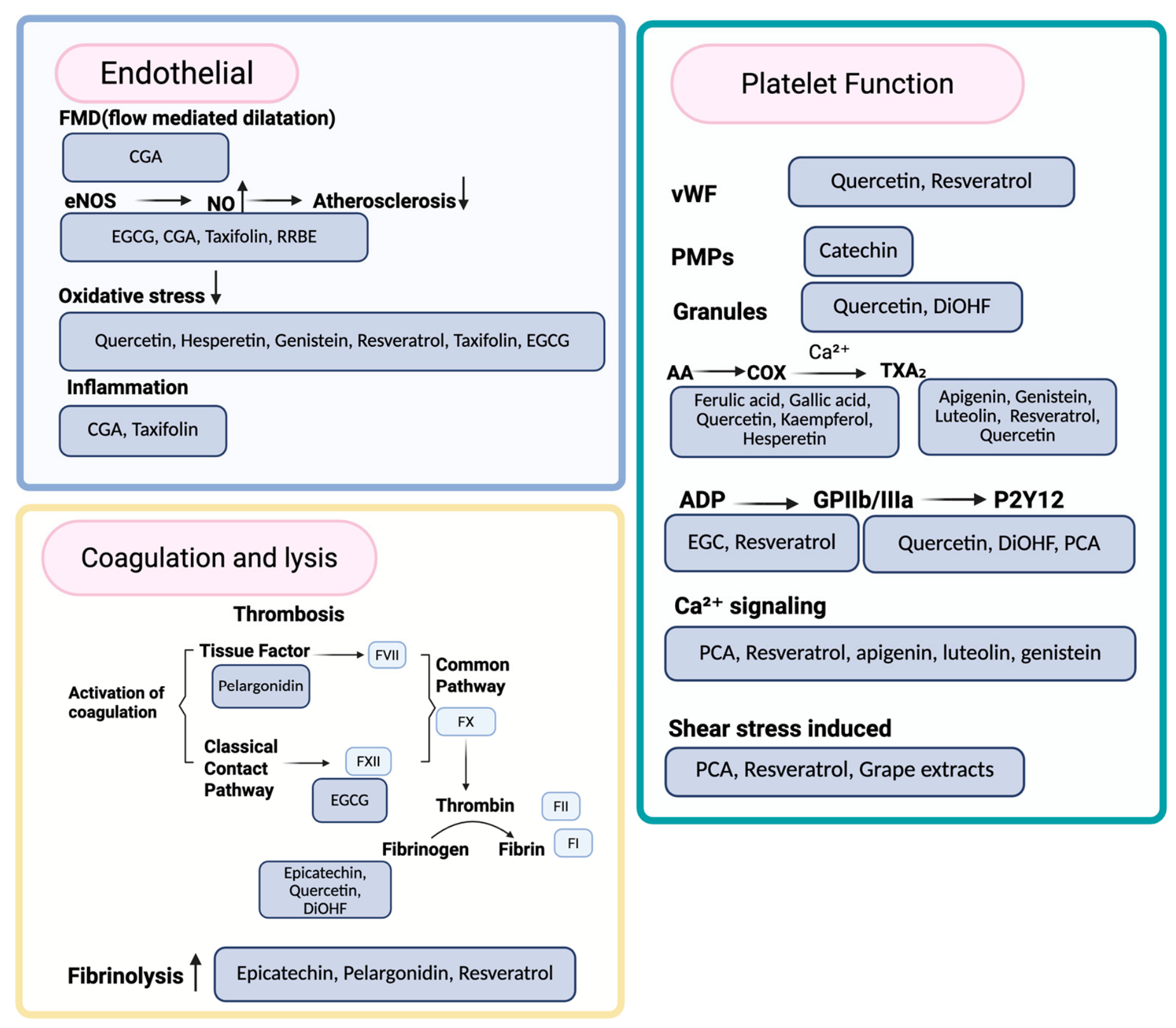

| Subclass of Flavonoid | Saturation Degree | Presence of Hydroxyl Group | Structure | Representative Compounds | Example Food Sources |
|---|---|---|---|---|---|
| Flavones | C2=C3 (unsaturated) | No |  | Luteolin Apigenin | beans, wheat sprouts, celery and tea [32,33,34] |
| Flavonols | C2=C3 (unsaturated) | Yes |  | Quercetin Kaempferol | green tea, black tea, red wine, lentils, and broad beans [30,32,33,34,35] |
| Flavanone | C2-C3 (saturated) | No |  | Hesperetin Naringenin Rutin [33,34] | oranges, tangerine, lemons, cocoa [33,34,36] |
| Flavanonols | C2–C3 (saturated) | Yes |  | Taxifolin | milk thistle, siberian larch [37,38] |
| Flavanols | C2–C3 (saturated) | Yes | 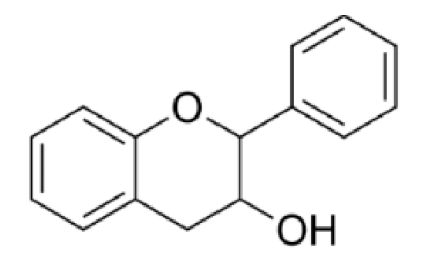 | Catechins Epicatechin | apples, peaches [32] |
| Anthocyanins | C2=C3 (unsaturated) | Yes |  | Cyanidin Petunidin Peonidin Pelargonidin [39] | red wine, blackberry, grape, cabbage, tomatoes, eggplant [30,33,34,40,41,42] |
| Isoflavones | C2=C3 (unsaturated) | No |  | Genistein Daidzein Glycitein [43,44] | Soybeans, green split peas, chickpeas, black beans, lima beans, clover sprouts, and sunflower seeds [33,45,46] |
| Compound | Model and Dosage | Reported Effects | Reference |
|---|---|---|---|
| Endothelium | |||
| Genistein | Female mice fed 0.13–1.3 mg/day for 14 days | ↑ SOD (low doses: 0.13–0.26 mg) ↑ GPx (all doses) | [62] |
| Hesperetin | murine macrophages + LPS-induced inflammation treated with 10–40 μM | ↓ TNF-α, IL-6, IL-1β (up to 10 μM) ↓ iNOS and COX-2 expression (up to 10 μM) ↓ NF-κB activation (up to 10 μM) ↑ HO-1 expression ↑ Nrf2 activation | [64] |
| Quercetin | human L02 hepatocytes and HepG2 cells treated with 7.5–30 μM | ↓ ROS and MDA ↑ Antioxidant defenses ↑ Nrf2 and HO-1 expression | [65] |
| Platelet-poor plasma from healthy volunteers treated with 0–100 μM | ↓ COX-2 | [77] | |
| Red Rice Bran Extract (RRBE) | Porcine coronary artery rings with endothelium treated with 1–100 μg/mL | ↓ intracellular ROS (up to 20 μg/mL) ↑ phosphorylation of Src (up to 10 μg/mL) and eNOS | [76] |
| Resveratrol | HUVECs treated with 25–100 μg/mL for 24–48 h | ↓ vWF and IL-8 secretion | [78] |
| Taxifolin | STZ-induced diabetic mice fed 25–100 mg/kg/day for 4 weeks | ↓ myocardial MDA (up to 25 mg/kg) ↑ SOD (up to 50 mg/kg) | [63] |
| Isolated abdominal aorta from spontaneously hypertensive rats treated with 20 mg/kg/day | ↑ Total NOS activity ↑ iNOS protein ↓ COX-2 protein | [74] | |
| Platelets | |||
| 3′,4′-Dihydroxyflavonol (DiOHF) | Human washed platelets and platelet-rich plasma treated with 0.1–1.0 mM | ↓ platelet aggregation (collagen, ADP, AA) ↓ ATP release from dense granules (collagen, AA) ↓ thrombin induced dense granule exocytosis. ↓ GPIIb/IIIa activation | [79] |
| Apigenin | Human washed platelets treated with 10–100 μM | ↓ Ca2+ mobilization | [80] |
| Catechin derivative (black sorghum extract; BSE) | Whole blood from healthy volunteers treated with 5–40 μg/mL | ↓ Collagen-induced platelet aggregation. ↓ Circulatory PMPs | [81] |
| Epicatechin | Platelet-rich plasma from healthy volunteers treated with 1–100 μM | ↓ platelet aggregation ↓ ETP | [82] |
| Epigallocatechin (EGC) | Platelet-rich plasma from mice exposed to 0.25–1.0 g/kg/day | ↓ platelet aggregation | [83] |
| Epigallocatechin gallate (EGCG) | Healthy volunteer washed platelets treated with 20 μM in normo- and acute hyperglycemia | ↓ platelet ROS (normo- and hyperglycemia) ↓ mitochondrial density (normoglycemia) ↓ Ca2+ flux (hyperglycemia) | [58] |
| Ellagic acid | Platelet-rich plasma from healthy volunteers treated with 25–700 μM | ↑ platelet aggregation (collagen, ADP) ↓ COX-1 and COX-2 | [77] |
| Ferulic acid | |||
| Gallic acid | |||
| Genistein | Human washed platelets treated with 10–100 μM | ↓ Ca2+ mobilization | [62] |
| Hesperetin | Healthy volunteer washed platelets treated with 20 μM in normo- and acute hyperglycemia | ↓ platelet ROS (normoglycemia) | [58] |
| Kaempferol | Platelet-rich plasma from healthy volunteers treated with 25–700 μM | ↑ platelet aggregation (collagen, ADP) ↓ COX-1 and COX-2 | [77] |
| Luteolin | Human washed platelets treated with 10–100 μM | ↓ Ca2+ mobilization | [80] |
| Pelargonidin | Wild-type mice administered a 5.4–16.3 μg dose | ↓ platelet aggregation ↑ bleeding time | [84] |
| Protocatechuic acid (PCA) | Human washed platelets and platelet-rich plasma treated with 1–50 μM | ↓ platelet activation by shear stress ↓ intracellular Ca2+ mobilization ↓ α-granule and dense granule secretion ↓ GPIIb/IIIa activation ↓ vWF binding to platelets | [85] |
| Platelet-rich plasma from rats administered with 5–100 mg/kg single dose | ↓ thrombus formation | ||
| Quercetin | Human washed platelets treated with 10–100 μM | ↓ Ca2+ mobilization | [80] |
| Human washed platelets and platelet-rich plasma treated with 0.1–1.0 mM | ↓ platelet aggregation (collagen, ADP, AA) ↓ ATP release from dense granules (collagen, AA) ↓ Thrombin-induced dense granule exocytosis ↓ GPIIb/IIIa activation ↓ α granule exocytosis | [79] | |
| Healthy volunteer washed platelets treated with 20 μM in normo- and acute hyperglycemia | ↓ platelet ROS (normo- and hyperglycemia) ↓ mitochondrial density (normoglycemia) | [58] | |
| Platelet-rich plasma from healthy volunteer treated with 25–700 μM | ↑ antiplatelet activity (collagen, ADP) | [77] | |
| Resveratrol | Isolated platelets from healthy and type 2 diabetes individuals treated with 0.25 mmol/L | ↓ platelet adhesion to collagen (healthy and diabetes) ↓ TXA2 production (healthy and diabetes) ↓ collagen-induced platelet aggregation (diabetes) | [78] |
| Human washed platelets treated with 3–50 μM | ↓ Platelet aggregation (thrombin, thapsigargin) ↓ Ca2+ entry (thrombin, thapsigargin) | [86] | |
| Healthy volunteer washed platelets treated with 20 μM in normo- and acute hyperglycemia | ↓ platelet ROS (normo- and hyperglycemia) ↓ procoagulant platelet number (normo- and hyperglycemia) ↓ basal and maximal respiration (normo- and hyperglycemia) ↓ Ca2+ flux (hyperglycemia) ↓ platelet deposition on collagen (normoglycemia) | [58] | |
| Platelets from high-risk cardiovascular patients on aspirin treated with 10 μM | ↓ platelet aggregation in ASA-R (collagen, epinephrine) | [20] | |
| Coagulation and Fibrinolysis | |||
| Epicatechin | Platelet-poor plasma from healthy volunteers treated with 1–100 μM | ↓ clot lysis time | [82] |
| ↑ clot permeability ↑ turbidity maximum absorbance | [87] | ||
| Epigallocatechin (EGC) | Platelet-rich plasma from mice exposed to 0.25–1.0 g/kg/day | ↑ APTT ↑ tail bleeding time | [83] |
| Pelargonidin | Human plasma and HUVECs treated with 1–100 μM | ↑ APTT and PT ↓ TNF-α induced PAI 1 secretion. ↓ PAI 1/t-PA ratio ↓ fibrin polymerization | [84] |
| Resveratrol | HUVECs treated with 25–100 μg/mL for 24–48 h | ↓ t-PA secretion and expression | [78] |
| Representative Compound (Class) | Typical Dietary Intake (mg/day) | Major Circulating Forms | Peak Plasma Concentration | Time to Peak Plasma Concentration (h) | References |
|---|---|---|---|---|---|
| Quercetin (flavonoid) | 5–40 | Quercetin-3′-O-sulfate Quercetin-3-O-glucuronide 3′-methylquercetin-3-glucuronide | ~28–427 ng/mL | 0.6–2.5 | [117,118,119,120,121,122] |
| chlorogenic acid (CGA; phenolic acid) | 500–1000 | 3-caffeoylquinic, 4-caffeoylquinic 5-caffeoylquinic acids dicaffeoylquinic acids | ~7.66 ± 2.5 μmol/L | 0.5–4.0 | [121,122] |
| Resveratrol (stilbene) | 0.8 | Resveratrol-3-O-β-glucuronide Resveratrol-3-O-sulfate Dihydroresveratrol Cis- and trans-resveratrol | parent: ~117–538.3 ng/mL metabolites: ~3248.4 ng/mL | 1–6 | [123,124,125,126,127,130] |
| 7-Hydroxymaitairesinol (7-HMR; lignans) | 1–72 | Enterolactone (ENL) Enterodiol | ~4.8 ± 1.64 ng/mL | 1 | [128,129] |
| Compound/Extract | Model and Dosage | Reported Effects | Reference |
|---|---|---|---|
| Pine bark extract (Pinus massoniana) | 432 mg pine bark extract for 12 weeks; 60 healthy volunteers | ↓ MDA ↑ IL-6 | [135] |
| Sour cherry (fresh fruit) Anthocyanins | 250 g sour cherry for 5 h; 6 volunteers | ↓ A6 (AA) ↓MS (AA) ↓ AUC (AA) | [134] |
| Grape polyphenols supplementation | 2 g/day (250 mg/capsule, 8 capsules/day) for 31 days; 42 healthy males | modulation of angiogenesis genes (e.g GATA2, PPARγ, and HIF2α) ↓ PECAM1/CD31 | [137] |
| Blackcurrant (Ribes nigrum) beverage | 200 mL beverage for 24 h; 23 healthy volunteers | ↓FMD ↓ IL-8 ↓ platelet aggregation (ADP, collagen) | [136] |
| Quercetin | 4 capsules/day for 28 days; for 27 healthy volunteers | ↑ plasma quercetin concentration - no change in platelet aggregation (collagen) and TXA2 production | [133] |
| chlorogenic acid (CGA) | LPC (89 mg CGA + 110 mg caffeine) and HPC (310 mg CGA + 110 mg caffeine) for 5 h; 15 healthy males | ↑ total plasma CGA metabolite ↑ FMD in HPC and LPC group | [55] |
| 450–900 mg 5-CQA for 4 h; 15 healthy males | ↑ Total plasma CGA metabolite - no change in FMD | [55] | |
| (−)-Epicatechin | 200 mg for 4 h; 15 healthy males | ↑ FMD | [55] |
Disclaimer/Publisher’s Note: The statements, opinions and data contained in all publications are solely those of the individual author(s) and contributor(s) and not of MDPI and/or the editor(s). MDPI and/or the editor(s) disclaim responsibility for any injury to people or property resulting from any ideas, methods, instructions or products referred to in the content. |
© 2026 by the authors. Licensee MDPI, Basel, Switzerland. This article is an open access article distributed under the terms and conditions of the Creative Commons Attribution (CC BY) license.
Share and Cite
Wu, X.; Muharib, D.; Boesch, C.; Gauer, J.S.; Ariëns, R.A.S. Potential Role of Polyphenols in Platelet Aggregation and Blood Coagulation. J. Cardiovasc. Dev. Dis. 2026, 13, 219. https://doi.org/10.3390/jcdd13050219
Wu X, Muharib D, Boesch C, Gauer JS, Ariëns RAS. Potential Role of Polyphenols in Platelet Aggregation and Blood Coagulation. Journal of Cardiovascular Development and Disease. 2026; 13(5):219. https://doi.org/10.3390/jcdd13050219
Chicago/Turabian StyleWu, XinYi, Dina Muharib, Christine Boesch, Julia S. Gauer, and Robert A. S. Ariëns. 2026. "Potential Role of Polyphenols in Platelet Aggregation and Blood Coagulation" Journal of Cardiovascular Development and Disease 13, no. 5: 219. https://doi.org/10.3390/jcdd13050219
APA StyleWu, X., Muharib, D., Boesch, C., Gauer, J. S., & Ariëns, R. A. S. (2026). Potential Role of Polyphenols in Platelet Aggregation and Blood Coagulation. Journal of Cardiovascular Development and Disease, 13(5), 219. https://doi.org/10.3390/jcdd13050219