Article

Cardiac Morphology, Function, and Left Ventricular Geometric Pattern in Patients with Hypertensive Crisis: A Cardiovascular Magnetic Resonance-Based Study


by
Mohammed A. Talle
1,2,*,
Anton F. Doubell
1,
Pieter-Paul S. Robbertse
1,
Sa’ad Lahri
3 and
Philip G. Herbst
1
1
Division of Cardiology, Department of Medicine, Faculty of Medicine and Health Sciences, Stellenbosch University and Tygerberg Hospital, Cape Town 7505, South Africa
2
Department of Medicine, Faculty of Clinical Sciences, College of Medical Sciences, University of Maiduguri and University of Maiduguri Teaching Hospital, Maiduguri 600004, Nigeria
3
Division of Emergency Medicine, Department of Medicine, Faculty of Medicine and Health Sciences, Stellenbosch University and Tygerberg Hospital, Cape Town 7505, South Africa
*
Author to whom correspondence should be addressed.
J. Cardiovasc. Dev. Dis. 2023, 10(9), 367; https://doi.org/10.3390/jcdd10090367
Submission received: 23 July 2023 / Revised: 16 August 2023 / Accepted: 24 August 2023 / Published: 27 August 2023
(This article belongs to the Section Imaging)

Abstract

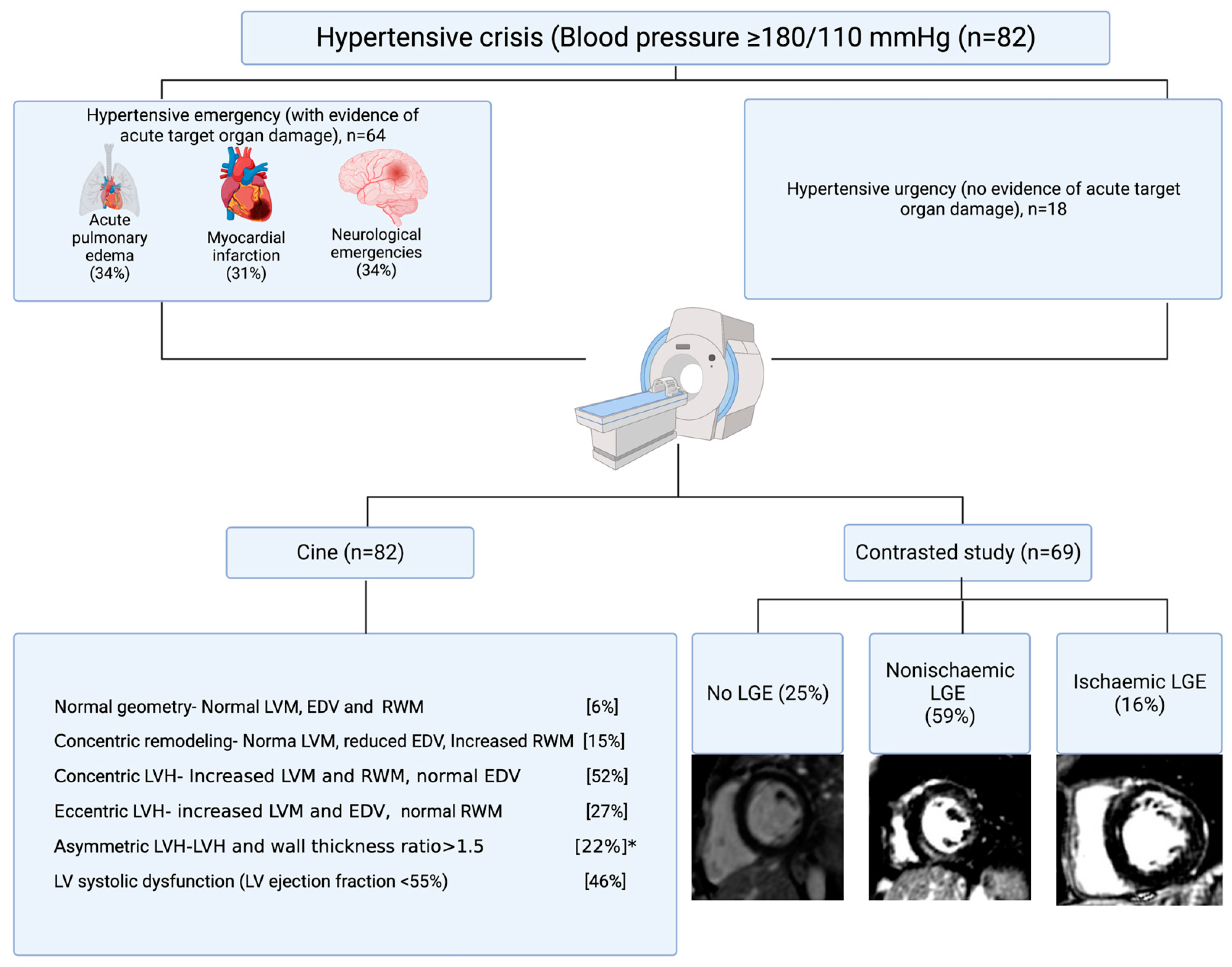
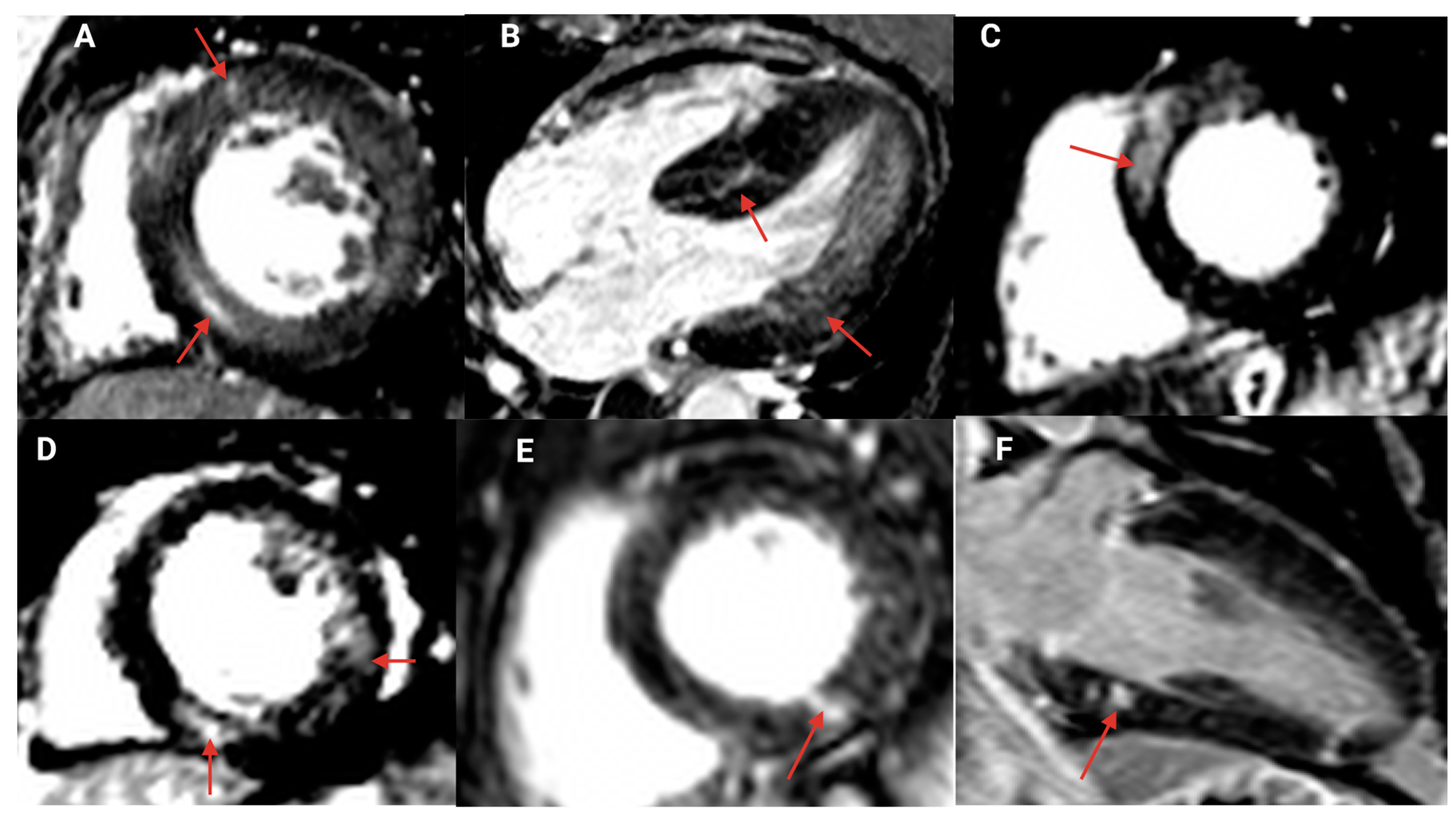
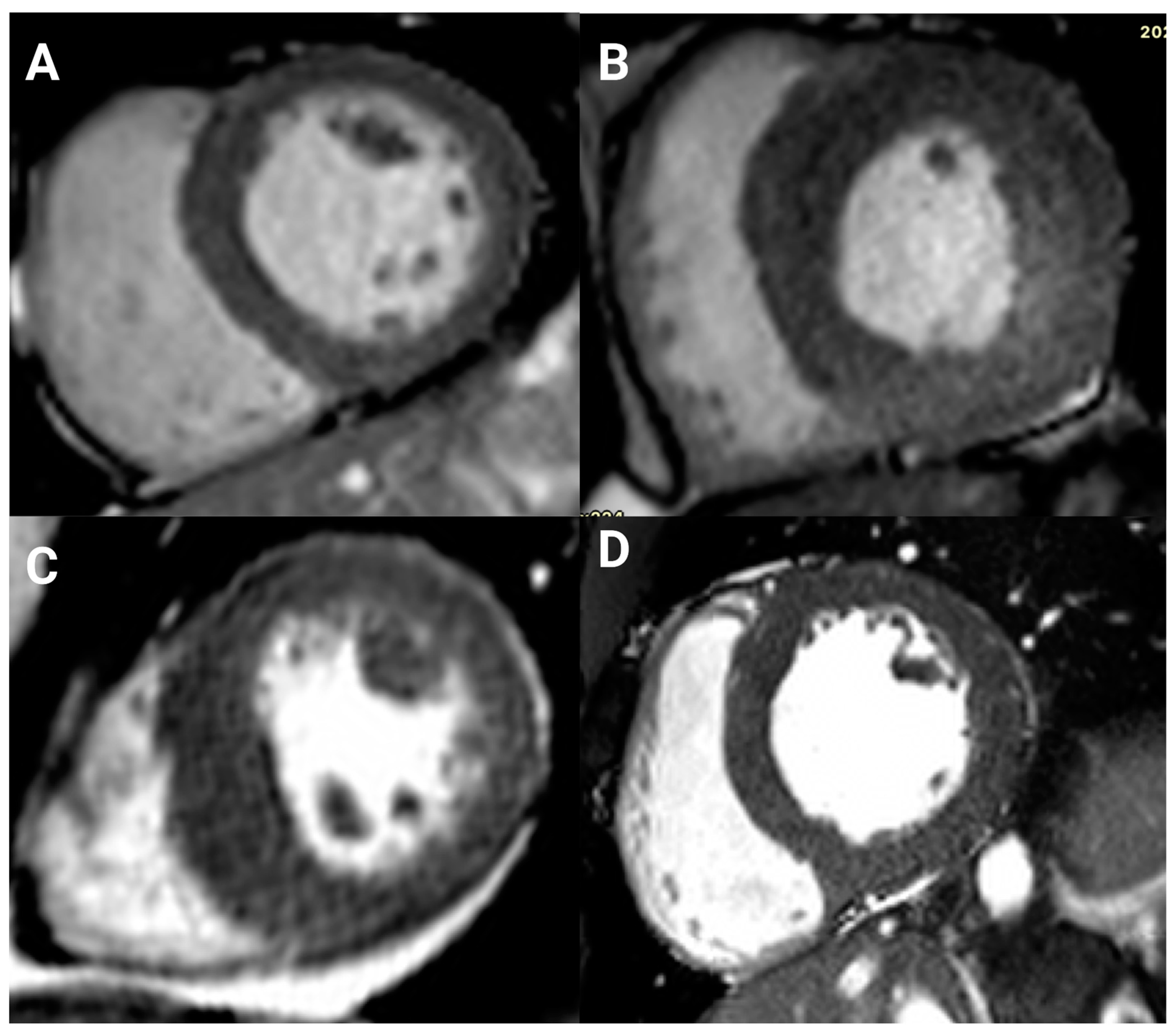
(1) Background: Altered cardiac morphology and function are associated with increased risks of adverse cardiac events in hypertension. Our study aimed to assess left ventricular (LV) morphology, geometry, and function using cardiovascular magnetic resonance (CMR) imaging in patients with hypertensive crisis. (2) Methods: Patients with hypertensive crisis underwent CMR imaging at 1.5 Tesla to assess cardiac volume, mass, function, and contrasted study. Left ventricular (LV) function and geometry were defined according to the guideline recommendations. Late gadolinium enhancement (LGE) was qualitatively assessed and classified into ischemic and nonischemic patterns. Predictors of LGE was determined using regression analysis. (3) Results: Eighty-two patients with hypertensive crisis (aged 48.5 ± 13.4 years, and 57% males) underwent CMR imaging. Of these patients, seventy-eight percent were hypertensive emergency and twenty-two percent were urgency. Diastolic blood pressure was higher under hypertensive emergency (p = 0.032). Seventy-nine percent (92% of emergency vs. 59% of urgency, respectively; p = 0.003) had left ventricular hypertrophy (LVH). The most prevalent LV geometry was concentric hypertrophy (52%). Asymmetric LVH occurred in 13 (22%) of the participants after excluding ischemic LGE. Impaired systolic function occurred in 46% of patients, and predominantly involved hypertensive emergency. Nonischemic LGE occurred in 75% of contrasted studies (67.2% in emergency versus 44.4% in urgency, respectively; p < 0.001). Creatinine and LV mass were independently associated with nonischemic LGE. (5) Conclusion: LVH, altered geometry, asymmetric LVH, impaired LV systolic function, and LGE are common under hypertensive crisis. LVH and LGE more commonly occurred under hypertensive emergency. Longitudinal studies are required to determine the prognostic implications of asymmetric LVH and LGE in hypertensive crisis.
Keywords: hypertensive crisis; hypertensive emergency; hypertensive urgency; cardiovascular magnetic resonance; cardiac morphology and function; geometric patterns; late gadolinium enhancement hypertensive crisis; hypertensive emergency; hypertensive urgency; cardiovascular magnetic resonance; cardiac morphology and function; geometric patterns; late gadolinium enhancement