
Ultrasound-Guided Mandibular Alveolar Nerve Block in Rabbits: A Cadaveric Comparison of In-Plane and Out-of-Plane Approaches

 , ,
, ,  , and
, and 
Simple Summary
Abstract
1. Introduction
2. Materials and Methods
2.1. Animals
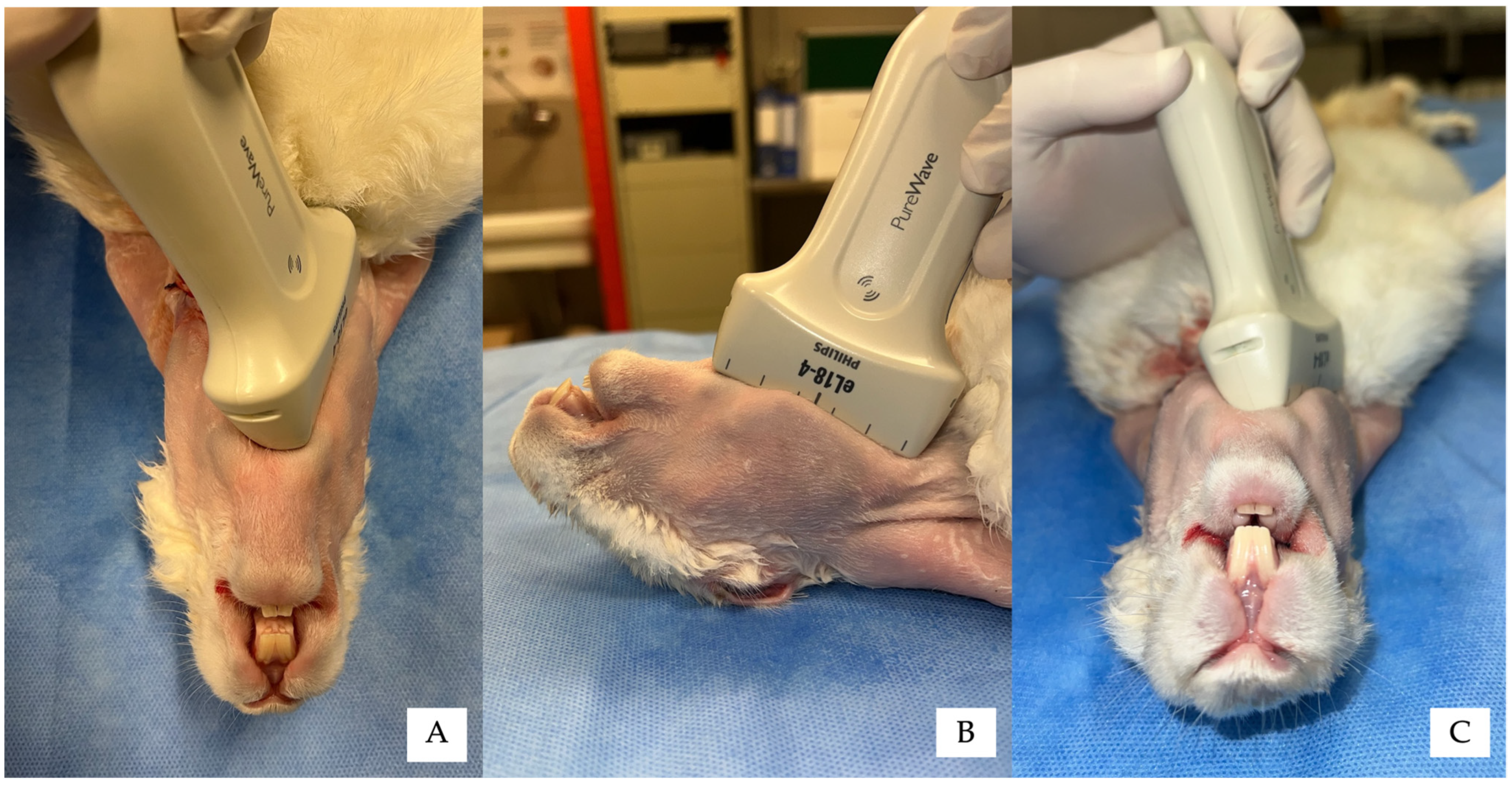
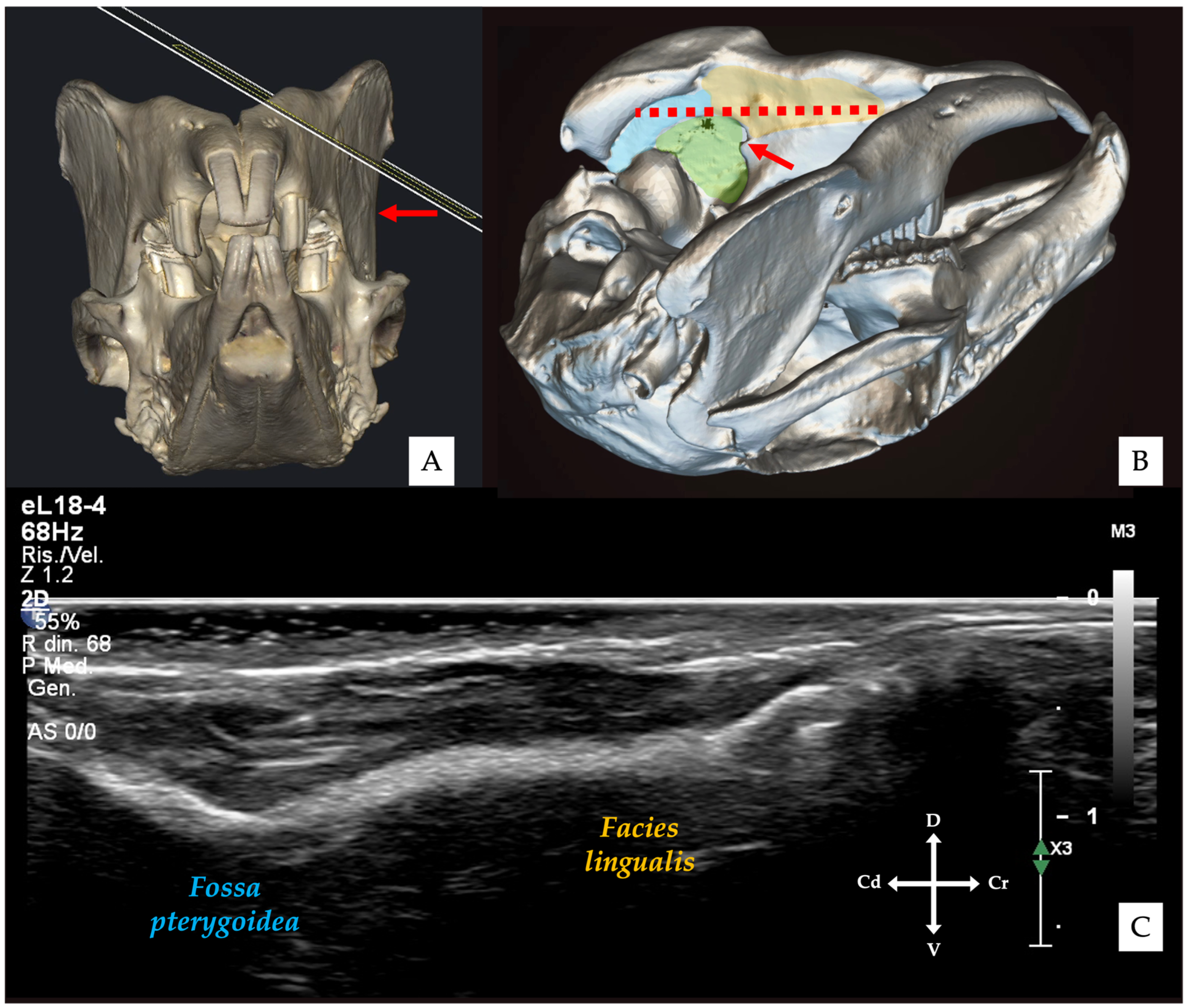
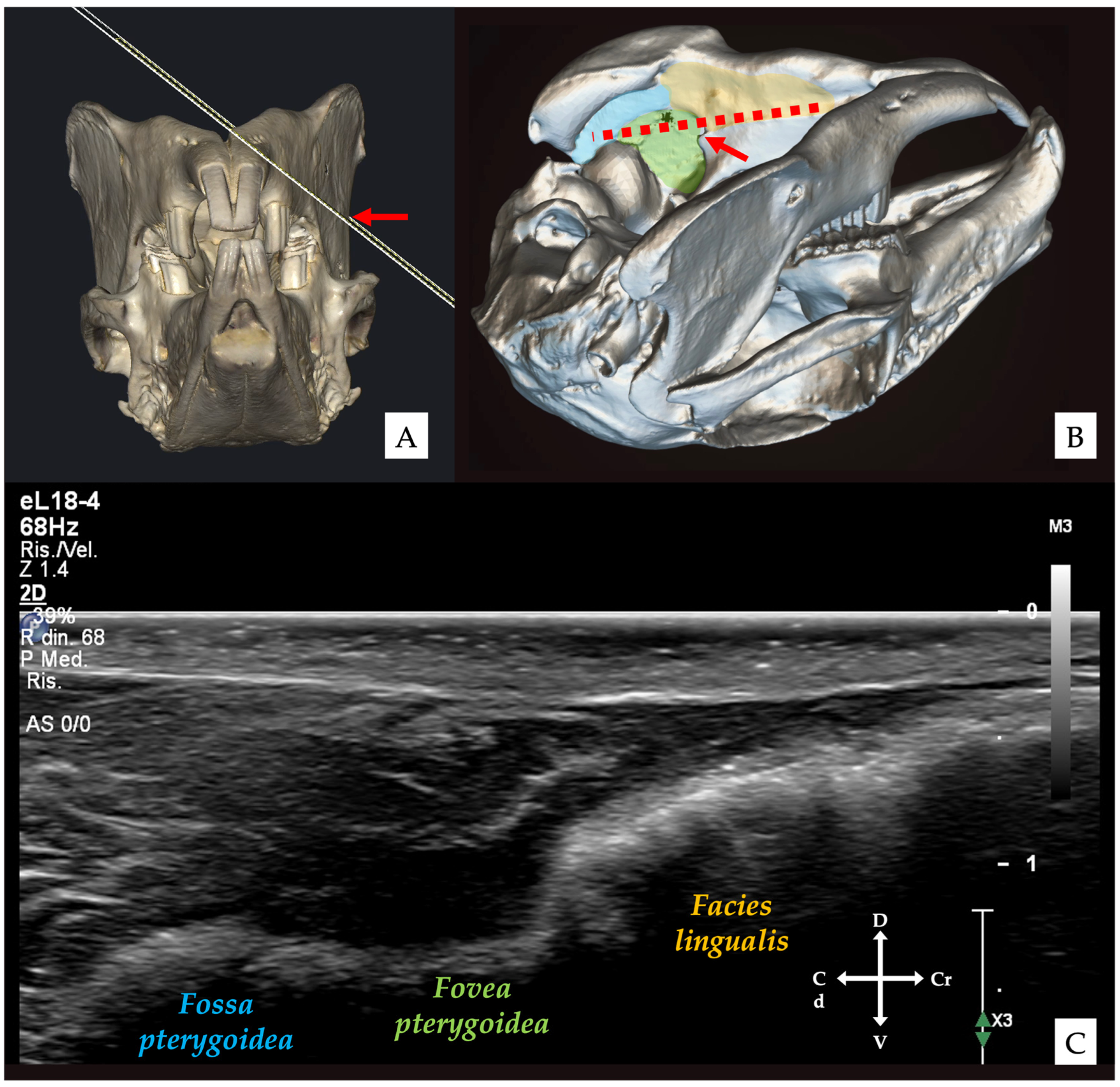
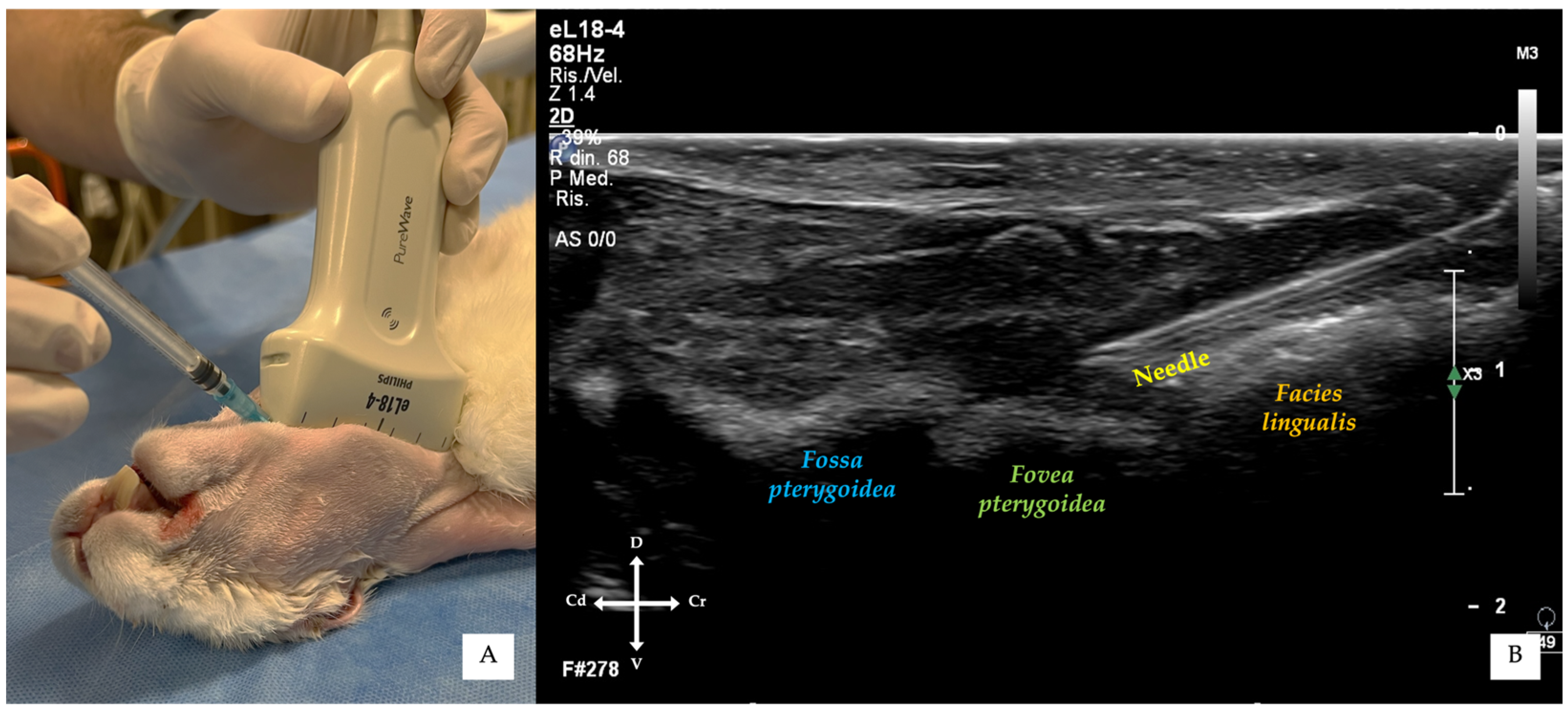
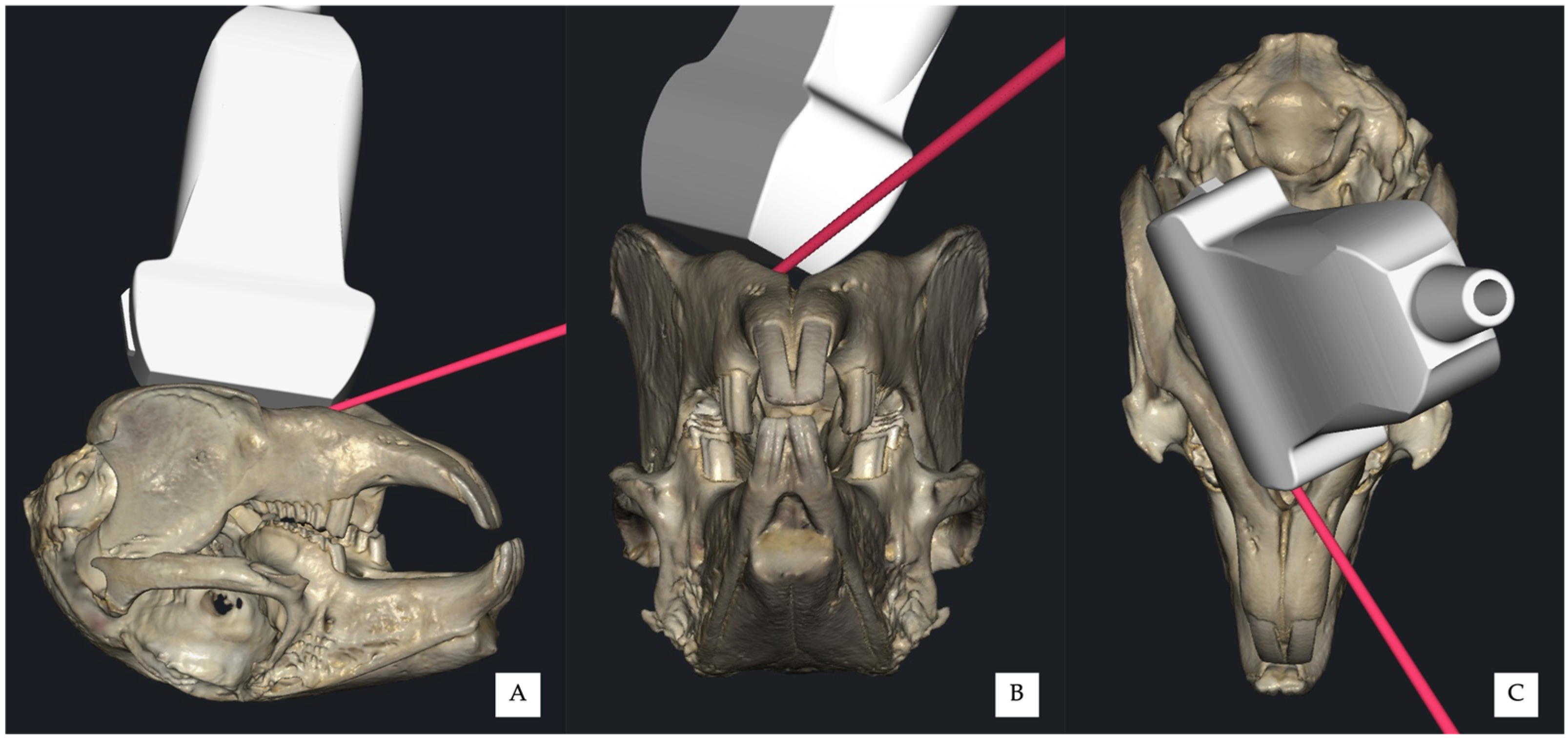
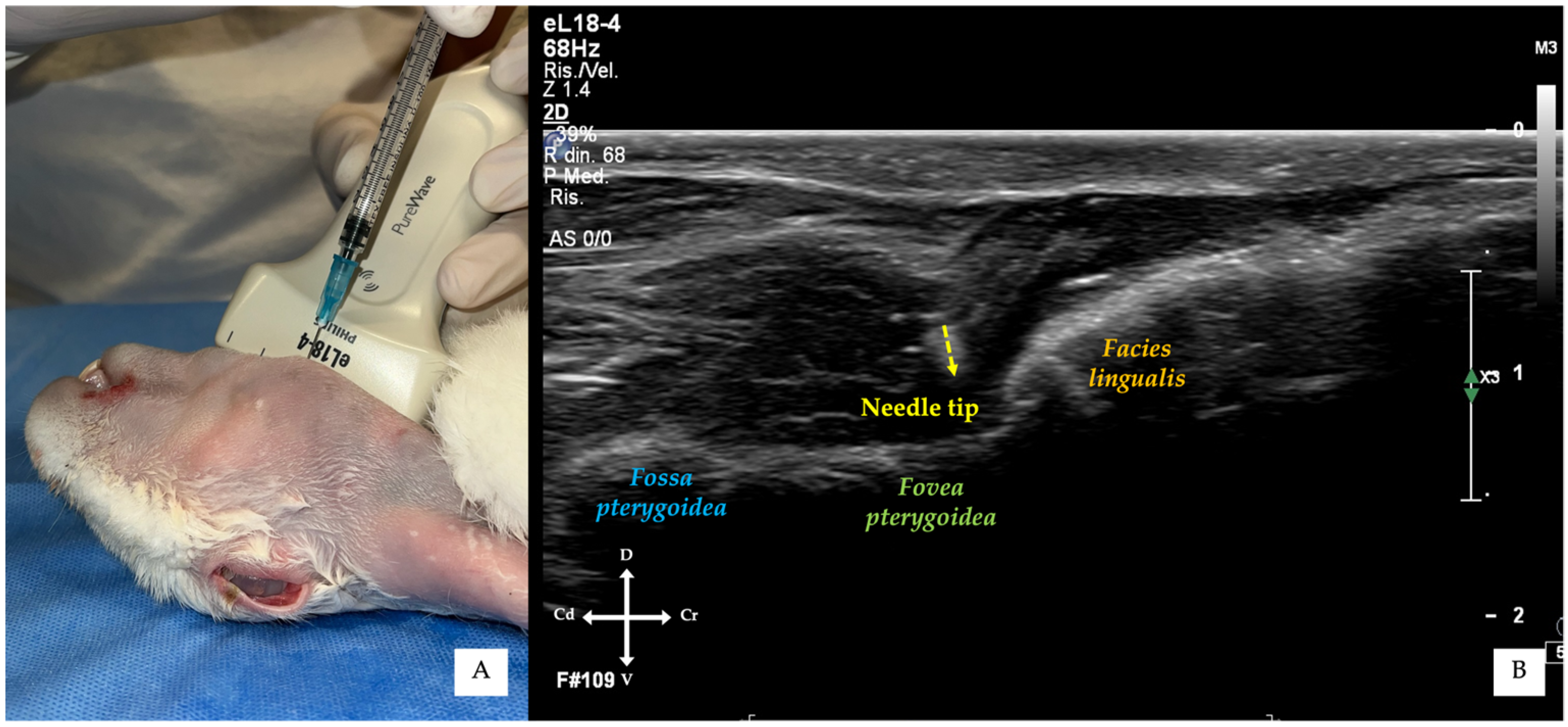
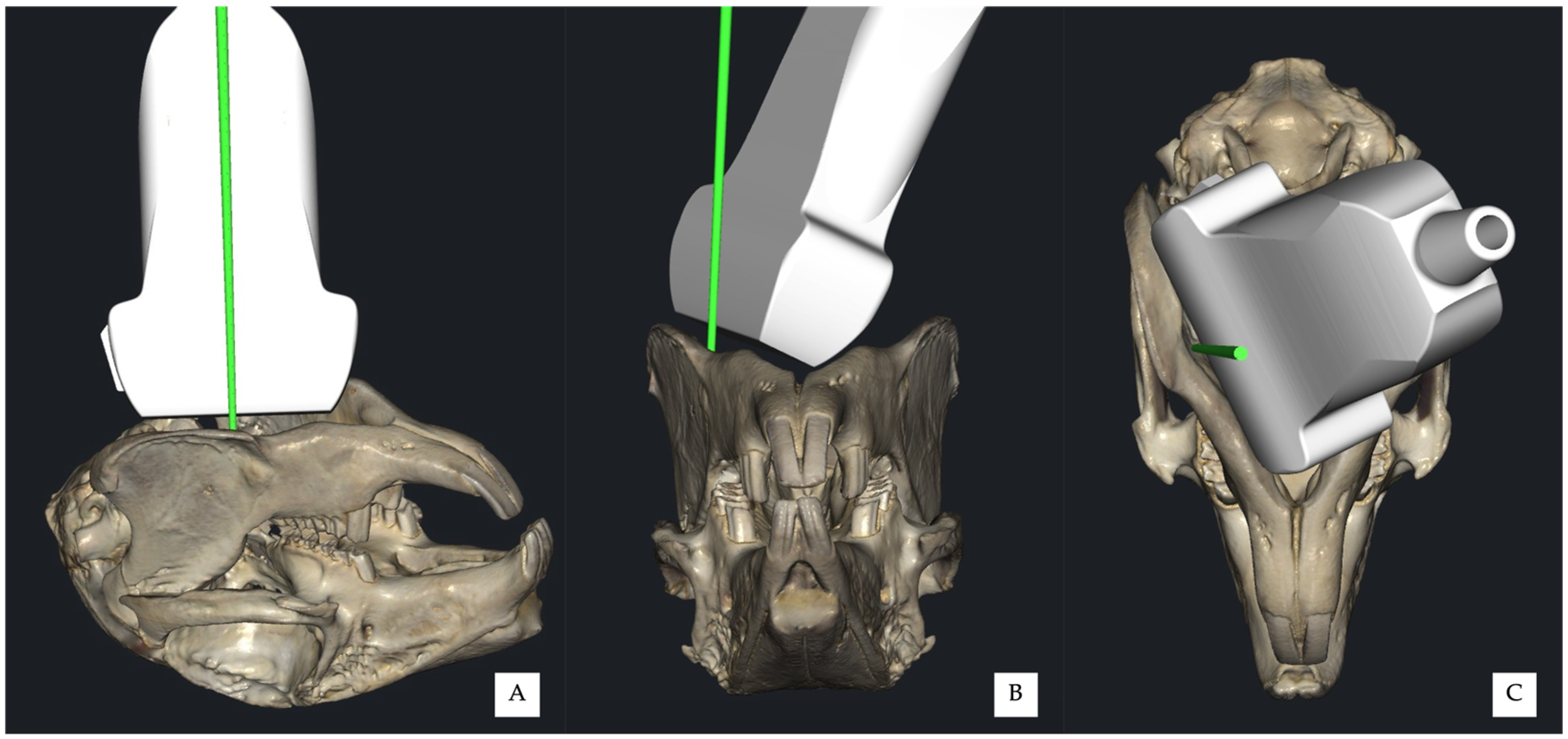
2.2. Study Design and Mandibular Alveolar Nerve Block Procedure
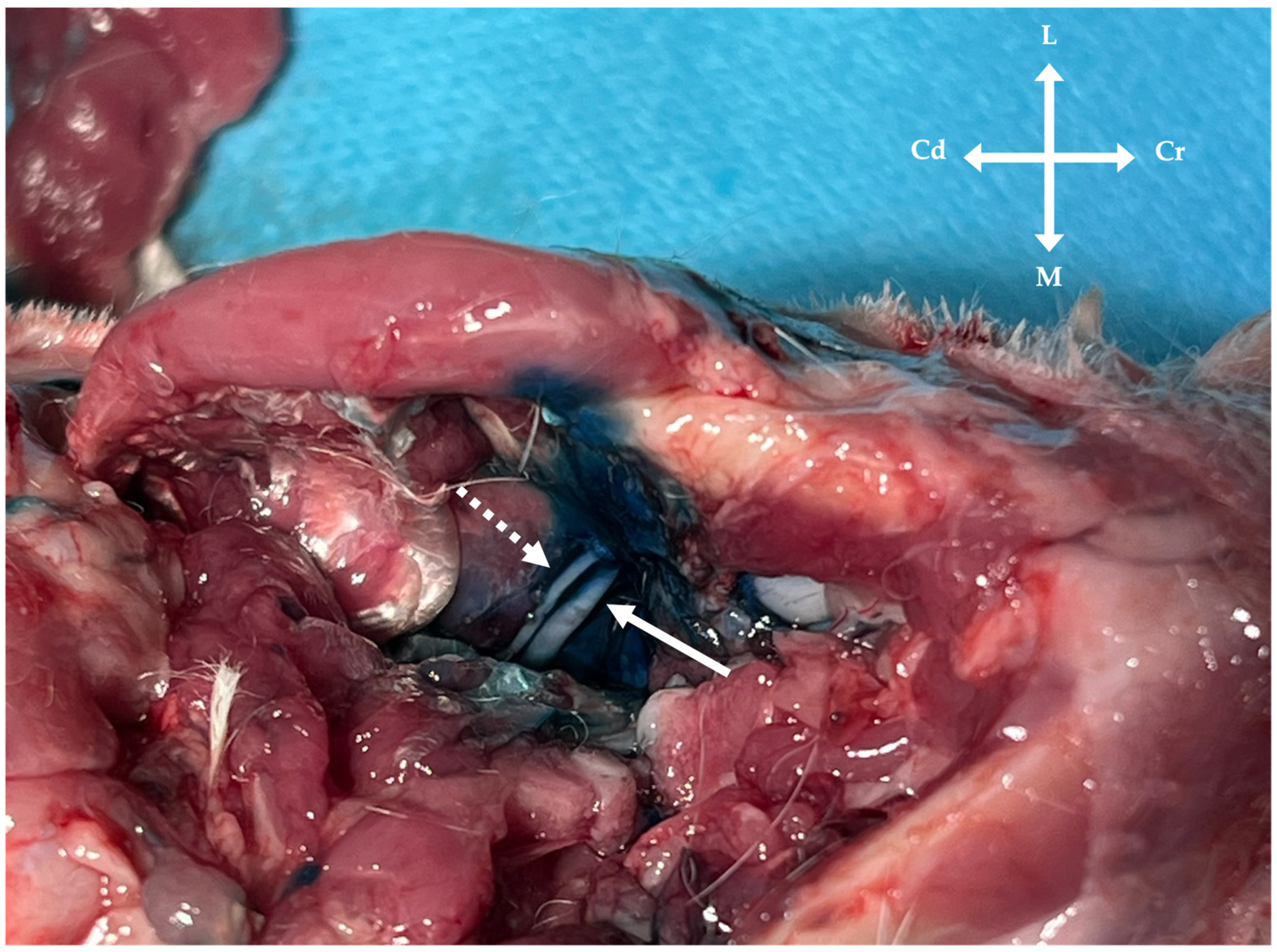
2.3. Dissection Procedure and Assessment of Nerve Staining
2.4. Scoring System
- clear visualisation of the fovea pterygoidea;
- visualisation of the needle (entire shaft for the in-plane approach or needle tip for the out-of-plane approach);
- ultrasound visualisation of injectate spread during injection.
- 0 (poor): no staining or longitudinal staining < 6 mm;
- 1 (good): longitudinal staining ≥ 6 mm without circumferential involvement;
- 2 (excellent): longitudinal staining ≥ 6 mm with circumferential staining of the nerve.
2.5. Statistical Analysis
3. Results
4. Discussion
5. Conclusions
Author Contributions
Funding
Institutional Review Board Statement
Informed Consent Statement
Data Availability Statement
Acknowledgments
Conflicts of Interest
References
- Quesada, N.; d’Ovidio, D.; Read, M.; Monticelli, P.; Adami, C. An observational survey study on the use of locoregional anaesthesia in non-conventional species. Animals 2022, 12, 1448. [Google Scholar] [CrossRef]
- Vézina Audette, R.; Thomson, A.C.S.; Barr, C.A.; Campoy, L.; Read, M.; Peralta, S. Canine and feline local anesthetic and analgesic techniques. In Veterinary Anesthesia and Analgesia, 6th ed.; Lamont, L., Grimm, K., Robertson, S., Love, L., Schroeder, C., Eds.; Wiley: Hoboken, NJ, USA, 2024; pp. 1166–1204. [Google Scholar]
- d’Ovidio, D.; Adami, C. Locoregional anesthesia in exotic pets. Vet. Clin. N. Am. Exot. Anim. Pract. 2019, 22, 301–314. [Google Scholar] [CrossRef]
- Di Geronimo, P.M.; da Cunha, A.F. Local and regional anesthesia in zoological companion animal practice. Vet. Clin. N. Am. Exot. Anim. Pract. 2022, 25, 321–336. [Google Scholar] [CrossRef]
- Serpieri, M.; Bonaffini, G.; Ottino, C.; Quaranta, G.; Mauthe von Degerfeld, M. Effects of intratesticular lidocaine in pet rabbits undergoing orchiectomy. Animals 2024, 14, 551. [Google Scholar] [CrossRef]
- Scialanca, S.; Bersanetti, G.; Parrillo, S.; Paolini, A. Erector spinae plane block for perioperative analgesia in a rabbit. Vet. Sci. 2025, 12, 984. [Google Scholar] [CrossRef]
- Miller, A.L.; Leach, M.C. Pain Recognition in Rabbits. Vet. Clin. N. Am. Exot. Anim. Pract. 2023, 26, 187–199. [Google Scholar] [CrossRef]
- Serpieri, M.; Ottino, C.; Bonaffini, G.; Banchi, P.; Quaranta, G.; Mauthe von Degerfeld, M. Comparison between carprofen and meloxicam for post-neutering pain management in pet rabbits. Vet. Sci. 2024, 11, 257. [Google Scholar] [CrossRef]
- Harcourt-Brown, F.M. The progressive syndrome of acquired dental disease in rabbits. J. Exot. Pet Med. 2007, 16, 146–157. [Google Scholar] [CrossRef]
- Jackson, M.A.; Burn, C.C.; Hedley, J.; Brodbelt, D.C.; O’Neill, D.G. Dental disease in companion rabbits under UK primary veterinary care: Frequency and risk factors. Vet. Rec. 2024, 194, e3993. [Google Scholar] [CrossRef]
- Jackson, M.A.; O’Neill, D.G.; Hedley, J.; Brodbelt, D.C.; Burn, C.C. Dental disease in rabbits under UK primary veterinary care: Clinical management and associated welfare impacts. Vet. Rec. 2025, 197, e5326. [Google Scholar] [CrossRef]
- Capello, V. Intraoral treatment of dental disease in pet rabbits. Vet. Clin. N. Am. Exot. Anim. Pract. 2016, 19, 783–798. [Google Scholar] [CrossRef]
- Capello, V. Surgical treatment of facial abscesses and facial surgery in pet rabbits. Vet. Clin. N. Am. Exot. Anim. Pract. 2025, 28, 645–672. [Google Scholar] [CrossRef]
- Crăciun, S.; Nadăş, G.C. Odontogenic abscesses in pet rabbits: A comprehensive review of pathogenesis, diagnosis, and treatment advances. Animals 2025, 15, 1994. [Google Scholar] [CrossRef]
- Jekl, V.; Hauptman, K. Regional analgesia for oral surgery in rabbits. Vet. Clin. N. Am. Exot. Anim. Pract. 2025, 28, 597–608. [Google Scholar] [CrossRef]
- Piagkou, M.; Demesticha, T.; Skandalakis, P.; Johnson, E.O. Functional anatomy of the mandibular nerve: Consequences of nerve injury and entrapment. Clin. Anat. 2011, 24, 143–150. [Google Scholar] [CrossRef]
- Harding, P.G.; Smith, R.L.; Barakzai, S.Z. Comparison of two approaches to performing an inferior alveolar nerve block in the horse. Aust. Vet. J. 2012, 90, 146–150. [Google Scholar] [CrossRef]
- Henry, T.; Pusterla, N.; Guedes, A.G.; Verstraete, F.J. Evaluation and clinical use of an intraoral inferior alveolar nerve block in the horse. Equine Vet. J. 2014, 46, 706–710. [Google Scholar] [CrossRef] [PubMed]
- Aguiar, J.; Chebroux, A.; Martinez-Taboada, F.; Leece, E.A. Analgesic effects of maxillary and inferior alveolar nerve blocks in cats undergoing dental extractions. J. Feline Med. Surg. 2015, 17, 110–116. [Google Scholar] [CrossRef]
- Johnson, J.P.; Peckham, R.K.; Rowan, C.; Wolfe, A.; O’Leary, J.M. Ultrasound-guided inferior alveolar nerve block in the horse: Assessment of the extraoral approach in cadavers. J. Vet. Dent. 2019, 36, 46–51. [Google Scholar] [CrossRef] [PubMed]
- Lloyd-Edwards, R.A.; Ferrão-van Sommeren, A.; Hermans, H.; Tersmette, A.A.; Veraa, S.; van Loon, J.P. Comparison of blind, ultrasound- and neurostimulator-guided methods of percutaneous inferior alveolar nerve block. Equine Vet. Educ. 2023, 35, e414–e420. [Google Scholar] [CrossRef]
- Marzok, M.; Nazih, M.A.; Almubarak, A.I.; Al Mohamad, Z.; Emam, I.A.; El-Sherif, M.W. Introducing a novel intraoral mandibular nerve block technique for loco-regional analgesia in camels (Camelus dromedarius): A cadaveric study using computed tomography. BMC Vet. Res. 2024, 20, 42. [Google Scholar] [CrossRef]
- El-Sherif, M.W.; Nazih, M.A. A novel extraoral ultrasound-guided approach for mandibular nerve block in Rahmani sheep. BMC Vet. Res. 2024, 20, 74. [Google Scholar] [CrossRef]
- Alhazmi, D.M.; Jadu, F.M. Effectiveness of ultrasound-guided peripheral mandibular nerve block: A systematic review. Medicine 2025, 104, e42509. [Google Scholar] [CrossRef] [PubMed]
- Li, Y.-D.; Tang, Z.-L.; Tan, J.-Q.; Wang, D.-X.; Chen, Y.-L. Anatomy of the inferior alveolar nerve in rabbits and its block anesthesia. Int. J. Oral Dent. Health 2018, 4, 051. [Google Scholar] [CrossRef]
- Hailstone, K. A practical guide to loco-regional nerve blocks for oromaxillofacial surgery in dogs and cats. J. Vet. Dent. 2025, 42, 24–32. [Google Scholar] [CrossRef] [PubMed]
- de Miguel Garcia, C.; Radkey, D.I.; Hetzel, S.; Doss, G. Injection techniques for auricular nerve blocks in the rabbit cadaver. Vet. Anaesth. Analg. 2020, 47, 274–279. [Google Scholar] [CrossRef]
- Peña, T.; Campoy, L.; de Matos, R. Investigation of a maxillary nerve block technique in healthy New Zealand White rabbits (Oryctolagus cuniculus). Am. J. Vet. Res. 2020, 81, 843–848. [Google Scholar] [CrossRef] [PubMed]
- Trujanovic, R.; Rohrbach, H. Ultrasound-guided block of the sciatic and femoral nerves in rabbits: A descriptive anatomical study. Animals 2023, 13, 2393. [Google Scholar] [CrossRef]
- Felisberto, R.; Flaherty, D.; Tayari, H. Ultrasound-guided saphenous nerve block in rabbits (Oryctolagus cuniculus): A cadaveric study comparing two injectate volumes. Animals 2022, 12, 624. [Google Scholar] [CrossRef]
- Teotino, G.; Felisberto, R.; Flaherty, D.; Tayari, H. Ultrasound-guided proximal radial, ulnar, median and musculocutaneous (RUMM) nerve block technique in rabbit cadavers: Medial vs. lateral approach. Animals 2025, 15, 294. [Google Scholar] [CrossRef]
- Farag, F.; Daghash, S.; Khalifa, E.; Hussein, M.; Hagrass, S. Anatomical studies on the skull of the domestic rabbit (Oryctolagus cuniculus) with special reference to the hyoid apparatus. J. Vet. Anat. 2012, 5, 49–70. [Google Scholar] [CrossRef]
- Moselhy, A.; Mahdy, E. Comparative three-dimensional computed tomography scans and anatomical investigation of rabbit (Oryctolagus cuniculus) and cat (Felis domestica) skulls. Slov. Vet. Res. 2019, 56, 365–379. [Google Scholar] [CrossRef]
- Fulton, R.M. POCUS: Basic ultrasound scanning. In Point-of-Care Ultrasound Techniques for the Small Animal Practitioner; Lisciandro, G.E., Ed.; Wiley: Hoboken, NJ, USA, 2021; pp. 25–37. [Google Scholar]
- Mirra, A.; von Rotz, A.; Schmidhalter, M.; Moser, L.; Casoni, D.; Spadavecchia, C. Ultrasound-guided lateral and subcostal transversus abdominis plane block in calves: A cadaveric study. Vet. Anaesth. Analg. 2018, 45, 384–391. [Google Scholar] [CrossRef]
- Hon, S.A.; Parry, S.; Boesch, J.M.; de Miguel Garcia, C. A feasibility study for a novel trans-infraorbital canal approach to the maxillary nerve in pigs (Sus domesticus). Comp. Med. 2024, 74, 49–54. [Google Scholar] [CrossRef] [PubMed]
- Micieli, F.; Mirra, A.; Santangelo, B.; Minichino, A.; Fuensalida, S.E.; Milito, M.; Vesce, G.; Otero, P.E. Ultrasound-guided dorsal approach for the brachial plexus block in common kestrels (Falco tinnunculus): A cadaver study. Vet. Anaesth. Analg. 2021, 48, 617–621. [Google Scholar] [CrossRef]
- Serpieri, M.; Bonaffini, G.; Passarino, E.; de Silva, M.; Quaranta, G.; Mauthe von Degerfeld, M. The Avian-RUM Block: A Locoregional Technique for Distal Wing Procedures in Birds—An Anatomical Cadaveric Feasibility Study with a Clinical Illustration. Animals 2026, 16, 211. [Google Scholar] [CrossRef]
- Leung, J.B.Y.; Rodrigo-Mocholi, D.; Martinez-Taboada, F. In-plane and out-of-plane needle insertion comparison for a novel lateral block of the radial, ulnar, median and musculocutaneous nerves in cats. Vet. Anaesth. Analg. 2019, 46, 523–528. [Google Scholar] [CrossRef]
- Díaz, A.; Fuensalida, S.E.; Tarragona, L.; Giansanti, N.H.; Portela, D.A.; Otero, P.E. Ultrasound-guided out-of-plane approach to the sciatic nerve in dogs: A cadaveric comparison with the caudal in-plane approach. Vet. Anaesth. Analg. 2025, in press. [Google Scholar] [CrossRef]
- Koscielniak-Nielsen, Z.J. Ultrasound-guided peripheral nerve blocks: What are the benefits? Acta Anaesthesiol. Scand. 2008, 52, 727–737. [Google Scholar] [CrossRef]
- Meiser, V.C.; Kreysa, H.; Guntinas-Lichius, O.; Volk, G.F. Comparison of in-plane and out-of-plane needle insertion with versus without needle guidance. Eur. Arch. Otorhinolaryngol. 2016, 273, 2697–2705. [Google Scholar] [CrossRef]
- Brinkmann, S.; Vaghadia, H.; Sawka, A.; Tang, R. Methodological considerations of ultrasound-guided spinal anesthesia using the Ultrasonix GPS™ needle tracking system. Can. J. Anaesth. 2013, 60, 407–408. [Google Scholar] [CrossRef] [PubMed]
- Peterson, M.K.; Millar, F.A.; Sheppard, D.G. Ultrasound-guided nerve blocks. Br. J. Anaesth. 2002, 88, 621–624. [Google Scholar] [CrossRef] [PubMed]
- Comolli, J.; d’Ovidio, D.; Adami, C.; Schnellbacher, R. Technological Advances in Exotic Pet Anesthesia and Analgesia. Vet. Clin. N. Am. Exot. Anim. Pract. 2019, 22, 419–439. [Google Scholar] [CrossRef]
- Chin, K.J.; Chan, V.W.; van Geffen, G.J. Ultrasound-guided infraclavicular block: The in-plane versus out-of-plane approach. Paediatr. Anaesth. 2008, 18, 1279–1280. [Google Scholar] [CrossRef]
- Kirbaş Doğan, G.; Çabakçor, E.D. Morphometric, macroanatomical structure and arterial vascularisation of the upper digestive system in rabbits (Oryctolagus cuniculus). Vet. Med. Sci. 2025, 11, e70505. [Google Scholar] [CrossRef]
- Abdullah Alhayani, W.; MA, M.; Tariq Hammoodi, O. Surgical anatomy of the facial nerve in rabbits. Int. J. Psychosoc. Rehabil. 2020, 24, 6732–6735. [Google Scholar]
- Wong, S.; Hon, S.; Parry, S.; Boesch, J.M.; Pearson, E.; de Miguel Garcia, C. Image analysis comparison of nerve staining with food dye, methylene blue or tissue marker. Vet. Anaesth. Analg. 2024, 51, 35–43. [Google Scholar] [CrossRef] [PubMed]



| In-Plane (mm) | Out-of-Plane (mm) | p Value |
|---|---|---|
| 12 (11–15) | 11 (9–16) | 0.47 |
| In-Plane | Out-of-Plane | p Value | ||
|---|---|---|---|---|
| Ultrasound image quality score | Poor (0) | 0 (0%) | 0 (0%) | 0.15 |
| Good (1) | 3 (25%) | 1 (8%) | ||
| Excellent (2) | 9 (75%) | 11 (92%) | ||
| Staining score | Poor (0) | 0 (0%) | 0 (0%) | 1.00 |
| Good (1) | 3 (25%) | 3 (25%) | ||
| Excellent (2) | 9 (75%) | 9 (75%) |
Disclaimer/Publisher’s Note: The statements, opinions and data contained in all publications are solely those of the individual author(s) and contributor(s) and not of MDPI and/or the editor(s). MDPI and/or the editor(s) disclaim responsibility for any injury to people or property resulting from any ideas, methods, instructions or products referred to in the content. |
© 2026 by the authors. Licensee MDPI, Basel, Switzerland. This article is an open access article distributed under the terms and conditions of the Creative Commons Attribution (CC BY) license.
Share and Cite
Serpieri, M.; Degiovanni, A.; Bonaffini, G.; Passarino, E.; Quaranta, G.; Mauthe von Degerfeld, M. Ultrasound-Guided Mandibular Alveolar Nerve Block in Rabbits: A Cadaveric Comparison of In-Plane and Out-of-Plane Approaches. Vet. Sci. 2026, 13, 135. https://doi.org/10.3390/vetsci13020135
Serpieri M, Degiovanni A, Bonaffini G, Passarino E, Quaranta G, Mauthe von Degerfeld M. Ultrasound-Guided Mandibular Alveolar Nerve Block in Rabbits: A Cadaveric Comparison of In-Plane and Out-of-Plane Approaches. Veterinary Sciences. 2026; 13(2):135. https://doi.org/10.3390/vetsci13020135
Chicago/Turabian StyleSerpieri, Matteo, Andrea Degiovanni, Giuseppe Bonaffini, Elena Passarino, Giuseppe Quaranta, and Mitzy Mauthe von Degerfeld. 2026. "Ultrasound-Guided Mandibular Alveolar Nerve Block in Rabbits: A Cadaveric Comparison of In-Plane and Out-of-Plane Approaches" Veterinary Sciences 13, no. 2: 135. https://doi.org/10.3390/vetsci13020135
APA StyleSerpieri, M., Degiovanni, A., Bonaffini, G., Passarino, E., Quaranta, G., & Mauthe von Degerfeld, M. (2026). Ultrasound-Guided Mandibular Alveolar Nerve Block in Rabbits: A Cadaveric Comparison of In-Plane and Out-of-Plane Approaches. Veterinary Sciences, 13(2), 135. https://doi.org/10.3390/vetsci13020135