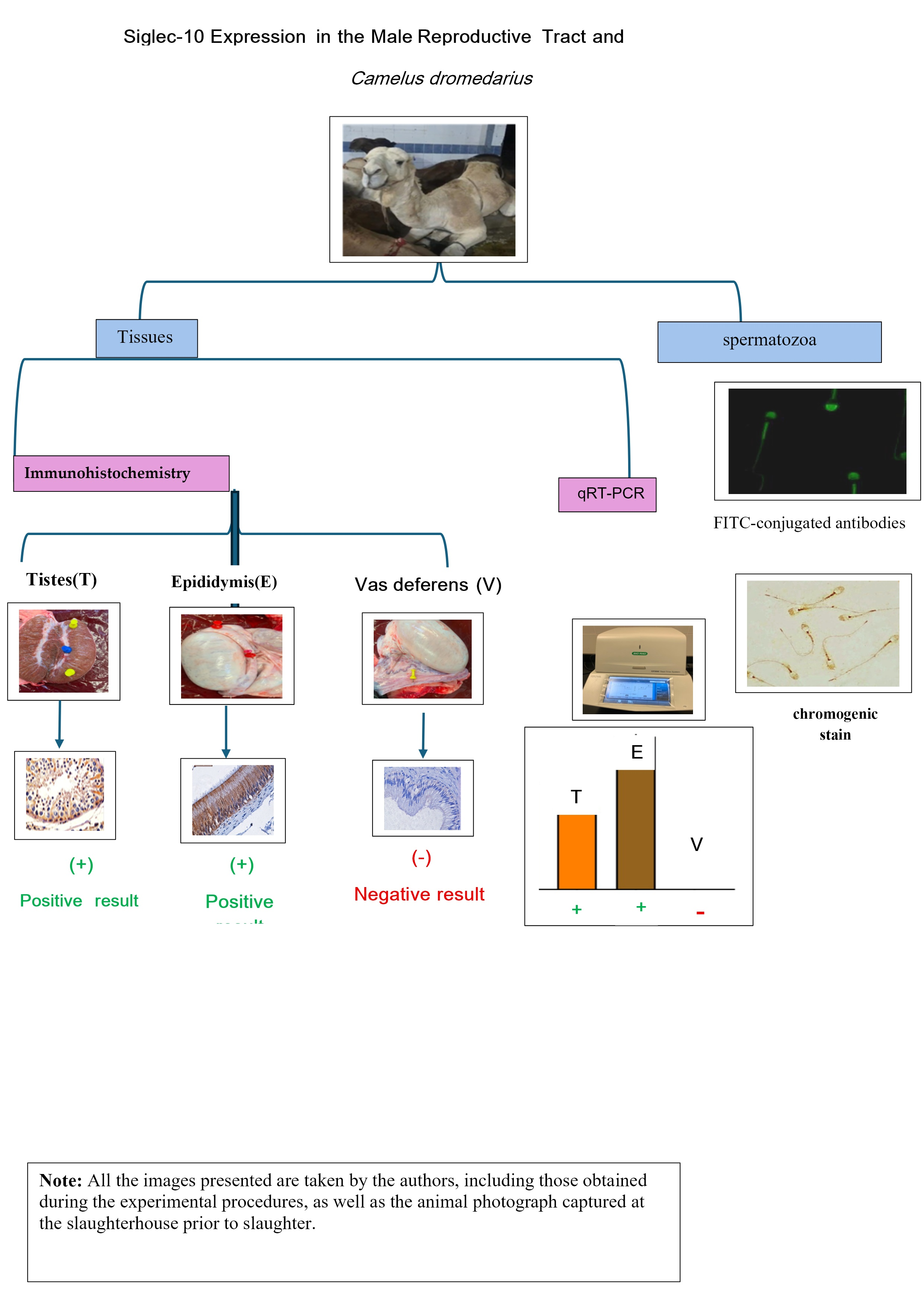

First Evidence of Siglec-10 Localization and Expression in Camel Male Reproductive Tissues and Spermatozoa: Potential Relevance to Fertility


Simple Summary
Abstract
1. Introduction
2. Materials and Methods
2.1. Ethical Statement
2.1.1. Experimental Animals and Tissue Collection
2.1.2. Immunohistochemistry for Siglec-10 Detection
RNA Isolation and cDNA Preparation
Quantitative Real-Time PCR (qRT-PCR)
2.2. Sperm Collection and Immunostaining
2.2.1. Fresh Ejaculated Sperm
2.2.2. Frozen–Thawed Sperm
2.2.3. Epididymal Sperm
2.2.4. Sample Preparation
2.2.5. Fluorescent Immunostaining
2.2.6. Chromogenic Immunostaining
2.2.7. Negative Controls and Visualization
2.3. Statistical Analysis
3. Results
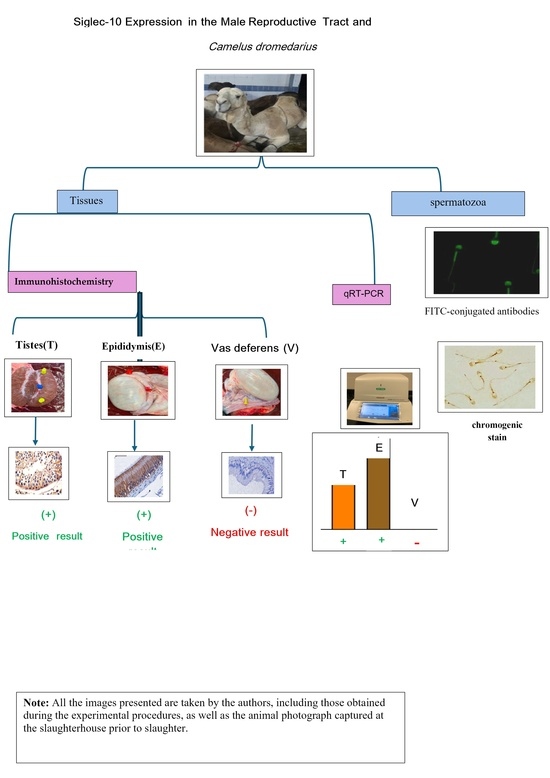
3.1. Immunohistochemical Detection of Siglec-10 in Tissues
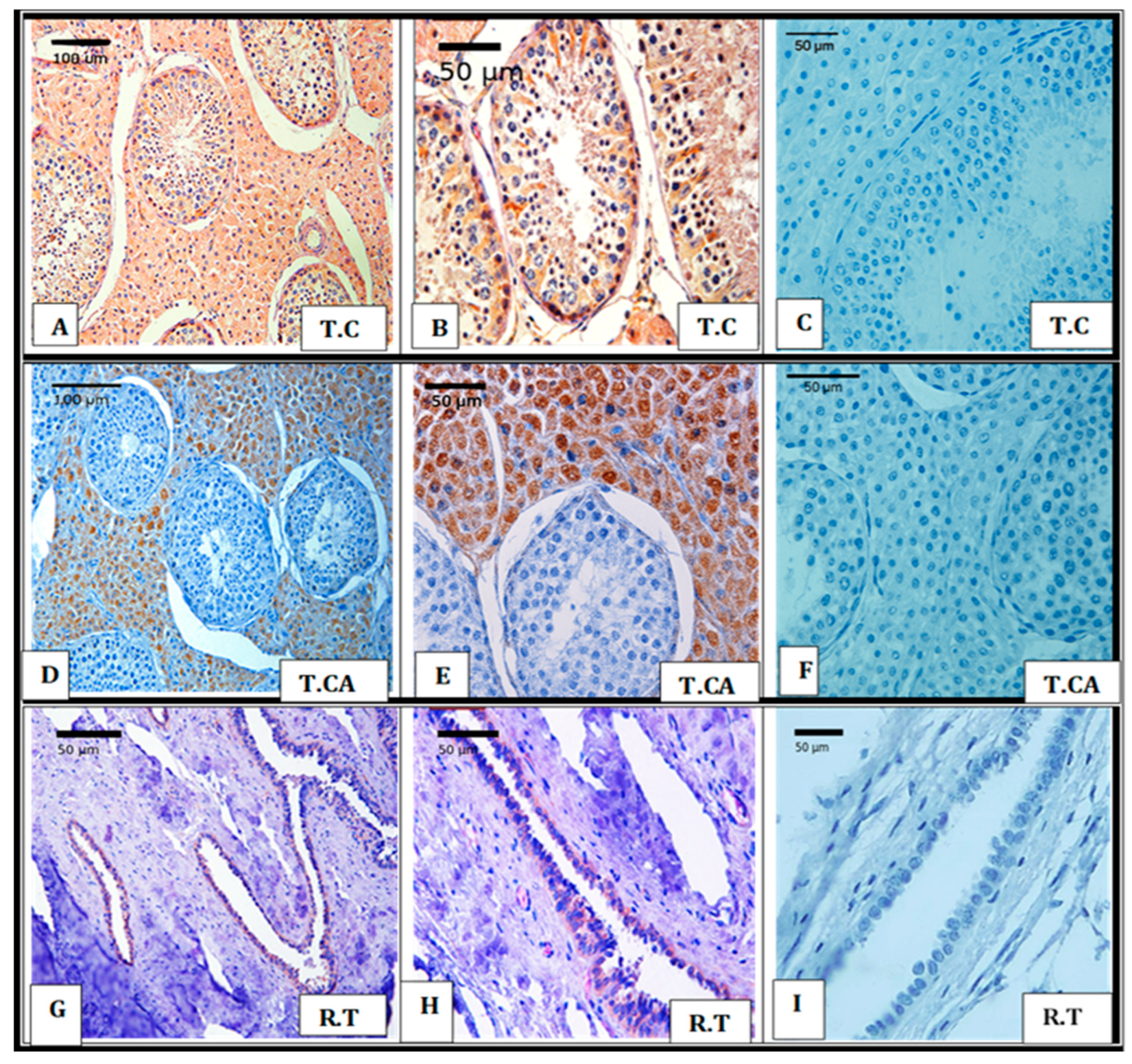
3.1.1. Testes
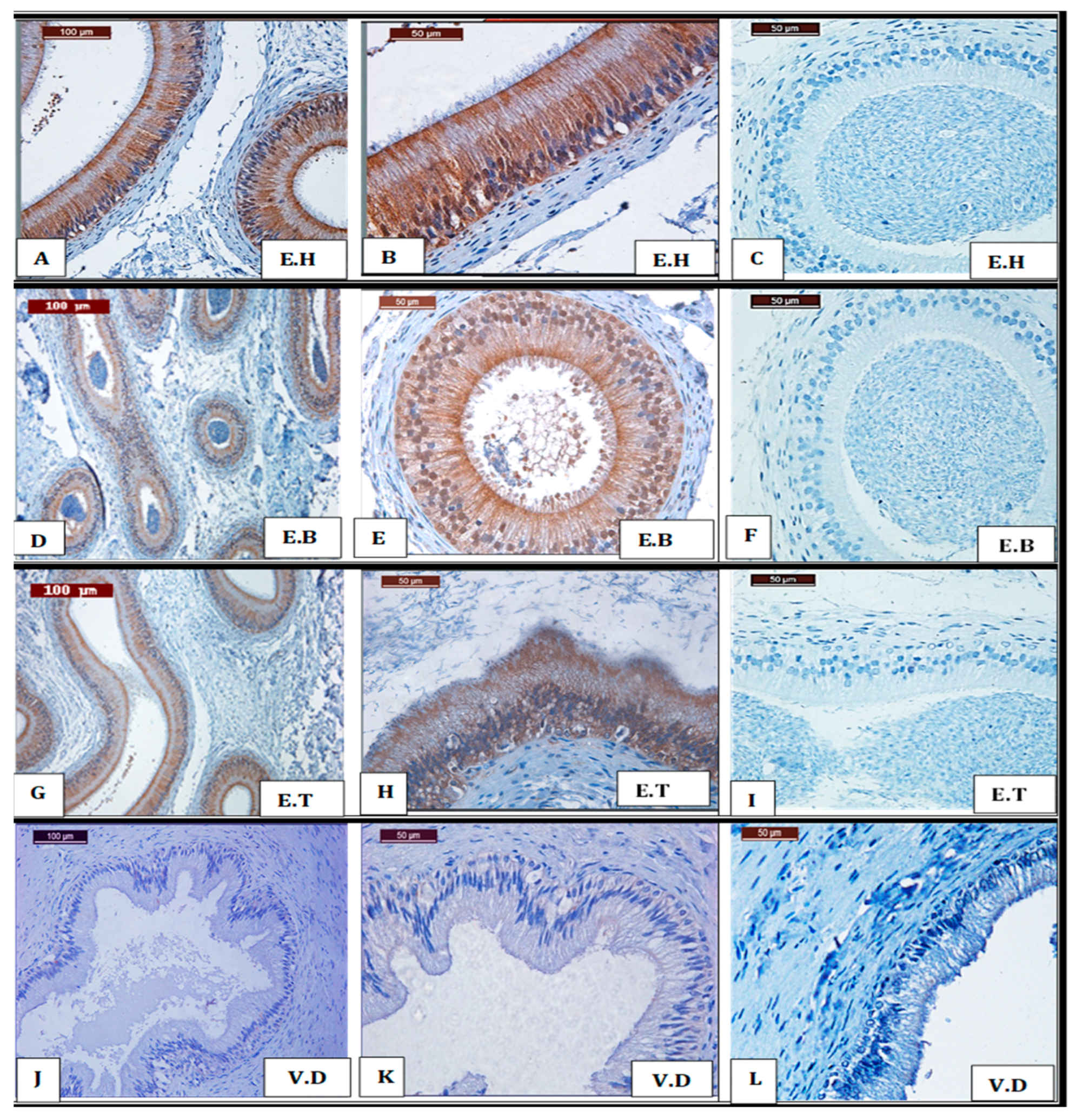
3.1.2. Epididymis
3.1.3. Vas Deferens
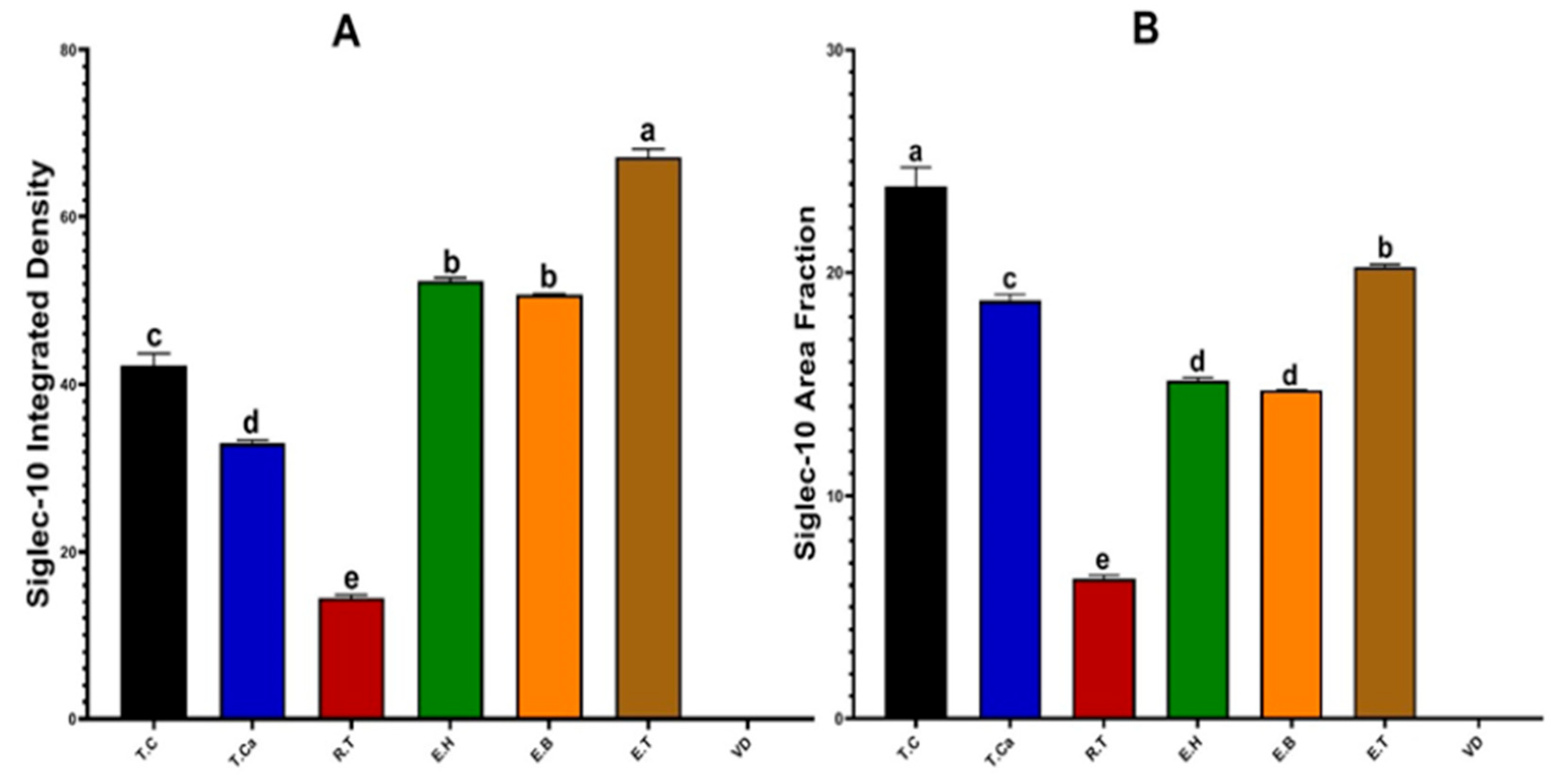
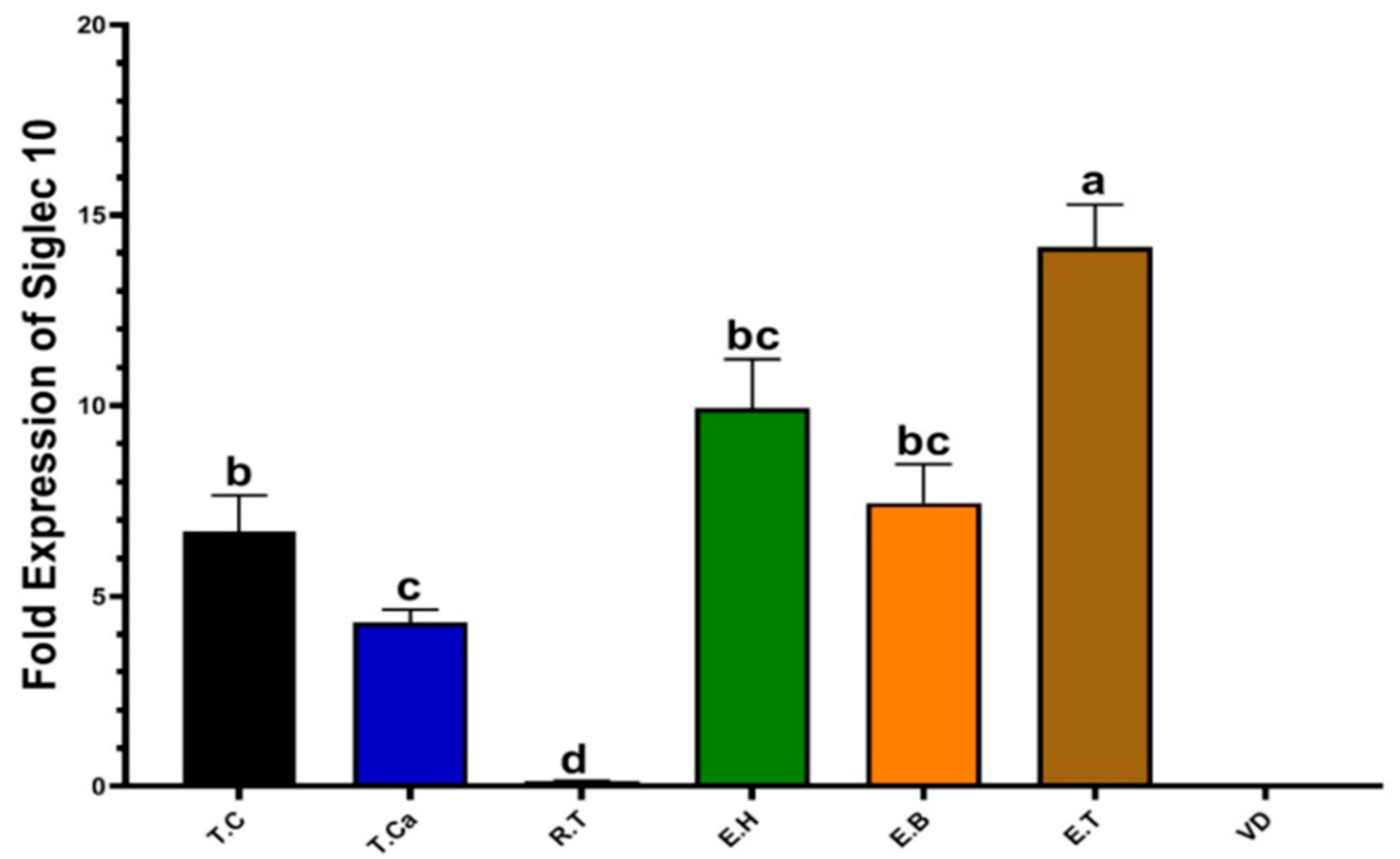
3.1.4. Semi-Quantitative Analysis of Siglec-10 Immunoreactivity in the Testis and Epididymis of the Dromedary Camel
3.1.5. qRT-PCR Analysis
3.2. Siglec-10 Detection in Camel Spermatozoa
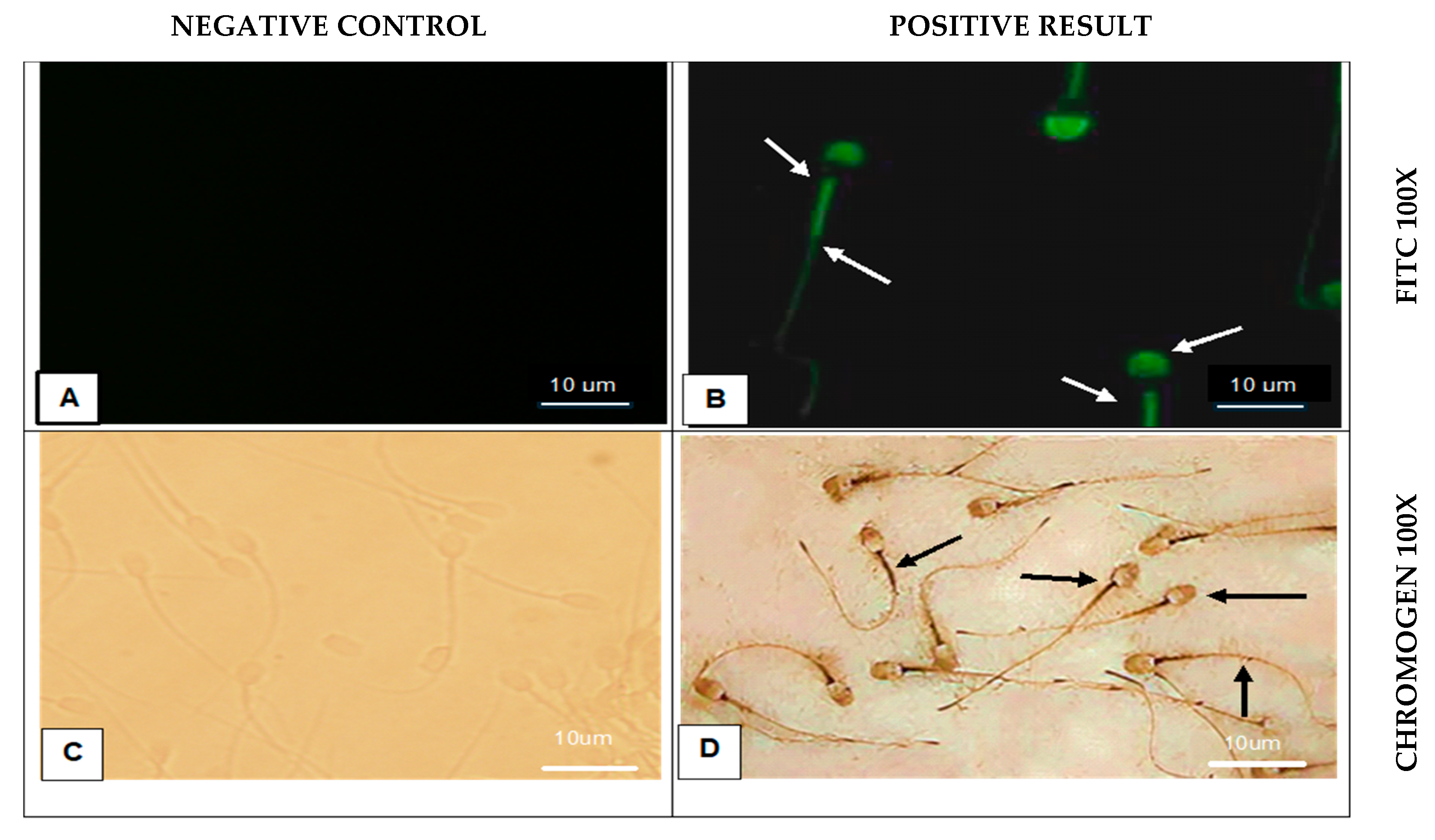
3.2.1. Immunostaining of Fresh Camel Sperm with Siglec-10 Antibody
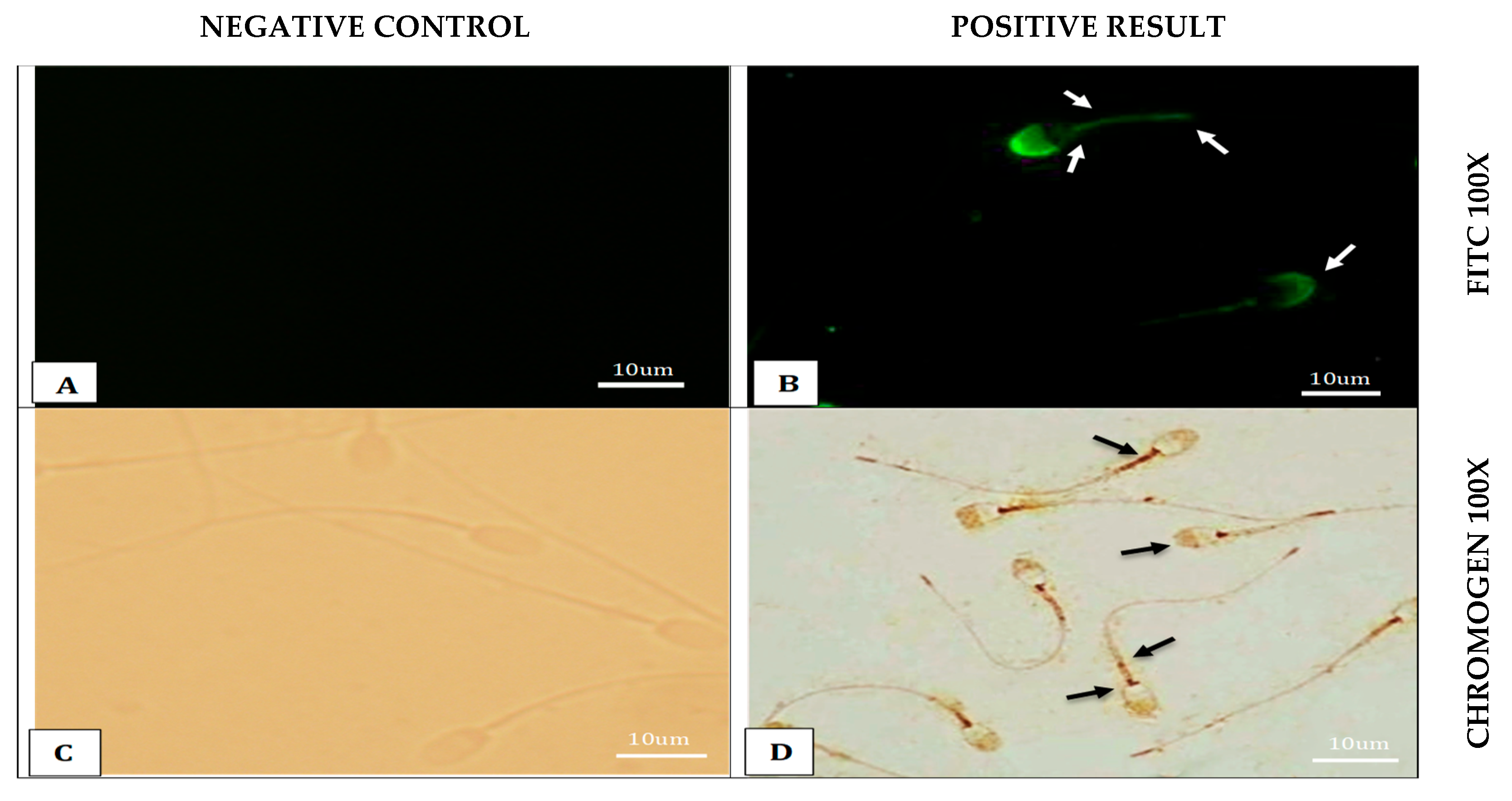
3.2.2. Immunostaining of Frozen Camel Sperm with Siglec-10 Antibody
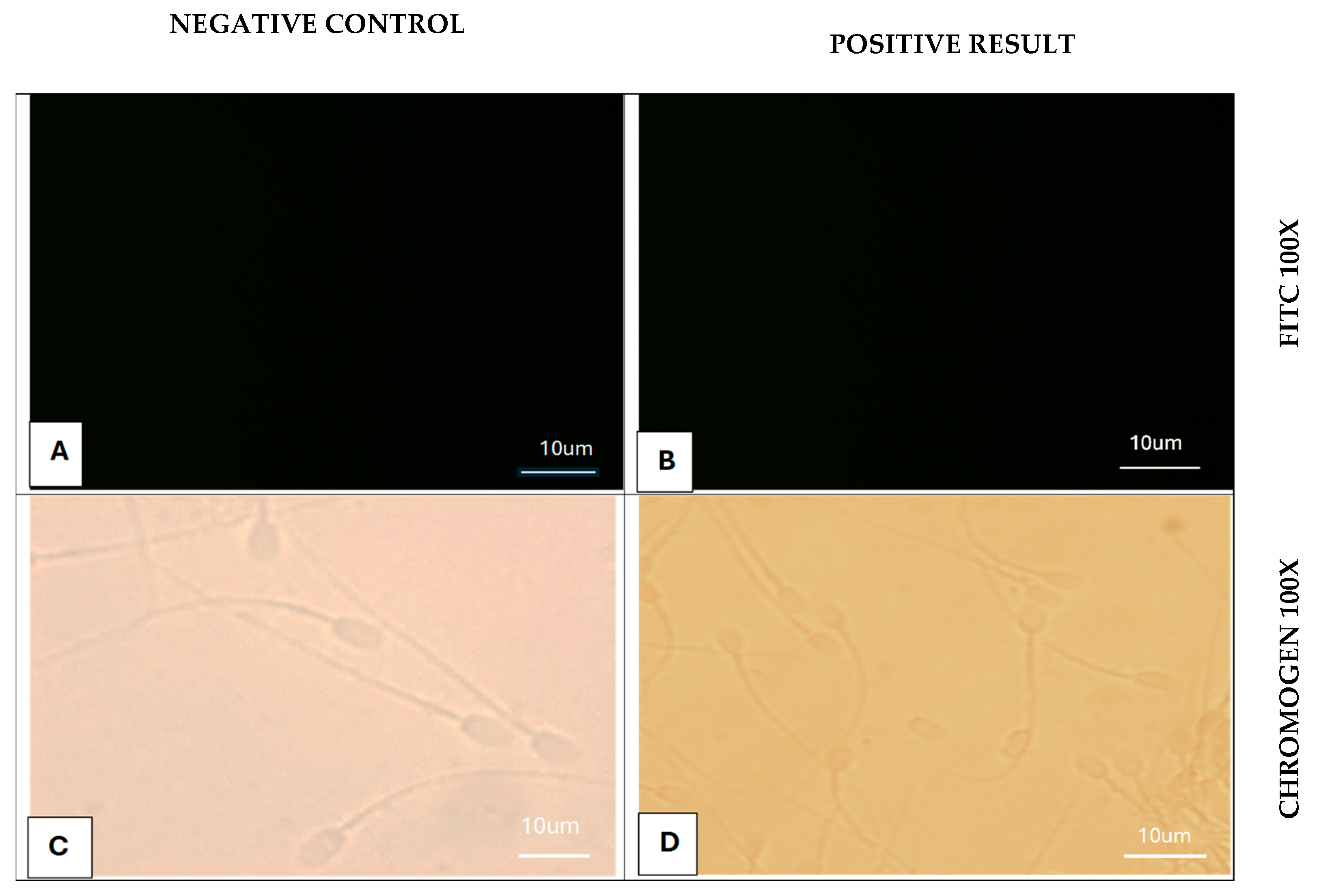
3.2.3. Immunostaining of Epididymal Camel Sperm with Siglec-10 Antibody
4. Discussion
5. Conclusions
Author Contributions
Funding
Institutional Review Board Statement
Informed Consent Statement
Data Availability Statement
Acknowledgments
Conflicts of Interest
References
- Fijak, M.; Meinhardt, A. The testis in immune privilege. Immunol. Rev. 2006, 213, 66–81. [Google Scholar] [CrossRef]
- Zhao, S.; Zhu, W.; Xue, S.; Han, D. Testicular defense systems: Immune privilege and innate immunity. Cell. Mol. Immunol. 2014, 11, 428–437. [Google Scholar] [CrossRef]
- Meinhardt, A.; Hedger, M.P. Immunological, paracrine and endocrine aspects of testicular immune privilege. Mol. Cell. Endocrinol. 2011, 335, 60–68. [Google Scholar] [CrossRef]
- Shum, W.W.; Da Silva, N.; Brown, D.; Breton, S. Regulation of luminal acidification in the male reproductive tract via cell–cell crosstalk. J. Exp. Biol. 2009, 212, 1753–1761. [Google Scholar] [CrossRef]
- Hedger, M.P.; Hales, D.B. Immunophysiology of the male reproductive tract. In Knobil and Neill’s Physiology of Reproduction, 3rd ed.; Neill, J.D., Ed.; Academic Press: San Diego, CA, USA, 2006; pp. 1195–1286. [Google Scholar]
- Mendelsohn, A.C.; Sanmarco, L.M.; Spallanzani, R.G.; Brown, D.; Quintana, F.J.; Breton, S.; Battistone, M.A. From initial segment to cauda: A regional characterization of mouse epididymal CD11c+ mononuclear phagocytes based on immune phenotype and function. Am. J. Physiol. Cell Physiol. 2020, 319, C997–C1010. [Google Scholar] [CrossRef] [PubMed]
- Gong, J.; Zeng, Q.; Yu, D.; Duan, Y.G. T lymphocytes and testicular immunity: A new insight into immune regulation in testes. Int. J. Mol. Sci. 2020, 22, 57. [Google Scholar] [CrossRef] [PubMed]
- Crocker, P.R.; Paulson, J.C.; Varki, A. Siglecs and their roles in the immune system. Nat. Rev. Immunol. 2007, 7, 255–266. [Google Scholar] [CrossRef]
- Ghosh, S. Sialic acid and biology of life: An introduction. In Sialic Acids and Sialoglycoconjugates in the Biology of Life, Health and Disease; Springer: Singapore, 2020; pp. 1–20. [Google Scholar] [CrossRef]
- Pillai, S.; Netravali, I.A.; Cariappa, A.; Mattoo, H. Siglecs and immune regulation. Annu. Rev. Immunol. 2012, 30, 357–392. [Google Scholar] [CrossRef] [PubMed]
- Chen, G.Y.; Brown, N.K.; Wu, W.; Khedri, Z.; Yu, H.; Chen, X.; van de Vlekkert, D.; D’Azzo, A.; Zheng, P.; Liu, Y. Broad and direct interaction between TLR and Siglec families of pattern recognition receptors and its regulation by Neu1. eLife 2014, 3, e04066. [Google Scholar] [CrossRef]
- Chen, G.Y.; Tang, J.; Zheng, P.; Liu, Y. CD24 and Siglec-10 selectively repress tissue damage–induced immune responses. Science 2009, 323, 1722–1725. [Google Scholar] [CrossRef]
- Bandala-Sanchez, E.; Zhang, Y.; Reinwald, S.; Dromey, J.A.; Lee, B.-H.; Qian, J.; Böhmer, R.M.; Harrison, L.C. T cell regulation mediated by interaction of soluble CD52 with the inhibitory receptor Siglec-10. Nat. Immunol. 2013, 14, 741–748. [Google Scholar] [CrossRef]
- Paulson, J.C.; Macauley, M.S.; Kawasaki, N. Siglecs as sensors of self in innate and adaptive immune responses. Ann. N. Y. Acad. Sci. 2012, 1253, 37–48. [Google Scholar] [CrossRef]
- Barkal, A.A.; Brewer, R.E.; Markovic, M.; Kowarsky, M.; Barkal, S.A.; Zaro, B.W.; Krishnan, V.; Hatakeyama, J.; Dorigo, O.; Barkal, L.J.; et al. CD24 signalling through macrophage Siglec-10 is a target for cancer immunotherapy. Nature 2019, 572, 392–396. [Google Scholar] [CrossRef]
- Angata, T. Siglecs that Associate with DAP12. In Lectin in Host Defense Against Microbial Infections; Springer: Singapore, 2020; pp. 215–230. [Google Scholar] [CrossRef]
- Bornhöfft, K.F.; Goldammer, T.; Rebl, A.; Galuska, S.P. Siglecs: A journey through the evolution of sialic acid-binding immunoglobulin-type lectins. Dev. Comp. Immunol. 2018, 86, 219–231. [Google Scholar] [CrossRef]
- Çil, N.; Fenkci, İ.V.; Mete, G.A.; Mutlu, D.; Kabukçu, C.; Çabuş, Ü. Expression of sialic acid binding receptors (siglecs) in human trophoblast cell line. Pamukkale Med. J. 2024, 17, 195–203. [Google Scholar] [CrossRef]
- Yoshida, M.; Kawano, N.; Yoshida, K. Control of sperm motility and fertility: Diverse factors and common mechanisms. Cell. Mol. Life Sci. 2008, 65, 3446–3457. [Google Scholar] [CrossRef] [PubMed]
- Skidmore, J.A. Reproductive physiology in female old world camelids. Anim. Reprod. Sci. 2011, 124, 148–154. [Google Scholar] [CrossRef] [PubMed]
- Marešová, J.; Kokošková, T.; Tichá, E.; Fedorova, T. Nursing behaviour in alpacas: Parallels in the Andes and Central Europe, and a rare allonursing occurrence. Animals 2025, 15, 916. [Google Scholar] [CrossRef]
- Al-Thnaian, T.A. Morphological and molecular investigations of aquaporin-7 (AQP-7) in male Camelus dromedarius reproductive organs. Animals 2023, 13, 1158. [Google Scholar] [CrossRef]
- Schindelin, J.; Arganda-Carreras, I.; Frise, E.; Kaynig, V.; Longair, M.; Pietzsch, T.; Preibisch, S.; Rueden, C.; Saalfeld, S.; Schmid, B.; et al. Fiji: An open-source platform for biological-image analysis. Nat. Methods 2012, 9, 676–682. [Google Scholar] [CrossRef]
- Acharyya, S. Immune and endocrine aspects of the testis and its relation to male infertility. Chem. Biol. Lett. 2021, 8, 144–161. [Google Scholar]
- Bhushan, S.; Theas, M.S.; Guazzone, V.A.; Jacobo, P.; Wang, M.; Fijak, M.; Meinhardt, A.; Lustig, L. Immune cell subtypes and their function in the testis. Front. Immunol. 2020, 11, 583304. [Google Scholar] [CrossRef]
- Winnie, W.; Ruan, Y.C.; Da Silva, N.; Breton, S. Establishment of cell-cell cross talk in the epididymis: Control of lu-minal acidification. J. Androl. 2011, 32, 576–586. [Google Scholar] [CrossRef]
- Kasimanickam, V.; Kumar, N.; Kasimanickam, R. Investigation of sperm and seminal plasma candidate microRNAs of bulls with differing fertility and in silico prediction of miRNA-mRNA interaction network of reproductive function. Animals 2022, 12, 2360. [Google Scholar] [CrossRef]
- Fijak, M.; Hasan, H.; Meinhardt, A. Galectin-1 and galectin-3 in male reproduction—Impact in health and disease. Semin. Immunopathol. 2025, 47, 6. [Google Scholar] [CrossRef] [PubMed]
- Voisin, A.; Saez, F.; Drevet, J.R.; Guiton, R. The epididymal immune balance: A key to preserving male fertility. Asian J. Androl. 2019, 21, 531–539. [Google Scholar] [CrossRef]
- Grande, G.; Graziani, A.; De Toni, L.; Garolla, A.; Ferlin, A. Male tract microbiota and male infertility. Cells 2024, 13, 1275. [Google Scholar] [CrossRef]
- Fesahat, F.; Firouzabadi, A.M.; Zare-Zardini, H.; Imani, M. Roles of different β-defensins in the human reproductive system: A review study. Am. J. Mens Health 2023, 17, 15579883231182673. [Google Scholar] [CrossRef] [PubMed]
- Drobnis, E.Z.; Nangia, A.K. Antimicrobials and male reproduction. In Impacts of Medications on Male Fertility; Springer: Cham, Switzerland, 2017; pp. 131–161. [Google Scholar] [CrossRef]
- Eddy, E.M.; Toshimori, K.; O’Brien, D.A. Fibrous sheath of mammalian spermatozoa. Microsc. Res. Tech. 2003, 61, 103–115. [Google Scholar] [CrossRef] [PubMed]
- Bianchi, E.; Wright, G.J. Sperm meets egg: The genetics of mammalian fertilization. Annu. Rev. Genet. 2016, 50, 93–111. [Google Scholar] [CrossRef]
- Robertson, S.A. Seminal fluid signaling in the female reproductive tract: Lessons from rodents and pigs. J. Anim. Sci. 2007, 85 (Suppl. S13), E36–E44. [Google Scholar] [CrossRef] [PubMed]
- Hezavehei, M.; Sharafi, M.; Kouchesfahani, H.M.; Henkel, R.; Agarwal, A.; Esmaeili, V.; Shahverdi, A. Sperm cryopreservation: A review on current molecular cryobiology and advanced approaches. Reprod. Biomed. Online 2018, 37, 327–339. [Google Scholar] [CrossRef] [PubMed]



| Antibody/Kit | Host Species | Company | Catalog No. | Application | Dilution |
|---|---|---|---|---|---|
| Rabbit polyclonal anti-Human Siglec-10 | Rabbit | Molecule-On, Auckland, New Zealand | AB-M-134 | IHC | 1:200 |
| Rabbit specific HRP/DAB (ABC) Detection IHC Kit (includes biotinylated goat anti-rabbit IgG (H + L), streptavidin–HRP, protein block, H2O2 block, and DAB substrate/chromogen) | Goat (secondary) | Abcam, Cambridge, UK | ab64261 | IHC | As per kit proto |
| Gene Name | Primer Sequence (5′→3′) | Accession Number |
|---|---|---|
| Siglec-10 | F-ACGCCTCCTACATGGTCAAC R-ACTTCTTGGGAACTCCGCTG | XM 064489724.1 |
| GAPDH | F-CCTGGAGAAACCTGCCAAATA R-CTATTGAAGTCGCAGGAGACAA | EU331417.1 |
| Tissue Sample | |||||||
|---|---|---|---|---|---|---|---|
| Staining Intensity | Testis | Epididymis | Vas Deferens | ||||
| TC | TCa | RT | EH | EB | ET | VD | |
| Strong | +++ | +++ | +++ | +++ | |||
| Moderate | ++ | ||||||
| Weak | + | ||||||
| Absent | − | ||||||
| Sample Type | |||||||
|---|---|---|---|---|---|---|---|
| AC | EB | PAC | N | MP | A | T | |
| Fresh sperm | + | - | - | + | + | + | - |
| Frozen sperm | + | - | - | + | + | + | - |
| Epididymal sperm | - | - | - | - | - | - | - |
Disclaimer/Publisher’s Note: The statements, opinions and data contained in all publications are solely those of the individual author(s) and contributor(s) and not of MDPI and/or the editor(s). MDPI and/or the editor(s) disclaim responsibility for any injury to people or property resulting from any ideas, methods, instructions or products referred to in the content. |
© 2025 by the authors. Licensee MDPI, Basel, Switzerland. This article is an open access article distributed under the terms and conditions of the Creative Commons Attribution (CC BY) license (https://creativecommons.org/licenses/by/4.0/).
Share and Cite
Alzilaiy, F.; Babiker, M.; ALkhodair, K. First Evidence of Siglec-10 Localization and Expression in Camel Male Reproductive Tissues and Spermatozoa: Potential Relevance to Fertility. Vet. Sci. 2025, 12, 1063. https://doi.org/10.3390/vetsci12111063
Alzilaiy F, Babiker M, ALkhodair K. First Evidence of Siglec-10 Localization and Expression in Camel Male Reproductive Tissues and Spermatozoa: Potential Relevance to Fertility. Veterinary Sciences. 2025; 12(11):1063. https://doi.org/10.3390/vetsci12111063
Chicago/Turabian StyleAlzilaiy, Fatemah, Marwa Babiker, and Khalid ALkhodair. 2025. "First Evidence of Siglec-10 Localization and Expression in Camel Male Reproductive Tissues and Spermatozoa: Potential Relevance to Fertility" Veterinary Sciences 12, no. 11: 1063. https://doi.org/10.3390/vetsci12111063
APA StyleAlzilaiy, F., Babiker, M., & ALkhodair, K. (2025). First Evidence of Siglec-10 Localization and Expression in Camel Male Reproductive Tissues and Spermatozoa: Potential Relevance to Fertility. Veterinary Sciences, 12(11), 1063. https://doi.org/10.3390/vetsci12111063