Article

Cultural Adaptation and Validation of Beverage Intake Questionnaire for Pakistani University Students


Department of Nutrition Science and Food Hygiene, Xiangya School of Public Health, Central South University, No. 172 Tongzipo Rd, Changsha 410013, China
*
Author to whom correspondence should be addressed.
These authors contributed equally to this work.
Beverages 2026, 12(1), 11; https://doi.org/10.3390/beverages12010011
Submission received: 28 October 2025 / Revised: 19 December 2025 / Accepted: 4 January 2026 / Published: 8 January 2026

Abstract

Beverages, particularly sugar-sweetened beverages (SSBs), pose a significant public health concern globally. Changing eating habits among Pakistani young adults have led to higher sugary drink consumption, underscoring the need for a suitable cultural assessment tool. A cross-sectional study was conducted among 381 university students aged 18–26 years from three major cities of Pakistan. Following World Health Organization (WHO) guidelines, the original Beverage Intake Questionnaire (BEVQ-15) was modified by removing four items (including alcoholic beverages), adding two culturally relevant types (flavored milk and refreshing drinks), and converting measurement units to milliliters, resulting in a 13-item Beverage Intake Questionnaire-Pakistan (BEVQ-PK). Validity was assessed by comparing BEVQ-PK1 (test) with three 24 h dietary recalls. Test–retest reliability was evaluated after a 14-day interval by comparing BEVQ-PK1 (test) and BEVQ-PK2 (retest). Analyses included descriptive statistics, paired sample t-tests, Intraclass Correlation Coefficients (ICC), Bland–Altman plots, and Spearman’s correlations. The BEVQ-PK (13-item) demonstrated moderate to strong validity (r = 0.2–0.8, p < 0.001) and strong reliability (r = 0.5–0.9, p < 0.001). Most beverage categories showed no significant intake differences between test and retest. Tea/coffee with milk was the most frequently consumed beverage, followed by soft drinks and green/black tea. Overall, BEVQ-PK is a valid and reliable tool for assessing SSB intake among Pakistani university students and can support future nutrition and public health research.

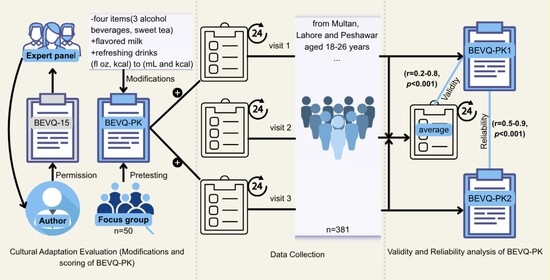
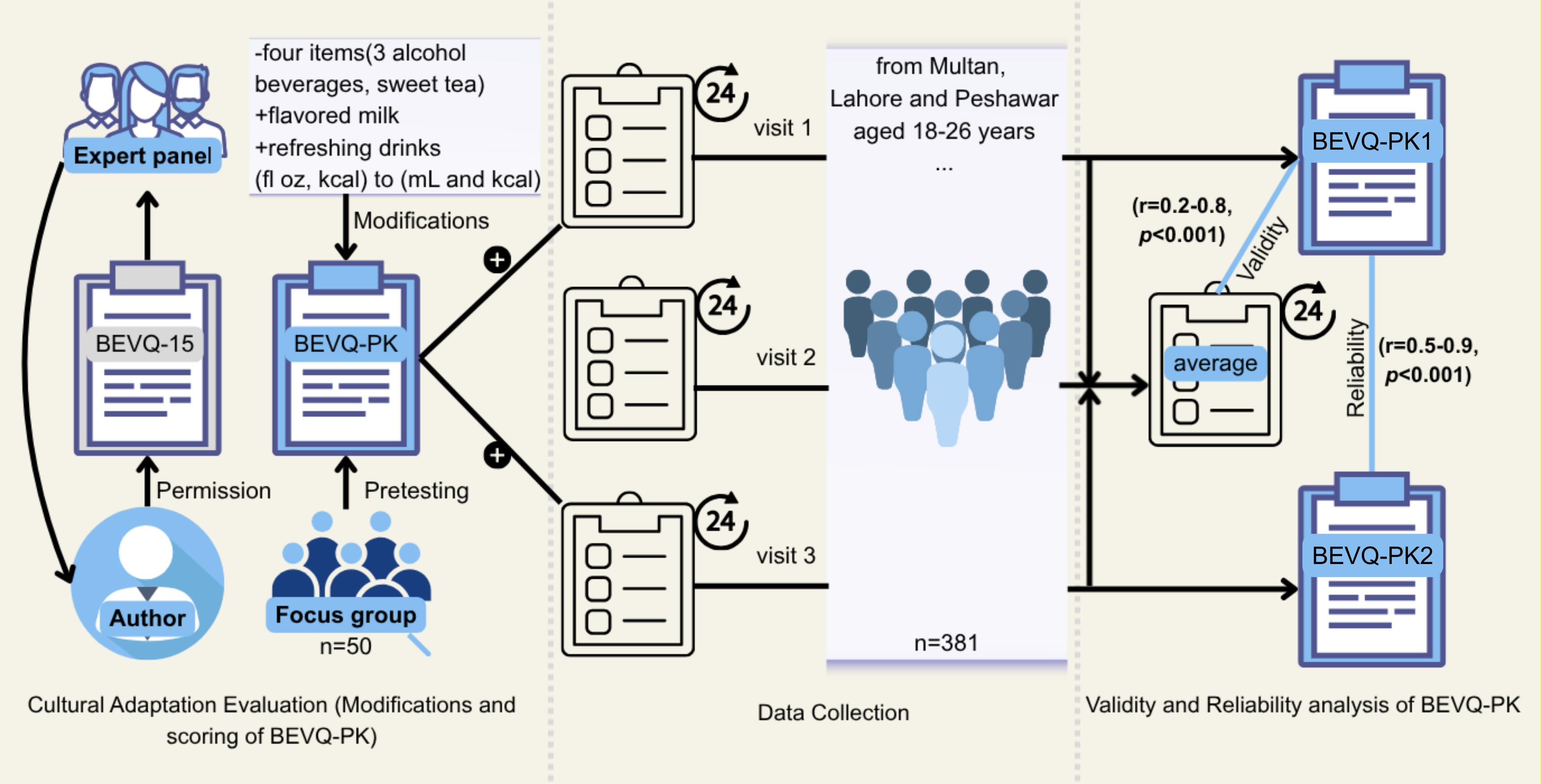
Graphical Abstract

1. Introduction

Sugar-sweetened beverages (SSBs) are a major source of free sugars in the human diet and have become a leading contributor to the global rise in non-communicable diseases (NCDs) [1]. SSBs include beverages that contain added sugars or sweeteners, such as carbonated soft drinks, sports drinks, sweetened teas and coffees, electrolyte-replacement drinks, fruit punch, sugary powder drinks, as well as energy drinks [2]. Their widespread consumption has been documented globally [3] and has become a growing public health concern in low and middle-income countries (LMICs), where dietary habits or food environment are rapidly shifting, driven by the globalization of food systems [4]. High consumption of SSBs has consistently been linked to multiple adverse health outcomes, including overweight and obesity, dental caries, cardiovascular disease, type 2 diabetes, and certain cancers [1,5,6,7,8].
According to a World Health Organization (WHO) report, more than 360 million children and adolescents were affected by excess body weight in 2016, with obesity strongly influenced by socio-economic and ethnic factors, unhealthy dietary practices, and sedentary lifestyle, often acting concurrently [9]. Excessive intake of SSBs has been widely recognized as a major contributor to the obesity epidemic [10]. While various system-level health initiatives have been implemented, recent data indicate persistent high consumption rates; a 2018 global health survey reported a continuously high SSB intake of an average of 2.78 ounces (248 g) per week among adults [11]. Similarly, high consumption is observed among children and adolescents, though levels vary across countries [12,13,14,15,16]. In Pakistan, the situation is particularly concerning, as national surveys reveal that over 70% of adolescents consume commercial and traditional SSBs more than seven times per week [17]. Furthermore, frequent consumption among young adults is often accompanied by self-reported health concerns such as weight gain and gastrointestinal discomfort [18]. Pakistan is now undergoing a rapid nutritional transition characterized by increased intake of processed foods and sweetened beverages. Understanding population-level beverage consumption has become essential for guiding public health interventions.
To quantify habitual beverage intake effectively, validated dietary assessment tools are essential. Various dietary assessment tools, including 24 h recalls, food frequency questionnaires (FFQ), and the Beverage Intake Questionnaire (BEVQ), have been employed to quantify sweetened-beverage consumption across different countries. The BEVQ-15 is a concise, validated instrument designed to estimate habitual beverage intake, particularly SSBs, with a low respondent burden, requiring about 2.5 min to complete and demonstrating a Flesch–Kincaid reading level of 4.8 [19]. Although 24 h recalls provide detailed dietary information, they rely heavily on participant memory and are less feasible for large-scale population surveys [20]. The BEVQ-15 has been successfully adapted and validated in several countries, including the United States [21], Saudi Arabia [22], and China [23], consistently showing strong reliability and validity across diverse populations [10,24]. However, its direct application in culturally distinct settings like Pakistan presents significant methodological challenges.
Beverage choices in Pakistan are strongly shaped by the complex interplay of cultural practices, climatic conditions, and socioeconomic factors [25]. As a predominantly Muslim society, Pakistan restricts the consumption of certain beverages such as alcohol-containing drinks [26], which are included in the original BEVQ but are culturally and legally irrelevant in the local context. In contrast, beverages such as sweetened milk tea occupy a central cultural role and are often consumed multiple times a day with large quantities of added sugar, functioning as a key element of hospitality, social interaction, and family routines [27]. Traditional beverages such as refreshing drinks (sherbet), doodh soda, and freshly prepared juices are also an important part of the national beverage profile. In Pakistan, seasonal patterns also influence beverage intake; for instance, the intense summer heat encourages higher consumption of chilled sweetened drinks, while winter months may stimulate increased intake of sweetened milk teas and hot beverages. Additionally, social gatherings, festive occasions, and university campus environments often normalize frequent SSB consumption, particularly among university students who represent a high-risk group for developing unhealthy dietary behaviors. Collectively, these patterns demonstrate that beverage consumption is deeply embedded within Pakistani sociocultural norms, seasonal demands, and youth environments.
Despite these unique sociocultural determinants of beverage consumption, Pakistan currently lacks validated tools that capture both traditional and modern beverage practices, appropriate serving sizes, and culturally relevant beverage categories. Existing Western-developed instruments do not adequately reflect local consumption behaviors, which may lead to misestimations of sugar intake. Therefore, cultural adaptation and validation of the BEVQ-15 are essential to ensure accurate measurement of beverage consumption within the Pakistani context [28].
Given the rising burden of NCDs and the need for robust dietary surveillance systems, this study aimed to culturally adapt the BEVQ-15 for Pakistan and evaluate its reliability and validity among university students, a population subgroup particularly vulnerable to unhealthy beverage consumption behaviors. A culturally appropriate tool will enable more accurate assessment of total beverage intake, including both sugar-sweetened beverages and non-sugar-sweetened beverages, facilitate the identification of high-risk groups, and support the development of targeted interventions and policies to curb excessive SSB consumption in Pakistan across different population groups.

2. Materials and Methods

2.1. Participants and Setting

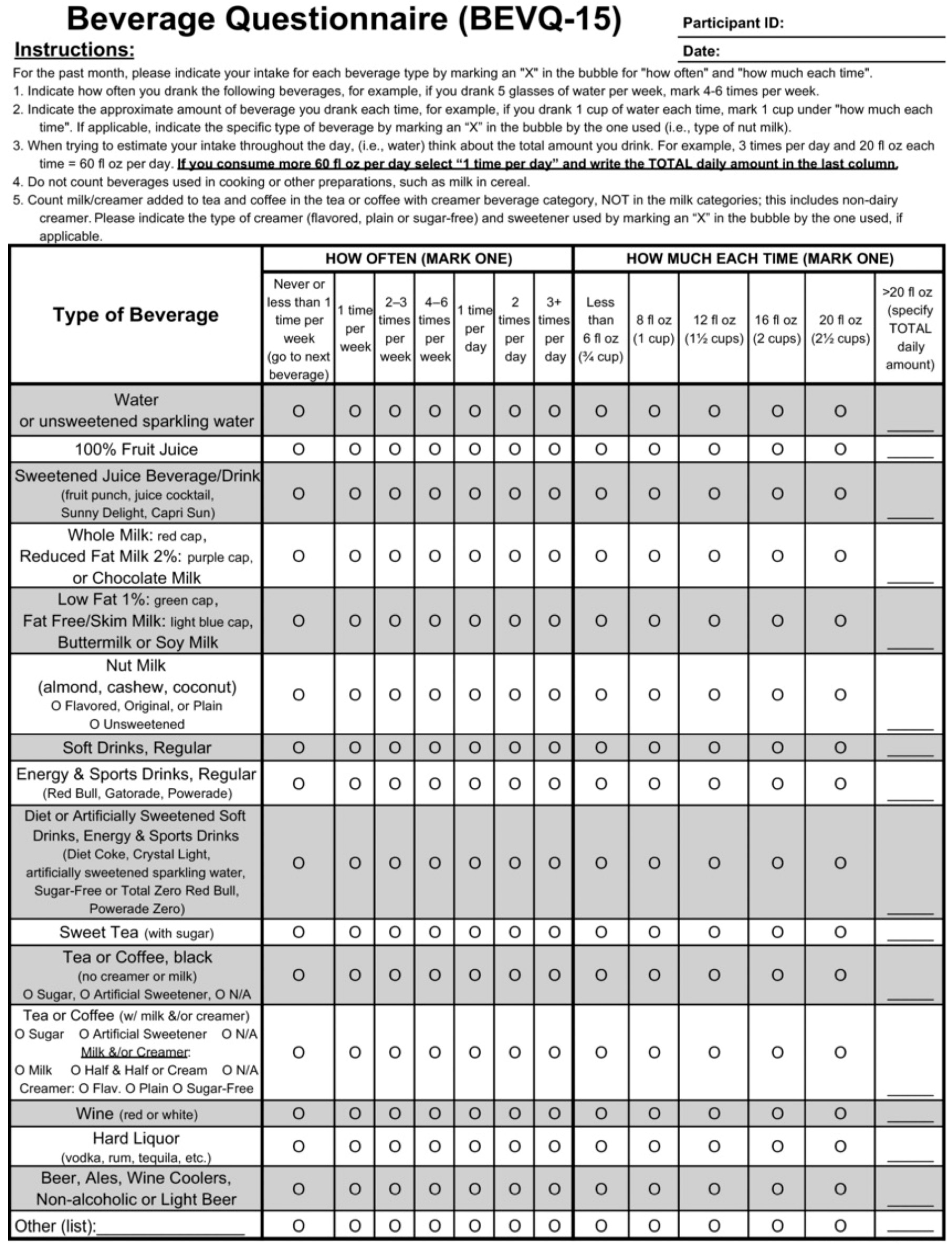
A cross-sectional study was conducted between June and July 2023, recruiting 381 university students aged 18–26 years from three cities: Multan, Lahore, and Peshawar through university platforms. The minimum sample size for this study was calculated to be 10 times the number of items of the scale (15 items of BEVQ; see Appendix A, Figure A1). And by considering the 20% drop-off or incomplete information, the total sample size for cultural adaptation was 180 cases. Participants were eligible if they self-identified as Pakistani Muslim students aged 18 to 26 and could read/write/speak in English. Students with congenital or chronic conditions (e.g., food allergies, eating disorders, Down syndrome, or autism) that might affect their dietary habits were excluded. The study was approved by the Ethics Review Committee of Xiangya School of Public Health, Central South University (protocol code: XYGW-2023-36 and date of approval: 8 March 2023).

2.2. Cultural Adaptation Evaluation (Modifications and Scoring of BEVQ-PK)

Classification of Beverages

For this study, SSBs were defined as beverages containing added caloric sugars, including any form of sweetener such as sucrose, fructose syrup, or white sugar. The classification of commercially available beverages was based on ingredient lists and information provided on nutritional profiles. These definitions were explained to participants prior to questionnaire completion. Beverages were categorized based on their composition and preparation practices, with a clear distinction between beverages containing added sugars and those without added sugars [29,30].
(1) Sugar-sweetened beverages (SSBs): This category included all beverages containing added caloric sugars, such as carbonated soft drinks, sweetened fruit drinks, packaged juices with added sugar, flavored milk, sweetened tea or coffee, energy drinks, and Refreshing drinks (e.g., sherbet and squash). (2) Non-sugar-sweetened beverages (non-SSBs): This group comprised plain water, diet soft drinks, diet energy drinks, nut milk, unsweetened tea or coffee, and 100% fruit juices without added sugars.
Beverages were categorized as sugar-sweetened (SSBs) if participants reported adding sugar or using pre-sweetened milk; otherwise, they were recorded as non-SSBs. These classifications were adapted from the World Health Organization (WHO) guidelines on SSBs and non-SSBs to ensure international comparability and methodological consistency across studies. These definitions were explained to participants prior to questionnaire completion.
The cultural adaptation of BEVQ-15 for Pakistan (BEVQ-PK) followed WHO guidelines. The specific steps are as follows:
Step 1: Securing Authorization. Formal permission to adapt and validate the BEVQ-15 was obtained from its original author, Dr. Valisa Hedrick, ensuring the ethical and legal compliance of the study.
Step 2: Translation and Expert Committee Review. Since the target population comprised university students, the questionnaire was retained in English, and no translation was required. Instead, the focus of this step was on cultural adaptation and content relevance. The process began with a review of the original questionnaire by a multidisciplinary expert panel comprising two scale developers and a nutritionist. This review was grounded in Pakistan’s unique dietary patterns, leading to several key revisions. Items such as beer, wine, and liquor were removed due to their cultural and religious unsuitability in a predominantly Muslim society. Similarly, “sweet tea” was excluded as it is not a commonly consumed beverage category, while green tea and black tea were merged into a single category to streamline the instrument.
Step 3: Addition and Adjustment of Culturally Relevant Items. Two new categories, flavored milk and refreshing drinks (e.g., sherbet), were added to capture beverages frequently consumed by university students. Furthermore, to enhance comprehension for the study population, all measurement units were converted from fluid ounces (fl oz) to milliliters (mL) (see Supplementary Material, Table S1).
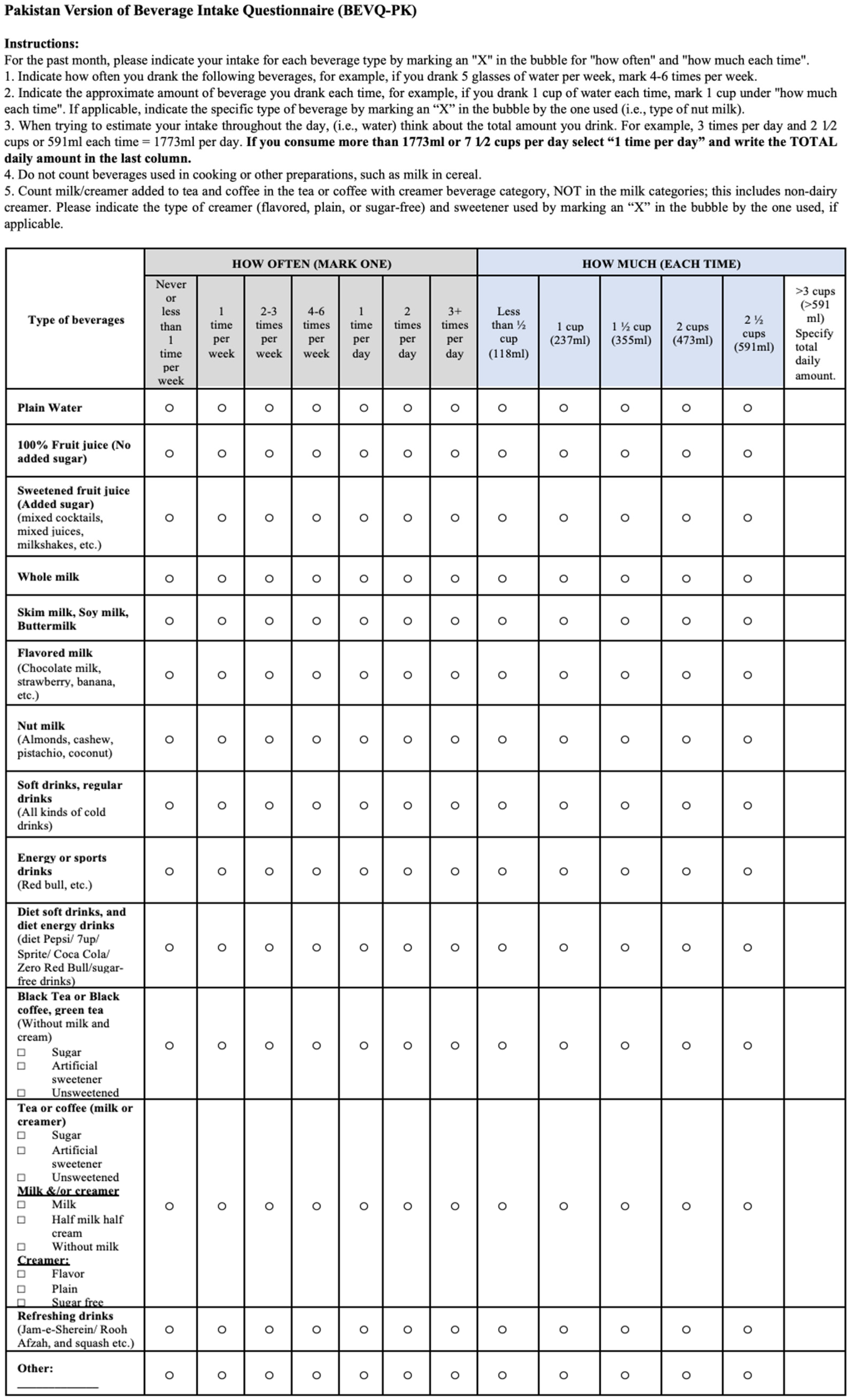
Step 4: Pre-testing. The modified questionnaire underwent pre-testing with 50 participants, followed by revisit interviews with a subset of 10 individuals. This phase was crucial for ensuring the appropriateness and ease of understanding of the terminology. Feedback from this process informed minor refinements to the wording, culminating in the final version of the BEVQ-PK (see Appendix A, Figure A2).
To score the BEVQ-PK, frequency (how often and number of times per day) was multiplied by the amount consumed (how much each time) to provide average daily intake in milliliters. Energy (per milliliter) for each beverage category was obtained from standard food composition tables. The total energy of each beverage was calculated by multiplying daily consumption (mL/day) by the energy per milliliter. Total SSB intake was determined by summing categories containing added sugars, including sweetened juices, flavored milk, regular soft drinks, sweetened coffee, tea with added sugar, energy drinks, and refreshing drinks.

2.3. Data Collection

To assess the validity and reliability of BEVQ-PK, data were collected from three major cities in Pakistan, with one prominent university purposively selected from each to capture variation in student demographics and campus food environments. Trained field researchers approached students in classrooms and communal areas, provided a detailed explanation of the study objectives, and invited currently enrolled students aged 18 years or older to participate. Participation was entirely voluntary, and only those who provided written informed consent were included. A pre-designed questionnaire (BEVQ-PK and 24 h dietary recall) was administered among university students in printed form.
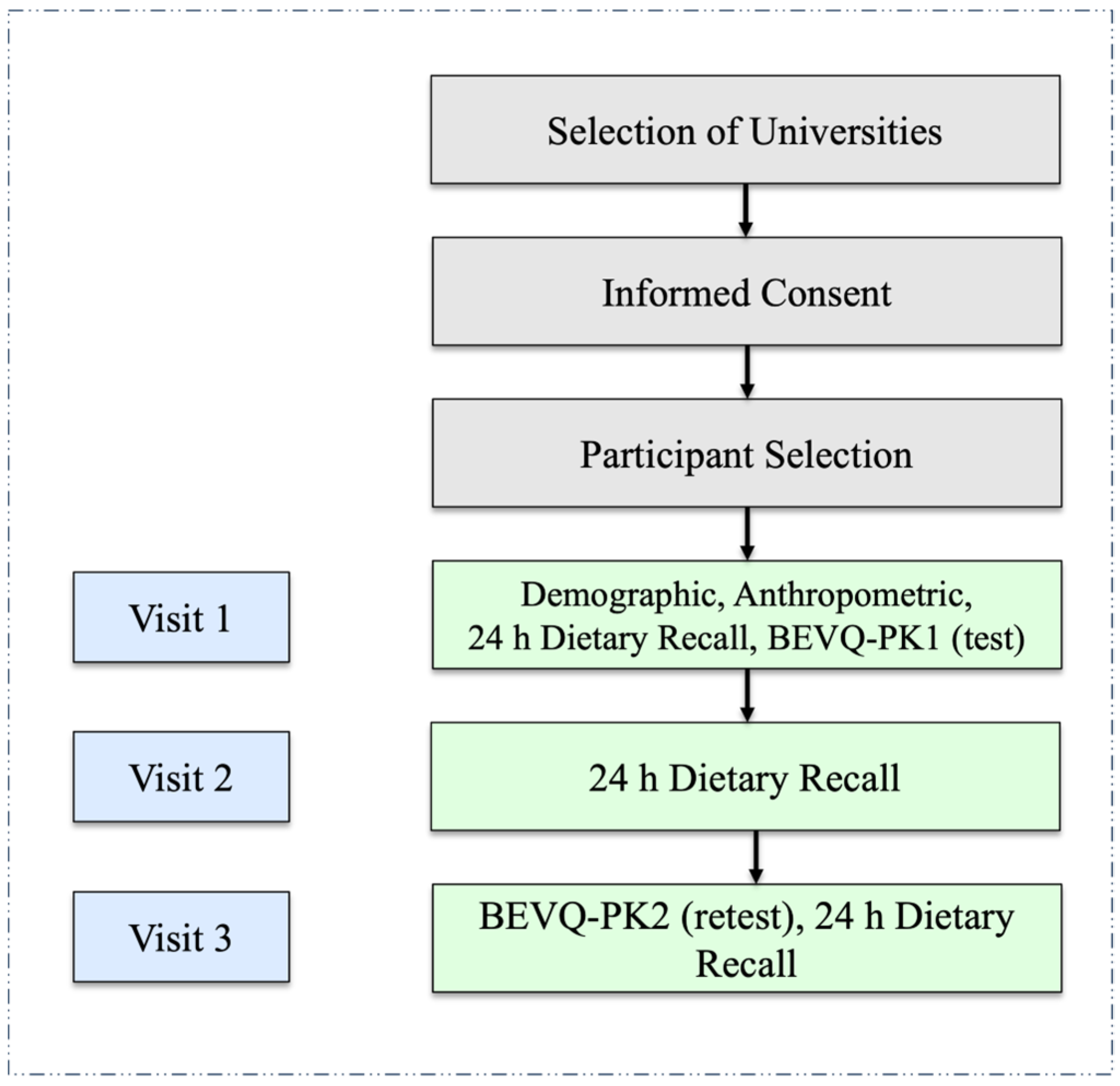
At visit 1, 381 participants provided consent, demographic information, and completed the first BEVQ-PK (i.e., BEVQ-PK1 (test)) along with a 24 h dietary recall, which recorded the types and quantities of food and beverages consumed by participants the previous day. The second 24 h dietary recall was conducted at visit 2 on the weekend. After a 14-day interval, at visit 3, participants completed the second BEVQ-PK again (i.e., BEVQ-PK2 (retest)) along with another 24 h dietary recall to assess test–retest reliability (for the study procedure, see Figure 1).
The 24 h recall was conducted using a structured interview protocol based on the Automated Multiple-Pass Method (AMPM), ensuring comprehensive coverage of all food and beverage intakes within the previous 24 h [31,32]. To enhance accuracy, enumerators employed detailed probing regarding meal occasions, preparation methods, and added sugars. Portion sizes were estimated using locally familiar household measures (e.g., cups, tablespoons) and standardized conversion charts to record volumes in milliliters [33,34]. A final review phase was implemented to capture often-overlooked items such as water, flavorings, or condiments.
Food records included two weekdays and one weekend to capture typical weekly intake patterns. The research team verifies the accuracy of food or beverage descriptions and portion sizes based on the collected questionnaires. Telephone interviews were conducted to verify abnormal situations and evaluate the feasibility and quality of the questionnaire.
All data were collected through in-person administration of paper-based questionnaires. Enumerators adhered to a standardized protocol and were closely supervised to ensure consistency, accuracy, and adherence to data collection procedures. All completed questionnaires were reviewed on-site to ensure completeness and internal consistency. Any missing or unclear responses were immediately clarified with participants. To ensure data integrity, all responses were double-entered and cross-checked prior to statistical analysis.

2.4. Statistical Analysis

Statistical analyses were performed using SPSS version 26.0. Descriptive statistics (mean ± standard error and frequencies) were used to describe the baseline characteristics of the study participants, and average total beverage consumption, including specific beverage categories (mL and kcal). Paired sample t-tests were used to compare the energy intake (kcal) and (mL) consumption of specific beverages across the tool. The validity of the BEVQ-PK was evaluated by comparing initial BEVQ-PK1 (test) results with the average of three 24 h dietary recalls; for test–retest reliability, the primary measure of reproducibility was the Intraclass Correlation Coefficient (ICC), which was used to assess the consistency of BEVQ-PK1 (test) and BEVQ-PK2 (retest) responses. As a supplementary measure, Spearman’s correlation (r) was also reported to describe the monotonic association between the two sets of scores. Additionally, Kruskal–Wallis’ test was used for independent comparisons. Statistical significance was set at α = 0.05.

3. Results

3.1. General Characteristics

A total of 381 university students participated in this study, of which approximately 66.1% (n = 252) were female, and 33.9% (n = 129) were male. The majority of the participants (n = 186; 48.8%) were in the 18–20-year age range. Based on BMI classification, 56.7% (n = 216) of participants belonged to the normal weight category. Moreover, more than half of the students (54.3%, n = 207) were enrolled in government institutes, and 64.3% (n = 245) participants were living with their families. Most of the study participants (n = 288; 75.6%) resided in urban areas, and around 68% (n = 259) reported having little monthly expendable income (Table 1).

3.2. Figures, Tables, and Scheme Validity Analysis of BEVQ-PK

Table 2 represents the validity analysis of the modified 13-Item BEVQ-PK among the Pakistani population. Validity was assessed by comparing BEVQ-PK (test) responses with three 24 h dietary recalls. All beverage categories, as well as total beverages and total sugar-sweetened beverages (mL and kcal), were significantly correlated (p < 0.001). No significant differences were observed for water, skim milk, energy or sports drinks, flavored milk, and refreshing drinks, indicating good validity. Meanwhile, diet soft drinks and refreshing drinks showed lower correlations (r = 0.2, p < 0.001), while most beverage categories showed moderate to strong correlations (r = 0.2–0.8). Overall, these findings indicate that the BEVQ-PK demonstrated good validity for assessing beverage intake among university students, with some differences likely due to recall bias or methodological limitations.
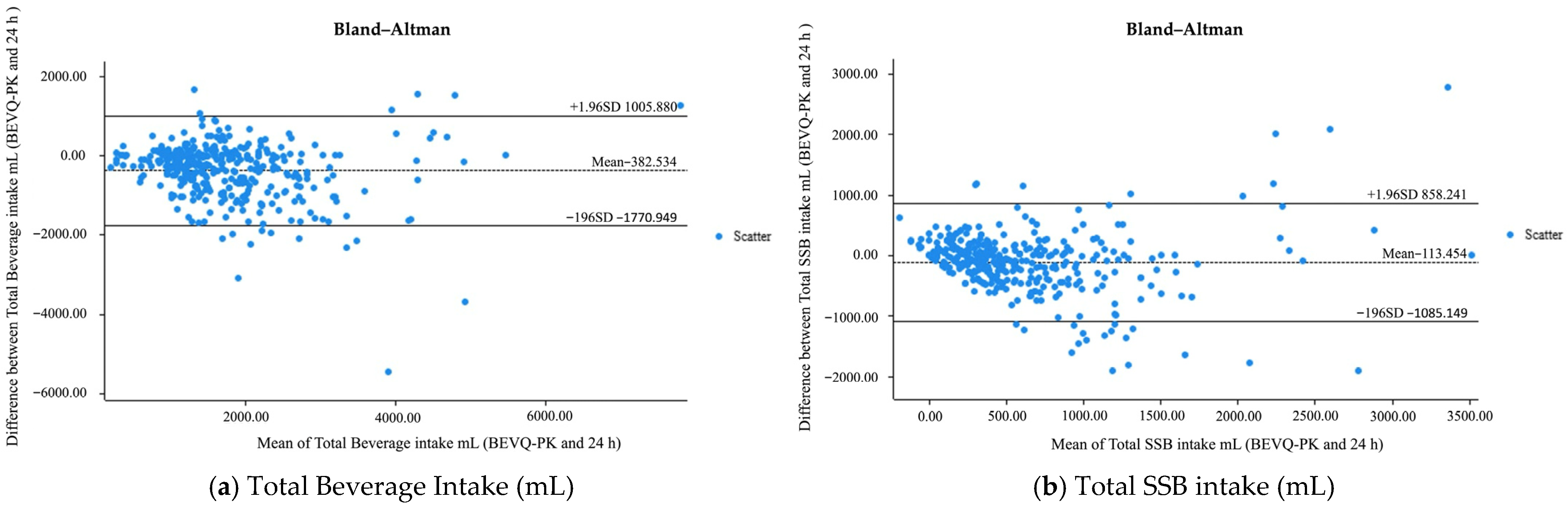
Figure 2 illustrates the Bland–Altman plots assessing the agreement between the BEVQ-PK and the 24 h dietary recalls (24 h). For total beverage intake (Figure 2a), the analysis revealed a mean positive bias of 382.5 mL/day (95% CI: 311.2, 453.9), indicating that the BEVQ-PK systematically estimated higher intake compared to the 24 h. The 95% limits of agreement (LOA) were wide, ranging from −1005.9 to 1770.9 mL/day.
Similarly, for total sugar-sweetened beverages (SSBs) (Figure 2b), a mean positive bias of 113.5 mL/day (95% CI: 63.5, 163.4) was observed. The 95% LOA for SSBs ranged from −858.2 to 1085.1 mL/day.
Visual inspection of both plots indicates heteroscedasticity, characterized by a widening of the difference scores as the mean intake increases. This suggests that the variability in reporting accuracy is greater among participants with higher beverage consumption levels. Despite the systematic bias and wide limits of agreement, the majority of data points fell within the 95% LOA, suggesting reasonable agreement for the majority of the study population.

3.3. Reliability Analysis of BEVQ-PK

Table 3 presents the reliability analysis of the modified 13-item BEVQ-PK among Pakistani university students. All beverage categories, as well as total sugar-sweetened beverages and total beverages (mL and kcal), showed significant correlations between BEVQ-PK1 (test) and BEVQ-PK2 (retest) responses (p < 0.001). Reliability was acceptable with r-values ranging from 0.5 to 0.9. Overall, these findings indicate good reliability of the BEVQ-PK, although minor differences in reporting intake were observed for soft drinks, tea or coffee, refreshing drinks, total SSBs, and total beverage intake, likely due to recall bias or methodological limitations.
Table 4 represents the reproducibility of the BEVQ-PK in Pakistani university students. The Intraclass Correlation Coefficients (ICCs) demonstrated moderate to good reliability for beverage consumption across categories. Plain water intake showed moderate reliability (ICC = 0.683, 95% CI: 0.63–0.73). Meanwhile, 100% fruit juice without added sugar and sweetened fruit juice exhibited good reliability (ICC = 0.785 and 0.807, respectively). Among milk types, flavored milk had the highest reliability (ICC = 0.853), followed by whole milk (ICC = 0.695), while skim milk and nut milk showed lower reliability (ICC = 0.470 and 0.524, respectively). Regular soft drinks, energy/sports drinks, and diet soft drinks all demonstrated good reliability (0.703 to 0.733). Beverages such as green tea, black tea, or black coffee showed strong reliability (ICC = 0.799 for volume and 0.919 for kcal intake). Tea or coffee with milk or cream showed good reliability. Refreshing drinks (e.g., Jam-e-Sheerin and Rooh Afzah) also exhibited good reliability (ICC = 0.779).
Total sugar-sweetened beverages showed strong reliability for volume (ICC = 0.754) and moderate reliability for energy intake (ICC = 0.628). Overall, total beverage consumption demonstrated moderate reliability for both volume (ICC = 0.689) and energy intake (ICC = 0.639). These findings indicate consistent reporting and stable consumption patterns for most beverage types within this population.

3.4. Sugar-Sweetened Beverage Consumption Among Pakistani University Students

Table 5 represents the mean daily consumption of sugar-sweetened beverages (SSBs) across demographic and socioeconomic characteristics. Significant differences in SSB intake were observed. Participants aged 24–26 years reported the highest SSB consumption (1137.8 ± 75.9 mL/day) compared to those aged ≤ 20 years (485.4 ± 35.6 mL/day, p < 0.001). Males reported higher intake (1045.9 ± 53.5 mL/day) than females (437.9 ± 30.4 mL/day, p < 0.001), and students from private universities consumed more than those from government institutes (748.3 ± 49.1 vs. 555.9 ± 37.8 mL/day, p = 0.002). Likewise, urban residents consumed significantly more SSBs (1059.1 ± 59.2 mL/day) than the rural residents (509.6 ± 32.2 mL/day, p < 0.001). Similarly, those living alone or in dormitories had higher SSB intake than those living with family (991.0 ± 49.0 vs. 451.0 ± 33.7 mL/day, p < 0.001). In contrast, no significant differences were observed across BMI categories (p = 0.363) and monthly income levels (p = 0.186).

4. Discussion

This study aimed to culturally adapt and validate the Beverage Intake Questionnaire for use among Pakistani university students, resulting in the 13-item BEVQ-PK. Given Pakistan’s distinct socio-cultural environment and dietary behaviors, cultural adaptation was essential to ensure that the tool accurately reflects local beverage habits, conceptual equivalence, enhanced respondent comprehension, and precise measurement of beverage intake, including sugar-sweetened beverage (SSB) consumption.
  • Cultural Adaptation and Relevance
Adapting scales to different cultural contexts is essential to ensure their efficacy and relevance across the diverse population, as differences in language, values, dietary patterns, and beliefs can affect responses. The cultural adaptation process required several key modifications to ensure the questionnaire’s relevance and appropriateness within the Pakistani context. The beverage categories were revised according to the commonly consumed beverages in the local population [35], and beverage categories such as wine, beer, and hard liquor were removed because they are both legally restricted and culturally inappropriate in Pakistan (a predominantly Muslim society). Retaining these items could have reduced respondent engagement and introduced inaccuracies in estimating total energy and SSB intake. Similarly, “sweet tea” was excluded from the original scale, as it is not widely consumed. Instead, the predominant beverage choice among Pakistanis is milk tea (chai) with added sugar. New categories, such as flavored milk and refreshing drinks, were introduced to capture the beverages commonly consumed by university students, particularly during social gatherings or in response to seasonal temperatures. Additionally, measurement units were converted from fluid ounces (fl oz) to milliliters (mL) to enhance comprehension, and several beverage categories were renamed to align with local terminology. These changes strengthen its relevance and improve the accuracy with which it measures the habitual beverage intake among Pakistani university students. Similar approaches have been successfully implemented in other regions, such as the adaptation of the BEVQ for Arabic-speaking adolescents and the Spanish population, where the cultural modifications improved the content validity and participant comprehension.
  • Validity and Reliability of BEVQ-PK
The findings of this study demonstrated that the BEVQ-PK exhibited acceptable levels of validity and reliability for assessing beverage intake among Pakistani university students. Most beverage categories showed moderate to strong correlations with the 24 h recall, and test–retest reliability fell within acceptable reproducibility thresholds. The validity coefficients of BEVQ-PK ranged from 0.4 to 0.8, and reliability coefficients ranged from 0.5 to 0.9, indicating strong psychometric properties [36]. Typically, FFQs are considered reproducible when correlations range from 0.5 to 0.7 [37]. These results are consistent with validation studies of culturally adapted beverage intake questionnaire in other populations, which have reported moderate to high validity and reliability [22,30,38,39]. For example, the Arabic version of the BEVQ achieved content validity index scores above 0.90, and the Spanish BEVQ-15 showed high test–retest reliability (kappa 0.82–0.93) [22,39]. Moreover, the updated 15-item BEVQ (BEVQ-15) demonstrated reproducibility ranges of r = 0.41–0.85 and high agreement (92–96%) with multiple 24 h recalls [10]. However, weaker correlations were observed for certain categories in our study (e.g., diet soft drinks and refreshing drinks), likely reflecting their irregular or context-dependent consumption, often influenced by situational factors such as social events or weather. Similar challenges have been reported in children and adolescents, where certain beverage categories exhibited lower validity, underscoring the inherent difficulty in accurately capturing occasional or context-specific drinks [24].
The Bland–Altman analysis confirmed that there was a systematic overestimation of BEVQ-PK compared to the 24 h dietary recall (24 h), with a mean deviation of 382.5 mL/day for total beverage intake and 113.5 mL/day for sugary drinks. This tendency to overestimate the Food Frequency Questionnaire (FFQ) is well documented in nutritional epidemiology [40,41,42]. This often stems from the cognitive process of estimating the frequency of “usual” intake, which can lead to overestimation compared to the specific, limited intake recorded in meal reviews. The analysis also revealed a wide boundary of agreement (LOA) and significant heteroscedasticity, i.e., the difference between the two methods increased at high intake levels. This pattern suggests that BEVQ-PK provides a more precise estimate for people with low to moderate intake, but the margin of error may be greater for people with high intake. This is a common phenomenon in dietary assessment, as quantifying large and irregular intakes relies heavily on memory and portion estimates, which become more difficult as intake increases. In addition, the Greater Limit of Concordance (LOA) partly reflects conceptual differences between the two measurement tools: BEVQ-PK assesses habitual intake over the past month, while the 24 h dietary recall (24 h) records acute intake on a specific day, which is more affected by daytime fluctuations (e.g., by weather or social activities). Therefore, the observed differences represent not only measurement errors, but also the differences inherent between habitual and acute intake measurements. Despite these differences, the strong correlation and the fact that most data points remain within the limits of agreement suggest that BEVQ-PK can be used to rank individuals and describe the dietary patterns of this population.
With Intraclass Correlation Coefficients (ICCs) ranging from moderate to strong across beverage categories, the test–retest reliability results further support the robustness of the BEVQ-PK, demonstrating stable and consistent reporting over time. Flavored milk, sweetened fruit juice, and 100% fruit juice showed good reliability, while regular soft drinks, energy drinks, and tea/coffee with milk also demonstrated good reliability. Beverages such as skim milk and nut milk exhibited comparatively lower ICCs, reflecting their irregular or low-frequency consumption among university students. Notably, green tea, black tea, and black coffee showed strong reliability for both volume (ICC = 0.80) and energy intake (ICC = 0.92), indicating consistent habitual intake. The results for total sugar-sweetened beverages (and total beverages) also fell within acceptable reliability thresholds. These findings align with previous BEVQ validation studies, where ICC values typically ranged between 0.60 and 0.85, demonstrating that the BEVQ-PK performs comparably to culturally adapted versions in other populations.
In general, a slight but systematic over-estimation was evident for the BEVQ-PK compared to the 24 h response. As with other BEVQ validations, BEVQ-PK tends to overestimate usual intake compared with 24 h data, showing that FFQs are designed to assess habitual consumption over time rather than precise day-to-day intake. Despite this tendency, the majority of beverage categories, including SSB and total beverages, fell within the accepted reproducibility range. Importantly, BEVQ-PK reflects general beverage preferences rather than short-term consumption, making it a more suitable tool for assessing overall beverage intake patterns.
  • Patterns of Beverage Consumption
This study highlights that sweetened tea and coffee are the most commonly consumed beverages among Pakistani university students, followed by soft drinks, green tea, black tea or black coffee, and other refreshing drinks. These findings align with research from other countries, where sweetened coffee and tea are also the most popular SSBs consumed among university students [43], while soft drinks remain a staple among undergraduate students in the United States, Bangladesh, and Saudi Arabia [44,45,46]. The high consumption of coffee and tea among college and university students is often attributed to improving concentration. Previous studies have shown that the possible reasons behind the high consumption of coffee among college and university students include helping them concentrate, keeping them awake during examination preparation, and attending early classes [47,48].
  • Demographic and Socioeconomic Influences
Our study found that SSB consumption was highest among students aged 24–26 years, suggesting that intake increases with age, likely due to evolving taste preferences and greater financial independence. This trend is consistent with previous studies reporting increased SSB intake with age [49,50]. Furthermore, males consumed more SSBs than females, a pattern observed in both local and international research, possibly due to high caloric needs and social factors [51,52,53]. Additionally, students living alone reported higher SSB intake compared to those living with family, which may reflect the influence of family environment in promoting healthier dietary practices and limiting discretionary spending on SSBs [54,55]. Moreover, socioeconomic status also appeared to influence beverage intake; students from private universities and urban areas consumed more SSBs, likely due to higher socioeconomic status and greater access to convenience stores and vending machines offering a wide variety of SSBs, and underscoring the impact of urbanization, greater availability, and lifestyle differences in dietary choices [56,57,58].
The high consumption of SSBs among university students is concerning, given its association with increased BMI. University food environments, taste preferences, and marketing exposure play significant roles in shaping beverage choices. These findings underscore the need for targeted interventions such as educational campaigns and policy measures to reduce SSB intake and promote healthier alternatives among young adults.
  • Strengths and Limitations
This study has several strengths. It successfully adapted and validated the Beverage Intake Questionnaire for use in Pakistan, ensuring cultural relevance and alignment with local dietary norms. Moreover, the focus on university students is advantageous, as they have greater autonomy in personal choices and a higher level of education, which may enhance understanding of the questionnaire and reduce survey bias.
A limitation of this study is that artificially sweetened beverages (ASBs), such as diet soft drinks and other sugar-free beverages, were classified within the broader non-sugar-sweetened beverages (non-SSBs) category rather than being analyzed separately. Although sugar-sweetened beverages (SSBs) were clearly identified, this approach did not allow an independent validation of ASB intake. The combined assessment of SSBs and non-SSBs may mask potential differences in the health and metabolic effects of sugar-sweetened versus artificially sweetened beverages. Despite this limitation, the BEVQ-Pakistan is validated for assessing overall beverage intake and for distinguishing between SSBs and non-SSBs among Pakistani university students. Future studies may further refine beverage subcategories and validate ASB intake separately to support more detailed dietary and public health analyses. A key limitation of this study is also that our sample consisted exclusively of university students, a group that is generally more privileged, better educated, and living in an urban area. This limitation highlights the need for future research to include a more diverse and representative sample across various regions and demographic groups. Moreover, the use of convenience sampling and restriction to just three cities further limits the generalizability of the results. While university students offer a valuable population for studying beverage intake due to their autonomy and literacy, broader sampling strategies are essential to capture the full spectrum of beverage consumption behaviors in Pakistan. Furthermore, this study used a 24 h recall with some recall bias, so future research could incorporate multiple measurements, long-term follow-up, or additional dietary assessment methods (such as a diet diary or weighing) to enhance accuracy and reliability. Finally, this study only allows cross-cultural comparisons among university students; its applicability to other age groups requires further evaluation.

5. Conclusions

After cross-cultural adaptation, BEVQ-PK encompasses 13 beverage categories. The intake estimates derived from this instrument demonstrate good alignment with those obtained from 24 h dietary recalls, indicating robust reliability and validity. Consequently, BEVQ-PK can be used as a simple yet effective tool for assessing the consumption of sugary drinks among Pakistani university students. Future research should focus on further validation and refinement of this questionnaire to ensure its applicability across diverse age groups within Pakistan, as well as its potential adaptation for broader use in South Asian populations. By providing standardized and reliable data on beverage consumption, the BEVQ-PK can play a pivotal role in informing evidence-based nutrition policies and guiding public health interventions designed to mitigate the growing burden of sugar-sweetened beverage consumption and its associated metabolic health risks.

Supplementary Materials

The following supporting information can be downloaded at: https://www.mdpi.com/article/10.3390/beverages12010011/s1, Table S1: Cultural Modifications of the Beverage Intake Questionnaire.

Author Contributions

Conceptualization, Q.L. and A.Z.; methodology, A.Z.; software, A.Z., Y.L., and M.J.K.; validation, A.Z.; formal analysis, A.Z. and Y.L.; investigation, A.Z. and M.J.K.; resources, Q.L.; data curation, A.Z.; writing—original draft preparation, A.Z. and Y.L.; writing—review and editing, W.X.; visualization, A.Z. and Y.L.; supervision, Q.L.; project administration, Q.L.; funding acquisition, Q.L. All authors have read and agreed to the published version of the manuscript.

Funding

This research did not receive any specific grant from funding agencies in the public, commercial, or not-for-profit sectors.

Institutional Review Board Statement

This study was approved by the Ethics Review Committee of the Xiangya School of Public Health, Central South University (protocol code: XYGW-2023-36 and date of approval: 8 March 2023), and was carried out according to the guidelines of the Declaration of Helsinki.

Informed Consent Statement

Informed consent was obtained from all participants involved in the study.

Data Availability Statement

The data that support the findings of this study are not publicly available due to the data containing information that could compromise participants’ privacy, but are available from the corresponding author on reasonable request.

Acknowledgments

We would like to thank Fahid Nazir, Muhammad Israr, and Bilal Khan for their assistance in the distribution and collection of the questionnaires. We would like to thank and appreciate the teachers and leaders from the universities for their support. We also thank all participants for their time and cooperation.

Conflicts of Interest

The authors declare no conflicts of interest. The funders had no role in the design of the study; in the collection, analyses, or interpretation of data; in the writing of the manuscript; or in the decision to publish the results.

Abbreviations

The following abbreviations are used in this manuscript:
SSBsSugar-Sweetened Beverages
BEVQ-PKBeverage Intake Questionnaire for Pakistan
BEVQBeverage Intake Questionnaire
24 h24 h Dietary Recall
FFQFood Frequency Questionnaire

Appendix A

Figure A1. Original Beverage Intake Questionnaire (BEVQ-15). Beverage Intake Questionnaire used for cultural adaptation and validation of the BEVQ-PK. Adapted from the Beverage Intake Questionnaire developed at Virginia Tech (2016).
Beverages 12 00011 g0a1
Figure A2. Culturally adapted and validated Beverage Intake Questionnaire for Pakistan (BEVQ-PK). The different background colors in the table header distinguish frequency of consumption and amount consumed per occasion. Bold text indicates main beverage categories, underlined text denotes sub-items within beverage categories (e.g., type of sweetener, milk, or creamer), and circle represent selectable response options for participants.
Beverages 12 00011 g0a2

References

  1. Malik, V.S.; Hu, F.B. The role of sugar-sweetened beverages in the global epidemics of obesity and chronic diseases. Nat. Rev. Endocrinol. 2022, 18, 205–218. [Google Scholar] [CrossRef]
  2. Datta, B.K.; Husain, M.J. Carbonating the household diet: A Pakistani tale. Public Health Nutr. 2020, 23, 1629–1637. [Google Scholar] [CrossRef] [PubMed]
  3. AlFaris, N.A.; Alshwaiyat, N.M.; Alkhalidy, H.; AlTamimi, J.Z.; Alagal, R.I.; Alsaikan, R.A.; Alsemari, M.A.; BinMowyna, M.N.; AlKehayez, N.M. Sugar-sweetened beverages consumption in a multi-ethnic population of middle-aged men and association with sociodemographic variables and obesity. Front. Nutr. 2022, 9, 987048. [Google Scholar] [CrossRef]
  4. Goh, E.V.; Sobratee-Fajurally, N.; Allegretti, A.; Sardeshpande, M.; Mustafa, M.; Azam-Ali, S.H.; Omari, R.; Schott, J.; Chimonyo, V.G.P.; Weible, D. Transforming food environments: A global lens on challenges and opportunities for achieving healthy and sustainable diets for all. Front. Sustain. Food Syst. 2024, 8, 1366878. [Google Scholar] [CrossRef] [PubMed]
  5. Schulze, M.B.; Manson, J.E.; Ludwig, D.S.; Colditz, G.A.; Stampfer, M.J.; Willett, W.C.; Hu, F.B. Sugar-sweetened beverages, weight gain, and incidence of type 2 diabetes in young and middle-aged women. JAMA 2004, 292, 927–934. [Google Scholar] [CrossRef] [PubMed]
  6. Hur, J.; Otegbeye, E.; Joh, H.K.; Nimptsch, K.; Ng, K.; Ogino, S.; Meyerhardt, J.A.; Chan, A.T.; Willett, W.C.; Wu, K.; et al. Sugar-sweetened beverage intake in adulthood and adolescence and risk of early-onset colorectal cancer among women. Gut 2021, 70, 2330–2336. [Google Scholar] [CrossRef]
  7. Makarem, N.; Bandera, E.V.; Nicholson, J.M.; Parekh, N. Consumption of Sugars, Sugary Foods, and Sugary Beverages in Relation to Cancer Risk: A Systematic Review of Longitudinal Studies. Annu. Rev. Nutr. 2018, 38, 17–39. [Google Scholar] [CrossRef]
  8. Bleich, S.N.; Vercammen, K.A. The negative impact of sugar-sweetened beverages on children’s health: An update of the literature. BMC Obes. 2018, 5, 6. [Google Scholar] [CrossRef]
  9. Calcaterra, V.; Cena, H.; Magenes, V.C.; Vincenti, A.; Comola, G.; Beretta, A.; Di Napoli, I.; Zuccotti, G. Sugar-Sweetened Beverages and Metabolic Risk in Children and Adolescents with Obesity: A Narrative Review. Nutrients 2023, 15, 702. [Google Scholar] [CrossRef]
  10. Fausnacht, A.G.; Myers, E.A.; Hess, E.L.; Davy, B.M.; Hedrick, V.E. Update of the BEVQ-15, a beverage intake questionnaire for habitual beverage intake for adults: Determining comparative validity and reproducibility. J. Hum. Nutr. Diet. 2020, 33, 729–737. [Google Scholar] [CrossRef]
  11. Lara-Castor, L.; Micha, R.; Cudhea, F.; Miller, V.; Shi, P.; Zhang, J.; Sharib, J.R.; Erndt-Marino, J.; Cash, S.B.; Mozaffarian, D.; et al. Sugar-sweetened beverage intakes among adults between 1990 and 2018 in 185 countries. Nat. Commun. 2023, 14, 5957. [Google Scholar] [CrossRef]
  12. Levy, D.T.; Friend, K.B.; Wang, Y.C. A review of the literature on policies directed at the youth consumption of sugar sweetened beverages. Adv. Nutr. 2011, 2, 182S–200S. [Google Scholar] [CrossRef]
  13. Ooi, J.Y.; Wolfenden, L.; Sutherland, R.; Nathan, N.; Oldmeadow, C.; McLaughlin, M.; Barnes, C.; Hall, A.; Vanderlee, L.; Yoong, S.L. A Systematic Review of the Recent Consumption Levels of Sugar-Sweetened Beverages in Children and Adolescents From the World Health Organization Regions With High Dietary-Related Burden of Disease. Asia Pac. J. Public Health 2022, 34, 11–24. [Google Scholar] [CrossRef]
  14. Andreyeva, T.; Marple, K.; Marinello, S.; Moore, T.E.; Powell, L.M. Outcomes Following Taxation of Sugar-Sweetened Beverages: A Systematic Review and Meta-analysis. JAMA Netw. Open 2022, 5, e2215276. [Google Scholar] [CrossRef] [PubMed]
  15. Johnson, R.K. Reducing Intake of Sugar-Sweetened Beverages Is Vital to Improving Our Nation’s Health. Circulation 2016, 133, 347–349. [Google Scholar] [CrossRef] [PubMed]
  16. Huang, Y.; Chen, Z.; Chen, B.; Li, J.; Yuan, X.; Li, J.; Wang, W.; Dai, T.; Chen, H.; Wang, Y.; et al. Dietary sugar consumption and health: Umbrella review. BMJ 2023, 381, e071609. [Google Scholar] [CrossRef] [PubMed]
  17. Afaq, S.; Chandrasenage, D.; Ashfaq, U.; Farzeen, M.; Iqbal, R.; Suhrcke, M.; Siddiqi, K.; Kanaan, M.; Zavala, G.A. Consumption of commercial and traditional sugar-sweetened beverages among adolescents in Pakistan: Evidence from a national survey. Front. Nutr. 2025, 12, 1679917. [Google Scholar] [CrossRef]
  18. Irfan, T.; Samreen, M.; Javed, M.; Batool, A.; Batool, M.; Kashif, A. Sugar-sweetened beverage consumption patterns and health outcomes among young adults aged 18–35 years. Pak. J. Med. Cardiol. Rev. 2025, 4, 90–99. [Google Scholar]
  19. Hedrick, V.E.; Savla, J.; Comber, D.L.; Flack, K.D.; Estabrooks, P.A.; Nsiah-Kumi, P.A.; Ortmeier, S.; Davy, B.M. Development of a brief questionnaire to assess habitual beverage intake (BEVQ-15): Sugar-sweetened beverages and total beverage energy intake. J. Acad. Nutr. Diet. 2012, 112, 840–849. [Google Scholar] [CrossRef]
  20. Freedman, L.S.; Commins, J.M.; Willett, W.; Tinker, L.F.; Spiegelman, D.; Rhodes, D.; Potischman, N.; Neuhouser, M.L.; Moshfegh, A.J.; Kipnis, V.; et al. Evaluation of the 24-Hour Recall as a Reference Instrument for Calibrating Other Self-Report Instruments in Nutritional Cohort Studies: Evidence From the Validation Studies Pooling Project. Am. J. Epidemiol. 2017, 186, 73–82. [Google Scholar] [CrossRef]
  21. Mohseni, Z.; Tumin, D.; Collier, D.N.; Taft, N.; Lazorick, S. Longitudinal Patterns of Beverage Intake in Treatment-Seeking Children with Obesity in Eastern NC Using the Validated BEVQ-15. Nutrients 2023, 15, 4171. [Google Scholar] [CrossRef]
  22. Alkinani, A.A.; Rohana, A.J.; Hasan, R.; WMA, W.A.; Al-Badri, S.A. Translation and Validation of a Culturally Adapted Arabic Version of the Beverage Intake Questionnaire (BEVQ). Cureus 2024, 16, e71710. [Google Scholar] [CrossRef]
  23. Zhuang, X.; Liu, Y.; Gittelsohn, J.; Lewis, E.; Song, S.; Ma, Y.; Wen, D. Sugar-Sweetened Beverages Consumption and Associated Factors among Northeastern Chinese Children. Nutrients 2021, 13, 2233. [Google Scholar] [CrossRef]
  24. Hill, C.E.; MacDougall, C.R.; Riebl, S.K.; Savla, J.; Hedrick, V.E.; Davy, B.M. Evaluation of the Relative Validity and Test-Retest Reliability of a 15-Item Beverage Intake Questionnaire in Children and Adolescents. J. Acad. Nutr. Diet. 2017, 117, 1757–1766.e1755. [Google Scholar] [CrossRef]
  25. Hafeez, M.A.; Siddique, U.; Sabir, S.; Suleman, R.; Syed, F. A Brief Review of Environmental Factors Influencing Adult’s Eating Behaviors. J. Health Clim. Change 2025, 4, 15. [Google Scholar]
  26. Houri, A.; Safadi, A. Biochemical Perspective of Alcohol Prohibition in Islam and Implications on Legal Alcohol Content of Drinks in Islamic Countries. Ar-Raniry Int. J. Islam. Stud. 2016, 3, 249–270. [Google Scholar]
  27. Bowen, S.; Hussain, M. Shared Culture and Heritage along the Belt and Road: A Study of Pakistani Tea. J. Dev. Soc. Sci. 2024, 5, 668–681. [Google Scholar]
  28. Abdel Rahman, A.; Jomaa, L.; Kahale, L.A.; Adair, P.; Pine, C. Effectiveness of behavioral interventions to reduce the intake of sugar-sweetened beverages in children and adolescents: A systematic review and meta-analysis. Nutr. Rev. 2018, 76, 88–107. [Google Scholar] [CrossRef] [PubMed]
  29. Hedrick, V.E. Development and Evaluation of a Brief Questionnaire to Assess Habitual Beverage Intake (BEVQ-15): Sugar-Sweetened Beverages and Total Beverage Energy Intake; Virginia Tech: Blacksburg, VA, USA, 2011. [Google Scholar]
  30. Lora, K.R.; Davy, B.; Hedrick, V.; Ferris, A.M.; Anderson, M.P.; Wakefield, D. Assessing initial validity and reliability of a beverage intake questionnaire in Hispanic preschool-aged children. J. Acad. Nutr. Diet. 2016, 116, 1951–1960. [Google Scholar] [CrossRef] [PubMed]
  31. Stote, K.S.; Radecki, S.V.; Moshfegh, A.J.; Ingwersen, L.A.; Baer, D.J. The number of 24 h dietary recalls using the US Department of Agriculture’s automated multiple-pass method required to estimate nutrient intake in overweight and obese adults. Public Health Nutr. 2011, 14, 1736–1742. [Google Scholar] [PubMed]
  32. DiGrande, L.; Pedrazzani, S.; Kinyara, E.; Hymes, M.; Karns, S.; Rhodes, D.; Moshfegh, A. Field Interviewer–Administered Dietary Recalls in Participants’ Homes; RTI Press: Durham, NC, USA, 2021. [Google Scholar]
  33. Posner, B.M.; Borman, C.; Morgan, J.; Borden, W.; Ohls, J. The validity of a telephone-administered 24-hour dietary recall methodology. Am. J. Clin. Nutr. 1982, 36, 546–553. [Google Scholar] [CrossRef]
  34. Gibson, A.A.; Hsu, M.S.; Rangan, A.M.; Seimon, R.V.; Lee, C.M.; Das, A.; Finch, C.H.; Sainsbury, A. Accuracy of hands v. household measures as portion size estimation aids. J. Nutr. Sci. 2016, 5, e29. [Google Scholar]
  35. Vercammen, K.A.; Frelier, J.M.; Lowery, C.M.; McGlone, M.E.; Ebbeling, C.B.; Bleich, S.N. A systematic review of strategies to reduce sugar-sweetened beverage consumption among 0-year to 5-year olds. Obes. Rev. 2018, 19, 1504–1524. [Google Scholar] [CrossRef] [PubMed]
  36. Hedrick, V.E.; Comber, D.L.; Estabrooks, P.A.; Savla, J.; Davy, B.M. The beverage intake questionnaire: Determining initial validity and reliability. J. Am. Diet. Assoc. 2010, 110, 1227–1232. [Google Scholar] [CrossRef]
  37. Willett, W.C. Future directions in the development of food-frequency questionnaires. Am. J. Clin. Nutr. 1994, 59, 171S–174S. [Google Scholar] [CrossRef]
  38. Bouallalene-Jaramillo, K.; Rodríguez-Baeza, A. Validation of the brief questionnaire to assess habitual beverage intake (BEVQ-15) for Spanish population. J. Urol. Nephrol. Open Access 2017, 3, 1–6. [Google Scholar] [CrossRef]
  39. Vezina-Im, L.-A.; Beaulieu, D.; Turcotte, S.; Savard, C.; Lemieux, S.; Boucher, D.; Gallani, M.-C.; Paquette, M.-C. Validation of a questionnaire measuring the consumption of sugary drinks, juices and water among French-speaking adolescents. Can. J. Diet. Pract. Res. 2023, 84, 141–148. [Google Scholar] [PubMed]
  40. Hjartåker, A.; Andersen, L.F.; Lund, E. Comparison of diet measures from a food-frequency questionnaire with measures from repeated 24-hour dietary recalls. The Norwegian Women and Cancer Study. Public Health Nutr. 2007, 10, 1094–1103. [Google Scholar]
  41. Sabir, Z.; Rosendahl-Riise, H.; Dierkes, J.; Dahl, H.; Hjartåker, A. Comparison of dietary intake measured by a web-based FFQ and repeated 24-hour dietary recalls: The Hordaland Health Study. J. Nutr. Sci. 2022, 11, e98. [Google Scholar] [CrossRef]
  42. El Sayed Ahmad, R.; Baroudi, M.; Shatila, H.; Nasreddine, L.; Chokor, F.A.Z.; Chehab, R.F.; Forman, M.R.; Naja, F. Validity and reproducibility of a culture-specific food frequency questionnaire in Lebanon. Nutrients 2020, 12, 3316. [Google Scholar] [CrossRef]
  43. Ahmad, N.; Zuki, M.A.-M.; Azahar, N.A.; Khor, B.H.; Minhat, H.S. Prevalence and Factors Associated with Sugar-Sweetened Beverage Intake among Undergraduate Students in a Public University in Malaysia. Pak. J. Nutr. 2019, 18, 354–363. [Google Scholar] [CrossRef]
  44. Bipasha, M.S.; Raisa, T.S.; Goon, S. Sugar Sweetened Beverages Consumption among University Students of Bangladesh. Int. J. Public Health Sci. 2017, 6, 157–163. [Google Scholar] [CrossRef]
  45. Otaibi, H.H.A. Sugar Sweetened Beverages Consumption Behavior and Knowledge among University Students in Saudi Arabia Risk on Internet Banking Acceptance from the User Perspective. J. Econ. Bus. Manag. 2017, 5, 173–176. [Google Scholar] [CrossRef]
  46. West, D.S.; Bursac, Z.; Quimby, D.; Prewitt, T.E.; Spatz, T.; Nash, C.; Mays, G.; Eddings, K. Self-reported sugar-sweetened beverage intake among college students. Obesity 2006, 14, 1825–1831. [Google Scholar]
  47. Olsen, N.L. Caffeine Consumption Habits and Perceptions Among University of New Hampshire Students. Bachelor’s Thesis, University of New Hampshire, Durham, NH, USA, 2013. [Google Scholar]
  48. McIlvain, G.E.; Noland, M.P.; Bickel, R. Caffeine Consumption Patterns and Beliefs of College Freshmen. Am. J. Health Educ. 2013, 42, 235–244. [Google Scholar] [CrossRef]
  49. Goh, D.Y.; Jacob, A. Children’s consumption of beverages in Singapore: Knowledge, attitudes and practice. J. Paediatr. Child Health 2011, 47, 465–472. [Google Scholar] [CrossRef] [PubMed]
  50. Quah, P.L.; Kleijweg, J.; Chang, Y.Y.; Toh, J.Y.; Lim, H.X.; Sugianto, R.; Aris, I.M.; Yuan, W.L.; Tint, M.T.; Bernard, J.Y.; et al. Association of sugar-sweetened beverage intake at 18 months and 5 years of age with adiposity outcomes at 6 years of age: The Singapore GUSTO mother-offspring cohort. Br. J. Nutr. 2019, 122, 1303–1312. [Google Scholar] [CrossRef] [PubMed]
  51. Park, S.; Blanck, H.M.; Sherry, B.; Brener, N.; O’Toole, T. Factors associated with sugar-sweetened beverage intake among United States high school students. J. Nutr. 2012, 142, 306–312. [Google Scholar] [CrossRef]
  52. Park, S.; Sherry, B.; Foti, K.; Blanck, H.M. Self-reported academic grades and other correlates of sugar-sweetened soda intake among US adolescents. J. Acad. Nutr. Diet. 2012, 112, 125–131. [Google Scholar] [CrossRef]
  53. Evans, A.E.; Springer, A.E.; Evans, M.H.; Ranjit, N.; Hoelscher, D.M. A descriptive study of beverage consumption among an ethnically diverse sample of public school students in Texas. J. Am. Coll. Nutr. 2010, 29, 387–396. [Google Scholar] [CrossRef]
  54. AlTamimi, J.Z.; Alshwaiyat, N.M.; Alkhalidy, H.; AlKehayez, N.M.; Alagal, R.I.; Alsaikan, R.A.; Alsemari, M.A.; BinMowyna, M.N.; AlFaris, N.A. Sugar-Sweetened Beverages Consumption in a Multi-Ethnic Population of Young Men and Association with Sociodemographic Characteristics and Obesity. Int. J. Environ. Res. Public Health 2023, 20, 4861. [Google Scholar] [CrossRef] [PubMed]
  55. McNaughton, S.A.; Leech, R.M.; Pendergast, F.J.; Worsley, A. Sugar-Sweetened Beverage Consumption in Young Adults: Understanding Eating Occasion Contextual Factors. FASEB J. 2017, 31, 136.5. [Google Scholar] [CrossRef]
  56. Richardson, A.S.; Nicosia, N.; Ghosh-Dastidar, M.B.; Datar, A. School Food and Beverage Availability and Children’s Diet, Purchasing, and Obesity: Evidence From a Natural Experiment. J. Adolesc. Health 2020, 67, 804–813. [Google Scholar] [CrossRef]
  57. Carmo, A.S.D.; Assis, M.M.; Cunha, C.F.; Oliveira, T.; Mendes, L.L. The food environment of Brazilian public and private schools. Cad. Saude Publica 2018, 34, e00014918. [Google Scholar] [CrossRef]
  58. Galvez, M.P.; Hong, L.; Choi, E.; Liao, L.; Godbold, J.; Brenner, B. Childhood obesity and neighborhood food-store availability in an inner-city community. Acad. Pediatr. 2009, 9, 339–343. [Google Scholar] [CrossRef] [PubMed]
Figure 1. Study procedure for evaluating the validity and reliability of BEVQ-PK.
Beverages 12 00011 g001
Figure 2. Bland–Altman Plots assessing the agreement between the Beverage Intake Questionnaire (BEVQ-PK) and the 24-hour dietary recall. The upper and lower dashed lines represent the 95% limits of agreement (LOA), calculated as the mean difference ± 1.96 standard deviations (SDs) of the difference.
Beverages 12 00011 g002
Table 1. General demographic characteristics of study population.
CharacteristicsFrequency (Percentage)
Gender
Female252 (66.1)
Male129 (33.9)
Age (years)
≤20 yrs (18–20 yrs)186 (48.8)
21–23 yrs133 (34.9)
24–26 yrs62 (16.3)
BMI
Underweight
(<18.5 kg/m2)
86 (22.6)
Normal weight
(18.5–24.9 kg/m2)
216 (56.7)
Overweight/obese
(≥25.0 kg/m2)
79 (20.7)
University type
Government/public207 (54.3)
Private174 (45.7)
Locality
Urban288 (75.6)
Rural93 (24.4)
Living status
Alone/dormitory136 (35.7)
Family245 (64.3)
Monthly expendable income
Low259 (68.0)
Medium92 (24.1)
High30 (7.9)
Monthly expendable income: Low = less than PKR 10,000; Medium = PKR 10,000–20,000; High = more than PKR 20,000.
Table 2. Validity analysis of Beverage Intake Questionnaire (BEVQ-PK) in Pakistani university students (mean ± standard error, n = 381).
Beverage CategoryBEVQ-PK1 (Test)24 hDifference with BEVQ-PK1 (Test) CCorrelation (r)
Plain water (mL/d)804.3 ± 22.8787.5 ± 19.916.8 ± 17.50.672 ***
100% Fruit juice (No added sugar)
mL/d104.6 ± 10.175.7 ± 9.328.9 ± 9.6 **0.511 ***
kcal65.9 ± 6.347.5 ± 5.818.3 ± 6.0 **0.511 ***
Sweetened fruit juice (added sugar)
mL/d98.7 ± 7.270.4 ± 6.328.4 ± 6.7 ***0.518 ***
kcal46.4 ±3.433.3 ± 3.013.1 ± 3.2 ***0.518 ***
Whole milk
mL/d132.9 ± 8.295.0 ± 7.837.9 ± 7.2 ***0.597 ***
kcal86.4 ± 5.362.2 ± 5.124.3 ± 5.0 ***0.597 ***
Skim milk
mL/d59.9 ± 7.554.0 ± 5.72.3 ± 6.40.565 ***
kcal22.2 ± 3.2321.1 ± 2.11.0 ± 2.30.565 ***
Flavored milk
mL/d15.5 ± 3.025.2 ± 5.5−9.1 ± 5.00.409 ***
kcal6.8 ± 1.911.1 ± 2.4−4.2 ± 2.20.409 ***
Nut milk
mL/d49.8 ± 7.516.7 ± 3.833.1 ± 6.8 ***0.423 ***
kcal15.4 ± 2.34.0 ± 0.911.4 ± 2.1 ***0.422 ***
Soft drinks, regular drinks
mL/d154.3 ± 11.975.9 ± 8.778.4 ± 10.4 ***0.529 ***
kcal64.8 ± 5.031.6 ± 3.633.3 ± 4.4 ***0.529 ***
Energy or sports drinks
mL/d28.7 ± 5.935.1 ± 7.3−6.4 ± 6.20.585 ***
kcal13.2 ± 2.716.1 ± 3.3−2.9 ± 2.80.585 ***
Diet soft drinks and diet energy drinks
mL/d63.5 ± 7.418.2 ± 3.845.2 ± 7.5 ***0.207 ***
kcal1.9 ± 0.20.5 ± 0.11.4 ± 0.2 ***0.207 ***
Green tea, Black tea or black coffee
mL/d138.4 ± 11.3100.8 ± 10.537.63 ± 8.8 ***0.679 ***
kcal10.7 ± 0.92.1 ± 0.28.7 ± 0.8 ***0.639 ***
Tea or coffee (milk or cream)
mL/d208.1 ± 12.4195.1 ± 10.713.0 ± 11.00.555 ***
kcal22.2 ± 1.419.5 ± 1.12.7 ± 1.2 *0.552 ***
Refreshing drinks (Jam-e-Sheerin/Rooh Afzah, and Squash)
mL/d102.5 ± 9.928.0 ± 5.674.5 ± 10.20.219 ***
kcal19.5 ± 1.895.2 ± 1.014.3 ± 1.90.219 ***
Total sugar-sweetened beverages
mL/d643.8 ± 30.9530.3 ± 29.7113.5 ± 25.4 ***0.648 ***
kcal200.9 ± 10.2135.0 ± 11.966.0 ± 9.1 ***0.670 ***
Total beverages
mL/d1963.5 ± 52.71580.9 ± 47.0382.5 ± 36.3 ***0.738 ***
kcal376.2 ± 17.2254.2 ± 16.1122.0 ± 11.8 ***0.752 ***
Validity was assessed by comparing BEVQ-PK1 (test) with 24 h recall responses (24 h); * p < 0.05, ** p < 0.01, *** p < 0.001. C Mean differences according to a paired sample t-test. Total sugar-sweetened beverages include all beverages with added sugar.
Table 3. Reliability analysis of Beverage Intake Questionnaire (BEVQ-PK) in Pakistani university students (mean ± standard error, n = 381).
Beverage CategoryBEVQ-PK1 (Test)BEVQ-PK2 (Retest)Difference with BEVQ-PK2 (Retest) CCorrelation (r)
Plain water (mL/d)804.3 ± 22.8782.0 ± 20.221.9 ± 17.10.688 ***
100% Fruit juice (No added sugar)
mL/d104.6 ± 10.192.2 ± 8.811.7 ± 6.20.793 ***
kcal65.9 ± 6.365.9 ± 6.37.3 ± 3.90.793 ***
Sweetened fruit juice (added sugar)
mL/d98.7 ± 7.2135.3 ± 8.08.0 ± 4.30.811 ***
kcal46.4 ±3.488.0 ± 5.23.8 ± 2.00.811 ***
Whole milk
mL/d132.9 ± 8.246.9 ± 5.5−2.4 ± 6.30.694 ***
kcal86.4 ± 5.317.3 ± 2.0−2.0 ± 4.10.694 ***
Skim milk
mL/d59.9 ± 7.516.2 ± 3.113.0 ± 6.70.496 ***
kcal22.2 ± 3.237.1 ± 1.34.8 ± 2.50.496 ***
Flavored milk
mL/d15.5 ± 3.038.7 ± 4.9−0.6 ± 1.60.853 ***
kcal6.8 ± 1.911.5 ± 1.5−0.3 ± 0.70.853 ***
Nut milk
mL/d49.8 ± 7.538.7 ± 4.911.1 ± 6.20.571 ***
kcal15.4 ± 2.311.5 ± 1.53.9 ± 1.9 *0.571 ***
Soft drinks, regular drinks
mL/d154.3 ± 11.9133.3 ± 10.520.9 ± 8.2 *0.742 ***
kcal64.8 ± 5.055.9 ± 4.48.8 ± 3.4 *0.742 ***
Energy or sports drinks
mL/d28.7 ± 5.922.9 ± 4.57.8 ± 4.00.735 ***
kcal13.2 ± 2.710.5 ± 2.12.6 ± 1.90.735 ***
Diet soft drinks and diet energy drinks
mL/d63.5 ± 7.460.5 ± 6.72.9 ± 5.40.705 ***
kcal1.9 ± 0.21.8 ± 0.20.1 ± 0.20.705 ***
Green tea, Black tea or black coffee
mL/d138.4 ± 11.3130.3 ± 11.48.1 ± 7.20.799 ***
kcal10.7 ± 0.99.7 ± 0.91.0 ± 0.4 *0.921 ***
Tea or coffee (milk or cream)
mL/d208.1 ± 12.4177.1 ± 11.730.1 ± 8.7 ***0.743 ***
kcal22.2 ± 1.418.9 ± 1.23.26 ± 0.9 ***0.721 ***
Refreshing drinks (Jam-e-Sheerin/Rooh Afzah, and Squash)
mL/d102.5 ± 9.987.2 ± 8.915.3 ± 6.3 *0.785 ***
kcal19.5 ± 1.8916.6 ± 1.72.9 ± 1.2 *0.785 ***
Total sugar-sweetened beverages
mL/d643.8 ± 30.9569.5 ± 27.574.3 ± 20.2 ***0.765 ***
kcal200.9 ± 10.2159.3 ± 7.741.7 ± 7.6 ***0.669 ***
Total beverages
mL/d1963.5 ± 52.71819.4 ± 43.5144.1 ± 37.5 ***0.709 ***
kcal376.2 ± 17.2339.8 ± 13.836.4 ± 13.1 *0.660 ***
Reliability was assessed by comparing BEVQ-PK1 (test) and BEVQ-PK2 (retest); * p < 0.05, *** p < 0.001. C Mean differences according to a paired sample t-test. Total sugar-sweetened beverages include beverages with added sugar.
Table 4. Reproducibility of the Beverage Intake Questionnaire (BEVQ-PK) in Pakistani university students.
Beverage CategoryICC
(mL/day)
95% CI
(mL/day)
ICC
(kcal/day)
95% CI
(kcal/day)
Plain water (mL/d)0.683 ***0.63–0.73--
100% Fruit juice (No added sugar)0.785 ***(0.74, 0.82)0.785 ***(0.74, 0.82)
Sweetened fruit juice (added sugar)0.807 ***(0.77, 0.84)0.807 ***(0.77, 0.84)
Whole milk0.695 ***(0.64, 0.74)0.695 ***(0.64, 0.74)
Skim milk0.470 ***(0.39, 0.55)0.470 ***(0.39, 0.55)
Flavored milk0.853 ***(0.82, 0.88)0.853 ***(0.82, 0.88)
Nut milk0.524 ***(0.45, 0.59)0.524 ***(0.45, 0.59)
Soft drinks, regular drinks0.733 ***(0.68, 0.78)0.733 ***(0.68,0.78)
Energy or sports drinks0.705 ***(0.65, 0.75)0.705 ***(0.65, 0.75)
Diet soft drinks and diet energy drinks0.703 ***(0.65–0.75)0.703 ***(0.65, 0.75)
Green tea, Black tea, or black coffee0.799 ***(0.76, 0.83)0.919 ***(0.90, 0.93)
Tea or coffee (milk or cream)0.736 ***(0.68, 0.78)0.713 ***(0.66, 0.76)
Refreshing drinks
(Jam-e-Sheerin/Rooh Afzah, and Squash)
0.779 ***(0.74, 0.82)0.779 ***(0.74, 0.82)
Total sugar-sweetened beverages0.754 ***(0.70, 0.79)0.628 ***(0.55, 0.70)
Total beverages0.689 ***(0.63, 0.74)0.639 ***(0.58, 0.70)
*** p < 0.001 indicates statistically significant reliability. ICC values indicate the degree of reliability or consistency of beverage consumption measurements over time. ICC interpretation: <0.5 = poor reliability, 0.5 to 0.75 = moderate reliability, 0.75 to 0.9 = good reliability, >0.9 = strong reliability.
Table 5. Sugar-sweetened beverage consumption (daily amount) by different characteristics (n = 381).
CharacteristicsSSB Consumption (mL)
Mean ± Std. Errorp-Value
Age (years) <0.001
≤20 yrs (18–20 yrs)485.4 ± 35.6
21–23 yrs634.9 ± 54.5
24–26 yrs1137.8 ± 75.9
Gender <0.001
Female437.9 ± 30.4
Male1045.9 ± 53.5
Body Mass Index (BMI) 0.363
Underweight
(<18.5 kg/m2)
670.3 ± 63.0
Normal weight
(18.5–24.9 kg/m2)
613.2 ± 40.9
Overweight/obese
(≥25.0 kg/m2)
698.2 ± 69.9
University Type 0.002
Government/public555.9 ± 37.8
Private748.3 ± 49.1
Locality <0.001
Urban1059.1 ± 59.2
Rural509.6 ± 32.2
Living Status <0.001
Alone/dormitory991.0 ± 49.0
Family451.0 ± 33.7
Monthly Expendable Income 0.186
Low693.0 ± 40.0
Medium554.9 ± 54.9
High490.8 ± 59.0
Kruskal–Wallis test was performed.
Disclaimer/Publisher’s Note: The statements, opinions and data contained in all publications are solely those of the individual author(s) and contributor(s) and not of MDPI and/or the editor(s). MDPI and/or the editor(s) disclaim responsibility for any injury to people or property resulting from any ideas, methods, instructions or products referred to in the content.