Article

IST-Yeasts CC: A Newly Established Culture Collection of Yeasts of Biotechnological Potential, Isolated from Algae Associated-Environments
by
Mónica A. Fernandes
1,2,†,
Madalena Matos
1,2,† and
Isabel Sá-Correia
1,2,3,*
1
iBB-Institute for Bioengineering and Biosciences, Instituto Superior Técnico, Universidade de Lisboa, Av. Rovisco Pais, 1, 1049-001 Lisbon, Portugal
2
Associate Laboratory i4HB-Institute for Health and Bioeconomy at Instituto Superior Técnico, Universidade de Lisboa, Av. Rovisco Pais, 1, 1049-001 Lisbon, Portugal
3
Department of Bioengineering, Instituto Superior Técnico, Universidade de Lisboa, Av. Rovisco Pais, 1, 1049-001 Lisbon, Portugal
*
Author to whom correspondence should be addressed.
These authors contributed equally to this work.
Bioengineering 2026, 13(7), 807; https://doi.org/10.3390/bioengineering13070807
Submission received: 12 June 2026 / Revised: 1 July 2026 / Accepted: 12 July 2026 / Published: 14 July 2026
(This article belongs to the Special Issue Bioengineering Approaches to Microalgae-Based Systems)

Abstract

This article presents the IST-Yeasts Culture Collection (IST-Yeasts CC), which is a newly established repository dedicated to non-conventional blue yeasts isolated from (micro)algae-associated environments in Portugal. This collection currently comprises 115 yeast strains, the majority of which belong to the phylum Basidiomycota (92%), the genus Rhodotorula (69%), including R. mucilaginosa, R. diobovata, R. sphaerocarpa, and R. taiwanensis species. Other Basidiomycota species in the collection are: Cystobasidium minutum, C. slooffiae, Vishniacozyma carnescens, Moesziomyces aphidis, Sporobolomyces roseus, S. salmonicolor, and Naganishia diffluens. The collection also includes species from the Ascomycota phylum, such as Meyerozyma guilliermondii, Yamadazyma atlantica, and Cyberlindnera vartiovaarae. An initial functional screening performed, with one representative isolate per species, revealed the ability of these strains to produce carotenoids, lipids, riboflavin, biosurfactants, bioemulsifiers and auxins, as well as their capacity to grow on a broad range of carbon sources. These traits underscore their biotechnological potential within the circular bioeconomy and sustainable bioprocesses, positioning them as promising sources of bioactive natural products. By providing access to a diverse panel of marine-associated yeasts, the IST-Yeasts CC supports the development of innovative solutions in marine biotechnology and marine drug discovery, including the design of more resilient and high-performance algal cultivation systems through targeted co-cultivation strategies. Further information on the collection can be found at IST-Yeasts CC website.

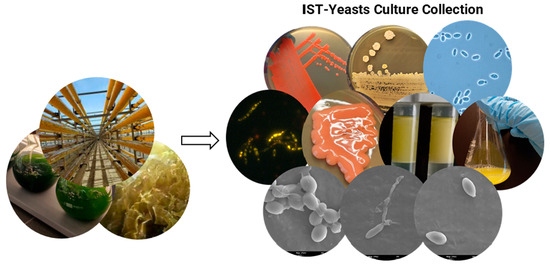
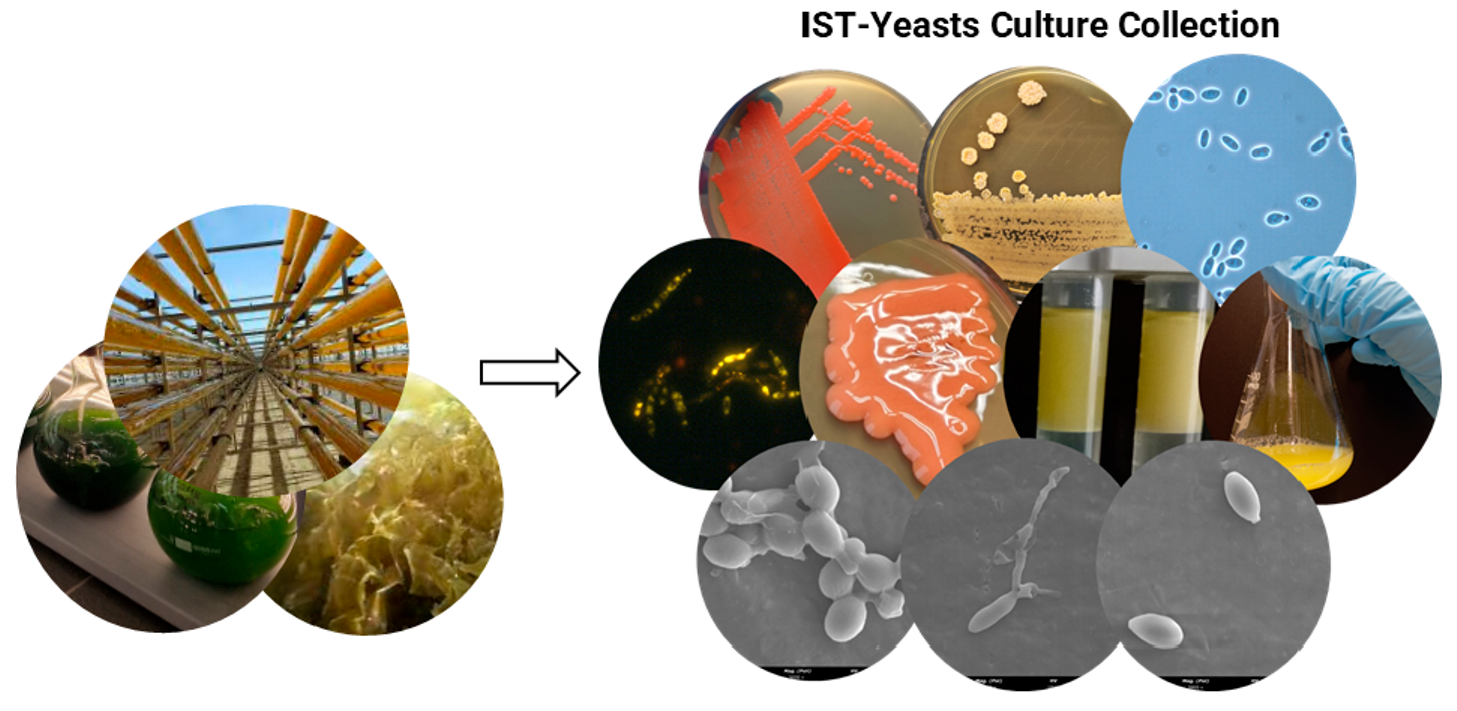
Graphical Abstract

1. Introduction

Yeasts are integral components of microbial ecosystems and have been increasingly recognized for their biotechnological potential [1,2,3,4,5]. Exploring their diversity across a wide range of environments is essential for identifying naturally robust strains capable of withstanding bioprocess stresses and exhibiting valuable catabolic and biosynthetic abilities [4,6,7,8]. Such isolates provide strong foundations for genetic enhancement, and their selection, together with optimized physiological and bioprocess conditions tailored to specific production goals, is crucial for maximizing productivity and ensuring economic viability [4,8,9,10,11,12,13]. As a result, strain-improvement strategies are most effective when applied to inherently resilient yeasts with advantageous metabolic profiles [12,14].
In recent years, interest in novel yeast isolates has intensified, particularly in the diverse and largely underexplored ecosystems associated with marine environments [3,6,15,16]. Marine habitats, especially those linked to algae, harbor extensive untapped microbial diversity and host microorganisms with unique metabolic pathways and notable resilience to harsh conditions such as high salinity and fluctuating temperatures [3,7,17,18]. Yeasts adapted to these environments often synthesize valuable metabolites, positioning them as promising candidates for biotechnological applications [7,16,19].
Marine algae, functioning as dynamic interfaces between the ocean and microbial communities, support interactions with yeasts with specialized biosynthetic and catabolic capabilities [7,16,20,21,22]. These microorganisms hold significant potential for the production of biofuels, pharmaceuticals, enzymes, and other high-value compounds, while leveraging sustainable marine resources [3,6,16,23,24]. Investigating yeast isolates from algal-associated environments therefore opens new avenues for environmentally friendly, sustainable bioprocessing and the development of novel industrial products [3,7,15,16,23,25,26]. In this context, studying marine algae-associated yeast microbiomes is both a scientific pursuit and a key step toward unlocking nature’s hidden biotechnological resources [9,11,12,13,16,27].
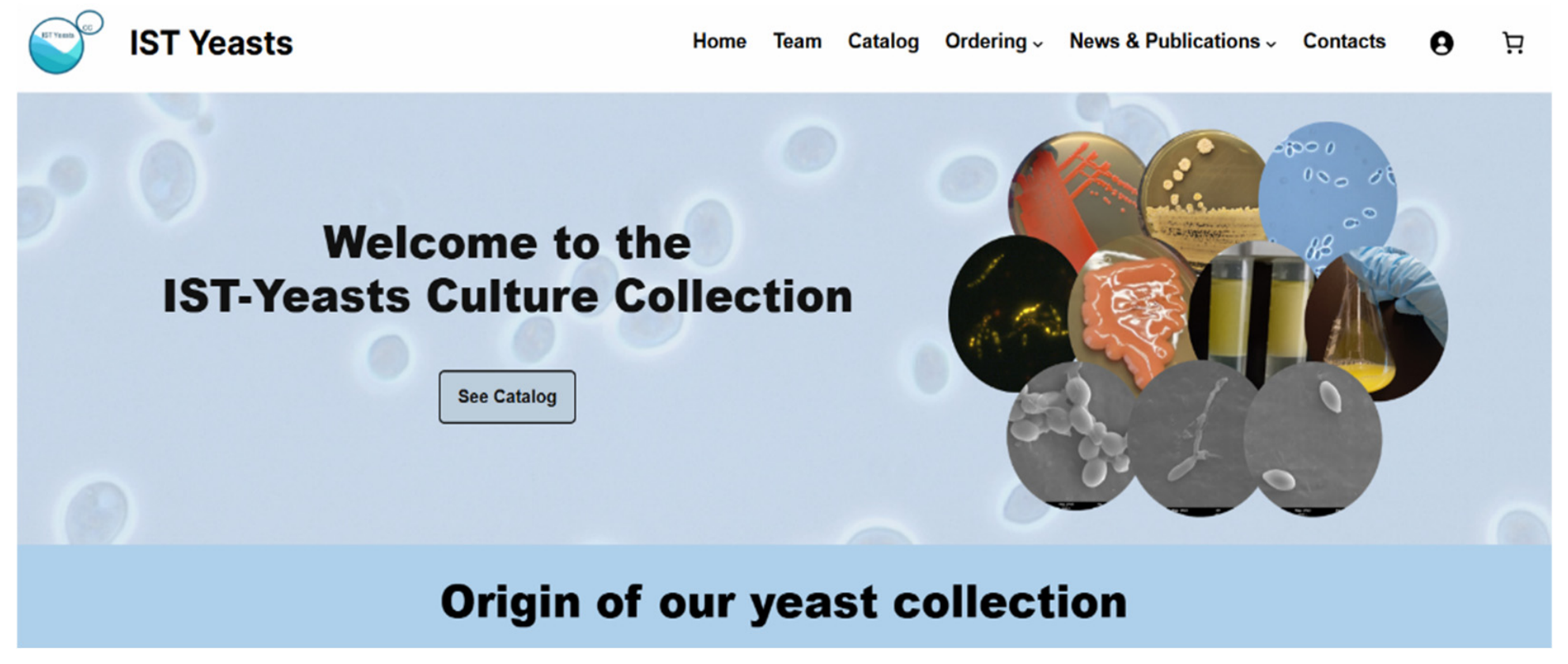
Despite their promise, marine- and algae-associated yeasts remain underrepresented in global culture collections. The IST-Yeasts Culture Collection (IST-Yeasts CC), based at the Biological Sciences Research Group of iBB—Institute for Bioengineering and Biosciences, Instituto Superior Técnico, University of Lisbon—is actively addressing this gap. Since its creation in 2024, in the framework of Blue Bioeconomy Pact project, 115 yeast strains were isolated, molecularly identified [5,28] and included in this culture collection (https://blueyeastscc.tecnico.ulisboa.pt) (Figure 1). On the culture collection website, the strain catalogue and services provided by IST-Yeasts CC can be consulted, as well as related news. Information on yeasts preserved in the IST-Yeasts CC is incorporated in the ARCTOS platform under the Portuguese Blue Biobank. ARCTOS is a collaborative, open-source collection management system that serves as a trusted provider of research-grade data for natural and cultural history collections [29].
This article aims to disseminate knowledge about the curated microbiological resource IST-Yeasts CC, providing prospective users with a comprehensive overview of its main features, the taxonomic diversity of the included yeast species, and their biotechnological potential. The IST-Yeasts CC comprises a diverse set of non-conventional yeast strains isolated from estuarine and marine environments, often in association with microalgae and macroalgae. To support this objective, a preliminary screening was conducted on one representative isolate of each species in the collection. This screening evaluated their capacity to produce lipids, auxins, carotenoids, vitamins and biosurfactants/bioemulsifiers, as well as their ability to assimilate relevant carbon sources. These traits form the foundation of their potential use as microbial cell factories, advancing a more sustainable circular bioeconomy.
The results highlight the potential of the yeast strains preserved and is a contribution to the Portuguese blue bioeconomy initiative. Continued exploration of these strains by the research community will deepen scientific understanding of marine-associated yeast diversity and unlock further biotechnological applications, as many species and their functional metabolites remain underexplored and show promising ecological and industrial potential.

2. Materials and Methods

2.1. Sampling Sites

For yeast isolation, culture samples were collected from industrial algal cultures from marine/estuarine environments in southern and central Portugal. Microalgal cultures of Nannochloropsis oceanica, Microchloropsis gaditana and Tisochrysis lutea produced at Necton S.A. (Olhão, Portugal), and the macroalgal surfaces of Porphyra dioica, industrially produced at ALGAplus (Aveiro, Portugal) were sampled and used for yeast isolation. Microalgal samples were collected before and after passage to new bioreactors during the industrial scale-up cultivation during two to four months. More details on M. gaditana and T. lutea samples can be found in [5,28]. Samples of P. dioca were collected from tanks containing five different life stages. Algal culture systems—Limnospira maxima and Haematococcus sp.—from the Algoteca of Faculty of Sciences, University of Lisbon were also sampled for yeast isolation.

2.2. Yeast Isolation and Preservation

Yeast isolation was achieved through an optimized protocol developed and described by [5,28]. Briefly, YPD medium plates [10 g/L yeast extract (VWR Chemicals, Radnor, PA, USA), 20 g/L peptone (BD Gibco, Waltham, MA, USA), 20 g/L glucose (Scharau, Barcelona, Spain), and 20 g/L agar (LabChem, Zelienople, PA, USA)], prepared with 50% (v/v) Artificial Sea Water [ASW; 23.38 g/L NaCl (PanReact, Barcelona, Spain), 2.41 g/L MgSO4·7H2O (LabChem), 1.9 g/L MgCl2·6H2O (Fluka Analytical, Buchs, Switzerland), 1.11 g/L CaCl2·2H2O (Merck, Darmstadt, Germany), 0.75 g/L KCl (Merck), 0.17 g/L NaHCO3 (LabChem) and ddH2O] and supplemented with 100 µg/mL chloramphenicol (Chl; Sigma, Burlington, MA, USA) were used to isolate yeasts. To attain higher yeast concentrations, the samples were processed in different ways. Samples (100 µL) from microalgal cultures were directly plated or plated after concentration by centrifugation (13,000× g for 10 min). Additionally, an enrichment culture was prepared by inoculation of the YPD liquid medium with the initial culture to a final concentration of 10% (v/v). The enrichment culture was incubated for two days at 22 °C and then plated as described before. Macroalgal samples were swabbed for retrieval of superficial yeasts or were sliced and mixed with macroalgal culture water and plated. After plate incubation at 22 °C for up to 10 days, several colonies of different morphology were retrieved and manipulated until pure cultures were obtained. Selected yeast isolates were cryopreserved in glycerol stocks [15% (v/v)] at −80 °C.

2.3. Molecular Identification at the Species Level

Molecular identification of yeast isolates was achieved as described before [5,28]. Briefly, genomic DNA was extracted following a method adapted from [30] to be used as template to amplify the D1/D2 domain sequence of the 28S ribosomal DNA (rDNA) and the internal transcribed spacer (ITS) region of rDNA. The primer pairs used for D1/D2 and ITS amplification were, respectively, NL-1 (5′-GCATATCAATAAGCGGAGGAAAAG-3′) and NL-4 (5′-GGTCCGTGTTTCAAGACGG-3′), and ITS1 (5′-TCCGTAGGTGAACCTGCGG-3′) and ITS4 (5′-TCCTCCGCTTATTGATATGC-3′), which are considered effective for the taxonomic identification of yeasts [31]. The yeast species were identified by running a nucleotide BLAST (http://www.ncbi.nlm.nih.gov/blast, assessed on 12 September 2024) with the D1/D2 and ITS-obtained amplified nucleotide sequences against the core nucleotide NCBI database. All D1/D2 and ITS sequences were submitted to GenBank (accession numbers available in https://blueyeastscc.tecnico.ulisboa.pt/catalogo/).

2.4. Phylogenetic Analysis

The phylogenetic placement of the 115 yeast isolates preserved in the IST-Yeasts CC was obtained through iterative alignment of the D1/D2 consensus rDNA sequences of the yeast isolated with the sequences of the type strains for each species (Supplementary Material Table S1). Multiple alignment was carried out with Muscle, available in the software MEGA-X v.11. The Mega-X software was also used for the phylogenetic tree construction using the maximum likelihood method of the Kimura 2-parameter model, selected based on the MEGA-X software recommendation considering the data [32,33]. The confidence level of the clades was estimated using a bootstrap analysis with 500 replicates.

2.5. Functional Characterization of Isolates

For phenotypic characterization, one isolate of each yeast species was selected at random (Table 1). Yeast cells were pre-cultured in liquid YPD medium for 24 h with orbital agitation (220 rpm), at 22 °C. Pre-cultured cells were harvested by centrifugation at 4600× g for 5 min at 4 °C and inoculated in 20 mL of a minimal medium [6.7 g/L of Yeast Nitrogen Base (BD Difco) and ddH2O with pH adjusted to 5.5] in 100 mL shake flasks, using an initial Optical Density at 600 nm (OD600nm) of 1. To test assimilation of different carbon sources the minimal medium was supplemented with different carbon sources: 20 g/L glucose or 20 g/L xylose (Sigma) or 20 g/L inulin (Sigma) or 1.5% (v/v) methanol (VWR) or 1.5% (v/v) glycerol (Sigma). These media were filter-sterilized using a 0.2 µm filter (Whatman® Puradisc, Maidstone, UK). The cultures were incubated at 22 °C with orbital agitation (220 rpm), and growth was monitored by measuring culture OD600nm using a U-2000 HITACHI spectrophotometer (Tokyo, Japan). Kluyveromyces marxianus IST389 (formerly K. fragilis IGC 2671), a selected strain for the direct conversion of inulin to ethanol [34], and Saccharomyces cerevisiae BY4741, a well-known laboratory strain used as a parent strain for the international systematic Saccharomyces cerevisiae gene disruption project, were used as positive and negative controls, respectively, for inulin and xylose assimilation.
Carotenoid pigment and EPS production was evaluated visually in cultures grown on YPD medium and in colonies formed on YPD agar plates. Carotenoid pigment production was also observed in liquid media when the cultures reached the same Optical Density. Riboflavin production was previoulsy evaluated visually in liquid minimal media and confirmed following the method described in [35]. The following methods were used to assess the ability of yeast cells grown on the different carbon sources tested to produce lipids, biosurfactants/emulsifiers and auxins. Lipid accumulation was assessed with Nile Red staining method, a method that utilizes Nile Red fluorescence dye that binds with lipids in the cell (emission/excitation at 625/535 nm) [5]. Biosurfactant production was tested using the oil dispersion test and the emulsification index after 144 h of cultivation [5]. The oil dispersion tested was carried out by measuring the diameter of the halo formed after the addition supernatant of the culture on top of a car oil mixture. The emulsification index was performed measuring the emulsification layer formed after vigorous mixing of the supernatant with olive oil. Auxin production was assessed using the Salkowski Reagent method, a colorimetric method that allows measurement of the indole-3-acetic acid (IAA) concentration [28].

3. Results

3.1. Yeast Composition of the IST-Yeasts Culture Collection

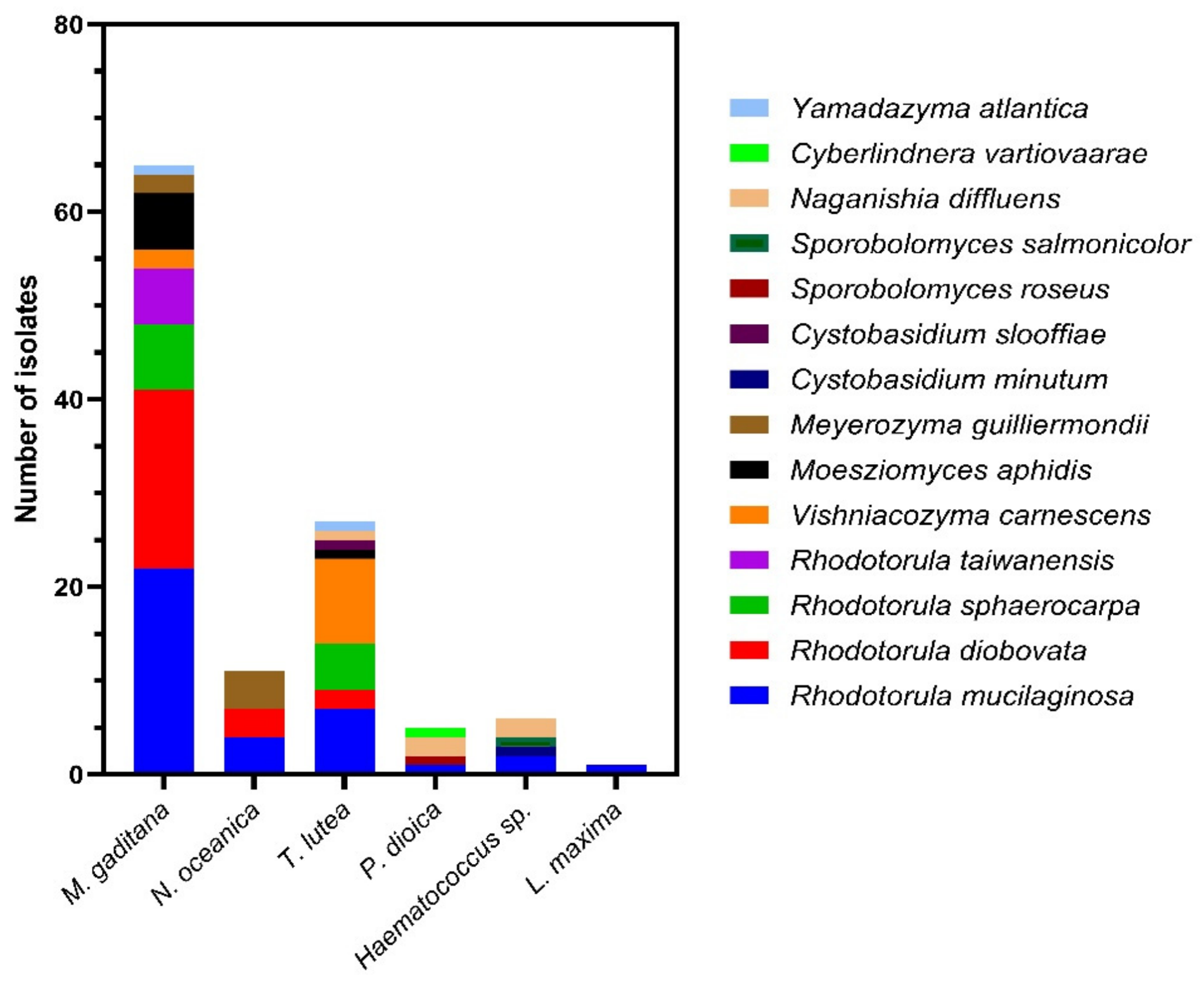
The distribution of yeast isolates preserved in the IST-Yeasts CC, among different species and their algal origin, is shown in Figure 2.
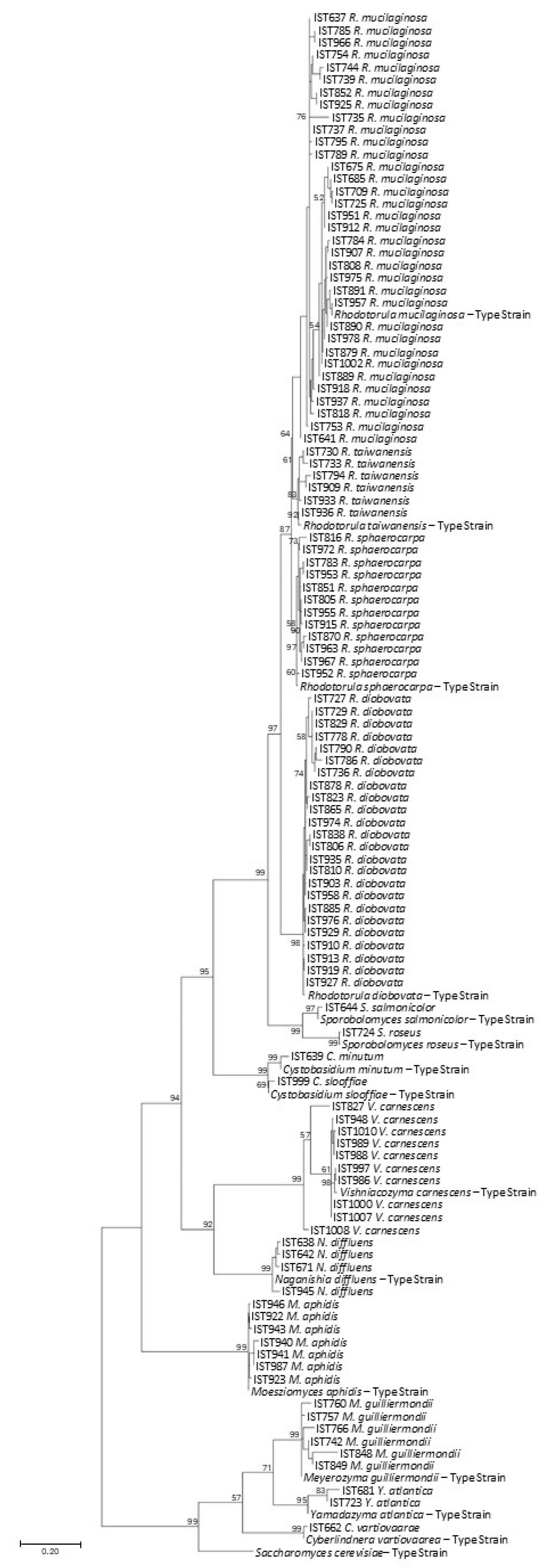
A total of 115 yeast isolates, belonging to 14 species, are preserved in the IST-Yeasts CC. Of these, 92% belong to the Basidiomycota phylum. The genus Rhodotorula (R. mucilaginosa, R. diobovata, R. sphaerocarpa, and R. taiwanensis) is the most represented genus, comprising 69% of the isolates. Other Basidiomycota species in the collection include Cystobasidium minutum, C. slooffiae, Vishniacozyma carnescens, Moesziomyces aphidis, Sporobolomyces roseus, S. salmonicolor, and Naganishia diffluens. The species from the Ascomycota phylum included in the culture collection are Meyerozyma guilliermondii, Yamadazyma atlantica, and Cyberlindnera vartiovaarae. The species Y. atlantica and C. vartiovaarae were formerly classified within the Candida genus. A detailed on-line catalog (https://blueyeastscc.tecnico.ulisboa.pt/catalogo/) with information on the yeast isolates is available at the IST-Yeasts CC website. The results of the phylogenetic analysis of these yeast isolates are presented in Figure 3. Although the isolates included in the IST-Yeasts CC do not fully represent the yeast populations of each sampling site, they were selected to preserve the diversity and relative abundance of species recorded at those locations. A full description of the culturable yeasts recovered from M. gaditana and T. lutea can be found in [5,28], respectively. In addition to dominating the overall culture collection, Rhodotorula species were prevalent across all algal cultures analyzed (Figure 2). Notably, Rhodotorula mucilaginosa was isolated from every sampled algae-associated environment. Although less abundant, several other species were detected in association with different algal hosts. For example, Naganishia diffluens was identified in samples from Necton S.A., ALGAplus, and Algoteca, encompassing diverse algal species and geographical locations.

3.2. Functional Properties

The 14 yeast species included in the IST-Yeasts CC have potential for a wide range of biotechnological applications. Based on the information available in the literature and on our previous works [5,28], selected functional properties of each yeast species were assessed. This work was required since several of the non-conventional yeast species included in IST-Yeasts CC are understudied and there is no relevant information in the literature about their application potential. One isolate per species was selected, at random. This approach was adopted to provide a broad overview of potential traits present across the taxonomic diversity of the collection, while keeping the screening effort manageable given the large number of strains.

3.2.1. Assimilation of Relevant Carbon Sources

To assess the capacity of isolates from different species to utilize carbon sources relevant to a circular bioeconomy, one representative of each species (Table 1) was cultured for 72 h at 22 °C in minimal medium with a single C-source: glucose (20 g/L), xylose (20 g/L), inulin (20 g/L), methanol [1.5% (v/v)] or glycerol [1.5% (v/v)].
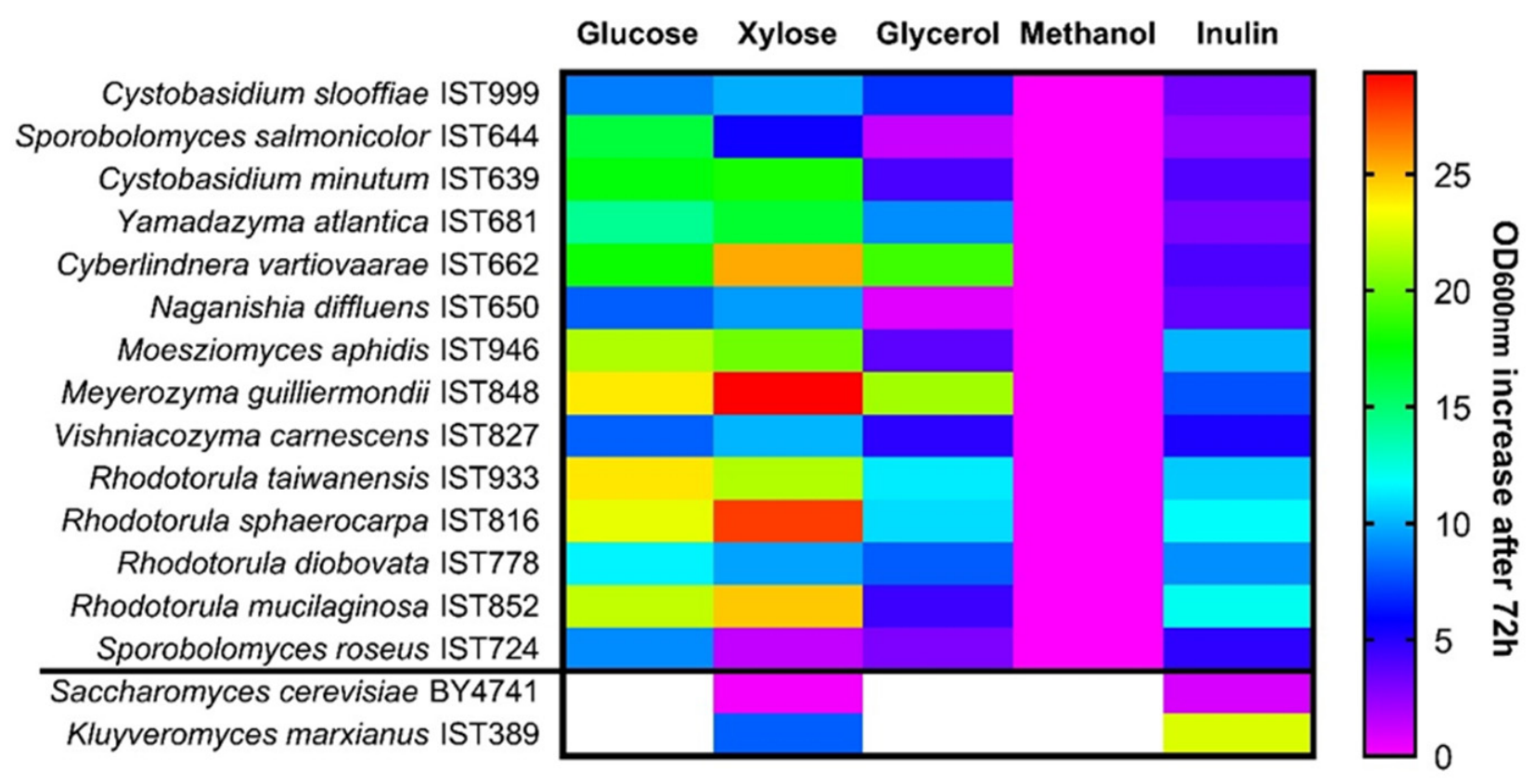
The species present in the IST-Yeasts CC were, in general, capable of robust growth on glucose or xylose, although reaching different final biomass concentrations after 72 h of cultivation (Figure 4). The hydrolysis of lignocellulosic feedstock releases fermentable sugars such as glucose and xylose, which can be utilized for bioproduct production. For example, metabolically suitable strains capable of efficiently assimilating both sugars can convert them into oils and other value-added compounds [4]. The fermenting yeast S. cerevisiae, used as a negative control, cannot naturally assimilate xylose, which is a limitation to the production of bioethanol and other bioproducts from lignocellulosic hydrolysates [4]. Except for Sporobolomyces roseus, all the isolates in the IST-Yeasts CC were able to grow on xylose as the sole carbon source. Several species attained a higher final biomass concentration with xylose compared with glucose, among them, M. guilliermondii and R. sphaerocarpa. None of the isolates were native methylotrophs, capable of assimilating methanol, an emerging, low-cost, and non-food single-carbon feedstock in industrial biotechnology, representing a highly reduced and abundant substrate to produce biofuels and high-value chemicals [36].
Cultivation on inulin as a sole carbon source led to low final biomass concentrations for several species, although slightly above the value corresponding to the negative control Saccharomyces cerevisiae BY4741, in particular for the species Cystobasidium slooffiae, Sporobolomyces salmonicolor, C. minutum, Yamadazyma atlantica, Cyberlindnera vartiovaarae and Naganishia diffluens. Strains of the Rhodotorula species and M. aphidis exhibited significant growth on inulin, although the final biomass concentration attained was below the one registered for the positive control, Kluyveromyces marxianus IST389. This strain, formerly K. fragilis IGC 2671, was selected for highly efficient direct production of ethanol from inulin, a fructan polymer present in Jerusalem artichoke juice [34]. Jerusalem artichoke is characterized by high tuber productivity and its use in consolidated bioprocessing with Kluyveromyces marxianus for ethanol fermentation shows strong potential as a bioenergy feedstock, achieving ethanol yields comparable to those obtained from corn and sugarcane [37]. Glycerol assimilation was also evaluated. Cyberlindnera vartiovaarae and Meyerozyma guilliermondii achieved the highest final biomass concentrations on this carbon source, followed by Rhodotorula taiwanensis and R. sphaerocarpa. In contrast, Sporobolomyces salmonicolor and Naganishia diffluens showed no detectable growth on glycerol. Since Meyerozyma guilliermondii is known to efficiently assimilate glycerol [38], this isolate was used as a positive control.

3.2.2. Potential to Produce Value-Added Bioproducts: Lipids, Biosurfactants/Bioemulsifiers, Carotenoids and Auxins

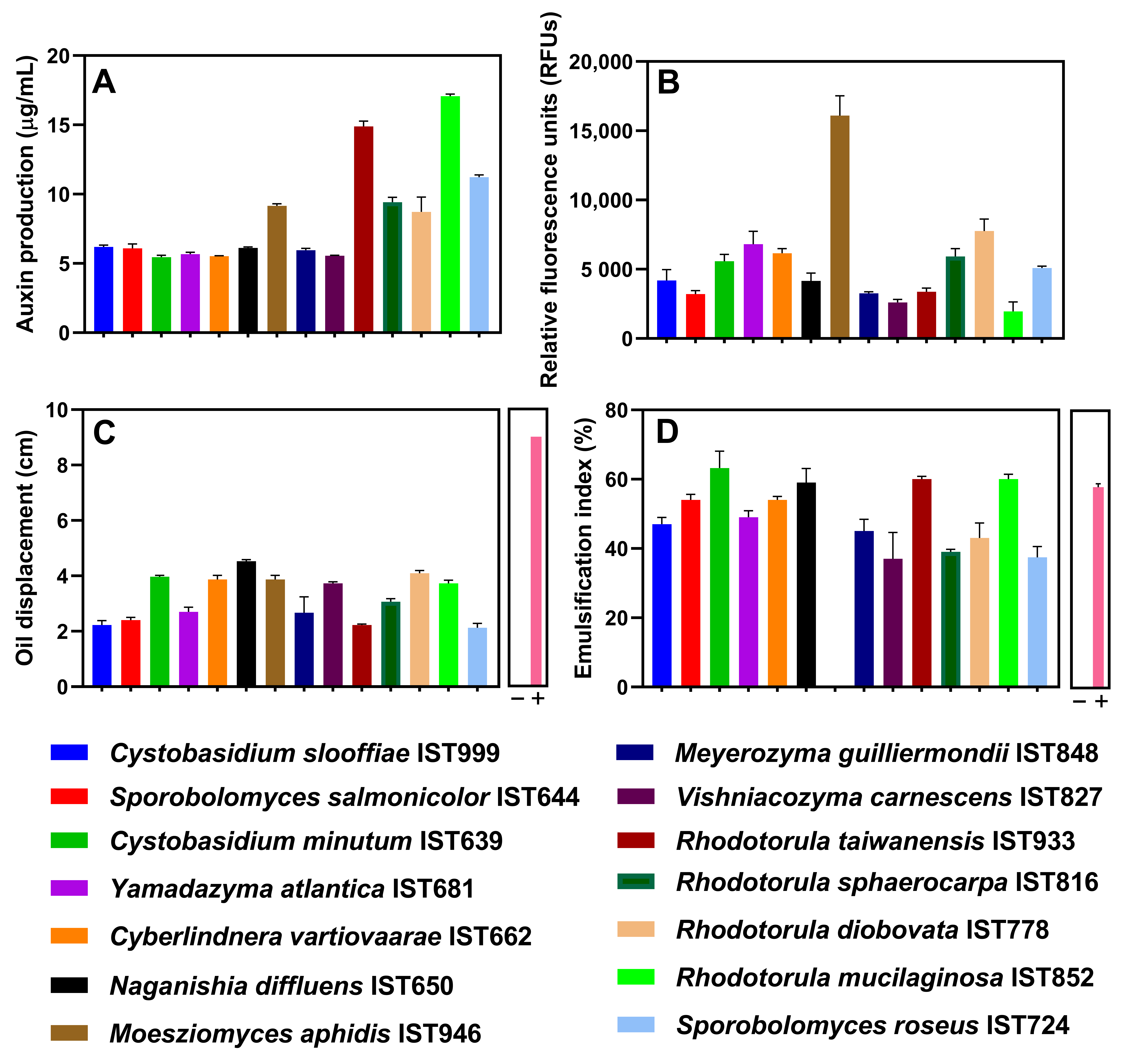
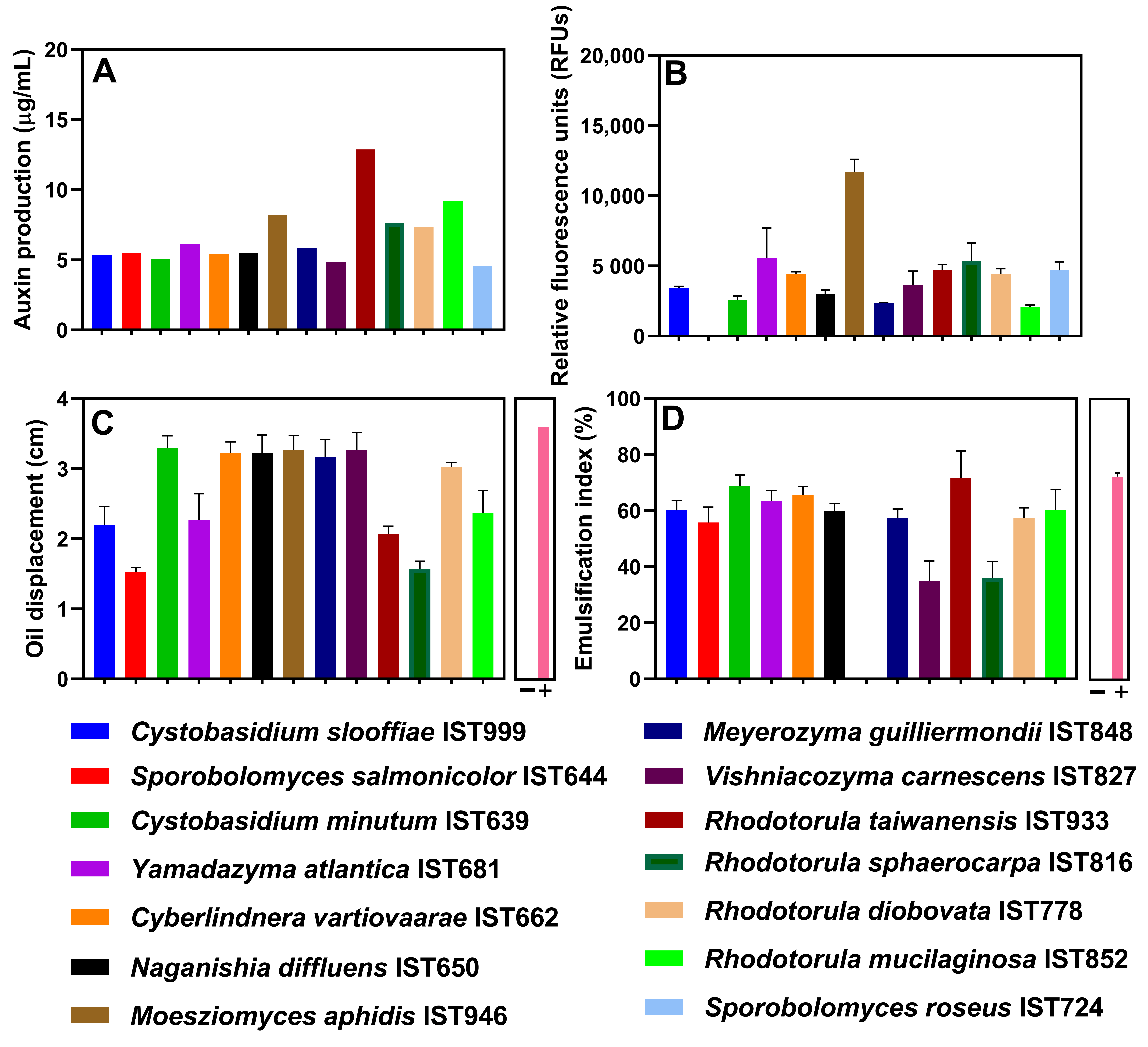
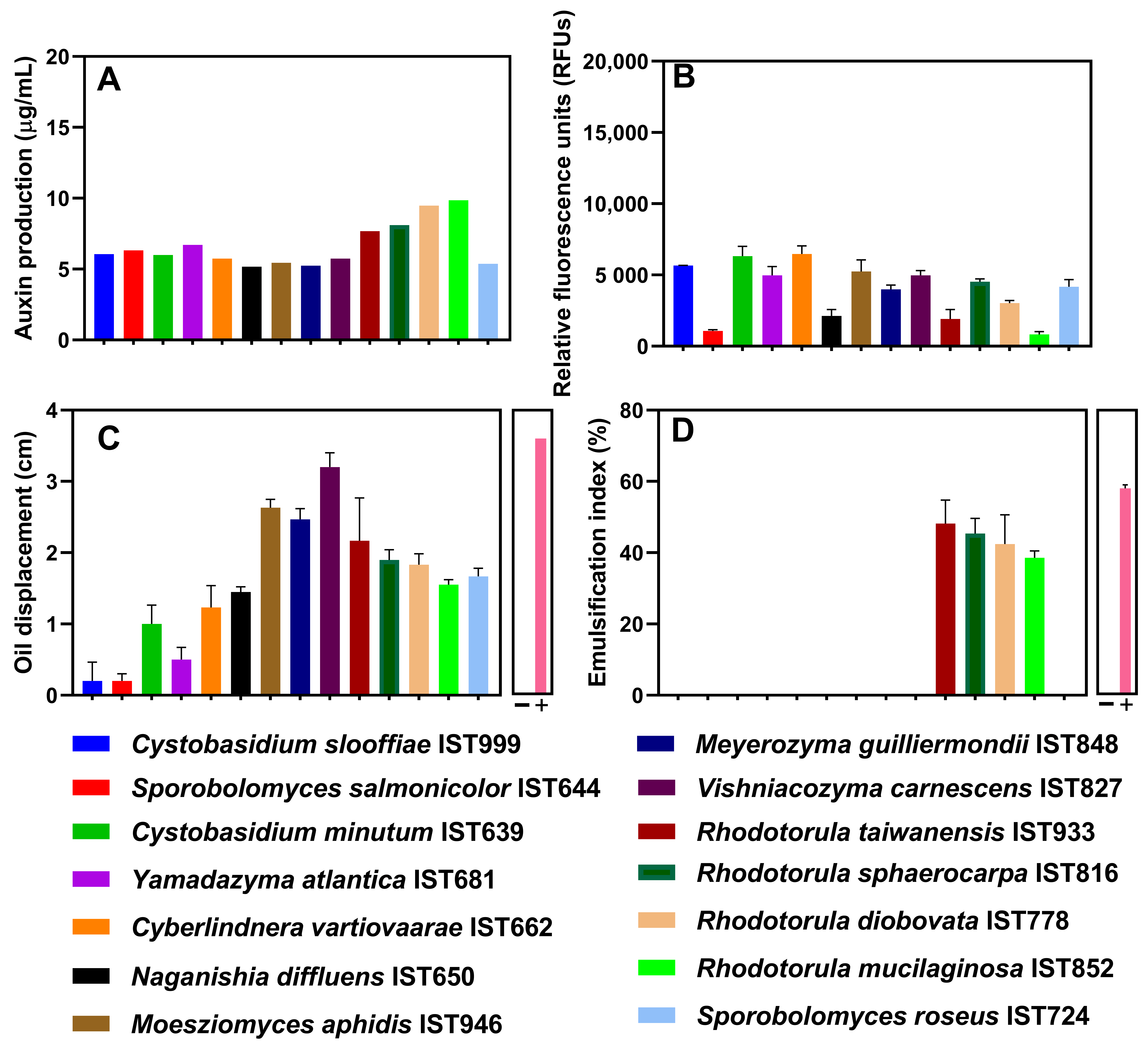
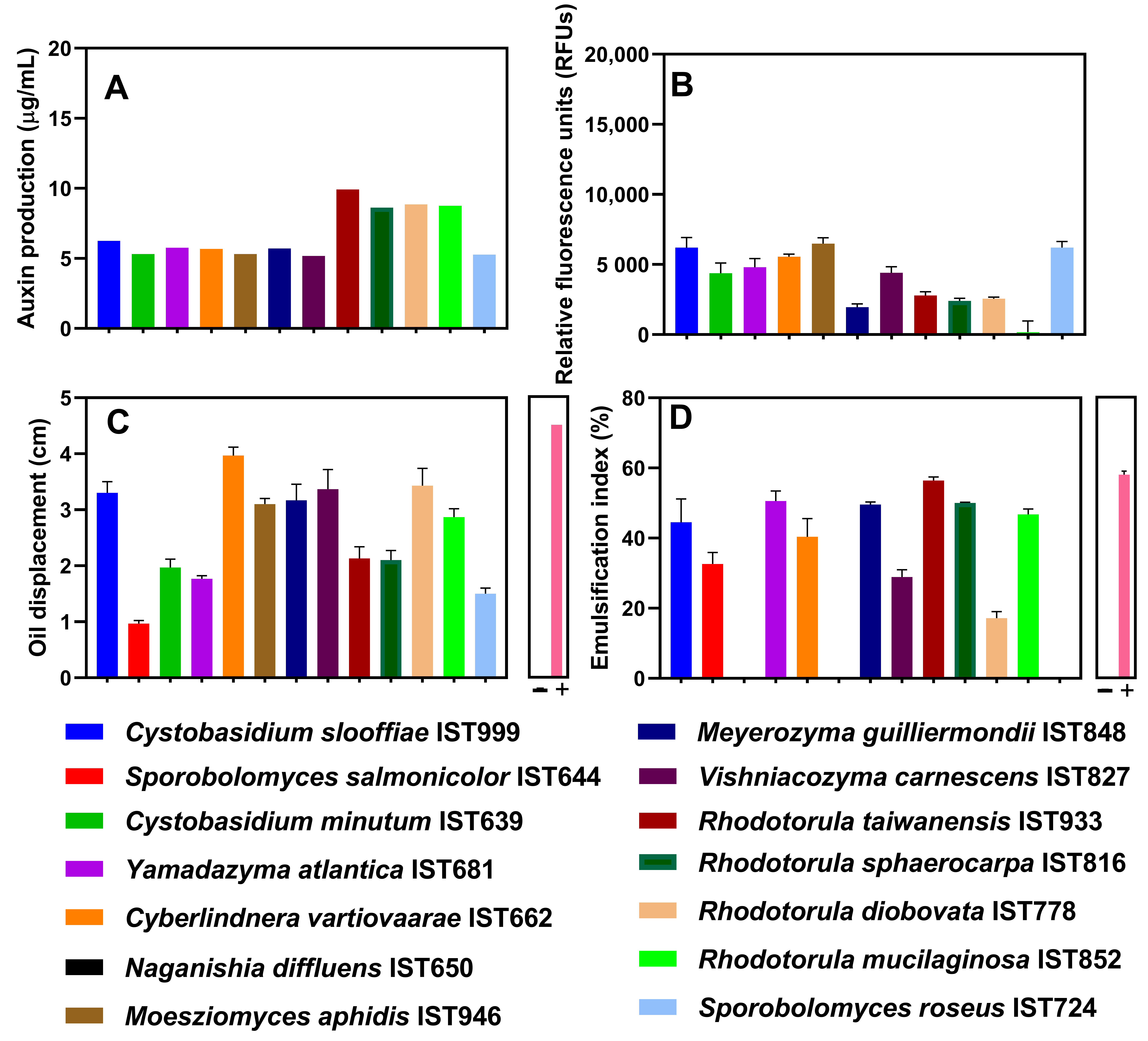
The same selected isolates of each species (Table 1) were used for assessment of their capacity to produce lipids, biosurfactants/bioemulsifiers and auxins in minimal medium with glucose as a carbon source (Figure 5). This biotechnological potential was also assessed when alternative carbon sources were used (Figure 6, Figure 7 and Figure 8). Selected isolates were cultured in shake flasks at 22 °C under standardized conditions in a defined medium supplemented with each carbon source, adjusted to pH 5.5, as described in Section 2 In some cases, no production was recorded despite significant growth (for example, M. aphidis bioemulsification activity). In a few cases the lack of production was due to marginal growth after the standardized cultivation time, for example, Sporobolomyces salmonicolor’s poor growth on glycerol after 48 and 72 h implicated no lipid or auxin detectable production.
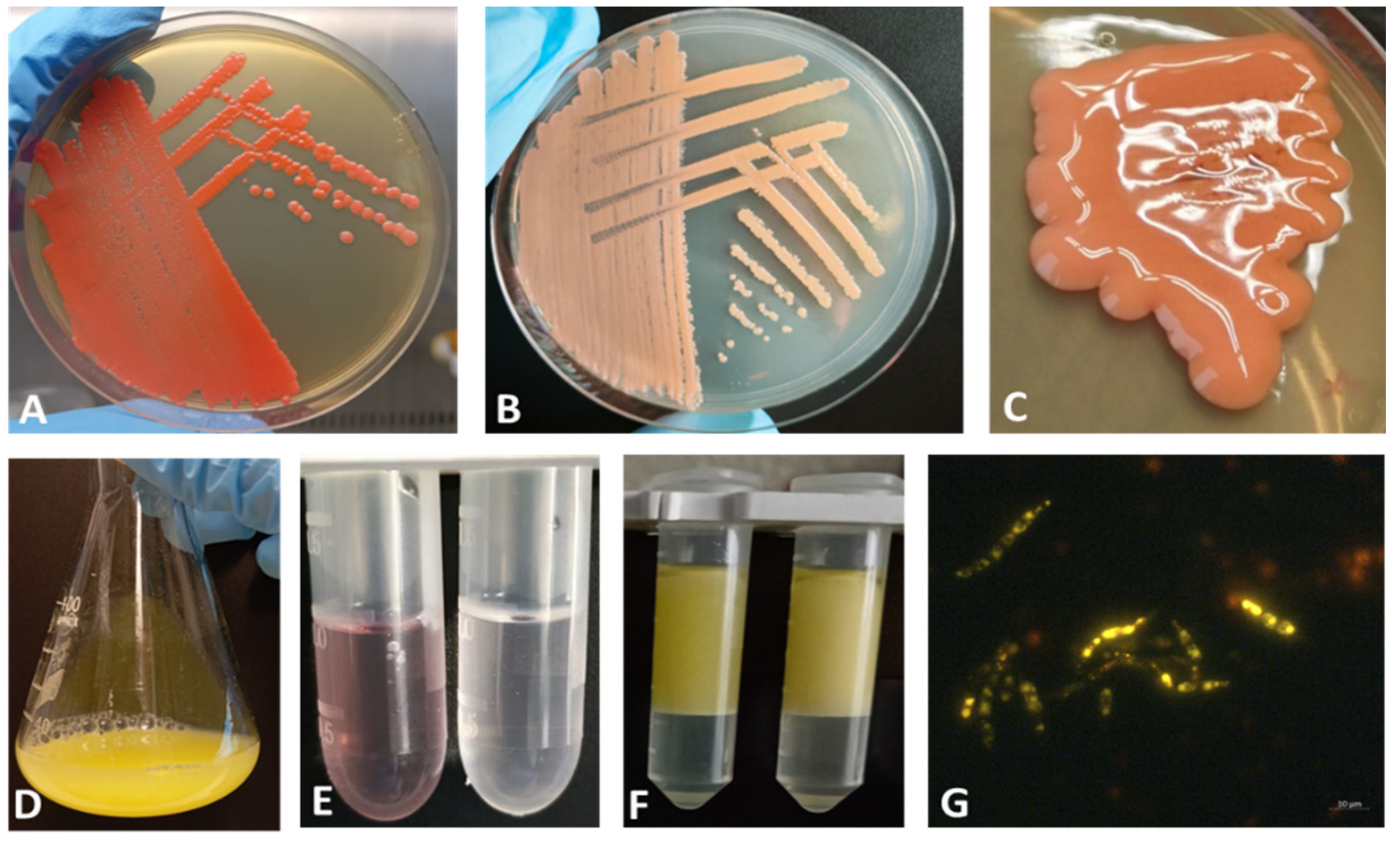
Carotenoid production was assessed by visual observation of culture growth on YPD agar plates, incubated under the same conditions. Carotenoid production was also verified in liquid media when the culture reached the same Optical Density. As expected, Rhodotorula species, as well as Sporobolomyces and Cystobasidium species, were able to produce carotenoids given the pink-red coloration observed. It is known that torularhodin, γ-carotene, torulene and β-carotene are the main types of carotenoids produced by those species, being produced in different proportions according to the species [39,40,41,42]. Differences observed in the coloration across different species (e.g., Figure 9A,B) and even across different isolates of the same species (e.g., isolates of Rhodotorula mucilaginosa), suggest different types/proportions of carotenoids being produced [39,40,41,42].
Several strains of the IST-Yeasts CC, especially R. mucilaginosa strains (Figure 9C), are known to produce exopolysaccharides (EPSs) [43,44]. This is consistent with the mucoid texture of R. mucilaginosa strain colonies on YPD-agar plates. However, EPS production was not systematically assessed in our study.
Meyerozyma guilliermondii is a known riboflavin producer [45]. In fact, when cultured in liquid minimal medium, the culture develops a yellow coloration typical of riboflavin (Figure 9D). Riboflavin production was previoulsy confirmed by a colorimetric method, mixing the supernatant with HCl and measuring absorbance at 445 nm.
Auxin (indole-3-acetic acid) production was assessed with the Salkowski Reagent method (Figure 9E). In general, the results are similar across the different carbon sources tested (Figure 5A, Figure 6A, Figure 7A and Figure 8A). Nevertheless, in medium with glucose, only R. taiwanensis and R. mucilaginosa’s isolates attained an auxin concentration close to 15 µg/mL. A recently published study by our team [28] tested auxin production in a culture medium with glucose as a carbon source for several yeast isolates obtained from an industrial culture of the microalgae Tisochrysis lutea. Although the production level was strain-dependent, with isolates of the same species being better producers than others, Rhodotorula mucilaginosa and R. sphaerocarpa isolates were also found to produce the most significant amounts of auxin [28].
Lipid production (Figure 5B) was assessed with the fluorescence dye Nile Red. When cultured in a medium with glucose or xylose, the Moesziomyces aphidis isolate exhibited the higher fluorescence values consistent with conclusions from previous studies [5]. Microscopic observation confirmed the presence of lipid bodies in M. aphidis cells (Figure 9G). C. vartiovaarae and M. guilliermondii isolates achieved a high final biomass with glycerol as a carbon source, however this did not result in higher lipid production when compared to growth on glucose. Interestingly, Cystobasidium isolates, when using inulin as a carbon source, could not achieve a biomass as high as with glucose but lipid production levels were higher (Figure 6B).
Biosurfactant production was assessed based on the oil displacement test (Figure 5C, Figure 6C, Figure 7C and Figure 8C). In general, under the tested conditions all isolates tested were able to produce biosurfactants. Although exhibiting weak oil displacement activity compared with the solution used as a positive control, the levels are significant. Bioemulsifier production was assessed based on the emulsification index (Figure 5D, Figure 6D, Figure 7D and Figure 8D). The Rhodotorula mucilaginosa, R. diobovata, Meyerozyma guilliermondii and some R. taiwanensis isolates tested produced biosurfactants with emulsifying properties, as also reported before [5]. In the present study, all species were found to be able to produce bioemulsifiers on glucose (Figure 5D), except for Moesziomyces aphidis. When using a medium with inulin, the bioemulsifier production was only observed for the Rhodotorula species (Figure 6D). Rhodotorula species have been reported to produce biosurfactants/bioemulsifiers from the glycolipids class, more particularly sophorolipids [46]. M. guilliermondii has also been described as a producer of biosurfactants with emulsifying properties, also from the glycolipid class [47]. M. aphidis has been extensively described as producing a highly promising mannosylerythritol (MEL) biosurfactant [48]. However, no bioemulsifer activity was detected in this study, as reported previously using similar conditions [5]. Since MEL production was reported to be limited when monomeric sugars are used as the sole carbon source, usually requiring the addition of lipids to the growth media for high production, it is likely that the tested conditions were not the best choice [49].

4. Discussion

The IST-Yeasts Culture Collection presented here addresses an often overlooked yet influential component of marine microalgal systems: yeasts. By focusing on the preserved marine-associated strains, this collection may contribute to the future development of more sustainable bioprocesses within a circular bioeconomy framework. In contrast to the predominantly terrestrial bias of most existing yeast collections, the IST-Yeasts CC comprises 115 molecularly identified blue yeast strains. These strains exhibit the capacity to produce a broad spectrum of compounds with biotechnological relevance, as reported in the literature for several of the preserved species and, in several cases, confirmed, or observed for the first time, in the present study (Table 2).
The taxonomic composition and functional traits of the IST-Yeasts CC highlight the largely untapped potential of marine (micro)algae-associated yeasts as sources of bioactive metabolites and chemical mediators. The capacity of these yeasts to produce lipids (most species are oleaginous, with applications in biofuels, oleochemicals, and cosmetics) together with carotenoids, vitamins, biosurfactants, emulsifiers, and enzymes, emphasizes their relevance as microbial cell factories. In particular, pigmented Basidiomycota, dominated by isolates of the genus Rhodotorula, combine the production of these high-value metabolites with rapid growth on diverse carbon sources, including abundant low-cost substrates and residues [4,50,51,52]. The collection also includes several isolates of Moesziomyces aphidis, a well-known producer of mannosylerythritol lipids (MELs). These biosurfactants combine low critical micelle concentrations with high environmental compatibility, supporting their use in sustainable and circular bioeconomy processes [48,49]. The assessment of the capacity of the M. aphidis isolate to produce biosurfactant was likely underestimated in this work. This species requires a hydrophobic substrate (e.g., soybean oil) in the growth medium to trigger high yields and extracellular excretion of surface-active MELs [49]. In our study, a water-soluble substrate (glucose, xylose, glycerol and inulin) was used without an oil and the pathway for biosurfactant production and excretion may not have been fully induced [49]. Remarkably, no bioemulsifying activity was detected in M. aphidis cultures while biosurfactant activity was, as described before [5]. While both are surface-active, amphiphilic molecules produced by microbes, their mechanisms and physical properties differ significantly and a biosurfactant is not necessarily a bioemulsifier [53].
Beyond their biosynthetic capacity for added-value compounds, several isolates in the collection produce auxins (e.g., Rhodotorula mucilaginosa and R. sphaerocarpa isolates), positioning these molecules as key chemical signals in marine microalgae–yeast interactions [16,28,54]. From a chemical-ecology perspective, auxins may act as interkingdom signaling molecules that modulate algal growth, cellular differentiation, and stress responses, thereby shaping community structure and functional performance [54,55]. The recurrent detection of auxin-producing yeasts within (micro)algae-associated environments suggests that these phytohormones constitute an adaptive chemical strategy, mediating mutualistic or facilitative interactions [16,28]. Harnessing such signaling functions through controlled co-cultivation may enable the rational design of more resilient and productive algal–yeast systems, with implications for metabolite induction and bioprocess optimization [56,57].
As reported before, the ability of isolates of Rhodotorula sphaerocarpa, R. mucilaginosa, R. diobovata, Naganishia diffluens, and Moesziomyces aphidis to grow optimally at moderate temperatures (25–30 °C), together with the psychrotolerant profile of Vishniacozyma carnescens [28], highlights the adaptability of isolates gathered in the Yeast Collection to diverse environmental and process conditions. Moreover, also as reported before [28], the broad tolerance of isolates of those species to artificial seawater, combined with the observed stimulation of growth in Moesziomyces guilliermondii and Rhodotorula sphaerocarpa, underscores their suitability for cultivation in saline- or seawater-based media. These traits support their potential for biotechnological applications requiring robust performance under saline conditions, including marine-based bioprocesses and sustainable production systems that reduce reliance on freshwater resources.
The assessment of only one representative isolate per species does not allow general conclusions about the well-documented phenomenon of intraspecific variability or the full biotechnological potential of the species or the strain collection. However, the present study provides a preliminary overview of the collection, illustrating the potential of some selected traits of representative isolates. We expect that researchers interested in the specific functional properties will use these resource to explore the full diversity within species and perform more detailed analyses on multiple strains, thereby capturing the variability and maximizing the discovery of biotechnologically relevant traits positioning the IST-Yeasts CC as a valuable platform to support research and innovation through the investigation of marine yeast-derived bioactive compounds and signaling molecules at the interface of chemical ecology, biotechnology, and marine drug discovery.
Table 2. Biotechnological potential of the yeast species gathered in the IST-Yeasts CC, as reported in the literature and/or as assessed in our study.
Yeast SpeciesBiotechnological PotentialReferences
Rhodotorula mucilaginosaProduction of lipids, carotenoids, exopolysaccharides, enzymes, biosurfactants/bioemulsifiers, and auxins. Capable of using glucose, acetic acid, galactose, xylose, pectin, inulin, sucrose, lactose and glycerol as C-source.[4,5,28,50,52,58,59,60,61]
This work.
Rhodotorula diobovataProduction of lipids, carotenoids, biosurfactants/bioemulsifiers and auxins; nitrogen fixation. Capable of using glucose, xylose, inulin and glycerol as C-source.[5,50,62,63]
This work.
Rhodotorula taiwanensisProduction of lipids, carotenoids, biosurfactants/bioemulsifiers, and auxins. Resistant to acids, heavy metals and gamma radiation (bioremediation of acidic radioactive sites). Capable of using glucose, xylose, glycerol and inulin as C-source.[4,5,27,50,64]
This work.
Rhodotorula sphaerocarpaProduction of lipids, carotenoids, and auxins. Capable of using glucose, xylose, glycerol and inulin as C-source.[5,28,50]
This work.
Moesziomyces aphidisProduction of lipids and biosurfactants. Capable of using glucose, xylose, inulin, xylan, sucrose, fructose, xylose, arabinose and cellobiose as C-source.[5,49,65,66]
This work.
Meyerozyma guilliermondiiProduction of lipids, riboflavin (vitamin B2), and enzymes. Copper tolerance and removal. Capable of using glucose, xylose, glycerol, palm acid oil, sucrose and fructose as C-source.[5,18,22,45,67,68,69]
This work.
Vishniacozyma carnescensA poorly studied psychrotolerant yeast. Production of biosurfactants/bioemulsifiers. Capable of using glucose, xylose, lactose, erythritol and cadaverine as C-source.[70,71,72]
This work.
Cystobasidium minutumPoorly studied yeast. Production of lipids and carotenoids, antibacterials, and biosurfactants/bioemulsifiers. Capable of using glucose, xylose, sucrose, fructose, lactose and maltose as C-source.[73,74,75].
This work.
CystobasidiumslooffiaeA poorly studied yeast. Production of carotenoids and biosurfactants/bioemulsifiers. Capable of using glucose and xylose as C-source.This work.
Sporobolomyces roseusA poorly studied psychrotrophic yeast. Production of lipids, carotenoids, auxins, and exopolysaccharides. Capable of using glucose, sucrose and inulin as C-source.[76,77,78,79]
This work.
Sporobolomyces salmonicolorProduction of lipids, carotenoids, enzymes (e.g., lipases, reductases, proteases, pectinases and chitinases), exopolysaccharides, biosurfactants/bioemulsifiers and flavoring molecules (γ-Decalactone). Capable of using glucose and xylose as C-source.[41,73,80,81,82,83]
This work.
Naganishia diffluensPoorly studied yeast. Production of lipids,
biosurfactants/bioemulsifiers, and enzymes. Capable of using glucose, glycerol and xylose as C-source.
[84,85]
This work.
Cyberlindnera vartiovaaraePoorly studied yeast. Production of biosurfactants/bioemulsifiers. Capable of using glucose, glycerol and xylose as C-source.This work.
Yamadazyma atlanticaPoorly studied psychrotrophic yeast. Production of biosurfactants/bioemulsifiers. Capable of using glucose, glycerol and xylose as C-source. [24]
This work.

5. Conclusions

The IST-Yeasts Culture Collection is a publicly accessible repository of non-conventional yeasts isolated from (micro)algae-associated environments in Portugal. It currently comprises more than 115 strains of 14 different species that have been identified using molecular techniques and initially characterized for selected functional and biotechnological traits. Dedicated to the preservation and distribution of marine yeast biodiversity, the collection supports research and innovation by enabling the exploration of marine-derived bioactive metabolites and promoting the development of sustainable biotechnological solutions. Continued exploration of these strains by the research community is expected to deepen our understanding of marine-associated yeast diversity and to further expand their biotechnological applications.

Supplementary Materials

The following supporting information can be downloaded at: https://www.mdpi.com/article/10.3390/bioengineering13070807/s1, Table S1: GenBank NCBI accession number of the D1/D2 of the type strains of the different species in IST-Yeasts CC.

Author Contributions

Conceptualization, I.S.-C., M.M. and M.A.F.; investigation, M.M., M.A.F. and I.S.-C.: validation, I.S.-C.; formal analysis, M.M., M.A.F. and I.S.-C.; data curation, M.M., M.A.F. and I.S.-C.; writing—original draft preparation, M.A.F., M.M. and I.S.-C.; writing—review and editing, I.S.-C.; visualization, M.A.F. and M.M.; supervision, project administration, and funding acquisition, I.S.-C. All authors have read and agreed to the published version of the manuscript.

Funding

This work was financially supported by “Pacto da Bioeconomia Azul” (Project No. C644915664-00000026) within the WP9-Portuguese Blue Biobank and the WP5-Algae Vertical, funded by Next Generation EU European Fund and the Portuguese Recovery and Resilience Plan (PRR), under the scope of the incentive line “Agendas for Business Innovation” through the funding scheme C5—Capitalization and Business Innovation. Funding was received from Fundação para a Ciência e a Tecnologia (FCT) through project 2022.01501.PTDC and by iBB—Institute for Bioengineering and Biosciences (UIDP/04565/2020, UIDB/04565/2020 and UID/04565/2025) and the Associate Laboratory i4HB-Institute for Health and Bioeconomy (LA/P/0140/2020) is also acknowledged.

Institutional Review Board Statement

Not applicable.

Data Availability Statement

Information on all the strains and molecular sequence data (D1/D2 and ITS), submitted to GenBank, are available through the online catalog: (https://blueyeastscc.tecnico.ulisboa.pt/catalogo/). Strain access is granted under standard Material Transfer Agreements (MTAs).

Acknowledgments

The authors thank: Vitor Vasconcelos (CIIMAR—Interdisciplinary Centre of Marine and Environmental Research, University of Porto), the leader of the Portuguese Blue Biobank as well as Íris Sampaio, Renato Soares and Fábio Faria (also from CIIMAR) for their contributions to the establishment of the IST-Yeasts Culture Collection website, the management of ARCTOS platform and the dissemination of culture collection yeast strains through TesOuro sub Azul LinkedIn publications; João Navalho (Necton S.A) and João Varela (CCMAR—Centre of Marine Sciences, University of Algarve), leaders of the Algae Vertical, and Alexandre M.C. Rodrigues, Natacha Coelho and Inês Costa (Necton S.A) for providing culture samples of Microchloropsis gaditana, Nannochloropsis oceanica and Tisochrysis lutea; Margarida Martins, Inês Oliveira and Madalena Mendes (ALGAplus) for providing Porphyra dioica samples; Ana Amorim and Luísa Dâmaso (Algoteca of Faculty of Sciences of University of Lisbon) for providing samples of Limnospira maxima and Heamatococcuss sp.; Tamara F. Santos and Veronica Rossetto (CCMAR), Cristina Paulino and Mélissa José (GreenCoLab) for collaboration during algae culture sample collection; Ricardo Leite (GIMM—Gulbenkian Institute for Molecular Medicine) for assistance in facilitating the Sanger sequencing process; Isabel Nogueira (MicroLab IST) for assistance in acquiring the SEM images. We also thank the graduate students Guilherme Carneiro, Antoine Thevenet and Aleksandra Janczewska for all their collaboration, as members of our iBB, IST team, during the preparation of their graduation thesis or ERASMUS programs, and the colleagues Tina Keller-Costa and Rodrigo Costa (iBB, IST) for all their collaboration throughout the “Pacto da Bioeconomia Azul” project, and Rodrigo Costa also for coordinating this project at IST.

Conflicts of Interest

The authors declare no conflicts of interest.

References

  1. Mapelli-Brahm, P.; Gómez-Villegas, P.; Gonda, M.L.; León-Vaz, A.; León, R.; Mildenberger, J.; Rebours, C.; Saravia, V.; Vero, S.; Vila, E.; et al. Microalgae, Seaweeds and Aquatic Bacteria, Archaea, and Yeasts: Sources of Carotenoids with Potential Antioxidant and Anti-Inflammatory Health-Promoting Actions in the Sustainability Era. Mar. Drugs 2023, 21, 340. [Google Scholar] [CrossRef] [PubMed]
  2. Vero, S.; Garmendia, G.; Martinez Silveira, A.; Cavello, I.; Wisniewski, M. Yeast Activities Involved in Carbon and Nitrogen Cycles in Antarctica. In The Ecological Role of Micro-Organisms in the Antarctic Environment; Castro-Sowinski, S., Ed.; Springer Polar Sciences; Springer: Cham, Switzerland, 2019; pp. 45–64. [Google Scholar]
  3. Kutty, S.N.; Philip, R. Marine yeasts—A review. Yeast 2008, 25, 465–483. [Google Scholar] [CrossRef] [PubMed]
  4. Mota, M.N.; Múgica, P.; Sá-Correia, I. Exploring Yeast Diversity to Produce Lipid-Based Biofuels from Agro-Forestry and Industrial Organic Residues. J. Fungi 2022, 8, 687. [Google Scholar] [CrossRef] [PubMed]
  5. Matos, M.; Fernandes, M.A.; Costa, I.; Coelho, N.; Santos, T.F.; Rossetto, V.; Varela, J.; Sá-Correia, I. Culturable Yeast Diversity Associated with Industrial Cultures of the Microalga Microchloropsis gaditana and Their Ability to Produce Lipids and Biosurfactants. J. Fungi 2025, 11, 228. [Google Scholar] [CrossRef]
  6. Varrella, S.; Barone, G.; Tangherlini, M.; Rastelli, E.; Dell’Anno, A.; Corinaldesi, C. Diversity, Ecological Role and Biotechnological Potential of Antarctic Marine Fungi. J. Fungi 2021, 7, 391. [Google Scholar] [CrossRef]
  7. Segal-Kischinevzky, C.; Romero-Aguilar, L.; Alcaraz, L.D.; López-Ortiz, G.; Martínez-Castillo, B.; Torres-Ramírez, N.; Sandoval, G.; González, J. Yeasts Inhabiting Extreme Environments and Their Biotechnological Applications. Microorganisms 2022, 10, 794. [Google Scholar] [CrossRef] [PubMed]
  8. Martins, L.C.; Monteiro, C.C.; Semedo, P.M.; Sá-Correia, I. Valorisation of pectin-rich agro-industrial residues by yeasts: Potential and challenges. Appl. Microbiol. Biotechnol. 2020, 104, 6527–6547. [Google Scholar] [CrossRef] [PubMed]
  9. Liu, L.; Chen, J.; Lim, P.-E.; Dong, W. Dual-species cultivation of microalgae and yeast for enhanced biomass and microbial lipid production. J. Appl. Phycol. 2018, 30, 2997. [Google Scholar] [CrossRef]
  10. Liu, H.; Xian, M.; Cao, Y.; Guo, J.; Kan, L.; Xu, X. Omics integration for in-depth understanding of the low-carbon co-culture platform system of Chlorella vulgaris-Escherichia coli. Algal Res. 2023, 75, 103252. [Google Scholar] [CrossRef]
  11. Arora, N.; Patel, A.; Mehtani, J.; Pruthi, P.A.; Pruthi, V.; Poluri, K.M. Co-culturing of oleaginous microalgae and yeast: Paradigm shift towards enhanced lipid productivity. Environ. Sci. Pollut. Res. 2019, 26, 16952–16973. [Google Scholar] [CrossRef] [PubMed]
  12. Naseema Rasheed, R.; Pourbakhtiar, A.; Mehdizadeh Allaf, M.; Baharlooeian, M.; Rafiei, N.; Alishah Aratboni, H.; Morones-Ramirez, J.R.; Winck, F.V. Microalgal co-cultivation -recent methods, trends in omic-studies, applications, and future challenges. Front. Bioeng. Biotechnol. 2023, 11, 1193424. [Google Scholar] [CrossRef] [PubMed]
  13. Padmaperuma, G.; Kapoore, R.V.; Gilmour, D.J.; Vaidyanathan, S. Microbial consortia: A critical look at microalgae co-cultures for enhanced biomanufacturing. Crit. Rev. Biotechnol. 2018, 38, 690–703. [Google Scholar] [CrossRef] [PubMed]
  14. Koneru, H.; Bamba, S.; Bell, A.; Estrada-Graf, A.A.; Johnson, Z.I. Integrating microbial communities into algal biotechnology: A pathway to enhanced commercialization. Front. Microbiol. 2025, 16, 1555579. [Google Scholar] [CrossRef] [PubMed]
  15. Rosa, C.; Peter, G. Biodiversity and Ecophysiology of Yeasts; Springer: Berlin/Heidelberg, Germany, 2006. [Google Scholar]
  16. Sá-Correia, I.; Fernandes, M.A.; Matos, M. Yeasts associated with microalgal cultures in marine environments: Ecological roles and biotechnological potential. FEMS Yeast Res. 2026, 26, foag002. [Google Scholar] [CrossRef] [PubMed]
  17. Steichen, S.A.; Gao, S.; Waller, P.; Brown, J.K. Association between algal productivity and phycosphere composition in an outdoor Chlorella sorokiniana reactor based on multiple longitudinal analyses. Microb. Biotechnol. 2020, 13, 1546–1561. [Google Scholar] [CrossRef] [PubMed]
  18. Feng, Y.; Cui, J.; Xu, B.; Jiang, Y.; Fu, C.; Tan, L. A Potentially Practicable Halotolerant Yeast Meyerozyma guilliermondii A4 for Decolorizing and Detoxifying Azo Dyes and Its Possible Halotolerance Mechanisms. J. Fungi 2023, 9, 851. [Google Scholar] [CrossRef]
  19. Traver-Azuara, J.; Giner, C.R.; García-Comas, C.; Sánchez-Zurano, A.; Ciardi, M.; Acién, G.; Bondarenko, S.; Obiol, A.; Massana, R.; Sala, M.M.; et al. Complex interplay between the microalgae and their microbiome in production raceways. Bioresour. Technol. 2025, 432, 132650. [Google Scholar] [CrossRef] [PubMed]
  20. Laezza, C.; Salbitani, G.; Carfagna, S. Fungal Contamination in Microalgal Cultivation: Biological and Biotechnological Aspects of Fungi-Microalgae Interaction. J. Fungi 2022, 8, 1099. [Google Scholar] [CrossRef] [PubMed]
  21. Hosseini, H.; Saadaoui, I.; Cherif, M.; Amir Siddiqui, S.; Sayadi, S. Exploring the dynamics of algae-associated microbiome during the scale-up process of Tetraselmis sp. microalgae: A metagenomics approach. Bioresour. Technol. 2024, 393, 129991. [Google Scholar] [CrossRef] [PubMed]
  22. Zain, N.-A.A.; Tan, K.L.; Kahar, P.; Ogino, C. Lipid Production from Palm Acid Oil (PAO) as a Sole Carbon Source by Meyerozyma guilliermondii. Processes 2025, 13, 311. [Google Scholar] [CrossRef]
  23. Chi, Z.; Liu, G.-L.; Lu, Y.; Jiang, H.; Chi, Z.-M. Bio-products produced by marine yeasts and their potential applications. Bioresour. Technol. 2016, 202, 244–252. [Google Scholar] [CrossRef] [PubMed]
  24. Farias, G.S.; Santos, J.A.; Giovanella, P.; Sette, L.D. Antarctic-derived yeasts: Taxonomic identification and resistance to adverse conditions. An. Acad. Bras. Cienc. 2022, 94, e20210592. [Google Scholar] [CrossRef] [PubMed]
  25. Hong, S.G.; Lee, K.H.; Bae, K.S. Diversity of Yeasts Associated with Natural Environments in Korea. J. Microbiol. 2002, 40, 55–62. [Google Scholar]
  26. Loque, C.P.; Medeiros, A.O.; Pellizzari, F.M.; Oliveira, E.C.; Rosa, C.A.; Rosa, L.H. Fungal community associated with marine macroalgae from Antarctica. Polar Biol. 2010, 33, 641–648. [Google Scholar] [CrossRef]
  27. Wang, C.; Wang, C.Y.; Zhao, X.Q.; Chen, R.F.; Lan, P.; Shen, R.F. Proteomic analysis of a high aluminum tolerant yeast Rhodotorula taiwanensis RS1 in response to aluminum stress. Biochim. Biophys. Acta (BBA)-Proteins Proteom. 2013, 1834, 1969–1975. [Google Scholar] [CrossRef] [PubMed]
  28. Matos, M.; Fernandes, M.A.; Coelho, N.; Santos, T.F.; Varela, J.; Rodrigues, A.M.C.; Sá-Correia, I. Yeast Species Associated with Industrial Cultures of the Marine Microalgae Tisochrysis lutea: Temperature Profiles and Auxin Production. J. Fungi 2025, 11, 818. [Google Scholar] [CrossRef]
  29. Cicero, C.; Koo, M.S.; Braker, E.; Abbott, J.; Bloom, D.; Campbell, M.; Cook, J.A.; Demboski, J.R.; Doll, A.C.; Frederick, L.M.; et al. Arctos: Community-driven innovations for managing natural and cultural history collections. PLoS ONE 2024, 19, e0296478. [Google Scholar] [CrossRef] [PubMed]
  30. Lee, C.K.; Araki, N.; Sowersby, D.S.; Lewis, L.K. Factors affecting chemical-based purification of DNA from Saccharomyces cerevisiae. Yeast 2012, 29, 73–80. [Google Scholar] [CrossRef] [PubMed]
  31. Kurtzman, C.P.; Robnett, C.J. Identification and phylogeny of ascomycetous yeasts from analysis of nuclear large subunit (26S) ribosomal DNA partial sequences. Antonie Van Leeuwenhoek 1998, 73, 331–371. [Google Scholar] [CrossRef] [PubMed]
  32. Kimura, M. A simple method for estimating evolutionary rates of base substitutions through comparative studies of nucleotide sequences. J. Mol. Evol. 1980, 16, 111–120. [Google Scholar] [CrossRef] [PubMed]
  33. Tamura, K.; Stecher, G.; Kumar, S. MEGA11: Molecular Evolutionary Genetics Analysis Version 11. Mol. Biol. Evol. 2021, 38, 3022–3027. [Google Scholar] [CrossRef] [PubMed]
  34. Rosa, M.F.; Correia, I.S.; Novais, J.M. Improvements in ethanol tolerance of Kluyveromyces fragilis in jerusalem artichoke juice. Biotechnol. Bioeng. 1988, 31, 705–710. [Google Scholar] [CrossRef] [PubMed]
  35. Palma, M.; Mondo, S.; Pereira, M.; Vieira, É.; Grigoriev, I.V.; Sá-Correia, I. Genome Sequence and Analysis of the Flavinogenic Yeast Candida membranifaciens IST 626. J. Fungi 2022, 8, 254. [Google Scholar] [CrossRef]
  36. Wagner, N.; Wen, L.; Frazão, C.J.R.; Walther, T. Next-generation feedstocks methanol and ethylene glycol and their potential in industrial biotechnology. Biotechnol. Adv. 2023, 69, 108276. [Google Scholar] [CrossRef] [PubMed]
  37. Bhagia, S.; Akinosho, H.; Ferreira, J.F.S.; Ragauskas, A.J. Biofuel production from Jerusalem artichoke tuber inulins: A review. Biofuel Res. J. 2017, 4, 587–599. [Google Scholar] [CrossRef]
  38. Patelski, A.M.; Ciach, M.; Dziekońska-Kubczak, U.; Nowak, A.; Balcerek, M.; Pielech-Przybylska, K. Bioconversion of Apple Pomace to Meyerozyma guilliermondii and Scheffersomyces stipitis Biomass. Appl. Sci. 2024, 14, 6108. [Google Scholar] [CrossRef]
  39. Moliné, M.; Flores, M.R.; Libkind, D.; del Carmen Diéguez, M.; Farías, M.E.; van Broock, M. Photoprotection by carotenoid pigments in the yeast Rhodotorula mucilaginosa: The role of torularhodin. Photochem. Photobiol. Sci. 2010, 9, 1145–1151. [Google Scholar] [CrossRef] [PubMed]
  40. Frengova, G.I.; Beshkova, D.M. Carotenoids from Rhodotorula and Phaffia: Yeasts of biotechnological importance. J. Ind. Microbiol. Biotechnol. 2009, 36, 163. [Google Scholar] [CrossRef] [PubMed]
  41. Kot, A.M.; Kieliszek, M.; Piwowarek, K.; Błażejak, S.; Mussagy, C.U. Sporobolomyces and Sporidiobolus—Non-conventional yeasts for use in industries. Fungal Biol. Rev. 2021, 37, 41–58. [Google Scholar] [CrossRef]
  42. Chreptowicz, K.; Mierzejewska, J.; Tkáčová, J.; Młynek, M.; Čertik, M. Carotenoid-Producing Yeasts: Identification and Characteristics of Environmental Isolates with a Valuable Extracellular Enzymatic Activity. Microorganisms 2019, 7, 653. [Google Scholar] [CrossRef] [PubMed]
  43. Hamidi, M.; Gholipour, A.R.; Delattre, C.; Sesdighi, F.; Mirzaei Seveiri, R.; Pasdaran, A.; Kheirandish, S.; Pierre, G.; Safarzadeh Kozani, P.; Safarzadeh Kozani, P.; et al. Production, characterization and biological activities of exopolysaccharides from a new cold-adapted yeast: Rhodotorula mucilaginosa sp. GUMS16. Int. J. Biol. Macromol. 2020, 151, 268–277. [Google Scholar] [CrossRef] [PubMed]
  44. Gientka, I.; Błażejak, S.; Stasiak-Różańska, L.; Chlebowska-Śmigiel, A. Exopolysaccharides from yeast: Insight into optimal conditions for biosynthesis, chemical composition and functional properties—Review. Acta Sci. Pol. Technol. Aliment. 2015, 14, 283–292. [Google Scholar] [CrossRef] [PubMed]
  45. Yan, W.; Gao, H.; Qian, X.; Jiang, Y.; Zhou, J.; Dong, W.; Xin, F.; Zhang, W.; Jiang, M. Biotechnological applications of the non-conventional yeast Meyerozyma guilliermondii. Biotechnol. Adv. 2021, 46, 107674. [Google Scholar] [CrossRef] [PubMed]
  46. Fernandes, N.d.A.T.; Simões, L.A.; Dias, D.R. Biosurfactants Produced by Yeasts: Fermentation, Screening, Recovery, Purification, Characterization, and Applications. Fermentation 2023, 9, 207. [Google Scholar] [CrossRef]
  47. Camargo, F.P.; Menezes, A.J.d.; Tonello, P.S.; Dos Santos, A.C.A.; Duarte, I.C.S. Characterization of biosurfactant from yeast using residual soybean oil under acidic conditions and their use in metal removal processes. FEMS Microbiol. Lett. 2018, 365. [Google Scholar] [CrossRef] [PubMed]
  48. Niu, Y.; Wu, J.; Wang, W.; Chen, Q. Production and characterization of a new glycolipid, mannosylerythritol lipid, from waste cooking oil biotransformation by Pseudozyma aphidis ZJUDM34. Food Sci. Nutr. 2019, 7, 937–948. [Google Scholar] [CrossRef] [PubMed]
  49. Yu, G.; Wang, X.; Zhang, C.; Chi, Z.; Chi, Z.; Liu, G. Efficient production of mannosylerythritol lipids by a marine yeast Moesziomyces aphidis XM01 and their application as self-assembly nanomicelles. Mar. Life Sci. Technol. 2022, 4, 373–383. [Google Scholar] [CrossRef] [PubMed]
  50. Haldule, S.; Singhvi, M.; Zinjarde, S. Rhodotorula and Phaffia: Pigment producing basidiomycetous yeasts for application in aquaculture practices. Arch. Microbiol. 2025, 208, 67. [Google Scholar] [CrossRef] [PubMed]
  51. Yu, Y.; Shi, S. Development and Perspective of Rhodotorula toruloides as an Efficient Cell Factory. J. Agric. Food Chem. 2023, 71, 1802–1819. [Google Scholar] [CrossRef] [PubMed]
  52. Martins, L.C.; Palma, M.; Angelov, A.; Nevoigt, E.; Liebl, W.; Sá-Correia, I. Complete Utilization of the Major Carbon Sources Present in Sugar Beet Pulp Hydrolysates by the Oleaginous Red Yeasts Rhodotorula toruloides and R. mucilaginosa. J. Fungi 2021, 7, 215. [Google Scholar] [CrossRef] [PubMed]
  53. Uzoigwe, C.; Burgess, J.G.; Ennis, C.J.; Rahman, P.K.S.M. Bioemulsifiers are not biosurfactants and require different screening approaches. Front. Microbiol. 2015, 6, 245. [Google Scholar] [CrossRef] [PubMed]
  54. Wang, C.; Qi, M.; Guo, J.; Zhou, C.; Yan, X.; Ruan, R.; Cheng, P. The Active Phytohormone in Microalgae: The Characteristics, Efficient Detection, and Their Adversity Resistance Applications. Molecules 2021, 27, 46. [Google Scholar] [CrossRef] [PubMed]
  55. Fathy, W.A.; AbdElgawad, H.; Hashem, A.H.; Essawy, E.; Tawfik, E.; Al-Askar, A.A.; Abdelhameed, M.S.; Hammouda, O.; Elsayed, K.N.M. Exploring Exogenous Indole-3-acetic Acid’s Effect on the Growth and Biochemical Profiles of Synechocystis sp. PAK13 and Chlorella variabilis. Molecules 2023, 28, 5501. [Google Scholar] [CrossRef] [PubMed]
  56. Dao, G.-H.; Wu, G.-X.; Wang, X.-X.; Zhuang, L.-L.; Zhang, T.-Y.; Hu, H.-Y. Enhanced growth and fatty acid accumulation of microalgae Scenedesmus sp. LX1 by two types of auxin. Bioresour. Technol. 2018, 247, 561–567. [Google Scholar] [CrossRef] [PubMed]
  57. Czerpak, R.; Bajguz, A. Stimulatory effect of auxins and cytokinins on carotenes, with differential effects on xanthophylls in the green alga Chlorella pyrenoidosa Chick. Acta Soc. Bot. Pol. 1997, 66, 41–46. [Google Scholar]
  58. Vazquez-Rodriguez, A.; Vasto-Anzaldo, X.G.; Barboza Perez, D.; Vázquez-Garza, E.; Chapoy-Villanueva, H.; García-Rivas, G.; Garza-Cervantes, J.A.; Gómez-Lugo, J.J.; Gomez-Loredo, A.E.; Garza Gonzalez, M.T.; et al. Microbial Competition of Rhodotorula mucilaginosa UANL-001L and E. coli increase biosynthesis of Non-Toxic Exopolysaccharide with Applications as a Wide-Spectrum Antimicrobial. Sci. Rep. 2018, 8, 798. [Google Scholar] [CrossRef] [PubMed]
  59. Li, Z.; Li, C.; Cheng, P.; Yu, G. Rhodotorula mucilaginosa-alternative sources of natural carotenoids, lipids, and enzymes for industrial use. Heliyon 2022, 8, e11505. [Google Scholar] [CrossRef] [PubMed]
  60. Aksu, Z.; Eren, A.T. Carotenoids production by the yeast Rhodotorula mucilaginosa: Use of agricultural wastes as a carbon source. Process Biochem. 2005, 40, 2985–2991. [Google Scholar] [CrossRef]
  61. Yen, H.-W.; Liao, Y.-T.; Liu, Y.X. Cultivation of oleaginous Rhodotorula mucilaginosa in airlift bioreactor by using seawater. J. Biosci. Bioeng. 2016, 121, 209–212. [Google Scholar] [CrossRef] [PubMed]
  62. Peng, T.; Fakankun, I.; Levin, D.B. Accumulation of neutral lipids and carotenoids of Rhodotorula diobovata and Rhodosporidium babjevae cultivated under nitrogen-limited conditions with glycerol as a sole carbon source. FEMS Microbiol. Lett. 2021, 368, fnab126. [Google Scholar] [CrossRef] [PubMed]
  63. Civiero, E.; Pintus, M.; Ruggeri, C.; Tamburini, E.; Sollai, F.; Sanjust, E.; Zucca, P. Physiological and Phylogenetic Characterization of Rhodotorula diobovata DSBCA06, a Nitrophilous Yeast. Biology 2018, 7, 39. [Google Scholar] [CrossRef] [PubMed]
  64. Tkavc, R.; Matrosova, V.Y.; Grichenko, O.E.; Gostinčar, C.; Volpe, R.P.; Klimenkova, P.; Gaidamakova, E.K.; Zhou, C.E.; Stewart, B.J.; Lyman, M.G.; et al. Prospects for Fungal Bioremediation of Acidic Radioactive Waste Sites: Characterization and Genome Sequence of Rhodotorula taiwanensis MD1149. Front. Microbiol. 2017, 8, 2528. [Google Scholar] [CrossRef] [PubMed]
  65. Faria, N.T.; Marques, S.; Cerejo, J.; Vorobieva, E.; Ferreira, F.C.; Fonseca, C. High cellulase-free xylanases production by Moesziomyces aphidis using low-cost carbon and nitrogen sources. J. Chem. Technol. Biotechnol. 2022, 97, 3076–3082. [Google Scholar] [CrossRef]
  66. Beck, A.; Vogt, F.; Hägele, L.; Rupp, S.; Zibek, S. Optimization and kinetic modeling of a fed-batch fermentation for mannosylerythritol lipids (MEL) production with Moesziomyces aphidis. Front. Bioeng. Biotechnol. 2022, 10, 913362. [Google Scholar] [CrossRef] [PubMed]
  67. Sealey, W.; Conley, Z.; Hinman, B.; O’Neill, T.J.; Bowzer, J.; Block, S. Evaluation of the ability of Pichia guilliermondii to improve growth performance and disease resistance in rainbow trout ( Oncorhynchus mykiss ). J. World Aquac. Soc. 2022, 53, 411–423. [Google Scholar] [CrossRef]
  68. Wang, L.; Chi, Z.; Wang, X.; Liu, Z.; Li, J. Diversity of lipase-producing yeasts from marine environments and oil hydrolysis by their crude enzymes. Ann. Microbiol. 2007, 57, 495–501. [Google Scholar] [CrossRef]
  69. Bu, R.; Yan, B.; Sun, H.; Zhou, M.; Bai, H.; Cai, X.; Mo, X.; Su, G.; Jiang, C. Copper Tolerance Mechanism of the Novel Marine Multi-Stress Tolerant Yeast Meyerozyma guilliermondii GXDK6 as Revealed by Integrated Omics Analysis. Front. Microbiol. 2021, 12, 771878. [Google Scholar] [CrossRef] [PubMed]
  70. Alcaíno, J.; Veloso, C.; Coche, M.; Troncoso, D.; Baeza, M. Fungi in the Chilean Altiplano: Analyses of Diversity and Yeasts with Applied Enzymatic Potential. J. Fungi 2025, 11, 561. [Google Scholar] [CrossRef]
  71. Jigjiddorj, E.-A.; Baymbasuren, B.; Battsengel, E.-U.; Jargalsaikhan, S. Identification and enzymatic activities of psychrophilic yeasts isolated from permafrost soil in Mongolia. In Proceedings of the Fourth International Conference on Environmental Science and Technology (EST 2023); Springer Nature: Berlin/Heidelberg, Germany, 2023; p. 76. [Google Scholar]
  72. Golubev, W. Two new yeast species of the genus Vishniacozyma isolated from the phylloplane of Equisetum sylvaticum. bioRxiv 2025. [Google Scholar] [CrossRef]
  73. Salvador López, J.M.; Vandeputte, M.; Van Bogaert, I.N.A. Oleaginous yeasts: Time to rethink the definition? Yeast 2022, 39, 553–606. [Google Scholar] [CrossRef] [PubMed]
  74. Harikrishnan, M.; Prakash, P.; Jayabaskaran, C.; Bhat, S.G. Multi-functional bioactive secondary metabolites derived from endophytic fungi of marine algal origin. Curr. Res. Microb. Sci. 2021, 2, 100037. [Google Scholar] [CrossRef] [PubMed]
  75. Gowthami, G.A.; Gunashree, B.S. Isolation, characterization and optimization of Cystobasidium minutum for phytase production. Biomedicine 2023, 43, 329–334. [Google Scholar] [CrossRef]
  76. Streletskii, R.A.; Kachalkin, A.V.; Glushakova, A.M.; Demin, V.V.; Chernov, I.Y. Quantitative determination of indole-3-acetic acid in yeasts using high performance liquid chromatography—Tandem mass spectrometry. Microbiology 2016, 85, 727–736. [Google Scholar] [CrossRef]
  77. Białkowska, A.M.; Krysiak, J.; Florczak, T.; Szulczewska, K.M.; Wanarska, M.; Turkiewicz, M. The psychrotrophic yeast Sporobolomyces roseus LOCK 1119 as a source of a highly active aspartic protease for the in vitro production of antioxidant peptides. Biotechnol. Appl. Biochem. 2018, 65, 726–738. [Google Scholar] [CrossRef] [PubMed]
  78. Li, C.; Cheng, P.; Sun, Y.; Qin, D.; Yu, G. High-Quality Genome Assembly of Oleaginous Red Yeast Sporobolomyces roseus CGMCC 2.4355. Genome Biol. Evol. 2021, 13, evab258. [Google Scholar] [CrossRef] [PubMed]
  79. Rusinova-Videva, S.; Ognyanov, M.; Alipieva, K.; Nachkova, S.; Gerginova, D.; Petrova, A.; Marudova, M.; Milenkova, S.; Paunova-Krasteva, T.; Mateev, D. Biosynthetic capabilities of Antarctic yeast Sporobolomyces roseus AL103: Temperature influence on intracellular metabolites and characterization of the exopolysaccharide. Res. Microbiol. 2024, 175, 104247. [Google Scholar] [CrossRef] [PubMed]
  80. Thabet, H.M.; Pasha, C.; Ahmed, M.; Linga, V.R. Isolation of Novel Lipase Producing Sporobolomyces salmonicolor OVS8 from Oil Mill Spillage and Enhancement of Lipase Production. Jordan J. Biol. Sci. 2012, 5, 301–306. [Google Scholar]
  81. Carrasco, M.; Rozas, J.M.; Barahona, S.; Alcaíno, J.; Cifuentes, V.; Baeza, M. Diversity and extracellular enzymatic activities of yeasts isolated from King George Island, the sub-Antarctic region. BMC Microbiol. 2012, 12, 251. [Google Scholar] [CrossRef] [PubMed]
  82. Kita, K.; Nakase, K.-i.; Yanase, H.; Kataoka, M.; Shimizu, S. Purification and characterization of new aldehyde reductases from Sporobolomyces salmonicolor AKU44291. J. Mol. Catal. B Enzym. 1999, 6, 305–313. [Google Scholar] [CrossRef]
  83. Dimitrova, S.; Pavlova, K.; Lukanov, L.; Korotkova, E.; Petrova, E.; Zagorchev, P.; Kuncheva, M. Production of Metabolites with Antioxidant and Emulsifying Properties by Antarctic Strain Sporobolomyces salmonicolor AL1. Appl. Biochem. Biotechnol. 2013, 169, 301–311. [Google Scholar] [CrossRef] [PubMed]
  84. Li, M.; Alotaibi, M.K.H.; Li, L.; Abomohra, A.E.-F. Enhanced waste glycerol recycling by yeast for efficient biodiesel production: Towards waste biorefinery. Biomass Bioenergy 2022, 159, 106410. [Google Scholar] [CrossRef]
  85. Carvalho, J.K.; Panatta, A.A.S.; Silveira, M.A.D.; Tav, C.; Johann, S.; Rodrigues, M.L.F.; Martins, C.V.B. Yeasts isolated from a lotic continental environment in Brazil show potential to produce amylase, cellulase and protease. Biotechnol. Rep. 2021, 30, e00630. [Google Scholar] [CrossRef] [PubMed]
Figure 1. IST-Yeasts Culture Collection website homepage. https://blueyeastscc.tecnico.ulisboa.pt.
Bioengineering 13 00807 g001
Figure 2. Number of the yeast isolates of different species preserved in the IST-Yeasts Culture Collection that were obtained from different algal origins, specifically, from the microalgae Microchloropsis gaditana, Tisochrysis lutea and Nannochloropsis oceanica, cultivated at Necton S.A facilities (Olhão, Portugal), the macroalgae Porphyra dioica cultivated at ALGAplus (Aveiro, Portugal), and the Limnospira maxima and Haematococcus sp. cultures grown at the Algoteca of Faculty of Sciences, University of Lisbon.
Bioengineering 13 00807 g002
Figure 3. Phylogenetic analysis of yeast isolates included in the IST-Yeasts CC. The phylogenetic analysis was based on the alignment of sequences of the D1/D2 domain of the 28S rDNA region (accession numbers to Genbank in the IST-Yeasts CC catalogue), inferred by means of the maximum likelihood method and Kimura 2-parameter model. Sequences from the type strains of the different yeast species were included. The scale bar indicates the number of expected substitutions per site. The numbers provided at the branches are the frequencies (in percentage) of appearance of a given branch in 500 bootstrap replications.
Bioengineering 13 00807 g003
Figure 4. Carbon source assimilation by IST-Yeasts CC strains of different species. The data shown represents the increase in the culture OD600nm from 0 h to 72 h of cultivation in minimal medium supplemented with the 20 g/L glucose, 20 g/L xylose, 20 g/L inulin, 1.5% (v/v) methanol or 1.5% (v/v) glycerol, as described in Section 2. Kluyveromyces marxianus IST389, Meyerozyma guilliermondii IST848 and Saccharomyces cerevisiae BY4741 as controls for growth in mediawith inulin, glycerol and xylose assimilation.
Bioengineering 13 00807 g004
Figure 5. Auxin, lipid, and biosurfactant and bioemulsifier production by a selected strain of each yeast species present in the IST-Yeasts CC when glucose (20 g/L in minimal medium) was used as carbon source. Auxin production (A) was assessed after 72 h of cultivation using the Salkowski Reagent method. Lipid production (B) was assessed by Nile Red staining after 48 h and is indicated in relative fluorescence units (RFUs). Biosurfactant and bioemulsifier production was assessed through the oil displacement method (C) and the emulsification index (D), respectively, after 144 h. For the biosurfactant and bioemulsifier assessment, the positive control was a solution of 1% SDS (w/v) and the negative control was the sterile growth medium. Data represents the average of three independent experiments, and the error bars indicate standard deviation.
Bioengineering 13 00807 g005
Figure 6. As for Figure 5, except for the carbon source used for cultivation, which was xylose (20 g/L) instead of glucose.
Bioengineering 13 00807 g006
Figure 7. As for Figure 5, except for the carbon source used for cultivation, which was inulin (20 g/L) instead of glucose.
Bioengineering 13 00807 g007
Figure 8. As for Figure 5, except for the carbon source used for cultivation, which was glycerol [1.5% (v/v)] instead of glucose.
Bioengineering 13 00807 g008
Figure 9. Examples of demonstration of biotechnologically relevant properties. YPD-agar-plate culture of (A)—Rhodotorula taiwanensis; (B)—R. diobovata; and (C)—R. mucilaginosa. (D)—Liquid culture of Meyerozyma guilliermondii showing a yellow color due to riboflavin production. (E)—Analysis of auxin production by R. sphaerocarpa (left), assessed by the Salkowski Reagent method. (F)—Production of emulsifier by R. mucilaginosa (left) and R. diobovata (right). (G)—Cells of Moesziomyces aphidis with lipid droplets stained with Nile Red, observed in a fluorescence microscope.
Bioengineering 13 00807 g009
Table 1. Selected isolates from IST-Yeasts CC used for biotechnological potential assessment with the corresponding accession numbers of the D1/D2 and ITS.
IDSpeciesIsolation Sample DI/D2 Accession Number (NCBI)ITS Accession Number (NCBI)
IST946Moesziomyces aphidisMicrochloropsis gaditana culturePQ346816PQ346858
IST848Meyerozyma guilliermondiiMicrochloropsis gaditana culturePQ341232PQ351482
IST827Vishniacozyma carnescensMicrochloropsis gaditana culturePP944311PP952021
IST852Rhodotorula mucilaginosaMicrochloropsis gaditana culturePQ341236PQ351486
ITS778Rhodotorula diobovataNannochloropsis oceanica culturePQ380553PQ396209
IST933Rhodotorula taiwanensisMicrochloropsis gaditana culturePQ344309PQ351587
IST816Rhodotorula sphaerocarpaMicrochloropsis gaditana culturePQ341202PQ351452
IST650Naganishia diffluensPorphyra dioica culturePP156551PP158638
IST662Cyberlindnera vartiovaaraePorphyra dioica culturePP156560PP158647
IST681Yamadazyma atlanticaTisochrysis lutea culturePP341345PP341893
IST639Cystobasidium minutumHaematococcus sp. culturePP116149PP115447
IST644Sporobolomyces salmonicolorHaematococcus sp. culturePP116153PP115452
IST724Sporobolomyces roseusPorphyra dioica culturePP156566PP158653
IST999Cystobasidium slooffiaeTisochrysis lutea culturePQ346855PQ346897
Disclaimer/Publisher’s Note: The statements, opinions and data contained in all publications are solely those of the individual author(s) and contributor(s) and not of MDPI and/or the editor(s). MDPI and/or the editor(s) disclaim responsibility for any injury to people or property resulting from any ideas, methods, instructions or products referred to in the content.