Review

Programmed Cell Death of Endothelial Cells in Ischemic Heart Disease: Mechanism and Potential Cell and Gene Therapeutic Prospects


1
Department of Rehabilitation, Children’s Hospital of Nanjing Medical University, Nanjing 210003, China
2
Department of Cardiology, The Affiliated Hospital of Xuzhou Medical University, Xuzhou 221002, China
3
National Heart Centre Singapore, Singapore 169609, Singapore
4
Zhejiang Cancer Hospital, Hangzhou Institute of Medicine (HIM), Chinese Academy of Sciences, Hangzhou 310022, China
5
Department of Biomedical Engineering, Faculty of Engineering, The Hong Kong Polytechnic University, Hong Kong SAR, China
6
Shenzhen Research Institute, The Hong Kong Polytechnic University, Shenzhen 518000, China
7
Department of Cardiology, Nanjing Drum Tower Hospital, Affiliated Hospital of Medical School, Nanjing University, Nanjing 210003, China
*
Authors to whom correspondence should be addressed.
Bioengineering 2026, 13(6), 661; https://doi.org/10.3390/bioengineering13060661
Submission received: 23 March 2026 / Revised: 31 May 2026 / Accepted: 2 June 2026 / Published: 4 June 2026
(This article belongs to the Section Cellular and Molecular Bioengineering)

Abstract

Ischemic heart disease (IHD) is the leading cause of death worldwide, accounting for over eight million deaths each year. IHD encompasses a spectrum of conditions, including atherosclerosis (AS), myocardial infarction (MI), and ischemia/reperfusion (I/R) injury. Programmed cell death (PCD) of endothelial cells (ECs) plays a critical role in IHD pathogenesis, causing microvascular dysfunction, barrier disruption and exacerbation of cardiac injury. PCD involves different signaling pathways, but they are interconnected. Therefore, it is crucial to understand the mechanisms underlying the various forms of PCD in ECs to develop therapeutic strategies for IHD. This review focuses on the molecular mechanisms of PCD of ECs in IHD and provides comprehensive summary of potential cell and gene therapy therapeutic strategies for the treatment of IHD.

1. Introduction

Ischemic heart disease (IHD) is the leading global cause of disability and death, imposing a substantial disease burden [1]. Atherosclerosis (AS) is the pathological basis of IHD, and the progression of atherosclerotic plaque formation to acute myocardial infarction (MI) and subsequent lethal myocardial ischemia/reperfusion (I/R) injury constitutes a continuous pathological chain. Endothelial dysfunction serves as both the initiating factor and critical component in AS development. The programmed cell death (PCD) of endothelial cells (ECs) has been demonstrated to be closely associated with pathophysiological processes of IHD, including plaque destabilization and rupture, microvascular dysfunction, and inflammatory cell infiltration [2]. It has been established that multiple PCD pathways in ECs collectively drive endothelial injury and disease progression. Therefore, understanding the PCD of ECs in IHD is essential. In recent years, cell and gene therapy have shown therapeutic potential for protecting the PCD and function of ECs in IHD, which provide novel approaches for the treatment of IHD and hold transformative prospects for clinical application. This review outlines mechanisms of key PCD pathways of ECs in IHD and summarizes potential therapeutic strategies. Emphasis is placed on cell and gene therapy, serving as a reference for promoting clinical translation research in IHD.
Our search strategy involved querying major databases (e.g., PubMed) using terms such as “endothelial cell programmed cell death”, “cell and gene therapy”, “atherosclerosis”, “myocardial infarction”, “myocardial I/R injury”, and so on. Inclusion criteria required that studies report on the impact of endothelial cell programmed cell death on ischemic heart disease (IHD), the mechanisms underlying programmed cell death in endothelial cells (ECs), potential therapeutic strategies, and cell or gene therapy approaches that protect ECs. Irrelevant topics, poor-quality studies, and articles for which the full text could not be obtained were excluded. Numerous studies discussing natural agents that protect against endothelial programmed cell death were also excluded because of their unclear pharmacological mechanisms. This approach ensured a focused, representative selection of key studies.

2. The Molecular Mechanism of PCD of ECs

ECs—the primary cells lining blood vessels—maintain vascular homeostasis, regulate permeability, and preserve barrier integrity. Vascular ECs form a selective barrier that regulates the blood–tissue exchange of substances and cells, maintaining tissue microenvironmental stability and function [3]. Dysfunction of ECs compromises vascular wall integrity and contributes directly to the pathogenesis of IHD [4]. As is well known, PCD of ECs is a primary factor contributing to endothelial cell dysfunction, including apoptosis, pyroptosis, necroptosis, autophagy, ferroptosis, cuproptosis, PANoptosis, parthanatos, and so on [5,6,7,8]. A comprehensive understanding of PCD of ECs in IHD is essential for uncovering mechanisms and exploring therapeutic targets [9].

2.1. Apoptosis of ECs

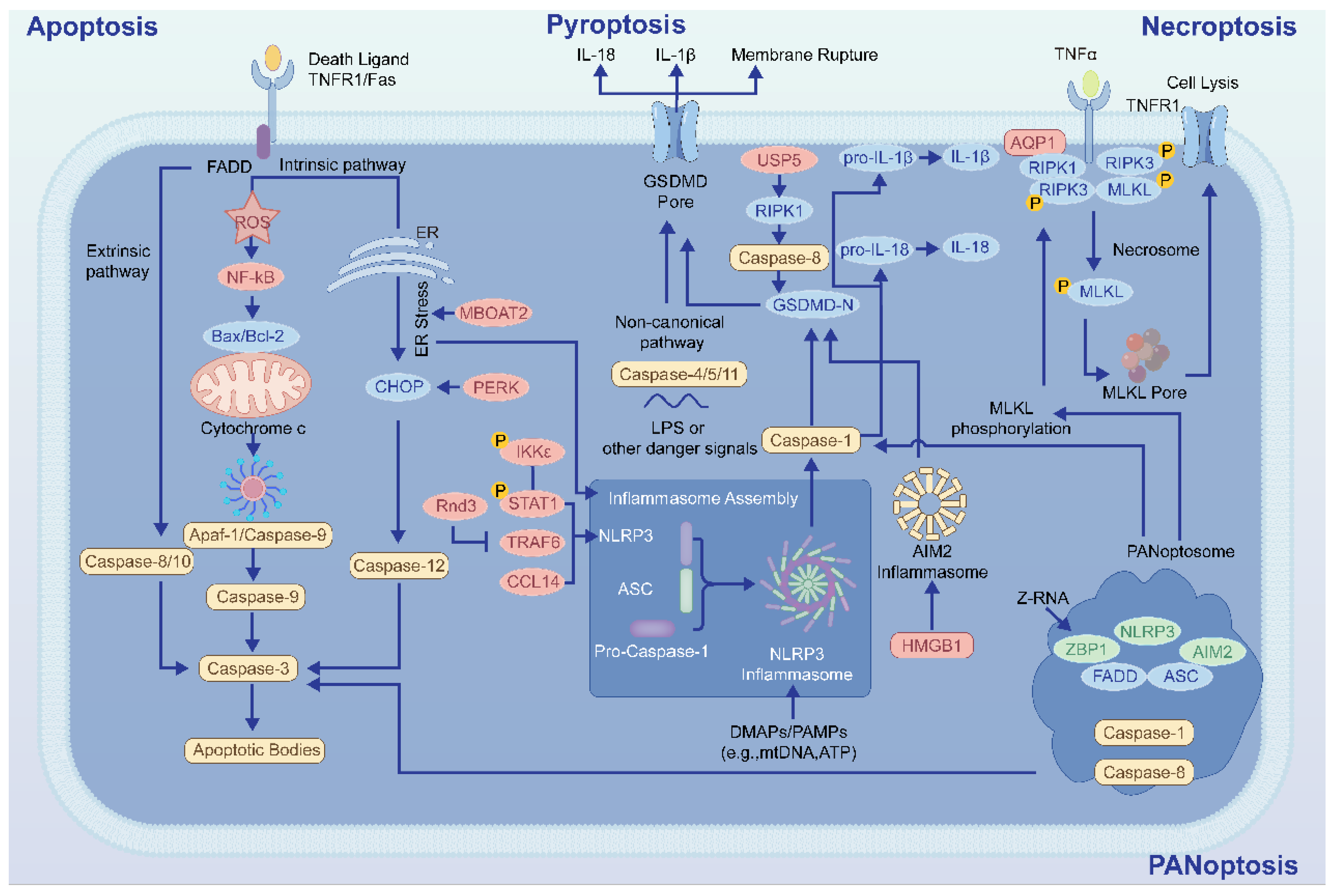
ECs undergo apoptosis via classical pathways, intrinsic (mitochondrial/ER) and extrinsic (death receptor). Both intrinsic and extrinsic pathways activate the caspase family through different mechanisms, ultimately leading to PCD [10]. The mitochondrial pathway of apoptosis signaling represents the primary apoptotic mechanism triggered by intracellular stress signals. Oxidative stress, DNA damage, or metabolic disturbances increase mitochondrial membrane permeability, which promotes the release of cytochrome C into cytoplasm and the formation of the apoptosome (comprising cytochrome C, apoptotic protease-activating factor-1 (Apaf-1), and adenosine triphosphate (ATP)). This assembly activates caspase-9, triggering a cascade that culminates in effector caspase activation (e.g., caspase-3), ultimately leading to apoptosis [11,12]. Moreover, the mitochondrial pathway has been shown to be closely associated with oxidative stress in ECs. The nuclear factor erythroid 2-related factor 2 (Nrf2)/heme oxygenase-1 (HO-1) signaling pathway has been identified as a core mechanism of cellular antioxidant defense. Its activation could mitigate mitochondrial damage, suppress excessive reactive oxygen species (ROS), and attenuate apoptosis [13]. Various aspects of natural agents exert protective effects against EC injury by activating Nrf2/HO-1 signaling [13]. However, due to the unclear pharmacological mechanism and the lack of detailed preclinical and clinical studies, we may not provide further discussion on these drugs and the development of new drugs for the treatment of IHD. Consequently, the mitochondrial pathway functions not only as the execution route of apoptosis but also as a pivotal regulatory point in cellular stress responses. On the other hand, the endoplasmic reticulum (ER) pathway of apoptosis signaling is initiated upon excessive or prolonged ER stress, causing accumulation of unfolded/misfolded proteins and dysregulated calcium. This, in turn, exacerbates the ER burden and ultimately induces apoptosis [14,15]. In addition, the death receptor pathway, an extrinsic classical pathway, is initiated through ligands binding to cell-surface death receptors, including Fas (CD95) and the tumor necrosis factor receptor (TNFR) [16]. Upon receptor–ligand binding, the death-inducing signaling complex (DISC) forms, recruiting FADD to activate caspase-8. Subsequently, it activates the effector caspase-3 or promotes the mitochondrial pathway by cleaving the Bid protein, inducing apoptosis (Figure 1) [17,18].

2.2. Pyroptosis of ECs

Endothelial cell pyroptosis involves inflammasome activation and gasdermin family cleavage, causing membrane pore formation and pro-inflammatory cytokine release [19]. At present, pyroptosis is classified into three pathways, the caspase-1-gasdermin-dependent classical pathway, the caspase-4/5/11-gasdermin-dependent non-classical pathway, and other pathways. The classical pathway is primarily inflammasome-mediated, which consists of the NOD-like receptor (NLR), the adaptor ASC, and caspase-1 [20,21]. Activation of caspase-1 cleaves GSDMD and pro-IL-1β/18 and then the GSDMD-N-terminal fragment (GSDMD-NT) forms plasma membrane pores, enabling IL-1β and IL-18 release [22,23]. In the non-canonical pathway, intracellular lipopolysaccharide (LPS) directly activates caspase-4/5/11, triggering GSDMD cleavage—essential for pore formation and pyroptosis (Figure 1) [24].

2.3. Necroptosis of ECs

Necrosis is mediated by the receptor-interacting protein kinase 1 (RIPK1)–RIPK3 mixed-lineage kinase domain-like protein (MLKL) signaling pathway, typically triggered by cellular damage or inflammatory stimuli. This leads to the activation of RIPK1, which then interacts with RIPK3 to form the “necrosome” complex. Subsequently, RIPK3 phosphorylates and activates MLKL, which disrupts the plasma membrane, causing cell swelling, rupture, and necrotic death [25,26]. The cascade of the RIPK1/RIPK3/MLKL pathway serves as both the execution mechanism for cell death and a critical trigger for inflammatory responses. When ECs undergo necroptosis via this pathway, they release pro-inflammatory cytokines and DAMPs, amplifying local inflammation and driving pathological progression [27,28]. Furthermore, necroptosis is tightly intertwined with multiple inflammation-related pathways. For instance, TNF-α activates RIPK1 via TNF receptors in ECs, triggering RIPK3 and MLKL phosphorylation—leading to necroptosis and amplified inflammation (Figure 1) [29].

2.4. PANoptosis of ECs

PANoptosis is a programmed inflammatory cell death pathway combining pyroptosis, apoptosis, and necroptosis, and is closely linked to IHD [30]. Endothelial PANoptosis is regulated by the PANoptosome complex, whose formation is essential for crosstalk among multiple pathways [31]. The core structure of PANoptosome comprises sensors including Z-DNA binding protein 1 (ZBP1), the Nod-like receptor protein (NLRP) family, absent in melanoma 2 (AIM2), adapter proteins (including FADD, ASC, effector including MLKL), and the caspase protein family [32]. PANoptosis is initiated when sensor proteins detect danger signals, triggering PANoptosome assembly via adapter proteins. These adapters act as molecular scaffolds that coordinate and activate key molecules across PCD pathways (Figure 1) [33].

2.5. Ferroptosis of ECs

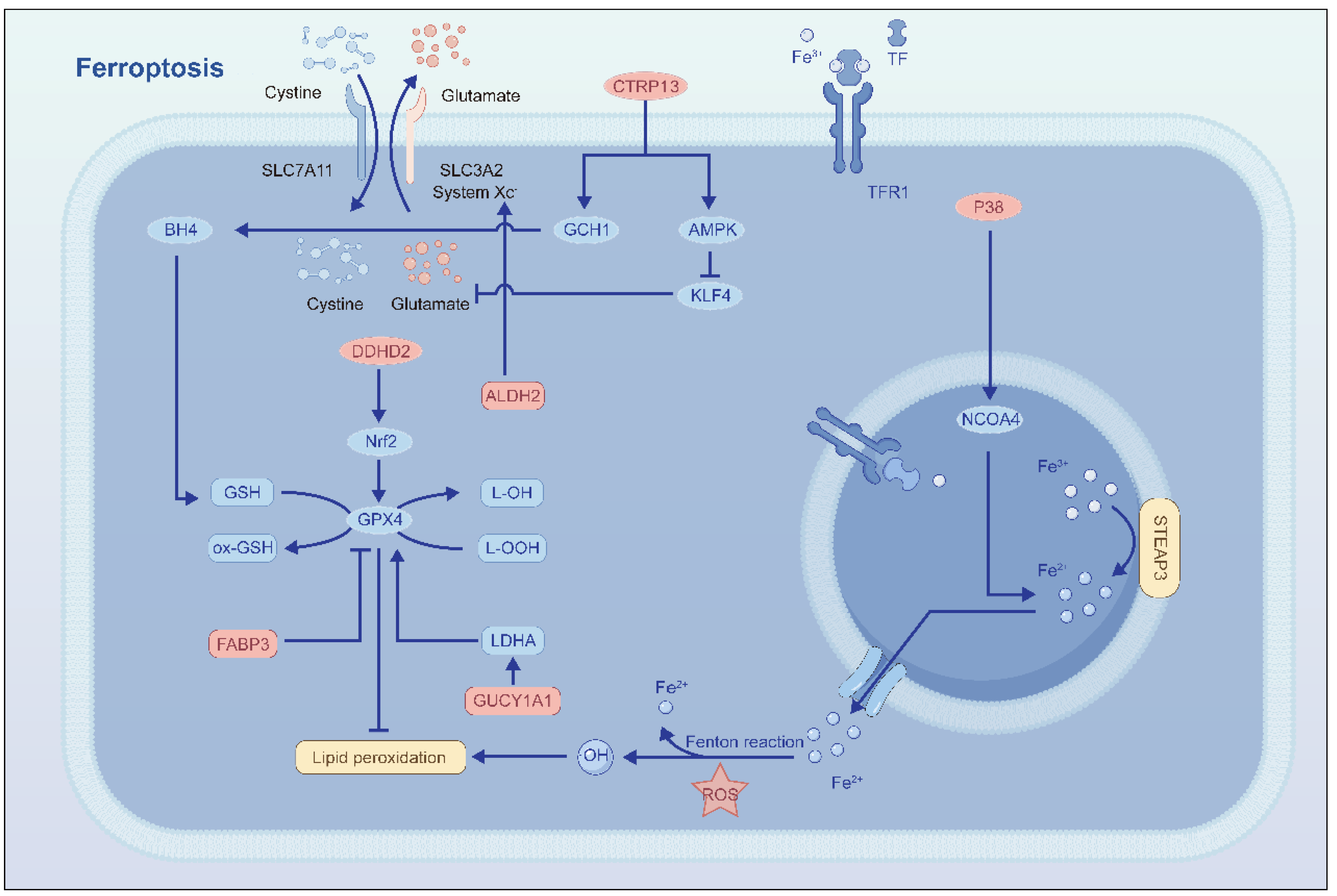
Ferroptosis is an iron-dependent form of PCD driven by lipid peroxide accumulation from iron overload, causing membrane damage and cell death [34]. Growing evidence highlights ferroptosis’s pivotal role in ECs dysfunction [35,36]. Ferroptosis is triggered by the iron-catalyzed Fenton reaction, generating large amounts of ROS—especially lipid peroxides. Iron ions disrupt membrane integrity by catalyzing the peroxidation of polyunsaturated fatty acid (PUFA) phospholipid peroxidation, leading to cellular dysfunction and death [37]. Abnormally elevated intracellular iron levels in ECs, such as increased transferrin receptor 1 (TfR1) expression, promote iron influx and increase iron load, further exacerbating lipid peroxidation [38,39]. Lipid peroxidation damages both cellular and mitochondrial membranes, reducing membrane potential, impairing mitochondrial function, and promoting cell death [40]. Glutathione peroxidase 4 (GPX4) is a key enzyme that suppresses ferroptosis by reducing lipid peroxides to preserve membrane lipid integrity. Its downregulation or loss of function triggers ferroptosis (Figure 2) [41].

2.6. Autophagy of ECs

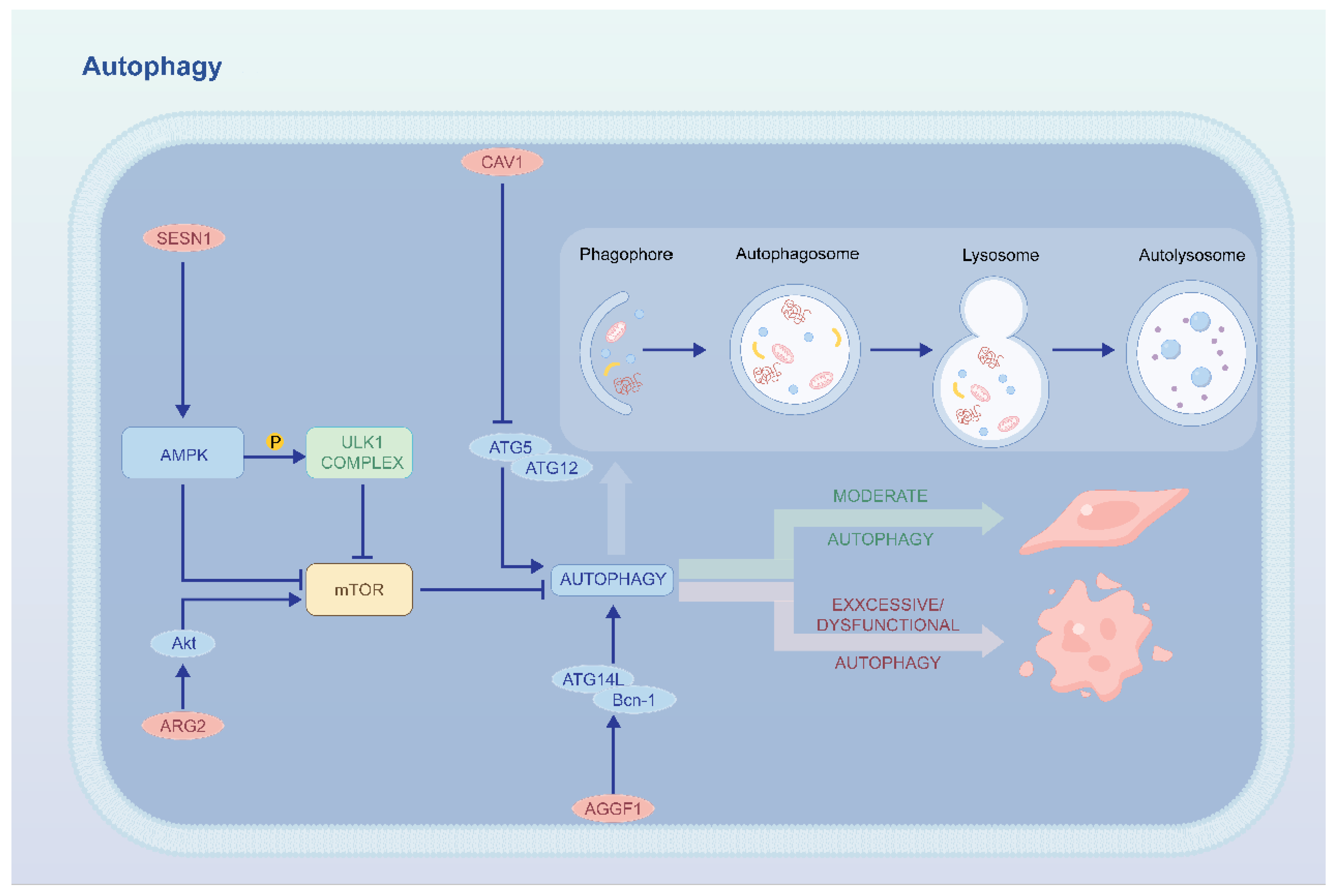
Autophagy-dependent cell death results from excessive or dysregulated autophagy. While autophagy protects ECs against oxidative stress and inflammation—thereby preserving vascular function—its overactivation can trigger this form of cell death, leading to IHD. Autophagy is classified by its cargo and delivery mechanisms. The three predominant classifications are macroautophagy, microautophagy, and chaperone-mediated autophagy (CMA). Among these, macroautophagy is the most prevalent [42]. Autophagy-related pathways encompass the mammalian target of the rapamycin (mTOR)-dependent pathway and the mTOR-independent pathway [43]. In response to stress or stimulation, the mammalian target of rapamycin complex 1 (mTORC1) is inactivated, activating the UNC-51-like autophagy receptor kinase 1 (ULK1) complex to initiate phagophore assembly. Upon autophagy induction, ULK1 phosphorylates the class III phosphatidylinositol 3-kinase (PI3K) complex I, generating phosphatidylinositol-3-phosphate (PI3P) and promoting autophagosome membrane nucleation [44]. Subsequently, two ubiquitin-like conjugation systems are engaged to promote autophagosomal membrane elongation: the ATG5-ATG12-ATG16L complex and microtubule-associated protein 1 light chain 3-phosphatidylethanolamine (LC3-PE) [45]. In mTOR-independent autophagy pathways, Ca2+, AMP-activated protein kinase (AMPK), mitogen-activated protein kinase (MAPK)/c-Jun N-terminal kinase (JNK), and microRNAs (miRNAs) have been identified as key regulators of autophagy (Figure 3) [43].

3. PCD of ECs Plays a Pivotal Role in the Development and Progression of IHD

3.1. Programmed Cell Death of ECs in AS

Atherosclerosis is a chronic arterial wall inflammation causing coronary heart disease. In the early stage of vascular lesions, lipid deposition occurs in the intima first, followed by inflammatory cell infiltration, fibrous tissue hyperplasia, and eventually plaque formation [46,47]. Unstable plaque rupture and subsequent thrombosis can cause IHD [48]. Risk factors such as hypertension, hyperlipidemia and diabetes directly cause vascular damage by altering the phenotype of EC at arterial bifurcations [49,50]. ECs lining blood vessels are not uniform; they vary in structure, function, and gene expression depending on their location. In atherosclerosis-prone regions, disturbed blood flow alters endothelial behavior. These cells show increased expression of inflammatory mediators (e.g., VCAM-1, MCP-1), reduced nitric oxide production, and a procoagulant shift. In contrast, flow-protected areas maintain normal alignment and anti-inflammatory profiles. Importantly, endothelial phenotypes are shaped by both fixed (epigenetic) and dynamic (microenvironmental) signals [51]. This plasticity allows the endothelium to adapt but also makes it vulnerable to modern risk factors. This heterogeneity is exactly why atherosclerosis (AS) arises at specific, focal locations. Both animal and human studies show a complex, close interplay between endothelial cells (ECs) and mononuclear phagocytes as atherosclerosis (AS) progresses.
Oxidation of low-density lipoprotein (LDL) generates oxidized LDL (ox-LDL), which is taken up by ECs and macrophages via scavenger receptors, driving foam cell formation and being an initial step in atherosclerotic lesion development [52,53]. On one hand, risk factors drive ECs to release growth factors and cytokines. This increases vascular permeability and alters the underlying extracellular matrix, which in turn triggers mononuclear phagocyte infiltration and aggregation, fueling AS development [54,55]. On the other hand, mononuclear phagocytes that have gathered in the damaged vessel wall use scavenger receptors to take up lipid particles and turn into foam cells. These foam cells then secrete growth factors and cytokines such as tumor necrosis factor α (TNF α) and interleukin 1β (IL 1β), further damaging ECs and worsening their dysfunction. This creates a vicious cycle [56,57]. Damaged ECs also allow vascular smooth muscle cells (VSMCs) to migrate into the subendothelial space, where they promote plaque formation [58,59]. At the same time, transforming growth factor β (TGFβ) released by VSMCs can trigger endothelial mesenchymal transition (EndMT) in ECs. ECs undergoing EndMT lose their barrier function and take on pro-inflammatory and pro-fibrotic traits, which accelerates AS progression [60]. These findings indicate that EC dysfunction plays a pivotal role in AS initiation and progression, with programmed EC death being a key contributing factor.

3.1.1. Apoptosis of ECs in AS

In AS, the apoptosis of ECs is mainly achieved through the extrinsic death receptor pathway and the intrinsic mitochondrial pathway [61]. Early in atherosclerosis, EC apoptosis promotes lipid deposition and inflammatory cell infiltration, then drives plaque formation [62,63]. In addition, apoptotic ECs may undergo secondary necrosis, releasing pro-inflammatory mediators and cellular debris that intensify local inflammation and expand the plaque necrotic core, which is a hallmark of advanced AS [64].
In the initiation and progression of AS, EC apoptosis serves as a critical pathological event, with its molecular mechanisms primarily revolving around the imbalance between pro-apoptotic proteins (e.g., BAX, caspase) and anti-apoptotic proteins (e.g., BCL-2). Oxidative stress activates the IKKβ/IκBα/NF-κB pathway, and upregulates the Bax/Bcl-2 ratio and cleaved caspase-3 expression, thereby inducing apoptosis in human aortic endothelial cells (HAECs) (Figure 1) [65]. In contrast, Poly(I:C) exerts anti-apoptotic effects in a mouse model of atherosclerosis. In vitro studies have confirmed that the possible mechanism is the upregulation of BCL-2 and downregulation of BAX and caspase-3/9 through JAK/STAT activation [66]. Furthermore, both glutathione and Akebia saponin D (ASD) protect ECs by restoring the Bax/Bcl-2 balance and inhibiting caspase activation [67,68].
ER stress constitutes an additional significant pro-apoptotic mechanism. In human umbilical vascular endothelial cells (HUVECs) that had been stimulated with LDL, ox-LDL upregulates ER stress marker proteins, including glucose-regulated protein 78 (GRP78), p-PERK, p-IRE1α, and C/EBP homologous protein (CHOP). This upregulation results in the activation of the PERK/eIF2α/CHOP and IRE1α/sXBP1 signaling axes. This leads to EC apoptosis (Table 1) [69]. Statins, such as rosuvastatin, significantly reduce EC apoptosis and vascular dysfunction by dual inhibition of the PERK/eIF2α/CHOP and IRE1α/sXBP1 pathways in ApoE/ mice (Figure 1) [69]. Statins exert multiple effects on atherosclerosis and rosuvastatin can slow the progression of atherosclerotic cerebral infarction (ACI) in patients, partly through inhibiting OX40 ligand expression and upregulating peroxisome proliferator-activated receptor gamma (PPAR-γ) in endothelial cells [70]. Inhibition of endoplasmic reticulum (ER) stress may represent another important protective mechanism of rosuvastatin in the aortic endothelium. However, further studies are needed to confirm these findings. Oxidative stress, as the core initiating factor driving apoptosis of ECs, activates the aforementioned apoptotic pathways but also induces inflammation [71]. Nrf2 activation has been demonstrated to enhance cellular antioxidant capacity and to suppress the expression of adhesion molecules (VCAM-1 and ICAM-1), thereby delaying the onset of inflammation in AS [72]. In the postmenopausal phase, estrogen plays a crucial role in maintaining endothelial homeostasis by suppressing oxidative stress and inflammation through the activation of ERα/ERβ receptors [73,74]. However, the decline in estrogen levels after menopause, in conjunction with the prevalence of hyperhomocysteinemia, collectively exacerbates apoptosis of ECs and vascular damage [75].
In summary, EC apoptosis in AS progression manifests as a molecular pattern characterized by upregulation of BAX/caspase-3/9 and downregulation of BCL-2. This process is controlled by multiple pathways, including NF-κB, ER stress, JAK/STAT, and so on. It is closely associated with oxidative stress, inflammation, and specific hormonal environments (such as postmenopausal status).

3.1.2. Pyroptosis of ECs in AS

Elevated ox-LDL, disturbed blood flow, metabolic abnormalities, and toxic substances are key risk factors inducing pyroptosis of ECs in AS. Pyroptotic ECs undergo physiological changes that trigger the release of inflammatory factors, promoting vascular inflammation and the death of macrophages, VSMCs, and arterial ECs. This exacerbates necrotic core formation, increases atherosclerotic plaque instability, and elevates thrombosis risk [94,95]. In early AS, ox-LDL and disturbed blood flow triggers mild, scattered pyroptosis in ECs at vulnerable arterial sites, initiating disease progression [61,96]. Upon uptake by ECs, ox-LDL causes lysosomal damage and robust ROS production, where disturbed blood flow enhances ROS generation, and then activates the NLRP3 inflammasome-dependent GSDMD cleavage and leads to the formation of pores on ECs’ membranes [97]. Besides NLRP3, AIM2 inflammasomes can also activate pyroptosis (Figure 1) [98]. In advanced AS, pyroptosis of ECs in the fibrous cap disrupts endothelial continuity, exposing procoagulant substances and promoting platelet adhesion and thrombus formation, finally leading to vascular occlusion [99]. Low-shear stress was found to trigger endothelial pyroptosis along with IκB kinase ε (IKKε) phosphorylation. In ApoE/ mice consuming a high-cholesterol diet, IKKε silencing markedly diminished aortic arch atherosclerotic lesions and concurrently suppressed low-shear stress-driven endothelial pyroptosis and NLRP3 expression. Mechanistically, IKKε upregulated NLRP3 by stimulating signal transducer and activator of transcription 1 (STAT1), which subsequently bound to the NLRP3 promoter in in vitro studies (Figure 1) [77]. TMAO, an independent risk factor for AS, drives pyroptosis by upregulating membrane bound O-acyltransferase domain containing 2 (MBOAT2) in vivo and vitro, inducing ER stress and mitochondrial ROS production, or by activating NLRP3 through ROS-mediated succinate dehydrogenase complex iron sulfur subunit B (SDHB) upregulation (Figure 1) [76].
Beyond direct risk factor stimulation, multiple signaling pathways regulate the NLRP3 inflammasome, influencing pyroptosis of ECs and AS progression. In AS, PI3K/AKT activation suppresses NLRP3 inflammasome partly by inhibiting NF-κB, which directly upregulates NLRP3 expression and exacerbates the pyroptosis of ECs [100]. Furthermore, reduced expression of Rho family GTPase 3 (Rnd3) has been demonstrated to exacerbate the progression of AS in ApoE/ mice [78]. It binds to TNF receptor associated factor 6 (TRAF6), facilitating K48-dependent ubiquitination and degradation, resulting in the blockage of NF-κB and mitigating the pyroptosis of ECs (Figure 1). TRAF6 knockdown countered Rnd3 knockout-evoked exacerbation of EC pyroptosis in vivo and vitro [78]. Moreover, the chemokine CCL14 promotes M1 and endothelial pyroptosis of ECs by activating the NF-κB/NLRP3 axis (Figure 1) (Table 1) [79]. In summary, pyroptosis of ECs drives vascular inflammation in AS via a complex signaling network. These pathways exhibit a high degree of complexity and interconnectedness.

3.1.3. Necroptosis of ECs in AS

In AS, ox-LDL has been demonstrated to upregulate the expression of RIPK1, RIPK3, and MLKL, thereby inducing necroptosis of ECs. Aquaporin-1 (AQP1), mainly enriched in ECs both in expression and spatial location, exerts anti-necroptotic effects by binding with RIPK1 and inhibiting the expression of RIPK3 and MLKL to increase plaque stability in a mouse model (Figure 1) [82]. However, RIPK3 knockout in ECs has been shown to promote AS progression, suggesting RIPK3 has necroptosis-independent protective roles in ECs [101].
Modulation of the necroptosis pathway has emerged as a novel therapeutic strategy for AS. Necrostatin-1, a small molecular alkaloid, was identified as an inhibitor of necroptosis. Emerging evidence suggests that Necrostatin-1 possesses numerous pharmacological activities, including anti-cancer activity, protective effects on heart, and so on [102]. In ox-LDL stimulated ECs, Necrostatin-1 ameliorates ox-LDL induced NO reduction and vascular adhesion molecules including VCAM-1 and E-selectin. Further research has demonstrated that Necrostatin-1 inactivates RIPK1 and suppresses NF-κB P65 nuclear translocation, suggesting a potential therapeutic strategy for AS, but further in vivo experimental validation is still required [103]. Cilostazol alleviates vascular inflammation and delays atherosclerosis progression by inhibiting necroptosis of ECs and IL-1β production [104]. The pharmaceutical agent Nattokinase has been demonstrated to exert beneficial therapeutic effects by impeding necroptosis through a multitude of mechanisms. These findings suggest that targeting factors are associated with the necroptosis pathway.

3.1.4. PANoptosis of ECs in AS

Research has demonstrated that the AIM2 PANoptosome can promote the formation of an inflammatory microenvironment by inducing PANoptosis, thereby accelerating AS progression [105]. This PANoptosome recognizes oxidative DNA damage and replication stress, which can exacerbate vascular endothelial injury [106]. Furthermore, the NLRP3 inflammasome is aberrantly activated in AS, where it senses cholesterol crystals and ox-LDL to drive pyroptosis and cooperatively induce apoptosis and necroptosis [20]. In diabetes, hyperglycemia triggers sensor proteins (e.g., ZBP1) via oxidative stress and mitochondrial dysfunction, leading to PANoptosome assembly and subsequent EC death through multi-pathway crosstalk [107]. This distinctive “hybrid cell death” may amplify endothelial barrier disruption, accelerating atherosclerotic lesion formation. Bioinformatics analysis identified four key PANoptosis-related genes including ZBP1 and AIM2 significantly associated with AS (Figure 1) [108]. Therefore, multi-target drugs or combination therapies are necessary to avoid compensatory activation of other death subroutines. However, further exploration is necessary to elucidate the specific molecular mechanisms, particularly the assembly and regulation of PANoptosomes in ECs.

3.1.5. Ferroptosis of ECs in AS

Iron overload, lipid peroxidation, and ROS generation are correlated in ECs of diabetic mice, contributing to vascular dysfunction, which in turn promotes the onset and progression of AS [109]. Chronic iron overload exacerbates atherosclerosis in ApoE/ mice by increasing nitrotyrosine, promoting endothelial dysfunction and plaque instability [110]. Iron overload in ApoE/ mice also increases prostaglandin production via upregulation of COX-2 in aortic ECs, causing oxidative imbalance and exacerbating atherosclerosis [111]. Iron chelators such as deferoxamine (DFO) and deferiprone bind free iron, inhibiting its participation in redox reactions and the Fenton reaction, thereby suppressing ferroptosis in ECs [112]. However, high-dose DFO often associates with elevated pulmonary blood pressure, exacerbates Vibrio and Yersinia infections, and causes visual and auditory neurotoxicity. Although most toxic side effects are reversed upon drug discontinuation, further evaluation of its safety is still needed [112]. Ferrostatin-1 (Fer-1), the first reported ferroptosis inhibitor (2012), has been extensively used as a reference compound in the past decade. Fer-1 is an arylalkylamine that prevents lipid hydroperoxide accumulation in an erastin-mediated ferroptosis model in HT-1080 cells [113]. It has been shown to suppress lipid peroxidation in vivo by scavenging ROS, reducing lipid peroxide accumulation, and inhibiting ferroptosis in ECs, thereby alleviating AS in high-fat-diet ApoE/ mice. Further in vitro experiments demonstrated that it upregulates the levels of SLC7A11 and GPX4, which may be the primary molecular mechanism [114,115].
It has been shown that environmental pollutants (e.g., PM2.5) transmit miR-3529-3p via alveolar macrophage-derived extracellular vesicles, which targets and inhibits endothelial cell ferritin heavy chain (FTH1), disrupting iron homeostasis [116]. Fer-1 and DFOM inhibit PM2.5-induced AS progression by regulating ferroptosis of ECs [117]. A lower plaque burden and increase in endothelial cells with decreased lipid peroxidation was found in a radiation-associated atherosclerosis (RAA) mouse model treated with ferroptosis inhibitors. Further experiments confirmed that radiation induced the occurrence of ferroptosis in HAECs. In vitro study confirmed that radiation triggers mitochondrial ferritinophagy and ferroptosis via the p38/NCOA4 and domain-containing protein 2(DDHD2)-mediated Nrf2/GPX4 pathway (Figure 2) (Table 1) [85,89]. Another study demonstrated that ionizing radiation (IR) accelerated the progression of atherosclerotic plaque by regulating EC ferritin phagocytosis/ferritin deposition in a P38/NCOA4-dependent manner. This reveals that radiation may affect AS through different mechanisms of ferroptosis, and more related pathway research is still needed [85,89]. Furthermore, specific metabolites modulate VEC ferroptosis via distinct pathways: (1) Hcy acts through the system Xc–GSH–GPX4 axis; (2) PGPC downregulated GPX4 by activating FABP3 via CD36; and (3) Neu5Ac triggers ferroptosis via SLC3A2, leading to endothelial dysfunction and promoting atherosclerosis [41,87,118].
During AS pathogenesis, multiple signaling pathways regulate the ferroptosis of ECs. The Nrf2 pathway is a key antioxidant pathway that upregulates GPX4 (a critical ferroptosis inhibitor) and SLC7A11 (the cystine/glutamate antiporter light chain), thereby suppressing lipid peroxidation, iron accumulation, ferroptosis of ECs, and AS progression [119]. Magnesium ions enhance SLC7A11 expression by activating the MAPK pathway, thereby inhibiting EC ferroptosis [120]. The GTP cyclohydrolase I/tetrahydrobiopterin (GCH1/BH4) axis is a key antioxidant pathway that protects ECs from ferroptosis by mitigating mitochondrial oxidative stress. C1q/TNF-related protein 13 (CTRP13) activates this axis, improves mitochondrial function, and reduces oxidative stress, thereby inhibiting the ferroptosis of ECs and slowing AS progression in high-fat-diet-induced ApoE/ mice [83]. CTRP13 also activates AMPK to suppress KLF4 expression, enhance metabolic stress adaptation, upregulate antioxidant enzymes, and alleviate oxidative stress and mitochondrial dysfunction—thereby inhibiting ferroptosis (Figure 2) (Table 1) [84]. This means that CTRP13 may be the key target of treating atherosclerosis by inhibiting ferroptosis. Moreover, the GCH1/BH4, PI3K/AKT/mTOR, and RAP1B/NRF2 pathways are also key regulators of ferroptosis of ECs [83,121,122]. In summary, ferroptosis impairs endothelial function and vascular homeostasis via iron dyshomeostasis and lipid peroxidation. These studies explore ferroptosis inhibition as a therapeutic target for AS.

3.1.6. Autophagy of ECs in AS

In early AS, autophagy is induced in cells exposed to oxidative stress and metabolic distress, protecting them from damage. Under mild oxidative stress, autophagy promotes cellular recovery by clearing damaged components—exerting a key anti-atherosclerotic effect. However, AS preferentially develops at arterial bifurcations and curvatures, where disturbed or low shear stress impairs autophagy. This impairment accelerates EC inflammation, apoptosis, and senescence, thereby promoting lesion formation [123]. In high-shear-stress (atheroprotective) regions, endothelial-specific ATG5 deletion promotes significant atherosclerotic plaque formation [124], but shows that shear stress levels differentially regulate autophagy. For instance, oscillatory shear stress (OSS)-activated integrin β3 in ECs impairs autophagy flux, causing endothelial dysfunction and AS [125]. Under LSS, mTOR activation inhibits AMPK and impairs autophagy in ECs. Conversely, high shear stress promotes effective autophagy in ECs, suppressing atherosclerotic plaque development by reducing apoptosis, senescence, and inflammation [124]. Ox-LDL-induced endothelial injury disrupts the AMPK/mTOR pathway, reducing AMPK phosphorylation and increasing mTOR phosphorylation, leading to impaired autophagy, lipid accumulation, and inflammation [90].
Sestrin 1 (SESN1), an upstream AMPK activator, positively correlates with autophagy activity and silencing SESN1 abolishes orientin-induced AMPK activation in HUVECs induced by ox-LDL (Figure 3) [90]. Similarly, arginase 2 (ARG2) suppresses AMPK signaling and impairs endothelial autophagy in advanced atherosclerosis by activating the RICTOR–mTORC2–AKT cascade to enhance mTORC1 activity in vitro and in vivo (Table 1) [91]. C1q/tumor necrosis factor-related protein 9 (CTRP9) restores PA-inhibited autophagic flux via AMPK activation, thereby alleviating PA-induced EC senescence, highlighting the critical role of AMPK in maintaining EC homeostasis (Figure 3) [126]. It was found that Caveolin-1 deficiency significantly reduces vascular inflammatory responses and atherosclerotic lesions in an atherosclerotic mouse model. The potential mechanism is that Cav-1 interacted with the ATG5-ATG12 complex and directed autophagosome components to lipid rafts, a process that regulated autophagosome formation and autophagic flux (Figure 3) [92]. In summary, the autophagy of ECs in AS progression hinges on a dynamic, tightly regulated balance. Under physiological or mild stress, it acts as a key quality-control mechanism—preserving endothelial barrier function and anti-atherosclerotic homeostasis. But under sustained or severe pathological stress, dysregulated autophagy turns destructive, worsening vascular dysfunction and driving plaque progression and instability.

3.1.7. Crosstalk Between Different Programmed Cell Death in AS

During the progression of disease, there is crosstalk between different programmed cell deaths; blocking one can cause cells to switch to another. For example, the use of caspase inhibitors can prevent apoptosis and promote necrotic cell death; conversely, the activation of Caspase-8 promotes apoptosis whilst cleaving RIPK1 and RIPK3, thereby blocking the initiation of necrotic cell death [127]. During the execution phase of necrotic apoptosis, MLKL oligomerizes to form necrosomes, which translocate to the cell membrane to form pores, whilst simultaneously activating the NLRP3 inflammasome, thereby promoting the initiation of pyroptosis [128]. Furthermore, ox-LDL increases the expression of the RIPK3 and MLKL genes, leading to the occurrence of necrotic apoptosis, whilst also inducing the formation of the NLRP3 inflammasome, thereby triggering pyroptosis [129,130]. Autophagy initially suppresses apoptosis (by EVA-1 homolog A(EVA1A)-driven clearance of damaged mitochondria) and ferroptosis (by restoring GPX4/SLC7A11 and reducing lipid peroxidation) [131,132]. However, excessive autophagy paradoxically promotes death: NCOA4-dependent ferritinophagy liberates iron, fueling ferroptosis and inflammasome activation, while EVA1A overexpression causes autophagosome accumulation and caspase-3-mediated apoptosis [131,133].
In summary, there are links between different types of cell death, which can be regulated by various signaling pathways and environmental factors; this highlights the complexity of cell death. Understanding the interactions between different signaling pathways and the influence of the cellular environment on patterns of cell death is crucial for the development of therapies targeting these pathways.

3.2. PCD of ECs in MI

Myocardial infarction (MI), a leading global cause of death, is the primary cause of mortality in coronary heart disease. Recent single-cell multi-omics and genetic lineage-tracing studies show that ECs undergo transient metabolic, mesenchymal, hematopoietic, and pro-inflammatory phenotypic shifts in the damaged microenvironment [134]. Approximately 25% of non-myocytes are ECs, which play key roles in vascular repair, inflammation regulation, and cardiac function maintenance [135]. These studies confirmed the crucial role of ECs in MI, highlighting the need to further investigate the effect and molecular mechanism of PCD of ECs.

3.2.1. Apoptosis of ECs in MI

Ischemia and hypoxia impair mitochondrial oxidative phosphorylation in ECs, causing ATP depletion. This energy crisis triggers the apoptosis of ECs, with pathological changes including abnormal mPTP opening, loss of mitochondrial membrane potential, calcium overload, and dysregulated mitochondrial fission and autophagy [136]. RNA-seq analysis revealed extrinsic pathway activation leading to EC apoptosis post-MI. Thirteen extrinsic pathway-associated genes were substantially upregulated, including thrombospondin-1 (THBS1), plasminogen activator inhibitor-1 (SERPINE1), secretogranin II (SCG2), telomerase reverse transcriptase (TERT), Fas ligand (FASL), bone morphogenetic protein 4 (BMP4), ICAM1, and tumor necrosis factor alpha-induced protein 3 (TNFAIP3). These genes likely drive classical death receptor signaling (e.g., Fas/FasL and TNF-α/TNFR1), leading to caspase-8 activation and apoptosis [137]. Endogenous-pathway-related genes X-box binding protein 1 (XBP1) and NFE2L2 were overexpressed, along with three genes involved in both endogenous and exogenous signaling: TNF, MAPK7, and homeodomain-interacting protein kinase 1 (HIPK1) [138].
Mechanistically, the PI3K/AKT pathway critically regulates EC apoptosis post-MI [139]. miR-124 promotes EC apoptosis and inhibits proliferation by activating p38 MAPK and suppressing PI3K/AKT, potentially contributing to vascular endothelial injury in MI [139]. On the other hand, serum from ST-segment elevation myocardial infarction (STEMI) patients induced significant endothelial injury in vitro, potentially via pro-apoptotic factors such as proprotein convertase subtilisin/kexin type 9 (PCSK9) [140]. In summary, apoptosis of ECs is triggered by ischemia–hypoxia and the ensuing oxidative stress, and is executed mainly via the death receptor and mitochondrial pathways. Transcriptome has not only validated classical pathway activation but also uncovered novel regulatory genes, significantly expanding the understanding of the extrinsic apoptotic pathway. These findings provide a crucial theoretical basis for protecting endothelial function and improving MI prognosis via multi-target interventions.

3.2.2. Pyroptosis of ECs in MI

Evidence shows that plasma levels of NLRP3 and caspase-1 are markedly elevated in MI patients [141]. In vitro studies show that NLRP3 is expressed in cardiac microvascular endothelial cells (CMECs) but nearly absent in cardiomyocytes [142]. In coronary artery disease, hyperglycemia, and hyperhomocysteinemia, oxidative stress activates the NLRP3 inflammasome, triggering caspase-1–mediated GSDMD cleavage and pyroptosis of ECs, which promotes MI [143,144,145]. Concurrently, the pyroptosis of ECs contributes to MI pathology by promoting microvascular obstruction (MVO) and myocardial hemorrhage, thereby impairing myocardial remodeling and functional recovery [146]. In the case of SARS-CoV-2 infection, an infection- or immune-driven cytokine storm can trigger EC pyroptosis, which underlies cardiovascular complications such as arrhythmias, stroke, and MI [147]. Pyroptosis of ECs is regulated by non-coding RNAs, transcription factors such as interferon regulatory factor 1 (IRF1), and enzymatic modifications such as HDAC11-mediated ERG acetylation, which modulate the NLRP3 inflammasome and associated signaling pathways [148,149]. Not only that, but ROS drive pivotal catalysts for EC pyroptosis [150,151]. In summary, CMECs are the primary site of NLRP3 inflammasome expression and activation, serving as a critical hub for tissue injury. Targeting key regulators of EC pyroptosis offers a promising novel therapeutic strategy.

3.2.3. Necroptosis of ECs in MI

Clinical studies show elevated plasma RIPK3 in MI patients, correlating with higher risk of adverse cardiovascular events. It is important to note that apoptosis preserves plasma membrane integrity, manifesting only as zeiosis, and thus elicits minimal inflammatory factor release. In contrast, necroptosis involves plasma membrane rupture, recruiting diverse immune cells and driving robust, destructive inflammation. This gives it a dual role in post-MI myocardial inflammation and remodeling. On one hand, it releases cellular contents to activate immune responses and amplify inflammation; on the other, excessive inflammation can exacerbate necroptosis, creating a vicious cycle that worsens myocardial injury [152]. In summary, necroptosis of ECs exacerbates post-MI inflammation and cardiac remodeling. The core necroptotic RIPK1/RIPK3/MLKL pathway drives pathologically pro-inflammatory effects in MI. Thus, inhibiting this pathway to ameliorate endothelial dysfunction and restore cardiac function is the most promising therapeutic strategy.

3.2.4. Ferroptosis of ECs in MI

During MI, local ischemia/hypoxia elevates oxidative stress via iron-catalyzed Fenton reactions, generating ROS that drive lipid peroxidation, thereby causing ferroptosis of ECs [35,153]. Ferroptosis of ECs increases vascular permeability and inflammatory factor release, exacerbating endothelial injury and impairing blood flow in ischemic myocardium, thereby accelerating disease progression [154]. Hence, it has reported that ferroptosis-related gene expression levels predict post-MI heart failure and other adverse events, enabling risk stratification [155].
Under post-MI hypoxic stress, ECs ferroptosis is marked by ROS and lipid peroxide accumulation and GPX4 downregulation. Bulk RNA-seq revealed significant upregulation of six ferroptosis-related genes in EC following MI. scRNA-seq further showed significant upregulation of ferroptosis-related genes in both ECs and stromal cells, implicating EC ferroptosis in MI pathogenesis [156]. However, some genes inhibit ECs ferroptosis by regulating GPX4. For instance, ovarian tumor domain protease 5 (OTUD5) suppresses EC ferroptosis under hypoxia by activating NF-κB/p65 signaling—reducing ROS and lipid peroxidation, restoring GPX4 expression, and downregulating ACSL4—thereby preserving pro-angiogenic function [157]. Additionally, activation of aldehyde dehydrogenase 2 (ALDH2) relieves myocardial infarction in a mouse model of MI through inhibiting EC ferroptosis, and promoting their proliferation and migration (Figure 2) [86]. In conclusion, current therapeutic research focuses on GPX4 and its associated regulatory genes. However, iron chelators and lipid peroxidation inhibitors such as ferrostatin-1, which can effectively inhibit cardiomyocyte ferroptosis, reduce myocardial injury, and improve cardiac function, have rarely been studied in ECs related to MI, warranting more attention.

3.2.5. Autophagy of ECs in MI

During MI, moderate autophagy in ECs protects against ischemia-induced apoptosis by clearing damaged components and maintaining metabolic homeostasis [158,159]. On the other side, prolonged or excessive autophagy in ECs can trigger autophagic cell death, worsening vascular dysfunction and injury [160,161]. Under ischemic stress, AMPK activation generally promotes autophagy in ECs [162]. It is also significant to note that other regulatory factors, such as miR-92a-3p, enhance EC autophagy by upregulating autophagy-related gene 4a (ATG4a), while miR-106a suppresses autophagy and angiogenesis by targeting and inhibiting ATG7 [163,164]. Angiogenic factor 1 (AGGF1) shows therapeutic potential for coronary artery disease. In mice with myocardial infarction (MI), AGGF1 protein therapy stimulated therapeutic angiogenesis, leading to improved survival, increased ejection fraction, reduced infarct size, attenuated cardiac apoptosis and fibrosis, and robust recovery of myocardial function and contractility. AGGF1 can activates JNK in ECs, leading to autophagy and the formation of the Becn1-Vps34-ATG14 complex in MI (Figure 3) (Table 1) [93]. Autophagy is a dynamic, complex process, the dysregulation of which can cause cell death and tissue damage. Although EC autophagy targeting offers a novel strategy for MI treatment, its clinical translation remains challenging.

3.3. PCD of ECs in Myocardial I/R Injury

Myocardial I/R injury is a major clinical challenge in MI, significantly affecting patient prognosis. Although PCI restores coronary flow, reperfusion itself can worsen cardiomyocyte death and dysfunction, and current interventions remain limited in efficacy [165,166]. Myocardial I/R injury not only damages cardiomyocytes but also significantly affects biological functions in ECs [167,168]. PCD of ECs trigger inflammatory infiltration, microthrombi, and microvascular dysfunction, culminating in the “no-reflow” phenomenon, thereby worsening myocardial injury [169,170,171].

3.3.1. Apoptosis of ECs in Myocardial I/R Injury

In the early phase of reperfusion, cell death initially manifests in the ECs of small coronary vessels. The radial spread of cell death to surrounding cardiomyocytes indicates that reperfusion induces ECs to release soluble pro-apoptotic mediators, thereby promoting cardiomyocyte apoptosis [172]. Simultaneously, the resupply of oxygen exacerbates ROS production in ECs, further activating the pro-apoptotic protein Bax while inhibiting the anti-apoptotic protein Bcl-2, ultimately leading to decreased mitochondrial membrane potential and apoptosis [136,173]. Improving mitochondrial dysfunction during this process has emerged as a potential therapeutic strategy for I/R injury. Among the marketed drugs with proven cardioprotective effects, empagliflozin improves mitochondrial function and reduces EC apoptosis and microvascular dysfunction by inhibiting the dephosphorylation of mitochondrial fission protein 1 (Fis1) to block mitochondrial fission [174]. As a potassium channel opener, pinacidil reduces mitochondrial calcium influx and damage by overexpressing calreticulin (CRT) to inhibit inositol 1,4,5-trisphosphate receptors (IP3Rs) and mitochondrial calcium uniporter (MCU), thereby alleviating calcium overload and mitochondrial-dependent EC apoptosis, which improves perfusion and reduces infarct size [175].
In myocardial I/R jury, multiple pathways are involved in EC apoptosis. Activation of the PI3K/Akt pathway protects ECs. Sufentanil alleviates OGD/R-induced barrier dysfunction in human CMECs via PI3K/Akt activation, and suppresses apoptosis [176]. Shexiang Baoxin Pill (SBP) alleviates EC apoptosis, oxidative stress, and inflammation after myocardial I/R injury by upregulating S1PR1 to activate the downstream AKT pathway and promote vascular regeneration, thereby improving cardiac function [177]. After myocardial I/R injury, aberrant MAPKK4/p38 signaling exacerbates injury and apoptosis in CMECs. The active components of Buyang Huanwu Decoction (BYHW), astragaloside IV and ligustrazine can alleviate EC apoptosis and microvascular dysfunction by modulating the MAPKK4/p38 pathway [178]. The activation of the transient receptor potential vanilloid 4 (TRPV4) channel increases cardiac EC permeability and promotes apoptosis via the PKC/RhoA/MLC pathway, worsening vascular hyperpermeability and myocardial injury after reperfusion. Further studies show that selective TRPV4 antagonists significantly reduce infarct size and preserve cardiac function [179].
Studies show shear stress reverses CMEC apoptosis via the YAP/miR-206/PDCD4 pathway, alleviating microvascular I/R injury [180]. In cardiac I/R injury, ischemia causes lactate accumulation and tissue acidosis. At physiological pH (7.4), caspase-8 inhibition fails to block TNF-α–induced apoptosis in mouse cardiac VECs but instead triggers necroptosis. In contrast, at acidic pH (6.5), TNF-α–induced death displays apoptotic morphology and is sensitive to caspase-8 inhibition. Acidosis promotes phosphorylation of RIPK1, RIPK3, and MLKL, but their activation is self-limiting—and also enhances AIF cleavage and nuclear translocation. Thus, microenvironmental pH dictates the mode of cell death by modulating apoptosis and necroptosis signaling [181]. Granzyme B (GZMB) is upregulated in MI patients and identified as a key gene by bioinformatics analysis. miR-518a-5p reduces hypoxia-reoxygenation injury by targeting GZMB [182]. CircZNF609 exacerbates myocardial I/R injury by promoting cardiomyocyte and HUVEC apoptosis via the miR-214-3p/prostaglandin-endoperoxide synthase 2 (PTGS2) axis [183]. In summary, in myocardial I/R injury, EC injury mediates microvascular dysfunction and myocardial damage. Mitochondrial dysfunction is central to EC apoptosis; thus, targeting mitochondrial function is crucial for EC protection.

3.3.2. Pyroptosis of ECs in Myocardial I/R Injury

Myocardial I/R induces significant pyroptosis in CMECs, marked by upregulation of NLRP3, caspase-1, and GSDMD, and release of IL-1β and IL-18, leading to microvascular dysfunction [184]. The triggers of EC pyroptosis by I/R-induced are mainly oxidative stress, calcium overload, and mitochondrial damage. Among these, ROS from oxidative stress are key activators of the NLRP3 inflammasome and EC pyroptosis, highlighting redox status as central to pyroptosis regulation [150,185].
The regulatory mechanism of EC pyroptosis in myocardial I/R injury involves multiple factors and is mediated through the NLRP3/Caspase-1/GSDMD pathway. Under hypoxia-reoxygenation conditions, the long non-coding RNA NEAT1 regulates the NLRP3 inflammasome via the miR-204/BRCC3 axis, thereby influencing EC pyroptosis [186]. Meanwhile, under OGD, upregulated HSP90 stabilizes EZH2, which suppresses miR-22 via H3K27me3 modification. Reduced miR-22 derepresses NLRP3, triggering Caspase-1 activation, GSDMD cleavage, and IL-1β/IL-18 release, leading to EC pyroptosis [187]. Ubiquitin specific peptidase 5 (USP5) stabilizes RIPK1 by removing its K63-linked polyubiquitin chains, thereby activating caspase-8 and cleaving GSDMD to induce pyroptosis in myocardial microvascular ECs (Figure 1) [80]. Elevated levels of high-mobility group box 1 (HMGB1) in both the heart and circulation following I/R was detected in a mouse model, with a portion originating from cardiac vascular endothelial cells and cardiomyocytes. Moreover, endothelial HMGB1 promotes EC pyroptosis via AIM2 inflammasome activation, exacerbating myocardial I/R injury in in vivo study (Figure 1) (Table 1) [81]. In addition, beclin-1 upregulation enhances autophagic flux and inhibits caspase-4 activation and GSDMD cleavage [188]. In summary, EC pyroptosis critically contributes to microcirculatory dysfunction in myocardial IR injury. Targeting key signaling molecules (NLRP3/Caspase-1/GSDMD) holds promise for the clinical prevention and treatment of myocardial IR injury.

3.3.3. Necroptosis of ECs in Myocardial I/R Injury

In myocardial I/R injury, the necroptosis of CMECs critically exacerbates microcirculatory dysfunction, primarily driven by upregulated RIPK1 and RIPK3 expression and activity. This triggers MLKL phosphorylation and membrane translocation, causing EC death. Necroptosis directly impairs microvessel integrity and worsens myocardial injury and dysfunction by releasing inflammatory mediators that promote local immune cell infiltration [189,190]. Moreover, MLKL-dependent EC necroptosis triggers erythrocyte hemolysis and microvascular occlusion, exacerbating myocardial I/R injury [191]. In addition to the classical RIPK1/RIPK3/MLKL axis, mitochondrial dysfunction critically regulates necroptosis. The regulatory protein of the mitochondrial permeability transition pore (mPTP), cyclosporine D (CypD), promotes apoptosis-inducing factor (AIF) translocation to the nucleus, causing DNA fragmentation and accelerating EC necroptosis [189]. Further studies show that Cu2+ released during myocardial I/R synergizes with homocysteine (Hcy) to induce necroptosis in CMECs. This occurs via cooperative activation of NOX and eNOS by Cu2+ and Hcy, driving excessive ROS and NO production, which combine to form cytotoxic peroxynitrite (ONOO) and trigger necroptosis [192]. In summary, the inhibition of EC necroptosis has emerged as a potential therapeutic strategy. Blocking the classical RIPK1/RIPK3/MLKL axis or inhibiting CypD function can significantly reduce endothelial necroptosis, protect the microvasculature, and dampen inflammation [82,189]. Moreover, Sarco/endoplasmic reticulum Ca2+-ATPase (SERCA) overexpression protects microvessels from I/R injury by maintaining calcium homeostasis, preventing mitochondrial calcium overload, and inhibiting aberrant mPTP opening [193].

3.3.4. Ferroptosis of ECs in Myocardial I/R Injury

Ferroptosis, an iron-dependent, regulated cell death driven by lipid peroxide accumulation, plays a key role in the pathology of myocardial I/R injury [194]. Notably, ferroptosis in CMECs is particularly crucial, characterized by GSH depletion, GPX4 inhibition, and lipid peroxide accumulation [37,194]. Ferroptosis of ECs directly disrupts microvascular integrity, increasing permeability and impairing perfusion, thereby driving the “no-reflow” phenomenon and secondary myocardial injury during I/R [88]. Recent research has identified key molecular pathways regulating EC ferroptosis, primarily targeting antioxidant balance. The SLC7A11/GPX4 axis is the canonical anti-ferroptosis pathway. SLC7A11, a core component of system Xc, mediates cystine uptake for GSH synthesis, thereby sustaining GPX4 activity to clear lipid peroxides; however, during myocardial I/R, this pathway is frequently suppressed [194]. ECs show reduced expression of soluble guanylate cyclase soluble subunit alpha 1 (GUCY1A1) in myocardial I/R. In the acute phase of ischemia–reperfusion injury, EC-specific GUCY1A1 knockout mice further impaired microvascular perfusion, expanded the no-reflow area, and increased infarct size. These changes subsequently worsened cardiac dysfunction and adverse structural remodeling during the chronic phase. However, activated GUCY1A1 inhibits EC ferroptosis though phosphorylating LDHA, thus leading to GPX4 phosphorylation and stabilization, thereby relieving myocardial I/R injury (Figure 2) (Table 1) [88]. On the other hand, the Nrf2/HO-1 pathway, an essential antioxidant defense mechanism, suppresses ferroptosis upon activation. Pigment-epithelium-derived factor (PEDF) and its active 34-mer peptide inhibit hypoxia-reoxygenation-induced endothelial cell ferroptosis by activating this pathway. Recent studies show that iron chelators, lipid peroxidation inhibitors, and Nrf2 pathway activators effectively suppress EC ferroptosis, alleviating myocardial I/R injury and improving cardiac function [195]. However, the specific regulatory role of ferroptosis in endothelial cells within myocardial I/R injury remains to be further clarified.

3.3.5. Autophagy of ECs in Myocardial I/R Injury

Dysfunctional autophagy, a key intracellular degradation process, is closely linked to microcirculatory disturbances and the no-reflow phenomenon [196]. I/R severely damages ECs and disrupts intracellular homeostasis in the myocardium. Autophagy in ECs plays a dual role in I/R injury: (1) appropriate autophagy promotes survival by clearing damaged organelles, and (2) excessive activation worsens damage [197,198,199]. Furthermore, autophagy in ECs exhibits distinct spatiotemporal specificity during I/R. During the early ischemic phase, autophagic activity is upregulated and exerts protective effects primarily through the clearance of damaged mitochondria. At this stage, expression levels of key autophagy-related proteins including Beclin1 and the lipidated form of LC3 (LC3-II) are significantly increased, while p62 (SQSTM1) degradation is enhanced. Evidence shows that elevated Beclin1 overexpression improves survival, reduces infarct size, and attenuates the no-reflow area [188]. However, during reperfusion, ROS accumulation can overactivate autophagy via the NF-κB p65–Beclin1 pathway, triggering autophagic cell death [198,199,200]. Moreover, excessive autophagy impairs microvascular barrier function by disrupting endothelial junction proteins like VE-cadherin [196]. During this process, iNOS also promotes EC migration and apoptosis by upregulating autophagy ATG5 and LC3B, whereas its inhibitor L-NAME reverses these effects [197].
Mechanistically, the AMPK/mTOR pathway centrally regulates autophagy in endothelial cells. Melatonin inhibits AMPK/mTOR-dependent autophagy, whereas the AMPK activator AICAR can counteract this effect [201]. Exosomal lncRNA LINC00174 alleviates myocardial injury by modulating Akt/AMPK signaling to suppress autophagy and apoptosis [202]. Dexamethasone (Dex) activates the Peroxisome Proliferator-Activated Receptor Delta (PPARδ)–AMPK–Peroxisome Gamma Coactivator-1 Alpha (PGC-1α) pathway in CMECs, suppressing OGD/R-induced excessive apoptosis [203]. In addition, the restoration of autophagy flux (including lysosomal autophagy function) enhances microvascular function [204].

4. Cell and Gene Therapy for Protecting ECs Function in IHD

4.1. Cell and Gene Therapy for Protecting ECs Function in AS

In the field of stem cell therapy for AS, mesenchymal stem cells (MSCs) and endothelial progenitor cells (EPCs) have emerged as two cell types of particular therapeutic significance. Their potential to advance novel treatment strategies for AS is underpinned by anti-apoptotic effects and the capacity to promote endothelial repair [205]. MSCs exert therapeutic effects through multiple mechanisms, involving regulating lipid metabolism, suppressing inflammation, promoting endothelial repair, and stabilizing plaques. Their secreted extracellular vesicles (EVs)—especially exosomes—act as natural nanoscale carriers that deliver bioactive molecules (such as proteins, mRNAs, and non-coding RNAs) precisely to target cells []. Evidence has shown that MSC-derived exosomes inhibit EC migration and plaque formation via miR-145, or protect ECs from oxidative stress-induced apoptosis via miR-342-5p [206,207]. EPCs, as precursors of mature ECs, serve as biomarkers of vascular health, with their number and functional capacity reflecting the integrity and homeostatic status of the vasculature. Upon vascular injury, EPCs are mobilized from bone marrow niches and are home to sites of damage, where they contribute to neovascularization and endothelial repair [208]. Extracellular vesicles released by EPCs have also been demonstrated to play a crucial role in vascular repair, which alleviate AS though inhibiting ECs ferroptosis by microRNA-199a-3p delivery [209,210].
Gene therapy for atherosclerosis primarily encompasses two strategies: systemic gene therapy aimed at modulating lipid metabolism, and local gene therapy directed specifically at vascular lesions [211]. The CRISPR-Cas9 system enables precise, efficient, and persistent modification of genes implicated in EC function. In AS, dysregulated transforming growth factor-beta (TGF-β) contributes to endothelial dysfunction, while targeted editing of TGF-β in ECs exerts the effect of protecting endothelial function and alleviating AS [212].

4.2. Cell and Gene Therapy for Protecting EC Function in MI and Myocardial I/RI

EVs carry bioactive molecules including microRNAs and proteins as stem cell paracrine effects to precisely regulate ECs’ survival and function [213]. In MI, EVs from cardiac mesenchymal stem cells (C-MSCs) overexpressing the Notch1 intracellular domain (N1ICD) were enriched with pro-repair proteins (LOXL2 and biglycan), which inhibi apoptosis in both ECs and cardiomyocytes [214]. MSC-derived exosomes overexpressing miR-214 (miR-214OE-Exo) promote endothelial cell function in vitro and in vivo by targeting phosphatase and tensin homolog (PTEN) and activating p-AKT signaling, thereby enhancing myocardial repair [215]. miR-125a-5p, found in the MSC-derived exosome, and its mimic (agomir), regulate EC function, thereby reducing cardiomyocyte apoptosis and inflammation and improving cardiac function [216]. EVs secreted by adipose-derived stem cells (ADSCs) after hypoxic preconditioning (ADSC-EVs[H]) have been shown to regulate the proliferation, oxidative stress, and apoptosis in hypoxia/reoxygenation-induced human dermal microvascular endothelial cells (HDMECs) [217]. In addition to exosome delivery strategies, it has been confirmed that multiple miRNAs directly participate in apoptosis following I/R injury [218]. miR-27b targets FOXO1 in ECs to inhibit the Akt/FOXO1 pathway, thereby counteracting TNF-α-induced EC apoptosis [219].
Mitochondrial transplantation technology, as a developing cell therapy strategy, seeks to enhance energy metabolism in ECs following myocardial I/R injury by directly supplementing functional mitochondria. Despite their low mitochondrial content, CMECs suffer significant mitochondrial oxidative stress and dynamic dysfunction during I/R injury, leading to cellular dysfunction and apoptosis, potentially even before cardiomyocyte damage occurs [173].
A primary strategy for improving clinical outcomes in MI and I/R injury is to enhance EC repair capacity and pro-angiogenic function. The vascular endothelial growth factor (VEGF) family has been identified as the primary target for promoting myocardial angiogenesis, comprising VEGF-A, VEGF-B, VEGF-C, VEGF-D, and placental growth factor [220]. In models of porcine MI, adenoviral vector-mediated delivery of the VEGF-D gene has been shown to safely and effectively induce angiogenesis, improving blood perfusion and cardiac function [221]. BMP6 regulates EC function by modulating VEGFR2 and the Hippo pathway effector TAZ [222]. Activation of the Notch signaling pathway through Elabela (ELA) gene therapy by delivering the ligand Jagged1 can synergistically enhance the VEGF pathway, significantly promote angiogenesis and inhibit fibrosis [223,224]. Overexpression of MEIS1 can also induce multiple pro-angiogenic factors, markedly increasing capillary density [225]. These strategies aim to induce EC growth, rapidly repair the microvascular barrier, and reduce no-reflow and secondary myocardial necrosis.

4.3. Limitations and Future Directions in Cell and Gene Therapy

Despite encouraging preclinical results, the clinical translation of cell and gene therapy still faces major hurdles: transplanted stem cells exhibit poor survival and limited homing, with very few cells reaching the target tissue while the majority are trapped in the liver, spleen, and lungs. Even stem cells that are home to and engraft within infarcted myocardium have shown no evidence of giving rise to new cardiac cells [226]. Gene therapy aimed at improving the local microenvironment may therefore represent a more effective strategy to enhance the survival and differentiation of transplanted cells. Furthermore, ensuring high specificity and minimizing off-target edits remain challenging in clinical settings [227,228]. In particular, the potential off-target effects and immunogenicity of CRISPR-Cas9, together with the tumorigenic risk after stem cell transplantation, demand rigorous long-term evaluation and more refined regulatory control [229]. The complex heterogeneity of coronary heart disease (CHD) and the incomplete understanding of its pathogenic mechanisms further hinder the broad adoption of cell and gene therapy. Future directions emphasize integrating multi-omics profiling, synthetic biology, and AI-aided biomaterials to develop therapeutics [230]. For example, patients with atherosclerosis differ considerably in genetic background, disease stage, and microenvironment. Common mutations affect proprotein convertase subtilisin/kexin type 9 (PCSK9) and the low-density lipoprotein receptor (LDLR) gene; however, certain loss-of-function mutations in PCSK9 lead to persistently low plasma LDL levels and confer a lower risk of cardiovascular disease [231]. These observations highlight the need to advance toward individualized and regulatable precision medicine.

5. Perspective

In IHD, the PCD of ECs has expanded from a single focus on apoptosis to a complex regulatory network encompassing multiple forms of cell death, including pyroptosis, necroptosis, ferroptosis, autophagy, ferroptosis, panoptosis, and so on. Under stress conditions, multiple PCD pathways in ECs do not operate in isolation. Rather, they converge on shared hub molecules, thereby forming a highly coordinated and intricately interconnected regulatory network. This network plays a continuous yet distinct role in AS, MI, and I/R injury. Thus, identifying modality-specific PCD markers will improve disease staging, risk assessment, and therapeutic monitoring. The crosstalk among these death pathways suggests combined interventions may be more effective. Moreover, research on emerging cell death modalities such as cuproptosis and parthanatos in IHD is still in its infancy, with their exact pathological contributions and regulatory mechanisms yet to be elucidated.
Cell therapy protects ECs by improving the local microenvironment, whereas gene therapy precisely reprograms endothelial function at the molecular level. Therapeutic priorities differ across diseases: in AS, the focus is on EC protection via risk-factor reduction (e.g., hyperlipidaemia); in MI and I/R injury, rapid vascular repair and inflammation modulation are prioritized. Despite promising preclinical results, efficiently and selectively delivering therapeutics to lesion sites without affecting healthy tissue remains a major challenge. Moreover, off-target gene editing, immunogenicity, and tumorigenicity risks with stem cell transplantation demand more rigorous long-term evaluation and refined regulatory oversight.

6. Conclusions

Here, we systematically examine the major forms of PCD of ECs in IHD, with emphasis on their distinct molecular activation mechanisms and regulatory networks. From this perspective, PCD of ECs in IHD is not a monolithic process but rather a dynamically interlinked and context-dependent cascade, wherein these pathways exhibit extensive crosstalk and functional redundancy. Nevertheless, emerging therapeutic strategies aimed at restoring endothelial integrity and function and based therapies and targeted gene interventions hold significant promise. These approaches may offer novel, mechanism-driven avenues for the clinical management of IHD.

Author Contributions

Writing—original draft, Z.S.; investigation, L.C. and Y.C.; conceptualization L.W.; writing—review and editing, B.D. and L.Z. All authors have read and agreed to the published version of the manuscript.

Funding

This research was funded by National Natural Science Foundation of China, 82202700; Start-up Fund for RAPs under the Strategic Hiring Scheme funded by Hong Kong Polytechnic University, P0051062; Hong Kong Polytechnic University, UGC (P0058838); Medical Science and Technology development Foundation, Nanjing Department of Health, YKK24067; Medical Science and Technology Program of Zhejiang Province, 2025KY702.

Institutional Review Board Statement

Not applicable.

Informed Consent Statement

Not applicable.

Data Availability Statement

No new data were created or analyzed in this study.

Conflicts of Interest

The authors declare no conflicts of interest.

Abbreviations

The following abbreviations are used in this manuscript:
IHDIschemic heart disease
ASAtherosclerosis
MIMyocardial infarction
I/RIschemia/reperfusion
PCDProgrammed cell death
ECsEndothelial cells
Apaf-1Apoptotic protease-activating factor-1
ATPAdenosine triphosphate
Nrf2Nuclear factor erythroid 2-related factor 2
HO-1Heme oxygenase-1
ROSReactive oxygen species
EREndoplasmic reticulum
TNFRTumor necrosis factor receptor
DISCDeath-inducing signaling complex
GSDMDGasdermin D
NTN-terminal fragment
ILInterleukin
LPSLipopolysaccharide
RIPKReceptor-interacting protein kinase
MLKLMixed-lineage kinase domain-like protein
DAMPsDamage-associated molecular patterns
ZBP1Z-DNA binding protein 1
NLRPNod-like receptor protein
AIM2Absent in melanoma 2
FADDFas-associated death domain
ASCApoptosis-associated speck-like protein containing a CARD
PUFAPolyunsaturated fatty acid
TfR1Transferrin receptor 1
GPX4Glutathione peroxidase 4
CMAChaperone-mediated autophagy
mTORMammalian target of rapamycin
mTORC1Mammalian target of rapamycin complex 1
ULK1UNC-51-like autophagy receptor kinase 1
PI3KPhosphatidylinositol 3-kinase
PI3PPhosphatidylinositol-3-phosphate
LC3-PEMicrotubule-associated protein 1 light chain 3-phosphatidylethanolamine
AMPKAMP-activated protein kinase
MAPKMitogen-activated protein kinase
JNKc-Jun N-terminal kinase
miRNAsMicroRNAs
PARP1Poly(ADP-ribose) polymerase 1
LDLLow-density lipoprotein
ox-LDLOxidized low-density lipoprotein
BAXBCL-2-associated X protein
BCL-2B-cell lymphoma 2
NF-κBNuclear factor kappa-B
JAK/STATJanus kinase/signal transducer and activator of transcription
GRP78Glucose-regulated protein 78
CHOPC/EBP homologous protein
PERKProtein kinase R-like endoplasmic reticulum kinase
IRE1αInositol-requiring enzyme 1α
VCAM-1Vascular cell adhesion molecule-1
ICAM-1Intercellular adhesion molecule-1
ERα/ERβEstrogen receptor alpha/beta
NLRP3NLR family pyrin domain containing 3
STAT1Signal transducer and activator of transcription 1
TMAOTrimethylamine N-oxide
MBOAT2Membrane bound O-acyltransferase domain containing 2
SDHBSuccinate dehydrogenase complex iron sulfur subunit B
Rnd3Rho family GTPase 3
TRAF6TNF receptor associated factor 6
AQP1Aquaporin-1
HcyHomocysteine
FABP3Fatty acid-binding protein 3
CD36Cluster of differentiation 36
GCH1/BH4GTP cyclohydrolase I/tetrahydrobiopterin
CTRP13C1q/TNF-related protein 13
KLF4Krüppel-like factor 4
RAP1BRas-related protein 1B
OSSOscillatory shear stress
SESN1Sestrin 1
ARG2Arginase 2
RICTORRapamycin-insensitive companion of mTOR
AKTProtein kinase B
CTRP9C1q/TNF-related protein 9
CuONPsCopper oxide nanoparticles
TTMTetrathiomolybdate
NOXNADPH oxidase
eNOSEndothelial nitric oxide synthase
NAD+Nicotinamide adenine dinucleotide
CMECsCardiac microvascular endothelial cells
MVOMicrovascular obstruction
IRF1Interferon regulatory factor 1
HDAC11Histone deacetylase 11
ERGETS-related gene
Fis1Mitochondrial fission protein 1
CRTCalreticulin
IP3RsInositol 1,4,5-trisphosphate receptors
MCUMitochondrial calcium uniporter
TRPV4Transient receptor potential vanilloid 4
PKCProtein kinase C
RhoARas homolog family member A
MLCMyosin light chain
YAPYes-associated protein
PDCD4Programmed cell death 4
GZMBGranzyme B
PTGS2Prostaglandin-endoperoxide synthase 2
NEAT1Nuclear paraspeckle assembly transcript 1
BRCC3BRCA1/BRCA2-containing complex subunit 3
HSP90Heat shock protein 90
EZH2Enhancer of zeste homolog 2
USP5Ubiquitin specific peptidase 5
HMGB1High mobility group box 1
CypDCyclosporin D
AIFApoptosis-inducing factor
SERCASarco/endoplasmic reticulum Ca2+-ATPase
PEDFPigment epithelium-derived factor
MSCsMesenchymal stem cells
EPCsEndothelial progenitor cells
TGF-βTransforming growth factor-beta
EVsExtracellular vesicles
C-MSCsCardiac mesenchymal stem cells
N1ICDNotch1 intracellular domain
LOXL2Lysyl oxidase-like 2
PTENPhosphatase and tensin homolog
ADSCsAdipose-derived stem cells
HDMECsHuman dermal microvascular endothelial cells
FOXO1Forkhead box O1
VEGFVascular endothelial growth factor
BMP6Bone morphogenetic protein 6
VEGFR2Vascular endothelial growth factor receptor 2
ELAElabela
MEIS1Meis homeobox 1

References

  1. Roth, G.A.; Mensah, G.A.; Johnson, C.O.; Addolorato, G.; Ammirati, E.; Baddour, L.M.; Barengo, N.C.; Beaton, A.Z.; Benjamin, E.J.; Benziger, C.P.; et al. Global Burden of Cardiovascular Diseases and Risk Factors, 1990–2019: Update from the GBD 2019 Study. J. Am. Coll. Cardiol. 2020, 76, 2982–3021. [Google Scholar] [CrossRef] [PubMed]
  2. Bu, L.-L.; Yuan, H.-H.; Xie, L.-L.; Guo, M.-H.; Liao, D.-F.; Zheng, X.-L. New Dawn for Atherosclerosis: Vascular Endothelial Cell Senescence and Death. Int. J. Mol. Sci. 2023, 24, 15160. [Google Scholar] [CrossRef] [PubMed]
  3. Citrin, K.M.; Chaube, B.; Fernández-Hernando, C.; Suárez, Y. Intracellular Endothelial Cell Metabolism in Vascular Function and Dysfunction. Trends Endocrinol. Metab. 2025, 36, 744–755. [Google Scholar] [CrossRef]
  4. Pasut, A.; Lama, E.; Van Craenenbroeck, A.H.; Kroon, J.; Carmeliet, P. Endothelial Cell Metabolism in Cardiovascular Physiology and Disease. Nat. Rev. Cardiol. 2025, 22, 923–943. [Google Scholar] [CrossRef] [PubMed]
  5. Lu, Q.-B.; Zhu, X.-X.; Chen, G.; Su, J.-B.; Zhao, C.-Y.; Xu, A.-J.; Bian, J.-S.; Sun, H.-J. Role of Hydrogen Sulfide Regulation of Programmed Cell Death: Implications for Cardiovascular Diseases. Antioxid. Redox Signal. 2025, 43, 637–690. [Google Scholar] [CrossRef]
  6. Sorokin, O.; Hause, F.; Wedler, A.; Alakhras, T.; Bauchspiess, T.; Dietrich, A.; Günther, W.F.; Guha, C.; Obika, K.B.; Kraft, J.; et al. Comprehensive Analysis of Regulated Cell Death Pathways: Intrinsic Disorder, Protein-Protein Interactions, and Cross-Pathway Communication. Apoptosis 2025, 30, 2110–2162. [Google Scholar] [CrossRef]
  7. Zheng, J.; Conrad, M. Ferroptosis: When Metabolism Meets Cell Death. Physiol. Rev. 2025, 105, 651–706. [Google Scholar] [CrossRef]
  8. Bao, Y.; Yang, X.; Zhao, P.; Du, X. Research Advances on the Role of Programmed Endothelial Cell Death in Sepsis. Cell Death Discov. 2025, 11, 426. [Google Scholar] [CrossRef]
  9. Li, C.; Wang, W.; Xie, S.-S.; Ma, W.-X.; Fan, Q.-W.; Chen, Y.; He, Y.; Wang, J.-N.; Yang, Q.; Li, H.; et al. The Programmed Cell Death of Macrophages, Endothelial Cells, and Tubular Epithelial Cells in Sepsis-AKI. Front. Med. 2021, 8, 796724. [Google Scholar] [CrossRef]
  10. Nagata, S. Apoptosis and Clearance of Apoptotic Cells. Annu. Rev. Immunol. 2018, 36, 489–517. [Google Scholar] [CrossRef]
  11. Larrañaga-SanMiguel, A.; Bengoa-Vergniory, N.; Flores-Romero, H. Crosstalk between Mitochondria-ER Contact Sites and the Apoptotic Machinery as a Novel Health Meter. Trends Cell Biol. 2025, 35, 33–45. [Google Scholar] [CrossRef]
  12. Gan, Y.-R.; Wei, L.; Wang, Y.-Z.; Kou, Z.-K.; Liang, T.-X.; Ding, G.-W.; Ding, Y.-H.; Xie, D.-X. Dickkopf-1/Cysteine-Rich Angiogenic Inducer 61 Axis Mediates Palmitic Acid-Induced Inflammation and Apoptosis of Vascular Endothelial Cells. Mol. Med. Rep. 2021, 23, 122. [Google Scholar] [CrossRef]
  13. Zhang, Q.; Liu, J.; Duan, H.; Li, R.; Peng, W.; Wu, C. Activation of Nrf2/HO-1 Signaling: An Important Molecular Mechanism of Herbal Medicine in the Treatment of Atherosclerosis via the Protection of Vascular Endothelial Cells from Oxidative Stress. J. Adv. Res. 2021, 34, 43–63. [Google Scholar] [CrossRef]
  14. Wang, S.; Binder, P.; Fang, Q.; Wang, Z.; Xiao, W.; Liu, W.; Wang, X. Endoplasmic Reticulum Stress in the Heart: Insights into Mechanisms and Drug Targets. Br. J. Pharmacol. 2018, 175, 1293–1304. [Google Scholar] [CrossRef] [PubMed]
  15. Chen, X.; Cubillos-Ruiz, J.R. Endoplasmic Reticulum Stress Signals in the Tumour and Its Microenvironment. Nat. Rev. Cancer 2021, 21, 71–88. [Google Scholar] [CrossRef] [PubMed]
  16. Yu, F.; Ryu, D.G.; Yoon, K.T.; Liu, H.; Lee, S.S. Apoptosis in Cardiac Conditions Including Cirrhotic Cardiomyopathy. Int. J. Mol. Sci. 2025, 26, 6423. [Google Scholar] [CrossRef] [PubMed]
  17. Frazzette, N.; Cruz, A.C.; Wu, X.; Hammer, J.A.; Lippincott-Schwartz, J.; Siegel, R.M.; Sengupta, P. Super-Resolution Imaging of Fas/CD95 Reorganization Induced by Membrane-Bound Fas Ligand Reveals Nanoscale Clustering Upstream of FADD Recruitment. Cells 2022, 11, 1908. [Google Scholar] [CrossRef]
  18. Wójcik, P.; Žarković, N.; Gęgotek, A.; Skrzydlewska, E. Involvement of Metabolic Lipid Mediators in the Regulation of Apoptosis. Biomolecules 2020, 10, 402. [Google Scholar] [CrossRef]
  19. Bai, Y.; Pan, Y.; Liu, X. Mechanistic Insights into Gasdermin-Mediated Pyroptosis. Nat. Rev. Mol. Cell Biol. 2025, 26, 501–521. [Google Scholar] [CrossRef]
  20. Broz, P.; Dixit, V.M. Inflammasomes: Mechanism of Assembly, Regulation and Signalling. Nat. Rev. Immunol. 2016, 16, 407–420. [Google Scholar] [CrossRef]
  21. Pandey, A.; Li, Z.; Gautam, M.; Ghosh, A.; Man, S.M. Molecular Mechanisms of Emerging Inflammasome Complexes and Their Activation and Signaling in Inflammation and Pyroptosis. Immunol. Rev. 2025, 329, e13406. [Google Scholar] [CrossRef]
  22. Lu, A.; Li, Y.; Schmidt, F.I.; Yin, Q.; Chen, S.; Fu, T.-M.; Tong, A.B.; Ploegh, H.L.; Mao, Y.; Wu, H. Molecular Basis of Caspase-1 Polymerization and Its Inhibition by a New Capping Mechanism. Nat. Struct. Mol. Biol. 2016, 23, 416–425. [Google Scholar] [CrossRef]
  23. Heilig, R.; Dick, M.S.; Sborgi, L.; Meunier, E.; Hiller, S.; Broz, P. The Gasdermin-D Pore Acts as a Conduit for IL-1β Secretion in Mice. Eur. J. Immunol. 2018, 48, 584–592. [Google Scholar] [CrossRef] [PubMed]
  24. Liu, Y.; Pan, R.; Ouyang, Y.; Gu, W.; Xiao, T.; Yang, H.; Tang, L.; Wang, H.; Xiang, B.; Chen, P. Pyroptosis in Health and Disease: Mechanisms, Regulation and Clinical Perspective. Signal Transduct. Target. Ther. 2024, 9, 245. [Google Scholar] [CrossRef]
  25. Zhang, T.; Wang, Y.; Inuzuka, H.; Wei, W. Necroptosis Pathways in Tumorigenesis. Semin. Cancer Biol. 2022, 86, 32–40. [Google Scholar] [CrossRef]
  26. Martens, S.; Bridelance, J.; Roelandt, R.; Vandenabeele, P.; Takahashi, N. MLKL in Cancer: More than a Necroptosis Regulator. Cell Death Differ. 2021, 28, 1757–1772. [Google Scholar] [CrossRef] [PubMed]
  27. Huang, W.; Xie, W.; Gong, J.; Wang, W.; Cai, S.; Huang, Q.; Chen, Z.; Liu, Y. Heat Stress Induces RIP1/RIP3-Dependent Necroptosis through the MAPK, NF-κB, and c-Jun Signaling Pathways in Pulmonary Vascular Endothelial Cells. Biochem. Biophys. Res. Commun. 2020, 528, 206–212. [Google Scholar] [CrossRef]
  28. Hu, Y.; Lei, H.; Zhang, S.; Ma, J.; Kang, S.; Wan, L.; Li, F.; Zhang, F.; Sun, T.; Zhang, C.; et al. Panax Notoginseng Saponins Protect Brain Microvascular Endothelial Cells against Oxygen-Glucose Deprivation/Resupply-Induced Necroptosis via Suppression of RIP1-RIP3-MLKL Signaling Pathway. Neurochem. Res. 2022, 47, 3261–3271. [Google Scholar] [CrossRef] [PubMed]
  29. Huang, W.-Y.; Lai, Y.-L.; Liu, K.-H.; Lin, S.; Chen, H.-Y.; Liang, C.-H.; Wu, H.-M.; Hsu, K.-S. TNFα-Mediated Necroptosis in Brain Endothelial Cells as a Potential Mechanism of Increased Seizure Susceptibility in Mice Following Systemic Inflammation. J. Neuroinflamm. 2022, 19, 29. [Google Scholar] [CrossRef]
  30. Zhu, P.; Ke, Z.-R.; Chen, J.-X.; Li, S.-J.; Ma, T.-L.; Fan, X.-L. Advances in Mechanism and Regulation of PANoptosis: Prospects in Disease Treatment. Front. Immunol. 2023, 14, 1120034. [Google Scholar] [CrossRef]
  31. Samir, P.; Malireddi, R.K.S.; Kanneganti, T.-D. The PANoptosome: A Deadly Protein Complex Driving Pyroptosis, Apoptosis, and Necroptosis (PANoptosis). Front. Cell. Infect. Microbiol. 2020, 10, 238. [Google Scholar] [CrossRef] [PubMed]
  32. Sun, X.; Yang, Y.; Meng, X.; Li, J.; Liu, X.; Liu, H. PANoptosis: Mechanisms, Biology, and Role in Disease. Immunol. Rev. 2024, 321, 246–262. [Google Scholar] [CrossRef]
  33. Qi, Z.; Zhu, L.; Wang, K.; Wang, N. PANoptosis: Emerging Mechanisms and Disease Implications. Life Sci. 2023, 333, 122158. [Google Scholar] [CrossRef] [PubMed]
  34. Stockwell, B.R. Ferroptosis Turns 10: Emerging Mechanisms, Physiological Functions, and Therapeutic Applications. Cell 2022, 185, 2401–2421. [Google Scholar] [CrossRef]
  35. Zhang, H.; Zhou, S.; Sun, M.; Hua, M.; Liu, Z.; Mu, G.; Wang, Z.; Xiang, Q.; Cui, Y. Ferroptosis of Endothelial Cells in Vascular Diseases. Nutrients 2022, 14, 4506. [Google Scholar] [CrossRef] [PubMed]
  36. Yuan, W.; Xia, H.; Xu, Y.; Xu, C.; Chen, N.; Shao, C.; Dai, Z.; Chen, R.; Tao, A. The Role of Ferroptosis in Endothelial Cell Dysfunction. Cell Cycle 2022, 21, 1897–1914. [Google Scholar] [CrossRef]
  37. Xu, X.; Xu, X.-D.; Ma, M.-Q.; Liang, Y.; Cai, Y.-B.; Zhu, Z.-X.; Xu, T.; Zhu, L.; Ren, K. The Mechanisms of Ferroptosis and Its Role in Atherosclerosis. Biomed. Pharmacother. 2024, 171, 116112. [Google Scholar] [CrossRef]
  38. Dong, G.; Chen, S.; Wang, L.; Huang, X. Mechanical Stretch Accelerates Endothelial Cell Injury by Inducing Endoplasmic Reticulum Stress-Mediated, Autophagy-Dependent Ferroptosis in Endothelial Cells. Cell. Signal. 2025, 138, 112271. [Google Scholar] [CrossRef]
  39. Li, Z.; Yan, M.; Wang, Z.; An, Y.; Wei, X.; Li, T.; Xu, M.; Xia, Y.; Wang, L.; Gao, C. Ferroptosis of Endothelial Cells Triggered by Erythrophagocytosis Contributes to Thrombogenesis in Uremia. Thromb. Haemost. 2023, 123, 1116–1128. [Google Scholar] [CrossRef]
  40. Torres-Velarde, J.M.; Allen, K.N.; Salvador-Pascual, A.; Leija, R.G.; Luong, D.; Moreno-Santillán, D.D.; Ensminger, D.C.; Vázquez-Medina, J.P. Peroxiredoxin 6 Suppresses Ferroptosis in Lung Endothelial Cells. Free Radic. Biol. Med. 2024, 218, 82–93. [Google Scholar] [CrossRef]
  41. Shi, J.; Chen, D.; Wang, Z.; Li, S.; Zhang, S. Homocysteine Induces Ferroptosis in Endothelial Cells through the systemXc-/GPX4 Signaling Pathway. BMC Cardiovasc. Disord. 2023, 23, 316. [Google Scholar] [CrossRef]
  42. Li, W.; He, P.; Huang, Y.; Li, Y.-F.; Lu, J.; Li, M.; Kurihara, H.; Luo, Z.; Meng, T.; Onishi, M.; et al. Selective Autophagy of Intracellular Organelles: Recent Research Advances. Theranostics 2021, 11, 222–256. [Google Scholar] [CrossRef]
  43. Al-Bari, M.A.A.; Xu, P. Molecular Regulation of Autophagy Machinery by mTOR-Dependent and -Independent Pathways. Ann. N. Y. Acad. Sci. 2020, 1467, 3–20. [Google Scholar] [CrossRef] [PubMed]
  44. Yang, M.; Lu, Y.; Piao, W.; Jin, H. The Translational Regulation in mTOR Pathway. Biomolecules 2022, 12, 802. [Google Scholar] [CrossRef] [PubMed]
  45. Gammoh, N. The Multifaceted Functions of ATG16L1 in Autophagy and Related Processes. J. Cell Sci. 2020, 133, jcs249227. [Google Scholar] [CrossRef] [PubMed]
  46. Libby, P.; Buring, J.E.; Badimon, L.; Hansson, G.K.; Deanfield, J.; Bittencourt, M.S.; Tokgözoğlu, L.; Lewis, E.F. Atherosclerosis. Nat. Rev. Dis. Primer 2019, 5, 56. [Google Scholar] [CrossRef]
  47. Xing, Y.; Lin, X. Challenges and Advances in the Management of Inflammation in Atherosclerosis. J. Adv. Res. 2025, 71, 317–335. [Google Scholar] [CrossRef]
  48. Roth, G.A.; Johnson, C.; Abajobir, A.; Abd-Allah, F.; Abera, S.F.; Abyu, G.; Ahmed, M.; Aksut, B.; Alam, T.; Alam, K.; et al. Global, Regional, and National Burden of Cardiovascular Diseases for 10 Causes, 1990 to 2015. J. Am. Coll. Cardiol. 2017, 70, 1–25. [Google Scholar] [CrossRef]
  49. Wang, L.; Luo, J.-Y.; Li, B.; Tian, X.Y.; Chen, L.-J.; Huang, Y.; Liu, J.; Deng, D.; Lau, C.W.; Wan, S.; et al. Integrin-YAP/TAZ-JNK Cascade Mediates Atheroprotective Effect of Unidirectional Shear Flow. Nature 2016, 540, 579–582. [Google Scholar] [CrossRef]
  50. Barettino, A.; González-Gómez, C.; Gonzalo, P.; Andrés-Manzano, M.J.; Guerrero, C.R.; Espinosa, F.M.; Carmona, R.M.; Blanco, Y.; Dorado, B.; Torroja, C.; et al. Endothelial YAP/TAZ Activation Promotes Atherosclerosis in a Mouse Model of Hutchinson-Gilford Progeria Syndrome. J. Clin. Investig. 2024, 134, e173448. [Google Scholar] [CrossRef]
  51. Aird, W.C. Endothelial Cell Heterogeneity and Atherosclerosis. Curr. Atheroscler. Rep. 2006, 8, 69–75. [Google Scholar] [CrossRef] [PubMed]
  52. Tabas, I.; Bornfeldt, K.E. Intracellular and Intercellular Aspects of Macrophage Immunometabolism in Atherosclerosis. Circ. Res. 2020, 126, 1209–1227. [Google Scholar] [CrossRef]
  53. Leleu, D.; Pilot, T.; Mangin, L.; Van Dongen, K.; Proukhnitzky, L.; Denimal, D.; Samson, M.; Laubriet, A.; Steinmetz, E.; Rialland, M.; et al. Inhibition of LXR Signaling in Human Foam Cells Impairs Macrophage-to-Endothelial Cell Cross Talk and Promotes Endothelial Cell Inflammation. Arterioscler. Thromb. Vasc. Biol. 2025, 45, 910–927. [Google Scholar] [CrossRef] [PubMed]
  54. Wu, W.; Bao, W.; Chen, X.; Lu, Y.; Fang, J.; Liu, J.; Peng, S.; Pi, J.; Tomlinson, B.; Chan, P.; et al. Endothelial Gata6 Deletion Reduces Monocyte Recruitment and Proinflammatory Macrophage Formation and Attenuates Atherosclerosis through Cmpk2-Nlrp3 Pathways. Redox Biol. 2023, 64, 102775. [Google Scholar] [CrossRef]
  55. Li, J.; Zeng, Q.; Xiong, Z.; Xian, G.; Liu, Z.; Zhan, Q.; Lai, W.; Ao, L.; Meng, X.; Ren, H.; et al. Trimethylamine N-Oxide Induces Osteogenic Responses in Human Aortic Valve Interstitial Cells in Vitro and Aggravates Aortic Valve Lesions in Mice. Cardiovasc. Res. 2022, 118, 2018–2030. [Google Scholar] [CrossRef]
  56. Lin, W.; Huang, F.; Yuan, Y.; Li, Q.; Lin, Z.; Zhu, W.; Lin, B.; Zhu, P. Endothelial Exosomes Work as a Functional Mediator to Activate Macrophages. Front. Immunol. 2023, 14, 1169471. [Google Scholar] [CrossRef] [PubMed]
  57. Chen, L.; Shang, C.; Wang, B.; Wang, G.; Jin, Z.; Yao, F.; Yue, Z.; Bai, L.; Wang, R.; Zhao, S.; et al. HDAC3 Inhibitor Suppresses Endothelial-to-Mesenchymal Transition via Modulating Inflammatory Response in Atherosclerosis. Biochem. Pharmacol. 2021, 192, 114716. [Google Scholar] [CrossRef]
  58. Li, X.; Zheng, T.; Zhang, Y.; Zhao, Y.; Liu, F.; Dai, S.; Liu, X.; Zhang, M. Dickkopf-1 Promotes Vascular Smooth Muscle Cell Foam Cell Formation and Atherosclerosis Development through CYP4A11/SREBP2/ABCA1. FASEB J. 2023, 37, e23048. [Google Scholar] [CrossRef]
  59. Liu, X.; Zheng, T.; Zhang, Y.; Zhao, Y.; Liu, F.; Dai, S.; Zhang, M.; Zhang, W.; Zhang, C.; Zhang, M.; et al. Endothelial Dickkopf-1 Promotes Smooth Muscle Cell-Derived Foam Cell Formation via USP53-Mediated Deubiquitination of SR-a during Atherosclerosis. Int. J. Biol. Sci. 2024, 20, 2943–2964. [Google Scholar] [CrossRef]
  60. Al Akhdar, J.; Yangın Yılmaz, M.N.; Baysal, K. TMAO-Triggered Endothelial-Mesenchymal Transition and Microvesicle Release as Mediators of Vascular Smooth Muscle Cell Osteogenic Differentiation and Vascular Calcification. Cells 2026, 15, 466. [Google Scholar] [CrossRef]
  61. Gimbrone, M.A.; García-Cardeña, G. Endothelial Cell Dysfunction and the Pathobiology of Atherosclerosis. Circ. Res. 2016, 118, 620–636. [Google Scholar] [CrossRef]
  62. Bertheloot, D.; Latz, E.; Franklin, B.S. Necroptosis, Pyroptosis and Apoptosis: An Intricate Game of Cell Death. Cell. Mol. Immunol. 2021, 18, 1106–1121. [Google Scholar] [CrossRef]
  63. Arulsamy, K.; Cui, K.; Zhu, B.; Wang, B.; Eisa-Beygi, S.; Voronova, A.; Gao, X.; Gupta, K.; Zhang, L.; Chen, K.; et al. Single-Cell Analysis Reveals a Critical Role for Macrophage Epsins in Regulating the Origin of Foam Cells in Atherosclerosis. Arterioscler. Thromb. Vasc. Biol. 2025, 45, e523–e543. [Google Scholar] [CrossRef]
  64. Kuang, L.; Chen, Q.; Liu, Z.; Wu, L.; Wu, S. Types, Molecular Mechanisms, and Potential Therapeutic Targets of Programmed Endothelial Cell Death in Atherosclerosis. J. Cardiovasc. Pharmacol. 2025, 86, 214–226. [Google Scholar] [CrossRef]
  65. Chen, C.-S.; Pan, B.-Y.; Tsai, P.-H.; Chen, F.-Y.; Yang, W.-C.; Shen, M.-Y. Kansuinine a Ameliorates Atherosclerosis and Human Aortic Endothelial Cell Apoptosis by Inhibiting Reactive Oxygen Species Production and Suppressing IKKβ/IκBα/NF-κB Signaling. Int. J. Mol. Sci. 2021, 22, 10309. [Google Scholar] [CrossRef]
  66. Zhang, S.; Liu, J.; Ouyang, X.; Liu, W.; Wang, Y.; Zhong, J. Polyinosinic-Polycytidylic Acid Modulates Porphyromonas Gingivalis-Induced Cell Apoptosis via the Janus Kinase/ Signal Transducer and Activator of Transcription Signaling Pathway. J. Dent. Sci. 2025, 20, 811–818. [Google Scholar] [CrossRef]
  67. Yang, S.; Zhang, W.; Xuan, L.-L.; Han, F.-F.; Lv, Y.-L.; Wan, Z.-R.; Liu, H.; Ren, L.-L.; Gong, L.-L.; Liu, L.-H. Akebia Saponin D Inhibits the Formation of Atherosclerosis in ApoE-/- Mice by Attenuating Oxidative Stress-Induced Apoptosis in Endothelial Cells. Atherosclerosis 2019, 285, 23–30. [Google Scholar] [CrossRef]
  68. Marasinghe, C.K.; Je, J.-Y. Glutathione as a Therapeutic Agent for OxLDL-Induced Endothelial Dysfunction and Atherosclerosis Prevention. Cell Biol. Int. 2025, 49, 1163–1172. [Google Scholar] [CrossRef]
  69. Geng, J.; Xu, H.; Fu, W.; Yu, X.; Xu, G.; Cao, H.; Lin, G.; Sui, D. Rosuvastatin Protects against Endothelial Cell Apoptosis in Vitro and Alleviates Atherosclerosis in ApoE-/- Mice by Suppressing Endoplasmic Reticulum Stress. Exp. Ther. Med. 2020, 20, 550–560. [Google Scholar] [CrossRef]
  70. Zhang, J.-Y.; Liu, B.; Wang, Y.-N.; Zhang, W.-N.; Wang, F.-J. Effect of Rosuvastatin on OX40L and PPAR-γ Expression in Human Umbilical Vein Endothelial Cells and Atherosclerotic Cerebral Infarction Patients. J. Mol. Neurosci. 2014, 52, 261–268. [Google Scholar] [CrossRef]
  71. Saha, S.; Rebouh, N.Y. Anti-Osteoarthritis Mechanism of the Nrf2 Signaling Pathway. Biomedicines 2023, 11, 3176. [Google Scholar] [CrossRef]
  72. Sarad, K.; Stefańska, M.; Kraszewska, I.; Burda, G.; Szade, K.; Błyszczuk, P.; Dulak, J.; Jaźwa-Kusior, A. Endothelial Nrf2 Deficiency Promotes Atherosclerotic Lesion Formation by Shaping a Proinflammatory Niche. Life Sci. 2025, 375, 123725. [Google Scholar] [CrossRef]
  73. Hodgin, J.B.; Maeda, N. Minireview: Estrogen and Mouse Models of Atherosclerosis. Endocrinology 2002, 143, 4495–4501. [Google Scholar] [CrossRef] [PubMed]
  74. Arnal, J.F.; Bayard, F. Vasculoprotective Effects of Oestrogens. Clin. Exp. Pharmacol. Physiol. 2001, 28, 1032–1034. [Google Scholar] [CrossRef]
  75. Brattström, L.E.; Hultberg, B.L.; Hardebo, J.E. Folic Acid Responsive Postmenopausal Homocysteinemia. Metabolism 1985, 34, 1073–1077. [Google Scholar] [CrossRef] [PubMed]
  76. Yu, B.; Yuan, C.; Chen, J.; Zhou, Z.; Zhang, Y.; Su, M.; Wei, D.; Wu, P. TMAO Induces Pyroptosis of Vascular Endothelial Cells and Atherosclerosis in ApoE-/- Mice via MBOAT2-Mediated Endoplasmic Reticulum Stress. Biochim. Biophys. Acta Mol. Cell Biol. Lipids 2024, 1869, 159559. [Google Scholar] [CrossRef]
  77. Lv, Y.; Jiang, Z.; Zhou, W.; Yang, H.; Jin, G.; Wang, D.; Kong, C.; Qian, Z.; Gu, Y.; Chen, S.; et al. Low-Shear Stress Promotes Atherosclerosis via Inducing Endothelial Cell Pyroptosis Mediated by IKKε/STAT1/NLRP3 Pathway. Inflammation 2024, 47, 1053–1066. [Google Scholar] [CrossRef]
  78. Zhang, Y.; Zhu, Z.; Cao, Y.; Xiong, Z.; Duan, Y.; Lin, J.; Zhang, X.; Jiang, M.; Liu, Y.; Man, W.; et al. Rnd3 Suppresses Endothelial Cell Pyroptosis in Atherosclerosis through Regulation of Ubiquitination of TRAF6. Clin. Transl. Med. 2023, 13, e1406. [Google Scholar] [CrossRef]
  79. Bu, F.; Wang, J.; Chen, J.; Zhang, Q.; Lin, X.; Zhang, R.; Bai, H.; Hua, Y.; Wang, H.; Huang, M.; et al. HCC-1 Accelerates Atherosclerosis by Inducing Endothelial Cell and Macrophage Pyroptosis and Serves as an Early Diagnostic Biomarker. Arterioscler. Thromb. Vasc. Biol. 2024, 44, 2088–2107. [Google Scholar] [CrossRef]
  80. Sun, W.; Lu, H.; Ma, L.; Ding, C.; Wang, H.; Chu, Y. Deubiquitinase USP5 Regulates RIPK1 Driven Pyroptosis in Response to Myocardial Ischemic Reperfusion Injury. Cell Commun. Signal. 2024, 22, 466. [Google Scholar] [CrossRef]
  81. Chen, R.; Duan, J.; Zhou, Y.; Cao, M.; Su, Y.; Jiang, D.; Tao, A.; Yuan, W.; Dai, Z. Endothelial HMGB1-AIM2 Axis Worsens Myocardial Ischemia-Reperfusion Injury by Regulating Endothelial Pyroptosis. Apoptosis 2025, 30, 2466–2479. [Google Scholar] [CrossRef]
  82. Wang, P.; Zheng, L.; Yang, Y.; Yue, X.; Liu, J.; Fan, K.; Zhou, H.; Dong, H. AQP1 Affects Necroptosis by Targeting RIPK1 in Endothelial Cells of Atherosclerosis. Vasc. Health Risk Manag. 2025, 21, 139–152. [Google Scholar] [CrossRef] [PubMed]
  83. Du, J.; Zhu, X.; Zhang, Y.; Huang, X.; Wang, X.; Yang, F.; Xia, H.; Hou, J. CTRP13 Attenuates Atherosclerosis by Inhibiting Endothelial Cell Ferroptosis via Activating GCH1. Int. Immunopharmacol. 2024, 143, 113617. [Google Scholar] [CrossRef] [PubMed]
  84. Du, J.; Wu, J.; Zhang, Y.; Liu, Q.; Luo, X.; Huang, X.; Wang, X.; Yang, F.; Hou, J. CTRP13 Mitigates Endothelial Cell Ferroptosis via the AMPK/KLF4 Pathway: Implications for Atherosclerosis Protection. Med. Sci. Monit. 2024, 30, e942733. [Google Scholar] [CrossRef]
  85. Su, X.; Liang, F.; Zeng, Y.; Yang, Z.-R.; Deng, Y.-Z.; Xu, Y.-H.; Cai, X.-W. Radiation-Induced Endothelial Ferroptosis Accelerates Atherosclerosis via the DDHD2-Mediated Nrf2/GPX4 Pathway. Biomolecules 2024, 14, 879. [Google Scholar] [CrossRef]
  86. Zhang, F.; Li, L.; Liu, Q.; Wang, W.L.; Wang, Z.X.; Song, R.Q.; Sun, J.; Zhang, Y.Y.; Ren, X.C.; Wang, D.; et al. Tanshinone I Promotes Angiogenesis and Improves Ventricular Remodeling Post-Myocardial Infarction via ALDH2 Signaling-Mediated Ferroptosis Inhibition. Front. Pharmacol. 2025, 16, 160101. [Google Scholar] [CrossRef]
  87. Chen, S.; Gao, J.-J.; Liu, Y.-J.; Mo, Z.-W.; Wu, F.-Y.; Hu, Z.-J.; Peng, Y.-M.; Zhang, X.-Q.; Ma, Z.-S.; Liu, Z.-L.; et al. The Oxidized Phospholipid PGPC Impairs Endothelial Function by Promoting Endothelial Cell Ferroptosis via FABP3. J. Lipid Res. 2024, 65, 100499. [Google Scholar] [CrossRef] [PubMed]
  88. Yin, M.; Li, S.; Liu, M.; Zhu, W.; Chen, Y.; Qiu, W.; Li, Q.; Li, Y.; Chen, J.; Zhou, Y.; et al. GUCY1A1-LDHA Axis Suppresses Ferroptosis in Cardiac Ischemia-Reperfusion Injury. Circ. Res. 2025, 137, 986–1005. [Google Scholar] [CrossRef]
  89. Wu, Z.; Chen, T.; Qian, Y.; Luo, G.; Liao, F.; He, X.; Xu, W.; Pu, J.; Ding, S. High-Dose Ionizing Radiation Accelerates Atherosclerotic Plaque Progression by Regulating P38/NCOA4-Mediated Ferritinophagy/Ferroptosis of Endothelial Cells. Int. J. Radiat. Oncol. Biol. Phys. 2023, 117, 223–236. [Google Scholar] [CrossRef] [PubMed]
  90. Gao, F.; Zhao, Y.; Zhang, B.; Xiao, C.; Sun, Z.; Gao, Y.; Dou, X. Orientin Alleviates Ox-LDL-Induced Oxidative Stress, Inflammation and Apoptosis in Human Vascular Endothelial Cells by Regulating Sestrin 1 (SESN1)-Mediated Autophagy. J. Mol. Histol. 2024, 55, 109–120. [Google Scholar] [CrossRef] [PubMed]
  91. Xiong, Y.; Yepuri, G.; Forbiteh, M.; Yu, Y.; Montani, J.-P.; Yang, Z.; Ming, X.-F. ARG2 Impairs Endothelial Autophagy through Regulation of MTOR and PRKAA/AMPK Signaling in Advanced Atherosclerosis. Autophagy 2014, 10, 2223–2238. [Google Scholar] [CrossRef]
  92. Zhang, X.; Ramírez, C.M.; Aryal, B.; Madrigal-Matute, J.; Liu, X.; Diaz, A.; Torrecilla-Parra, M.; Suárez, Y.; Cuervo, A.M.; Sessa, W.C.; et al. Cav-1 (Caveolin-1) Deficiency Increases Autophagy in the Endothelium and Attenuates Vascular Inflammation and Atherosclerosis. Arterioscler. Thromb. Vasc. Biol. 2020, 40, 1510–1522. [Google Scholar] [CrossRef]
  93. Lu, Q.; Yao, Y.; Hu, Z.; Hu, C.; Song, Q.; Ye, J.; Xu, C.; Wang, A.Z.; Chen, Q.; Wang, Q.K. Angiogenic Factor AGGF1 Activates Autophagy with an Essential Role in Therapeutic Angiogenesis for Heart Disease. PLoS Biol. 2016, 14, e1002529. [Google Scholar] [CrossRef]
  94. He, B.; Nie, Q.; Wang, F.; Wang, X.; Zhou, Y.; Wang, C.; Guo, J.; Fan, X.; Ye, Z.; Liu, P.; et al. Hyperuricemia Promotes the Progression of Atherosclerosis by Activating Endothelial Cell Pyroptosis via the ROS/NLRP3 Pathway. J. Cell. Physiol. 2023, 238, 1808–1822. [Google Scholar] [CrossRef]
  95. Cui, S.; Wu, H.; He, Q.; Wang, L.; Yi, X.; Feng, G.; Wu, Q.; Tao, B.; Han, D.; Hu, Q.; et al. Fucoxanthin Alleviated Atherosclerosis by Regulating PI3K/AKT and TLR4/NFκB Mediated Pyroptosis in Endothelial Cells. Int. Immunopharmacol. 2023, 120, 110370. [Google Scholar] [CrossRef]
  96. Wu, X.; Zhang, H.; Qi, W.; Zhang, Y.; Li, J.; Li, Z.; Lin, Y.; Bai, X.; Liu, X.; Chen, X.; et al. Nicotine Promotes Atherosclerosis via ROS-NLRP3-Mediated Endothelial Cell Pyroptosis. Cell Death Dis. 2018, 9, 171. [Google Scholar] [CrossRef]
  97. Dubey, S.R.; Turnbull, C.; Pandey, A.; Zhao, A.; Kurera, M.; Al-Zidan, R.; Shen, C.; Gautam, M.; Mahajan, S.; Jadhav, P.S.; et al. Molecular Mechanisms and Regulation of Inflammasome Activation and Signaling: Sensing of Pathogens and Damage Molecular Patterns. Cell. Mol. Immunol. 2025, 22, 1313–1344. [Google Scholar] [CrossRef]
  98. Hsu, C.-C.; Fidler, T.P.; Kanter, J.E.; Kothari, V.; Kramer, F.; Tang, J.; Tall, A.R.; Bornfeldt, K.E. Hematopoietic NLRP3 and AIM2 Inflammasomes Promote Diabetes-Accelerated Atherosclerosis, but Increased Necrosis Is Independent of Pyroptosis. Diabetes 2023, 72, 999–1011. [Google Scholar] [CrossRef] [PubMed]
  99. Lin, J.; Shou, X.; Mao, X.; Dong, J.; Mohabeer, N.; Kushwaha, K.K.; Wang, L.; Su, Y.; Fang, H.; Li, D. Oxidized Low Density Lipoprotein Induced Caspase-1 Mediated Pyroptotic Cell Death in Macrophages: Implication in Lesion Instability? PLoS ONE 2013, 8, e62148. [Google Scholar] [CrossRef] [PubMed]
  100. Guo, C.; Rao, Y.; Zhou, H.; Feng, Y.; Deng, G.; Yang, L.; Zhang, Y.; Zhang, X. Poecilobdella Manillensis Ameliorates Atherosclerosis by Inhibiting Endothelial Cell Pyroptosis. Atheroscler. Plus 2026, 63, 1–13. [Google Scholar] [CrossRef]
  101. Colijn, S.; Muthukumar, V.; Xie, J.; Gao, S.; Griffin, C.T. Cell-Specific and Athero-Protective Roles for RIPK3 in a Murine Model of Atherosclerosis. Dis. Model. Mech. 2020, 13, dmm041962. [Google Scholar] [CrossRef]
  102. Chen, K.; Wang, S.; Lei, H.; Liu, X. Necrostatin-1: A Promising Compound for Neurological Disorders. Front. Cell. Neurosci. 2024, 18, 1408364. [Google Scholar] [CrossRef]
  103. An, S.; Qi, Y.; Zhang, Z.; Mo, R.; Hou, L.; Yao, X.; Ge, J. Antagonism of Receptor Interacting Protein 1 Using Necrostatin-1 in Oxidized LDL-Induced Endothelial Injury. Biomed. Pharmacother. 2018, 108, 1809–1815. [Google Scholar] [CrossRef] [PubMed]
  104. Chiu, H.-W.; Shih, C.-C.; Huang, H.-J.; Huang, T.-H.; Sung, L.-C. Cilostazol Attenuates Vascular Inflammation via the Regulation of TICAM1/IRF3 Signaling Pathway. Biomed. Pharmacother. 2025, 189, 118275. [Google Scholar] [CrossRef]
  105. Lee, S.; Karki, R.; Wang, Y.; Nguyen, L.N.; Kalathur, R.C.; Kanneganti, T.-D. AIM2 Forms a Complex with Pyrin and ZBP1 to Drive PANoptosis and Host Defence. Nature 2021, 597, 415–419. [Google Scholar] [CrossRef] [PubMed]
  106. Fidler, T.P.; Xue, C.; Yalcinkaya, M.; Hardaway, B.; Abramowicz, S.; Xiao, T.; Liu, W.; Thomas, D.G.; Hajebrahimi, M.A.; Pircher, J.; et al. The AIM2 Inflammasome Exacerbates Atherosclerosis in Clonal Haematopoiesis. Nature 2021, 592, 296–301. [Google Scholar] [CrossRef]
  107. Shen, J.; San, W.; Zheng, Y.; Zhang, S.; Cao, D.; Chen, Y.; Meng, G. Different Types of Cell Death in Diabetic Endothelial Dysfunction. Biomed. Pharmacother. 2023, 168, 115802. [Google Scholar] [CrossRef]
  108. Zheng, Z.; Li, K.; Yang, Z.; Wang, X.; Shen, C.; Zhang, Y.; Lu, H.; Yin, Z.; Sha, M.; Ye, J.; et al. Transcriptomic Analysis Reveals Molecular Characterization and Immune Landscape of PANoptosis-Related Genes in Atherosclerosis. Inflamm. Res. 2024, 73, 961–978. [Google Scholar] [CrossRef] [PubMed]
  109. Meng, Z.; Liang, H.; Zhao, J.; Gao, J.; Liu, C.; Ma, X.; Liu, J.; Liang, B.; Jiao, X.; Cao, J.; et al. HMOX1 Upregulation Promotes Ferroptosis in Diabetic Atherosclerosis. Life Sci. 2021, 284, 119935. [Google Scholar] [CrossRef]
  110. Vinchi, F.; Porto, G.; Simmelbauer, A.; Altamura, S.; Passos, S.T.; Garbowski, M.; Silva, A.M.N.; Spaich, S.; Seide, S.E.; Sparla, R.; et al. Atherosclerosis Is Aggravated by Iron Overload and Ameliorated by Dietary and Pharmacological Iron Restriction. Eur. Heart J. 2020, 41, 2681–2695. [Google Scholar] [CrossRef]
  111. Marques, V.B.; Leal, M.A.S.; Mageski, J.G.A.; Fidelis, H.G.; Nogueira, B.V.; Vasquez, E.C.; Meyrelles, S.D.S.; Simões, M.R.; Dos Santos, L. Chronic Iron Overload Intensifies Atherosclerosis in Apolipoprotein E Deficient Mice: Role of Oxidative Stress and Endothelial Dysfunction. Life Sci. 2019, 233, 116702. [Google Scholar] [CrossRef] [PubMed]
  112. Prabhune, N.M.; Ameen, B.; Prabhu, S. Therapeutic Potential of Synthetic and Natural Iron Chelators against Ferroptosis. Naunyn. Schmiedebergs Arch. Pharmacol. 2025, 398, 3527–3555. [Google Scholar] [CrossRef]
  113. Dixon, S.J.; Lemberg, K.M.; Lamprecht, M.R.; Skouta, R.; Zaitsev, E.M.; Gleason, C.E.; Patel, D.N.; Bauer, A.J.; Cantley, A.M.; Yang, W.S.; et al. Ferroptosis: An Iron-Dependent Form of Nonapoptotic Cell Death. Cell 2012, 149, 1060–1072. [Google Scholar] [CrossRef]
  114. Li, Q.; Liu, C.; Deng, L.; Xie, E.; Yadav, N.; Tie, Y.; Cheng, Z.; Deng, J. Novel Function of Fluvastatin in Attenuating Oxidized Low-Density Lipoprotein-Induced Endothelial Cell Ferroptosis in a Glutathione Peroxidase4- and Cystine-Glutamate Antiporter-Dependent Manner. Exp. Ther. Med. 2021, 22, 1275. [Google Scholar] [CrossRef]
  115. Bai, T.; Li, M.; Liu, Y.; Qiao, Z.; Wang, Z. Inhibition of Ferroptosis Alleviates Atherosclerosis through Attenuating Lipid Peroxidation and Endothelial Dysfunction in Mouse Aortic Endothelial Cell. Free Radic. Biol. Med. 2020, 160, 92–102. [Google Scholar] [CrossRef]
  116. Gao, F.; He, Y.; Xue, Q.; Chen, J.; Hou, Y.; Wang, X.; Wang, Y.; Li, R.; Liu, W.; Gao, Y.; et al. Fine Particulate Matter Contributes to the Development of Atherosclerosis via miR-3529-3p Encapsulated in Extracellular Vesicles. J. Hazard. Mater. 2025, 496, 139508. [Google Scholar] [CrossRef]
  117. Wang, Y.; Tang, M. PM2.5 Induces Ferroptosis in Human Endothelial Cells through Iron Overload and Redox Imbalance. Environ. Pollut. 2019, 254, 112937. [Google Scholar] [CrossRef]
  118. Xiang, P.; Chen, Q.; Chen, L.; Lei, J.; Yuan, Z.; Hu, H.; Lu, Y.; Wang, X.; Wang, T.; Yu, R.; et al. Metabolite Neu5Ac Triggers SLC3A2 Degradation Promoting Vascular Endothelial Ferroptosis and Aggravates Atherosclerosis Progression in ApoE-/-Mice. Theranostics 2023, 13, 4993–5016. [Google Scholar] [CrossRef]
  119. Yang, K.; Song, H.; Yin, D. PDSS2 Inhibits the Ferroptosis of Vascular Endothelial Cells in Atherosclerosis by Activating Nrf2. J. Cardiovasc. Pharmacol. 2021, 77, 767–776. [Google Scholar] [CrossRef] [PubMed]
  120. Yu, H.; Zhou, C.; Yang, S.; Yu, J.; Zhang, X.; Liang, Z.; Tan, S.; Song, Y.; Wang, W.; Sun, Y.; et al. Mitigation of Arteriosclerosis through Transcriptional Regulation of Ferroptosis and Lipid Metabolism by Magnesium. Biomaterials 2025, 319, 123135. [Google Scholar] [CrossRef]
  121. Zhu, Y.; Yang, J.; Zhang, J.-L.; Liu, H.; Yan, X.-J.; Ge, J.-Y.; Wang, F.-F. Dapagliflozin Activates the RAP1B/NRF2/GPX4 Signaling and Promotes Mitochondrial Biogenesis to Alleviate Vascular Endothelial Ferroptosis. Cell. Signal. 2025, 132, 111824. [Google Scholar] [CrossRef]
  122. Zhao, L.; Gao, Q.; Hu, K.; Lu, S. Matrine Alleviates Atherosclerosis by Targeting REG1A and Activating the PI3K/AKT/mTOR Pathway to Inhibit Endothelial Cell Ferroptosis. Biochem. Genet. 2025, 64, 1826–1840. [Google Scholar] [CrossRef]
  123. Li, M.; Wang, Z.-W.; Fang, L.-J.; Cheng, S.-Q.; Wang, X.; Liu, N.-F. Programmed Cell Death in Atherosclerosis and Vascular Calcification. Cell Death Dis. 2022, 13, 467. [Google Scholar] [CrossRef]
  124. Vion, A.-C.; Kheloufi, M.; Hammoutene, A.; Poisson, J.; Lasselin, J.; Devue, C.; Pic, I.; Dupont, N.; Busse, J.; Stark, K.; et al. Autophagy Is Required for Endothelial Cell Alignment and Atheroprotection under Physiological Blood Flow. Proc. Natl. Acad. Sci. USA 2017, 114, E8675–E8684. [Google Scholar] [CrossRef]
  125. Cao, R.; Sun, R.; Ye, Y.; Tian, P.; Huang, B.; Ye, H.; Dai, L.; Lan, Z.; Liu, J.; Li, L. Low Shear Stress-Induced Blockage of Autophagic Flux Impairs Endothelial Barrier and Facilitates Atherosclerosis in Mice. Exp. Cell Res. 2024, 439, 114071. [Google Scholar] [CrossRef] [PubMed]
  126. Lee, J.; Yoo, J.H.; Kim, H.S.; Cho, Y.K.; Lee, Y.L.; Lee, W.J.; Park, J.-Y.; Jung, C.H. C1q/TNF-Related Protein-9 Attenuates Palmitic Acid-Induced Endothelial Cell Senescence via Increasing Autophagy. Mol. Cell. Endocrinol. 2021, 521, 111114. [Google Scholar] [CrossRef]
  127. Fritsch, M.; Günther, S.D.; Schwarzer, R.; Albert, M.-C.; Schorn, F.; Werthenbach, J.P.; Schiffmann, L.M.; Stair, N.; Stocks, H.; Seeger, J.M.; et al. Caspase-8 Is the Molecular Switch for Apoptosis, Necroptosis and Pyroptosis. Nature 2019, 575, 683–687. [Google Scholar] [CrossRef]
  128. Lawlor, K.E.; Khan, N.; Mildenhall, A.; Gerlic, M.; Croker, B.A.; D’Cruz, A.A.; Hall, C.; Kaur Spall, S.; Anderton, H.; Masters, S.L.; et al. RIPK3 Promotes Cell Death and NLRP3 Inflammasome Activation in the Absence of MLKL. Nat. Commun. 2015, 6, 6282. [Google Scholar] [CrossRef]
  129. Duewell, P.; Kono, H.; Rayner, K.J.; Sirois, C.M.; Vladimer, G.; Bauernfeind, F.G.; Abela, G.S.; Franchi, L.; Nuñez, G.; Schnurr, M.; et al. NLRP3 Inflammasomes Are Required for Atherogenesis and Activated by Cholesterol Crystals. Nature 2010, 464, 1357–1361. [Google Scholar] [CrossRef]
  130. Karunakaran, D.; Geoffrion, M.; Wei, L.; Gan, W.; Richards, L.; Shangari, P.; DeKemp, E.M.; Beanlands, R.A.; Perisic, L.; Maegdefessel, L.; et al. Targeting Macrophage Necroptosis for Therapeutic and Diagnostic Interventions in Atherosclerosis. Sci. Adv. 2016, 2, e1600224. [Google Scholar] [CrossRef]
  131. Canham, L.; Sendac, S.; Diagbouga, M.R.; Wolodimeroff, E.; Pirri, D.; Tardajos Ayllon, B.; Feng, S.; Souilhol, C.; Chico, T.J.A.; Evans, P.C.; et al. EVA1A (Eva-1 Homolog a) Promotes Endothelial Apoptosis and Inflammatory Activation under Disturbed Flow via Regulation of Autophagy. Arterioscler. Thromb. Vasc. Biol. 2023, 43, 547–561. [Google Scholar] [CrossRef]
  132. Wang, X.; Zhang, M.; Mao, C.; Zhang, C.; Ma, W.; Tang, J.; Xiang, D.; Qi, X. Icariin Alleviates Ferroptosis-Related Atherosclerosis by Promoting Autophagy in Xo-LDL-Induced Vascular Endothelial Cell Injury and Atherosclerotic Mice. Phytother. Res. 2023, 37, 3951–3963. [Google Scholar] [CrossRef]
  133. Zhu, L.; Liu, Z.; Liu, J.; Li, Z.; Bao, Y.; Sun, X.; Zhao, W.; Zhou, A.; Wu, H. NCOA4 Linked to Endothelial Cell Ferritinophagy and Ferroptosis:A Key Regulator Aggravate Aortic Endothelial Inflammation and Atherosclerosis. Redox Biol. 2025, 79, 103465. [Google Scholar] [CrossRef]
  134. Tombor, L.S.; Dimmeler, S. Why Is Endothelial Resilience Key to Maintain Cardiac Health? Basic Res. Cardiol. 2022, 117, 35. [Google Scholar] [CrossRef]
  135. Heusch, G. Coronary Microvascular Obstruction: The New Frontier in Cardioprotection. Basic Res. Cardiol. 2019, 114, 45. [Google Scholar] [CrossRef]
  136. Wang, K.; Zhu, Q.; Liu, W.; Wang, L.; Li, X.; Zhao, C.; Wu, N.; Ma, C. Mitochondrial Apoptosis in Response to Cardiac Ischemia-Reperfusion Injury. J. Transl. Med. 2025, 23, 125. [Google Scholar] [CrossRef]
  137. Ortega, M.; Molina-García, T.; Gavara, J.; de Dios, E.; Pérez-Solé, N.; Marcos-Garcés, V.; Chorro, F.J.; Rios-Navarro, C.; Ruiz-Sauri, A.; Bodi, V. Novel Targets Regulating the Role of Endothelial Cells and Angiogenesis after Infarction: A RNA Sequencing Analysis. Int. J. Mol. Sci. 2023, 24, 15698. [Google Scholar] [CrossRef]
  138. Davidson, S.M.; Duchen, M.R. Endothelial Mitochondria: Contributing to Vascular Function and Disease. Circ. Res. 2007, 100, 1128–1141. [Google Scholar] [CrossRef]
  139. Ma, W.; Zhang, X.; Liu, Y. miR-124 Promotes Apoptosis and Inhibits the Proliferation of Vessel Endothelial Cells through P38/MAPK and PI3K/AKT Pathways, Making It a Potential Mechanism of Vessel Endothelial Injury in Acute Myocardial Infarction. Exp. Ther. Med. 2021, 22, 1383. [Google Scholar] [CrossRef]
  140. Ríos-Navarro, C.; Gavara, J.; de Dios, E.; Pérez-Solé, N.; Molina-García, T.; Marcos-Garcés, V.; Ruiz-Saurí, A.; Bayés-Genís, A.; Carrión-Valero, F.; Chorro, F.J.; et al. Effect of Serum from Patients with ST-Segment Elevation Myocardial Infarction on Endothelial Cells. Rev. Española Cardiol. (Engl. Ed.) 2024, 77, 254–264. [Google Scholar] [CrossRef]
  141. Wang, L.; Qu, P.; Zhao, J.; Chang, Y. NLRP3 and Downstream Cytokine Expression Elevated in the Monocytes of Patients with Coronary Artery Disease. Arch. Med. Sci. AMS 2014, 10, 791–800. [Google Scholar] [CrossRef]
  142. Liu, Y.; Lian, K.; Zhang, L.; Wang, R.; Yi, F.; Gao, C.; Xin, C.; Zhu, D.; Li, Y.; Yan, W.; et al. TXNIP Mediates NLRP3 Inflammasome Activation in Cardiac Microvascular Endothelial Cells as a Novel Mechanism in Myocardial Ischemia/Reperfusion Injury. Basic Res. Cardiol. 2014, 109, 415. [Google Scholar] [CrossRef]
  143. Takahashi, M. Cell-Specific Roles of NLRP3 Inflammasome in Myocardial Infarction. J. Cardiovasc. Pharmacol. 2019, 74, 188–193. [Google Scholar] [CrossRef]
  144. Liu, C.; Yan, C.; Liu, D.; Song, H.; Han, Y. GABARAPL1 Exerts Regulatory Effects on Hypoxia-Induced Pyroptosis in the Pathogenesis of Myocardial Infarction. J. Cell. Mol. Med. 2025, 29, e70469. [Google Scholar] [CrossRef]
  145. Zhu, M.; Fan, X.; Zhang, N.; Wang, H.; Ma, J.; Yin, X.; Cai, J.; Cong, L.; Chen, R.; Fan, J.; et al. Endothelial Endogenous CSE/H2S Inhibits Endothelial Pyroptosis by Activating Sirtuin1 to Attenuate LPS-Induced Acute Lung Injury. FASEB J. 2025, 39, e70420. [Google Scholar] [CrossRef]
  146. Maslov, L.N.; Naryzhnaya, N.V.; Popov, S.V.; Mukhomedzyanov, A.V.; Derkachev, I.A.; Kurbatov, B.K.; Krylatov, A.V.; Fu, F.; Pei, J.; Ryabov, V.V.; et al. A Historical Literature Review of Coronary Microvascular Obstruction and Intra-Myocardial Hemorrhage as Functional/Structural Phenomena. J. Biomed. Res. 2023, 37, 281–302. [Google Scholar] [CrossRef] [PubMed]
  147. Saha, I.; Banerjee, O.; Sarkar Biswas, S.; Mukherjee, S. COVID-19 beyond the Lungs: Unraveling Its Vascular Impact and Cardiovascular Complications-Mechanisms and Therapeutic Implications. Sci. Prog. 2025, 108, 368504251322069. [Google Scholar] [CrossRef]
  148. Yao, F.; Jin, Z.; Zheng, Z.; Lv, X.; Ren, L.; Yang, J.; Chen, D.; Wang, B.; Yang, W.; Chen, L.; et al. HDAC11 Promotes Both NLRP3/Caspase-1/GSDMD and Caspase-3/GSDME Pathways Causing Pyroptosis via ERG in Vascular Endothelial Cells. Cell Death Discov. 2022, 8, 112. [Google Scholar] [CrossRef]
  149. Zhao, P.; Zhu, J.; Bai, L.; Ma, W.; Li, F.; Zhang, C.; Zhao, L.; Wang, L.; Zhang, S. Neutrophil Extracellular Traps Induce Pyroptosis of Pulmonary Microvascular Endothelial Cells by Activating the NLRP3 Inflammasome. Clin. Exp. Immunol. 2024, 217, 89–98. [Google Scholar] [CrossRef]
  150. Zheng, D.; Liu, J.; Piao, H.; Zhu, Z.; Wei, R.; Liu, K. ROS-Triggered Endothelial Cell Death Mechanisms: Focus on Pyroptosis, Parthanatos, and Ferroptosis. Front. Immunol. 2022, 13, 1039241. [Google Scholar] [CrossRef] [PubMed]
  151. Villa, E.; Saso, L.; Chichiarelli, S.; Rojas-Solé, C.; Pinilla-González, V.; Prieto, J.C.; Gajardo, A.I.J.; Aguayo, R.; Rodrigo, R. Antioxidant Cardioprotection in Acute Myocardial Infarction: From Mechanisms to Therapeutic Strategies. Front. Biosci. (Landmark Ed.) 2025, 30, 27678. [Google Scholar] [CrossRef]
  152. Piamsiri, C.; Maneechote, C.; Siri-Angkul, N.; Chattipakorn, S.C.; Chattipakorn, N. Targeting Necroptosis as Therapeutic Potential in Chronic Myocardial Infarction. J. Biomed. Sci. 2021, 28, 25. [Google Scholar] [CrossRef]
  153. Jiang, M.; Xu, X.; Zhu, G. Ferroptosis of Macrophages and Endothelial Cells in Atherosclerosis: Molecular Mechanisms and Therapeutic Targets. Rev. Cardiovasc. Med. 2025, 26, 45117. [Google Scholar] [CrossRef] [PubMed]
  154. Li, J.; Zou, C.; Zhang, Z.; Xue, F. N6-Methyladenosine (m6A) Reader YTHDF2 Accelerates Endothelial Cells Ferroptosis in Cerebrovascular Atherosclerosis. Mol. Cell. Biochem. 2024, 479, 1853–1861. [Google Scholar] [CrossRef]
  155. Tan, H.; Liu, L.; Qi, Y.; Zhang, D.; Zhi, Y.; Li, Y.; Zhang, H.; Liu, J. Atorvastatin Attenuates Endothelial Cell Injury in Atherosclerosis through Inhibiting ACSL4-Mediated Ferroptosis. Cardiovasc. Ther. 2024, 2024, 5522013. [Google Scholar] [CrossRef]
  156. Xie, Z.; Xie, H.; Xie, C.; Yang, S.; Feng, Y.; Su, Z.; Tang, T.; Zhang, B.; Yang, J.; Wang, Y.; et al. A Combined Analysis of Bulk RNA-Seq and scRNA-Seq Was Performed to Investigate the Molecular Mechanisms Associated with the Occurrence of Myocardial Infarction. BMC Genom. 2024, 25, 921. [Google Scholar] [CrossRef]
  157. Lu, D.; Chen, D.; Cao, R.; Zhang, X.; Liang, J.; Zhu, F.; Si, K.; Jiang, W. Overexpression of OTUD5 in IPSCs-Derived Extracellular Vesicles Promotes Angiogenesis after Myocardial Infarction by Inhibiting Endothelial Cell Ferroptosis. Nutr. Metab. Cardiovasc. Dis. 2026, 36, 104374. [Google Scholar] [CrossRef]
  158. Nivoit, P.; Mathivet, T.; Wu, J.; Salemkour, Y.; Sankar, D.S.; Baudrie, V.; Bourreau, J.; Guihot, A.-L.; Vessieres, E.; Lemitre, M.; et al. Autophagy Protein 5 Controls Flow-Dependent Endothelial Functions. Cell. Mol. Life Sci. 2023, 80, 210. [Google Scholar] [CrossRef]
  159. Kundumani-Sridharan, V.; Subramani, J.; Owens, C.; Das, K.C. Nrg1β Released in Remote Ischemic Preconditioning Improves Myocardial Perfusion and Decreases Ischemia/Reperfusion Injury via ErbB2-Mediated Rescue of Endothelial Nitric Oxide Synthase and Abrogation of Trx2 Autophagy. Arterioscler. Thromb. Vasc. Biol. 2021, 41, 2293–2314. [Google Scholar] [CrossRef] [PubMed]
  160. Henderson, J.M.; Weber, C.; Santovito, D. Beyond Self-Recycling: Cell-Specific Role of Autophagy in Atherosclerosis. Cells 2021, 10, 625. [Google Scholar] [CrossRef] [PubMed]
  161. Liu, H.; Liu, S.; Qiu, X.; Yang, X.; Bao, L.; Pu, F.; Liu, X.; Li, C.; Xuan, K.; Zhou, J.; et al. Donor MSCs Release Apoptotic Bodies to Improve Myocardial Infarction via Autophagy Regulation in Recipient Cells. Autophagy 2020, 16, 2140–2155. [Google Scholar] [CrossRef] [PubMed]
  162. Jin, Q.; Yin, J.; Liu, Z. Poricoic Acid a Promotes Angiogenesis and Myocardial Regeneration by Inducing Autophagy in Myocardial Infarction. Tissue Cell 2024, 88, 102401. [Google Scholar] [CrossRef]
  163. Bai, G.; Yang, J.; Liao, W.; Zhou, X.; He, Y.; Li, N.; Zhang, L.; Wang, Y.; Dong, X.; Zhang, H.; et al. MiR-106a Targets ATG7 to Inhibit Autophagy and Angiogenesis after Myocardial Infarction. Anim. Models Exp. Med. 2024, 7, 408–418. [Google Scholar] [CrossRef]
  164. Rogg, E.-M.; Abplanalp, W.T.; Bischof, C.; John, D.; Schulz, M.H.; Krishnan, J.; Fischer, A.; Poluzzi, C.; Schaefer, L.; Bonauer, A.; et al. Analysis of Cell Type-Specific Effects of MicroRNA-92a Provides Novel Insights into Target Regulation and Mechanism of Action. Circulation 2018, 138, 2545–2558. [Google Scholar] [CrossRef]
  165. Welt, F.G.P.; Batchelor, W.; Spears, J.R.; Penna, C.; Pagliaro, P.; Ibanez, B.; Drakos, S.G.; Dangas, G.; Kapur, N.K. Reperfusion Injury in Patients with Acute Myocardial Infarction: JACC Scientific Statement. J. Am. Coll. Cardiol. 2024, 83, 2196–2213. [Google Scholar] [CrossRef]
  166. Bawaskar, P.; Thomas, N.; Ismail, K.; Guo, Y.; Chhikara, S.; Athwal, P.S.S.; Ranum, A.; Jadhav, A.; Hooker Mendez, A.; Nadkarni, I.; et al. Nonischemic or Dual Cardiomyopathy in Patients with Coronary Artery Disease. Circulation 2024, 149, 807–821. [Google Scholar] [CrossRef] [PubMed]
  167. Ale-Agha, N.; Jakobs, P.; Goy, C.; Zurek, M.; Rosen, J.; Dyballa-Rukes, N.; Metzger, S.; Greulich, J.; von Ameln, F.; Eckermann, O.; et al. Mitochondrial Telomerase Reverse Transcriptase Protects from Myocardial Ischemia/Reperfusion Injury by Improving Complex I Composition and Function. Circulation 2021, 144, 1876–1890. [Google Scholar] [CrossRef] [PubMed]
  168. Chen, G.; Xu, C.; Gillette, T.G.; Huang, T.; Huang, P.; Li, Q.; Li, X.; Li, Q.; Ning, Y.; Tang, R.; et al. Cardiomyocyte-Derived Small Extracellular Vesicles Can Signal eNOS Activation in Cardiac Microvascular Endothelial Cells to Protect against Ischemia/Reperfusion Injury. Theranostics 2020, 10, 11754–11774. [Google Scholar] [CrossRef]
  169. Wang, J.; Tan, Y.; Dai, Y.; Hu, K.; Tan, X.; Jiang, S.; Li, G.; Zhang, X.; Kang, L.; Wang, X.; et al. Intranasal Delivery of Endothelial Cell-Derived Extracellular Vesicles with Supramolecular Gel Attenuates Myocardial Ischemia-Reperfusion Injury. Int. J. Nanomed. 2023, 18, 5495–5510. [Google Scholar] [CrossRef] [PubMed]
  170. Qu, X.; Yang, P.; Jiao, L.; Yin, Y. Trimetazidine: Activating AMPK Signal to Ameliorate Coronary Microcirculation Dysfunction after Myocardial Infarction. Front. Biosci. (Landmark Ed.) 2025, 30, 25565. [Google Scholar] [CrossRef]
  171. Nikolaou, P.E.; Konijnenberg, L.S.F.; Kostopoulos, I.V.; Miliotis, M.; Mylonas, N.; Georgoulis, A.; Pavlidis, G.; Kuster, C.T.A.; van Reijmersdal, V.P.A.; Luiken, T.T.J.; et al. Empagliflozin in Acute Myocardial Infarction Reduces No-Reflow and Preserves Cardiac Function by Preventing Endothelial Damage. JACC Basic Transl. Sci. 2025, 10, 43–61. [Google Scholar] [CrossRef]
  172. Scarabelli, T.; Stephanou, A.; Rayment, N.; Pasini, E.; Comini, L.; Curello, S.; Ferrari, R.; Knight, R.; Latchman, D. Apoptosis of Endothelial Cells Precedes Myocyte Cell Apoptosis in Ischemia/Reperfusion Injury. Circulation 2001, 104, 253–256. [Google Scholar] [CrossRef]
  173. Wang, J.; Toan, S.; Zhou, H. New Insights into the Role of Mitochondria in Cardiac Microvascular Ischemia/Reperfusion Injury. Angiogenesis 2020, 23, 299–314. [Google Scholar] [CrossRef]
  174. Zou, R.; Shi, W.; Qiu, J.; Zhou, N.; Du, N.; Zhou, H.; Chen, X.; Ma, L. Empagliflozin Attenuates Cardiac Microvascular Ischemia/Reperfusion Injury through Improving Mitochondrial Homeostasis. Cardiovasc. Diabetol. 2022, 21, 106. [Google Scholar] [CrossRef]
  175. Liu, M.; Li, S.; Yin, M.; Li, Y.; Chen, J.; Chen, Y.; Zhou, Y.; Li, Q.; Xu, F.; Dai, C.; et al. Pinacidil Ameliorates Cardiac Microvascular Ischemia-Reperfusion Injury by Inhibiting Chaperone-Mediated Autophagy of Calreticulin. Basic Res. Cardiol. 2024, 119, 113–131. [Google Scholar] [CrossRef]
  176. Wang, L.; Ge, C.; Zhang, X. Sufentanil Ameliorates Oxygen-Glucose Deprivation/Reoxygenation-Induced Endothelial Barrier Dysfunction in HCMECs via the PI3K/Akt Signaling Pathway. Exp. Ther. Med. 2022, 24, 437. [Google Scholar] [CrossRef]
  177. Xu, X.; Li, S.; Wang, T.; Zhen, P.; Wei, Q.; Yu, F.; Tong, J. Mitigation of Myocardial Ischemia/Reperfusion-Induced Chronic Heart Failure via Shexiang Baoxin Pill-Mediated Regulation of the S1PR1 Signaling Pathway. Phytomedicine 2024, 128, 155390. [Google Scholar] [CrossRef]
  178. Chang, X.; Wu, D.; Gao, X.; Lin, J.; Tan, Y.; Wang, J.; Zhu, H.; Zhou, H. BuyangHuanwu Decoction Alleviates Endothelial Cell Apoptosis and Coronary Microvascular Dysfunction via Regulation of the MAPKK4/P38 Signaling Axis. Int. J. Med. Sci. 2024, 21, 2464–2479. [Google Scholar] [CrossRef] [PubMed]
  179. Zhang, M.; Zou, Y.; Ruan, H.; Chen, Y.; Li, Z.; Liu, Y.; Du, Y.; Han, B. Activation of Endothelial TRPV4 Exacerbates Myocardial Ischemia-Reperfusion Injury via Vascular Integrity Impairment. Can. J. Cardiol. 2025. Epub ahead of print. [Google Scholar] [CrossRef] [PubMed]
  180. Zhang, Q.; Cao, Y.; Liu, Y.; Huang, W.; Ren, J.; Wang, P.; Song, C.; Fan, K.; Ba, L.; Wang, L.; et al. Shear Stress Inhibits Cardiac Microvascular Endothelial Cells Apoptosis to Protect against Myocardial Ischemia Reperfusion Injury via YAP/miR-206/PDCD4 Signaling Pathway. Biochem. Pharmacol. 2021, 186, 114466. [Google Scholar] [CrossRef] [PubMed]
  181. Lu, H.; Xu, L.; Steriopoulos, J.; McLeod, P.; Huang, X.; Min, J.; Peng, T.; Jevnikar, A.M.; Zhang, Z.-X. An Acidic pH Environment Converts Necroptosis to Apoptosis. Biochem. Biophys. Res. Commun. 2024, 725, 150215. [Google Scholar] [CrossRef]
  182. Yang, H.; Su, J.; Meng, W.; Chen, X.; Xu, Y.; Sun, B. MiR-518a-5p Targets GZMB to Extenuate Vascular Endothelial Cell Injury Induced by Hypoxia-Reoxygenation and Thereby Improves Myocardial Ischemia. Int. Heart J. 2021, 62, 658–665. [Google Scholar] [CrossRef]
  183. Tang, W.-Q.; Yang, F.-R.; Chen, K.-M.; Yang, H.; Liu, Y.; Dou, B. CircZNF609 Aggravated Myocardial Ischemia Reperfusion Injury via Mediation of miR-214-3p/PTGS2 Axis. Korean Circ. J. 2022, 52, 680–696. [Google Scholar] [CrossRef]
  184. Wu, X.; Hou, Y.-L.; Wang, T.-X.; Chang, L.-P.; Zhou, H.-R.; Wang, M.-Y.; Wu, Y.-L. Tongxinluo Alleviates Myocardial Ischemia-Reperfusion Injury by Inhibiting the Pyroptosis of Endothelial Cells via the NLRP3/Caspase-1/GSDMD Signaling Pathway. J. Mol. Histol. 2025, 56, 302. [Google Scholar] [CrossRef] [PubMed]
  185. Chen, L.; Mao, L.-S.; Xue, J.-Y.; Jian, Y.-H.; Deng, Z.-W.; Mazhar, M.; Zou, Y.; Liu, P.; Chen, M.-T.; Luo, G.; et al. Myocardial Ischemia-Reperfusion Injury: The Balance Mechanism between Mitophagy and NLRP3 Inflammasome. Life Sci. 2024, 355, 122998. [Google Scholar] [CrossRef]
  186. Yao, T.; Song, Y.; Li, S.; Gu, J.; Yan, X. Inhibition of lncRNA NEAT1 Protects Endothelial Cells against Hypoxia/Reoxygenation-induced NLRP3 Inflammasome Activation by Targeting the miR-204/BRCC3 Axis. Mol. Med. Rep. 2022, 25, 32. [Google Scholar] [CrossRef] [PubMed]
  187. Deng, P.; Hu, H. HSP90-Dependent Upregulation of EZH2 Promotes Hypoxia/Reoxygenation-Induced Pyroptosis by Inhibiting miR-22 in Endothelial Cells. J. Inflamm. Res. 2023, 16, 2615–2630. [Google Scholar] [CrossRef] [PubMed]
  188. Sun, W.; Lu, H.; Dong, S.; Li, R.; Chu, Y.; Wang, N.; Zhao, Y.; Zhang, Y.; Wang, L.; Sun, L.; et al. Beclin1 Controls Caspase-4 Inflammsome Activation and Pyroptosis in Mouse Myocardial Reperfusion-Induced Microvascular Injury. Cell Commun. Signal. 2021, 19, 107. [Google Scholar] [CrossRef]
  189. Qamar, A.; Zhao, J.; Xu, L.; McLeod, P.; Huang, X.; Jiang, J.; Liu, W.; Haig, A.; Zhang, Z.-X. Cyclophilin D Regulates the Nuclear Translocation of AIF, Cardiac Endothelial Cell Necroptosis and Murine Cardiac Transplant Injury. Int. J. Mol. Sci. 2021, 22, 11038. [Google Scholar] [CrossRef]
  190. Lu, L.-Q.; Li, N.-S.; Li, M.-R.; Peng, J.-Y.; Tang, L.-J.; Luo, X.-J.; Peng, J. DL-3-n-Butylphthalide Improves the Endothelium-Dependent Vasodilation in High-Fat Diet-Fed ApoE-/- Mice via Suppressing Inflammation, Endothelial Necroptosis and Apoptosis. Eur. J. Pharmacol. 2023, 956, 175938. [Google Scholar] [CrossRef]
  191. Wu, M.C.L.; Italiano, E.; Jarvis-Child, R.; Alwis, I.; Smythe, R.; Albornoz, E.A.; Noonan, J.; Portelli, M.; Baptista, M.; Maclean, J.; et al. Ischaemic Endothelial Necroptosis Induces Haemolysis and COVID-19 Angiopathy. Nature 2025, 643, 182–191. [Google Scholar] [CrossRef]
  192. Liu, X.; Liu, H.; Wang, N.; Lai, S.; Qiu, C.; Gao, S.; Huang, T.; Zhang, W. The Interactive Toxic Effect of Homocysteine and Copper on Cardiac Microvascular Endothelial Cells during Ischemia-Reperfusion Injury. Chem.-Biol. Interact. 2025, 408, 111387. [Google Scholar] [CrossRef]
  193. Li, C.; Ma, Q.; Toan, S.; Wang, J.; Zhou, H.; Liang, J. SERCA Overexpression Reduces Reperfusion-Mediated Cardiac Microvascular Damage through Inhibition of the Calcium/MCU/mPTP/Necroptosis Signaling Pathways. Redox Biol. 2020, 36, 101659. [Google Scholar] [CrossRef]
  194. Ye, J.; Lyu, T.-J.; Li, L.-Y.; Liu, Y.; Zhang, H.; Wang, X.; Xi, X.; Liu, Z.-J.; Gao, J.-Q. Ginsenoside Re Attenuates Myocardial Ischemia/Reperfusion Induced Ferroptosis via miR-144-3p/SLC7A11. Phytomedicine 2023, 113, 154681. [Google Scholar] [CrossRef]
  195. Wu, Y.-T.; Zhang, G.-Y.; Hua, Y.; Fan, H.-J.; Han, X.; Xu, H.-L.; Chen, G.-H.; Liu, B.; Xie, L.-P.; Zhou, Y.-C. Ferrostatin-1 Suppresses Cardiomyocyte Ferroptosis after Myocardial Infarction by Activating Nrf2 Signaling. J. Pharm. Pharmacol. 2023, 75, 1467–1477. [Google Scholar] [CrossRef]
  196. Li, J.-J.; Wang, Y.-J.; Wang, C.-M.; Li, Y.-J.; Yang, Q.; Cai, W.-Y.; Chen, Y.; Zhu, X.-X. Shenlian Extract Decreases Mitochondrial Autophagy to Regulate Mitochondrial Function in Microvascular to Alleviate Coronary Artery No-Reflow. Phytother. Res. 2023, 37, 1864–1882. [Google Scholar] [CrossRef]
  197. Zhu, T.; Yao, Q.; Wang, W.; Yao, H.; Chao, J. iNOS Induces Vascular Endothelial Cell Migration and Apoptosis via Autophagy in Ischemia/Reperfusion Injury. Cell. Physiol. Biochem. 2016, 38, 1575–1588. [Google Scholar] [CrossRef]
  198. Zeng, M.; Wei, X.; Wu, Z.; Li, W.; Zheng, Y.; Li, B.; Meng, X.; Fu, X.; Fei, Y. Simulated Ischemia/Reperfusion-Induced P65-Beclin 1-Dependent Autophagic Cell Death in Human Umbilical Vein Endothelial Cells. Sci. Rep. 2016, 6, 37448. [Google Scholar] [CrossRef]
  199. Zeng, M.; Wei, X.; Wu, Z.; Li, W.; Li, B.; Fei, Y.; He, Y.; Chen, J.; Wang, P.; Liu, X. Reactive Oxygen Species Contribute to Simulated Ischemia/Reperfusion-Induced Autophagic Cell Death in Human Umbilical Vein Endothelial Cells. Med. Sci. Monit. 2014, 20, 1017–1023. [Google Scholar]
  200. Wang, Y.; Tao, T.-Q.; Song, D.-D.; Liu, X.-H. Calreticulin Ameliorates Hypoxia/Reoxygenation-Induced Human Microvascular Endothelial Cell Injury by Inhibiting Autophagy. Shock 2018, 49, 108–116. [Google Scholar] [CrossRef]
  201. Chen, W.R.; Liu, H.B.; Chen, Y.D.; Sha, Y.; Ma, Q.; Zhu, P.J.; Mu, Y. Melatonin Attenuates Myocardial Ischemia/Reperfusion Injury by Inhibiting Autophagy via an AMPK/mTOR Signaling Pathway. Cell. Physiol. Biochem. 2018, 47, 2067–2076. [Google Scholar] [CrossRef]
  202. Su, Q.; Lv, X.-W.; Xu, Y.-L.; Cai, R.-P.; Dai, R.-X.; Yang, X.-H.; Zhao, W.-K.; Kong, B.-H. Exosomal LINC00174 Derived from Vascular Endothelial Cells Attenuates Myocardial I/R Injury via P53-Mediated Autophagy and Apoptosis. Mol. Ther. Nucleic Acids 2021, 23, 1304–1322. [Google Scholar] [CrossRef]
  203. Shao, Q.; Xia, J.; Wu, P.; Ying, J. Dexmedetomidine Protects Cardiac Microvascular Endothelial Cells from the Damage of Ogd/r through Regulation of the Pparδ-Mediated Autophagy. Microcirculation 2021, 28, e12675. [Google Scholar] [CrossRef]
  204. Zhang, Y.-J.; Zhang, M.; Zhao, X.; Shi, K.; Ye, M.; Tian, J.; Guan, S.; Ying, W.; Qu, X. NAD+ Administration Decreases Microvascular Damage Following Cardiac Ischemia/Reperfusion by Restoring Autophagic Flux. Basic Res. Cardiol. 2020, 115, 57. [Google Scholar] [CrossRef]
  205. Shi, P.; Ren, C.; Tong, H. Research Progress of Stem Cells in the Treatment of Atherosclerosis. Front. Cell Dev. Biol. 2026, 13, 1722416. [Google Scholar] [CrossRef]
  206. Xing, X.; Li, Z.; Yang, X.; Li, M.; Liu, C.; Pang, Y.; Zhang, L.; Li, X.; Liu, G.; Xiao, Y. Adipose-Derived Mesenchymal Stem Cells-Derived Exosome-Mediated microRNA-342-5p Protects Endothelial Cells against Atherosclerosis. Aging 2020, 12, 3880–3898. [Google Scholar] [CrossRef]
  207. Yang, W.; Yin, R.; Zhu, X.; Yang, S.; Wang, J.; Zhou, Z.; Pan, X.; Ma, A. Mesenchymal Stem-Cell-Derived Exosomal miR-145 Inhibits Atherosclerosis by Targeting JAM-a. Mol. Ther. Nucleic Acids 2021, 23, 119–131. [Google Scholar] [CrossRef]
  208. Hou, Y.-C.; Lu, C.-L.; Zheng, C.-M.; Liu, W.-C.; Yen, T.-H.; Chen, R.-M.; Lin, Y.-F.; Chao, C.-T.; Lu, K.-C. The Role of Vitamin D in Modulating Mesenchymal Stem Cells and Endothelial Progenitor Cells for Vascular Calcification. Int. J. Mol. Sci. 2020, 21, 2466. [Google Scholar] [CrossRef]
  209. Li, M.-Y.; Yu, M.; Liu, L.; Tian, W.-D. Application of Extracellular Vesicles Derived from Vascular Endothelial/Endothelial Progenitor Cells in Tissue Regeneration and Repair. Sichuan Da Xue Xue Bao Yi Xue Ban 2022, 53, 355–360. [Google Scholar]
  210. Li, L.; Wang, H.; Zhang, J.; Chen, X.; Zhang, Z.; Li, Q. Effect of Endothelial Progenitor Cell-Derived Extracellular Vesicles on Endothelial Cell Ferroptosis and Atherosclerotic Vascular Endothelial Injury. Cell Death Discov. 2021, 7, 235. [Google Scholar] [CrossRef]
  211. Pakkanen, T.; Ylä-Herttuala, S. Gene Therapy for Atherosclerosis and Atherosclerosis-Related Diseases. Curr. Atheroscler. Rep. 1999, 1, 123–130. [Google Scholar] [CrossRef] [PubMed]
  212. Bonowicz, K.; Jerka, D.; Ławkowska, K.; Łuniewska-Bury, J.; Wrońska, I.; Bai, Y.; Gagat, M. TGF-β: The Molecular Mechanisms of Atherosclerosis—Insights into SMAD Pathways and Gene Therapy Prospects. Curr. Med. Chem. 2025, 32, 2460–2480. [Google Scholar] [CrossRef]
  213. Li, Q.; Ding, Y.; Shi, Y.; Qiu, C.; Lei, L.; Li, S.; Zhu, Z.; Zheng, J.; Qin, C.; Wang, K.; et al. 80 Years of Extracellular Vesicles: From Discovery to Clinical Translation. Extracell. Vesicles Circ. Nucleic Acids 2026, 7, 165–233. [Google Scholar] [CrossRef]
  214. Xuan, W.; Khan, M.; Ashraf, M. Extracellular Vesicles from Notch Activated Cardiac Mesenchymal Stem Cells Promote Myocyte Proliferation and Neovasculogenesis. Front. Cell Dev. Biol. 2020, 8, 11. [Google Scholar] [CrossRef]
  215. Zhu, W.; Wang, Q.; Zhang, J.; Sun, L.; Hong, X.; Du, W.; Duan, R.; Jiang, J.; Ji, Y.; Wang, H.; et al. Exosomes Derived from Mir-214-3p Overexpressing Mesenchymal Stem Cells Promote Myocardial Repair. Biomater. Res. 2023, 27, 77. [Google Scholar] [CrossRef]
  216. Gao, L.; Qiu, F.; Cao, H.; Li, H.; Dai, G.; Ma, T.; Gong, Y.; Luo, W.; Zhu, D.; Qiu, Z.; et al. Therapeutic Delivery of microRNA-125a-5p Oligonucleotides Improves Recovery from Myocardial Ischemia/Reperfusion Injury in Mice and Swine. Theranostics 2023, 13, 685–703. [Google Scholar] [CrossRef]
  217. Yinhua Zhao, M.M.; Yanyu Shi, M.M.; Lin, H. Extracellular Vesicles from Hypoxia-Pretreated Adipose-Derived Stem Cells Regulate Hypoxia/Reoxygenation-Induced Human Dermal Microvascular Endothelial Apoptosis and Autophagy in Vitro. Heliyon 2023, 9, e13315. [Google Scholar] [CrossRef] [PubMed]
  218. Ge, T.; Ning, B.; Wu, Y.; Chen, X.; Qi, H.; Wang, H.; Zhao, M. MicroRNA-Specific Therapeutic Targets and Biomarkers of Apoptosis Following Myocardial Ischemia-Reperfusion Injury. Mol. Cell. Biochem. 2024, 479, 2499–2521. [Google Scholar] [CrossRef] [PubMed]
  219. D’Onofrio, N.; Prattichizzo, F.; Martino, E.; Anastasio, C.; Mele, L.; La Grotta, R.; Sardu, C.; Ceriello, A.; Marfella, R.; Paolisso, G.; et al. MiR-27b Attenuates Mitochondrial Oxidative Stress and Inflammation in Endothelial Cells. Redox Biol. 2023, 62, 102681. [Google Scholar] [CrossRef]
  220. Zhao, T.; Zhao, W.; Chen, Y.; Ahokas, R.A.; Sun, Y. Vascular Endothelial Growth Factor (VEGF)-a: Role on Cardiac Angiogenesis Following Myocardial Infarction. Microvasc. Res. 2010, 80, 188–194. [Google Scholar] [CrossRef]
  221. Pajula, J.; Lähteenvuo, J.; Lähteenvuo, M.; Honkonen, K.; Halonen, P.; Hätinen, O.-P.; Kuivanen, A.; Heikkilä, M.; Nurro, J.; Hartikainen, J.; et al. Adenoviral VEGF-DΔN ΔC Gene Therapy for Myocardial Ischemia. Front. Bioeng. Biotechnol. 2022, 10, 999226. [Google Scholar] [CrossRef]
  222. Pulkkinen, H.H.; Kiema, M.; Lappalainen, J.P.; Toropainen, A.; Beter, M.; Tirronen, A.; Holappa, L.; Niskanen, H.; Kaikkonen, M.U.; Ylä-Herttuala, S.; et al. BMP6/TAZ-Hippo Signaling Modulates Angiogenesis and Endothelial Cell Response to VEGF. Angiogenesis 2021, 24, 129–144. [Google Scholar] [CrossRef]
  223. Jin, L.; Pan, Y.; Li, Q.; Li, J.; Wang, Z. Elabela Gene Therapy Promotes Angiogenesis after Myocardial Infarction. J. Cell. Mol. Med. 2021, 25, 8537–8545. [Google Scholar] [CrossRef]
  224. Zhang, Z.; Xie, F.; Cheng, J.; Liu, X.; Wang, X.; Long, J.; Feng, Q.; Yuan, D. Targeting the Notch Signaling Pathway: Molecular Mechanisms and Therapeutic Strategies for Cardiac Repair after Myocardial Infarction. Front. Cardiovasc. Med. 2025, 12, 1669362. [Google Scholar] [CrossRef]
  225. López, A.E.; Locatelli, P.; Simonin, J.A.; Belaich, M.N.; Scharn, A.; Crottogini, A.J.; Olea, F.D.; Del Rosario Bauzá, M. Intramyocardial Baculovirus-Meis1 Gene Therapy Induces Angio-Arteriogenesis in Sheep with Myocardial Infarction. Gene 2026, 976, 149867. [Google Scholar] [CrossRef] [PubMed]
  226. Li, L.; Chen, X.; Wang, W.E.; Zeng, C. How to Improve the Survival of Transplanted Mesenchymal Stem Cell in Ischemic Heart? Stem Cells Int. 2016, 2016, 9682757. [Google Scholar] [CrossRef] [PubMed]
  227. Barrangou, R.; Marraffini, L.A. CRISPR-Cas Systems: Prokaryotes Upgrade to Adaptive Immunity. Mol. Cell 2014, 54, 234–244. [Google Scholar] [CrossRef]
  228. Demirci, Y.; Zhang, B.; Unver, T. CRISPR/Cas9: An RNA-Guided Highly Precise Synthetic Tool for Plant Genome Editing. J. Cell. Physiol. 2018, 233, 1844–1859. [Google Scholar] [CrossRef]
  229. Uddin, F.; Rudin, C.M.; Sen, T. CRISPR Gene Therapy: Applications, Limitations, and Implications for the Future. Front. Oncol. 2020, 10, 1387. [Google Scholar] [CrossRef] [PubMed]
  230. Dai, B.; Zheng, L.; Chung-Wai Cheung, J.; Long, Y.; Liu, J.; Wen, C.; Qin, L.; Dong, C. Macrophages: Redefining Extracellular Matrix Architecture through Phenotypic Switches as Therapeutic Targets. Biomaterials 2026, 330, 124063. [Google Scholar] [CrossRef] [PubMed]
  231. Dron, J.S.; Patel, A.P.; Zhang, Y.; Jurgens, S.J.; Maamari, D.J.; Wang, M.; Boerwinkle, E.; Morrison, A.C.; de Vries, P.S.; Fornage, M.; et al. Association of Rare Protein-Truncating DNA Variants in APOB or PCSK9 with Low-Density Lipoprotein Cholesterol Level and Risk of Coronary Heart Disease. JAMA Cardiol. 2023, 8, 258–267. [Google Scholar] [CrossRef] [PubMed]
Figure 1. Overview of endothelial cell apoptosis, pyroptosis, necroptosis and PANoptosis signaling pathways in IHD. (1) The intrinsic pathway of apoptosis can be activated by stimuli such as growth factor deprivation, DNA damage and oxidative stress. Pro-apoptotic proteins within Bax are activated, leading to increased permeability of the mitochondrial outer membrane. Cytochrome c is released into the cytoplasm, initiating the caspase cascade. During endoplasmic reticulum stress, upregulated PERK can activate CHOP, thereby inducing the activation of Caspase-12 and apoptosis. The extrinsic pathway is directly initiated by death ligands (FasL, TNF-α) binding to cell membrane death receptors. (2) Pyroptosis relies on gasdermin family proteins as core effector molecules. The classical pathway is mediated by Caspase-1 activation, while the non-classical pathway is mediated by Caspase-4/-5 in humans and Caspase-11 in mice. (3) Following death receptor activation, RIPK1 and RIPK3 form necrosomes via their RHIM domains. RIPK3 becomes phosphorylated and activates MLKL. Activated MLKL oligomerizes and translocates to the plasma membrane, disrupting membrane integrity and causing cell lysis. Aquaporin 1 (AQP1) inhibits RIPK3 and MLKL expression by binding to RIPK1, exerting an anti-necroptosis effect. (4) Upon stimulation by pathogens, injury signals, or cytokine storms, innate immune sensors (ZBP1, AIM2, NLRP12, etc.) assemble into the PANoptosome multiprotein complex, simultaneously converging core molecular components of pyroptosis, apoptosis, and necroptosis. This complex coordinates the activation of the caspase family and RIPK kinases, ultimately executing a cell death program that concurrently exhibits characteristics of all three types of cell death. In this figure, arrows (→) represent promotion or activation, and blunt-ended lines (—|) represent inhibition or suppression.
Bioengineering 13 00661 g001
Figure 2. Overview of endothelial cell ferroptosis signaling pathways in IHD. Dysfunction of the cystine/glutamate antiporter (System Xc, composed of SLC7A11) reduces glutathione (GSH) synthesis, impairing the activity of phospholipid hydroperoxidase GPX4 and its ability to detoxify membrane lipid peroxides—a central execution step of ferroptosis. FABP3, DDHD2, and GUCY1A1 regulate ferroptosis in endothelial cells by modulating GPX4 protein expression. C1q/tumor necrosis factor-related protein 13 (CTRP13) not only regulates GPX4 expression via the GCH1/BH4 signaling pathway but also suppresses ferroptosis by activating AMPK and regulating System Xc. Activation of the aldehyde dehydrogenase 2 (ALDH2) gene pathway also regulates endothelial ferroptosis via System Xc. Additionally, p38 induces mitochondrial ferritin autophagy and ferroptosis by activating the nuclear coactivator 4 (NCOA4) pathway. In this figure, arrows (→) represent promotion or activation, and blunt-ended lines (—|) represent inhibition or suppression.
Bioengineering 13 00661 g002
Figure 3. Overview of endothelial cell autophagy signaling pathways in IHD. The AMPK/mTOR pathway is activated under various stress conditions such as oxidative stress and nutrient deprivation. AMPK plays a central role in maintaining cellular homeostasis by inhibiting mTOR signaling, promoting autophagy, and regulating lipid metabolism and glucose utilization. The mTOR pathway, conversely, primarily mediates cell growth, anabolic processes, and inflammatory activation. The balance between these two pathways determines whether cells undergo repair or damage. Sestrin 1 (SESN1), as an upstream activator of AMPK, exhibits expression levels positively correlated with autophagy activity. Arginase 2 (ARG2) enhances mTORC1 activity, thereby suppressing autophagy. Caveolin-1 influences autophagosome formation by interacting with the ATG5-ATG12 complex; its absence increases autophagic flux. Angiogenic factor 1 (AGGF1) participates in regulating endothelial autophagy. In this figure, arrows (→) represent promotion or activation, and blunt-ended lines (—|) represent inhibition or suppression.
Bioengineering 13 00661 g003
Table 1. Regulatory factor or pathway of ECs’ PCD in IHD.
Regulatory Factor or PathwayProgrammed Cell Death DiseaseIn Vitro/VivoPotential Regulatory MechanismsReference
PERKApoptosisASIn vitro and vivoActivating CHOP[69]
MBOAT2PyroptosisASIn vitro and vivoActivating NLRP3 inflammasome[76]
IKKε/STAT1PyroptosisASIn vitro and vivoActivating NLRP3 inflammasome [77]
Rnd3/TRAF6PyroptosisASIn vitro and vivoActivating the NF-κB/NLRP3 axis[78]
CCL14PyroptosisASIn vitro and vivoActivating the NF-κB/NLRP3 axis[79]
USP5PyroptosisMI/RIIn vitro and vivoStabilizes RIPK1[80]
HMGB1PyroptosisMI/RI In vitro and vivoActivating AIM2 inflammasome[81]
AQP1NecroptosisASIn vitro and vivoSuppress RIPK3 and MLKL expression[82]
CTRP13FerroptosisASIn vitro and vivoActivating GCH1/BH4
Inhibiting KLF4 expression
[83,84]
DDHD2FerroptosisASIn vitro and vivoActivating Nrf2/GPX4 pathway[85]
ALDH2FerroptosisMIIn vitro and vivoActivating xCT[86]
FABP3FerroptosisASIn vitroAnhibiting GPX4[87]
GUCY1A1FerroptosisMI/RI In vitro and vivoActivating LDHA/GPX4[88]
P38FerroptosisMIIn vitro and vivoActivating NCOA4[89]
SESN1AutophagyASIn vitroActivating AMPK[90]
ARG2AutophagyASIn vitro and vivoActivating AMPK[91]
CAV1AutophagyASIn vitro and vivoSuppress ATG5-ATG12 complex[92]
AGGF1AutophagyMIIn vitro and vivoPromote Becn1-Vps34-ATG14 complex[93]
The table summarizes the regulatory factor or pathway of programmed cell death in endothelial cells and potential regulatory mechanisms during IHD progression.
Disclaimer/Publisher’s Note: The statements, opinions and data contained in all publications are solely those of the individual author(s) and contributor(s) and not of MDPI and/or the editor(s). MDPI and/or the editor(s) disclaim responsibility for any injury to people or property resulting from any ideas, methods, instructions or products referred to in the content.