
A Brain Connectivity Approach to Detect Diffusion-Weighted Imaging Changes in Post-Traumatic Epilepsy

 ,
,  , ,
, ,  , , , and
Abstract
1. Introduction
2. Materials and Methods
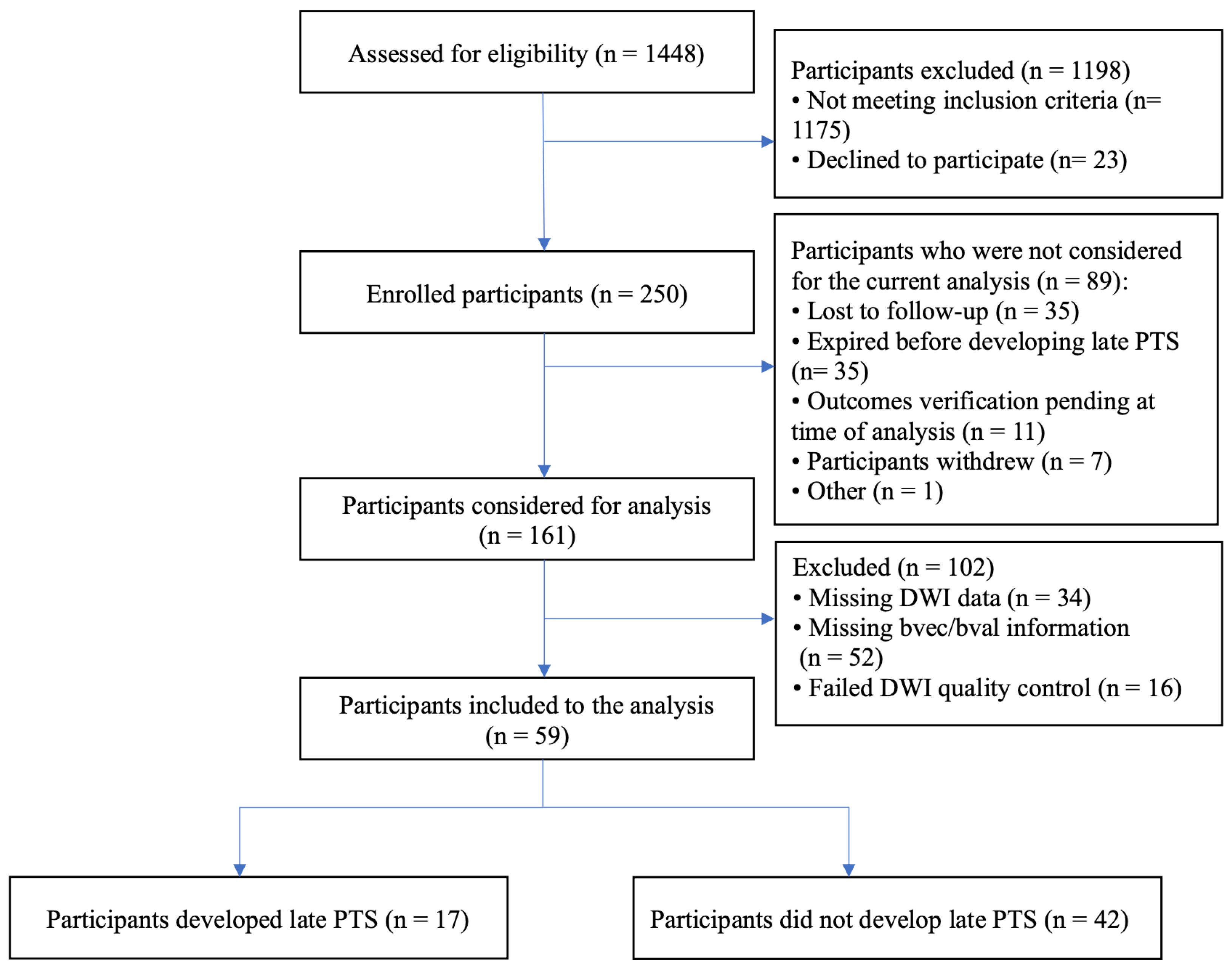
2.1. Dataset Overview
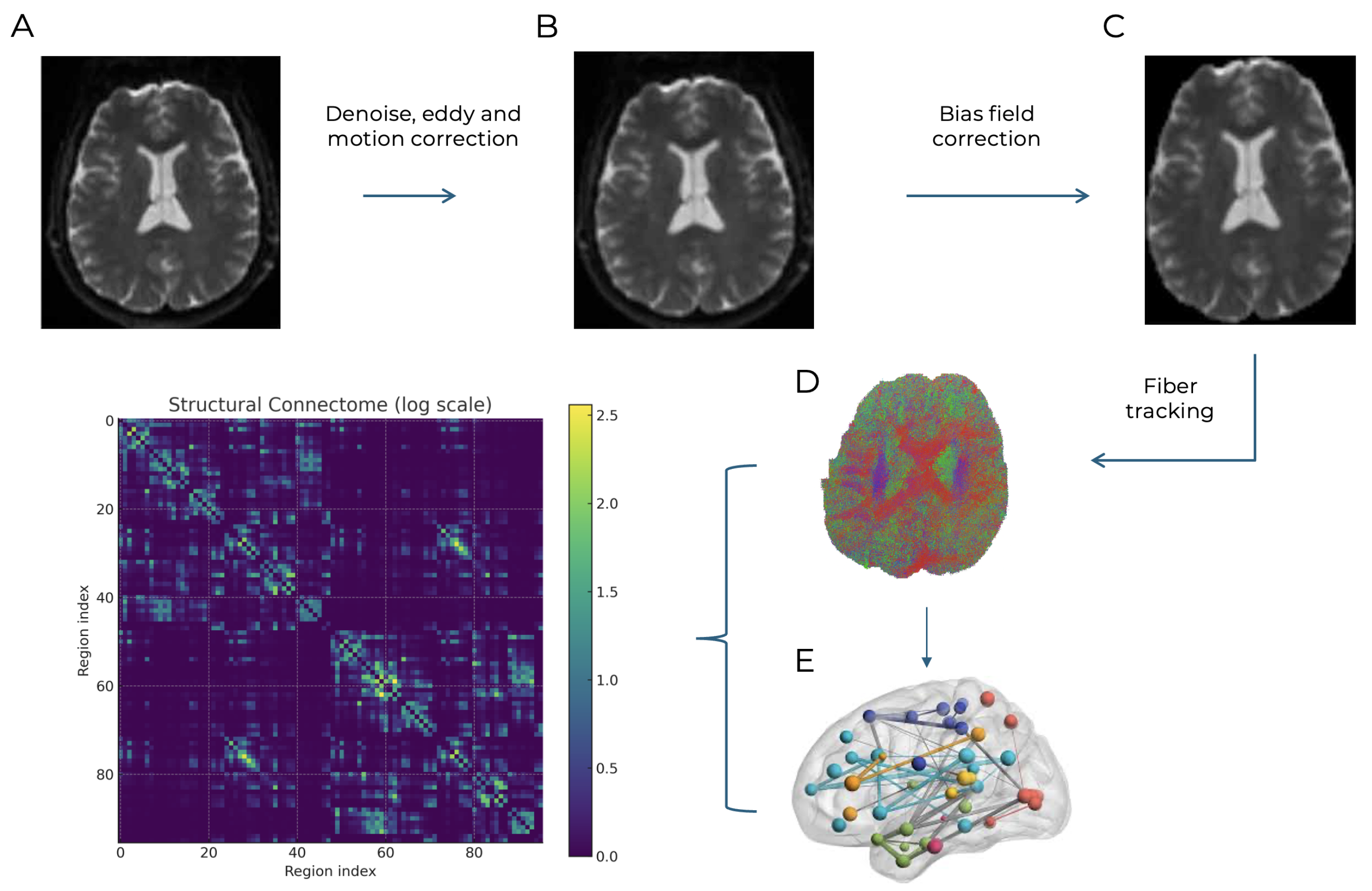
2.2. Image Processing
2.3. Informative Network Features
2.3.1. Integration and Segregation of the Brain Networks
2.3.2. Node Centrality Measures
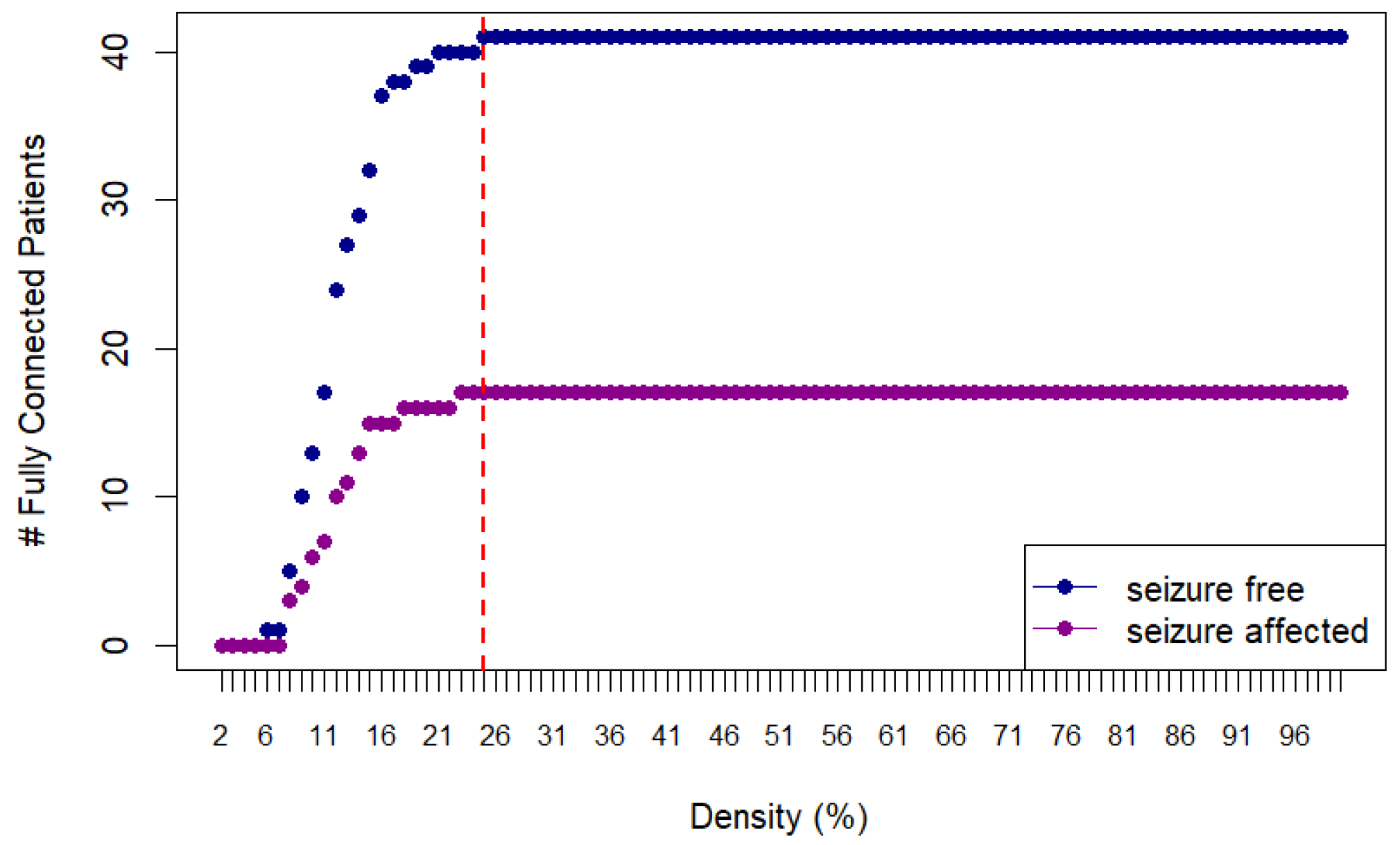
2.4. Global Network Analysis
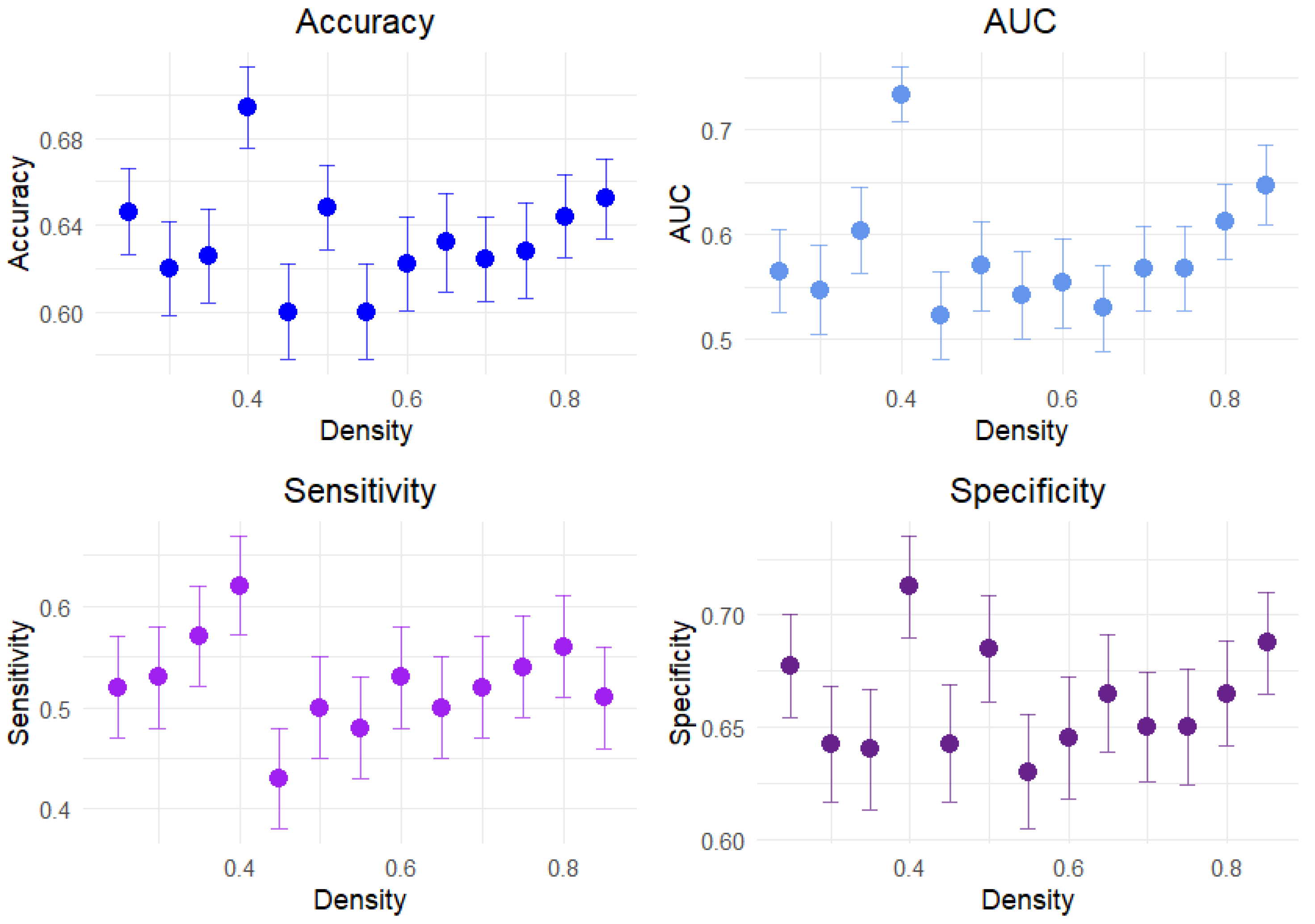
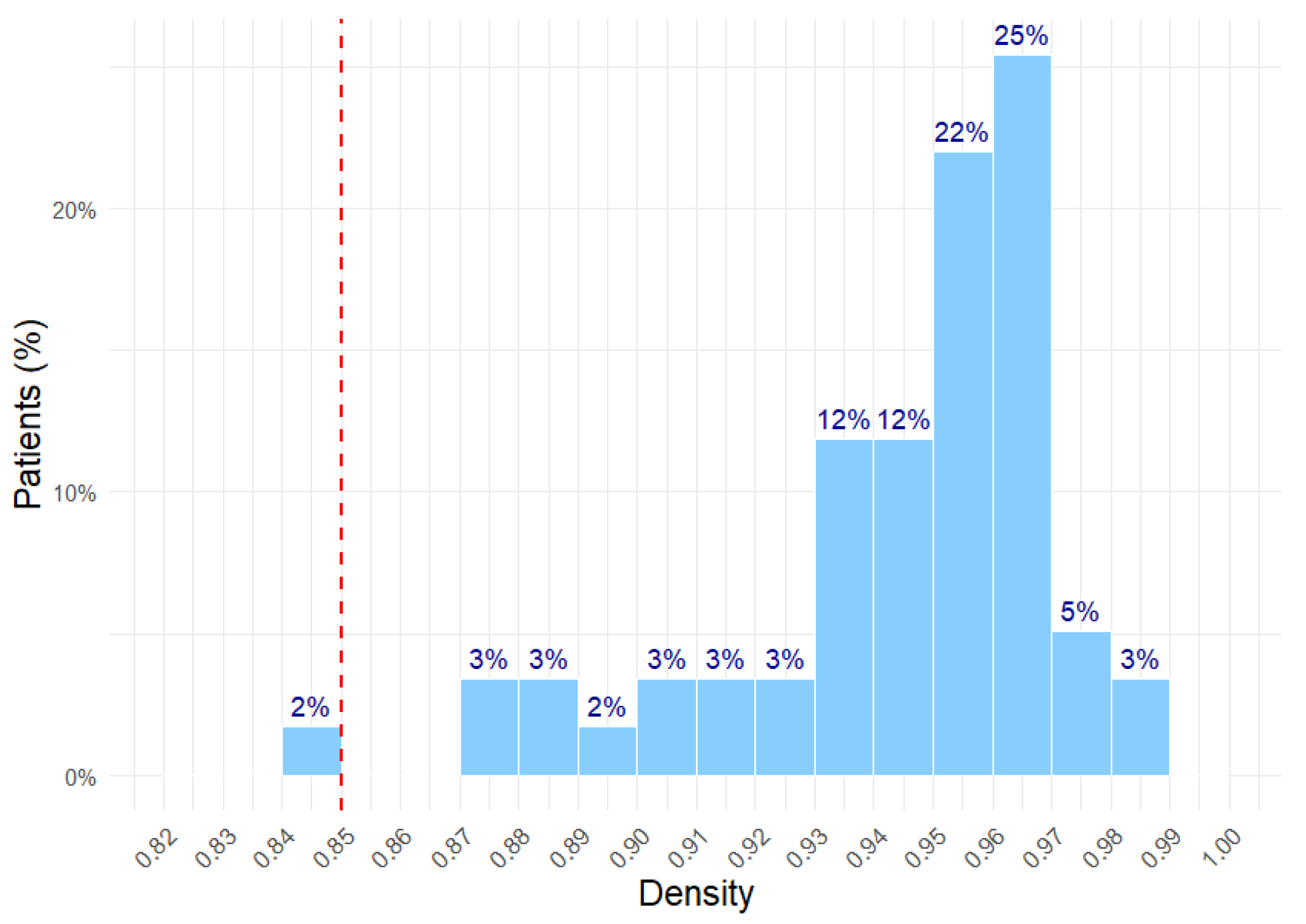
2.5. Local Selection and Density Range Selection
2.6. Machine Learning Workflow
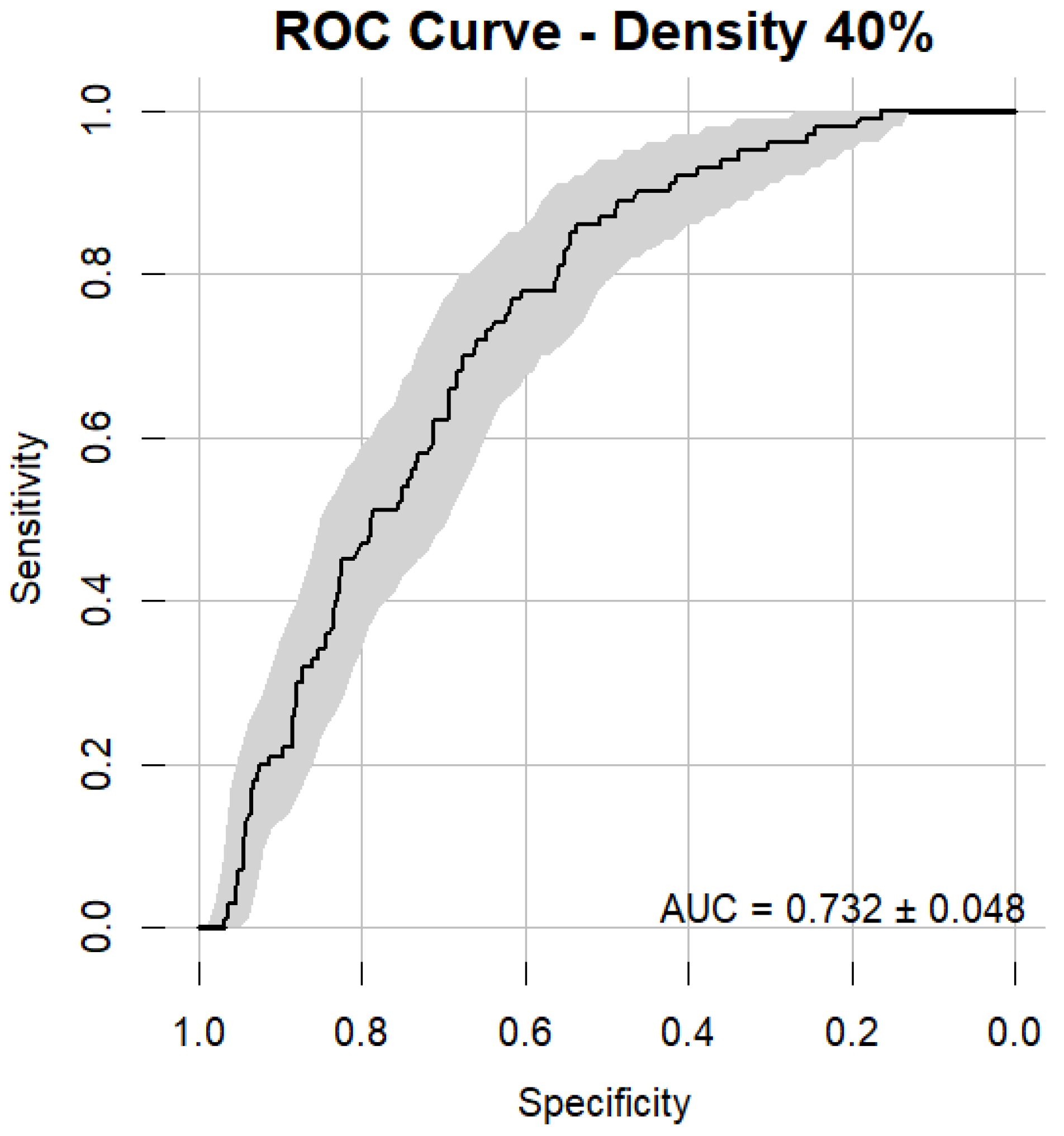
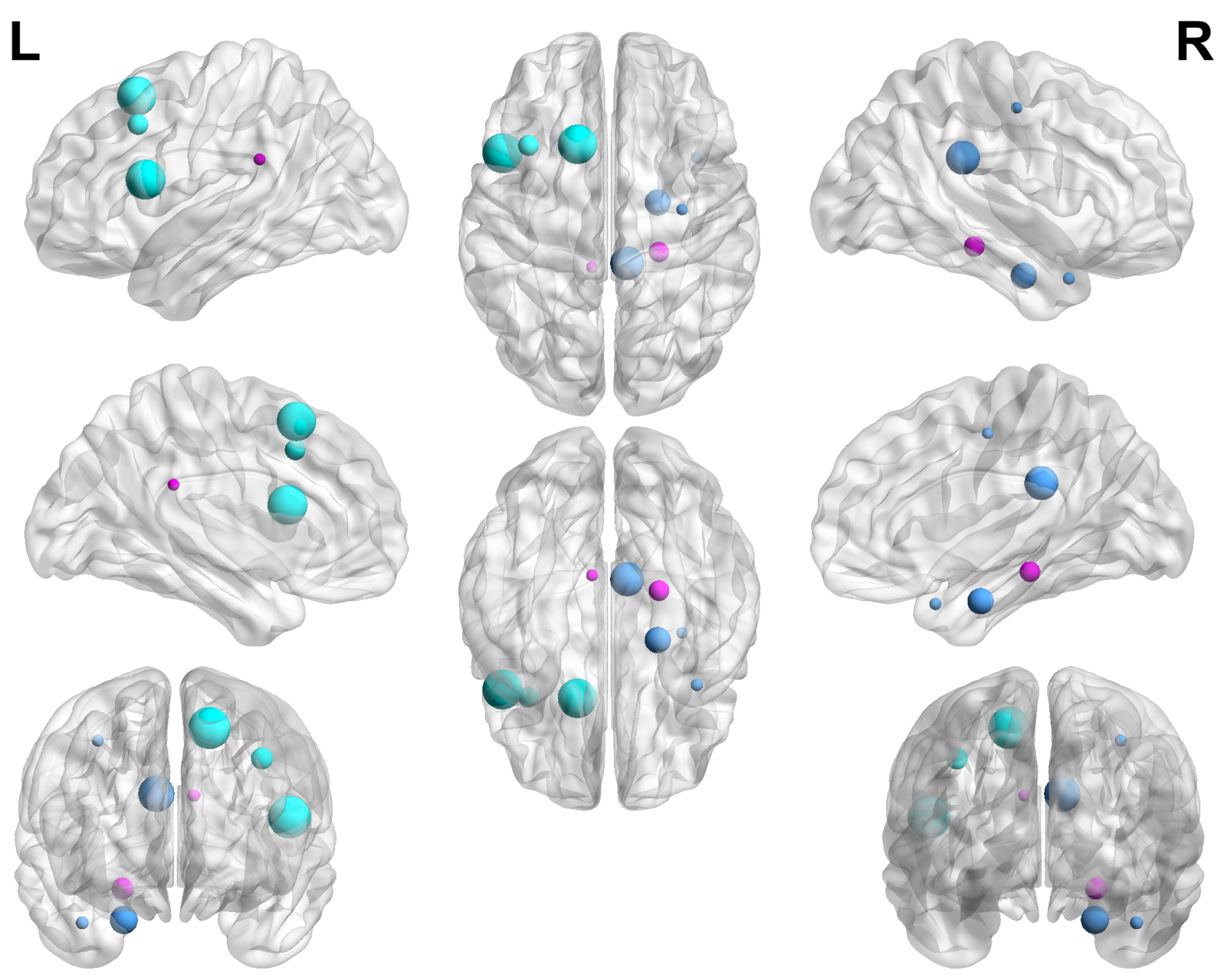
3. Results
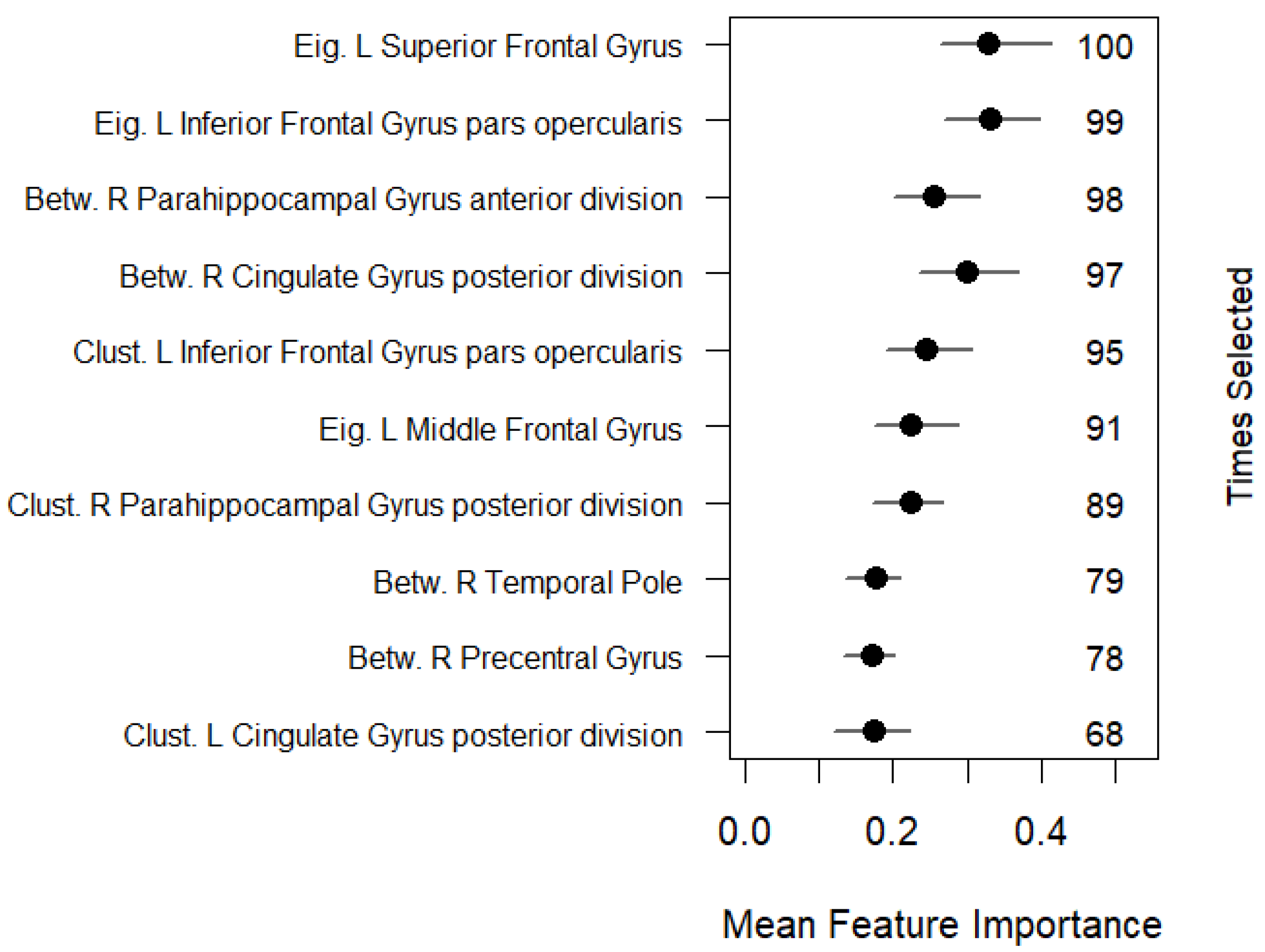
Global Network Results
4. Discussion
5. Conclusions
Supplementary Materials
Author Contributions
Funding
Institutional Review Board Statement
Informed Consent Statement
Data Availability Statement
Acknowledgments
Conflicts of Interest
References
- Hyder, A.A.; Wunderlich, C.A.; Puvanachandra, P.; Gururaj, G.; Kobusingye, O.C. The impact of traumatic brain injuries: A global perspective. NeuroRehabilitation 2007, 22, 341–353. [Google Scholar] [CrossRef]
- Martins da Silva, A.; Rocha Vaz, A.; Ribeiro, I.; Melo, A.; Nune, B.; Correia, M. Controversies in posttraumatic epilepsy. In Proceedings of the Neurosurgical Aspects of Epilepsy: Proceedings of the Fourth Advanced Seminar in Neurosurgical Research of the European Association of Neurosurgical Societies Bresseo di Teolo, Padova, 17–18 May 1989; Springer: Berlin/Heidelberg, Germany, 1990; pp. 48–51. [Google Scholar]
- Pitkänen, A.; Kyyriäinen, J.; Andrade, P.; Pasanen, L.; Ndode-Ekane, X.E. Epilepsy after traumatic brain injury. In Models of Seizures and Epilepsy; Elsevier: Amsterdam, The Netherlands, 2017; pp. 661–681. [Google Scholar]
- Verellen, R.M.; Cavazos, J.E. Post-traumatic epilepsy: An overview. Therapy 2010, 7, 527. [Google Scholar] [CrossRef]
- La Rocca, M.; Garner, R.; Amoroso, N.; Lutkenhoff, E.S.; Monti, M.M.; Vespa, P.; Toga, A.W.; Duncan, D. Multiplex networks to characterize seizure development in traumatic brain injury patients. Front. Neurosci. 2020, 14, 591662. [Google Scholar] [CrossRef]
- Irimia, A.; Van Horn, J.D. The structural, connectomic and network covariance of the human brain. Neuroimage 2013, 66, 489–499. [Google Scholar] [CrossRef]
- Duncan, D.; Vespa, P.; Pitkänen, A.; Braimah, A.; Lapinlampi, N.; Toga, A.W. Big data sharing and analysis to advance research in post-traumatic epilepsy. Neurobiol. Dis. 2019, 123, 127–136. [Google Scholar] [CrossRef]
- Amoroso, N.; Errico, R.; Pantaleo, E.; Monaco, A.; Bellotti, R. Artificial intelligence in medical physics. Riv. Nuovo C. 2025, 48, 623–651. [Google Scholar] [CrossRef]
- Bruckhaus, A.A.; Asifriyaz, T.; Kriukova, K.; O’Brien, T.J.; Agoston, D.V.; Staba, R.J.; Jones, N.C.; Moshé, S.L.; Galanopoulou, A.S.; Duncan, D. Exploring multimodal biomarker candidates of post-traumatic epilepsy following moderate to severe traumatic brain injury: A systematic review and meta-analysis. Epilepsia 2025, 66, 6–32. [Google Scholar] [CrossRef] [PubMed]
- Akbar, M.N.; La Rocca, M.; Garner, R.; Duncan, D.; Erdoğmuş, D. Prediction of epilepsy development in traumatic brain injury patients from diffusion weighted mri. In Proceedings of the 13th ACM International Conference on Pervasive Technologies Related to Assistive Environments; Association for Computing Machinery: New York, NY, USA, 2020; pp. 1–2. [Google Scholar]
- Akbar, M.N.; Ruf, S.; La Rocca, M.; Garner, R.; Barisano, G.; Cua, R.; Vespa, P.; Erdoğmuş, D.; Duncan, D. Lesion normalization and supervised learning in post-traumatic seizure classification with diffusion mri. In Proceedings of the International Workshop on Computational Diffusion MRI; Springer: Berlin/Heidelberg, Germany, 2021; pp. 133–143. [Google Scholar]
- Bhagavatula, S.; Cabeen, R.; Harris, N.G.; Gröhn, O.; Wright, D.K.; Garner, R.; Bennett, A.; Alba, C.; Martinez, A.; Ndode-Ekane, X.E.; et al. Image data harmonization tools for the analysis of post-traumatic epilepsy development in preclinical multisite MRI studies. Epilepsy Res. 2023, 195, 107201. [Google Scholar] [CrossRef] [PubMed]
- Peng, Y.; Jiang, Y.; Zuo, Z.; Gu, S.; Wang, Z.; Tian, Z. A rehabilitation design concept based on brain–computer interface and McKibben artificial muscle. Healthc. Rehabil. 2026, 2, 100066. [Google Scholar] [CrossRef]
- Vespa, P.M.; Shrestha, V.; Abend, N.; Agoston, D.; Au, A.; Bell, M.J.; Bleck, T.P.; Blanco, M.B.; Claassen, J.; Diaz-Arrastia, R.; et al. The epilepsy bioinformatics study for anti-epileptogenic therapy (EpiBioS4Rx) clinical biomarker: Study design and protocol. Neurobiol. Dis. 2019, 123, 110–114. [Google Scholar] [CrossRef]
- Tournier, J.D.; Smith, R.; Raffelt, D.; Tabbara, R.; Dhollander, T.; Pietsch, M.; Christiaens, D.; Jeurissen, B.; Yeh, C.H.; Connelly, A. MRtrix3: A fast, flexible and open software framework for medical image processing and visualisation. Neuroimage 2019, 202, 116137. [Google Scholar] [CrossRef]
- Jeurissen, B.; Tournier, J.D.; Dhollander, T.; Connelly, A.; Sijbers, J. Multi-tissue constrained spherical deconvolution for improved analysis of multi-shell diffusion MRI data. NeuroImage 2014, 103, 411–426. [Google Scholar] [CrossRef]
- Bullmore, E.; Sporns, O. Complex brain networks: Graph theoretical analysis of structural and functional systems. Nat. Rev. Neurosci. 2009, 10, 186–198. [Google Scholar] [CrossRef] [PubMed]
- Fornito, A.; Zalesky, A.; Bullmore, E. Fundamentals of Brain Network Analysis; Academic Press: Cambridge, MA, USA, 2016. [Google Scholar]
- Van Wijk, B.C.; Stam, C.J.; Daffertshofer, A. Comparing brain networks of different size and connectivity density using graph theory. PLoS ONE 2010, 5, e13701. [Google Scholar] [CrossRef]
- Watson, C.G.; DeMaster, D.; Ewing-Cobbs, L. Graph theory analysis of DTI tractography in children with traumatic injury. NeuroImage Clin. 2019, 21, 101673. [Google Scholar] [CrossRef]
- Huang, K.; Xie, Y.; Ran, H.; Hu, J.; He, Y.; Xu, G.; Chen, G.; Yu, Q.; Li, X.; Liu, J.; et al. Alterations of white matter functional networks in pediatric drug-resistant temporal lobe epilepsy: A graph theory analysis study. Brain Res. Bull. 2025, 227, 111403. [Google Scholar] [CrossRef]
- Chawla, N.V.; Bowyer, K.W.; Hall, L.O.; Kegelmeyer, W.P. SMOTE: Synthetic minority over-sampling technique. J. Artif. Intell. Res. 2002, 16, 321–357. [Google Scholar] [CrossRef]
- de Reus, M.A.; van den Heuvel, M.P. Estimating false positives and negatives in brain networks. Neuroimage 2013, 70, 402–409. [Google Scholar] [CrossRef] [PubMed]
- Chikkerur, S.; Cartwright, A.N.; Govindaraju, V. K-plet and coupled BFS: A graph based fingerprint representation and matching algorithm. In Proceedings of the International Conference on Biometrics; Springer: Berlin/Heidelberg, Germany, 2006; pp. 309–315. [Google Scholar]
- Breiman, L. Random forests. Mach. Learn. 2001, 45, 5–32. [Google Scholar] [CrossRef]
- Hajian-Tilaki, K. Receiver operating characteristic (ROC) curve analysis for medical diagnostic test evaluation. Casp. J. Intern. Med. 2013, 4, 627. [Google Scholar]
- Xia, M.; Wang, J.; He, Y. BrainNet Viewer: A network visualization tool for human brain connectomics. PLoS ONE 2013, 8, e68910. [Google Scholar] [CrossRef]
- Pouget, A.; Drugowitsch, J.; Kepecs, A. Confidence and certainty: Distinct probabilistic quantities for different goals. Nat. Neurosci. 2016, 19, 366–374. [Google Scholar] [CrossRef]
- Tubi, M.A.; Lutkenhoff, E.; Blanco, M.B.; McArthur, D.; Villablanca, P.; Ellingson, B.; Diaz-Arrastia, R.; Van Ness, P.; Real, C.; Shrestha, V.; et al. Early seizures and temporal lobe trauma predict post-traumatic epilepsy: A longitudinal study. Neurobiol. Dis. 2019, 123, 115–121. [Google Scholar] [CrossRef]
- Akrami, H.; Leahy, R.; Irimia, A.; Kim, P.; Heck, C.; Joshi, A. Neuroanatomic markers of posttraumatic epilepsy based on mr imaging and machine learning. Am. J. Neuroradiol. 2022, 43, 347–353. [Google Scholar] [CrossRef] [PubMed]
- Angeleri, F.; Majkowski, J.; Cacchio, G.; Sobieszek, A.; D’acunto, S.; Gesuita, R.; Bachleda, A.; Polonara, G.; Krolicki, L.; Signorino, M.; et al. Posttraumatic epilepsy risk factors: One-year prospective study after head injury. Epilepsia 1999, 40, 1222–1230. [Google Scholar] [CrossRef]
- Akbar, M.N.; Ruf, S.F.; Singh, A.; Faghihpirayesh, R.; Garner, R.; Bennett, A.; Alba, C.; La Rocca, M.; Imbiriba, T.; Erdoğmuş, D.; et al. Advancing post-traumatic seizure classification and biomarker identification: Information decomposition based multimodal fusion and explainable machine learning with missing neuroimaging data. Comput. Med. Imaging Graph. 2024, 115, 102386. [Google Scholar] [CrossRef] [PubMed]
- Awan, N.; Kumar, R.G.; Juengst, S.B.; DiSanto, D.; Harrison-Felix, C.; Dams-O’Connor, K.; Pugh, M.J.; Zafonte, R.D.; Walker, W.C.; Szaflarski, J.P.; et al. Development of individualized risk assessment models for predicting post-traumatic epilepsy 1 and 2 years after moderate-to-severe traumatic brain injury: A traumatic brain injury model system study. Epilepsia 2025, 66, 482–498. [Google Scholar] [CrossRef] [PubMed]
- Amoroso, N.; Quarto, S.; La Rocca, M.; Tangaro, S.; Monaco, A.; Bellotti, R. An eXplainability Artificial Intelligence approach to brain connectivity in Alzheimer’s disease. Front. Aging Neurosci. 2023, 15, 1238065. [Google Scholar] [CrossRef]
- La Rocca, M.; Barisano, G.; Garner, R.; Ruf, S.F.; Amoroso, N.; Monti, M.; Vespa, P.; Bellotti, R.; Erdoğmuş, D.; Toga, A.W.; et al. Functional connectivity alterations in traumatic brain injury patients with late seizures. Neurobiol. Dis. 2023, 179, 106053. [Google Scholar] [CrossRef]
- Sibarov, D.A.; Tsytsarev, V.; Volnova, A.; Vaganova, A.N.; Alves, J.; Rojas, L.; Sanabria, P.; Ignashchenkova, A.; Savage, E.D.; Inyushin, M. Arc protein, a remnant of ancient retrovirus, forms virus-like particles, which are abundantly generated by neurons during epileptic seizures, and affects epileptic susceptibility in rodent models. Front. Neurol. 2023, 14, 1201104. [Google Scholar] [CrossRef]





| Clinical Status | Sample Size | Age | Female/Male | GCS Score (Day 1) |
|---|---|---|---|---|
| Seizure-free patients | 42 | 11/31 | ||
| Patients with late seizure | 17 | 2/15 |
| Variable | All (N = 59) | No Seizure (N = 42) | Seizure (N = 17) |
|---|---|---|---|
| Injury Type † | |||
| Closed | 55/59 (93%) | 40/42 (95%) | 15/17 (88%) |
| Penetrating | 1/59 (2%) | 1/42 (2%) | 0/17 (0%) |
| Injury Mechanism (grouped) | |||
| Motor vehicle (incl. motorcycle) | 31/59 (53%) | 22/42 (52%) | 9/17 (53%) |
| Fall | 14/59 (24%) | 8/42 (19%) | 6/17 (35%) |
| Direct impact | 6/59 (10%) | 4/42 (10%) | 2/17 (12%) |
| Cycling/micromobility | 5/59 (8%) | 5/42 (12%) | 0/17 (0%) |
| Other | 3/59 (5%) | 3/42 (7%) | 0/17 (0%) |
| CT Findings ‡ | |||
| Skull fracture | 23/59 (39%) | 11/42 (26%) | 12/17 (71%) |
| Subarachnoid hemorrhage | 23/59 (39%) | 11/42 (26%) | 12/17 (71%) |
| Intracerebral hemorrhage | 20/59 (34%) | 12/42 (29%) | 8/17 (47%) |
| Hemorrhagic contusion | 21/59 (36%) | 13/42 (31%) | 8/17 (47%) |
| Intraventricular hemorrhage | 3/59 (5%) | 2/42 (5%) | 1/17 (6%) |
| Metric | Mean ± SD | 95% CI |
|---|---|---|
| Accuracy | ||
| Sensitivity | ||
| Specificity | ||
| AUC |
| Feature | Effect Size |
|---|---|
| Eig. L Superior Frontal Gyrus | 0.023 |
| Eig. L Inferior Frontal Gyrus pars opercularis | 0.023 |
| Betw. R Cingulate Gyrus posterior division | 0.023 |
| Betw. R Parahippocampal Gyrus anterior division | 0.023 |
| Clust. L Inferior Frontal Gyrus pars opercularis | 0.024 |
| Clust. R Parahippocampal Gyrus posterior division | 0.025 |
| Eig. L Middle Frontal Gyrus | 0.025 |
| Clust. L Cingulate Gyrus posterior division | 0.030 |
| Betw. R Precentral Gyrus | 0.030 |
| Betw. R Temporal Pole | 0.034 |
Disclaimer/Publisher’s Note: The statements, opinions and data contained in all publications are solely those of the individual author(s) and contributor(s) and not of MDPI and/or the editor(s). MDPI and/or the editor(s) disclaim responsibility for any injury to people or property resulting from any ideas, methods, instructions or products referred to in the content. |
© 2026 by the authors. Licensee MDPI, Basel, Switzerland. This article is an open access article distributed under the terms and conditions of the Creative Commons Attribution (CC BY) license.
Share and Cite
Amato, E.C.; Giliberti, C.; Amoroso, N.; Kriukova, K.; Monaco, A.; Pantaleo, E.; Maggipinto, T.; Bellantuono, L.; La Calamita, A.; Bellotti, R.; et al. A Brain Connectivity Approach to Detect Diffusion-Weighted Imaging Changes in Post-Traumatic Epilepsy. Bioengineering 2026, 13, 598. https://doi.org/10.3390/bioengineering13060598
Amato EC, Giliberti C, Amoroso N, Kriukova K, Monaco A, Pantaleo E, Maggipinto T, Bellantuono L, La Calamita A, Bellotti R, et al. A Brain Connectivity Approach to Detect Diffusion-Weighted Imaging Changes in Post-Traumatic Epilepsy. Bioengineering. 2026; 13(6):598. https://doi.org/10.3390/bioengineering13060598
Chicago/Turabian StyleAmato, Emanuele C., Claudia Giliberti, Nicola Amoroso, Kseniia Kriukova, Alfonso Monaco, Ester Pantaleo, Tommaso Maggipinto, Loredana Bellantuono, Antonio La Calamita, Roberto Bellotti, and et al. 2026. "A Brain Connectivity Approach to Detect Diffusion-Weighted Imaging Changes in Post-Traumatic Epilepsy" Bioengineering 13, no. 6: 598. https://doi.org/10.3390/bioengineering13060598
APA StyleAmato, E. C., Giliberti, C., Amoroso, N., Kriukova, K., Monaco, A., Pantaleo, E., Maggipinto, T., Bellantuono, L., La Calamita, A., Bellotti, R., Vespa, P. M., Duncan, D., & La Rocca, M., on behalf of the EpiBioS4Rx Study Group. (2026). A Brain Connectivity Approach to Detect Diffusion-Weighted Imaging Changes in Post-Traumatic Epilepsy. Bioengineering, 13(6), 598. https://doi.org/10.3390/bioengineering13060598