
Wrist-Wearable sEMG Gesture Recognition System Based on ThinNet Lightweight Neural Network


Abstract
1. Introduction
- Developmentof a compact, low-power wristband featuring a ring-shaped differential electrode array and embedded filtering modules, achieving high signal-to-noise ratio and suppressing common-mode interference.
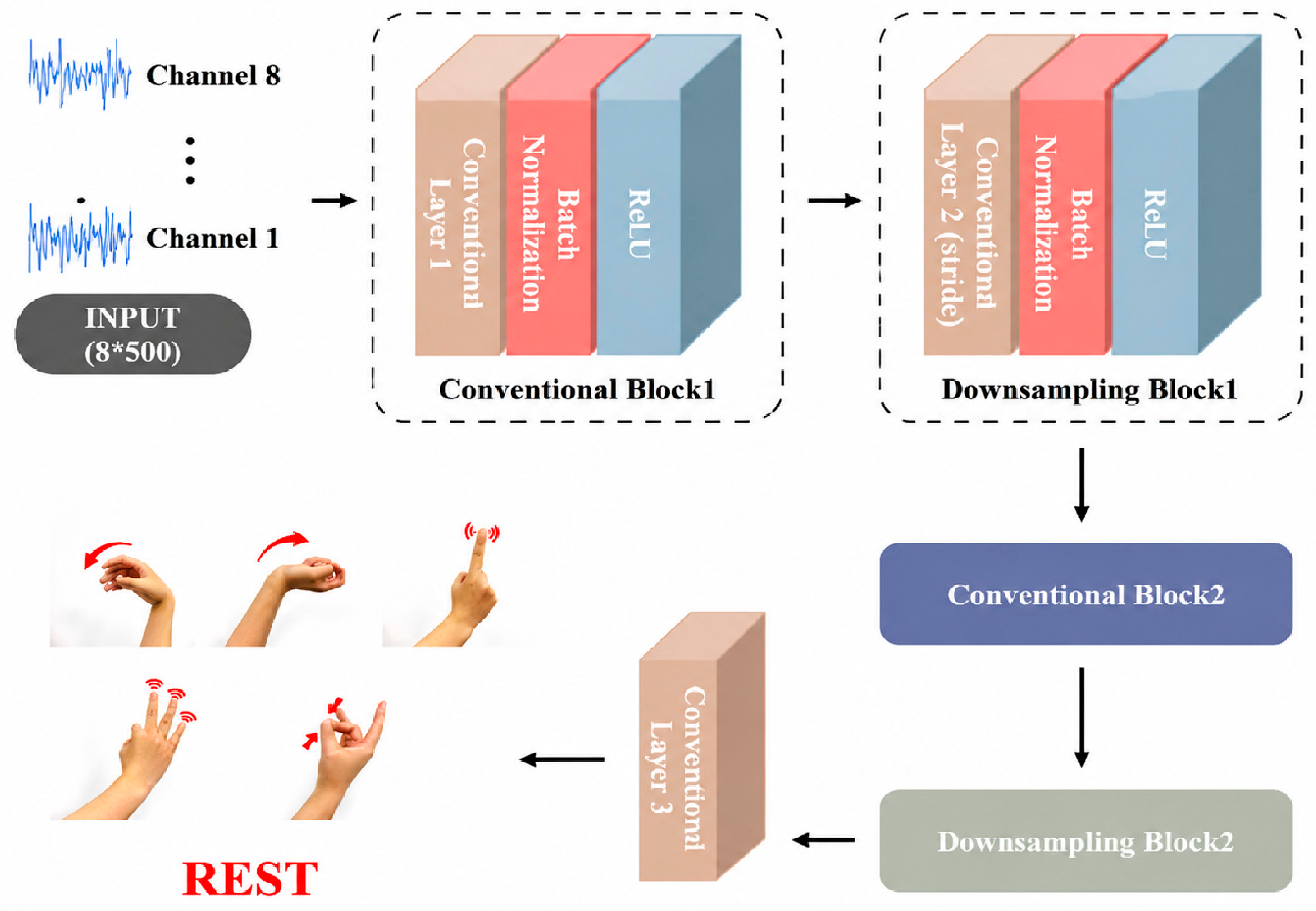
- Design of ThinNet, a fully convolutional network optimized for computational efficiency, inter-subject generalization, and robustness to subtle gesture variations.
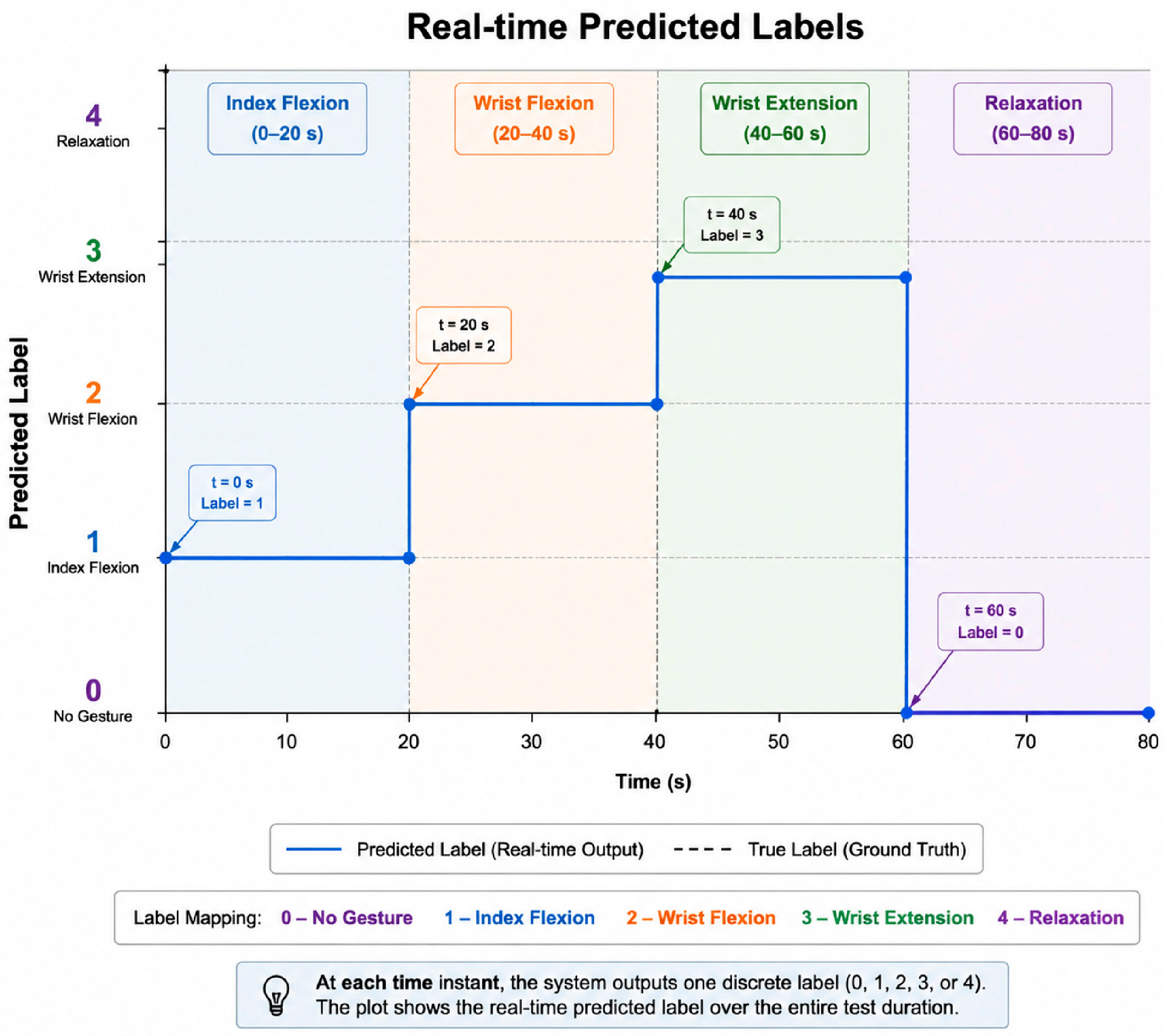
- Implementation of a three-tier buffered decision strategy that effectively reduces real-time misclassification rates.
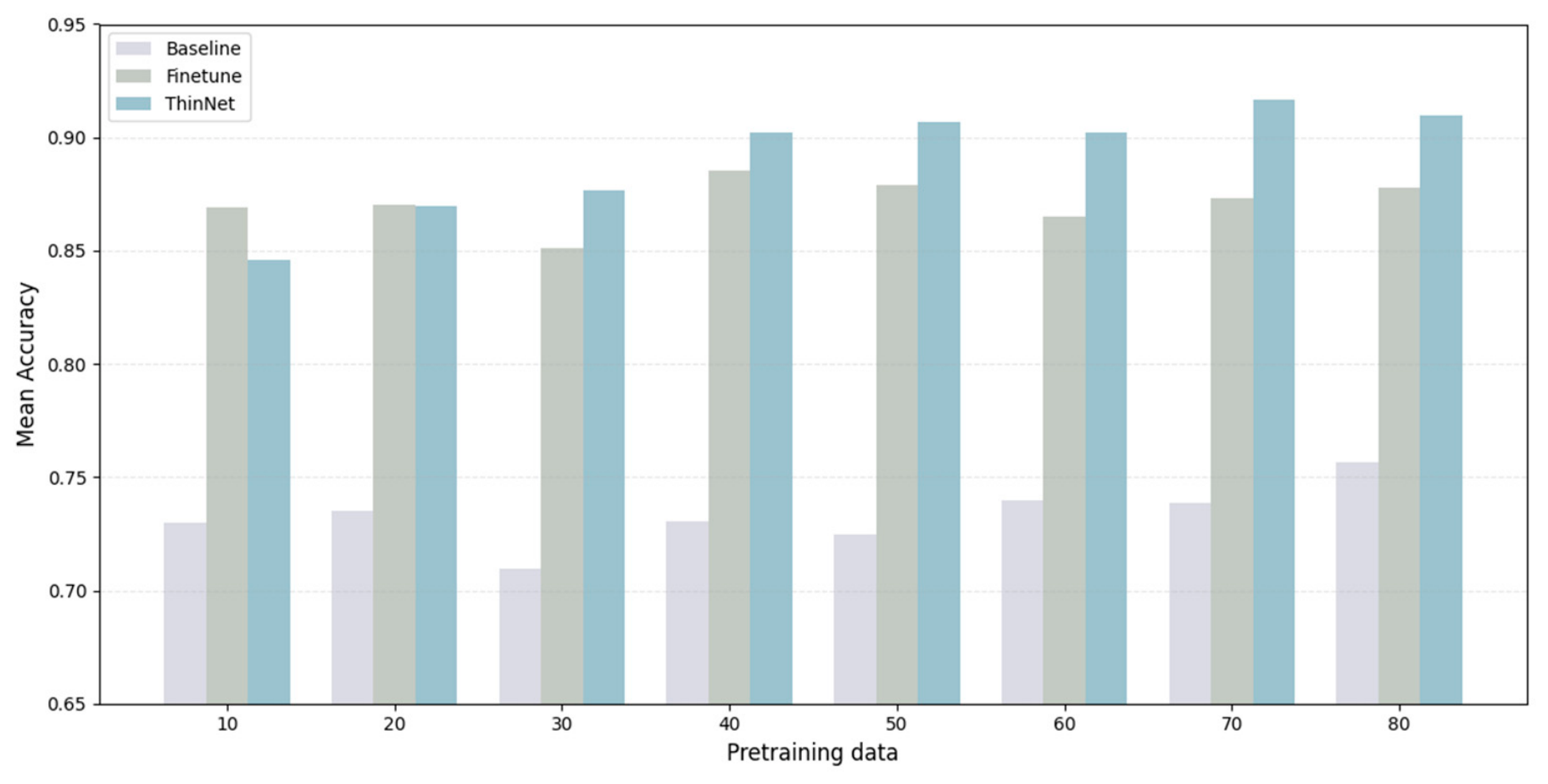
- Demonstration of high data efficiency, achieving strong performance with limited fine-tuning data, supporting system scalability and practical deployment in real-world scenarios.
2. Materials and Methods
2.1. Materials
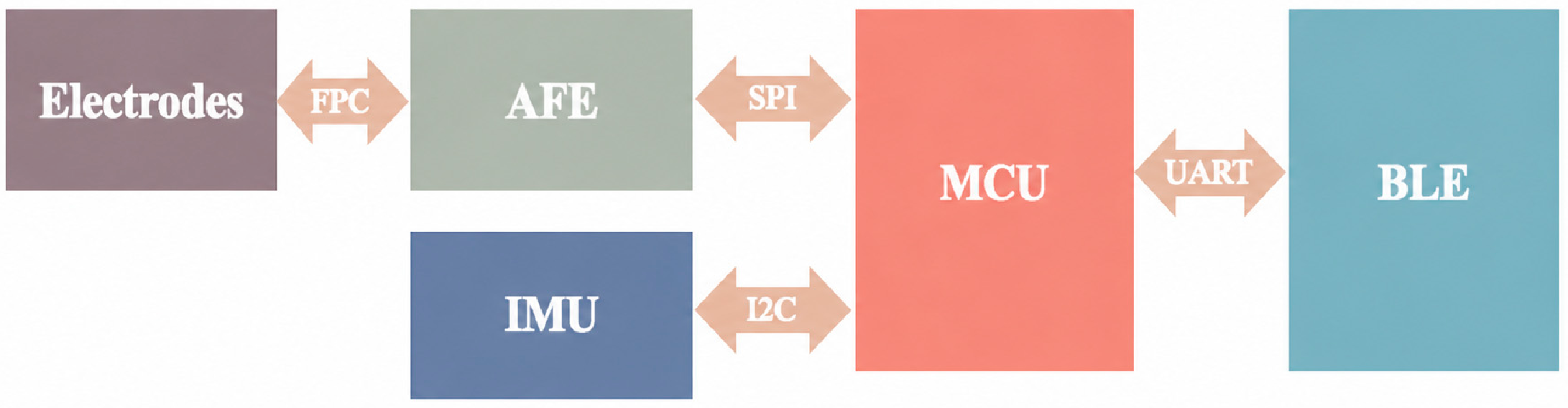
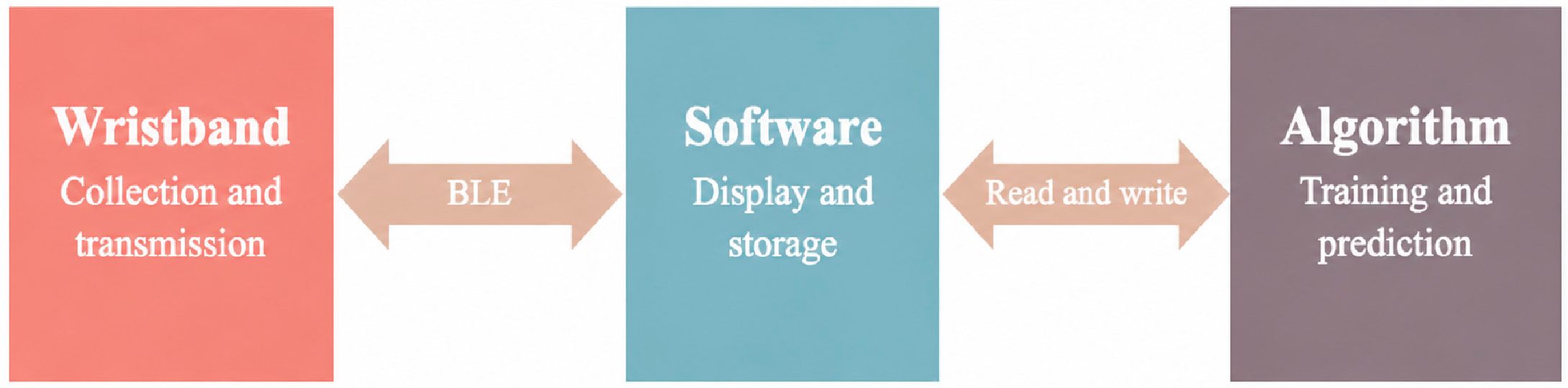
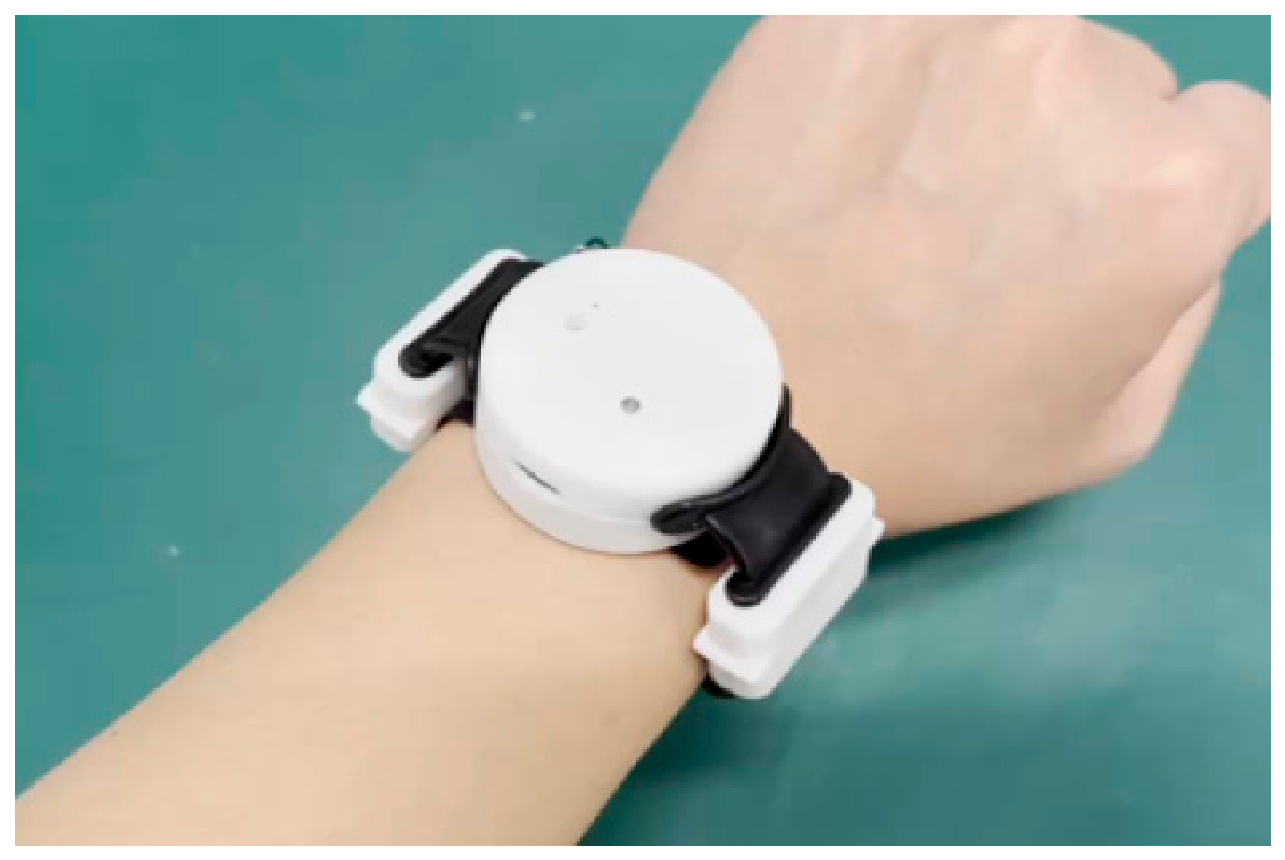
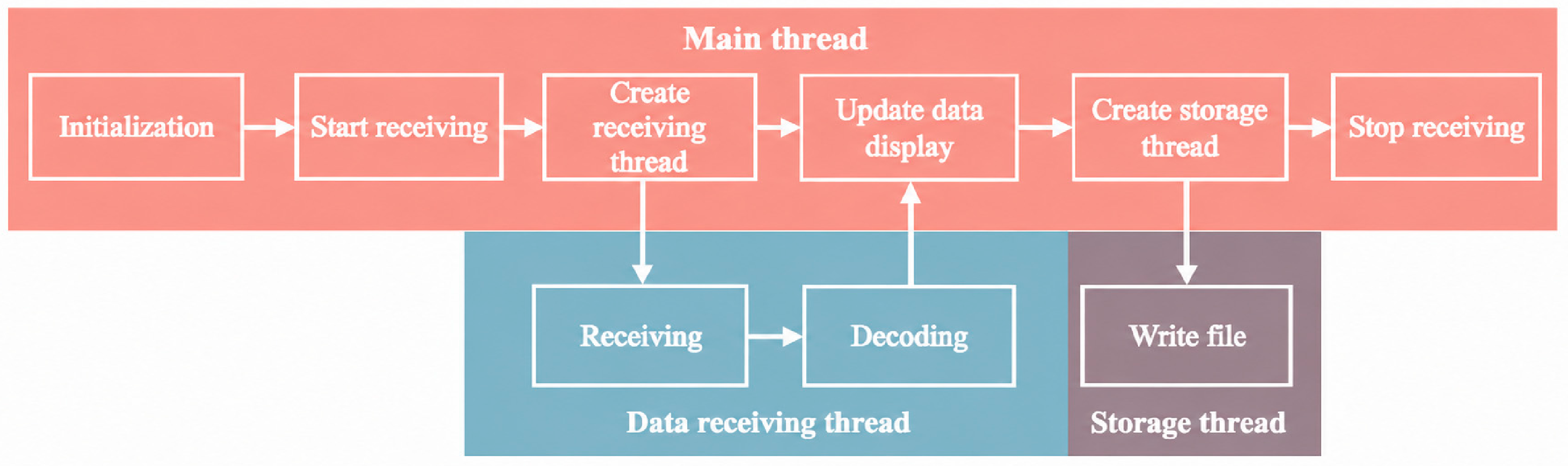
2.1.1. System Overview
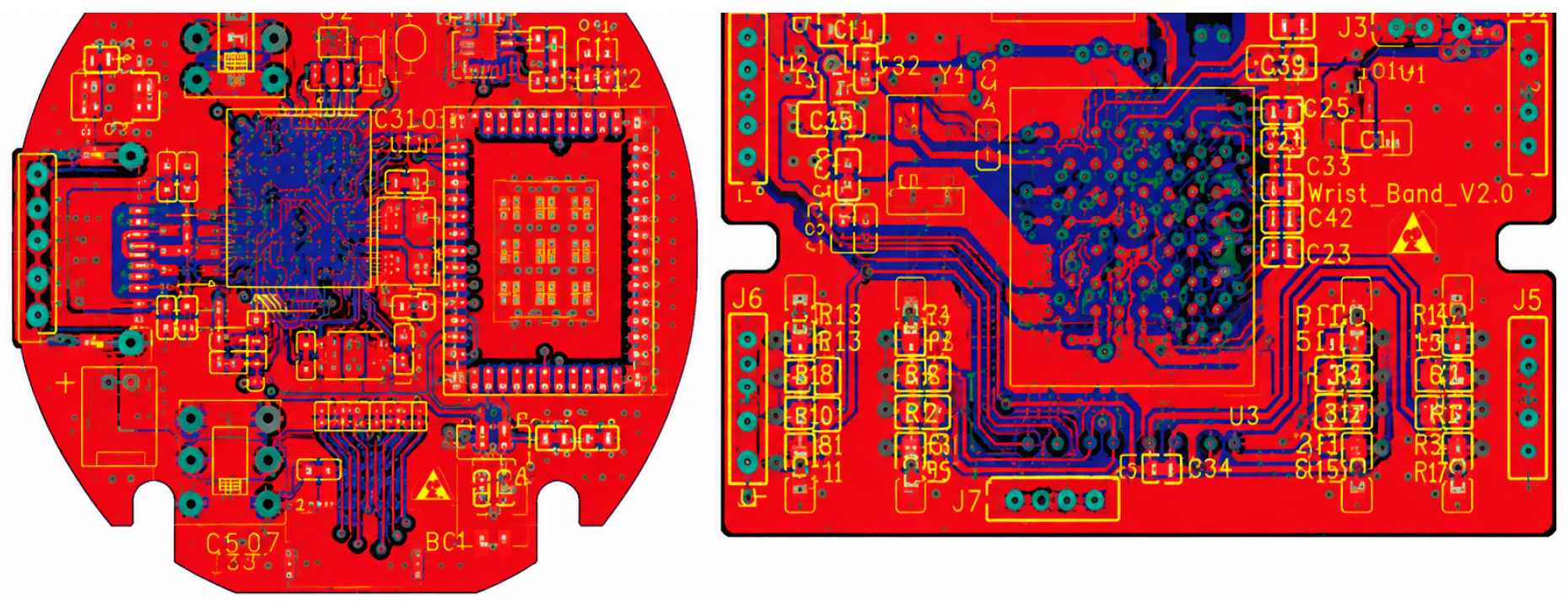
2.1.2. Hardware Architecture
2.1.3. Subjects
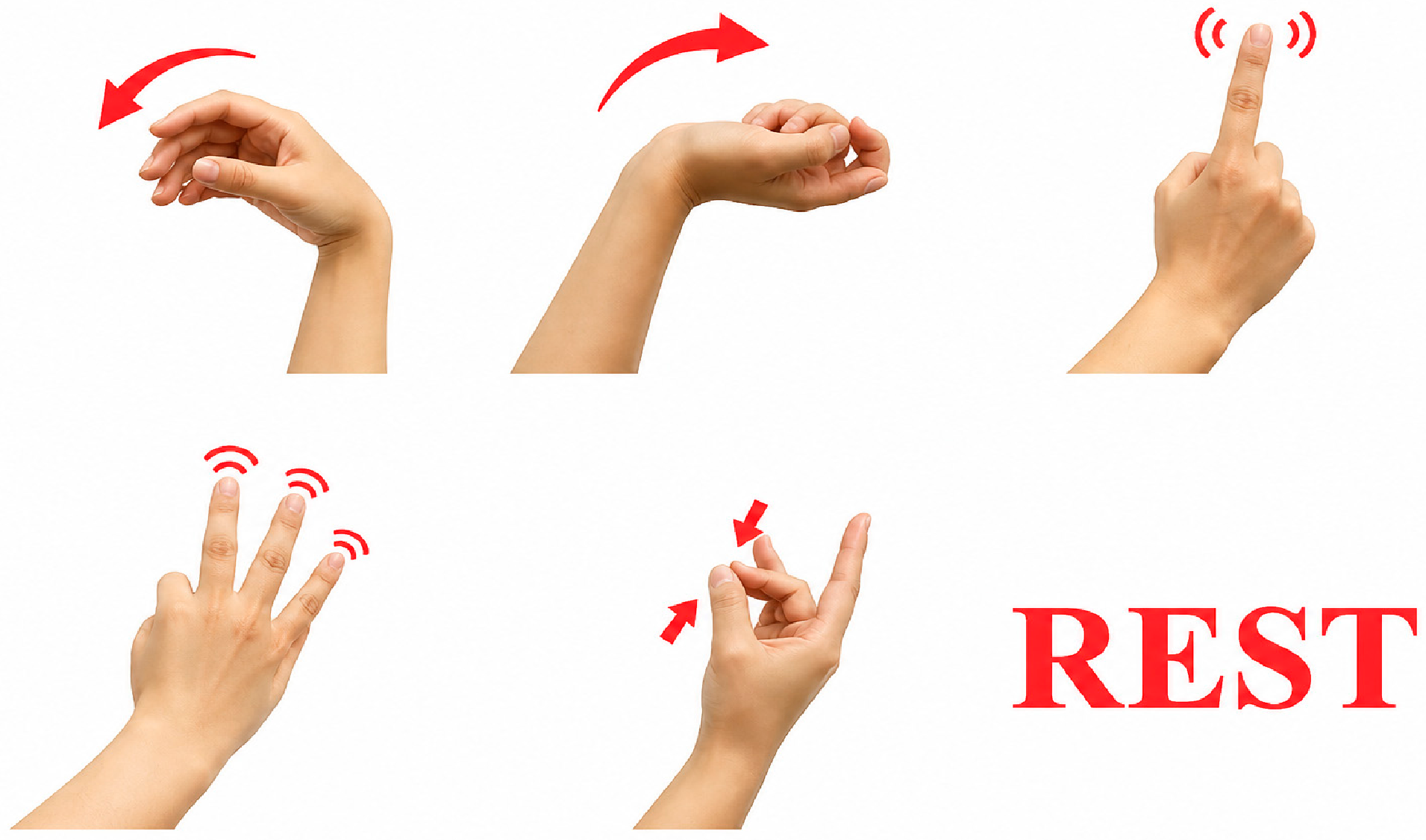
2.1.4. Experimental Paradigm
2.1.5. Data Preprocessing
2.2. Methods
2.2.1. Data Splitting and Validation Protocol
2.2.2. Classification Technique
2.2.3. Decision Strategy and Online Simulation
2.2.4. Statistical Analysis
3. Results
3.1. Performance of Wristband Hardware
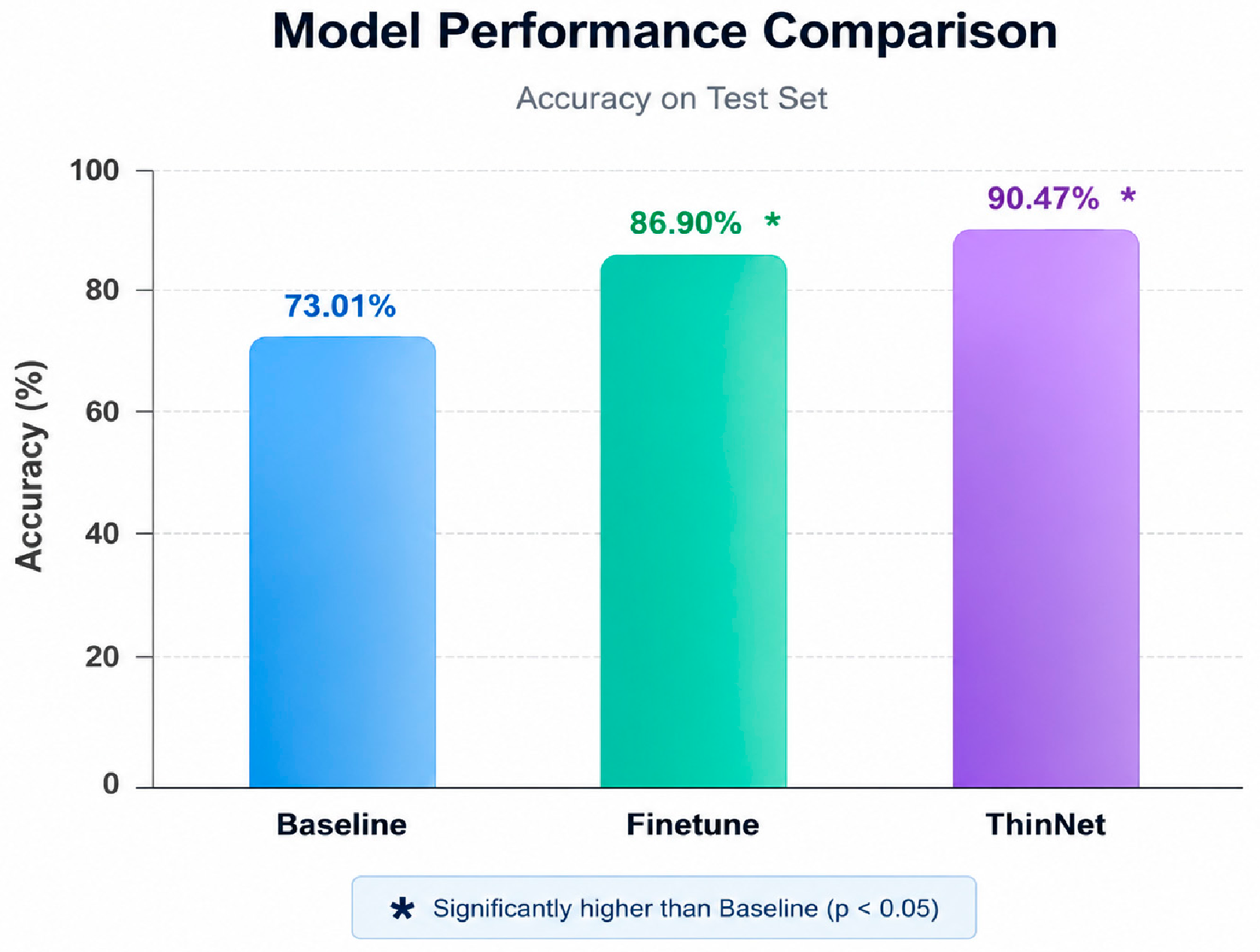
3.2. Performance of Gesture Classification
3.3. Simulated Online Testing
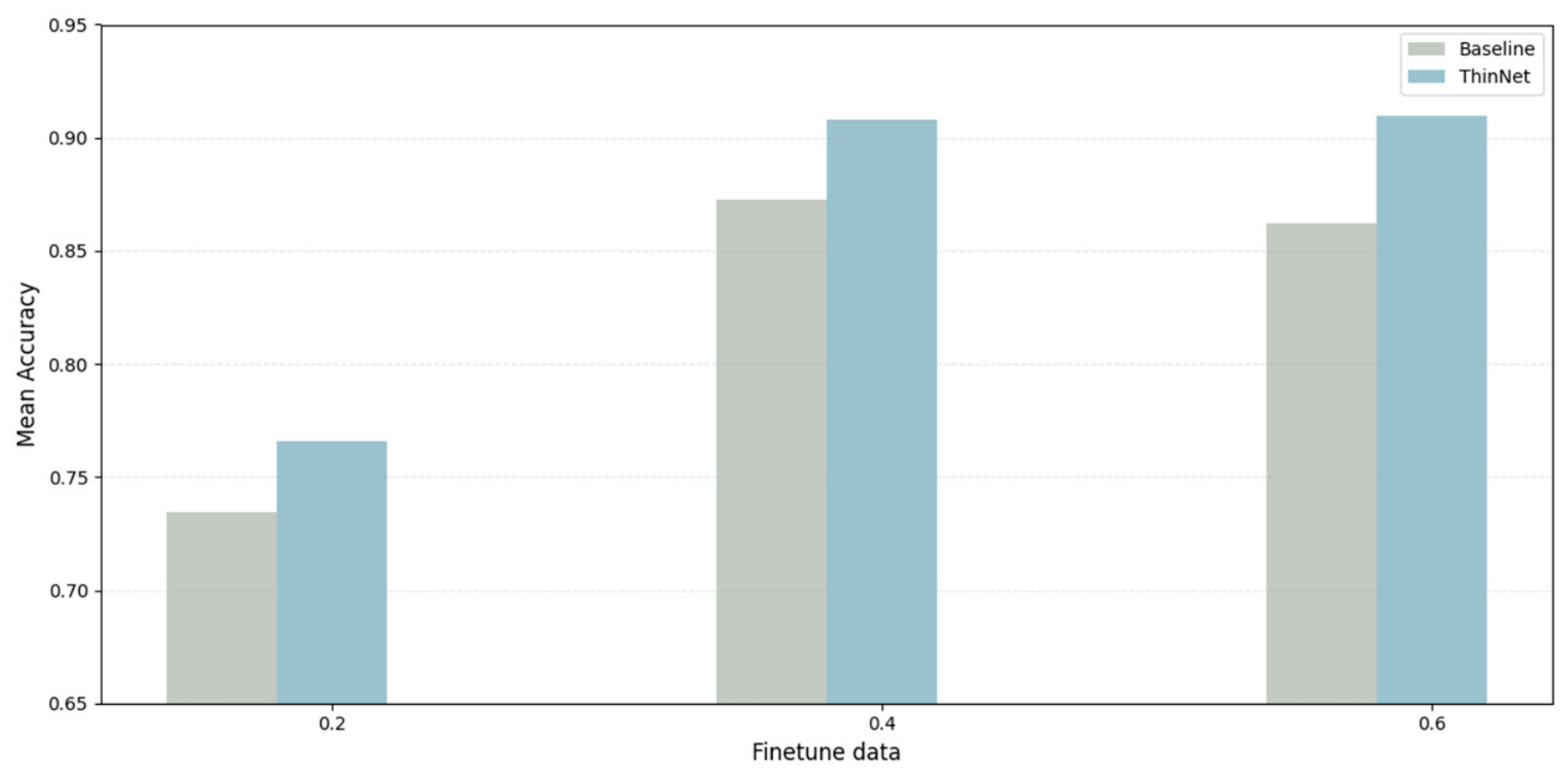
3.4. Impact of Data Volume
4. Discussion
5. Conclusions
Author Contributions
Funding
Institutional Review Board Statement
Informed Consent Statement
Data Availability Statement
Conflicts of Interest
Abbreviations
| sEMG | Surface electromyography |
| SNR | Signal-to-noise ratio |
| IMU | Inertial measurement unit |
| CNN | Convolutional neural network |
| SVM | Support vector machine |
| FPC | Flexible printed circuit |
| PCB | Printed circuit board |
| DRL | Drive electrode |
| AFE | Analog front-end |
| MCU | Microcontroller unit |
| BLE | Bluetooth low energy |
| GUI | Graphical user interface |
References
- Qi, G.; Jiang, G.; Li, G.; Sun, Y.; Tao, B. Intelligent human–computer interaction based on surface EMG gesture recognition. IEEE Access 2019, 7, 61378–61387. [Google Scholar] [CrossRef] [Scilit]
- Côté-Allard, U.; Chevariie, O.; Cambier, A.; Laviolette, F.; Gosselin, B.; Chaib-draa, B. Deep learning for electromyographic hand gesture signal classification using transfer learning. IEEE Trans. Neural Syst. Rehabil. Eng. 2019, 27, 760–771. [Google Scholar]
- Hahne, J.M.; Biessmann, F.; Jiang, N.; Reid, D.R.; Farina, D. Simultaneous and proportional control of real-time prosthesis using sEMG: A clinical validation. IEEE Trans. Neural Syst. Rehabil. Eng. 2020, 28, 1245–1254. [Google Scholar]
- Yu, Y.; Chen, X.; Cao, S.; Zhang, X.; Chen, X. Exploration of Chinese sign language recognition using wearable sensors based on deep belief net. IEEE J. Biomed. Health Inform. 2020, 24, 1310–1320. [Google Scholar]
- Schabron, B.; Alashqar, Z.; Fuhrman, N.; Jibbe, K.; Desai, J. Artificial neural network to detect human hand gestures for a robotic arm control. In Proceedings of the 41st Annual International Conference of the IEEE Engineering in Medicine and Biology Society (EMBC), Berlin, Germany; pp. 1662–1665.
- Tiboni, M.; Borboni, A.; Vérité, F.; Bregoli, C.; Amici, C. Sensors and actuation technologies in exoskeletons: A review. Sensors 2022, 22, 884. [Google Scholar] [CrossRef] [Scilit] [PubMed]
- Brodie, M.A.; Lovell, N.H.; Canning, C.G.; Delbaere, K.; Redmond, S.J.; Latt, M.D.; Menant, J.C.; Sturnieks, D.L.; Lord, S.R. Eight-sensor inertial gyroscope system for measuring posture and assessing fall risk. IEEE Trans. Biomed. Eng. 2014, 61, 2451–2458. [Google Scholar]
- Karatsidis, A.; Bellusci, G.; Schepers, H.M.; de Zee, M.; Andersen, M.S.; Veltink, P.H. Estimation of ground reaction forces and moments during gait using only inertial motion capture. Sensors 2016, 17, 75. [Google Scholar]
- Godfrey, A.; Del Din, S.; Barry, G.; Mathers, J.C.; Rochester, L. Direct comparison of surface EMG and inertial sensors for wearable gesture recognition. IEEE J. Biomed. Health Inform. 2018, 22, 1412–1422. [Google Scholar]
- Wichai, T.; Chukamlang, R.; Massagram, W. Electromyography-based hand pose estimation using machine learning. In Proceedings of the 21st International Joint Conference on Computer Science and Software Engineering (JCSSE), Phuket, Thailand; pp. 1–5.
- Chamberland, F.; Buteau, É.; Tam, S.; Campbell, E.; Mortazavi, A.; Scheme, E.; Fortier, P.; Boukadoum, M.; Campeau-Lecours, A.; Gosselin, B. Novel wearable HD-EMG sensor with shift-robust gesture recognition using deep learning. IEEE Trans. Biomed. Circuits Syst. 2023, 17, 968–984. [Google Scholar] [CrossRef] [Scilit]
- Jiang, X.; Liu, X.; Fan, J.; Ye, X.; Sheng, X.; Zhu, X. Optimizing the cross-day performance of electromyogram biometric decoder. IEEE Internet Things J. 2023, 10, 4388–4402. [Google Scholar]
- Islam, M.R.; Massicotte, D.; Massicotte, P.; Zhu, W.-P. Surface EMG-based intersession/intersubject gesture recognition by leveraging lightweight all-convnet and transfer learning. IEEE Trans. Instrum. Meas. 2024, 73, 2514716. [Google Scholar] [CrossRef] [Scilit]
- Li, K.; Zhang, X.; Zhang, Y.; Wang, J.; Wu, J.; Jiang, L. Inter-subject surface EMG pattern recognition using spatio-temporal graph convolutional networks. IEEE Trans. Neural Syst. Rehabil. Eng. 2022, 30, 1855–1864. [Google Scholar]
- Xu, M.; Chen, X.; Ruan, Y.; Zhang, X. Cross-user electromyography pattern recognition based on a novel spatial-temporal graph convolutional network. IEEE Trans. Neural Syst. Rehabil. Eng. 2024, 32, 72–82. [Google Scholar] [CrossRef] [Scilit]
- Zabihi, S.; Rahimian, E.; Asif, A.; Mohammadi, A. TraHGR: Transformer for hand gesture recognition via electromyography. IEEE Trans. Neural Syst. Rehabil. Eng. 2023, 31, 4211–4224. [Google Scholar] [CrossRef] [Scilit] [PubMed]
- Rani, P.; Pancholi, S.; Shaw, V.; Atzori, M.; Kumar, S. Enhanced EMG-based hand gesture classification in real-world scenarios. IEEE Trans. Med. Robot. Bionics 2024, 6, 1202–1211. [Google Scholar] [CrossRef] [Scilit]
- Yang, Z.; Li, Y.; Zhang, J.; Wang, H.; Chen, L.; Liu, Y. A lightweight deep learning model for real-time hand gesture recognition on embedded systems. IEEE Sens. J. 2023, 23, 14521–14530. [Google Scholar]
- Li, H.; Zhang, Y. MyoTac: Real-time recognition of tactical sign language based on lightweight deep neural network. Wirel. Commun. Mob. Comput. 2022, 2022, 2774430. [Google Scholar] [CrossRef] [Scilit]
- Benatti, S.; Casamassima, F.; Milosevic, B.; Farella, E.; Schönle, P.; Rahimi, A.; Benini, L. A lightweight EMG-based gesture recognition system for wearable platforms. IEEE Trans. Biomed. Circuits Syst. 2019, 13, 275–289. [Google Scholar]
- Wang, H.; Zhang, Y.; Liu, J.; Deep, V.; Zheng, Y. Attention-based fusion of sEMG and inertial signals for gesture recognition. Biomed. Signal Process. Control 2023, 85, 104910. [Google Scholar]
- Yang, A.; Zhang, H.; Cheng, S.; Wang, R.; Yuan, M.; Li, G. A flexible high-density electrode array for robust surface electromyography acquisition. Front. Bioeng. Biotechnol. 2021, 9. [Google Scholar]
- Jiang, X.; Liu, X.; Fan, J.; Ye, X.; Dai, C.; Clancy, E.A.; Akay, M.; Chen, W. Open access dataset, toolbox and benchmark processing results of high-density surface electromyogram recordings. IEEE Trans. Neural Syst. Rehabil. Eng. 2021, 29, 1035–1046. [Google Scholar]
- Phinyomark, A.; Scheme, E. EMG pattern recognition in the era of deep learning: A review of state of the art and challenges. Bioengineering 2021, 8, 88. [Google Scholar]
- Zhang, X.; Zhang, Y.; Chen, X.; Wu, J.; Jiang, L. Robustness of sEMG pattern recognition under electrode shift and muscle fatigue. Expert Syst. Appl. 2022, 203, 117410. [Google Scholar]
- Sun, Y.; Liu, J.; Zhang, H.; Zheng, Y. Domain generalization for tolerance to electrode shift in sEMG pattern recognition. Biomed. Signal Process. Control 2024, 90, 105822. [Google Scholar]
- Xiong, D.; Zhang, D.; Zhao, X.; Zhao, Y. Deep learning for electromyographic pattern recognition: A review. Med. Eng. Phys. 2021, 89, 103559. [Google Scholar]
- Meng, L.; Jiang, X.; Liu, X.; Fan, J.; Ren, H.; Guo, Y.; Diao, H.; Wang, Z.; Chen, C.; Dai, C.; et al. User-tailored hand gesture recognition system for wearable prosthesis and armband based on surface electromyogram. IEEE Trans. Instrum. Meas. 2022, 71, 2520616. [Google Scholar]
- Guo, Y.; Liu, J.; Wu, Y.; Jiang, X.; Wang, Y.; Meng, L.; Liu, X.; Shu, F.; Dai, C.; Chen, W. sEMG-based inter-session hand gesture recognition via domain adaptation. Int. J. Neural Syst. 2024, 34, 2350012. [Google Scholar]
- Kanoga, S.; Hoshino, T.; Miyamoto, K.; Kanemura, A. Real-time hand gesture recognition using surface electromyography for robotic arm control. Front. Neurorobot. 2021, 15. [Google Scholar]
- Chen, L.; Zhang, X.; Wang, J.; Wu, J.; Jiang, L. Deep learning for surface electromyography: A review of applications in rehabilitation robotics. Bioengineering 2023, 10. [Google Scholar]




| Study | Dataset | Method | Accuracy (Inter-Subject) | Key Limitations |
|---|---|---|---|---|
| Wichai et al. [10] | Controlled sEMG | 1D-CNN (raw time-series) | 92.3% | 2D CNN on time-frequency loses features; limited gesture types |
| Xu et al. [15] | 128-channel, 16 gestures | CNN + MSTGCN (graph-based) | 94.5% | High computational cost; limited real-time deployability |
| Zabihi et al. [16] | Ninapro DB2 | Transformer dual-path | 89.1% | Complexity; may require large dataset; moderate accuracy |
| Rani et al. [17] | DB1 | Wavelet + SVM | 83.9% | Feature engineering needed; accuracy lower for complex gestures |
| Islam et al. [13] | Various | Lightweight All-ConvNet | 75–88% | Reduced size but may lose fine-grained features; limited cross-user generalization |
| Li et al. [19] | 30-class gestures | sEMG + IMU fusion | 30-classes, improved | Multimodal setup required; sensor dependency |
| Chamberland et al. [11] | HD-sEMG | Stretchable 64-channel sensors + DL | High, unspecified | Hardware complexity; lab-based evaluation |
| Wristband | Delsys a | |
|---|---|---|
| SNR | 66.96 dB | 22.38 dB |
| Sampling | 1000 Hz | 2000 Hz |
| Channels | 8 | 16 |
| Bandwidth | 0–500 Hz | 0–500 Hz |
| Subject | Day 1 | Day 2 |
|---|---|---|
| 1 | 100.00% | 96.00% |
| 2 | 92.00% | 72.00% |
| 3 | 100.00% | 92.00% |
| 4 | 92.00% | 96.00% |
| 5 | 100.00% | 88.00% |
| 6 | 100.00% | 72.00% |
| 7 | 100.00% | 100.00% |
| 8 | 96.00% | 92.00% |
| 9 | 100.00% | 80.00% |
| 10 | 88.00% | 88.00% |
| Mean | 96.80% | 87.60% |
Disclaimer/Publisher’s Note: The statements, opinions and data contained in all publications are solely those of the individual author(s) and contributor(s) and not of MDPI and/or the editor(s). MDPI and/or the editor(s) disclaim responsibility for any injury to people or property resulting from any ideas, methods, instructions or products referred to in the content. |
© 2026 by the authors. Licensee MDPI, Basel, Switzerland. This article is an open access article distributed under the terms and conditions of the Creative Commons Attribution (CC BY) license.
Share and Cite
Wang, Z.; Meng, L.; Chen, C.; Chen, H. Wrist-Wearable sEMG Gesture Recognition System Based on ThinNet Lightweight Neural Network. Bioengineering 2026, 13, 593. https://doi.org/10.3390/bioengineering13060593
Wang Z, Meng L, Chen C, Chen H. Wrist-Wearable sEMG Gesture Recognition System Based on ThinNet Lightweight Neural Network. Bioengineering. 2026; 13(6):593. https://doi.org/10.3390/bioengineering13060593
Chicago/Turabian StyleWang, Zihao, Long Meng, Chen Chen, and Hongyu Chen. 2026. "Wrist-Wearable sEMG Gesture Recognition System Based on ThinNet Lightweight Neural Network" Bioengineering 13, no. 6: 593. https://doi.org/10.3390/bioengineering13060593
APA StyleWang, Z., Meng, L., Chen, C., & Chen, H. (2026). Wrist-Wearable sEMG Gesture Recognition System Based on ThinNet Lightweight Neural Network. Bioengineering, 13(6), 593. https://doi.org/10.3390/bioengineering13060593