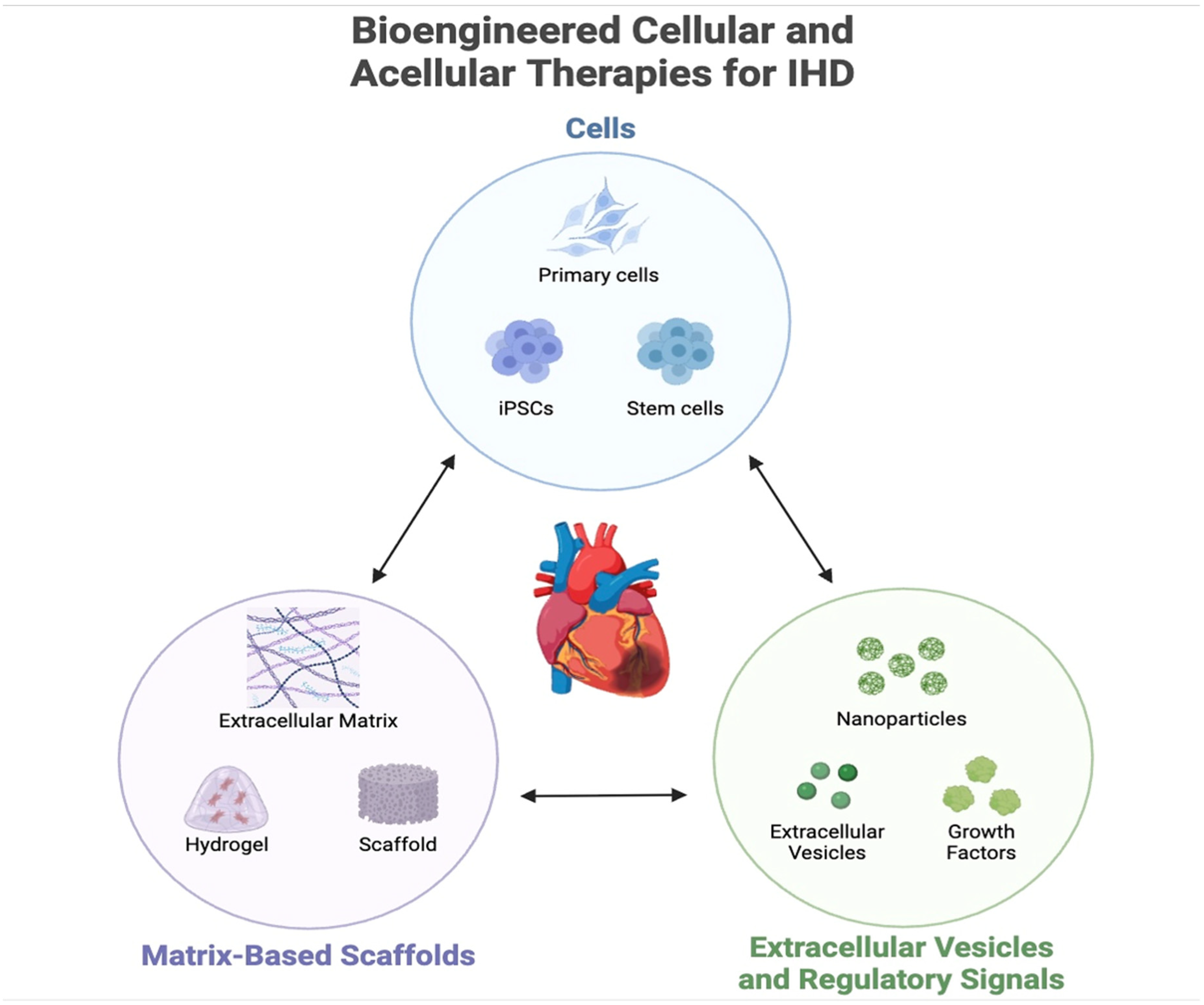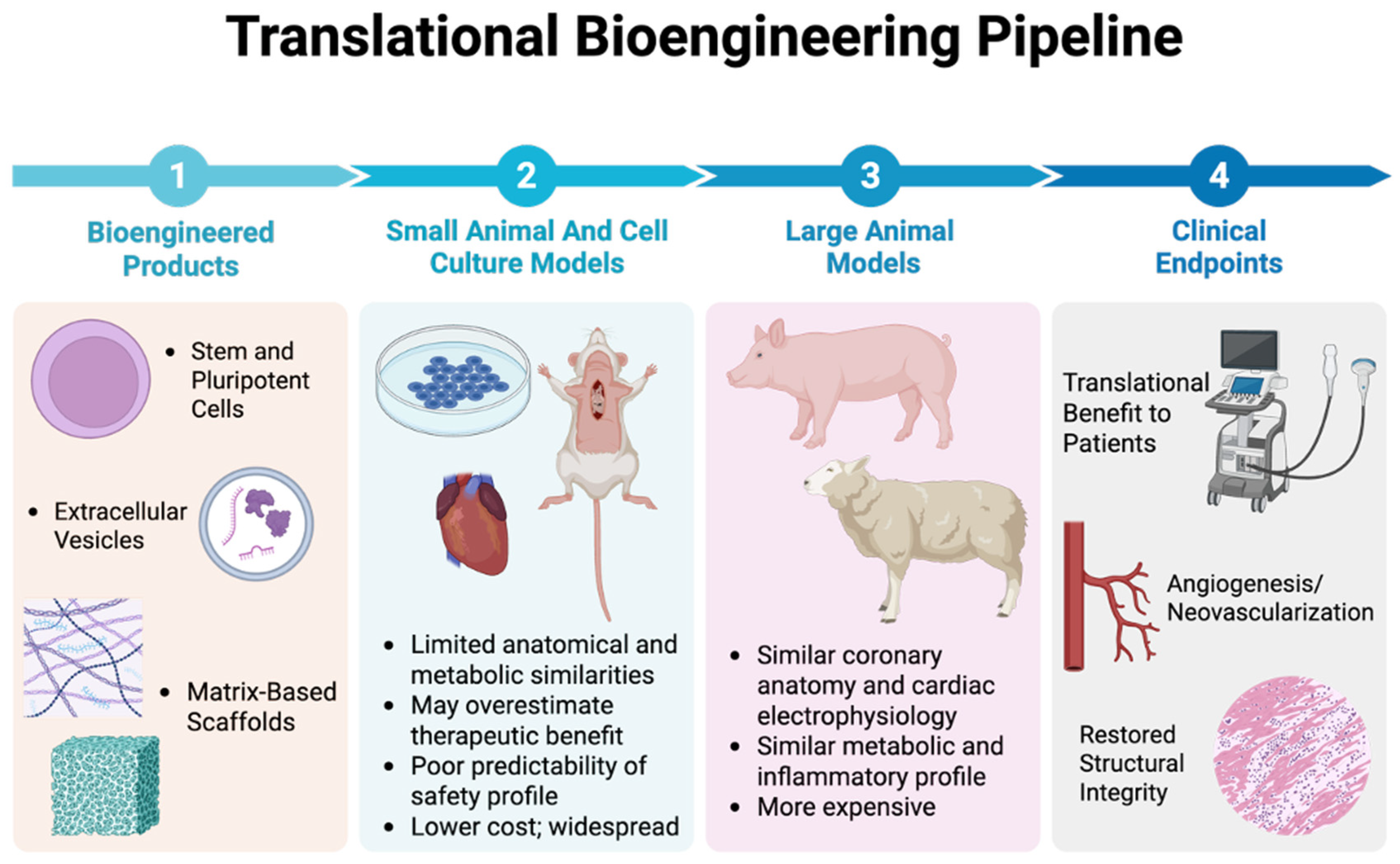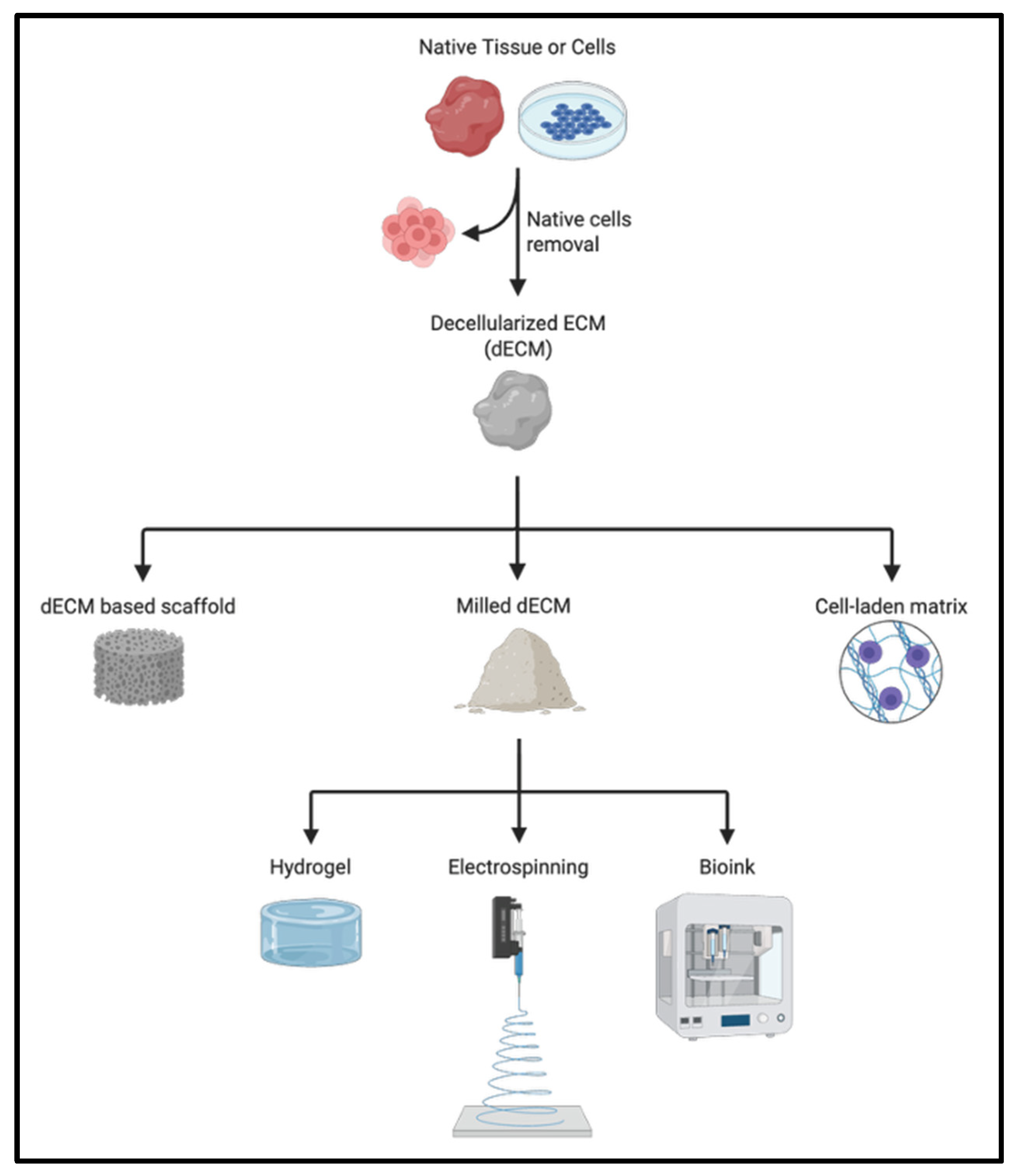

Bioengineered Cellular and Acellular Therapies for Ischemic Heart Disease in Clinically Relevant Models

 , , ,
, , ,
Abstract
1. Introduction
2. Large Animal Models as Clinically Relevant Platforms
2.1. Large Animal Models of Chronic Ischemia and Infarction
2.2. Advantages over Small Animal Models

3. Cellular Therapies
3.1. Defining the Scope of Cellular Therapy and Bioengineering
3.2. Stem and Progenitor Cell Delivery Modalities
3.2.1. Mesenchymal Stem Cells (MSCs)
3.2.2. Induced Pluripotent Stem Cell (iPSC)
3.2.3. Cardiac Progenitor Cells (CPCs) and Cardiosphere-Derived Cells (CDCs)

| Feature/Attribute | Mesenchymal Stem Cells (MSCs) [34,35,36,37,38,39,40,41,42,43,44,45,46,47,48,49,50] | Induced Pluripotent Stem Cells (iPSCs) [51,52,53,54,55,56,57,58,59,60,61,62] | Cardiac Progenitor Cells (CPCs)/Cardiosphere-Derived Cells (CDCs) [63,64,65,66,67,68,69,70,71,72,73,74,75,76,,77,78,79] |
|---|---|---|---|
| Primary Mechanism of Action | Predominantly paracrine: pro-angiogenic, anti-inflammatory, anti-fibrotic | Similar paracrine activity; potency still under investigation | Paracrine recruitment of endogenous repair; cardiomyogenic potential debated |
| Therapeutic Goals | Preserve myocardium, reduce fibrosis, improve perfusion and function | Scalable, standardized therapy with improved expansion, replace scarred myocardium | Enhance endogenous cardiac repair signaling |
| Source | Bone marrow, adipose tissue, umbilical cord | Differentiated from iPSCs via lineage programs | Adult cardiac tissue or cardiospheres (historically cKit+ enrichment; however, multiple subtype populations) |
| Advantages | Low immunogenicity, strong immunomodulation, most clinically tested | Unlimited expansion, longer lifespan, faster proliferation, improved homogeneity | Initial endogenous homing potential, cardiac lineage proximity |
| Challenges/Limitations | Autologous decline with age/disease; low retention after delivery | May have reduced immunosuppressive capacity; biomarker validation needed; Immature electrophysiology → arrhythmia risk | Controversial cardiomyogenic capacity; limited reproducibility |
| Bioengineering Strategies | Hydrogels (fibrin, Alg-RGD), collagen scaffolds, ECM patches | CXCR4/mitochondrial enhancement; Engineered Heart Tissues (EHTs), bioreactors, conductive scaffolds | Focus shifted to EV/exosome paracrine therapeutics |
| Key Clinical Findings | Improved LVEF, perfusion, 6MWD in scaffold-assisted CABG; DREAM-HF reduced MACE in inflammatory phenotypes | Emerging preclinical/early translational evidence | Limited translation for overall cardiac functional benefits |
| Stage of Development | Most advanced clinical trial experience | Preclinical → early trials (including patch trials) | Preclinical → early phase trials |
3.2.4. Bioengineered Delivery/Future Directions
4. Extracellular Vesicles as Acellular Therapeutics
4.1. Biogenesis, Classification and Therapeutic Potential of Extracellular Vesicles
4.2. Mechanisms of Action of EV-Based Therapeutics
4.2.1. Promotion of Angiogenesis and Arteriogenesis
4.2.2. Anti-Apoptotic Signaling and Cytoprotection
4.2.3. Metabolic Reprogramming and Modulation of Inflammation
4.3. Translational Large Animal Evidence
4.4. Clinical Trials and Current Human Translation of EV Therapy
4.5. Engineering Strategies to Enhance EV Yield, Targeting, and Potency
4.5.1. Donor Cell Preconditioning and Enhanced EV Yield
4.5.2. Targeting Enhancement and Surface Modification
4.5.3. Cargo Engineering and Functional Modulation
4.5.4. Biomaterial/Delivery Platforms and Sustained Release
4.5.5. Potency Assays, Standardization and Manufacturing Scale
5. Extracellular Matrix (ECM) and Bioengineered Scaffolds
5.1. ECM Role After Ischemic Injury
5.2. Non-Cell-Based ECM Biomaterials and Their Role in Regenerative Therapy
5.2.1. Decellularized ECM Hydrogels and Injectable Matrices
5.2.2. Electrospun ECM
5.2.3. Synthetic-Natural Hybrid ECM Biomaterials
5.2.4. Conductive or Mechanoresponsive ECM Scaffolds
5.3. Cell-Laden Scaffolds and Cell-Produced EV/ECM Hybrids
5.3.1. ECM Scaffolds Combined with Stem or Progenitor Cells
5.3.2. ECM-EV Hybrid Biomaterials

5.4. Clinical Translation of ECM-Based Therapies
6. Conclusions and Future Directions
Author Contributions
Funding
Data Availability Statement
Acknowledgments
Conflicts of Interest
Abbreviations
| IHD: | ischemic heart disease |
| HFpEF: | heart failure with preserved ejection fraction |
| EV: | extracellular vesicle |
| GDMT: | guideline-directed medical therapy |
| MI: | myocardial infarction |
| ECM: | extracellular matrix |
| iECM: | injectable ECM |
| LCx: | left circumflex coronary artery |
| LAD: | left anterior descending coronary artery |
| MSC: | mesenchymal stem cell |
| iPSC: | induced pluripotent stem cell |
| CPC: | cardiac progenitor cell |
| HLA: | human leukocyte antigen |
| CDC: | cardiosphere-derived cell |
| CABG: | coronary artery bypass grafting |
| VEGF: | vascular endothelial growth factor |
| HGF: | hepatocyte growth factor |
| IGF-1: | insulin-like growth factor 1 |
| MACE: | major adverse cardiac events |
| CXCR4: | C-X-C chemokine receptor type 4 |
| MVBs: | multivesicular bodies |
| TSG101: | tumor susceptibility gene 101 |
| TGFBR1 | tumor growth factor receptor 1 |
| PDK1: | pyruvate dehydrogenase kinase |
| PCL: | polycaprolactone |
| ESCRT: | endosomal-sorting complex required for transport |
| eNOS: | endothelial nitric oxide synthase |
| MAPK: | mitogen activated protein kinase |
| Akt: | protein kinase B |
| LOX-1: | lectin-like oxidized low-density lipoprotein receptor 1 |
| NF-κB: | nuclear factor kappa beta |
| IL-1β: | interleukin 1 beta |
| CD11: | cluster of differentiation 11 |
| ROS: | reactive oxygen species |
| α-SMA: | alpha smooth muscle actin |
| ADSC: | adipose-derived stem cells |
| MPS: | mononuclear phagocyte system |
| MMPs: | matrix metalloproteases |
| I/M: | intramyocardial |
| GelMA: | injectable gelatin methacryloyl |
| TeEVs: | cardiac-targeted extracellular vesicles |
| PLLA: | poly(l-lactic acid) |
| ANKRD1: | ankyrin repeat domain 1 |
| NPPB: | natriuretic peptide B |
| CCR2: | C-C chemokine receptor 2 |
| CD74: | cluster of differentiation 74 |
| TPRV4: | transient receptor potential cation channel subfamily V member 4 |
References
- GBD 2021 Causes of Death Collaborators. Global burden of 288 causes of death and life expectancy decomposition in 204 countries and territories and 811 subnational locations, 1990–2021: A systematic analysis for the Global Burden of Disease Study 2021. Lancet 2024, 403, 2100–2132. [Google Scholar] [CrossRef]
- Tajabadi, M.; Goran Orimi, H.; Ramzgouyan, M.R.; Nemati, A.; Deravi, N.; Beheshtizadeh, N.; Azami, M. Regenerative strategies for the consequences of myocardial infarction: Chronological indication and upcoming visions. Biomed. Pharmacother. 2022, 146, 112584. [Google Scholar] [CrossRef]
- Samak, M.; Hinkel, R. Stem Cells in Cardiovascular Medicine: Historical Overview and Future Prospects. Cells 2019, 8, 1530. [Google Scholar] [CrossRef]
- Gerber, Y.; Weston, S.A.; Redfield, M.M.; Chamberlain, A.M.; Manemann, S.M.; Jiang, R.; Killian, J.M.; Roger, V.L. A contemporary appraisal of the heart failure epidemic in Olmsted County, Minnesota, 2000 to 2010. JAMA Intern. Med. 2015, 175, 996–1004. [Google Scholar] [CrossRef]
- Sheng, K.; Nie, Y.; Gao, B. Recent advances in myocardial regeneration strategy. J. Int. Med. Res. 2019, 47, 5453–5464. [Google Scholar] [CrossRef]
- Scafa Udriște, A.; Niculescu, A.G.; Iliuță, L.; Bajeu, T.; Georgescu, A.; Grumezescu, A.M.; Bădilă, E. Progress in Biomaterials for Cardiac Tissue Engineering and Regeneration. Polymers 2023, 15, 1177. [Google Scholar] [CrossRef] [PubMed]
- Gupta, R.; Losordo, D.W. Challenges in the translation of cardiovascular cell therapy. J. Nucl. Med. 2010, 51, 122s–127s. [Google Scholar] [CrossRef]
- De Nisco, G.; Chiastra, C.; Hartman, E.M.J.; Hoogendoorn, A.; Daemen, J.; Calò, K.; Gallo, D.; Morbiducci, U.; Wentzel, J.J. Comparison of Swine and Human Computational Hemodynamics Models for the Study of Coronary Atherosclerosis. Front. Bioeng. Biotechnol. 2021, 9, 731924. [Google Scholar] [CrossRef] [PubMed]
- Milani-Nejad, N.; Janssen, P.M. Small and large animal models in cardiac contraction research: Advantages and disadvantages. Pharmacol. Ther. 2014, 141, 235–249. [Google Scholar] [CrossRef]
- Rahman, A.; Li, Y.; Chan, T.K.; Zhao, H.; Xiang, Y.; Chang, X.; Zhou, H.; Xu, D.; Ong, S.B. Large animal models of cardiac ischemia-reperfusion injury: Where are we now? Zool Res. 2023, 44, 591–603. [Google Scholar] [CrossRef] [PubMed]
- Keeran, K.J.; Jeffries, K.R.; Zetts, A.D.; Taylor, J.; Kozlov, S.; Hunt, T.J. A Chronic Cardiac Ischemia Model in Swine Using an Ameroid Constrictor. J. Vis. Exp. 2017. [Google Scholar] [CrossRef]
- Stone, C.R.; Harris, D.D.; Broadwin, M.; Kanuparthy, M.; Sabe, S.A.; Xu, C.; Feng, J.; Abid, M.R.; Sellke, F.W. Crafting a Rigorous, Clinically Relevant Large Animal Model of Chronic Myocardial Ischemia: What Have We Learned in 20 Years? Methods Protoc. 2024, 7, 17. [Google Scholar] [CrossRef]
- Li, J.; De Leon, H.; Ueno, T.; Cui, J.; Coussement, P.K.; King, S.B., 3rd; Chronos, N.A.; Robinson, K.A. Vasomotor function of pig coronary arteries after chronic coronary occlusion. J. Cardiovasc. Pharmacol. 2003, 41, 600–608. [Google Scholar] [CrossRef] [PubMed]
- Yajima, S.; Miyagawa, S.; Fukushima, S.; Isohashi, K.; Watabe, T.; Ikeda, H.; Horitsugi, G.; Harada, A.; Sakaniwa, R.; Hatazawa, J.; et al. Microvascular Dysfunction Related to Progressive Left Ventricular Remodeling due to Chronic Occlusion of the Left Anterior Descending Artery in an Adult Porcine Heart. Int. Heart J. 2019, 60, 715–727. [Google Scholar] [CrossRef]
- Muir, K.C.; Stone, C.; Harris, D.D.; Kanuparthy, M.; Sellke, F.W. A Clinically Relevant Swine Model of Chronic Myocardial Ischemia by Ameroid Constrictor Placement with Simultaneous Perfusion Mapping. J. Vis. Exp. 2025. [Google Scholar] [CrossRef]
- Sabe, S.A.; Scrimgeour, L.A.; Xu, C.M.; Sabra, M.; Karbasiafshar, C.; Aboulgheit, A.; Abid, M.R.; Sellke, F.W. Extracellular vesicle therapy attenuates antiangiogenic signaling in ischemic myocardium of swine with metabolic syndrome. J. Thorac. Cardiovasc. Surg. 2023, 166, e5–e14. [Google Scholar] [CrossRef] [PubMed]
- Harris, D.D.; Sabe, S.A.; Broadwin, M.; Stone, C.; Malhotra, A.; Xu, C.M.; Sabra, M.; Abid, M.R.; Sellke, F.W. Proteomic Analysis and Sex-Specific Changes in Chronically Ischemic Swine Myocardium Treated with Sodium-Glucose Cotransporter-2 Inhibitor Canagliflozin. J. Am. Coll. Surg. 2024, 238, 1045–1055. [Google Scholar] [CrossRef] [PubMed]
- DiVincenti, L., Jr.; Westcott, R.; Lee, C. Sheep (Ovis aries) as a model for cardiovascular surgery and management before, during, and after cardiopulmonary bypass. J. Am. Assoc. Lab. Anim. Sci. 2014, 53, 439–448. [Google Scholar]
- Duchenne, J.; Claus, P.; Pagourelias, E.D.; Mada, R.O.; Van Puyvelde, J.; Vunckx, K.; Verbeken, E.; Gheysens, O.; Rega, F.; Voigt, J.U. Sheep can be used as animal model of regional myocardial remodeling and controllable work. Cardiol. J. 2019, 26, 375–384. [Google Scholar] [CrossRef]
- Pilz, P.M.; Ward, J.E.; Chang, W.T.; Kiss, A.; Bateh, E.; Jha, A.; Fisch, S.; Podesser, B.K.; Liao, R. Large and Small Animal Models of Heart Failure with Reduced Ejection Fraction. Circ. Res. 2022, 130, 1888–1905. [Google Scholar] [CrossRef]
- Dixon, J.A.; Spinale, F.G. Large animal models of heart failure: A critical link in the translation of basic science to clinical practice. Circ. Heart Fail. 2009, 2, 262–271. [Google Scholar] [CrossRef]
- Liu, X.; Dong, H.; Huang, B.; Miao, H.; Xu, Z.; Yuan, Y.; Qiu, F.; Chen, J.; Zhang, H.; Liu, Z.; et al. Native Coronary Collateral Microcirculation Reserve in Rat Hearts. J. Am. Heart Assoc. 2019, 8, e011220. [Google Scholar] [CrossRef]
- Maxwell, M.P.; Hearse, D.J.; Yellon, D.M. Species variation in the coronary collateral circulation during regional myocardial ischaemia: A critical determinant of the rate of evolution and extent of myocardial infarction. Cardiovasc. Res. 1987, 21, 737–746. [Google Scholar] [CrossRef] [PubMed]
- Schwarz, J.C.V.; van Lier, M.; van den Wijngaard, J.; Siebes, M.; VanBavel, E. Topologic and Hemodynamic Characteristics of the Human Coronary Arterial Circulation. Front. Physiol. 2019, 10, 1611. [Google Scholar] [CrossRef] [PubMed]
- du Toit, E.F.; Genis, A.; Opie, L.H.; Pollesello, P.; Lochner, A. A role for the RISK pathway and K(ATP) channels in pre- and post-conditioning induced by levosimendan in the isolated guinea pig heart. Br. J. Pharmacol. 2008, 154, 41–50. [Google Scholar] [CrossRef]
- Major, R.J.; Poss, K.D. Zebrafish Heart Regeneration as a Model for Cardiac Tissue Repair. Drug Discov. Today Dis. Models 2007, 4, 219–225. [Google Scholar] [CrossRef] [PubMed]
- Lelovas, P.P.; Kostomitsopoulos, N.G.; Xanthos, T.T. A comparative anatomic and physiologic overview of the porcine heart. J. Am. Assoc. Lab. Anim. Sci. 2014, 53, 432–438. [Google Scholar]
- Stonko, D.P.; Rousseau, M.C.; Price, C.; Benike, A.; Treffalls, R.N.; Brunton, N.E.; Rosen, D.; Morrison, J.J. Technical and analytical approach to biventricular pressure-volume loops in swine including a completely endovascular, percutaneous closed-chest large animal model. JVS Vasc. Sci. 2024, 5, 100190. [Google Scholar] [CrossRef]
- Chaloupka, J.C.; Viñuela, F.; Kimme-Smith, C.; Robert, J.; Duckwiler, G.R. Use of a Doppler guide wire for intravascular blood flow measurements: A validation study for potential neurologic endovascular applications. AJNR Am. J. Neuroradiol. 1994, 15, 509–517. [Google Scholar]
- Thankam, F.G.; Radwan, M.; Keklikian, A.; Atwal, M.; Rai, T.; Agrawal, D.K. Fluoroscopy Guided Minimally Invasive Swine Model of Myocardial Infarction by Left Coronary Artery Occlusion for Regenerative Cardiology. Cardiol. Cardiovasc. Med. 2022, 6, 466–472. [Google Scholar] [CrossRef]
- Townsend, D. Measuring Pressure Volume Loops in the Mouse. J. Vis. Exp. 2016, 53810. [Google Scholar] [CrossRef]
- Gyöngyösi, M.; Pavo, N.; Lukovic, D.; Zlabinger, K.; Spannbauer, A.; Traxler, D.; Goliasch, G.; Mandic, L.; Bergler-Klein, J.; Gugerell, A.; et al. Porcine model of progressive cardiac hypertrophy and fibrosis with secondary postcapillary pulmonary hypertension. J. Transl. Med. 2017, 15, 202. [Google Scholar] [CrossRef]
- Guo, M.; Zheng, B.; Zeng, X.; Wang, X.; Tzeng, C.M. Overview of Cellular Therapeutics Clinical Trials: Advances, Challenges, and Future Directions. Int. J. Mol. Sci. 2025, 26, 5770. [Google Scholar] [CrossRef]
- Moraddahande, F.M.; Meybodi, S.M.E.; Matin, M.; Soleimani, N.; Ghasemzadeh, N.; Firoozabadi, A.D. Current status and new horizons in stem cell therapy in cardiovascular regenerative medicine (CaVaReM): An update. Eur. J. Med. Res. 2025, 30, 837. [Google Scholar] [CrossRef] [PubMed]
- Elde, S.; Wang, H.; Woo, Y.J. The Expanding Armamentarium of Innovative Bioengineered Strategies to Augment Cardiovascular Repair and Regeneration. Front. Bioeng. Biotechnol. 2021, 9, 674172. [Google Scholar] [CrossRef]
- Ali, S.A.; Mahmood, Z.; Mubarak, Z.; Asad, M.; Sarfraz Chaudhri, M.T.; Bilal, L.; Ashraf, T.; Khalifa, T.N.; Ashraf, T.; Saleem, F.; et al. Assessing the Potential Benefits of Stem Cell Therapy in Cardiac Regeneration for Patients with Ischemic Heart Disease. Cureus 2025, 17, e76770. [Google Scholar] [CrossRef]
- Nagaya, N.; Fujii, T.; Iwase, T.; Ohgushi, H.; Itoh, T.; Uematsu, M.; Yamagishi, M.; Mori, H.; Kangawa, K.; Kitamura, S. Intravenous administration of mesenchymal stem cells improves cardiac function in rats with acute myocardial infarction through angiogenesis and myogenesis. Am. J. Physiol. Heart Circ. Physiol. 2004, 287, H2670–H2676. [Google Scholar] [CrossRef] [PubMed]
- Özkaynak, B.; Şahin, I.; Özenc, E.; Subaşı, C.; Oran, D.S.; Totoz, T.; Tetikkurt, Ü.S.; Mert, B.; Polat, A.; Okuyan, E.; et al. Mesenchymal stem cells derived from epicardial adipose tissue reverse cardiac remodeling in a rabbit model of myocardial infarction. Eur. Rev. Med. Pharmacol. Sci. 2021, 25, 4372–4384. [Google Scholar] [CrossRef] [PubMed]
- McCall, F.C.; Telukuntla, K.S.; Karantalis, V.; Suncion, V.Y.; Heldman, A.W.; Mushtaq, M.; Williams, A.R.; Hare, J.M. Myocardial infarction and intramyocardial injection models in swine. Nat. Protoc. 2012, 7, 1479–1496. [Google Scholar] [CrossRef]
- Amado, L.C.; Saliaris, A.P.; Schuleri, K.H.; St John, M.; Xie, J.S.; Cattaneo, S.; Durand, D.J.; Fitton, T.; Kuang, J.Q.; Stewart, G.; et al. Cardiac repair with intramyocardial injection of allogeneic mesenchymal stem cells after myocardial infarction. Proc. Natl. Acad. Sci. USA 2005, 102, 11474–11479. [Google Scholar] [CrossRef]
- Price, M.J.; Chou, C.C.; Frantzen, M.; Miyamoto, T.; Kar, S.; Lee, S.; Shah, P.K.; Martin, B.J.; Lill, M.; Forrester, J.S.; et al. Intravenous mesenchymal stem cell therapy early after reperfused acute myocardial infarction improves left ventricular function and alters electrophysiologic properties. Int. J. Cardiol. 2006, 111, 231–239. [Google Scholar] [CrossRef] [PubMed]
- Quevedo, H.C.; Hatzistergos, K.E.; Oskouei, B.N.; Feigenbaum, G.S.; Rodriguez, J.E.; Valdes, D.; Pattany, P.M.; Zambrano, J.P.; Hu, Q.; McNiece, I.; et al. Allogeneic mesenchymal stem cells restore cardiac function in chronic ischemic cardiomyopathy via trilineage differentiating capacity. Proc. Natl. Acad. Sci. USA 2009, 106, 14022–14027. [Google Scholar] [CrossRef]
- Schuleri, K.H.; Feigenbaum, G.S.; Centola, M.; Weiss, E.S.; Zimmet, J.M.; Turney, J.; Kellner, J.; Zviman, M.M.; Hatzistergos, K.E.; Detrick, B.; et al. Autologous mesenchymal stem cells produce reverse remodelling in chronic ischaemic cardiomyopathy. Eur. Heart J. 2009, 30, 2722–2732. [Google Scholar] [CrossRef]
- Fisher, S.A.; Doree, C.; Mathur, A.; Martin-Rendon, E. Meta-analysis of cell therapy trials for patients with heart failure. Circ. Res. 2015, 116, 1361–1377. [Google Scholar] [CrossRef]
- Soczyńska, J.; Gawełczyk, W.; Majcherczyk, K.; Rydzek, J.; Muzyka, A.; Żołyniak, M.; Woźniak, S. Cells Versus Cell-Derived Signals in Cardiac Regenerative Therapy: A Comparative Analysis of Mechanisms and Clinical Evidence. Cells 2025, 14, 1674. [Google Scholar] [CrossRef]
- Gnecchi, M.; He, H.; Liang, O.D.; Melo, L.G.; Morello, F.; Mu, H.; Noiseux, N.; Zhang, L.; Pratt, R.E.; Ingwall, J.S.; et al. Paracrine action accounts for marked protection of ischemic heart by Akt-modified mesenchymal stem cells. Nat. Med. 2005, 11, 367–368. [Google Scholar] [CrossRef]
- Spees, J.L.; Lee, R.H.; Gregory, C.A. Mechanisms of mesenchymal stem/stromal cell function. Stem Cell Res. Ther. 2016, 7, 125. [Google Scholar] [CrossRef]
- Hare, J.M.; Fishman, J.E.; Gerstenblith, G.; DiFede Velazquez, D.L.; Zambrano, J.P.; Suncion, V.Y.; Tracy, M.; Ghersin, E.; Johnston, P.V.; Brinker, J.A.; et al. Comparison of allogeneic vs autologous bone marrow–derived mesenchymal stem cells delivered by transendocardial injection in patients with ischemic cardiomyopathy: The POSEIDON randomized trial. JAMA 2012, 308, 2369–2379. [Google Scholar] [CrossRef] [PubMed]
- Williams, A.R.; Trachtenberg, B.; Velazquez, D.L.; McNiece, I.; Altman, P.; Rouy, D.; Mendizabal, A.M.; Pattany, P.M.; Lopera, G.A.; Fishman, J.; et al. Intramyocardial stem cell injection in patients with ischemic cardiomyopathy: Functional recovery and reverse remodeling. Circ. Res. 2011, 108, 792–796. [Google Scholar] [CrossRef]
- Attar, A.; Mirhosseini, S.A.; Mathur, A.; Dowlut, S.; Monabati, A.; Kasaei, M.; Abtahi, F.; Kiwan, Y.; Vosough, M.; Azarpira, N. Prevention of acute myocardial infarction induced heart failure by intracoronary infusion of mesenchymal stem cells: Phase 3 randomised clinical trial (PREVENT-TAHA8). BMJ 2025, 391, e083382. [Google Scholar] [CrossRef] [PubMed]
- Cerneckis, J.; Cai, H.; Shi, Y. Induced pluripotent stem cells (iPSCs): Molecular mechanisms of induction and applications. Signal Transduct. Target. Ther. 2024, 9, 112. [Google Scholar] [CrossRef] [PubMed]
- Choudhery, M.S.; Arif, T.; Mahmood, R.; Mushtaq, A.; Niaz, A.; Hassan, Z.; Zahid, H.; Nayab, P.; Arshad, I.; Arif, M.; et al. Induced Mesenchymal Stem Cells: An Emerging Source for Regenerative Medicine Applications. J. Clin. Med. 2025, 14, 2053. [Google Scholar] [CrossRef] [PubMed]
- Wendel, J.S.; Ye, L.; Tao, R.; Zhang, J.; Zhang, J.; Kamp, T.J.; Tranquillo, R.T. Functional Effects of a Tissue-Engineered Cardiac Patch From Human Induced Pluripotent Stem Cell-Derived Cardiomyocytes in a Rat Infarct Model. Stem Cells Transl. Med. 2015, 4, 1324–1332. [Google Scholar] [CrossRef]
- Cheng, Y.C.; Hsieh, M.L.; Lin, C.J.; Chang, C.M.C.; Huang, C.Y.; Puntney, R.; Wu Moy, A.; Ting, C.Y.; Herr Chan, D.Z.; Nicholson, M.W.; et al. Combined Treatment of Human Induced Pluripotent Stem Cell-Derived Cardiomyocytes and Endothelial Cells Regenerate the Infarcted Heart in Mice and Non-Human Primates. Circulation 2023, 148, 1395–1409. [Google Scholar] [CrossRef]
- Ye, L.; Chang, Y.H.; Xiong, Q.; Zhang, P.; Zhang, L.; Somasundaram, P.; Lepley, M.; Swingen, C.; Su, L.; Wendel, J.S.; et al. Cardiac repair in a porcine model of acute myocardial infarction with human induced pluripotent stem cell-derived cardiovascular cells. Cell Stem Cell 2014, 15, 750–761. [Google Scholar] [CrossRef]
- Liao, S.; Zhang, Y.; Ting, S.; Zhen, Z.; Luo, F.; Zhu, Z.; Jiang, Y.; Sun, S.; Lai, W.H.; Lian, Q.; et al. Potent immunomodulation and angiogenic effects of mesenchymal stem cells versus cardiomyocytes derived from pluripotent stem cells for treatment of heart failure. Stem Cell Res. Ther. 2019, 10, 78. [Google Scholar] [CrossRef]
- Kawaguchi, S.; Soma, Y.; Nakajima, K.; Kanazawa, H.; Tohyama, S.; Tabei, R.; Hirano, A.; Handa, N.; Yamada, Y.; Okuda, S.; et al. Intramyocardial Transplantation of Human iPS Cell-Derived Cardiac Spheroids Improves Cardiac Function in Heart Failure Animals. JACC Basic Transl. Sci. 2021, 6, 239–254. [Google Scholar] [CrossRef] [PubMed]
- Shiba, Y.; Gomibuchi, T.; Seto, T.; Wada, Y.; Ichimura, H.; Tanaka, Y.; Ogasawara, T.; Okada, K.; Shiba, N.; Sakamoto, K.; et al. Allogeneic transplantation of iPS cell-derived cardiomyocytes regenerates primate hearts. Nature 2016, 538, 388–391. [Google Scholar] [CrossRef]
- Miyagawa, S.; Kainuma, S.; Kawamura, T.; Suzuki, K.; Ito, Y.; Iseoka, H.; Ito, E.; Takeda, M.; Sasai, M.; Mochizuki-Oda, N.; et al. Case report: Transplantation of human induced pluripotent stem cell-derived cardiomyocyte patches for ischemic cardiomyopathy. Front. Cardiovasc. Med. 2022, 9, 950829. [Google Scholar] [CrossRef]
- Carvalho, T. Stem cell-derived heart cells injected into first patient. Nat. Med. 2023, 29, 1030–1031. [Google Scholar] [CrossRef]
- Musunuru, K.; Sheikh, F.; Gupta, R.M.; Houser, S.R.; Maher, K.O.; Milan, D.J.; Terzic, A.; Wu, J.C. Induced Pluripotent Stem Cells for Cardiovascular Disease Modeling and Precision Medicine: A Scientific Statement From the American Heart Association. Circ. Genom. Precis. Med. 2018, 11, e000043. [Google Scholar] [CrossRef]
- Fassina, D.; Costa, C.M.; Bishop, M.; Plank, G.; Whitaker, J.; Harding, S.E.; Niederer, S.A. Assessing the arrhythmogenic risk of engineered heart tissue patches through in silico application on infarcted ventricle models. Comput. Biol. Med. 2023, 154, 106550. [Google Scholar] [CrossRef] [PubMed]
- Zhong, B.; Watts, K.L.; Gori, J.L.; Wohlfahrt, M.E.; Enssle, J.; Adair, J.E.; Kiem, H.P. Safeguarding nonhuman primate iPS cells with suicide genes. Mol. Ther. 2011, 19, 1667–1675. [Google Scholar] [CrossRef]
- Bryl, R.; Kulus, M.; Bryja, A.; Domagała, D.; Mozdziak, P.; Antosik, P.; Bukowska, D.; Zabel, M.; Dzięgiel, P.; Kempisty, B. Cardiac progenitor cell therapy: Mechanisms of action. Cell Biosci. 2024, 14, 30. [Google Scholar] [CrossRef]
- Valente, M.; Nascimento, D.S.; Cumano, A.; Pinto-do-Ó, P. Sca-1+ cardiac progenitor cells and heart-making: A critical synopsis. Stem Cells Dev. 2014, 23, 2263–2273. [Google Scholar] [CrossRef]
- Hong, K.U.; Guo, Y.; Li, Q.H.; Cao, P.; Al-Maqtari, T.; Vajravelu, B.N.; Du, J.; Book, M.J.; Zhu, X.; Nong, Y.; et al. c-kit+ Cardiac stem cells alleviate post-myocardial infarction left ventricular dysfunction despite poor engraftment and negligible retention in the recipient heart. PLoS ONE 2014, 9, e96725. [Google Scholar] [CrossRef]
- van Berlo, J.H.; Kanisicak, O.; Maillet, M.; Vagnozzi, R.J.; Karch, J.; Lin, S.C.; Middleton, R.C.; Marbán, E.; Molkentin, J.D. c-kit+ cells minimally contribute cardiomyocytes to the heart. Nature 2014, 509, 337–341. [Google Scholar] [CrossRef]
- Wang, X.; Hu, Q.; Nakamura, Y.; Lee, J.; Zhang, G.; From, A.H.; Zhang, J. The role of the sca-1+/CD31− cardiac progenitor cell population in postinfarction left ventricular remodeling. Stem Cells 2006, 24, 1779–1788. [Google Scholar] [CrossRef]
- Bailey, B.; Fransioli, J.; Gude, N.A.; Alvarez, R., Jr.; Zhang, X.; Gustafsson, Å.B.; Sussman, M.A. Sca-1 knockout impairs myocardial and cardiac progenitor cell function. Circ. Res. 2012, 111, 750–760. [Google Scholar] [CrossRef] [PubMed]
- Mouquet, F.; Pfister, O.; Jain, M.; Oikonomopoulos, A.; Ngoy, S.; Summer, R.; Fine, A.; Liao, R. Restoration of cardiac progenitor cells after myocardial infarction by self-proliferation and selective homing of bone marrow-derived stem cells. Circ. Res. 2005, 97, 1090–1092. [Google Scholar] [CrossRef] [PubMed]
- Shah, V.K.; Shalia, K.K. Stem Cell Therapy in Acute Myocardial Infarction: A Pot of Gold or Pandora’s Box. Stem Cells Int. 2011, 2011, 536758. [Google Scholar] [CrossRef]
- Crisostomo, V.; Baez, C.; Abad, J.L.; Sanchez, B.; Alvarez, V.; Rosado, R.; Gómez-Mauricio, G.; Gheysens, O.; Blanco-Blazquez, V.; Blazquez, R.; et al. Dose-dependent improvement of cardiac function in a swine model of acute myocardial infarction after intracoronary administration of allogeneic heart-derived cells. Stem Cell Res. Ther. 2019, 10, 152. [Google Scholar] [CrossRef]
- Marbán, E. Breakthroughs in cell therapy for heart disease: Focus on cardiosphere-derived cells. Mayo Clin. Proc. 2014, 89, 850–858. [Google Scholar] [CrossRef]
- Lee, S.T.; White, A.J.; Matsushita, S.; Malliaras, K.; Steenbergen, C.; Zhang, Y.; Li, T.S.; Terrovitis, J.; Yee, K.; Simsir, S.; et al. Intramyocardial injection of autologous cardiospheres or cardiosphere-derived cells preserves function and minimizes adverse ventricular remodeling in pigs with heart failure post-myocardial infarction. J. Am. Coll. Cardiol. 2011, 57, 455–465. [Google Scholar] [CrossRef]
- Kanazawa, H.; Tseliou, E.; Malliaras, K.; Yee, K.; Dawkins, J.F.; De Couto, G.; Smith, R.R.; Kreke, M.; Seinfeld, J.; Middleton, R.C.; et al. Cellular postconditioning: Allogeneic cardiosphere-derived cells reduce infarct size and attenuate microvascular obstruction when administered after reperfusion in pigs with acute myocardial infarction. Circ. Heart Fail. 2015, 8, 322–332. [Google Scholar] [CrossRef]
- Gallet, R.; Su, J.B.; Corboz, D.; Chiaroni, P.M.; Bizé, A.; Dai, J.; Panel, M.; Boucher, P.; Pallot, G.; Brehat, J.; et al. Three-vessel coronary infusion of cardiosphere-derived cells for the treatment of heart failure with preserved ejection fraction in a pre-clinical pig model. Basic Res. Cardiol. 2023, 118, 26. [Google Scholar] [CrossRef] [PubMed]
- Makkar, R.R.; Smith, R.R.; Cheng, K.; Malliaras, K.; Thomson, L.E.; Berman, D.; Czer, L.S.; Marbán, L.; Mendizabal, A.; Johnston, P.V.; et al. Intracoronary cardiosphere-derived cells for heart regeneration after myocardial infarction (CADUCEUS): A prospective, randomised phase 1 trial. Lancet 2012, 379, 895–904. [Google Scholar] [CrossRef]
- Fernández-Avilés, F.; Sanz-Ruiz, R.; Bogaert, J.; Casado Plasencia, A.; Gilaberte, I.; Belmans, A.; Fernández-Santos, M.E.; Charron, D.; Mulet, M.; Yotti, R.; et al. Safety and Efficacy of Intracoronary Infusion of Allogeneic Human Cardiac Stem Cells in Patients with ST-Segment Elevation Myocardial Infarction and Left Ventricular Dysfunction. Circ. Res. 2018, 123, 579–589. [Google Scholar] [CrossRef] [PubMed]
- Ostovaneh, M.R.; Makkar, R.R.; Ambale-Venkatesh, B.; Ascheim, D.; Chakravarty, T.; Henry, T.D.; Kowalchuk, G.; Aguirre, F.V.; Kereiakes, D.J.; Povsic, T.J.; et al. Effect of cardiosphere-derived cells on segmental myocardial function after myocardial infarction: ALLSTAR randomised clinical trial. Open Heart 2021, 8, e001614. [Google Scholar] [CrossRef] [PubMed]
- Wan, X.; Qian, C.; Liu, S.; Xu, Y.; Yuan, J.; Zhang, X.; Li, X. Stem cell therapy for myocardial infarction and atherosclerosis: Mechanisms, challenges, and future directions. Stem Cell Res. Ther. 2025, 16, 551. [Google Scholar] [CrossRef]
- Lu, P.; Ruan, D.; Huang, M.; Tian, M.; Zhu, K.; Gan, Z.; Xiao, Z. Harnessing the potential of hydrogels for advanced therapeutic applications: Current achievements and future directions. Signal Transduct. Target. Ther. 2024, 9, 166. [Google Scholar] [CrossRef]
- He, X.; Wang, Q.; Zhao, Y.; Zhang, H.; Wang, B.; Pan, J.; Li, J.; Yu, H.; Wang, L.; Dai, J.; et al. Effect of Intramyocardial Grafting Collagen Scaffold with Mesenchymal Stromal Cells in Patients with Chronic Ischemic Heart Disease: A Randomized Clinical Trial. JAMA Netw. Open 2020, 3, e2016236. [Google Scholar] [CrossRef]
- Mashali, M.A.; Deschênes, I.; Saad, N.S. Transformative Potential of Induced Pluripotent Stem Cells in Congenital Heart Disease Research and Treatment. Children 2025, 12, 669. [Google Scholar] [CrossRef] [PubMed]
- Chae, C.W.; Choi, G.; Yoon, T.; Kwon, Y.W. Exosome-Based Therapy in Cardiovascular Diseases: A New Frontier in Cardiovascular Disease Treatment. Korean Circ. J. 2025, 55, 461–480. [Google Scholar] [CrossRef] [PubMed]
- Zhang, Y.; Lan, M.; Chen, Y. Minimal Information for Studies of Extracellular Vesicles (MISEV): Ten-Year Evolution (2014–2023). Pharmaceutics 2024, 16, 1394. [Google Scholar] [CrossRef] [PubMed]
- You, B.; Yang, Y.; Zhou, Z.; Yan, Y.; Zhang, L.; Jin, J.; Qian, H. Extracellular Vesicles: A New Frontier for Cardiac Repair. Pharmaceutics 2022, 14, 1848. [Google Scholar] [CrossRef]
- Mukerjee, N.; Bhattacharya, A.; Maitra, S.; Kaur, M.; Ganesan, S.; Mishra, S.; Ashraf, A.; Rizwan, M.; Kesari, K.K.; Tabish, T.A.; et al. Exosome isolation and characterization for advanced diagnostic and therapeutic applications. Mater. Today Bio 2025, 31, 101613. [Google Scholar] [CrossRef]
- Parthasarathy, G.; Hirsova, P.; Kostallari, E.; Sidhu, G.S.; Ibrahim, S.H.; Malhi, H. Extracellular Vesicles in Hepatobiliary Health and Disease. Compr. Physiol. 2023, 13, 4631–4658. [Google Scholar] [CrossRef]
- Elmore, S. Apoptosis: A review of programmed cell death. Toxicol. Pathol. 2007, 35, 495–516. [Google Scholar] [CrossRef]
- Ahmadian, S.; Jafari, N.; Tamadon, A.; Ghaffarzadeh, A.; Rahbarghazi, R.; Mahdipour, M. Different storage and freezing protocols for extracellular vesicles: A systematic review. Stem Cell Res. Ther. 2024, 15, 453. [Google Scholar] [CrossRef]
- Syromiatnikova, V.; Prokopeva, A.; Gomzikova, M. Methods of the Large-Scale Production of Extracellular Vesicles. Int. J. Mol. Sci. 2022, 23, 10522. [Google Scholar] [CrossRef]
- Wang, A.Y.L.; Kao, H.K.; Liu, Y.Y.; Loh, C.Y.Y. Engineered extracellular vesicles derived from pluripotent stem cells: A cell-free approach to regenerative medicine. Burns Trauma 2025, 13, tkaf013. [Google Scholar] [CrossRef]
- Xu, G.; Jin, J.; Fu, Z.; Wang, G.; Lei, X.; Xu, J.; Wang, J. Extracellular vesicle-based drug overview: Research landscape, quality control and nonclinical evaluation strategies. Signal Transduct. Target. Ther. 2025, 10, 255. [Google Scholar] [CrossRef]
- Bian, X.; Ma, K.; Zhang, C.; Fu, X. Therapeutic angiogenesis using stem cell-derived extracellular vesicles: An emerging approach for treatment of ischemic diseases. Stem Cell Res. Ther. 2019, 10, 158. [Google Scholar] [CrossRef]
- Wada, Y.; Kudo, T.; Koyanagi, A.; Kusakabe, T.; Inoue, A.; Yoshioka, Y.; Ochiya, T.; Fukuda, S. Angiogenic Ability of Extracellular Vesicles Derived from Angio-miRNA-Modified Mesenchymal Stromal Cells. Tissue Eng. Regen. Med. 2025, 22, 993–1003. [Google Scholar] [CrossRef] [PubMed]
- Wang, N.; Chen, C.; Yang, D.; Liao, Q.; Luo, H.; Wang, X.; Zhou, F.; Yang, X.; Yang, J.; Zeng, C.; et al. Mesenchymal stem cells-derived extracellular vesicles, via miR-210, improve infarcted cardiac function by promotion of angiogenesis. Biochim. Biophys. Acta Mol. Basis Dis. 2017, 1863, 2085–2092. [Google Scholar] [CrossRef] [PubMed]
- Ma, T.; Chen, Y.; Chen, Y.; Meng, Q.; Sun, J.; Shao, L.; Yu, Y.; Huang, H.; Hu, Y.; Yang, Z.; et al. MicroRNA-132, Delivered by Mesenchymal Stem Cell-Derived Exosomes, Promote Angiogenesis in Myocardial Infarction. Stem Cells Int. 2018, 2018, 3290372. [Google Scholar] [CrossRef] [PubMed]
- Rayat Pisheh, H.; Sani, M. Mesenchymal stem cells derived exosomes: A new era in cardiac regeneration. Stem Cell Res. Ther. 2025, 16, 16. [Google Scholar] [CrossRef]
- Gray, W.D.; French, K.M.; Ghosh-Choudhary, S.; Maxwell, J.T.; Brown, M.E.; Platt, M.O.; Searles, C.D.; Davis, M.E. Identification of therapeutic covariant microRNA clusters in hypoxia-treated cardiac progenitor cell exosomes using systems biology. Circ. Res. 2015, 116, 255–263. [Google Scholar] [CrossRef]
- Zhang, Z.; Zou, Y.; Song, C.; Cao, K.; Cai, K.; Chen, S.; Wu, Y.; Geng, D.; Sun, G.; Zhang, N.; et al. Advances in the study of exosomes in cardiovascular diseases. J. Adv. Res. 2024, 66, 133–153. [Google Scholar] [CrossRef]
- Qiao, L.; Hu, S.; Liu, S.; Zhang, H.; Ma, H.; Huang, K.; Li, Z.; Su, T.; Vandergriff, A.; Tang, J.; et al. microRNA-21-5p dysregulation in exosomes derived from heart failure patients impairs regenerative potential. J. Clin. Investig. 2019, 129, 2237–2250. [Google Scholar] [CrossRef]
- Zhu, L.P.; Tian, T.; Wang, J.Y.; He, J.N.; Chen, T.; Pan, M.; Xu, L.; Zhang, H.X.; Qiu, X.T.; Li, C.C.; et al. Hypoxia-elicited mesenchymal stem cell-derived exosomes facilitates cardiac repair through miR-125b-mediated prevention of cell death in myocardial infarction. Theranostics 2018, 8, 6163–6177. [Google Scholar] [CrossRef]
- Wang, X.; Tang, Y.; Liu, Z.; Yin, Y.; Li, Q.; Liu, G.; Yan, B. The Application Potential and Advance of Mesenchymal Stem Cell-Derived Exosomes in Myocardial Infarction. Stem Cells Int. 2021, 2021, 5579904. [Google Scholar] [CrossRef]
- Wang, X.; Zhu, Y.; Wu, C.; Liu, W.; He, Y.; Yang, Q. Adipose-Derived Mesenchymal Stem Cells-Derived Exosomes Carry MicroRNA-671 to Alleviate Myocardial Infarction Through Inactivating the TGFBR2/Smad2 Axis. Inflammation 2021, 44, 1815–1830. [Google Scholar] [CrossRef]
- Pan, J.; Alimujiang, M.; Chen, Q.; Shi, H.; Luo, X. Exosomes derived from miR-146a-modified adipose-derived stem cells attenuate acute myocardial infarction-induced myocardial damage via downregulation of early growth response factor 1. J. Cell. Biochem. 2019, 120, 4433–4443. [Google Scholar] [CrossRef] [PubMed]
- Aguilar, S.; García-Olloqui, P.; Amigo-Morán, L.; Torán, J.L.; López, J.A.; Albericio, G.; Abizanda, G.; Herrero, D.; Vales, Á.; Rodríguez-Diaz, S.; et al. Cardiac Progenitor Cell Exosomal miR-935 Protects against Oxidative Stress. Cells 2023, 12, 2300. [Google Scholar] [CrossRef] [PubMed]
- Li, Y.; Yang, C.; Zhang, L.; Yang, P. MicroRNA-210 induces endothelial cell apoptosis by directly targeting PDK1 in the setting of atherosclerosis. Cell. Mol. Biol. Lett. 2017, 22, 3. [Google Scholar] [CrossRef]
- Wang, X.; Hu, S.; Li, J.; Zhu, D.; Wang, Z.; Cores, J.; Cheng, K.; Liu, G.; Huang, K. Extruded Mesenchymal Stem Cell Nanovesicles Are Equally Potent to Natural Extracellular Vesicles in Cardiac Repair. ACS Appl. Mater. Interfaces 2021, 13, 55767–55779. [Google Scholar] [CrossRef]
- Li, J.; Sun, S.; Zhu, D.; Mei, X.; Lyu, Y.; Huang, K.; Li, Y.; Liu, S.; Wang, Z.; Hu, S.; et al. Inhalable Stem Cell Exosomes Promote Heart Repair After Myocardial Infarction. Circulation 2024, 150, 710–723. [Google Scholar] [CrossRef] [PubMed]
- Balachander, K.; Vijayashree Priyadharsini, J.; Paramasivam, A. Role of exosomal mitochondria in cardiovascular diseases. Hypertens. Res. 2023, 46, 812–813. [Google Scholar] [CrossRef]
- Fierro-Fernández, M.; Miguel, V.; Márquez-Expósito, L.; Nuevo-Tapioles, C.; Herrero, J.I.; Blanco-Ruiz, E.; Tituaña, J.; Castillo, C.; Cannata, P.; Monsalve, M.; et al. MiR-9-5p protects from kidney fibrosis by metabolic reprogramming. FASEB J. 2020, 34, 410–431. [Google Scholar] [CrossRef] [PubMed]
- Liu, J.; Xiong, Y.; Mo, H.; Niu, H.; Miao, J.; Shen, W.; Zhou, S.; Wang, X.; Li, X.; Zhang, Y.; et al. MicroRNA-29b Plays a Vital Role in Podocyte Injury and Glomerular Diseases through Inducing Mitochondrial Dysfunction. Int. J. Biol. Sci. 2024, 20, 4654–4673. [Google Scholar] [CrossRef]
- Du, H.; Zhao, Y.; Yin, Z.; Wang, D.W.; Chen, C. The role of miR-320 in glucose and lipid metabolism disorder-associated diseases. Int. J. Biol. Sci. 2021, 17, 402–416. [Google Scholar] [CrossRef]
- Islam, M.A.; Sultana, O.F.; Bandari, M.; Kshirsagar, S.; Manna, P.R.; Reddy, P.H. MicroRNA-455-3P as a peripheral biomarker and therapeutic target for mild cognitive impairment and Alzheimer’s disease. Ageing Res. Rev. 2024, 100, 102459. [Google Scholar] [CrossRef]
- Gao, L.; Qiu, F.; Cao, H.; Li, H.; Dai, G.; Ma, T.; Gong, Y.; Luo, W.; Zhu, D.; Qiu, Z.; et al. Therapeutic delivery of microRNA-125a-5p oligonucleotides improves recovery from myocardial ischemia/reperfusion injury in mice and swine. Theranostics 2023, 13, 685–703. [Google Scholar] [CrossRef]
- Henning, R.J. Cardiovascular Exosomes and MicroRNAs in Cardiovascular Physiology and Pathophysiology. J. Cardiovasc. Transl. Res. 2021, 14, 195–212. [Google Scholar] [CrossRef] [PubMed]
- Sahoo, S.; Losordo, D.W. Exosomes and cardiac repair after myocardial infarction. Circ. Res. 2014, 114, 333–344. [Google Scholar] [CrossRef] [PubMed]
- Yue, R.; Lu, S.; Luo, Y.; Zeng, J.; Liang, H.; Qin, D.; Wang, X.; Wang, T.; Pu, J.; Hu, H. Mesenchymal stem cell-derived exosomal microRNA-182-5p alleviates myocardial ischemia/reperfusion injury by targeting GSDMD in mice. Cell Death Discov. 2022, 8, 202. [Google Scholar] [CrossRef]
- Potz, B.A.; Scrimgeour, L.A.; Pavlov, V.I.; Sodha, N.R.; Abid, M.R.; Sellke, F.W. Extracellular Vesicle Injection Improves Myocardial Function and Increases Angiogenesis in a Swine Model of Chronic Ischemia. J. Am. Heart Assoc. 2018, 7, e008344. [Google Scholar] [CrossRef]
- Sabe, S.A.; Scrimgeour, L.A.; Karbasiafshar, C.; Sabra, M.; Xu, C.M.; Aboulgheit, A.; Abid, M.R.; Sellke, F.W. Extracellular vesicles modulate inflammatory signaling in chronically ischemic myocardium of swine with metabolic syndrome. J. Thorac. Cardiovasc. Surg. 2023, 165, e225–e236. [Google Scholar] [CrossRef]
- Harris, D.D.; Sabe, S.A.; Broadwin, M.; Xu, C.; Stone, C.; Kanuparthy, M.; Malhotra, A.; Abid, M.R.; Sellke, F.W. Intramyocardial Injection of Hypoxia-Conditioned Extracellular Vesicles Modulates Response to Oxidative Stress in the Chronically Ischemic Myocardium. Bioengineering 2024, 11, 125. [Google Scholar] [CrossRef]
- Harris, D.D.; Sabe, S.A.; Sabra, M.; Xu, C.M.; Malhotra, A.; Broadwin, M.; Banerjee, D.; Abid, M.R.; Sellke, F.W. Intramyocardial injection of hypoxia-conditioned extracellular vesicles modulates apoptotic signaling in chronically ischemic myocardium. JTCVS Open 2023, 15, 220–228. [Google Scholar] [CrossRef] [PubMed]
- Sabe, S.A.; Xu, C.M.; Potz, B.A.; Malhotra, A.; Sabra, M.; Harris, D.D.; Broadwin, M.; Abid, M.R.; Sellke, F.W. Comparative Analysis of Normoxia- and Hypoxia-Modified Extracellular Vesicle Therapy in Function, Perfusion, and Collateralization in Chronically Ischemic Myocardium. Int. J. Mol. Sci. 2023, 24, 2076. [Google Scholar] [CrossRef]
- Ateeq, M.; Broadwin, M.; Sellke, F.W.; Abid, M.R. Extracellular Vesicles’ Role in Angiogenesis and Altering Angiogenic Signaling. Med. Sci. 2024, 12, 4. [Google Scholar] [CrossRef] [PubMed]
- Menasché, P.; Renault, N.K.; Hagège, A.; Puscas, T.; Bellamy, V.; Humbert, C.; Le, L.; Blons, H.; Granier, C.; Benhamouda, N.; et al. First-in-man use of a cardiovascular cell-derived secretome in heart failure. Case report. EBioMedicine 2024, 103, 105145. [Google Scholar] [CrossRef]
- Traxler, D.; Dannenberg, V.; Zlabinger, K.; Gugerell, A.; Mester-Tonczar, J.; Lukovic, D.; Spannbauer, A.; Hasimbegovic, E.; Kastrup, J.; Gyöngyösi, M. Plasma Small Extracellular Vesicle Cardiac miRNA Expression in Patients with Ischemic Heart Failure, Randomized to Percutaneous Intramyocardial Treatment of Adipose Derived Stem Cells or Placebo: Subanalysis of the SCIENCE Study. Int. J. Mol. Sci. 2023, 24, 10647. [Google Scholar] [CrossRef] [PubMed]
- Mizenko, R.R.; Feaver, M.; Bozkurt, B.T.; Lowe, N.; Nguyen, B.; Huang, K.W.; Wang, A.; Carney, R.P. A critical systematic review of extracellular vesicle clinical trials. J. Extracell. Vesicles 2024, 13, e12510. [Google Scholar] [CrossRef]
- Zhu, J.; Lu, K.; Zhang, N.; Zhao, Y.; Ma, Q.; Shen, J.; Lin, Y.; Xiang, P.; Tang, Y.; Hu, X.; et al. Myocardial reparative functions of exosomes from mesenchymal stem cells are enhanced by hypoxia treatment of the cells via transferring microRNA-210 in an nSMase2-dependent way. Artif. Cells Nanomed. Biotechnol. 2018, 46, 1659–1670. [Google Scholar] [CrossRef]
- Haraszti, R.A.; Miller, R.; Stoppato, M.; Sere, Y.Y.; Coles, A.; Didiot, M.C.; Wollacott, R.; Sapp, E.; Dubuke, M.L.; Li, X.; et al. Exosomes Produced from 3D Cultures of MSCs by Tangential Flow Filtration Show Higher Yield and Improved Activity. Mol. Ther. 2018, 26, 2838–2847. [Google Scholar] [CrossRef]
- Lai, R.C.; Yeo, R.W.; Padmanabhan, J.; Choo, A.; de Kleijn, D.P.; Lim, S.K. Isolation and Characterization of Exosome from Human Embryonic Stem Cell-Derived C-Myc-Immortalized Mesenchymal Stem Cells. Methods Mol. Biol. 2016, 1416, 477–494. [Google Scholar] [CrossRef]
- Kim, S.; Kim, T.M. Generation of mesenchymal stem-like cells for producing extracellular vesicles. World J. Stem Cells 2019, 11, 270–280. [Google Scholar] [CrossRef]
- Cieślik, M.; Bryniarski, K.; Nazimek, K. Biodelivery of therapeutic extracellular vesicles: Should mononuclear phagocytes always be feared? Front. Cell Dev. Biol. 2023, 11, 1211833. [Google Scholar] [CrossRef]
- Ghassemi, K.; Inouye, K.; Takhmazyan, T.; Bonavida, V.; Yang, J.W.; de Barros, N.R.; Thankam, F.G. Engineered Vesicles and Hydrogel Technologies for Myocardial Regeneration. Gels 2023, 9, 824. [Google Scholar] [CrossRef]
- Lu, H.; Jiang, Y.; Luo, R.; Zhou, D.; Zheng, F.; Shi, L.; Zhang, H.; Wang, Y.; Xu, X.; Zou, R.; et al. Engineered hybrid cell membrane nanosystems for treating cardiovascular diseases. Mater. Today Bio 2025, 33, 101992. [Google Scholar] [CrossRef]
- Silva, A.K.; Luciani, N.; Gazeau, F.; Aubertin, K.; Bonneau, S.; Chauvierre, C.; Letourneur, D.; Wilhelm, C. Combining magnetic nanoparticles with cell derived microvesicles for drug loading and targeting. Nanomedicine 2015, 11, 645–655. [Google Scholar] [CrossRef]
- Wang, X.; Chen, Y.; Zhao, Z.; Meng, Q.; Yu, Y.; Sun, J.; Yang, Z.; Chen, Y.; Li, J.; Ma, T.; et al. Engineered Exosomes with Ischemic Myocardium-Targeting Peptide for Targeted Therapy in Myocardial Infarction. J. Am. Heart Assoc. 2018, 7, e008737. [Google Scholar] [CrossRef]
- Villa, C.; Secchi, V.; Macchi, M.; Tripodi, L.; Trombetta, E.; Zambroni, D.; Padelli, F.; Mauri, M.; Molinaro, M.; Oddone, R.; et al. Magnetic-field-driven targeting of exosomes modulates immune and metabolic changes in dystrophic muscle. Nat. Nanotechnol. 2024, 19, 1532–1543. [Google Scholar] [CrossRef] [PubMed]
- Wang, W.; Han, Z.; Aafreen, S.; Zivko, C.; Gololobova, O.; Wei, Z.; Cotin, G.; Felder-Flesc, D.; Mahairaki, V.; Witwer, K.W.; et al. Magnetically Labelled iPSC-Derived Extracellular Vesicles Enable MRI/MPI-Guided Regenerative Therapy for Myocardial Infarction. J. Extracell. Vesicles 2025, 14, e70178. [Google Scholar] [CrossRef] [PubMed]
- Wen, X.; Hao, Y. The combined application of exosomes/exosome-based drug preparations and ultrasound. J. Mater. Chem. B 2025, 13, 6626–6637. [Google Scholar] [CrossRef] [PubMed]
- Chen, G.; Yue, A.; Wang, M.; Ruan, Z.; Zhu, L. The Exosomal lncRNA KLF3-AS1 From Ischemic Cardiomyocytes Mediates IGF-1 Secretion by MSCs to Rescue Myocardial Ischemia-Reperfusion Injury. Front. Cardiovasc. Med. 2021, 8, 671610. [Google Scholar] [CrossRef] [PubMed]
- Jasiewicz, N.; Drabenstott, C.; Nguyen, J. Harnessing the Full Potential of Extracellular Vesicles as Drug Carriers. Curr. Opin. Colloid Interface Sci. 2021, 51, 101412. [Google Scholar] [CrossRef]
- Li, Q.; Fu, X.; Kou, Y.; Han, N. Engineering strategies and optimized delivery of exosomes for theranostic application in nerve tissue. Theranostics 2023, 13, 4266–4286. [Google Scholar] [CrossRef]
- Li, Q.; Xu, Y.; Lv, K.; Wang, Y.; Zhong, Z.; Xiao, C.; Zhu, K.; Ni, C.; Wang, K.; Kong, M.; et al. Small extracellular vesicles containing miR-486-5p promote angiogenesis after myocardial infarction in mice and nonhuman primates. Sci. Transl. Med. 2021, 13, eabb0202. [Google Scholar] [CrossRef]
- Borrelli, M.A.; Turnquist, H.R.; Little, S.R. Biologics and their delivery systems: Trends in myocardial infarction. Adv. Drug Deliv. Rev. 2021, 173, 181–215. [Google Scholar] [CrossRef]
- Du, S.; Zhou, X.; Zheng, B. Beyond Traditional Medicine: EVs-Loaded Hydrogels as a Game Changer in Disease Therapeutics. Gels 2024, 10, 162. [Google Scholar] [CrossRef]
- Zhu, S.; Yu, C.; Liu, N.; Zhao, M.; Chen, Z.; Liu, J.; Li, G.; Huang, H.; Guo, H.; Sun, T.; et al. Injectable conductive gelatin methacrylate/oxidized dextran hydrogel encapsulating umbilical cord mesenchymal stem cells for myocardial infarction treatment. Bioact. Mater. 2022, 13, 119–134. [Google Scholar] [CrossRef] [PubMed]
- Bar, A.; Kryukov, O.; Etzion, S.; Cohen, S. 316Engineered extracellular vesicle-mediated delivery of miR-199a-3p increases the viability of 3D-printed cardiac patches. Int. J. Bioprint. 2023, 9, 670. [Google Scholar] [CrossRef] [PubMed]
- Wiest, E.F.; Zubair, A.C. Generation of Current Good Manufacturing Practices-Grade Mesenchymal Stromal Cell-Derived Extracellular Vesicles Using Automated Bioreactors. Biology 2025, 14, 313. [Google Scholar] [CrossRef]
- Gobin, J.; Muradia, G.; Mehic, J.; Westwood, C.; Couvrette, L.; Stalker, A.; Bigelow, S.; Luebbert, C.C.; Bissonnette, F.S.; Johnston, M.J.W.; et al. Hollow-fiber bioreactor production of extracellular vesicles from human bone marrow mesenchymal stromal cells yields nanovesicles that mirrors the immuno-modulatory antigenic signature of the producer cell. Stem Cell Res. Ther. 2021, 12, 127. [Google Scholar] [CrossRef]
- Stine, S.J.; Popowski, K.D.; Su, T.; Cheng, K. Exosome and Biomimetic Nanoparticle Therapies for Cardiac Regenerative Medicine. Curr. Stem Cell Res. Ther. 2020, 15, 674–684. [Google Scholar] [CrossRef]
- Bejerano, T.; Etzion, S.; Elyagon, S.; Etzion, Y.; Cohen, S. Nanoparticle Delivery of miRNA-21 Mimic to Cardiac Macrophages Improves Myocardial Remodeling after Myocardial Infarction. Nano Lett. 2018, 18, 5885–5891. [Google Scholar] [CrossRef]
- Buschmann, D.; Mussack, V.; Byrd, J.B. Separation, characterization, and standardization of extracellular vesicles for drug delivery applications. Adv. Drug Deliv. Rev. 2021, 174, 348–368. [Google Scholar] [CrossRef] [PubMed]
- Fusco, C.; De Rosa, G.; Spatocco, I.; Vitiello, E.; Procaccini, C.; Frigè, C.; Pellegrini, V.; La Grotta, R.; Furlan, R.; Matarese, G.; et al. Extracellular vesicles as human therapeutics: A scoping review of the literature. J. Extracell. Vesicles 2024, 13, e12433. [Google Scholar] [CrossRef]
- Koutentaki, F.; Nicastro, L.; Kelwick, R.J.R.; Freemont, P.S.; Terracciano, C.M. Investigating the mechanisms of small extracellular vesicles in cardiovascular disease using the living myocardial slice platform. Front. Cardiovasc. Med. 2025, 12, 1697099. [Google Scholar] [CrossRef]
- Verma, N.; Arora, S. Navigating the Global Regulatory Landscape for Exosome-Based Therapeutics: Challenges, Strategies, and Future Directions. Pharmaceutics 2025, 17, 990. [Google Scholar] [CrossRef]
- Wang, R.M.; Christman, K.L. Decellularized myocardial matrix hydrogels: In basic research and preclinical studies. Adv. Drug Deliv. Rev. 2016, 96, 77–82. [Google Scholar] [CrossRef]
- Frangogiannis, N.G. The Extracellular Matrix in Ischemic and Nonischemic Heart Failure. Circ. Res. 2019, 125, 117–146. [Google Scholar] [CrossRef]
- Hamze, J.; Broadwin, M.; Stone, C.; Muir, K.C.; Sellke, F.W.; Abid, M.R. Developments in Extracellular Matrix-Based Angiogenesis Therapy for Ischemic Heart Disease: A Review of Current Strategies, Methodologies and Future Directions. BioTech 2025, 14, 23. [Google Scholar] [CrossRef] [PubMed]
- Frangogiannis, N.G.; Kovacic, J.C. Extracellular Matrix in Ischemic Heart Disease, Part 4/4: JACC Focus Seminar. J. Am. Coll. Cardiol. 2020, 75, 2219–2235. [Google Scholar] [CrossRef] [PubMed]
- Seif-Naraghi, S.B.; Singelyn, J.M.; Salvatore, M.A.; Osborn, K.G.; Wang, J.J.; Sampat, U.; Kwan, O.L.; Strachan, G.M.; Wong, J.; Schup-Magoffin, P.J.; et al. Safety and efficacy of an injectable extracellular matrix hydrogel for treating myocardial infarction. Sci. Transl. Med. 2013, 5, 173ra125. [Google Scholar] [CrossRef]
- Spang, M.T.; Middleton, R.; Diaz, M.; Hunter, J.; Mesfin, J.; Banka, A.; Sullivan, H.; Wang, R.; Lazerson, T.S.; Bhatia, S.; et al. Intravascularly infused extracellular matrix as a biomaterial for targeting and treating inflamed tissues. Nat. Biomed. Eng. 2023, 7, 94–109. [Google Scholar] [CrossRef]
- Huang, K.; Ozpinar, E.W.; Su, T.; Tang, J.; Shen, D.; Qiao, L.; Hu, S.; Li, Z.; Liang, H.; Mathews, K.; et al. An off-the-shelf artificial cardiac patch improves cardiac repair after myocardial infarction in rats and pigs. Sci. Transl. Med. 2020, 12, eaat9683. [Google Scholar] [CrossRef]
- Broadwin, M.; St Angelo, K.; Petersen, M.; Teixeira, R.B.; Harris, D.D.; Stone, C.R.; Xu, C.; Kanuparthy, M.; Sellke, F.W.; Morgan, J.; et al. Lab-grown, 3D extracellular matrix particles improve cardiac function and morphology in myocardial ischemia. Am. J. Physiol. Heart Circ. Physiol. 2025, 328, H221–H234. [Google Scholar] [CrossRef] [PubMed]
- Liu, T.; Hao, Y.; Zhang, Z.; Zhou, H.; Peng, S.; Zhang, D.; Li, K.; Chen, Y.; Chen, M. Advanced Cardiac Patches for the Treatment of Myocardial Infarction. Circulation 2024, 149, 2002–2020. [Google Scholar] [CrossRef] [PubMed]
- Vasanthan, V.; Biglioli, M.; Fatehi Hassanabad, A.; Dundas, J.; Matheny, R.G.; Fedak, P.W. The CorMatrix Cor™ PATCH for epicardial infarct repair. Future Cardiol. 2021, 17, 1297–1305. [Google Scholar] [CrossRef] [PubMed]
- Bhatt, A.; Bates, M.J.; Marcu, C.B.; Matheny, R.G.; Carabello, B.A.; Yin, K.; Boyd, W.D. Second-generation extracellular matrix patch for epicardial infarct repair. J. Cardiothorac. Surg. 2023, 18, 255. [Google Scholar] [CrossRef]
- Prat-Vidal, C.; Rodríguez-Gómez, L.; Aylagas, M.; Nieto-Nicolau, N.; Gastelurrutia, P.; Agustí, E.; Gálvez-Montón, C.; Jorba, I.; Teis, A.; Monguió-Tortajada, M.; et al. First-in-human PeriCord cardiac bioimplant: Scalability and GMP manufacturing of an allogeneic engineered tissue graft. EBioMedicine 2020, 54, 102729. [Google Scholar] [CrossRef]
- Broadwin, M.; Imarhia, F.; Oh, A.; Stone, C.R.; Sellke, F.W.; Bhowmick, S.; Abid, M.R. Exploring Electrospun Scaffold Innovations in Cardiovascular Therapy: A Review of Electrospinning in Cardiovascular Disease. Bioengineering 2024, 11, 218. [Google Scholar] [CrossRef]
- McInnes, A.D.; Moser, M.A.J.; Chen, X. Preparation and Use of Decellularized Extracellular Matrix for Tissue Engineering. J. Funct. Biomater. 2022, 13, 240. [Google Scholar] [CrossRef]
- Hayam, R.; Ertracht, O.; Zahran, S.; Baruch, L.; Atar, S.; Machluf, M. Electrospun extracellular matrix scaffold improves cardiac structure and function post-myocardial infarction. Polym. Adv. Technol. 2022, 33, 3822–3831. [Google Scholar] [CrossRef]
- Liu, Y.; Xu, Y.; Wang, Z.; Wen, D.; Zhang, W.; Schmull, S.; Li, H.; Chen, Y.; Xue, S. Electrospun nanofibrous sheets of collagen/elastin/polycaprolactone improve cardiac repair after myocardial infarction. Am. J. Transl. Res. 2016, 8, 1678–1694. [Google Scholar]
- Fattahi, M.R.; Sigaroodi, F.; Asadian, E.; Khani, M.M. Fibrous cardiac patches incorporating mxene and decellularized pericardium enhance myocardial repair in infarcted rats. Biomater. Adv. 2025, 180, 214564. [Google Scholar] [CrossRef]
- Feng, M.; Liu, X.; Hou, X.; Chen, J.; Zhang, H.; Song, S.; Han, X.; Shi, C. Specific angiogenic peptide binding with injectable cardiac ECM collagen gel promotes the recovery of myocardial infarction in rat. J. Biomed. Mater. Res. A 2020, 108, 1881–1889. [Google Scholar] [CrossRef]
- Singelyn, J.M.; Sundaramurthy, P.; Johnson, T.D.; Schup-Magoffin, P.J.; Hu, D.P.; Faulk, D.M.; Wang, J.; Mayle, K.M.; Bartels, K.; Salvatore, M.; et al. Catheter-deliverable hydrogel derived from decellularized ventricular extracellular matrix increases endogenous cardiomyocytes and preserves cardiac function post-myocardial infarction. J. Am. Coll. Cardiol. 2012, 59, 751–763. [Google Scholar] [CrossRef]
- Wang, J.; Song, Y.; Xie, W.; Zhao, J.; Wang, Y.; Yu, W. Therapeutic angiogenesis based on injectable hydrogel for protein delivery in ischemic heart disease. iScience 2023, 26, 106577. [Google Scholar] [CrossRef]
- Rufaihah, A.J.; Vaibavi, S.R.; Plotkin, M.; Shen, J.; Nithya, V.; Wang, J.; Seliktar, D.; Kofidis, T. Enhanced infarct stabilization and neovascularization mediated by VEGF-loaded PEGylated fibrinogen hydrogel in a rodent myocardial infarction model. Biomaterials 2013, 34, 8195–8202. [Google Scholar] [CrossRef] [PubMed]
- Fu, W.; Liu, Z.; Feng, B.; Hu, R.; He, X.; Wang, H.; Yin, M.; Huang, H.; Zhang, H.; Wang, W. Electrospun gelatin/PCL and collagen/PLCL scaffolds for vascular tissue engineering. Int. J. Nanomed. 2014, 9, 2335–2344. [Google Scholar] [CrossRef]
- Engelmayr, G.C., Jr.; Cheng, M.; Bettinger, C.J.; Borenstein, J.T.; Langer, R.; Freed, L.E. Accordion-like honeycombs for tissue engineering of cardiac anisotropy. Nat. Mater. 2008, 7, 1003–1010. [Google Scholar] [CrossRef] [PubMed]
- Leor, J.; Tuvia, S.; Guetta, V.; Manczur, F.; Castel, D.; Willenz, U.; Petneházy, O.; Landa, N.; Feinberg, M.S.; Konen, E.; et al. Intracoronary injection of in situ forming alginate hydrogel reverses left ventricular remodeling after myocardial infarction in Swine. J. Am. Coll. Cardiol. 2009, 54, 1014–1023. [Google Scholar] [CrossRef]
- Frey, N.; Linke, A.; Süselbeck, T.; Müller-Ehmsen, J.; Vermeersch, P.; Schoors, D.; Rosenberg, M.; Bea, F.; Tuvia, S.; Leor, J. Intracoronary delivery of injectable bioabsorbable scaffold (IK-5001) to treat left ventricular remodeling after ST-elevation myocardial infarction: A first-in-man study. Circ. Cardiovasc. Interv. 2014, 7, 806–812. [Google Scholar] [CrossRef] [PubMed]
- Mann, D.L.; Lee, R.J.; Coats, A.J.; Neagoe, G.; Dragomir, D.; Pusineri, E.; Piredda, M.; Bettari, L.; Kirwan, B.A.; Dowling, R.; et al. One-year follow-up results from AUGMENT-HF: A multicentre randomized controlled clinical trial of the efficacy of left ventricular augmentation with Algisyl in the treatment of heart failure. Eur. J. Heart Fail. 2016, 18, 314–325. [Google Scholar] [CrossRef] [PubMed]
- Shin, S.R.; Jung, S.M.; Zalabany, M.; Kim, K.; Zorlutuna, P.; Kim, S.B.; Nikkhah, M.; Khabiry, M.; Azize, M.; Kong, J.; et al. Carbon-nanotube-embedded hydrogel sheets for engineering cardiac constructs and bioactuators. ACS Nano 2013, 7, 2369–2380. [Google Scholar] [CrossRef]
- Dvir, T.; Timko, B.P.; Brigham, M.D.; Naik, S.R.; Karajanagi, S.S.; Levy, O.; Jin, H.; Parker, K.K.; Langer, R.; Kohane, D.S. Nanowired three-dimensional cardiac patches. Nat. Nanotechnol. 2011, 6, 720–725. [Google Scholar] [CrossRef]
- Rijns, L.; Rutten, M.; Bellan, R.; Yuan, H.; Mugnai, M.L.; Rocha, S.; Del Gado, E.; Kouwer, P.H.J.; Dankers, P.Y.W. Synthetic, multi-dynamic hydrogels by uniting stress-stiffening and supramolecular polymers. Sci. Adv. 2024, 10, eadr3209. [Google Scholar] [CrossRef]
- Bellamy, V.; Vanneaux, V.; Bel, A.; Nemetalla, H.; Emmanuelle Boitard, S.; Farouz, Y.; Joanne, P.; Perier, M.C.; Robidel, E.; Mandet, C.; et al. Long-term functional benefits of human embryonic stem cell-derived cardiac progenitors embedded into a fibrin scaffold. J. Heart Lung Transplant. 2015, 34, 1198–1207. [Google Scholar] [CrossRef]
- Chung, H.J.; Kim, J.T.; Kim, H.J.; Kyung, H.W.; Katila, P.; Lee, J.H.; Yang, T.H.; Yang, Y.I.; Lee, S.J. Epicardial delivery of VEGF and cardiac stem cells guided by 3-dimensional PLLA mat enhancing cardiac regeneration and angiogenesis in acute myocardial infarction. J. Control. Release 2015, 205, 218–230. [Google Scholar] [CrossRef]
- Spadaccio, C.; Nappi, F.; De Marco, F.; Sedati, P.; Taffon, C.; Nenna, A.; Crescenzi, A.; Chello, M.; Trombetta, M.; Gambardella, I.; et al. Implantation of a Poly-L-Lactide GCSF-Functionalized Scaffold in a Model of Chronic Myocardial Infarction. J. Cardiovasc. Transl. Res. 2017, 10, 47–65. [Google Scholar] [CrossRef]
- Chachques, J.C.; Trainini, J.C.; Lago, N.; Cortes-Morichetti, M.; Schussler, O.; Carpentier, A. Myocardial Assistance by Grafting a New Bioartificial Upgraded Myocardium (MAGNUM trial): Clinical feasibility study. Ann. Thorac. Surg. 2008, 85, 901–908. [Google Scholar] [CrossRef] [PubMed]
- Menasché, P.; Vanneaux, V.; Hagège, A.; Bel, A.; Cholley, B.; Parouchev, A.; Cacciapuoti, I.; Al-Daccak, R.; Benhamouda, N.; Blons, H.; et al. Transplantation of Human Embryonic Stem Cell-Derived Cardiovascular Progenitors for Severe Ischemic Left Ventricular Dysfunction. J. Am. Coll. Cardiol. 2018, 71, 429–438. [Google Scholar] [CrossRef]
- Wang, Y.; Meng, D.; Shi, X.; Hou, Y.; Zang, S.; Chen, L.; Spanos, M.; Li, G.; Cretoiu, D.; Zhou, Q.; et al. Injectable hydrogel with miR-222-engineered extracellular vesicles ameliorates myocardial ischemic reperfusion injury via mechanotransduction. Cell Rep. Med. 2025, 6, 101987. [Google Scholar] [CrossRef]
- Liu, B.; Lee, B.W.; Nakanishi, K.; Villasante, A.; Williamson, R.; Metz, J.; Kim, J.; Kanai, M.; Bi, L.; Brown, K.; et al. Cardiac recovery via extended cell-free delivery of extracellular vesicles secreted by cardiomyocytes derived from induced pluripotent stem cells. Nat. Biomed. Eng. 2018, 2, 293–303. [Google Scholar] [CrossRef]
- Gómez-Cid, L.; López-Donaire, M.L.; Velasco, D.; Marín, V.; González, M.I.; Salinas, B.; Cussó, L.; García, Á.; Bravo, S.B.; Fernández-Santos, M.E.; et al. Cardiac Extracellular Matrix Hydrogel Enriched with Polyethylene Glycol Presents Improved Gelation Time and Increased On-Target Site Retention of Extracellular Vesicles. Int. J. Mol. Sci. 2021, 22, 9226. [Google Scholar] [CrossRef] [PubMed]
- Crisóstomo, V.; Baéz-Diaz, C.; Blanco-Blázquez, V.; Álvarez, V.; López-Nieto, E.; Maestre, J.; Bayes-Genis, A.; Gálvez-Montón, C.; Casado, J.G.; Sánchez-Margallo, F.M. The epicardial delivery of cardiosphere derived cells or their extracellular vesicles is safe but of limited value in experimental infarction. Sci. Rep. 2021, 11, 22155. [Google Scholar] [CrossRef]
- van der Pol, A.; Peters, M.C.; Jorba, I.; Smits, A.M.; van der Kaaij, N.P.; Goumans, M.J.; Wever, K.E.; Bouten, C.V.C. Preclinical extracellular matrix-based treatment strategies for myocardial infarction: A systematic review and meta-analysis. Commun. Med. 2025, 5, 95. [Google Scholar] [CrossRef] [PubMed]
- Gao, H.; Liu, S.; Qin, S.; Yang, J.; Yue, T.; Ye, B.; Tang, Y.; Feng, J.; Hou, J.; Danzeng, D. Injectable hydrogel-based combination therapy for myocardial infarction: A systematic review and Meta-analysis of preclinical trials. BMC Cardiovasc. Disord. 2024, 24, 119. [Google Scholar] [CrossRef] [PubMed]
Disclaimer/Publisher’s Note: The statements, opinions and data contained in all publications are solely those of the individual author(s) and contributor(s) and not of MDPI and/or the editor(s). MDPI and/or the editor(s) disclaim responsibility for any injury to people or property resulting from any ideas, methods, instructions or products referred to in the content. |
© 2026 by the authors. Licensee MDPI, Basel, Switzerland. This article is an open access article distributed under the terms and conditions of the Creative Commons Attribution (CC BY) license.
Share and Cite
Muir, K.C.; Zheng, C.; Yalamanchili, K.; Reddy, R.; Joseph, A.; Hamze, J.; Harris, D.D.; Sellke, F.W. Bioengineered Cellular and Acellular Therapies for Ischemic Heart Disease in Clinically Relevant Models. Bioengineering 2026, 13, 81. https://doi.org/10.3390/bioengineering13010081
Muir KC, Zheng C, Yalamanchili K, Reddy R, Joseph A, Hamze J, Harris DD, Sellke FW. Bioengineered Cellular and Acellular Therapies for Ischemic Heart Disease in Clinically Relevant Models. Bioengineering. 2026; 13(1):81. https://doi.org/10.3390/bioengineering13010081
Chicago/Turabian StyleMuir, Kelsey C., Clark Zheng, Keertana Yalamanchili, Riya Reddy, Alexander Joseph, Jad Hamze, Dwight D. Harris, and Frank W. Sellke. 2026. "Bioengineered Cellular and Acellular Therapies for Ischemic Heart Disease in Clinically Relevant Models" Bioengineering 13, no. 1: 81. https://doi.org/10.3390/bioengineering13010081
APA StyleMuir, K. C., Zheng, C., Yalamanchili, K., Reddy, R., Joseph, A., Hamze, J., Harris, D. D., & Sellke, F. W. (2026). Bioengineered Cellular and Acellular Therapies for Ischemic Heart Disease in Clinically Relevant Models. Bioengineering, 13(1), 81. https://doi.org/10.3390/bioengineering13010081