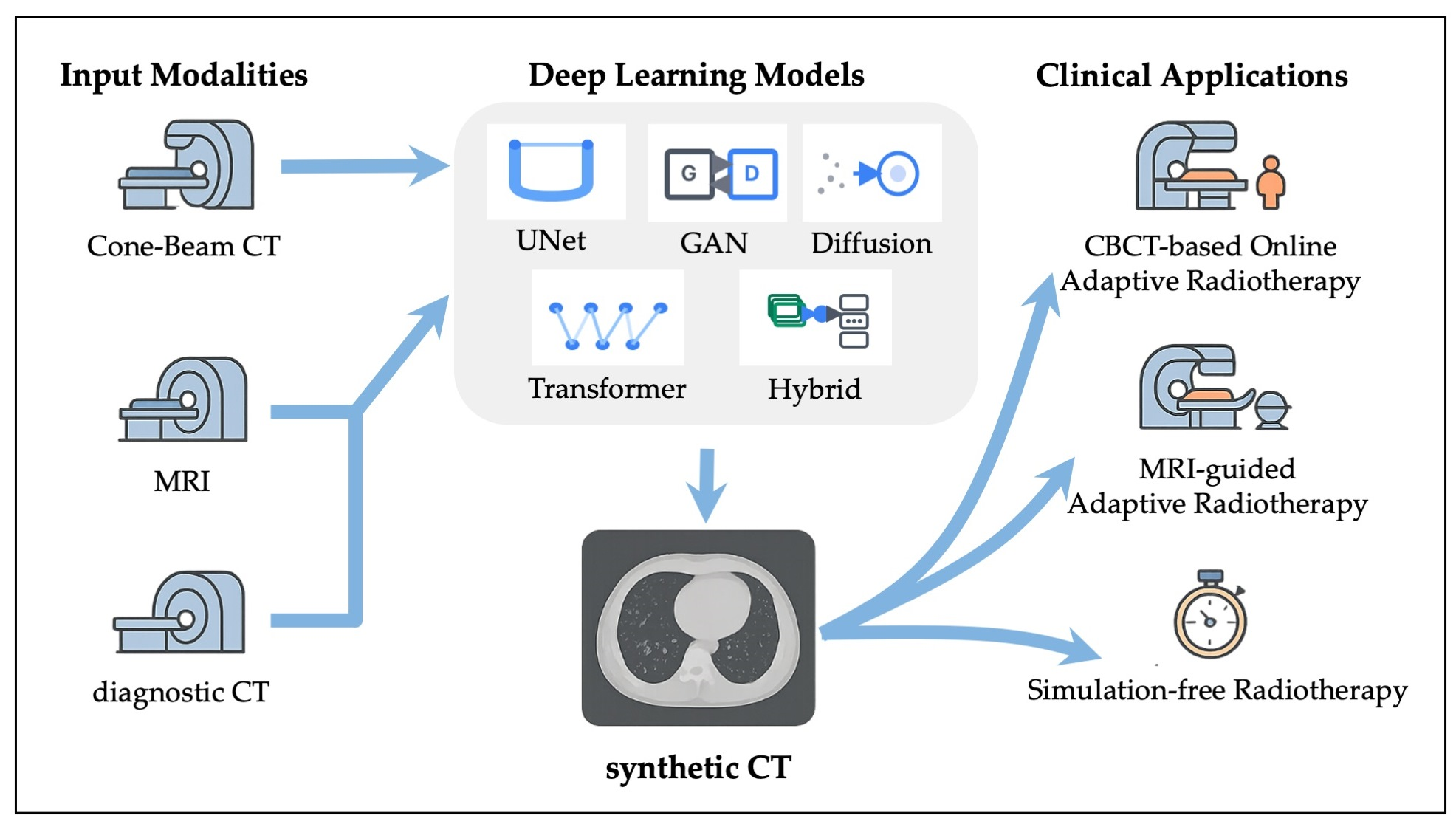
Deep Learning for CT Synthesis in Radiotherapy

 , ,
, , 
Abstract
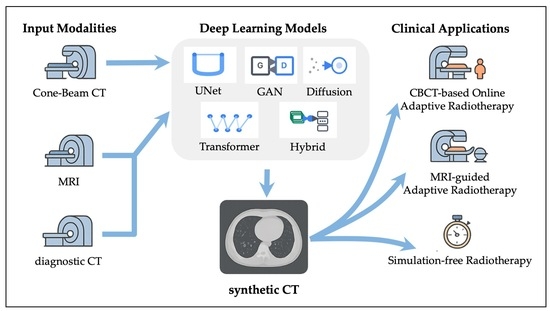
1. Introduction
2. Public Dataset and Data Preprocessing
2.1. Public Dataset
2.2. Preprocessing Techniques
- Spatial alignment: Rigid and deformable registration are frequently applied to align multimodal images into common anatomical space. Rigid registration is often sufficient for rigid structures such as brain, while deformable registration is preferred in regions with higher anatomical variability such as pelvis. These methods mitigate inter-modality misalignment and ensure anatomical correspondence across modalities [14,15];
- Intensity standardization: To account for scanner-related intensity variations, intensity normalization is commonly employed at the population or patient level, either through linear scaling or z-score standardization using dataset-specific means and standard deviations. Intensity clipping can remove extreme outliers and suppress noise artifacts, improving data homogeneity [27]. Some studies also apply histogram matching to align intensity distributions across scans [15];
- Shape uniformity: Resampling is used to standardize voxel spacing across datasets, while resizing ensures a consistent input shape compatible with the model architecture. These operations are particularly important when combining multi-center or multi-modal data with heterogeneous acquisition protocols [27,28];
- Others: For MRI-based synthesis tasks, techniques such as N4 or N3 bias field correction are applied to reduce low-frequency intensity inhomogeneities and improve soft tissue contrast. In addition, cropping and geometry correction may be applied to remove unnecessary background or correct for distortions, particularly in MRI [15].
3. Deep Learning Models
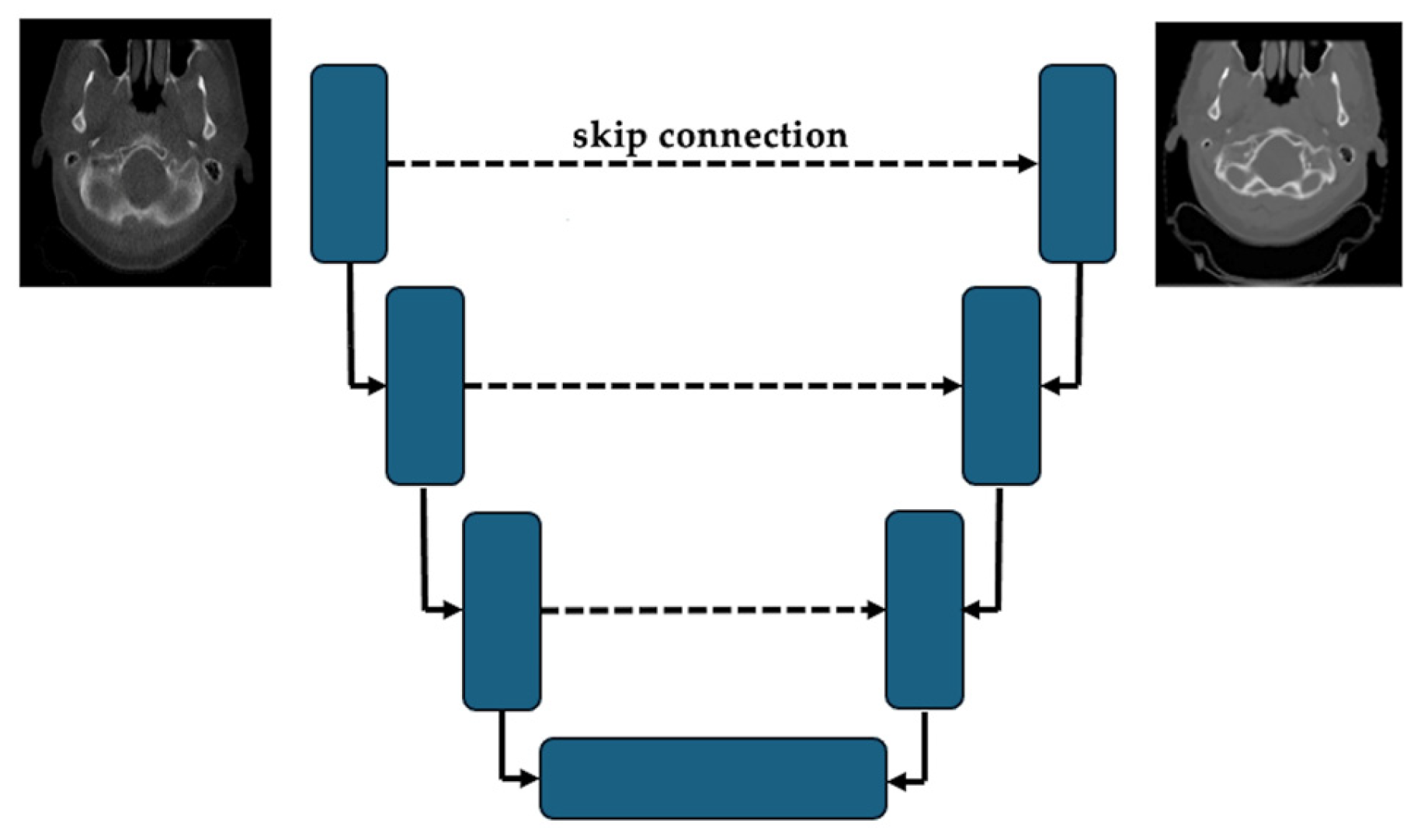
3.1. Convolutional Neural Networks (CNNs)
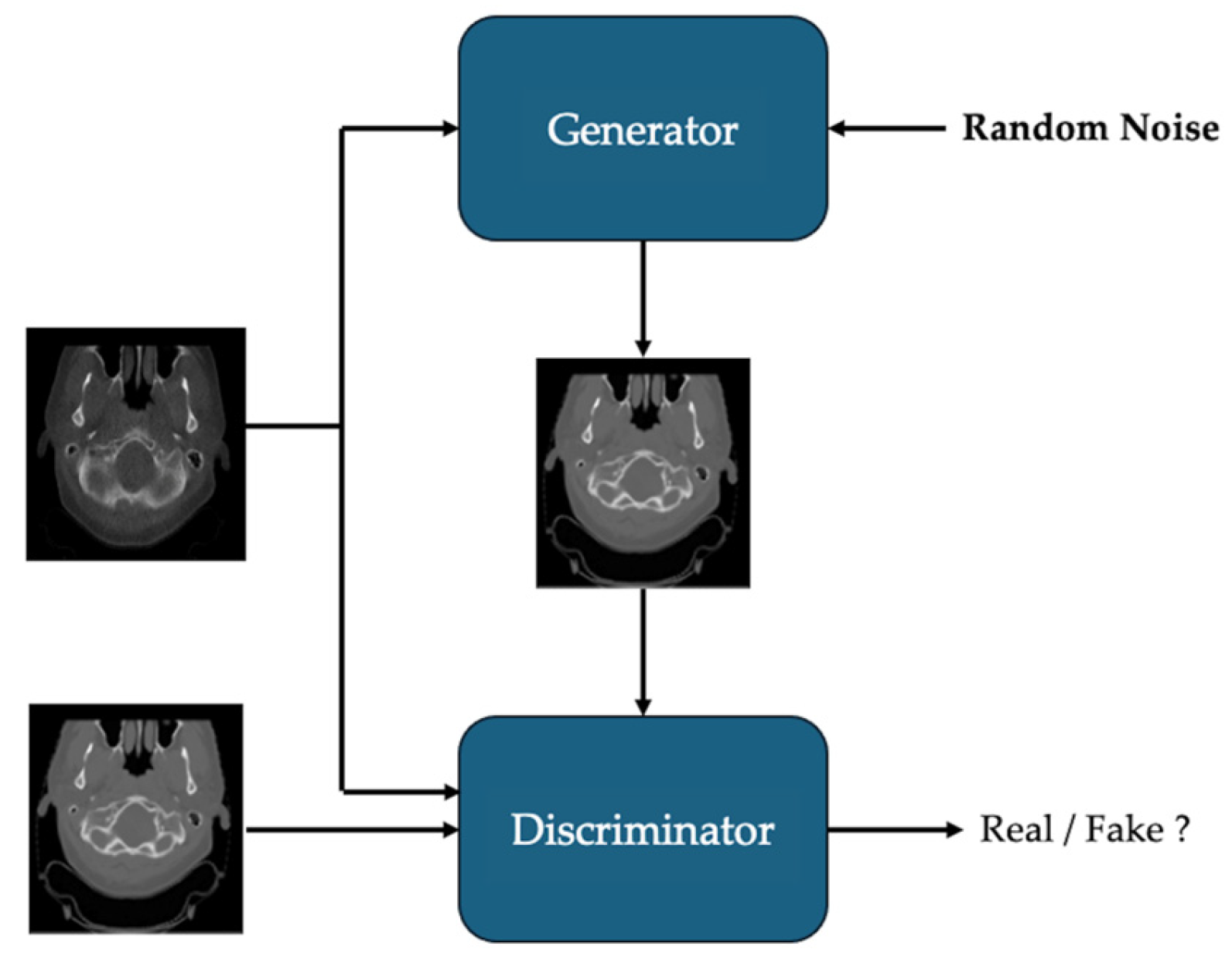
3.2. Generative Adversarial Networks (GANs)
3.3. Transformer-Based Network
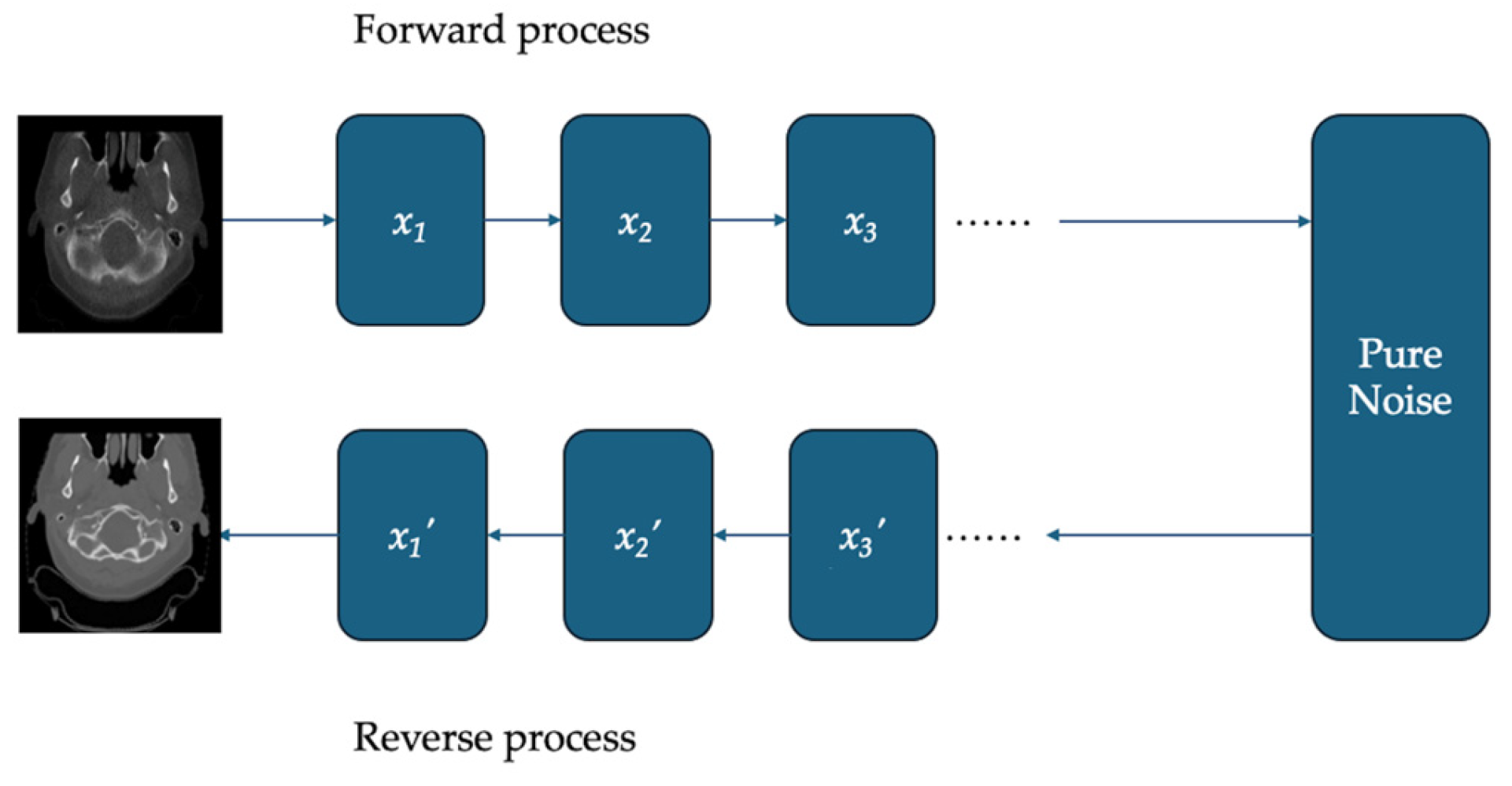
3.4. Diffusion Models
3.5. Hybrid Models
4. Training Strategies
4.1. Representation of Imaging Data
4.2. Supervision Paradigms
4.3. Learning Paradigms
5. Application in Radiotherapy
5.1. CBCT-Based Online Adaptive Radiotherapy
5.2. MRI-Guided Radiotherapy
5.3. Simulation-Free Workflow

| Application | Paper | Dataset Publicity | Model | Code Link |
|---|---|---|---|---|
| CBCT to CT | [83] | Pancreatic-CT-CBCT-SEG; SynthRAD2023 | 3D Unet | https://github.com/MaxTschuchnig/EnhancingSyntheticCTfromCBCTviaMultimodalFusionandEnd-To-EndRegistration (accessed on 20 October 2025) |
| [149] | private | CycleGAN, StarGAN | https://github.com/Paritt/sCT-via-StarGAN-and-CycleGAN (accessed on 20 October 2025) | |
| [77] | SynthRAD2023 | Mamba-enhanced UNet | https://github.com/HiLab-git/GLFC (accessed on 20 October 2025) | |
| [150] | private | Physics-based network | https://github.com/Pangyk/SinoSynth (accessed on 20 October 2025) | |
| [67] | private | Diffusion | https://github.com/junbopeng/conditional_DDPM * (accessed on 20 October 2025) | |
| [68] | private; Organs at Risk dataset [151,152] | Diffusion | https://github.com/Kent0n-Li/FGDM (accessed on 20 October 2025) | |
| MRI to CT | [91] | Gold Atlas; SynthRAD2023 | Neural ODE-based | https://github.com/kennysyp/PaBoT (accessed on 20 October 2025) |
| [40] | SynthRAD2023 | nnU-Net | https://github.com/Phyrise/nnUNet_translation (accessed on 20 October 2025) | |
| [149] | private | CycleGAN, StarGAN | https://github.com/Paritt/sCT-via-StarGAN-and-CycleGAN (accessed on 20 October 2025) | |
| [131] | private | Transformer | https://github.com/SMU-MedicalVision/MTT-Net (accessed on 20 October 2025) | |
| [75] | private | Diffusion | https://github.com/shaoyanpan/Synthetic-CT-generation-from-MRI-using-3D-transformer-based-denoising-diffusion-model * (accessed on 20 October 2025) | |
| [69] | Gold Atlas | Diffusion | https://github.com/QingLyu0828/diffusion_mri_to_ct_conversion (accessed on 20 October 2025) |
6. Evaluation Metrics
6.1. Intensity-Based Metrics
6.2. Geometric-Based Metrics
6.3. Dosimetry-Based Metrics
7. Discussion
7.1. Clinical Gap and Generalizability
7.2. Data Challenges
7.3. Suitability of Evaluation Metrics
7.4. Future Direction
- Open-Source Availability and Community Resources: Reproducibility remains a major challenge in deep learning-based sCT generation. Future research may prioritize the release of open-source codes and models, which would promote transparency and reproducibility. As highlighted in prior studies, the lack of code sharing hinders reproducibility in medical imaging AI and slows clinical translation compared to general computer vision, where open benchmarks and toolkits have driven rapid progress [165,166,167]. While some projects in Table 1 have released resources, efforts remain inconsistent. Community-maintained repositories and standardized pipelines are needed to support broader validation and adoption;
- Standardized Benchmarks: Large-scale and well-annotated benchmark datasets with consistent evaluation labels need to be established. Such datasets can be collected across multiple centers, imaging vendors, and treatment protocols to ensure fairness and generalizability [165];
- End-to-End Clinical Pipelines: As sCT synthesis is only one step in the radiotherapy workflow, it is critical to integrate it with downstream sections such as OAR delineation and treatment planning. A unified and end-to-end pipeline may improve reproducibility and facilitate smoother translation into clinical practice;
- Vendor Integration and Deployment: It is necessary to collaborate with treatment planning system vendors and hardware manufacturers to enable seamless integration of sCT synthesis into clinical workflows. Several vendor systems have already been proposed and evaluated, such as Syngo_BD (Siemens), MRI Planner (Spectronic), and MR-Box (Therapanacea) [168]. Models must be optimized for runtime efficiency, system compatibility, and real-time inference in clinical settings.
Author Contributions
Funding
Institutional Review Board Statement
Informed Consent Statement
Data Availability Statement
Conflicts of Interest
Abbreviations
| CT | Computed Tomography |
| sCT | Synthetic Computed Tomography |
| MRI | Magnetic Resonance Imaging |
| CBCT | Cone-Beam Computed Tomography |
| OAR | Organ at risk |
| IGART | Image-guided adaptive radiotherapy |
| DL | Deep learning |
| CNN | Convolutional neural network |
| GAN | Generative adversarial network |
| FBCT | Fan-beam Computed Tomography |
| cGAN | Conditional generative adversarial network |
| GLFC | Global-Local Feature and Contrast learning |
| HU | Hounsfield unit |
| DVH | Dose-volume histogram |
| pCT | Planning Computed Tomography |
| DVF | Deformation vector field |
| MAE | Mean absolute error |
| PSNR | Peak signal to noise ratio |
| SSIM | Structural similarity index |
References
- Spadea, M.F.; Maspero, M.; Zaffino, P.; Seco, J. Deep Learning Based Synthetic-CT Generation in Radiotherapy and PET: A Review. Med. Phys. 2021, 48, 6537–6566. [Google Scholar] [CrossRef]
- Chen, J.; Ye, Z.; Zhang, R.; Li, H.; Fang, B.; Zhang, L.; Wang, W. Medical Image Translation with Deep Learning: Advances, Datasets and Perspectives. Med. Image Anal. 2025, 103, 103605. [Google Scholar] [CrossRef]
- Sherwani, M.K.; Gopalakrishnan, S. A Systematic Literature Review: Deep Learning Techniques for Synthetic Medical Image Generation and Their Applications in Radiotherapy. Front. Radiol. 2024, 4, 1385742. [Google Scholar] [CrossRef] [PubMed]
- Whitebird, R.R.; Solberg, L.I.; Bergdall, A.R.; López-Solano, N.; Smith-Bindman, R. Barriers to CT Dose Optimization: The Challenge of Organizational Change. Acad. Radiol. 2021, 28, 387–392. [Google Scholar] [CrossRef] [PubMed]
- Fu, Y.; Zhang, H.; Morris, E.D.; Glide-Hurst, C.K.; Pai, S.; Traverso, A.; Wee, L.; Hadzic, I.; Lønne, P.-I.; Shen, C.; et al. Artificial Intelligence in Radiation Therapy. IEEE Trans. Radiat. Plasma Med. Sci. 2022, 6, 158–181. [Google Scholar] [CrossRef] [PubMed]
- Jaffray, D.A. Image-guided radiotherapy: From current concept to future perspectives. Nat. Rev. Clin. Oncol. 2012, 9, 688–699. [Google Scholar] [CrossRef]
- Mori, S.; Mori, Y. Machine Learning–Based Image Processing in Radiotherapy. In Deep Learning for Advanced X-Ray Detection and Imaging Applications; Iniewski, K., Cai, L., Eds.; Springer Nature: Cham, Switzerland, 2024; pp. 191–208. ISBN 978-3-031-75653-5. [Google Scholar]
- Lagendijk, J.J.W.; Raaymakers, B.W.; van Vulpen, M. The Magnetic Resonance Imaging–Linac System. Semin. Radiat. Oncol. 2014, 24, 207–209. [Google Scholar] [CrossRef]
- Bahloul, M.A.; Jabeen, S.; Benoumhani, S.; Alsaleh, H.A.; Belkhatir, Z.; Al-Wabil, A. Advancements in Synthetic CT Generation from MRI: A Review of Techniques, and Trends in Radiation Therapy Planning. J. Appl. Clin. Med. Phys. 2024, 25, e14499. [Google Scholar] [CrossRef]
- Chandarana, H.; Wang, H.; Tijssen, R.H.N.; Das, I.J. Emerging Role of MRI in Radiation Therapy. J. Magn. Reson. Imaging 2018, 48, 1468–1478. [Google Scholar] [CrossRef]
- Karlsson, M.; Karlsson, M.G.; Nyholm, T.; Amies, C.; Zackrisson, B. Dedicated Magnetic Resonance Imaging in the Radiotherapy Clinic. Int. J. Radiat. Oncol. Biol. Phys. 2009, 74, 644–651. [Google Scholar] [CrossRef]
- Kazemifar, S.; McGuire, S.; Timmerman, R.; Wardak, Z.; Nguyen, D.; Park, Y.; Jiang, S.; Owrangi, A. MRI-Only Brain Radiotherapy: Assessing the Dosimetric Accuracy of Synthetic CT Images Generated Using a Deep Learning Approach. Radiother. Oncol. 2019, 136, 56–63. [Google Scholar] [CrossRef]
- Owrangi, A.M.; Greer, P.B.; Glide-Hurst, C.K. MRI-Only Treatment Planning: Benefits and Challenges. Phys. Med. Biol. 2018, 63, 05TR01. [Google Scholar] [CrossRef]
- Altalib, A.; McGregor, S.; Li, C.; Perelli, A. Synthetic CT Image Generation from CBCT: A Systematic Review. IEEE Trans. Radiat. Plasma Med. Sci. 2025, 9, 691–707. [Google Scholar] [CrossRef]
- Acquah, I.K.; Issahaku, S.; Tagoe, S.N.A. A Systematic Review of Deep Learning Techniques for Generating Synthetic CT Images from MRI Data. Pol. J. Med. Phys. Eng. 2025, 31, 20–38. [Google Scholar] [CrossRef]
- Boulanger, M.; Nunes, J.-C.; Chourak, H.; Largent, A.; Tahri, S.; Acosta, O.; De Crevoisier, R.; Lafond, C.; Barateau, A. Deep learning methods to generate synthetic CT from MRI in radiotherapy: A literature review. Phys. Medica 2021, 89, 265–281. [Google Scholar] [CrossRef] [PubMed]
- Thummerer, A.; van der Bijl, E.; Galapon Jr, A.; Verhoeff, J.J.C.; Langendijk, J.A.; Both, S.; van den Berg, C.A.T.; Maspero, M. SynthRAD2023 Grand Challenge Dataset: Generating Synthetic CT for Radiotherapy. Med. Phys. 2023, 50, 4664–4674. [Google Scholar] [CrossRef] [PubMed]
- Klein, S.; Staring, M.; Murphy, K.; Viergever, M.A.; Pluim, J. Elastix: A Toolbox for Intensity-Based Medical Image Registration. IEEE Trans. Med. Imaging 2010, 29, 196–205. [Google Scholar] [CrossRef]
- Thummerer, A.; van der Bijl, E.; Galapon, A.J.; Kamp, F.; Savenije, M.; Muijs, C.; Aluwini, S.; Steenbakkers, R.J.H.M.; Beuel, S.; Intven, M.P.; et al. SynthRAD2025 Grand Challenge Dataset: Generating Synthetic CTs for Radiotherapy from Head to Abdomen. Med. Phys. 2025, 52, e17981. [Google Scholar] [CrossRef]
- Nyholm, T.; Svensson, S.; Andersson, S.; Jonsson, J.; Sohlin, M.; Gustafsson, C.; Kjellén, E.; Söderström, K.; Albertsson, P.; Blomqvist, L.; et al. MR and CT Data with Multiobserver Delineations of Organs in the Pelvic Area—Part of the Gold Atlas Project. Med. Phys. 2018, 45, 1295–1300. [Google Scholar] [CrossRef]
- Warfield, S.K.; Zou, K.H.; Wells, W.M. Simultaneous Truth and Performance Level Estimation (STAPLE): An Algorithm for the Validation of Image Segmentation. IEEE Trans. Med. Imaging 2004, 23, 903–921. [Google Scholar] [CrossRef]
- Yorke, A.A.; McDonald, G.C.; Solis, D.; Guerrero, T. Pelvic reference data (Version 1) [Data set]. Cancer Imaging Arch. 2019. [Google Scholar] [CrossRef]
- Hong, J.; Reyngold, M.; Crane, C.; Cuaron, J.; Hajj, C.; Mann, J.; Zinovoy, M.; Yorke, E.; LoCastro, E.; Apte, A.P.; et al. Breath-hold CT and cone-beam CT images with expert manual organ-at-risk segmentations from radiation treatments of locally advanced pancreatic cancer [Data set]. Cancer Imaging Arch. 2021. [Google Scholar] [CrossRef]
- Hong, J.; Reyngold, M.; Crane, C.; Cuaron, J.; Hajj, C.; Mann, J.; Zinovoy, M.; Yorke, E.; LoCastro, E.; Apte, A.P.; et al. CT and Cone-Beam CT of Ablative Radiation Therapy for Pancreatic Cancer with Expert Organ-at-Risk Contours. Sci. Data 2022, 9, 637. [Google Scholar] [CrossRef] [PubMed]
- Hugo, G.D.; Weiss, E.; Sleeman, W.C.; Balik, S.; Keall, P.J.; Lu, J.; Williamson, J.F. Data from 4D lung imaging of NSCLC patients (Version 2) [Data set]. Cancer Imaging Arch. 2016. [Google Scholar] [CrossRef]
- Balik, S.; Weiss, E.; Jan, N.; Roman, N.; Sleeman, W.C.; Fatyga, M.; Christensen, G.E.; Zhang, C.; Murphy, M.J.; Lu, J.; et al. Evaluation of Four-Dimensional Computed Tomography to Four-Dimensional Cone-Beam Computed Tomography Deformable Image Registration for Lung Cancer Adaptive Radiation Therapy. Int. J. Radiat. Oncol. Biol. Phys. 2013, 86, 372–379. [Google Scholar] [CrossRef]
- Huijben, E.M.C. Generating Synthetic Computed Tomography for Radiotherapy: SynthRAD2023 Challenge Report. Med. Image Anal. 2024, 97, 103276. [Google Scholar] [CrossRef]
- Villegas, F.; Dal Bello, R.; Alvarez-Andres, E.; Dhont, J.; Janssen, T.; Milan, L.; Robert, C.; Salagean, G.-A.-M.; Tejedor, N.; Trnková, P.; et al. Challenges and Opportunities in the Development and Clinical Implementation of Artificial Intelligence Based Synthetic Computed Tomography for Magnetic Resonance Only Radiotherapy. Radiother. Oncol. 2024, 198, 110387. [Google Scholar] [CrossRef]
- Han, S.; Hémon, C.; Texier, B.; Kortli, Y.; Queffelec, A.; De Crevoisier, R.; Dowling, J.; Greer, P.; Bessières, I.; Barateau, A.; et al. Balancing Data Consistency and Diversity: Preprocessing and Online Data Augmentation for Multi-Center Deep Learning-Based MR-to-CT Synthesis. Pattern Recognit. Lett. 2025, 189, 56–63. [Google Scholar] [CrossRef]
- Han, X. MR-Based Synthetic CT Generation Using a Deep Convolutional Neural Network Method. Med. Phys. 2017, 44, 1408–1419. [Google Scholar] [CrossRef]
- Chen, S.; Qin, A.; Zhou, D.; Yan, D. Technical Note: U-Net-Generated Synthetic CT Images for Magnetic Resonance Imaging-Only Prostate Intensity-Modulated Radiation Therapy Treatment Planning. Med. Phys. 2018, 45, 5659–5665. [Google Scholar] [CrossRef]
- Li, Y.; Zhu, J.; Liu, Z.; Teng, J.; Xie, Q.; Zhang, L.; Liu, X.; Shi, J.; Chen, L. A Preliminary Study of Using a Deep Convolution Neural Network to Generate Synthesized CT Images Based on CBCT for Adaptive Radiotherapy of Nasopharyngeal Carcinoma. Phys. Med. Biol. 2019, 64, 145010. [Google Scholar] [CrossRef] [PubMed]
- Dinkla, A.M.; Florkow, M.C.; Maspero, M.; Savenije, M.H.F.; Zijlstra, F.; Doornaert, P.A.H.; van Stralen, M.; Philippens, M.E.P.; van den Berg, C.A.T.; Seevinck, P.R. Dosimetric Evaluation of Synthetic CT for Head and Neck Radiotherapy Generated by a Patch-Based Three-Dimensional Convolutional Neural Network. Med. Phys. 2019, 46, 4095–4104. [Google Scholar] [CrossRef] [PubMed]
- Chen, L.; Liang, X.; Shen, C.; Jiang, S.; Wang, J. Synthetic CT Generation from CBCT Images via Deep Learning. Med. Phys. 2020, 47, 1115–1125. [Google Scholar] [CrossRef] [PubMed]
- Thummerer, A.; Seller Oria, C.; Zaffino, P.; Meijers, A.; Guterres Marmitt, G.; Wijsman, R.; Seco, J.; Langendijk, J.A.; Knopf, A.; Spadea, M.F.; et al. Clinical Suitability of Deep Learning Based Synthetic CTs for Adaptive Proton Therapy of Lung Cancer. Med. Phys. 2021, 48, 7673–7684. [Google Scholar] [CrossRef]
- Kondo, S.; Kasai, S.; Hirasawa, K. Synthesizing 3D computed tomography from MRI or CBCT using 2.5D deep neural networks. arXiv 2023, arXiv:2306.13553. [Google Scholar] [CrossRef]
- Ronneberger, O.; Fischer, P.; Brox, T. U-Net: Convolutional networks for biomedical image segmentation. In Proceedings of the Medical Image Computing and Computer-Assisted Intervention (MICCAI); Springer: Cham, Switzerland, 2015; pp. 234–241. [Google Scholar] [CrossRef]
- Landry, G.; Kurz, C.; Thummerer, A. Perspectives for Using Artificial Intelligence Techniques in Radiation Therapy. Eur. Phys. J. Plus 2024, 139, 883. [Google Scholar] [CrossRef]
- Isensee, F.; Jaeger, P.F.; Kohl, S.A.A.; Petersen, J.; Maier-Hein, K.H. nnU-Net: A Self-Configuring Method for Deep Learning-Based Biomedical Image Segmentation. Nat. Methods 2021, 18, 203–211. [Google Scholar] [CrossRef]
- Longuefosse, A.; Bot, E.L.; De Senneville, B.D.; Giraud, R.; Mansencal, B.; Coupé, P.; Desbarats, P.; Baldacci, F. Adapted nnU-Net: A robust baseline for cross-modality synthesis and medical image inpainting. In Simulation and Synthesis in Medical Imaging; Fernandez, V., Wolterink, J.M., Wiesner, D., Remedios, S., Zuo, L., Casamitjana, A., Eds.; Springer: Cham, Switzerland, 2025; pp. 24–33. [Google Scholar] [CrossRef]
- Liu, X.; Yang, R.; Xiong, T.; Yang, X.; Li, W.; Song, L.; Zhu, J.; Wang, M.; Cai, J.; Geng, L. CBCT-to-CT Synthesis for Cervical Cancer Adaptive Radiotherapy via U-Net-Based Model Hierarchically Trained with Hybrid Dataset. Cancers 2023, 15, 5479. [Google Scholar] [CrossRef]
- Yoganathan, S.A.; Aouadi, S.; Ahmed, S.; Paloor, S.; Torfeh, T.; Al-Hammadi, N.; Hammoud, R. Generating Synthetic Images from Cone Beam Computed Tomography Using Self-Attention Residual UNet for Head and Neck Radiotherapy. Phys. Imaging Radiat. Oncol. 2023, 28, 100512. [Google Scholar] [CrossRef]
- Wolterink, J.M.; Dinkla, A.M.; Savenije, M.H.F.; Seevinck, P.R.; van den Berg, C.A.T.; Isgum, I. Deep MR to CT synthesis using unpaired data. arXiv 2017, arXiv:1708.01155. [Google Scholar] [CrossRef]
- Liang, X.; Chen, L.; Nguyen, D.; Zhou, Z.; Gu, X.; Yang, M.; Wang, J.; Jiang, S. Generating Synthesized Computed Tomography (CT) from Cone-Beam Computed Tomography (CBCT) Using CycleGAN for Adaptive Radiation Therapy. Phys. Med. Biol. 2019, 64, 125002. [Google Scholar] [CrossRef] [PubMed]
- Cusumano, D.; Lenkowicz, J.; Votta, C.; Boldrini, L.; Placidi, L.; Catucci, F.; Dinapoli, N.; Antonelli, M.V.; Romano, A.; De Luca, V.; et al. A Deep Learning Approach to Generate Synthetic CT in Low Field MR-Guided Adaptive Radiotherapy for Abdominal and Pelvic Cases. Radiother. Oncol. 2020, 153, 205–212. [Google Scholar] [CrossRef] [PubMed]
- Liu, Y.; Lei, Y.; Wang, T.; Fu, Y.; Tang, X.; Curran, W.J.; Liu, T.; Patel, P.; Yang, X. CBCT-Based Synthetic CT Generation Using Deep-Attention cycleGAN for Pancreatic Adaptive Radiotherapy. Med. Phys. 2020, 47, 2472–2483. [Google Scholar] [CrossRef] [PubMed]
- Zhang, Y.; Yue, N.; Su, M.-Y.; Liu, B.; Ding, Y.; Zhou, Y.; Wang, H.; Kuang, Y.; Nie, K. Improving CBCT Quality to CT Level Using Deep Learning with Generative Adversarial Network. Med. Phys. 2021, 48, 2816–2826. [Google Scholar] [CrossRef]
- Goodfellow, I.; Pouget-Abadie, J.; Mirza, M.; Xu, B.; Warde-Farley, D.; Ozair, S.; Courville, A.; Bengio, Y. Generative adversarial networks. Commun. ACM 2020, 63, 139–144. [Google Scholar] [CrossRef]
- Rusanov, B.; Hassan, G.M.; Reynolds, M.; Sabet, M.; Kendrick, J.; Rowshanfarzad, P.; Ebert, M. Deep Learning Methods for Enhancing Cone-Beam CT Image Quality toward Adaptive Radiation Therapy: A Systematic Review. Med. Phys. 2022, 49, 6019–6054. [Google Scholar] [CrossRef]
- Zhang, Y.; Ding, S.; Gong, X.; Yuan, X.; Lin, J.; Chen, Q.; Li, J. Generating Synthesized Computed Tomography from CBCT Using a Conditional Generative Adversarial Network for Head and Neck Cancer Patients. Technol. Cancer Res. Treat. 2022, 21, 15330338221085358. [Google Scholar] [CrossRef]
- Lenkowicz, J.; Votta, C.; Nardini, M.; Quaranta, F.; Catucci, F.; Boldrini, L.; Vagni, M.; Menna, S.; Placidi, L.; Romano, A.; et al. A Deep Learning Approach to Generate Synthetic CT in Low Field MR-Guided Radiotherapy for Lung Cases. Radiother. Oncol. 2022, 176, 31–38. [Google Scholar] [CrossRef]
- Pang, B.; Si, H.; Liu, M.; Fu, W.; Zeng, Y.; Liu, H.; Cao, T.; Chang, Y.; Quan, H.; Yang, Z. Comparison and Evaluation of Different Deep Learning Models of Synthetic CT Generation from CBCT for Nasopharynx Cancer Adaptive Proton Therapy. Med. Phys. 2023, 50, 6920–6930. [Google Scholar] [CrossRef]
- Zhu, J.Y.; Park, T.; Isola, P.; Efros, A.A. Unpaired image-to-image translation using cycle-consistent adversarial networks. In Proceedings of the IEEE International Conference on Computer Vision (ICCV), Venice, Italy, 22–29 October 2017; pp. 2242–2251. [Google Scholar] [CrossRef]
- Gao, L.; Xie, K.; Wu, X.; Lu, Z.; Li, C.; Sun, J.; Lin, T.; Sui, J.; Ni, X. Generating Synthetic CT from Low-Dose Cone-Beam CT by Using Generative Adversarial Networks for Adaptive Radiotherapy. Radiat. Oncol. 2021, 16, 202. [Google Scholar] [CrossRef]
- Brou Boni, K.N.D.; Klein, J.; Vanquin, L.; Wagner, A.; Lacornerie, T.; Pasquier, D.; Reynaert, N. MR to CT Synthesis with Multicenter Data in the Pelvic Area Using a Conditional Generative Adversarial Network. Phys. Med. Biol. 2020, 65, 075002. [Google Scholar] [CrossRef]
- Fetty, L.; Löfstedt, T.; Heilemann, G.; Furtado, H.; Nesvacil, N.; Nyholm, T.; Georg, D.; Kuess, P. Investigating Conditional GAN Performance with Different Generator Architectures, an Ensemble Model, and Different MR Scanners for MR-sCT Conversion. Phys. Med. Biol. 2020, 65, 105004. [Google Scholar] [CrossRef]
- Qiu, R.L.J.; Lei, Y.; Shelton, J.; Higgins, K.; Bradley, J.D.; Curran, W.J.; Liu, T.; Kesarwala, A.H.; Yang, X. Deep Learning-Based Thoracic CBCT Correction with Histogram Matching. Biomed. Phys. Eng. Express 2021, 7, 065040. [Google Scholar] [CrossRef]
- Bdair, T.; Saadeh, H.; Qaqish, B.; Sulaq, A.; Rawashdeh, M. Medical Image-to-Image Translation with Spatial Self-Attention for Radiotherapy in Federated Learning. In Proceedings of the 2024 Fifth International Conference on Intelligent Data Science Technologies and Applications (IDSTA), Dubrovnik, Croatia, 24–27 September 2024; pp. 103–110. [Google Scholar] [CrossRef]
- Cao, N.; Wang, Z.; Ding, J.; Zhang, H.; Zhang, S.; Gao, L.; Sun, J.; Xie, K.; Ni, X. A 4D-CBCT Correction Network Based on Contrastive Learning for Dose Calculation in Lung Cancer. Radiat. Oncol. 2024, 19, 20. [Google Scholar] [CrossRef]
- Vaswani, A.; Shazeer, N.; Parmar, N.; Uszkoreit, J.; Jones, L.; Gomez, A.N.; Kaiser, L.; Polosukhin, I. Attention is all you need. In Proceedings of the Advances in Neural Information Processing Systems (NeurIPS), Long Beach, CA, USA, 4–9 December 2017; pp. 5998–6008. [Google Scholar]
- Dosovitskiy, A.; Beyer, L.; Kolesnikov, A.; Weissenborn, D.; Zhai, X.; Unterthiner, T.; Dehghani, M.; Minderer, M.; Heigold, G.; Gelly, S.; et al. An image is worth 16 × 16 words: Transformers for image recognition at scale. arXiv 2021, arXiv:2010.11929. [Google Scholar]
- Chen, X.; Liu, Y.; Yang, B.; Zhu, J.; Yuan, S.; Xie, X.; Liu, Y.; Dai, J.; Men, K. A More Effective CT Synthesizer Using Transformers for Cone-Beam CT-Guided Adaptive Radiotherapy. Front. Oncol. 2022, 12, 988800. [Google Scholar] [CrossRef] [PubMed]
- Yang, B.; Liu, Y.; Zhu, J.; Dai, J.; Men, K. Deep Learning Framework to Improve the Quality of Cone-Beam Computed Tomography for Radiotherapy Scenarios. Med. Phys. 2023, 50, 7641–7653. [Google Scholar] [CrossRef] [PubMed]
- Saint-Esteven, A.L.G. Synthetic Computed Tomography for Low-Field Magnetic Resonance-Only Radiotherapy in Head-and-Neck Cancer Using Residual Vision Transformers. Phys. Imaging Radiat. Oncol. 2023, 27, 100471. [Google Scholar] [CrossRef] [PubMed]
- Zhao, R.; Qi, J.; Li, R.; Yang, T.; Li, J.; Zhang, J.; Zhang, Z. HFGS: High-Frequency Information Guided Net for Multi-Regions Pseudo-CT Synthesis. In Proceedings of the 2024 IEEE International Conference on Bioinformatics and Biomedicine (BIBM), Lisboa, Portugal, 3–6 December 2024; pp. 2957–2964. [Google Scholar] [CrossRef]
- Chen, X.; Qiu, R.L.J.; Peng, J.; Shelton, J.W.; Chang, C.-W.; Yang, X.; Kesarwala, A.H. CBCT-Based Synthetic CT Image Generation Using a Diffusion Model for CBCT-Guided Lung Radiotherapy. Med. Phys. 2024, 51, 8168–8178. [Google Scholar] [CrossRef]
- Peng, J.; Qiu, R.L.J.; Wynne, J.F.; Chang, C.-W.; Pan, S.; Wang, T.; Roper, J.; Liu, T.; Patel, P.R.; Yu, D.S.; et al. CBCT-Based Synthetic CT Image Generation Using Conditional Denoising Diffusion Probabilistic Model. Med. Phys. 2024, 51, 1847–1859. [Google Scholar] [CrossRef]
- Li, Y.; Shao, H.-C.; Liang, X.; Chen, L.; Li, R.; Jiang, S.; Wang, J.; Zhang, Y. Zero-Shot Medical Image Translation via Frequency-Guided Diffusion Models. IEEE Trans. Med. Imaging 2024, 43, 980–993. [Google Scholar] [CrossRef] [PubMed]
- Lyu, Q.; Wang, G. Conversion between CT and MRI images using diffusion and score-matching models. arXiv 2022, arXiv:2212.05400. [Google Scholar] [CrossRef]
- Fu, L.; Li, X.; Cai, X.; Miao, D.; Yao, Y.; Shen, Y. Energy-Guided Diffusion Model for CBCT-to-CT Synthesis. Comput. Med. Imaging Graph. 2024, 113, 102344. [Google Scholar] [CrossRef] [PubMed]
- Li, M.; Li, X.; Safai, S.; Lomax, A.J.; Zhang, Y. Diffusion Schrödinger Bridge Models for High-Quality MR-to-CT Synthesis for Proton Treatment Planning. Med. Phys. 2025, 52, e17898. [Google Scholar] [CrossRef]
- Gong, C.; Jian, J.; Huang, Y.; Luo, M.; Ding, S.; Yuan, X.; Wang, X.; Zhang, Y. Boundary Information-Guided Adversarial Diffusion Model for Efficient Unsupervised Synthetic CT Generation. Med. Phys. 2025, 52, 4675–4693. [Google Scholar] [CrossRef]
- Yuan, M.; Xie, Y.; Zhao, R.; Lv, N.; Zhang, Z.; Zhu, L.; Wu, X. Generating Synthesized Computed Tomography from CBCT/LDCT Using a Novel Generative-Transformer Adversarial-CNN. Biomed. Signal Process. Control 2024, 96, 106660. [Google Scholar] [CrossRef]
- Hu, C.; Cao, N.; Li, X.; He, Y.; Zhou, H. CBCT-to-CT Synthesis Using a Hybrid U-Net Diffusion Model Based on Transformers and Information Bottleneck Theory. Sci. Rep. 2025, 15, 10816. [Google Scholar] [CrossRef]
- Pan, S.; Abouei, E.; Wynne, J.; Chang, C.-W.; Wang, T.; Qiu, R.L.J.; Li, Y.; Peng, J.; Roper, J.; Patel, P.; et al. Synthetic CT Generation from MRI Using 3D Transformer-Based Denoising Diffusion Model. Med. Phys. 2024, 51, 2538–2548. [Google Scholar] [CrossRef]
- Viar-Hernandez, D.; Manuel Molina-Maza, J.; Pan, S.; Salari, E.; Chang, C.-W.; Eidex, Z.; Zhou, J.; Antonio Vera-Sanchez, J.; Rodriguez-Vila, B.; Malpica, N.; et al. Exploring Dual Energy CT Synthesis in CBCT-Based Adaptive Radiotherapy and Proton Therapy: Application of Denoising Diffusion Probabilistic Models. Phys. Med. Biol. 2024, 69, 215011. [Google Scholar] [CrossRef]
- Zhou, X.; Wu, J.; Zhao, H.; Chen, L.; Zhang, S.; Wang, G. GLFC: Unified global-local feature and contrast learning with Mamba-enhanced UNet for synthetic CT generation from CBCT. arXiv 2025, arXiv:2503.04567. [Google Scholar]
- Hu, Y.; Zhou, H.; Cao, N.; Li, C.; Hu, C. Synthetic CT Generation Based on CBCT Using Improved Vision Transformer CycleGAN. Sci. Rep. 2024, 14, 11455. [Google Scholar] [CrossRef]
- Rusanov, B.; Hassan, G.M.; Reynolds, M.; Sabet, M.; Rowshanfarzad, P.; Bucknell, N.; Gill, S.; Dass, J.; Ebert, M. Transformer CycleGAN with Uncertainty Estimation for CBCT Based Synthetic CT in Adaptive Radiotherapy. Phys. Med. Biol. 2024, 69, 035014. [Google Scholar] [CrossRef] [PubMed]
- Fu, J.; Yang, Y.; Singhrao, K.; Ruan, D.; Chu, F.-I.; Low, D.A.; Lewis, J.H. Deep Learning Approaches Using 2D and 3D Convolutional Neural Networks for Generating Male Pelvic Synthetic Computed Tomography from Magnetic Resonance Imaging. Med. Phys. 2019, 46, 3788–3798. [Google Scholar] [CrossRef] [PubMed]
- Liu, Y.; Chen, A.; Shi, H.; Huang, S.; Zheng, W.; Liu, Z.; Zhang, Q.; Yang, X. CT Synthesis from MRI Using Multi-Cycle GAN for Head-and-Neck Radiation Therapy. Comput. Med. Imaging Graph. 2021, 91, 101953. [Google Scholar] [CrossRef]
- Zimmermann, L.; Knäusl, B.; Stock, M.; Lütgendorf-Caucig, C.; Georg, D.; Kuess, P. An MRI Sequence Independent Convolutional Neural Network for Synthetic Head CT Generation in Proton Therapy. Z. Für Med. Phys. 2022, 32, 218–227. [Google Scholar] [CrossRef] [PubMed]
- Tschuchnig, M.; Lamminger, L.; Steininger, P.; Gadermayr, M. Enhancing synthetic CT from CBCT via multimodal fusion and end-to-end registration. arXiv 2025, arXiv:2504.12345. [Google Scholar]
- Neppl, S.; Landry, G.; Kurz, C.; Hansen, D.C.; Hoyle, B.; Stöcklein, S.; Seidensticker, M.; Weller, J.; Belka, C.; Parodi, K.; et al. Evaluation of Proton and Photon Dose Distributions Recalculated on 2D and 3D Unet-Generated pseudoCTs from T1-Weighted MR Head Scans. Acta Oncol. 2019, 58, 1429–1434. [Google Scholar] [CrossRef]
- Sun, B.; Jia, S.; Jiang, X.; Jia, F. Double U-Net CycleGAN for 3D MR to CT Image Synthesis. Int. J. CARS 2023, 18, 149–156. [Google Scholar] [CrossRef]
- Spadea, M.F.; Pileggi, G.; Zaffino, P.; Salome, P.; Catana, C.; Izquierdo-Garcia, D.; Amato, F.; Seco, J. Deep Convolution Neural Network (DCNN) Multiplane Approach to Synthetic CT Generation from MR images—Application in Brain Proton Therapy. Int. J. Radiat. Oncol. Biol. Phys. 2019, 105, 495–503. [Google Scholar] [CrossRef]
- Maspero, M.; Bentvelzen, L.G.; Savenije, M.H.F.; Guerreiro, F.; Seravalli, E.; Janssens, G.O.; van den Berg, C.A.T.; Philippens, M.E.P. Deep Learning-Based Synthetic CT Generation for Paediatric Brain MR-Only Photon and Proton Radiotherapy. Radiother. Oncol. 2020, 153, 197–204. [Google Scholar] [CrossRef]
- Dayarathna, S.; Islam, K.T.; Uribe, S.; Yang, G.; Hayat, M.; Chen, Z. Deep Learning Based Synthesis of MRI, CT and PET: Review and Analysis. Med. Image Anal. 2024, 92, 103046. [Google Scholar] [CrossRef]
- Thummerer, A.; Zaffino, P.; Meijers, A.; Marmitt, G.G.; Seco, J.; Steenbakkers, R.J.H.M.; Langendijk, J.A.; Both, S.; Spadea, M.F.; Knopf, A.C. Comparison of CBCT Based Synthetic CT Methods Suitable for Proton Dose Calculations in Adaptive Proton Therapy. Phys. Med. Biol. 2020, 65, 095002. [Google Scholar] [CrossRef]
- Brou Boni, K.N.D.; Klein, J.; Gulyban, A.; Reynaert, N.; Pasquier, D. Improving Generalization in MR-to-CT Synthesis in Radiotherapy by Using an Augmented Cycle Generative Adversarial Network with Unpaired Data. Med. Phys. 2021, 48, 3003–3010. [Google Scholar] [CrossRef] [PubMed]
- Zhou, T.; Luo, J.; Sun, Y.; Tan, Y.; Yao, S.; Haouchine, N.; Raymond, S. Path and bone-contour regularized unpaired MRI-to-CT translation. arXiv 2025, arXiv:2502.08765. [Google Scholar] [CrossRef] [PubMed]
- Ryu, S.; Kim, J.H.; Choi, Y.J.; Lee, J.S. Generating Synthetic CT Images from Unpaired Head and Neck CBCT Images and Validating the Importance of Detailed Nasal Cavity Acquisition through Simulations. Comput. Biol. Med. 2025, 185, 109568. [Google Scholar] [CrossRef] [PubMed]
- Yang, H.; Sun, J.; Carass, A.; Zhao, C.; Lee, J.; Prince, J.L.; Xu, Z. Unsupervised MR-to-CT Synthesis Using Structure-Constrained CycleGAN. IEEE Trans. Med. Imaging 2020, 39, 4249–4261. [Google Scholar] [CrossRef]
- Peng, J.; Gao, Y.; Chang, C.-W.; Qiu, R.; Wang, T.; Kesarwala, A.; Yang, K.; Scott, J.; Yu, D.; Yang, X. Unsupervised Bayesian Generation of Synthetic CT from CBCT Using Patient-Specific Score-Based Prior. Med. Phys. 2024, 52, 2238–2246. [Google Scholar] [CrossRef]
- Zhang, Y.; Li, C.; Dai, Z.; Zhong, L.; Wang, X.; Yang, W. Breath-Hold CBCT-Guided CBCT-to-CT Synthesis via Multimodal Unsupervised Representation Disentanglement Learning. IEEE Trans. Med. Imaging 2023, 42, 2313–2324. [Google Scholar] [CrossRef]
- Zhu, S.; Wu, Z.; Zhang, Z.; Shu, H.; Xie, S.; Coatrieux, J.-L.; Chen, Y. Planning CT Guided Limited-Angle CBCT to CT Synthesis via Content-Style Decoupled Learning. IEEE Trans. Instrum. Meas. 2025, 74, 4502514. [Google Scholar] [CrossRef]
- Szmul, A.; Jayaprakash, K.T.; Jena, R.; Hoole, A.; Veiga, C.; Hu, Y.; McClelland, J.R. MAGIC: Multitask adversarial generator of images and contours from CBCT for adaptive radiotherapy. arXiv 2024, arXiv:2405.09113. [Google Scholar]
- Zeng, H.; E, X.; Lv, M.; Zeng, S.; Feng, Y.; Shen, W.; Guan, W.; Zhang, Y.; Zhao, R.; Yu, J. Deep Learning-Based Synthetic CT for Dosimetric Monitoring of Combined Conventional Radiotherapy and Lattice Boost in Large Lung Tumors. Radiat. Oncol. 2025, 20, 12. [Google Scholar] [CrossRef]
- Kaushik, S.S.; Bylund, M.; Cozzini, C.; Shanbhag, D.; Petit, S.F.; Wyatt, J.J.; Menzel, M.I.; Pirkl, C.; Mehta, B.; Chauhan, V.; et al. Region of Interest Focused MRI to Synthetic CT Translation Using Regression and Segmentation Multi-Task Network. Phys. Med. Biol. 2023, 68, 195003. [Google Scholar] [CrossRef] [PubMed]
- Longuefosse, A.; Denis de Senneville, B.; Dournes, G.; Benlala, I.; Baldacci, F.; Desbarats, P. Anatomical Feature-Prioritized Loss for Enhanced MR to CT Translation. Phys. Med. Biol. 2025, 70, 145012. [Google Scholar] [CrossRef] [PubMed]
- Choi, Y.; Lee, S. CycleGAN with Multi-Scale Block and Attention Gate for Synthesizing CT Image in Adaptive Radiotherapy. In Proceedings of the Medical Imaging 2025: Physics of Medical Imaging; Sabol, J.M., Abbaszadeh, S., Li, K., Eds.; SPIE: San Diego, CA, USA, 2025; p. 71. [Google Scholar] [CrossRef]
- Yin, S.; Tan, H.; Chong, L.M.; Liu, H.; Liu, H.; Lee, K.H.; Tuan, J.K.L.; Ho, D.; Jin, Y. HC3L-Diff: Hybrid conditional latent diffusion with high frequency enhancement for CBCT-to-CT synthesis. arXiv 2024, arXiv:2407.01289. [Google Scholar]
- Zhang, Y.; Li, L.; Wang, J.; Yang, X.; Zhou, H.; He, J.; Xie, Y.; Jiang, Y.; Sun, W.; Zhang, X.; et al. Texture-Preserving Diffusion Model for CBCT-to-CT Synthesis. Med. Image Anal. 2025, 99, 103362. [Google Scholar] [CrossRef]
- Sun, H.; Sun, X.; Li, J.; Zhu, J.; Yang, Z.; Meng, F.; Liu, Y.; Gong, J.; Wang, Z.; Yin, Y.; et al. Pseudo-CT Synthesis in Adaptive Radiotherapy Based on a Stacked Coarse-to-Fine Model: Combing Diffusion Process and Spatial-Frequency Convolutions. Med. Phys. 2024, 51, 8979–8998. [Google Scholar] [CrossRef]
- Luo, F.; Ma, C.; Xu, K. CBCT-to-CT synthesis with a hybrid of CycleGAN and latent diffusion. Neuroradiology 2025, 67, 1123–1132. [Google Scholar] [CrossRef]
- Emami, H.; Dong, M.; Nejad-Davarani, S.; Glide-Hurst, C. SA-GAN: Structure-aware GAN for organ-preserving synthetic CT generation. arXiv 2021, arXiv:2102.05684. [Google Scholar]
- Poch, D.V.; Estievenart, Y.; Zhalieva, E.; Patra, S.; Yaqub, M.; Ben Taieb, S. Segmentation-guided CT synthesis with pixel-wise conformal uncertainty bounds. arXiv 2025, arXiv:2503.08515. Available online: https://arxiv.org/abs/2503.08515 (accessed on 20 October 2025).
- Yu, Z.; Zhao, B.; Zhang, S.; Chen, X.; Yan, F.; Feng, J.; Peng, T.; Zhang, X.-Y. HiFi-Syn: Hierarchical Granularity Discrimination for High-Fidelity Synthesis of MR Images with Structure Preservation. Med. Image Anal. 2025, 100, 103390. [Google Scholar] [CrossRef]
- Phan, V.M.H.; Xie, Y.; Zhang, B.; Qi, Y.; Liao, Z.; Perperidis, A.; Phung, S.L.; Verjans, J.W.; To, M.-S. Structural Attention: Rethinking Transformer for Unpaired Medical Image Synthesis. In Medical Image Computing and Computer Assisted Interventio—MICCAI 2024; Linguraru, M.G., Dou, Q., Feragen, A., Giannarou, S., Glocker, B., Lekadir, K., Schnabel, J.A., Eds.; Lecture Notes in Computer Science; Springer Nature: Cham, Switzerland, 2024; Volume 15007, pp. 690–700. ISBN 978-3-031-72103-8. [Google Scholar]
- Raggio, C.B.; Zabaleta, M.K.; Skupien, N.; Blanck, O.; Cicone, F.; Cascini, G.L.; Zaffino, P.; Migliorelli, L.; Spadea, M.F. FedSynthCT-Brain: A Federated Learning Framework for Multi-Institutional Brain MRI-to-CT Synthesis. Comput. Biol. Med. 2025, 192, 110160. [Google Scholar] [CrossRef] [PubMed]
- Raggio, C.B.; Zaffino, P.; Spadea, M.F. A privacy-preserving federated learning framework for generalizable CBCT-to-synthetic CT translation in head and neck radiotherapy. arXiv 2025, arXiv:2503.09870. [Google Scholar]
- Eckl, M.; Hoppen, L.; Sarria, G.R.; Boda-Heggemann, J.; Simeonova-Chergou, A.; Steil, V.; Giordano, F.A.; Fleckenstein, J. Evaluation of a cycle-generative adversarial network-based cone-beam CT to synthetic CT conversion algorithm for adaptive radiation therapy. Phys. Med. 2020, 80, 308–316. [Google Scholar] [CrossRef] [PubMed]
- de Koster, R.J.C.; Thummerer, A.; Scandurra, D.; Langendijk, J.A.; Both, S. Technical Note: Evaluation of Deep Learning Based Synthetic CTs Clinical Readiness for Dose and NTCP Driven Head and Neck Adaptive Proton Therapy. Med. Phys. 2023, 50, 8023–8033. [Google Scholar] [CrossRef]
- Maspero, M.; Houweling, A.C.; Savenije, M.H.F.; van Heijst, T.C.F.; Verhoeff, J.J.C.; Kotte, A.N.T.J.; van den Berg, C.A.T. A Single Neural Network for Cone-Beam Computed Tomography-Based Radiotherapy of Head-and-Neck, Lung and Breast Cancer. Phys. Imaging Radiat. Oncol. 2020, 14, 24–31. [Google Scholar] [CrossRef]
- Chen, L.; Liang, X.; Shen, C.; Nguyen, D.; Jiang, S.; Wang, J. Synthetic CT Generation from CBCT Images via Unsupervised Deep Learning. Phys. Med. Biol. 2021, 66, 115019. [Google Scholar] [CrossRef]
- Vellini, L.; Zucca, S.; Lenkowicz, J.; Menna, S.; Catucci, F.; Quaranta, F.; Pilloni, E.; D’Aviero, A.; Aquilano, M.; Di Dio, C.; et al. A Deep Learning Approach for the Fast Generation of Synthetic Computed Tomography from Low-Dose Cone Beam Computed Tomography Images on a Linear Accelerator Equipped with Artificial Intelligence. Appl. Sci. 2024, 14, 4844. [Google Scholar] [CrossRef]
- Harms, J.; Lei, Y.; Wang, T.; Zhang, R.; Zhou, J.; Tang, X.; Curran, W.J.; Liu, T.; Yang, X. Paired Cycle-GAN-Based Image Correction for Quantitative Cone-Beam Computed Tomography. Med. Phys. 2019, 46, 3998–4009. [Google Scholar] [CrossRef]
- Khamfongkhruea, C.; Prakarnpilas, T.; Thongsawad, S.; Deeharing, A.; Chanpanya, T.; Mundee, T.; Suwanbut, P.; Nimjaroen, K. Supervised Deep Learning-Based Synthetic Computed Tomography from Kilovoltage Cone-Beam Computed Tomography Images for Adaptive Radiation Therapy in Head and Neck Cancer. Radiat. Oncol. J. 2024, 42, 181–191. [Google Scholar] [CrossRef]
- Vellini, L.; Quaranta, F.; Menna, S.; Pilloni, E.; Catucci, F.; Lenkowicz, J.; Votta, C.; Aquilano, M.; D’Aviero, A.; Iezzi, M.; et al. A Deep Learning Algorithm to Generate Synthetic Computed Tomography Images for Brain Treatments from 0.35 T Magnetic Resonance Imaging. Phys. Imaging Radiat. Oncol. 2025, 33, 100708. [Google Scholar] [CrossRef]
- Haidari, M.; Ali, E.; Granville, D. Towards real-time conformal palliative treatment of spine metastases: A deep learning approach for Hounsfield unit recovery of cone-beam CT images. Med. Phys. 2025, 52, e17838. [Google Scholar] [CrossRef] [PubMed]
- Thummerer, A.; Seller Oria, C.; Zaffino, P.; Visser, S.; Meijers, A.; Guterres Marmitt, G.; Wijsman, R.; Seco, J.; Langendijk, J.A.; Knopf, A.C.; et al. Deep Learning–Based 4D-Synthetic CTs from Sparse-View CBCTs for Dose Calculations in Adaptive Proton Therapy. Med. Phys. 2022, 49, 6824–6839. [Google Scholar] [CrossRef] [PubMed]
- Hoffmans-Holtzer, N.; Magallon-Baro, A.; de Pree, I.; Slagter, C.; Xu, J.; Thill, D.; Acht, M.O.; Hoogeman, M.; Petit, S. Evaluating AI-Generated CBCT-Based Synthetic CT Images for Target Delineation in Palliative Treatments of Pelvic Bone Metastasis at Conventional C-Arm Linacs. Radiother. Oncol. 2024, 192, 110110. [Google Scholar] [CrossRef] [PubMed]
- Heo, J.; Yoon, Y.; Han, H.J.; Kim, J.; Park, K.Y.; Kim, B.M.; Kim, D.J.; Kim, Y.D.; Nam, H.S.; Lee, S.-K.; et al. Prediction of Cerebral Hemorrhagic Transformation after Thrombectomy Using a Deep Learning of Dual-Energy CT. Eur. Radiol. 2024, 34, 3840–3848. [Google Scholar] [CrossRef]
- Gao, Y.; Qiu, R.L.J.; Xie, H.; Chang, C.-W.; Wang, T.; Ghavidel, B.; Roper, J.; Zhou, J.; Yang, X. CT-Based Synthetic Contrast-Enhanced Dual-Energy CT Generation Using Conditional Denoising Diffusion Probabilistic Model. Phys. Med. Biol. 2024, 69, 165015. [Google Scholar] [CrossRef]
- Chen, X.; Qiu, R.L.J.; Wang, T.; Chang, C.-W.; Chen, X.; Shelton, J.W.; Kesarwala, A.H.; Yang, X. Using a Patient-Specific Diffusion Model to Generate CBCT-Based Synthetic CTs for CBCT-Guided Adaptive Radiotherapy. Med. Phys. 2025, 52, 471–480. [Google Scholar] [CrossRef]
- Amirian, M.; Barco, D.; Herzig, I.; Schilling, F.-P. Artifact Reduction in 3D and 4D Cone-Beam Computed Tomography Images with Deep Learning: A Review. IEEE Access 2024, 12, 10281–10295. [Google Scholar] [CrossRef]
- Gao, L.; Xie, K.; Sun, J.; Lin, T.; Sui, J.; Yang, G.; Ni, X. Streaking Artifact Reduction for CBCT-Based Synthetic CT Generation in Adaptive Radiotherapy. Med. Phys. 2023, 50, 879–893. [Google Scholar] [CrossRef]
- Brioso, R.C.; Crespi, L.; Seghetto, A.; Dei, D.; Lambri, N.; Mancosu, P.; Scorsetti, M.; Loiacono, D. ARTInp: CBCT-to-CT image inpainting and image translation in radiotherapy. arXiv 2025, arXiv:2505.01294. [Google Scholar]
- Taasti, V.T.; Hattu, D.; Peeters, S.; van der Salm, A.; van Loon, J.; de Ruysscher, D.; Nilsson, R.; Andersson, S.; Engwall, E.; Unipan, M.; et al. Clinical Evaluation of Synthetic Computed Tomography Methods in Adaptive Proton Therapy of Lung Cancer Patients. Phys. Imaging Radiat. Oncol. 2023, 27, 100459. [Google Scholar] [CrossRef]
- Tulip, R.; Andersson, S.; Chuter, R.; Manolopoulos, S. Synthetic Computed Tomography Generation Using Deep-Learning for Female Pelvic Radiotherapy Planning. Phys. Imaging Radiat. Oncol. 2025, 33, 100719. [Google Scholar] [CrossRef]
- Zhong, L.; Chen, Z.; Shu, H.; Zheng, K.; Li, Y.; Chen, W.; Wu, Y.; Ma, J.; Feng, Q.; Yang, W. Multi-Scale Tokens-Aware Transformer Network for Multi-Region and Multi-Sequence MR-to-CT Synthesis in a Single Model. IEEE Trans. Med. Imaging 2024, 43, 794–806. [Google Scholar] [CrossRef] [PubMed]
- Bird, D.; Nix, M.G.; McCallum, H.; Teo, M.; Gilbert, A.; Casanova, N.; Cooper, R.; Buckley, D.L.; Sebag-Montefiore, D.; Speight, R.; et al. Multicentre, Deep Learning, Synthetic-CT Generation for Ano-Rectal MR-Only Radiotherapy Treatment Planning. Radiother. Oncol. 2021, 156, 23–28. [Google Scholar] [CrossRef] [PubMed]
- Texier, B.; Hémon, C.; Lekieffre, P.; Collot, E.; Tahri, S.; Chourak, H.; Dowling, J.; Greer, P.; Bessieres, I.; Acosta, O.; et al. Computed Tomography Synthesis from Magnetic Resonance Imaging Using Cycle Generative Adversarial Networks with Multicenter Learning. Phys. Imaging Radiat. Oncol. 2023, 28, 100511. [Google Scholar] [CrossRef] [PubMed]
- Cao, C.; Wang, D.; Chung, C.; Tian, D.; Rimner, A.; Huang, J.; Jones, D.R. A Systematic Review and Meta-Analysis of Stereotactic Body Radiation Therapy versus Surgery for Patients with Non-Small Cell Lung Cancer. J. Thorac. Cardiovasc. Surg. 2019, 157, 362–373.e8. [Google Scholar] [CrossRef]
- Tyldesley, S.; Boyd, C.; Schulze, K.; Walker, H.; Mackillop, W.J. Estimating the Need for Radiotherapy for Lung Cancer: An Evidence-Based, Epidemiologic Approach. Int. J. Radiat. Oncol. Biol. Phys. 2001, 49, 973–985. [Google Scholar] [CrossRef]
- Voong, K.R.; Hazell, S.Z.; Fu, W.; Hu, C.; Lin, C.T.; Ding, K.; Suresh, K.; Hayman, J.; Hales, R.K.; Alfaifi, S.; et al. Relationship Between Prior Radiotherapy and Checkpoint-Inhibitor Pneumonitis in Patients with Advanced Non–Small-Cell Lung Cancer. Clin. Lung Cancer 2019, 20, e470–e479. [Google Scholar] [CrossRef]
- Tandberg, D.J.; Tong, B.C.; Ackerson, B.G.; Kelsey, C.R. Surgery versus Stereotactic Body Radiation Therapy for Stage I Non-Small Cell Lung Cancer: A Comprehensive Review. Cancer 2018, 124, 667–678. [Google Scholar] [CrossRef]
- Herbst, R.S.; Morgensztern, D.; Boshoff, C. The Biology and Management of Non-Small Cell Lung Cancer. Nature 2018, 553, 446–454. [Google Scholar] [CrossRef]
- Hanna, T.P.; King, W.D.; Thibodeau, S.; Jalink, M.; Paulin, G.A.; Harvey-Jones, E.; O’Sullivan, D.E.; Booth, C.M.; Sullivan, R.; Aggarwal, A. Mortality Due to Cancer Treatment Delay: Systematic Review and Meta-Analysis. BMJ 2020, 371, m4087. [Google Scholar] [CrossRef]
- Mohammed, N.; Kestin, L.L.; Grills, I.S.; Battu, M.; Fitch, D.L.; Wong, C.-Y.O.; Margolis, J.H.; Chmielewski, G.W.; Welsh, R.J. Rapid Disease Progression with Delay in Treatment of Non-Small-Cell Lung Cancer. Int. J. Radiat. Oncol. Biol. Phys. 2011, 79, 466–472. [Google Scholar] [CrossRef]
- Chen, C.P.; Weinberg, V.K.; Jahan, T.M.; Jablons, D.M.; Yom, S.S. Implications of Delayed Initiation of Radiotherapy: Accelerated Repopulation after Induction Chemotherapy for Stage III Non-Small Cell Lung Cancer. J. Thorac. Oncol. 2011, 6, 1857–1864. [Google Scholar] [CrossRef] [PubMed]
- Curran, W.J.; Paulus, R.; Langer, C.J.; Komaki, R.; Lee, J.S.; Hauser, S.; Movsas, B.; Wasserman, T.; Rosenthal, S.A.; Gore, E.; et al. Sequential vs. Concurrent Chemoradiation for Stage III Non-Small Cell Lung Cancer: Randomized Phase III Trial RTOG 9410. J. Natl. Cancer Inst. 2011, 103, 1452–1460. [Google Scholar] [CrossRef] [PubMed]
- Salomaa, E.-R.; Sällinen, S.; Hiekkanen, H.; Liippo, K. Delays in the Diagnosis and Treatment of Lung Cancer. Chest 2005, 128, 2282–2288. [Google Scholar] [CrossRef] [PubMed]
- Rong, Y.; Tegtmeier, R.; Clouser, E.L.; Vora, S.A.; Lin, C.-S.; Mackie, T.R.; Timmerman, R.; Lin, M.-H. Advancements in Radiation Therapy Treatment Workflows for Precision Medicine: A Review and Forward Looking. Int. J. Radiat. Oncol. Biol. Phys. 2025, 122, 1022–1034. [Google Scholar] [CrossRef]
- O’Neil, M.; Laba, J.M.; Nguyen, T.K.; Lock, M.; Goodman, C.D.; Huynh, E.; Snir, J.; Munro, V.; Alce, J.; Schrijver, L.; et al. Diagnostic CT-Enabled Planning (DART): Results of a Randomized Trial in Palliative Radiation Therapy. Int. J. Radiat. Oncol. Biol. Phys. 2024, 120, 69–76. [Google Scholar] [CrossRef]
- Hooshangnejad, H.; Chen, Q.; Feng, X.; Zhang, R.; Ding, K. deepPERFECT: Novel Deep Learning CT Synthesis Method for Expeditious Pancreatic Cancer Radiotherapy. arXiv 2023, arXiv:2301.11085v2. [Google Scholar] [CrossRef]
- Hooshangnejad, H.; Chen, Q.; Feng, X.; Zhang, R.; Farjam, R.; Voong, K.R.; Hales, R.K.; Du, Y.; Jia, X.; Ding, K. DAART: A Deep Learning Platform for Deeply Accelerated Adaptive Radiation Therapy for Lung Cancer. Front. Oncol. 2023, 13, 1201679. [Google Scholar] [CrossRef]
- Zhu, L.; Yu, N.Y.; Ahmed, S.K.; Ashman, J.B.; Toesca, D.S.; Grams, M.P.; Deufel, C.L.; Duan, J.; Chen, Q.; Rong, Y. Simulation-Free Workflow for Lattice Radiation Therapy Using Deep Learning Predicted Synthetic Computed Tomography: A Feasibility Study. J. Appl. Clin. Med. Phys. 2025, 26, e70137. [Google Scholar] [CrossRef]
- Wongtrakool, P.; Puttanawarut, C.; Changkaew, P.; Piasanthia, S.; Earwong, P.; Stansook, N.; Khachonkham, S. Synthetic CT Generation from CBCT and MRI Using StarGAN in the Pelvic Region. Radiat. Oncol. 2025, 20, 18. [Google Scholar] [CrossRef]
- Pang, Y.; Liu, Y.; Chen, X.; Yap, P.-T.; Lian, J. SinoSynth: A Physics-Based Domain Randomization Approach for Generalizable CBCT Image Enhancement. In Proceedings of the Medical Image Computing and Computer Assisted Intervention—MICCAI 2024; Linguraru, M.G., Dou, Q., Feragen, A., Giannarou, S., Glocker, B., Lekadir, K., Schnabel, J.A., Eds.; Springer Nature: Cham, Switzerland, 2024; pp. 646–656. [Google Scholar]
- Dahiya, N.; Alam, S.R.; Zhang, P.; Zhang, S.-Y.; Li, T.; Yezzi, A.; Nadeem, S. Multitask 3D CBCT-to-CT Translation and Organs-at-Risk Segmentation Using Physics-Based Data Augmentation. Med. Phys. 2021, 48, 5130–5141. [Google Scholar] [CrossRef]
- Yang, J.; Veeraraghavan, H.; Armato, S.G.; Farahani, K.; Kirby, J.S.; Kalpathy-Kramer, J.; Van Elmpt, W.; Dekker, A.; Han, X.; Feng, X.; et al. Autosegmentation for Thoracic Radiation Treatment Planning: A Grand Challenge at AAPM 2017. Med. Phys. 2018, 45, 4568–4581. [Google Scholar] [CrossRef]
- Edmund, J.M.; Nyholm, T. A Review of Substitute CT Generation for MRI-Only Radiation Therapy. Radiat. Oncol. 2017, 12, 28. [Google Scholar] [CrossRef] [PubMed]
- Hodapp, N. The ICRU Report 83: Prescribing, recording and reporting photon-beam intensity-modulated radiation therapy (IMRT). Strahlenther. Onkol. 2012, 188, 97–99. [Google Scholar] [CrossRef] [PubMed]
- Bentzen, S.M.; Constine, L.S.; Deasy, J.O.; Eisbruch, A.; Jackson, A.; Marks, L.B.; Haken, R.K.T.; Yorke, E.D. Quantitative Analyses of Normal Tissue Effects in the Clinic (QUANTEC): An Introduction to the Scientific Issues. Int. J. Radiat. Oncol. Biol. Phys. 2010, 76, S3–S9. [Google Scholar] [CrossRef]
- Hussein, M.; Clark, C.H.; Nisbet, A. Challenges in Calculation of the Gamma Index in Radiotherapy—Towards Good Practice. Phys. Medica Eur. J. Med. Phys. 2017, 36, 1–11. [Google Scholar] [CrossRef]
- Hsu, S.-H.; Han, Z.; Hu, Y.-H.; Ferguson, D.; van Dams, R.; Mak, R.H.; Leeman, J.E.; Sudhyadhom, A. Feasibility Study of a General Model for Synthetic CT Generation in MRI-Guided Extracranial Radiotherapy. Biomed. Phys. Eng. Express 2025, 11, 035028. [Google Scholar] [CrossRef]
- Aljaafari, L.; Speight, R.; Buckley, D.L.; Al-Qaisieh, B.; Andersson, S.; Bird, D. Evaluating the Dosimetric and Positioning Accuracy of a Deep Learning Based Synthetic-CT Model for Liver Radiotherapy Treatment Planning. Biomed. Phys. Eng. Express 2025, 11, 035014. [Google Scholar] [CrossRef]
- Kim, H.; Yoo, S.K.; Kim, J.S.; Kim, Y.T.; Lee, J.W.; Kim, C.; Hong, C.-S.; Lee, H.; Han, M.C.; Kim, D.W.; et al. Clinical Feasibility of Deep Learning-Based Synthetic CT Images from T2-Weighted MR Images for Cervical Cancer Patients Compared to MRCAT. Sci. Rep. 2024, 14, 8504. [Google Scholar] [CrossRef]
- Lerner, M.; Medin, J.; Jamtheim Gustafsson, C.; Alkner, S.; Siversson, C.; Olsson, L.E. Clinical Validation of a Commercially Available Deep Learning Software for Synthetic CT Generation for Brain. Radiat. Oncol. 2021, 16, 66. [Google Scholar] [CrossRef]
- Boily, C.; Mazellier, J.-P.; Meyer, P. Large Medical Image Database Impact on Generalizability of Synthetic CT Scan Generation. Comput. Biol. Med. 2025, 193, 110303. [Google Scholar] [CrossRef]
- Thummerer, A.; de Jong, B.A.; Zaffino, P.; Meijers, A.; Marmitt, G.G.; Seco, J.; Steenbakkers, R.J.H.M.; Langendijk, J.A.; Both, S.; Spadea, M.F.; et al. Comparison of the Suitability of CBCT- and MR-Based Synthetic CTs for Daily Adaptive Proton Therapy in Head and Neck Patients. Phys. Med. Biol. 2020, 65, 235036. [Google Scholar] [CrossRef] [PubMed]
- Wu, B.; Ricchetti, F.; Sanguineti, G.; Kazhdan, M.; Simari, P.; Jacques, R.; Taylor, R.; McNutt, T. Data-Driven Approach to Generating Achievable Dose–Volume Histogram Objectives in Intensity-Modulated Radiotherapy Planning. Int. J. Radiat. Oncol. Biol. Phys. 2011, 79, 1241–1247. [Google Scholar] [CrossRef] [PubMed]
- Hooshangnejad, H.; Youssefian, S.; Guest, J.K.; Ding, K. FEMOSSA: Patient-Specific Finite Element Simulation of the Prostate–Rectum Spacer Placement, a Predictive Model for Prostate Cancer Radiotherapy. Med. Phys. 2021, 48, 3438–3452. [Google Scholar] [CrossRef] [PubMed]
- Elyan, E.; Vuttipittayamongkol, P.; Johnston, P.; Martin, K.; McPherson, K.; Moreno-García, C.F.; Jayne, C.; Sarker, M.M.K. Computer Vision and Machine Learning for Medical Image Analysis: Recent Advances, Challenges, and Way Forward. Artif. Intell. Surg. 2022, 2, 24–45. [Google Scholar] [CrossRef]
- Colliot, O.; Thibeau-Sutre, E.; Burgos, N. Reproducibility in Machine Learning for Medical Imaging. In Machine Learning for Brain Disorders; Colliot, O., Ed.; Humana: New York, NY, USA, 2023; ISBN 978-1-0716-3194-2. [Google Scholar]
- Kitamura, F.C.; Pan, I.; Kline, T.L. Reproducible Artificial Intelligence Research Requires Open Communication of Complete Source Code. Radiol. Artif. Intell. 2020, 2, e200060. [Google Scholar] [CrossRef]
- Autret, D.; Guillerminet, C.; Roussel, A.; Cossec-Kerloc’h, E.; Dufreneix, S. Comparison of Four Synthetic CT Generators for Brain and Prostate MR-Only Workflow in Radiotherapy. Radiat. Oncol. 2023, 18, 146. [Google Scholar] [CrossRef]


| Type of Metric | Metrics | Formula |
|---|---|---|
| Intensity-based | Mean Error | |
| Mean Absolute Error | ||
| Mean Square Error | ||
| Root Mean Square Error | ||
| Peak Signal to Noise Ratio | ||
| Structural Similarity Index | ||
| Normalized Cross Correlation | ||
| Geometric-based | Dice Similarity Coefficient | |
| Hausdorff Distance | ||
| Mean Absolute Surface Distance |
Disclaimer/Publisher’s Note: The statements, opinions and data contained in all publications are solely those of the individual author(s) and contributor(s) and not of MDPI and/or the editor(s). MDPI and/or the editor(s) disclaim responsibility for any injury to people or property resulting from any ideas, methods, instructions or products referred to in the content. |
© 2025 by the authors. Licensee MDPI, Basel, Switzerland. This article is an open access article distributed under the terms and conditions of the Creative Commons Attribution (CC BY) license (https://creativecommons.org/licenses/by/4.0/).
Share and Cite
Guo, Y.; Luo, Y.; Hooshangnejad, H.; Zhang, R.; Feng, X.; Chen, Q.; Ngwa, W.; Ding, K. Deep Learning for CT Synthesis in Radiotherapy. Bioengineering 2025, 12, 1297. https://doi.org/10.3390/bioengineering12121297
Guo Y, Luo Y, Hooshangnejad H, Zhang R, Feng X, Chen Q, Ngwa W, Ding K. Deep Learning for CT Synthesis in Radiotherapy. Bioengineering. 2025; 12(12):1297. https://doi.org/10.3390/bioengineering12121297
Chicago/Turabian StyleGuo, Yike, Yi Luo, Hamed Hooshangnejad, Rui Zhang, Xue Feng, Quan Chen, Wilfred Ngwa, and Kai Ding. 2025. "Deep Learning for CT Synthesis in Radiotherapy" Bioengineering 12, no. 12: 1297. https://doi.org/10.3390/bioengineering12121297
APA StyleGuo, Y., Luo, Y., Hooshangnejad, H., Zhang, R., Feng, X., Chen, Q., Ngwa, W., & Ding, K. (2025). Deep Learning for CT Synthesis in Radiotherapy. Bioengineering, 12(12), 1297. https://doi.org/10.3390/bioengineering12121297