Article

Effects of an Avatar Control on VR Embodiment

Department of Computer Science and Engineering, Chung-Ang University, Seoul 06974, Republic of Korea
*
Author to whom correspondence should be addressed.
Bioengineering 2025, 12(1), 32; https://doi.org/10.3390/bioengineering12010032

Submission received: 25 November 2024 / Revised: 28 December 2024 / Accepted: 31 December 2024 / Published: 3 January 2025

Abstract

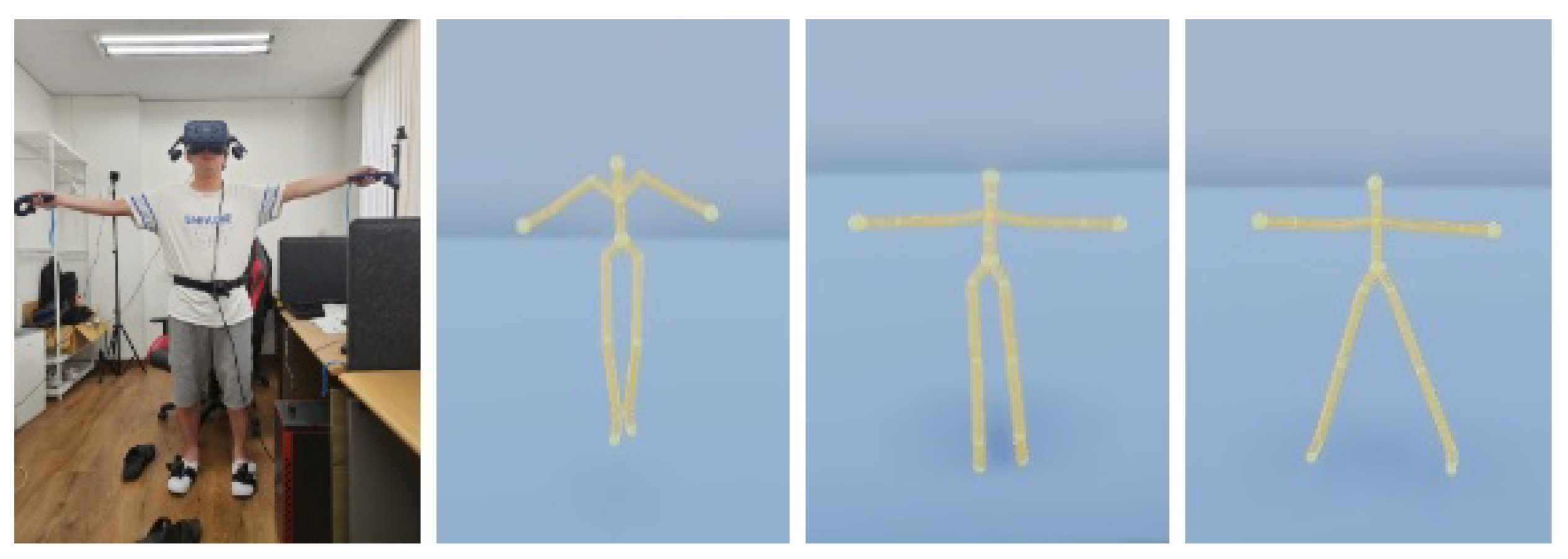
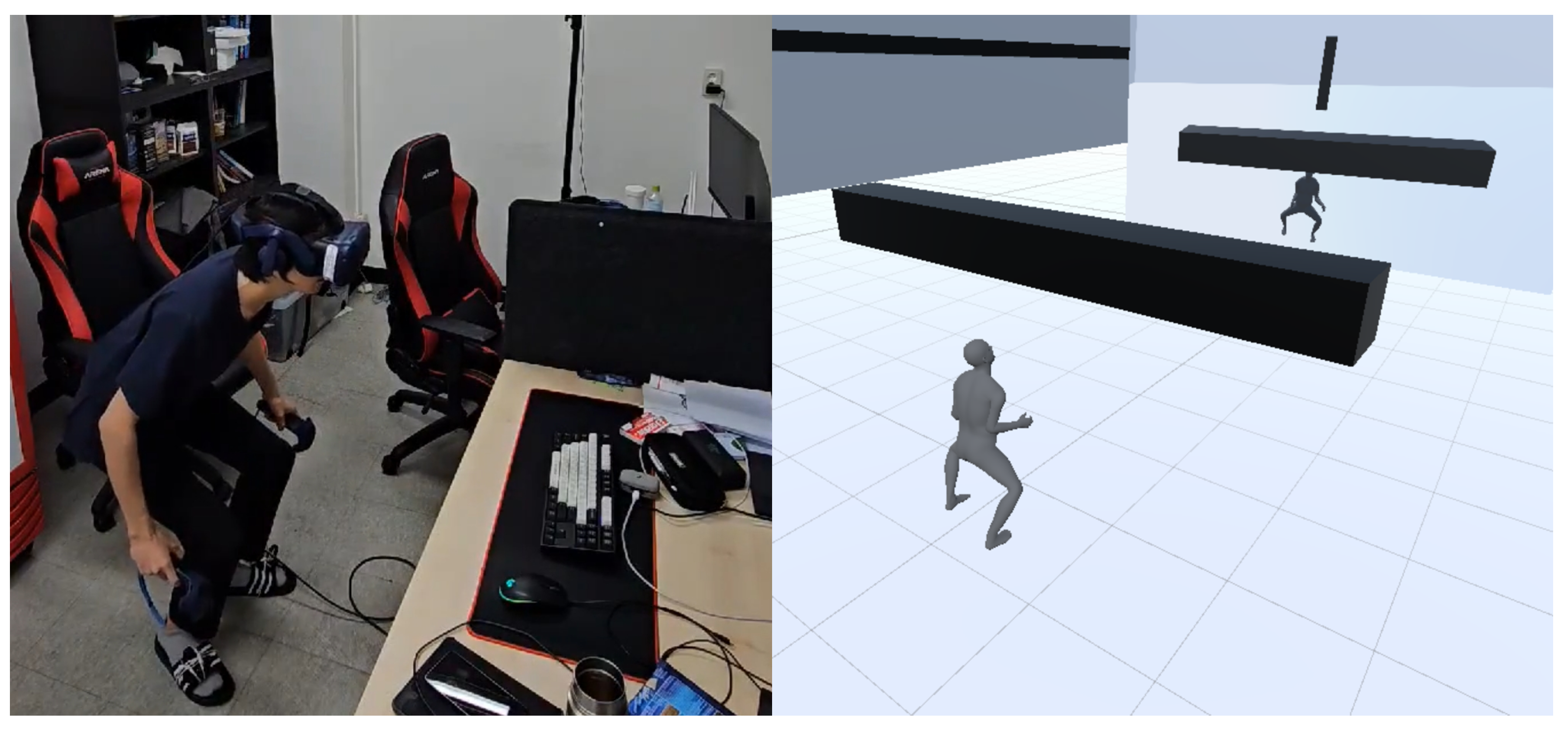
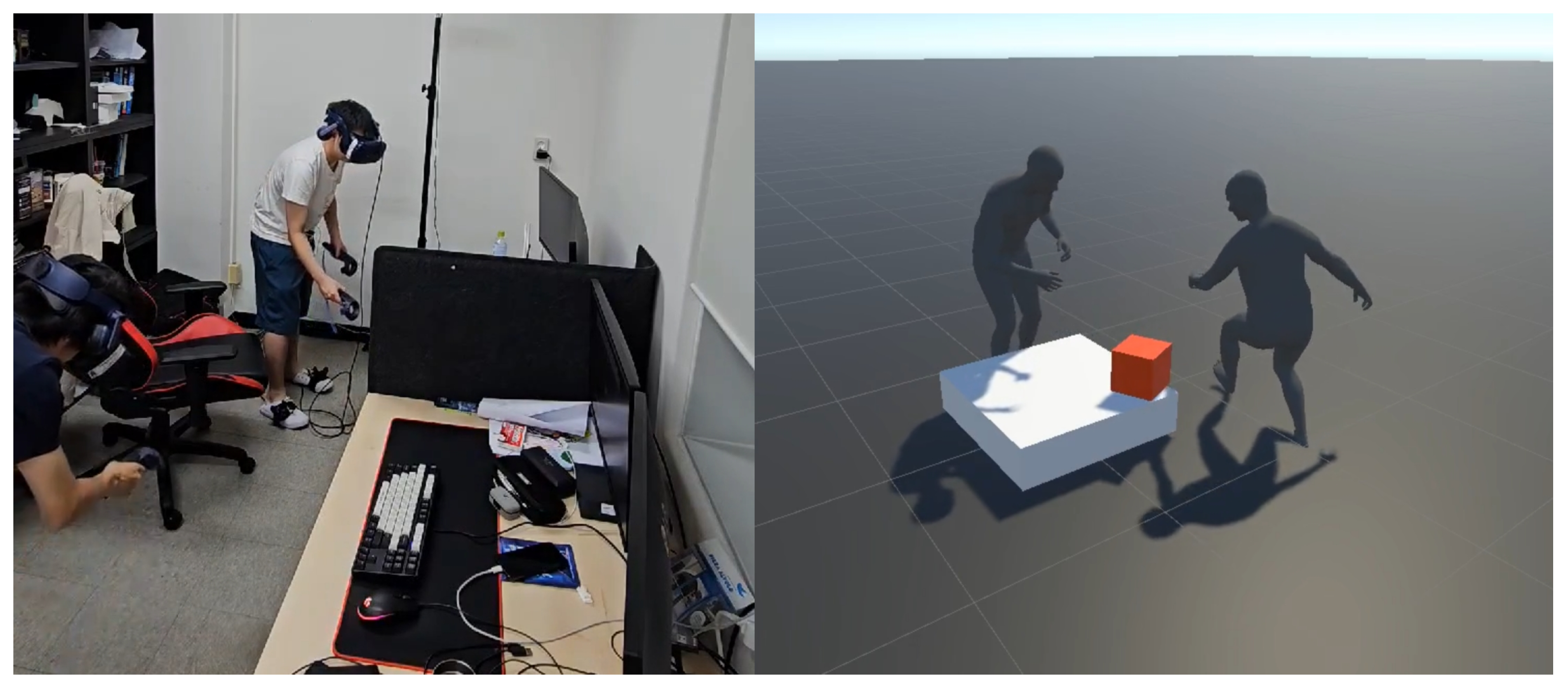
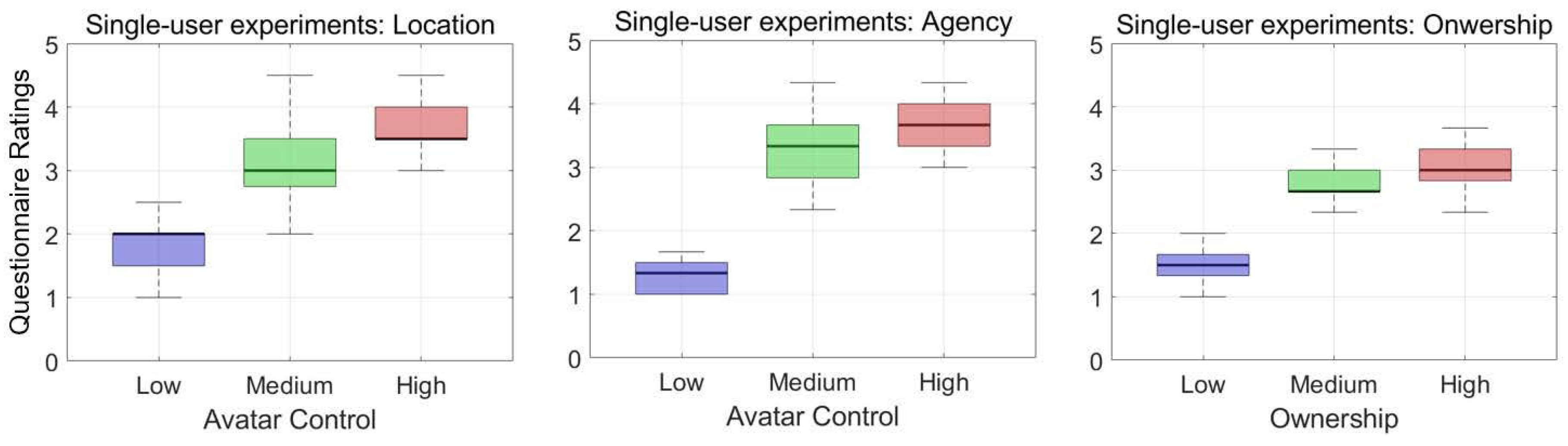
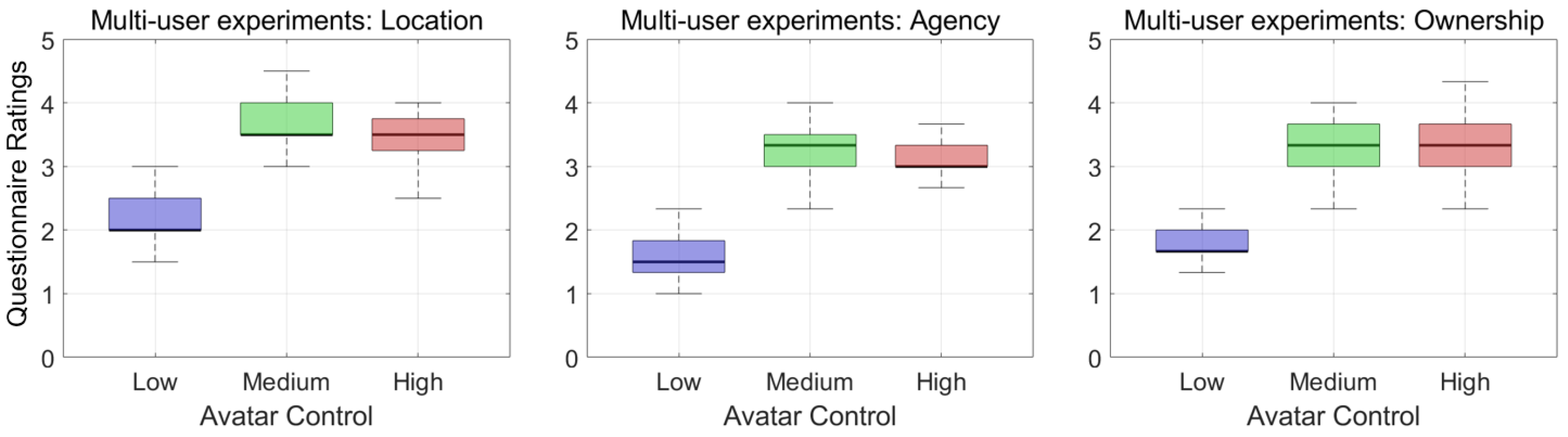
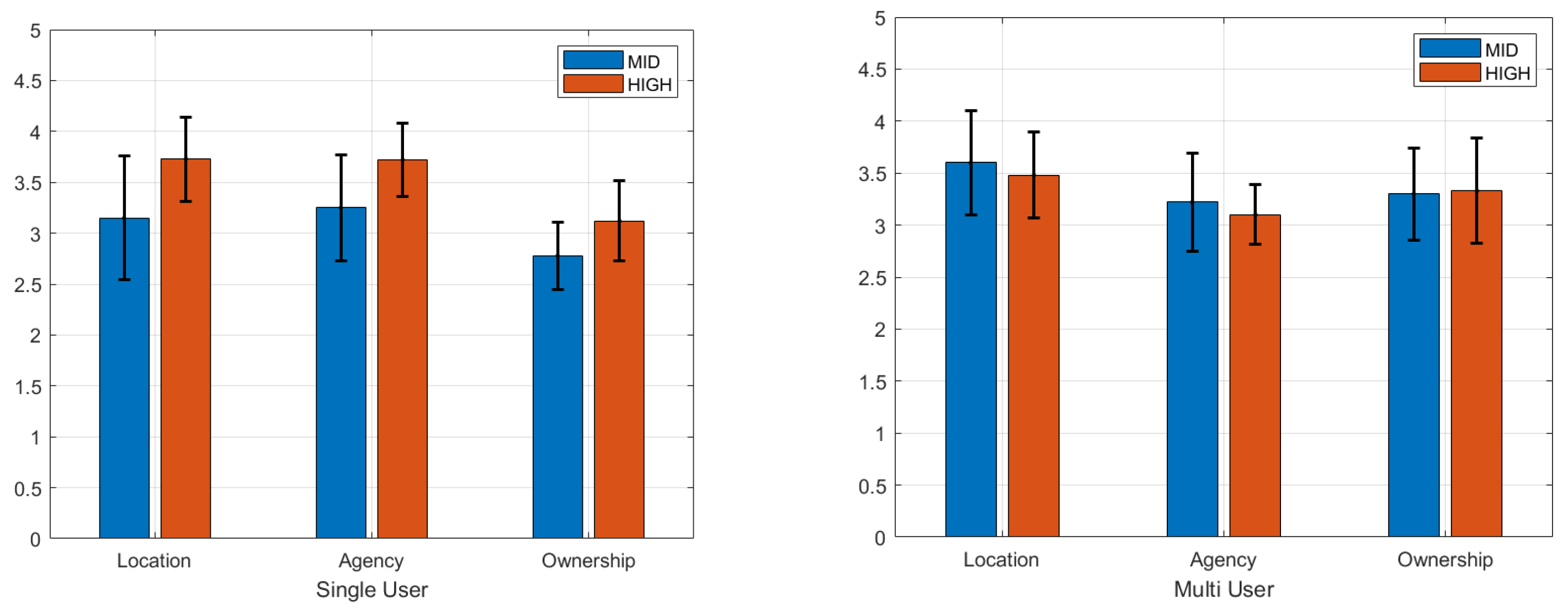
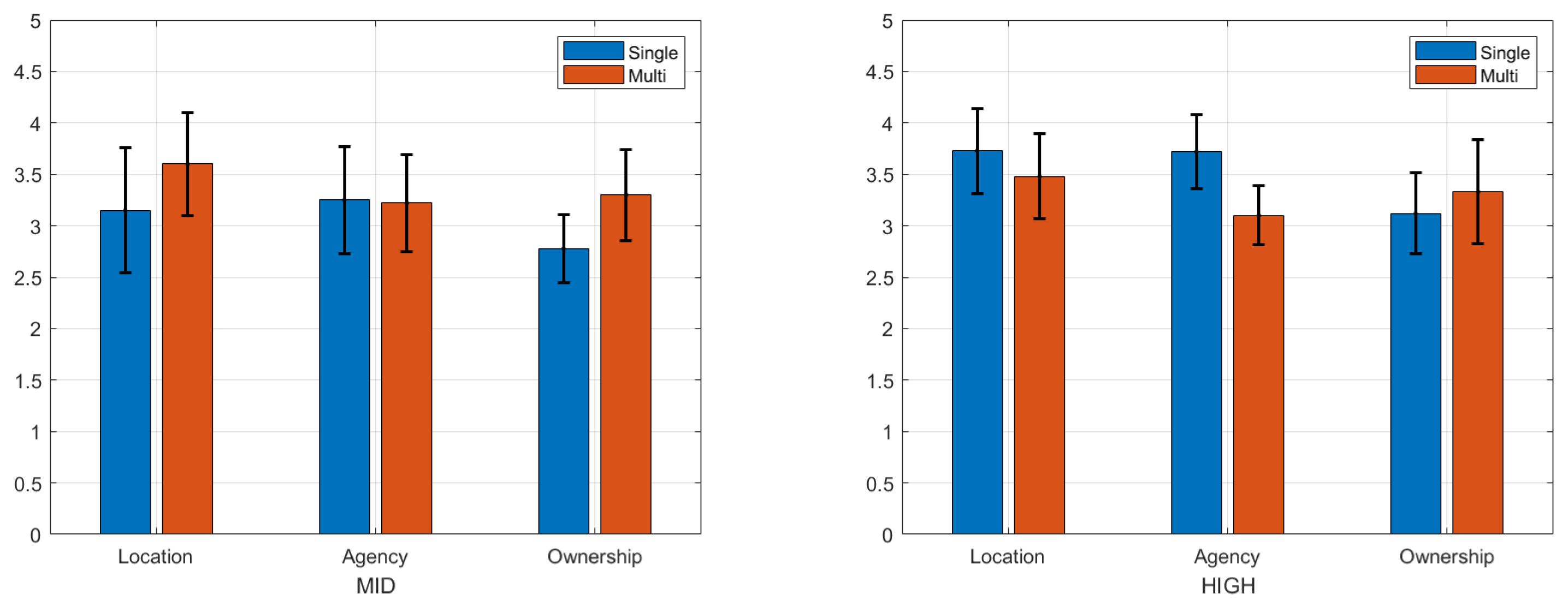
The motion control of the virtual avatar enhances a sense of embodiment in a virtual reality (VR). Yet, the detailed relationship between motion control, assigned tasks, and the sense of embodiment remains unclear. We aim to investigate the relationships between degrees of control on a full-body avatar and three elements of the sense of embodiment: the sense of self-location, agency, and ownership in standalone and interaction tasks. To do this, we conducted a user study with three conditions of control over a full-body avatar. The types of control are (1) Low—control of an upper-body avatar, (2) Mid—control of a full-body avatar from three sensors, and (3) High—control of a full-body avatar from six sensors. These three control methods, which were used to animate the avatars and imitate the users’ pose, differ in accuracy and stability. Participants embodied three kinds of control and performed a single-user task (obstacle avoidance) and a multi-user task (catch-ball). Our results indicate that the degree of control impacts participants’ embodiment. However, there was no significant difference between high- and mid-control in the multi-user task, which was a different result from the single-user task. This suggests for virtual bodies that the participants capacity to control and see are the same or different, which may affect embodiment. Our result also shows that the multi-user task enhanced the sense of embodiment compared to the single-user task in the low- and mid-control avatars. Yet, the multi-user task decreased the sense of agency of the high-control avatar. This suggests that a failure of the assigned task may affect the sense of agency, especially when it is close to success, yielding revulsion. We further elucidate the insights into the relationship between the degree of control, the assigned tasks, and the elements of a sense of embodiment.
Keywords: virtual reality; emotional responses; extended reality; head-mounted displays; character generation virtual reality; emotional responses; extended reality; head-mounted displays; character generation