1. Introduction
Reservoirs’ functionality is of great importance in the provision of water security, flood mitigation, and water sustainability, especially in situations where the hydrological variability is high [
1]. The inefficient operation policies of arid and semi-arid regions can result in an increased lack of water and decreased reliability of the systems [
2].
Research has also shown that the HEC-HMS model is effective in rainfall–runoff modeling during calibration and validation across different hydrological situations [
3,
4,
5]. The Nash–Sutcliffe efficiency (NSE), RMSE, and correlation coefficients are the most commonly used performance indicators in these studies and were found to be highly consistent when quality inflows were measured and simulated [
6]. In addition to the Nash–Sutcliffe efficiency (NSE) and root mean square error (RMSE), percent bias (PBIAS) and the coefficient of determination (R
2) were also employed to evaluate the historical performance of the HEC-HMS model. PBIAS was used to quantify the average tendency of the simulated streamflow to be larger or smaller than the observed values, while R
2 was applied to assess the strength of the linear relationship between observed and simulated flows. These performance metrics are widely recommended for hydrological model evaluation and have been extensively applied in continuous and event-based rainfall–runoff simulation studies [
7,
8].
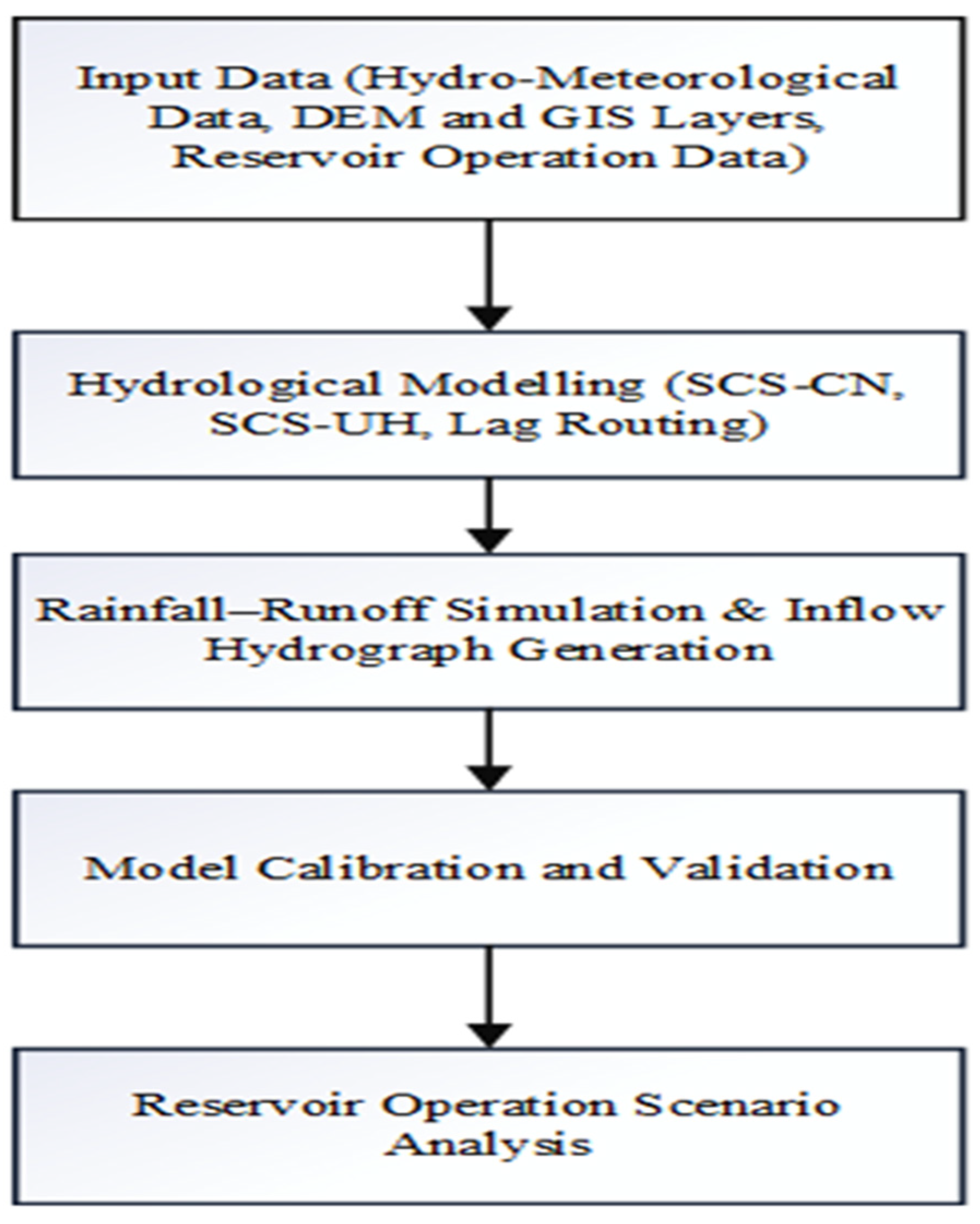
In this study, the inflow hydrograph of the Haditha Dam Reservoir was calibrated within the HEC-HMS modeling framework using the Soil Conservation Service Curve Number (SCS-CN) method for rainfall losses [
9,
10], the SCS UH (Unit Hydrograph) for runoff transformation [
11], and a routing-lag approach to account for flow travel time within the catchment [
12]. The combination of these methods, together with other hydrological parameters, facilitated an effective calibration of the model, ensuring consistency between simulated and observed inflows and enhancing the reliability of reservoir operation assessment.
Hydrological models have been used to simulate the operation of the reservoir as well as the inflow simulation by simplifying the processes involved, like outflow curves or hydraulically operated release structures [
13,
14]. Although these methods offer an effective paradigm of the reservoir routing drill, they might not be dynamic in adjusting releases to the altering hydrological scenarios.
Despite the extensive application of HEC-HMS for rainfall–runoff modeling and reservoir routing [
15,
16], several studies have reported an inability to model operational flexibility given a change in the hydrological conditions [
17,
18,
19], so less attention has been given to conducting a systematic evaluation of the operations of the reservoir using a direct comparison of the actual operation with various simplified conditions of operation under long-term historical hydrological conditions, particularly in arid and semi-arid environments [
20,
21,
22].
Haditha Dam is one of the most important hydraulic structures in Iraq and plays a key role in regulating the Euphrates River, contributing to water supply, flood control, and hydropower. However, high hydrological variability, upstream flow control, the length of drought periods, and increasing downstream water demands have subjected the dam to severe operating conditions over the last several decades [
23]. These challenges have constrained control over reservoir storage and release decisions, and a comprehensive operational review is needed to respond to changing hydrological conditions. Moreover, observing hydrological and operational data over a long period at Haditha Dam provides an excellent test opportunity for reservoir operation, as it allows a feasible and representative case study for evaluating the reservoir’s actual performance and simulation in arid and semi-arid locations.
While the HEC-HMS model has been widely used to simulate continuous rainfall–runoff processes, a significant amount of previous research has focused more on hydrological modeling rather than on real-world applications in operational settings. The current body of literature significantly under-represents the use of HEC-HMS outputs for reservoir operations analysis. In order to address this shortcoming, the current study aims to extend the HEC-HMS model’s use beyond simple flow simulation by integrating its results into the assessment of dam operations. The simulation-generated inflow hydrographs are used to create different reservoir operation scenarios that are then compared to Haditha Dam’s real operational framework. This approach makes it easier to evaluate operational effectiveness thoroughly and provides insightful information for improvements.
2. Study Area and Model Input
2.1. Study Area
The largest hydro structure along the Euphrates River in Iraq [
24] was constructed in Anbar Province, western Iraq (34°12′25.43″ N, 42°21′22.72″ E) [
25] in 1977–1988 by the former Soviet Union and is a key component of Iraq’s sediment water resources system. This dam is Haditha Dam, an earth fill dam with a total length of approximately 8.94 km, a maximum height of 57 m, and a highest water level of 150.2 [
26]. The dam crest level is 154 m [
27] and the top width 20 m, with minimum water level 112 m [
28]. The dam creates the Haditha Reservoir, spanning the Euphrates, which has a total capacity of about 9.25 billion m
3 and an area of about 500 km
2 [
26]. The reservoir is a significant water infrastructure in water management, as it provides water, supports flood control, and enables hydropower development in regions during variable hydrological conditions. Haditha Dam is an appropriate illustration of the possibility of considering reservoir operation performance and assessing variants of alternative operations, not to mention climate change and water shortages in Iraq.
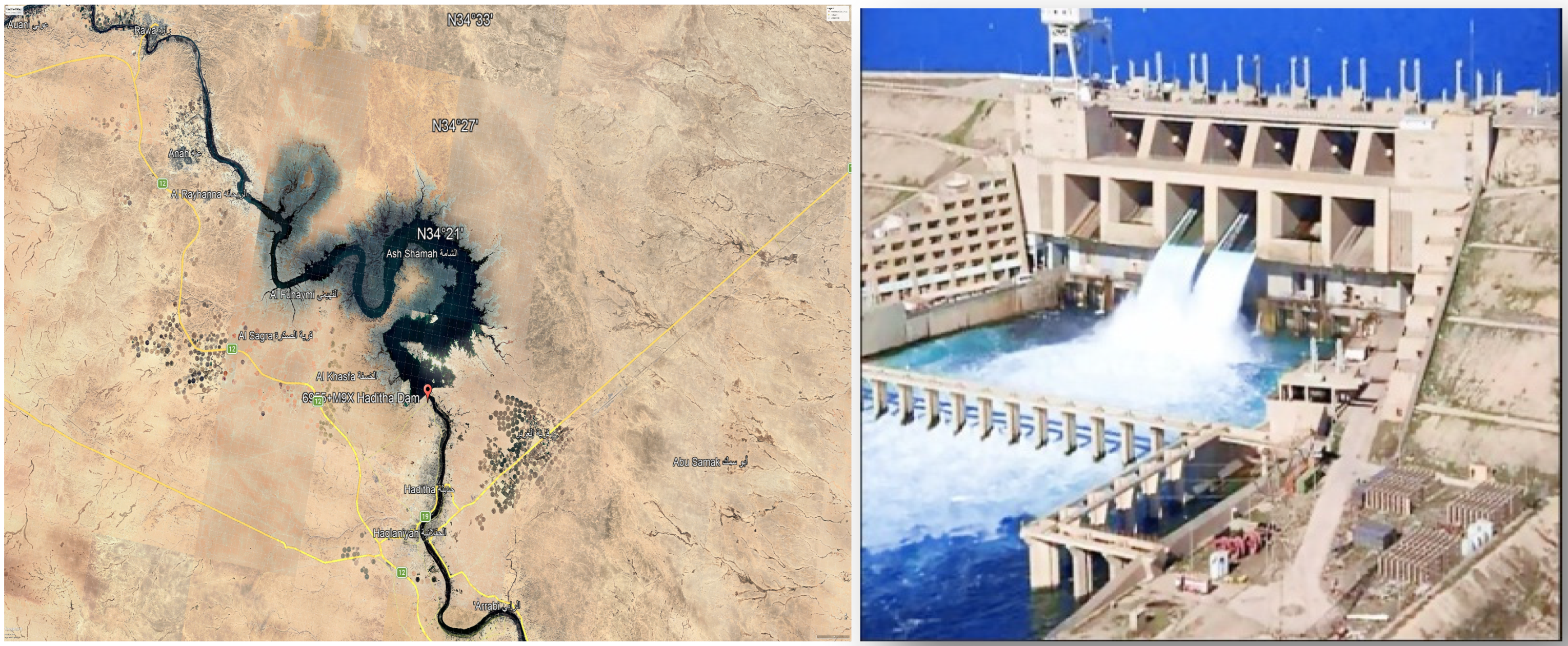
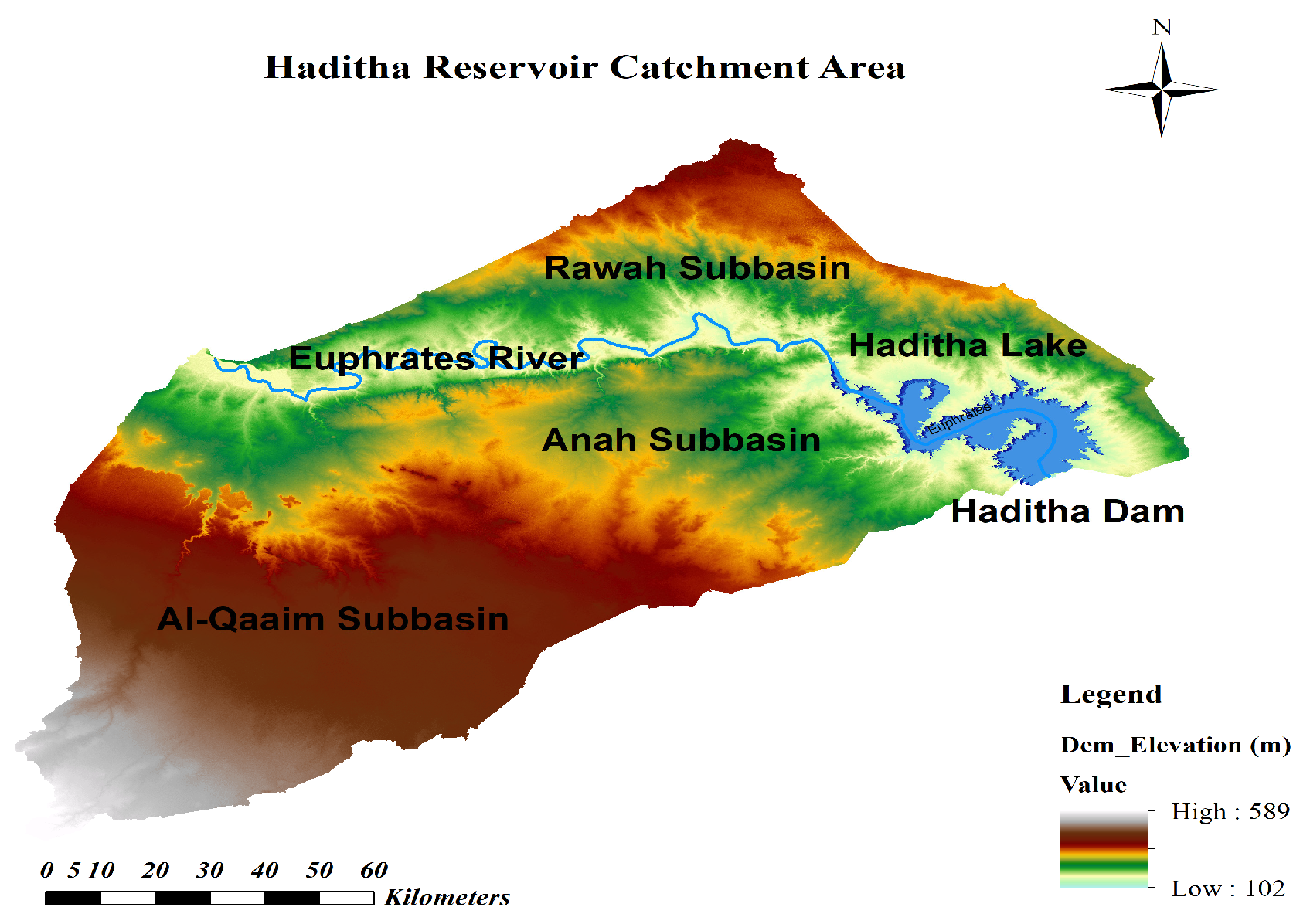
Figure 1 shows the location of Haditha Dam and the reservoir along the Euphrates River.
The Haditha Reservoir catchment area was delineated through the application of a Digital Elevation Model (DEM) sourced from the official United States Geological Survey (USGS). The spatial datasets were subjected to processing and analysis utilizing ArcMap (version 10.8) within a Geographic Information System (GIS) framework. Also, the course of the Euphrates River and the Haditha Reservoir boundary were digitized in accordance with official cartographic representations provided by the Strategic Studies Department of the Iraqi Ministry of Water Resources, thereby ensuring a precise depiction of the study area.
2.2. Model Input
2.2.1. Data Collection
This study utilized historical hydrological and meteorological data to support the hydrological simulation and reservoir operation analysis of Haditha Dam. The datasets covered the period from 2004 to 2024 and were obtained from official governmental institutions in Iraq. All data were processed to ensure consistency in time resolution and measurement units. Abnormal records and missing values were examined and corrected where necessary to improve data quality for model calibration and validation.
The Iraqi Ministry of Water Resources (MOWR) provided the dam’s structural design data, including the dam crest elevation, number of outlets, spillway dimensions, and overall dam dimensions. In addition, daily hydrological records for the period 2004–2024 were obtained for Haditha Dam, including inflow, outflow, reservoir water level, storage, and evaporation losses. Inflow data were recorded at Upstream Gauging Station 1 (34°16′58.08″ N, 42°09′34.56″ E). Outflow, reservoir water level, and storage data were obtained from Haditha Dam Gauging Station 2, located at the dam body (34°12′25.00″ N, 42°21′18.00″ E).
Meteorological data, including daily rainfall, air temperature, and evaporation records for the period 2004–2024, were obtained from three official meteorological stations (Al-Qaim, Anah, and Rawa) operated by the Iraqi Meteorological Organization and Seismology (IMOS). These stations represent the climatic conditions of the upstream Euphrates basin within the study area.
Catchment characteristics upstream of Haditha Dam were derived using United States Geological Survey (USGS) data and processed in ArcMap GIS software version 10.8. River networks and lake features were delineated and incorporated into the HEC-HMS model to accurately represent watershed characteristics and hydrological responses.
Structural and operational information related to the dam was obtained from the General Authority of Dams and Reservoirs (GADR), Ministry of Water Resources. These data were used to define reservoir geometry and operational constraints within the model.
Historical hydrological records—including inflow, outflow, water demand, reservoir storage, and water level—were carefully reviewed and standardized to ensure consistency in temporal resolution and units. Data discrepancies and gaps were assessed and addressed where necessary to ensure reliability in model calibration and subsequent analysis.
2.2.2. Inflow, Outflow and Water Demand
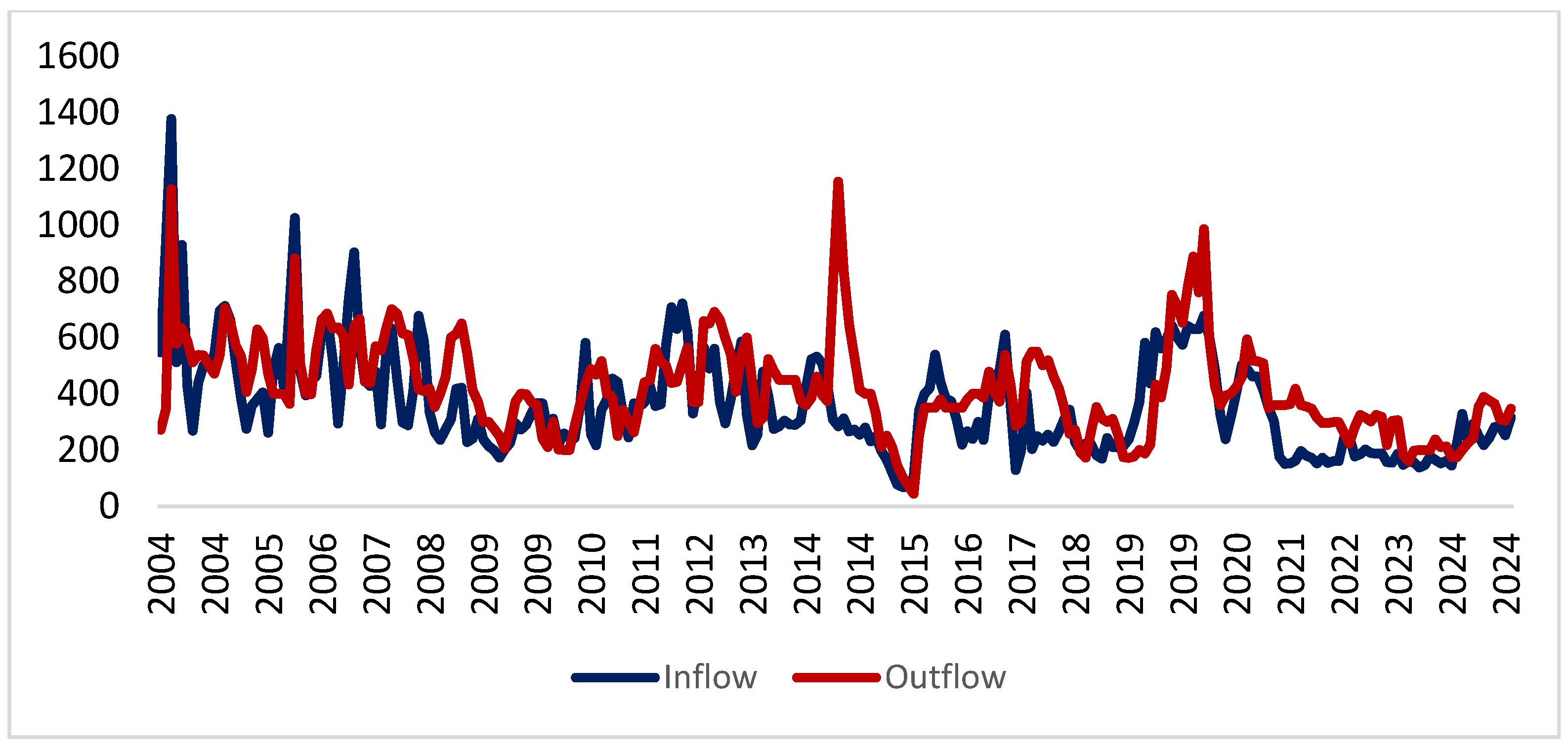
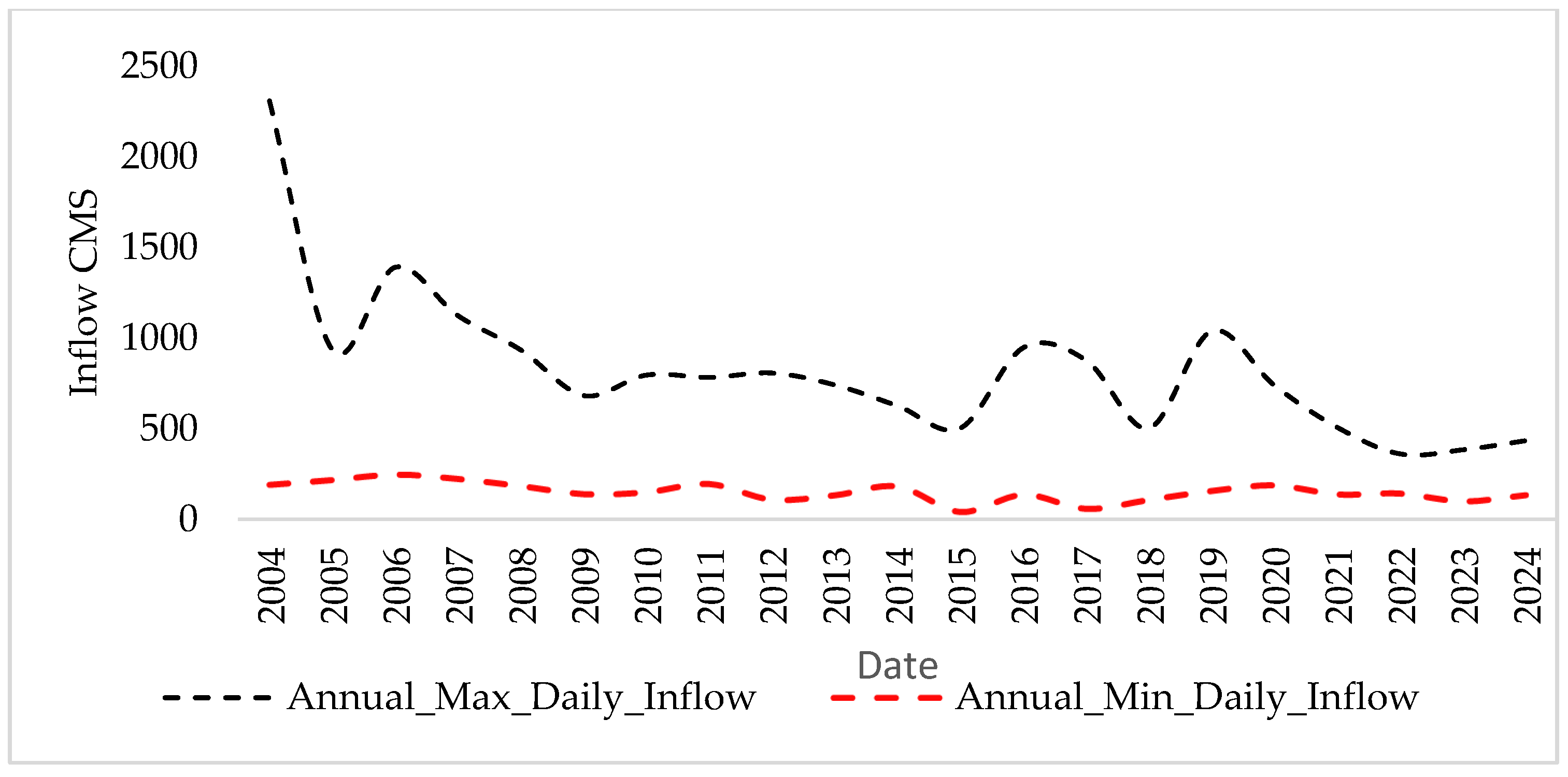
Figure 2 presents the observed inflow and outflow at Haditha Dam during 2004–2024, while
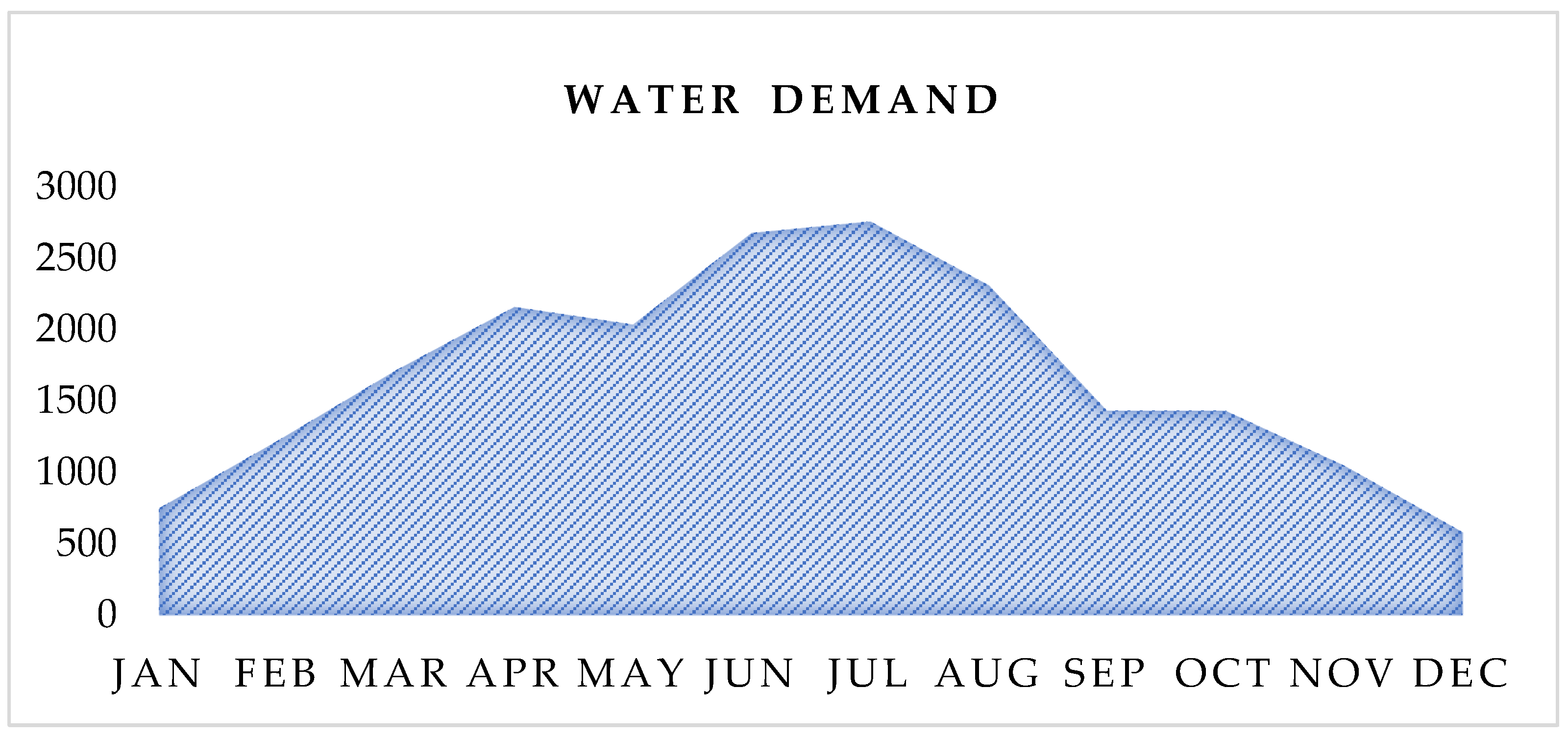
Figure 3 illustrates the estimated average monthly water requirements. Due to the unavailability of official demand records from the Iraqi Ministry of Water Resources, the same representative monthly demand pattern was applied consistently for all simulation years (2004–2024). The present study adopted the estimated average monthly water demand values reported in Al-Janabi (2004), as cited in ref. [
24]. The same water demand series was consistently applied in both the observed reservoir operation and all proposed operational scenarios to ensure a fair and controlled comparison.
Figure 4 shows clear variability in annual inflow, with higher values during wet years and significantly reduced inflows during drought years. The outflow pattern reflects the operational response of the reservoir to these hydrological fluctuations. To quantitatively assess this variability, a statistical analysis of annual inflow volume (2004–2024) was conducted, and the results are presented in
Table 1.
Table 1 indicates considerable interannual variability in inflow during the study period, with a coefficient of variation of 36.97%. The highest mean annual inflow was recorded in 2004 (639 m
3/s), classified as a very wet year (Z = +2.1), while the lowest occurred in 2023 (159 m
3/s), classified as a dry year (Z = −1.5). These results demonstrate substantial hydrological variability, particularly in recent years, reflecting increasing water stress conditions. Accordingly, reservoir operation performance should be assessed under variable and generally declining inflow regimes rather than assuming stable hydrological conditions.
2.2.3. Evaporation and Water Losses
Evaporation losses were explicitly incorporated into both the hydrological and reservoir simulations. Two types of evaporation were considered.
(1) Catchment evaporation: Monthly evaporation depth (mm) was obtained from the Iraqi General Authority for Meteorology and Seismology. These data were used within the rainfall–runoff modeling framework to account for atmospheric water losses prior to runoff generation.
(2) Reservoir surface evaporation: Evaporation losses from the reservoir surface were obtained from the Iraqi Ministry of Water Resources in volumetric form (m3). These values were converted to equivalent evaporation depths (mm) using the corresponding reservoir surface area for each period. Monthly average evaporation depths for 2004–2024 were subsequently calculated and specified as inputs to the HEC-HMS reservoir evaporation component. The model internally accounts for these evaporation depths within the reservoir continuity equation at each simulation time step.
In addition to evaporation losses, measured upstream water withdrawals for irrigation, industrial, and municipal uses were incorporated into the model to represent anthropogenic abstractions along the river reach.
Seepage and transmission losses were not independently quantified due to the lack of reliable field measurements. However, their cumulative influence is implicitly represented through model calibration, whereby parameters were adjusted to reproduce observed reservoir inflow. Although seepage losses were not explicitly measured, this approach ensures a realistic representation of the overall reservoir-scale water balance. Nevertheless, the absence of explicit seepage quantification remains a source of modeling uncertainty.
3. Methodology
3.1. GIS-Based Catchment Delineation
The Digital Elevation Model (DEM) was obtained from the United States Geological Survey (USGS) database with a spatial resolution of 30 m. The DEM was clipped in ArcMap (version 10.8) according to the official watershed boundary provided by the Ministry of Water Resources. The main river course and the reservoir outlet location were verified and georeferenced prior to model development to ensure spatial consistency.
The clipped DEM, shown in
Figure 5, was imported into HEC-HMS (version 4.13) for terrain preprocessing. Sink filling was first performed using the “Preprocess Sinks” tool to eliminate spurious depressions. Flow direction and flow accumulation grids were subsequently generated to define the drainage patterns within the catchment. A drainage area threshold of 259 km
2 was applied to extract the stream network in a manner consistent with the observed river system.
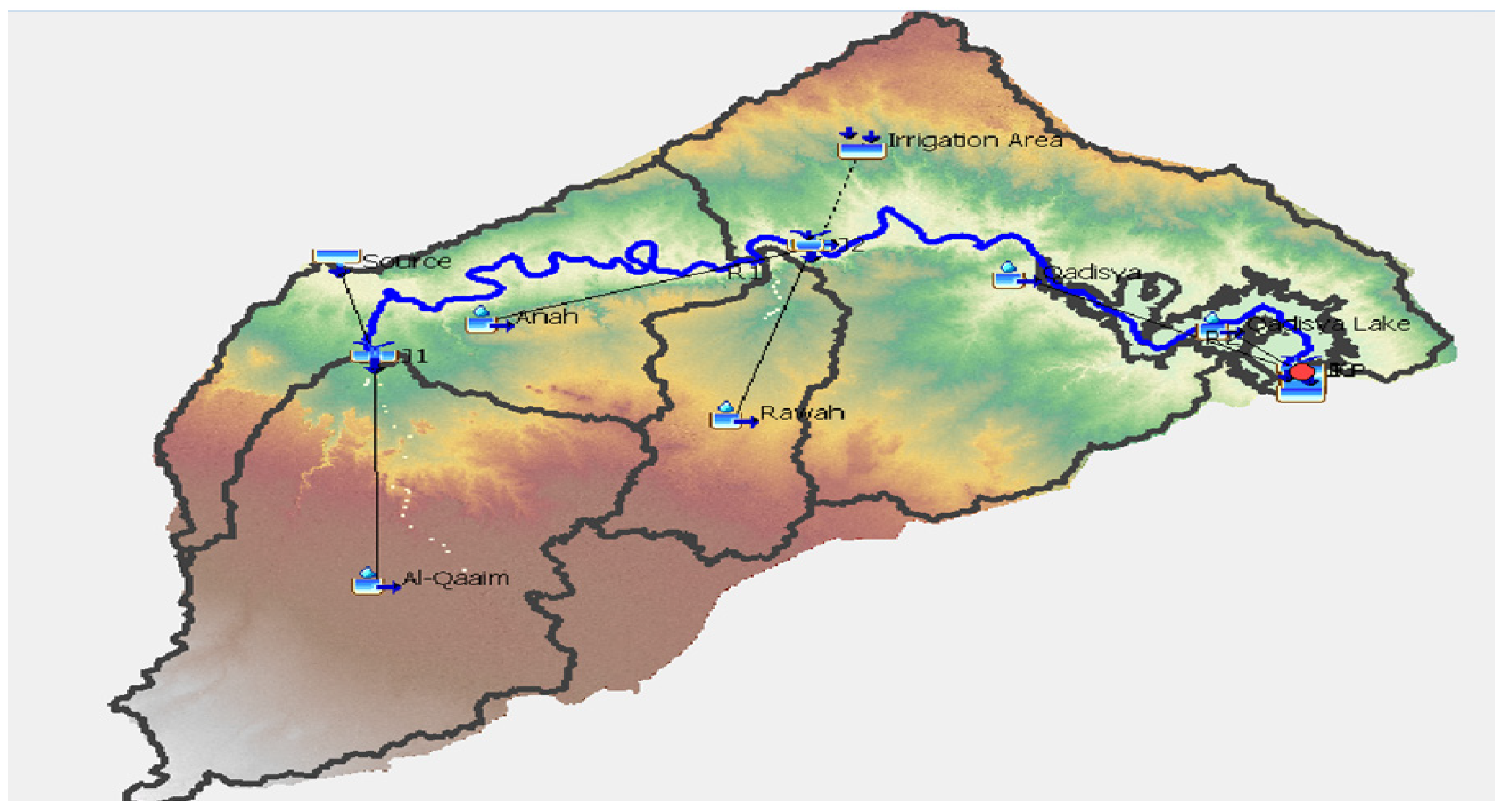
Using the delineation tools within HEC-HMS, watershed elements including sub-basins, reaches, junctions, and the reservoir outlet were automatically generated. The basin was divided into four sub-basins based on major stream junctions to adequately represent spatial variability while maintaining computational efficiency. The resulting watershed delineation and basin configuration are illustrated in
Figure 6.
3.2. Hydrological Modeling Using HEC-HMS Model
Following watershed delineation, rainfall–runoff processes were simulated using HEC-HMS (version 4.13). The basin model schematic derived from the GIS-based delineation was used to represent sub-basins, river reaches, junctions, and the reservoir system, as shown in
Figure 7.
Rainfall losses were estimated using the Soil Conservation Service Curve Number (SCS-CN) method. Initial Curve Number (CN) values were assigned based on standard SCS guidelines for arid and semi-arid regions [
26]. These values were later adjusted during model calibration to improve agreement between simulated and observed hydrographs. Direct runoff transformation was performed using the SCS Unit Hydrograph method. Lag time parameters were estimated based on watershed morphometric characteristics, including sub-basin area and flow length, and subsequently refined during calibration.
Channel routing was simulated using the Lag routing method. The lag parameter for each reach was estimated according to channel length and slope characteristics.
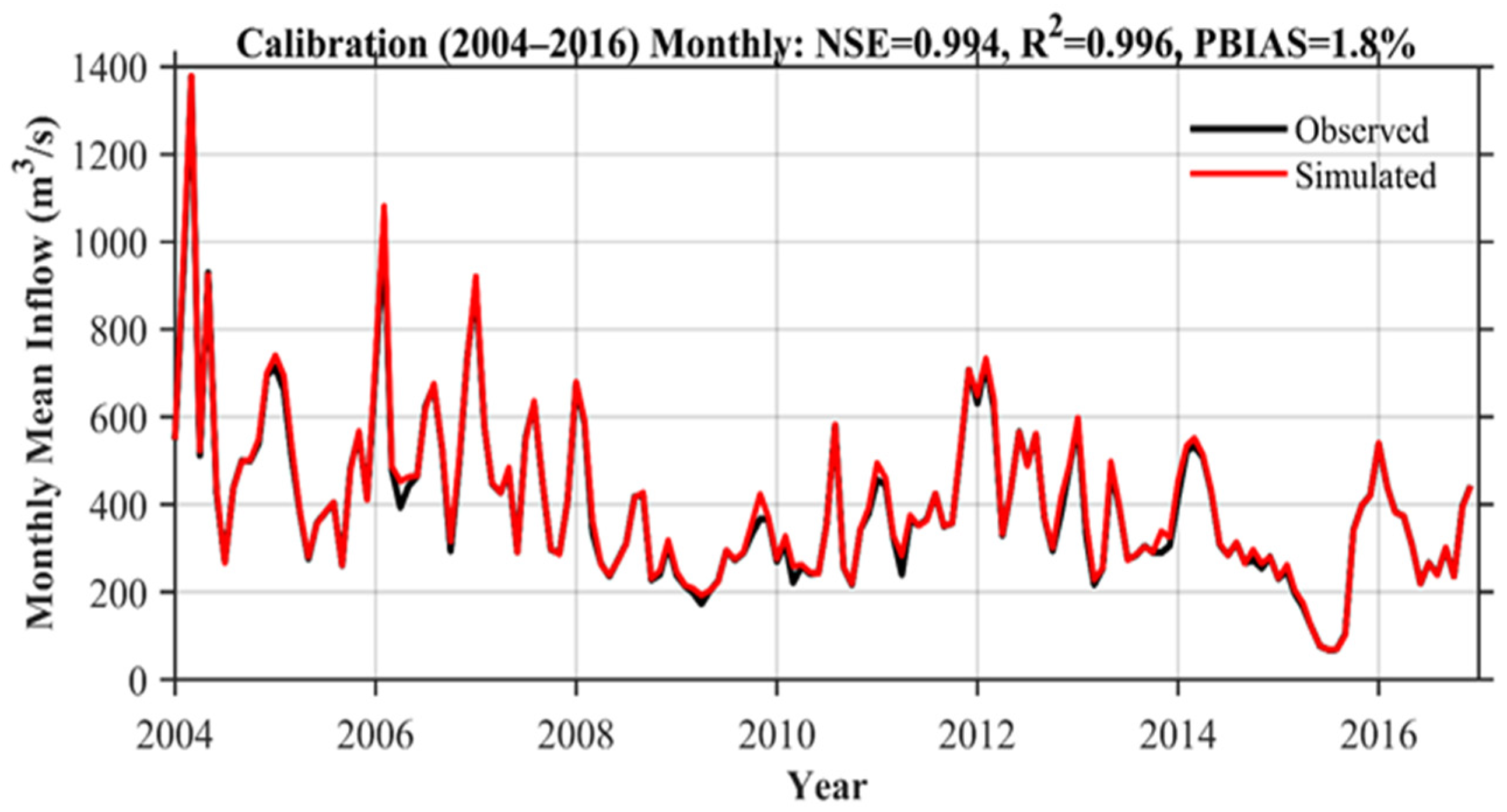
Model calibration was conducted using observed inflow hydrographs over the selected calibration period, during which sensitive parameters (primarily CN and lag time) were manually adjusted within physically realistic ranges. Model performance was evaluated using NSE, RMSE, PBIAS, and R2. The calibrated parameter set was then applied to an independent validation period to assess model robustness.
The satisfactory calibration and validation results confirm that the model provides a reliable representation of the watershed hydrological response and can be used for subsequent reservoir operation scenario analysis.
3.3. Operational Scenarios
Several reservoir operation scenarios were developed within the HEC-HMS modeling framework to evaluate different release strategies. These include the existing operation, outflow curve routing, outflow structure routing, and rule-based operation. Scenarios 1 and 2 represent hydraulic-based operational formulations, while the rule-based scenario incorporates a management-oriented control strategy. All scenarios were simulated using identical hydrological and meteorological inputs to ensure a consistent and controlled comparison, allowing the influence of operational philosophy on reservoir performance to be clearly evaluated.
The rule-based operating scheme was derived using a structured, simulation-based evaluation procedure rather than a formal optimization algorithm. Initially, reservoir inflows were simulated for the selected study period, and system performance under the existing operation was used as a baseline reference. Subsequently, operating rules and outlet control settings were systematically adjusted, and the reservoir response was re-evaluated through repeated simulations. This iterative refinement process was guided by quantitative performance indicators, including reservoir storage behavior, water surface elevation limits, release magnitude, and system reliability. The final rule configuration was selected based on its ability to improve storage regulation and operational efficiency while maintaining compliance with predefined operational constraints.
3.3.1. Outflow Curve Routing Scenario
In this scenario, reservoir releases were governed by a predefined stage–discharge relationship implemented through the “Outflow Curve” method in HEC-HMS. Reservoir storage dynamics were represented using the Elevation–Storage–Discharge relationship, whereby outflow was automatically computed as a function of water surface elevation.
The discharge function was defined using an elevation–storage table coupled with a corresponding rating curve. As the reservoir water level increased, discharge was regulated according to the predefined relationship without the application of dynamic operational decision rules. Consequently, releases were controlled solely by the hydraulic relationship between storage and outflow capacity. The initial reservoir storage was set to 5,191,700 × 103 m3 based on observed reservoir conditions. Hydraulic constraints were inherently incorporated through the maximum discharge capacity specified in the rating curve, as well as the minimum operational storage level below which releases were restricted. This scenario represents a passive hydraulic regulation approach in which reservoir outflows are determined exclusively by structural characteristics and water level conditions.
3.3.2. Outflow Structure Routing Scenario
In this scenario, reservoir releases were regulated through explicitly defined hydraulic outlet works implemented using the “Outflow Structures” method in HEC-HMS. Reservoir storage dynamics were represented using the Elevation–Storage–Area relationship derived from predefined elevation–storage and elevation–area tables. The reservoir included two outlet structures and one ogee spillway equipped with radial gates. One outlet was modeled as an orifice with a center elevation of 115 m, a cross-sectional area of 20 m2, and a discharge coefficient of 0.5. Discharge through this outlet was computed using standard orifice flow equations based on the hydraulic head above the outlet centerline. The spillway had a crest elevation of 150.2 m and a crest length of 96 m. It was equipped with six identical radial gates, each with a width of 16 m. Hydraulic parameters included a gate coefficient of 0.7, an orifice coefficient of 0.8, and a maximum gate opening of 13.5 m. Spillway discharge was activated when reservoir water levels exceeded the crest elevation and was computed according to ogee spillway hydraulic equations implemented within the model. The initial reservoir water surface elevation was set to 139.79 m. Monthly evaporation losses were incorporated into the reservoir water balance. In this scenario, releases were governed entirely by hydraulic head conditions and structural capacity limits rather than predefined policy-based decision rules. This scenario therefore represents a physically based structural regulation system in which discharge is constrained by outlet geometry, crest elevations, and gate operation characteristics.
3.3.3. Rule-Based Operation Routing Scenario
In this scenario, reservoir releases were simulated using the Rule-Based Operation method in HEC-HMS (version 4.13), in which reservoir regulation is governed by predefined operational rules linked to reservoir water level rather than passive hydraulic response alone. The reservoir was divided into two operational zones defined by seasonal elevation guide curves. Under Iraq’s hydrologic conditions, the summer operation zone generally corresponds to the dry irrigation season (May–October), while the flood-control zone corresponds to the wet season (November–April). There is no fixed temporal overlap between the two operational zones; however, zoning was implemented using monthly elevation guide curves rather than strictly fixed calendar dates. The active operational zone at each time step was dynamically determined based on the reservoir water surface elevation relative to the corresponding seasonal guide curve, allowing the model to capture hydrologic variability that may occur outside conventional seasonal boundaries. Zone 1 (Summer Operation Zone) was designed to conserve storage during the irrigation season. Releases were controlled using predefined minimum and maximum discharge constraints to maintain target pool levels while satisfying downstream water demands. Reservoir water levels were continuously evaluated against the summer guide curve, and releases were adjusted accordingly to prevent excessive drawdown. Zone 2 (Flood Control Zone) was defined using a flood elevation pattern with higher allowable target elevations. When reservoir levels approached or exceeded the flood guide curve, higher maximum releases were permitted to enhance flood routing capacity and reduce overtopping risk, while remaining within structural discharge capacity limits. Reservoir storage dynamics were represented using the Elevation–Storage–Area relationship. Releases were conveyed through the hydraulic outlet and spillway structures, including orifice outlets and an ogee spillway equipped with radial gates, which imposed physical discharge constraints. Monthly evaporation losses were incorporated into the reservoir water balance using observed climatological data to account for seasonal surface water losses. This configuration represents active reservoir management reflecting seasonal storage objectives and flood-control requirements.
3.4. Performance Evaluation
The performance of the proposed operation scenarios of the reservoir was assessed in terms of the operational and hydrological criteria. The efficiency of the reservoir operations was determined by the change in storage and the lack of downstream water supply under the different operating conditions. Statistical performance measures, such as Nash–Sutcliffe Efficiency (NSE) and Root Mean Square Error (RMSE) [
28], were only used to investigate the performance of the simulated inflow generated by the rainfall–runoff model. These were the measures used to estimate the similarity between the simulated and observed inflow time series, and the operating situation performance of the reservoir was assessed based on performance alone.
The common equations that were employed in the calculation of the statistical performance indicators, including the Nash–Sutcliffe Efficiency (NSE), Root Mean Square Error (RMSE), Percent Bias (PBIAS), and the coefficient of determination (R
2), are presented in Equations (1)–(4), following the formulations reported in [
29]. Although NSE, RMSE, R
2, and PBIAS are widespread statistical performance measures used in the evaluation of hydrological models, their applicability to variables of reservoir operation may lead to erroneous conclusions. Therefore, these were not implemented in this study to measure the rainfall–runoff simulation of reservoir inflow, but rather the operation scenario of the reservoir was measured by the operation performance indicators. Various measures of statistics were employed in this study in line with the latest recommendations on the precautionary use of NSE and the need to have complementary performance measures [
28].
: Observed discharge at time step i (m3/s);
Simulated discharge at time step i (m3/s);
: The total number of observations;
: The time step index;
NSE: Nash–Sutcliffe efficiency;
RMSE: Root mean square error;
PBIAS: Percent bias;
: Coefficient of determination.
4. Results
4.1. Model Calibration and Validation
The HEC-HMS rainfall runoff model was calibrated using measured meteorological parameters, including rainfall, temperature, and evaporation, in such a manner that the inflow to the reservoir could be modeled.
Figure 8 compares the simulated inflows and the observed inflows during the period of calibration, and a strong similarity between the two time series was found. The Nash–Sutcliffe Efficiency (NSE) and Root Mean Square Error (RMSE) were used to evaluate the performance of the models. The NSE value obtained (0.9813) may be thought to be an outstanding performance of the model at the calibration stage, as indicated in
Table 1.
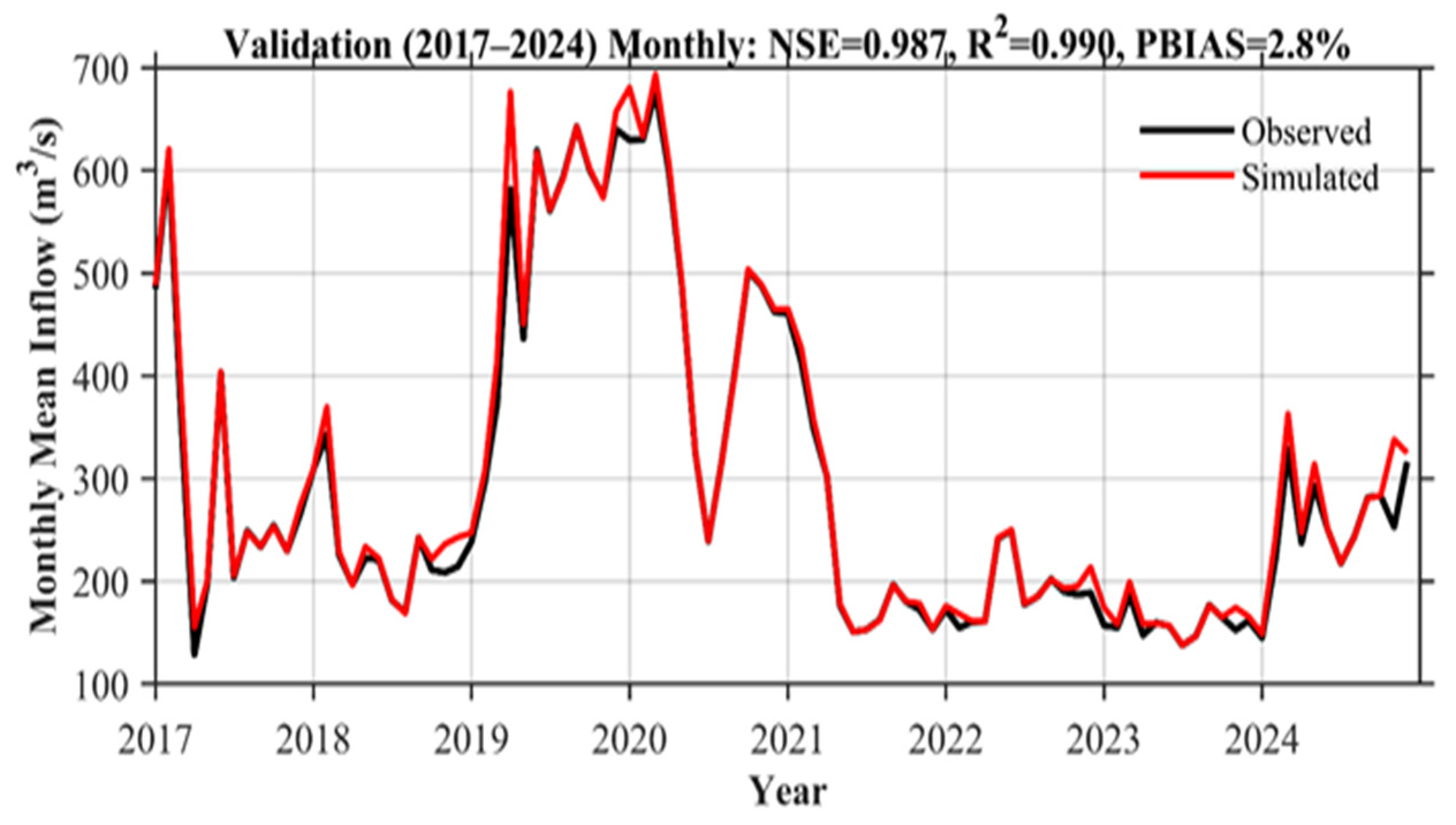
In the period from 2017 to 2024, the model validation was conducted by retaining the calibrated model parameters by using the independent observed meteorological data.
Figure 9 compares the observed and simulated inflows within the period of validation. The performance measures further indicated that the model possessed moderate predictive power with a value of NSE of 0.9691 to affirm the power of the calibrated HEC-HMS rainfall runoff model.
The determination of NSE, RMSE, R2, and PBIAS was carried out using the equations provided in [
29] and the performance classification was performed using [
30].
4.2. Reservoir Operation Scenarios
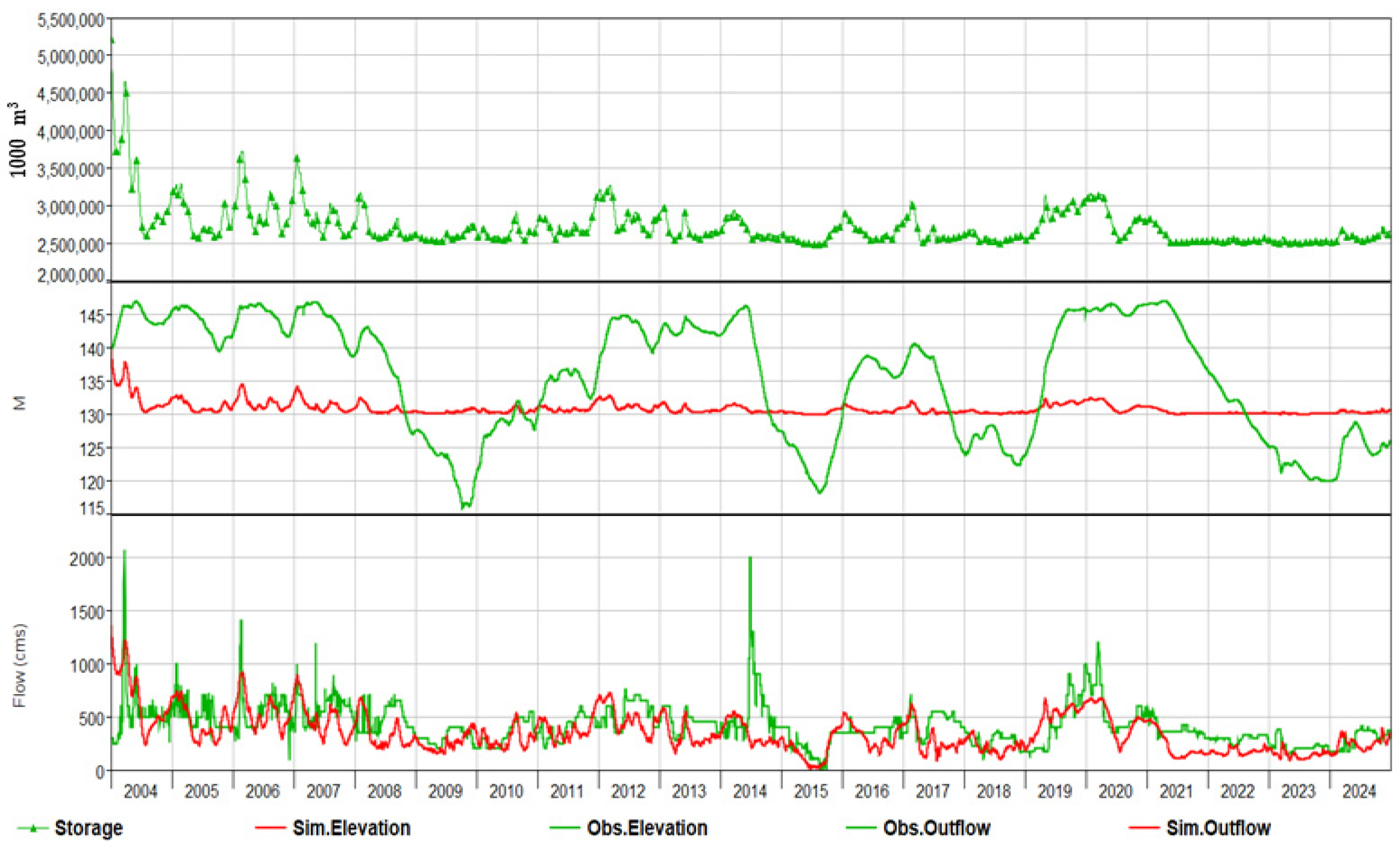
In this study, three reservoir operation scenarios developed using the HEC-HMS model were applied and compared with the actual operating conditions. The objective was to identify the most suitable operational strategy for the region and to evaluate its effectiveness in reducing water scarcity and minimizing the observed water deficit. Scenarios 1 and 2 represent hydraulic-based operational formulations, while Scenario 3 represents a management-oriented rule-based strategy.
The rule-based operating scheme was derived using a structured simulation-based procedure in HEC-HMS (i.e., comparative scenario testing), rather than through a formal optimization algorithm. Multiple operating configurations were systematically evaluated using identical inflow inputs to ensure a consistent comparison framework. The refinement of operating rules was guided by quantitative performance indicators, including reservoir storage behavior, minimum and maximum water surface elevations, downstream release magnitude, and overall system performance relative to the existing operation.
4.2.1. Result of Outflow Curve Operation Scenario
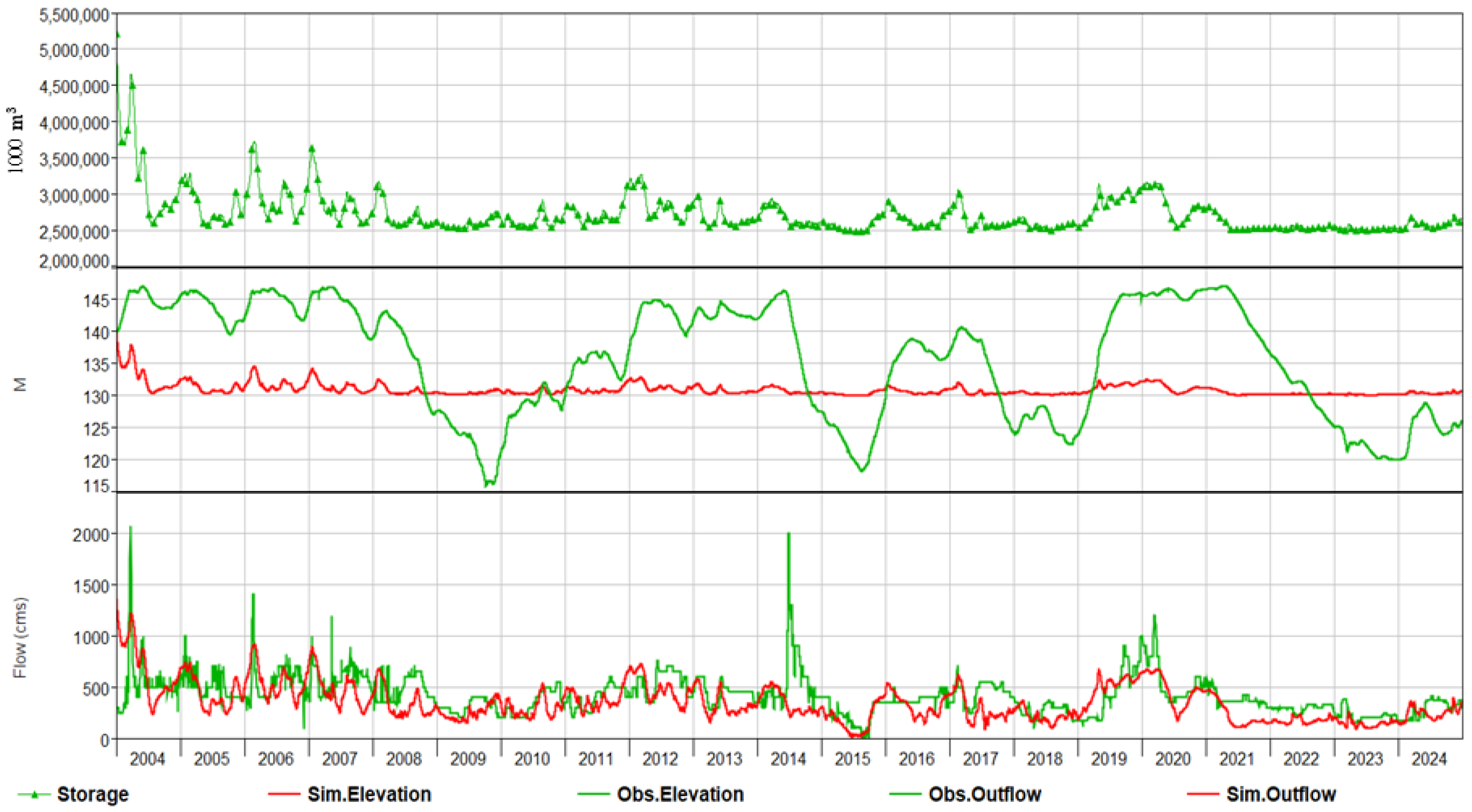
This situation is depicted in
Figure 10, and a summary of maximum and minimum pool elevations, storage capacities, and outflow rates is also shown in
Table 2. This comparison provides a complete assessment with the recorded actual reference observations of hydrological operation for the period 2004–2024. The outflow and the simulated pool level are likely to react to the observed temporal variations, and they represent the major seasonal changes in reservoir performance. The differences between the simulated and observed data are apparent where the peaks of the flow are involved, and when rapidity is near.
4.2.2. Result of Outflow Structure Routing Scenario
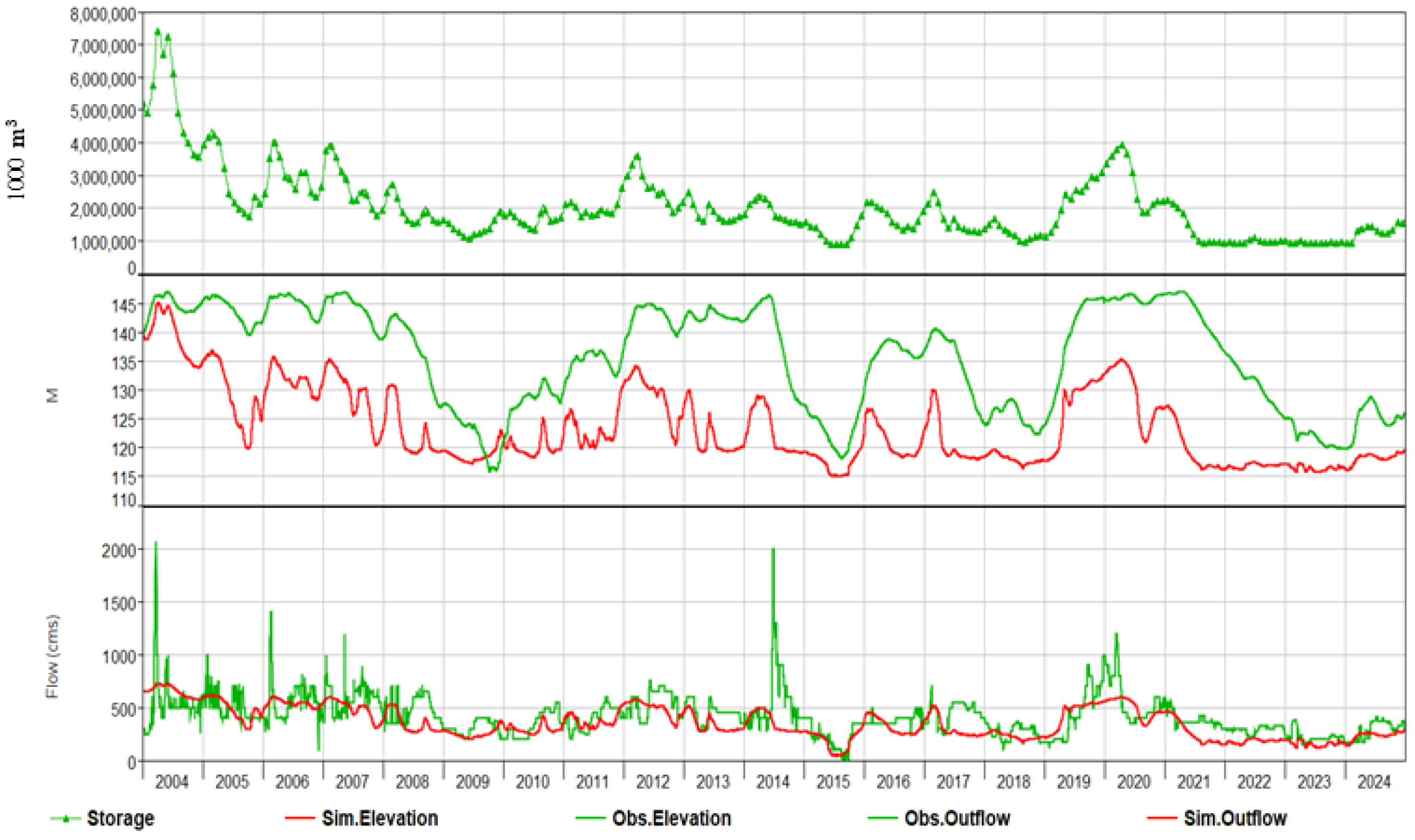
The results in
Figure 11 show that restricting outlet openings and allowing spillway operation during high-flow periods improved water retention during drought conditions. With a 45% outlet opening, the reservoir level was maintained at approximately 116 m, comparable to observed conditions, while achieving higher storage than the previous scenario.
This scenario represents a purely hydraulic-based release formulation in HEC-HMS, where releases depend solely on the physical characteristics of outlets and spillways. Consequently, although minimum storage was higher than in the observed operation (
Table 2), the minimum simulated releases remained higher than the recorded values. This difference reflects the absence of management-oriented operational controls in the hydraulic formulation.
4.2.3. Result of Rule-Based Operation Scenario
The results of the reservoir operation using the rule-based operation scenario are portrayed in
Figure 12. Two operational areas (summer and flood areas) were used in this case, and two sets of rules were set during the summer season and one rule during the flood season. The simulated outcomes indicate that the reservoir storage was typically kept at about 2.5 billion m
3, and the lowest point of the reservoir water level was approximately 130 m during the period of the study. The pattern of simulated release is similar to the actual variation in time, where one can see a regulation of the release during low-flow and high-flow stages.
The major performance indicators of the simulated scenarios compared with the observed operation are summarized in
Table 3.
Table 3 presents the minimum and maximum values of reservoir elevation, outflow, storage, and water deficit for each operational scenario.
The results indicate that the proposed rule-based operation improved reservoir regulation compared to the observed operation. As shown in
Table 3, the minimum reservoir elevation increased from 115.8 m under observed conditions to 130 m under the rule-based scenario, while minimum storage increased from 0.47 BCM to 2.50 BCM, reflecting enhanced resilience against low-storage conditions. Additionally, the water deficit was reduced compared to the existing operational policy.
Regarding flood risk assessment, peak discharges during high inflow periods were explicitly analyzed.
Table 3 shows that the maximum outflow under the rule-based operation (1358 m
3/s) remained substantially lower than the historical maximum release (2073 m
3/s). Furthermore, the maximum reservoir elevation under the proposed rules (140 m) remained below the historical maximum level (147 m) and within the allowable operational limits. These findings indicate that the improved storage performance was achieved without increasing downstream flood peaks within the analyzed hydrological period. However, evaluation under extreme events exceeding the historical record would require additional investigation to confirm system performance under exceptional conditions.
5. Discussion
The results demonstrate clear differences between the actual reservoir operation and the three simulated operational scenarios. As shown in
Table 3, the observed operation reached notably lower minimum reservoir elevation (115.8 m) and storage volume (0.47 BCM) compared to the rule-based scenario (130 m and 2.50 BCM, respectively), indicating comparatively weaker regulation performance under historical management practices.
The outflow-curve scenario improved the overall control of release; however, its ability to regulate reservoir storage during prolonged dry periods remained limited. Similarly, the outflow-structure scenario provided a more realistic hydraulic representation of release and achieved higher storage levels compared to the observed operation, but its performance was constrained by the hydraulic release mechanism.
In contrast, the rule-based operation showed the most balanced performance. The reservoir demonstrated greater resilience during drought conditions and operated more effectively under seasonally adjusted operating principles. This approach allowed higher storage levels to be maintained and improved minimum water elevations within the operational limits.
The comparison further indicates that actual releases were frequently lower than the estimated demand, reflecting persistent water shortages associated with declining upstream inflows.
Overall, the findings suggest that rule-based operation provides a more effective strategy for improving reservoir performance compared to hydraulic- and curve-based approaches, particularly for long-term water resource management.
This study evaluates reservoir operation under historical hydrological conditions (2004–2024). Future climate change may alter inflow variability, evaporation losses, and water demand patterns in the region, potentially intensifying drought frequency and increasing operational uncertainty. Although climate change scenarios were beyond the scope of the present study, the proposed rule-based framework can be extended to incorporate projected climate data. Evaluating reservoir performance under future climate scenarios would provide valuable insight into long-term system resilience and adaptive water resources management strategies.
6. Conclusions
This paper compared the functioning of the Haditha Dam in the process of reservoir operation through the HEC-HMS model, calibration, and validation of rainfall–runoff simulation, and then assessed three other possible ways for operations to take place. The results showed that the relatively low storage levels were observed during dry seasons because of the observed operation.
Of all the performances, the rule-based operation was the most effective as it provided higher reservoir storage and a higher minimum water level compared to the observed operation and the remainder of the simulations. The cases of outflow curve and outflow structure were marginally better, mainly since there was simplicity and hydraulically controlled release processes.
This study suggests that operational strategies are based on rules which can be applied to a significant extent to improve the functioning of reservoirs and increase water security in case of a prolonged variability in hydrological conditions. The proposed plan will provide a practical example for improving the working reservoir in dry and semi-arid regions.
Author Contributions
Conceptualization, G.S.M.; methodology, G.S.M.; formal analysis, G.S.M.; investigation, G.S.M.; data curation, G.S.M.; writing—original draft preparation, G.S.M.; visualization, G.S.M.; funding acquisition, G.S.M.; supervision and validation, L.B.M.S., H.B.B. and M.S.A.-K. All authors have read and agreed to the published version of the manuscript.
Funding
This research received no external funding.
Data Availability Statement
The primary datasets supporting the findings of this study are not publicly available due to confidentiality agreements and licensing restrictions with the Iraqi Ministry of Water Resources and the Iraqi General Authority for Meteorology and Seismic Monitoring. The data were obtained under paid agreements and are not available for public sharing or reuse. Additional openly available data, including digital elevation model (DEM) data, were obtained from the U.S. Geological Survey (USGS).
Acknowledgments
The authors acknowledge the Iraqi Ministry of Water Resources and the Iraqi General Authority for Meteorology and Seismic Monitoring for providing access to the data used in this study. The authors also acknowledge the academic and administrative support provided during the course of this research. During the preparation of this manuscript, the authors used (OpenAI, ChatGPT-5.3) for language editing and clarity improvement. The authors have reviewed and edited the output and take full responsibility for the content of this publication.
Conflicts of Interest
The authors declare no conflicts of interest. The funders had no role in the design of the study; in the collection, analyses, or interpretation of data; in the writing of the manuscript; or in the decision to publish the results.
Abbreviations
The following abbreviations are used in this manuscript:
| HEC-HMS | Hydrological engineering center–Hydrological modeling system |
| NSE | Nash–Sutcliffe Efficiency |
| RMSE | Root Mean Square Error |
| R2 | Coefficient of Determination |
| PBIAS | Percent Bias |
| SCS-CN | Soil Conservation Service Curve Number |
| SCS-UH | Soil Conservation Service Unit Hydrograph |
| DEM | Digital Elevation Model |
| USGS | United States Geological Survey |
| GIS | Geographic Information System |
| BCM | Billion cubic meters |
| MOWR | Ministry of Water Resources |
References
- Fu, G.; Ni, G.; Zhang, C. Recent advances in adaptive catchment management and reservoir operation. Water 2019, 11, 427. [Google Scholar] [CrossRef]
- Mohammed, R.; Scholz, M. Adaptation Strategy to Mitigate the Impact of Climate Change on Water Resources in Arid and Semi-Arid Regions: A Case Study. Water Resour. Manag. 2017, 31, 3557–3573. [Google Scholar] [CrossRef]
- Nordin, N.A.S.; Hassan, Z.; Noor, N.M.; Kamarudzaman, A.N.; Ahmadni, A.S.A. Assessing Hydrological Response in the Timah-Tasoh Reservoir Sub-Catchments: Calibration and Validation using the HEC-HMS Model. IOP Conf. Ser. Earth Environ. Sci. 2024, 1303, 012029. [Google Scholar] [CrossRef]
- Tangam, I.S.; Yonaba, R.; Niang, D.; Adamou, M.M.; Keïta, A.; Karambiri, H. Daily Simulation of the Rainfall–Runoff Relationship in the Sirba River Basin in West Africa: Insights from the HEC-HMS Model. Hydrology 2024, 11, 34. [Google Scholar] [CrossRef]
- Akbari, S.; Singh, R. Hydrological modelling of catchments using MIKE SHE. In Proceedings of the IEEE-International Conference on Advances in Engineering, Science and Management (ICAESM-2012), Nagapattinam, India, 30–31 March 2012; Volume 7. [Google Scholar]
- Odey, G.; Cho, Y. Event-Based vs. Continuous Hydrological Modeling with HEC-HMS: A Review of Use Cases, Methodologies, and Performance Metrics. Hydrology 2025, 12, 39. [Google Scholar] [CrossRef]
- Awol, F.S.; Coulibaly, P.; Tsanis, I.; Unduche, F. Identification of hydrological models for enhanced ensemble reservoir inflow forecasting in a large complex prairiewatershed. Water 2019, 11, 2201. [Google Scholar] [CrossRef]
- Razad, A.Z.A.; Sidek, L.M.; Jung, K.; Basri, H. Reservoir Inflow Simulation using Mike Nam Rainfall-Runoff Model. J. Eng. Sci. Technol. 2018, 13, 4206–4225. [Google Scholar]
- Derdour, A.; Bouanani, A.; Babahamed, K. Modelling rainfall runoff relations using HEC-HMS in a semi-arid region: Case study in Ain Sefra watershed, Ksour Mountains (SW Algeria). J. Water L. Dev. 2018, 36, 45–55. [Google Scholar] [CrossRef]
- Anggraheni, E.; Sutjiningsih, D.; Widyoko, J. Rainfall-runoff modelling calibration on the watershed with minimum stream gage network data. Int. J. Eng. Technol. 2018, 7, 121–124. [Google Scholar] [CrossRef]
- Namara, W.G.; Damise, T.A.; Tufa, F.G. Rainfall Runoff Modeling Using HEC-HMS: The Case of Awash Bello Sub-Catchment, Upper Awash Basin, Ethiopia. Int. J. Environ. 2020, 9, 68–86. [Google Scholar] [CrossRef]
- Ranjan, S.; Singh, V. HEC-HMS based rainfall-runoff model for Punpun river basin. Water Pract. Technol. 2022, 17, 986–1001. [Google Scholar] [CrossRef]
- Garcia, M.; Juan, A.; Bedient, P. Integrating reservoir operations and flood modeling with HEC-RAS 2D. Water 2020, 12, 2259. [Google Scholar] [CrossRef]
- Tavakoly, A.A.; David, C.H.; Gutenson, J.L.; Wahl, M.W.; Follum, M. Development of non-data driven reservoir routing in the routing application for parallel computatIon of discharge (RAPID) model. Environ. Model. Softw. 2023, 161, 105631. [Google Scholar] [CrossRef]
- Belay, Y.Y.; Gouday, Y.A.; Alemnew, H.N. Comparison of HEC-HMS hydrologic model for estimation of runoff computation techniques as a design input: Case of Middle Awash multi-purpose dam, Ethiopia. Appl. Water Sci. 2022, 12, 237. [Google Scholar] [CrossRef]
- Novrizal, D.; Hermawan, F.; Wibowo, M.A.; Nasution, I.A. Analisis Inflow Lokal Waduk Jatiluhur. Media Komun. Tek. Sipil 2023, 28, 300–309. [Google Scholar] [CrossRef]
- Bedada, B.A. Rainfall-Runoff Hydrological Modeling Using Observed and Remotely Sensed Rainfall Data for Sustainable Watershed Management over Modjo Catchment, Central Ethiopia: Insights from HEC-HMS Model. Preprints 2025, 2025010842. [Google Scholar] [CrossRef]
- Rad, S.; Junfeng, D.; Jingxuan, X.; Zitao, L.; Linyan, P.; Wan, Z.; Lin, L. Lijiang flood characteristics and implication of karst storage through Muskingum flood routing via HEC-HMS, S. China. Hydrol. Res. 2022, 53, 1480–1493. [Google Scholar] [CrossRef]
- Zhang, Y.; Zhou, J.; Lu, C. Integrated hydrologic and hydrodynamic models to improve flood simulation capability in the data-scarce three gorges reservoir region. Water 2020, 12, 1462. [Google Scholar] [CrossRef]
- Chathuranika, I.M.; Gunathilake, M.B.; Baddewela, P.K.; Sachinthanie, E.; Babel, M.S.; Shrestha, S.; Jha, M.K.; Rathnayake, U.S. Comparison of two hydrological models, HEC-HMS and SWAT in runoff estimation: Application to Huai Bang Sai Tropical Watershed, Thailand. Fluids 2022, 7, 267. [Google Scholar] [CrossRef]
- Ajudiya, B.K.; Kumar, V.; Yadav, S.M.; Solank, Y.P. Optimizing performance assessment of multi-reservoir operations for sustainable water management in a semi-arid region. Water Supply 2024, 24, 773–785. [Google Scholar] [CrossRef]
- Tang, R.; Wang, Y. Risk-Informed Multiobjective Optimization of Reservoir Operation. Water 2025, 17, 2467. [Google Scholar] [CrossRef]
- Obead, I.; Omran, H.; Fattah, M. Safety Assessment of Hadithah Dam Under Extreme Operations and Collapsible Foundation Challenges. Eng. Technol. J. 2020, 38, 1771–1782. [Google Scholar] [CrossRef]
- SAlrawi, A.; Jalal, A.D.; Abdulhameed, U.H. Impact of Euphrates Water Levels on the Hydraulic Properties and Water Quality Parameter in Anbar Province, Iraq. Nat. Sci. 2025, 39, 1–7. [Google Scholar]
- Almawla, A.S.; Kamel, A.H.; Lateef, A.M. Modelling of Flow Patterns over Spillway with CFD (Case Study: Haditha Dam in Iraq). Int. J. Des. Nat. Ecodynamics 2021, 16, 373–385. [Google Scholar] [CrossRef]
- Mohammed, R.K. Optimum Operation of Haditha Dam. Eng. Technol. J. 2010, 28, 7058–7068. [Google Scholar] [CrossRef]
- Li, J.; Ameen, A.M.S.; Mohammad, T.A.; Al-Ansari, N.; Yaseen, Z.M. A systematic operation program of a hydropower plant based on minimizing the principal stress: Haditha dam case study. Water 2018, 10, 1270. [Google Scholar] [CrossRef]
- Malik, M.K.; Karim, I.R. Slope Stability Analysis of Haditha Dam after Earthquake using Geo-Studio Software. Eng. Technol. J. 2021, 39, 599–613. [Google Scholar] [CrossRef]
- Moriasi, D.N.; Arnold, J.G.; Van Liew, M.W.; Bingner, R.L.; Harmel, R.D.; Veith, T.L. Model evaluation guidelines for systematic quantification of accuracy in watershed simulations. Trans. ASABE 2007, 50, 885–900. [Google Scholar] [CrossRef]
- Moriasi, D.N.; Gitau, M.W.; Pai, N.; Daggupati, P. Hydrologic and water quality models: Performance measures and evaluation criteria. Trans. ASABE 2015, 58, 1763–1785. [Google Scholar] [CrossRef]
| Disclaimer/Publisher’s Note: The statements, opinions and data contained in all publications are solely those of the individual author(s) and contributor(s) and not of MDPI and/or the editor(s). MDPI and/or the editor(s) disclaim responsibility for any injury to people or property resulting from any ideas, methods, instructions or products referred to in the content. |