Next Article in Journal
Assessment of Hybrid Grey-Green Infrastructure for Waterlogging Control and Environmental Preservation in Historic Urban Districts: A Model-Based Approach
Previous Article in Journal
Study on Characteristics of Floating Ice Accumulation and Entrainment Safety Thresholds Upstream of Sluice Gates Based on Model Tests and Logistic Regression
 
 
hydrology-logo
Article Menu
Review

Water Resources in South of Iraq: Current State, Future Evolutions, Challenges, and Potential Solutions


by
Saleem Ethaib
1,
Marwan Fahs
2,*,
Hussein Mishbak
1,
Mohammad N. Fares
3,
Jamal S. Makki
1,
Abdulzahra Alhello
4,
Hayder Abbood
3,
Sarah N. Abdel Hassan
1,
Abdulsattar A. Alrijabo
5,
Mohamed Azaroual
6,
Husam Musa Baalousha
7,
Nicolas Baghdadi
8,
Pierre Blanc
9,
Juliette Duclos
10,
Laurent Drapeau
11,
Nizar Hariri
12,
Hayfaa Hussein
13,
Waleed Jebir Hassan
1,
Talib E. Hussien
1,
François Lehmann
2,
Florence Le Ber
14,
Mahdi S. Mizel
1,
Raghdan Mohsin
13,
Amera Nasser
13,
Tarek Nasser
15,
Ali Farouq Al-Ma’athedi
5,
Ali Raeisi
16,
Renaud Toussaint
2,17,
Adrien Wanko Ngnien
14,
Anis Younes
2,
Kevin Del Vecchio
18 and
Ahmad Al Bitar
19
add Show full author list remove Hide full author list
1
College of Engineering, University of Thi-Qar, Nasiriyah 64001, Iraq
2
ITES UMR 7063, CNRS, ENGEES, Université de Strasbourg, F-67000 Strasbourg, France
3
College of Engineering, University of Barah, Basrah 61004, Iraq
4
Marine Science Center, University of Basrah, Basrah 61004, Iraq
5
College of Agriculture and Forestry, University of Mosul, Mosul 41002, Iraq
6
BRGM, French Geological Survey, 3 Av. Claude Guillemin, Cedex 1, 45060 Orléans, France
7
Department of Geosciences, College of Petroleum Engineering and Geosciences, King Fahd University of Petroleum and Minerals (KFUPM), Dhahran 31261, Saudi Arabia
8
INRAE, TETIS, University of Montpellier, AgroParisTech, 34093 Montpellier, France
9
Sciences Po Bordeaux, 33607 Pessac, France
10
EHESS–CéSor UMR 8216, 93300 Paris, France
11
Institut de Recherches pour le Développement, UMR 7330 Centre Européen de Recherche et d’Enseignement en Géosciences de l’Environnement, Université-Collège de France-INRA, 13545 Aix-en-Provence, France
12
Institut Français du Proche-Orient (Ifpo), Research Chair on Urban Environments (Ifpo-AFD), Beirut 11-1424, Lebanon
13
College of Agriculture, University of Basrah, Basrah 61004, Iraq
14
ICube UMR 7357, CNRS, ENGEES, Université de Strasbourg, F-67000 Strasbourg, France
15
Centre d’Etudes pour le Développement des Territoires et l’Environnement (EA 1210), 45065 Orléans, France
16
Department of Water Engineering, Shahrekord University, Shahrekord 88186-34141, Iran
17
PoreLab, Njord, Physics Department, University of Oslo, 0316 Oslo, Norway
18
SAGE UMR 7363, INRAE, CNRS, ENGEES, Université de Strasbourg, F-67000 Strasbourg, France
19
CESBIO, CNRS, CNES, Université de Toulouse, IRD, INRAe, UPS, 31401 Toulouyse, France
*
Author to whom correspondence should be addressed.
Hydrology 2026, 13(3), 87; https://doi.org/10.3390/hydrology13030087
Submission received: 24 January 2026 / Revised: 25 February 2026 / Accepted: 27 February 2026 / Published: 9 March 2026

Abstract

Southern Iraq or lower Mesopotamia has a crucial role in Iraq’s economy due to its agricultural resources and unique wetland areas. Today southern Iraq, which is historically considered the birthplace of the development of early farming communities and the domestication of plants, is experiencing a drastic water resources crisis which is driven by both natural and human-induced reasons such as climate change, long periodical drought and water resources mismanagement practices. Despite the severity of the crisis, there is a lack of integrated and comprehensive assessments addressing the current state of water resources in southern Iraq. This paper aims to fill this gap by providing an in-depth review of the factors affecting water resources in the region. The current situation of water resources is analyzed using different indicators such as water availability in marshes, salinity variation along Shatt al-Arab river and surface of cultivated areas. This paper reviews previous studies, summarizes the current situation, analyzes the key challenges, and explores a range of potential solutions for further investigation. This study analysis is essential for guiding advanced research efforts that offer deeper insight into the challenges and propose practical solutions. This paper identifies key topics for future research to address the water crisis.

1. Introduction

1.1. General Context

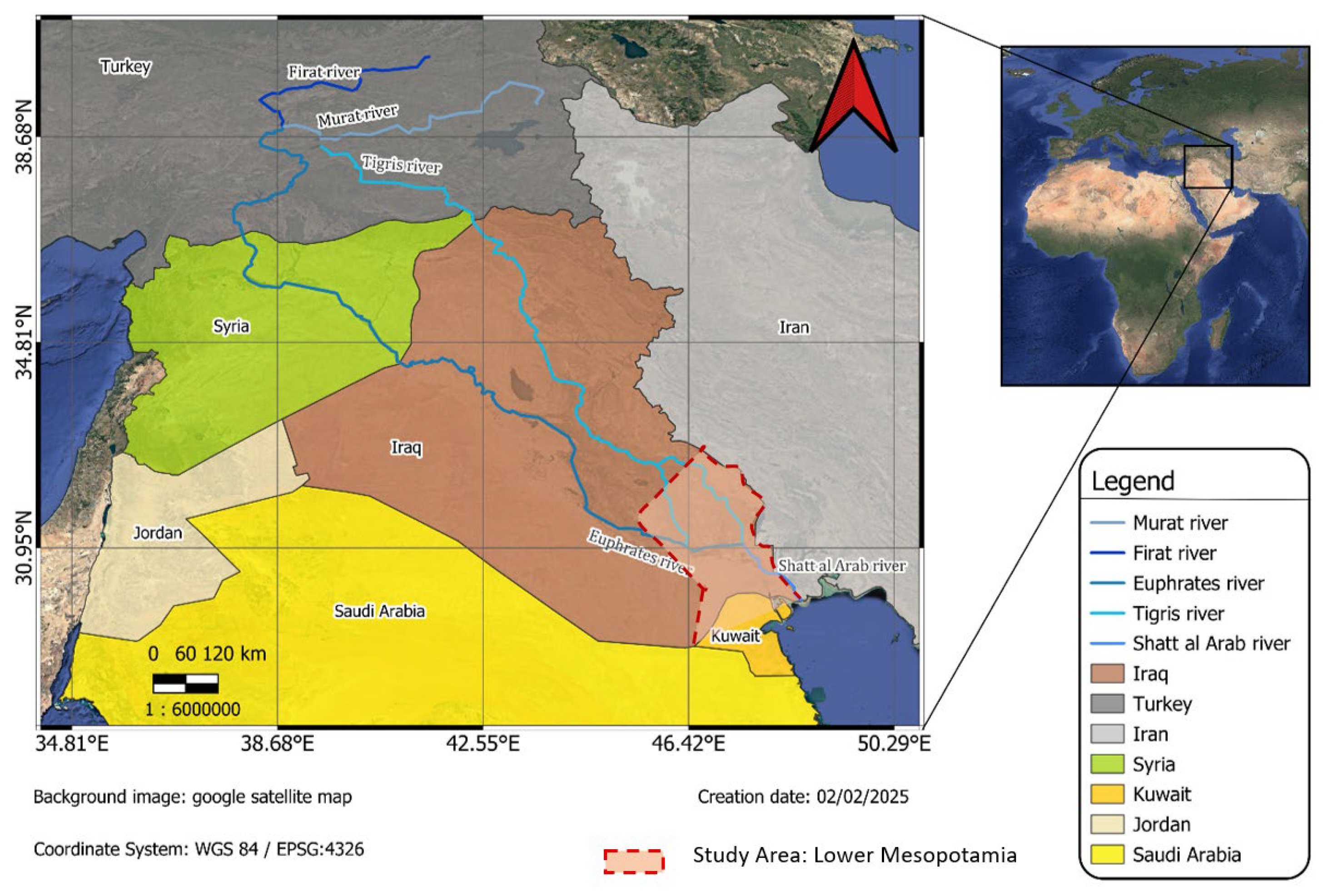
Water resources in arid regions are increasingly under pressure due to limited natural recharge, high evaporation rates, rapid population growth, and climate change. These factors lead to chronic water scarcity, severe environmental degradation, and growing social and economic pressures on communities living in these areas. This situation is particularly critical in the Middle East, where extreme climatic conditions, transboundary water dependencies, and geopolitical tensions further intensify water scarcity challenges [1,2]. Iraq is among the countries in the Middle East most affected by water scarcity. Iraq lies in Western Asia and is bordered by Iran to the east, Turkey to the north, Kuwait to the southeast, Saudi Arabia to the south, Jordan to the southwest, and Syria to the west. Positioned at the crossroads of the Middle East, Iraq has a rich historical heritage. The earliest known human settlements are found in the Mesopotamian region, which is located between the Tigris and Euphrates Rivers in southern Iraq (Figure 1).
With an area of approximately 438,000 km2 and a population of 46 million, Iraq ranks as the 34th most populous country in the world, according to the World Populations Review (https://worldpopulationreview.com/countries, Accessed on 22 February 2026). The country’s economy is primarily driven by its abundant oil reserves, which rank among the largest globally. Iraq ranks as the sixth-largest oil producer in the world, according to the U.S. Energy Information Administration (EIA). In addition, Iraq has significant natural gas production.
Iraq’s economy is currently facing several challenges related to reliance on oil, political instability, and security concerns. To address these issues, considerable efforts have been made in the last years to diversify the economy and attract foreign investment. One of the most important and attractive sectors for diversification is agriculture, which has a rich history in the country dating back thousands of years. In fact, Iraq represents a big part of the historical Fertile Crescent, which is historically considered the birthplace of the development of early farming communities and the domestication of plants and animals around 10,000 BCE. The Fertile Crescent is widely considered as the first place in history to cultivate wheat, barley, peas, lentils, and flax, and domesticate animals like sheep, goats, pigs, and cattle. These historical agricultural activities are due to the irrigation from the Tigris and Euphrates Rivers. Today, the agriculture sector remains a vital sector in Iraq’s economy because it provides employment and livelihood for approximately 20% of the Iraqi workforce (CFRI: Centre Français de Recherche sur l’Irak). However, agricultural activities have recently been severely impacted by several factors such as climate change, drought and water resource management. Currently, agriculture makes a relatively lower contribution to the economy of Iraq as compared to the oil sector. Agriculture, forestry, and fishing were reported to contribute barely 2.85% to the GDP, according to the World Bank data. The sector meets only 30% of the country’s food needs. This makes Iraq heavily dependent on food imports and creates vulnerability to global market fluctuations (TheGlobalEconomy.com).
Currently the state of water resources in Iraq is marked by a complex interplay of natural and human-induced challenges [3]. Water has become a scarce resource and constraining development opportunities. This raises concerns among policymakers and water managers about the potential escalation of water stress in the near future. This paper focuses on water resources in the southern region that is also called lower Mesopotamia. This region represents the backbone of Iraq’s economy, mainly because of its oil resources and agricultural activities.

1.2. Case Study: Southern Iraq (Lower Mesopotamia)

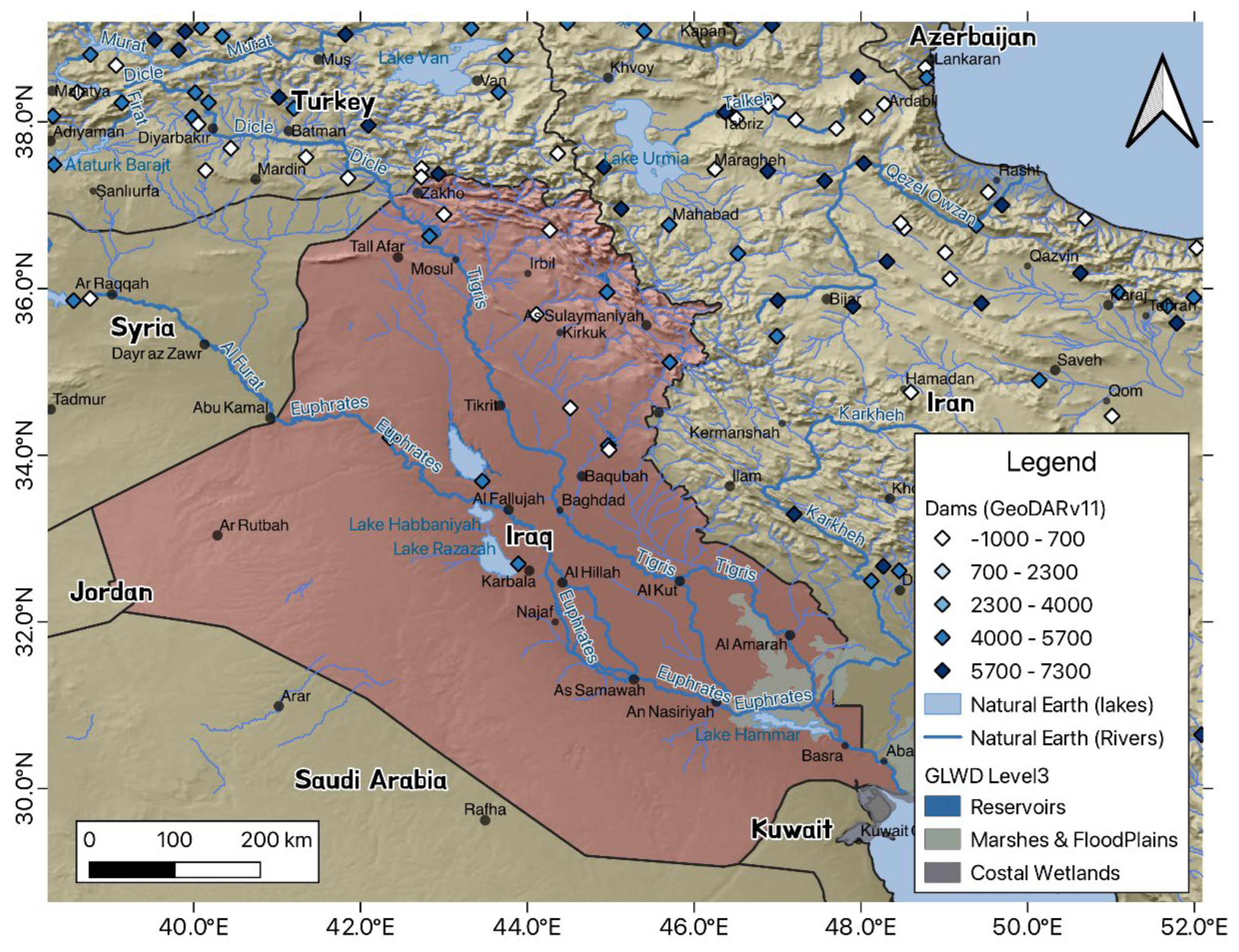
Geographically, Iraq is divided into four major regions: the northern region, central region, middle Euphrates region, and the southern region (Figure 1). The southern region consists of three governorates: Basra, Dhi-Qar, and Maysan, covering a total area of approximately 48,000 km2 (Basra: 19,000 km2, Dhi-Qar 13,000 km2, and Maysan 16,000 km2), with a population of about 6.25 million. There are several urban centers in the southern region such as Basra (1.65 million inhabitants), Nasiriya (0.85 million inhabitants), and Al-Amara (0.5 million inhabitants) but a large portion of the population resides in rural areas because they are engaged in agricultural activities.
The southern region is a key area for Iraq’s economy, as it contains a large portion of the largest oil fields in the world such as Rumaila, West Qurna, and Zubair fields. The region is also rich in historical and archaeological sites. For instance, the ancient city of Ur, near Nasiriyah, the center of the Dhi-Qar governorate, is believed to be the birthplace of the prophet Abraham, dating back to 2100 BCE. The southern region also contains the Mesopotamian marshes, one of the world’s most important wetland ecosystems, which is currently under threat of extinction (Figure 2). These marshes were recognized as a UNESCO World Heritage site in 2016 [4]. There are several urban centers in the southern region such as Basra (1.65 million inhabitants), Nasiriya (0.85 million inhabitants), and Al-Amara (0.5 million inhabitants) but a large portion of the population resides in rural areas because they are engaged in agricultural activities. The region contains Iraq’s only coastal area that covers approximately 58 km along the Persian Gulf. It also includes key waterways such as the Shatt al-Arab River which is formed by the confluence of the Tigris and Euphrates Rivers. The coastal zone is economically significant because it facilitates maritime trade through the port of Umm Qasr, Iraq’s largest seaport. While oil is the primary economic driver of the southern region, the agricultural sector also represents a key sector. The main crops grown in the region are wheat, barley, rice, and dates (World Population Review). Agricultural activities are not only important from an economical point of view, but also in oxygen regeneration, particularly in the south of Iraq, where air quality is a major concern due to gas flaring in oil fields.
Water demands in southern Iraq are primarily related to domestic consumption. Agricultural activities account for three-fifths of demand, in addition to the huge quantities of water consumed by the oil industry [5]. The south of Iraq has an arid to semi-arid climate with very low rainfall estimated to be about 100 mm of annual rain, though some areas receive even less [6,7]. Iraq has a long extremely dry Summer and the rainfall mostly occurs between November and April, peaking between December and February. Rainfall is highly unpredictable and experiences large year-to-year variability. Due to these reasons, groundwater plays an essential role in meeting the water demands for agricultural, industrial, and domestic purposes. Nevertheless, in general, freshwater aquifers are limited, which restricts the use of the groundwater due to its brackish or saline nature. Consequently, the region relies heavily on river water from the Tigris and Euphrates for its water supply. Most of the water from these rivers originates from Turkey (81%), followed by Iran (6.9%) and Syria (4%), with only 8% from internal sources [8,9]. Water desalination represents an important alternative to address water management challenges. Despite real obstacles in terms of cost, energy requirements, and environmental concerns, Iraq has launched a large-scale facility desalination project in Basra with a daily production capacity of one million liters (Utilities Middle East, 2023). This project has faced delays, but it is one of the major ongoing efforts to tackle water shortages. An interactive map is generated using the FAO Hand in Hand tool that enables the reader to explore climatology, digital elevation map, and agricultural practices for southern Iraq. https://data.apps.fao.org/?lang=en&share=f-9b60605e-bda5-4464-9f4b-f3d3ce946b17, Accessed on 22 February 2026

1.3. Objectives

The water crisis in southern Iraq is a multifaceted problem which has serious consequences on the environment, public health, agriculture and socio-economy. Despite the severity of the crisis, there is no complete study about the current situation of the water resources in southern Iraq. The drivers of the crisis and its impacts are not yet fully understood. Thus, the objective of this paper is to bridge that gap by presenting a comprehensive analysis about the stresses on water resources in southern Iraq with a focus on the impact of human activities and climate change. Such a study is crucial for implementing advanced research activities that would provide more insight into the problems and suggest practical solutions and new management strategies. This paper explores the most pressing challenges facing water resources in the south of Iraq and evaluates a range of potential solutions that could be investigated in further studies. Additionally, the study also highlights a prioritized set of pressing topics for future research.
This paper is structured as follows: Section 2 provides an overview of the current situation and the drivers of the water crisis, Section 3 discusses the environmental, social, and economic impacts of the crisis, Section 4 analyzes potential solutions suitable for the region, Section 5 outlines the most relevant key topics for future research, and Section 6 presents the conclusions.

2. Current Situation and Water Crisis Drivers

The current situation of water in southern Iraq escalated into a severe and multifaceted crisis, driven by a combination of natural, geopolitical, and socio-economic factors. The region is facing a range of interlinked challenges related to water availability, quality, and management. The issues and factors contributing to the water crisis in south of Iraq are further explored below.

2.1. Water Scarcity

Water scarcity is the primary driver of the water crisis in southern Iraq. Currently, the region is experiencing an acute shortage of water resources. For instance, in the Dhi-Qar governorate, according to the International Organization for Migration, it is reported that for several years, the average monthly water production was lower than demand. This situation persisted for 12 years between 1998 and 2018. Water scarcity is mainly caused by the decline in river flow and the effects of climate change.

2.1.1. Declination of Rivers Flow

As discussed in the introduction, the water resources of southern Iraq primarily rely on the Tigris and Euphrates Rivers. These rivers converge in southern Iraq to form the important Shatt al-Arab waterway, as shown in Figure 1 and Figure 2. In general, it is estimated that around 90% of Iraq’s freshwater supply comes from the Tigris and Euphrates Rivers. These rivers compose the unique Middle East marshlands, the Mesopotamian marshes, which are critical for the ecosystem, culture, and local livelihoods.
Due to the changes in climate and overexploitation, the flow rates of these rivers have been steadily declining since the 1970s. Over the past two decades, this decline has accelerated significantly, primarily due to upstream dam construction in the riparian countries, particularly in Turkey. In 1970, Turkey initiated the GAP project to revitalize the southeastern region of Anatolia [10]. This extensive project includes 22 dams, 19 hydroelectric power plants, along with various irrigational, agricultural, and industrial projects. As consequence, water inflows to Iraq have been drastically declined. For instance, the average annual flow of the Euphrates River has dropped from 30 billion cubic meter (BCM) in the 1970s to approximately 4.4 BCM today (ESCWA report 2021; [11]). Similarly, the annual flow in the Tigris River is 21.2 BCM and its tributaries 24.8 BCM. In the recent years, it was reported that the flows have decreased to about 16 BCM per year in Baghdad [9]. Iran has also established many hydrological projects on the tributaries of the Tigris River and several seasonal rivers near the Iraqi border which contributed to the declines of flow in the Tigris. For example, a project has been established on the Karun River and diverted its water into Iran. Due to these projects in Turkey and Iran, and according to Iraq’s Ministry of Water Resources, the combined flow of the Euphrates and Tigris rivers has decreased by up to 40% in the past two decades [5].
There are no comprehensive international water-sharing agreements between Iraq and upstream countries. In 1989, negotiations between Syria and Iraq resulted in an agreement on the allocation of the Euphrates River’s flow. According to this agreement, Iraq is entitled to 58% of the river’s flow at the Turkish Syrian border, while Syria receives the remaining 42% [12,13,14]. However, there is no clear agreement specifying the amount of water that Turkey should provide for this river. Iraq claims that the discharge of the Euphrates River at the borders of Turkey and Syria should be about 175 m3/s. For the Tigris River, in 2023, Turkey is committed to provide a minimum flow of 500 m3/s at its border [15]. However, Iraq claims that Turkey is currently providing only 313 m3/s. According to estimates from Iraq’s Ministry of Water Resources, the current discharge of the Tigris and Euphrates Rivers represents only 30% of Iraq’s natural entitlement [9]. The absence of binding agreements among these countries exacerbates the situation. Turkey controls a significant portion of the water flow, and ongoing political tensions have made negotiations difficult.

2.1.2. Climate Change

According to the United Nations reports, Iraq is classified as the fifth most vulnerable country in the world to the effects of climate change (World Bank Group technical report). Temperature is the most critical indicator of climate change that leads to a direct impact on water resources. Statistical analysis of temperature records dating back to 1941 revealed an annual increase in temperature is 0.032 °C (Ministry of Health and Environment of Iraq). As a result of climate change, southern Iraq has experienced a sharp decline in rainfall in recent decades. Recent climate trends, averaging over a century, indicate that maximum temperatures in the marshes have increased by approximately 0.7 °C per decade, while monthly precipitation has decreased at a rate of about 0.88 mm/month per century. Hashim, et al. (2024) [16] reported that annual average precipitation has shown negative anomalies since 1998. Agha and Şarlak [17] identified a decreasing precipitation trend of 1.3–6.2 mm/year between 1980 and 2011.
The increase in temperature leads to increased evaporation rates, decreased river flows, frequent cycles of drought which result in lowering surface and groundwater levels, expansion of desert areas, and unpredictability of weather patterns. According to an estimation made by the Iraq Energy Institute in 2018, evaporation from Iraqʼs reservoirs decreases the country’s total water supply by more than 10% each year [18]. Ethaib et al. [3] estimated that in 2019, the volume of evaporated water reached 5005 million m3 of the total storage which is evaluated to be 50.47 BCM.

2.2. Population Increase, Poor Water Infrastructure and Mismanagement

Over the last decade, Iraq’s population has been growing rapidly and urbanizing, further straining the already scarce water resource. The population increased from 16 million in 1986 to around 44 million in 2024 (Macrotrends, 2024). In the southern region, major cities, especially Basra, are struggling to meet the water demands of their populations. Due to significant population growth, the demand for food has increased, making the agricultural sector the largest consumer of water [19,20]. Ethaib et al. [3] reported that the annual volume of water available per person is 1390.95 m3/capita/year, based on the water flows of the Euphrates and Tigris Rivers for the period 2009–2019. The threshold for water scarcity is set at 1700 m3/capita/year [20]. Thus, Iraq is classified as one of the countries at high risk of water scarcity.
Ineffective water resource management strategies, high average daily water consumption, and the aging water supply systems and water treatment facilities are placing additional pressure on the water resources crisis. Over the decades, Iraq’s water infrastructure has suffered from the impacts of wars, conflicts, neglect, damage, and corruption, leaving it in urgent need of modernization. Southern Iraq has been affected by the direct impacts of wars for more than 15 years. For instance, Nemours studies on Basra city identified a complex assemblage of water infrastructure damage since the 1980s, primarily due to the deterioration of indirect water service components—such as understaffed facilities, low operating budgets, a lack of spare parts and water treatment chemicals and the degradation of physical structures [21,22,23,24].
Beyond the impacts of war, Iraq’s water resources are also severely affected by mismanagement practices. A significant portion of water losses is attributed to irrigation inefficiency [25]. Inefficient and outdated irrigation systems that are coupled with antiquated farming practices are responsible for substantial water losses in agriculture, squandering a large portion of water rations. In addition, Iraq irrigation systems suffer from high rates of water loss due to inefficiency. Furthermore, many urban areas suffer from the lack of wastewater treatment plants. This leads to inadequate discharging practice and directly disposing the untreated industrial and sewage waste into rivers, which severely degrades water quality.
Another aspect of poor water management is the distribution of water quotas among the southern governorates. This problem is a complicated issue caused by the lack of a structured water allocation plan. Water quota overruns frequently occur when a governorate or local authority exceeds its allocated share, negatively affecting the other governorates that rely on the same water sources. The main cause of this problem is the lack of sustainable planning for water resources management, and absence of coordination between local authorities at the governorate level. Mitigating this problem in southern Iraq requires coordination and cooperation among the concerned agencies to provide sustainable solutions to ensure fair water distribution and to improve the environmental and economic situation in the region.

2.3. Conserving the Marshes (Al-Ahwar)

Iraqi marsh areas that are locally named Al-Ahwar have been recognized as a UNESCO World Heritage site since 2016. These areas provide a unique environment for the ecological system in the Middle East. The open water areas, dense reed beds, floating vegetation, and mudflats of these marshes provide a huge shelter for wildlife creatures, hosting numerous species of fish, amphibians, birds, reptiles, and mammals. However, nowadays these marshes are in a critical situation and suffer from water open areas shrinkages due to the lack of feeding water. Along with the environmental importance of marshes, this natural ecosystem of wetlands is a vital issue for local communities in which their livelihoods rely on the resources of the marshlands. Conserving the marshes requires sustaining the water cycle, improving water availability and quality, and addressing historical and social concerns [26,27,28,29]. Historically, the marshes in southern Iraq were intentionally drained during the 1990s, under Saddam Hussein’s regime. The campaign of marshes drying was achieved for political issues and suppressed rebellions against the regime to forcibly displace the population and punish the Marsh Arab communities. For instance, the marsh areas in the Dhi-Qar governorate were shrinkages to cover approximately 4% in 1999 (65 km2) compared to an area of 1580 km2 in 1991 [3]. This action resulted in severe demographic, ecological, and environmental consequences, which will be explored in the next section. In the summer of 2003 following the US invasion of Iraq, real attempts were beginning to restore the marshes. The displaced people returned to their original areas in the marshes and dismantled the dams that had diverted water away from the wetlands, resulting in the re-flooding of the marshes [30]. However, currently the water levels in these marshes have been decreasing due to reduced river flow and climate change.
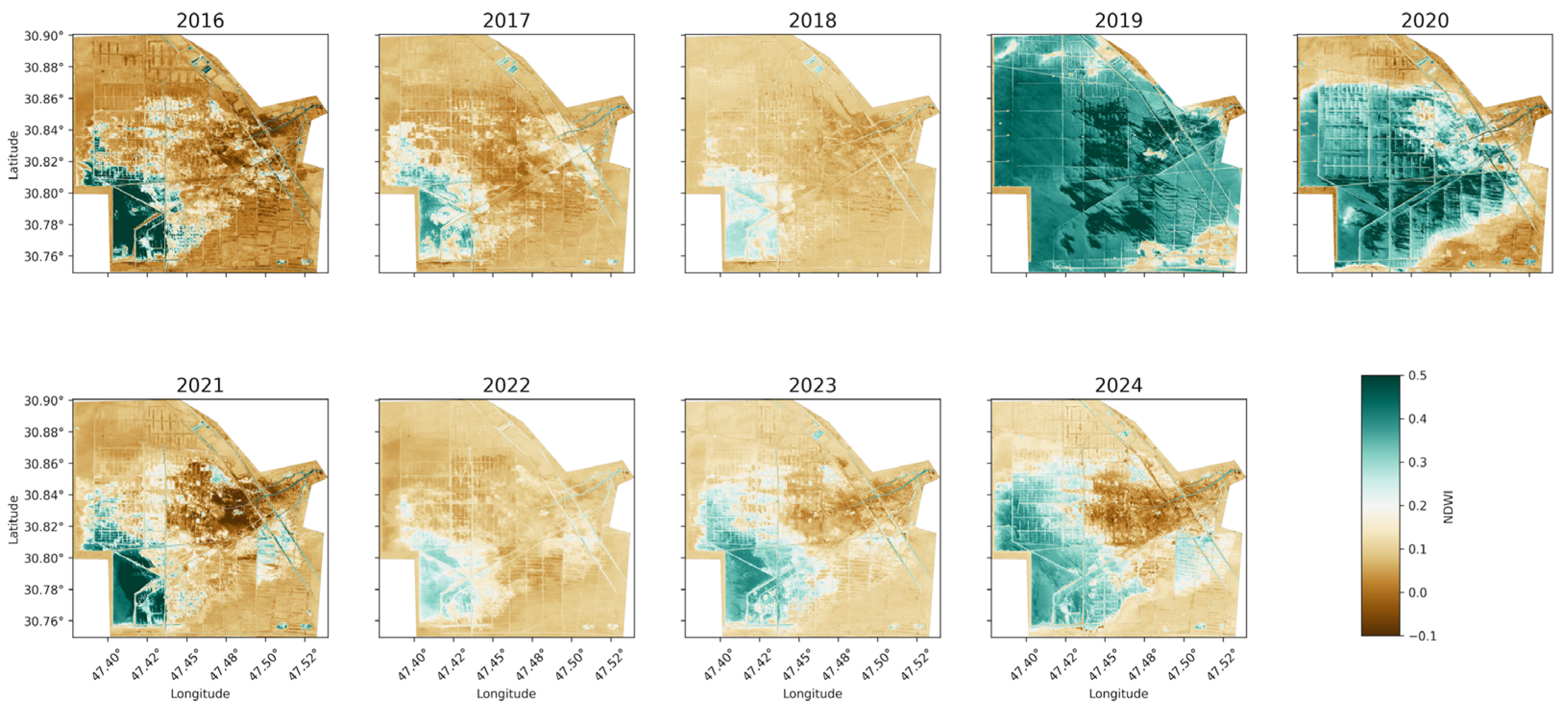
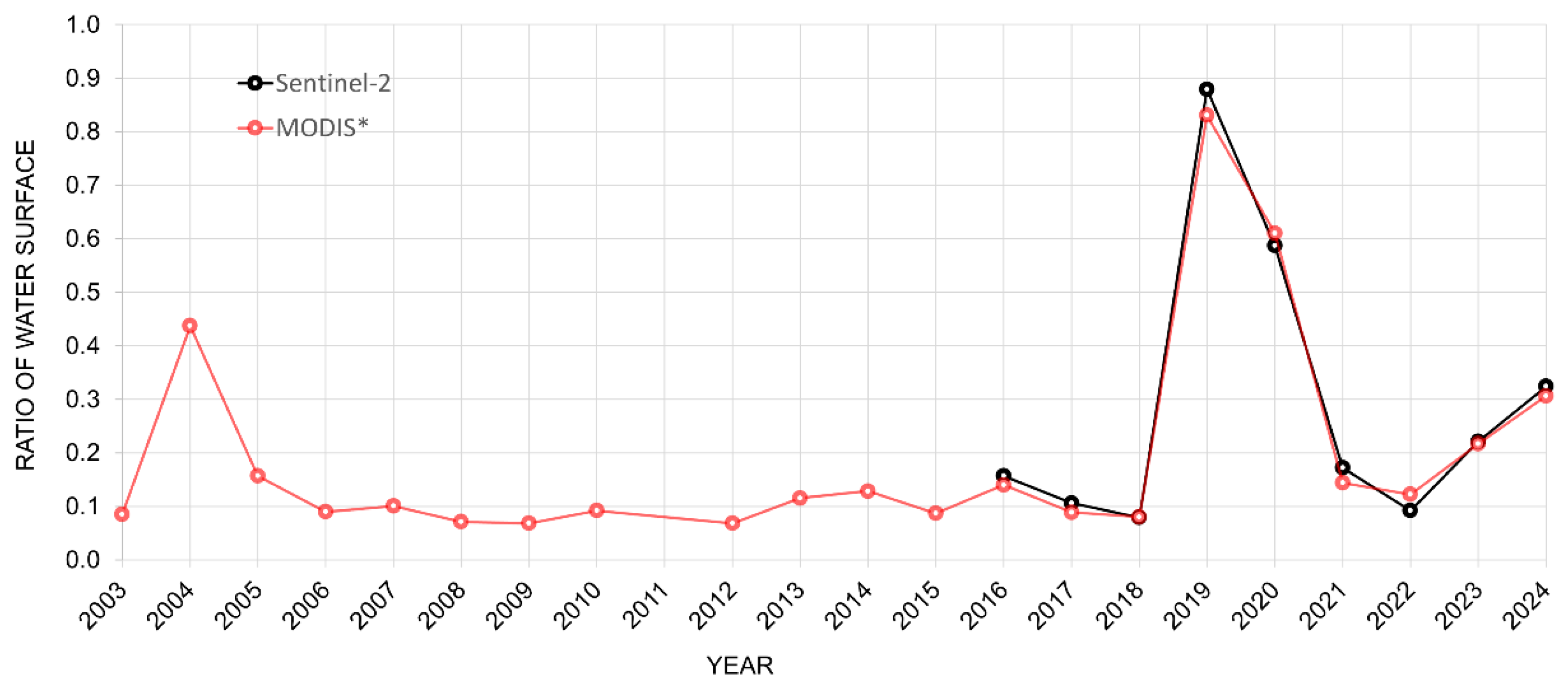
To provide a localized demonstrator for the Ahwar el Shafi marshes, we conducted a rigorous spatio-temporal analysis of surface water dynamics. This analysis relies on a multi-sensor approach to bridge the gap between high-spatial-resolution observations and long-term historical trends. Primary high-resolution observations were derived from the Copernicus Sentinel-2A and 2B constellation. We utilized Level-2A (L2A) Bottom-of-Atmosphere (BOA) surface reflectance products, which provide orthorectified and atmospherically corrected data at 10 m to 20 m spatial resolution. To delineate open water surfaces, the Normalized Difference Water Index (NDWI) was calculated using the Green (B3) and Near-Infrared (B8) bands: N D W I = ( B 3 B 8 ) / ( B 3 + B 8 ) . This widely used index is particularly effective for the Mesopotamian marshes as it enhances the water features while suppressing the signal from terrestrial vegetation and soil. To extend the temporal coverage beyond the launch of Sentinel-2, we integrated data from the NASA MODIS Terra satellite (MOD09A1). We utilized 8-day composite BOA reflectance maps at a 500 m spatial resolution spanning from 2003 to 2024. Given the significant discrepancy in spatial resolution and spectral response functions between the two sensors, a cross-sensor harmonization approach was required. We performed a linear regression analysis during the overlapping operational period of both satellites to align the MODIS-derived flooded areas with the high-fidelity Sentinel-2 baseline. The resulting empirical correction model is defined as follows: y = 0.983 x + 0.062 where y represents the corrected flooded area and x represents the raw MODIS estimation. This alignment ensures that the 21-year time series is statistically consistent, allowing for a robust assessment of long-term hydrological shifts. As illustrated in Figure 3, the Sentinel-2 derived maps for the month of July provide a high-definition snapshot of the inter-annual vulnerability of the El Shafi marshes. The maps capture the hydro-climatic extremes of the last decade, specifically the catastrophic drought of 2018 and the subsequent record-breaking flood pulse of 2019. The long-term variations shown in Figure 4 reveal that while the marshes are capable of rapid recovery following pulse events (such as those in 2003 and 2019), the baseline water availability remains critically low. These results underscore that the hydrological health of El Shafi is not merely a function of regional climatological conditions constraining the inbound water flow. Instead, it is a complex byproduct of climatological constraints on upstream headwaters, transboundary water governance between riparian neighbors, and the shifting of national water management amidst periods of regional political instability. The time series indicates low flooding levels between 2003 and 2024, except for notable flood events in 2003 and 2019 which are very well depicted. Data used in Figure 3 and Figure 4 have been obtained from [31,32].
The restoration of Mesopotamian marshes (Al-Ahwar) is not merely a national priority for Iraqis but a matter of international concern. Several global organizations have supported these efforts of restoration due to cultural and ecological importance and aim to preserve their integrity and outstanding universal value for future generations. Theses marshes hold immense cultural and historical value, widely believed to be the site of the Biblical Garden of Eden, further underscoring their cultural heritage value. Moreover, the livelihoods of the local communities local in theses marshes fundamentally rely on the marshes, particularly fishing, agriculture, and livestock grazing. Along with the demographical and economical role of these wetlands, they act as natural water filters. They trap pollutants and sediments, and they enhance the water quality downstream. Moreover, they also significantly contribute to climate regulation by sequestering carbon and mitigating climate change impacts and serve as a natural barrier against desertification, which is a growing threat in southern Iraq. From a social standpoint, the restoration of these marshes represents a rectification of past environmental degradation and a meaningful step toward addressing historical injustices.
Attempts to restore the marshes are further intensifying the strain on water resources in southern Iraq [28]. Restoring the marshes requires substantial water volumes to re-flood areas that were previously drained. The main water sources for this process are the Tigris and Euphrates Rivers; however, the flow in these rivers has drastically declined due to upstream damming projects in Turkey and Iran. Given these stresses, it is challenging to allocate sufficient water for marsh restoration. In 2009, UNESCO initiated discussions with Turkey to increase water releases to support restoration efforts, but no agreement was achieved [28]. Diverting water to restore the marshes could lead to competition with agricultural activities and other essential uses, potentially triggering conflicts over water allocation [33]. Furthermore, the re-flooding process of the marshes is contributing to increasing salinity levels and deteriorating water quality for downstream users [34,35,36].

2.4. Pollution and Salinization

The quantity of water is not the only factor placing stress on water resources; water quality has also been affected by water scarcity and human activities. Pollution from industrial and agricultural activities, untreated sewage, and oil production has contaminated many water sources. In mature oil fields, oil recovery consumes a significant amount of water during the oil extraction process. This process is known as waterflooding. In this process water is injected into the reservoir to maintain pressure and improve oil recovery efficiency. Additionally, water is also utilized in oil fields for cooling equipment and cleaning facilities to ensure efficient operations. Iraq’s oil industry currently consumes 5 million barrels of water per day, equating to a ratio of one to three barrels of water for every barrel of oil extracted [37]. This significant demand of water places a further strain on Iraq’s already limited water resources. The US Energy Information Administration reported that Iraqi’s water requirements for oil production are projected to increase tenfold. Most of this water is sourced from rivers and groundwater, leading to overexploitation and intensifying water stress, and magnifies the environmental concerns. Water used in oil extraction often contains a complex mixture of pollutants, such as chemical additives, hydrocarbons, heavy metals, salts, brine, and might be radioactive materials. In many cases, this contaminated water is inadequately treated or improperly disposed of, in the watershed, or may seep into the groundwater, posing serious threats to human health and the environmental system in southern Iraq [38,39]. Recent studies also report a decline in the groundwater of Iraq. A substantial loss of groundwater is due to the mixing with trapped hydrocarbons, which has intensified in recent years. This natural process is related to the frequent earthquakes, that may reactivate major ancient faults, releasing trapped hydrocarbons that eventually mix with groundwater [40].
In southern Iraq, the rising salinity of water has reached a crucial tipping point. The water in this area frequently exhibits elevated salinity levels, creating further challenges for both drinking and irrigation uses [41,42]. The salinity of river water could serve as an indicator of rising salinity levels. A study performed by Iraq’s Ministry of Agriculture in 2015 indicates that Tigris River water salinity increases from 0.44 dS/m at the Turkish Iraqi border to over 3 dS/m at Ammarah province (southern Iraq). dS/m refers to decisiemens per meter, which is the unit of the electrical conductivity used to measure salinity. A concentration of 585 mg of sodium chloride per liter of water has an electrical conductivity close to 1 dS/m. For comparison, seawater in oceans has a salinity of about 31 g to 39 g of dissolved salt per liter and an electrical conductivity of about 5 dS/m while freshwater typically has a conductivity below 0.6 dS/m. In general, irrigation water of electrical conductivity less than 1.5 dS/m poses little or no danger to most crops, whereas levels above 3.0 dS/m may restrict growth of most crops and should be used with caution. The study performed by the Ministry of Agriculture shows that in the Euphrates River, the salinity increases from 1.0 to 1.3 dS/m at the Syrian Iraqi border to 2.5–4.6 dS/m by the time it reaches the Tigris River [43,44]. In the inland regions, the salinity results from multiple factors: (i) the high evapotranspiration rates and low precipitation due to rising temperature and prevailing climate conditions, (ii) the inefficient and old irrigation and drainage techniques and inappropriate land management practices (e.g., over-irrigation and poor drainage), (iii) high evaporation rates, (iv) chemical mineral fertilizer, (v) saline water discharge into rivers near urban areas, and (vi) a shallow water table that contributes to soil salinization by preventing proper leaching and enabling the capillary rise of saline water to the surface [45,46,47,48]. Water salinization and irrigation with high-saline water are key drivers of soil salinization, which, in turn, further intensifies water salinization, creating a reinforcing cycle [49].
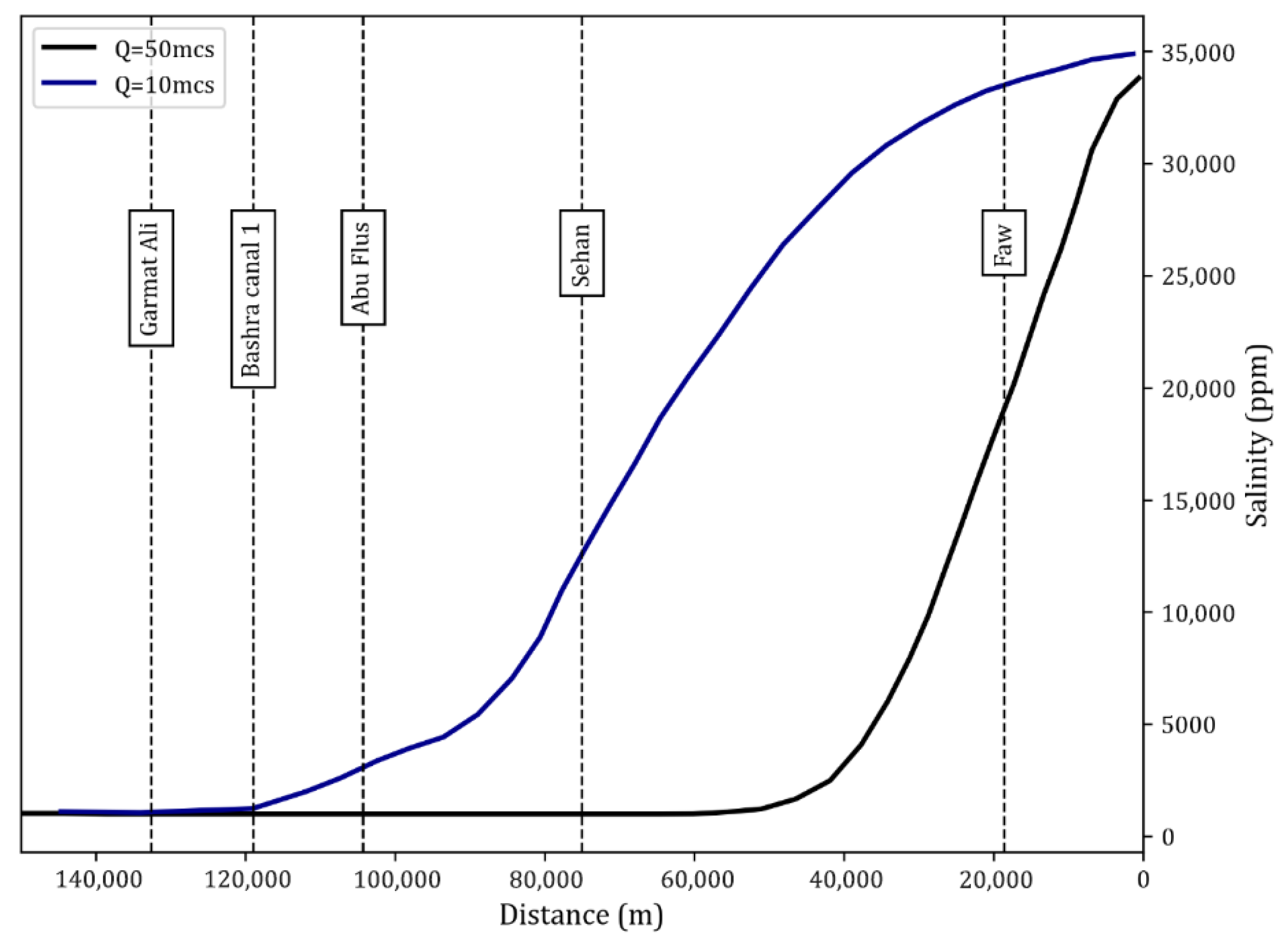
In the southern region of Iraq, high salinity levels are also observed in the Shatt al-Arab River, primarily due to seawater intrusion into estuaries under the influence of tidal motion [50,51,52]. The daily tidal movement can drive seawater upstream into rivers, especially during high tides or extreme weather events. This natural phenomenon of seawater intrusion is often intensified by the excessive extraction of freshwater from rivers that can reduce the natural flow of freshwater into the sea. In consequence, the reduced freshwater pressure allows saline water from coastal areas to penetrate further inland. The flow rates of the Shatt al-Arab River have significantly decreased over the past decade which mainly connected with the low flow rates of the Euphrates and Tigres. The relationship between river flow rate and the salinity is shown in Figure 5. The investigations show a deep seawater intrusion that reaches more than 75 km inland. Increasing seawater intrusion is threatening the river’s quality and availability, with serious consequences for local communities [50,53]. Several studies investigate the extent of the seawater intrusion in Shatt al-Arab and estimate that seawater intrusion from the Persian Gulf has extended up to 110 km inland, reaching Basra city, where salinity levels exceed safe drinking water standards by 50 times [54,55]. Figure 5 shows that salinity increases when the flow rate in Shatt al-Arab river decreases. It shows salinity increase up to 100 km from the coastline. This figure confirms that the high salinity is related to seawater intrusion induced by tidal process in the sea and by the reduction of the flow rate in the river. Sea level rise is also exacerbating seawater intrusion in the Shatt al-Arab River. The area is highly sensitive to rising sea levels because the elevations of some Mesopotamian plains are below sea level [56].

3. Impacts of the Water Crisis

The water crisis generates multiple consequences, influencing environmental, social, and economic systems. This section discusses the different consequences of the water crisis in southern Iraq.

3.1. Agricultural Activities

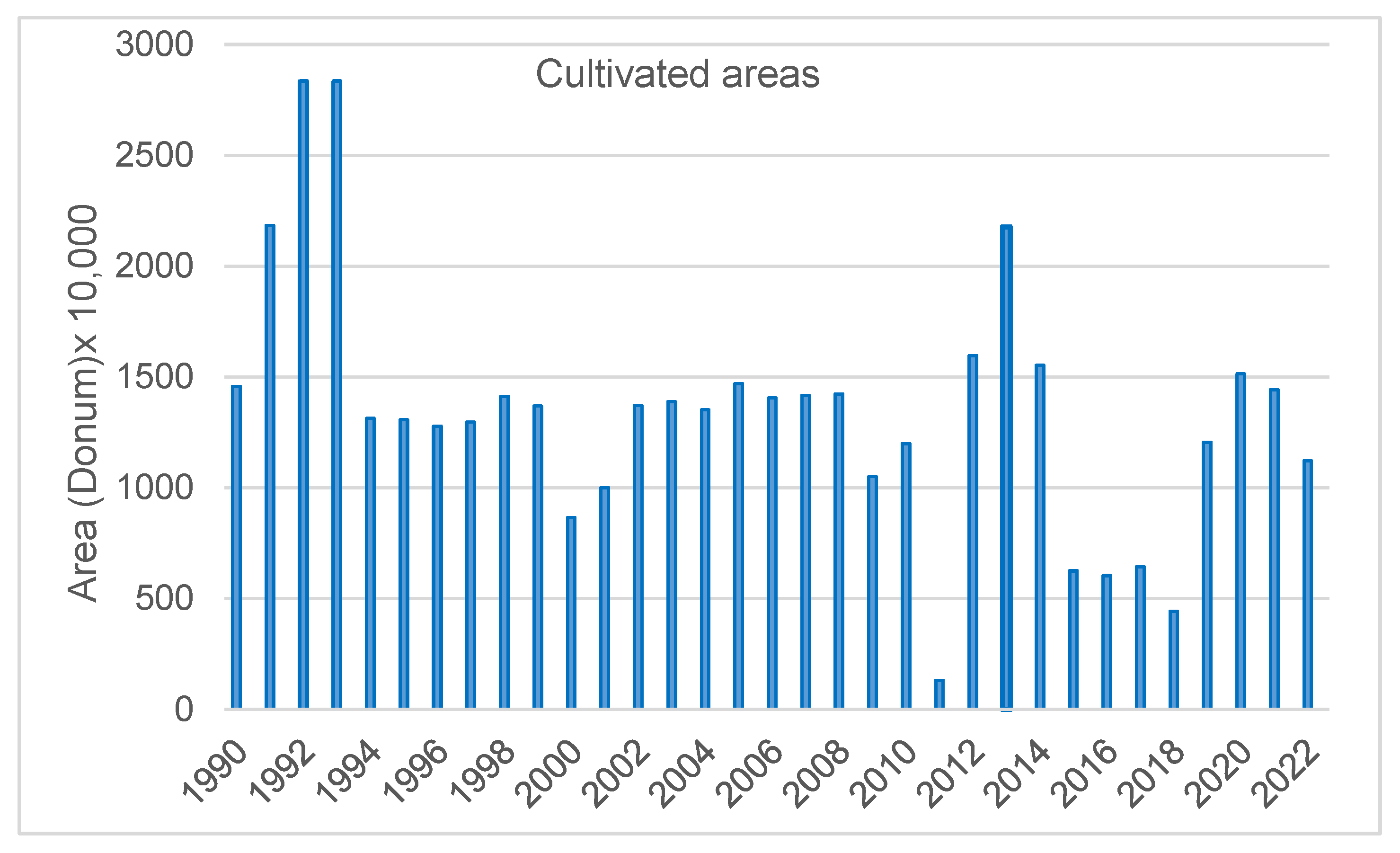
Agricultural activities have been adversely affected by the water crisis in the region [57]. For instance, yields have declined, and most farmers have abandoned their land. Statistically, the data from the Iraqi Ministry of Agriculture indicate a fluctuation in cultivated areas over the period 1990–2022 as seen in Figure 6. Notably, during dry years (2010, 2011, 2011, 2015, 2016, and 2017) cultivated land areas reached their lowest levels. The Norwegian Refugee Council (2021) conducted research to evaluate the water shortage on agriculture production during the 2020–2021 cropping season across the country. The study involved 2800 farming households in drought-affected areas, including the Basra and Dhi-Qar governorates. The results showed that 37% of wheat and 30% of barley farmers suffered from crop failures of at least 90% of their expected harvest. Moreover, 37% of households have lost cattle, sheep, or goats, mainly due to water scarcity, inadequate food, or disease. It is expected that the presence of water losses will weaken the efficiency of field irrigation to reach less than 50% by 2035 [58].
Water and soil salinization, which is a major degradation process impacting agricultural activities, has greatly affected land productivity and has caused cropland abandonment in these regions [59,60]. A study performed by the FAO (Food and Agriculture Organization) in 2012 found that soil salinity impacts the production capacities of roughly 70% of the total irrigated area of Iraq. The study estimates that large parts of the salinized area are no longer suitable for agricultural production. A previous study by the same organization, in 2003, estimated that the annual loss of cultivated lands in Iraq due to salinization of soil and water is about 5% [61]. Salinity also has a significant impact on the types of crops that can thrive in saline soil or water conditions. For this reason, we observed in the south of Iraq a significant decline in rice productivity and beans that are highly sensitive to salinity [61,62].

3.2. Drought, Desertification, Ecosystems and Environment

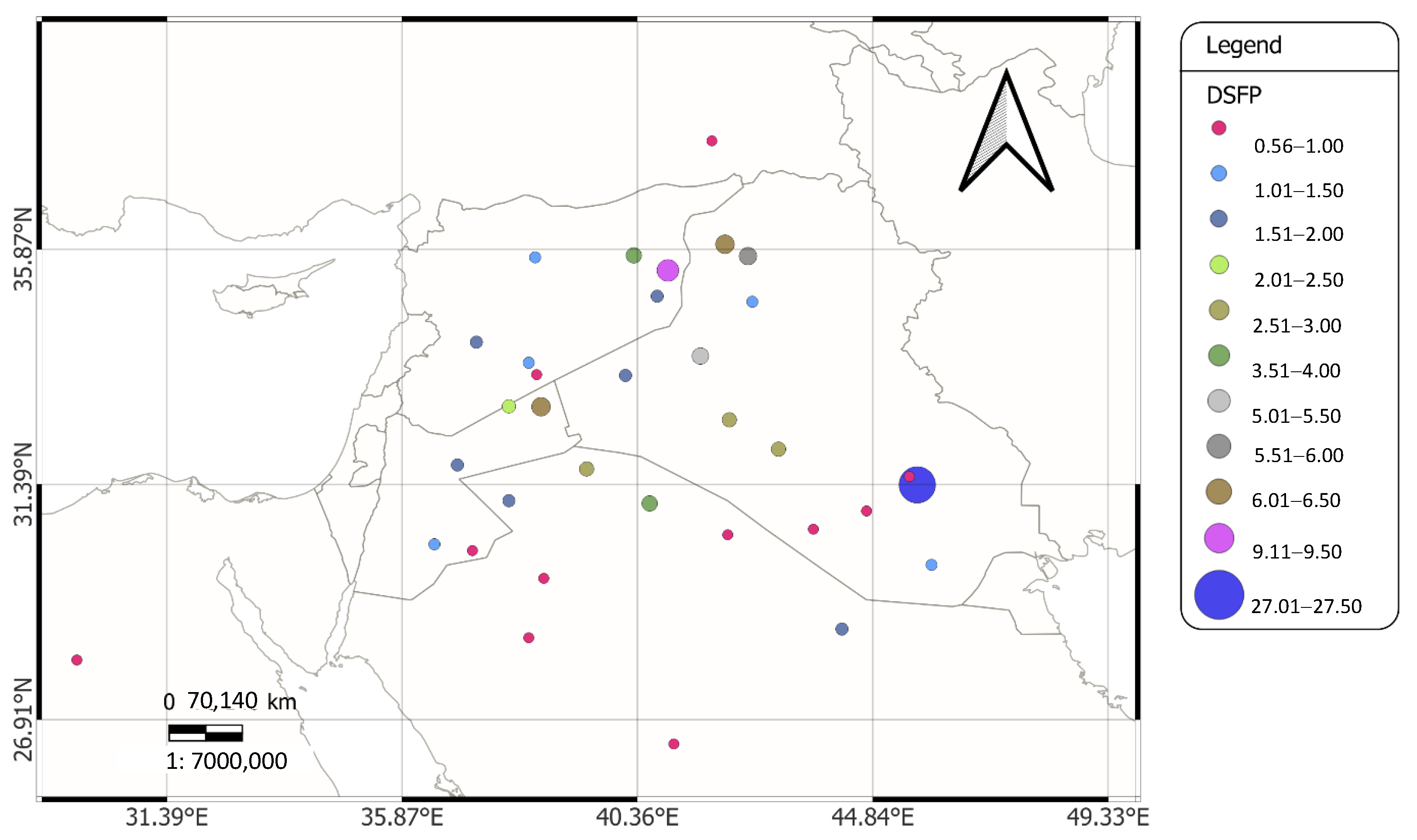
Water scarcity, climatic change, reduced rainfall, and rising temperatures have resulted in the deterioration of vegetation cover and the expansion of desert areas. According to a study by the International Committee of the Red Cross in 2022, desertification is affecting 39% of Iraq’s territory. This degradation negatively impacts ecosystems, biodiversity, and the overall environment, and it can be reversible or irreversible depending on the severity of the degradation and the measures taken for restoration. This degradation increases the areas that can be affected by water or wind erosion to about 11 million hectares [63]. This interpreted the rise in sand and dust storms in recent years. A total of 132 documented sand and dust events arose or passed through Iraq between 2020 and 2023 [64,65]. The most frequent dust storm source in the region is located in southern Iraq, in the north-western part of Dhi-Qar and eastern part of the Muthana governorate, as shown in Figure 7 [65].
The southern part of Iraq is one of the largest and unique wetland ecosystems in the Middle East for migratory birds, fish, and other wildlife. The water crisis triggered a devastating effect on local ecosystems and wildlife, particularly bird populations. The ongoing water scarcity and environmental degradation are causing significant losses in bird habitats, reducing the habitat for many species and broader ecosystems [66,67,68]. For instance, birds have been forced to seek alternative habitats that might not provide the same supplies or safety. Consequently, bird species lose their natural habitat as the marshes dry up, which may lead to a decrease in the population or perhaps local extinction if appropriate substitutes are not found. Moreover, water level decaling also results in the disappearance of reeds and grasses, which ultimately destroys the aquatic plants. These plants are the backbone of the structure of the ecosystem. Another negative aspect of the reduction of water flows is the impact on fish and invertebrates that thrive in these environments due to the deterioration of water quality. In consequence, this is disrupting the entire food chain. These plants provide shelter and nutrition for birds and other species. They also play a crucial role in the phytoremediation of water and stabilization of the soil [69]. Water pollution contributes to increased algal growth in water. The reduction in marsh areas is also increasing the temperature and the number of dusty days.

3.3. Economic and Social Impacts

Substantial economic and social impacts of the region have emerged due to limited water sources in southern Iraq [27,70]. The agriculture sector and fishing activities have been directly affected by water shortages. A recent study by REUTERS has shown that Iraq has lost 50% of its agricultural land. This situation has declined the agricultural productivity and amplified food insecurity concerns. According to a recent survey that was conducted by the Norwegian Refugee Council in 2024, it concluded that 59% of respondents reported having to reduce their food expenditures due to decreased agricultural outputs, which has declined both their income and food security. The NRC’s report also stated that the limited water has also fueled tribes’ conflicts which increased the tensions and disturbed the social peace. Consequently, three out of four households have experienced community tensions linked to competition over water resources and many families have been displaced from their origin areas. These phenomena increased the migration rates from rural areas into urban areas.
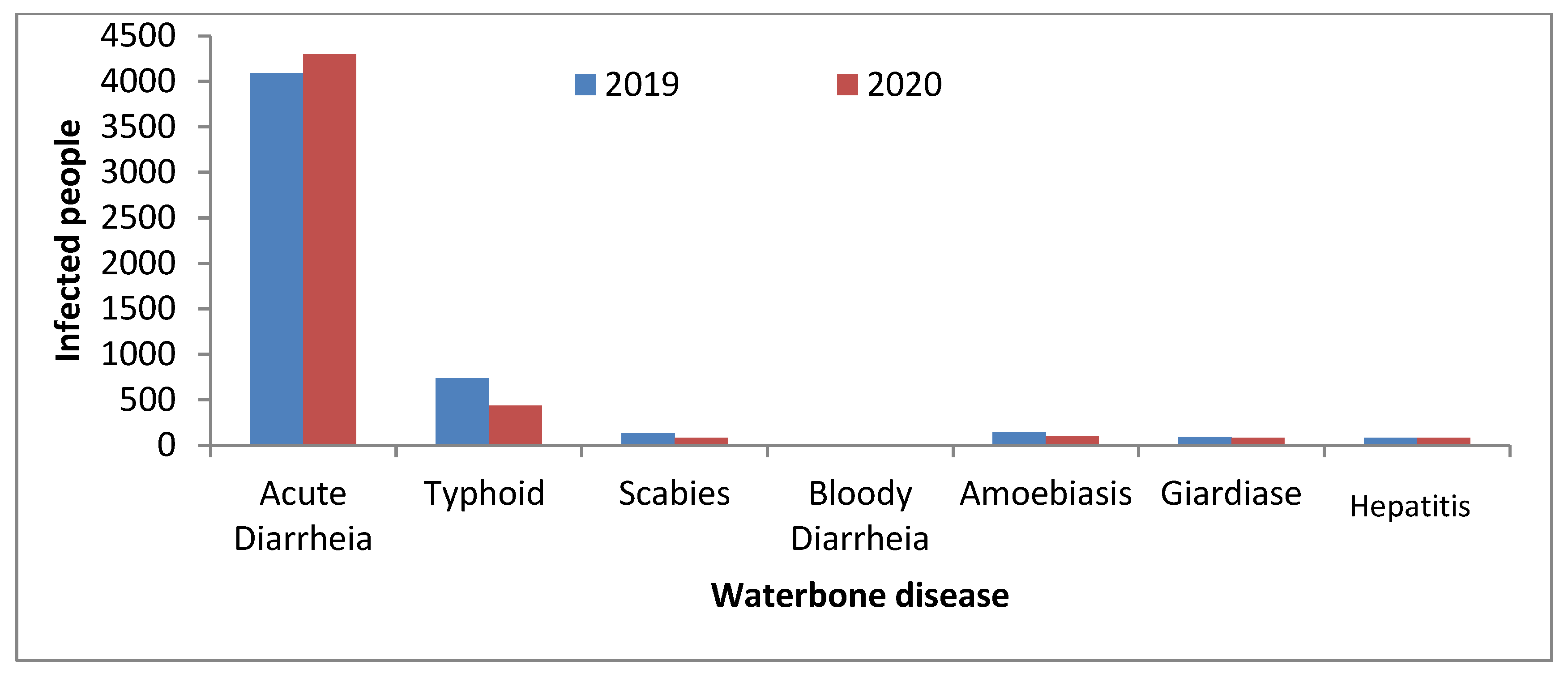
Another aspect of shrinking water supplies is the increase in the environmental pollution. For instance, the lack of clean water has led to outbreaks of waterborne diseases, such as cholera, affecting vulnerable populations, particularly in rural areas. In cities like Basra, saline and polluted water have caused severe public health problems. Thousands of people have been hospitalized due to water contamination, with ongoing concerns about waterborne disease outbreaks [71]. Human Rights Watch (2019) reported that the hospitals in Basra received up to 3000 patients a day at the peak of the of water shortage crisis in 2018. During the summer of 2018, the city experienced a major outbreak of waterborne diseases, including cholera, typhoid fever, and gastroenteritis, which resulted in 118,000 people being hospitalized. Similarly, the Dhi-Qar governorate recorded high numbers of infected people by transmitting waterborne diseases during 2019 and 2020 as depicted in Figure 8.
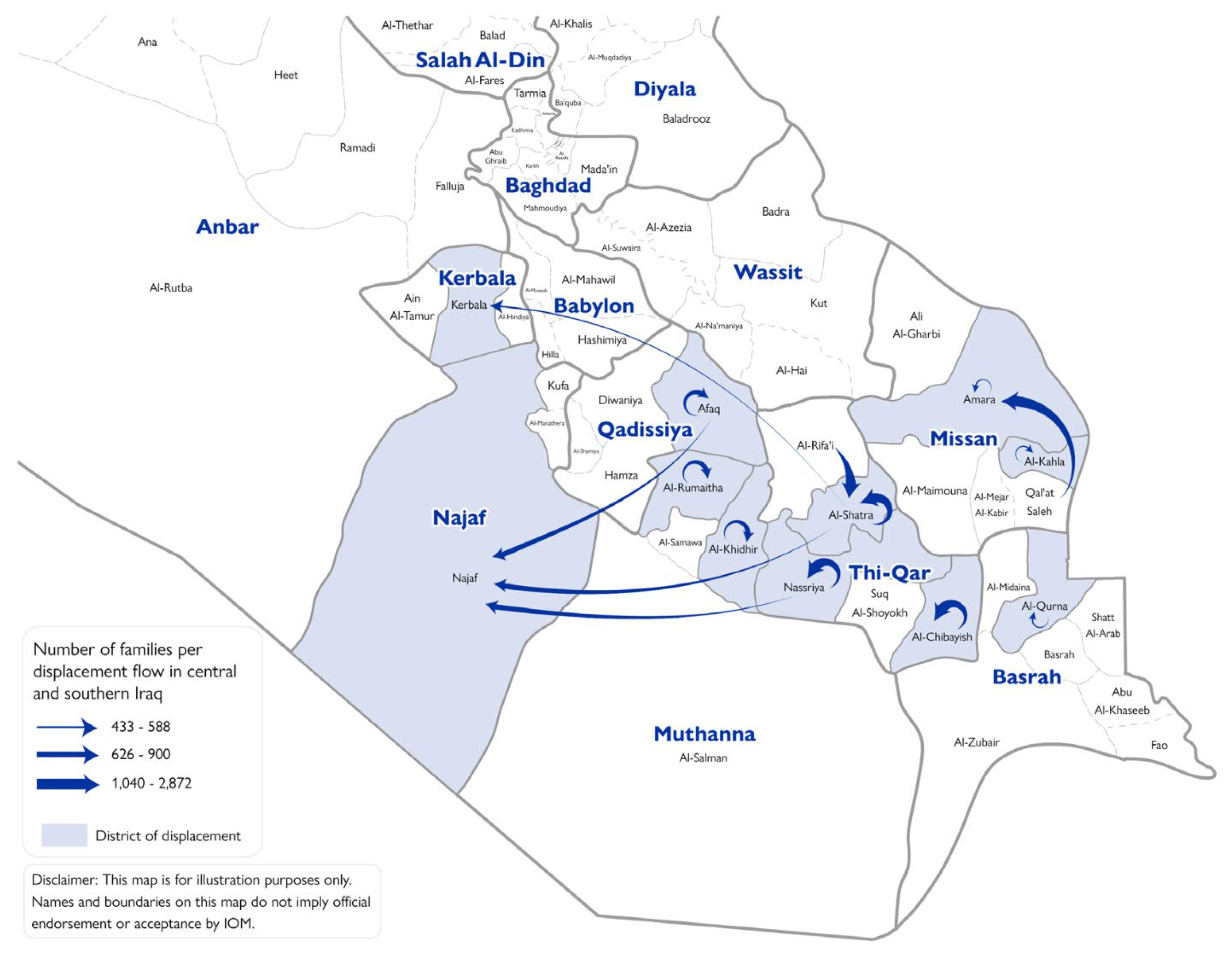
Water scarcity is leading to the loss of traditional livelihoods and the displacement of tens of thousands of people displaced to other governorates. Many people have been forced to leave their homes in search of better living conditions, leading to increased migration to urban areas and other regions, which in turn intensifies the humanitarian crisis. In March 2024, the International Organization for Migration reported that 23,364 families, corresponding to 140,184 individuals, remain displaced due to climatic factors and water shortages, across 12 governorates in Iraq. Most of them originate from southern regions, primarily from Dhi-Qar (44%), followed by Missan (22%) as shown in Figure 9. The displacement has generated significant social impacts such as the social instability fabric, rapid urbanization and pressure on the infrastructure, threatening the social and cultural integrity of hosted cities, and creating additional stresses on sustainable development practices that aim to balance economic growth with cultural preservation. The lack of clean water and deteriorating public services is deepening social disparities, while population growth and resource competition continue to exacerbate unemployment, stress, and migration, worsening the overall humanitarian situation, which have fueled political and regional tensions, with recurring protests in southern Iraq, particularly in Basra city [72].

3.4. Groundwater Deterioration and Aquifer Depletion

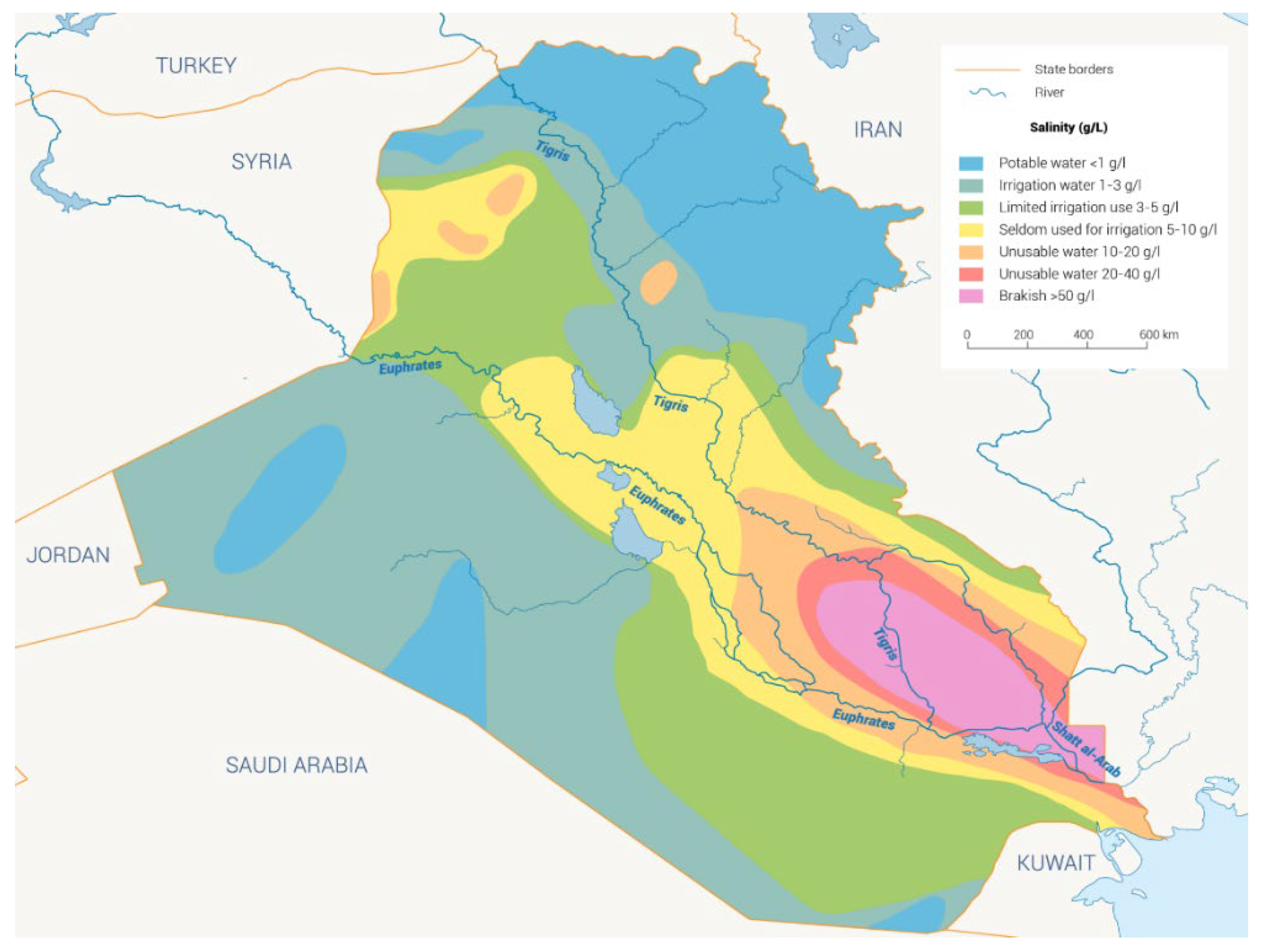
As surface water resources become polluted and unusable, there has been an increasing dependence on groundwater for irrigation, drinking water, and other uses. This reliance has raised significant concerns about groundwater depletion in southern Iraq due to over-extraction. According to Danboos et al. [40], it is estimated that 144 billion cubic meters of groundwater were lost between 2003 and 2009. This over-extraction, combined with decreasing rainfall and climate change, has led to falling water tables and contributed to the depletion of aquifers. Alattar [73] utilized well and satellite data to estimate groundwater levels in Iraq. They revealed that the most severe aquifer depletion is occurring in the southern region. Groundwater challenges facing southern Iraq are also related to the degradation of the groundwater quality due to agriculture and industrial activities. One of the most critical aspects of groundwater deterioration is the increase in groundwater salinity over time, leading to the salinization phenomena. Currently, in several areas of southern Iraq, groundwater is unsuitable for agricultural and industrial activities, particularly in areas near the Shatt al-Arab River and the marshlands (Figure 10). The pollution from agricultural runoff and industrial waste such as oily spills, untreated sewage and improper landfills has also affected the quality of groundwater. In several areas, groundwater is found to be contaminated with chemicals and heavy metals [74]. These pollutants mainly include nitrates and pesticides that originated from agricultural runoff (especially from overuse of fertilizers and pesticides), oil and chemical spills caused by the oil industry as a result of the leakage of oil products into the soil and water systems, and untreated wastewater due to the inadequate sanitation infrastructure in many parts of southern Iraq [75]. Moreover, the lack of proper wells and water treatment facilities in many rural areas is leading to contamination and inefficient use of available groundwater. Climate change and rising air temperatures are also impacting groundwater quality by altering the dissolved contents of groundwater.

4. Potential Solutions

Mitigating the water crisis in southern Iraq requires an integrated approach that addresses both immediate challenges and long-term issues related to water management, infrastructure, and climate adaptation. Addressing these challenges demands cooperation at both national and regional levels, including enhanced water management, investment in infrastructure, and diplomatic efforts to manage water-sharing agreements with neighboring countries [76]. This section explores some potential solutions that could help in mitigating the crisis.

4.1. Regional Cooperation and Water-Sharing Agreements

Iraq must engage in more effective diplomatic negotiations with upstream countries such as Turkey, Syria, and Iran to secure a fair share of water from the Tigris and Euphrates Rivers. A legally binding water-sharing agreement, facilitated by international organizations such as the United Nations, is essential to ensure equitable water distribution. Establishing a regional water authority or coalition could help manage shared water resources between these countries. This could involve data-sharing, coordinated dam operations, and collaborative management during droughts. The deterioration of the water situation in southern Iraq sends a signal to these countries about transboundary water-related problems [24].

4.2. Modernizing Water Management and Infrastructure

Modernizing water management and infrastructure is a critical process that should get wide attention among the decision-makers. This process could lead to implementing sustainable water management practices and could increase the investment in water infrastructure which facilitates and alleviates water shortages [24]. Modernizing the water infrastructure should include water treatment infrastructure, dams, barrages, pump stations, sanitation and wastewater treatment plants, and irrigation systems. It will help enhance water quality, improve access to clean and reliable water resources, meet the growing demands and water supply of urban and rural communities, and support economic development and agricultural productivity. The key strategy for achieving sustainable water management in southern Iraq is utilizing nonconventional water resources, involving leveraging treated agricultural drainage water [77,78,79], recovering water from industrial processes, such as oil and gas production, and treating wastewater effluents to reuse for non-potable purposes such as agriculture, and industrial cooling purposes, or groundwater recharging.

4.3. Desalination of Seawater

Desalination of seawater and brackish water is a commonly employed method in Gulf countries to address water scarcity and arid conditions. For instance, Saudi Arabia has emerged as a global leader in seawater desalination, accounting for 18% of the world’s total production and 8% of global brackish and seawater desalination [80]. This option can be employed in the coastal area as in southern Iraq, particularly in the Basra governorate [81]. Although this technique is growing, it remains underdeveloped in Iraq. Over the southern region, there are some small-scale desalination plants that are distributed in different areas, focusing on producing drinking water production utilizing reverse osmosis technology. However, the capacity of existing desalination plants is relatively low compared to Gulf countries. Therefore, there is a need to encourage the potential in investment in this technique to mitigate water shortage. The partnerships with neighboring Gulf countries and international organizations could aid and provide the technical expertise and funding needs for large-scale desalination projects. It is worthy to mention that given Iraq’s high solar potential, the solar-powered desalination plants can be proposed as a sustainable solution for the country as a possible route to address both water and energy requirements.

4.4. Improving Agricultural and Irrigational Practices

Improving agricultural techniques and optimizing the irrigational practices is another key option to overcome the water crisis in the southern region of Iraq. This requires a significant effort that should be devoted to agricultural techniques and modernization of the irrigation operations [82,83]. For instance, using techniques such as drip irrigation can directly deliver water to the root zone, and subsurface irrigation can supply water below the soil surface which reduces evaporation levels. Additionally, smart irrigation uses sensors and weather data could assist optimization of irrigation schedules and improve the agricultural production [83]. Another effective strategy is using the smart greenhouses and technology-driven approach to modern agriculture [84]. This technique applies the advanced sensors technologies, automation process, and data analytics to optimize resource use and growing conditions. The precise controlling of humidity, light, temperature, and irrigation periods can enhance the crop yield, quality, and consistency throughout the year. These systems can be promoting environmental sustainability by optimizing water, energy, and fertilizer consumption. Meanwhile, AI-driven adjustments can be applied to ensure efficient and adaptive management, the real-time monitoring which enables early detection of plant stress or disease. For instance, smart greenhouses increase profitability and food security via year-round cultivation and off-season production [85]. The practices like reusing treated wastewater and desalinated water are a sustainable way to combat water scarcity to decrease the pressure on freshwater resources and support circular water management. Wastewater that has undergone filtration, biological treatment, and disinfection can be safely recycled and used for irrigation. Especially in coastal and arid areas in the southern regions of Iraq, by applying the advanced technologies of desalination, seawater or brackish water can be treated to remove salts and impurities, making it proper for agricultural irrigation. This can be achieved by using small-scale desalination technologies powered by solar energy to decrease the energy cost [86,87]. Moreover, improving agricultural practices should get more attention by focusing on enhancing crop adaptability and resilience. This can be conducted by adapting crops with a high potential to deal with water scarcity and arid conditions such as promoting drought-resistant crops and crop diversification [88]. Adopting salt-tolerant plant species in areas affected by salinization permits continued agricultural output where freshwater is scarce. Promoting crops that require less irrigation and can survive on salty or marginal soils is a sustainable adaptation method for increasing agricultural resilience under changing climatic and hydrological conditions. Additionally, encouraging crop diversification and integrating crops with tree species, such as combining date palms with shade-tolerant undergrowth crops, can improve microclimatic conditions, decrease the evapotranspiration, and enhance soil structure and fertility [89].

4.5. Water Quantity and Quality Monitoring

Systems for monitoring water quality and quantity are essential [90,91]. Implementing such systems involves setting up monitoring stations equipped with sensors in surface water bodies, including rivers, lakes, reservoirs, and wetlands, to measure flow rates, water levels, and key quality parameters such as pH, turbidity, and dissolved oxygen. This should also cover monitoring groundwater using boreholes with automated loggers to track groundwater levels, quality, and recharge rates. Fiber optics can be used to measure groundwater salinity. There is also a need to monitor water in urban areas such as water treatment plants, distribution pipelines, and wastewater discharge points [92]. Advanced techniques could be used such as (i) remote sensing that leverages satellites and drones for large-scale monitoring of water bodies, identifying changes in surface water levels, vegetation, and sedimentation [93], (ii) IoT sensors, which deploy smart sensors for real-time monitoring of water quality (e.g., detecting contaminants, salinity, or temperature) and quantity, (iii) data loggers by installing automated systems to continuously record water data over time, and (iv) smart meters by implementing digital water meters to monitor usage and detect leaks in supply systems.
Implementing these monitoring systems also requires suitable strategies for collecting and analyzing water data. This covers the centralization of data systems by using platforms that integrate data from various sensors and sources, as well as facilitating data sharing with local authorities and policymakers. Machine learning techniques can be used in this context [94]. A few projects have recently been implemented to improve water monitoring supported by FAO, the United States, and the European Union.

4.6. New Regulations and Guidelines

The development of comprehensive laws and regulations for water consumption and sharing is crucial in managing water scarcity issues. These efforts should be legislated and enforced to establish clear water quality standards and guidelines. The new regulations will require water suppliers, industries, and municipalities to provide regular reports of both water quality and quantity data, while also deploying financial and technical incentives to encourage the adoption of robust monitoring. Furthermore, these efforts require establishing programs aiming to raise public awareness and enhancing the qualifications and capacity building to train local personnel in the installation, operation, and maintenance of monitoring systems. Community education is correspondingly significant to highlight the value of water monitoring and endorse active participation, such as by reporting pollution or taking part in data collection. These efforts should be expanded in collaboration with local communities (farmers, businesses, and local governments) and involve monitoring efforts. This can be conducted by providing them with simple tools, such as water test kits, to ensure comprehensive monitoring coverage.

4.7. Using Seawater for Oil Production

The use of seawater for oil production is a common practice in Saudi Arabia, where the injected water for oil reservoirs is sourced directly from the sea. In Iraq, discussions over the construction of a seawater supply project have been ongoing for more than a decade, yet no concrete action has been taken. A recent project promoted by TOTAL is under development to utilize seawater for water injections in oil reservoirs, aiming to increase regional oil production, as an alternative to the use of fresh water from rivers and aquifers.

5. Future Directions: Key Topics for Research

As a strategic direction to mitigate the water crisis in southern Iraq, promoting innovation and research initiatives that bring together universities, policymakers, companies, and startups should be at the beginning of priorities. Developing low-cost, high-impact solutions tailored to the region’s specific needs and challenges should be the main goal of these strategies. This section highlights several key research topics that have emerged from collaborative discussions involving over 50 researchers from various countries, including Iraq, France, Lebanon, Iran, and Australia. These topics were identified through a series of seminars, workshops, and site visits, emphasizing the importance of collective expertise in tackling the region’s pressing water challenges.

5.1. Salinization of Shatt Al Arab Water

Over the last decade, Shatt al-Arab waterway suffers from an increase in salinity levels. This issue led to increase the environmental degradation in the southern parts, particularly in the Basra governorate. Despite the severity of this issue and its causes, comprehensive research is lacking. Currently, the authorities manage this problem by increasing water releases from the Qalat Salih regulator to counterforce the saltwater intrusion. Nevertheless, this process leads to wastefulness of valuable water resources. Future research projects should focus on identifying the causes of seawater intrusion and examining its sanitary, economic, environmental, and social consequences. They should also explore potential remediation solutions and their limitations. Discussions among researchers have revealed that artificial water basins could be a promising strategy to combat saltwater intrusion in Shatt al-Arab. This solution involves developing an optimal engineering design to disperse tidal waves, thereby reducing their intensity and preventing saltwater intrusion. The reliability and efficiency of this approach represent important topics for future research, requiring field experiments and advanced modeling tools to evaluate their feasibility and potential effectiveness.

5.2. Application of Earth Observation for Monitoring Iraq’s Southern Marshlands

Monitoring Iraq’s southern marshlands is critical for preserving and sustaining the environment, as well as supporting local residents’ livelihood patterns and the larger environment. In this context, the introduction of modern technology, such as earth observation, can provide decision-support tools driven by remote sensing data and help solve sustainable water management in these marshes. Remote sensing technologies can be used to monitor marsh changes in near-real-time, providing vital information on the extent of the wetlands, the health of wetland vegetation, and other indicators of ecological health. It allows precise monitoring of water distribution across the marshes at full scale and enables the estimation of evaporation rates’ water volumes based on estimated water heights and water surfaces. Moreover, it can be applied to monitor the variation in the vegetation cover as a primary indicator in a link with biodiversity and ecological conditions. By utilizing remote sensing technologies, this project aims to generate an early warning system by performing historical comparisons over decadal datasets. This will enable the assessment of the impact of implementing innovative, sustainable, and nature-based solutions for the Iraqi marshlands.

5.3. Estimation of Evapotranspiration of Iraq’s Southern Marshlands

Actual evapotranspiration is a critical process in the hydrological cycle and serves as the sole term linking the land surface water balance with the land surface energy balance. It plays a fundamental role in simulating the hydrological impacts of climate change, making accurate estimation methods in hydrological models essential. Therefore, research projects are needed to precisely estimate evapotranspiration in marshlands. These projects should focus on selecting appropriate methods by reviewing existing studies, identifying the most suitable techniques, assessing their reliability, and accounting for the spatial variability of the marshes.

5.4. Evaluation of Irrigation Systems in the Southern Parts of Iraq

Recently, many farmers in southern Iraq have adopted modern technologies of irrigation like drip and sprinkler irrigation techniques. While these methods have facilitated irrigation practices, some reports revealed that there are concerns about the higher water consumption that might be found compared to the previous traditional techniques. Therefore, highlighting this issue requires research projects to evaluate the current application of these new irrigation techniques. Such research should aim to determine whether these methods are being used effectively. The key questions that need to be addressed include the following: Are the new irrigation techniques less efficient and why? Is their inefficiency relating to improper usage or due to specific conditions in Iraq? What are the potential solutions to improve their performance? Additionally, it is crucial to identify suitable measurement metrics to assess irrigation efficiency.

5.5. Evaluation of the Social Impact of Climatic Change and Water Scarcity

As previously stated, the past few decades have seen substantial economic changes in southern Iraq due to climate change, water scarcity, and reduced river water flow, resulting in demographic and social shifts such as widespread migration and immigration. Water scarcity has sparked strife among local populations and jeopardized regional security. The phrase “environmental displacement” has evolved to describe these events, which represent major shifts in lifestyle. Many farmers and herders have abandoned agriculture, losing their cattle and livelihoods, while fishermen have also been seriously impacted. This severe weather prompted many families to migrate to cities, frequently living in disadvantaged areas where they struggle to adjust to city life and assimilate into the existing population.
To address these challenges, research projects are urgently needed to conduct comprehensive and conclusive studies on the social and economic impacts of water stress and climate change. These studies should investigate the current situation and propose frameworks and recommendations for policymakers to mitigate the negative effects of these issues [2]. Key research objectives include examining social challenges related to migration between the Di-Qar and Basra regions, developing methodologies to distinguish displacement caused by water-related issues from other factors, and exploring approaches to assess water-related migration.

5.6. Evaluation of the Impact of the Main Outfall Drain on the Agricultural Areas in the Southern Part of Iraq

The Main Outfall Drain (MOD) is a drainage system that collects agricultural wastewater from the northern region of Baghdad. It flows between the Tigris and Euphrates Rivers and is specifically designed to handle agricultural wastewater. However, the water in the drain is highly contaminated, with Total Dissolved Solids (TDS) exceeding 15,000 parts per million—higher than seawater salinity. The MOD intersects with the Euphrates River, and due to various factors, the water level at the outlet remains high before this intersection. To address this issue, a pumping station was constructed in 2008 to transfer water below the Euphrates River. However, this station was built more than 20 years after the drain became operational, leading to significant saltwater accumulation in the basins upstream of the intersection point during the early years of the drain’s use without pumping infrastructure. Despite the construction of the pumping station, the problem persists due to the consistently high-water levels and occasional pumping interruptions. This situation may result in a saline-affected area extending over 50 km along the drain and may increase soil and groundwater salinity in the surrounding areas. There is an urgent need for research projects that combine on-site monitoring with model development to better understand the extent of salinization. Modeling efforts can provide valuable insights into salinity dynamics and help identify potential solutions and recommendations for remediation. Key areas of focus should include determining the full extent of salinization in the region and exploring effective techniques for mitigating its impact.

5.7. Stabilizing Soils in the Southern Part of Iraq

The growing expansion of desertification and increasing drought in Iraq have led to the frequent occurrence of dust storms. As a result, it is critical to discover effective methods to manage this issue, as it contributes to soil erosion and sand movement. Efforts should be directed toward stabilizing the soil and increasing vegetative cover by improving the soil’s ability to support plant development. One potential answer is to utilize stabilizing elements like zeolite, which can improve the soil’s ability to absorb water, increase agricultural production, and promote natural plant growth. To fully realize its potential, research initiatives examining the effect of zeolite on the physical parameters of light- and medium-textured soils in southern Iraq are urgently required. These studies should look into how the addition of metals and organic matter affects soil exchange capacity and fertility, thereby providing insights into strategies for improving soil resilience and production in the region.

6. Conclusions

The current state of water resources in the southern region of Iraq is characterized by a complex combination of natural and human-induced challenges, including water scarcity and water quality degradation. This paper provides a comprehensive analysis of the pressures on water resources in southern Iraq, with a focus on human activities and climate change. It highlights the critical challenges faced in the region and emphasizes the importance of understanding these pressures for guiding future research. By reviewing previous studies and proposing potential practical solutions, this work provides valuable insights into addressing water resource issues in southern Iraq and suggests areas for further exploration and investigation.
This review reveals that water scarcity is the first cause and driver of the water crisis in southern Iraq. This scarcity is mainly due to the decline in river flows, caused by upstream dam construction in Turkey and Iran, as well as climate change. In addition, factors such as population growth, inadequate water infrastructure, and mismanagement of water resources are intensifying pressure on the region’s water supply. The southern region is home to the Al-Ahwar wetlands, and preserving these ecosystems is crucial for sustaining the water cycle, improving water quality and availability, and addressing social and historical concerns. However, the need to protect these marshlands adds further strain on water resources.
The pressures on water resources are not solely quantitative. Water quality has also been significantly affected by both scarcity and human activities. Pollution from industrial and agricultural activities, untreated sewage, and oil production has led to the contamination of many water sources. Rising water salinity is also becoming a critical issue. As surface water becomes increasingly unreliable and polluted, there is greater dependence on groundwater, raising concerns about groundwater depletion due to over-extraction.
This paper also discusses the environmental, social, and economic consequences of the water crisis. It demonstrates that the crisis is impacting agricultural activities, exacerbating drought and desertification, and affecting the ecosystems. The displacement caused by the water crisis is generating significant social impacts, including internal conflicts and instability. It accelerates rapid urbanization and infrastructure expansion, which in turn affects the social and cultural dynamics of cities and adds pressure to sustainable development efforts. Moreover, the water crisis is creating political and social tensions, as well as inter-regional disputes over water resources.
Addressing the water crisis in southern Iraq will require a holistic approach that integrates environmental, social, economic, and technological factors. This paper explores potential solutions prioritized based on their urgency, feasibility, and suitability for the specific conditions of southern Iraq. The proposed solutions involve several components including regional cooperation on water-sharing agreements, making substantial efforts to modernize water management and infrastructure, and expanding water desalination technology, leveraging Iraq’s significant solar potential with solar-powered desalination plants. Further emphasis is placed on optimizing agriculture and irrigation practices, using basins to limit seawater intrusion, establishing monitoring stations, utilizing seawater for oil production, developing new policies and regulations for water consumption and sharing, creating programs to raise public awareness, and training local staff with the knowledge about water systems.
One of the main limitations of our study and of future studies on water resources in lower Mesopotamia is the scarcity of available data, the difficulty in accessing available datasets, and the uncertainties associated with this data. This highlights the need for improving data collection and management. This highlights the urgent need to strengthen data collection and management systems by including the expansion of monitoring networks, using different sources of data and promoting data-sharing and comparing data with models in order to limit uncertainties.

Author Contributions

S.E., M.F., K.D.V. and A.A.B.: writing—original draft preparation, writing—review and editing, visualization, funding acquisition. All authors: conceptualization, methodology, resources, writing—review and editing. All authors have read and agreed to the published version of the manuscript.

Funding

This research received no external funding.

Data Availability Statement

All data used in this study are included in this paper. Data used to generate Figure 3 are available on https://doi.org/10.5281/zenodo.18731979, accessed on 22 February 2026.

Acknowledgments

The authors express their sincere appreciation and acknowledgement of the financial support of the French Ministry of Europe and Foreign Affairs and French Embassy in Iraq as well as the general support of the Agence Universitaire de la Francophonie (AUF) to this research project. The authors also gratefully acknowledge the National School of Water and Environmental Engineering of Strasbourg hosting the seminars associated with the project’s activities. RT acknowledges the support of the Research Council of Norway through its Centers of Excellence funding scheme, project number 262644, and of IRP D-FFRACT, CNRS. An AI-based tool (ChatGPT 5.2) was used to assist with language editing. All content was thoroughly reviewed and validated by the authors, who take full responsibility for the final text. The authors have reviewed and edited the output and take full responsibility for the content of this publication.

Conflicts of Interest

The authors declare no conflicts of interest.

References

  1. Youssefi, F.; Khorrami, B.; Ali, S.; Soltani, S.S.; Valadan Zoej, M.J.; Li, J.; Ghaderpour, E. Open Data Analysis of Terrestrial Water Storage and Water Availability in the Middle East: Spatiotemporal Trends, Hydroclimatic Drivers, and Socio-Ecological Implications. Ecol. Inform. 2026, 93, 103571. [Google Scholar] [CrossRef]
  2. AL-Hudaib, H.; Adamo, N.; Bene, K.; Ray, R.; Al-Ansari, N. Application of Decision Support Systems to Water Management: The Case of Iraq. Water 2025, 17, 1748. [Google Scholar] [CrossRef]
  3. Ethaib, S.; Zubaidi, S.L.; Al-Ansari, N. Evaluation water scarcity based on GIS estimation and climate-change effects: A case study of Thi-Qar Governorate, Iraq. Cogent Eng. 2022, 9, 2075301. [Google Scholar] [CrossRef]
  4. Al-Zaidy, K.J.L.; Parisi, G.; Ali Abed, S.; Salim, M.A. Classification of The Key Functional Diversity of the Marshes of Southern Iraq Marshes. J. Phys. Conf. Ser. 2019, 1294, 072021. [Google Scholar] [CrossRef]
  5. Yousif, B.; El-joumayle, O.; Baban, J. Exploring the Water-Energy-Food nexus in context of conflict in Iraq. Energy Nexus 2023, 11, 100233. [Google Scholar] [CrossRef]
  6. Al-Sudani, H.I.Z. Rainfall Returns Periods in Iraq. J. Univ. Babylon Eng. Sci. 2019, 27, 1–9. [Google Scholar] [CrossRef]
  7. Al-Daoudi, A.S.; Al-Timimi, Y.K. The Spatial Pattern Assessment of Annual Rainfall in Iraq for Periods from 2001 to 2023. IOP Conf. Ser. Earth Environ. Sci. 2024, 1371, 082031. [Google Scholar] [CrossRef]
  8. Al-Ansari, N. Topography and Climate of Iraq. J. Earth Sci. Geotech. Eng. 2020, 11, 1–13. [Google Scholar] [CrossRef]
  9. Al-Ansari, N. Water Resources of Iraq. J. Earth Sci. Geotech. Eng. 2020, 11, 15–34. [Google Scholar] [CrossRef] [PubMed]
  10. Bilgen, A. The Southeastern Anatolia Project (GAP) in Turkey: An Alternative Perspective on the Major Rationales of GAP. J. Balk. Near East. Stud. 2019, 21, 532–552. [Google Scholar] [CrossRef]
  11. Al-Ansari, N. Hydro-Politics of the Tigris and Euphrates Basins. Engineering 2016, 8, 140–172. [Google Scholar] [CrossRef]
  12. Kibaroglu, A.; Scheumann, W. Evolution of Transboundary Politics in the Euphrates-Tigris River System: New Perspectives and Political Challenges. Glob. Gov. 2013, 19, 279–305. [Google Scholar] [CrossRef]
  13. Hamid, Y. Mitigating Conflict over Water in the Euphrates-Tigris Basin (Online); Arab Center Washington DC: Washington, DC, USA, 2020. [Google Scholar]
  14. Chibani, A. Water Politics in the Tigris-Euphrates Basin (Online); Arab Center Washington DC: Washington, DC, USA, 2023. [Google Scholar]
  15. Grün, G. Transboundary Water Cooperation in the Euphrates Tigris River Basin—A Case Study; Uppsala University: Uppsala, Sweden, 2024. [Google Scholar]
  16. Hashim, B.M.; Alnaemi, A.N.A.; Hussain, B.A.; Abduljabbar, S.A.; Doost, Z.H.; Yaseen, Z.M. Statistical downscaling of future temperature and precipitation projections in Iraq under climate change scenarios. Phys. Chem. Earth Parts A/B/C 2024, 135, 103647. [Google Scholar] [CrossRef]
  17. Agha, O.M.A.M.; Şarlak, N. Spatial and temporal patterns of climate variables in Iraq. Arab. J. Geosci. 2016, 9, 302. [Google Scholar] [CrossRef]
  18. Shapland, G.S. Water security in Iraq; London School of Economics and Political Science: London, UK, 2023. [Google Scholar] [CrossRef]
  19. Al-Ansari, N.A. Management of Water Resources in Iraq: Perspectives and Prognoses. Engineering 2013, 5, 667–684. [Google Scholar] [CrossRef]
  20. Falkenmark, M.; Lundqvist, J.; Widstrand, C. Macro-scale water scarcity requires micro-scale approaches: Aspects of vulnerability in semi-arid development. Nat. Resour. Forum 1989, 13, 258–267. [Google Scholar] [CrossRef]
  21. Kuttab, A. Dilemmas of Relief Work in Iraq. Middle East Rep. 1992, 174, 37–38. [Google Scholar] [CrossRef]
  22. Micangeli, A.; Grego, S.; Esposto, S. Sustainable Rehabilitation of Water Infrastructures in Southern Iraq After theSecond Gulf War. In Handbook of Sustainable Engineering; Kauffman, J., Lee, K.-M., Eds.; Springer: Dordrecht, The Netherlands, 2013; pp. 211–245. [Google Scholar] [CrossRef]
  23. Zeitoun, M.; Cascão, A.E.; Warner, J.; Mirumachi, N.; Matthews, N.; Menga, F.; Farnum, R. Transboundary water interaction III: Contest and compliance. Int. Environ. Agreem. 2017, 17, 271–294. [Google Scholar] [CrossRef]
  24. Mason, M. Infrastructure under pressure: Water management and state-making in southern Iraq. Geoforum 2022, 132, 52–61. [Google Scholar] [CrossRef]
  25. AOthman, I.I.; Ghasemlounia, R. Analyzing the Effectiveness of Modern Irrigation Methods in Iraq. Int. J. Eng. Manag. Res. 2021, 11. [Google Scholar] [CrossRef]
  26. Alwash, S. Eden Again: Hope in the Marshes of Iraq; Tablet House Publishing: Fullerton, CA, USA, 2013. [Google Scholar]
  27. Ahram, A.I. Human Ecology of the Marshes. In Southern Iraq’s Marshes, Coastal Research Library; Jawad, L.A., Ed.; Springer International Publishing: Cham, Switzerland, 2021; pp. 55–76. [Google Scholar] [CrossRef]
  28. Lonergan, S.C.; Al-Asadi, J.; Holmes, K. The Ghosts of Iraq’s Marshes: A History of Conflict, Tragedy, and Restoration; The American University in Cairo Press: Cairo, NY, USA, 2023. [Google Scholar]
  29. Hossain, F.; Alwash, A.; Minocha, S.; Eldardiry, H. Restoring the Mesopotamian Rivers for Future Generations: A Practical Approach. Water Resour. Res. 2023, 59, e2023WR034514. [Google Scholar] [CrossRef]
  30. Rahi, K.; Ali, A.A. Water management scheme to restore and sustain the Marshes and Shatt al-Arab, Southern Iraq. IOP Conf. Ser. Earth Environ. Sci. 2022, 1002, 012009. [Google Scholar] [CrossRef]
  31. Gumbricht, T.; Román-Cuesta, R.M.; Verchot, L.V.; Herold, M.; Wittmann, F.; Householder, E.; Herold, N.; Murdiyarso, D. Tropical and Subtropical Wetlands Distribution; Version 2; Forests, Trees and Agroforestry (FTA): Bogor, Indonesia, 2017. [Google Scholar]
  32. Wang, J.; Walter, B.A.; Yao, F.; Song, C.; Ding, M.; Maroof, A.S.; Zhu, J.; Fan, C.; McAlister, J.M.; Sikder, S.; et al. GeoDAR: Georeferenced Global Dams And Reservoirs Dataset for Bridging Attributes and Geolocations. Earth Syst. Sci. Data Discuss. 2022, 2021, 1–52. [Google Scholar] [CrossRef]
  33. Richardson, C.J.; Hussain, N.A. Restoring the Garden of Eden: An Ecological Assessment of the Marshes of Iraq. BioScience 2006, 56, 477. [Google Scholar] [CrossRef]
  34. AlMaarofi, S.; Douabul, A.; Al-Saad, H. Mesopotamian Marshlands: Salinization Problem. J. Environ. Prot. 2012, 3, 1295–1301. [Google Scholar] [CrossRef]
  35. Maulood, B.K.; Hassan, F.M. Physical and Chemical Characters of Mesopotamian Marshes: A Short Review. In Southern Iraq’s Marshes, Coastal Research Library; Jawad, L.A., Ed.; Springer International Publishing: Cham, Switzerland, 2021; pp. 95–112. [Google Scholar] [CrossRef]
  36. Al-Saad, H.T.; Al-Hello, M.A.; Al-Taein, S.M.; DouAbul, A.A.Z. Water quality of the Iraqi southern marshes. Mesopotamian J. Mar. Sci. 2022, 25, 188–204. [Google Scholar] [CrossRef]
  37. Dubourg, C. The Impact of Oil Development in Basra Province on the Water Crisis: An Analysis Through the Prism of the Gas Growth Integrated Project (GGIP); Centre Français de recherche sur l’Irak (CFRI): Paris, France, 2024. [Google Scholar]
  38. Mawlood, I.; Ziboon, A.-R.; Al-Obaidy, A.-H. Assessment of pollution in water quality of oil and grease for Tigris River-Iraq by GIS mapping (2010–2016). MATEC Web Conf. 2018, 162, 05016. [Google Scholar] [CrossRef]
  39. Grmasha, R.A.; Stenger-Kovács, C.; Bedewy, B.A.H.; Al-sareji, O.J.; Al-Juboori, R.A.; Meiczinger, M.; Hashim, K.S. Ecological and human health risk assessment of polycyclic aromatic hydrocarbons (PAH) in Tigris river near the oil refineries in Iraq. Environ. Res. 2023, 227, 115791. [Google Scholar] [CrossRef]
  40. Al-Khafaji, A.J.; Alattabi, A.; Jassim, S.Y.; Sadooni, F. Oil-polluted groundwater in central and west Iraq as indicator of potential new hydrocarbon plays. Pet. Sci. Technol. 2024, 42, 3668–3686. [Google Scholar] [CrossRef]
  41. Danboos, A.; Sharil, S.; Mohamad Hamzah, F.; Yafouz, A.; Huang, Y.F.; Ahmed, A.N.; Ebraheem, A.A.; Sherif, M.; El-Shafie, A. Water budget-salt balance model for calculating net water saving considering different non-conventional water resources in agricultural process. Heliyon 2023, 9, e15274. [Google Scholar] [CrossRef] [PubMed]
  42. Rahi, K.A.; Halihan, T. Changes in the salinity of the Euphrates River system in Iraq. Reg. Environ. Change 2010, 10, 27–35. [Google Scholar] [CrossRef]
  43. Al-Falahi, A.; Qureshi, A. Relationship Between Groundwater Table Depth, Groundwater Quality, Soil Salinity and Crop Production (No. 12B); International Center for Agricultural Research in the Dry Areas: Baghdad, Iraq, 2015. [Google Scholar]
  44. Atta, H.A. Assessment and geographic visualization of salinity of Tigris and Diyala Rivers in Baghdad City. Environ. Technol. Innov. 2020, 17, 100538. [Google Scholar] [CrossRef]
  45. van zandwijk, E.; Monji, M.; Van Opstal, R.; Mahdi, K.; Snertlage, J. Water and Saline Agriculture in Central-Southern Iraq; Wageningen University & Research: Wageningen, The Netherlands, 2021. [Google Scholar]
  46. Abdulameer, A.; Thabit, J.M.; Kanoua, W.; Wiche, O.; Merkel, B. Possible Sources of Salinity in the Upper Dibdibba Aquifer, Basrah, Iraq. Water 2021, 13, 578. [Google Scholar] [CrossRef]
  47. Mohammed, R.; Hameed, I.; Thamer, T. Effect of Using Different Types of Well Water in Karbala Governorate on Soil and Plant. Ecol. Eng. Environ. Technol. 2022, 23, 202–207. [Google Scholar] [CrossRef]
  48. Al-Musawi, N.O.; Al-Sulaiman, A.M. Assessments and Historical Changes the Water Quality of Sawa Lake, Southern Iraq for the Period 1977–2020. E3S Web Conf. 2023, 427, 04010. [Google Scholar] [CrossRef]
  49. Yousif, S.R. Soil Salinization Impacts on Land Degradation Desertification Phenomenon in An-Najaf Governorate Iraq. In Natural Resources Deterioration in MENA Region, Earth and Environmental Sciences Library; Al-Quraishi, A.M.F., Mustafa, Y.T., Eds.; Springer International Publishing: Cham, Switzerland, 2024; pp. 295–319. [Google Scholar] [CrossRef]
  50. Abdullah, A.D. Modelling Approaches to Understand Salinity Variations in a Highly Dynamic Tidal River: The Case of the Shatt al-Arab River, 1st ed.; CRC Press: Boca Raton, FL, USA, 2017. [Google Scholar] [CrossRef]
  51. Fahs, M.; Koohbor, B.; Shao, Q.; Doummar, J.; Baalousha, H.M.; Voss, C.I. Effect of Flow-Direction-Dependent Dispersivity on Seawater Intrusion in Coastal Aquifers. Water Resour. Res. 2022, 58, e2022WR032315. [Google Scholar] [CrossRef]
  52. Cantelon, J.A.; Guimond, J.A.; Robinson, C.E.; Michael, H.A.; Kurylyk, B.L. Vertical Saltwater Intrusion in Coastal Aquifers Driven by Episodic Flooding: A Review. Water Resour. Res. 2022, 58, e2022WR032614. [Google Scholar] [CrossRef]
  53. Al-Asadi, S.A.R.; Alhello, A.A.; Ghalib, H.B.; Muttashar, W.R.; Al-Eydawi, H.T. Seawater intrusion into Shatt Al-Arab River, Northwest Arabian/Persian Gulf. J. Appl. Water Eng. Res. 2023, 11, 289–302. [Google Scholar] [CrossRef]
  54. Hameed, H.A.; Ali, M.H.; Aljorany, Y.S.; Hassan, W.F.; Al-Hello, A.A.Z.N. Assessing changes in seawater intrusion water quality of the Shatt Al-Arab River Iraq. Ann. Limnol.-Int. J. Lim. 2013, 49, 199–206. [Google Scholar] [CrossRef][Green Version]
  55. Moyel, M.; Akbar, M.; Hussain, N. Evaluation of Spatio-Temporal Changes in Water Quality in the Middle Section of Shatt Al-Arab River Southern Iraq. J. Ecol. Eng. 2023, 24, 297–311. [Google Scholar] [CrossRef]
  56. Abbas, N.; Nasrin, S.; Al-Ansari, N.; Ali, S.H. The Impacts of Sea Level Rise on Basrah City, Iraq. Open J. Geol. 2020, 10, 1189–1197. [Google Scholar] [CrossRef]
  57. Salman, S.A.; Shahid, S.; Afan, H.A.; Shiru, M.S.; Al-Ansari, N.; Yaseen, Z.M. Changes in Climatic Water Availability and Crop Water Demand for Iraq Region. Sustainability 2020, 12, 3437. [Google Scholar] [CrossRef]
  58. Ali, E.H.; Bulqader, M.A.; Baker, Y.T. Measuring The Impact of Water Scarcity on Agricultural Economic Development in Iraq. Stallion J. Multidiscip. Assoc. Res. Stud. 2024, 3, 1–16. [Google Scholar] [CrossRef]
  59. Wu, W.; Mhaimeed, A.S.; Al-Shafie, W.M.; Ziadat, F.; Dhehibi, B.; Nangia, V.; De Pauw, E. Mapping soil salinity changes using remote sensing in Central Iraq. Geoderma Reg. 2014, 2–3, 21–31. [Google Scholar] [CrossRef]
  60. Muslim, R.I.; Al-Ghasham, N.A.O.; Al-Mayyahi, S.O.M. The Geochemical Temporal Changes of the Salinity in Selected Agricultural Areas in Mid-Mesopotamian. IOP Conf. Ser. Earth Environ. Sci. 2023, 1158, 022021. [Google Scholar] [CrossRef]
  61. Dhehibi, B.; Telleria, R.; Aw-Hassan, A.A.; Mohammed, S.H.; Ziadat, F.M.; Wu, W. Impacts of Soil Salinity on the Productivity of Al-Musayyeb Small Farms in Iraq: An Examination of Technical, Economic and Allocative Efficiency. Agric. Econ. Rev. 2015, 16, 42–55. [Google Scholar]
  62. Christen, E.W.; Saliem, K.A. Managing Salinity in Iraq’s Agriculture; International Center for Agricultural Research in the Dry Areas: Beirut, Lebanon, 2013. [Google Scholar]
  63. Eltaif, N.I.; Gharaibeh, M.A. Soil Erosion Catastrophe in Iraq-Preview Causes Study Cases. In Environmental Degradation in Asia, Earth and Environmental Sciences Library; Al-Quraishi, A.M.F., Mustafa, Y.T., Negm, A.M., Eds.; Springer International Publishing: Cham, Switzerland, 2022; pp. 179–207. [Google Scholar] [CrossRef]
  64. Khidher, S.A. Dust Storms in Iraq: Past and Present. Theor. Appl. Climatol. 2024, 155, 4721–4735. [Google Scholar] [CrossRef]
  65. Ismail, R.R.; Halos, S.H.; Al-Abudi, B.Q. Detection of the most frequent sources of dust storms in Iraq during 2020–2023 using space tools. Kuwait J. Sci. 2025, 52, 100328. [Google Scholar] [CrossRef]
  66. Mohamed, A.-R.M.; Hussain, N.A.; Al-Noor, S.S.; Mutlak, F.M.; Al-Sudani, I.M.; Mojer, A.M.; Toman, A.J.; Abdad, M.A. Fish assemblage of restored Al-Hawizeh marsh, Southern Iraq. Ecohydrol. Hydrobiol. 2008, 8, 375–384. [Google Scholar] [CrossRef]
  67. Hassan, F.M.; Al-Kubaisi, A.A.; Talib, A.H.; Abdulah, D.S.; Taylor, W.D. Phytoplankton primary production in southern Iraqi marshes after restoration. Baghdad Sci. J. 2011, 8, 519–530. [Google Scholar] [CrossRef]
  68. Salman, S.D.; Abbas, M.F.; Ghazi, A.-H.M.; Ahmed, H.K.; Akash, A.N.; Douabul, A.A.Z.; Warner, B.G.; Asada, T. Seasonal changes in zooplankton communities in the re-flooded Mesopotamian wetlands, Iraq. J. Freshw. Ecol. 2014, 29, 397–412. [Google Scholar] [CrossRef]
  69. Habeeb, M.K.; Al-Shaheen, M.A.; Abbas, A.F.; Hamza, H.A.; Okash, A.N.; Hussain, N.A.; Reiss, P. The fragile ecology in Iraq’s Mesopotamian marshlands endangered and restructured by a sharp increase in salinity. GSC Adv. Res. Rev. 2023, 16, 007–018. [Google Scholar] [CrossRef]
  70. Al-mudaffar Fawzi, N.; Goodwin, K.P.; Mahdi, B.A.; Stevens, M.L. Effects of mesopotamian marsh (iraq) desiccation on the cultural knowledge and livelihood of marsh arab women. Ecosyst. Health Sustain. 2016, 2, e01207. [Google Scholar] [CrossRef]
  71. Todd, E.C.D. Waterborne Diseases and Wastewater Treatment in Iraq. J. Food Prot. 2024, 87, 100204. [Google Scholar] [CrossRef]
  72. Saleh, D. Water Crisis in Southern Iraq: Its Manifestations and Repercussions. Contemp. Arab Aff. 2024, 17, 197–214. [Google Scholar] [CrossRef]
  73. Alattar, M.H. Mapping groundwater dynamics in Iraq: Integrating multi-data sources for comprehensive analysis. Model. Earth Syst. Environ. 2024, 10, 4375–4385. [Google Scholar] [CrossRef]
  74. Dawood, A.S.; Jabbar, M.T.; Gatea, M.H.; Al-Tameemi, H.J. A Study of Groundwater Characteristics by Using of Groundwater Quality Index and Pollution Index in Zubair District, Basra Province, Iraq. J. Appl. Eng. Sci. 2018, 8, 19–26. [Google Scholar] [CrossRef]
  75. Al-Sudani, H.I.Z. Hydrogeological and hydrochemical study of groundwater aquifer in Wasit Governorate, Eastern Iraq. Resour. Environ. Inf. Eng. 2024, 6, 270–279. [Google Scholar] [CrossRef]
  76. Al-Ansari, N.; Adamo, N.; Hachem, A.H.; Sissakian, V.; Laue, J.; Abed, S.A. Causes of Water Resources Scarcity in Iraq and Possible Solutions. Engineering 2023, 15, 467–496. [Google Scholar] [CrossRef]
  77. Ghawi, A. Development of the Greywater Domestic Treatment Unit for Irrigation of the Garden in Rural Areas. J. Ecol. Eng. 2019, 20, 46–56. [Google Scholar] [CrossRef]
  78. Alobaidy, A.H.M.J.; Al-Sameraiy, M.A.; Kadhem, A.J.; Majeed, A.A. Evaluation of Treated Municipal Wastewater Quality for Irrigation. J. Environ. Prot. 2010, 1, 216–225. [Google Scholar] [CrossRef]
  79. Al-Murshady, K.R.; Al-Qaisi, A.Z.; Ali, Z.H. The ability of using treated wastewater for irrigation purposes: Middle Euphrates of Iraq as a case study. IOP Conf. Ser. Earth Environ. Sci. 2021, 779, 012101. [Google Scholar] [CrossRef]
  80. Alnajdi, O.; Calautit, J.K.; Wu, Y. Development of a multi-criteria decision making approach for sustainable seawater desalination technologies of medium and large-scale plants: A case study for Saudi Arabia’s vision 2030. Energy Procedia 2019, 158, 4274–4279. [Google Scholar] [CrossRef]
  81. Salman, H.H.; Aswad, Z.S. Desalination methods and their role in solving and managing the problem of salinization in Iraqi water resources. IOP Conf. Ser. Earth Environ. Sci. 2022, 1002, 012004. [Google Scholar] [CrossRef]
  82. Tocchetto, D.; Rubenstein, M.; Nelson, M.; Al-Asadi, J. Circular economy in the Mesopotamian Marshes: The Eden in Iraq Wastewater Garden Project. In Circular Economy and Sustainability; Elsevier: Amsterdam, The Netherlands, 2022; pp. 181–198. [Google Scholar] [CrossRef]
  83. Mohsin Tahir, D.; Omran Al-Sulttani, A. Smart Irrigation Technique in the Fixed Irrigation System Based on Soil Moisture Content. IOP Conf. Ser. Earth Environ. Sci. 2024, 1374, 012061. [Google Scholar] [CrossRef]
  84. Al-asadi, H.H.; Goga, M.; Ali, H.A.; Popa, R.C.; Oludele, A. Trends and Challenges of Sustainable Agriculture in the Iraqi Environment. In Proceedings of the 2022 IEEE International Conference on Blockchain, Smart Healthcare and Emerging Technologies (SmartBlock4Health), Bucharest, Romania, 24–25 October 2022; IEEE: Bucharest, Romania, 2022; pp. 1–8. [Google Scholar] [CrossRef]
  85. Goddek, S.; Körner, O.; Keesman, K.J.; Tester, M.A.; Lefers, R.; Fleskens, L.; Joyce, A.; Van Os, E.; Gross, A.; Leemans, R. How greenhouse horticulture in arid regions can contribute to climate-resilient and sustainable food security. Glob. Food Secur. 2023, 38, 100701. [Google Scholar] [CrossRef]
  86. Kariman, H.; Shafieian, A.; Khiadani, M. Small scale desalination technologies: A comprehensive review. Desalination 2023, 567, 116985. [Google Scholar] [CrossRef]
  87. Manasrah, A.; Bani Younes, M.; Abdelhafez, E. Sun-powered solutions: Investigating productivity and economics of small-scale solar desalination system. Case Stud. Therm. Eng. 2024, 63, 105262. [Google Scholar] [CrossRef]
  88. Saeed, F.H. Perspective Chapter: Climate Change Adaptation Strategies for Sustainable Water Resources in Iraq. In Environmental Sciences; IntechOpen: London, UK, 2024. [Google Scholar] [CrossRef]
  89. Yang, X.; Xiong, J.; Du, T.; Ju, X.; Gan, Y.; Li, S.; Xia, L.; Shen, Y.; Pacenka, S.; Steenhuis, T.S.; et al. Diversifying crop rotation increases food production, reduces net greenhouse gas emissions and improves soil health. Nat. Commun. 2024, 15, 198. [Google Scholar] [CrossRef]
  90. Ewaid, S.; Abed, S.; Al-Ansari, N.; Salih, R. Development and Evaluation of a Water Quality Index for the Iraqi Rivers. Hydrology 2020, 7, 67. [Google Scholar] [CrossRef]
  91. Al-Mussawy, H.A.; Mohamed, N.H.; Al-Madhhachi, A.-S.T. Monitoring the water quality of the Tigris River for drinking and irrigation purposes in Maysan Province, Iraq. Sustain. Water Resour. Manag. 2023, 9, 177. [Google Scholar] [CrossRef]
  92. Mohammed, A.I.; Naimi, S.; Dawood, A.S. Evaluation of the Drinking Irrigation Quality of Groundwater in Basra Iraq. J. Ecol. Eng. 2023, 24, 260–271. [Google Scholar] [CrossRef]
  93. Jumaah, H.J.; Ameen, M.H.; Mohamed, G.H.; Ajaj, Q.M. Monitoring and evaluation Al-Razzaza lake changes in Iraq using GIS and remote sensing technology. Egypt. J. Remote Sens. Space Sci. 2022, 25, 313–321. [Google Scholar] [CrossRef]
  94. Larance, S.; Wang, J.; Delavar, M.A.; Fahs, M. Assessing Water Temperature and Dissolved Oxygen and Their Potential Effects on Aquatic Ecosystem Using a SARIMA Model. Environments 2025, 12, 25. [Google Scholar] [CrossRef]
Figure 1. Map showing the location of Iraq and its neighboring countries. The map shows also the Tigris and Euphrates Rivers.
Hydrology 13 00087 g001
Figure 2. Iraq map showing the main water resources in the country: the Euphrates and Tigris Rivers, dams, natural lakes, marshes and coastal wetlands.
Hydrology 13 00087 g002
Figure 3. Normalized Difference Water Index (NDWI) over Ahwar Al Shafi in south of Iraq for the month of July over period 2016 to 2024. NDWI obtained from Sentinel-2 data values above 0.3 correspond to water bodies.
Hydrology 13 00087 g003
Figure 4. Ratio of the flooded area for the month of July from year 2003 to 2024 over Ahwar el Shafi derived from NDWI masking. Black line corresponds to Sentinel-2 derived ratio; red line corresponds to MODIS satellite data. The MODIS data is linearly corrected based on the common period with Sentinel-2.
Hydrology 13 00087 g004
Figure 5. Salinity variation along Shatt al-Arab River under high and low flow rates. Q is the flow rate measured in cubic meter per second (mcs). The data are obtained from the Ministry of Water Resources of Iraq.
Hydrology 13 00087 g005
Figure 6. Surface of the cultivated areas in Iraq over the period 1990–2022 (statistics provided by Iraq’s Ministry of Agriculture). (1 Donum = 2500 m2.)
Hydrology 13 00087 g006
Figure 7. Distribution of the frequent dust storm sources over Iraq during 2020–2023 expressed as a percentage (data obtained from Ismail et al. [65]).
Hydrology 13 00087 g007
Figure 8. Number of people infected by the waterborne diseases in Dhi-Qar governorate during 2019–2020 (statistics provided by the health directorate in Dhi-Qar governorate).
Hydrology 13 00087 g008
Figure 9. Number of internally displaced families (IDF) in central and southern Iraq. The map is obtained from from International Organization for Migration.
Hydrology 13 00087 g009
Figure 10. Map of the groundwater salinity in Iraq at 2008 (data obtained from water.fanack.com, accessed on 22 February 2026).
Hydrology 13 00087 g010
Disclaimer/Publisher’s Note: The statements, opinions and data contained in all publications are solely those of the individual author(s) and contributor(s) and not of MDPI and/or the editor(s). MDPI and/or the editor(s) disclaim responsibility for any injury to people or property resulting from any ideas, methods, instructions or products referred to in the content.