


Abstract
The determination of groundwater background levels is a prerequisite for assessing and analyzing groundwater characteristics. Shanghai is among the most economically developed regions in China and is located in the estuary of the Yangtze River, where frequent hydrogeochemical processes occur. Moreover, the frequency of anthropogenic activities in Shanghai is very high. Consequently, assessing groundwater background levels in Shanghai is inherently limited if only statistical methods are adopted or anthropogenic impacts are ignored. In this study, hydrochemical and statistical methods were coupled to identify groundwater anomalies and background levels. The results revealed distinct differences in hydrochemical characteristics between the two selected independent units (Chongming and Qingpu units), highlighting the necessity of reasonably delineating hydrogeological units for obtaining background values. Furthermore, for these two independent units, different optimal methods for identifying and eliminating anthropogenic groundwater anomalies were determined. The use of coupled methods was demonstrated to be substantially superior to the use of purely statistical approaches. Hydro-HCA was identified as the optimal identification method for the Chongming unit, whereas Hydro-Grubbs was determined as the most suitable method for the Qingpu unit. This could be attributed mainly to the coupled methods accounting for not only the dispersion of the data itself but also the intrinsic relationships and evolutionary processes of hydrochemical components. These findings could provide reliable information for subsequent groundwater background surveys and studies on groundwater pollution characteristics in Shanghai and to guide future endeavors aimed at protecting groundwater resources.
1. Introduction
Groundwater is a crucial component of industrial and domestic water resources [1,2]. With rapid economic and social development, pollutants originating from the irregular discharge of industrial and domestic sewage and the excessive use of agricultural fertilizers inevitably enter groundwater [3,4,5]. This has led to serious groundwater quality deterioration in many countries and cities, posing a serious threat to human health [6,7].
Moreover, the imbalance in regional economic development has led to different degrees of groundwater pollution [8,9]. Both natural and anthropogenic sources can alter the concentrations of compounds in groundwater. Thus, identifying the natural background levels of these chemical compounds in groundwater is essential for determining the impacts of anomalies and anthropogenic activities, as well as for the optimal management of groundwater quality.
The natural background levels in groundwater refer to the concentrations of various chemical components in groundwater under the influence of natural processes without pollution, such as water–rock interactions, chemical–biological processes in unsaturated zones, and interactions with other water bodies [10,11]. However, long-term and widespread anthropogenic activities inevitably affect these chemical components and change groundwater quality. Industrial emissions from metallurgy, mining, petrochemicals, electronics, printing and agricultural activities such as fertilization and aquaculture, as well as urban sewage discharge and seawater intrusion, can change the chemical characteristics of groundwater [5,12,13]. Thus, identifying polluted and unpolluted groundwater is difficult, and establishing natural background levels in urbanized areas is necessary but challenging. Compared with natural background level, apparent background level is more capable of reflecting the evolution characteristics and current status of chemical elements in groundwater under the combined influence of nature and normal human activities [14]. Through the analysis of hydrochemical components under this combined scenario, apparent background level could address the difficulty in defining the natural background level, due to the indistinguishability between natural and human impacts, and overcome the difficulty in assessing the natural background level caused by the lack of groundwater quality survey data. It has greater practical application value.
Shanghai, located in the Yangtze River estuary, exhibits the most rapid urbanization and industrialization transformation in China [15] and includes the largest estuarine alluvial island in the world, called Chongming Island [16]. Affected by river erosion, the hydrodynamic and hydrochemical fields of groundwater in Shanghai are complex and varied. Currently, groundwater is used in Shanghai to a relatively limited extent, mainly in a natural state. The groundwater depth is relatively shallow and is easily affected by surface runoff recharge. Moreover, owing to the influence of factors such as precipitation and tides, the groundwater level exhibits certain seasonal variations [17]. In addition, the groundwater quality in Shanghai is controlled not only by natural factors but also by anthropogenic activities, such as the leakage of industrial wastewater and domestic sewage, as well as the excessive use of agricultural chemicals [18]. Consequently, little is known regarding the present and future groundwater quality levels in Shanghai. In addition to changes in regional groundwater hydrochemistry caused by direct and indirect anthropogenic activities [19,20], the rise in sea level caused by climate change and changes in coastal hydrology and groundwater recharge may cause hydrochemical evolution [21,22]. Thus, there is an urgent need to establish groundwater background values in Shanghai to assess groundwater environment quality, identify and trace human pollution, plan groundwater pollution prevention and control urban water supply safety and ecological security in Shanghai.
For similar estuarine environments, several methods have been used to assess the groundwater background value. For example, a new preselection method was proposed to evaluate the natural background levels of Cl− and NO3− through the Cl/Br ratio, to identify the polluted groundwater in the Pearl River Delta [23]. In another research, an improved preselection method combined with Grubbs was applied to clarify the natural background values of phosphates in groundwater units in the Pearl River Delta [24]. Additionally, a coupled approach of pre-selection and statistical methods has been used to evaluate the natural background value of Al in shallow groundwater of the PRD [25]. In contrast, the study of groundwater background values in the Yangtze River Delta has not received sufficient attention.
Thus far, ensuring that groundwater survey data are not affected by anthropogenic activities is difficult, even in Antarctica [26,27]. No matter which concept, the anomalous parts in complex groundwater monitoring datasets should be identified and eliminated before the background values can be determined and the concentrations of various chemical components during natural and normal anthropogenic activities can be determined [6,28,29,30]. Eliminating outliers through nonparametric and parametric methods is the most common approach [31]. Nonparametric methods include preselection, quantile regression, probability plots, and cumulative frequency analysis, which depend on the data rather than the distribution features of the data [31,32,33]. Parametric methods include Grubbs’ test, Huber’s test, and Dixon’s test, which are strongly affected by the data distribution [31,34,35].
The use of a single identification method may not effectively identify outliers. This could also lead to the artificial separation of the internal relationships among various components of groundwater, thereby limiting the effective understanding of groundwater evolution patterns and characteristics. Moreover, this approach may fail to accurately reflect the degree of human impact, subsequently affecting the accuracy of background value assessment. A combination of identification methods can be used to comprehensively determine groundwater background values, and the intrinsic relationships of hydrochemical components and their interactions can be explored to trace abnormal anthropogenic sources of groundwater [36]. Currently, most studies focus on conventional hydrochemical parameters and the contents of some heavy metals in groundwater. Thus, the use of a combination of identification methods to determine the natural hydrochemical background value for groundwater and extending this approach to obtain the background values of various heavy metals in groundwater may be beneficial for identifying groundwater outliers and assessing background values.
In this study, two typical areas in Shanghai were chosen as regional examples for analysis. The aims of this study were to select the optimal method for identifying groundwater outliers by comparing seven outlier identification methods, including single methods and coupled hydrochemical and statistical methods. The results of this study could contribute to a greater understanding of the current status of groundwater in Shanghai, offer valuable insights for improving groundwater management in the Yangtze River Delta region, and provide a sound basis for policy decision makers to formulate groundwater management plans and protect groundwater resources. The study results also serve as valuable reference data for assessing natural background values for groundwater in other cities and regions.
2. Study Area
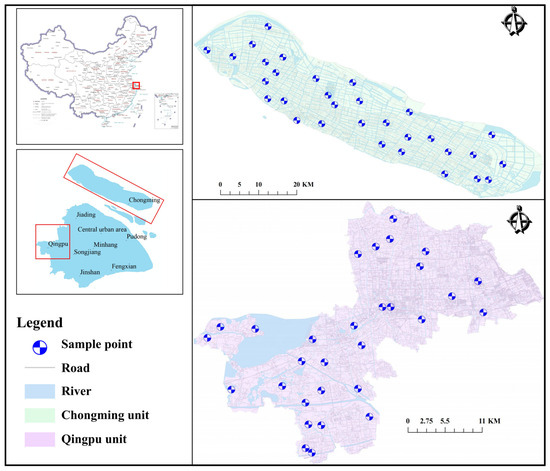
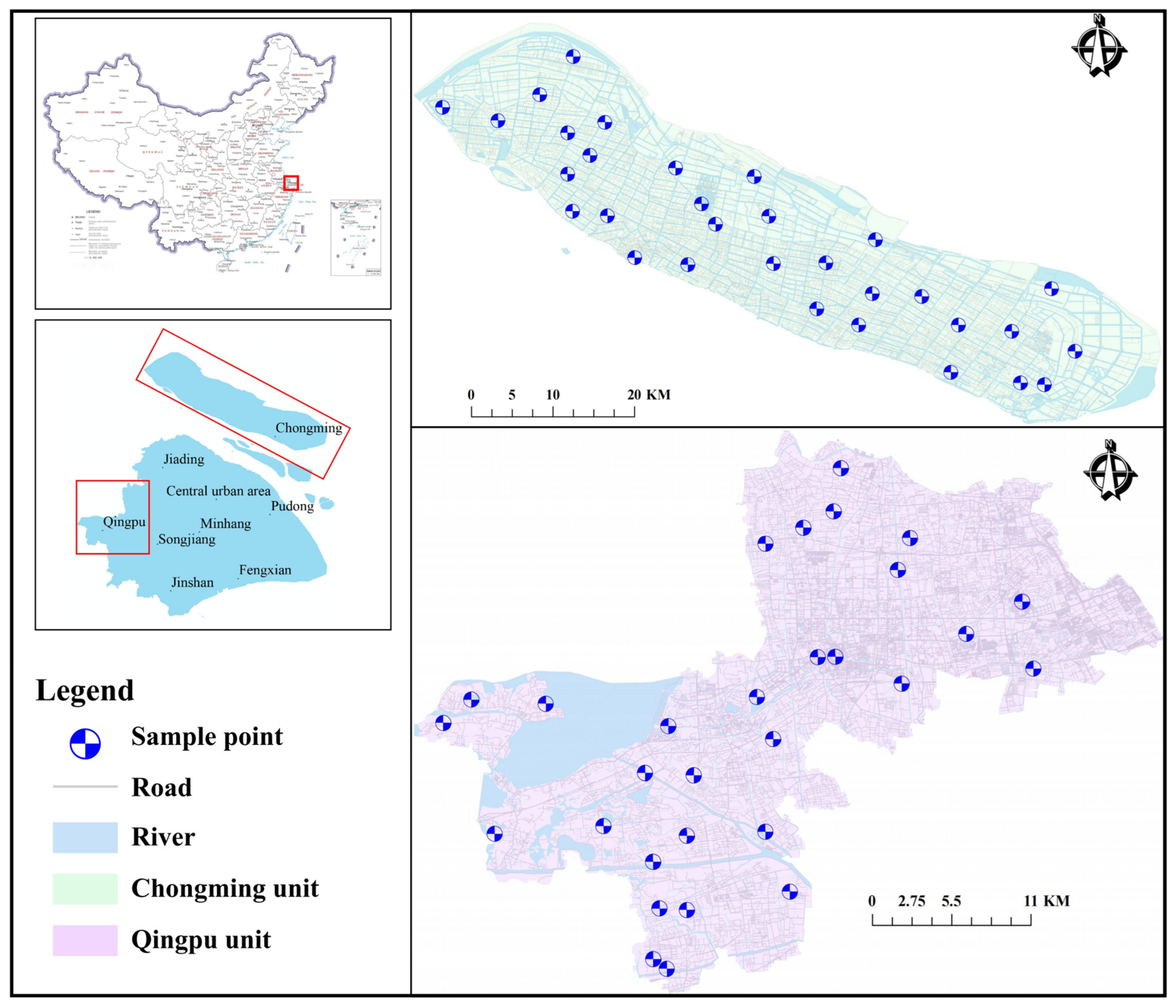
Shanghai is located east of the Yangtze River Delta, China (120°52′ 122°12′ E, 30°40′ 31°53′ N) (Figure 1), and covers a total area of 6833 km2. The terrain slopes from east to west, with an altitude generally below 110 m and an average of 4 m. The entire region comprises plains and three main islands. The study area has a north subtropical monsoon climate, with an average annual temperature of 15.5 °C [20]. The multiyear average precipitation is relatively stable, approximately 1147.3 mm, with most occurring from May to September, accounting for 60% of the annual precipitation. The potential annual evapotranspiration is approximately 850 mm [37]. There are two main rivers in Shanghai (e.g., the Changjiang River and Huangpu River), and all the rivers discharge into the East China Sea. Urban expansion has lasted for more than five decades in Shanghai because of the opening-up policy of China, and the area of urban land has increased significantly. Shanghai can be divided into three types of land-use areas: urban land, agricultural land, and the remaining land. Urban land is related to highly dense construction land. Agricultural land includes farmland and orchards that are frequently irrigated, while the remaining land includes forestland, grassland, and uncultivated land [38,39].
Figure 1.
Study area location and distribution of sampling sites in Shanghai. The reframes represented the selected research areas.
The topography of the Quaternary basement in Shanghai encompasses high terrain in the southwest and low terrain in the northeast. Since the Late Tertiary period, Shanghai has experienced persistent uneven subsidence, resulting in the accumulation of 200–350 m of loose Quaternary clastic sedimentary strata. Briefly, the strata below 150 m belong to the Lower Pleistocene, and are composed primarily of variegated clay and sand interbeds that are associated with river lake sedimentation. Strata above 150 m represent Middle Pleistocene, Late Pleistocene, and Holocene deposits and are characterized by alternating layers of gray clay, sand, and silt, respectively, which are associated with marine terrestrial interactions. Shanghai’s groundwater system is conventionally classified into one unconfined aquifer (or semiconfined aquifer) and five confined aquifers (from top to bottom, they are classified as I–V confined aquifers). The depth to the groundwater level varies from 0.2–2 m, and the main recharge sources are atmospheric precipitation, surface runoff, and irrigation [4,18,40]. Considering the minimizing anthropogenic disturbance and the differences in hydrogeological characteristics and groundwater recharge patterns, Chongming and Qingpu area were selected as independent hydrogeological units. More details on the hydrogeological conditions of Qingpu area and Chongming Island are provided in the Supporting Information (Text S1, Figures S1 and S2).
In accordance with the aquifer media, geological structures, landforms and topographical features, the study area was delineated into two hydrogeological units, namely, the Qingpu area and Chongming Island. The goal of division is to group data with strong hydraulic connections and similar hydrochemical characteristics into the same hydrogeological unit.
3. Materials and Methods
3.1. Research Idea and Flowchart
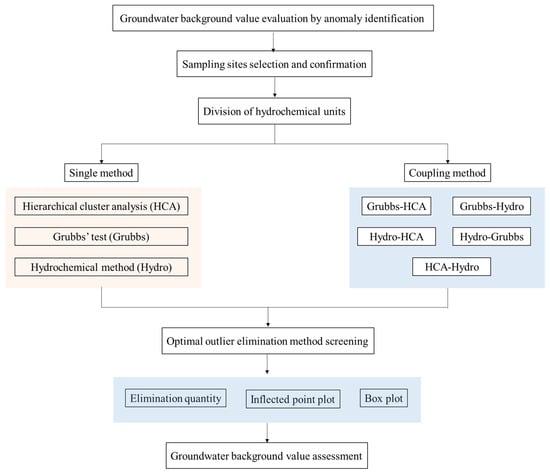
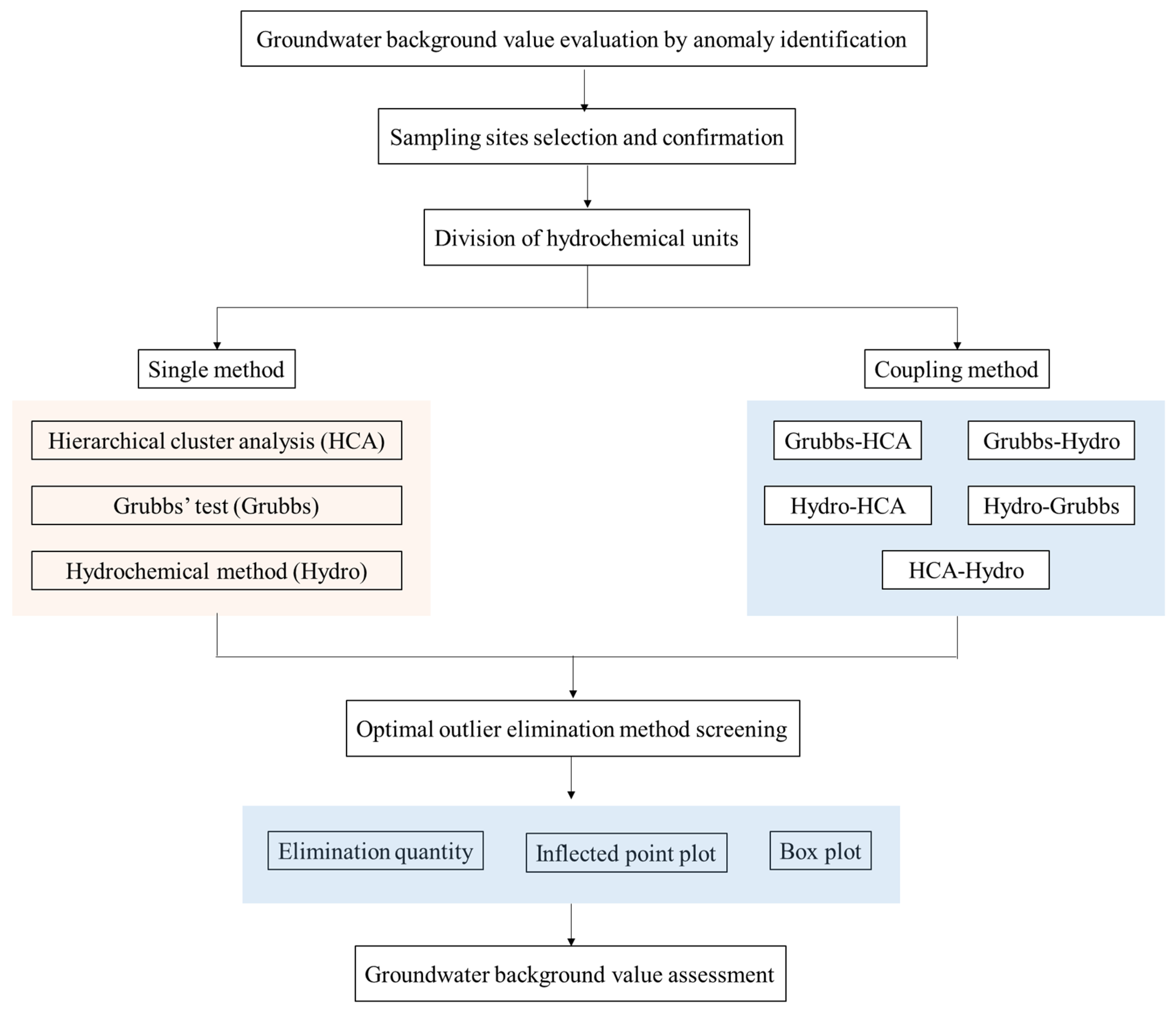
An overview of this research idea was provided to evaluate the assessment of the apparent background level in groundwater, as shown in Figure 2. Briefly, after the geological environmental data of Shanghai (China) urban areas were analyzed, two typical regions were selected for groundwater background value drilling and sampling analysis. Several methods, including single and coupled methods, were subsequently applied to identify and eliminate the outliers for each hydrogeological unit (the two divided regions). On the basis of the identification results, the optimal elimination methods suitable for each hydrogeological unit were selected to evaluate the apparent background level in groundwater. All the background levels (including major groundwater compositions) were evaluated through the cumulative frequency method through the remaining dataset after outliers in each hydrogeological unit were eliminated.
Figure 2.
Technological roadmap for outlier identification and apparent background levels.
3.2. Sampling and Chemical Analysis
In accordance with the investigation requirements, a total of 71 samples were collected from shallow groundwater 4.0–10.0 m below the ground surface, including 10 parallel quality control samples. The sampling sites were selected on the basis of certain criteria, such as accessibility, site owner agreement, and excavation conditions. Moreover, the sampling sites were kept as far as possible from pollution sources and anthropogenic activities to avoid interference. After the well was constructed, 3–5 times the well volume was used to flush the well to ensure the reliability of the subsequent groundwater sample. After sampling, the collected samples were immediately stored at 4 °C until laboratory procedures could be performed. All operating procedures strictly followed The Technical Specifications for Environmental Monitoring of Groundwater (HJ 164-2020) [41], The Regulation of Groundwater Monitoring Well Construction (DZ/T0270-2014) [42], and the local regulations of Shanghai.
Six physicochemical parameters, namely, the pH, temperature, redox potential (Eh), dissolved oxygen (DO), electrical conductivity (EC), and turbidity, were measured in situ using portable water quality meters. Other chemical parameters, such as the major cations, anions, and total dissolved solids (TDS), were measured at the Testing Laboratory of the Shanghai Academy of Environmental Sciences, and quality control analysis was conducted at Shanghai Geotechnical Engineering Testing Center Co., Ltd. (Shanghai, China). More details on the test standards and specific compounds are provided in the Supporting Information (Text S2).
3.3. Data Collection and Statistical Analysis Process
After the sampling and analysis processes were complete, the sample data were obtained. Data processing was subsequently conducted. The Piper plot and Durov diagram were used to evaluate the hydrochemical characteristics and groundwater facies.
Hydrochemical graphic methods (Hydro) are diagnostic approaches that aim to identify outliers by analyzing the main components of groundwater and changes in groundwater parameters [36]. In the outlier analysis process, a Piper plot was used to reflect the evolution of groundwater chemistry, while the ionic relation was evaluated by several ion exchange plots [43,44]. Afterward, the combination of hydrochemical diagrams and the Mahalanobis distance was used to identify and quantify the outlier values in the geochemical process [1]. Hierarchical cluster analysis (HCA) is a statistical analysis method that groups samples or variables in a dataset on the basis of their similarity or proximity [45]. HCA was conducted after the z scores of the groundwater chemistry data were standardized by SPSS 21.0. Afterward, the nearest-neighbor linkage rule was applied to identify similar or dissimilar properties, which were displayed in tree graphs; during this process, the squared Euclidean distance was used as the method of measuring cluster similarity [46]. Afterward, the outlier data were judged and excluded. Grubbs’ test is a statistical method used to detect a single outlier in a normal distribution dataset by comparing whether the difference between the extreme value and the mean significantly exceeds the expected range to determine whether it is an outlier. Grubbs eliminates outliers through iterative processes, where each iteration can detect only one outlier. The detected outlier is then removed from the dataset, and the next iteration begins until no further outliers are found in the subsequent iterations [36]. More details of the outlier identification processes are provided in the Supporting Information (Text S3).
Several coupling methods were applied through the combination of the above statistical methods and hydrochemical methods, which could help to identify outliers, from the perspective of not only statistical analysis but also the change in hydrochemical characteristics. Five coupled methods, namely, the HCA-hydrochemical method (HCA-Hydro), the Grubbs-hydrochemical method (Grubbs-Hydro), Grubbs-HCA, Hydro-Grubbs, and Hydro-HCA, were used. The specific processing procedure is consistent with that of a single method.
3.4. Comprehensive Assessment of the Anomaly Recognition Effect
After outliers were identified, the abilities of the single and coupled methods to identify outliers were assessed on the basis of quantity statistics, inflection point plots, and box plots. Quantity statistics refer to the number of outliers identified and eliminated through the different methods. The inflection point method and box plot method mainly judge the anomaly recognition performance of different methods on the basis of the continuity and discreteness of the remaining data after anomalies are eliminated, respectively [47]. With respect to the inflection point method, if there are inflection points in the remaining data and there is a large amount of data after the inflection point, the poor continuity and anomaly recognition performance of the data are indicated. In contrast, the outlier recognition effect is favorable. In the box plot method, the dispersion is reflected by the difference between the maximum outlier of the indicator and the 75% quartile. The larger the difference is, the greater the dispersion in the dataset and the worse the outlier removal effect.
4. Results and Discussion
4.1. Hydrochemical Characteristics of Groundwater
The hydrochemical characteristics of the whole study area and each unit are detailed in Table 1. The hydrochemical characteristics of Qingpu and Chongming units differed. The concentrations of the major hydrochemical ions are listed in Table 1. Na+ was the dominant cation, with the abundance of the ions decreasing in the order of Na+ > Mg2+ > Ca2+ > K+. Among the anions, HCO3– had the highest concentrations, with all the major hydrochemical ions present in the whole area. The concentrations of Cl–, SO42–, HCO3–, Na+, Mg2+, and K+ in the Chongming unit were generally higher than those in the Qingpu unit. The ion concentrations in Chongming varied greatly, with high standard deviation (SD) values, which indicates that the spatial distribution of groundwater is variable in terms of the hydrochemical composition. The pH values remained stable at 7.32 ± 0.18, 7.46 ± 0.22, and 7.39 ± 0.22 for the Qingpu unit, Chongming unit, and the whole area, respectively. The groundwater was neutral to slightly alkaline. The TDS concentration ranged from 356–8130 mg/L, and the TDS concentration in the Qingpu unit was less than that in the Chongming unit.
Table 1.
Concentrations of the major groundwater components in the hydrochemical units in Shanghai.
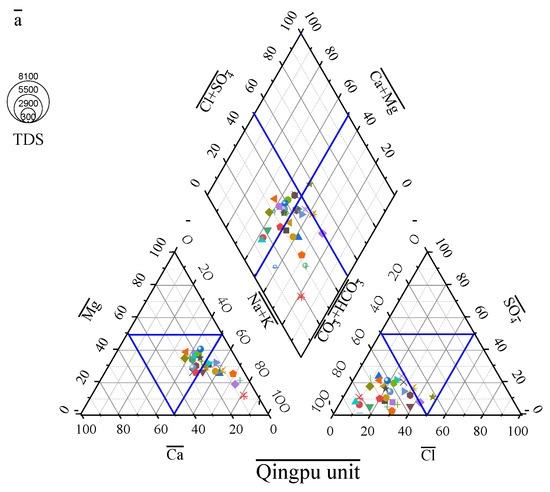
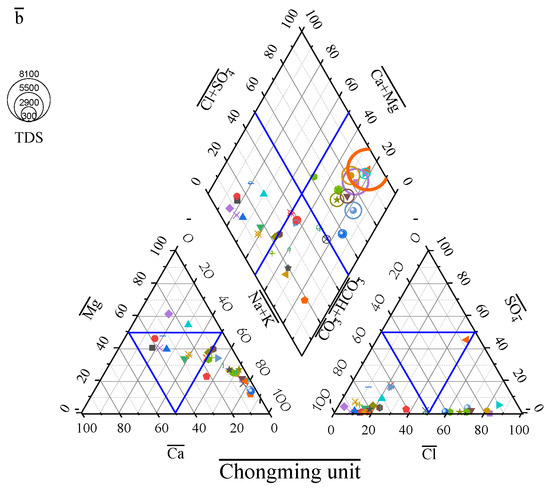
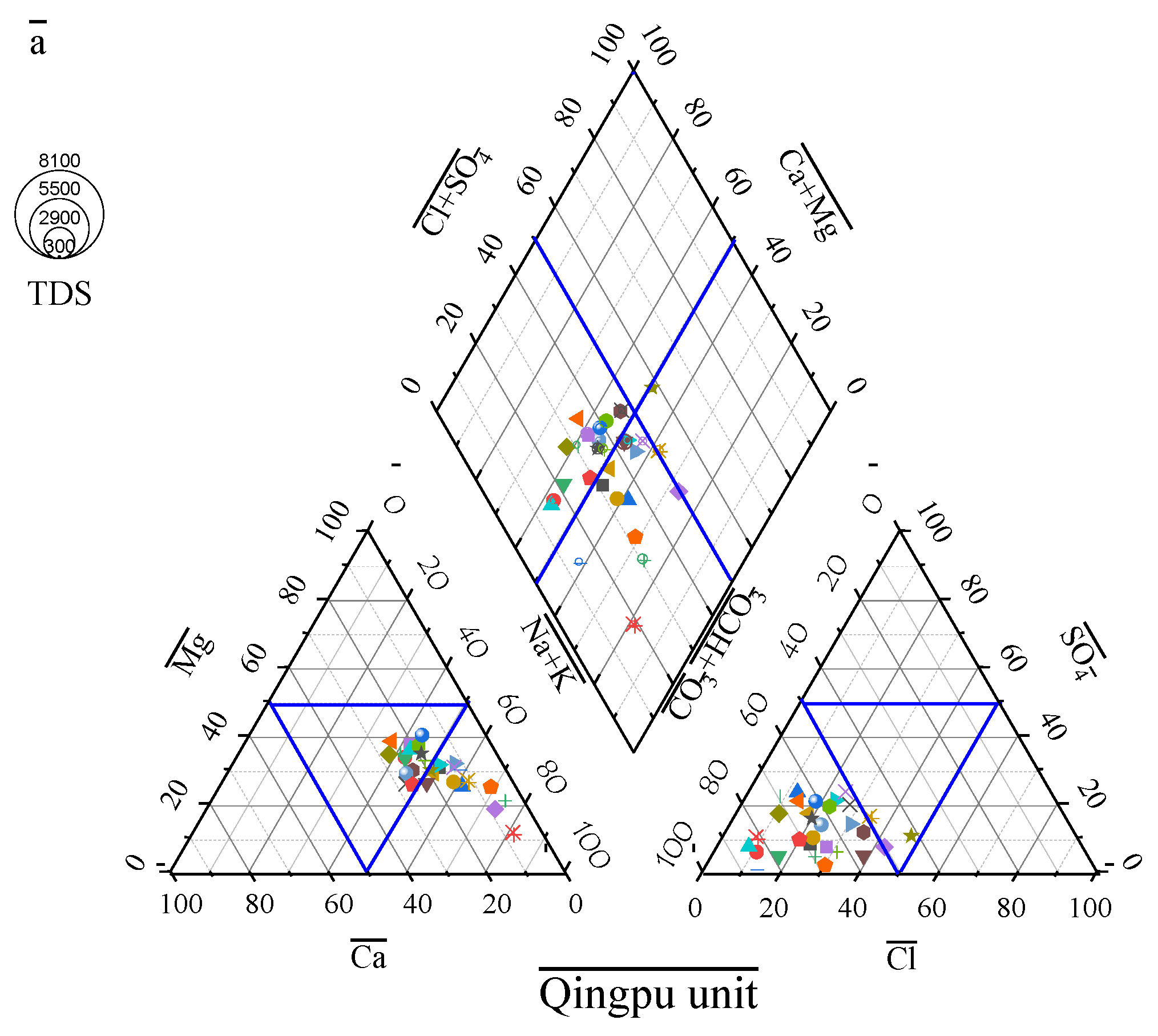
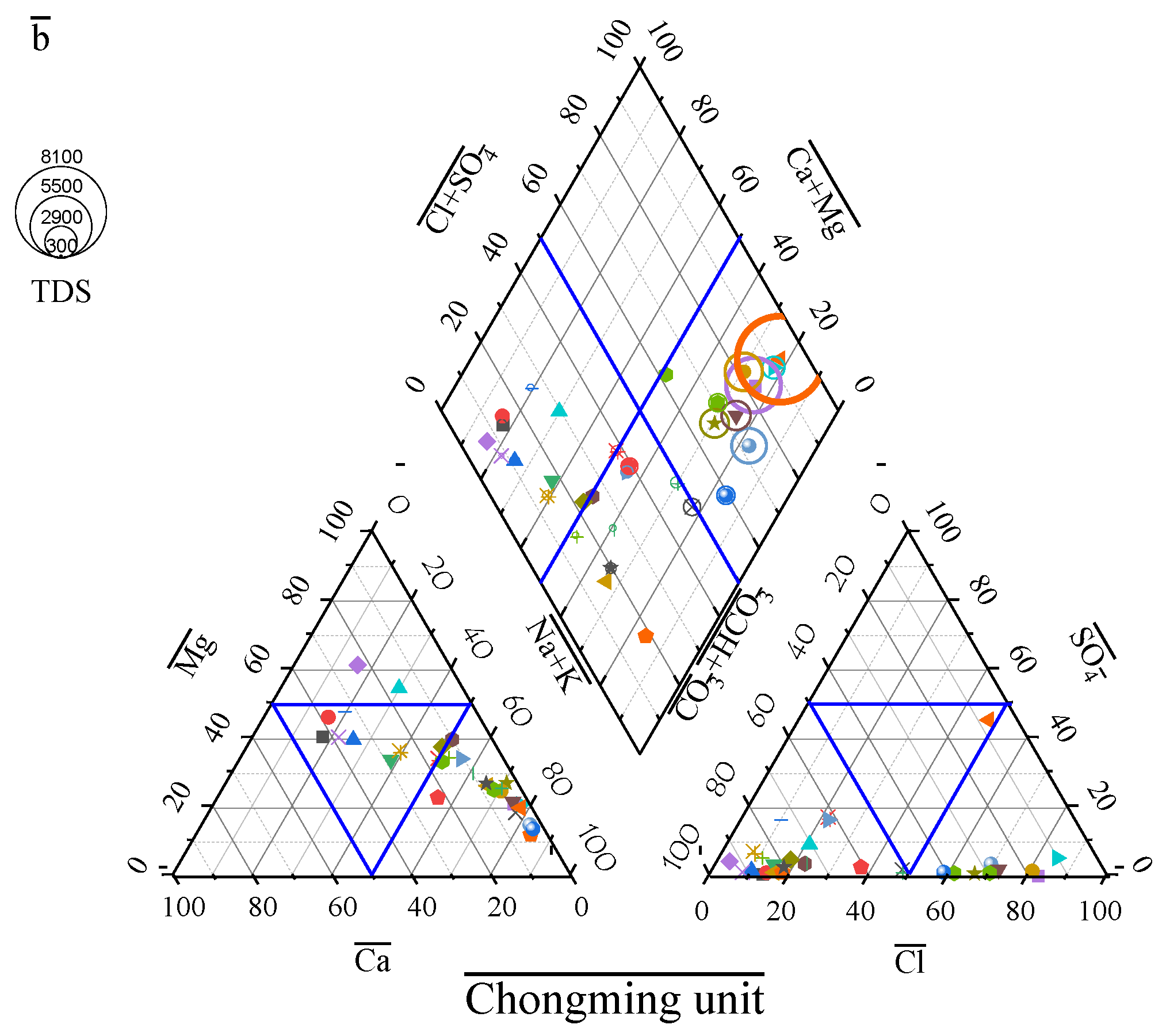
As shown in Figure 3 and Figure S3, the Piper plot indicated that the distribution in the Chongming unit was generally scattered, with diverse hydrochemical types, including HCO3-Ca·Mg, HCO3-Mg, HCO3-Na, and Cl-Na. The cation composition of groundwater in Chongming unit showed a northern biased Ca2+ and Mg2+ type, a central biased Ca2+, Mg2+, and Na+ mixed type, and a southern biased Na+ type. This distribution pattern occurred mainly because the closer the Chongming unit was to the south, the more strongly it was affected by seawater impact, which clearly corresponded with the recharge, runoff, drainage, and seawater erosion conditions [18]. The distribution in the Qingpu unit was relatively concentrated, with several hydrochemical types, including HCO3-Na, HCO3-Na·Mg, and HCO3·Cl-Na. This indicated that the Qingpu unit was less notably affected by seawater erosion and was influenced mainly by recharge and runoff. There are significant regional differences in the chemical composition of groundwater under different hydrogeological and hydrodynamic conditions. Thus, the division of hydrochemical units is very important in evaluating background levels. Neglecting the differences in hydrochemical units or prescreening the entire study area as a unit may lead to many naturally high-concentration chemical components being identified as artificial anomalies. Once these naturally high-concentration components are eliminated, the definition of background values is misleading, and the evaluated background values do not truly reflect the reality of the study area. In addition, by dividing hydrochemical units, data with strong hydraulic connections and similar hydrochemical characteristics, whether due to natural reasons or normal anthropogenic activities, can be centralized. In this way, determining whether points outside the cluster may be affected by abnormal activity is easy.
Figure 3.
Piper plot of groundwater samples in each hydrochemical unit: (a) Qingpu unit and (b) Chongming unit. Different colors represent individual sampling.
4.2. Identification of Hydrochemical Groundwater Component Outliers
4.2.1. Single Methods for Outlier Identification
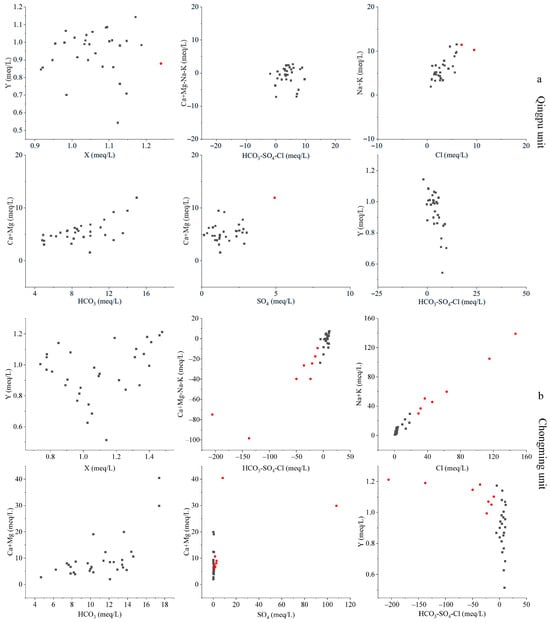
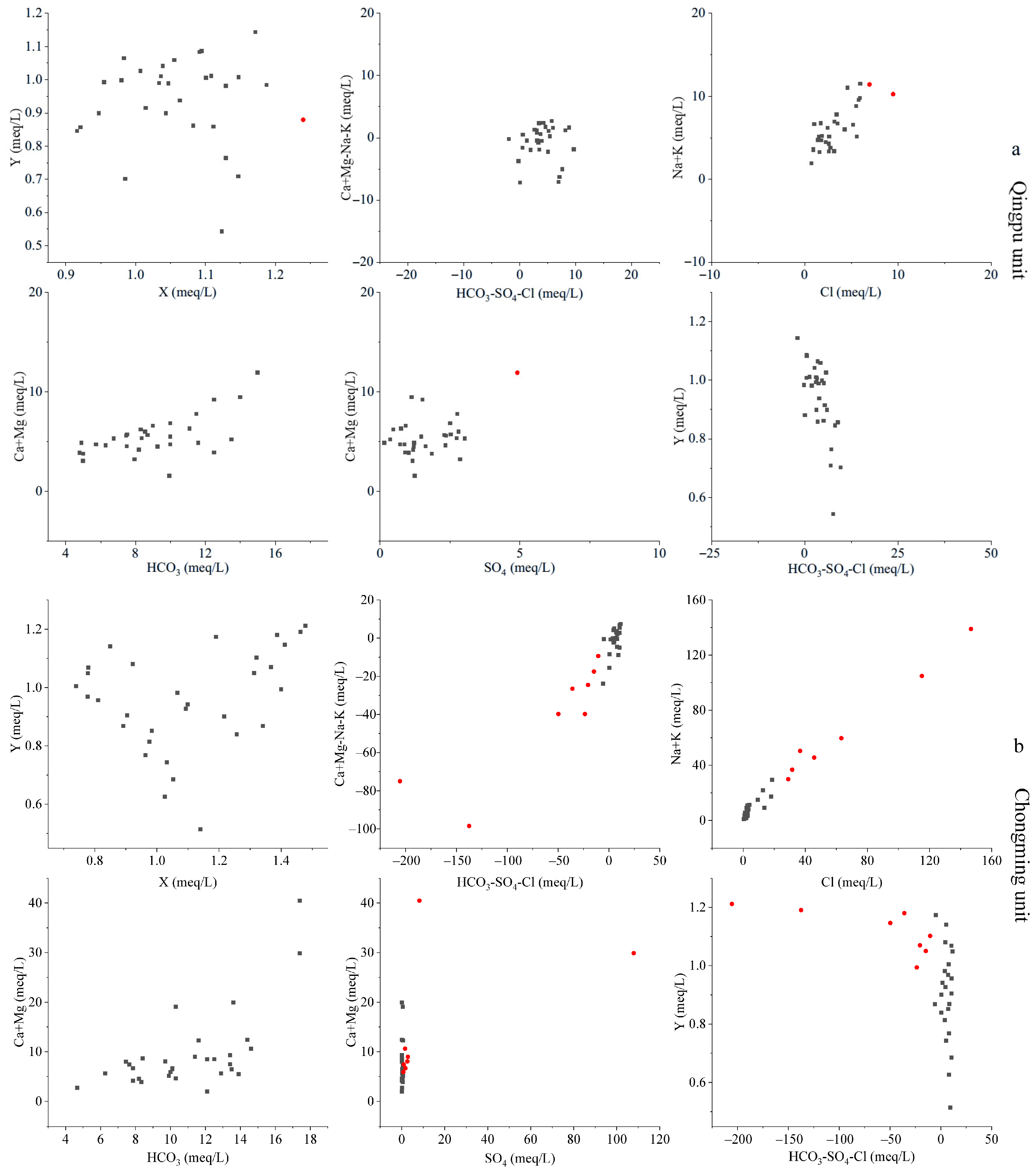
The groundwater anomalies identified by the individual methods after the hydrochemical units were divided are detailed in Table 2. The total numbers identified by the HCA, Hydro, and Grubbs methods were 17, 16, and 7, respectively. The proportions of abnormal data recognized by using the HCA, Grubbs, and Hydro methods for the Chongming unit were 38.7%, 41.9%, and 16.1%, respectively. These values were 20.0%, 10.0%, and 6.7% for the Qingpu unit. The lower percentage obtained by the statistical methods indicated that this assessment approach cannot fully reveal groundwater anomalies. Therefore, the Grubbs’ test method alone was not advantageous for identifying outliers in this study. The Hydro method exhibits suitable applicability in the assessment of outliers for hydrochemical parameters; however, abnormal changes in pH cannot be determined [48,49]. The HCA method can be used to effectively evaluate anomalies in the major parameters, but it might neglect the internal connections between hydrochemical compositions and might insufficiently consider the change in internal regularity and characteristics of water–rock interactions [1,50]. This might lead to uncertainty in the outlier evaluation. For example, in the Chongming unit, at a monitoring point, the K+ concentration was as high as 91.2 mg/L. However, neither the Grubbs nor Hydro method revealed this highly abnormal monitoring point. Moreover, another monitoring point, at which the highest concentration of 95.5 mg/L was measured, was not identified by the Grubbs and Hydro method. This might be due to the limited ability of the Hydro method, which overly considers the internal connections between hydrochemical components, to recognize single major hydrochemical parameters. However, the Grubbs method relies on the evaluation of the significance level and has a good ability to identify values that are significantly greater than the normal value by an order of magnitude. In the statistical analysis process, the values of abnormal indicators (CAIs) further demonstrated the contribution of individual ion indicators to outliers. The Hydro method revealed the Na+, Ca2+, K+, Mg2+, Cl−, and SO42− outliers in the Chongming unit and the Ca2+, Mg2+, and SO42− outliers in the Qingpu unit, revealing the internal connection of hydrochemical parameters (Figure 4). In contrast, the PCAI values in the HCA method were all less than 0.60, indicating that the outliers identified by the HCA method were dispersed among different parameters and samples.
Table 2.
Anomalous identification of major ions by single methods.
Figure 4.
Outlier identification for groundwater by the hydrochemical method: (a) Qingpu unit and (b) Chongming unit. The red dots represent anomaly values, while black dots denote normal samples.
4.2.2. Coupled Methods for Outlier Identification
Although the Hydro and HCA methods had some advantages in identifying outliers in this study, the single method still has several limitations. Thus, the statistics and the hydrochemical method were coupled through different combinations and sequences (Table 3).
Table 3.
Anomalous identification of major ions by the coupled methods.
Among these coupled approaches, the Grubbs-HCA method revealed 40 groups of possible groundwater anomaly data, which is more than the 29 groups identified by the Hydro-HCA method, the 23 groups identified by the HCA-Hydro method, the 18 groups identified by the Grubbs-Hydro method, and the 18 groups identified by the Hydro-Grubbs method. For the independent unit, the proportions of abnormal data recognized by using Grubbs-HCA, Hydro-HCA, HCA-Hydro, Grubbs-Hydro, and Hydro-Grubbs for the Chongming unit were 67.7%, 67.7%, 54.8%, 45.2%, and 45.2%, respectively. Similarly, the proportions were 63.3%, 26.7%, 20.0%, 13.3%, and 13.3% for the Qingpu unit. The number of outliers in the Chongming unit was generally greater than that in the Qingpu unit for all the coupled methods. Notably, the number of outliers identified by coupling methods based on HCA was generally greater than that identified by coupling methods based on Grubbs, indicating that the coupling effect might be related to differences in statistical methods [36]. These findings were consistent with those of the single statistical method, where the number of outliers identified by HCA was greater than that identified by Grubbs. Moreover, the chemical compositions of SO42−, Ca2+, and Mg2+ (PCAI > 0.60) were the main groundwater anomaly indicators for the Chongming unit, whereas the chemical compositions of Ca2+ and Mg2+ were the main groundwater anomaly indicators for the Qingpu unit. These results indicated that the outliers in different hydrochemical units were different. Notably, the order in which the methods were coupled had an important influence on the identification of groundwater anomalies, but no obvious regularity was detected.
4.3. Screening of the Optimal Outlier Identification Method
To screen the optimal outlier identification method, the comprehensive evaluation effects of the single method and the coupled method were compared. First, on the basis of the number of outliers eliminated (Table 2 and Table 3), a preliminary evaluation revealed that the average number of anomalies identified by the coupled method was significantly greater than that identified by the single method, indicating the superiority of the coupled method in terms of anomaly identification. Among these coupled methods, Grubbs-HCA had the best ability to identify anomalies in the Qingpu unit, whereas the Hydro-HCA could best reveal anomalies in the Chongming unit. However, judging the quality of screening methods solely on the basis of the number of identified outliers was not enough.
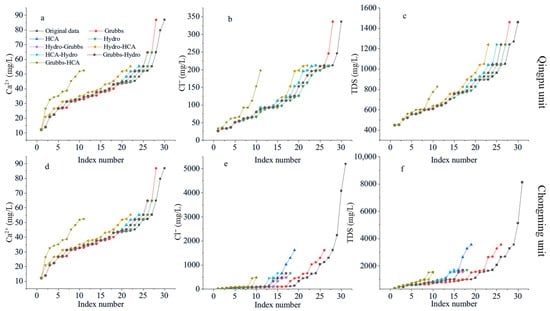
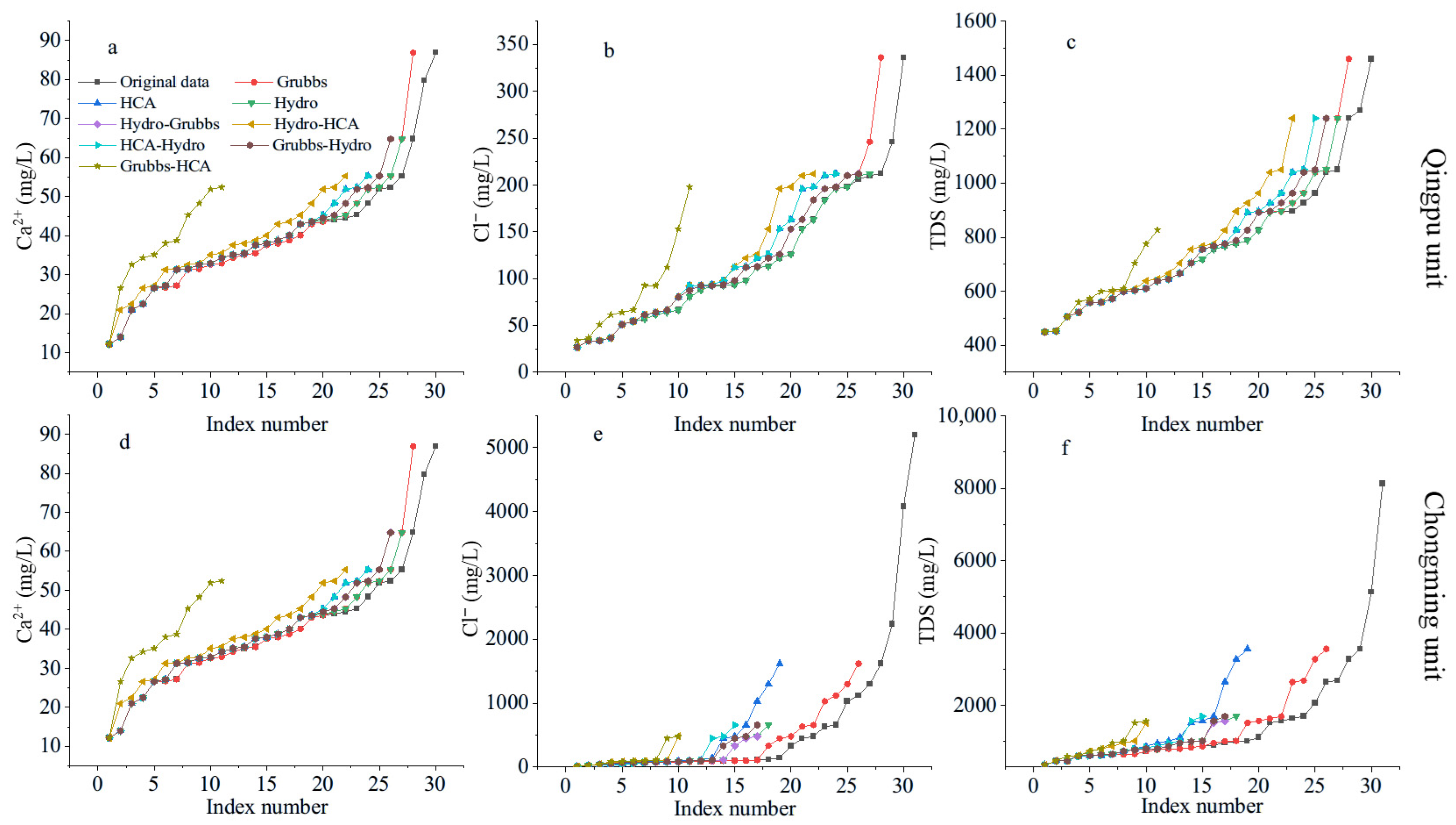
The inflection point diagram and boxplot were subsequently used to further evaluate the effects of the single and coupled methods. The inflection point chart can be used to evaluate the continuity of the remaining data after the outliers are eliminated, while the boxplot can be used to evaluate the discreteness and anomalies of the remaining data. According to the inflection point graphs, the number of inflection points after the anomalies were eliminated by the coupled methods was generally less than that after the anomalies were eliminated by the single methods (Figure 5 and Figure S4), suggesting that the remaining data after identification by the coupled method were more continuous. Specifically, the coupled Hydro-Grubbs method displays the best ability to identify outliers, revealing that hardly any inflection point exists in the major chemical parameters for the Qingpu unit, although this coupled method is not the best for identifying potential outliers. The coupled Hydro-HCA method displays the best ability to identify outliers, revealing that hardly any inflection point exists in the major chemical parameters for the Chongming unit. In contrast, after a single method is used to eliminate anomalies, many anomalous points remain in the remaining data, indicating that the anomalous data have not been completely eliminated [1]. Moreover, these unresolved turning points may suggest the influence of anthropogenic activities.
Figure 5.
Screening of the optimal outlier identification scheme for each hydrochemical unit based on the inflection point method: (a) Ca2+, (b) Cl−, (c) TDS in Qingpu unit; (d) Ca2+, (e) Cl−, (f) TDS in Chongming unit.
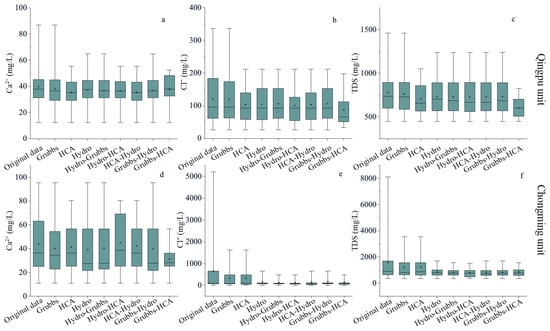
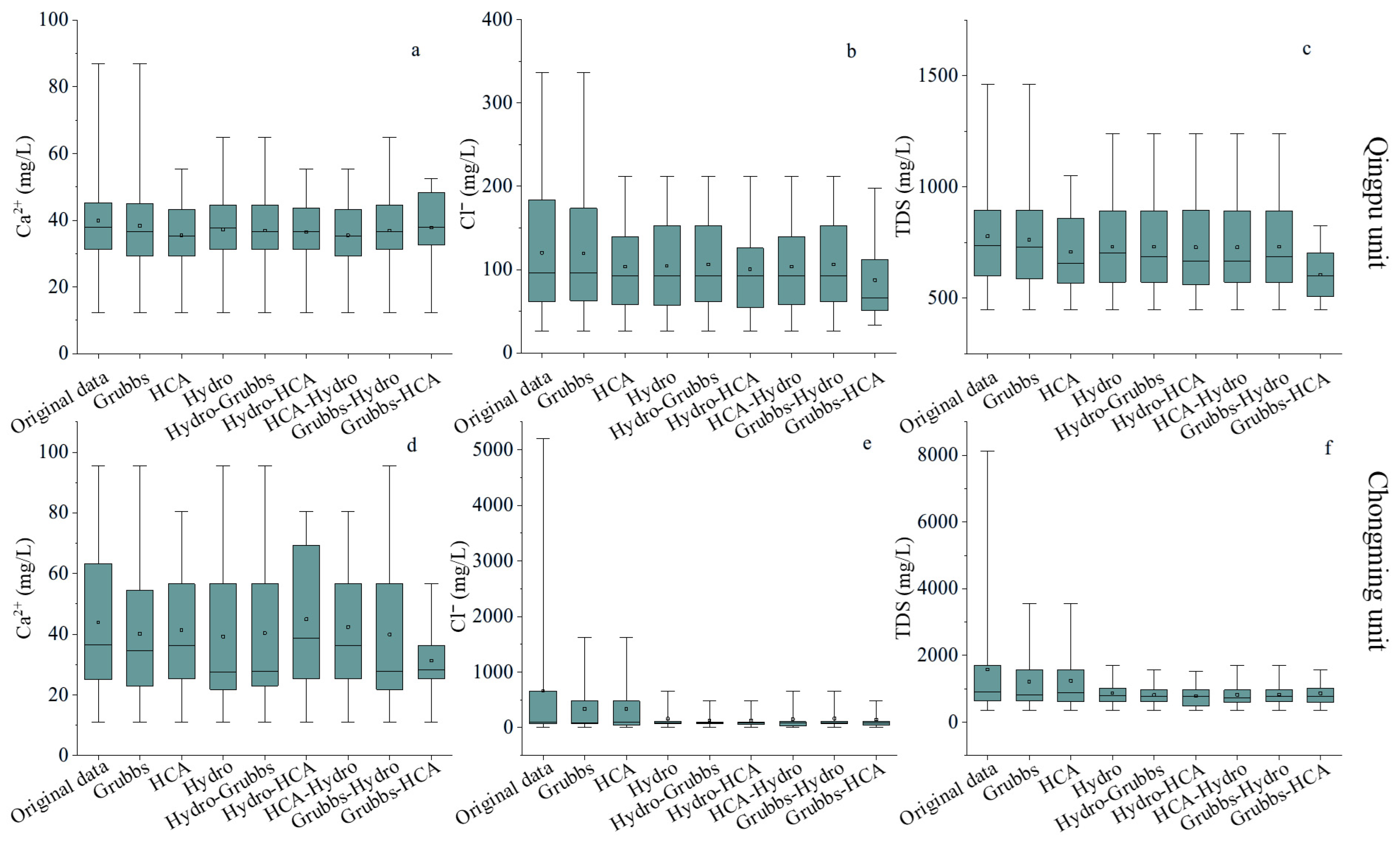
In addition to the inflection point diagram, the box plot also reveals that the coupled method was more effective than the single method was in identifying outliers (Figure 6 and Figure S5). According to the box plot, the more concentrated the data are, the better the identification of outliers in the box plot, which has a smaller box size and fewer outliers [47]. Therefore, the box plot results show that the Hydro-HCA method was the best identification method for the Chongming unit. For the Qingpu unit, the Grubbs-HCA method had the best box plot among all the identification methods. This might be due to excessive removal of the data by the Grubbs-HCA method, which might lead to the erroneous exclusion of valid data. These results can be confirmed by the inflection point diagram. Thus, on the basis of the results of the identified outlier numbers, the inflection point diagram, and the box plot, the coupled Hydro-HCA method was identified as the optimal elimination approach for the Chongming unit, and the Hydro-Grubbs method was selected as the optimal elimination approach for the Qingpu unit. These two methods were used for the subsequent assessment of background level.
Figure 6.
Screening of the optimal outlier identification scheme for each hydrochemical unit based on the box plot method: (a) Ca2+, (b) Cl−, (c) TDS in Qingpu unit; (d) Ca2+, (e) Cl−, (f) TDS in Chongming unit.
4.4. Background Level Assessment for Major Groundwater Components
The anomalies were eliminated by the Hydro-Grubbs method for the Qingpu unit and by the Hydro-HCA method for the Chongming unit. After that, the background levels in groundwater for each hydrochemical unit were assessed by the cumulative frequency distribution (Figure S6). As shown in Figure S6, the remaining data were generally considered natural groundwater data, which were not affected by abnormal anthropogenic activities. Among these groundwater values, the range between the 5th and 95th percentiles could be considered the groundwater background level. Similarly, the groundwater background levels of the major chemical components in each hydrochemical unit were obtained and are provided in Table 4. The groundwater background levels of most of the hydrochemical parameters, such as TDS, Cl–, HCO3–, K+, Ca2+, and Mg2+, in the Chongming unit were clearly generally higher than those in the Qingpu unit. The concentrations of SO42– and Na+ in the Qingpu unit were greater than those in the Chongming unit. These differences could be attributed to the effects of replenishment, discharge, and seawater erosion in the Yangtze River Delta [18]. The Chongming unit was supplied by the Yangtze River and influenced by seawater tides, resulting in high groundwater mobility and low long-term SO42− retention [4,51]. Moreover, the Chongming unit groundwater was in a strongly reducing state (Eh = −117.6 mV), which was not conducive to the generation of SO42–. These factors might explain why the SO42– content in the Chongming unit was significantly lower than that in the Qingpu unit. The Qingpu unit is located at the front edge of the Yangtze River Delta. In the Qingpu unit, the marine or lacustrine sediment layers in ancient river channels are rich in sodium salts (such as rock salt or saltpeter), and the differentiation of saltpeter increases the concentrations of sodium and sulfate in groundwater [52]. Moreover, the slow flow of groundwater makes mineral dissolution more complete. Generally, the groundwater background levels of these two hydrochemical units were still similar, although there were differences in several hydrochemical parameters.
Table 4.
Groundwater background levels of the major chemical components in each hydrochemical unit *.
4.5. Implications and Prospects of the Outlier Identification Process for Groundwater
This work demonstrated that the use of suitable coupled hydrochemical and statistical methods can effectively reveal anomalies in the main chemical components of groundwater caused by anthropogenic activities for different independent groundwater units. Different groundwater units exhibit different groundwater chemical characteristics, and when these units are subjected to long-term anthropogenic influence, their corresponding chemical compositions may also differ from those of other units. Moreover, some potentially affected anomalies may also be difficult to identify, which can result in the inability to obtain strictly defined background values. However, the application of a coupled method can identify the impact of anthropogenic activities at a deeper level. Moreover, the main chemical components and secondary and trace components (such as NO3– and F–) of groundwater may be disturbed by anthropogenic activities. Thus, the current research focusing on the identification of the main chemical components could guide future work in the area of the evaluation of anomalies for secondary or trace components or heavy metals. Moreover, it can provide a basis for further analysis of groundwater pollution and the evolution of groundwater quality.
5. Conclusions
In this study, the apparent background levels of shallow groundwater in Shanghai were assessed by applying multiple individual and coupled methods, manually verifying sampling sites, and considering the changes in the groundwater chemical composition and statistical analysis data. Based on the hydrogeological conditions and topographical features of the aquifer in Shanghai, two typical areas were selected as independent hydrochemical units. The difference in hydrochemical composition between these two units indicated that a reasonable division of evaluation units was crucial for identifying apparent background values. In the same unit, the composition was generally similar, whereas in different units, the hydrochemical composition was not consistent. By comparing eight methods, the optimal method for identifying groundwater anomalies in different units was determined. Hydro-HCA was the optimal identification method for the Chongming unit, while Hydro-Grubbs was selected as the optimal elimination approach for the Qingpu unit. This not only fully demonstrates the superiority of hydrochemical methods, especially considering the internal interactions between major ions in water and rock, but also reflects the statistical significance of data analysis.
The determined groundwater background levels of each unit could serve as a reference for the assessment of groundwater pollution in Shanghai. The method attempted in this study also provides reference for future background value investigation and pollution source identification.
These results could provide a scientific basis for policy-making, such as delineating groundwater functional zones, protecting drinking water sources, and developing pollution prevention and control projects.
Supplementary Materials
The following supporting information can be downloaded at: https://www.mdpi.com/article/10.3390/hydrology13020071/s1, Figure S1: Qingpu area hydrogeological profile Qingpu area hydrogeological profile (cross-section B-B′) referenced from referenced from; Figure S2: Chongming island hydrogeological profile (cross-section C-C′) referenced from; Figure S3: Durov diagram of groundwater samples in each hydrochemical unit (a, Qingpu unit, b, Chongming unit); Figure S4: Screening of the optimal outlier identification scheme for each hydrochemical unit based on inflection point method; Figure S5: Screening of the optimal outlier identification scheme for each hydrochemical unit based on boxplot method; Figure S6: The cumulative frequency plot for the major ionic components in each hydrochemical unit; Text S1:The hydrogeological conditions of Qingpu area and Chongming Island; Text S2: The measurement methods of main parameters; Text S3: The outliers identification methods.
Author Contributions
Q.L.: Conceptualization, data curation, formal analysis, methodology, writing—original draft, and writing—review and editing. M.J.: Data curation, formal analysis, investigation, and software. S.Z.: Data curation, formal analysis, investigation, and software. J.Y.: Funding acquisition, investigation, data curation, and writing—review and editing. H.L.: Conceptualization, project administration, resources, validation, writing—original draft, and writing—review and editing. All authors have read and agreed to the published version of the manuscript.
Funding
This work was supported by the National Key Research and Development Program of China No. 2023YFC3709600 and the 2022 Shanghai Oriental Talent Plan Leading Project (16th) No.135.
Data Availability Statement
Data will be made available on request.
Acknowledgments
The authors also extend thanks to three anonymous reviewers for their constructive and insightful suggestions.
Conflicts of Interest
The authors declare no conflict of interest.
References
- Li, J.; Shi, Z.; Liu, M.; Wang, G.; Liu, F.; Wang, Y. Identifying anthropogenic sources of groundwater contamination by natural background levels and stable isotope application in Pinggu basin, China. J. Hydrol. 2021, 596, 126092. [Google Scholar] [CrossRef] [Scilit]
- Mostaza-Colado, D.; Carreno-Conde, F.; Rasines-Ladero, R.; Iepure, S. Hydrogeochemical characterization of a shallow alluvial aquifer: 1 baseline for groundwater quality assessment and resource management. Sci. Total Environ. 2018, 639, 1110–1125. [Google Scholar] [CrossRef] [Scilit]
- Gejl, R.N.; Rygaard, M.; Henriksen, H.J.; Rasmussen, J.; Bjerg, P.L. Understanding the impacts of groundwater abstraction through long-term trends in water quality. Water Res. 2019, 156, 241–251. [Google Scholar] [CrossRef] [Scilit] [PubMed]
- Liu, S.; Tan, B.; Dai, C.; Lou, S.; Tao, A.; Zhong, G. Geochemical characterization and heavy metal migration in a coastal polluted aquifer incorporating tidal effects: Field investigation in Chongming Island, China. Environ. Sci. Pollut. Res. Int. 2015, 22, 20101–20113. [Google Scholar] [CrossRef] [Scilit]
- Makri, P.; Stathopoulou, E.; Hermides, D.; Kontakiotis, G.; Zarkogiannis, S.D.; Skilodimou, H.D.; Bathrellos, G.D.; Antonarakou, A.; Scoullos, M. The Environmental Impact of a Complex Hydrogeological System on Hydrocarbon-Pollutants’ Natural Attenuation: The Case of the Coastal Aquifers in Eleusis, West Attica, Greece. J. Mar. Sci. Eng. 2020, 8, 1018. [Google Scholar] [CrossRef] [Scilit]
- Zhang, X.; He, J.; He, B.; Sun, J. Assessment, formation mechanism, and different source contributions of dissolved salt pollution in the shallow groundwater of Hutuo River alluvial-pluvial fan in the North China Plain. Environ. Sci. Pollut. Res. Int. 2019, 26, 35742–35756. [Google Scholar] [CrossRef] [Scilit]
- Kurwadkar, S.; Kanel, S.R.; Nakarmi, A. Groundwater pollution: Occurrence, detection, and remediation of organic and inorganic pollutants. Water Environ. Res. A Res. Publ. Water Environ. Fed. 2020, 92, 1659–1668. [Google Scholar] [CrossRef] [Scilit]
- Martin Del Campo, M.A.; Esteller, M.V.; Exposito, J.L.; Hirata, R. Impacts of urbanization on groundwater hydrodynamics and hydrochemistry of the Toluca Valley aquifer (Mexico). Environ. Monit. Assess. 2014, 186, 2979–2999. [Google Scholar] [CrossRef] [Scilit]
- Fu, T.; Li, C.; Wang, Z.; Qi, C.; Chen, G.; Fu, Y.; Su, Q.; Xu, X.; Liu, W.; Yu, H. Hydrochemical characteristics and quality assessment of groundwater in Guangxi coastal areas, China. Mar. Pollut. Bull. 2023, 188, 114564. [Google Scholar] [CrossRef] [Scilit]
- Molinari, A.; Guadagnini, L.; Marcaccio, M.; Guadagnini, A. Natural background levels and threshold values of chemical species in three large-scale groundwater bodies in Northern Italy. Sci. Total Environ. 2012, 425, 9–19. [Google Scholar] [CrossRef] [Scilit] [PubMed]
- Hermides, D.; Makri, P.; Kontakiotis, G.; Antonarakou, A. Advances in the Coastal and Submarine Groundwater Processes: Controls and Environmental Impact on the Thriassion Plain and Eleusis Gulf (Attica, Greece). J. Mar. Sci. Eng. 2020, 8, 944. [Google Scholar] [CrossRef] [Scilit]
- Adimalla, N.; Li, P. Occurrence, health risks, and geochemical mechanisms of fluoride and nitrate in groundwater of the rock-dominant semi-arid region, Telangana State, India. Hum. Ecol. Risk Assess. Int. J. 2018, 25, 81–103. [Google Scholar] [CrossRef] [Scilit]
- Jannat, J.N.; Khan, M.S.I.; Islam, H.M.T.; Islam, M.S.; Khan, R.; Siddique, M.A.B.; Varol, M.; Tokatli, C.; Pal, S.C.; Islam, A.; et al. Hydro-chemical assessment of fluoride and nitrate in groundwater from east and west coasts of Bangladesh and India. J. Clean. Prod. 2022, 372, 133675. [Google Scholar] [CrossRef] [Scilit]
- Liao, L.; He, J.; Peng, C.; Zhang, Z.; Wang, L. Methodologies in calculating apparent background values of minor components in groundwater: A case study of the Liujiang Basin. Earth Sci. Front. 2018, 25, 267–275. [Google Scholar] [CrossRef]
- Li, T.; Chen, P.; Kong, X.; Sánchez-Aguilera, D. Multiple marginalizations: Understanding rural restructuring around metropolitan development zone—A case study from Pengdu Village, Shanghai. J. Rural. Stud. 2025, 117, 103645. [Google Scholar] [CrossRef] [Scilit]
- Wu, F.; Wang, T. Investigating a probable relationship between the distribution of microplastics and crab burrows in the intertidal zone of Chongming Island, Yangtze Estuary. Sci. Total Environ. 2022, 851, 158187. [Google Scholar] [CrossRef] [Scilit] [PubMed]
- Li, M.-G.; Chen, J.-J.; Xu, Y.-S.; Tong, D.-G.; Cao, W.-W.; Shi, Y.-J. Effects of groundwater exploitation and recharge on land subsidence and infrastructure settlement patterns in Shanghai. Eng. Geol. 2021, 282, 105995. [Google Scholar] [CrossRef] [Scilit]
- Zhan, G.; Li, J.; Wang, H.; Wen, X.; Gu, H. Origin and hydrochemical evolution of confined groundwater in Shanghai, China. Front. Earth Sci. 2023, 11, 1117132. [Google Scholar] [CrossRef] [Scilit]
- Cheng, S.; Wen, Y.; Xu, C.; Gao, X. Hydrochemical Characteristics and Impact Mechanism of Shallow Groundwater in Chongming Island, China. Res. Environ. Sci. 2021, 34, 1120–1128. (In Chinese) [Google Scholar]
- Xiao, J.; Xia, C.; Yuan, C.; Shi, G. Spatio-temporal distribution characteristics and mechanisms of chemical composition of shallow groundwater in coastal area of Yangtze River Estuary. Water Resour. Prot. 2022, 38, 181–197. (In Chinese) [Google Scholar]
- Ni, X.; Wu, Y.; Wu, J.; Lu, J.; Wilson, P.C. Scenario analysis for sustainable development of Chongming Island: Water resources sustainability. Sci. Total Environ. 2012, 439, 129–135. [Google Scholar] [CrossRef] [Scilit]
- Peng, W.; Wang, D.; Cai, Y. Assessing Ecological Vulnerability under Climate Change and Anthropogenic Influence in the Yangtze River Estuarine Island-Chongming Island, China. Int. J. Environ. Res. Public Health 2021, 18, 11642. [Google Scholar] [CrossRef] [Scilit]
- Huang, G.X.; Pei, L.X.; Li, L.P.; Liu, C.Y. Natural background levels in groundwater in the Pearl River Delta after the rapid expansion of urbanization: A new pre-selection method. Sci. Total Environ. 2022, 813, 151890. [Google Scholar] [CrossRef] [Scilit]
- Bi, P.; Huang, G.X.; Liu, C.Y.; Li, L.P. Geochemical factors controlling natural background levels of phosphate in various groundwater units in a large-scale urbanized area. J. Hydrol. 2022, 608, 127594. [Google Scholar] [CrossRef] [Scilit]
- Yan, G.L.; Yang, L.G.; Hou, Q.X. Natural background levels and driving factors of aluminum in shallow groundwater of an urbanized delta: Insight from eliminating anthropogenic-impacted groundwaters. Water Environ. Res. 2024, 96, e11076. [Google Scholar] [CrossRef] [Scilit] [PubMed]
- Gao, Y.; Qian, H.; Huo, C.; Chen, J.; Wang, H. Assessing natural background levels in shallow groundwater in a large semiarid drainage Basin. J. Hydrol. 2020, 584, 124638. [Google Scholar] [CrossRef] [Scilit]
- Sellerino, M.; Forte, G.; Ducci, D. Identification of the natural background levels in the Phlaegrean fields groundwater body (Southern Italy). J. Geochem. Explor. 2019, 200, 181–192. [Google Scholar] [CrossRef] [Scilit]
- Peng, C.; He, J.T.; Wang, M.L.; Zhang, Z.G.; Wang, L. Identifying and assessing human activity impacts on groundwater quality through hydrogeochemical anomalies and NO3−, NH4+, and COD contamination: A case study of the Liujiang River Basin, Hebei Province, P.R. China. Environ. Sci. Pollut. Res. Int. 2018, 25, 3539–3556. [Google Scholar] [CrossRef] [Scilit] [PubMed]
- Guadagnini, L.; Menafoglio, A.; Sanchez-Vila, X.; Guadagnini, A. Probabilistic assessment of spatial heterogeneity of natural background concentrations in large-scale groundwater bodies through Functional Geostatistics. Sci. Total Environ. 2020, 740, 140139. [Google Scholar] [CrossRef] [Scilit]
- Shinwari, F.U.; Liaquat, U.; Khan, M.A.; Kontakiotis, G.; Makri, P.; Lianou, V.; Antonarakou, A. Hydrochemical zonation and depth-based vulnerability of groundwater in Islamabad using GIS and WQI techniques. Front. Water 2025, 7, 1581668. [Google Scholar] [CrossRef] [Scilit]
- Parrone, D.; Ghergo, S.; Preziosi, E. A multi-method approach for the assessment of natural background levels in groundwater. Sci. Total Environ. 2019, 659, 884–894. [Google Scholar] [CrossRef] [Scilit] [PubMed]
- Molinari, A.; Guadagnini, L.; Marcaccio, M.; Guadagnini, A. Geostatistical multimodel approach for the assessment of the spatial distribution of natural background concentrations in large-scale groundwater bodies. Water Res. 2019, 149, 522–532. [Google Scholar] [CrossRef] [Scilit] [PubMed]
- Preziosi, E.; Parrone, D.; Del Bon, A.; Ghergo, S. Natural background level assessment in groundwaters: Probability plot versus pre-selection method. J. Geochem. Explor. 2014, 143, 43–53. [Google Scholar] [CrossRef] [Scilit]
- Efstathiou, C.E. Estimation of type I error probability from experimental Dixon’s “Q” parameter on testing for outliers within small size data sets. Talanta 2006, 69, 1068–1071. [Google Scholar] [CrossRef] [Scilit]
- Li, X.; Li, J.; Sui, H.; He, L.; Cao, X.; Li, Y. Evaluation and determination of soil remediation schemes using a modified AHP model and its application in a contaminated coking plant. J. Hazard. Mater. 2018, 353, 300–311. [Google Scholar] [CrossRef] [Scilit]
- He, B.; He, J.; Zeng, Y.; Sun, J.; Peng, C.; Bi, E. Coupling of multi-hydrochemical and statistical methods for identifying apparent background levels of major components and anthropogenic anomalous activities in shallow groundwater of the Liujiang Basin, China. Sci. Total Environ. 2022, 838, 155905. [Google Scholar] [CrossRef] [Scilit]
- Bi, C.; Wang, X.; Jia, J.; Chen, Z. Spatial variation and sources of polycyclic aromatic hydrocarbons influenced by intensive land use in an urbanized river network of East China. Sci. Total Environ. 2018, 627, 671–680. [Google Scholar] [CrossRef] [Scilit] [PubMed]
- Ren, W.; Zhong, Y.; Meligrana, J.; Anderson, B.; Watt, W.E.; Chen, J.; Leung, H.L. Urbanization, land use, and water quality in Shanghai: 1947–1996. Environ. Int. 2003, 29, 649–659. [Google Scholar] [CrossRef] [Scilit]
- Shi, Q.; Gu, C.-J.; Xiao, C. Multiple scenarios analysis on land use simulation by coupling socioeconomic and ecological sustainability in Shanghai, China. Sustain. Cities Soc. 2023, 95, 104578. [Google Scholar] [CrossRef] [Scilit]
- Guo, Y.; Zhang, S.; Wang, S.; Zhang, Y.; Du, J.; Liao, L. Using stable isotopes (δ2H and δ18O) and hydrochemistry to understand the genesis and hydrochemical processes of groundwater in Chongming Island, Yangtze Estuary. Environ. Sci. Pollut. Res. Int. 2023, 30, 84300–84313. [Google Scholar] [CrossRef] [Scilit]
- HJ 164-2020; Technical Specifications for Environmental Monitoring of Groundwater. Ministry of Ecology and Environment of the People’s Republic of China: Beijing, China, 2020.
- DZ/T 0270-2014; Regulation of Groundwater Monitoring Well Construction. Ministry of Natural Resources of the People’s Republic of China: Beijing, China, 2014.
- Karmegam, U.; Chidambaram, S.; Prasanna, M.V.; Sasidhar, P.; Manikandan, S.; Johnsonbabu, G.; Dheivanayaki, V.; Paramaguru, P.; Manivannan, R.; Srinivasamoorthy, K.; et al. A study on the mixing proportion in groundwater samples by using Piper diagram and Phreeqc model. Chin. J. Geochem. 2011, 30, 490–495. [Google Scholar] [CrossRef] [Scilit]
- Ali, S.; Verma, S.; Agarwal, M.B.; Islam, R.; Mehrotra, M.; Deolia, R.K.; Kumar, J.; Singh, S.; Mohammadi, A.A.; Raj, D.; et al. Groundwater quality assessment using water quality index and principal component analysis in the Achnera block, Agra district, Uttar Pradesh, Northern India. Sci. Rep. 2024, 14, 5381. [Google Scholar] [CrossRef] [Scilit]
- Raiber, M.; White, P.A.; Daughney, C.J.; Tschritter, C.; Davidson, P.; Bainbridge, S.E. Three-dimensional geological modelling and multivariate statistical analysis of water chemistry data to analyse and visualise aquifer structure and groundwater composition in the Wairau Plain, Marlborough District, New Zealand. J. Hydrol. 2012, 436–437, 13–34. [Google Scholar] [CrossRef] [Scilit]
- Moreau, M.; Daughney, C. Defining natural baselines for rates of change in New Zealand’s groundwater quality: Dealing with incomplete or disparate datasets, accounting for impacted sites, and merging into state of the-environment reporting. Sci. Total Environ. 2021, 755, 143292. [Google Scholar] [CrossRef] [Scilit]
- Rahman, A.; Tiwari, K.K.; Mondal, N.C. Assessment of hydrochemical backgrounds and threshold values of groundwater in a part of desert area, Rajasthan, India. Environ. Pollut. 2020, 266, 115150. [Google Scholar] [CrossRef] [Scilit] [PubMed]
- Wang, Z.W.; Chen, H.W.; Li, F.L. Identifying spatial heterogeneity of groundwater and its response to anthropogenic activities. Environ. Sci. Pollut. Res. Int. 2019, 26, 29435–29448. [Google Scholar] [CrossRef] [Scilit]
- Zhang, Y.; Chen, Z.; Sun, J.; Wang, J. Natural background levels of chemical components in groundwater of Hutuo River catchment area, North China Plain. Environ. Forensics 2017, 18, 62–73. [Google Scholar] [CrossRef] [Scilit]
- Amiri, V.; Sohrabi, N.; Lak, R.; Tajbakhsh, G. Estimation of natural background levels of heavy metals and major variables in groundwater to ensure the sustainable supply of safe drinking water in Fereidan, Iran. Environ. Dev. Sustain. 2023, 26, 19807–19832. [Google Scholar] [CrossRef] [Scilit]
- He, M.; Sakurai, K.; Wang, G.; Chen, Z.; Shu, Y.; Xu, J. Physico-chemical characteristics of the soils developed from alluvial deposits on Chongming Island in Shanghai, China. Soil Sci. Plant Nutr. 2003, 49, 223–229. [Google Scholar] [CrossRef] [Scilit]
- Shi, Y. Ancient river bed distribution and its effect on construction in land area of Shanghai. J. Eng. Geol. 2011, 19, 277–283. (In Chinese) [Google Scholar]

Disclaimer/Publisher’s Note: The statements, opinions and data contained in all publications are solely those of the individual author(s) and contributor(s) and not of MDPI and/or the editor(s). MDPI and/or the editor(s) disclaim responsibility for any injury to people or property resulting from any ideas, methods, instructions or products referred to in the content. |
© 2026 by the authors. Licensee MDPI, Basel, Switzerland. This article is an open access article distributed under the terms and conditions of the Creative Commons Attribution (CC BY) license.