1. Introduction
Terminal lakes and wetlands are the primary and essential carriers of surface water resources in arid regions and constitute crucial components of oasis ecosystems [
1]. They perform multiple ecological functions, including water-cycle regulation, biodiversity support, and desertification control, making them indispensable to the survival of both humans and natural ecosystems within a basin [
2,
3]. In addition to being vital resources for human activities and livelihoods, terminal lakes and wetlands also serve as sentinels of global climate change [
4,
5]. Owing to their location in an extremely fragile zone of “water–air–land” interaction, they are highly sensitive to climate disturbances and human activities [
2], and can provide early and clearer signals of environmental change [
6]. In recent decades, as climate change has intensified and human activities have increased, the spatial locations and morphologies of many terminal lakes in arid regions have undergone substantial transformations, with many shrinking drastically or even disappearing [
7,
8]. Therefore, to ensure the rational and efficient allocation of water resources in arid regions, it is necessary to monitor the long-term and dynamic changes in terminal lake wetlands in a continuous and timely manner [
9].
Currently, the main methods for water body extraction based on remote sensing data include band thresholding, water index–based approaches, and machine learning methods [
10,
11,
12]. Advances in remote sensing technology have greatly enhanced our understanding of the Earth’s surface. By regularly acquiring satellite imagery, it is possible to monitor dynamic changes in the surface environment in an efficient and timely way [
13,
14]. Remote sensing and GIS technologies are now widely applied in water resources monitoring. Due to their synoptic coverage, dynamic capability, and cost-effectiveness, remote sensing data can provide rapid and accurate lake surface information at relatively high temporal frequencies, thereby offering strong support for analyzing the spatiotemporal evolution of lake extents [
10,
15]. Surface water dynamics can be monitored using optical remote sensing with various spatial resolutions, such as the MODIS series, Landsat series, Sentinel-2, and Gaofen series [
16,
17,
18]. In addition, microwave remote sensing sensors, such as Sentinel-1 and the Jason series, are less affected by cloud cover and illumination conditions and show a reduced sensitivity to vegetation cover, making them suitable for monitoring water level changes and flood dynamics [
19,
20]. In this study, Landsat series and Sentinel-2 imagery are used to monitor and extract the lake surface area of Lake Taitema from 2005 to 2025.
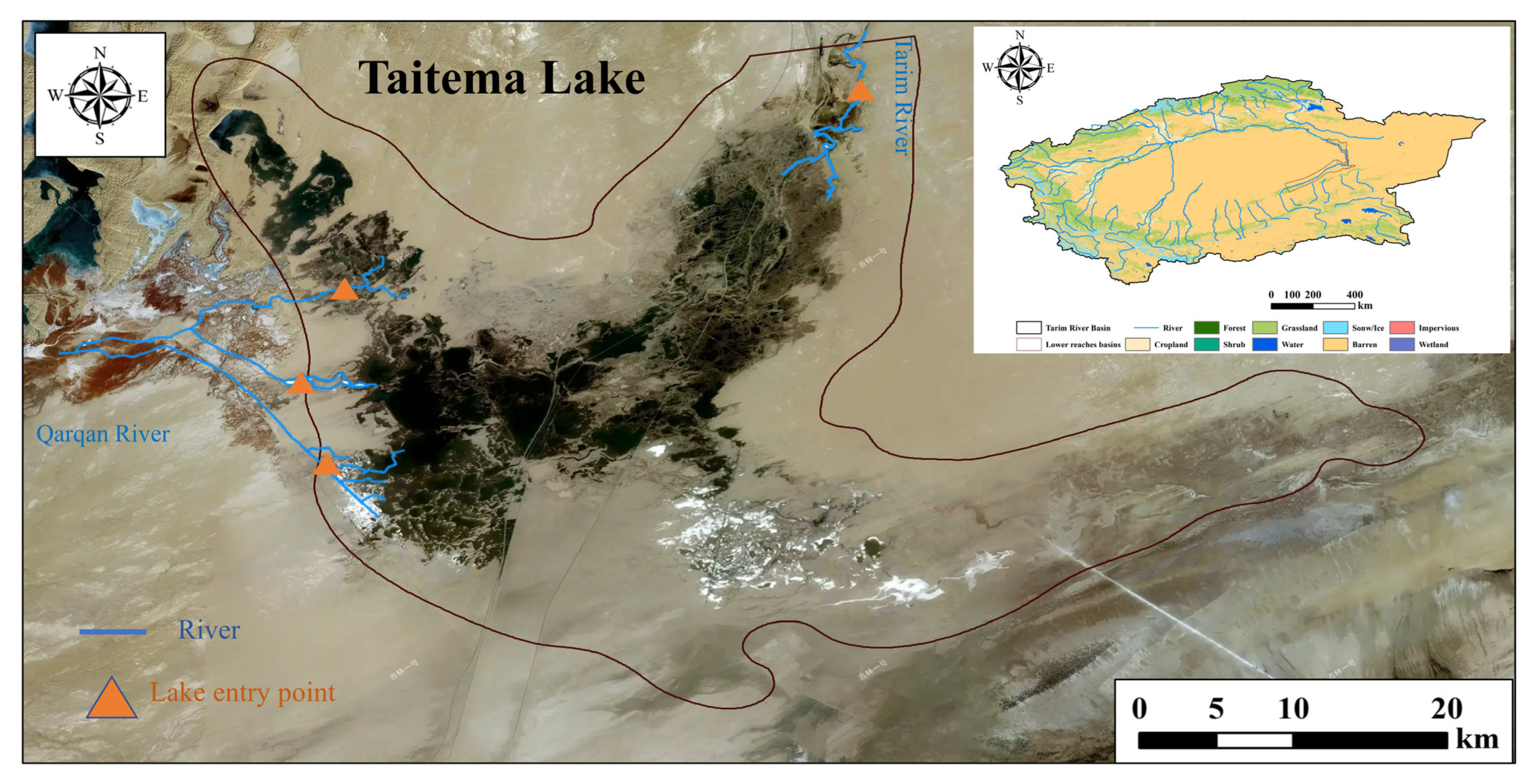
Over the long term, substantial research progress with significant academic value and practical relevance has been achieved regarding watershed-scale surface water extraction methods, spatiotemporal evolution patterns, and analyses of driving mechanisms [
21,
22,
23]. As the terminal lake of both the Tarim River—the largest inland river in China—and the Qarqan River, Lake Taitema constitutes a crucial component of the downstream ecosystems of these two rivers and serves as a key indicator of climate change. The lake possesses both considerable potential for resource development and unique ecological value [
16,
24]. Since the 1970s, population growth along both banks of the Tarim River, intensified human activities, and increasingly frequent extreme climatic events have led to the drying up of the river’s downstream reach in 1972, which in turn caused progressive degradation and eventual desiccation of Lake Taitema, accompanied by a continual deterioration of its natural environment [
25,
26]. With growing national attention to ecological degradation in the region, a total of 26 ecological water releases have been implemented to the lower Tarim River from 2000 to April 2025. Under this sustained intervention, the wetland area of Lake Taitema has gradually recovered, groundwater levels have risen significantly, and the ecological environment has improved markedly [
27,
28].
This transformation has attracted extensive attention from scholars, with research topics covering the lake surface dynamics of Lake Taitema since the initiation of ecological water conveyance, variations in groundwater levels, vegetation responses, and overall ecological feedbacks and habitat-quality assessments of the ecosystem [
29,
30,
31]. Since the start of ecological water conveyance, the spatial distribution of water bodies has shifted from a western-dominated pattern to one characterized by greater water coverage in the east and increasing hydrological connectivity, accompanied by an overall eastward migration of the lake area centroid. Existing studies indicate that the Qarqan River provides a more substantial and stable contribution to the replenishment of Lake Taitema; moreover, the two rivers exhibit markedly different lead–lag patterns in their runoff processes, with the main periodicity of the Tarim River occurring at 2.9 years, while that of the Qarqan River is 5.7 years. The probability of synchronous wet–dry conditions between the two rivers is 44.52%, whereas asynchronous conditions occur with a probability as high as 55.48% [
6]. Other studies have developed a priority framework for vegetation protection in the Lake Taitema region, identifying the spatial distribution and extent of different vegetation types and providing an effective basis for targeted conservation practices [
32]. However, although substantial research has been conducted on the spatiotemporal evolution of Lake Taitema’s surface area and the hydrological characteristics of inflows from the Tarim and Qarqan rivers, detailed analyses of how the lake surface evolves dynamically under the combined influences of the two rivers, as well as the specific regions of the lake controlled, respectively, by each river, are still lacking. To achieve precise water allocation and joint water resources management for Lake Taitema, further in-depth investigation is urgently needed to address these key scientific questions.
The objectives of this study are fourfold: (1) to extract a monthly lake water body dataset covering the past two decades using high-precision, long-term remote sensing imagery on the Google Earth Engine (GEE) platform; (2) to investigate the spatiotemporal variations in Lake Taitema from 2005 to 2025; (3) to track the dynamic evolution of the lake surface under inflows from the two rivers, quantify the relationship between inflow volume and lake surface area, and delineate the respective control regions governed by each river; and (4) to develop ecological regulation schemes for the joint water resources management of the two rivers under years with different occurrence probabilities, thereby achieving precise water allocation for Lake Taitema.
3. Results
3.1. Monitoring of Lake Surface Changes in Lake Taitema, 2005–2025
3.1.1. Monthly Changes in the Lake Surface Area of Taitema Lake, 2005–2025
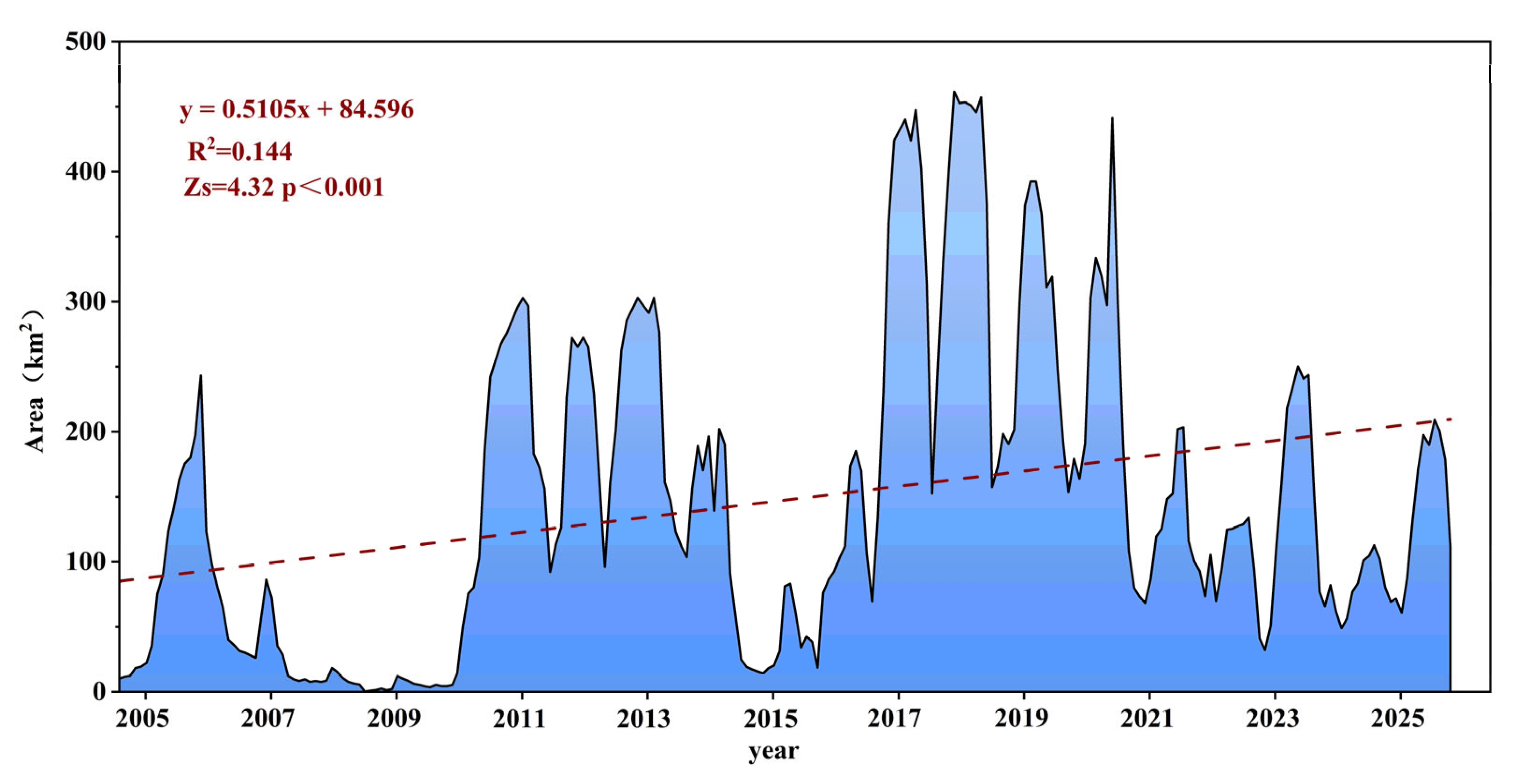
From 2005 to 2025, the surface area of Lake Taitema exhibited pronounced variability at both interannual and intra-annual scales (
Figure 2). The long-term time series reveals a statistically significant upward trend, as indicated by the Mann–Kendall test (Zs = 4.32,
p < 0.001), suggesting a persistent increase in lake extent over the study period. To further quantify the rate of change, a linear regression analysis was applied, yielding a positive slope (y = 0.5105x + 84.596). However, the relatively low coefficient of determination (R
2 = 0.144) and the marginal significance of the regression slope (
p = 0.099) indicate that linear trends alone cannot fully capture the complex temporal dynamics of lake area variation. Extreme fluctuations were observed during the study period. The maximum lake area occurred in October 2017 (461.52 km
2), whereas the minimum was recorded in October 2008 (0.35 km
2). At the intra-annual scale, seasonal variability was also substantial. For example, in 2016, the difference between the annual maximum and minimum lake areas reached 362.55 km
2, highlighting the strong seasonal expansion–shrinkage cycle.
These results demonstrate that Lake Taitema, as a terminal lake jointly influenced by multi-source inflows and ecological water conveyance, is highly sensitive to seasonal hydrological inputs and human-regulated water allocation. While pronounced seasonal fluctuations dominate short-term lake area dynamics, the statistically significant monotonic trend detected by the Mann–Kendall test suggests that sustained ecological water management and upstream inflow regulation have contributed to a gradual long-term recovery of the lake surface area.
3.1.2. Annual Average Changes in the Lake Surface Area of Taitema Lake, 2005–2024
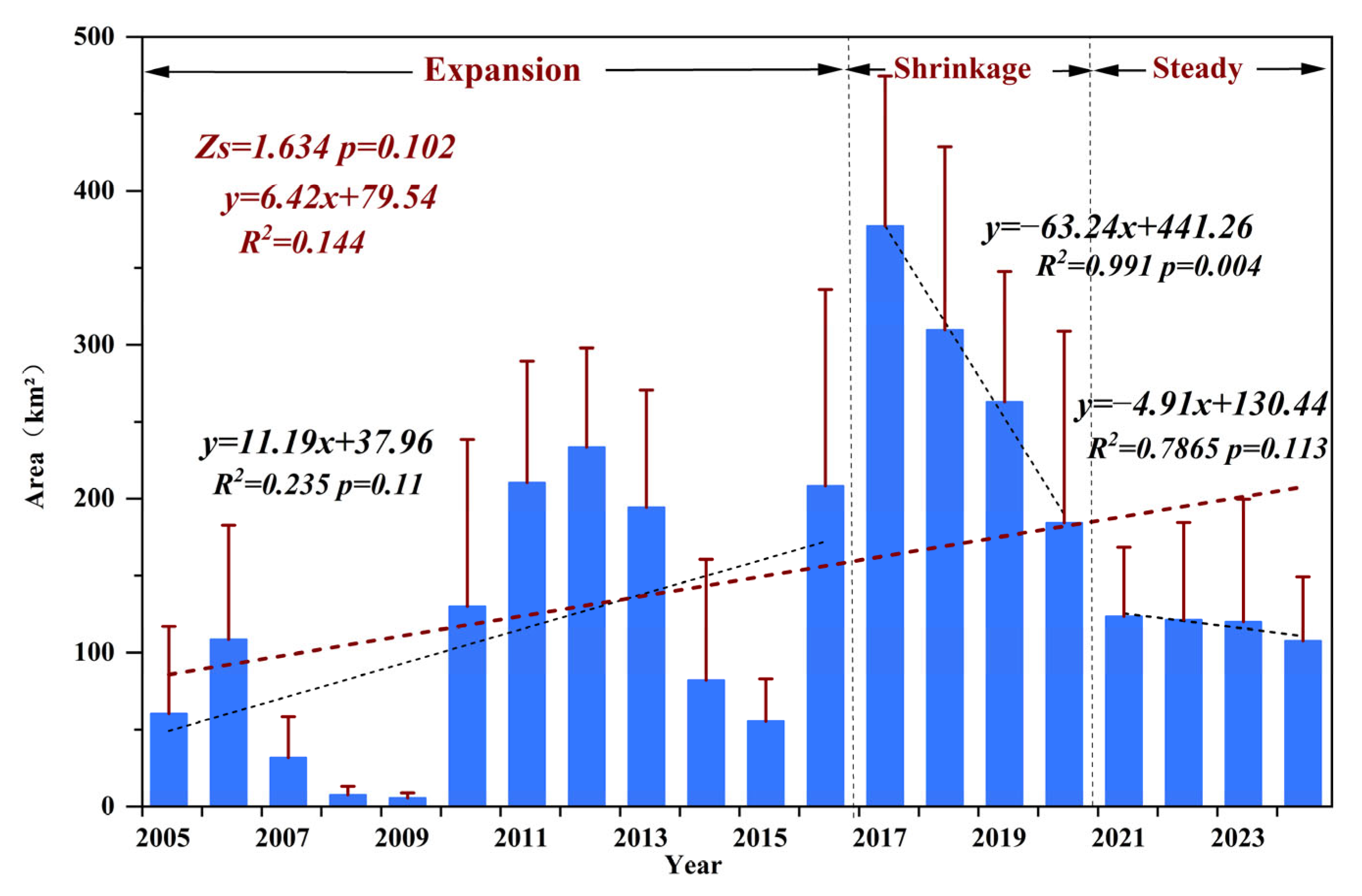
Based on the variations in the annual mean lake area from 2005 to 2024 (
Figure 3), the hydrological evolution of Lake Taitema can be divided into three distinct stages: an expansion stage, a rapid shrinkage stage, and a stabilization stage.
(1) Expansion stage (2005–2016)
During this period, the lake surface exhibited a fluctuating yet overall increasing trend. The smallest annual mean area occurred in 2009 (5.59 km2), while the largest value was recorded in 2012 (233.46 km2). The pronounced interannual fluctuations during this phase were closely associated with substantial variability in inflow volumes from the Tarim River and the Qarqan River, whose discharge processes themselves are characterized by instability and irregularity.
(2) Rapid shrinkage stage (2017–2020)
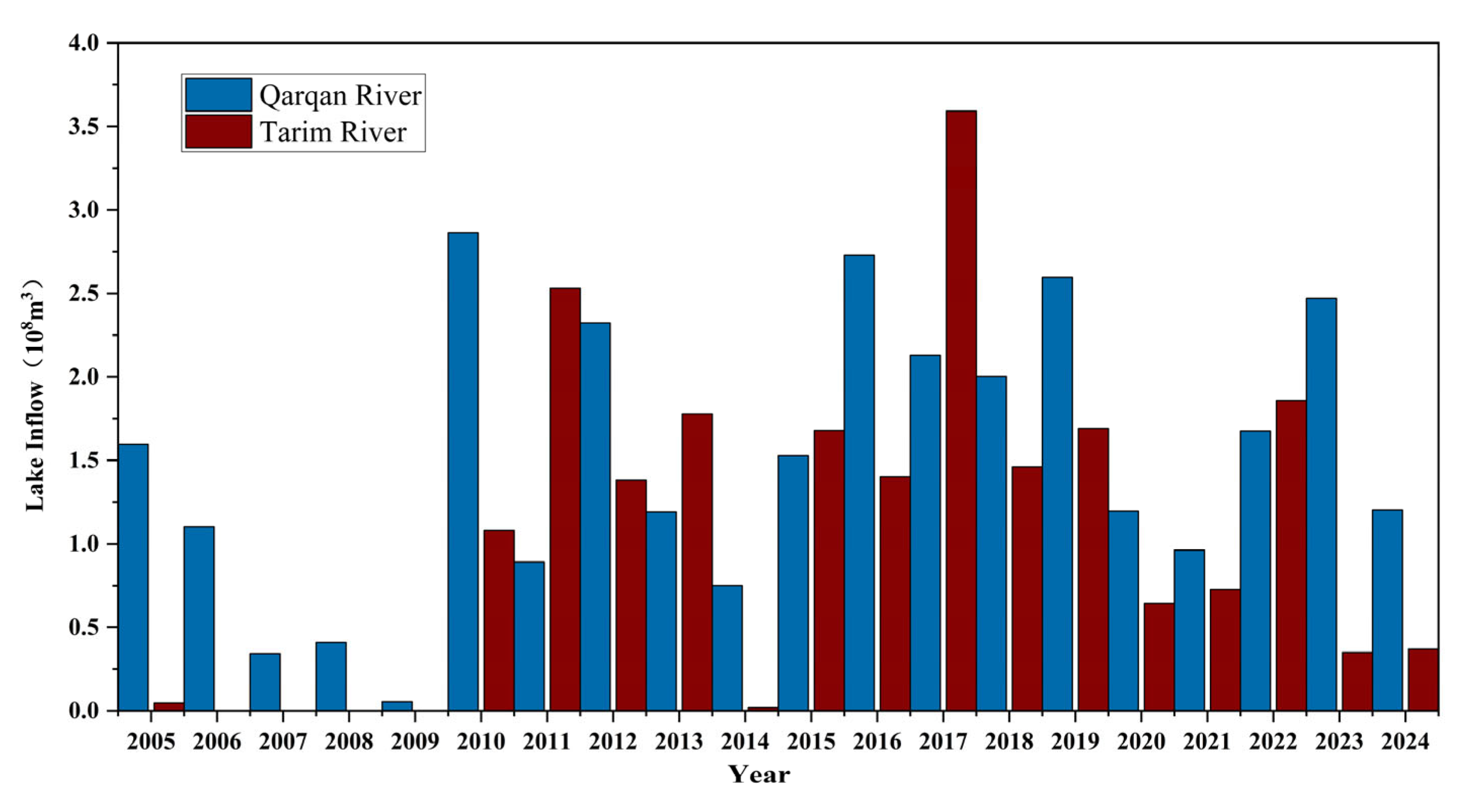
This period witnessed a dramatic decline in lake surface area. In 2017, both rivers entered a wet year, resulting in a historically high inflow volume to Lake Taitema (a total of 572 × 106 m3, including 359 × 106 m3 from the Tarim River and 213 × 106 m3 from the Qarqan River). Consequently, the annual mean lake area reached its peak at 377.10 km2. However, beginning in 2018, as inflow volumes rapidly decreased, the mean lake area shrank correspondingly, declining to 184.33 km2 by 2020. This stage highlights the high sensitivity of the lake extent to changes in river inflow.
(3) Stabilization stage (2021–2024)
From 2021 onward, the lake surface entered a relatively stable phase, remaining at approximately 120 km2 for four consecutive years. This suggests that a new hydrological equilibrium has gradually formed between water inflow and evapotranspiration, indicating that the lake system has transitioned into a relatively steady state.
3.1.3. Monthly Average Changes in the Lake Surface Area of Taitema Lake, 2005–2024
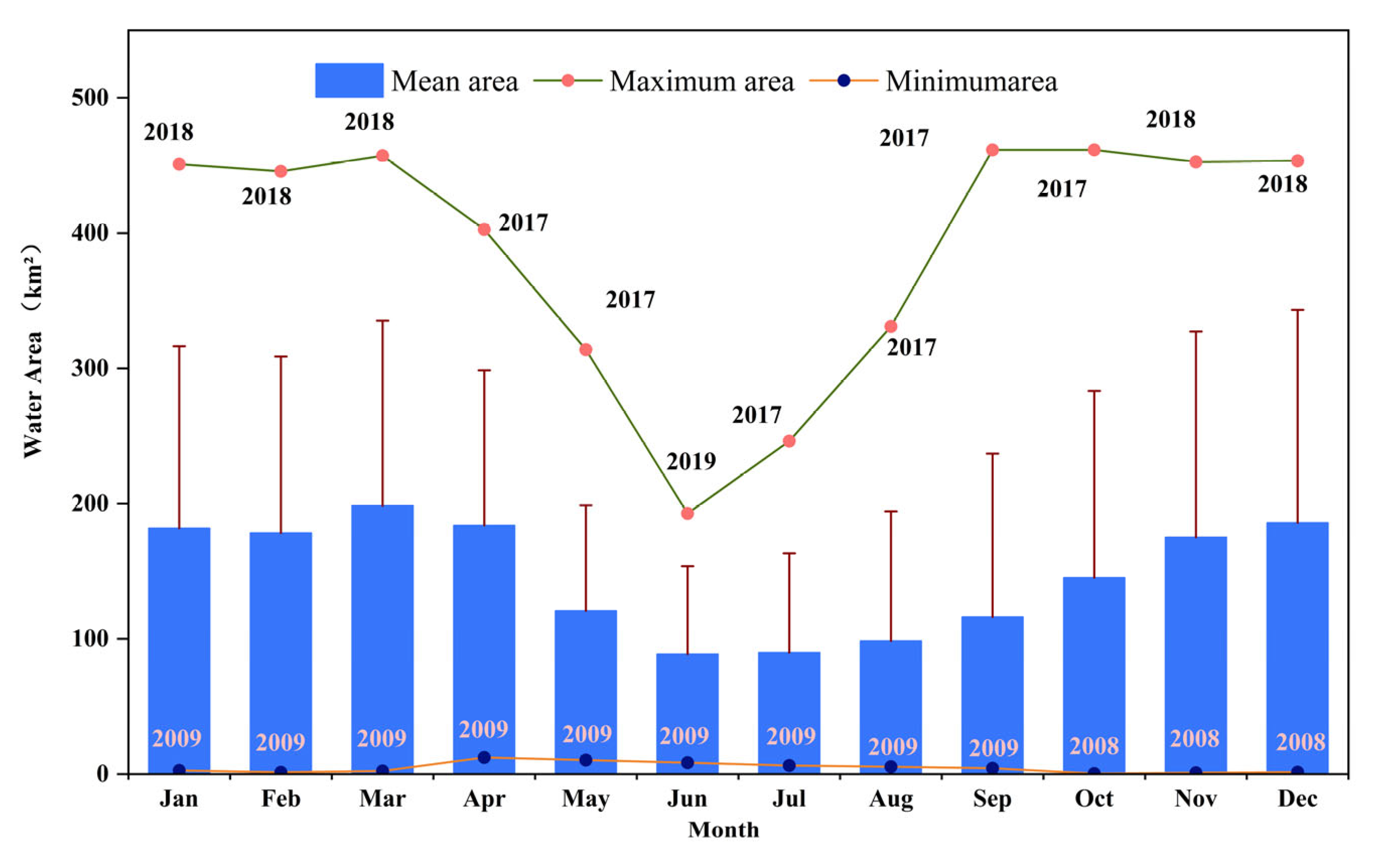
Because Lake Taitema exhibits pronounced intra-annual variability, monthly lake area observations were further used for detailed analysis (
Figure 4). Based on the monthly mean lake surface area, the highest value occurs in March (198.33 km
2), while the lowest appears in June (88.66 km
2). Overall, the lake surface shows a slight increase from January to March, rising by approximately 20 km
2 and reaching a seasonal peak in March. From April to June, the lake shrinks rapidly, with about 100 km
2 of water surface lost within three months, resulting in the lowest extent of the year in June. During the period from July to December, under the gradually increasing influence of ecological water releases from the Tarim River and supplemental inflow from the Qarqan River, the lake begins to recover and expands continuously, with an average monthly increase of around 15 km
2, eventually forming the second annual high-water period in winter.
3.1.4. Lake Surface Change Features of Taitema Lake
Over the past two decades, the interannual variations in Lake Taitema have exhibited pronounced irregularity and are strongly driven by external forcing. As illustrated in
Figure 5 and
Table 1, the annual inflow volumes from the Tarim River and the Qarqan River fluctuate substantially and show no consistent pattern. This instability mainly stems from two factors: (1) The ecological water releases from the Daxihaizi Reservoir on the Tarim River are highly dependent on glacier meltwater and upstream water consumption. In extremely dry years, ecological releases may fail to reach the lake, whereas in wet years, only two months of releases can rapidly induce a lake surface expansion of 100–200 km
2. (2) The annual runoff of the Qarqan River is primarily controlled by glacier melt in the Kunlun Mountains, and the pronounced year-to-year differences in meltwater lead to alternating wet and dry runoff conditions, with wet years accounting for 29% and dry years for 48%. Therefore, the remarkable irregularity of lake area variability at the interannual scale essentially reflects the high uncertainty in inflow volumes and the year-specific wet–dry combinations of the two rivers, which are jointly influenced by climate-driven processes (precipitation and glacier melt) and human regulation (ecological water conveyance) along the lower Tarim River.
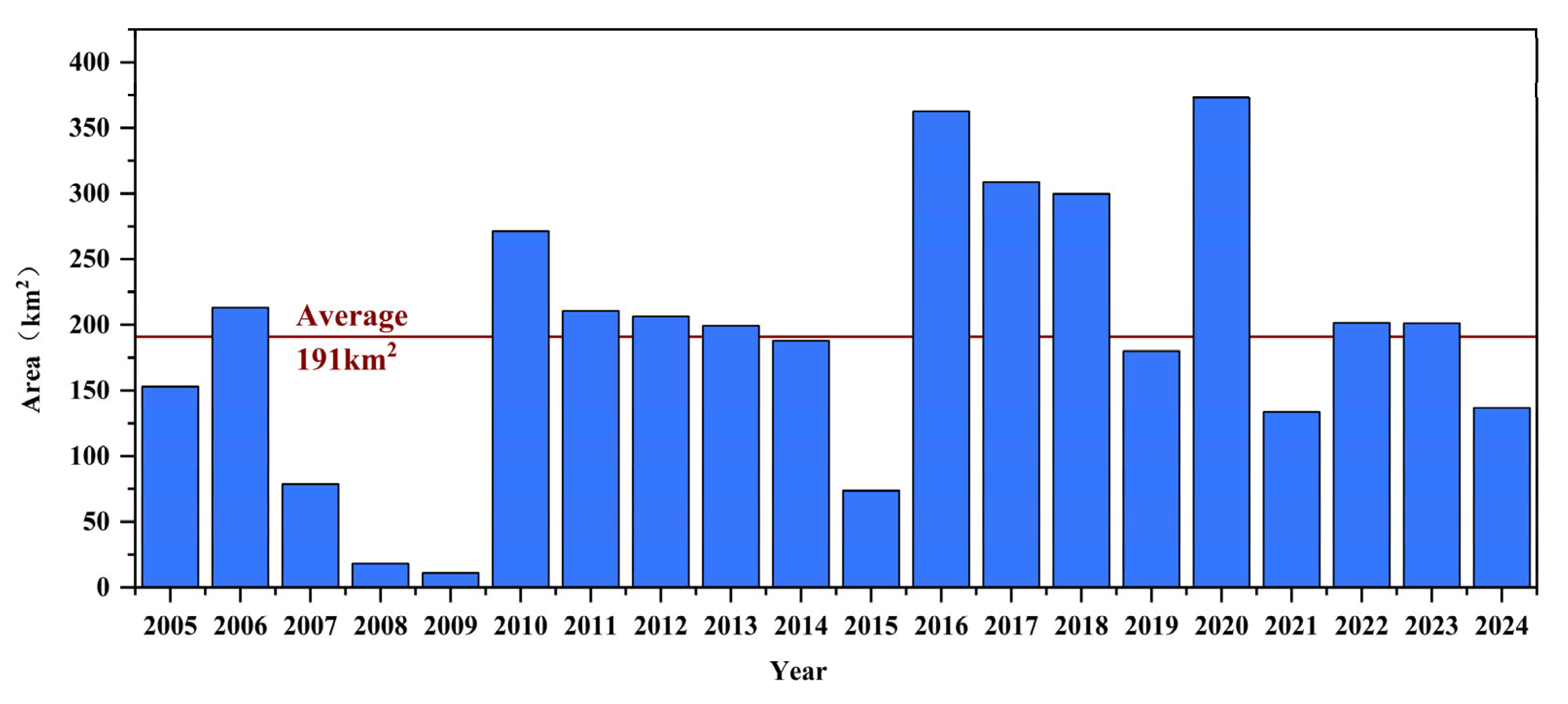
In contrast, the intra-annual dynamics of Lake Taitema exhibit markedly different characteristics. Although the magnitude of lake area change within a single year is substantial (averaging 191 km
2), the fluctuations display a clear periodic pattern (
Figure 6). From April to July, extremely high evapotranspiration in the arid region (2500–3000 mm per year), combined with the shallow and gently sloping basin morphology of Lake Taitema (average water depth only 0.4–0.6 m), results in rapid lake shrinkage at a rate of approximately 40–50 km
2 per month. Beginning in August, ecological water releases from the Tarim River together with seasonal flood discharge from the Qarqan River increase sharply, causing the lake surface to expand again, with an average monthly increase of about 15 km
2. During certain months when flood peaks from both rivers coincide, the lake can expand by up to 130 km
2. Therefore, the intra-annual changes in Lake Taitema are characterized by “large amplitude and pronounced periodicity,” reflecting a seasonal balance between hydrological inputs and evaporative losses.
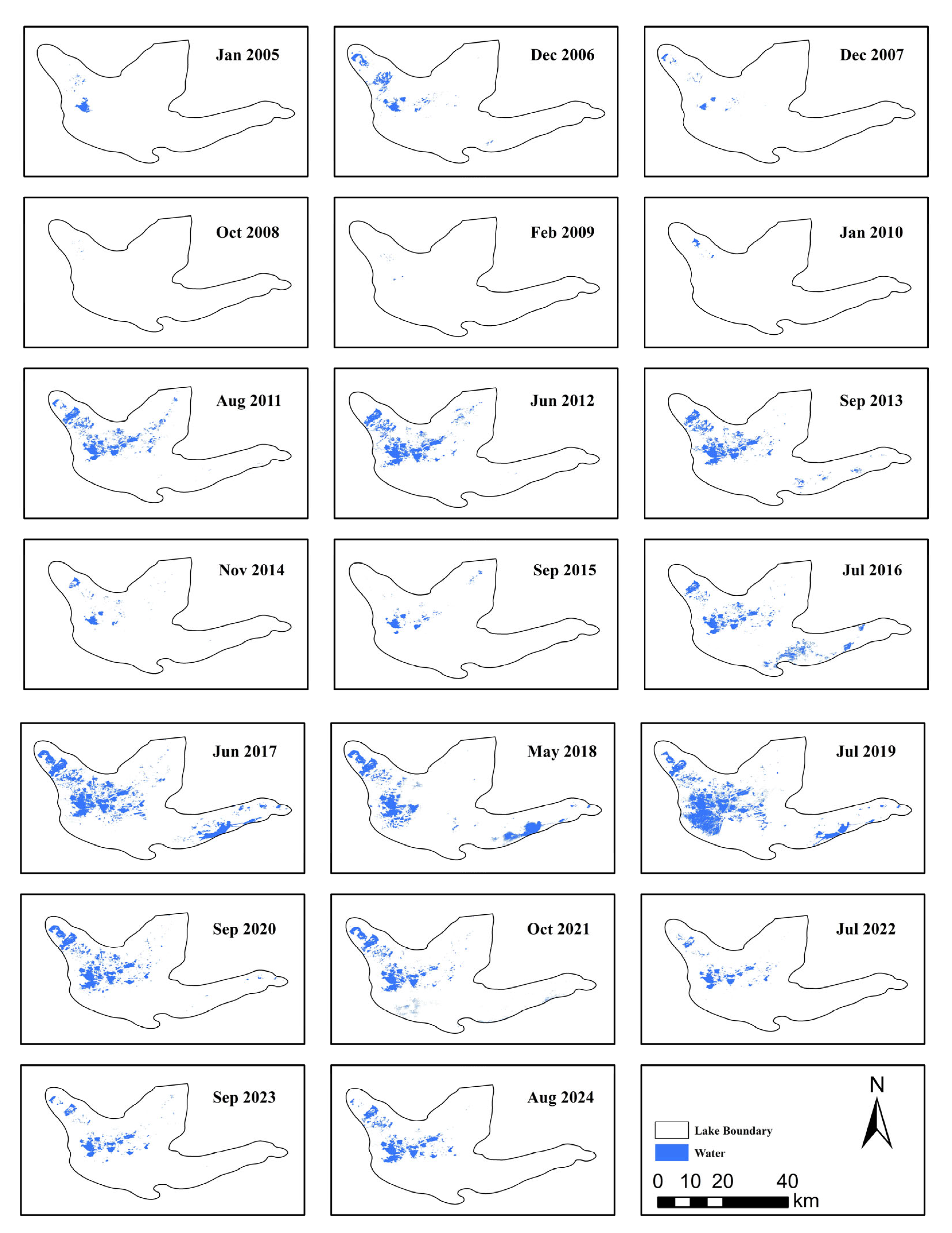
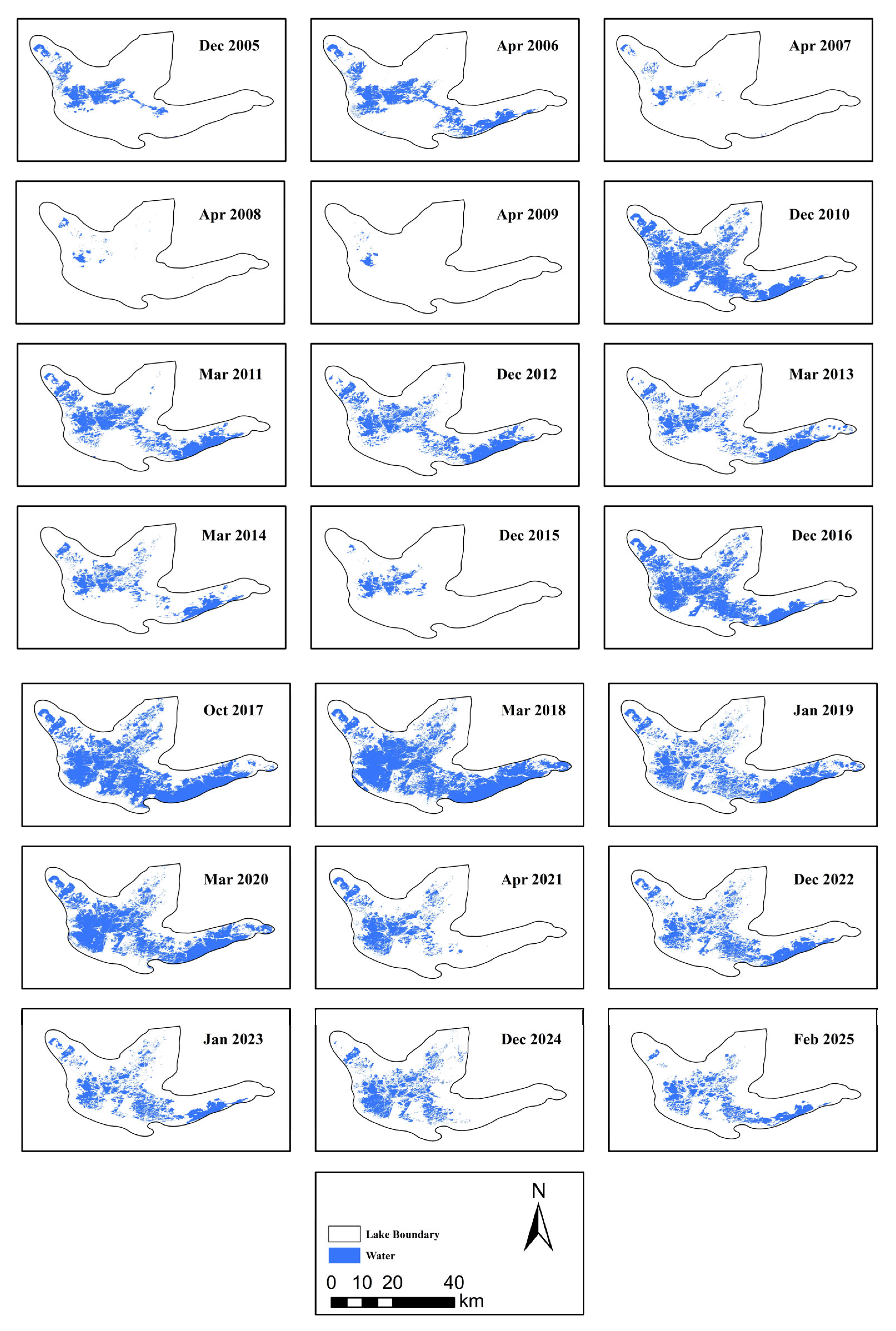
Based on the annual maximum and minimum water extents of Lake Taitema shown in
Figure 7 and
Figure 8, its spatial variation characteristics can be preliminarily examined. Over the past two decades, the minimum lake area most frequently occurred between June and August, when intense summer evaporation caused nearly all shallow-water zones to dry up, leaving only the deep-water region near the Qarqan River inflow with a persistent water surface. In contrast, the maximum lake area typically appeared in April and December, yet the spatial configuration of water bodies varied significantly among different years. This phenomenon is consistent with the preceding analysis, indicating that the differences in annual inflow volumes from the two rivers fundamentally determine the spatial distribution pattern of Lake Taitema.
3.2. Water Inundation Frequency Analysis of Lake Taitema, 2005–2025
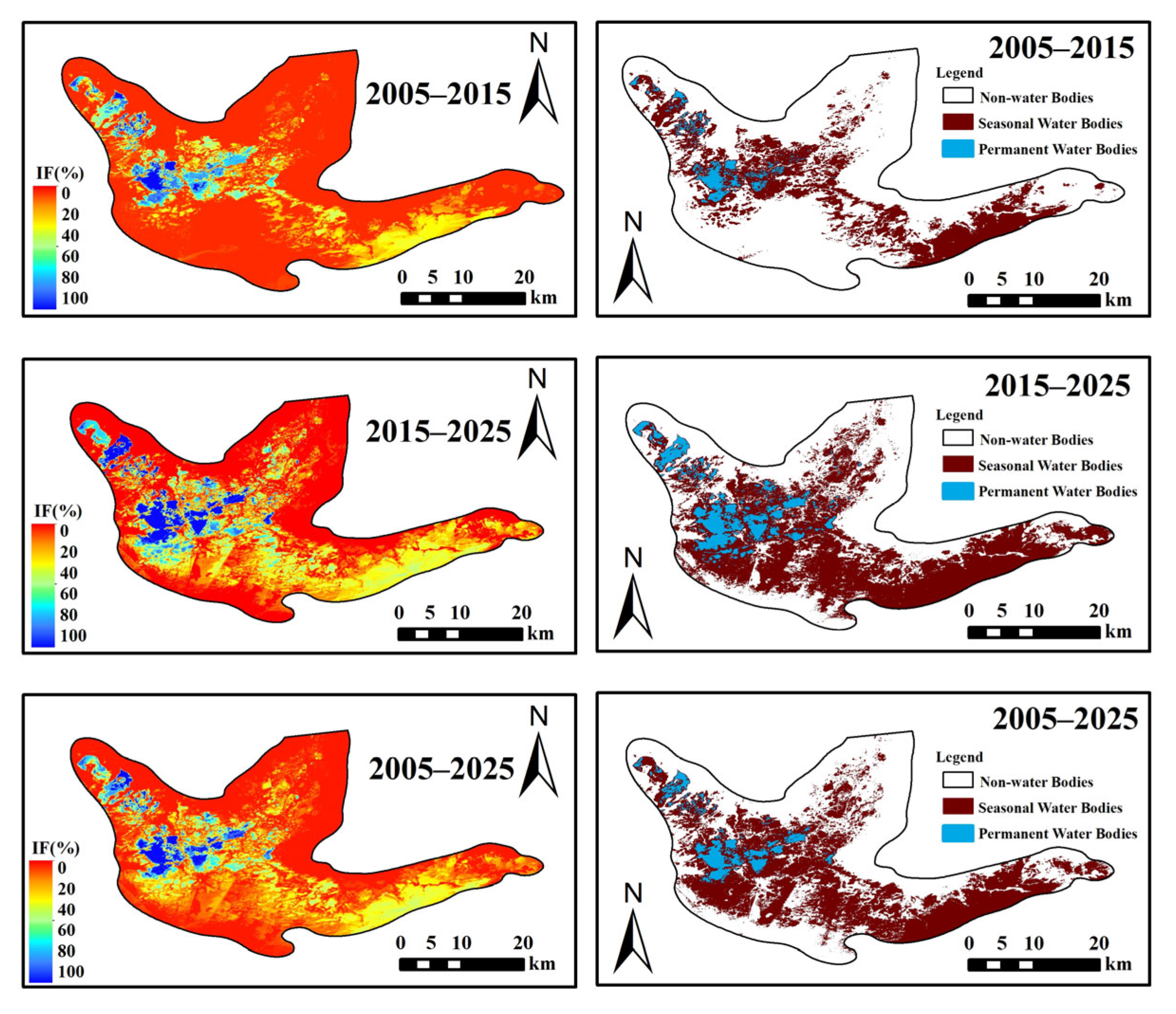
To investigate the spatial heterogeneity and temporal evolution of the lake surface in Taitema Lake, this study applied the Water Inundation Frequency (WIF) index to analyze the spatial distribution of surface water from 2005 to 2025. Considering that hydrological variations in the basin exhibit clear stage-dependent characteristics, the study period was divided into two decadal intervals. For each interval, the inundation frequency of different subregions of the lake was calculated in order to identify the dominant spatial units of lake change and to locate the core zones of perennial water.
WIF represents the probability that a given area is inundated during the statistical period. Higher WIF values indicate long-term water coverage and greater hydrological stability, while lower values reflect greater sensitivity to hydrological fluctuations and stronger spatial variability. In
Figure 9, the color gradient from dark blue to deep red corresponds to low-to-high inundation frequency, respectively.
Given the pronounced intra-annual fluctuations in water level within Taitema Lake, areas with a WIF greater than 50% were defined as high-frequency permanent water bodies (hereafter referred to as “permanent water”), representing the most stable and persistent deep-water zones. Areas with a WIF between 5% and 50% were classified as low-frequency seasonal water bodies (hereafter referred to as “seasonal water”), corresponding to shallow regions that are highly responsive to variations in inflow and are prone to exposure during dry periods.
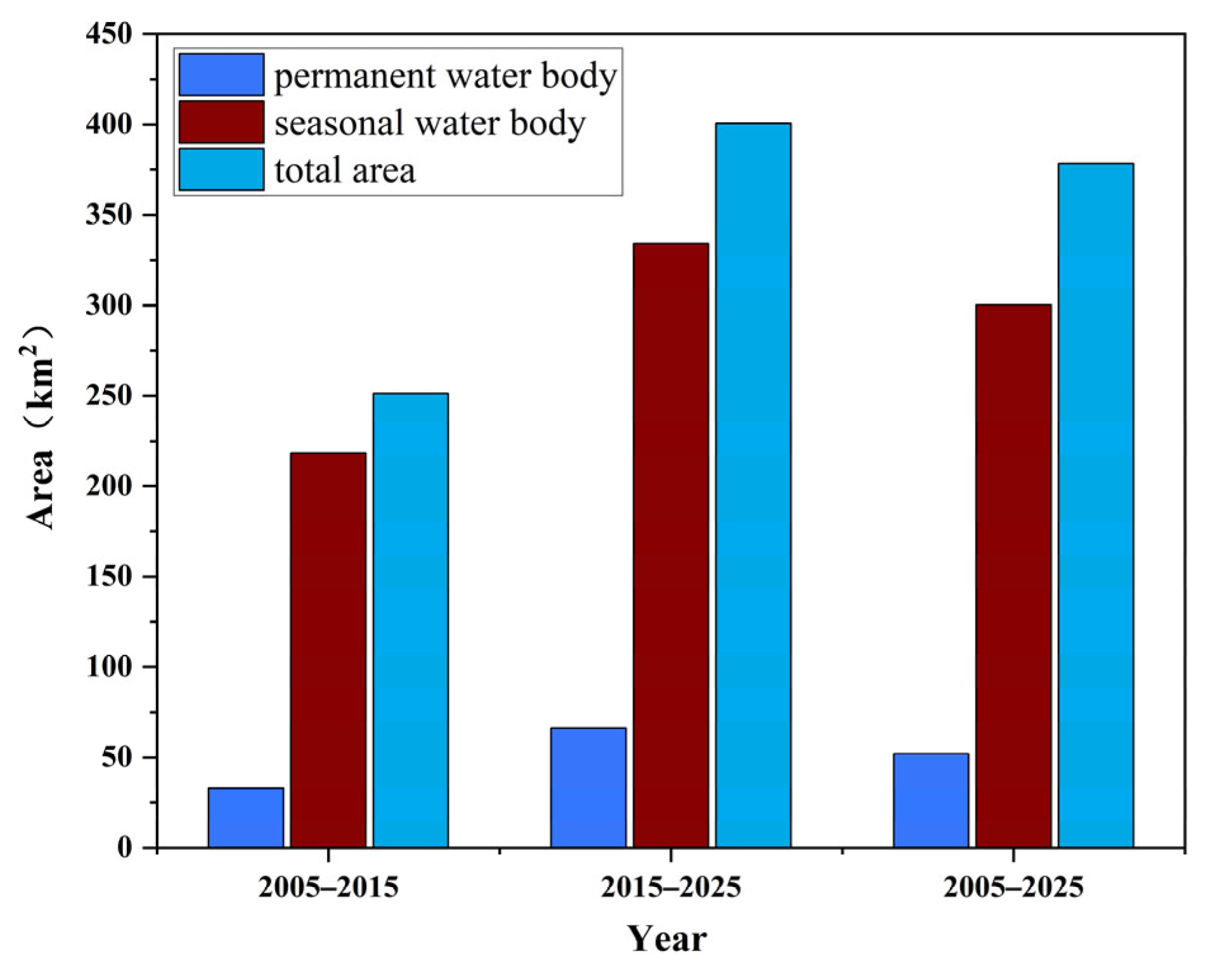
From 2005 to 2015, the total inundated area of Lake Taitema was 251.18 km
2, which increased markedly to 400.52 km
2 during 2015–2025. Over the same periods, the extent of permanent water bodies expanded from 32.94 km
2 to 66.27 km
2, while seasonal water bodies grew more substantially, from 218.24 km
2 to 334.25 km
2 (
Figure 10). This indicates that long-term ecological water conveyance primarily contributed to the expansion of seasonal shallow-water zones, while the deep-water core area also experienced gradual recovery.
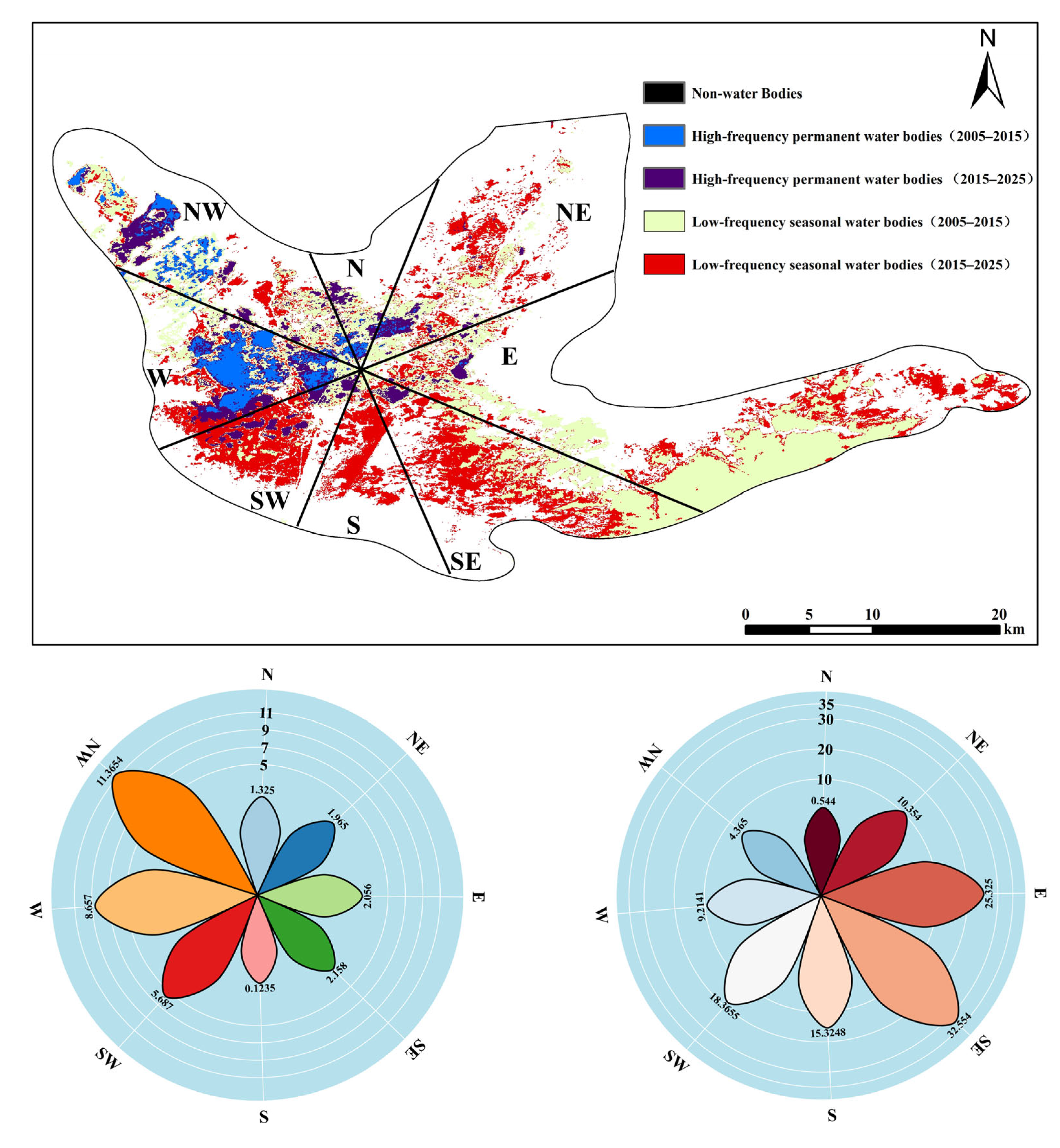
To more intuitively capture the spatial characteristics of lake expansion, the study area was divided into eight directional sectors at 45° intervals—north, northeast, east, southeast, south, southwest, west, and northwest—using the lake centroid as the center. The spatial evolution of different water body types was then quantified, and a petal chart was constructed to visualize directional changes across the two periods (
Figure 11).
Between 2015–2025 and 2005–2015, the permanent water area expanded by 33.33 km2. The most notable expansion occurred toward the northwest, west, and southwest sectors, with increases of 11.37 km2, 8.66 km2, and 5.69 km2, respectively. Together, these three directions accounted for 25.72 km2—representing 77.17% of the total increase in permanent water bodies. This pattern reflects the deepening and stabilization of water coverage primarily around the Qarqan River inflow zone.
Seasonal water bodies increased by 116.01 km2 during the same period. The northeast, east, southeast, south, and southwest directions showed increases of 10.35 km2, 25.33 km2, 32.55 km2, 15.32 km2, and 18.37 km2, respectively—collectively contributing 101.92 km2, or 87.85% of the total increase. This expansion trend is consistent with the spatial spread of shallow-water zones and floodplain inundation paths driven by ecological water releases from the Tarim River.
3.3. Lake Surface Evolution and Control Zonation by the Two Rivers
The complex spatial pattern of lake surface expansion in Lake Taitema is closely linked to the inflow volumes of its two contributing rivers—the Tarim River and the Qarqan River. To identify the spatial response mechanisms of lake expansion under different water supply sources, representative hydrological years were selected, and time-series remote sensing was used to separately reconstruct the inflow-driven lake surface evolution of each river. In addition, scatter relationships between inflow volume and lake surface area were constructed and quantified using polynomial regression to evaluate the marginal lake area increment induced by unit water inflow.
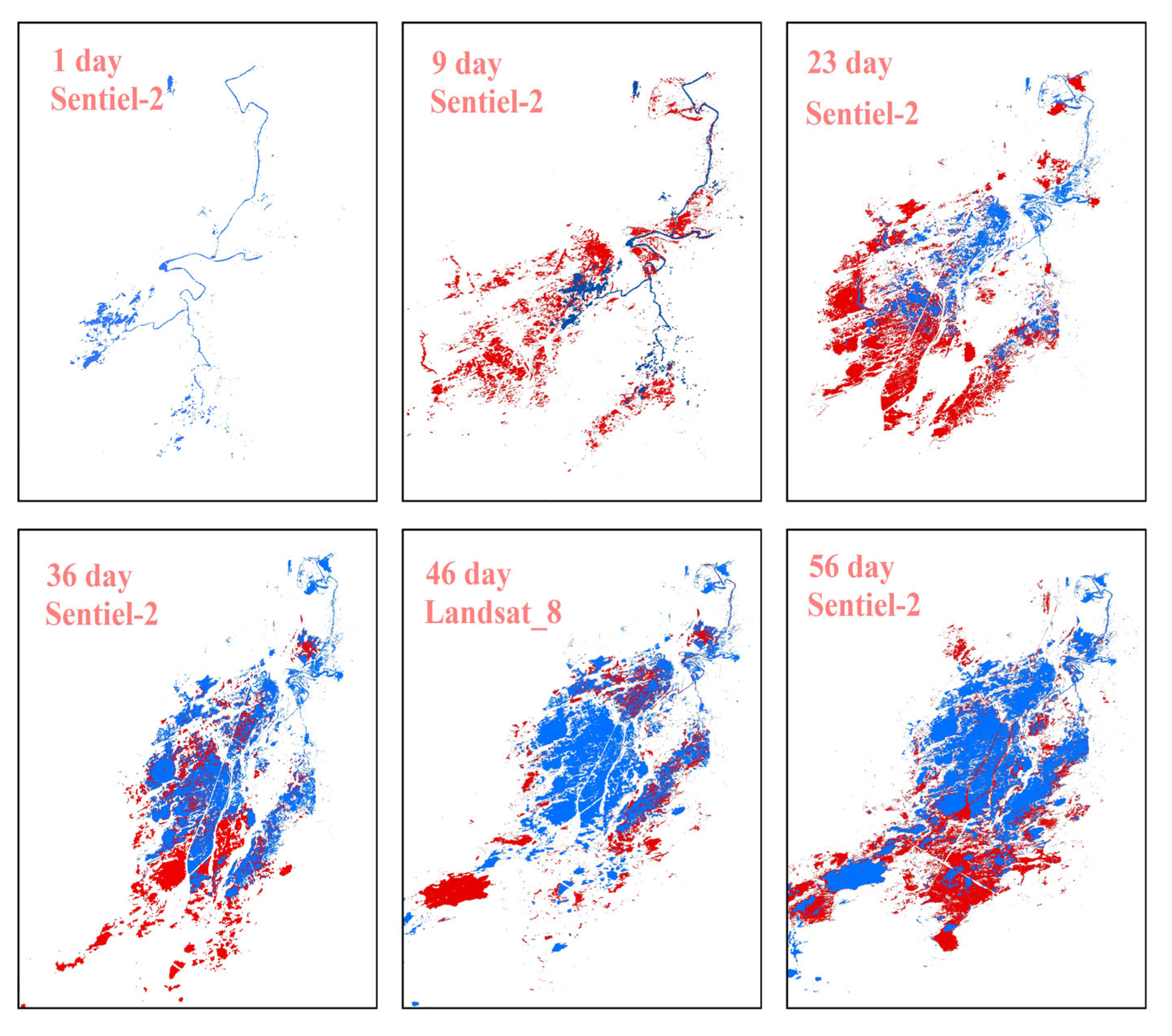
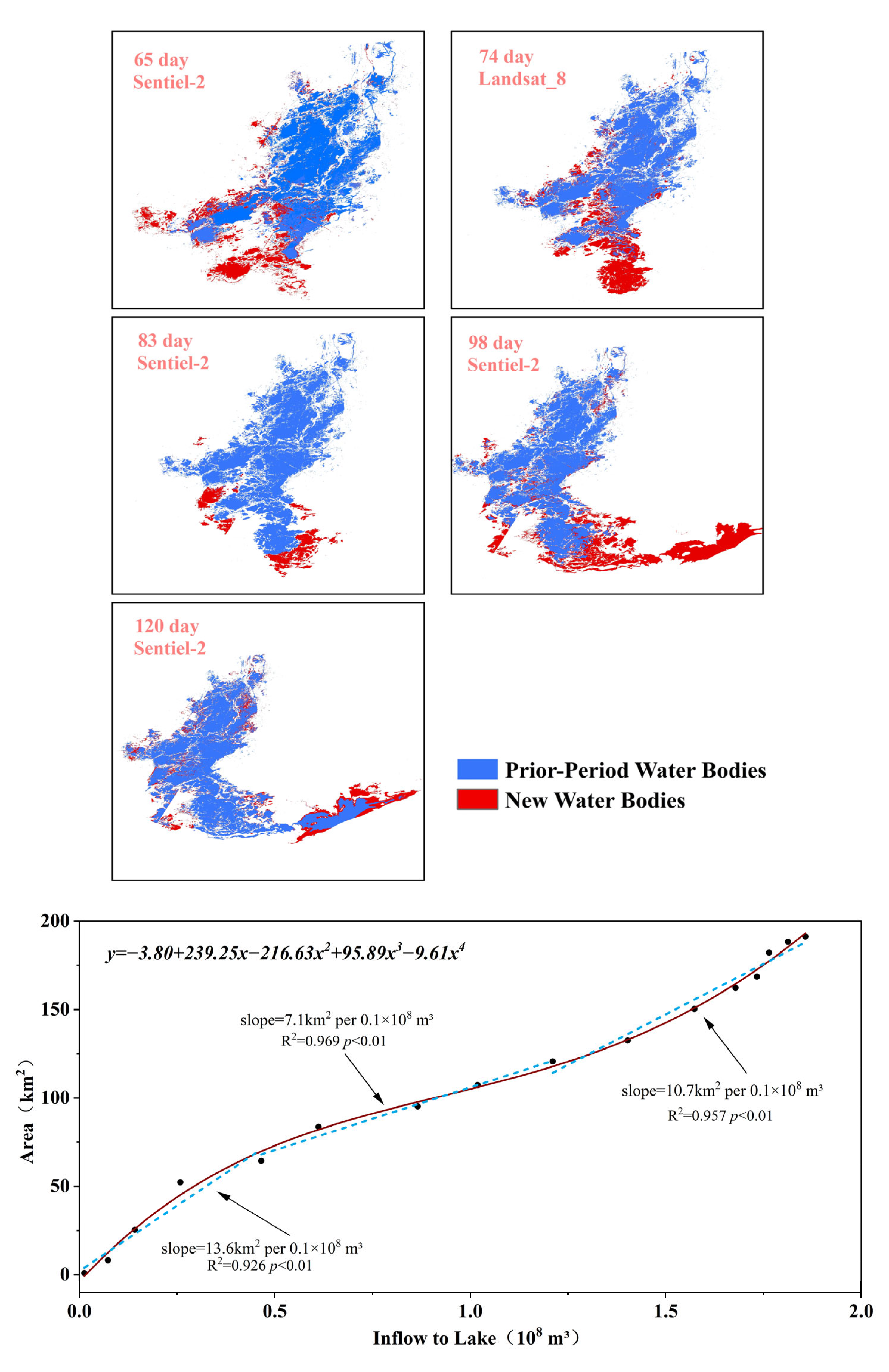
A typical Tarim-dominated hydrological process from July to November 2022 was selected, during which high-resolution Landsat and Sentinel-2 imagery were used to reconstruct lake surface changes. In July 2022, the lake surface area was only 32.21 km2 and was confined to the deep-water zone. Because the Qarqan River inflow in that year was concentrated between late August and early September, the spatial influence of the two rivers on the lake remained largely independent, providing an ideal scenario for isolating and extracting the Tarim-controlled expansion process.
The results indicate that the Tarim-driven lake expansion can be divided into three stages. For every 0.1 × 10
8 m
3 of inflow, the lake surface expanded by 13.6 km
2, 7.1 km
2, and 10.7 km
2, respectively, with expansion primarily occurring across the shallow eastern half of the lake basin rather than deepening the central basin (
Figure 12). These findings reveal a nonlinear sensitivity of lake surface response to staged water-input processes and provide quantitative evidence to support the development of water allocation schemes that explicitly couple inflow volumes with target lake area outcomes.
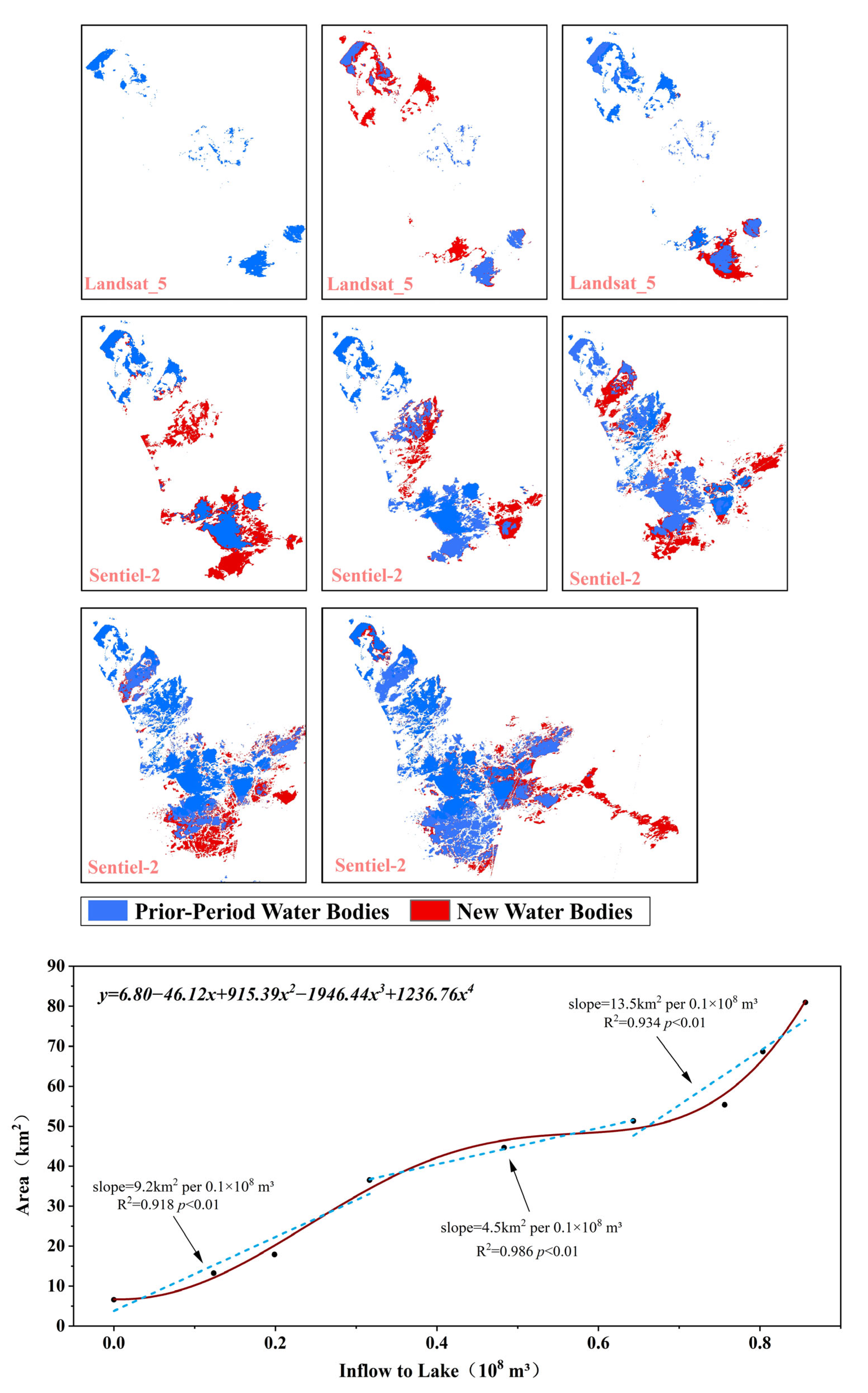
For the Qarqan River, representative satellite images from 2005, 2007, and 2022 (during which no Tarim River inflow occurred in 2005 and 2007) were selected to independently reconstruct the Qarqan-driven evolution of the lake surface. Similarly to the Tarim River, the Qarqan-controlled lake expansion can be divided into three stages. For every 0.1 × 10
8 m
3 of inflow, the lake surface expanded by 9.2 km
2, 4.5 km
2, and 13.5 km
2, respectively, with expansion primarily occurring within the permanent water zone as well as to its northern and southern sides (
Figure 13).
Both rivers exhibit generally comparable expansion patterns; however, as inflow gradually reaches the deeper central basin, the rate of surface expansion decreases markedly, indicating a nonlinear response of lake area change to inflow volume.
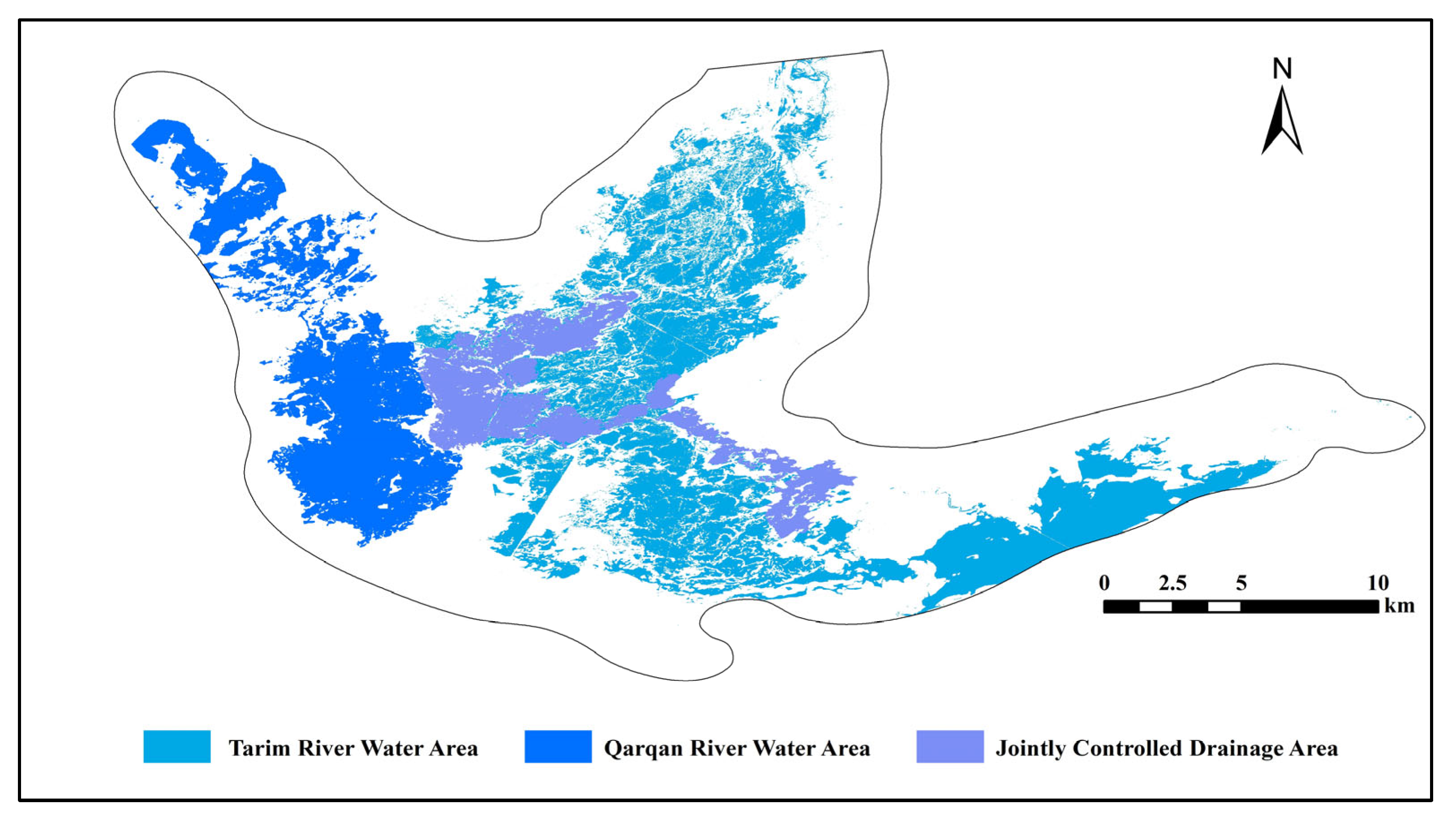
Based on the high-resolution imagery and the reconstructed lake surface evolution, along with 77 additional remote-sensing scenes from other representative years, the spatial extent of the water bodies was extracted through multi-temporal superposition and visual interpretation. This enabled the identification and delineation of the respective control zones of the Tarim River, the Qarqan River, and the jointly influenced regions of the lake (
Figure 14).
3.4. Joint Regulation Schemes for Inflows from the Two Rivers in Years of Different Occurrence Probabilities
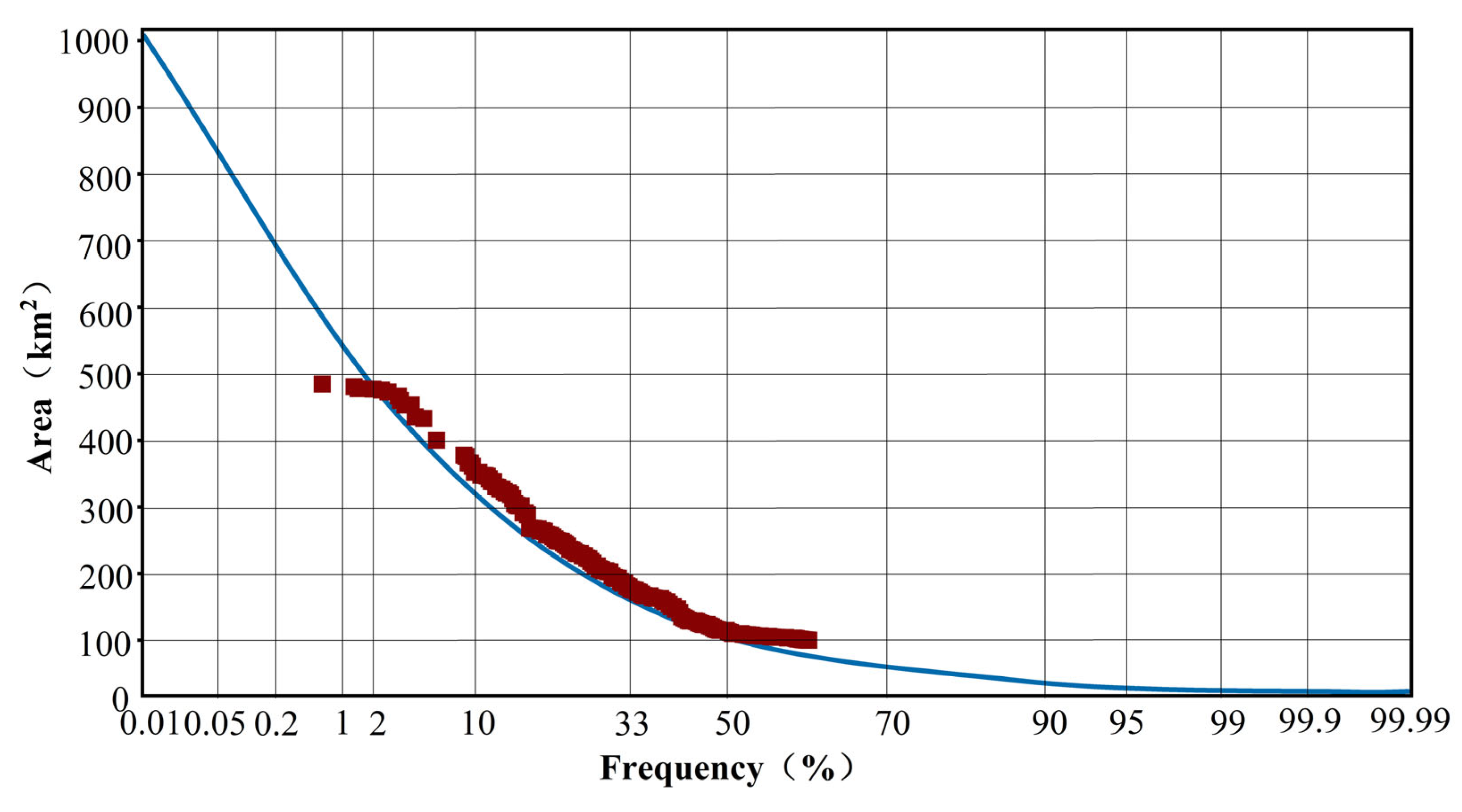
In this section, joint inflow regulation schemes for the two rivers in years with different occurrence probabilities are developed based on the monthly lake area data of Lake Taitema from 2005 to 2025, in combination with the P-III frequency curves, the relationships between inflow from the two rivers and lake surface area, and the spatial distributions of permanent and seasonal water bodies within the lake.
According to the frequency curves and the relationships between inflow volume and lake surface area, the variation in water volume of Lake Taitema under joint regulation by the two rivers can be summarized as follows. During relatively wet lake surface conditions (P = 25%), the corresponding lake area reaches 204.34 km
2, requiring an inflow of 2.12 × 10
8 m
3. Under normal lake surface conditions (P = 50%), the corresponding area is 102.47 km
2, with a required inflow of 1.07 × 10
8 m
3. During relatively dry lake surface conditions (P = 75%), the corresponding area is 42.72 km
2, and the required inflow is 0.41 × 10
8 m
3 (
Figure 15) (
Table 2).
For lake management in dry years, the high-frequency permanent water area (the deep central part of the lake) is selected as the target regulation zone. To ensure that the proposed scheme is realistic, the long-term ecological flow characteristics of the lower reaches of the Qarqan River are taken into account, and the actual inflow and scheduling scheme of the representative dry year 2007 are used as a reference. From February to April, a long-duration, low-discharge ecological release of approximately 0.25 × 10
8 m
3 is implemented to maintain the lake area at about 30–40 km
2. After strong evaporation during summer, an additional 0.15 × 10
8 m
3 of water is supplied in October to prevent desiccation of the deep central lake area (
Table 3).
- 2.
Lake surface protection zone and inflow scheme for normal conditions;
For lake management in normal years, the objective is twofold: to safeguard the deep central part of the lake and to meet the water requirements of high-coverage vegetation in the lake region. To this end, a total area of 102.47 km
2, including the central lake zone and the area near the Tarim River inflow in the northeastern part of the study area, is designated as the target regulation zone. Based on the typical months of ecological water releases to the lower Tarim River over multiple years, and taking the actual scheduling scheme of the representative normal year 2020 as a reference, ecological water releases from the Tarim River are implemented from September to November. During this period, the Qarqan River continues to ensure water supply to the deep central part of the lake, with its inflow scheme kept unchanged (
Table 4).
- 3.
Lake-Surface protection zone and inflow scheme for relatively wet conditions.
For lake management in wet years, it is necessary to minimize ineffective evaporation while maximizing groundwater recharge. Building on the regulation schemes for dry and normal years and taking the actual scheduling scheme of the representative wet year 2022 as a reference, the following strategy is proposed: in spring, a long-duration, low-discharge inflow of 3.5–4.5 m
3/s is implemented to gradually expand and maintain the lake surface area at around 80 km
2; in summer, no inflow is supplied in order to reduce ineffective evaporation; in autumn, high-discharge flood-type inflows are adopted to raise groundwater levels and meet vegetation water demands, allowing the lake surface area to rapidly expand to 204.34 km
2 (
Table 5).
4. Discussion
4.1. Validation of Water Body Extraction Results
In the study area, 300 sampling points were generated following the principle of spatial randomness. Based on field observations of land surface cover characteristics and interpretation of high-resolution imagery, all sampling points were clearly classified into two categories, “water” and “non-water,” thereby forming a standard sample database for accuracy validation and ensuring that the samples are representative of the surface cover types in the study area. Multiple image scenes were selected as validation benchmarks, including nine Landsat/Sentinel satellite images from different periods. For each image, water body binary maps were produced through manual visual interpretation using GIS software (version ArcGIS Desktop 10.8), and these maps were treated as the “ground truth” reference for water body extraction. The water body extraction results for each period were spatially overlaid with the corresponding visually interpreted binary maps, and point-by-point matching was performed using the 300 standard sampling points to construct confusion matrices. Based on these confusion matrices, Overall Accuracy and the Kappa coefficient were calculated. Statistical analysis of these two metrics enabled a systematic evaluation of the accuracy of the water body extraction results (
Table 6).
The results show that the mean Overall Accuracy of water body extraction is 93.59%, and the mean Kappa coefficient is 0.77, indicating that the extraction accuracy meets the requirements and is generally consistent with the findings of previous studies [
40]. The fluctuations in Overall Accuracy and Kappa coefficient across different periods are relatively small, and stable extraction performance is maintained at different time points. This suggests that the method is only weakly affected by factors such as seasonal hydrological variability and imaging conditions in the study area, and that it exhibits strong applicability and robustness.
4.2. Spatiotemporal Zonation Characteristics and Driving Mechanisms of Lake Taitema
Existing studies consistently indicate that Lake Taitema is most sensitive to variations in water availability, whereas its direct responses to temperature fluctuations and other anthropogenic factors are relatively weak [
41,
42]. Most previous research has examined lake surface changes and their ecological responses primarily at the interannual scale. For example, studies have reported that since the implementation of ecological water conveyance from the Tarim River, the interannual lake surface area of Lake Taitema has exhibited a fluctuating upward trend under strong human regulation, albeit with substantial uncertainty [
33]. Research on land-use change and ecological responses further shows that, compared with the pre-diversion period (1998), the lake basin in the current state (2022) has transitioned from a sand-dominated, homogeneous land-use structure to a more diversified pattern, accompanied by marked increases in vegetation coverage and water surface area and an overall improvement in the ecological environment [
27,
43]. These findings collectively confirm the positive role of ecological water conveyance in lake restoration from a long-term perspective. However, compared with these studies based on annual or multi-year averaged conditions, the present study refines the analytical scale to monthly and even weekly resolutions, revealing pronounced stage-dependent and nonlinear intra-annual lake surface dynamics. The results demonstrate that although interannual lake area variations are jointly controlled by inflows from the two rivers, lake expansion and shrinkage within a year follow a highly regular pattern characterized by “rapid shrinkage followed by sustained expansion.” Such dynamics are often obscured when analyses rely solely on annual mean or maximum lake area metrics.
In addition, previous studies have noted that in recent years the migration rate of the lake water distribution centroid in the east–west direction has been significantly higher than that in the north–south direction, suggesting a close linkage with the hydrological processes of the east–west flowing Qarqan River [
35]. By integrating Water Inundation Frequency (WIF) analysis with lake surface zonation, this study further substantiates this interpretation, clearly identifying a high-frequency permanent water region predominantly controlled by the Qarqan River and a low-frequency seasonal expansion region mainly regulated by ecological water conveyance from the Tarim River. These results reveal the differentiated spatial responses of internal lake zones to inflows from the two rivers.
In recent years, several studies have begun to examine the ecological significance of different functional zones within Lake Taitema. For instance, it has been reported that the Tarim River and the Qarqan River contribute 93.72% and 6.28%, respectively, to the hydrological connectivity of the lake, with the most critical connectivity core patches concentrated near the bridge crossing Lake Taitema, which serves as a key node within the wetland hydrological network [
44]. Studies on vegetation protection priorities also indicate pronounced spatial differentiation of vegetation types within the lacustrine plain areas near the inflow termini of the two rivers [
32]. These findings emphasize the ecological importance of spatial heterogeneity within the lake system. In contrast, the present study approaches lake dynamics from the perspective of hydrodynamic processes and lake surface expansion pathways. By reconstructing lake surface evolution using high-temporal-resolution remote sensing data, this study is the first to explicitly delineate, at the lake scale, the primary expansion zones controlled by each river, the permanent water core region, and the jointly controlled transitional zones. Furthermore, it quantitatively characterizes the lake area expansion efficiency associated with unit inflow volumes at different stages, thereby addressing limitations of previous annual-scale studies in capturing rapid lake responses and internal spatial differentiation.
Given that changes in lake surface area are generally governed by the coupled effects of climatic factors and human activities [
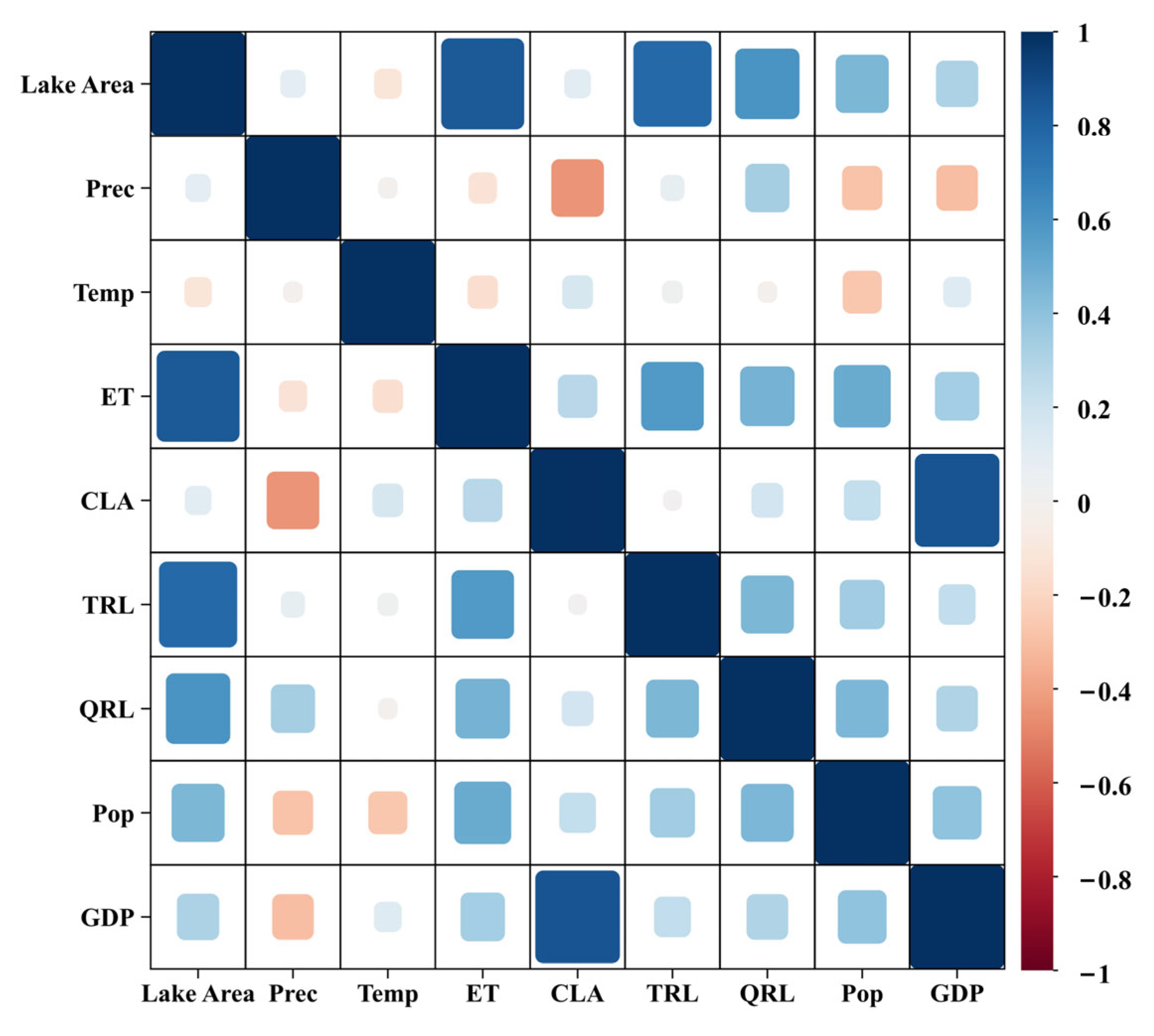
45], this study selected the following variables to analyze the driving mechanisms of lake area variation in Lake Taitema: climatic factors include annual mean temperature, cumulative precipitation, and evapotranspiration (ET); human activity factors include inflow from the Qarqan River, ecological water conveyance (EWC) from the Tarim River, as well as the population, cultivated land area, and GDP of Qiemo County. Pearson correlation analysis (
Figure 16) shows that lake area is strongly and positively correlated with evapotranspiration (r = 0.84), ecological water conveyance from the Tarim River (r = 0.78), and inflow from the Qarqan River (r = 0.60). Although the total inflow ratio of the Tarim and Qarqan rivers is 4:6, the correlation between the Tarim River EWC and the lake surface area is higher. This can be explained by the interaction between the spatial patterns of the two rivers’ inflows and the lake’s topographic characteristics: the Qarqan River discharges directly into the deep central basin of the lake, resulting in a relatively limited control range for surface area expansion, whereas Tarim River inflow primarily affects shallow-water zones, where lake surface area responds more sensitively to water input and expands more rapidly. In addition, from the perspective of socioeconomic factors, the correlations of lake area with cultivated land area (r = 0.11), population (r = 0.45), and GDP (r = 0.31) of Qiemo County are weaker than those with hydrological and climatic variables, but all are positive. This indicates that, alongside regional economic development and population growth, the parallel implementation of ecological protection measures has exerted a positive driving effect on maintaining the ecological configuration of Lake Taitema.
4.3. Management Implications: Zonation-Based Joint Regulation of the Tarim and Qarqan Rivers
From a historical perspective, the recovery of Lake Taitema from complete desiccation has depended almost entirely on sustained ecological water conveyance from the Tarim River and the Qarqan River. Over the past two decades, cumulative inflows from the two rivers reached 20.54 × 10
8 m
3 and 31.74 × 10
8 m
3, respectively, forming the dominant source of lake water recovery. However, the low probability of synchronous wet–dry years (44.52%) and the high frequency of asynchronous conditions (55.48%) [
6] substantially increase the uncertainty of interannual lake surface variations. Under the current context of relatively coarse ecological water conveyance and strong dependence on residual upstream water availability [
46], interannual statistics alone are insufficient to support refined regulation decisions.
Lake-Surface zonation analysis reveals distinct river-specific control mechanisms. Inflows from the Qarqan River are unable to overcome local elevation gradients to supply high-coverage vegetation zones in the northeastern lake area, whereas Tarim River inflows exhibit a clear threshold effect: approximately 0.5 × 10⁸ m3 of released water is required to generate a fragmented water surface of about 65 km2 before effective recharge reaches the permanent water region in the deep central basin. Owing to the shallow, flat, and highly fragmented lake morphology, much of the inflow is dissipated in marginal shallow areas, and only a small fraction contributes to sustaining the deep central water body.
Based on these characteristics, this study proposes a functional division of joint regulation: the Qarqan River should primarily maintain a permanent water area of approximately 30–40 km2 throughout the year to prevent complete desiccation, while the Tarim River should mainly regulate the overall lake extent under wet, normal, and dry conditions by controlling seasonal water expansion. In essence, the Qarqan River determines whether Lake Taitema persists as a lake, whereas the Tarim River determines how large the lake becomes. The monthly–weekly lake surface response characteristics and zonation-based control framework proposed here provide a practical scientific basis for refined ecological water allocation strategies in Lake Taitema and other arid terminal lakes with multiple water sources.
4.4. Limitations and Prospects
This study still has several limitations. First, the extraction and calculation of lake surface area are based on Landsat and Sentinel remote sensing data. Although these datasets offer relatively high spatial resolution, their revisit cycles are comparatively long. During the analysis of temporal changes, some monthly images were missing because of cloud cover, adverse atmospheric conditions, and inherent data uncertainties. These gaps were filled by inferring lake surface area from adjacent months in combination with inflow data and monthly evaporation intensity, which may introduce additional uncertainty. Second, in the accuracy validation stage, only nine satellite images from different periods were selected as benchmark data. The temporal coverage and number of validation samples are therefore limited, making it difficult to fully capture water body characteristics across different hydrological seasons and during various stages of lake expansion and contraction. As a result, the accuracy assessment may not completely reflect the performance of water body extraction under more complex conditions. Third, in the analysis of lake surface evolution driven by the Tarim and Qarqan rivers, only a single special year (2022) was used for fitting, leading to a temporally constrained sample. Moreover, once the inflows from both rivers enter the common control zone, the flow boundaries and influence ranges cannot be precisely delineated, which restricts the accuracy of the fitted models and hampers a more comprehensive understanding of lake surface evolution under the combined influence of the two rivers.
In future research, it will be necessary to optimize data processing by incorporating multiple remote sensing data sources to analyze the water bodies of Lake Taitema, thereby improving the continuity, reliability, and spatial–temporal coverage of the datasets. This will provide a stronger basis for constructing a long-term, high-precision time series of lake surface area, and in turn support more in-depth analysis of the coupled driving mechanisms involving climate, hydrology, and human activities. Further clarification of the spatiotemporal patterns of lake surface changes in Lake Taitema will provide a solid scientific foundation for enhancing the efficiency of joint water resources allocation between the Tarim and Qarqan rivers and for optimizing ecological water-conveyance schemes.