


Abstract
In Mediterranean climate regions, water scarcity, seasonal droughts and hydrological extremes are exacerbated by climate change. In these areas, small dams are increasingly used as decentralized water infrastructure for water supply, especially in agricultural areas. However, several challenges must overcome when planning and managing small reservoirs. This review combines evidence from case studies to analyze the benefits and challenges of small dams. The findings show that small reservoirs may offer a wide array of ecological, agricultural, hydrological, and socio-economic benefits when strategically planned and properly maintained, providing water and contributing to groundwater recharge, vegetative restoration, and biodiversity conservation, while simultaneously controlling flash floods in a cost-effective and participatory manner. On the other hand, evaporation losses and sedimentation may affect water quality and reduce storage capacity. In addition, small dams may negatively affect river ecosystems. Persistent disturbance of downstream flow and sediment regime contributes to altered river morphology and habitat, with effects on biota, and may reduce river system resilience. These impacts are context-dependent, influenced by dam density, geomorphic setting, and climate. Finally, this study highlighted the importance of governance and maintenance practices. Polycentric and participative systems may promote more adaptable responses to water stress, whereas fragmented institutions exacerbate trade-offs between water supply and ecological integrity.
1. Introduction
Mediterranean climate countries are confronted with a traditional issue of water shortage. These nations endure hot, dry summers and warm, wet winters, so most of the rainfall is confined to the cooler winter months. These climatic constraints, when combined with increasing water needs and the impact of climate change, are straining available water supplies. Overexploitation of surface and groundwater has already made a stable water supply challenging in most areas. In the Middle East and North Africa—which is part of the broader region of Mediterranean climate—low rainfall and evaporation exacerbate this deficit, inducing severe water stress. Climate predictions assume that the Mediterranean region will experience increased droughts and extreme events, further making water management challenging [1]. The UN World Water Development Report 2019 estimates global water demand is increasing by about 1% annually and is expected to rise 20–30% by 2050, driven by population growth, urbanization, and economic development [2]. The report underscores an urgent need for effective responses to water scarcity, rising demand, and climate-induced supply variability.
A traditional solution to reducing water scarcity has been the construction of dams and reservoirs to conserve water. Dams enable excess runoff during wet seasons to be preserved for use in dry seasons, in effect bridging gaps between water availability over a year. The twentieth century saw a dam construction boom across the globe—the majority of the world’s nearly 58,700 existing large dams were built between the 1930s and the 1970s. While these colossal structures substantially increased the world’s water storage capacity, they came with high social and ecological costs. Over the past decades, this has led water managers to consider smaller, decentralized water storage options that could supplement or replace the large infrastructure in a more sustainable and socially more acceptable way.
Small dams and their reservoirs have, in this regard, emerged as central instruments of modern water resource management. Small dams are usually defined as hydraulic structures below 15 m in height (with some classifications extending up to 25 m) [3]. They typically impound relatively small volumes of water, intended to supply localized needs rather than large-scale regional supply programs. Small dams, though small in scale, can potentially serve a fundamental role in transcending water scarcity issues simultaneously as they augment ecosystem conservation and community resilience. Relative to larger dams, such smaller structures are particularly suited for decentralized hydrologic regulation and facilitating groundwater recharge along with a variety of ecosystem services in the watershed environment.
Small dams are constructed and used in Mediterranean countries for several purposes, such as irrigation, rural and urban water supply, flood protection, and groundwater recharge [4]. These structures are particularly valuable in climatic conditions that have high seasonality and irregular precipitation due to their capacity to harvest and retain water from isolated rains for subsequent use. In particular, the Mediterranean is a region with high interannual variability and is very sensitive to climatic changes [5]. In such a context, small dams could be valuable adaptation strategies capable of buffering local communities from seasonal water scarcity. Small reservoirs in the Mediterranean could constitute a strategic element of local water management, increasing resilience to droughts and intra-annual dry spells. Their performance and long-term sustainability are called into question, however, as performance is site-specific [6]. Furthermore, these systems can disrupt downstream ecosystems through habitat fragmentation and alteration of natural flow and sediment regimes if poorly managed. Research on small dams is still relatively nascent, and significant knowledge gaps persist regarding their cumulative hydrological impacts, influence on sediment transport and river geomorphology, and socio-economic effects after many years of operation [7]. Tackling these open questions calls for a fully integrated research approach engaging hydrologists, engineers, ecologists, and social scientists. Previous studies have been of limited size, not having yielded crucial insights on how a cluster of small dams collectively affects watershed hydrology, sediment transport, and downstream environments in the long term [6,7]. Most of the evaluations are local-scale case studies, and therefore results cannot be extrapolated beyond the local scale [6]. Moreover, few studies have combined hydrological, ecological, and socio-economic perspectives, even though such an interdisciplinary assessment is needed to fully assess small dam impacts and trade-offs [7].
This review aims to examine the successes and shortcomings of small dams in Mediterranean climate regions by analyzing a comprehensive selection of case studies. In doing so, it seeks to shed light on the best practices and lessons learned, thereby informing more effective deployment and management of small dams as a tool for sustainable water management in water-scarce environments. This is an important piece of knowledge that can contribute to addressing challenges due to climate change (e.g., a more frequent drought frequency) as well as a rise in water demands [8]. By examining diverse experiences and outcomes, this research provides a balanced understanding of small dam performance and contributes knowledge to inform sustainable water management strategies in the Mediterranean and similar vulnerable regions worldwide.
2. Methodology
2.1. Study Area
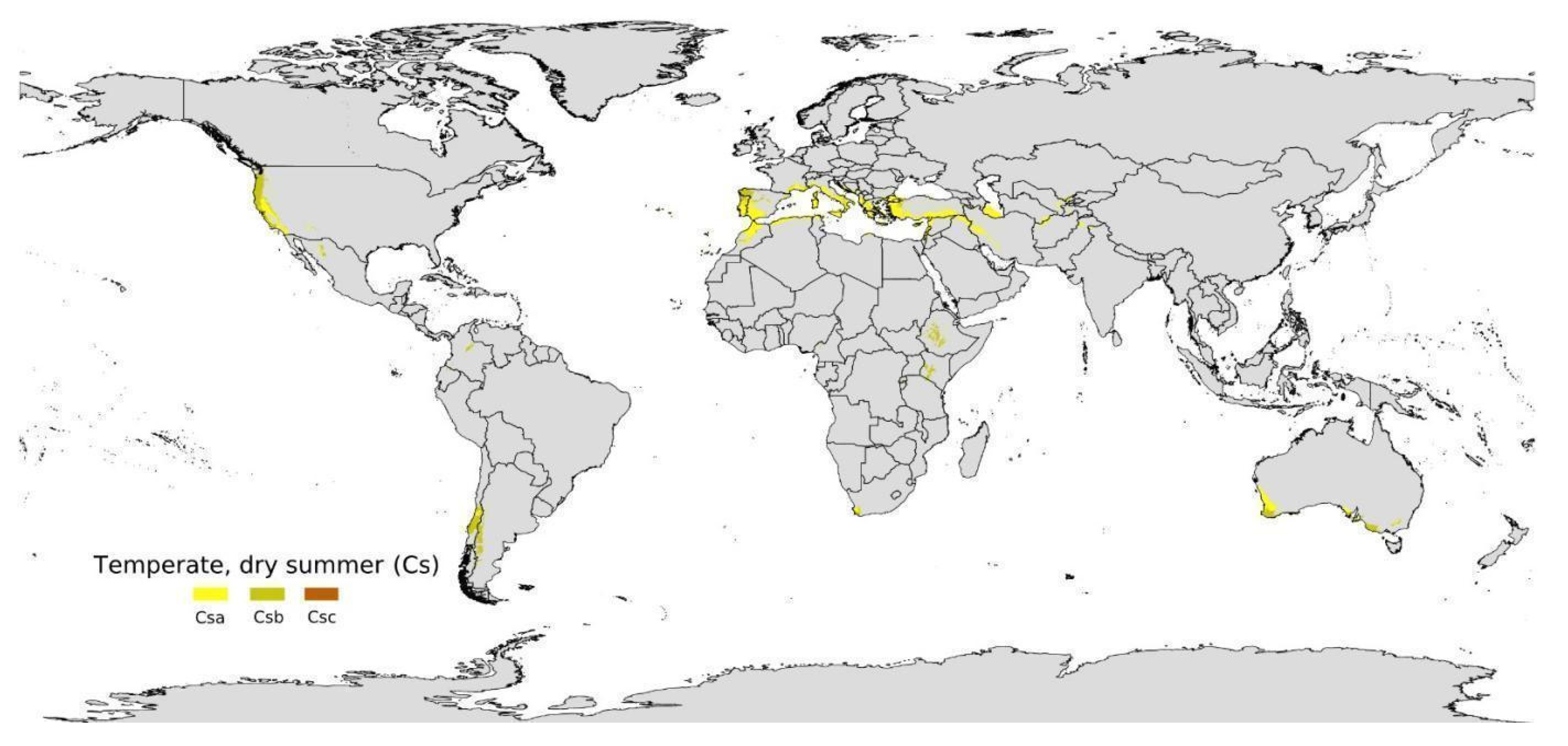
This study employs a systematic and step-by-step approach to locate, analyze, and synthesize existing research on small dams in Mediterranean climate regions. The process entails several interconnected steps: identification of Mediterranean climate countries, delimitation of the study region and its water resource concerns, comprehensive literature review, terminology standardization for small dams, and data extraction and synthesis to draw meaningful inferences. The Köppen–Geiger climate classification was chosen as a referential framework to enable a focused examination of Mediterranean climate regions. The Csa (hot-summer Mediterranean) and Csb (warm-summer Mediterranean) classes correspond to the Mediterranean climate, which features hot temperatures, dry summers, and mild, rainy winters. By using information drawn from the Köppen–Geiger database, countries and regions adhering to these categories were systematically determined and mapped out. Identified regions include parts of Southern Europe, such as Spain, Italy, Greece, and Portugal; North African countries such as Morocco, Tunisia, Algeria, and Libya; Middle Eastern regions, including Lebanon, Israel, Syria, and Turkey; and regions in California (USA), Chile, Ethiopia, and southwest Australia (Figure 1). Inclusion of these regions with such diversity enables a thorough analysis of the operational behavior of small dams under a range of Mediterranean climatic regimes.
Significant seasonal variability in precipitation, typified by long, dry summers and short, wet winters, is one of the unique climatic and hydrological characteristics of the Mediterranean climatic zone [9]. Climate change, over-exploitation for urban and agricultural uses, growing industrial demands, and the deterioration of river ecosystems are some of the factors posing growing threats to the region’s water resources [10]. Depletion of groundwater and surface water is a disturbing phenomenon, which makes water supply for humans and nature challenging [8]. Water scarcity is especially serious in North Africa and the Middle East, where low rainfall, high evaporation, and ongoing use of ancient water management systems that are mostly inefficient lead to severe consequences. Projections of climate change suggest the intensification of these trends, with more frequent and severe droughts, reduced river flows, extended desertification, and increasing competition for water resources among agricultural, urban, and ecological sectors [11]. These all point to the urgency of developing resilient and adaptive water management responses, one of which has been the investigation of small dams as a potential option within the context of overall water resource management schemes.
Figure 1.
Global Distribution of Temperate Based on the Köppen Climate Classification System [12].
2.2. Literature Review
To thoroughly evaluate the function of small dams in Mediterranean climates, a multi-stage review of peer-reviewed articles, technical documents, and proceedings was carried out across Web of Science, Scopus, and Google Scholar. After removing duplicates and applying automated filters to retain only studies mentioning Mediterranean or semi-arid regions and relevant functions (e.g., irrigation, groundwater recharge, flood mitigation), 3454 publications were selected. Titles and abstracts were then screened to assess thematic fit and methodological relevance. From this refined pool, 28 studies were selected for full-text review and comparative analysis. These cases were chosen for their empirical richness, methodological clarity, and regional diversity, offering insights into the hydrological, ecological, and socio-institutional dimensions of small dam systems. The final selection was not intended to be exhaustive but rather to enable conceptual synthesis across varied geographies and governance contexts. Once the relevant studies were identified, key metadata, including titles, authors, study locations, and research focuses were extracted and archived (Supplementary Material Table S1).
3. Results
3.1. Interdisciplinary Connections in Small Dam Studies
Across the literature review, it is evident that research on small dams has seen varying levels of interest over. Research aims and methods varied, ranging from field surveys, hydrological modeling, remote sensing applications, and policy research. The studies examined some small dam functions, such as water management, groundwater recharging, flood protection, and ecosystem services. Socioeconomic implications were also analyzed, particularly concerning rural and indigenous communities that depend on small dams for agriculture and water security.
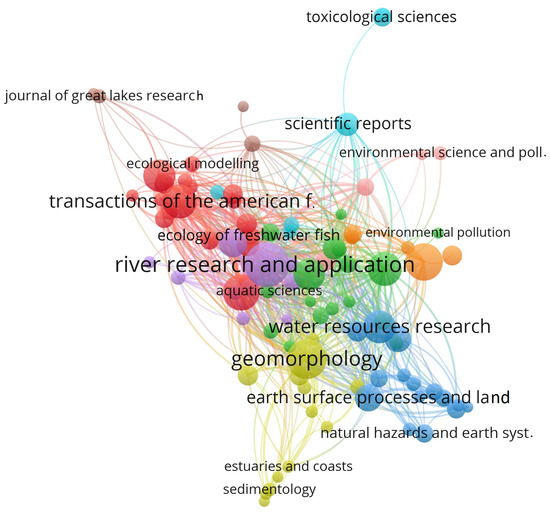
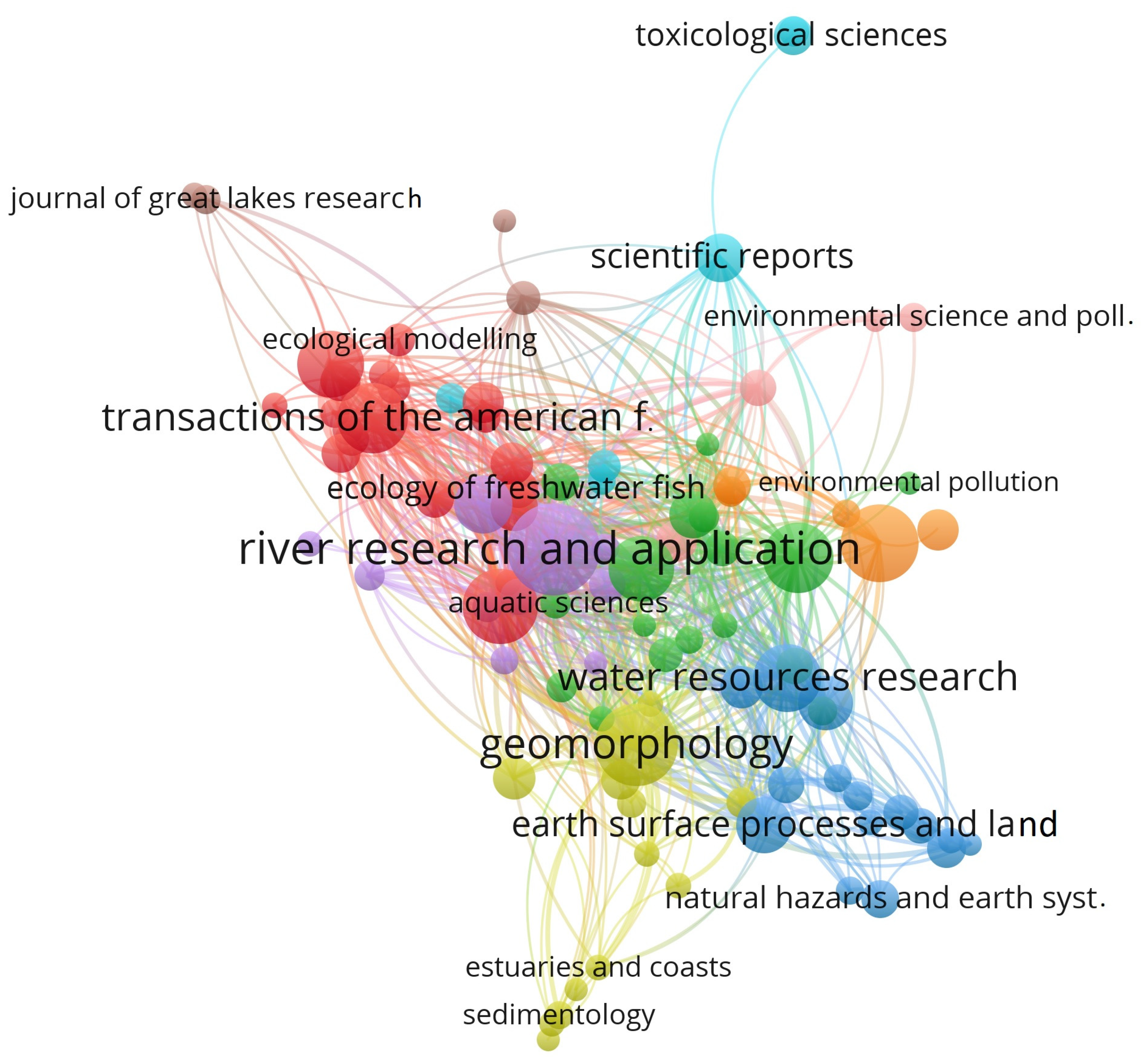
The bibliometric network map of the 3454 publications displays how research on dams is connected in multiple disciplines such as water resource management, hydrology, and environmental sciences (Figure 2). The interlinking of research is most relevant for small dam studies in Mediterranean climate countries. The network comprises multiple clusters that represent research core areas. The red cluster deals with freshwater biology, river science, and fisheries. The green cluster has more general environmental science and sustainability studies. The yellow group focuses on hydrology and earth system science. Among the journals including many papers we found: River Research and Application, Geomorphology, Water, Science of the Total Environment, North American Journal of Fisheries Management, Plos One, Hydrology and Earth System Science, Water Resources Research. They provide essential information on the water processes affecting the functionality of small dams. The blue group, on the other hand, looks at geomorphology and sediment transport. Major journals bridge disciplines and reflect how hydrology, ecology, and geomorphology are interconnected. It is policy and governance as well. The image demonstrates that the study of small dams involves diverse types of knowledge since issues like sedimentation, water loss, ecosystem degradation, and adaptation to climate change all call for expertise from many fields of science.
Figure 2.
Bibliometric Network of Water Resource and Environmental Science Research: Interdisciplinary Connections in Small Dam Studies, based on 3454 published papers. The size of the nodes reflects the frequency of occurrence of each item, while different colors indicate clusters of strongly related items identified by VOSviewer 1.6.20. After applying a minimum citation threshold of 10, only journals meeting this criterion were included in the figure.
The research also points out various terminologies employed in different regions to refer to small dams. In the Middle East, the descriptive terminologies are “Check dams,” “Small storage reservoirs,”. In the USA and Australia, these ponds are normally referred to as “Farm dams,” “Runoff ponds,” and “Stock ponds. In Spanish and Latin American countries, “Azud” (small weir), “Presa pequeña,” and “Embalse” (reservoir) are the usual terms. The French use the term “Petit barrage.” In Italy, “Piccola diga” and “Serbatoio” (reservoir) are used.
3.2. Global Collaboration Network on Small Dam Research
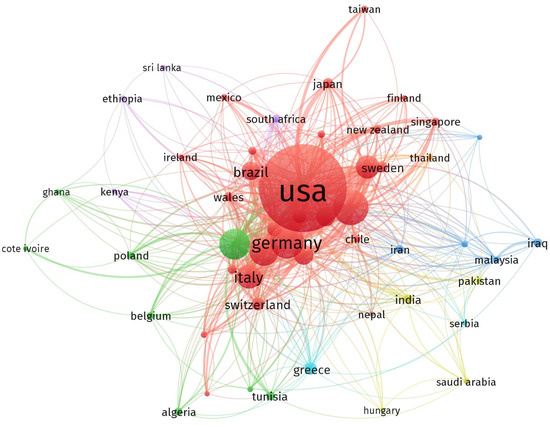
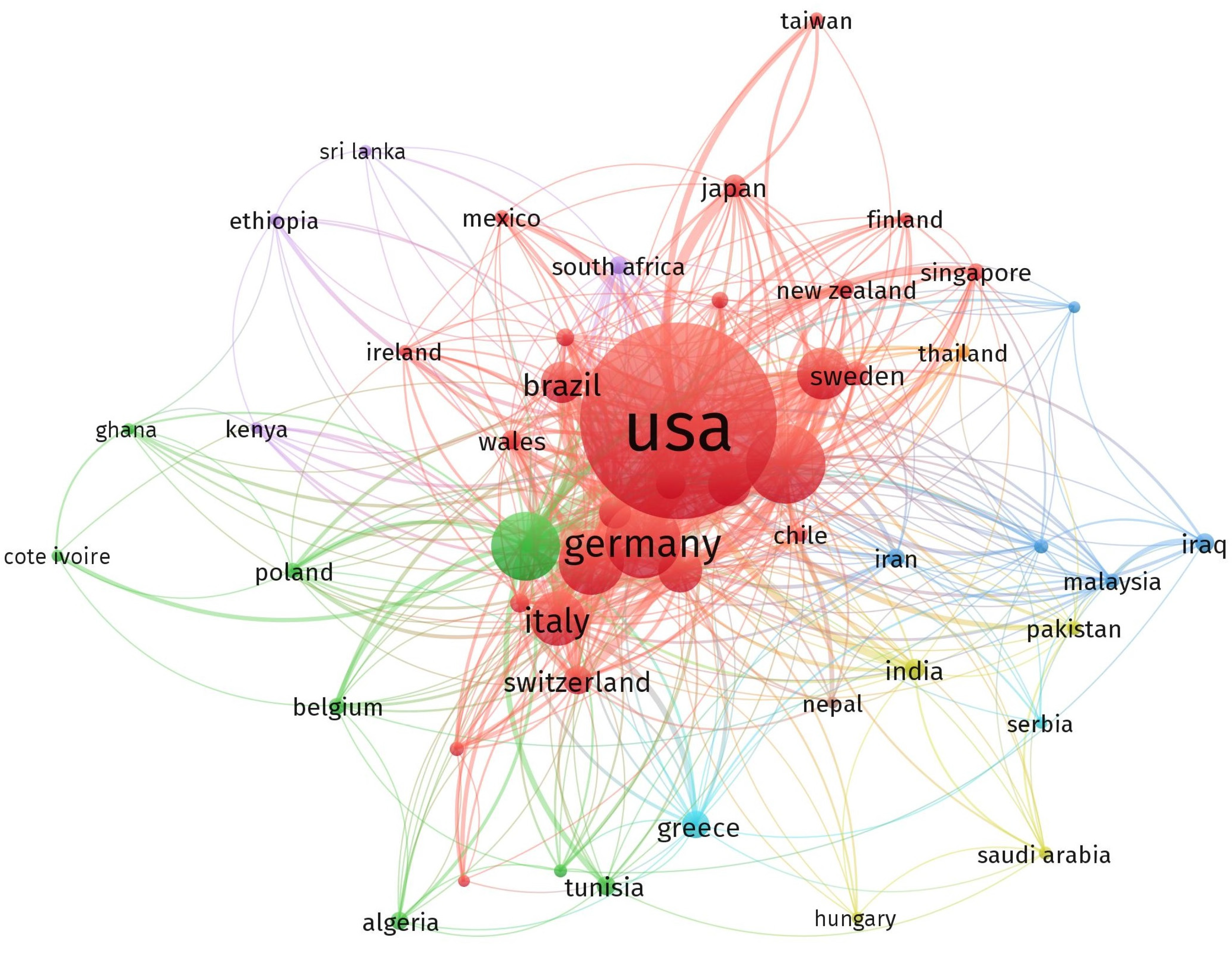
The network graphs illustrate the collaboration intensity among different countries globally and within the Mediterranean climate region. The global collaboration maps (Figure 3 and Figure 4) provide a broader perspective on small dam research. The network visualization illustrates the global research collaboration on small dams, highlighting key countries that contribute significantly to the field. The graph, generated using VOSviewer, maps international partnerships by displaying the volume of research output per country and the strength of collaborative links. Larger nodes indicate countries with a higher number of publications, while thicker and more numerous lines represent stronger co-authorship connections. The different colours in the network categorize countries into distinct research clusters that frequently collaborate, revealing how scientific knowledge on small dams is shared across the world. The USA is the most powerful research hub, with strong connections with Germany, Australia, Canada, and Spain (Figure 3). This shows that the USA is leading the way in hydrological modeling, remote sensing procedures, and policy-driven water resource management plans in small dams. Germany is also a leading player, particularly in sedimentation management research, water quality monitoring, and dam infrastructure sustainability. Australia is a leading player in the network and shows its experience in running small dams for water storage and drought adaptation are of the highest priority. European countries such as Spain, Italy, France, and the United Kingdom are a highly interconnected research community. These countries make substantial contributions to the study of small dams, often on matters related to the performance of dams, ecosystem impacts, and climate resilience. France also acts as the link between nations in Europe and elsewhere, fostering international consensus on sustainable water management. The fact that China is included in the network indicates the growing interest it has in studies on small dams, most likely to optimize water retaining structures for utilization in agriculture. Even beyond Europe and North America, research activity is noted in nations such as Brazil, South Africa, and Japan. Brazil’s contribution likely stems from its focus on small dams for irrigation and flood control, while South Africa contributes to research on water security in dry areas. Studies from Japan, Taiwan, and South Korea reflect increasing global interest in new small dam technologies and their water scarcity implications. In contrast to regional cooperative networks, international research networking is broader and more technologically focused. One of the strongest alliances is among the more affluent countries, which have access to advanced hydrological modeling software, remote sensing devices, and data-driven methods for water management.
Figure 3.
Visualization of the global collaboration network in small dam research. The size of the nodes reflects the frequency of occurrence of each item, while different colors indicate clusters of strongly related items identified by VOSviewer 1.6.20.
Figure 4.
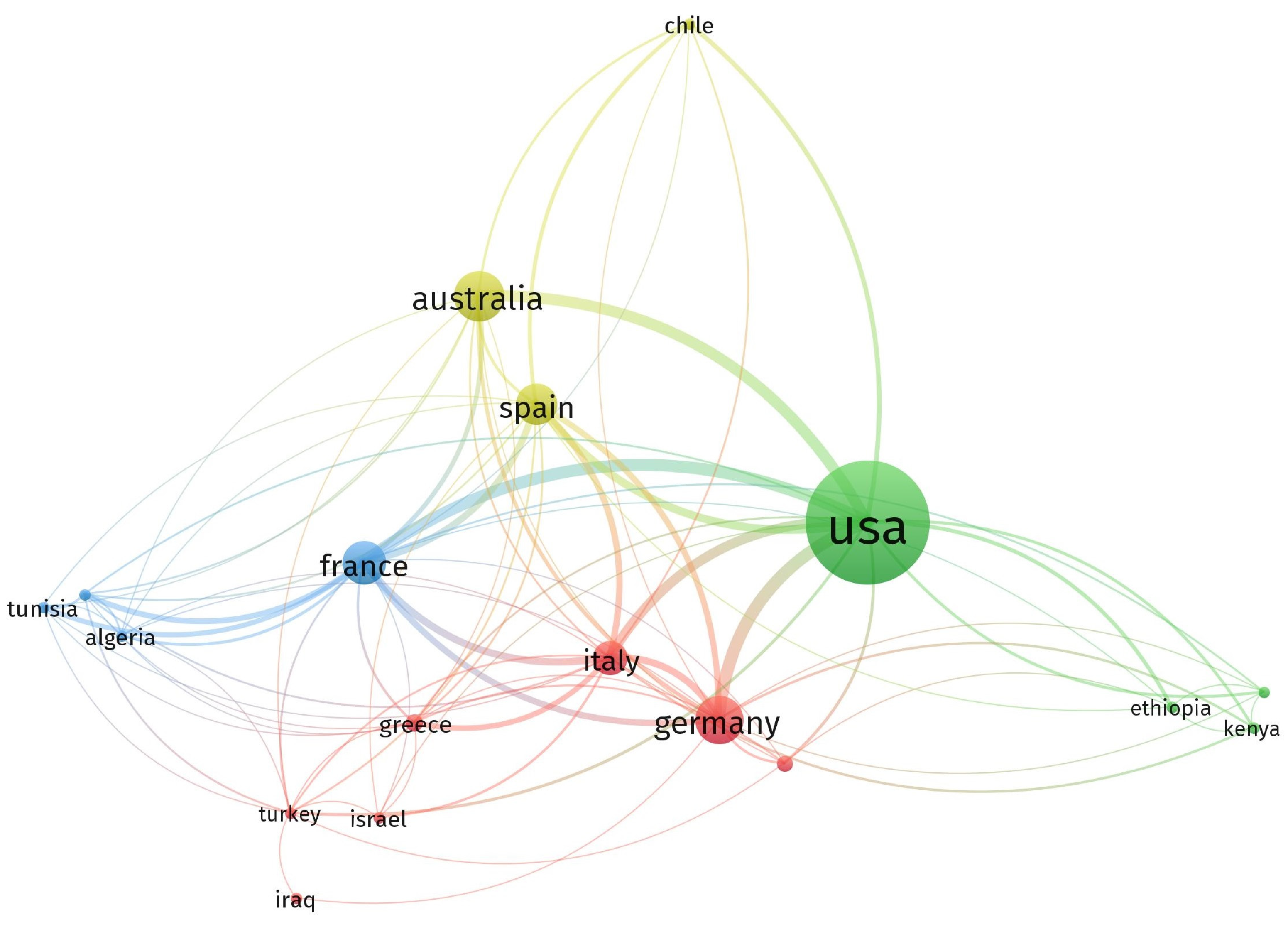
Mediterranean Climate Regions Collaboration Network on Small Dam Research. The size of the nodes reflects the frequency of occurrence of each item, while different colors indi-cate clusters of strongly related items identified by VOSviewer 1.6.20.
Moving from the global to the country level within the Mediterranean climate, the pattern of collaboration is further regionalized, highlighting the scientific collaboration among nations that share similar climatic and water management concerns. The network figure shows that while the USA remains a significant research hub, its direct collaborations are with Southern European countries, North Africa, and the Middle East, reflecting a more focused interest in addressing water scarcity, seasonal fluctuation, and small dam management in Mediterranean climate regions.
France, Spain, and Italy are the key European countries that emerge as central players in small dam research in Mediterranean climate regions. France is revealed as a very influential bridge, linking European research to North African nations such as Algeria, Morocco, and Tunisia, which have similar water challenges. These collaborations suggest a shared scientific effort to develop sustainable water management systems that balance agricultural needs with environmental conservation [13]. All these countries frequently undertake collaborative projects bordering on water resources management, groundwater recharge, water harvesting, strategies for drought resilience, and the utilization of small dams as adaptation measures to climate change [14]. The programs Horizon and Water 4all, financed by the European Union, are just some of the initiative projects.
Italy and Spain have strong links to European, and North African, research institutions, reflecting their engagement in hydrological research, policy development, and engineering practice for small dams. Greece and Turkey are also prominent in the network, revealing their contributions to dam efficiency studies and regional water governance activities [14]. These countries frequently undertake collaborative projects bordering on groundwater recharge, seasonal flow management, and the utilization of small dams to mitigate climate-induced droughts [15].
That Middle Eastern countries such as Israel and Lebanon are members of the network suggests an expansion of research interest in desertification, water storage optimization, and transboundary water resource management.
The Mediterranean climate collaboration network is denser and more connected compared to the overall global research network, suggesting a region-specific emphasis on small dam research. While the global network is concerned with large-scale technological fixes and hydrological modelling, Mediterranean climate region research is more applied and problem-oriented, with a focus on localized solutions to enhancing small dam efficiency, adapting to climate variability, and ensuring long-term water security.
The Mediterranean-specific and global bibliometric maps are different, reflecting the fact that while Mediterranean countries work closely among themselves, global research involves broader cross-continental cooperation. It would then mean that global studies would be more interested in technological remedies and policy matters, while Mediterranean studies are focused on local issues such as severe droughts and seasonal water scarcity.
3.3. Selected Small Dam Case Studies
The 28 selected case studies (S1) (Table 1) were carried out across 9 countries characterized by Mediterranean or semi-arid climates, reflecting the global relevance of small dams in diverse geographic contexts. The United States contributed the largest number of studies (7), followed by Australia (6), emphasizing both countries’ extensive use of small dams in agricultural and water conservation practices. Ethiopia and Iraq each had 4 studies, illustrating the critical role of small dams in water-scarce regions of East Africa and the Middle East. Kenya was represented by 3 studies, while Greece, Morocco, Spain, and Tunisia each contributed one study, highlighting various applications of small dams in traditional Mediterranean environments.
3.4. Benefits of Small Dams
Small dams across diverse Mediterranean and semi-arid contexts demonstrate a wide array of ecological, agricultural, hydrological, and socio-economic benefits when strategically planned and locally maintained (Table 1). In Greece, community-built dry-stone micro-dams in Kavouropotamos have significantly contributed to groundwater recharge, vegetative restoration, and biodiversity conservation, while simultaneously controlling flash floods in a cost-effective and participatory manner [16]. In Spain, small pre-dams situated upstream of eutrophic estuaries, such as the Palmones River basin, have reduced downstream phosphorus and organic matter loads, thereby mitigating algal blooms and improving estuarine health even under substantial urban pressure [17]. In Morocco, the Ahmed El Hansali Dam offers a successful multipurpose model, delivering irrigation water, and drinking supply, while also serving a flood control function. It supports year-round agricultural activity and demonstrates how multi-use small dams can address intertwined water security needs [4]. In Tunisia, small reservoirs in erosion-prone lithologies reduce runoff and trap sediment, enhance aquifer recharge, and reduce soil degradation, especially in arid highlands [18].
Meanwhile, in Australia, farm dams have evolved from essential irrigation tools into important biodiversity refuges. Empirical studies show that macroinvertebrate and waterbird diversity in enhanced farm dams can rival natural wetlands, notably when livestock are excluded and riparian vegetation is present [19]. Moreover, fencing farm dams improves water quality by reducing nitrogen, phosphorus, turbidity, E. coli, and methane emissions while increasing dissolved oxygen [20]. In Kenya, sand dams are critical to climate-resilient agriculture and provide essential domestic water access, especially during prolonged dry seasons. Though water may require necessary treatment, its role in food security and livelihood stability is well documented [21]. In Iraq, GIS and hydrological modeling tools have optimized the location and design of small rainwater harvesting dams, enabling the collection of over 12.9 million cubic meters of runoff annually for agricultural use [22]. In Ethiopia, small dams have been effectively integrated with micro-hydropower systems, supporting irrigation and rural electrification in regions such as Amhara [23]. Notably, the experience in California (USA) reveals that small dams—built initially for sediment control during the hydraulic mining era—have developed into ecologically significant hybrid systems. These artificial reservoirs, particularly in the Yuba River Basin, now support native fish, amphibians, and birds, offering unexpected conservation value in anthropogenic landscapes [24]. Additionally, sediment retention behind these dams has created gravel bars and side channels used by salmonids for spawning, representing a unique intersection of historical engineering and modern habitat function [25].
3.5. Impacts and Challenges of Small Dams
Despite their benefits, small dams also generate complex hydrological, environmental, and governance-related challenges that must be addressed to ensure their sustainability (Table 1). In Morocco, the Ahmed El Hansali Dam has experienced severe sedimentation caused by upstream erosion and deforestation, leading to a progressive loss in reservoir capacity and reduced efficiency in flood protection [4]. Similarly, small dams in Tunisia often fill with sediment in less than 10 years, particularly where upstream sediment traps or watershed protections are lacking [18]. In Ethiopia, empirical studies show that small dams are losing over 50% of their capacity within 15 years due to catchment degradation and design shortfalls [26]. Evaporation losses are a major constraint in arid and semi-arid regions, with open-surface small dams in Iraq, Kenya, and Australia losing between 20% and 60% of their stored water annually. These losses are projected to increase under climate change, particularly in shallow or poorly shaded reservoirs [6]. In Australia, the cumulative impact of many small farm dams has resulted in up to 22% reductions in downstream streamflow, raising concerns over catchment-level water equity [27].
Small dams can also alter ecological connectivity and flow regimes. In Spain, they trap nutrients and organic matter, but at the cost of reducing habitat quality for fish and disrupting estuarine function [17]. In Greece, micro-dams have led to dry-season flow losses and habitat fragmentation, particularly in poorly connected stream networks [16]. In Kenya and Ethiopia, many sand and hillside dams have proven vulnerable to climate stress and poor maintenance, with some experiencing structural failure or abandonment during prolonged droughts [21,28]. In Iraq, several small dams were built in remote locations with limited road access or agricultural proximity, undermining their usability and socio-economic returns [22]. The USA (California) case reveals unique but critical long-term environmental risks. Dams built during the mining boom, such as Englebright Dam, trap mercury-rich sediments from legacy mining. These sediments are a source of methylmercury, which bioaccumulates in aquatic food webs; fish downstream of the dam often exceed EPA and FDA mercury safety thresholds [25]. Additionally, small impoundments have been shown to reduce dissolved oxygen (DO) levels by an average of 1.15 mg/L below upstream concentrations, placing aquatic ecosystems at risk. However, research in Massachusetts showed that dissolved oxygen levels recovered at 80% of dam removal sites within one year, underscoring the potential for ecological recovery [7].
Institutionally, across most countries, especially Kenya, Ethiopia, and Iraq, challenges include limited stakeholder participation, inadequate maintenance, and the absence of systematic monitoring frameworks. These issues, if left unaddressed, threaten to undermine both the short-term functionality and long-term sustainability of small dams globally.
Table 1.
Key Features and findings from selected studies. NA is for not available. Countries: Australia (AU), Ethiopia (ET), Greece (GR), Iraq (IQ), Kenya (KE), Morocco (MA), Spain (ES), Tunisia (TN), United States (US).
4. Discussion
The proliferation of small dams across Mediterranean and semi-arid regions reflects an increasing reliance on decentralized infrastructure for addressing water scarcity, agricultural demands, and climate variability. While these structures are often framed as low-cost, locally adaptable solutions, the cumulative evidence suggests that their hydrological, ecological, and institutional performance is far from uniformly beneficial.
4.1. Site-Specificity
Performance heterogeneity across small dam systems highlights the fundamental importance of site-specific conditions. Catchment characteristics such as slope, soil type, vegetation cover, and upstream land use strongly influence sediment yield, recharge rates, and evaporative losses. For example, sedimentation rates exceeding 2% per year are commonly observed in steep, degraded catchments with high erosion potential [18,26], while flat, vegetated basins may sustain dam function for several decades with minimal intervention. Institutional and social factors are equally determinative. Where land tenure is insecure, governance is fragmented, or maintenance responsibilities are ambiguous, dam degradation and abandonment are common outcomes [22,28]. Conversely, systems embedded in participatory planning frameworks and supported by local institutions tend to exhibit longer functional lifespans and broader user acceptance [16,21]. These observations argue against the continued replication of generic designs across diverse hydrological and social landscapes. Effective small dam development must be preceded by integrated diagnostics that account for hydrological feasibility, sediment dynamics, climate exposure, and socio-political readiness.
4.2. Cumulative Effects on River Systems
Small dams, though limited in scale, exert substantial influence when considered in aggregate. Their cumulative effects on hydrological regimes are often underestimated due to their spatial dispersion and administrative invisibility within national water planning frameworks. However, empirical studies have demonstrated that widespread small dam construction can significantly reduce downstream flows, disrupt sediment transport, and impair longitudinal connectivity of river systems. Nathan and Lowe report that farm dam densities exceeding 15 per 100 km2 can reduce catchment-scale streamflow by up to 22% [27]. Deitch similarly documents 30% reductions in dry season discharge in California due to small reservoir abstraction [9]. Beyond volumetric impacts, cumulative flow attenuation alters the timing and variability of hydrographs, affecting floodplain inundation, aquifer recharge, and ecological productivity. In sediment-rich systems, upstream impoundments trap fine sediments and nutrients, reducing downstream sediment loads by as much as 70% [33]. This results in channel incision, wetland desiccation, and loss of deltaic integrity. Moreover, rivers’ thermal and biogeochemical regimes can be significantly altered by hundreds of small impoundments acting in concert, particularly under low-flow conditions common in Mediterranean climates [7].
4.3. Socio-Economic Dimensions and Governance
One of the defining features of small dams is their proximity to communities. This physical closeness, however, does not guarantee social ownership or participatory governance. In many regions, small dams are introduced through externally funded programs with minimal consultation of local stakeholders. As documented in Iraq, Ethiopia, and parts of sub-Saharan Africa, such top-down approaches often result in poor site selection, underutilization, and eventual abandonment due to mismatches between infrastructure placement and local water needs [3,22,28]. Conversely, outcomes are typically more favourable when small dams are implemented with meaningful community engagement. Involving users in design, site selection, and operational decisions enhances legitimacy, ensures alignment with agricultural cycles and domestic water use, and often results in more effective maintenance regimes. The participatory dam-building initiatives in Greece [16] and co-managed systems in East Africa [21] provide evidence that governance structures rooted in co-production can enhance both technical resilience and socio-political stability.
Yet institutional support structures for small dams are often fragmented or absent. Often, no agency is accountable for monitoring or enforcement once construction is complete, leading to rapid deterioration or inequitable access. Dopico found that over 60% of surveyed users in southern Europe expressed dissatisfaction with institutional support for minor dam maintenance, citing unclear jurisdiction and bureaucratic delays [39]. Socio-economic disparities further complicate outcomes. Where land tenure is insecure or access rights are informal, elite capture of dam benefits can exacerbate existing inequalities. Women, landless farmers, and pastoralists are often excluded from decision-making, yet bear the brunt of water shortages or ecosystem degradation when infrastructure fails. Nascimento argues that without explicit attention to distributive justice, small dams risk reinforcing social stratification rather than alleviating water poverty [40].
Unlike large dams, which are typically planned and operated by centralized authorities, small dams often emerge from decentralized decisions by individual landowners, local communities, or regional development programs. Few countries maintain comprehensive inventories of their small dams, and many of these structures escape environmental impact assessments due to their size. The “invisibility” of cumulative impacts in governance frameworks means that even as each project appears benign, the aggregate effect—reduced downstream flows, altered sediment delivery, and cumulative habitat loss—goes unmanaged.
4.4. Ecological Impacts on Fish and Riverine Habitat, and Design Measures to Mitigate the Impacts
Small dams can alter ecological connectivity and habitats and disrupt fish fauna by blocking migrations; therefore, targeted designs like fish passages and environmental flows are fundamental to mitigating these impacts. Reservoirs may shift communities toward lentic-tolerant species, reducing diversity of rheophilic fish. Altered flows desynchronize life cycles, stranding eggs or juveniles during low flows [41]. Sediment trapping may lead to downstream channel incision and habitat simplification, eroding riffles essential for invertebrates and fish spawning. Floodplain disconnection also may reduce nutrient cycling and productivity, while temperature spikes from impoundments stress cold-water biota. Overall, food webs simplify, favoring generalists over specialists [42].
Designing small dams to avoid ecological impacts requires a combination of structural and operational measures. Nature-like rock ramps, vertical-slot fishways, and—where resources are limited—pipe or siphon systems can provide effective upstream passage suited to the low heads typical of small dams. Fine-mesh screens with dedicated bypass routes at intakes help guide downstream migrants safely by maintaining low approach velocities. These design elements should be complemented by operational strategies: releasing environmental flows that follow seasonal hydrographs, using selective-withdrawal outlets to control temperature, and avoiding long chains of barriers that fragment connectivity. Wherever feasible, obsolete structures should be removed, fish-passage efficiency should be monitored and adjusted over time, and riparian restoration should be integrated to reinforce ecological resilience [43].
4.5. Mudflow Management Using Small Dams
Small dams affect mudflow dynamics through the regulation of sediment availability and flow energy. Small reservoirs encourage the deposition of fine sediments by impounding runoff and reducing upstream velocities, which can limit the volume of material available for transport downstream during events of low to moderate magnitude. However, modeling at the watershed scale reveals that although individual small dams may retain significant amounts of sediment locally, their collective effect at basin outlets is generally small, with annual sediment loads typically reduced by only a few percent [44].
Sedimentation and limited storage further constrain the mudflow-mitigation capacity of small dams. Progressive reservoir infilling reduces active storage and, over time, diminishes sediment retention, while during extreme rainfall events, sediment-laden inflows often exceed storage capacity and pass through spillways with strongly limited attenuation [41]. Synthesis studies confirm that although many small dams can disrupt sediment continuity cumulatively, these effects are nonlinear and inadequate to mitigate sediment-related hazards during extreme events [45]. Overall, small dams provide partial and conditional mudflow mitigation, which is effective mainly at local scales and during moderate events, and should be considered as complementary measures within integrated watershed management rather than standalone solutions.
4.6. Flood Control
Small dams can provide only limited downstream flood protection. Their flood-attenuation effect is real but small, because their storage volumes are modest and they may fill quickly during storm events. Evidence from the studies shows that small agricultural reservoirs reduce peak flows by only about 2–3%, and even when combined with a larger reservoir the reduction reaches no more than about 8–9% at the catchment outlet [46]. Small dams can be used for flood mitigation downstream, but their effectiveness is, in principle, always limited in magnitude. Modeling studies conducted at a watershed scale show that, rather than individual small dams working to decrease peak runoff, substantial downstream flood mitigation can be achieved when a collective network of small dams’ functions cumulatively in a basin [44,47]. Based upon a SWAT model with modifications, Liu et al. in 2014 have successfully demonstrated that a network of small dams can cumulatively decrease peak runoff in a watershed basin on a given day up to14%, depending largely upon rainfall characteristics, basin initiation storage conditions, and small dam type [47]. The flood mitigation efficacy decreases with increased magnitude, with spillway discharge dominating runoff when storage is largely depleted during floods—the latter event highlighted with evidence in Pisaniello et al. in 2015 [44]. As described in detail in a relevant viewpoint, small dams function primarily in a basin for water supply purposes rather than flood mitigation. Furthermore, they explained in detail that spillway capacity and rules governing small dams make them less efficient in flood regulation. Therefore, small dams can at most be considered additional flood-risk management inputs rather than flood regulation installations [44].
4.7. Research Gaps
Despite the growing academic and policy interest in small dams, several critical research gaps limit the development of robust design and governance models. Longitudinal studies remain rare, particularly those that track changes in sedimentation, water quality, and ecological response over multi-year periods, as well as the environmental flow definition. As Moges highlight, most studies assess functionality shortly after construction, obscuring the full lifecycle costs and degradation pathways of these structures [26]. Integrated assessment frameworks that bridge hydrology, ecology, and social science are also underdeveloped. While hydrological models like SWAT are widely applied to assess water quantity and quality [48], they are rarely coupled with ecological indicators or policy indications. This disciplinary fragmentation results in interventions that may function hydraulically but fail to deliver sustainable or equitable outcomes [3]. Moreover, most small dam assessments rely on historical climate data and static design assumptions. As noted by Aminzadeh and Montaldo, few evaluations simulate dam performance under future climate scenarios, despite growing recognition of non-stationary rainfall, temperature extremes, and hydrological volatility [49,50]. Leone pointed out that climate change will impact the flow regime, and these modifications should be considered when defining environmental flows [5]. This omission risks locking in infrastructure that is maladapted to 21st-century conditions. The geographic distribution of research is uneven. Countries with robust monitoring systems or donor-funded projects—such as Australia, Kenya, and parts of Europe—are overrepresented, while large parts of the Middle East and North Africa remain empirically underexplored [39,40]. Comparative, cross-regional studies are urgently needed to generate transferable design principles and policy tools.
Research is needed to assess the cumulative impact of numerous small dams. The uncoordinated expansion of small dams may inadvertently reduce the ecological resilience of rivers. By intercepting runoff and fragmenting river networks, numerous small barriers may disrupt the connectivity of aquatic habitats and sediment flows. For example, small dams may convert intermittent streams into a series of ponded segments with warmer water and higher evaporation losses, or facilitate the spread of invasive species in the calm reservoirs behind dams. An analysis over time is needed to assess the effects on the river ecosystem of the altered regimes.
4.8. Future Directions
Small dam research and practice must adopt a more integrated, anticipatory, and context-sensitive approach to address these systemic limitations. Technologies such as floating covers and thermal insulation, which have demonstrated up to 85% reduction in evaporative loss [51], require further testing and adaptation for low-resource, rural contexts. Sediment management must also move from reactive to preventative strategies. Inclusion of sediment traps, vegetative buffer zones, and upstream land rehabilitation measures during project planning can substantially extend reservoir lifespan. Studies by Felfoul and Moges suggest that systems lacking such measures lose over half their storage capacity within 15 years, rendering them economically and hydrologically inefficient [18,26]. Regulatory frameworks should incorporate cumulative abstraction thresholds, environmental flow maintenance requirements, and ecological connectivity objectives at the basin level. Flow duration curves, sediment budgets, and dam density maps can inform sustainable siting and operational strategies [9,33]. Equally important is the institutional dimension. Small dams function best when embedded in adaptive governance systems with clear accountability, performance monitoring, and mechanisms for stakeholder participation. Evidence from participatory planning initiatives in Europe and sub-Saharan Africa shows that co-management improves infrastructure longevity, equity of access, and ecological outcomes [16,21].
5. Conclusions
Small dams in Mediterranean and semi-arid regions may contribute to addressing water scarcity, increasing the local adaptive capacity of local communities against rainfall variability and drought. This review highlighted that small dams may offer several agricultural, hydrological, economic, and ecological benefits when strategically planned and well managed. On the other hand, small dams may generate complex hydrological, ecological, social, and governance-related challenges that must be addressed to guarantee the long-term sustainability of small dams. Significant quantities of water can be lost through evapotranspiration, severe alterations of hydrological and sediment regime, reduced water storage capacity due to siltation, and modifications of river habitat, morphology and ecology are the main impacts and challenges.
The review also identified the scale and justice as key points. The uncoordinated expansion of small dams may reduce the ecological resilience of rivers and streams, intercepting runoff and fragmenting river networks. Numerous small barriers disrupt the connectivity of aquatic habitats and sediment flows. Our review suggests that the haphazard addition of small dams might diminish a watershed’s capacity to absorb disturbances (e.g., intense floods or prolonged droughts) and to self-recover, especially if critical ecological thresholds are crossed. The challenge, therefore, is to manage small dams in ways that bolster human water security. The socio-economic dimensions of small dams highlighted the need to embed these structures in discussions of equity and environmental justice. Far from uniformly positive or negative, the social impacts of small dams are highly context-dependent and often unequal. Benefits tend to accrue to those with the means to build or access the water (often upstream users), while downstream communities may bear the costs of reduced flows or fisheries. An infrastructure solution that seems sustainable at a micro-scale can generate externalities at a larger scale, challenging the fairness and resilience of the system. Hence, any high-level synthesis of small dam impacts must critically reflect on trade-offs between upstream and downstream interests, between human use and ecosystem needs, and between short-term gains and long-term health.
A key takeaway is that technical efficiency alone (e.g., maximizing water storage) is an inadequate guiding principle for small dam planning and development; considerations of cumulative impact, distributive justice, and intergenerational sustainability must be elevated in decision-making. Our findings also resonate with emerging issues on adaptive and decentralized water governance. Small dams, due to their size and local scope, present an opportunity for adaptive water management, but realizing this potential requires a participatory approach involving stakeholders, local communities, farmers, and marginalized groups in decisions about where and how small dams are built or retrofitted. Lastly, embedding small dams in a climate-resilient framework means viewing them as one component of a broader climate adaptation strategy. Rather than relying solely on a few big reservoirs, a network of well-managed small dams could provide distributed storage to capture erratic rainfall and reduce vulnerability to drought. However, to be climate-resilient, these structures must be designed with future variability in mind—for instance, with spillways that can handle larger floods, and siting that avoids excessive evaporation or ecological harm in a warming climate.
Further studies are needed focusing on longitudinal aspects that monitor the hydrological, ecological, and social impacts of small dams over extended periods (years to decades). Such studies would illuminate long-term trends—for example, gradual reservoir siltation, evolving community dependence, or shifting downstream flow baselines—that short-term assessments cannot capture. Researchers should undertake cross-scalar analyses that link local-level processes to basin-scale outcomes. This means studying individual dams and quantifying the aggregate effects of the small dams on river flow regimes, groundwater recharge, sediment transport, and regional water security. Cross-scalar works carried out using remote sensing, modeling, and comparative basin surveys can help in quantifying the impacts of small dams at a large scale and identify threshold densities of dams that cause abrupt downstream shortages or spatial patterns of development that maximize water retention without critically harming ecosystems. By pursuing interdisciplinary, cross-scalar, and long-term research, scholars and practitioners can build a more comprehensive evidence base to guide policy.
6. Patents
There are no patents resulting from the work reported in this manuscript.
Supplementary Materials
The following supporting information can be downloaded at: https://zenodo.org/records/17599913 (accessed on 14 November 2025), Table S1: Key Features and findings from selected studies. NA is for not available. Countries: Australia (AU), Ethiopia (ET), Greece (GR), Iraq (IQ), Kenya (KE), Morocco (MA), Spain (ES), Tunisia (TN), United States (US).
Author Contributions
Conceptualization: A.Y., F.G. and A.M.D.G.; Methodology: A.Y.; Software: A.Y.; Formal analysis: A.Y.; Investigation: A.Y.; Data curation: A.Y.; Visualization: A.Y.; Writing—original draft preparation: A.Y.; Writing—review and editing: A.M.D.G. and G.F.R.; Supervision: A.M.D.G. and F.G. All authors have read and agreed to the published version of the manuscript.
Funding
The Excellence Department project funded the work of Yassin Alissar: MAR.V.E.L. “MARginal areas: Valorization of Ecosystem resources for fair and sustainable Livelihood”, DIPARTIMENTO DI SCIENZE DEL SUOLO, DELLA PIANTA E DEGLI ALIMENTI—Di.S.S.P.A. (Dipartimento di Eccellenza 2023–2027, CUP H97G23000110001). This study was carried out within the PRIN project “Soil Conservation for sustainable Agriculture in the framework of the European green deal” (SCALE) and received funding from the European Union Next-GenerationEU (National Recovery and Resilience Plan—NRPP, M4.C2.1.1., project 2022PB2NSP).
Data Availability Statement
Review analysis is available at https://zenodo.org/records/17599913 (accessed on 14 November 2025).
Conflicts of Interest
The authors declare no conflicts of interest. The funders had no role in the design of the study; in the collection, analyses, or interpretation of data; in the writing of the manuscript; or in the decision to publish the results.
Abbreviations
The following abbreviations are used in this manuscript:
| AU | Australia |
| CNR-IRSA | Water Research Institute of the National Research Council of Italy (Consiglio Nazionale delle Ricerche—Istituto di Ricerca sulle Acque) |
| CSA | Hot-summer Mediterranean climate |
| CSB | Warm-summer Mediterranean climate |
| DO | Dissolved Oxygen |
| EPA | United States Environmental Protection Agency |
| ES | Spain |
| ET | Ethiopia |
| FDA | United States Food and Drug Administration |
| GIS | Geographic Information System |
| GR | Greece |
| IQ | Iraq |
| KE | Kenya |
| MA | Morocco |
| NA | Not available |
| SWAT | Soil and Water Assessment Tool |
| TN | Tunisia |
| UN WWDR | United Nations World Water Development Report |
| US | United States |
| VOSviewer | Visualization of Similarities Viewer |
References
- Gomez-Gomez, J.d.D.; Pulido-Velazquez, D.; Collados-Lara, A.J.; Fernandez-Chacon, F. The Impact of Climate Change Scenarios on Droughts and Their Propagation in an Arid Mediterranean Basin. A Useful Approach for Planning Adaptation Strategies. Sci. Total Environ. 2022, 820, 153128. [Google Scholar] [CrossRef] [Scilit]
- UN World Water Development Report 2019—Leaving No One Behind. Available online: https://www.unesco.org/en/wwap/wwdr/2019 (accessed on 13 November 2025).
- Owusu, S.; Cofie, O.; Mul, M.; Barron, J.; Owusu, S.; Cofie, O.; Mul, M.; Barron, J. The Significance of Small Reservoirs in Sustaining Agricultural Landscapes in Dry Areas of West Africa: A Review. Water 2022, 14, 1440. [Google Scholar] [CrossRef] [Scilit]
- Mosaid, H.; Barakat, A.; Bouras, E.H.; Ismaili, M.; Garnaoui, M.E.; Abdelrahman, K.; Kahal, A.Y.; Mosaid, H.; Barakat, A.; Bouras, E.H.; et al. Dam Siltation in the Mediterranean Region Under Climate Change: A Case Study of Ahmed El Hansali Dam, Morocco. Water 2024, 16, 3108. [Google Scholar] [CrossRef] [Scilit]
- Leone, M.; Gentile, F.; Lo Porto, A.; Ricci, G.F.; Schürz, C.; Strauch, M.; Volk, M.; De Girolamo, A.M. Setting an Environmental Flow Regime under Climate Change in a Data-Limited Mediterranean Basin with Temporary River. J. Hydrol. Reg. Stud. 2024, 52, 101698. [Google Scholar] [CrossRef] [Scilit]
- Malerba, M.E.; Wright, N.; Macreadie, P.I. Australian Farm Dams Are Becoming Less Reliable Water Sources under Climate Change. Sci. Total Environ. 2022, 829, 154360. [Google Scholar] [CrossRef] [Scilit]
- Abbott, K.M.; Zaidel, P.A.; Roy, A.H.; Houle, K.M.; Nislow, K.H. Investigating Impacts of Small Dams and Dam Removal on Dissolved Oxygen in Streams. PLoS ONE 2022, 17, e0277647. [Google Scholar] [CrossRef] [Scilit]
- Itsukushima, R.; Ohtsuki, K.; Sato, T.; Kano, Y.; Takata, H.; Yoshikawa, H.; Itsukushima, R.; Ohtsuki, K.; Sato, T.; Kano, Y.; et al. Effects of Sediment Released from a Check Dam on Sediment Deposits and Fish and Macroinvertebrate Communities in a Small Stream. Water 2019, 11, 716. [Google Scholar] [CrossRef] [Scilit]
- Deitch, M.J.; Merenlender, A.M.; Feirer, S. Cumulative Effects of Small Reservoirs on Streamflow in Northern Coastal California Catchments. Water Resour. Manag. 2013, 27, 5101–5118. [Google Scholar] [CrossRef] [Scilit]
- FAO. The State of the World’s Land and Water Resources for Food and Agriculture Systems at Breaking Point; Food and Agriculture Organization of the United Nations: Rome, Italy, 2021. [Google Scholar] [CrossRef] [Scilit]
- Liu, T.; Liu, Y.; Si, Z.; Wang, L.; Zhao, Y.; Wang, J.; Liu, T.; Liu, Y.; Si, Z.; Wang, L.; et al. Future Streamflow and Hydrological Drought Under CMIP6 Climate Projections. Atmosphere 2025, 16, 691. [Google Scholar] [CrossRef] [Scilit]
- Beck, H.E.; Zimmermann, N.E.; McVicar, T.R.; Vergopolan, N.; Berg, A.; Wood, E.F. Present and Future Köppen-Geiger Climate Classification Maps at 1-Km Resolution. Sci. Data 2018, 5, 18024. [Google Scholar] [CrossRef] [Scilit]
- Yin, W.; Yang, X.; Liu, W. Sustainable Management and Regulation of Agricultural Water Resources in the Context of Global Climate Change. Sustainability 2025, 17, 2760. [Google Scholar] [CrossRef] [Scilit]
- Badem, A.C.; Yılmaz, R.; Cesur, M.R.; Cesur, E.; Badem, A.C.; Yılmaz, R.; Cesur, M.R.; Cesur, E. Advanced Predictive Modeling for Dam Occupancy Using Historical and Meteorological Data. Sustainability 2024, 16, 7696. [Google Scholar] [CrossRef] [Scilit]
- Gebreslassie, H.; Berhane, G.; Gebreyohannes, T.; Hagos, M.; Hussien, A.; Walraevens, K.; Gebreslassie, H.; Berhane, G.; Gebreyohannes, T.; Hagos, M.; et al. Water Harvesting and Groundwater Recharge: A Comprehensive Review and Synthesis of Current Practices. Water 2025, 17, 976. [Google Scholar] [CrossRef] [Scilit]
- Moatti, J.-P.; Thiébault, S. The Mediterranean Region Under Climate Change; IRD: Hong Kong, China, 2016. [CrossRef] [Scilit]
- Avilés, A.; Niell, F.X. The Control of a Small Dam in Nutrient Inputs to a Hypertrophic Estuary in a Mediterranean Climate. Water Air Soil Pollut. 2007, 180, 97–108. [Google Scholar] [CrossRef] [Scilit]
- Felfoul, M.S.; Snane, M.H.; Albergel, J.; Mechergui, M. Relationship between Small Dam Efficiency and Gully Erodibility of the Lithologic Formations Covering Their Watershed. Bull. Eng. Geol. Environ. 2003, 62, 315–322. [Google Scholar] [CrossRef] [Scilit]
- Brainwood, M.; Burgin, S. Hotspots of Biodiversity or Homogeneous Landscapes? Farm Dams as Biodiversity Reserves in Australia. Biodivers. Conserv. 2009, 18, 3043–3052. [Google Scholar] [CrossRef] [Scilit]
- Odebiri, O.; Archbold, J.; Glen, J.; Macreadie, P.I.; Malerba, M.E. Excluding Livestock Access to Farm Dams Reduces Methane Emissions and Boosts Water Quality. Sci. Total Environ. 2024, 951, 175420. [Google Scholar] [CrossRef] [Scilit]
- Ritchie, H.; Eisma, J.A.; Parker, A. Sand Dams as a Potential Solution to Rural Water Security in Drylands: Existing Research and Future Opportunities. Front. Water 2021, 3, 651954. [Google Scholar] [CrossRef] [Scilit]
- Alwan, K.K.; Al-Kubaisi, M.S.A.; Al-Ansari, N.; Alwan, K.K.; Al-Kubaisi, M.S.A.; Al-Ansari, N. Validity of Existing Rain Water Harvesting Dams within Part of Western Desert, Iraq. Engineering 2019, 11, 806–818. [Google Scholar] [CrossRef]
- Bezabih, A.W. Evaluation of Small Hydropower Plant at Ribb Irrigation Dam in Amhara Regional State, Ethiopia. Environ. Syst. Res. 2021, 10, 1. [Google Scholar] [CrossRef] [Scilit]
- Crifasi, R.R. Reflections in a Stock Pond: Are Anthropogenically Derived Freshwater Ecosystems Natural, Artificial, or Something Else? Env. Manag. 2005, 36, 625–639. [Google Scholar] [CrossRef] [Scilit]
- James, L.A. Sediment from Hydraulic Mining Detained by Englebright and Small Dams in the Yuba Basin. Geomorphology 2005, 71, 202–226. [Google Scholar] [CrossRef] [Scilit]
- Moges, M.M.; Abay, D.; Engidayehu, H. Investigating Reservoir Sedimentation and Its Implications to Watershed Sediment Yield: The Case of Two Small Dams in Data-Scarce Upper Blue Nile Basin, Ethiopia. Lakes Reserv. 2018, 23, 217–229. [Google Scholar] [CrossRef] [Scilit]
- Nathan, R.; Lowe, L. The Hydrologic Impacts of Farm Dams. Australas. J. Water Resour. 2012, 16, 75–83. [Google Scholar] [CrossRef] [Scilit]
- Lasage, R.; Aerts, J.C.J.H.; Verburg, P.H.; Sileshi, A.S. The Role of Small Scale Sand Dams in Securing Water Supply under Climate Change in Ethiopia. Mitig. Adapt. Strateg. Glob Chang. 2015, 20, 317–339. [Google Scholar] [CrossRef] [Scilit]
- Nguyen, H.H.; Recknagel, F.; Meyer, W.; Frizenschaf, J.; Nguyen, H.H.; Recknagel, F.; Meyer, W.; Frizenschaf, J. Analysing the Effects of Forest Cover and Irrigation Farm Dams on Streamflows of Water-Scarce Catchments in South Australia through the SWAT Model. Water 2017, 9, 33. [Google Scholar] [CrossRef] [Scilit]
- Webb, J.R.; Quayle, W.C.; Ballester, C.; Wells, N.S. Semi-Arid Irrigation Farm Dams Are a Small Source of Greenhouse Gas Emissions. Biogeochemistry 2023, 166, 123–138. [Google Scholar] [CrossRef] [Scilit]
- Tonitto, C.; Riha, S.J. Planning and Implementing Small Dam Removals: Lessons Learned from Dam Removals across the Eastern United States. Sustain. Water Resour. Manag 2016, 2, 489–507. [Google Scholar] [CrossRef] [Scilit]
- Vedachalam, S.; Riha, S.J. Small Is Beautiful? State of the Dams and Management Implications for the Future. River. Res. Appl. 2014, 30, 1195–1205. [Google Scholar] [CrossRef] [Scilit]
- Fencl, J.S.; Mather, M.E.; Costigan, K.H.; Daniels, M.D. How Big of an Effect Do Small Dams Have? Using Geomorphological Footprints to Quantify Spatial Impact of Low-Head Dams and Identify Patterns of Across-Dam Variation. PLoS ONE 2015, 10, e0141210. [Google Scholar] [CrossRef] [Scilit]
- Fekadu, A.; Woldeyohannes, B.; Getnet, S. Potential Water Harvesting Site Identification for Micro-Dam Using Scs-Gis Approach: Case of Genfel River Catchment, Eastern Zone of Tigray, Ethiopia. J. Remote Sens. GIS 2021, 10, 255. [Google Scholar]
- Sadeq, S.N.; Mohammad, J.K. The Application of Watershed Delineation Technique and Water Harvesting Analysis to Select and Design Small Dams: A Case Study in Qara-Hanjeer Subbasin, Kirkuk-NE Iraq. Iraqi Geol. J. 2022, 55, 57–70. [Google Scholar] [CrossRef] [Scilit]
- Abdullah, M.; Al-Ansari, N.; Laue, J. Water Resources Projects in Iraq: Main Drains. J. Earth Sci. Geotech. Eng. 2019, 9, 275–281. [Google Scholar]
- Naif, R.I.; Abdulhameed, I.M. Optimal Height And Location Model (OHALM) for Rainwater Harvesting Small Dams (Iraqi Western Desert- Case Study). Iraqi J. Civ. Eng. 2020, 14, 31–36. [Google Scholar] [CrossRef] [Scilit]
- Moїse, N.; Kaluli, J.W.; Home, P.G. Evaluation of Sand-Dam Water Quality and Its Suitability for Domestic Use in Arid and Semi-Arid Environments: A Case Study of Kitui-West Sub-County, Kenya. Int. J. Water Resour. Environ. Eng. 2019, 11, 91–111. [Google Scholar] [CrossRef] [Scilit]
- Dopico, E.; Arboleya, E.; Fernandez, S.; Borrell, Y.; Consuegra, S.; de Leaniz, C.G.; Lázaro, G.; Rodríguez, C.; Garcia-Vazquez, E. Water Security Determines Social Attitudes about Dams and Reservoirs in South Europe. Sci. Rep. 2022, 12, 6148. [Google Scholar] [CrossRef] [Scilit]
- Nascimento, A.T.P.d.; Cavalcanti, N.H.M.; Castro, B.P.L.D.; Medeiros, P.H.A. Decentralized Water Supply by Reservoir Network Reduces Power Demand for Water Distribution in a Semi-Arid Basin. Hydrol. Sci. J. 2019, 64, 80–91. [Google Scholar] [CrossRef] [Scilit]
- Chen, Q.; Li, Q.; Lin, Y.; Zhang, J.; Xia, J.; Ni, J.; Cooke, S.J.; Best, J.; He, S.; Feng, T.; et al. River Damming Impacts on Fish Habitat and Associated Conservation Measures. Rev. Geophys. 2023, 61, e2023RG000819. [Google Scholar] [CrossRef] [Scilit]
- Doria, C.R.C.; Dutka-Gianelli, J.; Brasil de Sousa, S.T.; Chu, J.; Garlock, T.M. Understanding Impacts of Dams on the Small-Scale Fisheries of the Madeira River through the Lens of the Fisheries Performance Indicators. Mar. Policy 2021, 125, 104261. [Google Scholar] [CrossRef] [Scilit]
- Tarena, F.; Comoglio, C.; Spairani, M.; Candiotto, A.; Ashraf, M.U.; Abbà, M.; Ruffino, C.; Nyqvist, D. Passage Performance of Three Small-Sized Fish Species in a Vertical Slot Fishway with and without Overhead Cover. Ecol. Eng. 2025, 219, 107713. [Google Scholar] [CrossRef] [Scilit]
- Pisaniello, J.D.; Dam, T.T.; Tingey-Holyoak, J.L. International Small Dam Safety Assurance Policy Benchmarks to Avoid Dam Failure Flood Disasters in Developing Countries. J. Hydrol. 2015, 531, 1141–1153. [Google Scholar] [CrossRef] [Scilit]
- Schmutz, S.; Sendzimir, J. (Eds.) Riverine Ecosystem Management; Springer: Berlin/Heidelberg, Germany, 2018. [Google Scholar] [CrossRef] [Scilit]
- Villani, L.; Castelli, G.; Forzini, E.; Piemontese, L.; Lucca, E.; Bouizrou, I.; Lompi, M.; Bertoli, G.; Giuliano, A.; Chiarelli, D.D.; et al. Large Dams and Small Reservoirs: Co-Modeling Water Storage Strategies in a Mediterranean Catchment under a Changing Climate. Front. Water 2025, 7, 1673203. [Google Scholar] [CrossRef] [Scilit]
- Liu, Y.; Yang, W.; Yu, Z.; Lung, I.; Yarotski, J.; Elliott, J.; Tiessen, K. Assessing Effects of Small Dams on Stream Flow and Water Quality in an Agricultural Watershed. J. Hydrol. Eng. 2014, 19, 05014015. [Google Scholar] [CrossRef] [Scilit]
- Beroho, M.; Aboumaria, K.; El Hamdouni, Y.; Ouallali, A.; Jaufer, L.; Kader, S.; Hughes, P.D.; Spalevic, V.; Kuriqi, A.; Mrabet, R.; et al. A Novel SWAT-Based Framework to Integrate Climate and LULC Scenarios for Predicting Hydrology and Sediment Dynamics in the Watersheds of Mediterranean Ecosystems. J. Environ. Manag. 2025, 388, 125446. [Google Scholar] [CrossRef] [Scilit]
- Aminzadeh, M.; Friedrich, N.; Narayanaswamy, S.; Madani, K.; Shokri, N. Evaporation Loss From Small Agricultural Reservoirs in a Warming Climate: An Overlooked Component of Water Accounting. Earths Future 2024, 12, e2023EF004050. [Google Scholar] [CrossRef] [Scilit]
- Montaldo, N.; Sirigu, S.; Zucca, R.; Ruiu, A.; Corona, R. Hydrological Sustainability of Dam-Based Water Resources in a Mediterranean Basin Undergoing Climate Change. Hydrology 2024, 11, 200. [Google Scholar] [CrossRef] [Scilit]
- Aminzadeh, M.; Lehmann, P.; Or, D. Evaporation Suppression and Energy Balance of Water Reservoirs Covered with Self-Assembling Floating Elements. Hydrol. Earth Syst. Sci. 2018, 22, 4015–4032. [Google Scholar] [CrossRef] [Scilit]
Disclaimer/Publisher’s Note: The statements, opinions and data contained in all publications are solely those of the individual author(s) and contributor(s) and not of MDPI and/or the editor(s). MDPI and/or the editor(s) disclaim responsibility for any injury to people or property resulting from any ideas, methods, instructions or products referred to in the content. |
© 2025 by the authors. Licensee MDPI, Basel, Switzerland. This article is an open access article distributed under the terms and conditions of the Creative Commons Attribution (CC BY) license.