Article

Morphological Response to Sub-Seasonal Hydrological Regulation in the Yellow River Mouth: A 1996–2023 Case Study


1
Key Laboratory of Water Cycle and Related Land Surface Processes, Institute of Geographic Sciences and Natural Resources Research, Chinese Academy of Sciences, Beijing 100101, China
2
University of Chinese Academy of Sciences, Beijing 100049, China
3
School of Geography and Information Engineering, China University of Geosciences, Wuhan 430078, China
*
Author to whom correspondence should be addressed.
Hydrology 2025, 12(12), 335; https://doi.org/10.3390/hydrology12120335
Submission received: 31 October 2025 / Revised: 7 December 2025 / Accepted: 9 December 2025 / Published: 17 December 2025

Abstract

River flow has historically been the primary force shaping the morphology of the Yellow River estuary. However, since the Xiaolangdi Reservoir began operating in 2000, the hydrological processes reaching the estuary have been significantly modified. To evaluate the morphological response of the estuary, we examined the evolution of the mouth channel from 1996 to 2023 using remote sensing, cartographic generalization, and hydrological analysis, supported by annual Landsat imagery, daily hydrological records, and field survey data. Our findings indicate that the channel extended slowly between 1996 and 2002, then advanced rapidly from 2003 to 2007, culminating in a natural avulsion between 2004 and 2008. Following the avulsion, the newly formed channel progressively extended (2008–2013) and, after 2014, developed into a multi-branch system. The development of this bifurcating system since 2014 is attributed to the sustained release of low-sediment-concentration flows from the Xiaolangdi Reservoir. In contrast, the earlier avulsion was triggered by the rapid discharge of a high-sediment-concentration flow in 2004. These results demonstrate that releases from the Xiaolangdi Reservoir with varying sediment concentrations at different timescales elicited distinct morphological responses in the Yellow River estuary, underscoring the need for carefully calibrated hydrological regulation.

1. Introduction

Driven by both human activities and climate change, recent decades have witnessed marked changes in water and sediment transport processes across various river estuaries, leading to considerable adjustments in estuarine and deltaic morphodynamics [1,2,3,4,5,6,7,8,9]. The main cause for these adjustments is that the deltas of most rivers worldwide have been receiving much less sediment input [9,10,11].
The Yellow River Delta (YRD), renowned for a very large amount of riverine sediment input, fast channel extension, and frequent channel avulsions, has exhibited a unique evolution pattern distinct from other major deltas—one shaped by frequent avulsions. While 11 major channel avulsions were recorded between 1855 and 1976, the average lifespan of the mouth channel in the Yellow River estuary was approximately ten years, markedly shorter than the counterparts in other global deltas [12,13,14,15]. These characteristics have made the YRD a natural laboratory for studying the morphodynamics of river-dominated estuaries [9,16,17].
The water and sediment inputs from the Yellow River are the fundamental controls of the YRD’s morphological evolution [18,19,20]. While the sediment supplied by the river provides material for land growth and mouth channel extension in the estuary, the runoff supplied plays a crucial role in the dynamic transport of the input sediment [7,13,21,22,23,24].
In recent decades, the YRD has undergone dynamic geomorphic adjustments in response to human interference with water and sediment inputs, altered by reservoir construction and operation in the entire drainage basin [7,17,22]. The Xiaolangdi Reservoir is located at the exit of the last gorge in the middle Yellow River before entering the lower Yellow River, and began impounding water in late 1999. Since 2002, a special Water-Sediment Regulation Scheme (WSRS) has been implemented in the operation of the Xiaolangdi Reservoir jointly with the other large reservoirs, including the Sanmengxia, Liujiaxia, and Longyangxia Reservoirs constructed on the upper trunk of the river, significantly affecting the water and sediment transport processes entering the lower reach and estuary of the Yellow River [7,18,25,26,27]. Although the WSRS lasts only 10–20 days each year, it delivers approximately 30–50% of the annual sediment load into the Yellow River estuary [28]. Such a large amount of sediment input over a short period of time has dramatically changed the seasonal characteristics of water and sediment transport processes in the estuary [22,29,30,31,32,33]. Consequently, the processes of sediment deposition and channel evolution in the Yellow River estuary differ considerably from before [15,21,23,24,34,35]. The estuary of the Yellow River has transitioned from net accretion to erosion, causing considerable land loss since 2018 [29,36].
While the effects of the water and sediment inputs under the implementation of the WSRS on the morphological evolution in the Yellow River estuary have been a hotspot for research, detailed studies have been conducted mostly at annual or seasonal scales and systematic investigations of the effects at a smaller scale (monthly or even daily in line with the implementing period of the WSRS each year) have remained scarce. Importantly, remarkable avulsion and bifurcation have occurred in the mouth channel evolution in the Yellow River estuary since 2004, yet no physical explanation has been given for their causes. To explore the link between morphological changes and the short-term pulse-driven and long-term low-sediment hydrological process under the WSRS, we utilized a time series of remote sensing imagery, field measurements, and hydrological data at daily to annual scales. We conducted a detailed analysis of the evolution characteristics of the Yellow River’s mouth channel from 1996 to 2023. The natural avulsion occurred in 2004–2008, and the bifurcation began in 2013–2014. The morphological responses to the flow and sediment transport from the Xiaolangdi Reservoir were elucidated in detail. Finally, the main physical causes underlying the development of the avulsion and bifurcation were analyzed. Key hydrological regulation strategies were subsequently proposed.

2. Materials and Methods

2.1. Study Area

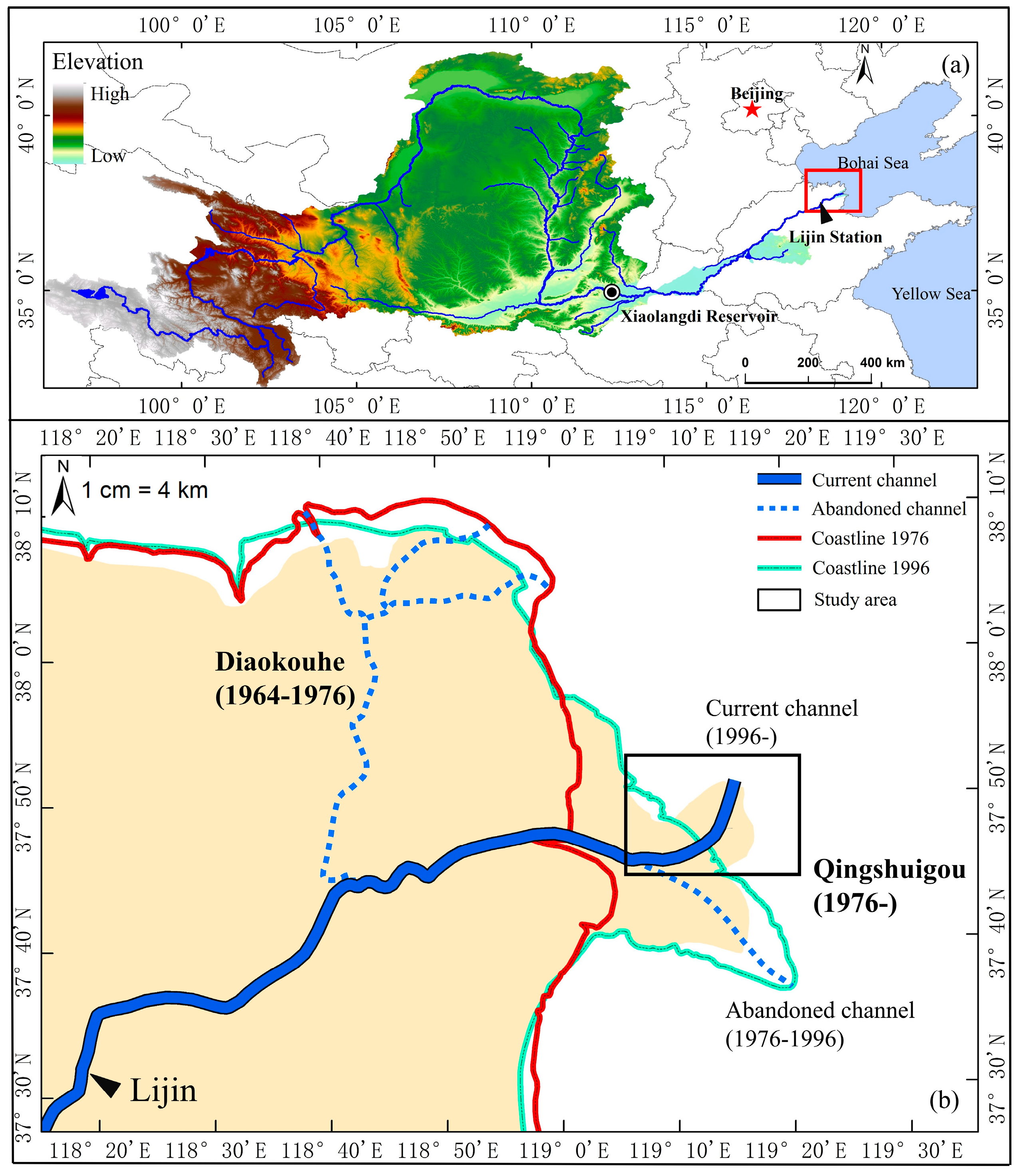
The Yellow River is China’s second-longest river, with a total length of 5464 km, originating from the northern foothills of the Bayankala Mountains on the Tibetan Plateau. It flows from west to east across the Tibetan Plateau, the Inner Mongolia Plateau, the Loess Plateau, and the North China Plain before entering the Bohai Sea (Figure 1a). It was ranked the world’s third-largest river in terms of sediment discharge [12]. The mouth channels of the Yellow River have shifted frequently throughout history, and from 1964 to 2016, 11 major avulsions occurred [15], forming two river mouths: the Diaokouhe mouth (1964–1976) and the Qingshuigou mouth (1976–present) (Figure 1b). In 1996, an artificial avulsion was created in the middle part of the old channel, and a new channel developed northward at the Qingshuigou mouth. The avulsion began on 11 May 1996 and was completed on 18 July 1996, taking 69 days. The new mouth channel has an angle of 29°30′ relative to the old channel, which was abandoned in the same year. The new mouth channel has been evolving in a very complex manner since 1996, typically driven by the dramatic variations in water and sediment transport processes entering the estuary from 2000. The evolutionary characteristics of this new mouth channel and their relationship with the variation in water and sediment inputs are the main focus of this study.

2.2. Data Sources

The data used in this study came from three sources: Landsat TM/ETM/OLI remote sensing images, hydrological records from Lijin station, and field surveys on mouth channel cross-sections.
This study relies on imagery from the Landsat 5 TM, Landsat 7 ETM+, and Landsat 8–9 OLI sensors spanning 1996–2023, which were obtained from the website of United States Geological Survey (USGS) (https://www.usgs.gov/, accessed on 30 October 2025). All data were acquired as Collection 2 Level 2 surface reflectance products. Landsat Collection 2 is a new data product released by the USGS starting in 2020. Representing the second major reprocessing of the Landsat archive, Collection 2 introduces significant improvements in geometric correction and radiometric calibration over Collection 1, particularly in geometric accuracy. A key enhancement is the adoption of an updated ground control point dataset (GCPs Phase 4), which integrates control points from both Landsat 8 and the European Space Agency’s Sentinel-2 mission, substantially improving inter-sensor geometric consistency. Given that this study utilizes imagery from multiple sensors (TM, ETM+, and OLI) over a long temporal span, high inter-sensor consistency is crucial. The Collection 2 dataset effectively minimizes sensor-induced systematic errors, ensuring data uniformity across the different Landsat platforms. The Collection 2 Level 2 data not only provide improved geometric and radiometric accuracy, but also include surface reflectance products derived from multispectral bands that can be used directly without additional preprocessing. Importantly, independent atmospheric correction is neither required nor recommended, as user-generated corrections are unlikely to achieve the accuracy of the standardized, rigorously validated official product.
The hydrological station set up at Lijin on the trunk of the lower Yellow River is about 100 km upstream from the river mouth, and there are no tributaries joining the river downstream from the station (Figure 1b). Hence, it has generally been regarded as the control station for the river’s entry into the estuary [28]. The daily average flow discharge (m3/s) and daily average suspended sediment discharge (t/s) recorded at Lijin from 1996 to 2022 were made available to the public by the Yellow River Conservancy Commission (YRCC) of the Ministry of Water Resources of China, and we obtained the data from the released reports.
The field survey data on cross-sections QJ6, Q6, QJ7, Q7, QJ8, QJ9, C1, CJ1, C2, and C3 distributed along the mouth channel of the Yellow River were made available to the public by the YRCC, and we obtained them from the released reports. C3 is the downmost cross-section, and the distance between each cross-section and its adjacent cross-sections ranges from 1 to 2 km.

2.3. Remote Sensing Imagery Interpretation

A total of 336 Landsat satellite images taken from 1996 to 2023 covering the Yellow River estuary were collected in this study. To interpret annual mouth channel changes, images acquired during the pre-flood season (from March to May) under low tide conditions and with no snow or ice coverage were selected for each year, yielding a total of 28 qualified scenes. To ensure data quality and maintain visibility of critical areas, only imagery with under 5% cloud coverage was utilized. Due to the Landsat satellites’ 16-day revisit cycle, a maximum of 1–2 images can be acquired per month. Due to tidal conditions and cloud cover, suitable images for March–May were unavailable in certain years; consequently, February or June images were selected as alternatives in this study.
Mouth channel interpretation was performed through a manual visual interpretation based on the Modified Normalized Difference Water Index ( M N D W I ) and Normalized Difference Vegetation Index ( N D V I ) calculations, supplemented by false-color and true-color composite imagery, and validated with field survey experience. The equations for calculating M N D W I [37] and N D V I [38,39] are as follows:
M N D W I = G r e e n S W I R G r e e n + S W I R
N D V I = N I R R E D N I R + E D
where G r e e n and S W I R are the respective values of the reflectance of the green band and the shortwave infrared band; N I R and R E D are the respective values of the reflectance of the near-infrared band and the red band.
The M N D W I values range from −1 to 1. Since water bodies exhibit high reflectance in the green band and low reflectance in the S W I R band, the closer the M N D W I value is to 1, the more likely the pixel reflects a water body. The N D V I values range from −1 to 1, and values below zero indicate no or minimal vegetation. A higher N D V I value indicates greater vegetation coverage and better vegetation growth conditions.
In our study, the interpretation of the channel boundaries was based on a combination of calculated parameters and manual visual interpretation. This manual visual interpretation is informed by extensive fieldwork surveys, which played a crucial role in refining the interpretation and ensuring its accuracy. We used high-resolution Google Earth imagery for visual inspection to compare channel boundaries observed in Google Earth with those manually extracted from Landsat, thereby validating the results of our interpretation method. The extraction of the Yellow River estuary’s coastline was performed by automatically extracting the instantaneous water edge using M N D W I , followed by manual boundary correction. M N D W I and N D V I were calculated in Google Earth Engine (GEE), and Remote Sensing interpretation was implemented in ArcGIS 10.8 and ENVI 5.6.

Tidal Bias

The tidal regime in the estuary of the Yellow River is characterized by an irregular semi-diurnal form in the Bohai Sea with a maximum range of 0.7–1.8 m, increasing gradually from the north to the south [7,40]. The remote sensing images of the Yellow River delta were all taken at 10:43 local time, when the tides were relatively low, but the lunar phases varied; hence, the images capture a range of tidal conditions, and their impact must be considered when evaluating changes in river mouth channels. This study made every effort to select images obtained at the lowest tide (among all available Landsat images that met the quality criteria) to minimize systematic errors in the extracted estuarine channel lengths.

2.4. Planform Generalization Method for Mouth Channels

Remote sensing imagery shows that the Yellow River mouth channels can shift, to some degree, in a few months or even in a single month, especially during the flood season. Most of these shifts are caused by water-level fluctuations or temporary erosion or deposition, but cannot be recognized at an annual scale. Reliable interpretation and generalization of mouth channel evolution from remote sensing imagery requires distinguishing transient, short-lived changes from stable, long-term trends and identifying the transitions between these states. This study identified the annual stable mouth channel boundaries, and a planar graphic generalization method based on the mathematical concept of sets was proposed to abstract a representative mouth channel evolution planform over a given period.
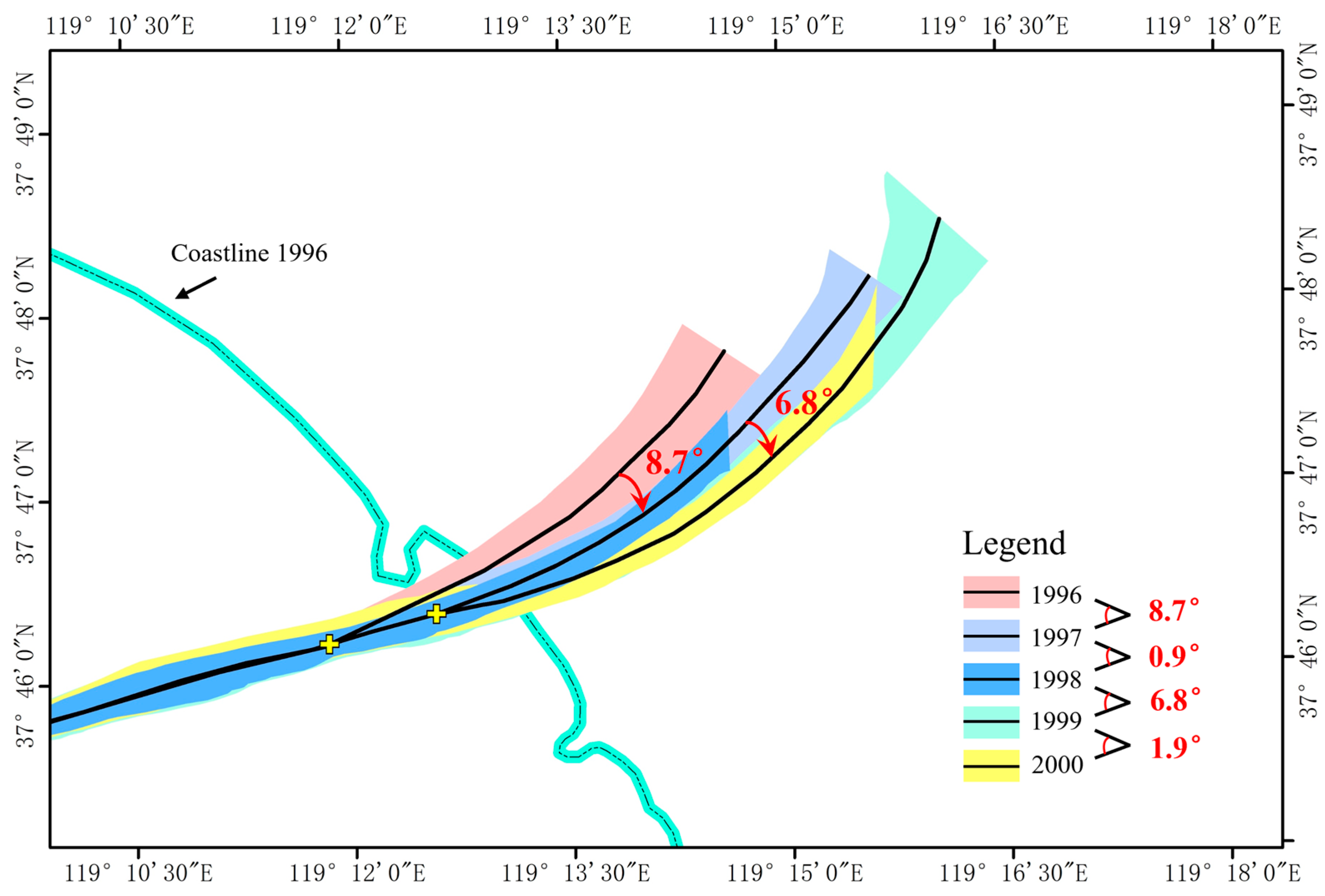
Using the mouth channel direction as the primary variable, two key metrics were defined in this study: deflection angle (α) and deflection point. For two mouth channels in adjacent years, the angle between their channel centerlines is the deflection angle, and their intersecting point is the deflection point (Figure 2). To generalize the spatially varying pattern in the mouth channels of the Yellow River, we grouped mouth channels in consecutive years with approximately the same deflection angle into one set, in which the averages of the lengths and widths of all mouth channels were used to generate a representative generalized mouth channel. For instance, as illustrated in Figure 2, the mouth channel centerlines in 1997 and 1998 were nearly identical, differing by a mere 0.9°. They were therefore grouped into one single set, which was defined as a single generalized mouth channel marked with the period 1997–1998. The threshold α ≤ 3° was applied to group the mouth channels into the same set, as the differences below this threshold were nearly imperceptible. Hence, the generalized mouth channel in each set represents the channel planform in the corresponding period. Figure 2 shows that the period 1997–1998 exhibited a distinct 8.7° eastward deflection relative to 1996, while the period 1999–2000 showed a 6.8° eastward deflection relative to the period 1997–1998.
River deltas grow through episodic mouth channel jumping events called avulsions [41,42], where a significant shift in the channel leads to the nourishment of new parts of the deltaic plain with sediment [43]. In contrast to gradual, relatively insignificant shifts in the mouth channels, an avulsion occurred at a very large deflection angle and involved levee breaching, overbank flow, new channel formation, and abandonment of the old channel [41,44,45]. The key diagnostic feature that distinguishes an avulsion from gradual non-avulsive channel shifts is that it is typically preceded by events where water flow leaves the channel (e.g., overbank flooding) and/or where erosion induces a levee breach during floods [46,47]. Therefore, channels on fan deltas typically have an avulsion node that is topographically pinned, whereby fan deposits grow outward over time from their confined upland source [16,48]. Avulsions on deltas also appear to occur within a region of high water surface slope variability caused by backwater hydrodynamics [49,50,51]. Some researchers have verified that avulsion nodes in the Yellow River mouth channel consistently occur within the backwater zone [16,52]. Bifurcation refers to situations in which a mouth channel transitions into two or multiple branches on the way to the sea.

2.5. Fluctuation Analysis, Sediment Transport Coefficient, and Longitudinal Gradient

To assess the temporal variability of the water-sediment data collected, we calculated the Relative Deviation ( R D t ) and Z-score ( Z t ) for daily flow discharge, daily suspended sediment discharge, and daily sediment concentration from 1996 to 2022 using the following formulae:
R D t = | X t μ | μ
Z t = X t μ σ
where R D t is the degree of fluctuation of each data point relative to the reference value, X t is the data at time point t, μ is the mean value, Z t is the standard deviation from the mean, and σ is the standard deviation:
σ = 1 n i = 1 n X i μ 2
The R D t and Z t collectively quantify the temporal variability of daily hydrological series, with R D t expressing the magnitude of deviation as a proportion of the mean, thus identifying periods of extreme hydrological and sediment transport events (e.g., flood pulses). The Z t standardizes the deviation R D t to identify statistically significant outliers beyond the natural background variability.
The sediment concentration per unit discharge, also known as the incoming sediment coefficient or sediment transport coefficient ( ξ ), is a widely used empirical parameter, typically in the study of sediment transport in the lower Yellow River to represent the degree of water-sediment coupling [53,54]. The formula for calculating ξ (kg∙s/m6) is as follows:
ξ = S c Q
where S c (kg/m3) is the suspended sediment concentration and Q (m3/s) is the water discharge. The sediment transport coefficient ( ξ ), calculated from Equation (6), shifts the analysis from temporal pattern to process efficiency. It serves as a proxy for the sediment-carrying capacity of the unit flow energy, where higher ξ values indicate sediment-laden, deposition-prone conditions, and lower values signify sediment-starved, potentially erosive regimes.
Longitudinal gradient of river channel ( g ) is a key parameter characterizing the topographic variation over a reach. It is defined as the ratio of the elevation difference ( Z ) between two points to the corresponding horizontal distance ( L ), representing a dimensionless quantity. In this study, it was expressed by per mille (‰), calculated as follows:
g = Z L
Importantly, g is a geomorphic expression, reflecting the longitudinal characteristics of a channel or terrain: g > 0 indicates a downstream-decreasing slope (favorable slope), while g < 0 indicates a downstream-increasing slope (adverse slope). Hence, g translates hydrological and sedimentological signals into a geomorphic response, quantifying the energy slope of the channel bed. A negative g value (adverse slope) is a direct morphological indicator of upstream sediment aggradation.

3. Results

3.1. Morphodynamic Characteristics of Mouth Channel Evolution

3.1.1. Tempo-Spatial Variation in River Mouth Channels

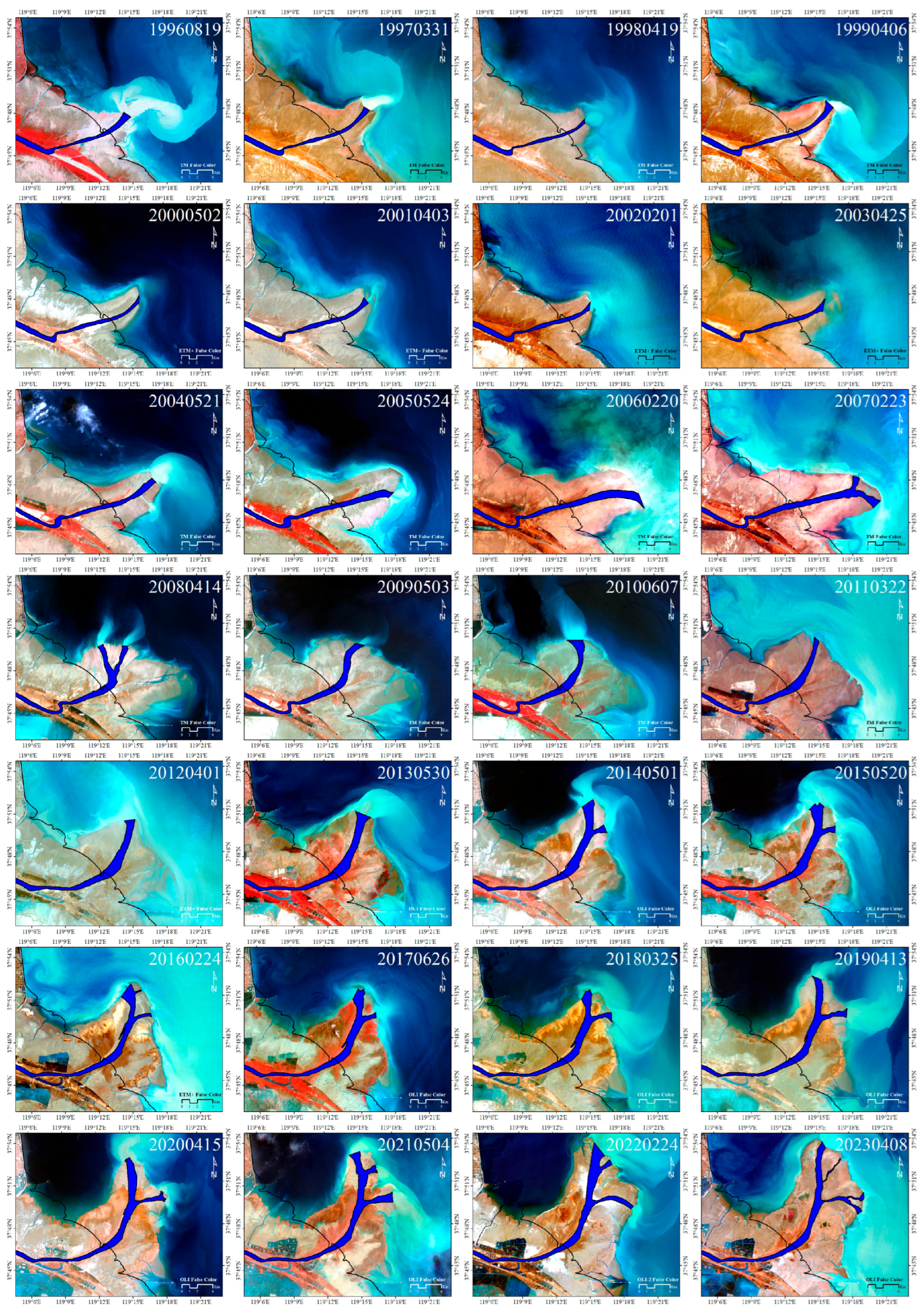
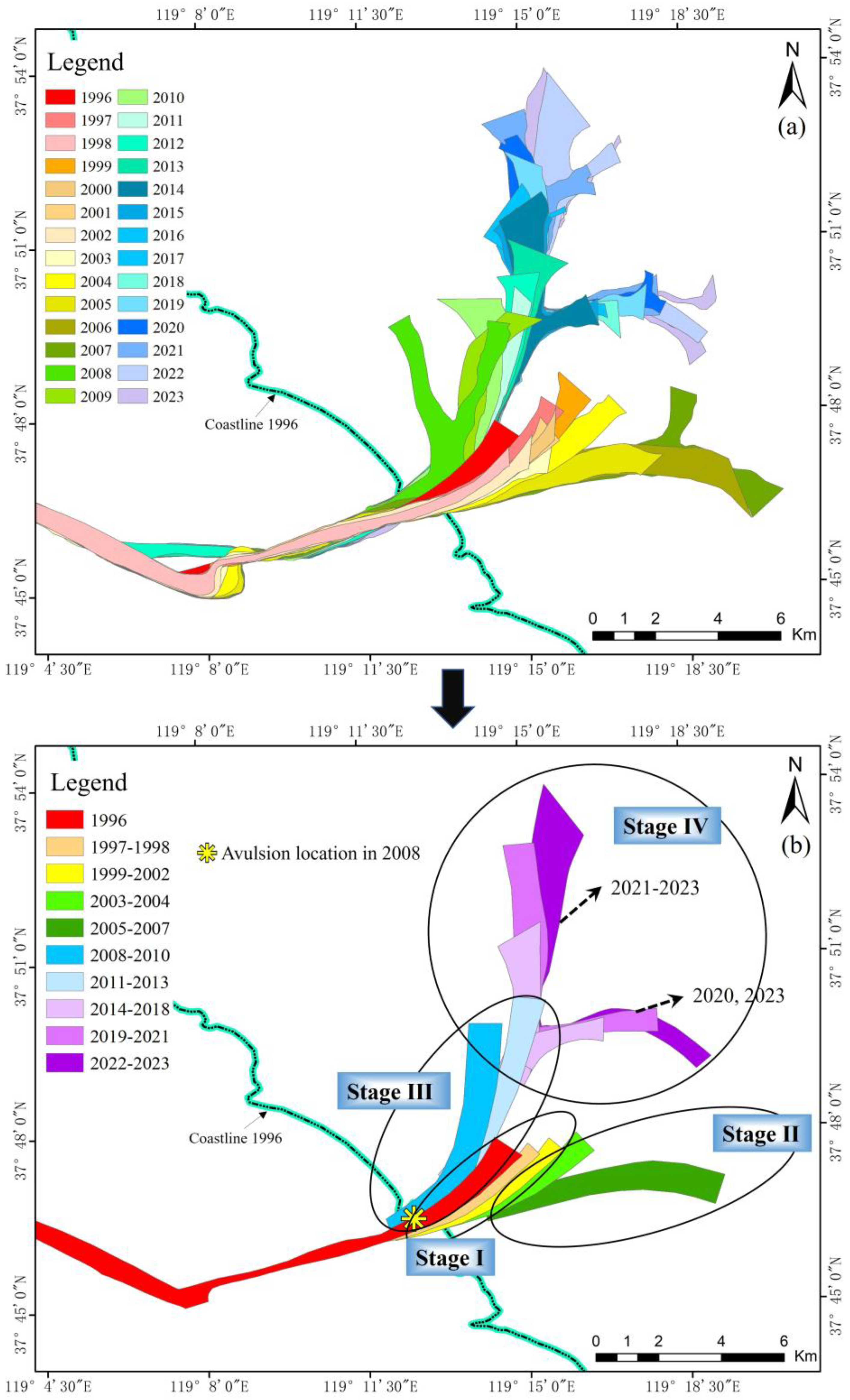
Using the selected remote sensing images, we extracted the mouth channels of the Yellow River formed from 1996 to 2023 using the method stated earlier in this study. Figure 3 shows the spatial variation in the extracted mouth channels at the annual scale. When all the extracted mouth channels were overlaid and the differences in their deflection angles compared, we generalized all the mouth channels into ten sets, allowing the differences in deflection angles of the mouth channels to vary within the range of less than 3° in each set (Figure 4). Figure 4a shows the annual mouth channels overlaid, while Figure 4b presents the generalized mouth channels by using our mouth channel generalization method. It can be seen in Figure 4b that the ten sets of the generalized mouth channels correspond to the ten periods of the mouth channel evolution: 1996, 1997–1998, 1999–2002, 2003–2004, 2005–2007, 2008–2010, 2011–2013, 2014–2018, 2019–2021, and 2022–2023. The shift angel and the length of the generalized mouth channels differ considerably across the ten periods.

3.1.2. Characteristics of Mouth Channel Evolution

Figure 3 and Figure 4 clearly show that the mouth channels of the Yellow River extended gradually into the sea, shifting slightly rightward before 2008, while in 2008, a large directional shift (an avulsion) occurred in the extension of the mouth channel, leading to the complete abandonment of the old eastward mouth channel and the development of a new northern one. By 2014, the mouth channels transitioned from single channels to a bifurcating (multi-branch) system. These relatively large-scale shifts and transitions are the main characteristics of the mouth channel evolution in the Yellow River from 1996 to 2023. In terms of the evolutionary characteristics of the mouth channels, typically the shifts occur from the extension of a single mouth channel to avulsion, followed by further extension of a new single channel and the development of a multi-branch channel system; as a result, four major evolution stages of the mouth channels can be categorized from the ten periods: initial slow extension (1996–2002), pre-avulsion rapid extension (2003–2007), post-avulsion extension (2008–2013), and bifurcation (2014–2023). The key characteristics of the mouth channel evolution at each stage are summarized in Table 1.
At Stage I (1996–2002), the newly formed mouth channels after the 1996 avulsion propagated seaward, characterized by slow extension and slight rightward migration. Although generally swinging rightward, the mouth channels had an average annual deflection angle of 2.33° and extended up to 4.02 km, with an average extension rate of 0.12 km/year (Table 1).
At Stage II (2003–2007), the mouth channels propagated more rapidly at an average rate of 1.79 km/year, advancing by 7.52 km (Table 1). At this stage, the mouth channels continuously deflected rightward, resulting in a gradual increase in the magnitude. Notably, their annual deflection angle reached 3.80°, much higher than their angle of 2.33° at Stage I.
At Stage III (2008–2013), the evolution of the mouth channels was characterized by the development of new mouth channels following the complete avulsion that occurred naturally in 2008. With the full abandonment of their old eastward channels, the new mouth channels propagated northward at a deflection angle of 45°. The deflection angle of the new mouth channels reached an average of 2.4° after avulsion at this stage. Their extension rate was 0.68 km/year, lower than at Stage II but higher than at Stage I (Table 1).
At Stage IV (2014–2023), the evolution of the mouth channels was characterized by the development of two or three branches in the river mouth. While a transition from a single channel to two branches occurred in the river mouth beginning from 2014, a well-developed bifurcating channel system was established in 2020–2023 in the river mouth (Figure 3 and Figure 4). Between 2020 and 2023, additional short-lived branches developed along the main branch, resulting in four concurrent active branches by 2023. The main branch has remained relatively stable, with an average annual deflection angle of 2.4°. The progressive progradation of the mouth channels has increased their length to 12.23 km, at a rate of 0.47 km/year, which is lower than at Stage III (Table 1).

3.1.3. Evolution of the Natural Avulsion from 2004 to 2008

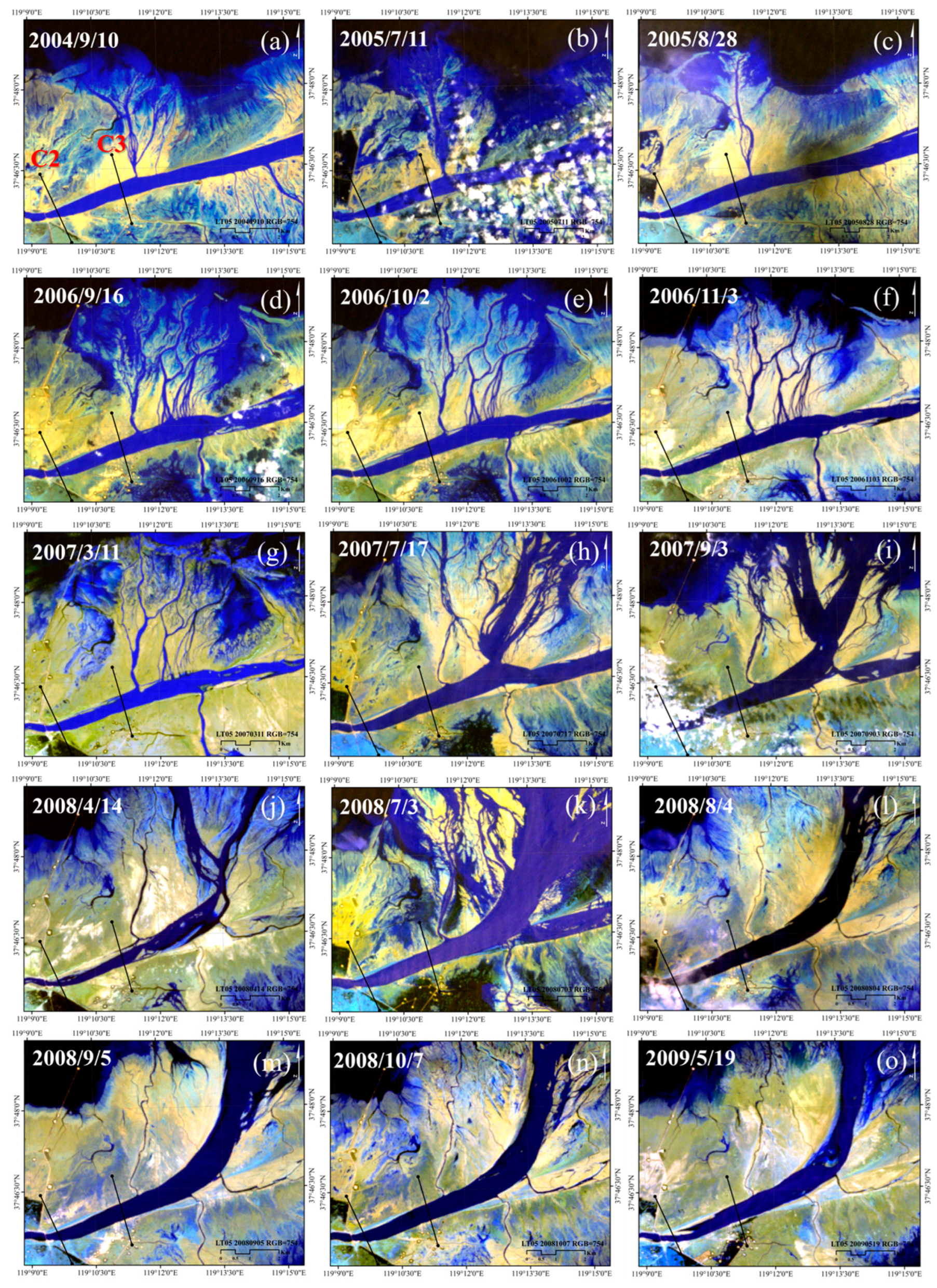
Although a complete natural avulsion occurred in the middle mouth channels of the Yellow River in 2008, a detailed evaluation of the avulsion process from the remote sensing images demonstrated clearly that the process started in 2004, with the a small branch first appearing on the northern bank (Figure 5a). In 2005, the branch developed further, flowing perpendicular to the northern bank of the estuarine channel. (Figure 5b,c). In 2006, widespread overbank flow occurred around the branch, in correspondence with the development of a new central sandy bar in the main mouth channel near the overflow area (Figure 5d–g). In 2007, the widespread overbank flow gradually developed into two relatively large branches during the flood season, while the main mouth channel experienced sediment blockage, with the sandy bar gradually enlarging due to sediment deposition (Figure 5h,i). By the pre-flood period in 2008, the mouth channel was almost completely blocked (Figure 5j), and during the 2008 flood season, flow ran into the sea through both the main mouth channel and the sub-channel. After the flood season, however, the old mouth channel was abandoned, and the new mouth channel was well developed during the non-flood season (Figure 5k,l). Subsequently, the new channel stabilized (Figure 5m–o). In general, the avulsion process followed the following sequence: initial occurrence of small overbank flow (2004–2005), widespread gully flow (2006), new branch development (2007), new channel selection and old channel abandonment (2008), and new channel formation (2009).

3.1.4. Evolution of the Bifurcating System Since 2014

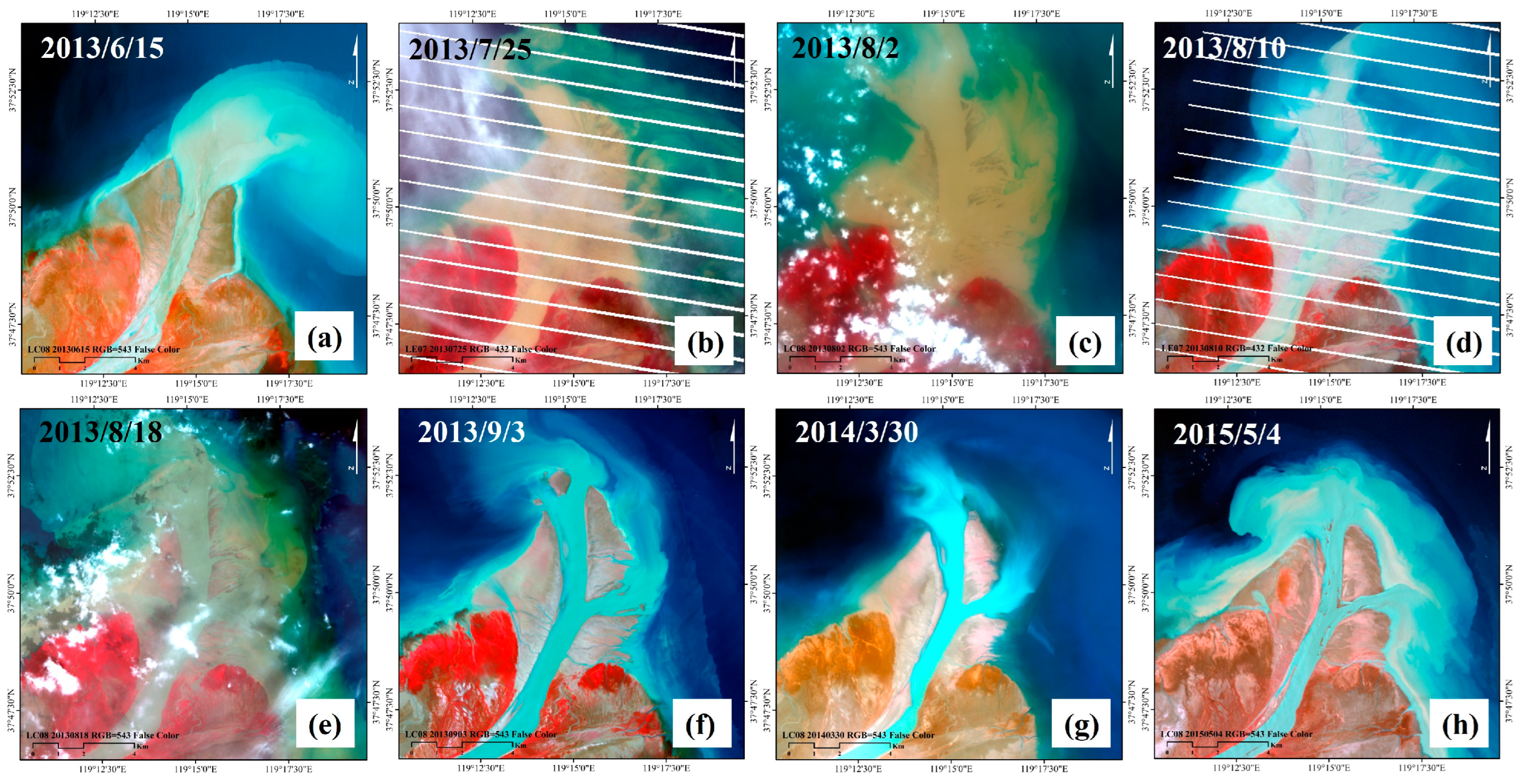
As shown in Figure 6, overflow developed at the river mouth, influenced by the first flood event that occurred in 2013 (Figure 6a,b). The second flood maintained this overflow state (Figure 6c–e). After the 2013 flood season, a bifurcation gradually emerged (Figure 6f–h).

3.2. Characteristics of the Hydrological Process into the Estuary

3.2.1. Variations in Water and Sediment Inputs at Yearly and Daily Scales

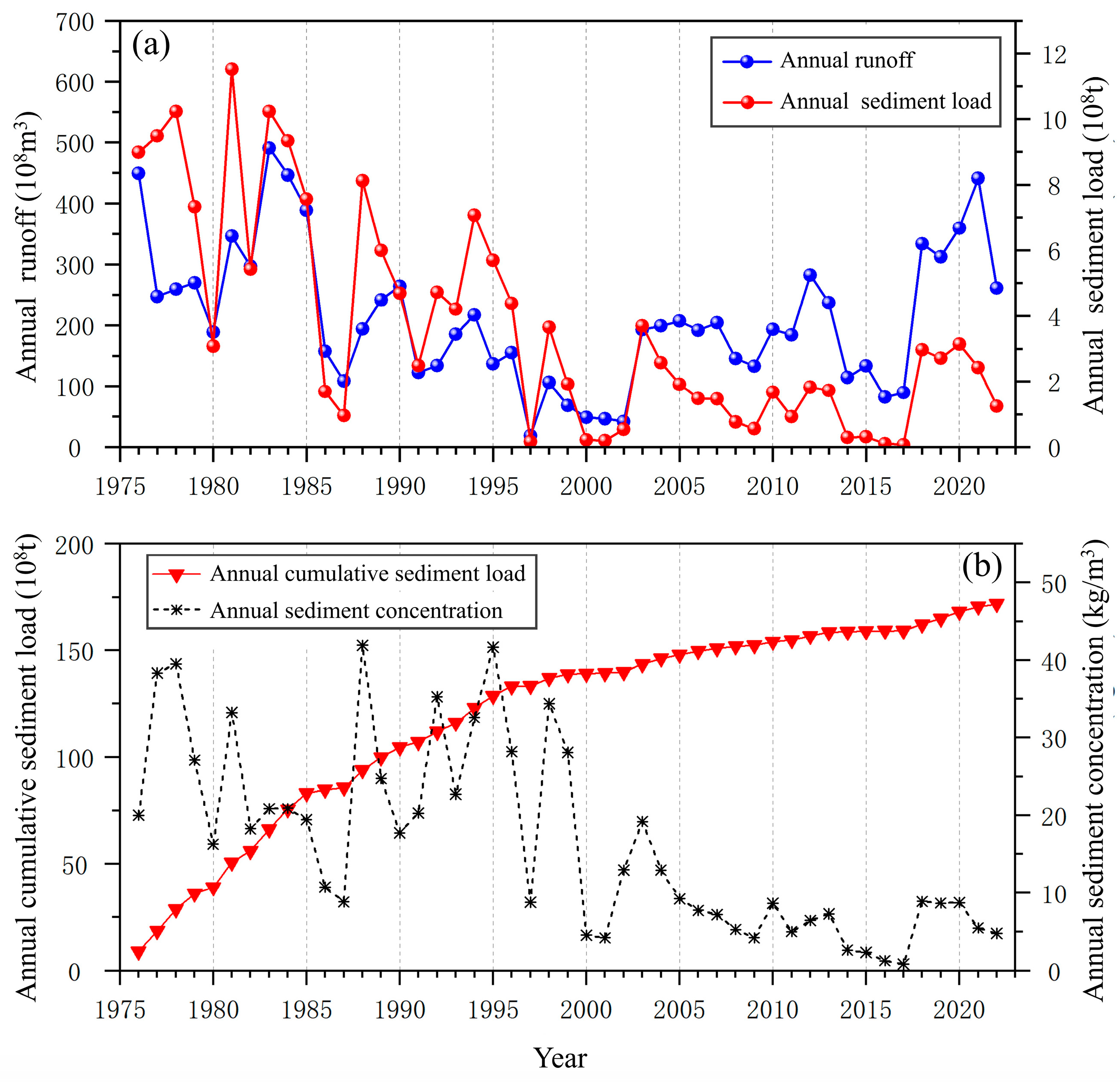
Based on the hydrological data collected from Lijin hydrological station, the control site of the Yellow River’s water and sediment inputs into its estuary, Figure 7 shows the variations in the water and sediment inputs in 1976–2022 at the annual scale. It is clearly seen that over the 1976–2022 period, the annual runoff into the estuary of the Yellow River transitioned from a declining trend (1976–1997) to a low-value phase (1997–2002) and finally to a gradually increasing trend (2002–2022) (Figure 7a). While the annual sediment input into the estuary declined in a stepwise manner from 1976 to 2002, it varied without a clear trend, fluctuating within a limited range from nearly zero to 4·108 t in 2002–2022 (Figure 7a). Correspondingly, the annual suspended sediment concentration varied over a very wide range, from approximately 10 to 45 kg/m3 in 1996–2002, to a much narrower range of nearly 0 to 20 kg/m3 in 2002–2022 (Figure 7b). Clearly, the flow from the Yellow River into the estuary has been much clearer since 2002. Climate change and human activities in the Yellow River Basin have significantly transformed its fluvial system; notably, the construction of large reservoirs, soil and water conservation initiatives, and hydrological management have collectively reduced the sediment load delivered to the sea by approximately 90%, reflecting a clear declining trend [22,30,55]. Human activities are responsible for approximately 70% of this reduction, with contributions from soil and water conservation (40%), sediment trapping by reservoirs (20%), and the operation of upstream reservoirs (10%) [30]. The sediment deposition has led to considerable erosion in the downstream channel of the Lower Yellow River. As a result, the soil conservation practices implemented on the Loess Plateau have shifted sediment sources; over 60% of the sediment now reaching the sea originates from downstream channel erosion, other than from the Loess Plateau, as was the case in the past [22].
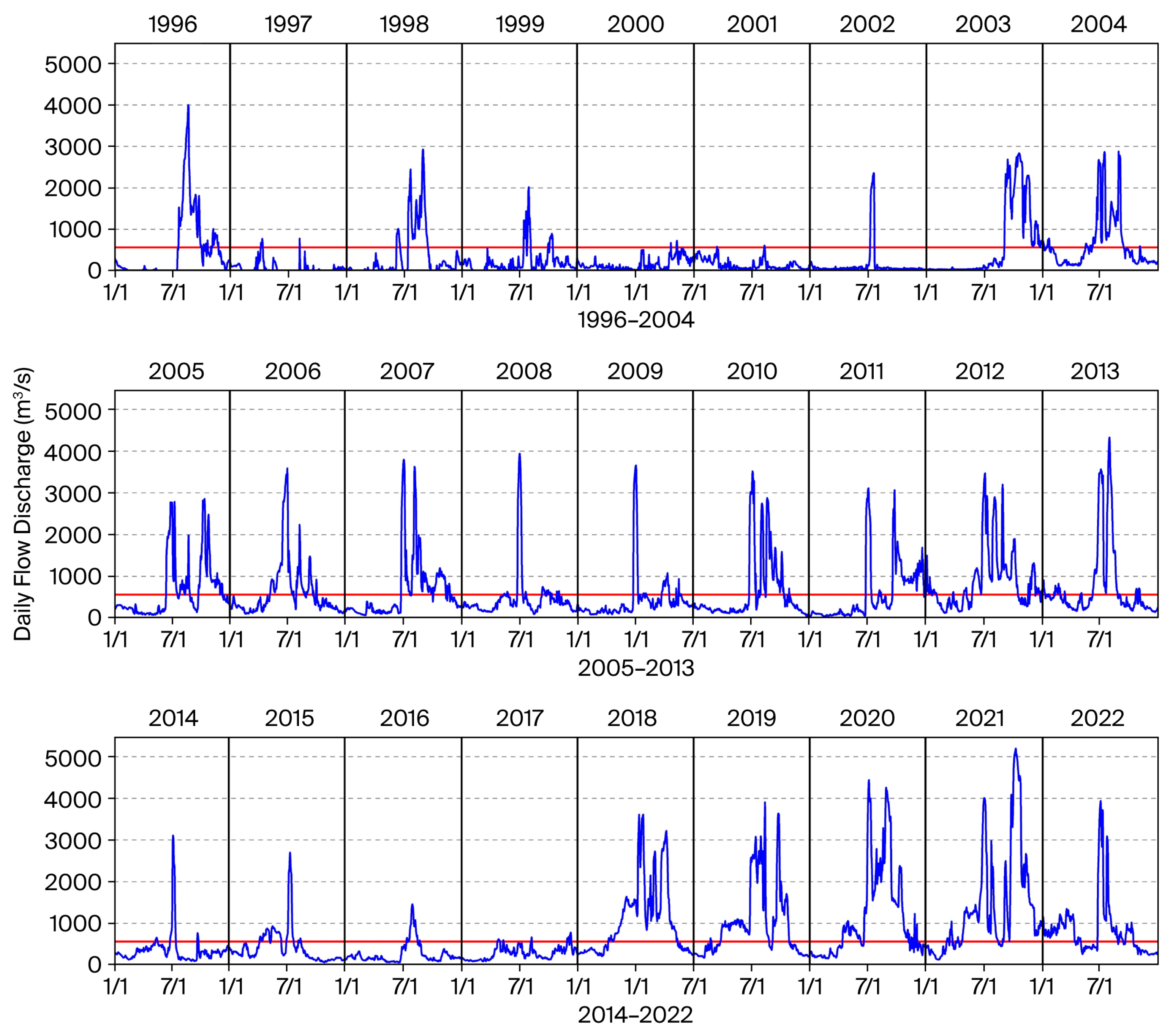
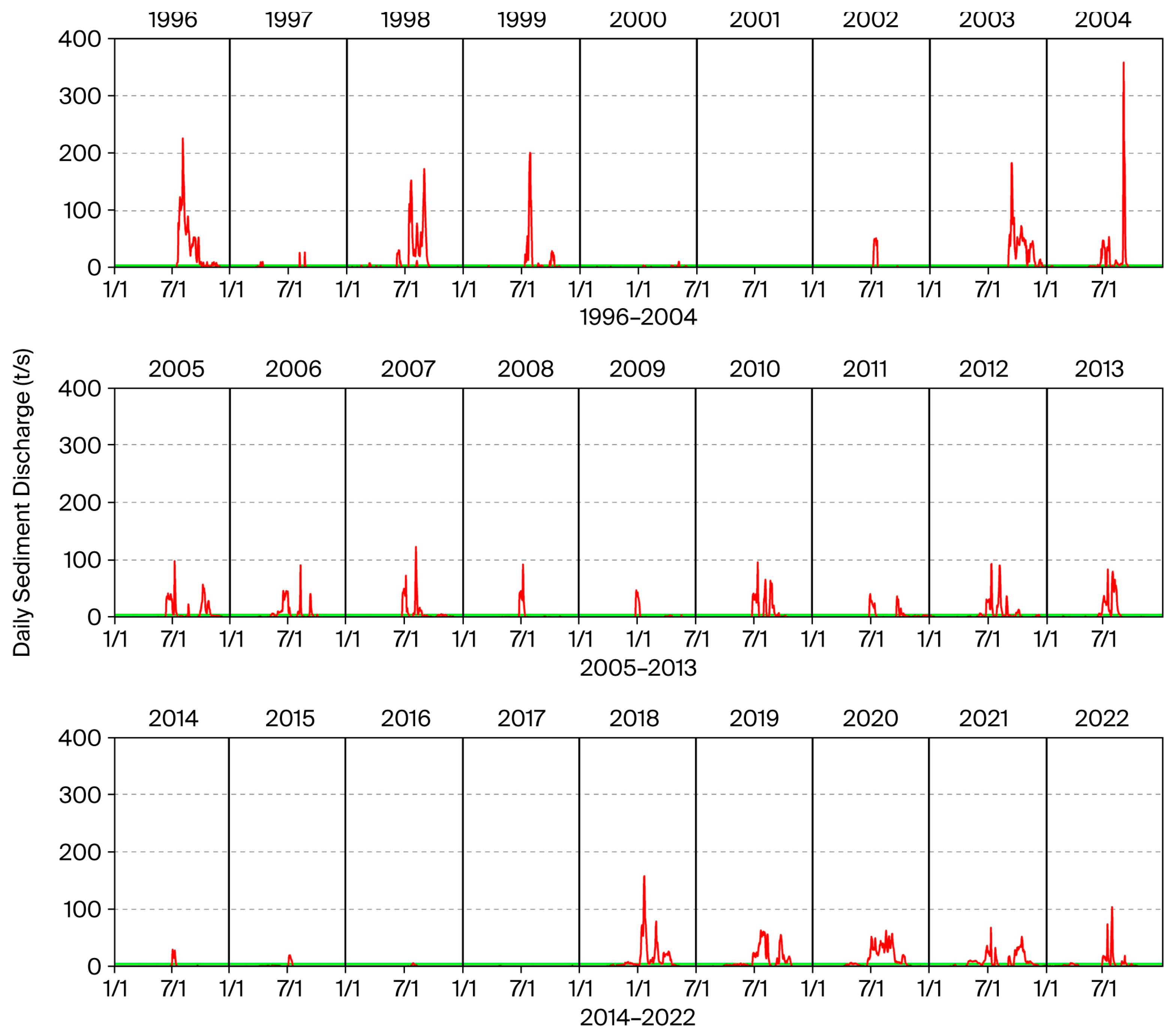
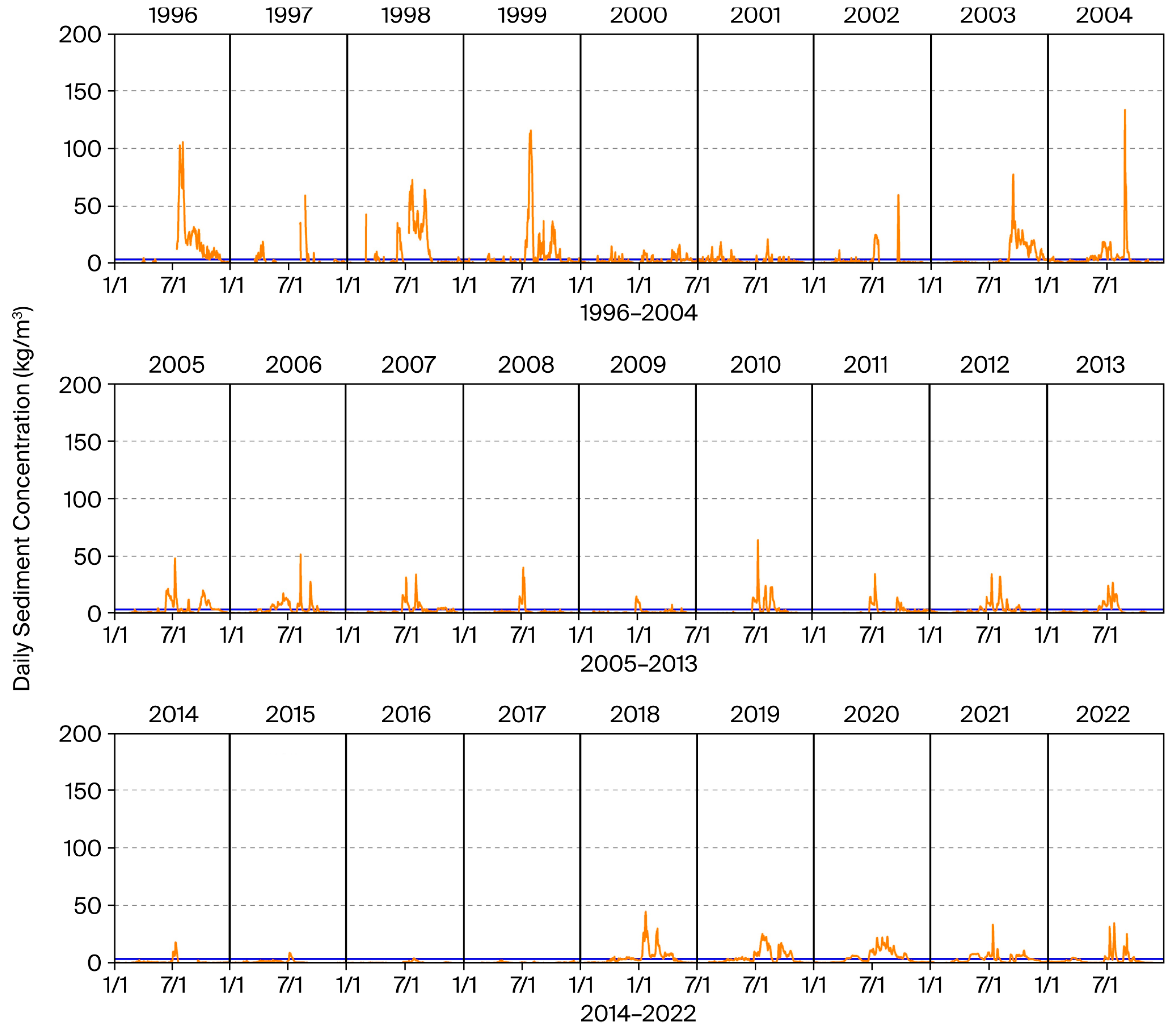
At the daily scale, the flow discharges observed at Lijin exhibited a highly complex temporal pattern from 1996 to 2022, with peaks mostly occurring from July to September and very low values near zero at other times of the year (Figure 8). The variations in the peaks and low values of the average daily flow discharges over the period from 1996 to 2022 exhibited a very irregular pattern from 1996 to 2002, then a considerably regular pattern from 2003 to 2015, followed by a pattern dominated by low values from 2016 to 2017, and finally, a considerably regular pattern from 2018 to 2022 (Figure 8). The average daily suspended sediment discharge observed at Lijin also exhibited a highly complex pattern from 1996 to 2022, with peaks occurring in an irregular pattern from 1996 to 2002, and then in a considerably regular pattern from 2003 to 2013, followed by a pattern dominated by low values from 2014 to 2017 and a much more regular pattern from 2018 to 2022 (Figure 9 and Figure 10). Based on the combined results of Relative Deviation ( R D t ) and Z-score ( Z t ) analyses, years with significant daily discharge fluctuations include 1996, 2006, 2007, 2008, 2009, 2013, 2018, 2019, 2020, 2021, and 2022. The most pronounced fluctuations in daily sediment discharge and daily sediment concentration both occurred in 2004.
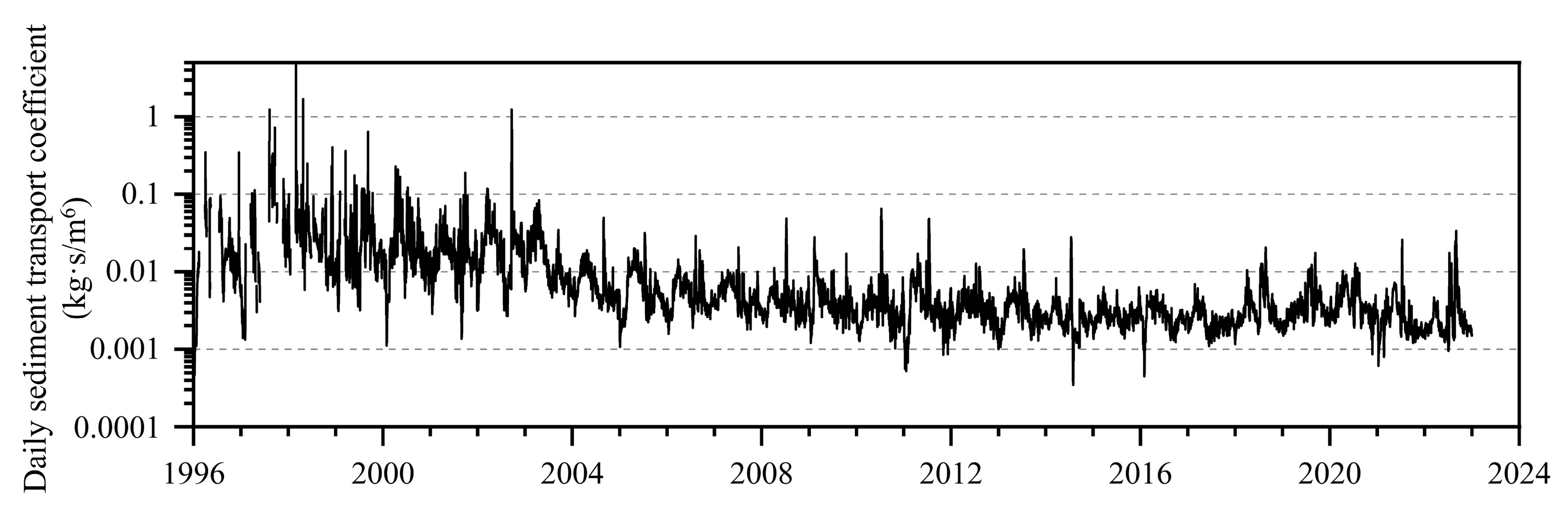
Under the same conditions, the greater the discharge, the greater the river’s dynamic strength and energy, and the stronger its sediment transport capacity. A larger sediment transport coefficient (ξ) indicates a higher amount of sediment corresponding to the same transport capacity, meaning the river may be in a supersaturated state and may experience sediment deposition; conversely, a smaller value suggests that the river may be in a sub-saturated state, leading to erosion. Figure 11 shows the daily sediment transport coefficient changes from 1996 to 2022. During this period, the sediment transport coefficient showed an overall declining trend. Before the full implementation of WSRS in 2003, the sediment transport coefficient was relatively high, with many days having a coefficient greater than 0.1. After WSRS, the coefficient decreased, with no days exceeding 0.1; only a few days exceeded 0.02, with the rest being below this value.
Based on the annual sediment transport coefficient, the study period can be divided into three distinct phases: the highest coefficients (>0.015) occurred between 1996 and 2004, moderate coefficients (0.01–0.015) were observed from 2005 to 2010, and the lowest coefficients (<0.01) characterized the period from 2011 to 2022 (Table 2).
In summary, the water and sediment discharge from the Yellow River to the sea (1997–2022) can be classified into distinct hydrological phases (Table 3) based on long-term averages * and the daily scale flood and sediment transport process. The estuary experienced successive shifts between low-flow–low-sediment type (phases: 1997–2002, 2008–2009, 2014–2017) and high-flow–high-sediment type (phases: 2003–2007, 2010–2013, 2018–2022). This complex variation, yet with periodically stable phase shifts in the water and sediment inputs, was caused by the construction and operation of the Xiaolangdi Reservoir, which has implemented the WSRS since 2002.

3.2.2. Relationship Between Mouth Channel Length and Water and Sediment Inputs

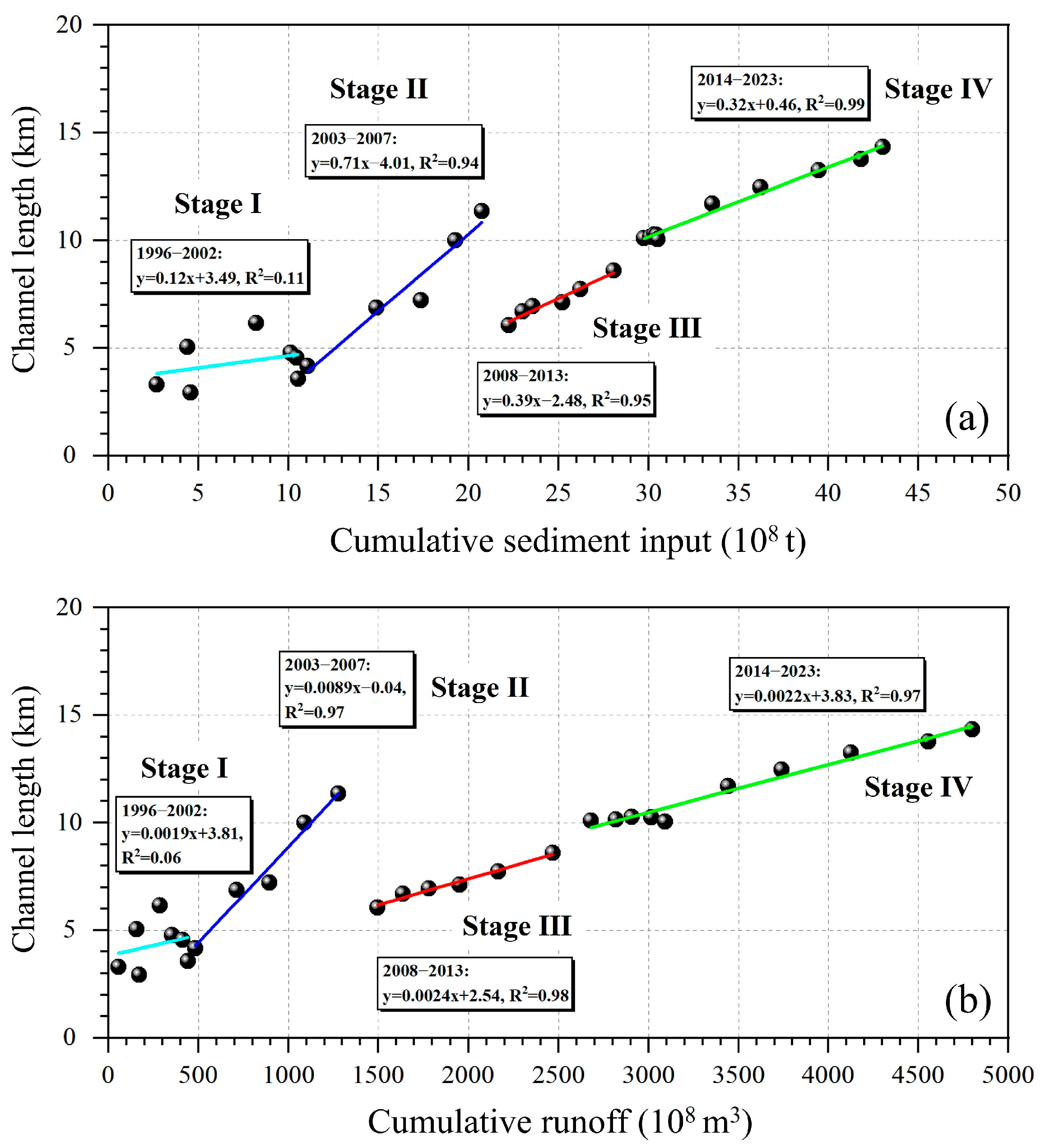
Using the lengths of the mouth channels extracted from the selected remote sensing images, it can be shown that at the annual scale, the average growth rates of the lengths of the mouth channels at the four stages are 0.12 km/year (Stage I, 1996–2002), 1.79 km/year (Stage II, 2003–2007), 0.68 km/year (Stage III, 2008–2013), and 0.47 km/year (Stage IV, 2014–2023) (Table 1). Clearly, the growth rate of the mouth channels was slowest during Stage I, reached its highest rate during Stage II, and then gradually decreased from Stage III. Importantly, when the growth rates are correlated with the changes in each stage’s water and sediment inputs, it can be observed that high water and high sediment inputs correspond to the higher rate, while low water and low sediment inputs correspond to the lower rate (Table 3).
Figure 12 shows the relationships between the average lengths of the mouth channel and water-sediment inputs in the four stages. The relationship between mouth channel length and cumulative sediment input was highly significant during Stages II, III, and IV (2003–2007: R2 = 0.94, p < 0.007; 2008–2013: R2 = 0.95, p < 0.007; 2014–2023: R2 = 0.99, p < 0.007), whereas no significant correlation was observed during Stage I (1996–2002: R2 = 0.11, p > 0.4). Likewise, the relationship between mouth channel length and cumulative runoff was highly significant during Stages II, III, and IV (2003–2007: R2 = 0.97, p < 0.007; 2008–2013: R2 = 0.98, p < 0.007; 2014–2023: R2 = 0.97, p < 0.007), whereas no significant correlation was observed during Stage I (1996–2002: R2 = 0.06, p > 0.4). The fitting results clearly show a substantially enhanced correlation starting from Stage II. These outcomes demonstrate that the implementation of the WSRS significantly strengthened the relationship between river progradation and water-sediment inputs. Among the three stages with high significance, Stage II (2003–2007) exhibits the steepest slope, indicating heightened sensitivity of river extension to changes in water-sediment supply during this period, where equivalent inputs yielded greater river growth. Coinciding with the initial stage of the WSRS implementation, these results suggest superior efficiency of the water-sediment regulation scheme during this period.
By combining the effects of cumulative runoff and cumulative sediment inputs on the mouth channel length, the following relationship can be obtained through regression analysis:
L C   =   0.19 Q S   +   Q W   +   2.83   ( R 2   =   0.84 )
where LC is the length of the mouth channels starting from 1996 (km); QS is the cumulative sediment input (in 108 tons); and QW is the cumulative runoff (in 108 m3).
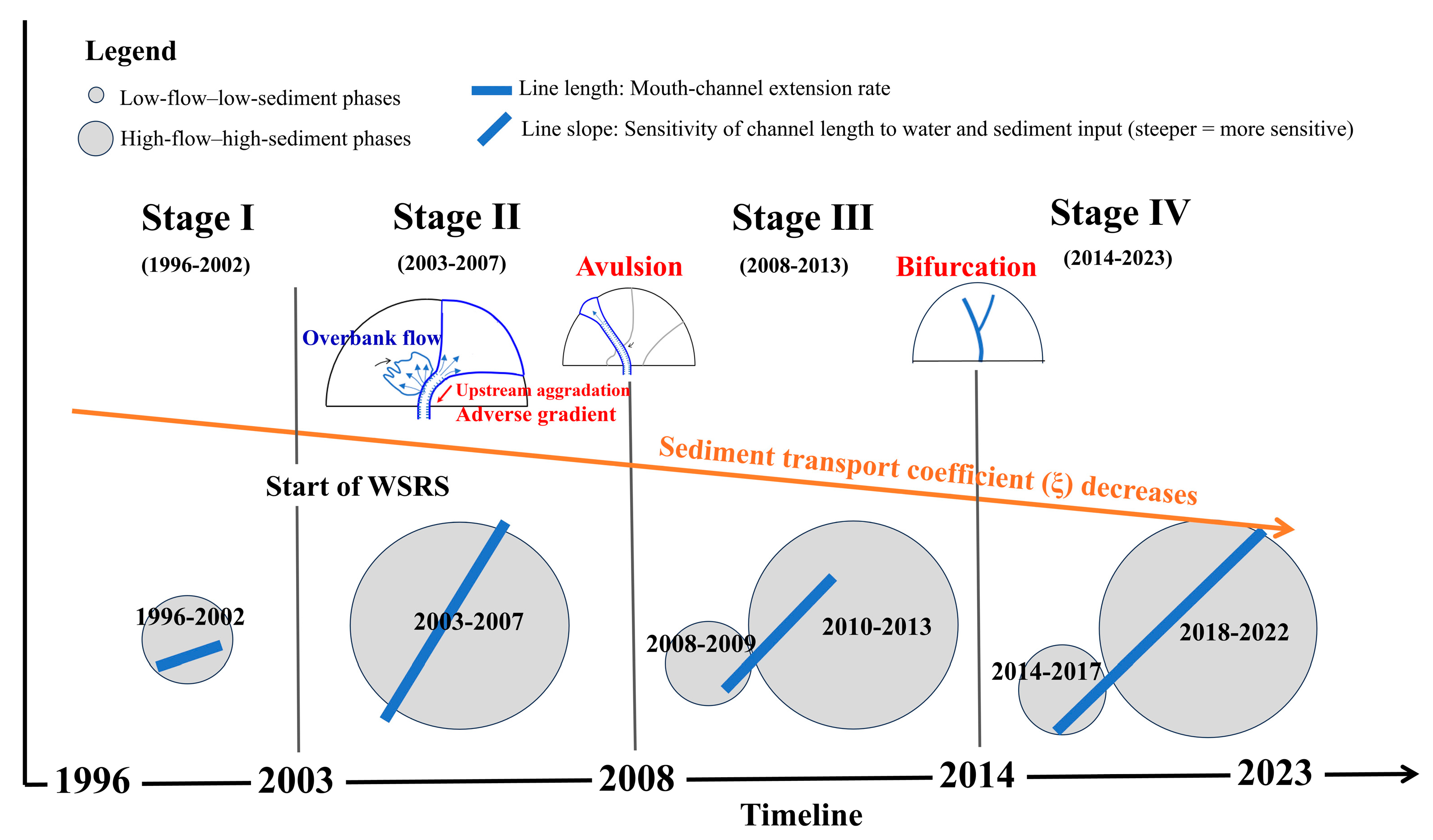
Based on the subsequent analysis of the results obtained, we developed a conceptual diagram to summarize the relationship between mouth channel morphological evolution and water-sediment dynamics (Figure 13). This diagram synthesizes the causal linkages between hydrological phases regulated by the WSRS and the corresponding morphological stages of the mouth channel. The evolution of the channel is divided into four distinct stages, each governed by specific water-sediment conditions, with transitions between stages primarily demarcated by key evolutionary nodes (avulsion and bifurcation). Channel elongation exhibits a positive correlation with water-sediment input, a relationship that became more pronounced following the WSRS implementation. In the early period of the WSRS, channel length demonstrated heightened sensitivity to variations in water and sediment inputs. Driven by shifts in water-sediment regimes, the channel progressively developed toward avulsion and bifurcation, ultimately exhibiting a trend of increasingly complex and networked evolution.

4. Discussion

4.1. Mechanism Underlying the Natural Avulsion

4.1.1. Avulsion Trigger

Although a natural avulsion occurred in 2008, our early detailed investigation of the remote sensing images clearly demonstrated that the avulsion underwent a long process beginning in 2004 (Figure 5). Consequently, analysis of the variation in water and sediment inputs at the daily scale showed that an extremely large daily sediment transport rate of 358 t/s occurred in 2004 (Figure 9), while the daily average flow discharge was close to 2680 m3/s (Figure 8). This is an unfavorable condition for sediment transport, and large sediment deposition was inevitable.
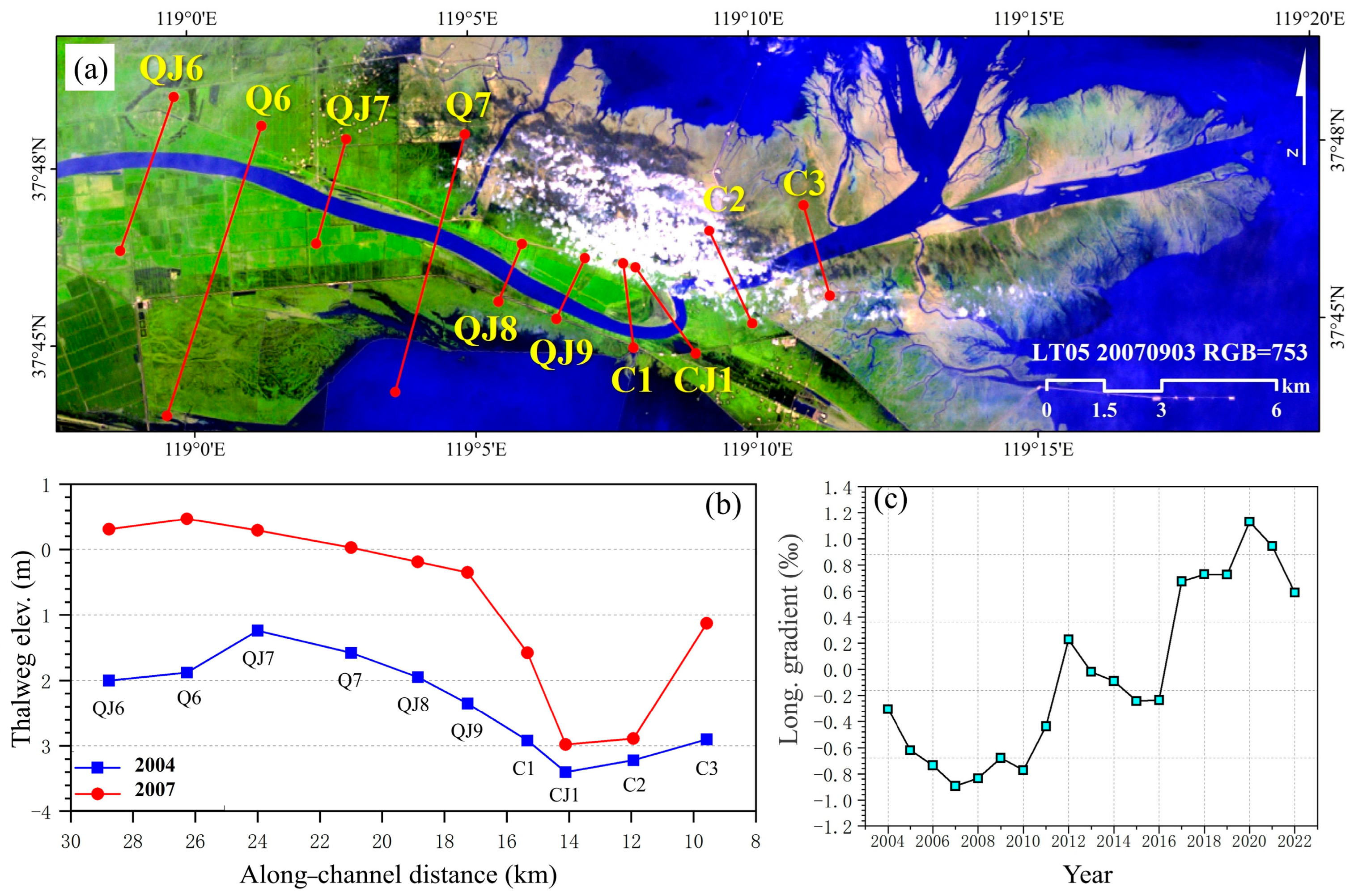
Figure 14 shows the longitudinal profile changes in the Yellow River mouth channels in 2004 and 2007, with the locations of cross-sections of QJ6, Q6, QJ7, Q7, QJ8, QJ9, C1, CJ1, C2, and C3 (Figure 14a). In 2004, the riverbed slope began to decrease at cross-section CJ1 and developed into an adverse slope downstream to C3 (Figure 14b). By 2007, rapid sediment deposition at C3 caused the adverse slope to increase significantly between C2 and C3 (Figure 14b). The longitudinal gradient between C2 and C3 from 2004 to 2022 is shown in Figure 14c. In 2004–2011, the longitudinal gradient value was negative, indicating an adverse slope condition. From 2004 to 2007, the gradient decreased continuously, reflecting a progressive intensification of the adverse slope. By 2007, the gradient reached −0.89‰, marking the peak of the adverse slope condition. The avulsion in 2008 created a new channel, which alleviated the adverse slope condition. The rapid increase in C3 elevation indicates significant sediment deposition in this area, raising the riverbed and water level.
When the surface slope decreases spatially, sediment transport capacity declines, causing sediment flux to converge, leading to sediment deposition in the channel [42]. In deltas, channel siltation induces aggradation upstream, and as this aggradation progresses to form a significant adverse gradient, avulsion occurs [46,56,57]. Most of the channel avulsions in fan deltas were caused by gradual channel siltation [58].
However, the extremely large sediment pulse of 358 t/s that occurred in 2004 also initiated aggradation upstream. As aggradation continued upstream from 2004 to 2007, the adverse gradient intensified, reaching a peak point in 2007, when the early mouth channel could no longer maintain stability, leading to overbank flow and culminating in an avulsion. Therefore, the mouth channel avulsion that occurred at the Yellow River mouth in 2007 resulted from the abrupt, pronounced sediment aggradation on the channel bed, in contrast to those caused by long-term progressive sediment accumulation observed elsewhere [56,57,58].
From 2002 to 2007, six consecutive water and sediment regulation cycles occurred in the Xiaolangdi Reservoir, resulting in approximately 420 million tons of sediment being flushed into the sea. Although these significantly reduced sediment deposition in the Lower Yellow River, they caused sediment accumulation in the mouth channels of the Yellow River. The accumulation led to upstream sediment deposition, which subsequently initiated the avulsion.

4.1.2. Effects of Flood Variability

The “trigger” for avulsions typically occurs when water flows out of the channel during floods (such as overbank flooding) or when erosion leads to levee breaches. Based on the above water and sediment data analysis, after the full implementation of water and sediment regulation in 2003, the flood period began to lengthen, and the frequency of floods increased, with peak discharges growing larger. The characteristics of flooding during the avulsion period from 2004 to 2009 were statistically analyzed (Table 4). Between 2004 and 2005, the river was primarily in the experimental phase of the WSRS, with flood peak discharges of 2900 m3/s, moderate floodwater flows, and a long flood duration (Figure 8 and Table 4). Studies have shown that more than 70% of the sediment was transported through medium and small floods (1000–3000 m3/s) [59]. The sediment peak in 2004 was particularly prominent, at 358 t/s—the highest of 1996–2022, far surpassing other peaks. Therefore, the sediment accumulation in the C2-C3 riverbed during this period was caused by a sudden sediment influx, which led to resistance and further sediment build-up with subsequent medium sediment transport. As a result, a reverse slope developed, ultimately leading to overflow and diversion. Additionally, the duration of the levee breach is a crucial factor in determining the frequency and location of channel collapse [46]. The repeated influence of floods during this period laid an important foundation for the subsequent avulsion.
In 2006–2007, hydrological regulation at the Xiaolangdi Reservoir created high flood peaks, with the peak in 2006 reaching 3600 m3/s (Figure 8 and Table 4). This flood completely breached the northern bank levee, and the overflow evolved into widespread gully flow (Figure 5d). The flood peak in 2007 was 200 m3/s higher than that in 2006, resulting in the formation of a well-shaped new channel in the overflow area (Figure 5h and Table 4).
Although 2008–2009 was defined as a low-flow and low-sediment period based on the annual water and sediment inputs, the only flood during this period was very short but intense. During the less than one-month-long flood, the flood peak was 4000 m3/s (Table 4). This caused the concentrated flow to become more concentrated, thus completing the formation of the new mouth channel by 2008 (Figure 5k,l). After the flood period, the old mouth channel was quickly blocked and abandoned, completing the diversion in 2008. The short but high peak flood in 2009 further stabilized the new mouth channel (Figure 5m–o and Table 4).

4.2. Development of Bifurcation and Avulsion in Relation to Water and Sediment Inputs

The difference between bifurcation and avulsion can be explained as follows: the 2008 avulsion was preceded by several years of overflow conditions (2004–2006) and a gradual channel selection process (2007–2008), ultimately leading to the formation of a new channel in 2008 and the complete abandonment of the old one. In contrast, the 2013 bifurcation occurred rapidly after that year’s flood season, with a new distributary branch being selected almost immediately. This process was comparatively faster, and remote sensing imagery shows that the original channel was not abandoned, resulting in a dual-channel outflow to the sea.
However, both major events—the 2008 avulsion and the 2013 bifurcation—occurred at similar hydrological turning points: the transition from a high-flow, high-sediment phase to a low-flow, low-sediment phase. Before 2008, floods were frequent; after the avulsion, flood frequency decreased, reflecting a shift toward a low-flow, low-sediment phase. Similarly, the 2013 bifurcation followed several years of frequent flooding, after which both water and sediment inputs declined sharply. High-flow and high-sediment periods triggered overflow and new channel formation, while low-flow, low-sediment periods provided favorable conditions for the channelization process.
The bifurcation in 2013 did not result in the siltation and abandonment of the original channel, whereas the original channel silted up and was eventually abandoned during natural avulsion in 2008. This is largely correlated to sediment supply. As shown in Figure 7b, the cumulative sediment load has slowed over time, and the annual sediment concentration has decreased since 2000. During the natural avulsion period, the sediment concentration, sediment transport coefficient, and sediment input were higher than during the bifurcation period. As shown in Table 3, in 2003–2007, the average sediment concentration was 11.27 kg/m3, the sediment transport coefficient was 0.018, and the average annual sediment input was 2.23 billion tons; in 2010–2013, the average sediment concentration was only 6.86 kg/m3, the sediment transport coefficient was 0.010, and the average sediment input was 1.54 billion tons.
The sediment transport coefficient showed a gradual decline from 1996 to 2022 (Figure 11). Table 2 showed that during the avulsion period (2004–2008), the coefficients ranged from 0.01 to 0.015, while during the bifurcation period (2013–2015), the values were below 0.01. This indicates that sediment transport capacity during the bifurcation period was lower than that during the avulsion period, and therefore, no significant sediment accumulation occurred in the outflow channel during the bifurcation. The magnitude of the sediment transport coefficient partially reflects the level of sediment concentration. As established in our preceding analyses, the sediment concentrations at the times of the avulsion and bifurcation events were distinctly different. Furthermore, the sediment concentration has exhibited an overall declining trend since 2000. Consequently, the bifurcation developed in the mouth channel of the Yellow River is the result of long-term reduction in sediment concentration.

4.3. Implications for Hydrological Regulation

The findings of this study underscore that the morphological evolution of the Yellow River’s mouth channel is a result of water-sediment inputs under human regulation. This understanding yields transferable insights for the hydrological regulation of river-dominated deltas worldwide. The crisis of the Mississippi River Delta, for instance, exemplifies the consequences of sediment starvation due to upstream impoundments, leading to catastrophic land loss and forcing the implementation of costly engineered sediment diversions to mimic natural land-building processes [10,60]. The morphologies of the Mississippi and Yellow River Deltas differ dramatically, mainly due to significant differences in sediment quantities and properties [61,62]; globally, the Yellow River has long been the third-largest in terms of sediment load transported to the sea [12]. It has frequently encountered the risks of long-term sediment deposition-induced levee breaching, which ultimately results in avulsion. The comparison crystallizes a central tenet of sustainable delta management: the primary goal of hydrological regulation should encompass a strategic management of sediment flux, rather than flow discharge alone. The delivery of highly intense sediment pulses to the estuary must be carefully evaluated in the hydrological regulation strategy. Simultaneously, fostering a sustained long-term regime of low sediment concentration, as evidenced by the post-2014 bifurcation that occurred at the Yellow River mouth, may be favorable for estuarine stability. Looking forward, management must evolve from annual water-sediment balance to sub-seasonal, even daily, hydrological regulation. Such a strategy is indispensable for balancing the demands of regional flood safety, sediment flushing from reservoirs, channel stability, and deltaic sustainability in an era of rising sea levels [63,64].

5. Conclusions

This study investigated how the morphological changes in the Yellow River mouth channels have responded to changes in water-sediment processes resulting from human impacts since 1996, using Landsat imagery, hydrological data, and field measurements at annual and daily scales, including avulsion and bifurcation processes. The main findings are as follows:
(1)
Since 1996, the mouth channels of the Yellow River have undergone a systematic geomorphic evolution, transitioning from initial progradation to a major natural avulsion, and ultimately developing into a multi-distributary system discharging simultaneously into the sea. Four distinct evolutionary stages have been identified: Stage I (1996–2002) was marked by slow channel extension. Stage II (2003–2007) was characterized by rapid channel extension; at the same time, overbank flow occurred, setting the stage for the complete avulsion in 2008. Stage III (2008–2013) experienced gradual channel adjustment and elongation along the new direction. Finally, Stage IV (2014–2023) resulted in channel bifurcation, forming a multi-channel discharging system.
(2)
The avulsion that occurred in 2004–2008 was initiated by extremely high sediment input over a short time in 2004, reaching 358 t/s. The significant flooding into the estuary from 2005 to 2007 also led to the transportation of large amounts of sediment over a short period, accelerating channel progradation and resulting in upstream aggradation. In contrast, the long-term hydrological regime of low sediment concentration enabled the development of a bifurcating system at the mouth of the Yellow River.
These findings demonstrate that the release of water and sediment from the Xiaolangdi Reservoir with varying sediment concentrations elicited distinct morphological responses in the Yellow River estuary, underscoring the need for carefully calibrated hydrological regulation. However, several limitations should be acknowledged, pointing to avenues for future research. Although the mouth channel planform generalization method proposed in our study is innovative, the inherent sinuosity of river channels varies across different periods, introducing an element of subjectivity into the determination of deflection angles and requiring further research. Furthermore, our analysis did not explicitly account for variations in sediment grain size, which is a crucial control on transportability and deposition. The role of extreme short-term tidal and storm events in reworking the delivered sediment at the river mouth was not investigated, potentially overlooking secondary marine forcing agents that modulate the final morphological outcome.
Moreover, our analysis of the avulsion process and mechanism lacks validation from higher-resolution bathymetric data, as it primarily relies on planimetric (2D) dynamics derived from satellite imagery. The interpretation of key processes, such as the development of the adverse slope preceding the 2008 avulsion, depended on cross-sectional data from a limited number of fixed monitoring sites. The absence of continuous, high-resolution multibeam bathymetric surveys across the entire subaqueous delta constrained our ability to fully quantify 3D sediment redistribution patterns. Due to the challenging accessibility of this area, direct field measurements are extremely difficult to obtain. We hope that future studies can overcome this limitation by employing advanced monitoring techniques to acquire such data, enabling further modeling and quantitative simulation of the natural avulsion process in addition to laboratory experiments.

Author Contributions

Conceptualization, J.Z. and H.Q.H.; methodology, J.Z., H.Q.H. and W.H.; software, J.Z., W.H. and X.Z. (Xiao Zhao); formal analysis, J.Z. and W.H.; investigation, J.Z. and H.Q.H.; resources, X.Z. (Xueqin Zhang); data curation, J.Z., X.Z. (Xiao Zhao) and X.Z. (Xueqin Zhang); writing—original draft preparation, J.Z.; writing—review and editing, J.Z., H.Q.H. and G.-A.Y.; visualization, J.Z.; supervision, H.Q.H.; project administration, H.Q.H. and G.-A.Y.; funding acquisition, H.Q.H. and G.-A.Y. All authors have read and agreed to the published version of the manuscript.

Funding

This work was supported financially by the National Natural Science Foundation of China (Grant Nos. U2243220, 42371015) and “CUG Scholar” Scientific Research Funds at China University of Geosciences (Wuhan) (Project No. 2022166).

Data Availability Statement

The Landsat TM/ETM/OLI data were downloaded from the United States Geological Survey (https://glovis.usgs.gov/, accessed on 30 October 2025). Part of the measured hydrological data can be obtained from the Yellow River Conservancy Commission of the Ministry of Water Resources website (http://www.yrcc.gov.cn/, accessed on 30 October 2025).

Acknowledgments

The authors would like to thank the Yellow River Water Conservancy Commission for permission to access the measured hydrological and river cross-sectional data.

Conflicts of Interest

The authors declare no conflicts of interest.

Abbreviations

The following abbreviations are used in this manuscript:
WSRSWater-Sediment Regulation Scheme
YRCCYellow River Conservancy Commission
YRDYellow River Delta

References

  1. Mikhailova, M.V. Transformation of the Ebro River Delta under the impact of intense human-induced reduction of sediment and runoff. Water Resour. 2003, 30, 370–378. [Google Scholar] [CrossRef]
  2. Syvitski, J.P.M.; Kettner, A.J.; Overeem, I.; Hutton, E.W.; Hannon, M.T.; Brakenridge, G.R.; Day, J.; Vörösmarty, C.; Saito, Y.; Giosan, L.; et al. Sinking deltas due to human activities. Nat. Geosci. 2009, 2, 681–686. [Google Scholar] [CrossRef]
  3. Syvitski, J.P.M.; Voeroesmarty, C.J.; Kettner, A.J.; Green, P. Impact of humans on the flux of terrestrial sediment to the global coastal ocean. Science 2005, 308, 376–380. [Google Scholar] [CrossRef]
  4. Giosan, L.; Syvitski, J.; Constantinescu, S.; Day, J. Climate change: Protect the world’s deltas. Nature 2014, 516, 31–33. [Google Scholar]
  5. Day, J.W.; Giosan, L. Geomorphology: Survive or subside. Nat. Geosci. 2008, 1, 156–157. [Google Scholar] [CrossRef]
  6. Best, J.; Darby, S.E. The pace of human-induced change in large rivers: Stresses, resilience, and vulnerability to extreme events. One Earth 2020, 2, 510–514. [Google Scholar] [CrossRef]
  7. Zhou, Y.; Huang, H.Q.; Nanson, G.C.; Huang, C.; Liu, G. Progradation of the Yellow (Huanghe) River delta in response to the implementation of a basin-scale water regulation program. Geomorphology 2015, 243, 65–74. [Google Scholar] [CrossRef]
  8. Zhou, Y.; Huang, H.Q.; Ran, L.; Shi, C.; Su, T. Hydrological controls on the evolution of the Yellow River Delta: An evaluation of the relationship since the Xiaolangdi Reservoir became fully operational. Hydrol. Process. 2018, 32, 3633–3649. [Google Scholar] [CrossRef]
  9. Li, J.; Ganti, V.; Li, C.; Wei, H. Upstream migration of avulsion sites on lowland deltas with river-mouth retreat. Earth Planet. Sci. Lett. 2022, 577, 117270. [Google Scholar] [CrossRef]
  10. Blum, M.D.; Roberts, H.H. Drowning of the Mississippi Delta due to insufficient sediment supply and global sea-level rise. Nat. Geosci. 2009, 2, 488–491. [Google Scholar] [CrossRef]
  11. Anthony, E.J.; Brunier, G.; Besset, M.; Goichot, M.; Dussouillez, P.; Nguyen, V.L. Linking rapid erosion of the Mekong River delta to human activities. Sci. Rep. 2015, 5, 14745. [Google Scholar] [CrossRef]
  12. Milliman, J.D.; Syvitski, J.P.M. Geomorphic/Tectonic Control of Sediment Discharge to the Ocean: The Importance of Small Mountainous Rivers. J. Geol. 1992, 100, 525–544. [Google Scholar] [CrossRef]
  13. Wang, Z.Y.; Liang, Z.Y. Dynamic characteristics of the Yellow River mouth. Earth Surf. Process. Landf. 2000, 25, 765–782. [Google Scholar] [CrossRef]
  14. Xu, J.X. Response of land accretion of the Yellow River delta to global climate change and human activity. Quat. Int. 2008, 186, 4–11. [Google Scholar] [CrossRef]
  15. Zheng, S.; Han, S.; Tan, G.; Xia, J.; Wu, B.; Wang, K.; Edmonds, D.A. Morphological adjustment of the Qingshuigou channel on the Yellow River Delta and factors controlling its avulsion. Catena 2018, 166, 44–55. [Google Scholar] [CrossRef]
  16. Ganti, V.; Chu, Z.; Lamb, M.P.; Nittrouer, J.A.; Parker, G. Testing morphodynamic controls on the location and frequency of river avulsions on fans versus deltas: Huanghe (Yellow River), China. Geophys. Res. Lett. 2014, 41, 7882–7890. [Google Scholar] [CrossRef]
  17. Wang, H.; Wu, X.; Bi, N.; Li, S.; Yuan, P.; Wang, A.; Syvitski, J.P.; Saito, Y.; Yang, Z.; Liu, S.; et al. Impacts of the dam-orientated water-sediment regulation scheme on the lower reaches and delta of the Yellow River (Huanghe): A review. Glob. Planet. Change 2017, 157, 93–113. [Google Scholar] [CrossRef]
  18. Wu, X.; Bi, N.; Xu, J.; Nittrouer, J.A.; Yang, Z.; Saito, Y.; Wang, H. Stepwise morphological evolution of the active Yellow River (Huanghe) delta lobe (1976–2013): Dominant roles of riverine discharge and sediment grain size. Geomorphology 2017, 292, 115–127. [Google Scholar] [CrossRef]
  19. Kong, D.; Miao, C.; Zheng, H.; Gou, J. Dynamic evolution characteristics of the Yellow River Delta in response to estuary diversion and a water-sediment regulation scheme. J. Hydrol. 2023, 627, 130447. [Google Scholar] [CrossRef]
  20. Fu, Y.; Bellerby, R.G.; Ji, H.; Chen, S.; Fan, Y.; Li, P. Impacts of riverine floods on morphodynamics in the Yellow River Delta. Water 2023, 15, 1568. [Google Scholar] [CrossRef]
  21. Chu, Z.X.; Sun, X.G.; Zhai, S.K.; Xu, K.H. Changing pattern of accretion/erosion of the modern Yellow River (Huanghe) subaerial delta, China: Based on remote sensing images. Mar. Geol. 2006, 227, 13–30. [Google Scholar] [CrossRef]
  22. Wang, H.; Bi, N.; Saito, Y.; Wang, Y.; Sun, X.; Zhang, J.; Yang, Z. Recent changes in sediment delivery by the Huanghe (Yellow River) to the sea: Causes and environmental implications in its estuary. J. Hydrol. 2010, 391, 302–313. [Google Scholar] [CrossRef]
  23. Bi, N.; Wang, H.; Yang, Z. Recent changes in the erosion–accretion patterns of the active Huanghe (Yellow River) delta lobe caused by human activities. Cont. Shelf Res. 2014, 90, 70–78. [Google Scholar] [CrossRef]
  24. Ji, H.; Pan, S.; Chen, S. Impact of river discharge on hydrodynamics and sedimentary processes at Yellow River Delta. Mar. Geol. 2020, 425, 106210. [Google Scholar] [CrossRef]
  25. Jiang, C.; Pan, S.; Chen, S. Recent morphological changes of the Yellow River (Huanghe) submerged delta: Causes and environmental implications. Geomorphology 2017, 293, 93–107. [Google Scholar] [CrossRef]
  26. Fu, Y.; Chen, S.; Ji, H.; Fan, Y.; Li, P. The modern Yellow River Delta in transition: Causes and implications. Mar. Geol. 2021, 436, 106476. [Google Scholar] [CrossRef]
  27. Fan, Y.; Zhang, S.; Du, X.; Wang, G.; Yu, S.; Dou, S.; Chen, S.; Ji, H.; Li, P.; Liu, F. The effects of flow pulses on river plumes in the Yellow River Estuary, in spring. J. Hydroinformatics 2023, 25, 36–50. [Google Scholar] [CrossRef]
  28. Wu, X.; Fan, Y.; Wang, H.; Bi, N.; Yang, Z.; Xu, C. Geomorphological responses of the lower river channel and delta to interruption of reservoir regulation in the Yellow River, 2015–2017. Chin. Sci. Bull. 2021, 66, 3059–3070, (In Chinese with English abstract). [Google Scholar] [CrossRef]
  29. Ji, H.; Chen, S.; Pan, S.; Xu, C.; Tian, Y.; Li, P.; Liu, Q.; Chen, L. Fluvial sediment source to sink transfer at the Yellow River Delta: Quantifications, causes, and environmental impacts. J. Hydrol. 2022, 608, 127622. [Google Scholar] [CrossRef]
  30. Wang, H.; Yang, Z.; Saito, Y.; Liu, J.P.; Sun, X.; Wang, Y. Stepwise decreases of the Huanghe (Yellow River) sediment load (1950–2005): Impacts of climate change and human activities. Glob. Planet. Change 2007, 57, 331–354. [Google Scholar] [CrossRef]
  31. Wang, H.; Yang, Z.; Saito, Y.; Liu, J.P.; Sun, X. Interannual and seasonal variation of the Huanghe (Yellow River) water discharge over the past 50 years: Connections to impacts from ENSO events and dams. Glob. Planet. Change 2006, 50, 212–225. [Google Scholar] [CrossRef]
  32. Fan, Y.; Chen, S.; Zhao, B.; Yu, S.; Ji, H.; Jiang, C. Monitoring tidal flat dynamics affected by human activities along an eroded coast in the Yellow River Delta, China. Environ. Monit. Assess. 2018, 190, 396. [Google Scholar] [CrossRef]
  33. Peng, J.; Chen, S. Response of delta sedimentary system to variation of water and sediment in the Yellow River over past six decades. J. Geogr. Sci. 2010, 20, 613–627. [Google Scholar] [CrossRef]
  34. Wu, X.; Wang, H.; Bi, N.; Nittrouer, J.A.; Xu, J.; Cong, S.; Carlson, B.; Lu, T.; Li, Z. Evolution of a tide-dominated abandoned channel: A case of the abandoned Qingshuigou course, Yellow River. Mar. Geol. 2020, 422, 106116. [Google Scholar] [CrossRef]
  35. Wu, X.; Wang, H.; Saito, Y.; Syvitski, J.; Bi, N.; Yang, Z.; Xu, J.; Guan, W. Boosting riverine sediment by artificial flood in the Yellow River and the implication for delta restoration. Mar. Geol. 2022, 448, 106816. [Google Scholar] [CrossRef]
  36. Han, S.; Rice, S.; Tan, G.; Wang, K.; Zheng, S. Geomorphic evolution of the Qingshuigou channel of the Yellow River Delta in response to changing water and sediment regimes and human interventions. Earth Surf. Process. Landf. 2020, 45, 2350–2364. [Google Scholar]
  37. Xu, H. Modification of normalised difference water index (NDWI) to enhance open water features in remotely sensed imagery. Int. J. Remote Sens. 2006, 27, 3025–3033. [Google Scholar]
  38. Tucker, C.J. Red and photographic infrared linear combinations for monitoring vegetation. Remote Sens. Environ. 1979, 8, 127–150. [Google Scholar] [CrossRef]
  39. Zeng, Y.; Hao, D.; Huete, A.; Dechant, B.; Berry, J.; Chen, J.M.; Joiner, J.; Frankenberg, C.; Bond-Lamberty, B.; Ryu, Y.; et al. Optical vegetation indices for monitoring terrestrial ecosystems globally. Nat. Rev. Earth Environ. 2022, 3, 477–493. [Google Scholar] [CrossRef]
  40. Qin, Y.S.; Zhao, Y.Y.; Zhao, S.L. Geology of Bohai Sea; Science Press: Beijing, China, 1985; pp. 61–66. (In Chinese) [Google Scholar]
  41. Slingerland, R.; Smith, N.D. River avulsions and their deposits. Annu. Rev. Earth Planet. Sci. 2004, 32, 257–285. [Google Scholar] [CrossRef]
  42. Mohrig, D.; Heller, P.L.; Paola, C.; Lyons, W.J. Interpreting avulsion process from ancient alluvial sequences: Guadalope-Matarranya system (northern Spain) and Wasatch Formation (western Colorado). Geol. Soc. Am. Bull. 2000, 112, 1787–1803. [Google Scholar]
  43. Jerolmack, D.J. Conceptual framework for assessing the response of delta channel networks to Holocene sea level rise. Quat. Sci. Rev. 2009, 28, 1786–1800. [Google Scholar] [CrossRef]
  44. Reitz, M.D.; Jerolmack, D.J. Experimental alluvial fan evolution: Channel dynamics, slope controls, and shoreline growth. J. Geophys. Res. Earth Surf. 2012, 117, F02021. [Google Scholar] [CrossRef]
  45. Van Dijk, M.; Kleinhans, M.G.; Postma, G.; Kraal, E. Contrasting morphodynamics in alluvial fans and fan deltas: Effect of the downstream boundary. Sedimentology 2012, 59, 2125–2145. [Google Scholar] [CrossRef]
  46. Edmonds, D.A.; Hoyal, D.C.; Sheets, B.A.; Slingerland, R.L. Predicting delta avulsions: Implications for coastal wetland restoration. Geology 2009, 37, 759–762. [Google Scholar] [CrossRef]
  47. Hajek, E.A.; Heller, P.L.; Schur, E.L. Field test of autogenic control on alluvial stratigraphy (Ferris Formation, Upper Cretaceous-Paleogene, Wyoming). Geol. Soc. Am. Bull. 2012, 124, 1898–1912. [Google Scholar] [CrossRef]
  48. Parker, G.; Paola, C.; Whipple, K.X.; Mohrig, D. Alluvial fans formed by channelized fluvial and sheet flow. I: Theory. J. Hydraul. Eng. 1998, 124, 985–995. [Google Scholar] [CrossRef]
  49. Chadwick, A.J.; Lamb, M.P.; Moodie, A.J.; Parker, G.; Nittrouer, J.A. Origin of a preferential avulsion node on lowland river deltas. Geophys. Res. Lett. 2019, 46, 4267–4277. [Google Scholar] [CrossRef]
  50. Chatanantavet, P.; Lamb, M.P.; Nittrouer, J.A. Backwater controls of avulsion location on deltas. Geophys. Res. Lett. 2012, 39, L01402. [Google Scholar] [CrossRef]
  51. Ganti, V.; Chadwick, A.J.; Hassenruck-Gudipati, H.J.; Fuller, B.M.; Lamb, M.P. Experimental river delta size set by multiple floods and backwater hydrodynamics. Sci. Adv. 2016, 2, e1501768. [Google Scholar] [CrossRef]
  52. Zheng, S.; Edmonds, D.A.; Wu, B.; Han, S. Backwater controls on the evolution and avulsion of the Qingshuigou channel on the Yellow River Delta. Geomorphology 2019, 333, 137–151. [Google Scholar] [CrossRef]
  53. Wu, B.; Wang, G.; Xia, J.; Fu, X.; Zhang, Y. Response of bankfull discharge to discharge and sediment load in the Lower Yellow River. Geomorphology 2008, 100, 366–376. [Google Scholar] [CrossRef]
  54. Long, Y.; Liang, G.; Zhang, Y.; Shen, G.; Zhang, L.; Cheng, L. Range survey of deposition in the lower Yellow River. Int. J. Sediment Res. 2002, 17, 91–101. [Google Scholar]
  55. Wang, S.; Fu, B.; Piao, S.; Lü, Y.; Ciais, P.; Feng, X.; Wang, Y. Reduced sediment transport in the Yellow River due to anthropogenic changes. Nat. Geosci. 2016, 9, 38–41. [Google Scholar] [CrossRef]
  56. de Haas, T.; van den Berg, W.; Braat, L.; Kleinhans, M.G. Autogenic avulsion, channelization and backfilling dynamics of debris-flow fans. Sedimentology 2016, 63, 1596–1619. [Google Scholar] [CrossRef]
  57. Hoyal, D.; Sheets, B.A. Morphodynamic evolution of experimental cohesive deltas. J. Geophys. Res. Earth Surf. 2009, 114, F02009. [Google Scholar] [CrossRef]
  58. de Haas, T.; Densmore, A.L.; den Hond, T.; Cox, N.J. Fan-surface evidence for debris-flow avulsion controls and probabilities, Saline Valley, California. J. Geophys. Res. Earth Surf. 2019, 124, 1118–1138. [Google Scholar] [CrossRef]
  59. Zheng, S.; Zhang, X.L.; Wu, B.S.; Hou, S.Z. Asynchronous movement of water-sediment and the sediment delivery ratio of the Xiaolangdi Reservoir. J. Sediment Res. 2021, 46, 1–8, (In Chinese with English abstract). [Google Scholar]
  60. Paola, C.; Twilley, R.R.; Edmonds, D.A.; Kim, W.; Mohrig, D.; Parker, G.; Viparelli, E.; Voller, V.R. Natural processes in delta restoration: Application to the Mississippi Delta. Annu. Rev. Mar. Sci. 2011, 3, 67–91. [Google Scholar] [CrossRef]
  61. Syvitski, J.P.M.; Saito, Y. Morphodynamics of deltas under the influence of humans. Glob. Planet. Change 2007, 57, 261–282. [Google Scholar] [CrossRef]
  62. Edmonds, D.A.; Slingerland, R.L. Significant effect of sediment cohesion on delta morphology. Nat. Geosci. 2010, 3, 105–109. [Google Scholar] [CrossRef]
  63. Nittrouer, J.A.; Viparelli, E. Sand as a stable and sustainable resource for nourishing the Mississippi River delta. Nat. Geosci. 2014, 7, 350–354. [Google Scholar] [CrossRef]
  64. Wang, H.; Saito, Y.; Zhang, Y.; Bi, N.; Sun, X.; Yang, Z. Recent changes of sediment flux to the western Pacific Ocean from major rivers in East and Southeast Asia. Earth-Sci. Rev. 2011, 108, 80–100. [Google Scholar] [CrossRef]
Figure 1. Map of the study area: (a) The drainage basin of the Yellow River in China. (b) The current and old mouth channels of the Yellow River.
Hydrology 12 00335 g001
Figure 2. Schematic diagram of the method for analyzing mouth channel deflection.
Hydrology 12 00335 g002
Figure 3. Results of remote sensing interpretation of the variations in the Yellow River mouth channel from 1996 to 2023.
Hydrology 12 00335 g003
Figure 4. Evolution of the Yellow River mouth channels (1996–2023): (a) Remote sensing interpretation: annual variation; (b) generalized channel planforms: variation at different periods and stages.
Hydrology 12 00335 g004
Figure 5. Satellite-recorded development of northern overbank flow and subsequent channel avulsion from 2004 to 2009: (a) Initial overbank flow; (b,c) overbank flow; (dg) widespread gully flow; (hj) new branch formation; (k,l) new channel selection and old channel abandonment; (mo) new channel formation.
Hydrology 12 00335 g005
Figure 6. Satellite-recorded mouth channel bifurcation process in 2013–2015: (a,b) Overflow developed at the river mouth during the first flood in 2013; (ce) the second flood maintained the overflow state; (fh) after the 2013 flood season, a bifurcation gradually emerged.
Hydrology 12 00335 g006
Figure 7. Variations in runoff and sediment load measured at Lijin station from 1976 to 2022: (a) Annual runoff and sediment load; (b) annual cumulative sediment load and annual sediment concentration.
Hydrology 12 00335 g007
Figure 8. Daily average flow discharge (m3/s) measured at Lijin station (1996–2022). The red straight line represents the average value (561 m3/s).
Hydrology 12 00335 g008
Figure 9. Daily average sediment discharge (t/s) measured at Lijin station (1996–2022). The red straight line represents the average value (5.05 t/s).
Hydrology 12 00335 g009
Figure 10. Daily average sediment concentration (kg/m3) measured at Lijin station (1996–2022). The red straight line represents the average value (3.85 kg/m3).
Hydrology 12 00335 g010
Figure 11. Daily sediment transport coefficient (ξ) at Lijin station in 1996–2022 (the x-axis uses a logarithmic scale).
Hydrology 12 00335 g011
Figure 12. Relationships between mouth channel length and cumulative sediment input and cumulative runoff at four stages: (a) Relationships between mouth channel length and cumulative sediment input at Stages I, II, III, and IV; (b) relationships between mouth channel length and cumulative runoff in Stages I, II, III, and IV.
Hydrology 12 00335 g012
Figure 13. A conceptual synthesis diagram of the hydro-morphodynamic evolution in the Yellow River mouth channel (1996–2023) in relation to water-sediment regimes.
Hydrology 12 00335 g013
Figure 14. Riverbed variations in the mouth channel of the Yellow River: (a) Locations of channel cross-sections QJ6 to C3 along a downstream direction. (b) Thalweg elevations of cross-sections QJ6 to C3 measured before the 2004 flood season and after the 2007 flood season, respectively; (c) Longitudinal gradient of riverbed slope between cross-sections C2 and C3 (2004–2022).
Hydrology 12 00335 g014
Table 1. Characteristics of the evolutionary process of the mouth channels from 1996 to 2023.
StagePeriodChannel Length (km)Average Length (km)Extension Rate (km/Year)
Stage I19963.314.020.12
1997–19983.99
1999–20024.77
Stage II2003–20045.527.521.79
2005–20079.52
Stage III2008–20106.577.20.68
2011–20137.82
Stage IV2014–201810.1612.230.47
2019–202112.47
2022–202314.06
Table 2. The magnitude of the sediment transport coefficient (ξ) over different periods.
ξ > 0.015ξ   [ 0.01 ,   0.015 ] ξ < 0.01
1996–20042005–20102011–2022
Table 3. Characteristics of water-sediment coupling phases classified according to the measurements at Lijin (1997–2022) and the corresponding mouth channel evolution stages.
PhaseType *Patterns of Flood EventsSediment Load (108 t)Runoff (108 m3)Sediment Concentration (kg/m3)Sediment Transport CoefficientMouth Channel Growth Rate (km/Year)Mouth Channel Evolution StageR2 of CS, CR **
1997–2002LowInterrupted1.1255.0115.520.089−0.15Stage I0.11, 0.06
2003–2007HighMulti2.23198.811.270.0181.79Stage II0.94, 0.97
2008–2009LowSingle0.67139.254.760.0110.45Stage III0.95, 0.98
2010–2013HighMulti1.54224.146.860.0100.79
2014–2017LowSingle0.2104.831.790.005−0.01Stage IV0.99, 0.97
2018–2022HighMulti2.5341.537.320.0070.86
* The long-term averages refer to the mean annual runoff (178 billion m3) and sediment load (1.49 million tons) during 1997–2022. The years with annual average values exceeding these benchmarks are classified as high-flow-high-sediment phases; otherwise, they are considered low-flow-low-sediment phases. Since channel length measurements in this study were taken prior to the flood season, the observed channel length reflects the cumulative effects of water and sediment conditions from the preceding years. The annual water and sediment supply was calculated in terms of the acquisition dates of remote sensing imagery, not the calendar year. ** R2 is the coefficient of determination, and R2 of CS (cumulative sediment input) and R2 of CR (cumulative runoff) were calculated by correlating mouth channel length with CS and CR in the four stages, respectively. Significance test p value > 0.4 (Stage I), p value < 0.007 (Stage II, III, IV).
Table 4. Flood characteristics in relation to the avulsing process from 2004 to 2009.
YearFlood Duration (Months)Number of FloodsFlood Peak Discharge (m3/s)Avulsing Process
20043.542900Overbank flow (Figure 5a)
2005552900Overbank flow (Figure 5b,c)
20064.533600Widespread gully flow (Figure 5d–f)
20072.533800New branch formation (Figure 5h,i)
20080.714000New channel selection (Figure 5k,l)
20090.613700Channelized (Figure 5n,o)
Disclaimer/Publisher’s Note: The statements, opinions and data contained in all publications are solely those of the individual author(s) and contributor(s) and not of MDPI and/or the editor(s). MDPI and/or the editor(s) disclaim responsibility for any injury to people or property resulting from any ideas, methods, instructions or products referred to in the content.