Article

Liquiritin and Liquiritigenin Induce Melanogenesis via Enhancement of p38 and PKA Signaling Pathways

1
Department of Pharmacognosy, Faculty of Pharmaceutical Sciences, Nagasaki International University, 2825-7 Huis Ten Bosch, Sasebo, Nagasaki 859-3298, Japan
2
Department of Health and Nutrition, Faculty of Health Management, Nagasaki International University, 2825-7 Huis Ten Bosch, Sasebo, Nagasaki 859-3298, Japan
*
Author to whom correspondence should be addressed.
Medicines 2019, 6(2), 68; https://doi.org/10.3390/medicines6020068

Submission received: 21 May 2019 / Revised: 17 June 2019 / Accepted: 21 June 2019 / Published: 22 June 2019
(This article belongs to the Special Issue Plant-Derived Medicines and Biological Activity Evaluation)

Abstract

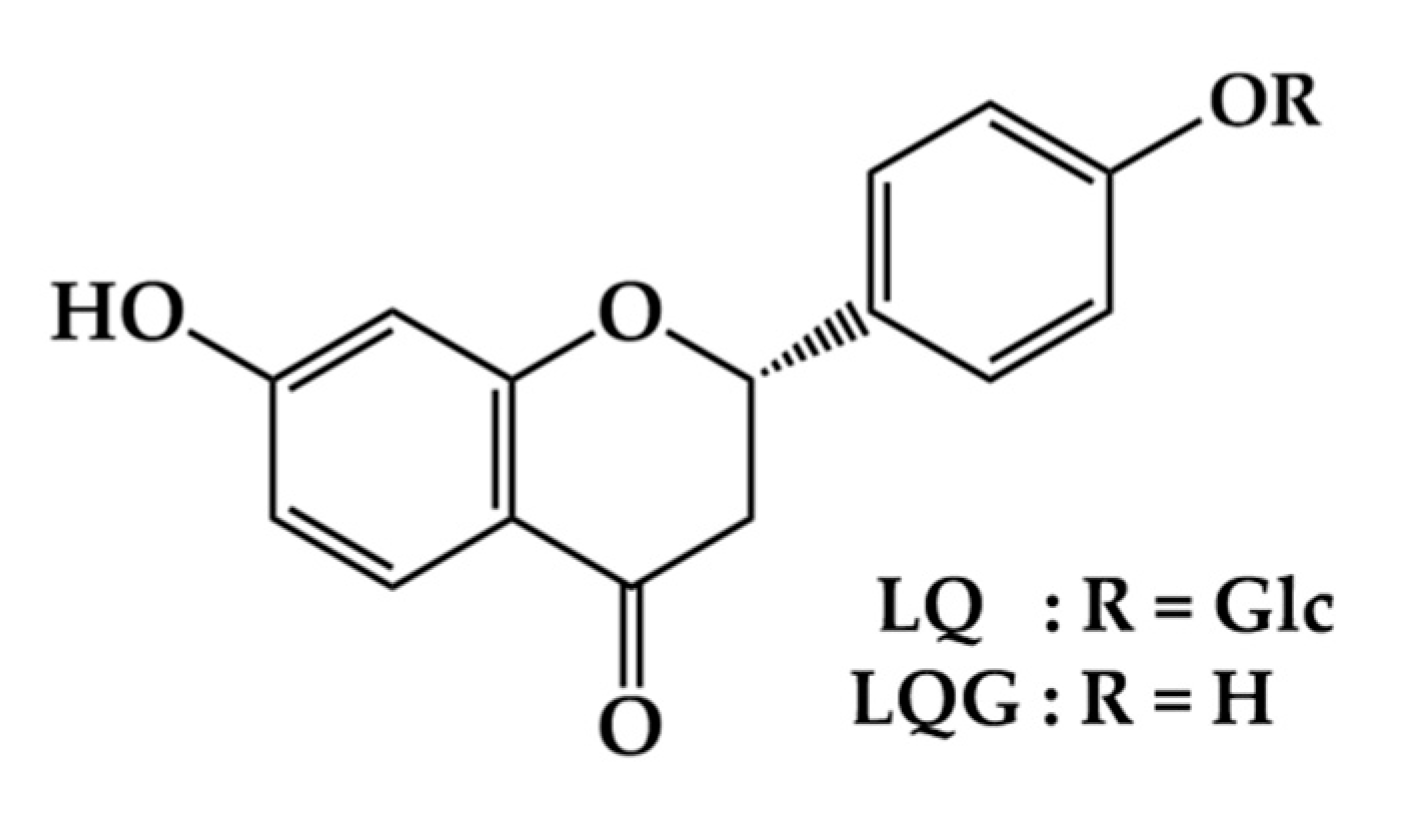
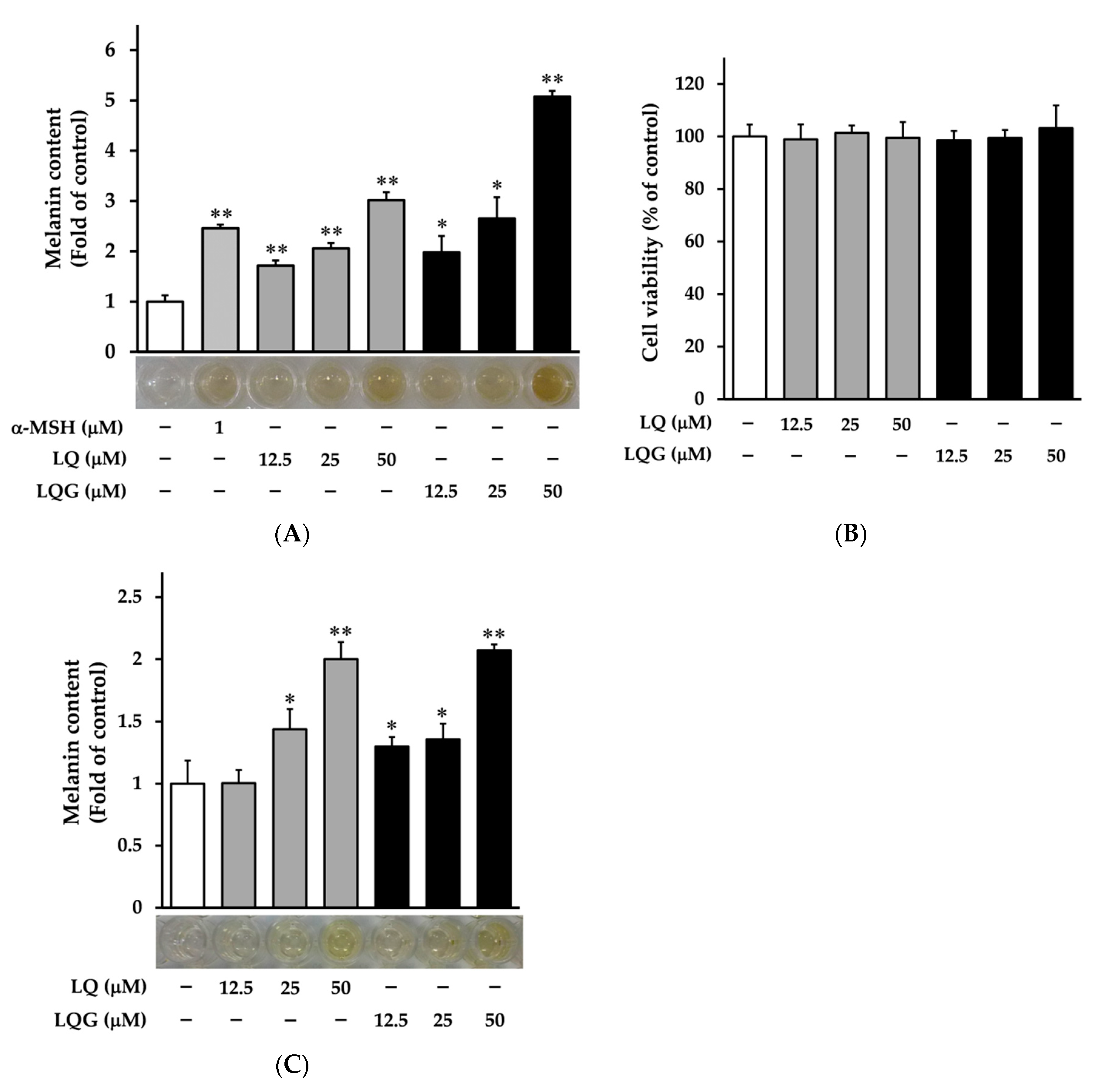
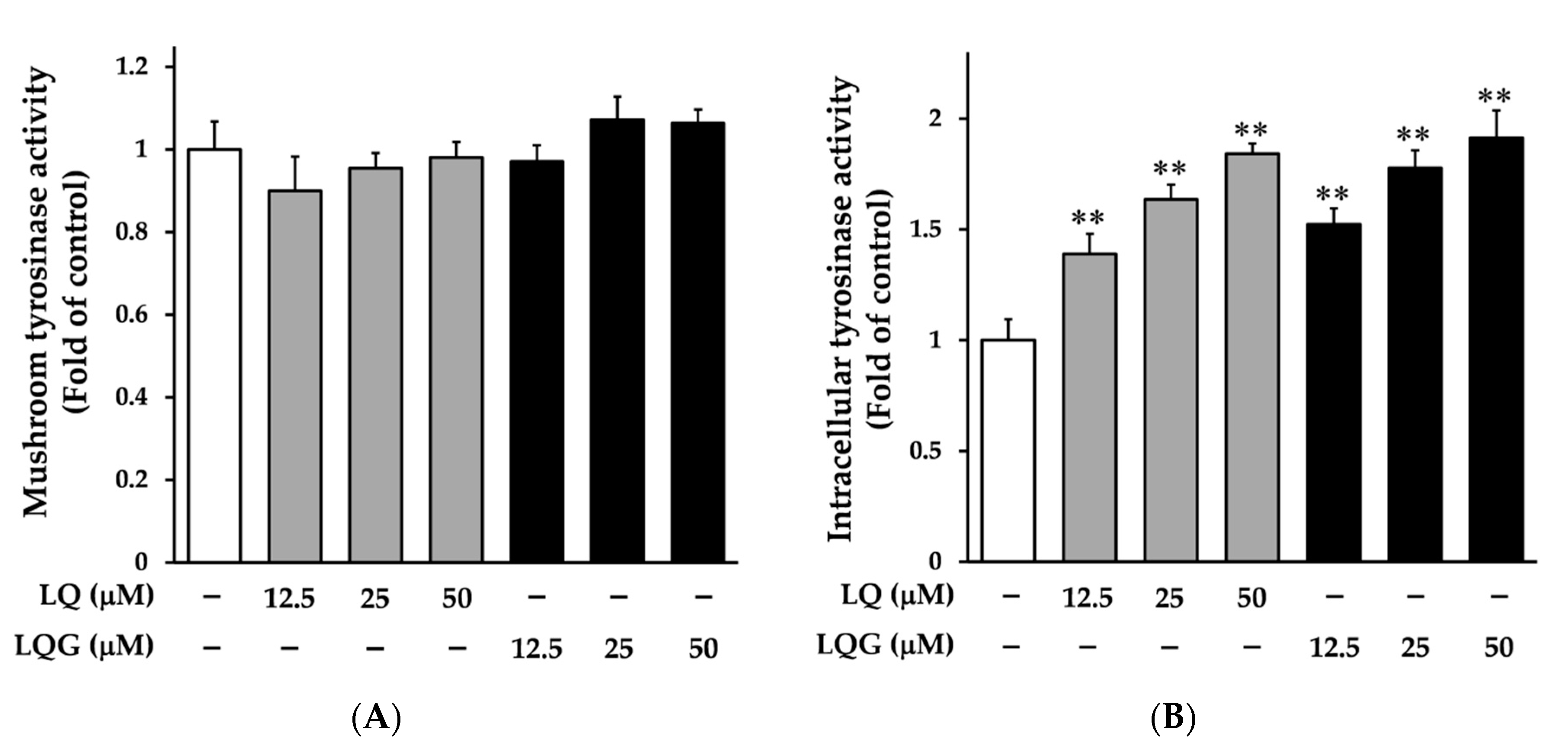
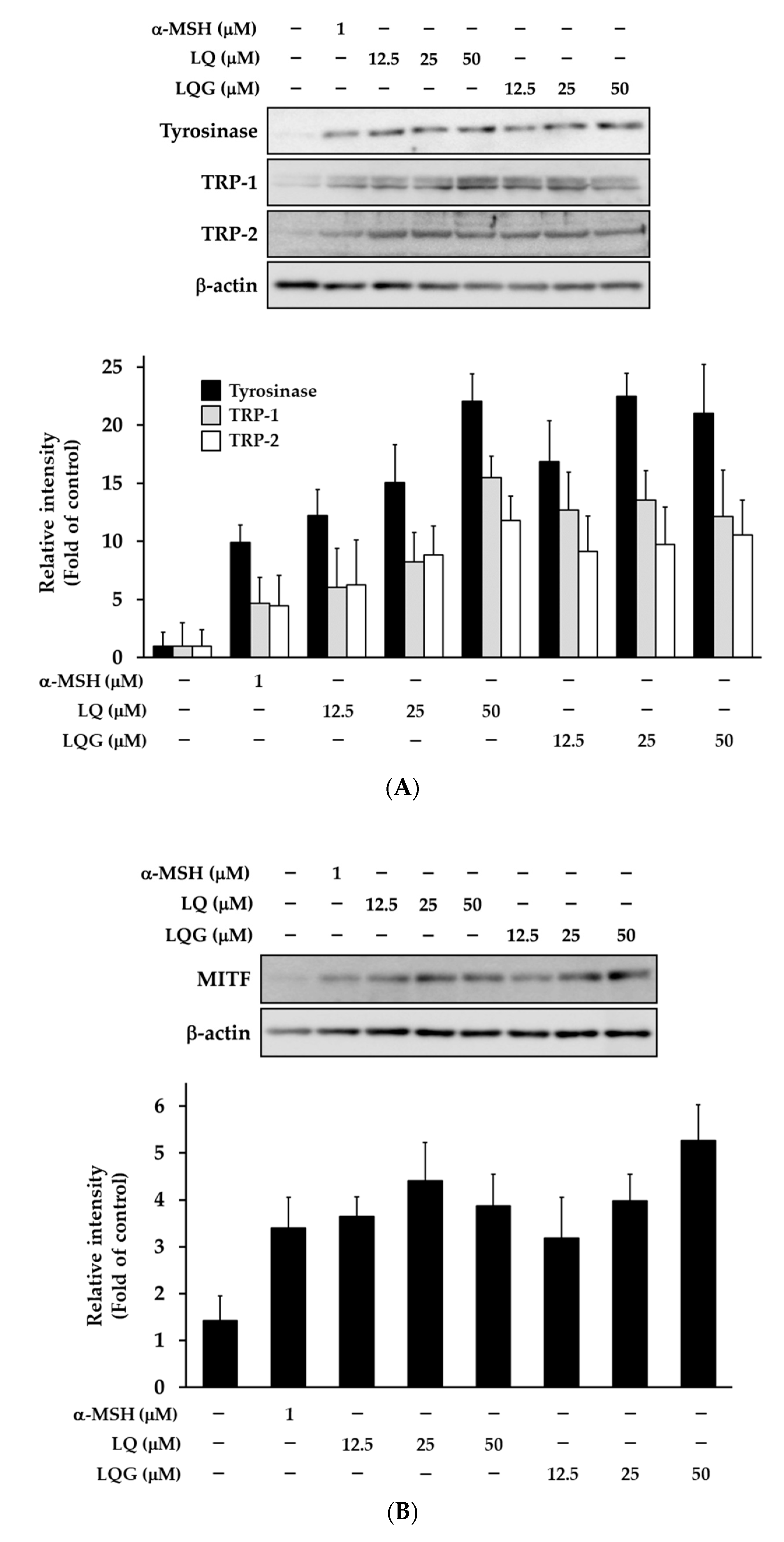
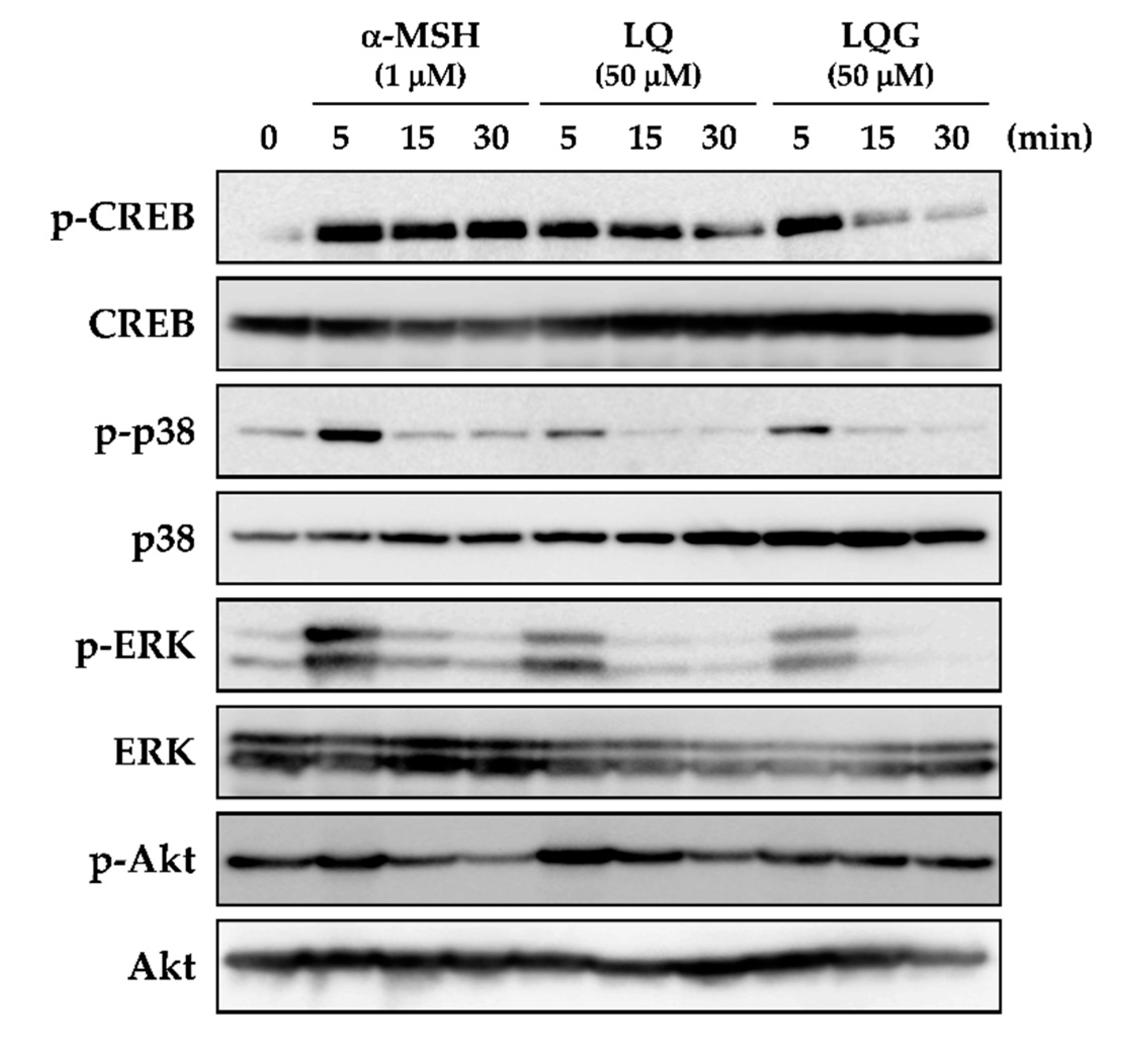
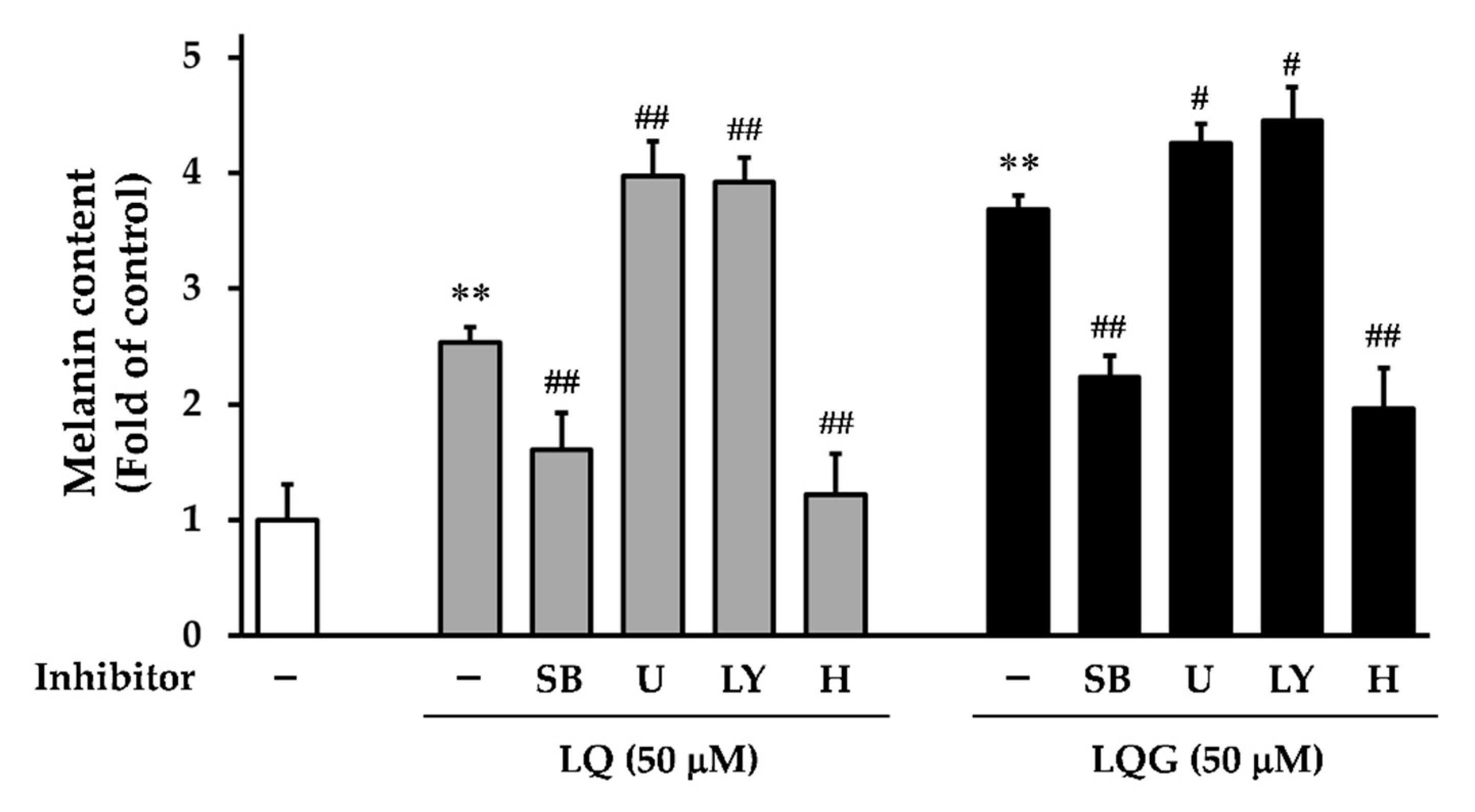
Background: Liquiritin (LQ) and its aglycone, liquiritigenin (LQG), are major flavonoids in licorice root (Glycyrrhiza spp.). Our preliminary screening identified LQ and LQG, which promote melanin synthesis in the melanoma cells. In this study, we investigated the molecular mechanism of melanin synthesis activated by LQ and LQG. Methods: Murine (B16-F1) and human (HMVII) melanoma cell lines were treated with LQ or LQG. After incubation, melanin contents, intracellular tyrosinase activity, and cell viability were evaluated. Protein levels were determined using Western blotting. Results: LQ and LQG activated melanin synthesis and intracellular tyrosinase activity. The induction of melanin and intracellular tyrosinase activity by LQG was higher than that by LQ. LQ and LQG induced the expression of tyrosinase, tyrosinase-related protein (TRP)-1, and TRP-2. LQ and LQG also enhanced microphthalmia-associated transcription factor (MITF) expression, and cyclic AMP-responsive element-binding protein (CREB) phosphorylation. The phosphorylation of p38 and extracellular signal-regulated kinase (ERK), but not Akt, was significantly increased by LQ or LQG. Furthermore, LQ- or LQG-mediated melanin synthesis was partially blocked by p38 inhibitor (SB203580) and protein kinase A (PKA) inhibitor (H-89); however, ERK kinase (MEK) inhibitor (U0126) and phosphatidylinositol-3-kinase (PI3K) inhibitor (LY294002) had no effect. Conclusions: The results suggest that LQ and LQG enhance melanin synthesis by upregulating the expression of melanogenic enzymes, which were activated by p38 and PKA signaling pathways, leading to MITF expression and CREB phosphorylation.
Keywords: licorice; liquiritigenin; liquiritin; melanin; tyrosinase; TRP-1/2; MITF; p38; PKA licorice; liquiritigenin; liquiritin; melanin; tyrosinase; TRP-1/2; MITF; p38; PKA