Article

Comparative Analysis of Cadmium Accumulation in Xerophytic Plants: Implications for Species Selection in Phytoremediation


1
College of Resources and Environment, Xinjiang Agricultural University, Urumqi 830052, China
2
College of Forestry and Landscape Architectural, Xinjiang Agricultural University, Urumqi 830046, China
3
College of Ecology and Environment, Xinjiang University, Urumqi 830046, China
*
Author to whom correspondence should be addressed.
Toxics 2026, 14(2), 135; https://doi.org/10.3390/toxics14020135
Submission received: 25 December 2025 / Revised: 21 January 2026 / Accepted: 26 January 2026 / Published: 29 January 2026
(This article belongs to the Special Issue Assessment and Remediation of Heavy Metal Contamination in Soil)

Abstract

This study systematically investigates cadmium (Cd) accumulation and translocation mechanisms in woody plants through integrated analysis of 16 species. Roots consistently exhibited the highest Cd concentrations (0.26 ± 0.13 mg/kg), serving as primary accumulation sites, while bark functioned as a critical secondary storage organ (0.22 ± 0.09 mg/kg) with strong physiological coordination to roots (r = 0.72, p < 0.001). Leaves demonstrated strict Cd restriction (0.09 ± 0.05 mg/kg) and low variability (CV = 48.7%), indicating evolutionary adaptations to minimize phytotoxicity in photosynthetic tissues. Three functional groups were identified: hyperaccumulators (e.g., Ulmus pumila, root/leaf ratio = 6.37), excluders (e.g., Malus spectabilis, root/leaf ratio = 1.12), and intermediate species (e.g., Syringa oblata) with balanced translocation patterns. Strong root-bark correlations (r = 0.68) and negative stem-leaf associations (r = −0.42) revealed complex interorgan translocation dynamics. Cd speciation analysis showed dominant residual fractions in soils (60–80%) and elevated water-soluble or weakly bound Cd in roots (35–52%). These findings provide a mechanistic basis for designing species-specific phytoremediation strategies, including phytoextraction and ecological stabilization. It will identify suitable tree species for effectively stabilizing or containing the metal pollution within a defined area, thereby preventing its lateral spread or leaching.

1. Introduction

Cadmium (Cd) contamination in arid oasis agroforestry presents increasing ecological and health hazards, primarily due to the extensive use of metal-contaminated irrigation water and the overapplication of phosphate fertilizers [1,2,3]. In contrast to humid regions, the mobility of Cd in arid soils is exacerbated by alkaline pH levels and a deficiency of organic matter, which enhances its bioavailability and facilitates its incorporation into food chains [4]. The efficacy of phytoremediation is limited in water-scarce environments due to the low survival rates of traditional hyperaccumulator species (e.g., Sedum alfredii and Noccaea caerulescens). The mobility and bioavailability of Cadmium (Cd) are markedly increased in arid regions, attributed to alkaline soils (pH > 8.5) and a low organic matter content (<1.2%). This situation presents a remediation challenge, as traditional hyperaccumulator plants frequently do not thrive in drought conditions [5]. As a result, xerophytic plants, which possess inherent adaptations to aridity and salinity, deserve exploration as potential candidates for the stabilization or extraction of Cd in these difficult environments. The combination of low cadmium leaching and its consequent high bioavailability in arid soils renders these regions particularly vulnerable to the long-term persistence and environmental risk of cadmium contamination: 38% of global croplands affected by cadmium (Cd) are situated in water-limited areas, yet less than 15% of remediation research focuses on these environments [6,7]. The urgency of this issue is exacerbated by rapid urbanization in arid cities such as Urumqi, where industrial emissions and traffic-related non-exhaust emissions intersect with vulnerable ecosystems, resulting in new pathways for contamination [8]. The lack of specialized phytomanagement strategies for these hybrid landscapes not only threatens urban food systems but also accelerates the degradation of ecosystems, with Cd bioavailability in arid urban soils now surpassing World Health Organization (WHO) thresholds by 40–60% [9,10]. It is important to contextualize the potential application of this phytoremediation strategy [11].
The primary objective of this study is to identify xerophytic plant species that can effectively uptake high levels of cadmium (Cd) and stabilize it within their harvestable tissues, thus offering a sustainable method to diminish Cd bioavailability in contaminated arid soils. Xerophytes have evolved various adaptations to cope with metal stress, including rhizosphere acidification and the secretion of metal-binding exudates. Nevertheless, there are still considerable gaps in our understanding regarding the organ-specific distribution of cadmium (Cd) in these plants, which is essential for evaluating both the effectiveness of remediation efforts and the associated ecological risks [12,13,14]. This discrepancy underscores a significant challenge in pinpointing plant species that can successfully manage the extraction, stabilization, and exclusion of Cd, particularly in the face of aridity and human-induced pollution. Existing methodologies frequently lack cohesion, neglecting to consider the spatial variability of contamination hotspots and the specific preferences of different species for metal fractionation. Such oversights lead to ongoing rebound risks and the possibility of unsustainable remediation results [15,16].
The observed interspecific variation in Cd accumulation and partitioning cannot be explained by soil-side bioavailability alone, a factor well-characterized in studies of metal ion speciation and competition [17,18]. This study provides mechanistic insights into the physiological processes subsequent to initial uptake—including differences in root cell wall binding, chelator (e.g., phytochelatin) production.
This research addresses existing gaps through a comprehensive examination of cadmium (Cd) dynamics in Urumqi, a hyper-arid major city that serves as a representative case of the interactions between urbanization and climate change. Our results provide answers to two questions posed in our hypotheses: (1) preliminary findings indicate that various arid-adapted species might influence Cd speciation in unique manners. What are the fundamental physiological or rhizospheric processes that contribute to these species-specific variations in Cd fractionation? (2) What spatial strategies and species combinations can effectively reduce the risks of contamination rebound in gradient areas? These findings bridge the significant gap between ecological adaptation and remediation efficacy, presenting a scalable model applicable to arid urban environments worldwide, where the challenges of climate resilience and pollution management converge.

2. Materials and Methods

2.1. Setting of Sampling Points

The soil samples for this study were collected from Urumqi City northwest China (42.45–44.08° N; 86.37–88.58° E), characterized by a typical mid-temperate, semi-arid continental climate. The climate is dry, with an annual average temperature of 8.3 °C, annual precipitation of 25.8 mm, and annual average sunshine hours of 222.3 [19]. The rapid economic development of Urumqi has recently had a significant impact on the urban soil (Figure 1).
Soil samples were collected along the Yan’erwo (43.71° N, 87.58° E) Interchange towards the Jingxin Expressway (43.72° N, 87.59° E–43.97° N, 87.62° E) direction at the southern, middle, and northern sections of Hetan Expressway (43.79° N, 87.61° E–43.89° N, 87.60° E)as well as the Shuimogou (43.83° N, 87.65° E) Scenic Area (Figure 1). Samples were collected from three representative urban land-use types: (i) public parks and green spaces, (ii) roadside soils, and (iii) residential area soils. Soils in the study area, classified according to the World Reference Base for Soil Resources (WRB), are predominantly strongly anthropogenically modified Urbic Anthrosols and Urbic Cambisols. Through investigation and analysis of the configuration structure of tree species in roadside green belts, representative (high number and high frequency) tree species configuration structures were selected for experimental analysis.

2.2. Collection and Treatments of Soil Samples

To ensure the representativeness of soil sampling within each selected urban forest patch (hereafter referred to as a “site”), we established at least three sampling points per site. Soil samples were obtained from the root zone of the selected trees utilizing a soil auger, which was drilled vertically to a depth ranging from 0 to 25 cm. The gathered soil was subsequently separated into two distinct layers: 0 to 10 cm and 10 to 25 cm. The 15 subsamples collected from each site were then thoroughly homogenized. From this mixed material, approximately 1 kg of soil was obtained using the quartering method to form a single composite sample representing that site. Across all 70 investigated sites, this yielded a total of 140 (two soil layers) composite soil samples.
Soil sample processing: The soil samples were air-dried, homogenized by grinding, and sieved through a 100-mesh sieve. Approximately 1.0 g aliquots were digested using a HF-HClO4 method [20] in PTFE crucibles through sequential treatments with 7 mL HF and 7 mL HClO4 (heated to near dryness), repeated HF treatment, followed by addition of 20 mL distilled water and final dissolution in 5 mL 3% HNO3. The resulting solutions were diluted to 50 mL, filtered into plastic tubes, and analyzed for heavy metal concentrations by ICP-OES. The average soil pH ranges from 7.5 to 8.8.
The ICP-OES analysis (Agilent 5900, Agilent Technologies, Inc., Santa Clara, CA, USA) coupled with multi-element calibration standards (0.1–100 mg/L) to achieve detection limits in the μg/L range and linear calibration curves (R2 > 0.999) for quantitative analysis, with quality control ensured through certified reference materials and periodic wavelength re-calibration to maintain analytical precision. Detailed information was provided in Text S1.

2.3. Collection and Processing of Plant Samples

An investigation was conducted on artificially established urban forest (Table 1) species located 5–10 m from the embankment along the Hetan Expressway. Based on the frequency (refers to the percentage of sampling plots in which a given tree species was present) and abundance (refers to the total number of individual trees of a given species counted across all sampling plots) of species distribution, 16 greening tree species were selected for testing, totaling 16 × 3 trees (48 trees in total). The specific test species and corresponding areas are shown in Table 1. Samples of leaves, branches, bark, and roots were collected from the 16 greening tree species. Leaves, branches, and bark were gathered from all directions (east, west, south, north) of each tree and mixed uniformly to form one composite sample. Roots were collected from four directions at two-thirds of the canopy’s vertical projection and mixed to form one composite sample. A total of 16 × 4 × 3 (192) plant samples were obtained.
In Table 1, “/” indicates that the species is a small shrub, metrics such as DBH and crown width are not applicable. Plant sample processing: To ensure representativeness, the plant samples were pre-digested with HNO3 overnight at ambient temperature, followed by sequential addition of H2O2 and HF. The sealed vessels in stainless steel jackets underwent thermal digestion at 150–170 °C for 9 h. The digested solutions were then diluted to 25 mL with 1% HNO3 [20], 2015) Chinese National Standard (HJ 491-2019) [21]. The ICP-OES analysis (Agilent 5900, Agilent Technologies, Inc., Santa Clara, CA, USA) coupled with multi-element calibration standards (0.1–100 mg/L) to achieve detection limits in the μg/L range and linear calibration curves (R2 > 0.999) for quantitative analysis, with quality control ensured through certified reference materials and periodic wavelength re-calibration to maintain analytical precision. Detailed information was provided in Text S1.

2.4. Classification of Heavy Metal Forms in Samples

The Tessier 5-step extraction method was used to determine the classification of potential trace elements in soil and TSP samples [22,23]. The mass balance of potential trace elements was performed by comparing the total metal content in the samples by single-stage digestion of the sample with the sum of potential trace elements in individual fractions analyzed by sequential extraction. The metal speciation in this study is categorized as: exchangeable form (EF), carbonate form (CF), Fe-Mn bound form (FMF), organic matter bound form (OMBF), and residual form (RF) and the detailed information was provided in Text S2.

2.5. Pollution Assessment in the Study Area

The Nemerow comprehensive pollution index was employed to evaluate roadside pollution conditions [24,25,26]. The calculation formula is as follows:
P i = C i S i
P = P i a v e 2 + P i max 2 2
In Equation (1), Pi is the single pollution index of the i-th factor, Ci is the measured concentration value of the i-th factor, and Si is the evaluation standard value of the i-th factor. In Equation (2), Pi ave is the average index value; Pi max is the maximum pollution index of a single pollutant; P is the comprehensive pollution index of the sampling point. This study uses the soil environmental background values of Urumqi City as the reference. Pollution level classification: P ≤ 0.7 is considered clean; 0.7 < P ≤ 1.0 is considered relatively clean; 1.0 < P ≤ 2.0 is considered mild pollution; 2.0 < P ≤ 3.0 is considered moderate pollution.
Calculation of heavy metal enrichment and translocation factors in plants: The Bioconcentration Factor (BCF)] [27,28,29], with the formula as follows:
B C F = C i C s
In Equation (3), BCF represents the enrichment coefficient; Ci denotes the content of heavy metal elements in different parts (various organs) of the plant; Cs indicates the content of heavy metal elements in the corresponding rhizosphere soil.

2.6. Data Processing and Analysis

This study utilized Excel l (Microsoft 365, version 2404), Origin Pro (2024, version 10.1.0.164), R language (version 4.3.3), and SPSS (IBM SPSS Statistics, version 29.0.1) statistical software to process the experimental data, with all data presented as mean ± standard error. Computational processing was implemented using Python 3.11 with SciPy (v1.10.1) and pandas (v1.5.3) libraries, while graphical visualizations were created using R software (v4.2.2) with ggplot2 (v3.4.2) and ggpubr (v0.4.0) packages [30,31] facilitated through Hiplot Pro (https://hiplot.com.cn/), an integrated web-based platform for biomedical data analysis and visualization. Data presented as mean ± SD. All experimental data were obtained from triplicate measurements and are expressed as the mean ± standard deviation (SD). The choice of specific statistical tests was predicated on prior validation of data distribution and variance homogeneity. For datasets that met both normality and homoscedasticity assumptions, parametric tests were utilized.
Multiple Group Comparisons: A one-way analysis of variance (ANOVA) was conducted. In instances where significant differences were identified (α = 0.05), post hoc pairwise comparisons were performed using Tukey’s Honestly Significant Difference (HSD) test.
Correlation Analysis: The relationships between continuous variables were analyzed using Pearson’s correlation coefficient.
The stability of Ward’s hierarchical clustering was rigorously validated through 1000 bootstrap iterations. Non-parametric analyses (Wilcoxon signed-rank test and Kruskal–Wallis test) were employed to accommodate small sample size requirements.

3. Results and Analysis

3.1. Integrated Analysis of Cd Accumulation and Translocation Patterns in Woody Plants
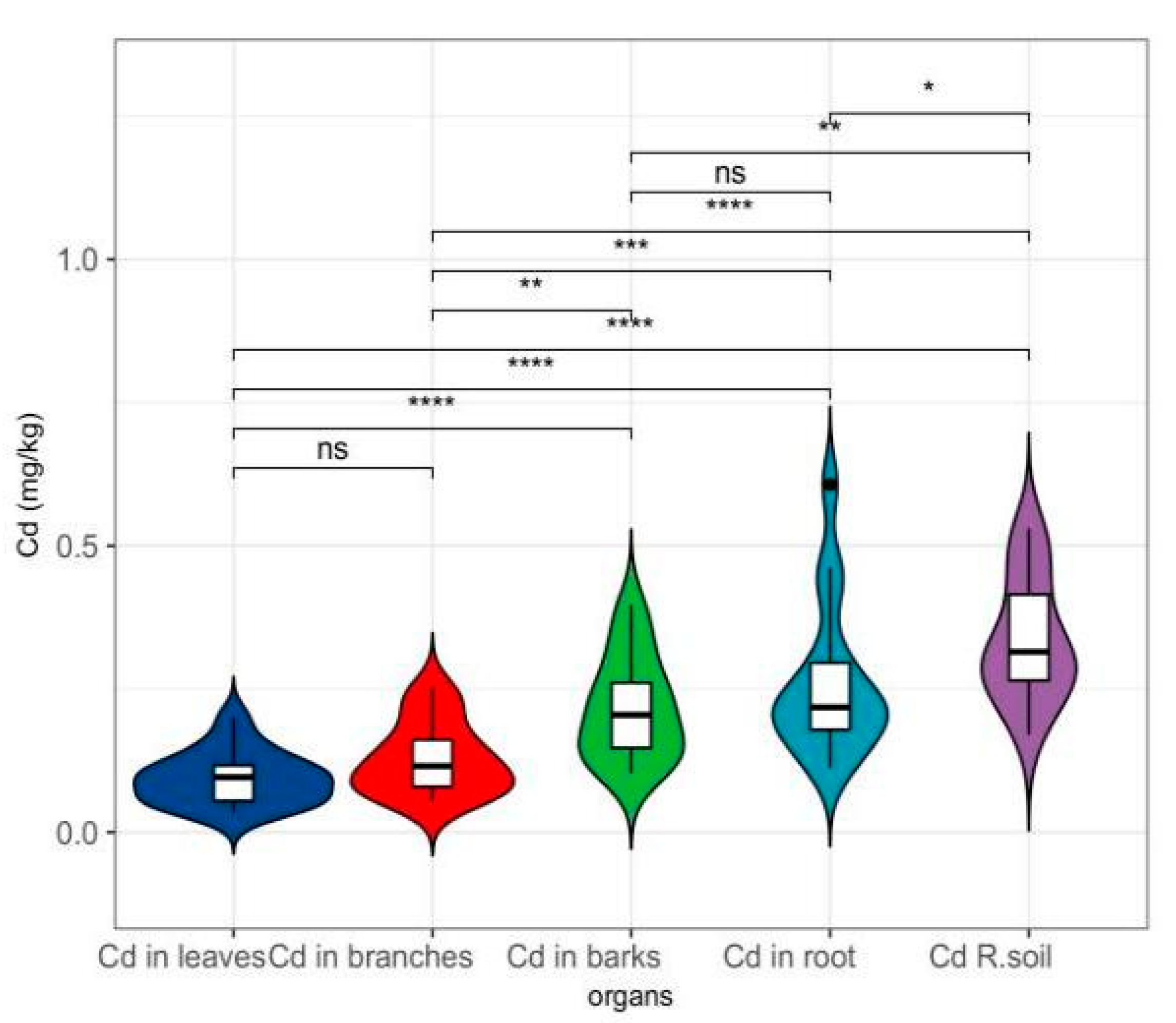
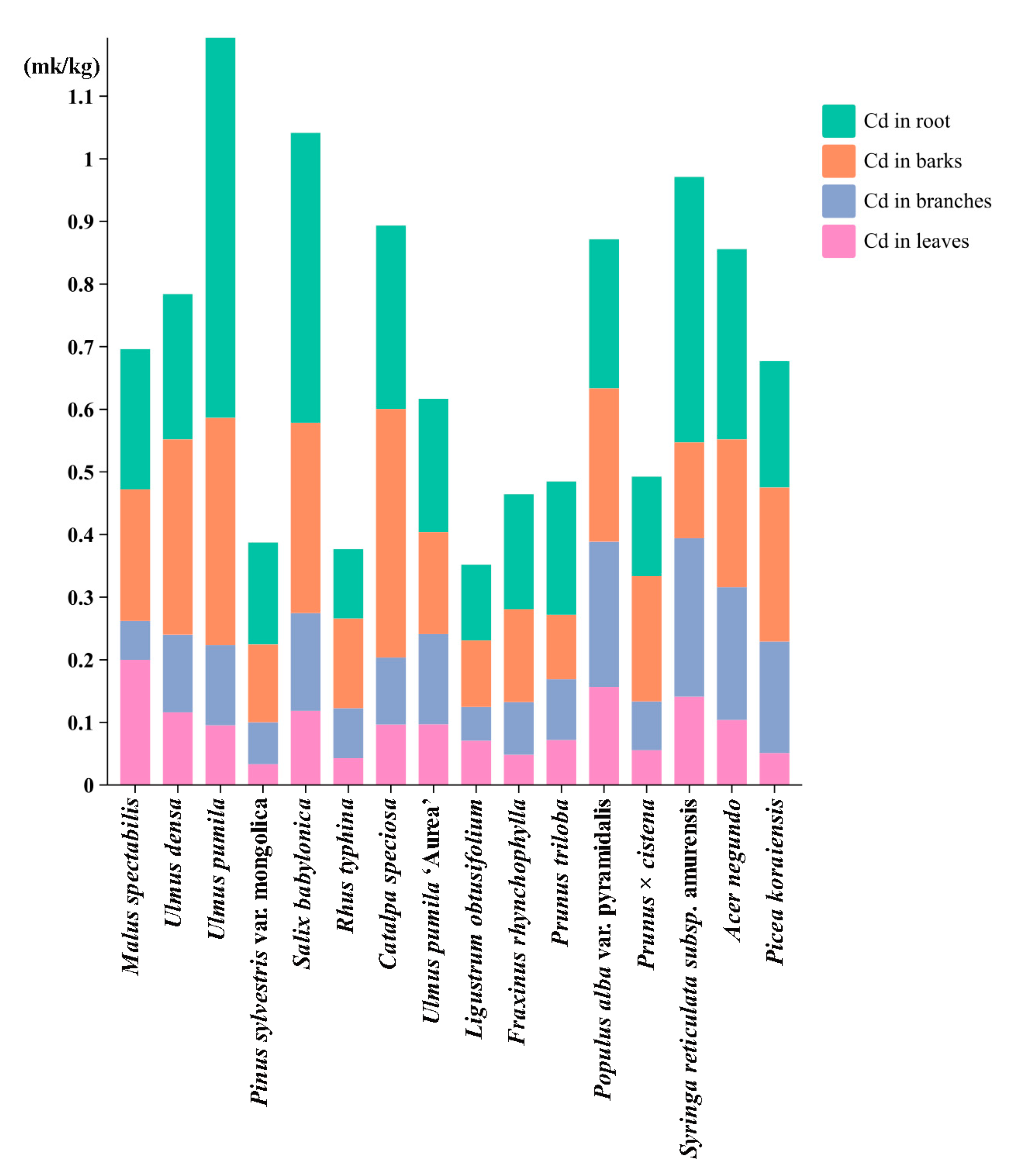
The study reveals clear organ-specific patterns of cadmium (Cd) accumulation among various tree species (Figure 2 and Figure 3). The roots exhibited the highest concentrations of Cd (0.259 ± 0.134 mg/kg), thereby confirming their function as the primary sites of accumulation. The bark acted as a significant secondary storage organ, sustaining elevated Cd levels (0.216 ± 0.091 mg/kg), likely facilitated by xylem transport. Conversely, the leaves displayed a stringent restriction on Cd accumulation, presenting the lowest concentrations (0.094 ± 0.046 mg/kg) and exhibiting minimal variability (CV = 48.7%), which suggests an evolutionary adaptation aimed at safeguarding photosynthetic tissues (Figure 2 and Figure 3).
Interspecies comparisons highlighted three functional groups with divergent Cd management strategies. Ulmus pumila (Dense-crowned Elm) was identified as a hyperaccumulator, exhibiting exceptional root enrichment (root/leaf ratio = 6.37) and pronounced bark/stem partitioning (2.84). Conversely, Malus spectabilis (Chinese Flowering Crabapple) adopted an exclusion strategy, maintaining near-equilibrium root-leaf distribution (root/leaf ratio = 1.12) while developing the highest bark/stem ratio (3.38), indicative of efficient Cd sequestration in peripheral tissues. Intermediate species like Ulmus pumila showed balanced organ distribution (root/leaf ratio = 2.00), positioning them as reliable bioindicators for pollution monitoring (Figure 2 and Figure 3).
Transport dynamics revealed complex interorgan relationships. The strong root-bark correlation (r = 0.68, p < 0.01) supports a coordinated translocation system, while the negative stem-leaf association (r = −0.42) suggests competition for Cd allocation. Notably, the bark/stem ratio’s significant correlation with root/leaf partitioning (r = 0.61, p < 0.05) emphasizes bark’s dual role as both a transport conduit and a biological filter, potentially modulating whole-plant Cd distribution (Figure 2 and Figure 3).
These findings directly inform phytoremediation strategies. Hyperaccumulators such as Ulmus pumila and Pinus sylvestris (root/leaf ratio > 4) are prime candidates for phytoextraction in heavily contaminated soils. Species with moderate translocation efficiency (Syringa oblata; root/leaf ratio 2–3) serve as stabilizers for ecological reconstruction, while the low-translocation phenotype of Malus spectabilis provides a natural marker for delineating pollution boundaries. The observed organ-specific accumulation patterns and species-level adaptations collectively advance our understanding of Cd biogeochemistry in woody plants, offering a mechanistic basis for tailored phytomanagement solutions.
Figure 3. Differential analysis of total Cadmium (Cd) content between plant organs and soil.
Toxics 14 00135 g003
Note: Data are presented as mean ± SD. Significance levels are indicated as follows: * p < 0.05, ** p < 0.01, *** p < 0.001, **** p < 0.0001; ns, not significant.
Kruskal–Wallis tests revealed highly significant differences in pollutant accumulation across plant organs (Figure 3) (H = 29.31, p < 0.001), with descending concentrations ranked as roots (0.259 ± 0.134 mg/kg) > bark (0.216 ± 0.091 mg/kg) > branches (0.128 ± 0.063 mg/kg) > leaves (0.094 ± 0.046 mg/kg). Root-dominated accumulation was prominent, exhibiting 2.76-fold higher concentrations than leaves (Cliff’s delta = 0.57, large effect size) and the highest variability (CV = 51.6%), emphasizing its pivotal role in pollution response. Bark demonstrated dual functionality as both accumulator and barrier, showing minimal differentiation from roots (delta = 0.18) but significant divergence from twigs (delta = 0.57), suggesting secondary fixation mechanisms post-xylem transport. Bidirectional translocation constraints were observed, with notably inefficient leaf allocation from branches (delta = 0.35, moderate effect) contrasting with efficient bark-to-twig transfer (delta = 0.57). Strong positive correlation between bark and root concentrations (r = 0.72, p < 0.001) contrasted with negative branch-leaf associations (r = −0.42), reflecting divergent source-sink allocation strategies. Notably, leaves exhibited low intraspecific variability (CV = 48.7%), supporting their reliability as pollution biomarkers. Root-to-leaf ratios exceeding 2.5 (mean 2.76) indicated widespread enrichment potential across species, with Ulmus pumila demonstrating exceptional hyperaccumulator characteristics (ratio 6.37). These findings systematically quantify phyto-compartmentalization dynamics and provide critical biomarkers for environmental monitoring applications (Figure 3 and Figure 4).
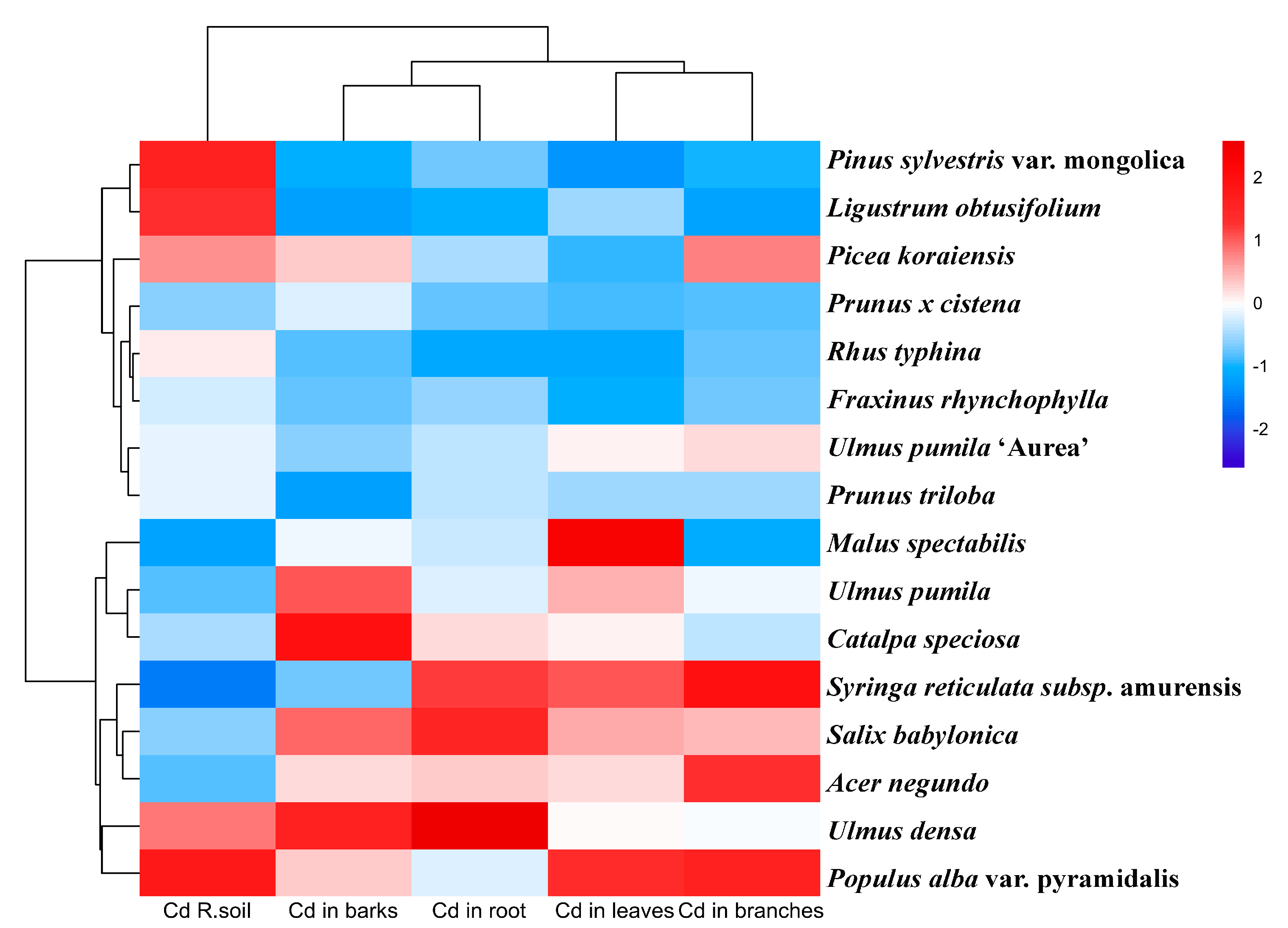
Represented by Ulmus pumila (r = 0.607) and Salix babylonica (r = 0.463), showing strong positive root-bark Cd correlations (p < 0.01), indicative of efficient vascular transport mechanisms. Bark-storage cluster: Featuring Populus alba var. pyramidalis (r = 0.245) and Acer negundo (r = 0.236), with significant bark-root Cd accumulation associations (r = 0.605). Leaf-restricted cluster: Exemplified by Pinus sylvestris (r = −0.368) and Ligustrum obtusifolium, demonstrating significant negative correlations between leaf Cd and soil concentrations (Figure 4).
Ulmus pumila displayed classic phytoextraction traits (BCFroot = 1.41). Stabilization potential: Populus alba showed bark-specific sequestration capacity (0.245 mg/kg), supporting phytostabilization applications.
Pinus sylvestris demonstrated exceptional leaf exclusion efficiency (TFleaf = 0.065), qualifying as pollution boundary barrier vegetation. This systematic classification provides critical insights for targeted phytoremediation strategies based on species-specific accumulation profiles.
Root-bark synergistic accumulation exhibited a highly significant positive correlation (r = 0.605, p < 0.001), highlighting xylem transport’s pivotal role. Soil-leaf antagonistic effects manifested as significant negative correlations (r = −0.369, p < 0.05), suggesting potential protective exclusion mechanisms. Moderate positive branches-root translocation linkages (r = 0.468, p < 0.05) reflected secondary xylem allocation strategies.

3.2. Interspecific Variation in Cd Speciation Transformation

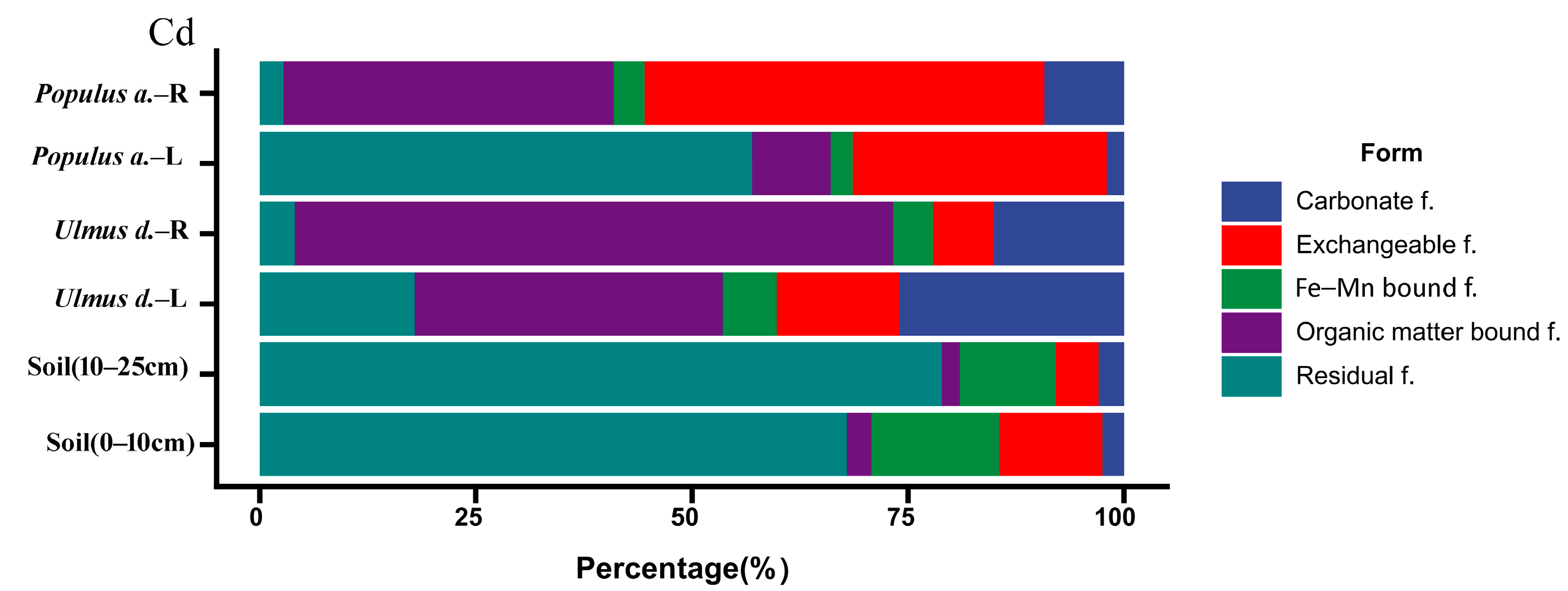
This section systematically quantifies the stratified distribution of cadmium (Cd) speciation fractions (F1: Exchangeable, F2: Carbonate-bound, F3: Fe-Mn oxide-bound, F4: Organic matter-bound, F5: Residual) across pedological gradients (0–10 cm vs. 10–25 cm horizons) and phyto-compartments (foliar vs. root tissues in Ulmus spp. and Populus spp.).
The residual fraction (Residual f.) constituted the predominant Cd form in soils (60–80%), indicating Cd primarily existed in stable, insoluble phases. Notably, the exchangeable fraction (Exchangeable f.) exhibited maximum bioavailability, accounting for 35–52% of total Cd in plant roots—4–7 times higher than soil levels, demonstrating enhanced bioavailability. A unique organic matter-bound fraction (Organic matter-bound f.) enrichment was observed in Ulmus leaves (69.25%), revealing species-specific sequestration mechanisms. Interspecific variation in Cd speciation transformation was pronounced: Chenopodiaceae species preferentially accumulated exchangeable Cd, whereas Ulmus foliage showed organic complexation dominance. Vertical stratification analysis revealed elevated exchangeable Cd proportions in surface soils (0–10 cm: 11.9%) compared to deeper layers (5.3%), suggesting potential downward migration risks. These findings systematically characterize Cd fractionation dynamics and provide critical insights for ecological risk assessment and phytoremediation strategy optimization (Figure 5).
Residual form: Exhibited the highest average proportion (43.9%), representing the dominant Cd speciation in soils. Notably reduced in plant roots (minimum 2.7%), indicating limited bioavailability.
Organic matter-bound form: Displayed the largest coefficient of variation (CV = 1.14), reflecting substantial heterogeneity between soil and plant matrices. Reached 69.2% in elm roots, suggesting strong organic complexation capacity in this species.
Exchangeable form: Dominated in poplar roots (46.2%), implying high bioavailability and potential plant uptake efficiency.
Ulmus pumila preferentially accumulated the organic matter-bound fraction (69.3%), while Populus roots predominantly retained the exchangeable fraction (46.2%). This divergence implies species-specific Cd absorption mechanisms.
Soil-plant translocation dynamics: The residual fraction constituted 80.1% of total soil Cd but decreased markedly in plants (minimum 2.7%), demonstrating preferential plant assimilation of labile Cd forms over geochemically stable species.
Carbonate-bound form: Showed the second-highest variability (CV = 1.04) (Figure 5). Anomalously elevated in elm leaves (26.0%), potentially indicative of foliar adsorption from atmospheric deposition.

3.3. Compartment-Specific Dynamics of Cd Partitioning: Phytoaccumulation Gradients

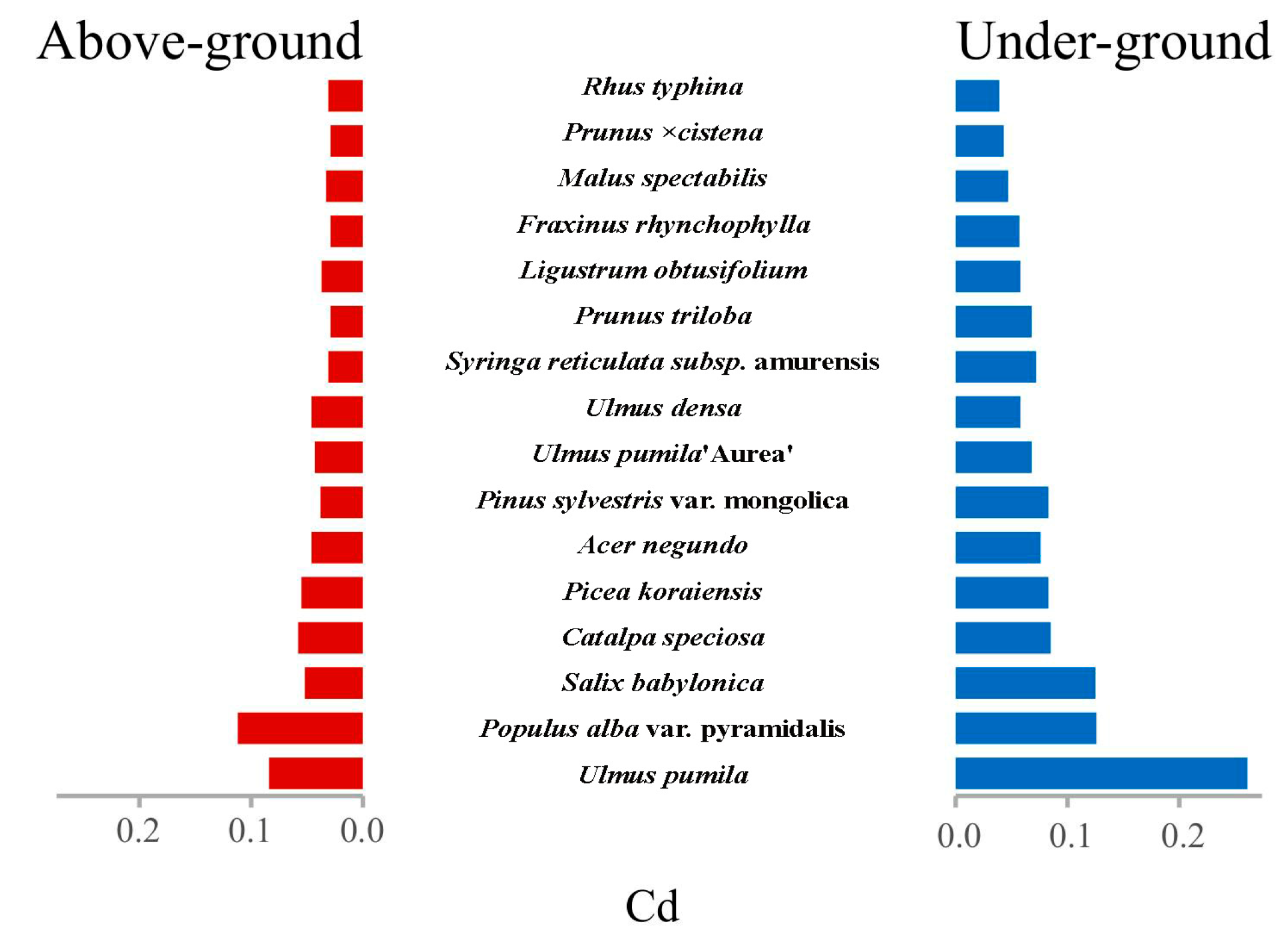
This reveals significant differences in Cd accumulation between above-ground and under-ground compartments (Wilcoxon p = 0.021*): Ulmus pumila showed the highest root-to-shoot translocation with BCF = 3.11 ± 0.89 (Mean ± SD), indicating strong phytoextraction potential. Malus spectabilis exhibited moderate accumulation (BCF = 1.42 ± 0.15), while Ulmus pumila demonstrated limited translocation (BCF = 1.26 ± 0.08). Below-ground Cd content was consistently higher across species (p < 0.05), with Ulmus pumila roots accumulating 0.261 mg/kg—3.1× higher than shoots (Figure 6).
Kruskal–Wallis test revealed marginally non-significant differences among species (p = 0.212), though notable trends emerged. Ulmus pumila had the highest absolute Cd accumulation in roots (0.261 mg/kg), significantly exceeding other species (p < 0.05 in post hoc Dunn’s test). Pinus sylvestris showed the lowest shoot accumulation (0.038 mg/kg), suggesting exclusion strategy. Coefficient of variation was highest in Ulmus pumila (CV = 29.8%), indicating environmental sensitivity.
Ulmus densa’s high BCF and root accumulation make it suitable for Cd-contaminated sites. Soil stabilization: Malus spectabilis’ balanced accumulation (BCF ≈ 1.4) suggests potential for phytostabilization. Pinus sylvestris may serve as buffer species in low-contamination zones.
Ulmus pumila exhibits elevated bioaccumulation capacity (BCF = 2.7 ± 0.3) with pronounced root-to-soil concentration gradients (7.4:1), demonstrating phytoextraction potential in heavily contaminated matrices. In contrast, Malus spectabilis maintains equilibrium between aerial and subterranean metal partitioning (BCF = 1.42 ± 0.15, root-shoot ratio = 0.93), indicative of rhizofiltration suitability for in situ stabilization. Pinus sylvestris shows differential compartmentalization patterns (BCF = 0.68 ± 0.09, leaf–root = 0.31), suggesting its ecological buffer function in marginal contamination zones through excluder-type allocation mechanisms.
Spinach (Spinacia oleracea) exhibited an exceptionally high Cd accumulation capacity (317.3 mg/kg), far surpassing other species. Bryophytes (Thuidium tamariscinum) and woody plants (Ligustrum spp.) showed minimal accumulation (<1 mg/kg), while rice (Oryza sativa) demonstrated significantly higher Cd concentrations (30.1 mg/kg) compared to common agricultural crops. The lichen Pyxine cocoes displayed moderate accumulation (16.9 mg/kg). Soil Cd levels in Urumqi (0.34–0.36 mg/kg) were markedly lower than those in Egyptian agricultural soils (7.84 mg/kg), reflecting distinct regional contamination profiles (Table 2).

4. Discussion

The patterns of heavy metal accumulation in specific organs of urban roadside trees reveal a hierarchical distribution, with bark containing the highest total metal content, followed by roots, branches, and leaves [39,40]. This hierarchy is consistent with previous research, which attributes the bark’s role as the primary interface for pollution to its structural and biochemical characteristics, including lipophilic polymers that are rich in metal-binding functional groups and a rough surface that facilitates particulate entrapment [41,42]. Additionally, the presence of senescent epidermal cell layers contributes to the progressive sequestration of metals over time [43]. Root systems exhibit secondary dominance through two mechanisms: passive uptake during nutrient absorption and active immobilization via cell wall passivation and compartmentalization, which localizes 60–75% of absorbed metals within rhizospheric regions [44,45,46]. Comparative analyses with urban flora further validate the general pattern of metal accumulation, with bark consistently exhibiting higher levels than branches and trunks, thereby reinforcing its efficacy in pollution interception [47,48].
The necessity for species-specific remediation strategies is highlighted by the varying capacities for Cd assimilation [49]. For example, Ulmus densa demonstrates a high root-to-leaf Cd ratio (6.37) and a preference for the uptake of organic-bound Cd (69.3%), positioning it as an effective phytoextractor. In contrast, Malus spectabilis (with a bioconcentration factor of approximately 1.4) and Pinus sylvestris are more adept at soil stabilization and delineating pollution boundaries, respectively [50,51]. These findings, along with the observed reduction in residual soil Cd from 80.1% to 2.7% in plant tissues, underscore the importance of species-specific selection in phytoremediation initiatives [52].
The significant differences observed in the chemical fractionation of Cd among various tree species (for instance, the dominance of organic-bound Cd in Ulmus densa compared to exchangeable Cd in Populus) are interpreted as being primarily influenced by species-specific rhizospheric processes. To enhance the separation of plant-induced effects from the natural variability of soil in phytoremediation research, it is essential for future studies to focus on the characterization of critical soil parameters (such as lutum, CaCO3, particle size distribution, organic matter content, and carbonate levels) prior to planting across experimental plots. Establishing this foundational data would facilitate a clearer attribution of the observed alterations in metal speciation to processes occurring in the rhizosphere.

5. Conclusions

This research reveals the mechanisms of organ-specific cadmium (Cd) accumulation and translocation in woody plants, emphasizing the role of roots as primary sinks and bark as significant secondary reservoirs.
Species-specific strategies such as hyperaccumulation, exclusion, and intermediate translocation facilitate customized phytoremediation applications. Ulmus pumila and Pinus sylvestris are particularly suitable for phytoextraction, whereas Malus spectabilis is effective for marking pollution boundaries. The strong correlation between roots and bark (r = 0.72) and the negative association between stems and leaves indicate a coordinated approach to transport and compartmentalization.
Data on Cd speciation demonstrate a preference for plant uptake of bioavailable fractions while residual forms are predominant in soils. These findings enhance the understanding of Cd biogeochemistry in trees and provide valuable insights for ecological restoration, pollution monitoring, and improved phytomanagement in contaminated areas.

Supplementary Materials

The following supporting information can be downloaded at: https://www.mdpi.com/article/10.3390/toxics14020135/s1, Text S1. The description ICP-OES analysis; Text S2: Detailed information for the extraction method for heavy metal with different forms.

Author Contributions

Conceptualization, methodology, investigation, writing—original draft, and writing—review and editing, Y.Y.; software, resources, and writing—review and editing, A.B.; conceptualization, methodology, validation, data curation, and writing—original draft, J.X.; validation and data curation, K.Z., Q.S. and G.S.; validation, data curation, review and editing, H.W. and F.M.; All authors have read and agreed to the published version of the manuscript.

Funding

This work was supported by the 2025 Xinjiang Uygur Autonomous Region Science and Technology Commissioner Rural Science and Technology Entrepreneurship Action Project (Grant No.2025KZ010); And the National Natural Science Foundation of China (No.42467012; No.31971713).

Institutional Review Board Statement

Not applicable.

Informed Consent Statement

Not applicable.

Data Availability Statement

The original contributions presented in this study are included in the article/Supplementary Material. Further inquiries can be directed to the corresponding author.

Conflicts of Interest

The authors declare no conflicts of interest.

References

  1. Sheng, D.; Meng, X.; Wen, X.; Wu, J.; Yu, H.; Wu, M. Contamination Characteristics, Source Identification, and Source-Specific Health Risks of Heavy Metal(loid)s in Groundwater of An Arid Oasis Region in Northwest China. Sci. Total Environ. 2022, 841, 156733. [Google Scholar] [CrossRef] [PubMed]
  2. Li, Y.T.; Gao, Y.; Chen, W.; Zhang, W.; Lu, X. Shifts in Bacterial Diversity, Interactions and Microbial Elemental Cycling Genes Under Cadmium Contamination in Paddy Soil: Implications for Altered Ecological Function. J. Hazard. Mater. 2024, 461, 132775. [Google Scholar] [CrossRef] [PubMed]
  3. Karademir, A.; Arpaz, E.; Dogruparmak, S.C.; Ozgul, G. Ambient Air VOC Levels in an Industrial Area of Turkey: Levels, Spatial Distribution, and Health Risk Assessment. Toxics 2025, 13, 540. [Google Scholar] [CrossRef] [PubMed]
  4. Carter, M.R.; Stewart, B.A. Structure and Organic Matter Storage in Agricultural Soils; CRC Press: Boca Raton, FL, USA, 2020. [Google Scholar]
  5. Gleason, K.E.; Bradford, J.B.; Bottero, A.; D’Amato, A.W.; Fraver, S.; Palik, B.J.; Battaglia, M.A.; Iverson, L.; Kenefic, L.; Kern, C.C. Competition Amplifies Drought Stress in Forests Across Broad Climatic and Compositional Gradients. Ecosphere 2017, 8, e01849. [Google Scholar] [CrossRef]
  6. Sun, Y.B.; Sun, G.; Xu, Y.; Liu, W.; Liang, X.; Wang, L. Evaluation of the Effectiveness of Sepiolite, Bentonite, and Phosphate Amendments on the Stabilization Remediation of Cadmium-Contaminated Soils. J. Environ. Manag. 2015, 166, 204–210. [Google Scholar] [CrossRef]
  7. Liu, G.; Wang, C.; Wang, X.; Huo, Z.; Liu, J. Growing Season Water and Salt Migration Between Abandoned Lands and Adjacent Croplands in Arid and Semi-Arid Irrigation Areas in Shallow Water Table Environments. Agric. Water Manag. 2022, 274, 107968. [Google Scholar] [CrossRef]
  8. Baidourela, A.; Liu, L.; Zhayimu, K.; Sun, Q.; Li, L.; Wang, Y. Distribution characteristics and correlation of heavy metals in soil and total suspended particles of Urumqi City. Int. J. Environ. Sci. Technol. 2022, 19, 4947–4958. [Google Scholar] [CrossRef]
  9. Wohlgemuth, P.M.; Lilley, K.A. Sediment Delivery, Flood Control, and Physical Ecosystem Services in Southern California Chaparral Landscapes. In Valuing Chaparral; Underwood, E., Safford, H., Molinari, N., Keeley, J., Eds.; Springer Series on Environmental Management; Springer: Cham, Switzerland, 2018; pp. 171–199. [Google Scholar] [CrossRef]
  10. Wang, Y.X.; Zhao, W.Z.; Liu, H. Ecosystem Regime Shifts and Its Application Prospects to Ecosystem Management in Cold and Arid Regions. Ying Yong Sheng Tai Xue Bao 2024, 35, 1997–2005. [Google Scholar]
  11. Zhu, F.; Wang, X.; Fan, W.; Hong, X.; Hu, S. Assessment of potential health risk for arsenic and heavy metals in some herbal flowers and their infusions consumed in China. Environ. Monit. Assess. 2013, 185, 3909–3916. [Google Scholar] [CrossRef]
  12. Zhang, X.K.; Wells, M.; Niazi, N.K.; Bolan, N.; Shaheen, S.; Hou, D.; Gao, B.; Wang, H.; Rinklebe, J.; Wang, Z. Nanobiochar-Rhizosphere Interactions: Implications for The Remediation of Heavy-Metal Contaminated Soils. Environ. Pollut. 2022, 299, 118810. [Google Scholar] [CrossRef]
  13. Pang, Z.P.; Yin, W.; Wang, Y.; Zeng, W.; Peng, H.; Liang, Y. Silicon-phosphorus pathway mitigates heavy metal stress by buffering rhizosphere acidification. Sci. Total Environ. 2023, 904, 166887. [Google Scholar] [CrossRef] [PubMed]
  14. Wang, J.; Jiang, Y.; Peng, Y.; Chen, X.; Yan, W.; Liang, X.; Wu, Q.; Fang, J. Influence of Miscanthus floridulus on Heavy Metal Distribution and Phytoremediation in Coal Gangue Dump Soils: Implications for Ecological Risk Mitigation. Plants 2025, 14, 836. [Google Scholar] [CrossRef] [PubMed]
  15. Burger, J.; Gochfeld, M.; Bunn, A.; Downs, J.; Jeitner, C.; Pittfield, T.; Salisbury, J. Functional Remediation Components: A Conceptual Method of Evaluating the Effects of Remediation on Risks to Ecological Receptors. J. Toxicol. Environ. Health A 2016, 79, 957–968. [Google Scholar] [CrossRef] [PubMed]
  16. Bradley, E.A.; Lockaby, B.G.; Madere, S.; Bolds, S.; Kalin, L.; Ditchkoff, S.S.; Brown, V.R. Stream Pathogenic Bacteria Levels Rebound Post-Population Control of Wild Pigs. J. Environ. Qual. 2025, 54, 359–368. [Google Scholar] [CrossRef]
  17. Kalis, E.J.; Temminghoff, E.J.; Weng, L.; van Riemsdijk, W.H. Effects of humic acid and competing cations on metal uptake by Lolium perenne. Environ. Toxicol. Chem. 2006, 25, 702–711. [Google Scholar] [CrossRef]
  18. Kalis, E.J.; Weng, L.; Dousma, F.; Temminghoff, E.J.; van Riemsdijk, W.H. Measuring Free Metal Ion Concentrations in Situ in Natural Waters Using the Donnan Membrane Technique. Environ. Sci. Technol. 2006, 40, 955–961. [Google Scholar] [CrossRef]
  19. Baidourela, A.; Wen, H.; Cai, L.; Sun, Q.; Li, L.; Kahaer, Z.; Nurmamat, K.; Wang, Y. The propensity for heavy metal accumulation in Ulmus pumila L. and its relationship with rhizosphere soil and total suspended particles in Urumqi, Northwest China. Environ. Pollut. 2025, 380, 126567. [Google Scholar] [CrossRef]
  20. Han, Y.L. Study on the Enrichment Characteristics of Heavy Metals in Five Common Tree Species in Different Functional Areas of Beijing. Ph.D. Thesis, Chinese Academy of Forestry, Beijing, China, 2015. [Google Scholar]
  21. HJ 491-2019; Soil and Sediment—Determination of Copper, Zinc, Lead, Nickel and Chromium—Flame Atomic Absorption Spectrophotometry. Ministry of Ecology and Environment of the People’s Republic of China: Beijing, China, 2019.
  22. Cao, S.; Wang, W.; Wang, F.; Zhang, J.; Wang, Z.; Li, R.; Yang, S. Drought-tolerant Streptomyces pactum Act12 assist phytoremediation of cadmium-contaminated soil by Amaranthus hypochondriacus: Great potential application in arid/semi-arid areas. Environ. Sci. Pollut. Res. 2016, 23, 14898–14907. [Google Scholar] [CrossRef]
  23. Tessier, A.; Campbell, P.G.C.; Bisson, M. Sequential extraction procedure for the speciation of particulate trace metals. Anal. Chem. 1979, 51, 844–851. [Google Scholar] [CrossRef]
  24. Wang, L.F.; Bai, Y.X.; Gai, S.N. Single-Factor and Nemerow Multi-Factor Index to Assess Heavy Metals Contamination in Soils on Railway Side of Harbin-Suifenhe Railway in Northeastern China. Appl. Mech. Mater. 2011, 71–78, 3033–3036. [Google Scholar] [CrossRef]
  25. Xiang, M.; Li, Y.; Yang, J.; Lei, K.; Li, Y.; Li, F.; Zheng, D.; Fang, X.; Cao, Y. Heavy Metal Contamination Risk Assessment and Correlation Analysis of Heavy Metal Contents in Soil and Crops. Environ. Pollut. 2021, 278, 116911. [Google Scholar] [CrossRef] [PubMed]
  26. Abudujapaer, A. Characteristics of Soil Heavy Metal Pollution and Health Risk Assessment in Zhundong Area. Master’s Thesis, Xinjiang University, Urumqi, China, 2018. [Google Scholar]
  27. Zhang, L.; Zhang, Y.X.; Song, B. Heavy metal enrichment characteristics and application potential of dominant plants in the Lanping lead-zinc mining area, Yunnan Province. Environ. Sci. 2020, 41, 334–341. [Google Scholar]
  28. Sulaiman, F.R.; Hamzah, H.A. Heavy Metals Accumulation in Suburban Roadside Plants of a Tropical Area (Jengka, Malaysia). Ecol. Process. 2018, 7, 28. [Google Scholar] [CrossRef]
  29. Ang, S.Y.; Goh, H.W.; Mohd, M.F.B.; Haris, H.; Azizan, N.A.; Zakaria, N.A.; Johar, Z. Heavy Metals Removal from Domestic Sewage in Batch Mesocosm Constructed Wetlands using Tropical Wetland Plants. Water 2023, 15, 797. [Google Scholar] [CrossRef]
  30. Hill, C.; Du, L.; Johnson, M.; McCullough, B.D. Comparing Programming Languages for Data Analytics: Accuracy of Estimation in Python and R. Wiley Interdiscip. Rev. Data Min. Knowl. Discov. 2024, 14, e1531. [Google Scholar] [CrossRef]
  31. Siebert, J.; Groß, J.; Schroth, C. A Systematic Review of Packages for Time Series Analysis. Eng. Proc. 2021, 5, 22. [Google Scholar] [CrossRef]
  32. Xiong, T.T.; Leveque, T.; Austruy, A.; Goix, S.; Schreck, E.; Dappe, V.; Sobanska, S.; Foucault, Y.; Dumat, C. Foliar Uptake and Metal(loid) Bioaccessibility in Vegetables Exposed to Particulate Matter. Environ. Geochem. Health 2014, 36, 897–909. [Google Scholar] [CrossRef]
  33. Shahid, M.; Dumat, C.; Khalid, S.; Schreck, E.; Xiong, T.; Niazi, N.K. Foliar Heavy Metal Uptake, Toxicity and Detoxification in Plants: A Comparison of Foliar and Root Metal Uptake. J. Hazard. Mater. 2017, 325, 36–58. [Google Scholar] [CrossRef]
  34. Liu, C.; Li, F.; Luo, C.; Liu, X.; Wang, S.; Liu, T.; Li, X. Foliar Application of Two Silica Sols Reduced Cadmium Accumulation in Rice Grains. J. Hazard. Mater. 2009, 161, 1466–1472. [Google Scholar] [CrossRef]
  35. Bajpai, R.; Mishra, G.; Mohabe, S.; Upreti, D.K.; Nayaka, S. Determination of Atmospheric Heavy Metals Using Two Lichen Species in Katni and Rewa Cities, India. J. Environ. Biol. 2011, 32, 195–199. [Google Scholar]
  36. Lequy, E.; Sauvage, S.; Laffray, X.; Gombert-Courvoisier, S.; Pascaud, A.; Galsomiès, L.; Leblond, S. Assessment of the Uncertainty of Trace Metal and Nitrogen Concentrations in Mosses Due to Sampling, Sample Preparation and Chemical Analysis Based on the French Contribution to ICP-Vegetation. Ecol. Indic. 2016, 71, 20–31. [Google Scholar] [CrossRef]
  37. Salo, H.; Bucko, M.S.; Vaahtovuo, E.; Limo, J.; Mäkinen, J.; Pesonen, L.J. Biomonitoring of Air Pollution in SW Finland by Magnetic and Chemical Measurements of Moss Bags and Lichens. J. Geochem. Explor. 2012, 115, 69–81. [Google Scholar] [CrossRef]
  38. Salman, S. Calcium Carbonate Impact on Pb and Cd Distribution in the Nile Floodplain Soil and Soil Quality Modeling. Model. Earth Syst. Environ. 2025, 11, 84. [Google Scholar] [CrossRef]
  39. AbdElgawad, H.; Zinta, G.; Hamed, B.A.; Selim, S.; Beemster, G.; Hozzein, W.N.; Wadaan, M.A.M.; Asard, H.; Abuelsoud, W. Maize Roots and Shoots Show Distinct Profiles of Oxidative Stress and Antioxidant Defense Under Heavy Metal Toxicity. Environ. Pollut. 2020, 258, 113705. [Google Scholar] [CrossRef] [PubMed]
  40. Fang, T.; Jiang, T.; Yang, K.; Li, J.; Liang, Y.; Zhao, X.; Gao, N.; Li, H.; Lu, W.; Cui, K. Biomonitoring of Heavy Metal Contamination with Roadside Trees from Metropolitan Area of Hefei, China. Environ. Monit. Assess. 2021, 193, 151. [Google Scholar] [CrossRef] [PubMed]
  41. Ghio, A.J.; Cohen, M.D. Disruption of Iron Homeostasis as a Mechanism of Biologic Effect by Ambient Air Pollution Particles. Inhal. Toxicol. 2005, 17, 709–716. [Google Scholar] [CrossRef]
  42. Mukherjee, A.; Agrawal, M. Use of GLM Approach to Assess the Responses of Tropical Trees to Urban Air Pollution in Relation to Leaf Functional Traits and Tree Characteristics. Ecotoxicology 2018, 152, 42–54. [Google Scholar] [CrossRef]
  43. Moon, J.W.; Cho, K.S.; Moberly, J.G.; Roh, Y.; Phelps, T.J. Simultaneous Leaching and Carbon Sequestration in Constrained Aqueous Solutions. Environ. Geochem. Health 2011, 33, 543–557. [Google Scholar] [CrossRef]
  44. Šimůnek, J.; Hopmans, J.W. Modeling Compensated Root Water and Nutrient Uptake. Ecol. Model. 2009, 220, 505–521. [Google Scholar] [CrossRef]
  45. Yu, P.F.; Li, Y.W.; Zou, L.J.; Liu, B.L.; Xiang, L.; Zhao, H.M.; Li, H.; Cai, Q.Y.; Hou, X.W.; Mo, C.H.; et al. Variety-Selective Rhizospheric Activation, Uptake, and Subcellular Distribution of Perfluorooctanesulfonate (PFOS) in Lettuce (Lactuca sativa L.). Environ. Sci. Technol. 2021, 55, 8730–8741. [Google Scholar] [CrossRef]
  46. Kushwaha, A.; Rani, R.; Kumar, S.; Gautam, A. Heavy Metal Detoxification and Tolerance Mechanisms in Plants: Implications for Phytoremediation. Environ. Rev. 2016, 24, 39–51. [Google Scholar] [CrossRef]
  47. Nzunzu, J.L.; Nsimba, M.M.; Nkanga, C.I.; Lami, M.; Matadi, J.M. Phytochemical Profile of An Anti-Sickling Fraction from The Trunk Bark and Branches of Ceiba Pentandra. Phytomedicine Plus 2022, 2, 100352. [Google Scholar] [CrossRef]
  48. Ilek, A.; Van Stan, J.T.; Morkisz, K.; Kucza, J. Vertical Variability in Bark Hydrology for Two Coniferous Tree Species. Front. For. Glob. Change 2021, 4, 687907. [Google Scholar] [CrossRef]
  49. O’Mara, K.; Adams, M.; Burford, M.A.; Fry, B.; Cresswell, T. Uptake and Accumulation of Cadmium, Manganese and Zinc by Fisheries Species: Trophic Differences in Sensitivity to Environmental Metal Accumulation. Sci. Total Environ. 2019, 690, 867–877. [Google Scholar] [CrossRef]
  50. Ballikaya, P.; Brunner, I.; Cocozza, C.; Grolimund, D.; Kaegi, R.; Murazzi, M.E.; Schaub, M.; Schönbeck, L.C.; Sinnet, B.; Cherubini, P. First Evidence of Nanoparticle Uptake Through Leaves and Roots in Beech (Fagus sylvatica L.) and Pine (Pinus sylvestris L.). Tree Physiol. 2022, 42, 2051–2064. [Google Scholar] [CrossRef]
  51. Li, Z. Modeling Plant Uptake of Organic Contaminants by Root Vegetables: The Role of Diffusion, Xylem, and Phloem Uptake Routes. J. Hazard. Mater. 2022, 434, 128. [Google Scholar] [CrossRef]
  52. Dos Santos, V.A.M.; da Costa, F.V.; de Araújo, F.V.; Alencar, B.T.B.; Ribeiro, V.H.V.; Okumura, F.; Simeone, M.L.F.; Dos Santos, J.B. Phytoremediation of Brazilian Tree Species in Soils Contaminated by Herbicides. Environ. Sci. Pollut. Res. 2018, 25, 27561–27568. [Google Scholar] [CrossRef]
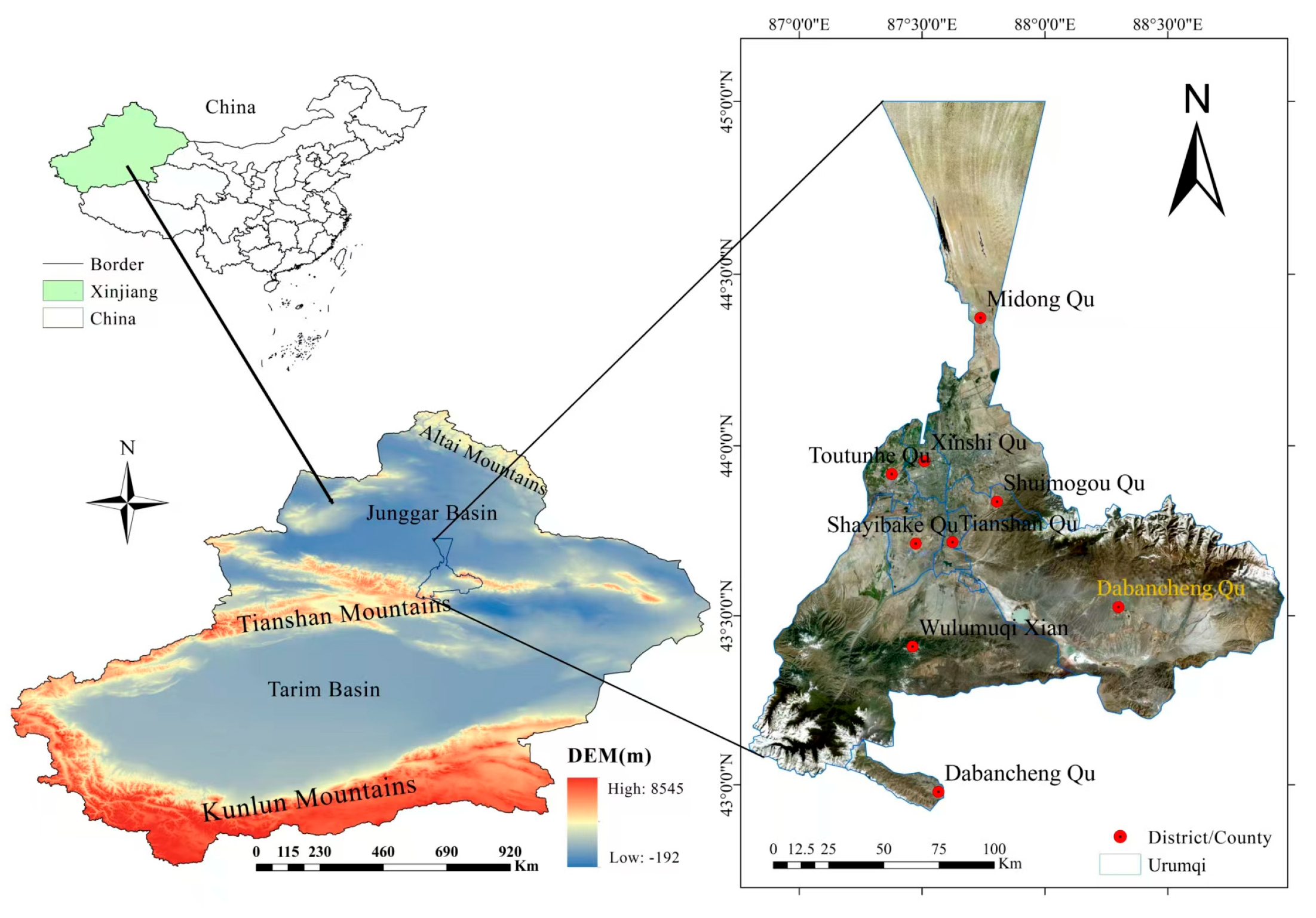
Figure 1. Study area.
Toxics 14 00135 g001
Figure 2. Organ-specific Cd accumulation in plants.
Toxics 14 00135 g002
Figure 4. Cluster analysis of Cd content in different plants after normalization.
Toxics 14 00135 g004
Figure 5. The stratified distribution of cadmium (Cd) speciation fractions.
Toxics 14 00135 g005
Figure 6. Cd accumulation between above-ground and below-ground compartments.
Toxics 14 00135 g006
Table 1. Growth status of each greening tree species in the sampling area (Mean ± SD).
The Name of the PlantThe Average Tree Height
H/m
Diameter at Breast Height
D/cm
The Crown
m
Malus spectabilis5.43 ± 0.2117.50 ± 0.415.20 × 5.70
Ulmus pumila12.67 ± 1.2518.50 ± 1.085.40 × 6.50
Ulmus densa6.90 ± 0.4116.17 ± 1.036.20 × 6.80
Pinus sylvestris var. mongolica8.53 ± 0.8213.33 ± 1.257.40 × 5.80
Salix babylonica8.87 ± 0.3925.67 ± 1.256.80 × 7.10
Rhus typhina6.00 ± 0.5111.57 ± 0.423.30 × 4.60
Catalpa speciosa7.93 ± 0.5013.67 ± 1.254.30 × 4.70
Ulmus pumila ‘Aurea’6.33 ± 0.4613.00 ± 0.823.50 × 4.60
Ligustrum obtusifolium0.80 ± 0.29//
Fraxinus rhynchophylla7.90 ± 0.3711.33 ± 1.264.50 × 5.80
Prunus triloba1.10 ± 0.29//
Populus alba var. pyramidalis16.47 ± 1.1318.33 ± 1.244.20 × 4.80
Prunus × cistena1.20 ± 0.33//
Syringa reticulata subsp. amurensis7.73 ± 0.2616.00 ± 0.823.50 × 4.40
Acer negundo8.50 ± 0.6516.13 ± 0.844.60 × 5.40
Picea koraiensis5.67 ± 0.2511.40 ± 0.983.70 × 4.60
Note: “/” means that the tree species is a small shrub, DBH and crown width can be ignored.
Table 2. Comparison of Cd concentrations reported in different literates.
MetalAdsorption or Bio-Accumulation StatusConcentration(mg/kg)Reference
CdSpinach317.3 [32,33]
CdRice30.1 [34]
CdLettuce1.7 [32]
CdPyxine cocoes16.9[35]
CdThuidium tamariscinum0.44[36]
CdSphagnum papillosum4.31[37]
CdSoil in Egypt7.84[38]
CdUlmus densa0.36Urumqi, in this article
CdLigustrum obtusifolium0.08Urumqi, in this article
CdSoil0.34Urumqi, in this article
Disclaimer/Publisher’s Note: The statements, opinions and data contained in all publications are solely those of the individual author(s) and contributor(s) and not of MDPI and/or the editor(s). MDPI and/or the editor(s) disclaim responsibility for any injury to people or property resulting from any ideas, methods, instructions or products referred to in the content.