
A Structured Framework for Circular Supplier Selection: A Hybrid Multi-Criteria Decision-Making Approach




Abstract
1. Introduction
2. Literature Review
2.1. Foundations of CSS
2.2. CSS Criteria
2.3. Decision-Making in CSS
2.4. Identified CSS Gap
3. Methodology
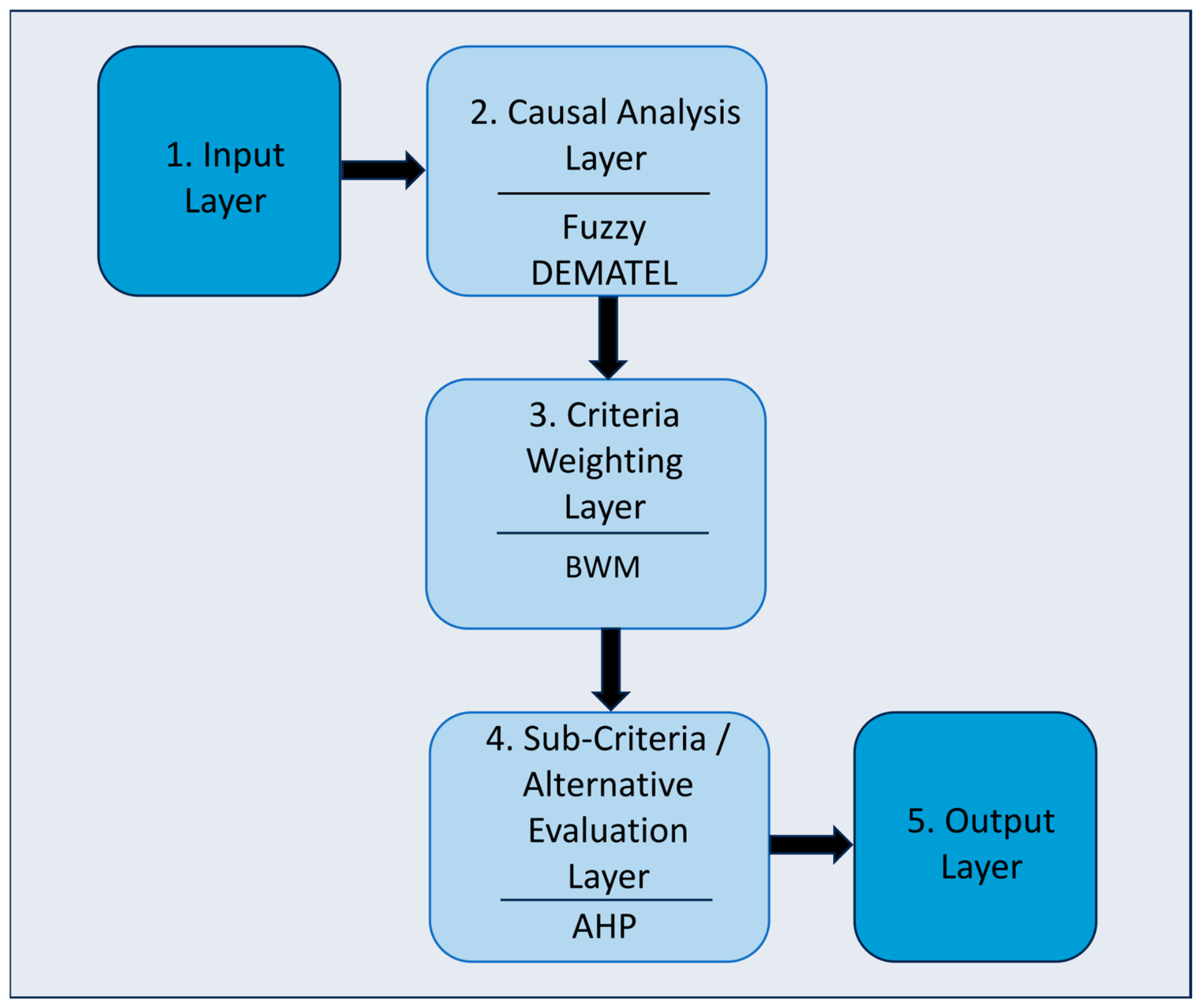
3.1. Research Design
3.2. Fuzzy DEMATEL
- A.
- Define the criteria and introduce a fuzzy scale. Express performance levels through linguistic terms mapped to triangular fuzzy values. The scale ranges from no influence (values close to 0), through low and medium influence (intermediate values between 0.25 and 0.75), up to high and strong influence (values approaching 1.0). This linguistic-to-numeric mapping provides a structured way to capture subjective judgments [59,60].
- B.
- Build the fuzzy decision matrix. In this mathematical step, the triangular fuzzy parameters, represent the lower, middle, and upper bounds of the influence of the criterion on criterion , where function as the influencing criterion and as the influencing criterion.
- C.
- Derive the area center numbers using (1). Equation (1) computes the area center number (AC), summarizing the fuzzy judgments into a single representative value.This step condenses the uncertainty of expert inputs into a usable score for weighting.
- D.
- Adjust the weights of the criteria by defining the coefficients for each criterion j. Equation (2) normalizes these ( values to calculate the relative weight of each criterion.where the variables denote the normalized weight of the criterion represents the adjusted coefficient value associated with criterion j, and i and j denote the influencing and influenced criteria, respectively.DEMATEL uses these weights to build the causal relation diagram.
- E.
- Apply DEMATEL to create a causal relation diagram. Equations (3) and (4) present the sum of rows (R) and columns (C). These equations compute the total influence exerted by each criterion (R) and the degree to which the other criteria influence each criterion (C).where the components represent the total influence exerted by the criterion the total influence received by the criterion and the influence of the criterion on criterion , respectively.
3.3. Best-Worst Method
- A.
- Identify the criteria as the decision set .
- B.
- Identify the criterion considered most important (Best) and the one deemed least relevant (Worst).
- C.
- Conduct pairwise judgments among the criteria, applying a 1–9 rating scale. The best-to-other representation is as a vector , where the components denotes the preference of the Best criterion over each criterion j.
- D.
- Express the worst-to-others representation as a vector , where T indicates the transpose of the vector.
- E.
- Determine the optimal set of weights .
- F.
- Execute an integrity check. The consistency ratio (CR) has in the numerator representing the optimal consistency value obtained from the linear optimization model. Equation (5) presents the calculation of the CR, which measures the reliability of the weights obtained in BWM. The parameter measures represent the maximum deviation in the pairwise comparisons, while CI denotes the consistency index.
3.4. Analytic Hierarchy Process
4. CSS Structured Framework for Deployment Results
4.1. Fuzzy DEMATEL Results
4.2. BWM Results
4.3. AHP Results
5. Discussion
- Institutional ESG and Audits: Since environmental governance (C2) emerged as a key systemic driver and environmental transparency (SC8) achieved the highest priority within this dimension, firms should incorporate standardized ESG disclosure requirements, environmental reporting protocols, and traceability-based audits into their supplier qualification and contract renewal processes. For instance, procurement managers can apply these findings by requiring suppliers to submit sustainability disclosures aligned with global frameworks, such as the Global Reporting Initiative (GRI) or Sustainability Accounting Standards Board (SASB). Additionally, mandating annual audits—such as Standard (ISO 14001) certification [76]—can effectively verify environmental compliance. Rather than limiting audits to regulatory compliance, managers should adopt recurring circularity assessments covering circular design capability (SC1), recycling and recovery practices (SC4), and the use of secondary materials (SC5).
- Digital Systems Infrastructure: The strong performance of technological enablement (C4), particularly data integration capability (SC18), indicates that firms should prioritize investments in interoperable digital systems capable of monitoring supplier environmental and operational data in real time. To achieve this, managers should allocate capital to Enterprise Resource Planning (ERP) modules equipped with sustainability dashboards. They should also pilot blockchain-enabled traceability tools within high-risk sourcing categories and implement collaborative digital platforms to support reverse logistics coordination, circular-flow monitoring, and supplier transparency across the supply chain.
- Data-Driven Supplier Evaluation: The results further suggest that procurement managers should adopt data-driven systems within the structured framework for CSS that integrate circularity indicators, ESG metrics, delivery reliability, and digital readiness into supplier scorecards. By embedding the exact priority weights derived from this hybrid Fuzzy DEMATEL-BWM-AHP framework directly into corporate procurement scorecards, firms can ensure that day-to-day purchasing decisions systematically prioritize suppliers with stronger long-term circular capabilities over short-term cost efficiencies.
- Targeted Supplier Action Plans: The findings also indicate differentiated managerial actions according to supplier performance profiles:
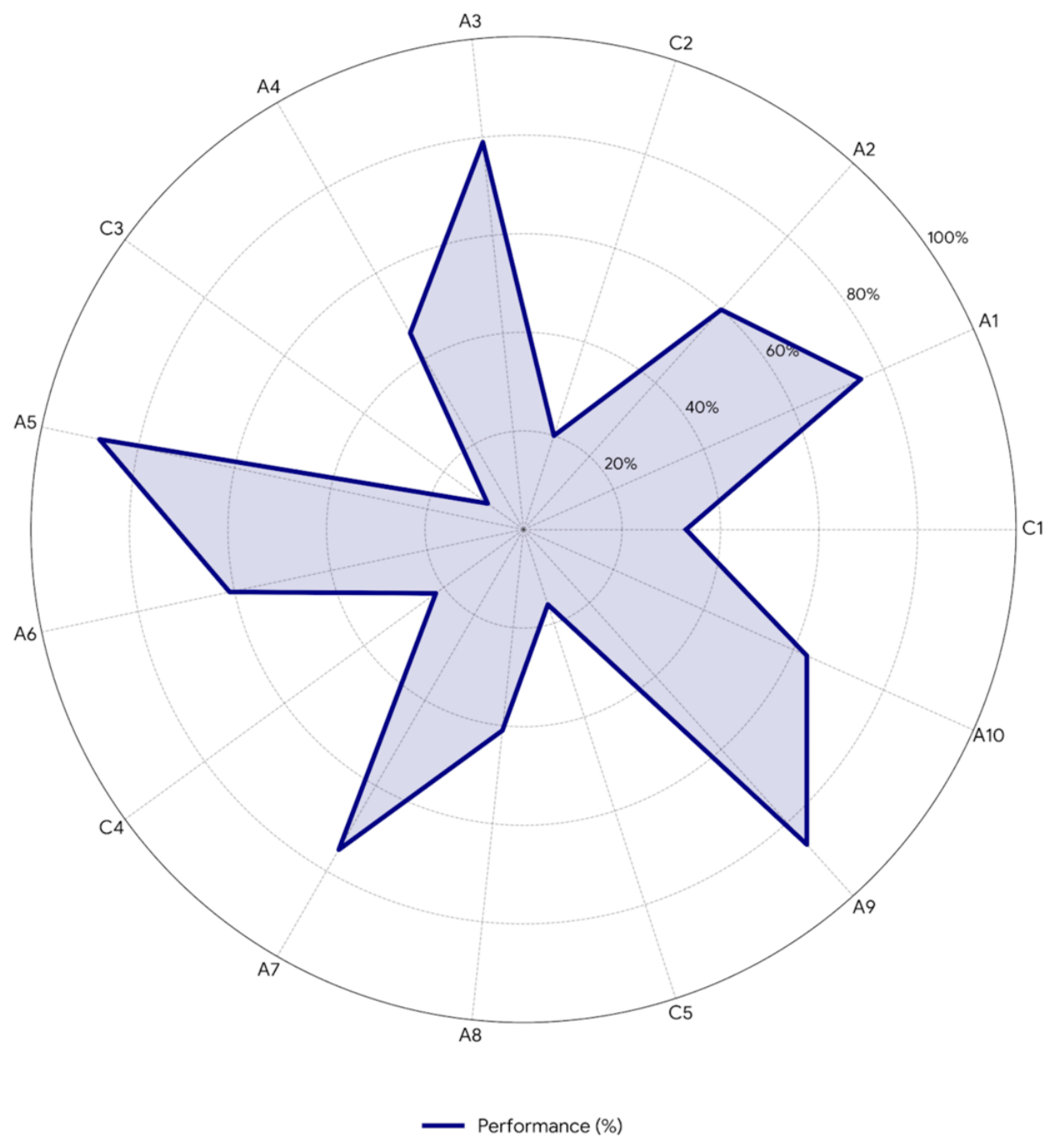
- Top-ranked suppliers (such as A5 and A9) should be integrated into long-term strategic partnerships focused on circular innovation and co-development initiatives.
- Mid-ranked suppliers should receive targeted capability-building support related to digital integration, environmental reporting, and operational resilience. For example, procurement teams can provide technical workshops on digital traceability tools or supply standardized environmental reporting templates to help these partners drive continuous improvement.
- Low-ranked suppliers should be subject to corrective improvement plans involving Corporate Social Responsibility (CSR) compliance, sustainability audits, and minimum circularity performance requirements linked to future sourcing eligibility. This operational turnaround can be managed by setting explicit, time-bound compliance thresholds as mandatory conditions for remaining in the sourcing pool.
6. Conclusions
Author Contributions
Funding
Data Availability Statement
Conflicts of Interest
References
- Liang, Y.; Kim, T.H.; Lee, M.J. Digital Dynamic Capabilities and Environmental Sustainability: The Role of Circular Supply Chain Practices. Corp. Soc. Responsib. Environ. Manag. 2026. online version of record. [Google Scholar] [CrossRef]
- Upadhyay, A.; Shukla, A.C. Circular Supply Chain Management: Modeling of Drivers in the Context of Indian MSMEs. J. Adv. Manag. Res. 2026. ahead-of-print. [Google Scholar] [CrossRef]
- Ye, T. Integrating Leadership Orientations and Government Policy in Green Supply Chain Adoption and Circular Economy Practices in the Chinese Furniture Industry. Corp. Soc. Responsib. Environ. Manag. 2026. online version of record. [Google Scholar] [CrossRef]
- Nayeri, S.; Sazvar, Z. Sustainable Evaluation of the Raw Material Providers Based on Industry 5.0 and Circular Economy Aspects: A New Stochastic Method. Opsearch 2026, 63, 134–163. [Google Scholar] [CrossRef]
- Dorfeshan, Y.; Jolai, F.; Mousavi, S.M. Sustainable Circular Supplier Evaluation in Project-Driven Supply Chains with a Fuzzy Stochastic Decision Model under Uncertainty. Appl. Soft Comput. 2025, 179, 113370. [Google Scholar] [CrossRef]
- Ali, H.; Liu, M.; Shoaib, M. An Innovative Decision-Support Framework for Sustainable-Circular Supplier Assessment and Order Allocation to Optimize Supply Chain Efficiency. Environ. Dev. Sustain. 2026, 28, 13019–13062. [Google Scholar] [CrossRef]
- Corsini, F.; De Bernardi, C.; Gusmerotti, N.M.; Frey, M. Introducing the Circular Assessment of Suppliers (CAoS) Tool: A Kraljic Matrix-Based Tool to Facilitate Circular Procurement in Private Organizations. J. Clean. Prod. 2024, 452, 142085. [Google Scholar] [CrossRef]
- Castellani, P.; Rossato, C.; Giaretta, E.; Vargas-Sánchez, A. Partner selection strategies of SMEs for reaching the Sustainable Development Goals. Rev. Manag. Sci. 2024, 18, 1317–1352. [Google Scholar] [CrossRef]
- Echefaj, K.; Charkaoui, A.; Cherrafi, A.; Garza-Reyes, J.A.; Khan, S.A.R.; Chaouni Benabdellah, A. Sustainable and resilient supplier selection in the context of circular economy: An ontology-based model. Manag. Environ. Qual. 2023, 34, 1461–1489. [Google Scholar] [CrossRef]
- Acerbi, F.; Rocca, R.; Fumagalli, L.; Taisch, M. Enhancing the cosmetics industry sustainability through a renewed sustainable supplier selection model. Prod. Manuf. Res. 2023, 11, 2161021. [Google Scholar] [CrossRef]
- Ardra, S.; Barua, M.K. Sustainable supplier selection among supermarket’s fresh fruits and vegetable supply chains based on circular practices in India. Environ. Dev. Sustain. 2024, 28, 14903–14939. [Google Scholar] [CrossRef]
- Pawaree, N.; Phokha, S.; Phukapak, C. Multi-response optimization of charcoal briquettes process for green economy using a novel TOPSIS linear programming and genetic algorithms based on response surface methodology. Results Eng. 2024, 22, 102226. [Google Scholar] [CrossRef]
- Ali, H.; Zhang, J.; Shoaib, M. A hybrid approach for sustainable-circular supplier selection based on industry 4.0 framework to make the supply chain smart and eco-friendly. Environ. Dev. Sustain. 2024, 26, 22587–22624. [Google Scholar] [CrossRef]
- Rezaie, B.; Javadian, N.; Kazemi, M. The customer-based supplier selection and order allocation problem based on the waste management and resilience dimensions: A data-driven approach. Eng. Appl. Artif. Intell. 2025, 153, 110692. [Google Scholar] [CrossRef]
- Gholami, H.; Delorme, X.; Dolgui, A. An intelligent data-driven model for sustainable-resilient supplier scrutiny and selection in sustainable reconfigurable manufacturing systems. Int. J. Prod. Res. 2025, 64, 2591–2615. [Google Scholar] [CrossRef]
- Wang, J.; Jiang, W.; Huang, T.; Pedrycz, W. A large-scale supplier evaluation approach for circular economy in the presence of circular criteria interactions and weight consistency. Expert Syst. Appl. 2025, 261, 125500. [Google Scholar] [CrossRef]
- Sharma, V.; Katiyar, R.; Mishra, R. Analyzing the impact factors of remanufacturing industry on the Indian economy: A step towards circular economy. J. Model. Manag. 2024, 19, 2131–2157. [Google Scholar] [CrossRef]
- Cuellar-Usaquén, D.; Ulmer, M.W.; Antons, O.; Arlinghaus, J.C. Dynamic multi-period recycling collection routing with uncertain material quality. OR Spectr. 2025, 47, 699–742. [Google Scholar] [CrossRef]
- Dehnavi, S.; Mokhtari, H. Sustainable energy-efficient optimization of construction supply chains with smart contracts. Sustain. Futures 2026, 11, 101630. [Google Scholar] [CrossRef]
- Tsao, Y.C.; Balo, H.T.; Lee, C.K.H. Resilient and sustainable semiconductor supply chain network design under trade credit and uncertainty of supply and demand. Int. J. Prod. Econ. 2024, 274, 109318. [Google Scholar] [CrossRef]
- Mahmoudi, M.; Shojaei, P.; Javanmardi, E.; Mahmoudabadi, H. A grey-based multiple attribute decision making model for implementing circular supply chain in copper industries. Clean. Logist. Supply Chain 2025, 15, 100212. [Google Scholar] [CrossRef]
- Garcia-Buendia, N.; Núñez-Merino, M.; Moyano-Fuentes, J.; Maqueira-Marín, J.M. Squaring circular supply chain management: A comprehensive overview of emerging themes and trends. Bus. Strategy Environ. 2024, 33, 8190–8210. [Google Scholar] [CrossRef]
- Haleem, A.; Khan, S.; Luthra, S.; Varshney, H.; Alam, M.; Khan, M.I. Supplier evaluation in the context of circular economy: A forward step for resilient business and environment concern. Bus. Strategy Environ. 2021, 30, 2119–2146. [Google Scholar] [CrossRef]
- Tavana, M.; Sorooshian, S.; Mina, H. An integrated group fuzzy inference and best–worst method for supplier selection in intelligent circular supply chains. Ann. Oper. Res. 2024, 342, 803–844. [Google Scholar] [CrossRef]
- Mishra, A.R.; Rani, P.; Pamucar, D.; Saha, A. An integrated Pythagorean fuzzy fairly operator-based MARCOS method for solving the sustainable circular supplier selection problem. Ann. Oper. Res. 2024, 342, 523–564. [Google Scholar] [CrossRef]
- Zambujal-Oliveira, J.; Fernandes, C. The contribution of sustainable packaging to the circular food supply chain. Packag. Technol. Sci. 2024, 37, 443–456. [Google Scholar] [CrossRef]
- Sosnowski, P.C. Supplier environmental evaluation—The rationale for the practical application. LogForum 2023, 19, 655–667. [Google Scholar] [CrossRef]
- Perçin, S. An Integrated Interval Type-2 Fuzzy Set Model for Evaluating Circular Low Carbon Suppliers in a Developing Country. Eng. Manag. J. 2024, 36, 221–243. [Google Scholar] [CrossRef]
- Xie, Z.; Tian, G.; Tao, Y. A Multi-Criteria Decision-Making Framework for Sustainable Supplier Selection in the Circular Economy and Industry 4.0 Era. Sustainability 2022, 14, 16809. [Google Scholar] [CrossRef]
- Bai, C.; Zhu, Q.; Sarkis, J. Circular economy and circularity supplier selection: A fuzzy group decision approach. Int. J. Prod. Res. 2024, 62, 2307–2330. [Google Scholar] [CrossRef]
- Teymourifar, A. A critical review of the SCOR Digital Standard (SCOR-DS): Conceptual implications for supply chain performance measurement. Front. Sustain. 2026, 7, 1769304. [Google Scholar] [CrossRef]
- Saaty, T.L. Fundamentals of Decision Making and Priority Theory with the Analytic Hierarchy Process; RWS Publications: Pittsburgh, PA, USA, 1994. [Google Scholar]
- Saaty, T.L. Theory and Applications of the Analytic Network Process: Decision Making with Benefits, Opportunities, Costs, and Risks; RWS Publications: Pittsburgh, PA, USA, 2005. [Google Scholar]
- Vidal, U.; Obregon, M.; Ramos, E.; Verma, R.; Coles, P.S. Sustainable and risk-resilient circular supply chain: A Peruvian paint manufacturing supply chain model. Sustain. Futures 2024, 7, 100207. [Google Scholar] [CrossRef]
- Gupta, A.K.; Shaikh, I. Sustainable supplier selection criteria for HVAC manufacturing firms: A multi-dimensional perspective using the Delphi–fuzzy AHP method. Logistics 2024, 8, 103. [Google Scholar] [CrossRef]
- Duan, Y.; Khokhar, M.; Raza, A.; Sharma, A.; Islam, T. The role of digital technology and environmental sustainability in circular supply chains based on the fuzzy TOPSIS model. Environ. Dev. Sustain. 2025. [Google Scholar] [CrossRef]
- Kusi-Sarpong, S.; Gupta, H.; Khan, S.A.; Chiappetta Jabbour, C.J.; Rehman, S.T.; Kusi-Sarpong, H. Sustainable supplier selection based on Industry 4.0 initiatives within the context of circular economy implementation in supply chain operations. Prod. Plan. Control 2023, 34, 999–1019. [Google Scholar] [CrossRef]
- Tramarico, C.; Petrillo, A.; Andrade, H.; Salomon, V. Advancing circular supplier selection: Multi-criteria perspectives on risk and sustainability. Sustainability 2025, 17, 6814. [Google Scholar] [CrossRef]
- Shahrabifarahani, S.; Torabi, S.A.; Rahiminia, M. Circular sustainable supply chain network design for electronic devices. Environ. Dev. Sustain. 2025. [Google Scholar] [CrossRef]
- Muerza, V.; Urciuoli, L.; Habas, S.Z. Enabling the circular economy of bio-supply chains employing integrated biomass logistics centers—A multi-stage approach integrating supply and production activities. J. Clean. Prod. 2023, 384, 135628. [Google Scholar] [CrossRef]
- Khan, F.; Ali, Y. Implementation of circular supply chain management in the pharmaceutical industry. Environ. Dev. Sustain. 2022, 24, 13705–13731. [Google Scholar] [CrossRef] [PubMed]
- Zarbakhshnia, N.; Govindan, K.; Kannan, D.; Goh, M. Outsourcing logistics operations in circular economy towards sustainable development goals. Bus. Strategy Environ. 2023, 32, 134–162. [Google Scholar] [CrossRef]
- Mishra, M.K.; Mittal, A.; Singh, N.; Chaturvedi, D.D.; Srivastava, A. Overcoming Barriers to Sustainable Production: A Fuzzy DEMATEL Approach to Circular Economy Challenges. Circ. Econ. Sustain. 2026, 6, 149. [Google Scholar] [CrossRef]
- Tramarico, C.L.; Da Silva, A.F.; Branco, J.E.H. Mapping decision making structures in supply chain contexts: A fuzzy DEMATEL approach. Logistics 2025, 9, 76. [Google Scholar] [CrossRef]
- Rezaei, J. Best worst multi criteria decision making method. Omega 2015, 53, 49. [Google Scholar] [CrossRef]
- Asadabadi, M.R.; Ahmadi, H.B.; Gupta, H.; Liou, J.J.H. Supplier selection to support environmental sustainability: The stratified BWM–TOPSIS method. Ann. Oper. Res. 2023, 322, 321–344. [Google Scholar] [CrossRef] [PubMed]
- Govindan, K.; Rajendran, S.; Sarkis, J.; Murugesan, P. Multi criteria decision making approaches for green supplier evaluation and selection: A literature review. J. Clean. Prod. 2015, 98, 66–83. [Google Scholar] [CrossRef]
- Awasthi, A.; Govindan, K.; Gold, S. Multi-tier sustainable global supplier selection using a fuzzy AHP-VIKOR based approach. Int. J. Prod. Econ. 2018, 195, 106–117. [Google Scholar] [CrossRef]
- Ortiz Barrios, M.; Miranda De la Hoz, C.; López Meza, P.; Petrillo, A.; De Felice, F. A case of food supply chain management with AHP, DEMATEL, and TOPSIS. J. Multi-Crit. Decis. Anal. 2020, 27, 104–128. [Google Scholar] [CrossRef]
- Tramarico, C.L.; Paredes, J.A.L.; Salomon, V.A.P. Process and strategic criteria assessment in platform based supply chains: A framework for identifying operational vulnerabilities. Systems 2026, 14, 75. [Google Scholar] [CrossRef]
- Fernández Ocamica, V.; Zambrana-Vasquez, D.; Díaz Murillo, J.C. Optimizing Circular Economy Choices: The Role of the Analytic Hierarchy Process. Sustainability 2025, 17, 6759. [Google Scholar] [CrossRef]
- Tramarico, C.L. Circular supply chain: Addressing critical success factors through multi-criteria analysis. In Industrial Engineering and Operations Management. IJCIEOM 2024; Gonçalves dos Reis, J.C., Mendonça Freires, F.G., Vieira Junior, M., Garcia Barbastefano, R., Oliveira Sant’Anna, Â.M., Eds.; Springer Proceedings in Mathematics & Statistics; Springer: Cham, Switzerland, 2025; Volume 483. [Google Scholar] [CrossRef]
- Tramarico, C.L.; Belmar, P.I.P.; Salomon, V.A.P. Enhancing circular supply chain implementation: Multi-criteria analysis with the Analytic Hierarchy Process. In AI, Analytics and Strategic Decision-Making; Routledge: London, UK, 2025; pp. 330–352. [Google Scholar] [CrossRef]
- Gabus, A.; Fontela, E. Perceptions of the World Problematique: Communication Procedure, Communicating with Those Bearing Collective Responsibility (DEMATEL Report No. 1); Battelle Geneva Research Centre: Geneva, Switzerland, 1973. [Google Scholar]
- Si, S.L.; You, X.Y.; Liu, H.C.; Zhang, P. DEMATEL technique: A systematic review of the state-of-the-art literature on methodologies and applications. Math. Probl. Eng. 2018, 2018, 3696457. [Google Scholar] [CrossRef]
- Okoli, C.; Pawlowski, S.D. The Delphi method as a research tool: An example, design considerations and applications. Inf. Manag. 2004, 42, 15–29. [Google Scholar] [CrossRef]
- Falatoonitoosi, E.; Ahmed, S.; Sorooshian, S. Expanded DEMATEL for determining cause and effect group in bidirectional relations. Sci. World J. 2014, 2014, 103846. [Google Scholar] [CrossRef]
- Saaty, T.L.; Peniwati, K. Group Decision Making: Drawing out and Reconciling Differences; RWS Publications: Pittsburgh, PA, USA, 2013. [Google Scholar]
- John, R.; Singh, A.K. A DEMATEL approach for analysing the interdependence among the efficiency barriers in the agri-fresh produce supply chains. Supply Chain Anal. 2025, 10, 100106. [Google Scholar] [CrossRef]
- Chen-Yi, H.; Ke-Ting, C.; Gwo-Hshiung, T. FMCDM with fuzzy DEMATEL approach for customers’ choice behavior model. Int. J. Fuzzy Syst. 2007, 9, 236–246. [Google Scholar]
- Testoni, P.S.; Tramarico, C.L.; Rodríguez, E.C.A.; Marins, F.A.S. Analytic hierarchy process applied in the prioritization of third party logistics providers in banking services. Production 2024, 34, e20230108. [Google Scholar] [CrossRef]
- Kumar, P.; Singh, R.K.; Paul, J.; Sinha, O. Analyzing challenges for sustainable supply chain of electric vehicle batteries using a hybrid approach of Delphi and Best Worst Method. Resour. Conserv. Recycl. 2021, 175, 105879. [Google Scholar] [CrossRef]
- Yadav, G.; Mangla, S.K.; Luthra, S.; Jakhar, S. Hybrid BWM-ELECTRE-based decision framework for effective offshore outsourcing adoption: A case study. Int. J. Prod. Res. 2018, 56, 6259–6278. [Google Scholar] [CrossRef]
- Khan, S.A.; Amin, C.; Fikri, T.D. Multi-criteria methods and techniques applied to supply chain management. In Multi-Criteria Decision-Making Methods Application in Supply Chain Management: A Systematic Literature Review; Salomon, V., Ed.; InTech Open: London, UK, 2018; pp. 3–31. [Google Scholar]
- Wallenius, J.; James, S.D.; Peter, C.F.; Ralph, E.S.; Stanley, Z.; Kalyanmoy, D. Multiple criteria decision making, multiattribute utility theory: Recent accomplishments and what lies ahead. Manag. Sci. 2008, 54, 1336–1349. [Google Scholar] [CrossRef]
- Balasbaneh, A.T.; Aldrovandi, S.; Sher, W. A systematic review of implementing multi-criteria decision-making (MCDM) approaches for the circular economy and cost assessment. Sustainability 2025, 17, 5007. [Google Scholar] [CrossRef]
- Saaty, T.L. Principia Mathematica Decernendi: Mathematical Principles of Decision Making: Generalization of the Analytic Network Process to Neural Firing and Synthesis; RWS Publications: Pittsburgh, PA, USA, 2010. [Google Scholar]
- Picarelli, A.; Beltrani, T.; De Marco, E.; La Monica, M.; Mancuso, E.; Sbaffoni, S.; Cutaia, L. Circular economy initiatives in the Marche region: Implementing of industrial symbiosis within the MARLIC project and mapping regional skills and governance. Environ. Eng. Manag. J. 2024, 23, 2111–2123. [Google Scholar] [CrossRef]
- Alfzari, K.A.; Ibrahim, F.; Cheaitou, A.; Obaideen, K. Towards sustainable supply chains: An SDG-informed framework for managing supplier-related risks. IMA J. Manag. Math. 2025, 37, 445–487. [Google Scholar] [CrossRef]
- Chiu, M.C.; Tai, P.Y.; Chu, C.Y. Developing a smart green supplier risk assessment system integrating natural language processing and life cycle assessment based on AHP framework: An empirical study. Resour. Conserv. Recycl. 2024, 207, 107671. [Google Scholar] [CrossRef]
- Teixeira, N. Circular economy perspectives: Challenges, innovations, and sustainable futures. Discov. Sustain. 2025, 6, 738. [Google Scholar] [CrossRef]
- Cano, J.A.; Londoño-Pineda, A.; Campo, E.A.; Gruchmann, T.; Weyers, S. Circular supply chain management assessment: A systematic literature review. Environments 2025, 12, 374. [Google Scholar] [CrossRef]
- Suchek, N.; Fernandes, C.I.; Kraus, S.; Filser, M.; Sjögrén, H. Innovation and the circular economy: A systematic literature review. Bus. Strategy Environ. 2021, 30, 3686–3702. [Google Scholar] [CrossRef]
- Grecu, I.; Nechita, R.M.; Stochioiu, F.P.G.; Ulerich, O.; Dumitrescu, C.I.; Cristoiu, C. A decision-oriented framework for sustainable supply chain redesign: A DEMATEL-based approach. Logistics 2025, 9, 90. [Google Scholar] [CrossRef]
- Büyüközkan, G.; Çifçi, G. A novel hybrid MCDM approach based on fuzzy DEMATEL, fuzzy ANP and fuzzy TOPSIS to evaluate green suppliers. Expert Syst. Appl. 2012, 39, 3000–3011. [Google Scholar] [CrossRef]
- ISO 14001; Environmental Management Systems: Requirements with Guidance for Use. Smithers: Geneva, Switzerland, 2015.




| Criterion | Description | References |
|---|---|---|
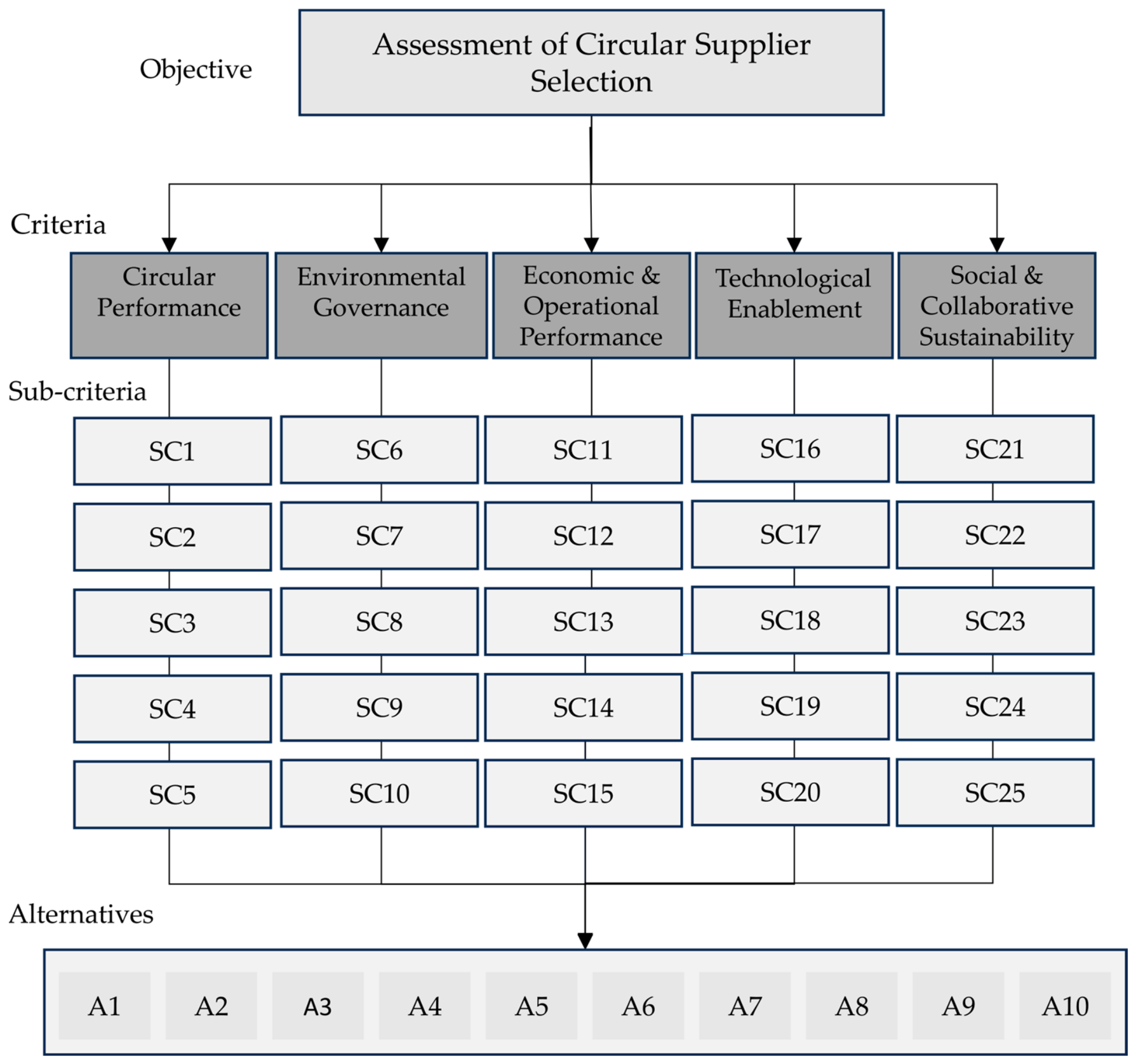
| C1 Circular Performance | The capability of the supplier to enable closed-loop systems, resource recovery, product life extension, and circular value creation. | [23,24,25,26] |
| C2 Environmental Governance | Degree of formalization of environmental management practices, emission control, compliance, and sustainability reporting. | [23,27,28] |
| C3 Economic & Operational Performance | Traditional dimensions of supplier performance include cost efficiency, quality, delivery reliability, flexibility, and financial stability. | [6,23,29] |
| C4 Technological Enablement | Technological capability to support circular supply chains through digitalization, traceability, system integration, and Industry 4.0 readiness. | [6,24,29] |
| C5 Social & Collaborative Sustainability | Supplier commitment to social responsibility, ethical standards, stakeholder collaboration, transparency, and long-term partnership alignment. | [23,24,25,27] |
| Criterion | Sub-Criterion | Description | References |
|---|---|---|---|
| SC1 Circular design capability | Design for reuse, modularity, disassembly, and recyclability. | [23,26] | |
| SC2 Circular innovation capability | Development of innovative circular business and production models. | [24,25] | |
| C1 | SC3 Reverse logistics capability | Ability to collect, return, and reintegrate products/materials into closed-loop systems. | [23,24] |
| SC4 Recycling & recovery rate | Extent of material recovery, reuse, and remanufacturing practices. | [23,27] | |
| SC5 Use of secondary materials | Adoption of recycled or regenerated inputs in production. | [25,28] | |
| SC6 Carbon Management | Monitoring and reduction in greenhouse gas emissions. | [25,28] | |
| SC7 Environmental Management Systems | Structured environmental management practices and certifications. | [27,28] | |
| C2 | SC8 Environmental Transparency | Disclosure of environmental data and sustainability reporting. | [24,29] |
| SC9 Regulatory Compliance | Compliance with environmental and CE regulations. | [23] | |
| SC10 Waste Management Systems | Structured waste minimization, treatment, and safe disposal practices. | [23,27] | |
| SC11 Cost Efficiency | Total acquisition cost and economic competitiveness. | [23,24] | |
| SC12 Delivery Reliability | On-time delivery and supply continuity. | [30] | |
| C3 | SC13 Financial Stability | Financial robustness and investment capacity. | [25,29] |
| SC14 Operational Flexibility | Ability to adapt to demand or specification changes. | [25,30] | |
| SC15 Quality Reliability | Defect rates, certifications, and historical quality performance. | [23] | |
| SC16 Analytics for Circular Optimization | Use of digital analytics to improve resource efficiency. | [24] | |
| SC17 Collaborative Digital Platforms | Digital tools enabling coordination and information sharing. | [6,29] | |
| C4 | SC18 Data Integration Capability | Integration of ERP, IoT, and information systems. | [6] |
| SC19 Digital Traceability | Digital tracking of materials across the supply chain. | [29] | |
| SC20 Industry 4.0 Readiness | Adoption of smart manufacturing and cyber-physical systems. | [6,24] | |
| SC21 Corporate Social Responsibility | Commitment to social responsibility and ethical standards. | [25,27] | |
| SC22 Ethical & Sustainable Sourcing | Adherence to ethical sourcing and sustainable procurement standards. | [25,28] | |
| C5 | SC23 Health & Safety Practices | Occupational health and safety compliance and performance. | [24] |
| SC24 Stakeholder Collaboration | Level of cooperation and partnership alignment within the supply chain. | [23,24] | |
| SC25 Transparency & Trust | Information transparency and long-term trust relationships. | [23] |
| Criterion | R (Row Score) | C (Column Score) | R + C (Importance/Relation) | R − C (Cause/Effect) | Classification |
|---|---|---|---|---|---|
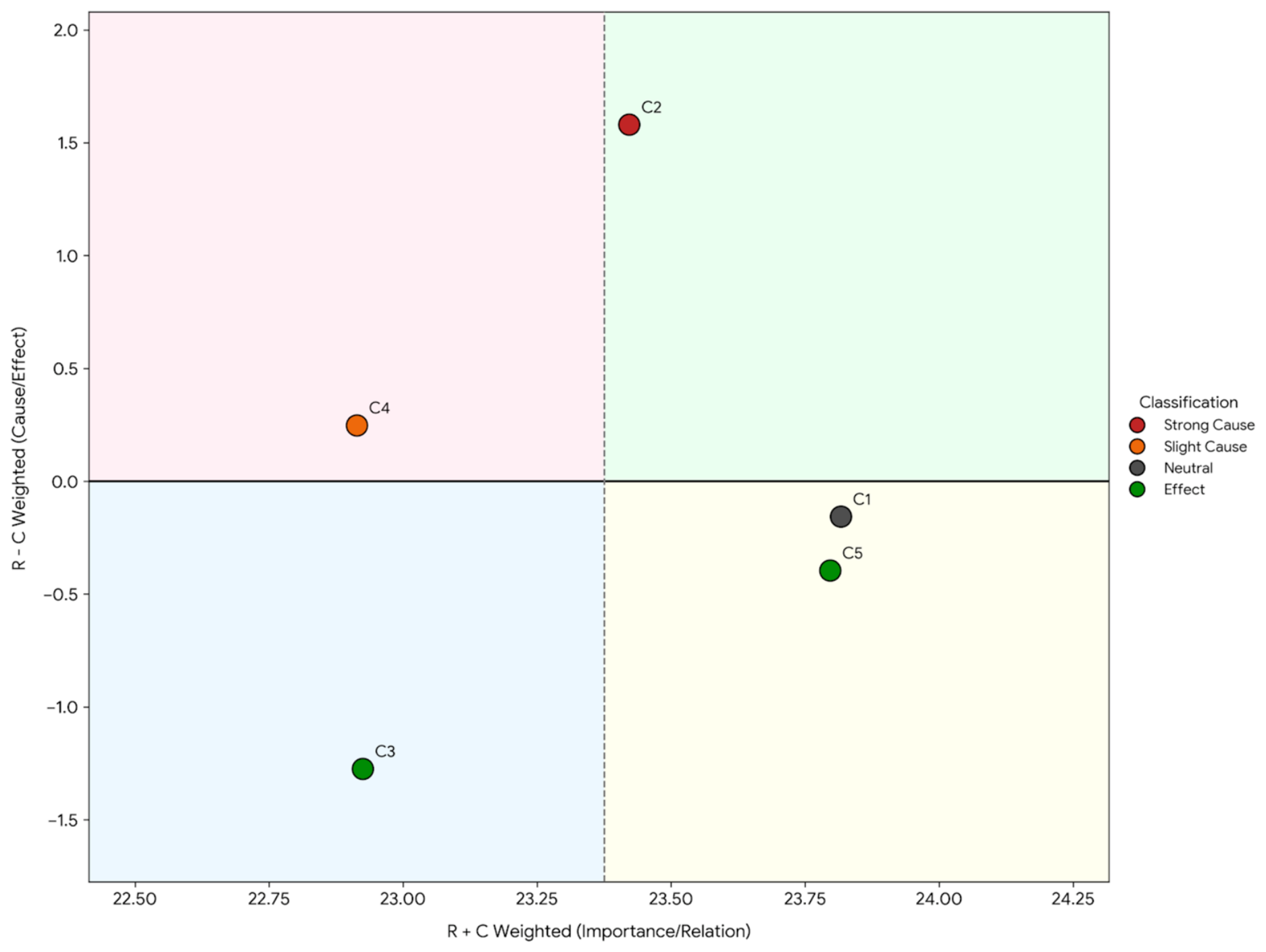
| C1 | 11.830 | 11.987 | 23.817 | −0.157 | Neutral |
| C2 | 12.501 | 10.921 | 23.422 | 1.580 | Strong Cause |
| C3 | 10.825 | 12.100 | 22.925 | −1.275 | Effect |
| C4 | 11.580 | 11.334 | 22.914 | 0.247 | Slight Cause |
| C5 | 11.700 | 12.096 | 23.797 | −0.396 | Effect |
| Judgment (BO/OW) | C1 | C2 | C3 | C4 | C5 |
|---|---|---|---|---|---|
| BO (Best = C2, O = Others) | 2 | 1 | 7 | 3 | 4 |
| OW (O = Others, Worst = C3) | 2 | 1 | 1 | 3 | 3 |
| Criteria and Sub-Criteria | Local | Overall |
|---|---|---|
| C1 Circular Performance | 0.325 | 0.325 |
| SC1 Circular design capability | 0.477 | 0.155 |
| SC2 Circular innovation capability | 0.234 | 0.076 |
| SC3 Reverse logistics capability | 0.122 | 0.040 |
| SC4 Recycling & recovery rate | 0.093 | 0.030 |
| SC5 Use of secondary materials | 0.074 | 0.024 |
| C2 Environmental Governance | 0.203 | 0.203 |
| SC6 Carbon Management | 0.247 | 0.050 |
| SC7 Environmental Management Systems | 0.203 | 0.041 |
| SC8 Environmental Transparency | 0.326 | 0.066 |
| SC9 Regulatory Compliance | 0.131 | 0.027 |
| SC10 Waste Management Systems | 0.094 | 0.019 |
| C3 Economic & Operational Performance | 0.093 | 0.093 |
| SC11 Cost Efficiency | 0.042 | 0.004 |
| SC12 Delivery Reliability | 0.350 | 0.033 |
| SC13 Financial Stability | 0.265 | 0.025 |
| SC14 Operational Flexibility | 0.228 | 0.021 |
| SC15 Quality Reliability | 0.115 | 0.011 |
| C4 Technological Enablement | 0.217 | 0.217 |
| SC16 Analytics for Circular Optimization | 0.250 | 0.054 |
| SC17 Collaborative Digital Platforms | 0.161 | 0.035 |
| SC18 Data Integration Capability | 0.379 | 0.082 |
| SC19 Digital Traceability | 0.122 | 0.027 |
| SC20 Industry 4.0 Readiness | 0.087 | 0.019 |
| C5 Social & Collaborative Sustainability | 0.162 | 0.162 |
| SC21 Corporate Social Responsibility | 0.452 | 0.073 |
| SC22 Ethical & Sustainable Sourcing | 0.221 | 0.036 |
| SC23 Health & Safety Practices | 0.146 | 0.024 |
| SC24 Stakeholder Collaboration | 0.117 | 0.019 |
| SC25 Transparency & Trust | 0.064 | 0.010 |
| Alternative | Overall | Rank |
|---|---|---|
| A1 | 0.754 | 4th |
| A2 | 0.603 | 8th |
| A3 | 0.787 | 3rd |
| A4 | 0.459 | 9th |
| A5 | 0.884 | 1st |
| A6 | 0.612 | 7th |
| A7 | 0.745 | 5th |
| A8 | 0.412 | 10th |
| A9 | 0.855 | 2nd |
| A10 | 0.635 | 6th |
| Scenario Description | Top-Ranked Alternatives | Mid-Ranked Alternatives | Low-Ranked Alternatives | Rank Changes Observed |
|---|---|---|---|---|
| Base weights (original) | A5, A9, A3 | A1, A7, A10, A6, A2 | A4, A8 | None |
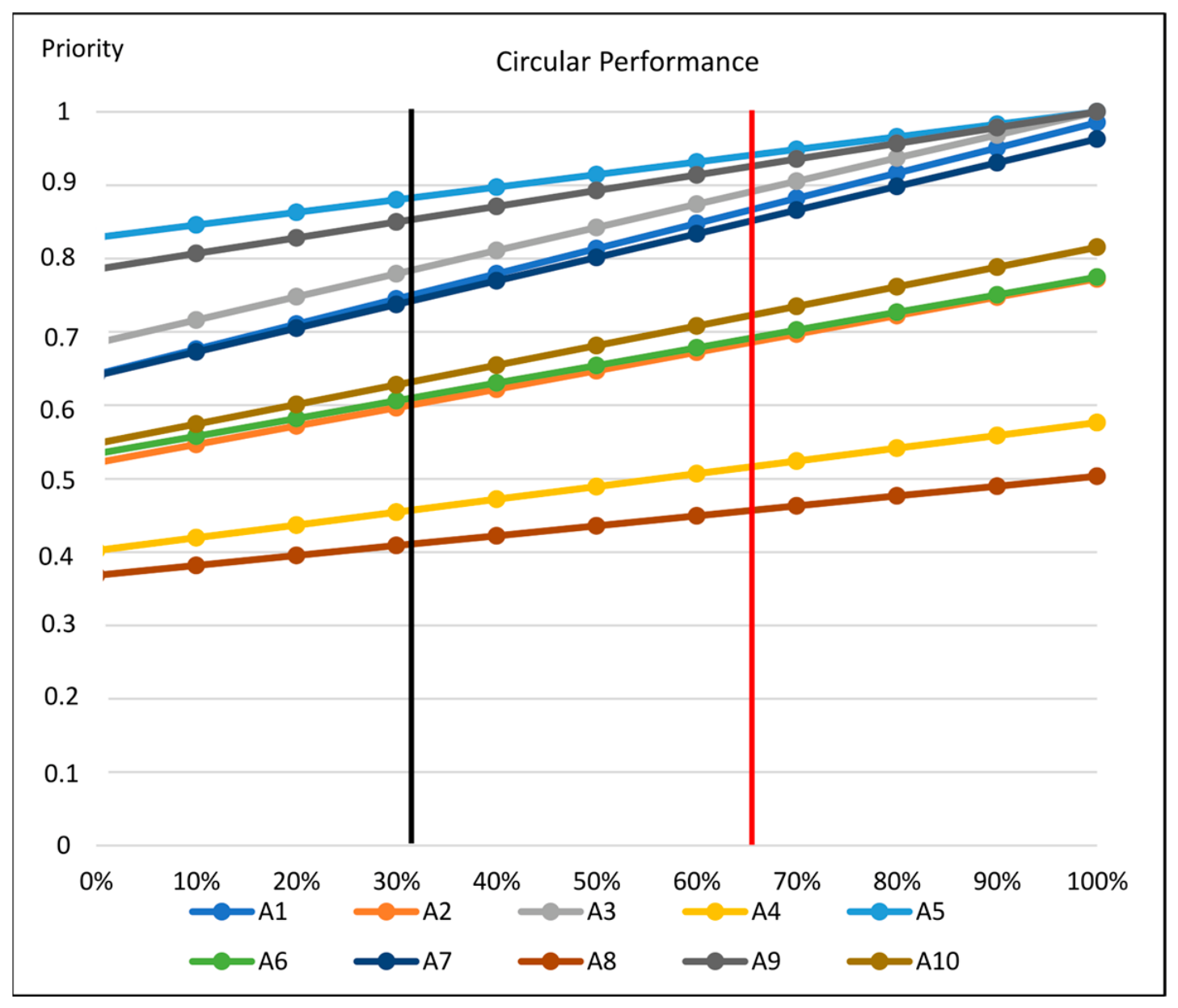
| C1 weight doubled (Figure 5) | A5, A9, A3 | A1, A7, A10, A6, A2 | A4, A8 | None |
| C1 weight reduced by half | A5, A9, A3 | A1, A7, A10, A6, A2 | A4, A8 | None |
Disclaimer/Publisher’s Note: The statements, opinions and data contained in all publications are solely those of the individual author(s) and contributor(s) and not of MDPI and/or the editor(s). MDPI and/or the editor(s) disclaim responsibility for any injury to people or property resulting from any ideas, methods, instructions or products referred to in the content. |
© 2026 by the authors. Licensee MDPI, Basel, Switzerland. This article is an open access article distributed under the terms and conditions of the Creative Commons Attribution (CC BY) license.
Share and Cite
Tramarico, C.L.; Petrillo, A.; Salomon, V.A.P. A Structured Framework for Circular Supplier Selection: A Hybrid Multi-Criteria Decision-Making Approach. Logistics 2026, 10, 134. https://doi.org/10.3390/logistics10060134
Tramarico CL, Petrillo A, Salomon VAP. A Structured Framework for Circular Supplier Selection: A Hybrid Multi-Criteria Decision-Making Approach. Logistics. 2026; 10(6):134. https://doi.org/10.3390/logistics10060134
Chicago/Turabian StyleTramarico, Claudemir Leif, Antonella Petrillo, and Valério Antonio Pamplona Salomon. 2026. "A Structured Framework for Circular Supplier Selection: A Hybrid Multi-Criteria Decision-Making Approach" Logistics 10, no. 6: 134. https://doi.org/10.3390/logistics10060134
APA StyleTramarico, C. L., Petrillo, A., & Salomon, V. A. P. (2026). A Structured Framework for Circular Supplier Selection: A Hybrid Multi-Criteria Decision-Making Approach. Logistics, 10(6), 134. https://doi.org/10.3390/logistics10060134