Article

Evaluation of Digital Technologies in Food Logistics: MCDM Approach from the Perspective of Logistics Providers

Faculty of Transport and Traffic Engineering, University of Belgrade, Vojvode Stepe 305, 11000 Belgrade, Serbia
*
Authors to whom correspondence should be addressed.
Logistics 2026, 10(1), 6; https://doi.org/10.3390/logistics10010006
Submission received: 6 November 2025 / Revised: 18 December 2025 / Accepted: 24 December 2025 / Published: 26 December 2025

Abstract

Background: In the era of rapid digital transformation, efficient food logistics (FL) is critical for sustainability and competitiveness. Maintaining food quality, minimizing waste, and optimizing costs are complex challenges that advanced digital technologies aim to address, particularly amid growing e-commerce and last-mile delivery demands. This underscores the need for a structured, quantitative evaluation of technological solutions to ensure operational reliability, efficiency, and sustainability. Methods: This study employs a Multi-Criteria Decision Making (MCDM) model combining Criterion Impact LOSs (CILOS) and Multi-Objective Optimization on the basis of Simple Ratio Analysis (MOOSRA) to evaluate key FL technologies: IoT, blockchain, Big Data analytics, automation and robotics, and cloud/edge computing. Nine evaluation criteria relevant to logistics providers were used, covering operational efficiency, flexibility, sustainability, food safety, data reliability, KPI support, scalability, costs, and implementation speed. CILOS determined criteria weights by considering interdependencies, and MOOSRA ranked technologies by benefits-to-costs ratios. Sensitivity analysis validated result robustness. Results: Automation and robotics ranked highest for enhancing efficiency, reducing errors, and improving handling and safety. Blockchain was second, supporting traceability and data security. Big Data analytics was third, enabling demand prediction and inventory optimization. IoT ranked fourth, providing real-time monitoring, while cloud/edge computing ranked fifth due to indirect operational impact. Conclusions: The CILOS–MOOSRA model enables transparent, structured evaluation, integrating quantitative metrics with logistics providers’ priorities. Results highlight technologies that enhance efficiency, reliability, and sustainability while revealing integration challenges, providing a strategic foundation for digital transformation in FL.

1. Introduction

Food logistics (FL) is a specialized domain within supply chain management, focusing on the planning, implementation, and control of food products and related information from producers to consumers. Contemporary challenges, including foodborne diseases, globalization, and rising consumer expectations, have increased the complexity of managing the food supply chain (FSC), necessitating improvements in traceability, freshness preservation, and product quality [1]. Advanced digital technologies play a crucial role in enhancing efficiency, transparency, and sustainability across the FSC.
Producers face growing demands for diverse product assortments, leading to more complex logistics and higher costs, particularly in transportation. Combined with a growing global population, these factors highlight the need for efficient and safe FSC management. Unlike traditional supply chains, food supply chains require particular attention to product quality and safety, giving rise to the concept of sustainable FSC management, which integrates economic, social, and environmental objectives [1].
Legislative frameworks and standards, such as Hazard Analysis and Critical Control Points (HACCP), the British Retail Consortium Global Standard for Food Safety (BRCGS), and the Food Safety Management System, further drive the adoption of sustainable practices, requiring high levels of control and accountability. Market pressures and societal expectations reinforce the need for sustainable business models, making sustainable FSC management essential for competitiveness and resilience [1].
Procurement, both direct (raw materials) and indirect (consumables), plays a key role in product quality. Efficient, automated procurement improves ordering accuracy and mitigates risks during crises such as the COVID-19 pandemic [2]. The integration of electronic systems and Artificial Intelligence (AI) enhances inventory management, demand analysis, and cost optimization, while robotics improves operational efficiency and reduces human errors [3].
In food processing, automation and robotics support tasks from sorting and cleaning to baking and cooling, improving standardization, precision, and productivity [4]. Similarly, automated packaging systems and the use of environmentally friendly materials, like bioplastics, contribute to efficiency and sustainability [5]. Distribution is also evolving, with autonomous systems, drones, and self-driving vehicles increasing speed, accuracy, and flexibility, particularly in urban areas [6].
Beyond transportation, AI-driven services—such as chatbots and robotic hospitality systems—enhance customer experience and operational efficiency [7]. Overall, modern FL is a complex and dynamic system that requires the integration of technological advancement, operational efficiency, and sustainability principles. Effective management entails optimizing processes, reducing waste, minimizing environmental impacts, and fostering collaboration across the entire supply chain, from producers to consumers, to meet market demands while supporting social and environmental goals.
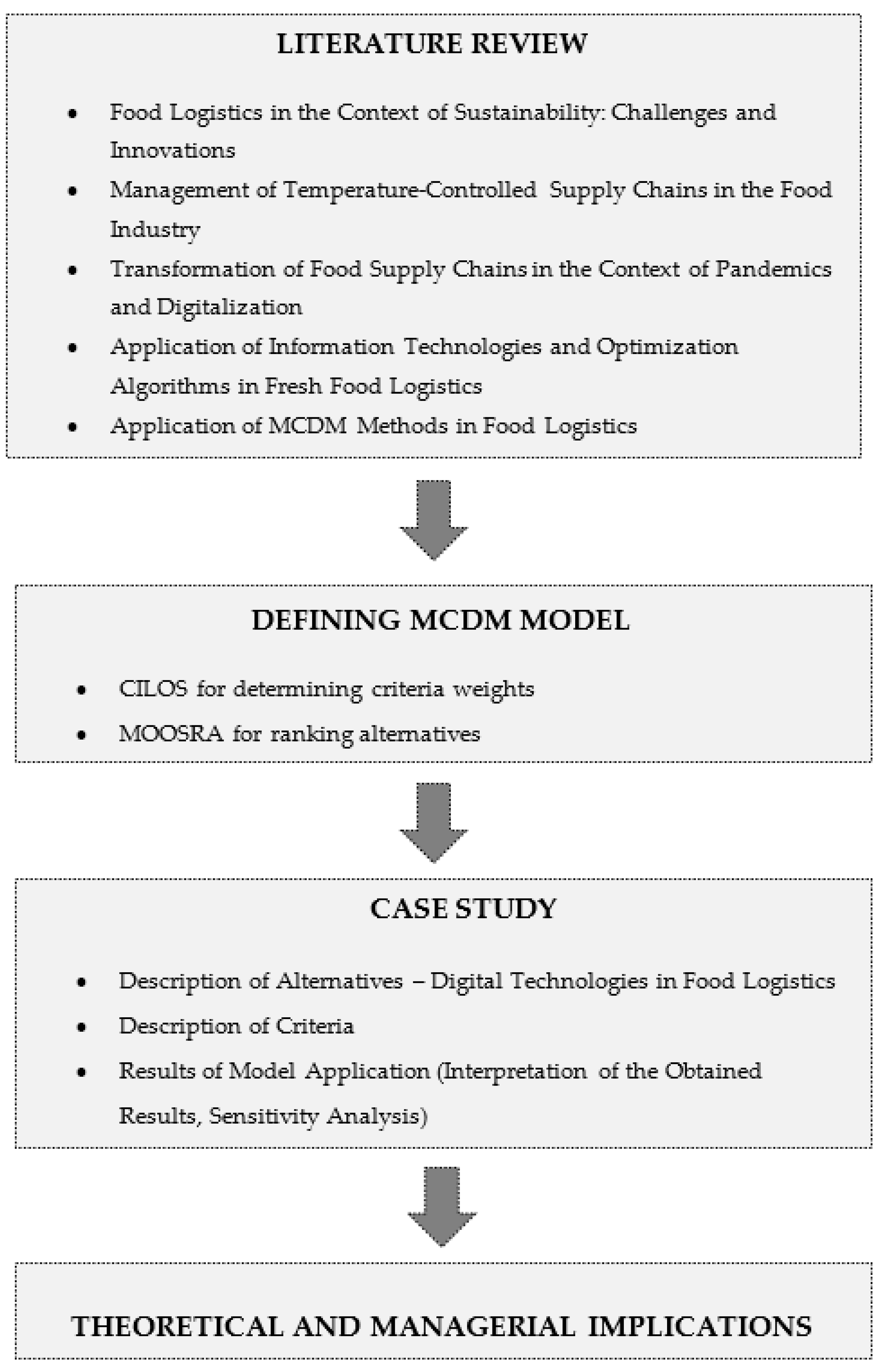
Despite numerous studies on digitalization in FSC, there is a lack of structured, quantitative evaluations of digital technologies specifically from the perspective of logistics providers, who are directly responsible for operational implementation. Existing research often focuses on broader supply chain stakeholders or individual technologies, without systematically comparing multiple solutions across different criteria. This study addresses this gap by applying a MCDM model to evaluate and rank digital technologies in FL, providing actionable insights specifically for logistics providers. The structure of this study is organized to ensure a clear and logical flow of research. Section 1 introduces the topic, defines the research problem, objectives, and significance of the study, highlighting the role of logistics providers in the digital transformation of FL. Section 2 provides a comprehensive literature review covering key aspects of sustainable FL, management of temperature-controlled supply chains, the impact of the pandemic and digitalization, as well as the application of information technologies, optimization algorithms, and multi-criteria decision-making (MCDM) methods in this field. Section 3 describes the methodological framework of the research and presents the applied MCDM model, which consists of two complementary methods: the Criterion Impact LOSs (CILOS) method, used to determine criterion weights, and the Multi-Objective Optimization on the basis of Simple Ratio Analysis (MOOSRA) method, applied for ranking digital technologies. Section 4 demonstrates the application of the proposed model through a case study in FL, including a description of alternatives and criteria, analysis results, and the conducted sensitivity analysis. Section 5 discusses the theoretical and managerial implications of the findings, emphasizing the contribution of the study to understanding digital transformation from the perspective of logistics providers. Section 6 presents the conclusion, summarizing the key research findings, highlighting the study’s limitations, and proposing directions for future research in the areas of digitalization and sustainable FL.

2. Literature Review

In the contemporary context of increasing demands for safe, efficient, and sustainable food distribution, FL faces the need for a deeper understanding of the challenges and opportunities offered by new technologies and management models. This study systematically structures the relevant literature into five thematic areas: (i) Food logistics in the context of sustainability: challenges and innovations, (ii) Management of temperature-controlled supply chains in the food industry, (iii) Transformation of food supply chains under pandemic conditions and digitalization, (iv) Application of information technologies and optimization algorithms in fresh food logistics, and (v) Application of MCDM methods in food logistics. Such an organization enables a systematic mapping of the research environment and the identification of key points of intersection between theory and practice. Based on the literature analysis, the study proposes an integrative framework for the enhancement of FL, which considers technological, operational, and sustainable aspects of modern supply chains, with a focus on decision-making under complex conditions of market and environmental volatility.

2.1. Food Logistics in the Context of Sustainability: Challenges and Innovations

Sustainability in food supply chains (FSCs) has become an important topic in logistics research, although prior studies do not always provide consistent conclusions regarding the effectiveness of proposed solutions. Short food supply chains (SFSCs) are often presented as a way to reduce transport distances and support local communities. While many authors emphasize their environmental and social benefits, others point to ongoing logistical limitations, including coordination problems and limited economies of scale, which may hinder their broader application [8]. This indicates that the sustainability of SFSCs largely depends on the level of collaboration and integrated planning among supply chain actors.
Green logistics offers a framework for addressing these issues through the optimization of transportation, packaging, and reverse logistics. The concept of food miles is commonly used to assess environmental impacts, and research generally shows that longer distances between distribution centers and consumers lead to higher greenhouse gas emissions [9]. However, some studies note that transport distance alone does not fully capture sustainability performance, as factors such as production methods and load efficiency also play a role. In this context, decentralized warehouses and local logistics solutions are considered beneficial, although their effectiveness varies depending on local conditions.
Cold supply chains (CSCs) pose additional environmental challenges due to high energy consumption and CO2 emissions. Although essential for maintaining food safety, especially for perishable goods, their negative impacts can be reduced through improved insulation and the use of renewable energy sources [9]. Nevertheless, the high investment costs associated with these measures remain a limiting factor, particularly for smaller operators.
Food waste continues to be a significant problem, with a substantial share of global production lost due to inadequate coordination and logistical failures. Technologies such as RFID and improved flow synchronization can help reduce these losses [10], but the literature suggests that technological solutions must be supported by organizational changes and information sharing among stakeholders.
Last-mile delivery in urban areas is frequently identified as one of the most challenging stages of FSCs, as it contributes to congestion, emissions, and higher costs. Solutions such as electric vehicles, consolidated deliveries, and decentralized delivery points show potential, although their large-scale implementation is still debated [11]. Digital transformation within Food Logistics 4.0 further supports efficiency through the use of IoT, blockchain, and AI, enabling real-time tracking and improved transparency [12]. Automation improves accuracy and hygiene in sectors such as meat and dairy, while reducing product damage in the transport of goods like potatoes and onions [13,14,15,16,17,18]. However, several studies emphasize that technological advances must be accompanied by employee training and the adoption of green logistics principles to achieve sustainable outcomes [19].
Finally, consumer behavior plays a crucial role in the overall sustainability of food logistics. Research shows that frequent car use for shopping contributes significantly to emissions, even when local retail options are available [20]. This suggests that logistical improvements alone are insufficient and that sustainable FSCs must also account for consumer habits and mobility patterns.

2.2. Management of Temperature-Controlled Supply Chains in the Food Industry

Distribution systems in cold supply chains (CSCs) play a key role in maintaining the quality and safety of temperature-sensitive food products during transport and storage. Due to their high energy consumption and environmental impact, effective CSC management requires precise control of logistics processes, with particular emphasis on temperature stability and loss reduction. Consequently, the literature increasingly stresses the need for continuous optimization and the integration of advanced technologies [21].
Several studies focus on temperature monitoring as a central challenge in CSCs. Pajić et al. [22] propose a comprehensive framework for monitoring temperature conditions during transportation and storage, highlighting the growing complexity of CSCs caused by the increasing number of stakeholders. Their findings underline the importance of advanced sensor technologies combined with integrated data management systems to ensure continuous and reliable temperature control across the supply chain. While such solutions improve transparency and food safety, their implementation often depends on the level of technological maturity and coordination among supply chain partners.
The limitations of existing distribution logistics models are addressed by Awad et al. [21], who emphasize the need for more realistic approaches that incorporate heuristic and metaheuristic methods. These models enable improved route planning and better control of transport conditions, contributing to reduced food losses and enhanced product quality. However, the literature also notes that such models may be difficult to apply in practice due to data availability and computational complexity.
Beyond technical considerations, compliance with international food safety regulations remains a critical factor in CSC performance. The World Trade Organization’s Sanitary and Phytosanitary (SPS) Agreement establishes baseline standards for food safety while allowing stricter measures when scientifically justified. Adherence to these principles is essential for effective temperature monitoring and control during transport and storage, particularly in international trade [23].
Perishable products require particular attention, as even minor temperature deviations can significantly increase losses. Studies emphasize the importance of coordinated logistics activities and inventory management strategies, such as the “First Expired, First Out” approach supported by sensors and software solutions. Although these systems can improve inventory rotation and shelf-life management, their wider adoption remains limited, especially in long-haul and transoceanic transport, where maintaining stable temperature conditions is more challenging [24]. Advanced shelf-life monitoring and prediction technologies are therefore seen as promising tools for reducing waste and improving the overall sustainability of CSCs.
Smith & Sparks [25] further highlight the relevance of temperature-controlled logistics for frozen foods, ready meals, bakery products, and sandwiches, noting that precise temperature management can significantly extend shelf life and reduce waste. At the same time, globalization and increasing demand for fresh and convenience foods have added complexity to CSC operations, requiring specialized equipment and procedures.
Finally, recent studies point to the growing role of digital technologies such as IoT, blockchain, and artificial intelligence in improving the resilience and efficiency of CSCs. While these technologies offer significant potential, Mustafa et al. [26] note that their implementation remains challenging, particularly for small and medium-sized enterprises. In addition, climate change, human factors, and the need for continuous employee training are identified as ongoing constraints that must be addressed to ensure the reliable and sustainable operation of CSCs.

2.3. Transformation of Food Supply Chains in the Context of Pandemics and Digitalization

The FSC typically comprises five main stages: agricultural production, post-harvest handling, processing, distribution and sales, and final consumption. Food quality and safety within these stages are regulated through legal requirements and voluntary standards. During crisis situations, such as the COVID-19 pandemic, additional emphasis was placed on hygiene measures, safe food handling, and employee protection. The pandemic caused substantial disruptions to FSCs, including movement restrictions, transport interruptions, and shortages of seasonal labor. Sectors reliant on labor-intensive activities, such as livestock production and horticulture, were particularly affected, as were perishable products, where logistical constraints frequently resulted in food losses and surplus waste [27]. However, the literature also indicates that the scale and duration of these impacts varied significantly across regions and product categories.
In response to these disruptions, the food delivery sector underwent rapid expansion and structural change. While restaurant-managed delivery systems were previously limited and locally oriented, the current market is characterized by specialized platforms, increased competition, and more complex logistics arrangements. Although many studies highlight the efficiency gains and market opportunities associated with this transformation, others point to regulatory uncertainty and uneven market power among participants, which may influence long-term sustainability [28].
A key element of this evolving market structure is the emergence of so-called dark kitchens, which operate exclusively through delivery channels without on-site customer service. Their lower fixed costs allow greater pricing flexibility and higher commissions for delivery partners, making them highly competitive. At the same time, this model raises concerns regarding labor conditions, urban congestion, and regulatory oversight. As a result, traditional restaurants are increasingly pressured to adapt their business models, while the sector as a whole faces ongoing challenges related to market saturation and differentiation [28].
Changes in supply chain organization have been accompanied by shifts in consumer behavior, particularly during the pandemic period. The use of food delivery applications increased markedly, driven by health concerns and convenience. Empirical studies identify factors such as application performance, ease of use, and service reliability as key determinants of continued platform use [29]. Kumar & Shah [30] further emphasize the role of intuitive interface design and functionalities such as real-time order tracking in enhancing customer satisfaction and loyalty. Nevertheless, some authors caution that user preferences may evolve as pandemic-related restrictions diminish, suggesting that the long-term stability of current consumption patterns remains uncertain.

2.4. Application of Information Technologies and Optimization Algorithms in Fresh Food Logistics

In modern FSCs, logistics is becoming increasingly complex due to product perishability, limited shelf life, and the requirement to maintain quality across all stages of product flow. Effective management therefore extends beyond transportation and storage to include integrated processes that ensure food safety and compliance with consumer expectations. In this context, information and communication technologies (ICT) are widely recognized as key enablers, as they support real-time monitoring and informed decision-making across the supply chain [31].
Vorst et al. [31] highlight that digital innovations in FL contribute to more efficient inventory management, transport planning, and temperature control, while also improving distribution performance. Integrated information systems allow data collection on storage and transport conditions, supporting more accurate estimates of remaining shelf life. Models that combine logistical variables with biological product characteristics are particularly valuable, as they enable flow optimization and waste reduction. However, the literature also notes that the reliability of such models strongly depends on data quality and the ability of supply chain partners to share information consistently.
Flexibility in supply chain network design is another recurring theme in the literature. According to Vorst et al. [31], ICT-based solutions enhance responsiveness to seasonal variability and shifts in consumer demand by improving communication and transparency among stakeholders. Standardized protocols and interoperable systems can further facilitate coordination, although their implementation often requires substantial investment and cross-sector alignment, which may limit adoption, especially among smaller actors.
In the context of fresh food distribution, where strict time constraints are critical for preserving quality, optimization technologies play an increasingly important role. Studies examining route optimization methods report that the Artificial Bee Colony (ABC) algorithm can outperform traditional approaches in terms of computational efficiency and delivery planning speed. While these results suggest potential benefits in resource utilization and cost reduction, most applications remain limited to controlled or simulated environments. As a result, further empirical validation is needed to assess their robustness and scalability in real-world FL systems [32].

2.5. Application of MCDM Methods in Food Logistics

Ortiz-Barrios et al. [33] present a case study combining three multi-criteria decision-making methods—Analytic Hierarchy Process (AHP), Decision-Making Trial and Evaluation Laboratory (DEMATEL), and Technique for Order Preference by Similarity to Ideal Solution (TOPSIS)—in supply chain management for pork production. The DEMATEL method was used to identify causal relationships among key criteria such as price, quality, and reliability. On the other hand, TOPSIS enabled ranking of suppliers according to the ideal solution, improving transparency and decision-making efficiency. This integrated approach contributes to reducing the bullwhip effect and optimizing operations in the FSC, representing a significant contribution to the field of FL. However, while effective for identifying causal relationships and ranking suppliers, this approach primarily targets a single product supply chain and may not fully capture interdependencies across multiple operational, economic, and sustainability criteria relevant to FL.
A similar multidisciplinary approach is used in the study by [34], which combines System Dynamics simulations and Multi-Criteria Decision Analysis (MCDA) to assess the sustainability of three different distribution strategies in local food networks: centralized, decentralized, and crowd logistics. The evaluation covered various factors including economic costs, CO2 emissions, delivery time, and customer satisfaction. The application of MCDA allows integration of quantitative and qualitative data, creating a transparent and participatory decision-making process that balances environmental, economic, and social aspects of FL. Although it considers both quantitative and qualitative factors, the evaluation remains context-specific and does not systematically prioritize criteria based on interdependencies, which can affect the robustness of the decision-making process.
In further development of optimization methods in CSC, Krstić & Tadić [35] developed a hybrid fuzzy model for selecting service providers, which is crucial for preserving the quality of temperature-sensitive products. The model integrates multiple criteria such as delivery speed, costs, and warehouse capacity, while taking into account uncertainties and subjective assessments. This approach significantly improves evaluation accuracy and helps managers more efficiently manage CSC, resulting in reduced losses and increased sustainability in the FSC. The model effectively handles uncertainty but focuses narrowly on temperature-sensitive supply chains and does not provide a holistic ranking of multiple digital technologies applicable across the entire FL spectrum.
On the other hand, Petrović & Marković [36] focus on applying the Logistics 4.0 concept within the circular economy framework in the agri-food sector. Using AHP and Cost Breakdown Analysis methods, they rank key investment areas including digitalization, automation, and information systems. These tools serve to optimize resources, minimize waste, and improve distribution, emphasizing the importance of integrating economic, environmental, and social factors in transforming FSC toward more sustainable models. This approach is useful for investment prioritization, but it is limited to predefined criteria and does not dynamically adjust weights based on interactions among operational and sustainability factors.
Ensuring the quality and safety of products during cold chain transportation remains one of the key challenges in FL, as it is essential to maintain product freshness while strictly adhering to safety standards. Strategic decision-making in this context requires careful prioritization of customer requirements, as well as optimal allocation of available operational resources. Within the integrated MCDM framework [37], the Best-Worst Method (BWM) was used to determine the relative importance of individual user requirements, which were then mapped onto critical operational resources to identify the most crucial components and assign corresponding weight coefficients. This comprehensive approach enables logistics providers to align customer priorities with the capabilities of their resources, thereby enhancing service quality, operational efficiency, and strategic competitiveness in temperature-sensitive supply chains. However, BWM-based approaches often require extensive expert input and do not directly integrate a benefits-to-costs analysis, which is essential for evaluating digital technologies’ overall contribution to FL efficiency and sustainability.
In a related context, Rezaei [38] applies the BWM to examine the impact of sustainable packaging factors on design within the food industry. This approach enables precise evaluation of environmental, economic, and social criteria, facilitating the ranking of different packaging alternatives. The results clearly indicate that integrating sustainability considerations into packaging design significantly contributes to reducing the environmental footprint and enhancing supply chain efficiency.
Overall, while these studies provide valuable insights, existing MCDM approaches either focus on narrow problem areas, lack integration of operational, economic, and sustainability criteria, or do not systematically account for interdependencies among criteria. This underscores the need for a hybrid model capable of simultaneously determining criterion weights by considering interdependencies and ranking multiple digital technologies based on their relative benefits and costs in FL, providing a more comprehensive and actionable decision-making framework. Table 1 summarizes the previously discussed studies, offering an overview of the main MCDM methods applied in FL, the problems they address, and the evaluation criteria considered.

3. Methodology

In accordance with the main focus and objectives of this research, this chapter provides a detailed presentation of the methodological framework that was designed and applied for the comprehensive evaluation of digital technologies in FL. The underlying premise of the study is based on the assumption that the implementation of digital technologies represents a decisive factor in improving the efficiency, sustainability, and competitiveness of logistics operations within the FSC. In contemporary conditions, where market dynamics and consumer expectations are rapidly evolving, logistics systems in the food industry increasingly depend on advanced digital solutions to ensure a higher level of transparency, accuracy, and control over goods flows, as well as to achieve optimal utilization of available resources. Digitalization is thus perceived not only as a technological trend but as a fundamental prerequisite for maintaining competitiveness and ensuring the long-term resilience of logistics processes.
In contrast to the majority of previous studies that analyzed the effects of digitalization from multiple perspectives of supply chain stakeholders—such as producers, distributors, retailers, and end consumers—this research is deliberately limited to a single, yet highly relevant, viewpoint: that of logistics service providers. These entities represent the core of operational logistics activities, as they are directly responsible for the execution and integration of digital technologies in transport, warehousing, inventory control, and distribution processes. Their experience and perception are therefore crucial for understanding the real, practical impacts of digital transformation on day-to-day operations. Focusing exclusively on logistics providers enables a clearer identification of both the tangible benefits and the potential obstacles associated with digital adoption, including improvements in operational efficiency, reduction in risks and delays, enhancement of service quality, and better adaptability to market fluctuations.
Within this methodological framework, a set of alternative digital technologies applicable in FL was identified and defined. In addition, specific evaluation criteria were formulated to enable a systematic and objective comparison of these technologies from the perspective of logistics providers. The criteria were designed to encompass the essential dimensions of logistics performance: operational efficiency (speed, reliability, and flexibility of processes), economic feasibility (cost efficiency and return on investment), sustainability (environmental and energy performance), and technological integration (compatibility and scalability within existing logistics systems). This multidimensional structure ensures a comprehensive and balanced assessment of each technology, making it possible to quantify differences between alternatives and determine which options provide the greatest overall value to logistics providers.
To ensure an objective and reliable ranking of the analyzed technologies, it was first necessary to establish the relative importance (weights) of the evaluation criteria. For this purpose, the CILOS method was applied. This method is particularly valuable because it allows for the quantification of how the significance of one criterion changes when another reaches its optimal value, thereby recognizing the interdependence among criteria. By incorporating these relationships, CILOS produces more accurate and consistent criteria weights, minimizing the risk of subjectivity that often arises in decision-making processes. As a result, the evaluation gains a higher level of methodological rigor and credibility.
Once the criteria weights were determined, the ranking of alternative digital technologies was conducted using the MOOSRA method. The MOOSRA approach evaluates the overall performance of each technology based on the ratio between benefits and associated costs, which is particularly suitable for the food logistics context, where time sensitivity, product quality preservation, and cost control play equally important roles. By applying MOOSRA, each technology can be assessed in terms of its contribution to operational improvement relative to its implementation and maintenance requirements.
To ensure a clear rationale for selecting the MOOSRA method, it is important to highlight its advantages in the context of FL. MOOSRA is particularly effective in handling both benefit-type and cost-type criteria, providing a straightforward ratio-based evaluation that simplifies comparisons between alternatives. Unlike TOPSIS, which relies on the distance to an ideal solution and may be sensitive to scale normalization and outliers, MOOSRA allows for a more intuitive and transparent ranking by directly expressing the trade-offs between benefits and costs. Similarly, while ELECTRE (ELimination and Choice Expressing REality) method and other outranking methods offer robust comparisons through pairwise dominance relations, they can become computationally complex and less interpretable when dealing with a large number of criteria or alternatives. In contrast, MOOSRA combines simplicity, interpretability, and robustness, making it particularly suitable for practical decision-making in the FL sector, where decision-makers often require clear, actionable insights. Its use in this study ensures that the evaluation captures both the operational and economic impacts of each technology while maintaining methodological rigor and transparency.
The integration of the CILOS and MOOSRA methods into a combined MCDM model provides a transparent, structured, and data-driven framework for the evaluation of digital technologies in FL. This hybrid approach enables researchers and practitioners to identify optimal technological solutions that align with the specific needs, strategic priorities, and resource constraints of logistics providers. In doing so, it facilitates a more precise and realistic understanding of the practical effects of digital transformation across the FSC. Consequently, the findings of this research contribute to the broader body of knowledge by offering insights into how digital technologies can enhance not only performance and reliability but also sustainability and long-term competitiveness in FL systems.
A detailed explanation of the applied methods, as well as the step-by-step description of their implementation, is provided in the following sections, accompanied by a schematic representation of the research process (Figure 1). This structure ensures a clear understanding of how each methodological component contributes to the overall analytical framework and supports the logical flow of the research. Furthermore, it enables readers to replicate the procedure or adapt it to similar contexts, thereby enhancing the transparency and applicability of the study.

3.1. CILOS Method

The CILOS method was developed by Zavadskas & Podvezko [39]. This method is based on analyzing how the importance of other criteria changes when one of them reaches its optimal value. If the relative loss is small, the criterion is considered more stable and thus more important, meaning it should be assigned a higher weight. The procedure for determining criteria weight coefficients using the CILOS method is carried out through the following steps [40]:
Step 1: Transform all minimization criteria (undesirable criteria) into maximization criteria (desirable criteria). In this way, all criteria are aligned so that “a higher value means a better outcome,” forming a matrix R whose elements are determined as follows:
R = [ r i j ] m × n ,   r i j = { x i j f o r   j B min u x u j x i j f o r   j C .
where x i j is the value of the i -th alternative with respect to the j -th criterion, B is the set of maximization criteria, and C is the set of minimization criteria.
Step 2: For each criterion in the transformed matrix R determine its optimal (maximum) value:
r j = max i r i j = r kj j .
where k j denotes the index of the alternative where criterion j reaches its maximum value.
Step 3: Based on the previous step, a square matrix A is formed, where each row corresponds to the row (alternative) in which the optimal value for a given criterion is achieved. The elements of the matrix are determined as follows (the optimal criterion values are placed on the main diagonal of matrix A ):
A = [ a i j ] m × n ;   a i i = r i ;   a i j = r kj j .
where a i i is the optimal value of the criterion placed on the diagonal, and a i j are the values of the other criteria in the same row.
Step 4: Next, the relative loss matrix P is formed, which shows how much the importance of criterion j decreases when criterion i reaches its optimal value. The elements of this matrix are calculated as:
P = [ p i j ] n × n ;   p i j = r j a i j r j = a i i a i j a i i .
where p i j represents the relative loss of importance of criterion j when criterion i reaches its optimal value.
Smaller values of p i j indicate a smaller loss of importance, meaning the corresponding criterion is more important.
Step 5: Based on the matrix P , a homogeneous system of linear equations is formed to calculate the weight vector q (vector of criterion weights, which is solved through normalization):
F × q T = 0
Matrix F = [ f i j ] n × n is defined as follows:
f i j = { u = 1 m p u j f o r   j = i p i j f o r   j i .
This matrix originates from the system of equations:
q i j = 1 m p j i = j = 1 m q j p i j             f o r         j = 1 ,   2 ,   ,   m .
which is then translated into matrix form for easier solving.
Step 6: Finally, the weight vector q is normalized to obtain the final criteria weights:
w j = q j v = 1 n q v .
The obtained values w j represent the relative weights of the criteria. Criteria with smaller impact losses (i.e., with more stable significance) receive higher weights and thus have a greater influence on the decision-making process.

3.2. MOOSRA Method

The MOOSRA method belongs to multi-criteria decision-making (MCDM) approaches that enable the ranking of alternative solutions based on the relationship between benefit and cost criteria. The application process of the method proceeds through several consecutive steps [41]:
Step 1: In the initial phase, a decision matrix is created, encompassing all considered alternatives and their values according to the defined criteria. The matrix has the following form:
X i j = [ X 11 X 1 n X m 1 X m n ] .
where X i j represents the performance evaluation of the i -th alternative with respect to the j -th criterion.
Step 2: Since criteria may have different units of measurement and scales, normalization is necessary. This brings all values onto a common basis to ensure comparability. Normalization is performed using the expression:
X i j = X i j i = 1 n X i j 2 .
where X i j denotes the normalized value for criterion j , and the indices i = 1, 2, …, n and j = 1, 2, …, m represent the ordinal numbers of alternatives and criteria, respectively.
Step 3: Based on the normalized values, the overall performance indicator of each alternative, denoted as Y i , is determined. This indicator is calculated as follows:
Y i = j = 1 g w j X i j j = g + 1 n w j X i j .
where g is the number of benefit-type criteria, ( n g ) represents the number of cost-type criteria, and w j is the weight coefficient expressing the relative importance of the j -th criterion.
In cases where all criteria are considered equally important, the formula can be simplified to:
Y i = j = 1 g X i j j = g + 1 n X i j .
Step 4: In the final phase, alternatives are ranked according to the calculated Y i values. The higher the Y i value, the better the overall performance of the alternative, and the higher its position in the final ranking.

4. Case Study

In the field of FL, logistics providers play a key role in ensuring the efficient, safe, and sustainable flow of food products along the supply chain. Their role today goes beyond traditional transportation and storage activities, encompassing digital process management, quality monitoring, and temperature control. As noted by Andrejić & Pajić [42], the implementation of modern digital technologies enables greater transparency, real-time tracking of goods, and more effective risk management. Research [43,44] confirms that applying MCDM models contributes to better selection of locations, partners, and technologies, thereby enhancing system efficiency and sustainability. In this context, this chapter presents a description of the alternatives—digital technologies in FL, an overview of evaluation criteria, the results of model application, and sensitivity analysis, providing a comprehensive insight into the potential for advancing digital transformation among logistics providers and their crucial role in modernizing FSCs.

4.1. Description of Alternatives—Digital Technologies in Food Logistics

In modern FSCs, the Internet of Things (IoT) (A1) is a key technology for ensuring food safety, freshness, and logistics efficiency. IoT connects devices with sensors and software, enabling continuous monitoring of product movement and storage conditions across the FL chain. This allows real-time tracking of location, temperature, and environmental parameters, supporting timely interventions and quality preservation [12].
IoT in FL typically follows a multi-layered architecture: perception, data, service, and end-user layers. QR codes, RFID tags, and smart access points support rapid data collection and exchange, improving visibility, coordination, and reducing operational costs in complex FSCs [45]. Upstream, particularly in smart agriculture, IoT sensors monitor temperature, humidity, and light, enabling better production and storage decisions [46]. During processing and packaging, IoT supports automation, equipment monitoring, and early detection of irregularities, while smart packaging further extends quality control [47].
In CSCs, IoT ensures continuous temperature monitoring and detects equipment failures or unauthorized access, reducing spoilage and strengthening consumer trust [48]. During distribution, IoT supports hub-and-spoke and multi-hub logistics, enabling rapid responses to disruptions and improving efficiency for temperature-sensitive goods [49].
Traceability is enhanced via IoT sensors and RFID, supporting compliance with international standards and increasing supply chain transparency [50]. Integration with blockchain enables secure end-to-end traceability, improved inventory management, and reduced waste, contributing to sustainability [51]. IoT also improves transport by enhancing capacity utilization, enabling timely interventions, and reducing losses [52]. Beyond routine operations, IoT strengthens FSC resilience during crises, such as pandemics [53].
Challenges remain in cybersecurity, system integration, and high investment costs, yet rising demands for transparency and responsiveness drive continued digital transformation in FL [45]. Modeling platforms such as LabVIEW™ allow simulation and evaluation of logistics strategies across the food ecosystem, supporting more sustainable and efficient operations [54].
Blockchain technology (A2) in FSCs enhances transparency, traceability, and data security across all stages. Unlike centralized systems, which often provide limited visibility and are vulnerable to manipulation, blockchain enables decentralized information management without intermediaries [55]. Its foundation—decentralized peer-to-peer networks with cryptographic protection and consensus validation—ensures immutable, time-stamped records, reducing fraud risk and increasing reliability [56].
Blockchain supports trust, quality control, and efficiency. Digital traceability allows rapid detection of issues, while smart contracts automate processes such as payments, compliance checks, and risk management, reducing errors and administrative burdens [57,58,59]. Integration with IoT and AI further improves monitoring of food quality and safety. Hybrid systems can store sensitive data locally while recording hash values on the blockchain, ensuring both security and transparency [60].
Applications are reported across cereals, meat, and dairy sectors, supporting certification, quality monitoring, and waste reduction [60]. Blockchain also strengthens regulatory compliance and resilience against fraud or cyberattacks through permanent records, digital signatures, and reputation mechanisms [61,62]. Moreover, increased transparency helps reduce food losses and supports sustainable production practices [63].
However, adoption faces challenges. High initial costs limit implementation for small and medium-sized enterprises (SME), while scalability issues can affect performance in high-volume operations [55,61]. Regulatory and legal uncertainty, including unclear standards and responsibilities, further slows adoption [62]. Despite these barriers, blockchain remains a key tool for enhancing transparency, efficiency, and sustainability in modern FSCs.
Big Data (A3) involves the rapid processing of large and diverse datasets across the FSC. In FL, it enables real-time tracking of product movement, storage conditions, and quality, improving operational efficiency and aligning supply with demand [12]. Its applications also support innovative business models, with analyses estimating substantial economic value through enhanced logistics, consumption, and personalized services [64].
A key use of Big Data is optimizing real-time deliveries, reducing delays and losses, particularly for perishable goods. By using current information instead of relying solely on historical data, it improves demand forecasting, inventory management, and customer experience, while supporting waste reduction and efficient resource use. However, implementation requires significant investment and careful management of data security and privacy [12].
In agriculture, Big Data supports precise monitoring of field conditions, land management, and identification of production bottlenecks, increasing yields and connectivity among supply chain participants [65]. By improving coordination, it also contributes to sustainability, though challenges such as digital inequality and cybersecurity remain [66,67].
Frameworks like Circular Economy and Agri-Food 4.0 integrate Big Data with IoT, AI, and blockchain to enhance transparency, efficiency, and sustainability across FSCs [68,69]. Adoption is limited by high costs, lack of skilled personnel, and weak infrastructure, especially in smaller markets [66,70]. The COVID-19 pandemic further emphasized the need for flexible, digitally empowered supply chains, prompting policies to strengthen digital capacities and reduce information gaps [71].
Automation and robotics (A4) are central to modern FL, improving processes from storage and packaging to distribution and inventory management. Industry 4.0–enabled robotic systems possess cognitive and collaborative capabilities, allowing autonomous decision-making and adaptation to changing conditions [72].
Integration with IoT devices, sensors, and advanced software allows real-time monitoring of temperature, humidity, and product location, reducing spoilage and enabling timely interventions [73]. Visual quality control has improved through cameras, computer vision, and machine learning, while augmented reality and advanced human–machine interfaces facilitate process management.
Robots are also increasingly applied in retail and hospitality, performing tasks such as food preparation and customer service, enhancing efficiency, hygiene, and consistency [12]. The COVID-19 pandemic highlighted the need for flexible, safe solutions, prompting the adoption of contactless robotic systems and automated vehicles for local distribution [74].
Within cyber-physical systems combining IoT, AI, and edge computing, robots can autonomously optimize delivery routes, adjust to environmental conditions, and reduce carbon emissions, supporting sustainable FSC operations [73]. IoT-enabled monitoring of food waste further improves inventory management, reduces losses, and enhances consumption planning [73].
Challenges remain, including high acquisition and maintenance costs, especially for SMEs, as well as ethical concerns regarding employment [72]. Nonetheless, automation and robotics enable precise monitoring, reduce operational costs, and improve consumer satisfaction, making them transformative for modern FL.
Cloud and Edge Computing (A5) enhance FL by improving efficiency, speed, and data security. Their role is especially critical in CSCs, where real-time monitoring of temperature and storage conditions is essential for maintaining food and pharmaceutical quality [75].
Cloud platforms integrated with intelligent delivery management systems allow monitoring of warehouse capacities, vehicles, and transport conditions, enabling dynamic route adjustments and cost reductions. Edge computing processes data closer to the source—within vehicles or warehouses—reducing latency and allowing immediate responses to temperature spikes, humidity changes, or vibrations [76].
Solutions such as Azure Sphere and Microsoft Azure enable secure local data collection, cloud-based analysis, and integration with AI and advanced analytics, improving planning, monitoring, and resource allocation [76]. Cloud computing also offers flexible storage, pay-as-you-go models, and better coordination among producers, distributors, and retailers. Applications like cloud manufacturing further increase flexibility, accelerate innovation, reduce waste, and optimize resource use [12].
Challenges include data security across distributed locations, regulatory compliance, and subscription costs. Encryption, private clouds, and careful economic planning are essential to mitigate these risks [12]. Despite these challenges, cloud and edge computing provide reliable, scalable, and fast solutions for FL, enhancing monitoring, delivery efficiency, and sustainability while supporting competitiveness across the supply chain [76].

4.2. Description of Criteria

Industry 4.0 brings significant transformations to the industrial environment, particularly through the implementation of advanced digital technologies with the potential to improve every segment of the FSC. However, the adoption of these innovative solutions in FL faces numerous challenges, primarily of technical, educational, and regulatory nature. In order for logistics providers to make informed decisions regarding the implementation of digital technologies, it is essential to clearly define and thoroughly understand the key criteria for evaluating and selecting the most suitable solutions. These criteria cover a wide range of factors, including system efficiency and flexibility, food safety, quality control, sustainability, and economic viability, allowing for a comprehensive and realistic assessment of relevant technologies within the specific FL context [77].
Operational Efficiency (C1). Operational efficiency reflects how digital technologies improve profitability and competitiveness in FL by reducing costs, shortening delivery times, and optimizing resources such as vehicles, warehouse space, and labor. Automation, better coordination, and real-time tracking help minimize delays and food losses.
Flexibility and Agility (C2). Flexibility and agility are vital in FL due to seasonal fluctuations, demand changes, or unexpected events. Technologies that enable dynamic routing, automatic shipment rerouting, and real-time inventory monitoring allow rapid adaptation, reducing spoilage and delays.
Sustainability and Energy Efficiency (C3). Digital solutions that optimize fuel and electricity use, lower greenhouse gas emissions, and reduce food waste support environmental goals and long-term supply chain sustainability.
Food Safety and Traceability (C4). Real-time monitoring of conditions (temperature, humidity) and automated tracking of product origin and quality enhance food safety, transparency, and regulatory compliance.
Reliability and Accuracy of Information (C5). Accurate, consistent, and up-to-date data on shipments and storage are essential for proper decision-making, preventing errors that can increase food waste.
Measurement and Analytics Capability (C6). Technologies enabling precise tracking of KPIs—delivery times, capacity use, product quality, and spoilage—support process optimization and predictive control.
Scalability and Interoperability (C7). Solutions should scale with the business and integrate seamlessly with existing systems, ensuring effective supply chain management and collaboration.
Investment and Operational Costs (C8). Technologies must be financially viable, balancing initial and maintenance costs against operational savings and reduced losses, especially for smaller organizations.
Speed of Implementation and Practical Acceptance (C9). Fast, user-friendly adoption is crucial for ROI. Success depends on operator engagement and acceptance to ensure effective integration.
It is important to emphasize that some criteria, such as Operational Efficiency (C1), and Flexibility and Agility (C2), are described qualitatively rather than quantitatively. While quantitative indicators (e.g., “cost reduction per order” for C1 or “reduction in response time to demand fluctuations” for C2) would be useful, such data were not available for all alternatives. Therefore, expert judgment based on professional experience and relevant literature was used to ensure a consistent and reliable evaluation of the relative importance of each criterion.

4.3. Results of Model Application

The combination of the CILOS and MOOSRA methods provides a balanced and comprehensive framework for multi-criteria decision-making (MCDM). The CILOS method is used to determine the relative importance (weights) of the criteria based on the loss of system performance when a particular criterion is removed. This ensures that the obtained weights accurately reflect the real impact of each criterion on the final decision outcome, leading to a more objective and data-driven weighting process. Once the weights are established, the MOOSRA method is applied to evaluate and rank the alternatives. MOOSRA accounts for both benefit-type and cost-type criteria by employing ratio analysis, which simplifies the comparison process and enables clear quantitative ranking of alternatives. By integrating these two methods, the decision-making process combines the objectivity of weight determination (CILOS) with the robustness and interpretability of alternative ranking (MOOSRA). This hybrid approach minimizes subjectivity, provides an accurate representation of each criterion’s influence, and enhances the reliability and transparency of the final ranking results. The outcomes derived from the application of these methods are presented in the following section.
The scores were obtained through a structured expert judgment process involving 5 specialists with significant experience in the relevant field (Table 2). Each alternative was evaluated against all criteria based on expert knowledge, practical experience, and relevant literature. Prior to the evaluation, the criteria and scoring procedure were clearly defined to ensure consistency and reliability of the assessments. The use of expert-based scoring is justified by the lack of fully measurable quantitative data for all criteria and is consistent with numerous recent studies in the field of multi-criteria decision-making. The selection of experts was conducted in a structured and transparent manner. Experts were chosen based on predefined criteria to ensure the relevance and reliability of their judgments. The selection criteria included: (i) a minimum of ten years of professional experience in logistics and supply chain management; (ii) current or previous involvement in decision-making processes related to the research problem; (iii) managerial or expert positions in logistics organizations; and (iv) demonstrated familiarity with the evaluated criteria. Several measures were implemented to reduce potential bias. Expert anonymity was ensured, and no group discussions were allowed during the evaluation phase. Individual expert judgments were aggregated, which mitigates the impact of outliers and subjective extremes.
Table 3 presents the initial decision matrix, which contains expert evaluations of five alternatives across nine criteria and serves as the basis for subsequent normalization and impact analysis. The matrix was constructed using expert assessments based on a ten-point Likert-type scale ranging from 1 to 10, where 1 denotes very poor performance, 5 represents average performance, and 10 indicates excellent performance with respect to the evaluated criterion.
After forming the initial matrix, the normalization of values (Table 4) is performed to ensure the comparability of criteria expressed in different units. The normalized matrix enables further calculation of the mutual influences among the criteria and the creation of a square matrix. In this process, Equation (1) was applied.
The next step is the creation of the square decision matrix (Table 5), which is used to analyze the mutual influence among the criteria. The square matrix enables the identification of the criteria with the highest relative loss of influence. In this process, Equations (2) and (3) were applied.
Based on the square matrix, the relative influence loss matrix (Table 6) is formed, showing how much the total influence of the criteria would decrease if a particular criterion were removed. This analysis enables an objective determination of the importance of each criterion within the system. In this process, Equation (4) was applied.
The next step is the formation of the weight system matrix (Table 7), which integrates data from the relative influence loss matrix and enables the calculation of the final criterion weights. In this process, Equations (5)–(7) were applied.
Finally, by applying the CILOS method, the final criterion weights (Table 8) are obtained, reflecting the relative importance of each criterion in the decision-making process. In this process, Equation (8) was applied.
After determining the criterion weights using the CILOS method (Table 8), the obtained values serve as input data for the MOOSRA method, whose purpose is to quantitatively determine the final ranking of the considered alternatives. Within this method, the initial decision matrix (Table 2) was also used, containing expert evaluations of the alternatives according to the defined criteria.
Based on the initial decision matrix, the values were normalized (Table 9) in order to eliminate differences in the measurement units and scales of the criteria, thereby enabling their mutual comparability. This step represents a key phase of the MOOSRA method, as the normalized values form the basis for further weighting according to the previously determined criterion weights. In this process, Equations (9) and (10) were applied.
The weighted normalized matrix enables the calculation of the overall performance indicator for each alternative (Table 10), taking into account both beneficial and cost criteria. In this way, a quantitative basis for ranking the alternatives is established, contributing to the objectivity of the final solution. In this process, Equation (11) was applied.
Finally, based on the calculated preference values ( Y i ), the alternatives were ranked, where a higher value indicates better overall performance and occupies a higher position in the final solution. The results of these methods are presented in Table 11. In this process, Equation (12) was applied. The obtained ranking provides a clear overview of the relative advantages of each evaluated technology within the defined criteria framework. This ensures that the decision-making process remains consistent, transparent, and aligned with the overall objectives of the research.

4.3.1. Interpretation of the Obtained Results

Although Automation and Robotics (A4) achieved the highest preference value, their prominence is not only due to technical capabilities. Their strong impact results from combined improvements in operational efficiency, error reduction, and enhanced safety across multiple stages of the food supply chain. At the same time, high investment and implementation costs can pose a significant barrier, especially for SMEs. Large logistics companies with sufficient financial and organizational resources are better positioned to adopt these technologies. Nevertheless, SMEs may still benefit through gradual and selective implementation, for example, via modular solutions, task-specific automation, or leasing and service-based models that reduce upfront costs.
The high ranking of Blockchain technology (A2) reflects its strategic role in improving traceability, transparency, and data security, rather than immediate operational efficiency. Its main advantage lies in reducing informational gaps and building trust across complex supply chains, which is critical in FL where safety and quality are priorities. Challenges such as scalability, energy consumption, and system integration remain relevant, particularly for SMEs, which may favor permissioned or consortium-based blockchain solutions, whereas larger organizations can deploy blockchain across complex networks.
Big Data (A3) and IoT (A1) are ranked in the middle because their impact is largely indirect and dependent on synergies. Big Data analytics is most effective when combined with timely and accurate sensor data (IoT) and sufficient computational infrastructure (Cloud/Edge). This interdependence explains why IoT and Cloud/Edge Computing (A5) rank lower individually, despite their enabling role. Their value is strategic, supporting other technologies, rather than directly visible in performance scores.
Overall, the ranking should be interpreted not merely as a performance score, but as an indication of the strategic and operational relevance of each technology, considering cost, feasibility, and complementary effects. Large enterprises are more likely to adopt cost-intensive solutions quickly, while SMEs may prefer incremental, modular, or complementary approaches. This highlights the need for phased and scalable strategies for digital transformation in FL, balancing long-term strategic benefits with short-term feasibility. Also, it should be noted that the applied MCDM framework assumes independence among the evaluated alternatives. While this assumption enables a transparent and comparable ranking of individual technologies, it does not explicitly capture potential synergies or interdependencies between them. In real-world logistics systems, technologies such as IoT, Big Data analytics, Blockchain, and Cloud/Edge Computing are often implemented jointly, where their combined effect may exceed the sum of individual contributions.
The distinct contribution of this study lies in its direct analysis of digital technologies in food logistics, systematically ranking them according to their strategic and operational relevance. Most existing studies either provide an overview of technology applications in food logistics or analyze individual technologies, without offering a systematic ranking and comparative evaluation. To further support the discussion, the results can be compared with broader research on supply chains. Nayyar et al. [78] ranked IoT, Big Data Analytics, and Blockchain as key Industry 4.0 technologies for enhancing supply chain performance. IoT enables real-time tracking and transparency, Big Data supports predictive analytics and more accurate demand planning, while Blockchain improves traceability and data security. However, it is important to note that Nayyar et al. [78] do not specifically analyze the application of these technologies in food logistics, but rather consider supply chains more broadly. Nonetheless, their findings support and help explain the logic behind the ranking of digital technologies in this study, particularly in terms of their strategic and complementary value.

4.3.2. Sensitivity Analysis

For the purpose of sensitivity analysis, four scenarios of criterion weight distribution were defined, reflecting different perspectives and priorities relevant to the implementation of digital technologies in food logistics. Changes in criterion weights in each scenario represent an attempt to model real business contexts in which logistics providers make decisions (Table 12).
  • Scenario 1 represents an even distribution of weights, where all criteria have the same value (1/9). This scenario is neutral and serves as a reference framework for comparison. The assumption is that all evaluation aspects are equally important, without favoring individual dimensions such as costs, technological features, or implementation speed;
  • Scenario 2 focuses on technical criteria, reflected in a significant increase in the weights of C6—Measurement and Analytics Capability (0.20) and C7—Scalability and Interoperability (0.15). This approach assumes that successful implementation of digital technologies in FL depends on their ability to integrate with existing systems, provide reliable data, and support advanced analytics. Criteria such as Operational Efficiency (C1) and Flexibility (C2) receive lower weights here, as they are considered secondary to technical feasibility and functionality;
  • Scenario 3 emphasizes economic and risk-driven aspects of decision-making, where the highest weights are assigned to C8—Investment and Operational Costs (0.30) and C9—Implementation Speed and Practical Acceptance (0.15). This configuration corresponds to environments with limited budgets and high instability, such as humanitarian logistics or small food companies. Weights are reduced for criteria related to long-term technical capabilities, such as C1, C2, C7, in favor of short-term cost-effectiveness and implementation speed;
  • Scenario 4 reflects a management perspective, in which criteria related to rapid implementation (C9—0.30) and cost efficiency (C8—0.20) dominate, while factors such as Operational Efficiency (C1), Flexibility (C2), and Technical Characteristics (C6, C7) receive lower values. This scenario mirrors business-strategy-driven and pragmatic decisions, where managers prefer solutions that can be deployed quickly, easily adopted in practice, and do not require complex integrations.
The four scenarios were designed to reflect realistic variations in priorities that logistics providers might face, including balanced, technically driven, cost-sensitive, and management-focused perspectives. The identical ranking of alternatives across all scenarios demonstrates the robustness and stability of the MOOSRA results, indicating that the model reliably supports decision-making even when criterion importance shifts. As a result, the application of the MOOSRA method shows that Automation and Robotics (A4) occupy the first position with the highest preference value, highlighting their key impact on process efficiency, error reduction, and safety in the FSC. Next is Blockchain technology (A2), which contributes to traceability, transparency, and data security, followed by Big Data technologies (A3), enabling advanced data collection and analysis for process optimization and demand forecasting. IoT (A1) ranks fourth, reflecting its role as a sensor-based foundation and its importance when combined with analytical and infrastructural systems, while Cloud and Edge Computing (A5) are ranked last, as their function primarily supports other technologies rather than directly influencing supply chain performance. This consistency confirms the stability and robustness of the alternative ranking (Table 13), emphasizing the interdependence between different digital technologies and their complementary roles in improving logistics operations. Such results also underline the importance of strategic prioritization when selecting technologies for implementation in practice. Overall, the analysis offers a solid basis for further research and supports informed decision-making in the digital transformation of FL.


5. Theoretical and Managerial Implications

This research provides significant contributions both to the development of theoretical frameworks and to the improvement of practical approaches in the field of FL, particularly in the context of contemporary challenges such as sustainability, digitalization, and the complexity of supply chain management. Considering the transformations occurring in the food delivery sector—including the growth of online consumption, demands for transparency and delivery safety, climate pressures, and accelerated technological development—the findings highlight critical gaps in existing research and offer novel solutions to current problems.

5.1. Theoretical Contributions

From a theoretical perspective, this study extends MCDM approaches in food logistics by integrating technical, economic, environmental, and organizational dimensions. Unlike studies focusing on single aspects, the proposed model structures complex decision criteria—including system flexibility, technological readiness, resilience, and sustainable packaging—while enabling formal comparison of logistics alternatives and involving a broad range of stakeholders.
A key theoretical contribution is the integration of human factors and sustainability principles alongside quantitative performance and cost, introducing qualitative assessments based on social and regulatory considerations. This approach supports the development of more comprehensive models that address contemporary challenges in food distribution. It also lays the groundwork for future research on dynamic, context-adaptive MCDM models, enhancing the management of logistics systems under uncertainty and operationalizing theoretical concepts of sustainability, innovation, and supply chain resilience.

5.2. Managerial Implications

The analysis provides practical guidance for professionals managing FL, particularly in urban areas with high demand and complex last-mile distribution challenges. The proposed MCDM model enables structured evaluation of logistics strategies, helping identify solutions that balance efficiency, reliability, and sustainability while shifting decision-making from cost-focused to value-based approaches.
Deeper digital transformation is essential in the FL sector. Implementing technologies such as IoT for real-time monitoring, blockchain for supply chain transparency, and AI for demand forecasting can improve distribution efficiency and safety. Beyond technology, managers should foster collaboration with communities, authorities, and partners, involve end-users in solution design, and expand performance metrics to include ecological impact, connectivity, and social responsibility.
Given the sensitivity of FL due to perishability, timing, and regulatory requirements, managerial strategies must address multiple dimensions. The proposed framework supports strategic decisions that integrate efficiency, sustainability, and customer adaptation, providing a foundation for long-term competitiveness in the sector.

6. Conclusions

This study provides a comprehensive analysis of the role of digital technologies in FL, with a particular focus on their potential to enhance efficiency, safety, sustainability, and competitiveness within supply chains. By applying a combined MCDM approach—using the CILOS method to determine criterion weights and the MOOSRA method for technology ranking—a detailed quantitative assessment of five key digital solutions was conducted: IoT, blockchain, Big Data, automation and robotics, and Cloud/Edge Computing. The results indicate that automation and robotics (A4) have the most significant direct impact on FL performance, improving process efficiency, reducing human errors, and enhancing the safety of food storage and transportation. Blockchain technology (A2) stands out for its ability to provide a high level of traceability, transparency, and data security, which is critical for quality control and consumer trust. Big Data solutions (A3) support demand forecasting, inventory optimization, and timely decision-making, while IoT (A1) provides the foundation for real-time data collection, enabling monitoring of storage and transportation conditions. Cloud and Edge Computing (A5), although seemingly secondary technologies, supply the necessary infrastructure for data integration and processing, making them essential for the operation of other digital solutions in FL.
The MCDM model enabled a systematic evaluation of multiple criteria, including operational efficiency, flexibility, sustainability, food safety, data accuracy, KPI support, scalability, costs, and speed of implementation. Sensitivity analysis across four scenarios with altered criterion weights confirmed the stability and robustness of the rankings, supporting the model’s reliability for strategic decision-making. The results emphasize that successful digital transformation in FL requires an integrated approach, prioritizing technologies that directly improve performance and reduce risks.
Practically, logistics providers should select technologies based on detailed assessments of their direct and indirect value, considering economic and environmental sustainability. The findings can guide investment planning, operational optimization, and innovation in FSCs, while sensitivity analysis reinforces confidence in strategic decisions. Limitations include reliance on expert evaluations within a specific FL context with a defined set of criteria and technologies. Future research could expand the range of digital solutions, include additional economic, environmental, and social criteria, examine technology interdependencies in complex FSCs, and assess the long-term effects of digitalization on FL resilience and sustainability.
Overall, this work contributes to a deeper understanding of the complexity of digital transformation in FL, offering both an empirical and theoretical framework for the selection, ranking, and integration of digital technologies. The proposed MCDM model functions as a robust tool for logistics providers, enabling them to identify priority technologies, optimize operations, reduce losses, and enhance sector sustainability. Furthermore, emerging solutions such as tracking food using Global Positioning System (GPS) technology illustrate the potential for real-time shipment visibility, greatly enhancing supply chain transparency. By improving route planning, reducing delays, and optimizing transportation costs, GPS can also help maintain product quality and freshness. Although it involves additional costs, its integration into FL can increase security, strengthen consumer trust, and support more efficient resource management.
These considerations highlight the generic nature of the proposed MCDM framework, which can be applied across various types of food products. The model evaluates technologies based on criteria such as operational efficiency, safety, traceability, and sustainability, which are relevant to most FSC. At the same time, specific weighting of criteria or selection of technologies can be adapted depending on product characteristics, perishability, and regulatory requirements. For example, high-value or highly perishable foods may place greater emphasis on traceability and temperature monitoring, whereas staple goods may prioritize cost efficiency and process automation. This flexibility allows the model to maintain a structured, quantitative approach while remaining adaptable to different food types and logistics contexts.
By considering both direct and indirect impacts of digital technologies, the study not only provides practical guidance for logistics providers but also serves as a stimulus for further research into the application of other digital solutions in food logistics, ultimately supporting the development of agile, competitive, and sustainable FL systems. The study demonstrates that digital innovations improve performance and safety in FSCs while shaping the future of the industry through technological and managerial synergy.

Author Contributions

Conceptualization, A.M., V.P. and M.A.; methodology, A.M., V.P. and M.A.; software, A.M., V.P. and M.A.; writing—original draft preparation, A.M., V.P. and M.A.; writing—review and editing, A.M., V.P. and M.A. All authors have read and agreed to the published version of the manuscript.

Funding

This research received no external funding.

Institutional Review Board Statement

This study is waived for ethical review as this research represents a non-interventional study conducted within the field of logistics and management science. The study does not involve patients, vulnerable groups, personal or sensitive data, nor any experimental or behavioral intervention. The experts involved in the evaluation process participated voluntarily and exclusively in their professional roles, providing expert judgments for methodological assessment. No personal identification data were collected, and no risks were posed to the participants.

Informed Consent Statement

Informed consent for participation is not required as per Institution Committee of University of Belgrade, since the experts involved in the evaluation process participated voluntarily and exclusively in their professional roles, providing expert judgments for methodological assessment. No personal identification data were collected, and no risks were posed to the participants.

Data Availability Statement

Data are contained within the article.

Conflicts of Interest

The authors declare no conflicts of interest.

References

  1. Soysal, M.; Bloemhof-Ruwaard, J.M.; Meuwissen, M.P.M.; van der Vorst, J.G.A.J. A review on quantitative models for sustainable food logistics management. Int. J. Food Syst. Dyn. 2012, 3, 136–155. [Google Scholar] [CrossRef]
  2. Rana, R.S.; Kumar, D.; Mor, R.S.; Prasad, K. Modelling the impact of demand disruptions on two warehouse perishable inventory policy amid COVID-19 lockdown. Int. J. Logist. 2021, 27, 2397–2420. [Google Scholar] [CrossRef]
  3. Deloitte. Procurement on the Verge of Change; Deloitte: Mumbai, India, 2019. [Google Scholar]
  4. Bader, F.; Rahimifard, S. A methodology for the selection of industrial robots in food handling. Innov. Food Sci. Emerg. Technol. 2020, 64, 102379. [Google Scholar] [CrossRef]
  5. Mahalik, N.P.; Nambiar, A.N. Trends in food packaging and manufacturing systems and technology. Trends Food Sci. Technol. 2010, 21, 117–128. [Google Scholar] [CrossRef]
  6. Liang, C.; Chee, K.J.; Zou, Y.; Zhu, H.; Causo, A.; Vidas, S.; Teng, T.; Chen, I.M.; Low, K.H.; Cheah, C.C. Automated robot picking system for E-commerce fulfillment warehouse application. In Proceedings of the 2015 IFToMM World Congress, Taipei, Taiwan, 25–30 October 2015. [Google Scholar] [CrossRef]
  7. Berezina, K.; Ciftci, O.; Cobanoglu, C. Robots, artificial intelligence, and service automation in restaurants. In Robots, Artificial Intelligence, and Service Automation in Travel, Tourism and Hospitality; Ivanov, S., Webster, C., Eds.; Emerald: Leeds, UK, 2021. [Google Scholar] [CrossRef]
  8. Paciarotti, C.; Torregiani, F. The logistics of the short food supply chain: A literature review. Sustain. Prod. Consum. 2021, 26, 428–442. [Google Scholar] [CrossRef]
  9. Helo, P.; Ala-Harja, H. Cloud manufacturing system for sheet metal processing. Int. J. Logist. Res. Appl. 2018, 21, 524–537. [Google Scholar] [CrossRef]
  10. Nikolicic, S.; Kilibarda, M.; Maslaric, M.; Mircetic, D.; Bojic, S. Reducing food waste in the retail supply chains by improving efficiency of logistics operations. Sustainability 2021, 13, 6511. [Google Scholar] [CrossRef]
  11. Yang, Z.; Tate, J.E.; Morganti, E.; Shepherd, S.P. Real-world CO2 and NOX emissions from refrigerated vans. Sci. Total Environ. 2021, 763, 142974. [Google Scholar] [CrossRef]
  12. Jagtap, S.; Bader, F.; Garcia-Garcia, G.; Trollman, H.; Fadiji, T.; Salonitis, K. Food Logistics 4.0: Opportunities and challenges. Logistics 2021, 5, 2. [Google Scholar] [CrossRef]
  13. Ahmad, N.G. Robotics and food technology: A mini review. J. Nutr. Food Sci. 2015, 5, 1–11. [Google Scholar] [CrossRef]
  14. Bogue, R. The role of robots in the food industry: A review. Ind. Robot 2009, 36, 531–536. [Google Scholar] [CrossRef]
  15. Dadi, V.; Nikhil, S.R.; Mor, R.S.; Agarwal, T.; Arora, S. Agri-Food 4.0 and innovations: Revamping the supply chain operations. Prod. Eng. Arch. 2021, 27, 75–89. [Google Scholar] [CrossRef]
  16. Butler, D.; Holloway, L.; Bear, C. The impact of technological change in dairy farming: Robotic milking systems and the changing role of the stockperson. J. R. Agric. Soc. Engl. 2012, 173, 1–6. [Google Scholar]
  17. Choi, S.; Zhang, G.; Fuhlbrigge, T.; Watson, T.; Tallian, R. Applications and requirements of industrial robots in meat processing. In Proceedings of the 2013 IEEE International Conference on Automation Science and Engineering (CASE), Madison, WI, USA, 17–20 August 2013; IEEE: Piscataway, NJ, USA, 2013; pp. 1107–1112. [Google Scholar] [CrossRef]
  18. Olgun, M.; Onarcan, A.O.; Özkan, K.; Işik, Ş.; Sezer, O.; Özgişi, K.; Ayter, N.G.; Başçiftçi, Z.B.; Ardiç, M.; Koyuncu, O. Wheat grain classification by using dense SIFT features with SVM classifier. Comput. Electron. Agric. 2016, 122, 185–190. [Google Scholar] [CrossRef]
  19. Setyadi, A.; Akbar, Y.K.; Ariana, S.; Pawirosumarto, S. Examining the effect of green logistics and green human resource management on sustainable development organizations: The mediating role of sustainable production. Sustainability 2023, 15, 10667. [Google Scholar] [CrossRef]
  20. Mattioli, G.; Anable, J. Gross polluters for food shopping travel: An activity-based typology. Travel Behav. Soc. 2017, 6, 19–31. [Google Scholar] [CrossRef]
  21. Awad, M.; Ndiaye, M.; Osman, A. Vehicle routing in cold food supply chain logistics: A literature review. Int. J. Logist. Manag. 2020, 32, 592–617. [Google Scholar] [CrossRef]
  22. Pajić, V.; Andrejić, M.; Chatterjee, P. Enhancing cold chain logistics: A framework for advanced temperature monitoring in transportation and storage. Mechatron. Intell. Transp. Syst. 2024, 3, 16–30. [Google Scholar] [CrossRef]
  23. Aruoma, O.I. The impact of food regulation on the food supply chain. Toxicology 2006, 221, 119–127. [Google Scholar] [CrossRef]
  24. Jedermann, R.; Nicometo, M.; Uysal, I.; Lang, W. Reducing food losses by intelligent food logistics. Philos. Trans. R. Soc. A 2014, 372, 20130302. [Google Scholar] [CrossRef]
  25. Smith, D.; Sparks, L. Temperature controlled supply chains. In Food Supply Chain Management: Temperature Controlled Supply Chains; Bourlakis, M.A., Weightman, P.W.H., Eds.; Blackwell Publishing Ltd.: Oxford, UK, 2004; pp. 179–198. [Google Scholar]
  26. Mustafa, M.F.M.S.; Navaranjan, N.; Demirović, A. Food cold chain logistics and management: A review of current development and emerging trends. J. Agric. Food Res. 2024, 18, 101343. [Google Scholar] [CrossRef]
  27. Aday, S.; Aday, M.S. Impact of COVID-19 on the food supply chain. Food Qual. Saf. 2020, 4, 167–180. [Google Scholar] [CrossRef]
  28. Ahuja, K.; Chandra, V.; Lord, V.; Peens, C. Ordering in: The Rapid Evolution of Food Delivery; McKinsey & Company: New York, NY, USA, 2021; Available online: https://www.mckinsey.com/industries/technology-media-and-telecommunications/our-insights/ordering-in-the-rapid-evolution-of-food-delivery (accessed on 30 September 2025).
  29. Muangmee, C.; Kot, S.; Meekaewkunchorn, N.; Kassakorn, N.; Khalid, B. Factors determining the behavioral intention of using food delivery apps during COVID-19 pandemics. J. Theor. Appl. Electron. Commer. Res. 2021, 16, 1297–1310. [Google Scholar] [CrossRef]
  30. Kumar, S.; Shah, A. Revisiting food delivery apps during COVID-19 pandemic? Investigating the role of emotions. J. Retail. Consum. Serv. 2021, 62, 102595. [Google Scholar] [CrossRef]
  31. van der Vorst, J.G.A.J.; Beulens, A.J.M.; van Beek, P. Innovations in logistics and ICT in food supply chain networks. In Innovation in Agri-Food Systems; Jongen, W.M.F., Meulenberg, M.T.G., Eds.; Wageningen Academic Publishers: Wageningen, The Netherlands, 2005; pp. 245–292. [Google Scholar]
  32. Katiyar, S.; Khan, R.; Kumar, S. Artificial bee colony algorithm for fresh food distribution without quality loss by delivery route optimization. J. Food Qual. 2021, 2021, 4881289. [Google Scholar] [CrossRef]
  33. Ortiz-Barrios, M.; Miranda-De la Hoz, C.; López-Meza, P.; Petrillo, A.; De Felice, F. A case of food supply chain management with AHP, DEMATEL, and TOPSIS. J. Multi-Criteria Decis. Anal. 2019, 27, 104–128. [Google Scholar] [CrossRef]
  34. Melkonyan, A.; Gruchmann, T.; Lohmar, F.; Kamath, V.; Spinler, S. Sustainability assessment of last-mile logistics and distribution strategies: The case of local food networks. Int. J. Prod. Econ. 2020, 228, 107746. [Google Scholar] [CrossRef]
  35. Krstić, M.; Tadić, S. Hybrid multi-criteria decision-making model for optimal selection of cold chain logistics service providers. J. Organ. Technol. Entrep. 2023, 1, 77–87. [Google Scholar] [CrossRef]
  36. Krstić, M.; Agnusdei, G.P.; Miglietta, P.P.; Tadić, S. Logistics 4.0 toward circular economy in the agri-food sector. Sustain. Futur. 2022, 4, 100097. [Google Scholar] [CrossRef]
  37. Andrejić, M.; Pajić, V. Integrated BWM–QFD–MARCOS framework for strategic decision-making in cold chain logistics. J. Oper. Strateg. Anal. 2025, 3, 23–33. [Google Scholar] [CrossRef]
  38. Rezaei, J. Sustainable product-package design in a food supply chain: A multi-criteria life cycle approach. Packag. Technol. Sci. 2019, 32, 589–603. [Google Scholar] [CrossRef]
  39. Zavadskas, E.K.; Podvezko, V. Integrated determination of objective criteria weights in MCDM. Int. J. Inf. Technol. Decis. Mak. 2016, 15, 267–283. [Google Scholar] [CrossRef]
  40. Chatterjee, S.; Chakraborty, S. A study on the effects of objective weighting methods on TOPSIS-based parametric optimization of non-traditional machining processes. Decis. Anal. J. 2024, 11, 100451. [Google Scholar] [CrossRef]
  41. Pajić, V.; Andrejić, M.; Poledica, M. A novel approach based on CRITIC-MOOSRA methods for evaluation and selection of cold chain monitoring devices. J. Intell. Manag. Decis. 2024, 3, 68–76. [Google Scholar] [CrossRef]
  42. Andrejić, M.; Pajić, V. Strategies for effective logistics outsourcing: A case study in the Serbian market. J. Organ. Technol. Entrep. 2024, 2, 15–29. [Google Scholar] [CrossRef]
  43. Andrejić, M.; Pajić, V. Managing warehouse risks for 3PL providers: A novel approach based on FMECA–DEA. J. Organ. Technol. Entrep. 2024, 2, 42–55. [Google Scholar] [CrossRef]
  44. Pajić, V.; Andrejić, M.; Jolović, M.; Kilibarda, M. Strategic warehouse location selection in business logistics: A novel approach using IMF SWARA–MARCOS—A case study of a Serbian logistics service provider. Mathematics 2024, 12, 776. [Google Scholar] [CrossRef]
  45. Li, Z.; Liu, G.; Liu, L.; Lai, X.; Xu, G. IoT-based tracking and tracing platform for prepackaged food supply chain. Ind. Manag. Data Syst. 2017, 117, 1906–1916. [Google Scholar] [CrossRef]
  46. Awan, S.; Ahmed, S.; Uddin, M.I.; Ullah, F.; Nawaz, A.; Khan, A.; Alharbi, A.; Alosaimi, W.; Alyami, H. IoT with blockchain: A futuristic approach in agriculture and food supply chain. Wirel. Commun. Mob. Comput. 2021, 2021, 5580179. [Google Scholar] [CrossRef]
  47. Maulana, H.; Ginting, S.L.B.; Aryan, P.; Fadillah, M.R.; Kamal, R.N. Utilization of Internet of Things on food supply chains in food industry. Int. J. Inform. Inf. Syst. Comput. Eng. 2021, 2, 103–112. [Google Scholar] [CrossRef]
  48. Zhao, X.; Fan, H.; Zhu, H.; Fu, Z.; Fu, H. The design of the Internet of Things solution for food supply chain. In Proceedings of the 5th International Conference on Education, Management, Information and Medicine—EMIM, Shenyang, China, 24–26 April 2015; Atlantis Press: Dordrecht, The Netherlands, 2015; pp. 314–318. [Google Scholar]
  49. Zhang, Y.; Zhao, L.; Qian, C. Modeling of an IoT-enabled supply chain for perishable food with two-echelon supply hubs. Ind. Manag. Data Syst. 2017, 117, 1890–1905. [Google Scholar] [CrossRef]
  50. Tavakkoli-Moghaddam, R.; Ghahremani-Nahr, J.; Samadi Parviznejad, P.; Nozari, H.; Najafi, E. Application of internet of things in the food supply chain: A literature review. J. Appl. Res. Ind. Eng. 2022, 9, 475–492. [Google Scholar]
  51. Kumar, M.; Choubey, V.K.; Raut, R.D.; Jagtap, S. Enablers to achieve zero hunger through IoT and blockchain technology and transform the green food supply chain systems. J. Clean. Prod. 2023, 405, 136894. [Google Scholar] [CrossRef]
  52. Pal, A.; Kant, K. IoT-based sensing and communications infrastructure for the fresh food supply chain. Computer 2018, 51, 76–80. [Google Scholar] [CrossRef]
  53. Yadav, S.; Luthra, S.; Garg, D. Internet of things (IoT) based coordination system in agri-food supply chain: Development of an efficient framework using DEMATEL-ISM. Oper. Manag. Res. 2022, 15, 1–27. [Google Scholar] [CrossRef]
  54. Accorsi, R.; Bortolini, M.; Baruffaldi, G.; Pilati, F.; Ferrari, E. Internet-of-things paradigm in food supply chains control and management. Procedia Manuf. 2017, 11, 889–895. [Google Scholar] [CrossRef]
  55. Caro, M.P.; Ali, M.S.; Vecchio, M.; Giaffreda, R. Blockchain-based traceability in Agri-Food supply chain management: A practical implementation. In Proceedings of the IoT Vertical and Topical Summit on Agriculture—Tuscany (IOT Tuscany), Tuscany, Italy, 8–9 May 2018; IEEE: Piscataway, NJ, USA, 2018; pp. 1–4. [Google Scholar] [CrossRef]
  56. Patel, D.; Sinha, A.; Bhansali, T.; Usha, G.; Velliangiri, S. Blockchain in food supply chain. Procedia Comput. Sci. 2022, 215, 321–330. [Google Scholar] [CrossRef]
  57. Hao, F.; Guo, Y.; Zhang, C.; Chon, K.K.S.K.-S. Blockchain = better food? The adoption of blockchain technology in food supply chain. Int. J. Contemp. Hosp. Manag. 2024, 36, 3340–3360. [Google Scholar] [CrossRef]
  58. Casino, F.; Kanakaris, V.; Dasaklis, T.K.; Moschuris, S.; Rachaniotis, N.P. Modeling food supply chain traceability based on blockchain technology. Ifac-Pap. 2019, 52, 2728–2733. [Google Scholar] [CrossRef]
  59. Ehsan, I.; Khalid, M.I.; Alabrah, A.; Ullah, S.S.; Ricci, L.; Iqbal, J.; Alfakih, T.M. A conceptual model for blockchain-based agriculture food supply chain system. Sci. Program. 2022, 2022, 7358354. [Google Scholar] [CrossRef]
  60. Vigna Hema, V.S.; Manickavasagan, A. Blockchain implementation for food safety in supply chain: A review. Compr. Rev. Food Sci. Food Saf. 2024, 23, e70002. [Google Scholar] [CrossRef]
  61. Menon, S.; Jain, K. Blockchain technology for transparency in agri-food supply chain: Use cases, limitations, and future directions. IEEE Trans. Eng. Manag. 2021, 71, 106–120. [Google Scholar] [CrossRef]
  62. Shahid, A.; Almogren, A.; Javaid, N.; Ahmad Al-Zahrani, F.; Zuair, M.; Alam, M. Blockchain-based agri-food supply chain: A complete solution. IEEE Access 2020, 8, 78989–79006. [Google Scholar] [CrossRef]
  63. Kamilaris, A.; Fonts, A.; Prenafeta-Boldú, F.X. The rise of blockchain technology in agriculture and food supply chains. Trends Food Sci. Technol. 2019, 91, 640–652. [Google Scholar] [CrossRef]
  64. Ji, G.; Hu, L.; Tan, K.H. A study on decision-making of food supply chain based on big data. J. Syst. Sci. Syst. Eng. 2017, 26, 183–198. [Google Scholar] [CrossRef]
  65. Rejeb, A.; Keogh, J.G.; Rejeb, K. Big data in the food supply chain: A literature review. J. Data Inf. Manag. 2022, 4, 33–47. [Google Scholar] [CrossRef]
  66. Donaghy, J.A.; Danyluk, M.D.; Ross, T.; Krishna, B.; Farber, J. Big data impacting dynamic food safety risk management in the food chain. Front. Microbiol. 2021, 12, 668196. [Google Scholar] [CrossRef]
  67. Rejeb, A.; Rejeb, K.; Zailani, S. Big data for sustainable agri-food supply chains: A review and future research perspectives. J. Data Inf. Manag. 2021, 3, 167–182. [Google Scholar] [CrossRef]
  68. Bag, S.; Srivastava, G.; Cherrafi, A.; Singh, R.K. Data-driven insights for circular and sustainable food supply chains: An empirical exploration of big data and predictive analytics in enhancing social sustainability performance. Bus. Strategy Environ. 2023, 33, 1369–1396. [Google Scholar] [CrossRef]
  69. Belaud, J.-P.; Prioux, N.; Vialle, C.; Sablayrolles, C. Big data for agri-food 4.0: Application to sustainability management for by-products supply chain. Comput. Ind. 2019, 111, 41–50. [Google Scholar] [CrossRef]
  70. Navickas, V.; Gružauskas, V. Big data concept in the food supply chain: Small markets case. Sci. Ann. Econ. Bus. 2016, 63, 15–28. [Google Scholar] [CrossRef][Green Version]
  71. Miller, M. Big data, information asymmetry, and food supply chain management for resilience. J. Agric. Food Syst. Community Dev. 2021, 11, 171–182. [Google Scholar] [CrossRef]
  72. Barasa, S.; Etene, Y. Robotics in food manufacturing industry in the Industry 4.0 era. Int. J. Comput. Sci. Mob. Comput. 2023, 12, 72–77. [Google Scholar] [CrossRef]
  73. Duong, L.N.K.; AlFadhli, M.; Jagtap, S.; Bader, F.; Martindale, W.; Swainson, M.; Paoli, A. A review of robotics and autonomous systems in the food industry: From the supply chains perspective. Trends Food Sci. Technol. 2020, 106, 355–364. [Google Scholar] [CrossRef]
  74. Sharma, A.; Zanotti, P.; Musunur, L.P. Drive through robotics: Robotic automation for last mile distribution of food and essentials during pandemics. IEEE Access 2020, 8, 127190–127219. [Google Scholar] [CrossRef]
  75. Tang, F. Application of a cold-chain logistics distribution system based on cloud computing and web delivery date management. Int. J. Inf. Syst. Supply Chain Manag. 2023, 16, 16. [Google Scholar] [CrossRef]
  76. Sergi, I.; Montanaro, T.; Benvenuto, F.L.; Patrono, L. A smart and secure logistics system based on IoT and cloud technologies. Sensors 2021, 21, 2231. [Google Scholar] [CrossRef] [PubMed]
  77. Morella, P.; Lambán, M.P.; Royo, J.; Sánchez, J.C. Study and analysis of the implementation of 4.0 technologies in the agri-food supply chain: A state of the art. Agronomy 2021, 11, 2526. [Google Scholar] [CrossRef]
  78. Nayyar, P.; Garg, P.; Gupta, N. Industry 4.0 digital technologies as enablers of sustainable supply chain operations performance. J. Inf. Syst. Eng. Manag. 2025, 10, 744–766. [Google Scholar] [CrossRef]
Figure 1. Research Methodological Framework.
Logistics 10 00006 g001
Table 1. Overview of MCDM Methods Applied in Food Logistics.
ReferenceMCDM ApproachProblem/Application AreaEvaluation Criteria
[33]AHP, DEMATEL, TOPSISFSC management in pork production, supplier rankingPrice, quality, reliability
[34]System DynamicsSustainability assessment of different distribution strategies in local food networksEconomic costs, CO2 emissions, delivery time, customer satisfaction
[35]Hybrid fuzzy modelOptimal selection of CSC service providersDelivery speed, costs, warehouse capacity
[36]AHP, Cost Breakdown AnalysisRanking investment areas within Logistics 4.0 and circular economy in agri-food sectorDigitalization, automation, information systems
[37]BWM, QFD, MARCOSStrategic decision-making in CSCCustomer priorities, critical operational resources
[38]BWMSustainable packaging design in the food industryEnvironmental, economic, and social criteria
Table 2. Information regarding experts.
ExpertsYears of ExperienceCompany SizeArea of Expertise
E115Large (>300)Food logistics
E222Large (>300)Cold chain
E311Small (<150)Storage
E417Medium (150–300)Food logistics
E514Large (>300)Research and development
Table 3. Initial decision matrix.
Alternative/CriteriaC1C2C3C4C5C6C7C8C9
A19771098677
A26569107544
A3767889765
A4888778634
A5796888898
Table 4. Normalized decision matrix.
Alternative/CriteriaC1C2C3C4C5C6C7C8C9
A10.240.200.210.240.210.200.190.140.25
A20.160.140.180.210.240.170.160.250.14
A30.190.170.210.190.190.230.220.170.18
A40.220.230.240.170.170.200.190.330.14
A50.190.260.180.190.190.200.250.110.29
Table 5. Square decision matrix.
C1C2C3C4C5C6C7C8C9
C10.240.200.210.240.210.200.190.140.25
C20.190.260.180.190.190.200.250.110.29
C30.220.230.240.170.170.200.190.330.14
C40.240.200.210.240.210.200.190.140.25
C50.160.140.180.210.240.170.160.250.14
C60.190.170.210.190.190.230.220.170.18
C70.190.260.180.190.190.200.250.110.29
C80.220.230.240.170.170.200.190.330.14
C90.190.260.180.190.190.200.250.110.29
Table 6. Relative influence loss matrix.
C1C2C3C4C5C6C7C8C9
C10.000.220.130.000.100.110.250.570.12
C20.220.000.250.200.200.110.000.670.00
C30.110.110.000.300.300.110.250.000.50
C40.000.220.130.000.100.110.250.570.12
C50.330.440.250.100.000.220.380.250.50
C60.220.330.130.200.200.000.130.500.37
C70.220.000.250.200.200.110.000.670.00
C80.110.110.000.300.300.110.250.000.50
C90.220.000.250.200.200.110.000.670.00
Table 7. Weight system matrix.
C1C2C3C4C5C6C7C8C9
C1−1.440.220.130.000.100.110.250.570.12
C20.22−1.440.250.200.200.110.000.670.00
C30.110.11−1.380.300.300.110.250.000.50
C40.000.220.13−1.500.100.110.250.570.12
C50.330.440.250.10−1.600.220.380.250.50
C60.220.330.130.200.20−1.000.130.500.37
C70.220.000.250.200.200.11−1.500.670.00
C80.110.110.000.300.300.110.25−3.890.50
C90.220.000.250.200.200.110.000.67−2.13
Table 8. Criterion weights obtained using the CILOS method.
C1C2C3C4C5C6C7C8C9
0.100.110.130.090.160.190.100.050.07
Table 9. Normalized decision matrix.
Alternative/CriteriaC1C2C3C4C5C6C7C8C9
A10.540.440.460.530.480.450.410.510.54
A20.360.310.390.480.530.390.350.290.31
A30.420.380.460.420.420.500.480.430.38
A40.480.500.520.370.370.450.410.220.31
A50.420.560.390.420.420.450.550.650.61
Table 10. Weighted normalized decision matrix.
Alternative/CriteriaC1C2C3C4C5C6C7C8C9
A10.050.050.060.050.080.080.040.030.04
A20.040.030.050.040.080.070.030.010.02
A30.040.040.060.040.070.100.050.020.03
A40.050.060.070.030.060.080.040.010.02
A50.040.060.050.040.070.080.060.030.04
Table 11. Ranking of alternatives using the MOOSRA method.
Alternative Y i Rank
A117.734
A226.182
A319.303
A437.871
A513.625
Table 12. Criterion Weights—Sensitivity Analysis.
C1C2C3C4C5C6C7C8C9
Sc. 10.110.110.110.110.110.110.110.110.11
Sc. 20.080.080.100.100.130.200.170.090.05
Sc. 30.070.080.090.130.080.100.080.270.10
Sc. 40.090.090.100.100.090.100.080.170.18
Table 13. Ranking of Alternatives Using the MOOSRA Method—Sensitivity Analysis.
Scenario 1Scenario 2Scenario 3Scenario 4
A14444
A22222
A33333
A41111
A55555
Disclaimer/Publisher’s Note: The statements, opinions and data contained in all publications are solely those of the individual author(s) and contributor(s) and not of MDPI and/or the editor(s). MDPI and/or the editor(s) disclaim responsibility for any injury to people or property resulting from any ideas, methods, instructions or products referred to in the content.