Genomic Insights and Inactivation Strategies for Lactiplantibacillus plantarum Postbiotics Production

 , , , and
Abstract
1. Introduction
2. Materials and Methods
2.1. Bacterial Strains and Cultivation Conditions
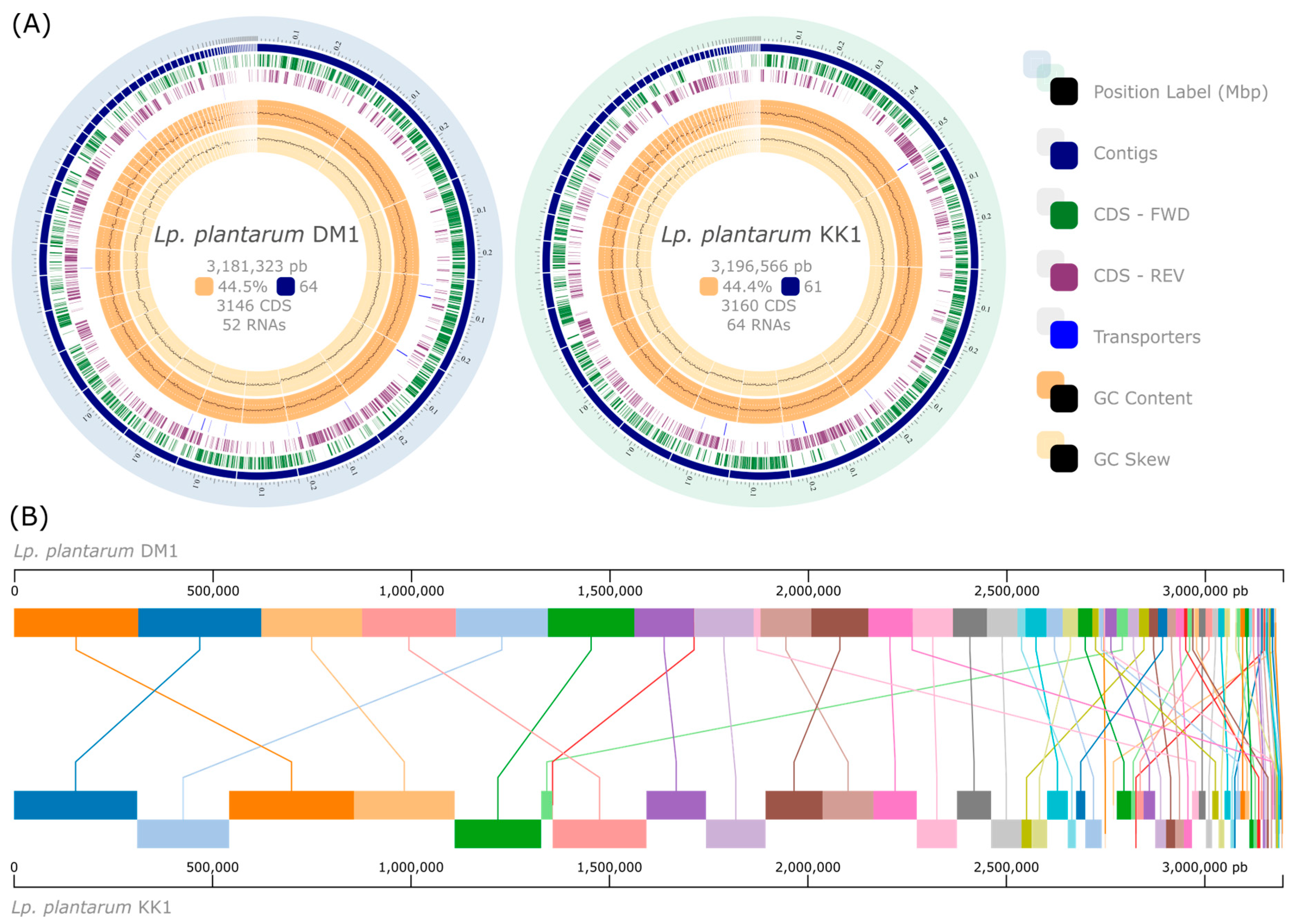
2.2. WGS and Functional Annotation of Lp. plantarum Genomes
2.3. Preparation of LAB Suspension in Dairy By-Products
2.4. Antimicrobial Activity Assay
2.5. Exopolysaccharide Production
2.6. LAB Inactivation Treatments
2.6.1. Thermal Inactivation by Pasteurization
2.6.2. Enzymatic Inactivation Using Lysozyme
2.6.3. Mechanical Inactivation Using Glass-Beads
2.6.4. Mechanical Inactivation by Ultrasound
2.6.5. Inactivation by Ionizing γ-Irradiation
2.6.6. Combined Enzymatic and Ultrasonic Inactivation
2.6.7. Combined Enzymatic and Thermal Inactivation
2.7. Determination of Total Viable Bacterial Cell Counts (Indirect Method)
2.8. Statistical Analysis
3. Results and Discussion
3.1. WGS and In Silico Evaluation of Probiotic Potential of Newly Isolated Strains

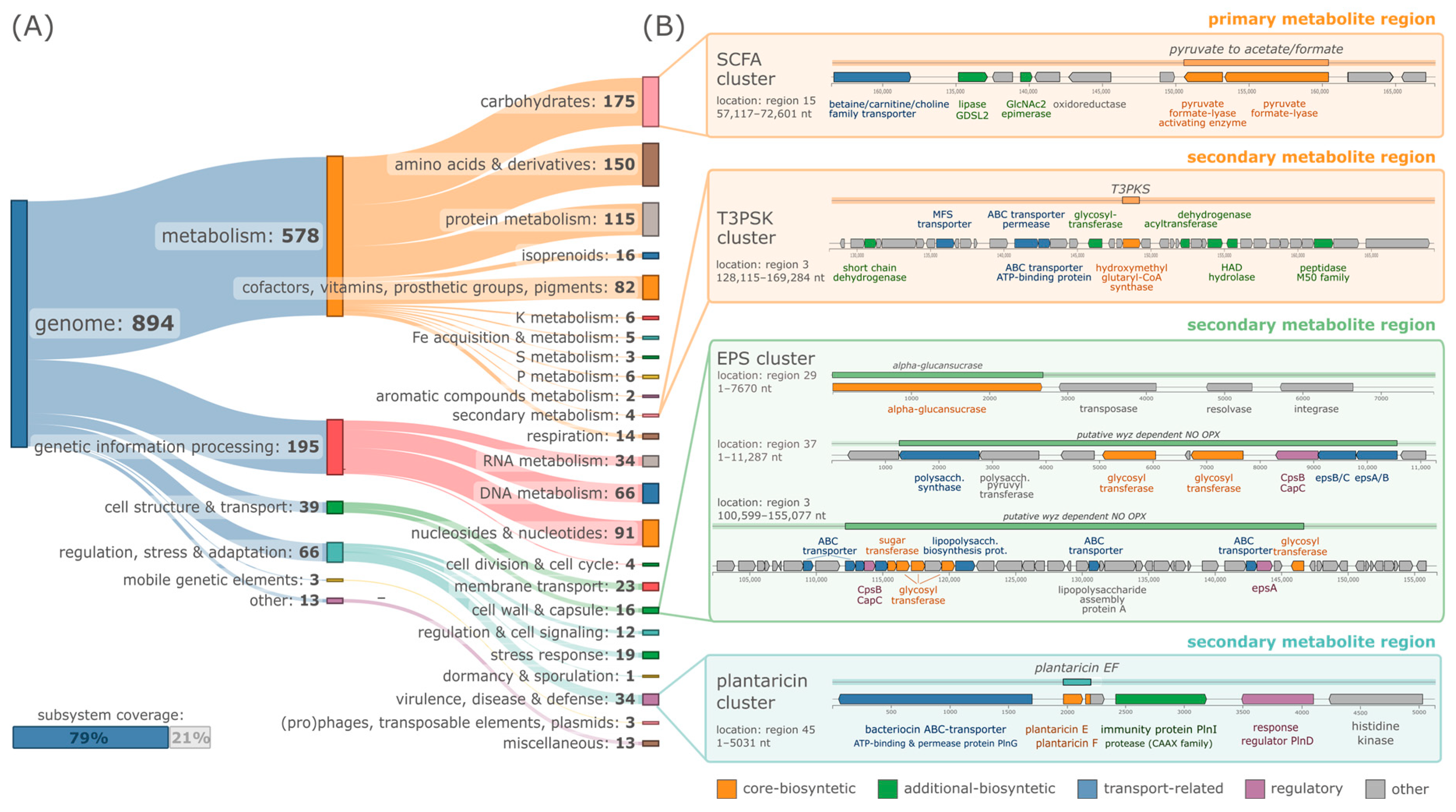
3.1.1. Functional Genome Annotation and Subsystem Distribution

3.1.2. Identification of Probiotic-Associated Primary and Secondary Metabolite Biosynthetic Gene Clusters
3.1.3. Genes Associated with Probiotic Functionality
3.2. Preliminary Experimental Validation of Probiotic Traits
3.3. Evaluation of LAB Inactivation Strategies for Postbiotic Preparation
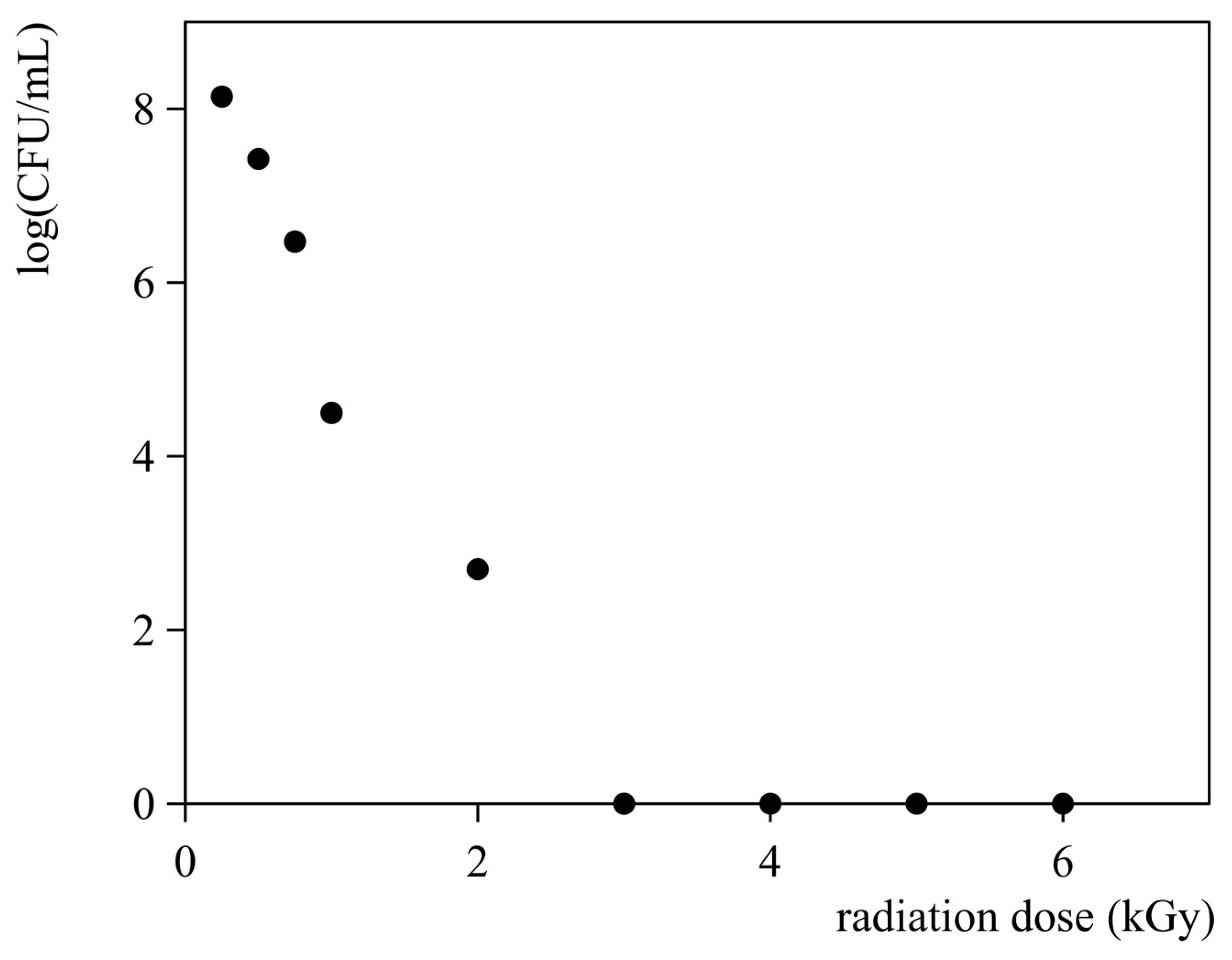
3.3.1. Optimization of γ-Irradiation for Lp. plantarum Inactivation
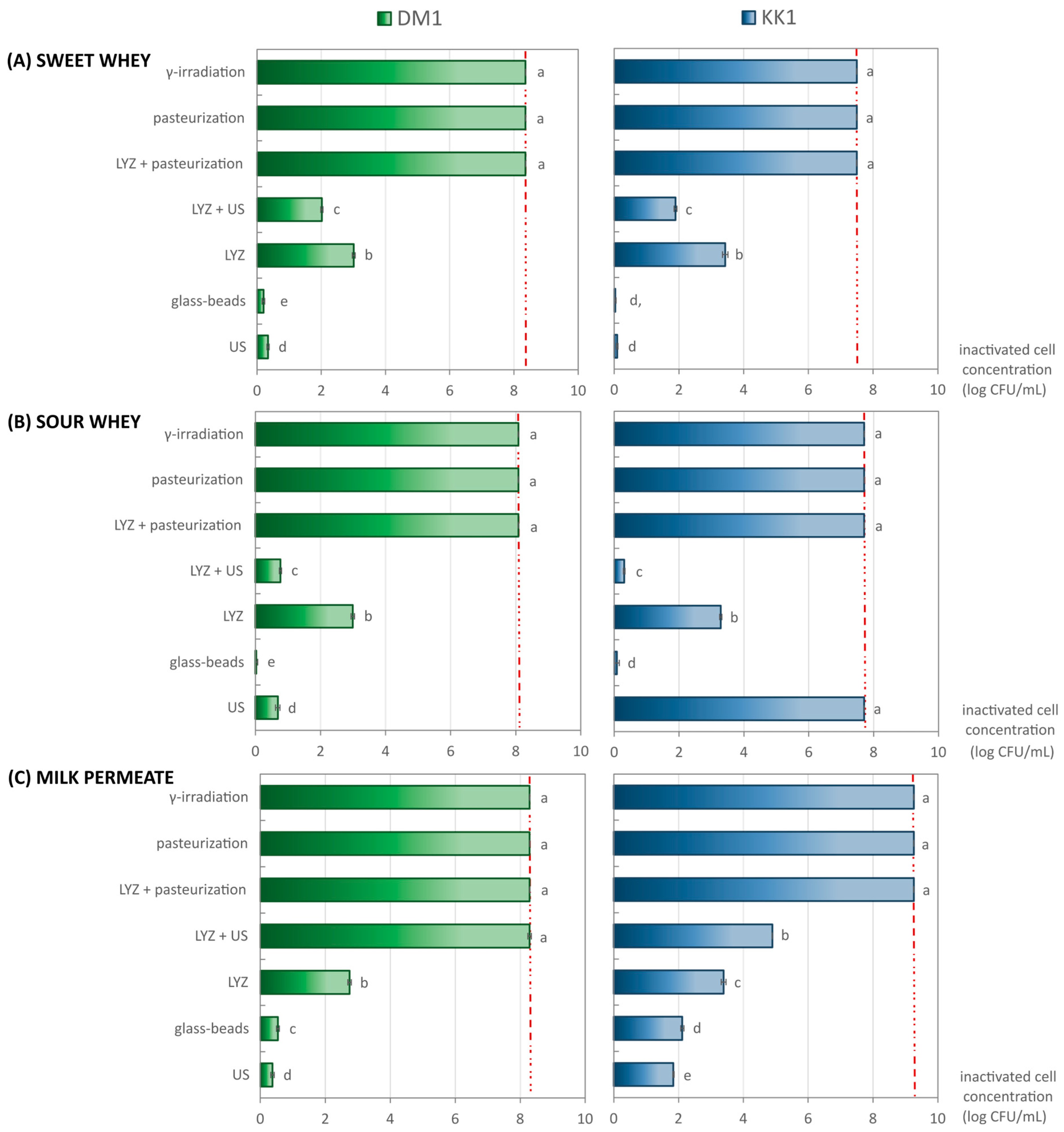
3.3.2. Matrix-Dependent Evaluation of LAB Inactivation Treatments
3.3.3. Implications for Postbiotic Formulation Development
4. Conclusions
Supplementary Materials
Author Contributions
Funding
Institutional Review Board Statement
Informed Consent Statement
Data Availability Statement
Acknowledgments
Conflicts of Interest
References
- Denkova, Z.; Zapryanova, P.; Gaytanska, Y.; Goranov, B.; Shopska, V.; Denkova-Kostova, R.; Kostov, G. Isolation, Identification, and Characterization of Probiotic Properties of Lactic Acid Bacterial Strains Isolated from Rose Blossom of Rosa damascena Mill. Processes 2025, 13, 1644. [Google Scholar] [CrossRef]
- Morrin, S.T.; Buck, R.H.; Farrow, M.; Hickey, R.M. Milk-Derived Anti-Infectives and Their Potential to Combat Bacterial and Viral Infection. J. Funct. Foods 2021, 81, 104442. [Google Scholar] [CrossRef]
- Tsilingiri, K.; Rescigno, M. Postbiotics: What Else? Benef. Microbes 2013, 4, 101–107. [Google Scholar] [CrossRef]
- Merenstein, D.; Pot, B.; Leyer, G.; Ouwehand, A.C.; Preidis, G.A.; Elkins, C.A.; Hill, C.; Lewis, Z.T.; Shane, A.L.; Zmora, N.; et al. Emerging Issues in Probiotic Safety: 2023 Perspectives. Gut Microbes 2023, 15, 2185034. [Google Scholar] [CrossRef]
- Adams, C.A. The Probiotic Paradox: Live and Dead Cells Are Biological Response Modifiers. Nutr. Res. Rev. 2010, 23, 37–46. [Google Scholar] [CrossRef] [PubMed]
- Mehta, J.P.; Ayakar, S.; Singhal, R.S. The Potential of Paraprobiotics and Postbiotics to Modulate the Immune System: A Review. Microbiol. Res. 2023, 275, 127449. [Google Scholar] [CrossRef]
- Salminen, S.; Collado, M.C.; Endo, A.; Hill, C.; Lebeer, S.; Quigley, E.M.M.; Sanders, M.E.; Shamir, R.; Swann, J.R.; Szajewska, H.; et al. The International Scientific Association of Probiotics and Prebiotics (ISAPP) Consensus Statement on the Definition and Scope of Postbiotics. Nat. Rev. Gastroenterol. Hepatol. 2021, 18, 649–667. [Google Scholar] [CrossRef] [PubMed]
- Zhao, X.; Liu, S.; Li, S.; Jiang, W.; Wang, J.; Xiao, J.; Chen, T.; Ma, J.; Khan, M.Z.; Wang, W.; et al. Unlocking the Power of Postbiotics: A Revolutionary Approach to Nutrition for Humans and Animals. Cell Metab. 2024, 36, 725–744. [Google Scholar] [CrossRef] [PubMed]
- Karbowiak, M.; Gałek, M.; Szydłowska, A.; Zielińska, D. The Influence of the Degree of Thermal Inactivation of Probiotic Lactic Acid Bacteria and Their Postbiotics on Aggregation and Adhesion Inhibition of Selected Pathogens. Pathogens 2022, 11, 1260. [Google Scholar] [CrossRef]
- Tian, P.; Wang, X.; Zhu, G.; Zhang, H.; Zhang, Z. Effects of Combining Lysozyme, Ultrasound, and Heat Treatments on the Inactivation of Bacillus subtilis Spores. Arch. Microbiol. 2025, 207, 169. [Google Scholar] [CrossRef]
- Manyatsi, T.S.; Mousavi Khaneghah, A.; Gavahian, M. The Effects of Ultrasound on Probiotic Functionality: An Updated Review. Crit. Rev. Food Sci. Nutr. 2024, 64, 11643–11660. [Google Scholar] [CrossRef]
- Porfiri, L.; Burtscher, J.; Kangethe, R.T.; Verhovsek, D.; Cattoli, G.; Domig, K.J.; Wijewardana, V. Irradiated Non-Replicative Lactic Acid Bacteria Preserve Metabolic Activity While Exhibiting Diverse Immune Modulation. Front. Vet. Sci. 2022, 9, 859124. [Google Scholar] [CrossRef] [PubMed]
- Zheng, J.; Wittouck, S.; Salvetti, E.; Franz, C.M.A.P.; Harris, H.M.B.; Mattarelli, P.; O’toole, P.W.; Pot, B.; Vandamme, P.; Walter, J.; et al. A Taxonomic Note on the Genus Lactobacillus: Description of 23 Novel Genera, Emended Description of the Genus Lactobacillus Beijerinck 1901, and Union of Lactobacillaceae and Leuconostocaceae. Int. J. Syst. Evol. Microbiol. 2020, 70, 2782–2858. [Google Scholar] [CrossRef]
- Fidanza, M.; Panigrahi, P.; Kollmann, T.R. Lactiplantibacillus Plantarum–Nomad and Ideal Probiotic. Front. Microbiol. 2021, 12, 712236. [Google Scholar] [CrossRef] [PubMed]
- Kleerebezem, M.; Boekhorst, J.; Van Kranenburg, R.; Molenaar, D.; Kuipers, O.P.; Leer, R.; Tarchini, R.; Peters, S.A.; Sandbrink, H.M.; Fiers, M.W.E.J.; et al. Complete Genome Sequence of Lactobacillus plantarum WCFS1. Proc. Natl. Acad. Sci. USA 2003, 100, 1990–1995. [Google Scholar] [CrossRef]
- Butorac, K.; Novak, J.; Bellich, B.; Terán, L.C.; Banić, M.; Leboš Pavunc, A.; Zjalić, S.; Cescutti, P.; Šušković, J.; Kos, B. Lyophilized Alginate-Based Microspheres Containing Lactobacillus fermentum D12, an Exopolysaccharides Producer, Contribute to the Strain’s Functionality in Vitro. Microb. Cell Fact. 2021, 20, 85. [Google Scholar] [CrossRef]
- Banić, M.; Uroić, K.; Leboš Pavunc, A.; Novak, J.; Zorić, K.; Durgo, K.; Petković, H.; Jamnik, P.; Kazazić, S.; Kazazić, S.; et al. Characterization of S-Layer Proteins of Potential Probiotic Starter Culture Lactobacillus brevis SF9B Isolated from Sauerkraut. LWT 2018, 93, 257–267. [Google Scholar] [CrossRef]
- Van Heel, A.J.; De Jong, A.; Song, C.; Viel, J.H.; Kok, J.; Kuipers, O.P. BAGEL4: A User-Friendly Web Server to Thoroughly Mine RiPPs and Bacteriocins. Nucleic Acids Res. 2018, 46, 278–281. [Google Scholar] [CrossRef]
- Zhu, Y.; Augustijn, H.E.; Pascal Andreu, V.; Draisma, A.; van Wezel, G.P.; Dodd, D.; Fischbach, M.A.; Medema, M.H. GutSMASH 2.0: Extended Identification of Primary Metabolic Gene Clusters From the Human Gut Microbiota. J. Mol. Biol. 2025, 23, 169567. [Google Scholar] [CrossRef]
- Blin, K.; Shaw, S.; Vader, L.; Szenei, J.; Reitz, Z.L.; Augustijn, H.E.; Cediel-Becerra, J.D.D.; De Crécy-Lagard, V.; Koetsier, R.A.; Williams, S.E.; et al. AntiSMASH 8.0: Extended Gene Cluster Detection Capabilities and Analyses of Chemistry, Enzymology, and Regulation. Nucleic Acids Res. 2025, 53, 32–38. [Google Scholar] [CrossRef]
- Daugberg, A.O.H.; Waldisperg, A.; Riisgaard-Jensen, M.; Vestergaard, S.Z.; Navarro, R.S.; Weber, T.; Blin, K.; Shaw, S.; Nielsen, P.H.; Dueholm, M.K.D. EpsSMASH Uncovers Exopolysaccharide Biosynthetic Gene Clusters in Environmental and Human Microbiomes. bioRxiv 2025, 2025.12.21.693542. [Google Scholar] [CrossRef]
- Florensa, A.F.; Kaas, R.S.; Clausen, P.T.L.C.; Aytan-Aktug, D.; Aarestrup, F.M. ResFinder—An Open Online Resource for Identification of Antimicrobial Resistance Genes in next-Generation Sequencing Data and Prediction of Phenotypes from Genotypes. Microb. Genom. 2022, 8, 000748. [Google Scholar] [CrossRef]
- Coeuret, V.; Gueguen, M.; Vernoux, J.P. In Vitro Screening of Potential Probiotic Activities of Selected Lactobacilli Isolated from Unpasteurized Milk Products for Incorporation into Soft Cheese. J. Dairy Res. 2004, 71, 451–460. [Google Scholar] [CrossRef]
- Cerning, J. Exocellular Polysaccharides Produced by Lactic Acid Bacteria. FEMS Microbiol. Rev. 1990, 7, 113–130. [Google Scholar] [CrossRef]
- Majer, M.; Roguljić, M.; Knežević, Ž.; Starodumov, A.; Ferenček, D.; Brigljević, V.; Mihaljević, B. Dose Mapping of the Panoramic 60Co Gamma Irradiation Facility at the Ruđer Bošković Institute—Geant4 Simulation and Measurements. Appl. Radiat. Isot. 2019, 154, 108824. [Google Scholar] [CrossRef] [PubMed]
- Siezen, R.J.; van Hylckama Vlieg, J.E.T. Genomic Diversity and Versatility of Lactobacillus plantarum, a Natural Metabolic Engineer. Microb. Cell Fact. 2011, 10, S3. [Google Scholar] [CrossRef]
- Parlindungan, E.; May, B.K.; Jones, O.A.H. Metabolic Insights into the Effects of Nutrient Stress on Lactobacillus plantarum B21. Front. Mol. Biosci. 2019, 6, 474850. [Google Scholar] [CrossRef]
- Zhong, Y.; Wang, T.; Luo, R.; Liu, J.; Jin, R.; Peng, X. Recent Advances and Potentiality of Postbiotics in the Food Industry: Composition, Inactivation Methods, Current Applications in Metabolic Syndrome, and Future Trends. Crit. Rev. Food Sci. Nutr. 2024, 64, 5768–5792. [Google Scholar] [CrossRef] [PubMed]
- Lim, Y.P.; Go, M.K.; Yew, W.S. Exploiting the Biosynthetic Potential of Type III Polyketide Synthases. Molecules 2016, 21, 806. [Google Scholar] [CrossRef]
- Austin, M.B.; Noel, J.P. The Chalcone Synthase Superfamily of Type III Polyketide Synthases. Nat. Prod. Rep. 2003, 20, 79–110. [Google Scholar] [CrossRef] [PubMed]
- Chen, X.; Bai, H.; Mo, W.; Zheng, X.; Chen, H.; Yin, Y.; Liao, Y.; Chen, Z.; Shi, Q.; Zuo, Z.; et al. Lactic Acid Bacteria Bacteriocins: Safe and Effective Antimicrobial Agents. Int. J. Mol. Sci. 2025, 26, 4124. [Google Scholar] [CrossRef]
- Butorac, K.; Novak, J.; Banić, M.; Leboš Pavunc, A.; Čuljak, N.; Oršolić, N.; Odeh, D.; Perica, J.; Šušković, J.; Kos, B. Modulation of the Gut Microbiota by the Plantaricin-Producing Lactiplantibacillus plantarum D13, Analysed in the DSS-Induced Colitis Mouse Model. Int. J. Mol. Sci. 2023, 24, 15322. [Google Scholar] [CrossRef]
- Oršolić, N.; Toljanić, B.; Odeh, D.; Čuljak, N.; Šešelja, K.; Baus Lončar, M.; Đikić, D.; Leboš Pavunc, A.; Kos, B. Anti-Atherogenic Activities of Exopolysaccharides and Their Producing Strain Limosilactobacillus fermentum MC1 in Mice. Int. J. Mol. Sci. 2026, 27, 2473. [Google Scholar] [CrossRef] [PubMed]
- Zeidan, A.A.; Poulsen, V.K.; Janzen, T.; Buldo, P.; Derkx, P.M.F.; Øregaard, G.; Neves, A.R. Polysaccharide Production by Lactic Acid Bacteria: From Genes to Industrial Applications. FEMS Microbiol. Rev. 2017, 41, S168–S200. [Google Scholar] [CrossRef] [PubMed]
- Whitfield, C.; Wear, S.S.; Sande, C. Assembly of Bacterial Capsular Polysaccharides and Exopolysaccharides. Annu. Rev. Microbiol. 2020, 74, 521–543. [Google Scholar] [CrossRef]
- Čuljak, N.; Bellich, B.; Pedroni, A.; Butorac, K.; Pavunc, A.L.; Novak, J.; Banić, M.; Šušković, J.; Cescutti, P.; Kos, B. Limosilactobacillus fermentum Strains MC1 and D12: Functional Properties and Exopolysaccharides Characterization. Int. J. Biol. Macromol. 2024, 273, 133215. [Google Scholar] [CrossRef]
- Bustos, A.Y.; Taranto, M.P.; Gerez, C.L.; Agriopoulou, S.; Smaoui, S.; Varzakas, T.; Enshasy, H.A. El Recent Advances in the Understanding of Stress Resistance Mechanisms in Probiotics: Relevance for the Design of Functional Food Systems. Probiotics Antimicrob. Proteins 2024, 17, 138–158. [Google Scholar] [CrossRef]
- Tang, H.; Huang, W.; Yao, Y.F. The Metabolites of Lactic Acid Bacteria: Classification, Biosynthesis and Modulation of Gut Microbiota. Microb. Cell 2023, 10, 49–62. [Google Scholar] [CrossRef]
- Pessione, E. Lactic Acid Bacteria Contribution to Gut Microbiota Complexity: Lights and Shadows. Front. Cell. Infect. Microbiol. 2012, 2, 86. [Google Scholar] [CrossRef]
- Hojjati, M.; Noshad, M.; Sorourian, R.; Askari, H.; Feghhi, S. Effect of Gamma Irradiation on Structure, Physicochemical and Functional Properties of Bitter Vetch (Vicia ervilia) Seeds Polysaccharides. Radiat. Phys. Chem. 2023, 202, 110569. [Google Scholar] [CrossRef]
- Correa, W.; Brandenburg, J.; Behrends, J.; Heinbockel, L.; Reiling, N.; Paulowski, L.; Schwudke, D.; Stephan, K.; Martinez-de-Tejada, G.; Brandenburg, K.; et al. Inactivation of Bacteria by γ-Irradiation to Investigate the Interaction with Antimicrobial Peptides. Biophys. J. 2019, 117, 1805–1819. [Google Scholar] [CrossRef]
- Maherani, B.; Hossain, F.; Criado, P.; Ben-Fadhel, Y.; Salmieri, S.; Lacroix, M. World Market Development and Consumer Acceptance of Irradiation Technology. Foods 2016, 5, 79. [Google Scholar] [CrossRef]
- Farkas, J. Irradiation for Better Foods. Trends Food Sci. Technol. 2006, 17, 148–152. [Google Scholar] [CrossRef]
- Almada, C.N.; Almada-Érix, C.N.; Bonatto, M.S.; Pradella, F.; dos Santos, P.; Abud, Y.K.D.; Farias, A.S.; Martínez, J.; Sant’Anna Filho, C.B.; Lollo, P.C.; et al. Obtaining Paraprobiotics from Lactobacilus acidophilus, Lacticaseibacillus casei and Bifidobacterium animalis Using Six Inactivation Methods: Impacts on the Cultivability, Integrity, Physiology, and Morphology. J. Funct. Foods 2021, 87, 104826. [Google Scholar] [CrossRef]
- Kamiya, T.; Wang, L.; Forsythe, P.; Goettsche, G.; Mao, Y.; Wang, Y.; Tougas, G.; Bienenstock, J. Inhibitory Effects of Lactobacillus reuteri on Visceral Pain Induced by Colorectal Distension in Sprague-Dawley Rats. Gut 2006, 55, 191–196. [Google Scholar] [CrossRef] [PubMed]
- Brul, S.; Coote, P. Preservative Agents in Foods: Mode of Action and Microbial Resistance Mechanisms. Int. J. Food Microbiol. 1999, 50, 1–17. [Google Scholar] [CrossRef]
- Lin, T.; Meletharayil, G.; Kapoor, R.; Abbaspourrad, A. Bioactives in Bovine Milk: Chemistry, Technology, and Applications. Nutr. Rev. 2021, 79, 48–69. [Google Scholar] [CrossRef]
- Zheng, X.; Fu, N.; Duan, M.; Woo, M.W.; Selomulya, C.; Chen, X.D. The Mechanisms of the Protective Effects of Reconstituted Skim Milk during Convective Droplet Drying of Lactic Acid Bacteria. Food Res. Int. 2015, 76, 478–488. [Google Scholar] [CrossRef] [PubMed]
- Bolívar-Jacobo, N.A.; Reyes-Villagrana, R.A.; Espino-Solís, G.P.; Rentería-Monterrubio, A.L.; Arévalos-Sánchez, M.M.; Sánchez-Vega, R.; Santellano-Estrada, E.; Chávez-Flores, D.; Chávez-Martínez, A. The Effects of a High-Intensity Ultrasound on the Fermentative Activity and Kinetic Growth of Lactobacillus acidophilus and Lactobacillus helveticus. Fermentation 2023, 9, 356. [Google Scholar] [CrossRef]
- Pimentel, T.C.; Cruz, A.G.; Pereira, E.; Almeida da Costa, W.K.; da Silva Rocha, R.; Targino de Souza Pedrosa, G.; dos Santos Rocha, C.; Alves, J.M.; Alvarenga, V.O.; Sant’Ana, A.S.; et al. Postbiotics: An Overview of Concepts, Inactivation Technologies, Health Effects, and Driver Trends. Trends Food Sci. Technol. 2023, 138, 199–214. [Google Scholar] [CrossRef]
- Leistner, L. Basic Aspects of Food Preservation by Hurdle Technology. Int. J. Food Microbiol. 2000, 55, 181–186. [Google Scholar] [CrossRef] [PubMed]
- Russell, A.D. Lethal Effects of Heat on Bacterial Physiology and Structure. Sci. Prog. 2003, 86, 115–137. [Google Scholar] [CrossRef] [PubMed]



| Probiotic-Related Trait | Representative Protein | Gene Locus: Start–End (Strand) | ||
|---|---|---|---|---|
| DM1 | KK1 | |||
| Gastrointestinal stress tolerance | Acid and bile salts tolerance | Bile salt hydrolase (EC 3.5.1.24) | 3 copies | 3 copies |
| Glutamate decarboxylase, Gad (EC 4.1.1.15) | 4535–5944 (+) | 25,851–27,260 (+) | ||
| Oxidative stress | Glutaredoxin-like protein NrdH | 69,706–69,936 (−) | 166,306–166,536 (+) | |
| Thioredoxin reductase TrxR (EC 1.8.1.9) | 2 copies | 2 copies | ||
| Tyrosine-protein phosphatase (EC 3.1.3.48) | 61,930–62,721 (+) | 61,930–62,721 (+) | ||
| Clp protease, proteolytic subunit ClpP (EC 3.4.21.92) | 149,442–150,032 (−) | 86,210–86,800 (+) | ||
| Glutathione biosynthesis bifunctional protein GshF (EC 6.3.2.2) | 66,299–67,537 (+) | 66,299–67,537 (+) | ||
| Catalase CatE (EC 1.11.1.6) | 64–1386 (−) | 64–1386 (−) | ||
| Heat shock response | Heat shock protein 10 kDa family chaperone GroES | 93,680–93,964 (+) | 142,278–142,562 (−) | |
| Heat shock protein 60 kDa family chaperone GroEL | 94,020–95,645 (+) | 140,597–142,222 (−) | ||
| Heat shock protein HtpX | 4563–5462 (−) | 19,932–20,831 (+) | ||
| Heat shock protein GrpE | 184,282–184,890 (+) | 185,890–186,498 (+) | ||
| Chaperone protein DnaK | 184,934–186,802 (+) | 186,542–188,410 (+) | ||
| Chaperone protein DnaJ | 186,904–188,046 (+) | 188,512–189,654 (+) | ||
| Adhesion potential | Cell surface structure modification | Teichoic acid glycosylation protein | 70,435–70,956 (+) | x |
| Teichoic acid export ATP-binding protein TagH (EC 3.6.3.40) | 33,574–34,665 (−) | 16,671–17,762 (−) | ||
| Teichoic acid translocation permease protein TagG | 34,678–35,493 (−) | 17,775–18,590 (−) | ||
| Lipoteichoic acid synthase LtaS Type IIa | 25,670–27,775 (+) | 243,508–245,613 (+) | ||
| Lipoteichoic acid synthase LtaS Type IIb | 181,360–183,514 (−) | 181,409–183,562 (−) | ||
| Extracellular matrix binding | Fibronectin/fibrinogen-binding protein | 2 copies | 2 copies | |
| Surface anchoring | Sortase A, LPXTG specific—srtA | 6143–6847 (−) | 18,547–19,251 (+) | |
| Biofilm formation | Exopolysaccharide biosynthesis glycosyltransferase EpsF (EC 2.4.1.) | 7863–8603 (+) | 3512–4252 (−) | |
| Aggregation promoting factor | 5 copies | 5 copies | ||
| Prebiotic utilization | Lactate metabolism | (D)-lactate dehydrogenase (EC 1.1.1.28) | 152,272–153,270 (+) | 2 copies |
| (L)-lactate dehydrogenase (EC 1.1.1.27) | 4 copies | 6 copies | ||
| Pyruvate metabolism | Pyruvate oxidase (EC 1.2.3.3) | 5 copies | 4 copies | |
| Pyruvate formate-lyase (EC 2.3.1.54) | 67,975–70,233 (−) | 47,097–49,355 (−) | ||
| Pyruvate dehydrogenase complex * | * | * | ||
| Carbohydrate utilization | α-galactosidase (EC 3.2.1.22) | 115,606–117,621 (−) | 2 copies | |
| Antimicrobial production | Bacteriocin production | Plantaricin EF | 1970–2314 (+) | 2820–3165 (−) |
| Acetate production | Acetate kinase (EC 2.7.2.1) | 3 copies | 3 copies | |
| Strain | Effective Inhibition Ratio | ||
|---|---|---|---|
| Lb. helveticus M92 | Lc. lactis LMG 9450 | Ec. faecium ATCC®9430TM | |
| DM1 | 3.45 ± 0.60 a | 0.87 ± 0.01 c | 1.95 ± 0.16 b |
| KK1 | 0.95 ± 0.19 | 1.22 ± 0.10 | 2.11 ± 1.02 |
Disclaimer/Publisher’s Note: The statements, opinions and data contained in all publications are solely those of the individual author(s) and contributor(s) and not of MDPI and/or the editor(s). MDPI and/or the editor(s) disclaim responsibility for any injury to people or property resulting from any ideas, methods, instructions or products referred to in the content. |
© 2026 by the authors. Licensee MDPI, Basel, Switzerland. This article is an open access article distributed under the terms and conditions of the Creative Commons Attribution (CC BY) license.
Share and Cite
Radović, M.; Grgić, T.; Banić, M.; Butorac, K.; Leboš Pavunc, A.; Šušković, J.; Novak, J.; Kos, B. Genomic Insights and Inactivation Strategies for Lactiplantibacillus plantarum Postbiotics Production. Foods 2026, 15, 2148. https://doi.org/10.3390/foods15122148
Radović M, Grgić T, Banić M, Butorac K, Leboš Pavunc A, Šušković J, Novak J, Kos B. Genomic Insights and Inactivation Strategies for Lactiplantibacillus plantarum Postbiotics Production. Foods. 2026; 15(12):2148. https://doi.org/10.3390/foods15122148
Chicago/Turabian StyleRadović, Mia, Tomislava Grgić, Martina Banić, Katarina Butorac, Andreja Leboš Pavunc, Jagoda Šušković, Jasna Novak, and Blaženka Kos. 2026. "Genomic Insights and Inactivation Strategies for Lactiplantibacillus plantarum Postbiotics Production" Foods 15, no. 12: 2148. https://doi.org/10.3390/foods15122148
APA StyleRadović, M., Grgić, T., Banić, M., Butorac, K., Leboš Pavunc, A., Šušković, J., Novak, J., & Kos, B. (2026). Genomic Insights and Inactivation Strategies for Lactiplantibacillus plantarum Postbiotics Production. Foods, 15(12), 2148. https://doi.org/10.3390/foods15122148