Low-Fat Cheddar Cheese Influences Gut Microbiota Composition and Diversity in Human Microbiota–Associated Mice



Simple Summary
Abstract
1. Introduction
2. Materials and Methods
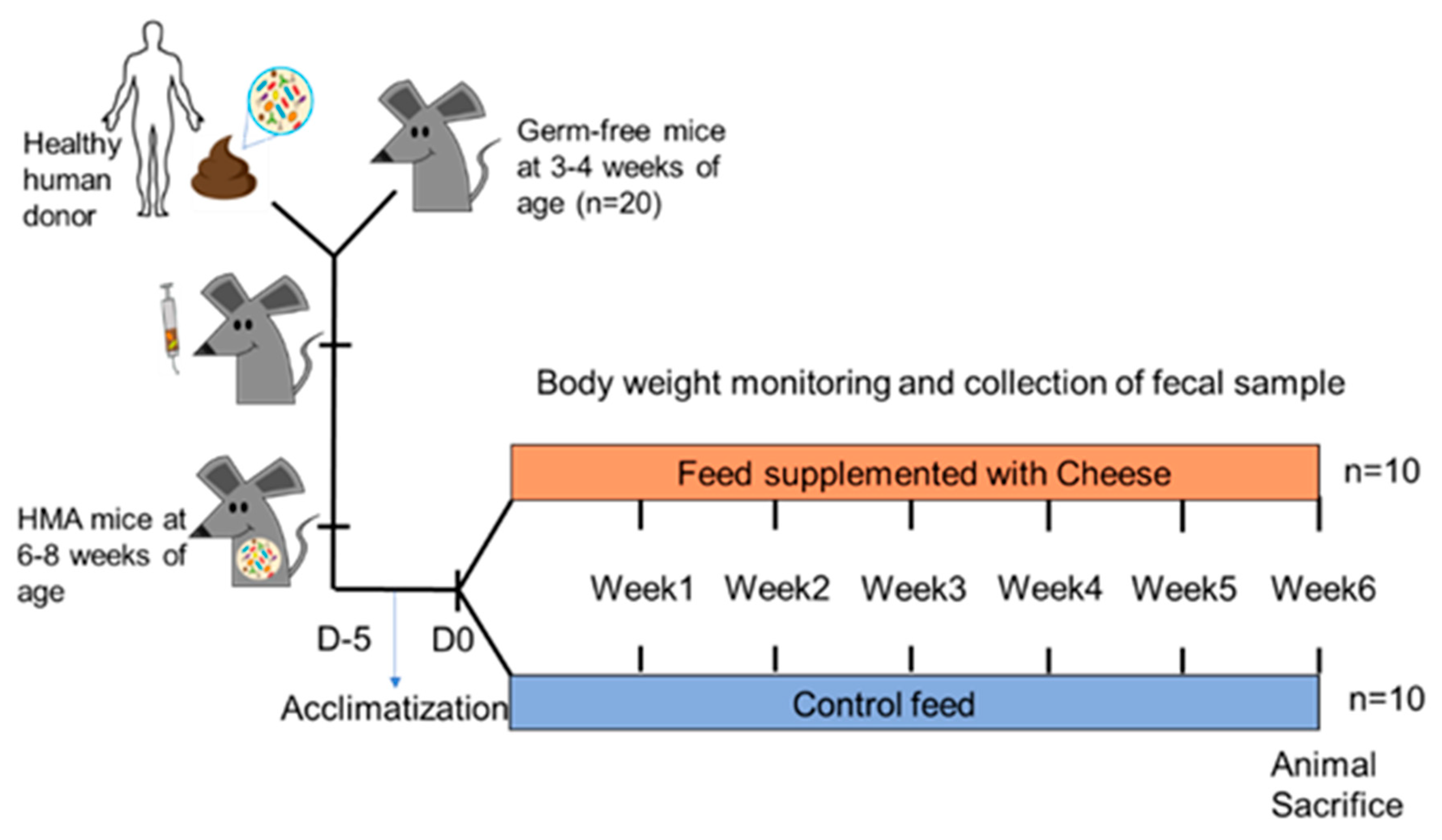
2.1. Human-Microbiota Associated (HMA) Mice Model
2.2. Cheese Manufacture
2.3. Experimental Diets
2.4. Sampling, Genomic DNA Extraction, and 16S rRNA Gene Sequencing
2.5. Bioinformatic Analysis
2.6. Statistical Analysis
3. Results and Discussion
3.1. Establishment of Human–Microbiota Associated (HMA) Mice
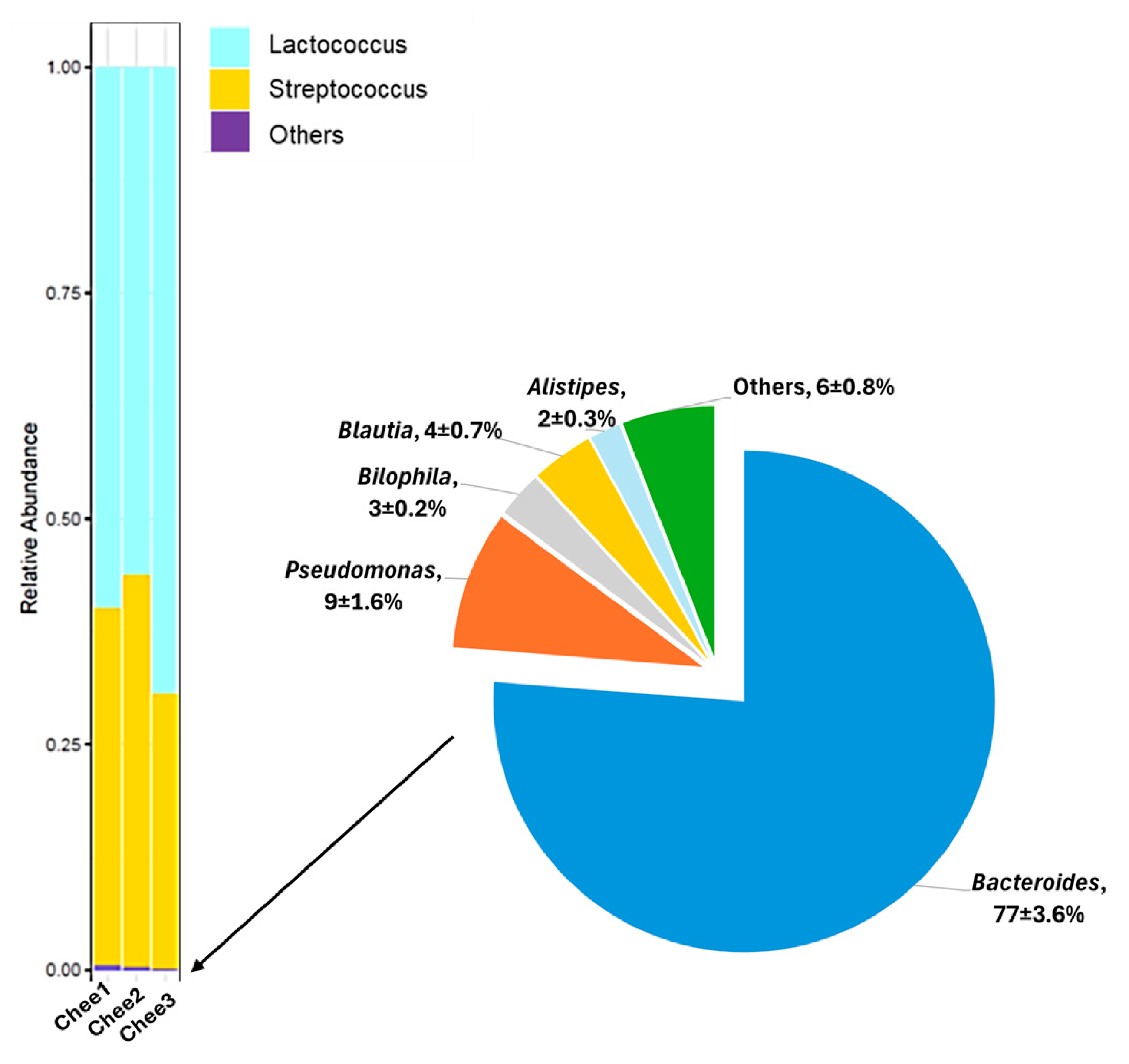
3.2. Microbial Composition of Low-Fat Cheddar Cheese
3.3. Effect of Cheese Supplementation on Body Weight and Organ Indices in HMA Mice
3.4. Effect of Low-Fat Cheese on Gut Microbiota in HMA Mice
3.4.1. Sample and Sequencing Outputs
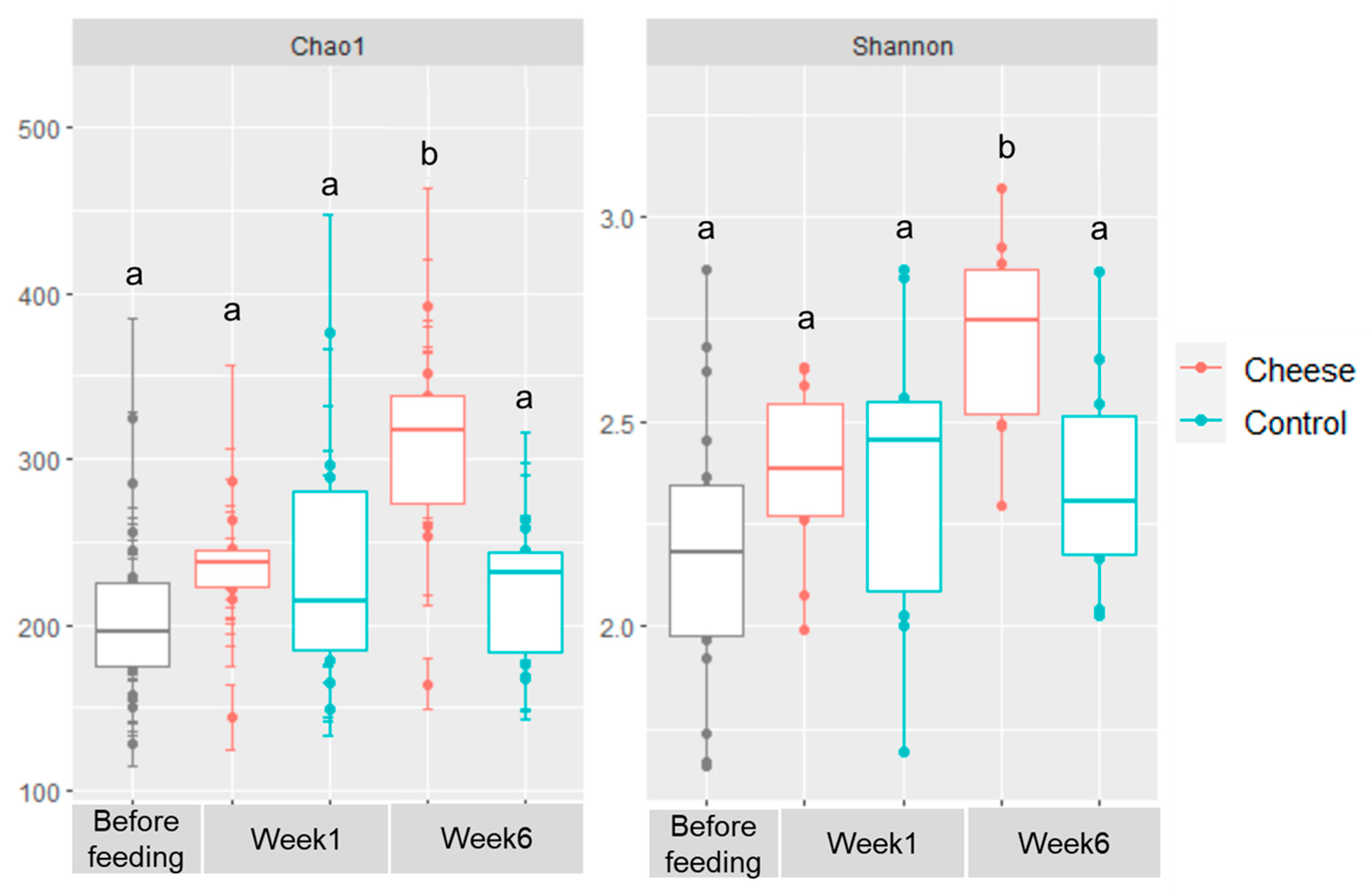
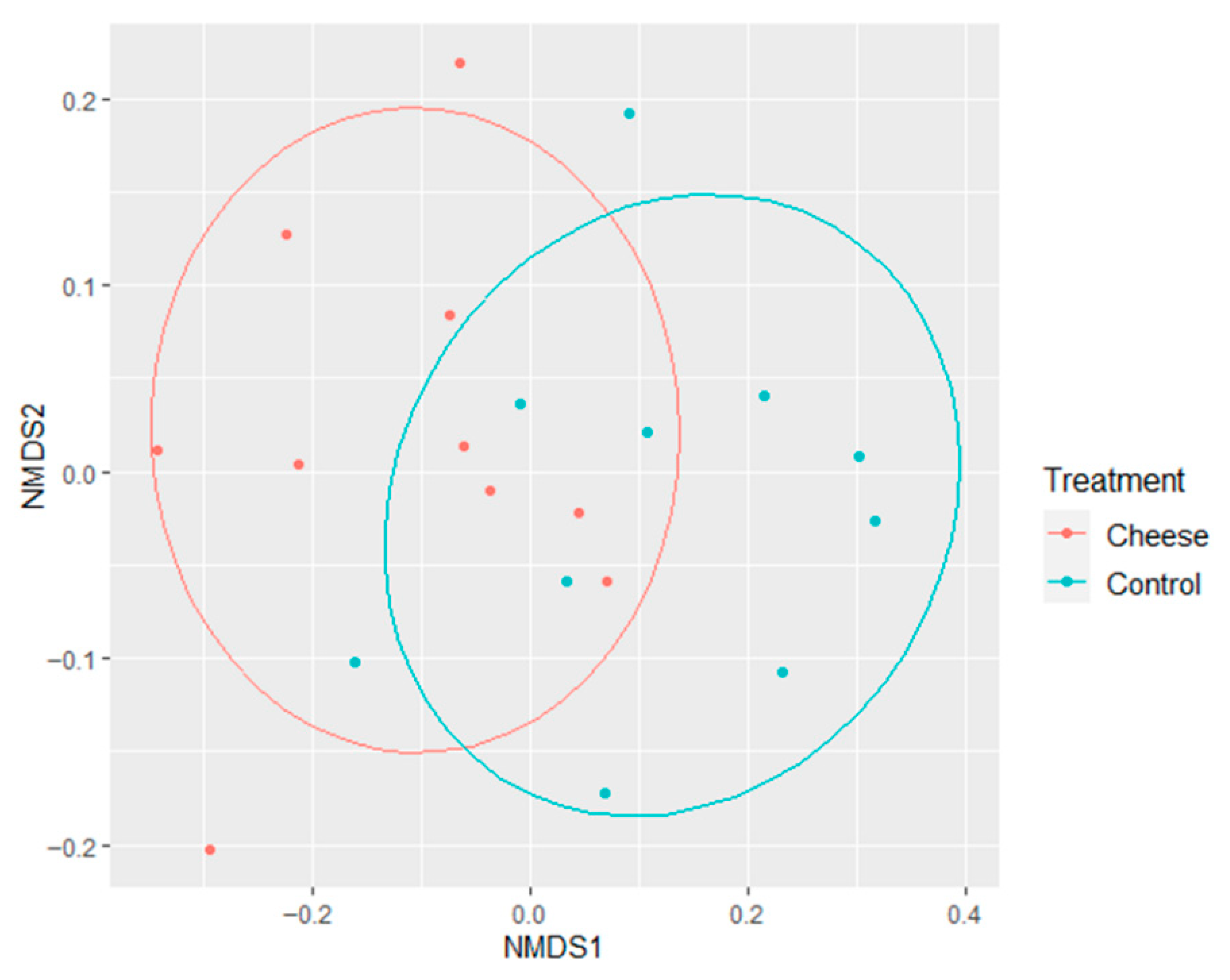
3.4.2. Low-Fat Cheese Supplementation Significantly Increased Gut Microbial Diversity in HMA Mice
3.5. Cheese Supplementation Enriched Firmicutes and Beneficial Bacterial Genera in the Gut Microbiota
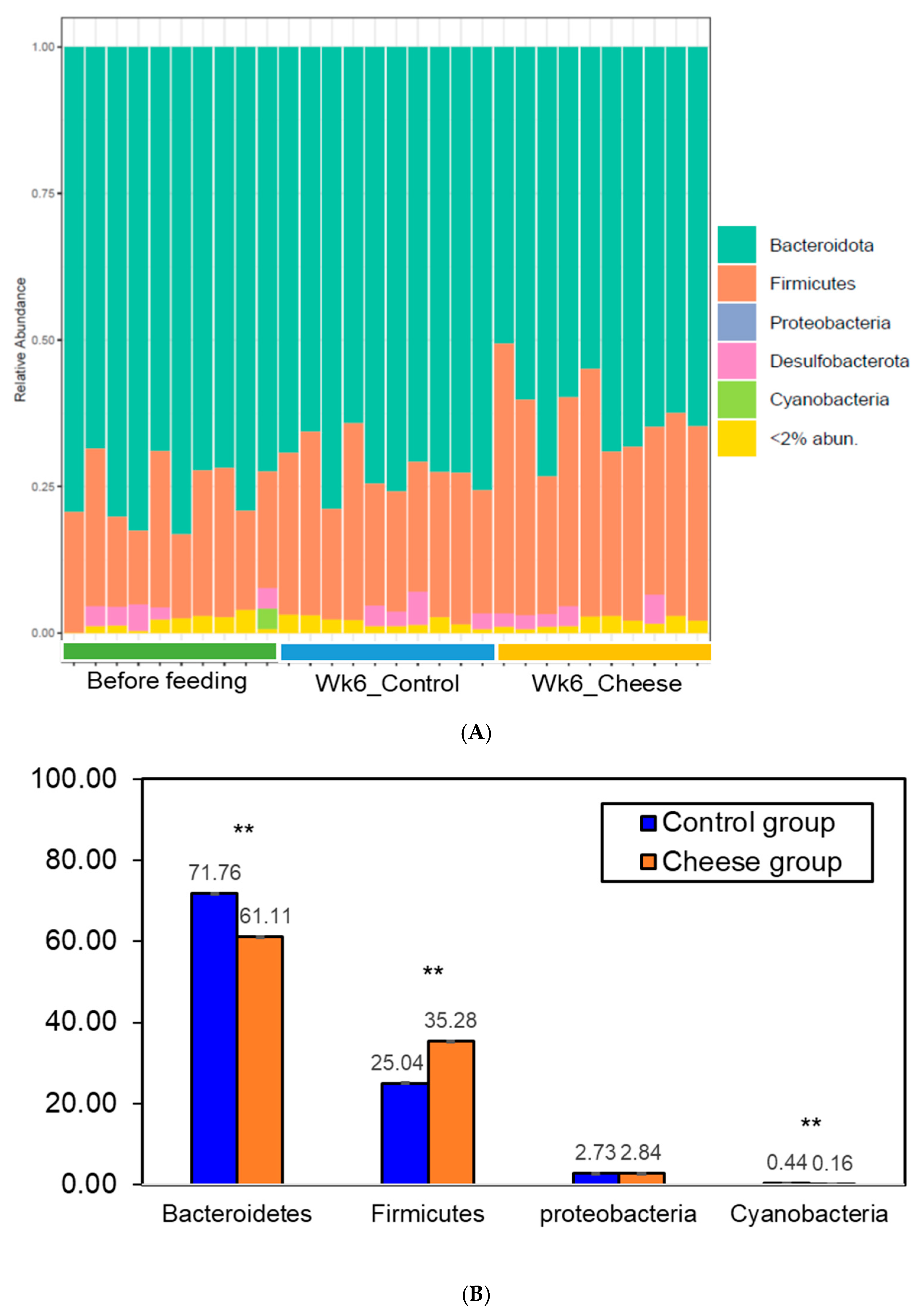
3.5.1. Phylum-Level Changes
3.5.2. Family-Level Changes
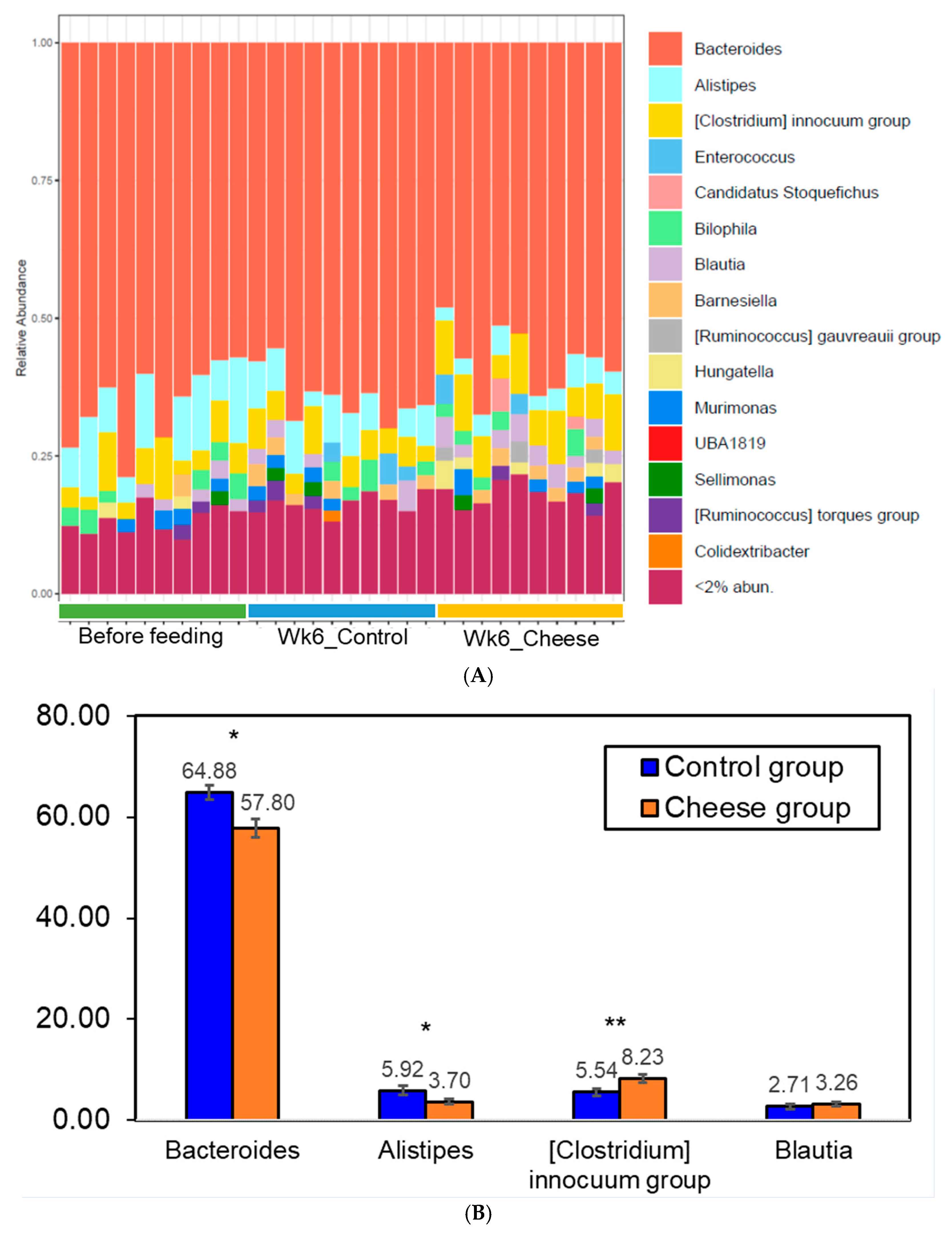
3.5.3. Genus-Level Changes
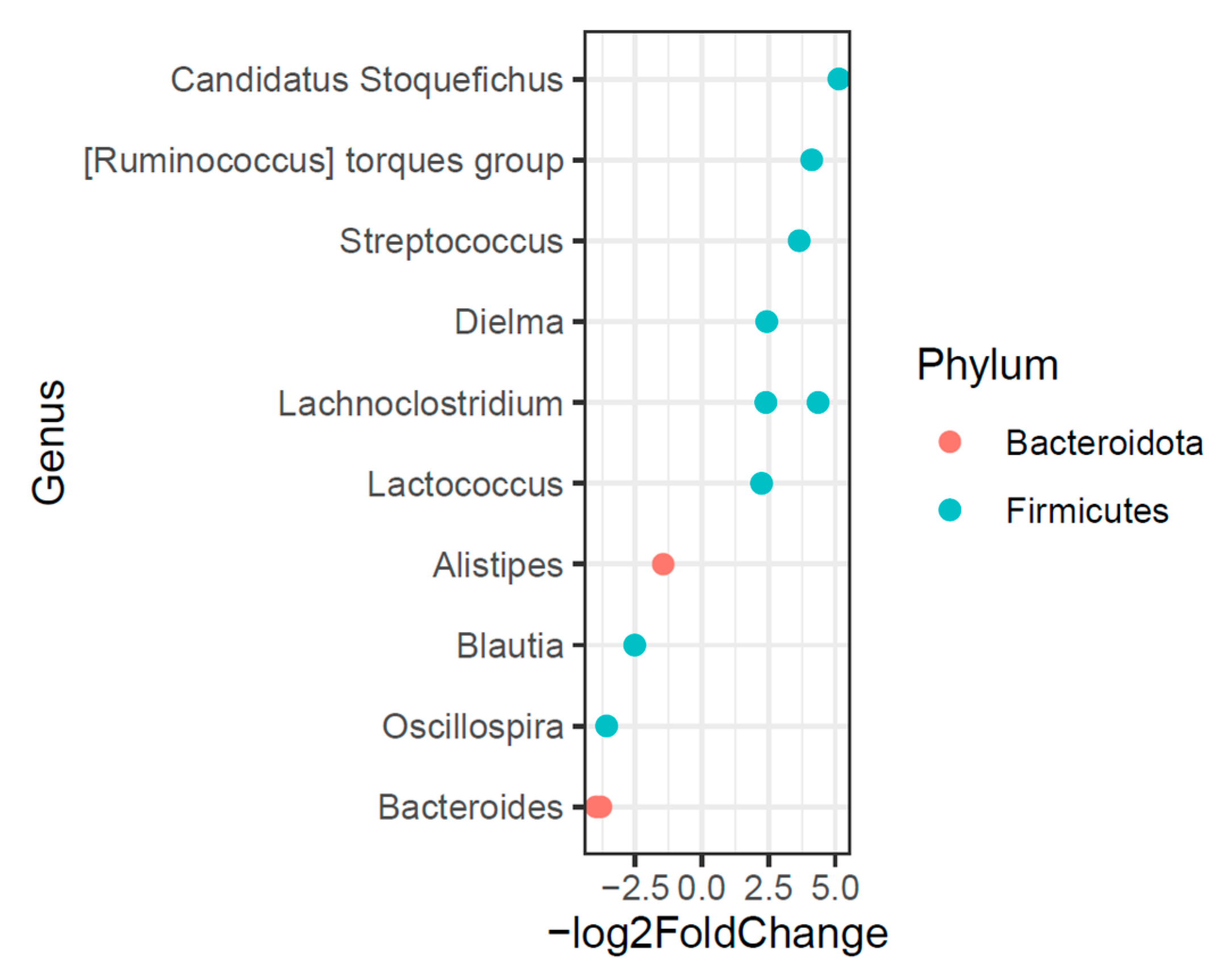
3.5.4. ASV-Level and Indicator Species Analysis
3.5.5. Functional and Probiotic Implications
3.5.6. Study Limitations and Future Directions
4. Conclusions
Supplementary Materials
Author Contributions
Funding
Institutional Review Board Statement
Informed Consent Statement
Data Availability Statement
Acknowledgments
Conflicts of Interest
References
- Kinross, J.M.; Darzi, A.W.; Nicholson, J.K. Gut microbiome–host interactions in health and disease. Genome Med. 2011, 3, 33. [Google Scholar] [CrossRef]
- De Vos, W.M.; Tilg, H.; Van Hul, M.; Cani, P.D. Gut microbiome and health: Mechanistic insights. Gut 2022, 71, 1020–1032. [Google Scholar] [CrossRef]
- Cong, J.; Zhou, P.; Zhang, R. Intestinal microbiota-derived short chain fatty acids in host health and disease. Nutrients 2022, 14, 1977. [Google Scholar] [CrossRef]
- Chávez-Tapia, N.C.; González-Rodríguez, L.; Jeong, M.S.; López-Ramírez, Y.; Barbero-Becerra, V.; Juárez-Hernández, E.; Romero-Flores, J.L.; Arrese, M.; Méndez-Sánchez, N.; Uribe, M. Current evidence on the use of probiotics in liver diseases. J. Funct. Foods 2015, 17, 137–151. [Google Scholar] [CrossRef]
- Lisko, D.; Johnston, G.; Johnston, C. Effects of dietary yogurt on the healthy human gastrointestinal (GI) microbiome. Microorganisms 2017, 5, 6. [Google Scholar] [CrossRef]
- Wang, F.; Roy, S. Gut homeostasis, microbial dysbiosis, and opioids. Toxicol. Pathol. 2016, 45, 150–156. [Google Scholar] [CrossRef]
- Rinninella, E.; Raoul, P.; Cintoni, M.; Franceschi, F.; Miggiano, G.A.D.; Gasbarrini, A.; Mele, M.C. What is the healthy gut microbiota composition? A changing ecosystem across age, environment, diet, and diseases. Microorganisms 2019, 7, 14. [Google Scholar] [CrossRef]
- Arumugam, M.; Raes, J.; Pelletier, E.; Le Paslier, D.; Yamada, T.; Mende, D.R.; Fernandes, G.R.; Tap, J.; Bruls, T.; Batto, J.M.; et al. Enterotypes of the human gut microbiome. Nature 2011, 473, 174–180. [Google Scholar] [CrossRef]
- Yang, K.; Li, G.; Li, Q.; Wang, W.; Zhao, X.; Shao, N.; Qiu, H.; Liu, J.; Xu, L.; Zhao, J. Distribution of gut microbiota across intestinal segments and their impact on human physiological and pathological processes. Cell Biosci. 2025, 15, 47. [Google Scholar] [CrossRef]
- Haque, S.Z.; Haque, M. The ecological community of commensal, symbiotic, and pathogenic gastrointestinal microorganisms—An appraisal. Clin. Exp. Gastroenterol. 2017, 10, 91–103. [Google Scholar] [CrossRef]
- Singh, R.K.; Chang, H.-W.; Yan, D.I.; Lee, K.M.; Ucmak, D.; Wong, K.; Abrouk, M.; Farahnik, B.; Nakamura, M.; Zhu, T.H.; et al. Influence of diet on the gut microbiome and implications for human health. J. Transl. Med. 2017, 15, 73. [Google Scholar] [CrossRef]
- Li, X.; Liu, L.; Cao, Z.; Li, W.; Li, H.; Lu, C.; Yang, X.; Liu, Y. Gut microbiota as an “invisible organ” that modulates the function of drugs. Biomed. Pharmacother. 2020, 121, 109653. [Google Scholar] [CrossRef] [PubMed]
- NIH. Opportunities & Challenges in Digestive Diseases Research: Recommendations of the National Commission on Digestive Diseases. NIDDK Report. Available online: https://www.niddk.nih.gov/about-niddk/strategic-plans-reports/opportunities-challenges-digestive-diseases-research-recommendations-national-commission (accessed on 8 September 2025).
- Ng, S.C.; Tang, W.; Ching, J.Y.; Wong, M.; Chow, C.M.; Hui, A.J.; Wong, T.C.; Leung, V.K.; Tsang, S.W.; Yu, H.H.; et al. Incidence and phenotype of inflammatory bowel disease based on results from the Asia-Pacific Crohn’s and Colitis Epidemiology Study. Gastroenterology 2013, 145, 158–165.e2. [Google Scholar] [CrossRef]
- Lewis, J.D.; Chen, E.Z.; Baldassano, R.N.; Otley, A.R.; Griffiths, A.M.; Lee, D.; Bittinger, K.; Bailey, A.; Friedman, E.S.; Hoffmann, C.; et al. Inflammation, antibiotics, and diet as environmental stressors of the gut microbiome in pediatric Crohn’s disease. Cell Host Microbe 2015, 18, 489–500. [Google Scholar] [CrossRef]
- Werner, T.; Hoermannsperger, G.; Schuemann, K.; Hoelzlwimmer, G.; Tsuji, S.; Haller, D. Intestinal epithelial cell proteome from wild-type and TNFΔARE/WT mice: Effect of iron on the development of chronic ileitis. J. Proteome Res. 2009, 8, 3252–3264. [Google Scholar] [CrossRef]
- Messer, J.S.; Chang, E.B. Microbial physiology of the digestive tract and its role in inflammatory bowel diseases. In Physiology of the Gastrointestinal Tract, 6th ed.; Elsevier: New York, NY, USA, 2018; Volume 1–2, pp. 795–810. [Google Scholar] [CrossRef]
- David, L.A.; Maurice, C.F.; Carmody, R.N.; Gootenberg, D.B.; Button, J.E.; Wolfe, B.E.; Ling, A.V.; Devlin, A.S.; Varma, Y.; Fischbach, M.A.; et al. Diet rapidly and reproducibly alters the human gut microbiome. Nature 2014, 505, 559–563. [Google Scholar] [CrossRef]
- Turnbaugh, P.J.; Ridaura, V.K.; Faith, J.J.; Rey, F.E.; Knight, R.; Gordon, J.I. The effect of diet on the human gut microbiome: A metagenomic analysis in humanized gnotobiotic mice. Sci. Transl. Med. 2009, 1, 6ra14. [Google Scholar] [CrossRef]
- Ramos, S.; Martín, M.Á. Impact of diet on gut microbiota. Curr. Opin. Food Sci. 2021, 37, 83–90. [Google Scholar] [CrossRef]
- Choct, M. Managing gut health through nutrition. Br. Poult. Sci. 2009, 50, 9–15. [Google Scholar] [CrossRef] [PubMed]
- Wu, X.; Schauss, A.G. Mitigation of inflammation with foods. J. Agric. Food Chem. 2012, 60, 6703–6717. [Google Scholar] [CrossRef] [PubMed]
- Yu, X.; Pu, H.; Voss, M. Overview of anti-inflammatory diets and their promising effects on non-communicable diseases. Br. J. Nutr. 2024, 132, 898–918. [Google Scholar] [CrossRef]
- Kau, A.L.; Ahern, P.P.; Griffin, N.W.; Goodman, A.L.; Gordon, J.I. Human nutrition, the gut microbiome, and immune system: Envisioning the future. Nature 2011, 474, 327–336. [Google Scholar] [CrossRef]
- Veiga, P.; Pons, N.; Agrawal, A.; Oozeer, R.; Guyonnet, D.; Brazeilles, R.; Faurie, J.M.; van Hylckama Vlieg, J.E.; Houghton, L.A.; Whorwell, P.J.; et al. Changes of the human gut microbiome induced by a fermented milk product. Sci. Rep. 2014, 4, 6328. [Google Scholar] [CrossRef] [PubMed]
- Granato, D.; Branco, G.F.; Nazzaro, F.; Cruz, A.G.; Faria, J.A.F. Functional foods and nondairy probiotic food development: Trends, concepts, and products. Compr. Rev. Food Sci. Food Saf. 2010, 9, 292–302. [Google Scholar] [CrossRef]
- Gupta, E.; Mishra, P. Functional food with some health benefits, so-called superfood: A review. Curr. Nutr. Food Sci. 2021, 17, 144–166. [Google Scholar] [CrossRef]
- Mondal, S.; Soumya, N.P.P.; Mini, S.; Sivan, S.K. Bioactive compounds in functional food and their role as therapeutics. Bioact. Compd. Health Dis. 2021, 4, 24–39. [Google Scholar] [CrossRef]
- Carpena, M.; da Pereira, R.; Garcia-Perez, P.; Otero, P.; Soria-Lopez, A.; Chamorro, F.; Alcaide-Sancho, J.; Fraga-Corral, M.; Prieto, M.A.; Simal-Gandara, J. An overview of food bioactive compounds and their properties. In Membrane Separation of Food Bioactive Ingredients; Elsevier: Amsterdam, The Netherlands, 2022; pp. 39–79. [Google Scholar]
- Kaur, H.; Kaur, G.; Ali, S.A. Dairy-based probiotic-fermented functional foods: An update on their health-promoting properties. Fermentation 2022, 8, 425. [Google Scholar] [CrossRef]
- Ma, Z.F.; Fu, C.; Lee, Y.Y. The modulatory role of bioactive compounds in functional foods on inflammation and metabolic pathways in chronic diseases. Foods 2025, 14, 821. [Google Scholar] [CrossRef]
- Das, A.; Pathak, M.P.; Pathak, K.; Gogoi, U.; Saikia, R. Changes in the regulation of energy metabolism in chronic diseases using functional foods and nutraceuticals. In Applications of Functional Foods and Nutraceuticals for Chronic Diseases; CRC Press: Boca Raton, FL, USA, 2023; pp. 167–196. [Google Scholar]
- O’Callaghan, Y.C.; O’Connor, T.P.; O’Brien, N.M. Nutritional aspects of cheese. In Fundamentals of Cheese Science; McSweeney, P.L.H., Ed.; Springer: Boston, MA, USA, 2017; pp. 715–730. [Google Scholar] [CrossRef]
- Gosalvitr, P.; Cuéllar-Franca, R.M.; Smith, R.; Azapagic, A. Integrating process modelling and sustainability assessment to improve the environmental and economic sustainability in the cheese industry. Sustain. Prod. Consum. 2021, 28, 969–986. [Google Scholar] [CrossRef]
- Houston, D.K.; Driver, K.E.; Bush, A.J.; Kritchevsky, S.B. The association between cheese consumption and cardiovascular risk factors among adults. J. Hum. Nutr. Diet. 2008, 21, 129–140. [Google Scholar] [CrossRef]
- Walther, B.; Schmid, A.; Sieber, R.; Wehrmüller, K. Cheese in nutrition and health. Dairy Sci. Technol. 2008, 88, 389–405. [Google Scholar] [CrossRef]
- Tunick, M.H.; Van Hekken, D.L. Dairy products and health: Recent insights. J. Agric. Food Chem. 2014, 63, 9381–9388. [Google Scholar] [CrossRef]
- Rashidinejad, A.; Bremer, P.; Birch, J.; Oey, I. Nutrients in cheese and their effect on health and disease. In Nutrition and Dairy and Their Implications on Health and Disease; Elsevier: Amsterdam, The Netherlands, 2017; pp. 177–192. [Google Scholar] [CrossRef]
- Huang, T.; McCrory, M. Dairy intake, obesity, and metabolic health in children and adolescents: Knowledge and gaps. Nutr. Rev. 2005, 63, 71–80. [Google Scholar] [CrossRef]
- Kashket, S.; DePaola, D.P. Cheese consumption and the development and progression of dental caries. Nutr. Rev. 2002, 60, 97–103. [Google Scholar] [CrossRef]
- Zhang, M.; Dong, X.; Huang, Z.; Li, X.; Zhao, Y.; Wang, Y.; Zhu, H.; Fang, A.; Giovannucci, E.L. Cheese consumption and multiple health outcomes: An umbrella review and updated meta-analysis of prospective studies. Adv. Nutr. 2023, 14, 1170–1186. [Google Scholar] [CrossRef] [PubMed]
- Farsi, D.N.; Mathur, H.; Beresford, T.; Cotter, P.D. Cottage cheese, a relatively underexplored cultured dairy product with potential health benefits? Crit. Rev. Food Sci. Nutr. 2025, 65, 7953–7963. [Google Scholar] [CrossRef] [PubMed]
- Khemariya, P.; Singh, S.; Nath, G.; Gulati, A.K. Probiotic Lactococcus lactis: A review. Turk. J. Agric. Food Sci. Technol. 2017, 5, 556–562. [Google Scholar] [CrossRef]
- Uriot, O.; Denis, S.; Junjua, M.; Roussel, Y.; Dary-Mourot, A.; Blanquet-Diot, S. Streptococcus thermophilus: From yogurt starter to a new promising probiotic candidate? J. Funct. Foods 2017, 37, 74–89. [Google Scholar] [CrossRef]
- Gill, H.; Prasad, J. Probiotics, immunomodulation, and health benefits. In Advances in Experimental Medicine and Biology; Springer: New York, NY, USA, 2008; Volume 606, pp. 423–454. [Google Scholar] [CrossRef]
- Lee, N.K.; Han, K.J.; Son, S.H.; Eom, S.J.; Lee, S.K.; Paik, H.D. Multifunctional effect of probiotic Lactococcus lactis KC24 isolated from kimchi. LWT Food Sci. Technol. 2015, 64, 1036–1041. [Google Scholar] [CrossRef]
- Poorni, S.; Srinivasan, M.R.; Nivedhitha, M.S. Probiotic Streptococcus strains in caries prevention: A systematic review. J. Conserv. Dent. 2019, 22, 123–128. [Google Scholar] [CrossRef]
- Yan, F.; Polk, D.B. Probiotics and immune health. Curr. Opin. Gastroenterol. 2011, 27, 496–501. [Google Scholar] [CrossRef] [PubMed]
- Gobbetti, M.; Calasso, M. Streptococcus—Introduction. In Encyclopedia of Food Microbiology, 2nd ed.; Elsevier: Amsterdam, The Netherlands, 2014; pp. 535–553. [Google Scholar] [CrossRef]
- Cordeiro, B.F.; Lemos, L.; Oliveira, E.R.; Silva, S.H.; Savassi, B.; Figueiroa, A.; Faria, A.M.C.; Ferreira, E.; Esmerino, E.A.; Rocha, R.S.; et al. Prato cheese containing Lactobacillus casei 01 fails to prevent dextran sodium sulphate-induced colitis. Int. Dairy J. 2019, 99, 104551. [Google Scholar] [CrossRef]
- Opstelten, J.L.; de Vries, J.H.M.; Wools, A.; Siersema, P.D.; Oldenburg, B.; Witteman, B.J.M. Dietary intake of patients with inflammatory bowel disease: A comparison with individuals from a general population and associations with relapse. Clin. Nutr. 2019, 38, 1892–1898. [Google Scholar] [CrossRef] [PubMed]
- Sprong, R.C.; Schonewille, A.J.; van der Meer, R. Dietary cheese whey protein protects rats against mild dextran sulfate sodium–induced colitis: Role of mucin and microbiota. J. Dairy Sci. 2010, 93, 1364–1371. [Google Scholar] [CrossRef]
- Plé, C.; Richoux, R.; Jardin, J.; Nurdin, M.; Briard-Bion, V.; Parayre, S.; Ferreira, S.; Pot, B.; Bouguen, G.; Deutsch, S.M.; et al. Single-strain starter experimental cheese reveals anti-inflammatory effect of Propionibacterium freudenreichii CIRM BIA 129 in TNBS-colitis model. J. Funct. Foods 2015, 18, 575–585. [Google Scholar] [CrossRef]
- Yuzbashian, E.; Moftah, S.; Chan, C.B. Graduate student literature review: A scoping review on the impact of consumption of dairy products on phosphatidylcholine and lysophosphatidylcholine in circulation and the liver in human studies and animal models. J. Dairy Sci. 2023, 106, 24–38. [Google Scholar] [CrossRef] [PubMed]
- Sharafedtinov, K.K.; Plotnikova, O.A.; Alexeeva, R.I.; Sentsova, T.B.; Songisepp, E.; Stsepetova, J.; Smidt, I.; Mikelsaar, M. Hypocaloric diet supplemented with probiotic cheese improves body mass index and blood pressure indices of obese hypertensive patients—A randomized double-blind placebo-controlled pilot study. Nutr. J. 2013, 12, 138. [Google Scholar] [CrossRef]
- Lay, C.; Sutren, M.; Lepercq, P.; Juste, C.; Rigottier-Gois, L.; Lhoste, E.; Lemée, R.; Le Ruyet, P.; Doré, J.; Andrieux, C. Influence of Camembert consumption on the composition and metabolism of intestinal microbiota: A study in human microbiota–associated rats. Br. J. Nutr. 2004, 92, 429–438. [Google Scholar] [CrossRef]
- Firmesse, O.; Alvaro, E.; Mogenet, A.; Bresson, J.L.; Lemée, R.; Le Ruyet, P.; Bonhomme, C.; Lambert, D.; Andrieux, C.; Doré, J.; et al. Fate and effects of Camembert cheese micro-organisms in the human colonic microbiota of healthy volunteers after regular Camembert consumption. Int. J. Food Microbiol. 2008, 125, 176–181. [Google Scholar] [CrossRef]
- Firmesse, O.; Rabot, S.; Bermúdez-Humarán, L.G.; Corthier, G.; Furet, J.-P. Consumption of Camembert cheese stimulates commensal enterococci in healthy human intestinal microbiota. FEMS Microbiol. Lett. 2007, 276, 189–192. [Google Scholar] [CrossRef][Green Version]
- Milani, C.; Duranti, S.; Napoli, S.; Alessandri, G.; Mancabelli, L.; Anzalone, R.; Longhi, G.; Viappiani, A.; Mangifesta, M.; Lugli, G.A.; et al. Colonization of the human gut by bovine bacteria present in Parmesan cheese. Nat. Commun. 2019, 10, 1286. [Google Scholar] [CrossRef]
- Koliada, A.; Moseiko, V.; Romanenko, M.; Lushchak, O.; Kryzhanovska, N.; Guryanov, V.; Vaiserman, A. Sex differences in the phylum-level human gut microbiota composition. BMC Microbiol. 2021, 21, 131. [Google Scholar]
- Org, E.; Mehrabian, M.; Parks, B.W.; Shipkova, P.; Liu, X.; Drake, T.A.; Lusis, A.J. Sex differences and hormonal effects on gut microbiota composition in mice. Gut Microbes 2016, 7, 313–322. [Google Scholar] [CrossRef]
- Martin, F.; Wang, Y.; Sprenger, N.; Yap, I.K.; Lundstedt, T.; Lek, P.; Rezzi, S.; Ramadan, Z.; Van Bladeren, P.; Fay, L.B.; et al. Probiotic modulation of symbiotic gut microbial–host metabolic interactions in a humanized microbiome mouse model. Mol. Syst. Biol. 2008, 4, 157. [Google Scholar] [CrossRef] [PubMed]
- Wang, Y.; Zhang, Z.; Liu, B.; Zhang, C.; Zhao, J.; Li, X.; Chen, L. A study on the method and effect of the construction of a humanized mouse model of fecal microbiota transplantation. Front. Microbiol. 2022, 13, 1031758. [Google Scholar] [CrossRef]
- Shayya, N.W.; Foote, M.S.; Langfeld, L.Q.; Du, K.; Bandick, R.; Mousavi, S.; Bereswill, S.; Heimesaat, M.M. Human microbiota–associated IL-10−/− mice: A valuable enterocolitis model to dissect the interactions of Campylobacter jejuni with host immunity and gut microbiota. Eur. J. Microbiol. Immunol. 2023, 12, 107–122. [Google Scholar] [CrossRef]
- D’Amico, D.J.; Druart, M.J.; Donnelly, C.W. Behavior of Escherichia coli O157:H7 during the manufacture and aging of Gouda and stirred-curd Cheddar cheeses manufactured from raw milk. J. Food Prot. 2010, 73, 2217–2224. [Google Scholar]
- Hosoya, T.; Ogawa, A.; Sakai, F.; Kadooka, Y. A cheese-containing diet modulates immune responses and alleviates dextran sodium sulfate–induced colitis in mice. J. Dairy Sci. 2012, 95, 2810–2818. [Google Scholar] [CrossRef] [PubMed]
- USDA. Dietary Guidelines for Americans; U.S. Department of Agriculture: Washington, DC, USA, 2025. Available online: https://www.dietaryguidelines.gov/sites/default/files/2021-03/Dietary_Guidelines_for_Americans-2020-2025.pdf (accessed on 4 October 2025).
- Reagan-Shaw, S.; Nihal, M.; Ahmad, N. Dose translation from animal to human studies revisited. FASEB J. 2008, 22, 659–661. [Google Scholar] [CrossRef] [PubMed]
- Nair, A.B.; Jacob, S. A simple practice guide for dose conversion between animals and human. J. Basic Clin. Pharm. 2016, 7, 27–31. [Google Scholar] [CrossRef]
- Kozich, J.J.; Westcott, S.L.; Baxter, N.T.; Highlander, S.K.; Schloss, P.D. Development of a dual-index sequencing strategy and curation pipeline for analyzing amplicon sequence data on the MiSeq Illumina sequencing platform. Appl. Environ. Microbiol. 2013, 79, 5112–5120. [Google Scholar] [CrossRef]
- R Core Team. R: A Language and Environment for Statistical Computing; R Foundation for Statistical Computing: Vienna, Austria, 2021. Available online: https://www.r-project.org/ (accessed on 25 August 2025).
- Callahan, B.J.; McMurdie, P.J.; Rosen, M.J.; Han, A.W.; Johnson, A.J.A.; Holmes, S.P. DADA2: High-resolution sample inference from Illumina amplicon data. Nat. Methods 2016, 13, 581–583. [Google Scholar] [CrossRef]
- Callahan, B.J.; McMurdie, P.J.; Holmes, S.P. Exact sequence variants should replace operational taxonomic units in marker-gene data analysis. ISME J. 2017, 11, 2639–2643. [Google Scholar] [CrossRef] [PubMed]
- Sun, L.; D’Amico, D.J. Composition, succession, and source tracking of microbial communities throughout the traditional production of a farmstead cheese. mSystems 2021, 6, e00830–21. [Google Scholar] [CrossRef]
- Gao, M.; Ren, Y.; Lu, S.; Reddyvari, R.; Amalaradjou, M.A. Probiotic application to hatching egg surface supports microbiota development and acquisition in broiler embryos and hatchlings. Poult. Sci. 2025, 104, 105391. [Google Scholar] [CrossRef]
- De Cáceres, M.; Jansen, F.; De Cáceres, M.M. Indicspecies: Functions to Assess the Strength and Significance of Relationship of Species Site Group Associations, Version 1.7.9; CRAN: Vienna, Austria, 2016.
- Love, M.I.; Huber, W.; Anders, S. Moderated estimation of fold change and dispersion for RNA-seq data with DESeq2. Genome Biol. 2014, 15, 550. [Google Scholar] [CrossRef]
- Kho, Z.Y.; Lal, S.K. The human gut microbiome—A potential controller of wellness and disease. Front. Microbiol. 2018, 9, 1835. [Google Scholar] [CrossRef] [PubMed]
- Rodríguez, J.M.; Murphy, K.; Stanton, C.; Ross, R.P.; Kober, O.I.; Juge, N.; Avershina, E.; Rudi, K.; Narbad, A.; Jenmalm, M.C.; et al. The composition of the gut microbiota throughout life, with an emphasis on early life. Microb. Ecol. Health Dis. 2015, 26, 26050. [Google Scholar] [CrossRef]
- Aslam, H.; Marx, W.; Rocks, T.; Loughman, A.; Chandrasekaran, V.; Ruusunen, A.; Dawson, S.L.; West, M.; Mullarkey, E.; Pasco, J.A.; et al. The effects of dairy and dairy derivatives on the gut microbiota: A systematic literature review. Gut Microbes 2020, 12, 1799533. [Google Scholar] [CrossRef]
- Park, J.C.; Im, S.-H. Of men in mice: The development and application of a humanized gnotobiotic mouse model for microbiome therapeutics. Exp. Mol. Med. 2020, 52, 1383–1396. [Google Scholar] [CrossRef] [PubMed]
- Arrieta, M.C.; Walter, J.; Finlay, B.B. Human microbiota–associated mice: A model with challenges. Cell Host Microbe 2016, 19, 575–578. [Google Scholar] [CrossRef]
- Roy, C.I.L.; Kurilshikov, A.; Leeming, E.; Visconti, A.; Bowyer, R.; Menni, C.; Falchi, M.; Koutnikova, H.; Veiga, P.; Alexandra, Z.; et al. Yoghurt consumption is associated with transient changes in the composition of the human gut microbiome. Res. Sq. 2020; preprint. [Google Scholar] [CrossRef]
- Aljutaily, T.; Huarte, E.; Martinez-Monteagudo, S.; Gonzalez-Hernandez, J.L.; Rovai, M.; Sergeev, I.N. Probiotic-enriched milk and dairy products increase gut microbiota diversity: A comparative study. Nutr. Res. 2020, 82, 25–33. [Google Scholar] [CrossRef]
- Biesalski, H.K. Nutrition meets the microbiome: Micronutrients and the microbiota. Ann. N. Y. Acad. Sci. 2016, 1372, 53–64. [Google Scholar] [CrossRef] [PubMed]
- Lopez-Legarrea, P.; Fuller, N.R.; Zulet, M.A.; Martinez, J.A.; Caterson, I.D. The influence of Mediterranean, carbohydrate, and high-protein diets on gut microbiota composition in the treatment of obesity and associated inflammatory state. Asia Pac. J. Clin. Nutr. 2014, 23, 360–368. [Google Scholar] [CrossRef] [PubMed]
- Abriouel, H.; Martín-Platero, A.; Maqueda, M.; Valdivia, E.; Martínez-Bueno, M. Biodiversity of the microbial community in a Spanish farmhouse cheese as revealed by culture-dependent and culture-independent methods. Int. J. Food Microbiol. 2008, 127, 200–208. [Google Scholar] [CrossRef]
- Abargouei, A.; Janghorbani, M.; Salehi-Marzijarani, M.; Esmaillzadeh, A. Effect of dairy consumption on weight and body composition in adults: A systematic review and meta-analysis of randomized controlled clinical trials. Int. J. Obes. 2012, 36, 1485–1493. [Google Scholar] [CrossRef]
- Meyer, J.; Roos, E.; Institutet, K.; Schrenzel, J. Cheese, microbiome and obesity: A love triangle. Res. Sq. 2021; preprint. [Google Scholar] [CrossRef]
- Kim, J.-H.; Kim, K.; Kim, W. Cream cheese–derived Lactococcus chungangensis CAU 28 modulates the gut microbiota and alleviates atopic dermatitis in BALB/c mice. Sci. Rep. 2019, 9, 446. [Google Scholar] [CrossRef]
- Ntemiri, A.; Ribière, C.; Stanton, C.; Ross, R.P.; O’Connor, E.M.; O’Toole, P.W. Retention of microbiota diversity by lactose-free milk in a mouse model of elderly gut microbiota. J. Agric. Food Chem. 2019, 67, 2098–2112. [Google Scholar] [CrossRef] [PubMed]
- Parada Venegas, D.; De la Fuente, M.K.; Landskron, G.; González, M.J.; Quera, R.; Dijkstra, G.; Harmsen, H.J.; Faber, K.N.; Hermoso, M.A. Short chain fatty acids (SCFAs)–mediated gut epithelial and immune regulation and its relevance for inflammatory bowel diseases. Front. Immunol. 2019, 10, 277. [Google Scholar] [CrossRef]
- Farré, R.; Fiorani, M.; Rahiman, S.A.; Matteoli, G. Intestinal permeability, inflammation and the role of nutrients. Nutrients 2020, 12, 1185. [Google Scholar] [CrossRef]
- Cordeiro, B.F.; Alves, J.L.; Belo, G.A.; Oliveira, E.R.; Braga, M.P.; da Silva, S.H.; Lemos, L.; Guimarães, J.T.; Silva, R.; Rocha, R.S.; et al. Therapeutic effects of probiotic Minas Frescal cheese on the attenuation of ulcerative colitis in a murine model. Front. Microbiol. 2021, 12, 623920. [Google Scholar] [CrossRef]
- Wu, H.-J.; Wu, E. The role of gut microbiota in immune homeostasis and autoimmunity. Gut Microbes 2012, 3, 4–14. [Google Scholar] [CrossRef]
- Joshi, S.; Navinskey, M. Human microbiome and aging. In Nutrition and Functional Foods for Healthy Aging; Elsevier: Amsterdam, The Netherlands, 2017; pp. 43–51. [Google Scholar] [CrossRef]
- Higuita, N.I.A.; Huycke, M.M. Enterococcal Disease, Epidemiology, and Implications for Treatment. In Enterococci: From Commensals to Leading Causes of Drug-Resistant Infection; Gilmore, M.S., Clewell, D.B., Ike, Y., Eds.; NCBI Books: Bethesda, MD, USA, 2014. Available online: https://www.ncbi.nlm.nih.gov/books/NBK190429/ (accessed on 5 October 2025).
- Dekker, J.; Frank, K. Salmonella, Shigella, and Yersinia. Clin. Lab. Med. 2015, 35, 225–240. [Google Scholar] [CrossRef]
- Yang, J.; Li, Y.; Wen, Z.; Liu, W.; Meng, L.; Huang, H. Oscillospira—A candidate for the next-generation probiotics. Gut Microbes 2021, 13, 1987783. [Google Scholar] [CrossRef]
- Shkoporov, A.N.; Chaplin, A.V.; Khokhlova, E.V.; Shcherbakova, V.A.; Motuzova, O.V.; Bozhenko, V.K.; Kafarskaia, L.I.; Efimov, B.A. Alistipes inops sp. nov. and Coprobacter secundus sp. nov., isolated from human faeces. Int. J. Syst. Evol. Microbiol. 2015, 65, 4580–4588. [Google Scholar] [CrossRef]
- Liu, X.; Mao, B.; Gu, J.; Wu, J.; Cui, S.; Wang, G.; Zhao, J.; Zhang, H.; Chen, W. Blautia—A new functional genus with potential probiotic properties? Gut Microbes 2021, 13, 1875796. [Google Scholar] [CrossRef]
- Rautio, M.; Eerola, E.; Väisänen-Tunkelrott, M.L.; Molitoris, D.; Lawson, P.; Collins, M.D.; Jousimies-Somer, H. Reclassification of Bacteroides putredinis (Weinberg et al., 1937) in a new genus Alistipes gen. nov., as Alistipes putredinis comb. nov., and description of Alistipes finegoldii sp. nov., from human sources. Syst. Appl. Microbiol. 2003, 26, 182–188. [Google Scholar] [CrossRef]
- Yan, J.; Zhou, B.; Xi, Y.; Huan, H.; Li, M.; Yu, J.; Zhu, H.; Dai, Z.; Ying, S.; Zhou, W.; et al. Fermented feed regulates growth performance and the cecal microbiota community in geese. Poult. Sci. 2019, 98, 4673–4684. [Google Scholar] [CrossRef]
- Hua, Y.L.; Jia, Y.Q.; Zhang, X.S.; Yuan, Z.W.; Ji, P.; Hu, J.J.; Wei, Y.M. Baitouweng Tang ameliorates DSS-induced ulcerative colitis through regulation of the gut microbiota and bile acids via pathways involving FXR and TGR5. Biomed. Pharmacother. 2021, 137, 111320. [Google Scholar] [CrossRef]
- Wei, B.; Wang, S.; Wang, Y.; Ke, S.; Jin, W.; Chen, J.; Zhang, H.; Sun, J.; Henning, S.M.; Wang, J.; et al. Gut microbiota-mediated xanthine metabolism is associated with resistance to high-fat diet-induced obesity. J. Nutr. Biochem. 2021, 88, 108533. [Google Scholar] [CrossRef]
- Chen, Y.R.; Zheng, H.M.; Zhang, G.X.; Chen, F.L.; Chen, L.D.; Yang, Z.C. High Oscillospira abundance indicates constipation and low BMI in the Guangdong Gut Microbiome Project. Sci. Rep. 2020, 10, 66369. [Google Scholar] [CrossRef]
- Zuo, K.; Li, J.; Li, K.; Hu, C.; Gao, Y.; Chen, M.; Hu, R.; Liu, Y.; Chi, H.; Wang, H.; et al. Disordered gut microbiota and alterations in metabolic patterns are associated with atrial fibrillation. GigaScience 2019, 8, giz058. [Google Scholar] [CrossRef]
- Moschen, A.R.; Gerner, R.R.; Wang, J.; Klepsch, V.; Adolph, T.E.; Reider, S.J.; Hackl, H.; Pfister, A.; Schilling, J.; Moser, P.L.; et al. Lipocalin 2 protects from inflammation and tumorigenesis associated with gut microbiota alterations. Cell Host Microbe 2016, 19, 455–469. [Google Scholar] [CrossRef]
- Jie, Z.; Xia, H.; Zhong, S.L.; Feng, Q.; Li, S.; Liang, S.; Zhong, H.; Liu, Z.; Gao, Y.; Zhao, H.; et al. The gut microbiome in atherosclerotic cardiovascular disease. Nat. Commun. 2017, 8, 845. [Google Scholar] [CrossRef]
- Jiang, H.; Ling, Z.; Zhang, Y.; Mao, H.; Ma, Z.; Yin, Y.; Wang, W.; Tang, W.; Tan, Z.; Shi, J.; et al. Altered fecal microbiota composition in patients with major depressive disorder. Brain Behav. Immun. 2015, 48, 186–194. [Google Scholar] [CrossRef]
- Kim, S.; Goel, R.; Kumar, A.; Qi, Y.; Lobaton, G.; Hosaka, K.; Mohammed, M.; Handberg, E.M.; Richards, E.M.; Pepine, C.J.; et al. Imbalance of gut microbiome and intestinal epithelial barrier dysfunction in patients with high blood pressure. Clin. Sci. 2018, 132, 701–718. [Google Scholar] [CrossRef]
- Parker, B.J.; Wearsch, P.A.; Veloo, A.C.M.; Rodriguez-Palacios, A. The genus Alistipes: Gut bacteria with emerging implications to inflammation, cancer, and mental health. Front. Immunol. 2020, 11, 906. [Google Scholar] [CrossRef]
- Dandachi, I.; Anani, H.; Hadjadj, L.; Brahimi, S.; Lagier, J.C.; Daoud, Z.; Rolain, J.M. Genome analysis of Lachnoclostridium phocaeense isolated from a patient after kidney transplantation in Marseille. New Microbes New Infect. 2021, 41, 100863. [Google Scholar] [CrossRef]
- Elli, M.; Callegari, M.L.; Ferrari, S.; Bessi, E.; Cattivelli, D.; Soldi, S.; Morelli, L.; Goupil Feuillerat, N.; Antoine, J.M. Survival of yogurt bacteria in the human gut. Appl. Environ. Microbiol. 2006, 72, 5113–5117. [Google Scholar] [CrossRef]
- Milani, C.; Longhi, G.; Alessandri, G.; Fontana, F.; Viglioli, M.; Tarracchini, C.; Mancabelli, L.; Lugli, G.A.; Petraro, S.; Argentini, C.; et al. Functional modulation of the human gut microbiome by bacteria vehicled by cheese. Appl. Environ. Microbiol. 2025, 91, e00180-25. [Google Scholar] [CrossRef]
- Dargahi, N.; Matsoukas, J.; Apostolopoulos, V. Streptococcus thermophilus ST285 alters pro-inflammatory to anti-inflammatory cytokine secretion against multiple sclerosis peptide in mice. Brain Sci. 2020, 10, 126. [Google Scholar] [CrossRef] [PubMed]
- Akbar, A.; Sadiq, M.B.; Ali, I.; Anwar, M.; Muhammad, N.; Muhammad, J.; Shafee, M.; Ullah, S.; Gul, Z.; Qasim, S.; et al. Lactococcus lactis subsp. lactis isolated from fermented milk products and its antimicrobial potential. Cytotechnology 2019, 17, 214–220. [Google Scholar] [CrossRef]
- Jaskulski, I.B.; Uecker, J.; Bordini, F.; Moura, F.; Gonçalves, T.; Chaves, N.G.; Camargo, F.; Grecco, F.B.; Fiorentini, Â.M.; da Silva, W.P.; et al. In vivo action of Lactococcus lactis subsp. lactis isolate (R7) with probiotic potential in the stabilization of cancer cells in the colorectal epithelium. Process Biochem. 2020, 91, 165–171. [Google Scholar] [CrossRef]
- Kim, J.Y.; Woo, H.J.; Kim, Y.S.; Kim, K.H.; Lee, H.J. Cell cycle dysregulation induced by cytoplasm of Lactococcus lactis subsp. lactis in SNUC2A, a colon cancer cell line. Nutr. Cancer 2009, 46, 197–201. [Google Scholar] [CrossRef]



| (A) | ||
| Ingredient/g | Control Group Diet | Cheese Group Diet |
| Casein | 200 | 171.4 |
| L-Cystine | 3 | 3 |
| Corn Starch | 397.5 | 400 |
| Maltodextrin | 132 | 132 |
| Sucrose | 102.1 | 95 |
| Cellulose | 50 | 50 |
| Soybean Oil | 70 | 60.6 |
| t-Butylhydroquinone | 0.014 | 0.014 |
| Mineral Mix | 3.5 | 3.5 |
| Calcium Phosphate | - | 1.3 |
| Calcium Carbonate | 12.5 | 10 |
| Potassium Citrate | 2.5 | 2.5 |
| Potassium Phosphate | 6.9 | 6.9 |
| Sodium Chloride | 2.6 | 1.3 |
| Vitamin Mix | 15 | 15 |
| Choline Bitartrate | 2.5 | 2.5 |
| Low-fat Cheddar Cheese | - | 77.4 |
| Total (g) | 1000.1 | 1032.4 |
| (B) | ||
| Proximate Composition | Control Group Diet | Cheese Group Diet |
| Protein (g%) | 18 | 18 |
| Carbohydrate (g%) | 66 | 66 |
| Fat (g%) | 7 | 7 |
| Protein (kcal) | 727 | 727 |
| Carbohydrate (kcal) | 2586 | 2586 |
| Fat (kcal) | 630 | 630 |
| Total (kcal) | 3943 | 3943 |
| Protein (kcal%) | 18 | 18 |
| Carbohydrate (kcal%) | 66 | 66 |
| Fat (kcal%) | 16 | 16 |
| Calcium (g/kg) | 5.1 | 5.1 |
| Phosphorus (g/kg) | 3.1 | 3.1 |
| Potassium (g/kg) | 2.9 | 3.0 |
| Sodium (g/kg) | 1.1 | 1.1 |
| Magnesium (g/kg) | 0.5 | 0.5 |
| kcal/g | 3.9 | 3.9 |
| Week 0 | Week 1 | Week 2 | Week 3 | Week 4 | Week 5 | Week 6 | |
|---|---|---|---|---|---|---|---|
| Control | 16.97 ± 0.39 | 19.89 ± 0.55 | 21.21 ± 0.65 | 22.23 ± 0.74 | 24.74 ± 0.94 | 25.60 ± 0.92 | 26.01 ± 1.00 |
| Cheese | 16.96 ± 0.26 | 19.65 ± 0.35 | 21.01 ± 0.31 | 21.18 ± 0.38 | 22.98 ± 0.42 | 23.94 ± 0.56 | 24.68 ± 0.63 |
| Intestine Weight (g) | Colon Weight (g) | Liver Weight (g) | Spleen Weight (g) | |
|---|---|---|---|---|
| Control | 1.98 ± 0.09 | 0.23 ± 0.01 | 1.27 ± 0.06 | 0.14 ± 0.02 |
| Cheese | 1.91 ± 0.04 | 0.24 ± 0.01 | 1.26 ± 0.10 | 0.08 ± 0.01 |
Disclaimer/Publisher’s Note: The statements, opinions and data contained in all publications are solely those of the individual author(s) and contributor(s) and not of MDPI and/or the editor(s). MDPI and/or the editor(s) disclaim responsibility for any injury to people or property resulting from any ideas, methods, instructions or products referred to in the content. |
© 2025 by the authors. Licensee MDPI, Basel, Switzerland. This article is an open access article distributed under the terms and conditions of the Creative Commons Attribution (CC BY) license.
Share and Cite
Lu, S.; Gao, M.; Kuttappan, D.; Amalaradjou, M.A. Low-Fat Cheddar Cheese Influences Gut Microbiota Composition and Diversity in Human Microbiota–Associated Mice. Foods 2026, 15, 66. https://doi.org/10.3390/foods15010066
Lu S, Gao M, Kuttappan D, Amalaradjou MA. Low-Fat Cheddar Cheese Influences Gut Microbiota Composition and Diversity in Human Microbiota–Associated Mice. Foods. 2026; 15(1):66. https://doi.org/10.3390/foods15010066
Chicago/Turabian StyleLu, Si, Mairui Gao, Deepa Kuttappan, and Mary Anne Amalaradjou. 2026. "Low-Fat Cheddar Cheese Influences Gut Microbiota Composition and Diversity in Human Microbiota–Associated Mice" Foods 15, no. 1: 66. https://doi.org/10.3390/foods15010066
APA StyleLu, S., Gao, M., Kuttappan, D., & Amalaradjou, M. A. (2026). Low-Fat Cheddar Cheese Influences Gut Microbiota Composition and Diversity in Human Microbiota–Associated Mice. Foods, 15(1), 66. https://doi.org/10.3390/foods15010066