Article

Controlling Off-Odors in Plant Proteins Using Sequential Fermentation

Department of Food Science and Technology, The Ohio State University, Columbus, OH 43210, USA
*
Author to whom correspondence should be addressed.
Foods 2026, 15(1), 39; https://doi.org/10.3390/foods15010039
Submission received: 7 November 2025 / Revised: 8 December 2025 / Accepted: 18 December 2025 / Published: 23 December 2025

Abstract

Off-odors produced by volatile compounds remain a major barrier to consumer acceptance of plant-based proteins. This study presents a novel two-stage fermentation strategy to effectively reduce undesirable volatiles in eight plant proteins. A sequential fermentation process was developed using Lactobacillus plantarum in Stage 1 and a traditional yogurt culture, Streptococcus thermophilus, Lactobacillus delbrueckii subsp. Bulgaricus and Lactobacillus acidophilus, in Stage 2. This method was applied to solutions of 9% soy, pea, chickpea, mung bean, faba bean, rice, barley-rice, and hemp proteins. Volatile profiles were analyzed via Selected Ion Flow Tube Mass Spectrometry (SIFT-MS) and sensory evaluation before and after fermentation. The two-stage fermentation resulted in significant deodorization, with 95–99% reduction in key odorants such as hexanal, 2-pentylfuran, methoxypyrazines, and sulfur compounds across all proteins. The sequential approach significantly outperformed a one-stage fermentation. Allulose enhanced L. plantarum activity while strawberry preserves supported traditional yogurt culture performance. Non-fermentable additives such as pectin, xanthan gum, and oil had minimal effects on volatiles. The proposed fermentation method offers an effective, scalable, and clean-label solution for mitigating off-odors in plant-based proteins. By leveraging microbial metabolism and formulation synergies, this strategy provides a foundation for developing more palatable plant-based dairy alternatives.

1. Introduction

The global demand for sustainable, health-conscious, and allergen-friendly foods has accelerated the development of plant-based dairy alternatives, with yogurt alternatives made from plant proteins becoming increasingly popular [1]. These products offer numerous advantages, including lower environmental impact, compatibility with vegan and lactose-intolerant diets, and high nutritional value from legumes, seeds, and grains such as soy, pea, chickpea, mung bean, fava bean, hemp, rice, and barley [2]. Despite their promise, the commercial success of plant-based yogurt alternatives remains hindered by persistent issues with off-odors that negatively affect consumer acceptance [3].
These off-odors, often described as beany, grassy, earthy, sulfurous, or cereal-like, originate from a diverse array of volatile compounds that are either inherent to plant materials during cultivation or formed during processing, extraction, or storage and are influenced by both enzymatic and non-enzymatic pathways [3]. Among the volatile compounds responsible are aldehydes (e.g., hexanal, pentanal, nonanal), alcohols (e.g., 1-hexanol, 1-octen-3-ol), ketones (e.g., 2-heptanone), furans (e.g., 2-pentylfuran), pyrazines, and sulfur-containing volatiles (e.g., dimethyl disulfide, dimethyl trisulfide, hydrogen sulfide) [4].
Each plant protein contributes its own specific profile of off-odors. Soy and pea proteins are commonly associated with aldehydes such as hexanal, heptanal, nonanal, and pentanal, primarily derived from oxidative degradation of unsaturated fatty acids via the lipoxygenase pathway [4]. These aldehydes impart strong green, grassy, and fatty odors [4]. Chickpea, mung bean, and fava bean proteins also contain these aldehydes, but additionally produce methoxypyrazines such as 2-isobutyl-3-methoxypyrazine and 2-isopropyl-3-methoxypyrazine, which contribute earthy, pea-like, and pungent off-odors [4,5]. Hemp protein, due to its high lipid and sulfur amino acid content, often releases 1-octen-3-ol, 1-octen-3-one, octanal, decanal, and sulfurous compounds such as dimethyl trisulfide and hydrogen sulfide, resulting in musty, mushroom-like, or burnt rubber odors [4,5]. Rice proteins, while generally more neutral, still contribute off-notes from 1-hexanol, which can smell starchy, sweet-green, or cereal-like [5,6]. In addition to aldehydes and alcohols, other problematic volatiles include nitrogen and sulfur compounds, which are typically formed through amino acid degradation [4,5].
Extensive efforts have been made to mitigate these off-odors, ranging from breeding low-lipoxygenase varieties to thermal and chemical treatments [4]. However, these approaches often fall short. Thermal processing can denature proteins and alter texture, while chemical extraction may strip nutritional components or violate clean label expectations [4]. Most critically, these methods often target only a subset of volatiles or fail to eliminate bound compounds that release unpleasant aromas during storage or rehydration [4]. Fermentation has emerged as a natural and multifunctional strategy to reduce off-odor volatiles while enhancing sensory properties and probiotic value [4,7,8]. Lactic acid bacteria (LAB) are known for metabolizing undesirable aldehydes, sulfur volatiles, and short-chain amines into less odorous compounds or masking them with the production of pleasant acidic or fruity notes [8]. However, previous studies have typically relied on single-stage fermentation, with different lactic acid bacteria [8,9,10,11]. While effective in some cases, this approach may lack the enzymatic diversity needed to neutralize a broad spectrum of off-odor-producing volatile compounds, as each bacterial strain produces a distinct set of enzymes that target specific volatile compounds.
The potential of a sequential fermentation strategy, employing different microbial cultures at different stages to broaden deodorization capacity, remains underexplored. To address this gap, the present study investigates a two-stage microbial fermentation approach designed to reduce off-odor volatiles across a range of plant protein bases. In the first stage, L. plantarum is employed for its capacity to degrade aldehydes, amines, and sulfur-containing compounds. In the second stage, a traditional yogurt starter culture comprising Streptococcus thermophilus, Lactobacillus delbrueckii subsp. bulgaricus, and Lactobacillus acidophilus are added to further modulate aroma and develop desirable yogurt-like sensory characteristics. This combination leverages the complementary metabolic activities of both microbial groups by the robust deodorizing potential of L. plantarum, followed by the flavor-enhancing and odor-reducing functions of the standard yogurt cultures. We hypothesize that this sequential fermentation will be more effective at reducing a broad spectrum of off-odor volatile compounds in plant proteins. Sequential fermentation will work better than fermentation with both cultures co-inoculated in a single-step fermentation. This improved efficacy is expected due to the stepwise deodorization of off-odor-producing volatile compounds.
To evaluate the effectiveness of this method, key volatile compounds representing alcohols, aldehydes, ketones, sulfur volatiles, amines, pyrazines, and furans were quantified in yogurt alternatives produced from soy, pea, fava bean, chickpea, mung bean, hemp, rice, and barley-rice protein bases through sequential fermentation. The findings aim to demonstrate that sequential fermentation can serve as an effective strategy for deodorizing plant protein off-odors.

2. Materials and Methods

2.1. Preparation and Hydration of Plant Protein Solution

Plant proteins including pea (ProdEIM PEA 7028, Kerry Group, Sevilla, Spain) and rice (ProdEIM RICE 5020, Kerry Group, Sevilla, Spain), soy (ADM, Decatur, IL, USA), barley–rice (EverPro™, EverGrain Ingredients, St. Louis, MO, USA), mung bean (MB80C, Yantai T.Full Biotech Co., Ltd., Yantai, China), chickpea (CK80B, Yantai T.Full Biotech Co., Ltd., Yantai, China) and fava bean (FB90B, Yantai T.Full Biotech Co., Ltd., Yantai, China), and hemp protein (PurHP 75, Applied Food Sciences, Kerrville, TX, USA) were used in this study. To prepare the base mixture, plant protein powder was mixed with stabilizers (xanthan gum (Xan-80, AEP Colloids, Hadley, NY, USA) and/or low-methoxy pectin (GENU® pectin type LM-101 AS, CPKelco, Lille Skensved, Denmark)) and allulose (It’s Just!™, Farmhouse Creative Foods, Fremont, CA, USA and Simple Truth™, The Kroger Co., Cincinnati, OH, USA) to ensure uniform distribution of all dry ingredients. This dry blend was gradually added to distilled water preheated to 55–60 °C, followed by high-shear blending using a high-speed blender (Ninja® Professional 1100 W, SharkNinja Operating LLC, Needham, MA, USA) for 1 min to promote rapid dispersion and prevent clumping. During this blending step, 3% (w/v) extra virgin olive oil (Kroger™, The Kroger Co., Cincinnati, OH, USA) was also incorporated. The resulting mixture, containing 9% (w/v) plant protein and 10% (w/v) allulose, was then transferred to a beaker and maintained at 60 °C for 60 min on a magnetic hot plate stirrer (Guardian™ 5000, OHAUS Corporation, Parsippany, NJ, USA) set to 1100 rpm. Stabilizer concentrations were optimized by protein type, as shown in Table 1:
Table 1. Stabilizer composition by protein source.
ProteinsXanthan Gum % (w/v)LM Pectin % (w/v)Calcium Chloride% (w/v)
Soy, Pea, Fava Bean, Chickpea0.15--
Hemp, Rice protein, Barley rice, Mung bean0.300.670.04

2.2. Pasteurization of the Plant Protein Solution

Following the 60-min hydration step, the protein solution was subjected to pasteurization to eliminate microbial contaminants and deactivate native enzymes that could interfere with fermentation. The solution was gradually heated to 72 °C over 20 min using the heating function of a magnetic hot plate stirrer (Guardian™ 5000, OHAUS Corporation, Parsippany, NJ, USA), while maintaining continuous stirring at 1100 rpm to ensure uniform temperature distribution and prevent localized overheating. Once the solution reached 72 °C, it was held at this temperature for 15 s to complete pasteurization. Immediately following pasteurization, the mixture was cooled to 50 °C, and for formulations containing low-methoxy pectin, 0.01% (w/v) calcium chloride (CaCl2·2H2O; ACS Certified, Fisher Scientific, Fair Lawn, NJ, USA; Cat. No. C79-500) was added to initiate controlled gelation. Stirring was maintained during this step to ensure uniform calcium distribution and pectin activation without clumping.

2.2.1. Fermentation Stage 1—With Lactobacillus Plantarum

Following pasteurization, the mixture was cooled to 37 °C using a cold-water bath to initiate the first fermentation stage. Freeze-dried Lactobacillus plantarum (strain PRBT-022; Creative Enzymes, Shirley, NY, USA) was rehydrated in sterile lukewarm water and allowed to stand for 10 min with gentle stirring. A final concentration of 0.5% (w/v) was achieved upon addition to the protein solution.

2.2.2. Fermentation Setup and Incubation Conditions

The prepared plant protein solution was transferred into a sterile glass beaker for the first-stage fermentation. To minimize heat loss during incubation, the outer surface of the beaker was wrapped with aluminum foil layered with absorbent tissue paper, functioning as thermal insulation. The beaker was sealed with a layer of parafilm, and a sterile needle was inserted through the film and left in place to allow the controlled release of volatile compounds generated during fermentation. A thermometer probe was also inserted through the film to enable continuous monitoring and control of the internal temperature, which was maintained at 37 ± 1 °C. A PTFE-coated oval magnetic stir bar was used to gently agitate the viscous mixture at 500 rpm. This level of mixing ensured uniform acidification and homogeneity without introducing excess aeration, thus providing optimal conditions for the growth and metabolic activity of Lactobacillus plantarum. The mixture was incubated at 37 °C for 12 h under continuous stirring to ensure uniform exposure of the microbial cells to the substrate and promote effective deodorization.

2.3. Blending with Strawberry Preserve

Upon completion of the stage 1 fermentation step with Lactobacillus plantarum, 10% (w/v) strawberry preserve (Kroger™, The Kroger Co., Cincinnati, OH, USA) was added to approximately 20% of the stage 1 fermented mixture. This portion was blended in four cycles of 30 s blending followed by 30 s resting to ensure thorough dispersion of the preserve while minimizing heat generation. The blending was intentionally limited to a small portion of the mixture to reduce the risk of temperature-induced damage to the bacterial culture. Even if localized heating occurred during blending, only the blended 20% would be affected, while the remaining 80% of the stage 1 fermented mixture would retain a viable population of L. plantarum.

2.3.1. Fermentation Stage 2—With Yogurt Cultures—Streptococcus thermophilus, Lactobacillus delbrueckii subsp. bulgaricus, and Lactobacillus acidophilus

Following recombination of the blended and unblended fractions, the second fermentation stage was initiated by adding a rehydrated commercial freeze-dried yogurt starter culture (Yogourmet®, Product of France; imported by C.A.P.Y.B.A.R.A Distributors Inc., Calgary, AB, Canada) containing Streptococcus thermophilus, Lactobacillus delbrueckii subsp. bulgaricus, and Lactobacillus acidophilus. The freeze-dried culture was rehydrated in sterile lukewarm distilled water and rested for 10 min with gentle agitation before being added at a final concentration of 0.83% (w/v).

2.3.2. Incubation of Second Fermentation

The pre-fermented protein-strawberry preserve mixture was transferred into the container and sealed with its original tight-fitting lid, which helped maintain a controlled environment during incubation. The samples were incubated under static conditions at 37 ± 1 °C for 8 h (Soy, Pea, Fava Bean, Chickpea proteins) or 12 h (Hemp, Rice protein, Barley rice, Mung bean proteins) using a temperature-controlled yogurt maker (ULTIMATE™, Wilton, CT, USA), to support optimal texture development and controlled flavor formation.

2.4. Post-Fermentation Cooling

Following fermentation, the samples were first cooled at room temperature (approximately 25 °C) for 15 min to gradually transition from incubation temperature. This was followed by freezing at −18 °C for 30 min to halt microbial activity. The samples were then transferred to refrigeration at 4 °C and held for ~12 h to allow complete stabilization of the gel matrix.

2.5. Effect of the Ingredients on the Deodorization of Off-Odor Producing Volatiles in Pea Protein

To evaluate the contribution of each ingredient used in the formulation of the protein solution on deodorization, volatile concentrations were measured in the base protein solution and compared across treatments containing each ingredient individually. The ingredients included L. plantarum with allulose, L. plantarum with strawberry preserve, traditional yogurt cultures with allulose, traditional yogurt cultures with strawberry preserve, oil, xanthan gum, and pectin. Each treatment was prepared using the same sample quantities as those used in the sequential fermentation formulation and processed under similar conditions to ensure comparability.

2.6. Effect of Co-Fermentation Versus Sequential Fermentation on the Deodorization of Off-Odor Producing Volatiles in Different Plant Proteins

All steps for sample preparation were the same as described previously for the protein solution, including hydration, heating, and ingredient incorporation. Pea protein was used as the representative protein for this comparison. The only variation between treatments was the fermentation approach. For the sequential fermentation, the sample was first fermented with L. plantarum for 12 h, followed by the addition of strawberry preserve and inoculation with traditional yogurt cultures (Streptococcus thermophilus and Lactobacillus delbrueckii subsp. bulgaricus) for 8 h under similar conditions as explained in Section 2.1. For the co-fermentation, all ingredients were added to the pea protein solution simultaneously, followed by inoculation with L. plantarum and the traditional yogurt cultures at the same time. The mixture was then fermented for 20 h under similar conditions.

2.7. SIFT-MS Headspace Analysis

A 100 mL sample from each protein solution or its fermented yogurt was placed in a 500 mL Pyrex bottle. The bottle was sealed using an open-top septum-lined cap. Samples were equilibrated at room temperature for 30 min to allow headspace volatiles to stabilize. Volatile compounds (Table 2) were analyzed using Selected Ion Flow Tube–Mass Spectrometry (SIFT-MS) (Voice200ultra, Syft Technologies, Christchurch, New Zealand). Analyses were conducted in Selected Ion Mode (SIM), employing precursor ions H3O+, NO+, and O2+. Quantification of volatile compounds was performed using known reaction rate coefficients for ion–molecule reactions. Calibration of the instrument was conducted using a certified gas standard containing benzene, ethylbenzene, toluene, and xylene isomers. The instrument’s response was validated against known concentrations to ensure accuracy prior to sample analysis. During the test, a 14-gauge passivated needle was used to pierce the septum for sampling, with the inlet temperature maintained at 175 °C. Each sample was analyzed over a 120-s run. Three replicates were analyzed per sample type. Background levels were determined using an empty Pyrex bottle as a blank.

2.8. Sensory Evaluation

Based on Gacula and Rutenbeck (2006) [12], 42 untrained consumer panelists were recruited for the sensory study. The panelists consisted of students at The Ohio State University. Participants were screened to ensure they did not have allergies to plant proteins and were free from known gustatory, severe vision, or olfactory deficits and had refrained from smoking for at least two hours prior to the start of the experiment.
Samples consisted of 20 g of fermented or non-fermented protein samples and were evaluated at room temperature. Samples were presented in 100 mL Pyrex bottles with a lid and wrapped in aluminum foil to prevent the color of the sample from affecting the panelist’s feedback. The sample was labeled with random three-digit blinding codes and served in a fully randomized order to each participant. The experiments were conducted with a within-subjects design wherein each panelist served as his/her own control.
The samples were non-fermented pea protein, non-fermented soy protein, fermented pea protein, and fermented soy protein. Panelists were instructed to evaluate aroma only (no tasting) and to pause briefly between samples to minimize sensory fatigue. Participants evaluated four aroma attributes. Aroma liking was assessed on a 9-point hedonic scale from 1 = Dislike extremely to 9 = Like extremely. Aroma intensity and off-odor intensity were assessed on a 7-point descriptive scale from 1 = not perceptible to 7 = extremely strong. Panelists were also asked to rank the samples according to aroma preference from 1 = most preferred to 4 = least preferred.
All participants gave written informed consent prior to participation. This study was reviewed and approved by the Ohio State University Institutional Review Board (Study Number 20251170).

2.9. Statistical Analysis

All statistical analyses were conducted using JMP® Pro Version 16.0.0 (Statistical Discovery, Cary, NC, USA). Graphical representations were generated using MATLAB® R2024b Update 5 (Version 24.2.0.2863752, MathWorks, Natick, MA, USA). A one-way ANOVA was performed for each protein to compare volatile concentrations between fermented and non-fermented samples, as well as to evaluate the effects of individual ingredients and co-fermentation versus sequential fermentation treatments. Post hoc comparisons were performed using Fisher’s Least Significant Difference (LSD) test, with statistical significance established at p ≤ 0.05. All analyses were based on triplicate samples (n = 3) for each tested factor. For sensory data, way ANOVA followed by Fisher’s Least Significant Difference (LSD) test, with statistical significance established at p ≤ 0.0001.

3. Results

3.1. Effect of Sequential Fermentation on the Deodorization of Off-Odor Producing Volatiles in Different Plant Proteins

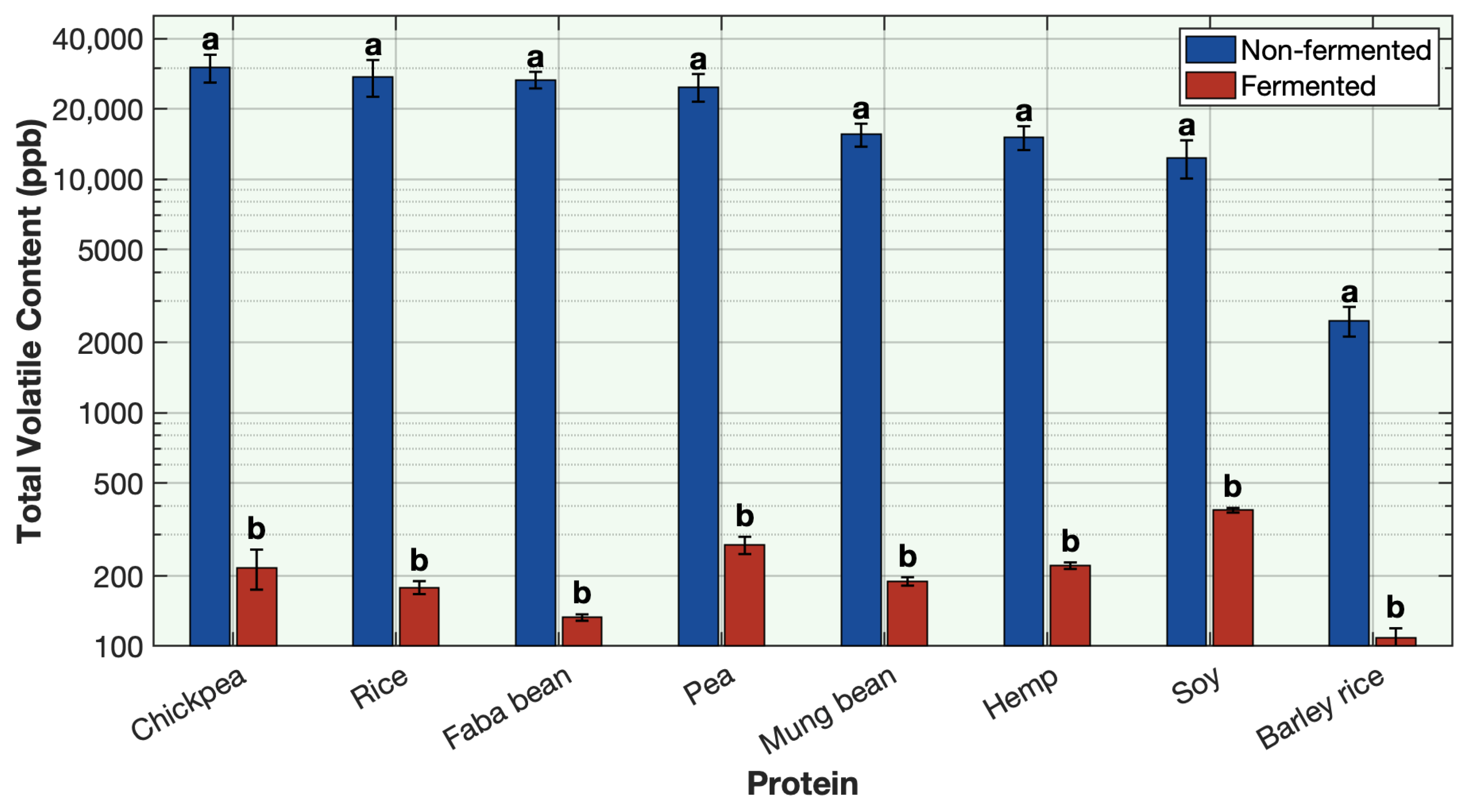
Volatile profiles were analyzed across eight different plant protein solutions—chickpea, rice, faba bean, pea, mung bean, hemp, soy, and barley-rice before and after sequential fermentation. A total of 31 volatiles responsible for off-odors in plant proteins were quantified in each protein and its fermented product. Across all eight proteins, sequential fermentation showed a significant reduction in the overall concentration of off-odor volatiles (Figure 1; Table A1, Table A2, Table A3, Table A4, Table A5, Table A6, Table A7 and Table A8).
Prior to fermentation, total off-odor volatile content ranged from ~26,000–30,000 ppb in pea, chickpea, rice, and faba bean proteins, ~14,000–16,000 ppb in soy, hemp, and mung bean proteins, and ~2600 ppb in barley–rice protein (Figure 1; Table A1, Table A2, Table A3, Table A4, Table A5, Table A6, Table A7 and Table A8). After fermentation, the concentration of total off-odor volatiles significantly reduced in all the proteins, to a narrow range of 185–451 ppb, representing > 98–99% overall reduction (Figure 1; Table A1, Table A2, Table A3, Table A4, Table A5, Table A6, Table A7 and Table A8). Across all the proteins, all 31 volatiles decreased significantly after fermentation (Table A1, Table A2, Table A3, Table A4, Table A5, Table A6, Table A7 and Table A8). In non-fermented proteins, aldehydes were the most abundant volatile class, followed by alcohols, with sulfur-containing compounds also present at elevated levels, while ketones, furans, and nitrogen-containing compounds were detected at comparatively lower concentrations (Table A1, Table A2, Table A3, Table A4, Table A5, Table A6, Table A7 and Table A8). All volatile classes decreased significantly, with the greatest reduction observed in aldehydes, alcohols, and sulfur-containing volatiles (Table A1, Table A2, Table A3, Table A4, Table A5, Table A6, Table A7 and Table A8). This demonstrates that the fermentation process was uniformly effective across all proteins, with differences in reduction percentages primarily reflecting initial concentration differences rather than variations in fermentation efficacy.
Pea protein was selected as a representative protein for the other proteins because it contained all major classes of off-odor volatile compounds covered in other proteins, and its deodorization pattern was consistent across all tested proteins.
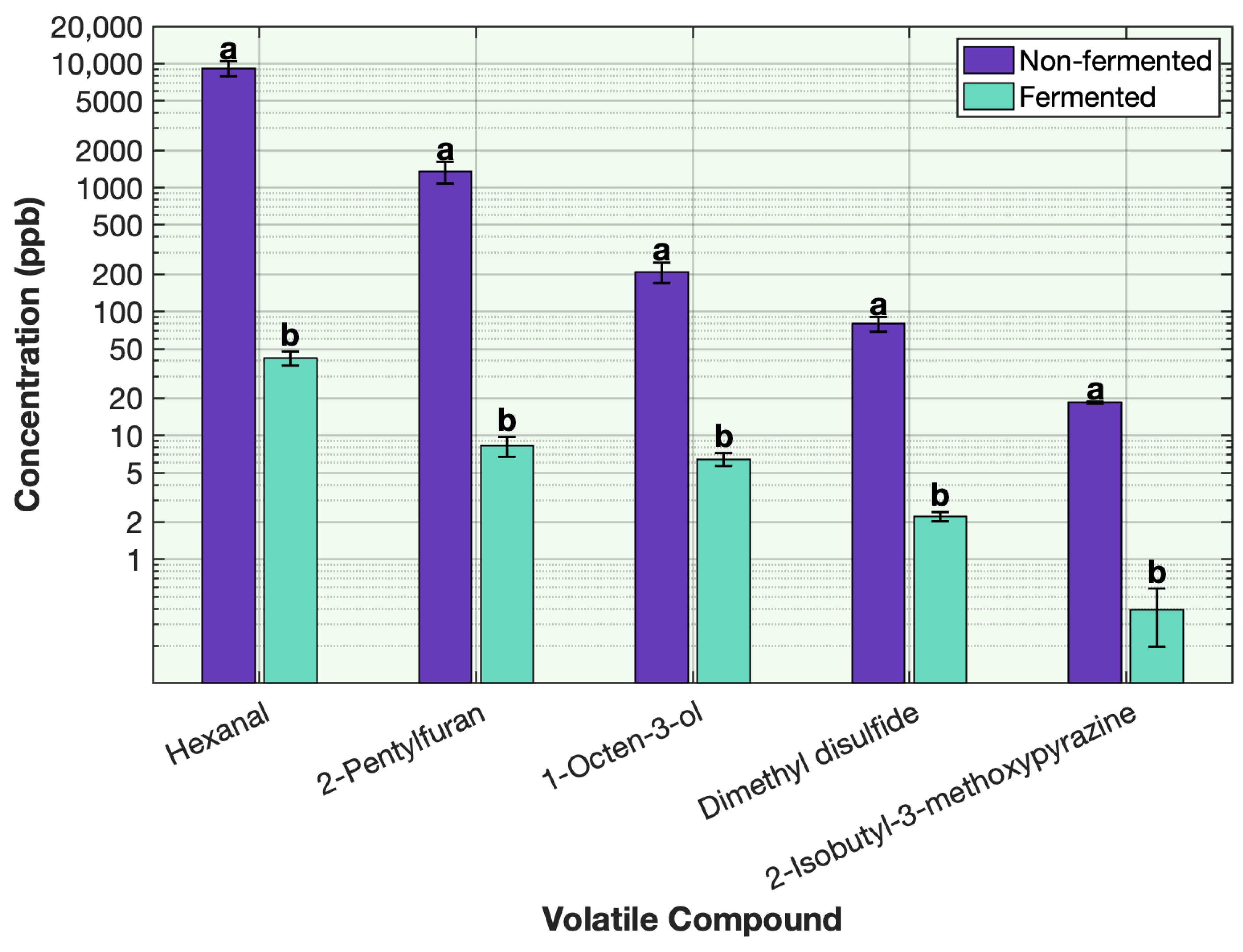
Among the key off-odor compounds, hexanal was the most abundant in all unfermented protein samples (Figure 2; Table A1, Table A2, Table A3, Table A4, Table A5, Table A6, Table A7 and Table A8). In pea protein, its concentration dropped dramatically from 9184 to 42 ppb following fermentation, representing > 99% reduction (Figure 2; Table A1). The final concentration falls within the reported sensory threshold range of 25–97 ppb, indicating that hexanal would be barely perceptible and that the dominant green, fatty odor note was effectively deodorized. A comparable deodorization trend was observed for 2-pentylfuran, a major beany compound originating from lipid oxidation. Its concentration declined from 1346 to 8 ppb, approaching the reported sensory threshold of 6 ppb, confirming successful suppression of its characteristic beany odor. The alcohol 1-octen-3-ol, formed by oxidation and responsible for earthy and mushroom-like notes, was also efficiently removed, decreasing from 209 to 6 ppb. As this final concentration lies within the reported sensory threshold range (0.048–10 ppb), the compound was also effectively deodorized. For nitrogenous volatiles, 2-isobutyl-3-methoxypyrazine (IBMP) decreased markedly from 18 to 0.39 ppb (>97% reduction; Figure 2; Table A1). Despite remaining above its extremely low threshold (≈0.005 ppb), this decrease represents a substantial reduction in the characteristic beany intensity. The sulfur-derived compound dimethyl disulfide (DMDS), associated with onion- and sulfur-like odors, was reduced from 79 to 2 ppb (>97% decrease), bringing its concentration well below the reported sensory threshold range of 7–12 ppb and further contributing to the overall deodorization effect.
The strong deodorization pattern seen in pea protein, characterized by a significant decrease in the concentration of hexanal, 2-pentylfuran, 1-octen-3-ol, methoxypyrazines, sulfur compounds, and other off-odors, was also evident in all of the other proteins (Table A1, Table A2, Table A3, Table A4, Table A5, Table A6, Table A7 and Table A8), confirming the broad efficacy of the fermentation process. This significant decrease in all off-odor volatile compounds can be attributed to multiple biochemical and physicochemical processes acting synergistically across the two-stage fermentation process. These mechanisms include (1) enzymatic transformation of aldehydes, ketones, sulfur, and nitrogenous volatiles by lactic acid bacteria, (2) modulation of redox potential and pH which suppresses new off odor volatile compound formation and chemical conversion of existing off odor volatile compounds, and (3) matrix-level restructuring and physical stripping that accelerate volatile release, conversion, and removal from the product.
Before fermentation begins, the plant protein powders are hydrated, homogenized, and gently heated to 60 °C to fully solubilize the proteins. These steps are essential to help release physically trapped volatiles from within the protein, making them accessible for microbial transformation during fermentation [4,5].
Once inoculated in stage one, L. plantarum immediately begins consuming dissolved oxygen and metabolizing available sugars, rapidly lowering the redox potential of the protein solution [13,14,15,16]. The depletion of oxygen is critical, as it stops ongoing lipid oxidation and prevents the formation of new aldehydes and ketones during fermentation [13,16]. Simultaneously, L. plantarum produces alcohol and aldehyde dehydrogenases that convert existing aldehydes into either less volatile alcohols or their corresponding carboxylic acids [13,14,15,16]. L. plantarum also produces low levels of hydrogen peroxide via NADH oxidase activity, which creates a mildly oxidative environment that converts reactive sulfur thiols into disulfides or sulfoxides with significantly higher odor thresholds [13,14,15,16]. As fermentation progresses, a moderate decrease in pH (to ~5.0) begins to alter the surface charge of the protein matrix [17], leading to the partial desorption and increased mobility of previously surface-bound volatile compounds [18]. Continuous stirring and controlled venting further facilitate the physical stripping of these released volatiles from the headspace. By the end of stage 1, aldehydes, alcohols, ketones, furans, sulfur compounds, and methoxypyrazines have already been reduced through combined enzymatic conversion, controlled oxidation, early acid-induced release, and physical removal.
In the second stage, inoculation with yogurt starter cultures (Streptococcus thermophilus, Lactobacillus delbrueckii subsp. bulgaricus, and L. acidophilus) triggers rapid lactic acid production, which reduces the pH to approximately 4.5 within 8–12 h [19,20]. This acidification is critical for multiple deodorization mechanisms. First, it suppresses further lipid oxidation by scavenging oxygen-reactive radicals such as hydroxyl radicals and hydrogen peroxide and removing secondary lipid-oxidation products, preventing propagation of oxidative damage [21]. Second, basic nitrogen-containing volatiles such as amines and methoxypyrazines undergo protonation, converting into charged, non-volatile forms with negligible vapor pressure and sensory impact [22,23]. Third, the acidic environment drives protein unfolding and gelation near the isoelectric point, leading to aggregation, and expulsion of water and any residual free volatiles from the matrix [24,25,26,27]. This unfolding process also exposes additional thiol and amino functional groups capable of covalently binding aldehydes and sulfur compounds, further reducing their volatility [24,25,26,27]. As gelation progresses, the forming three-dimensional protein network physically traps trace off-odor volatiles [28,29], preventing their release into the headspace. Together, these biochemical and structural transformations complete the deodorization initiated in Stage 1.

3.2. Sensory Evaluation of Sequential Fermentation on the Deodorization of Off-Odor Producing Volatiles in Different Plant Proteins

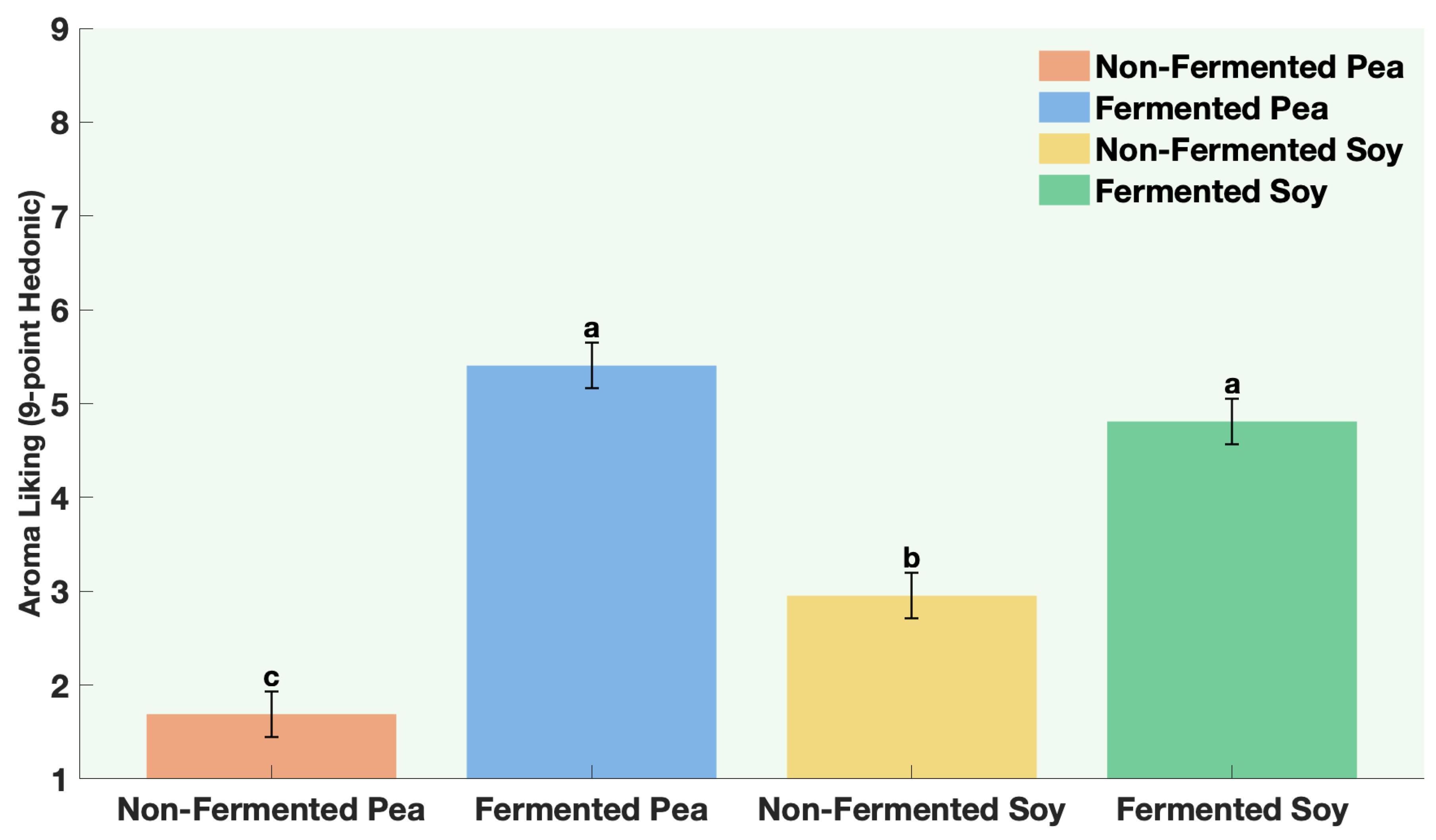
Sensory evaluation results supported the SIFT-MS headspace analysis, confirming the positive impact of fermentation on aroma quality. Fermentation significantly improved aroma liking for both pea and soy proteins (Figure 3, Table A11). Non-fermented pea protein received the lowest liking scores, indicating strong aroma rejection by consumers (Figure 3, Table A11). Fermented pea protein showed a substantial increase in liking (Figure 3, Table A11), demonstrating effective sensory improvement through sequential fermentation. A similar trend was observed for soy, where sequential fermentation led to a significant increase in liking compared to the non-fermented soy sample (Figure 3). These findings confirm that fermentation enhanced overall sensory acceptability by improving the perceived aroma quality of the protein samples.
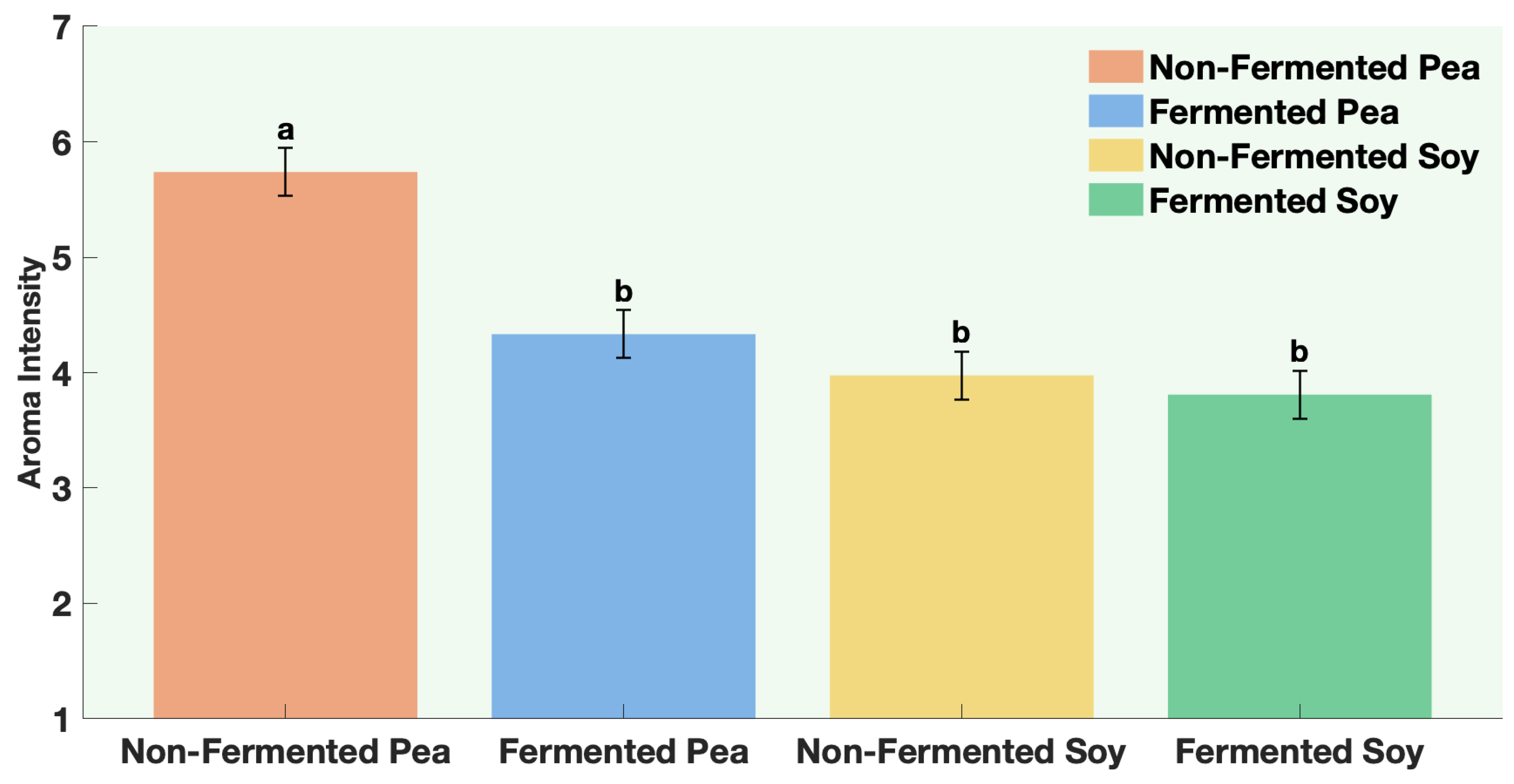
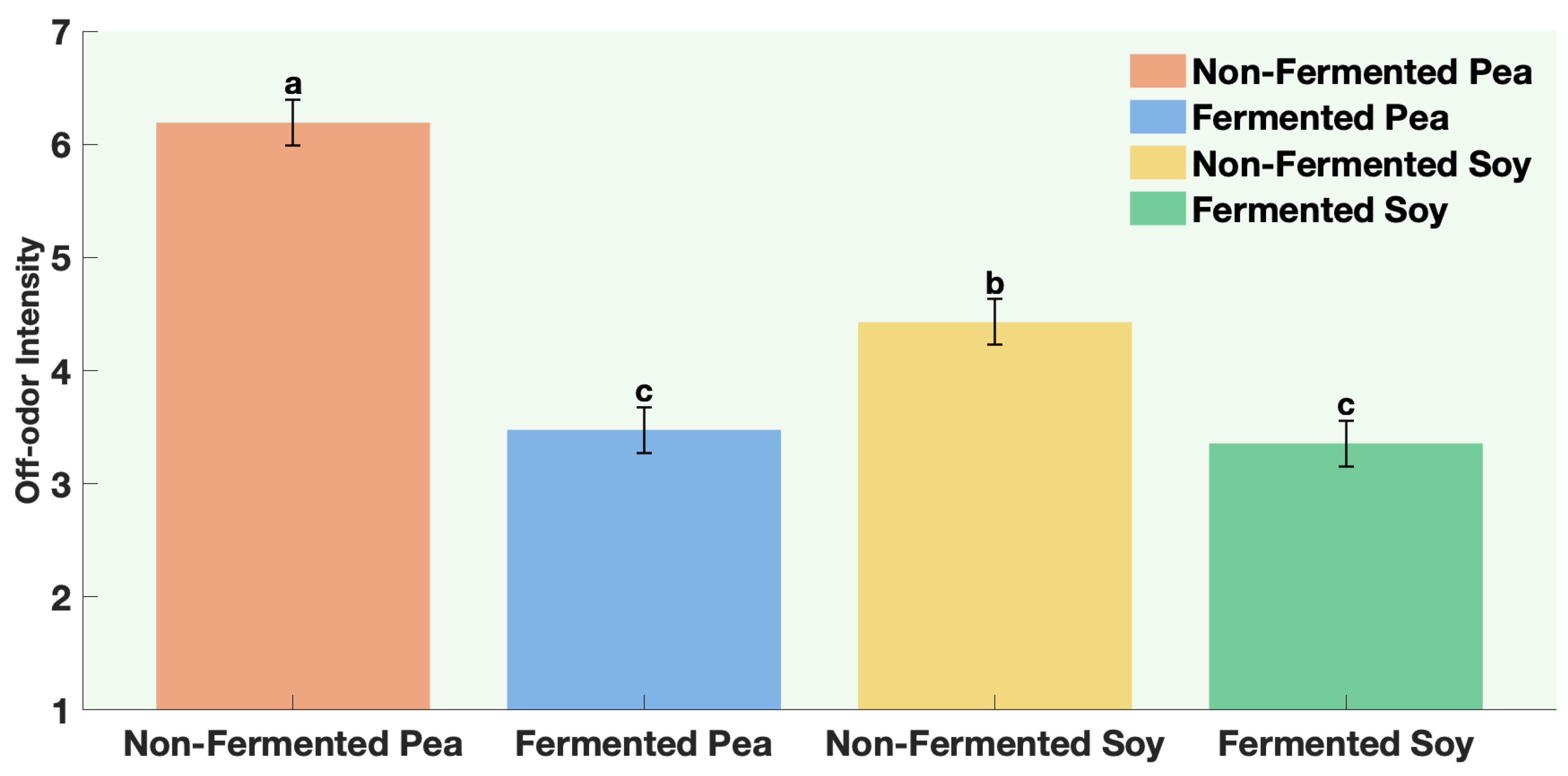
Overall aroma intensity decreased when the pea was fermented, but remained unchanged for soy (Figure 4, Table A11). However, off-odor intensity was significantly higher in the non-fermented pea and soy samples, while fermented samples showed clearly lower off-odor perception (Figure 5, Table A11). This indicates that sequential fermentation improved the overall aroma by lowering off-odors.
Samples were further evaluated using a ranking test, where panelists ranked the four samples from 1, indicating “most preferred”, to 4, indicating “least preferred”, based on aroma perception. Lower mean rank indicates higher preference. The ranking results showed that fermented samples were ranked significantly more favorably than their non-fermented counterparts (Table 3). The ranking trend closely matched both the aroma liking and off-odor intensity results, reinforcing that fermentation improved consumer preference by effectively reducing objectionable odor notes.

3.3. Effect of the Ingredients on the Deodorization of Off-Odor Volatile Compounds in Pea Protein

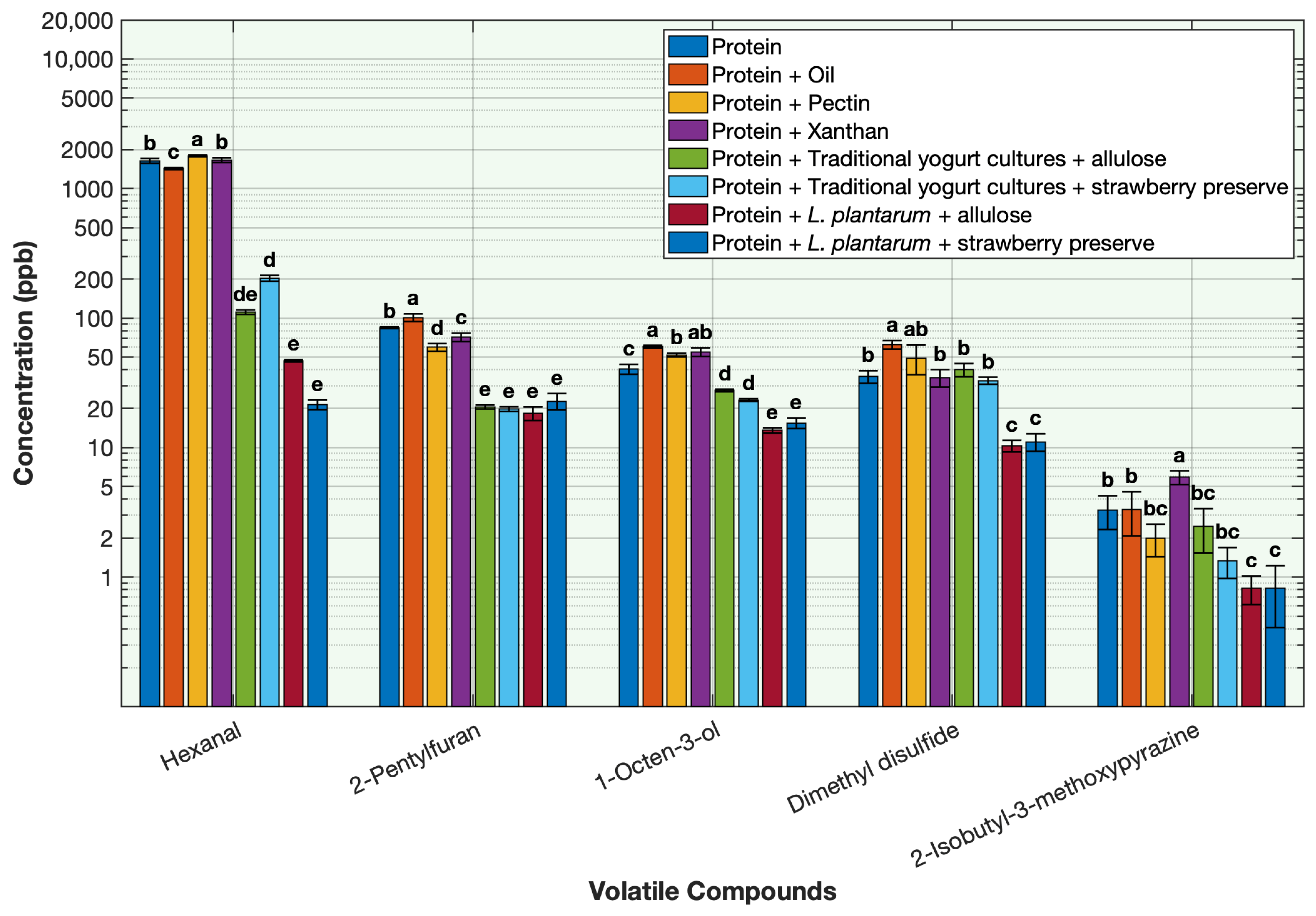
To evaluate the contribution of each component on deodorization, volatile concentrations were measured in the protein solution and compared to protein samples with the addition of oil, pectin, xanthan gum, yogurt standard culture with allulose, yogurt standard culture with strawberry preserve, Lactobacillus plantarum with allulose, and L. plantarum with strawberry preserve (Figure 6, Table A9). The protein solution with lactic acid bacterial cultures produced the greatest deodorization, whereas viscosifying ingredients such as xanthan gum, pectin, and oil had a minimal effect on the volatiles.
Fermentation with L. plantarum significantly decreased all the off-odor volatiles, with most volatiles reduced by over 90% compared to the unfermented protein solution (Figure 6, Table A9). Concentrations of hexanal, 2-pentylfuran, 1-octen-3-ol, dimethyl disulfide, and 2-isobutyl-3-methoxypyrazine were significantly lower than in the unfermented protein solution, confirming the strong deodorizing potential of this culture. The extensive volatile reduction is consistent with L. plantarum’s ability to metabolize aldehydes, alcohols, and sulfur compounds, as explained in Section 3.1 [13,14,15,16,17,18].
Carbohydrate substrate also influenced the overall pattern of deodorization. L. plantarum paired with allulose produced a greater reduction of 1-octen-3-ol, dimethyl disulfide, and 2-pentylfuran compared to its pairing with strawberry preserve (Figure 6). This pattern suggests that allulose supports L. plantarum’s metabolism and redox-driven degradation of off-odor volatile compounds. In comparison, yogurt starter cultures appeared to perform better with strawberry preserve, showing lower concentrations of most volatiles relative to the allulose. This trend likely reflects faster acidification and enhanced volatilization caused by the presence of simple sugars and organic acids in the fruit preserve. Although both sugars were effective in supporting fermentation, these results indicate that metabolic compatibility between the culture and its carbon source can influence deodorization efficiency.
Fermentation with traditional yogurt cultures (Streptococcus thermophilus and Lactobacillus delbrueckii subsp. bulgaricus) decreased off-odor volatiles, though to a lesser extent than L. plantarum. The rapid acidification explained in Section 3.1 during stage 2 (final pH ~ 4.5) likely contributed to the volatile reduction [19,20,21,22,23,24,25,26,27,28,29].
The addition of oil showed minimal reduction in a few volatiles through formation of a hydrophobic microphase in oil that temporarily solubilizes nonpolar volatiles, thereby lowering their apparent headspace concentration [26,30]. The hydrocolloid stabilizers xanthan gum and pectin also had a limited impact on deodorization and showed minimal reduction in a few volatiles through entrapment of off-odor volatiles within the hydrocolloid network through hydrophobic or hydrogen bonds [31,32].

3.4. Effect of Co-Fermentation Versus Sequential Fermentation on the Deodorization of Off-Odor Producing Volatiles in Pea Protein

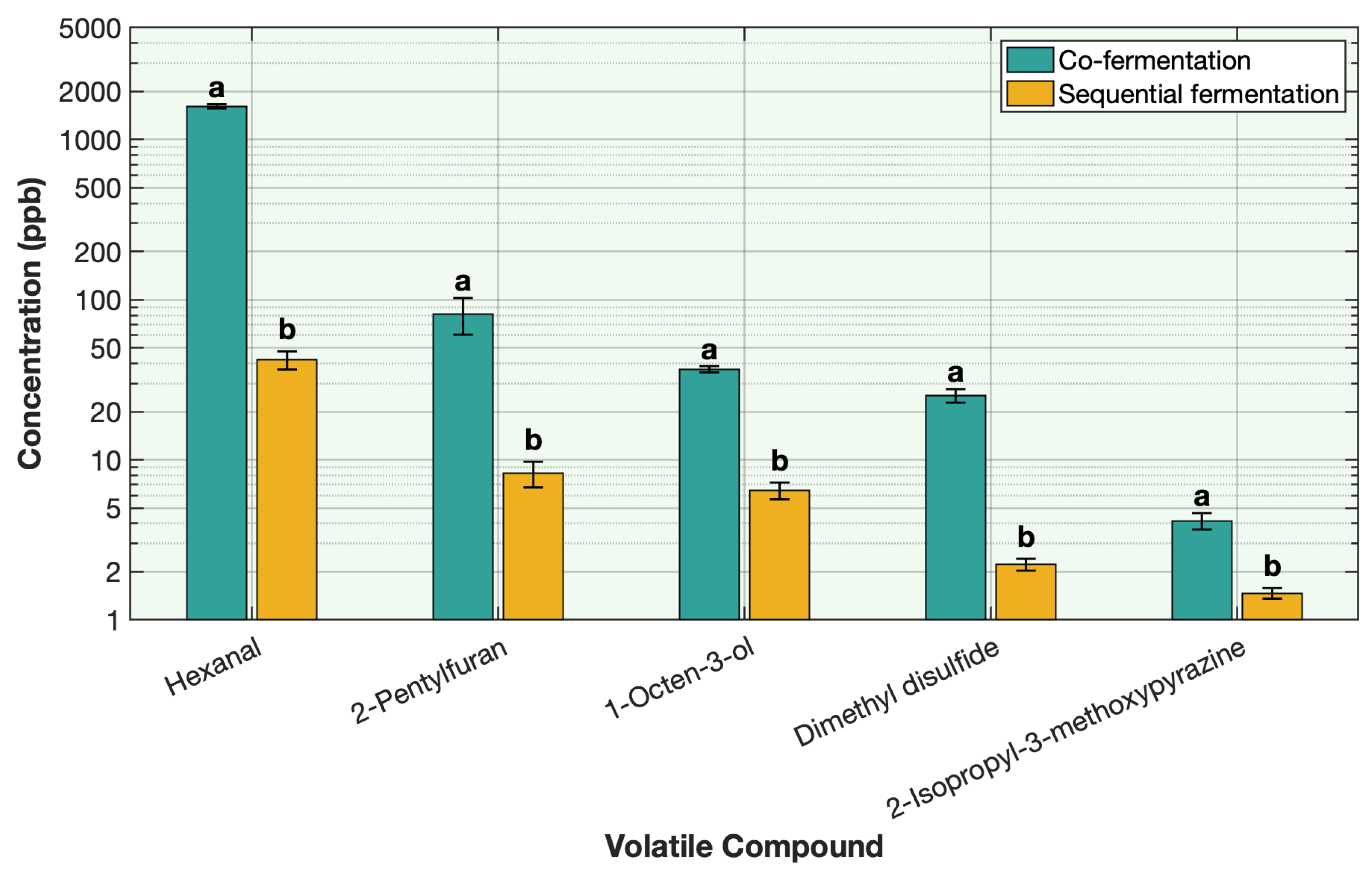
To study the comparative efficiency of sequential fermentation versus co-fermentation, the volatile profiles of 20-h co-fermentation with both Lactobacillus plantarum and traditional yogurt cultures and of sequential fermentation with L. plantarum for 12 h followed by 8 h of yogurt culture fermentations were analyzed. Although both fermentation methods employed the same microbial strains (Lactobacillus plantarum and traditional yogurt cultures), the order and timing of inoculation had a pronounced effect on off-odor reduction. Across all off-odor volatiles, the sequential fermentation yielded substantially lower post-fermentation concentrations of off-odor volatiles compared to the co-fermentation (Figure 7, Table A10). Concentrations of hexanal, 2-pentylfuran, 1-octen-3-ol, dimethyl disulfide, and 2-isopropyl-3-methoxypyrazine were reduced by 97–99% under sequential fermentation, compared with 68–93% under co-fermentation (Figure 7, Table A10).
The enhanced effectiveness of the sequential fermentation is attributed to the sequential operation of Lactobacillus plantarum and yogurt starter cultures, as explained in Section 3.1, under their respective optimal conditions. In the first 12-h stage, Lactobacillus plantarum metabolized off-odor volatiles via alcohol and aldehyde dehydrogenase pathways [13,14,15,16] and consumed residual oxygen to stabilize the redox environment [13,14,15,16]. This stage proceeds at a mildly acidic pH (~5.5–6.0), which coincides with the optimal activity range of L. plantarum and supports efficient enzymatic redox reactions [13,14,15,16]. Because L. plantarum produces organic acids more slowly than traditional yogurt cultures [33,34,35], the pH remains relatively stable (between 6.0 and 5.5) during this stage, allowing its dehydrogenase enzymes to remain active and effectively metabolize off-odor volatile compounds [13,14,15,16]. Mild proteolysis during this step loosens the protein matrix, enhancing the accessibility and diffusivity of entrapped volatiles [17,18]. In the subsequent 8-h stage, yogurt cultures (Streptococcus thermophilus, Lactobacillus delbrueckii subsp. bulgaricus, and L. acidophilus) rapidly ferment the available sugars, driving the pH to ~4.5 and preventing oxidation, promoting protonation and volatilization of basic and carbonyl compounds [21,22,23,24,25,26,27]. Acid gelation of the matrix further facilitates volatile release or binding into non-volatile complexes [28,29]. Simultaneously, the yogurt bacteria generate desirable volatiles that contribute pleasant dairy-like and fruity aromas and mask any residual off-notes [36,37,38].
In co-fermentation, Lactobacillus plantarum and traditional yogurt cultures were inoculated simultaneously. Although the starting pH (~7) was initially suitable for both cultures, the traditional yogurt cultures rapidly acidified the medium, driving the pH below 5.5 within a short time [39]. This early acidification shortened the time during which L. plantarum could function within its optimal range (pH 5.5–6.0) [40], thereby limiting its enzymatic redox conversion of aldehydes and sulfur volatiles. As the two microbial groups metabolized sugars concurrently, the yogurt cultures consumed most of the available carbon sources and generated lactic acid faster than L. plantarum could adjust metabolically [39,40]. The resulting rapid pH decline inhibited L. plantarum dehydrogenase activity and also led to early protein coagulation, reducing the diffusivity of volatiles [41,42,43]. This concurrent metabolism, therefore, disrupted the balanced, stagewise progression achieved in sequential fermentation, in which L. plantarum first metabolizes off-odor volatiles under mildly acidic conditions before traditional yogurt cultures finalize acidification and further metabolize them. As a result, co-fermentation led to less effective deodorization than sequential fermentation.

4. Conclusions

This study demonstrates the remarkable effectiveness of sequential fermentation as a strategy for deodorizing plant-based proteins. By employing a two-stage sequential fermentation process initially with Lactobacillus plantarum followed by a traditional yogurt culture, the formulation achieved a broad and substantial reduction in off-odor volatile compounds across eight different plant proteins, including soy, pea, chickpea, mung bean, faba bean, rice, barley-rice, and hemp. The SIFT-MS headspace analysis and sensory results revealed consistent and often near-complete reductions in key off-odor volatiles such as aldehydes, alcohols, methoxypyrazines, ketones, and sulfur volatiles. Among the volatile classes, aldehydes, alcohols, and sulfur compounds showed the most dramatic decreases. This outcome is attributed to the synergistic enzymatic activities of the microbial cultures, supported by matrix acidification, redox effects, protein denaturation, and strategic venting during fermentation. The use of LAB cultures with specific sugar sources, such as allulose with L. plantarum and strawberry preserve with yogurt cultures, further enhanced the deodorization efficiency and contributed desirable sensory qualities to the final product. The co-fermentation approach, where all ingredients and cultures were combined simultaneously, was less effective. Although some deodorization was observed, it was not as effective as sequential fermentation. The simultaneous presence of multiple microbial strains likely led to early competition for nutrients and suboptimal enzymatic activity, highlighting the importance of sequential fermentation. This work not only advances the understanding of how fermentation can mitigate the sensory challenges associated with plant protein ingredients but also offers a practical, clean-label solution for the development of flavorful plant-based dairy alternatives. By combining microbiological expertise with food chemistry, the proposed method achieves deodorization without reliance on artificial additives. The successful application across diverse protein types reinforces the potential of this approach to be generalized in future plant-based product innovations.


5. Patents

Provisional Patent Number 63/898,020.

Author Contributions

Conceptualization, M.K. and S.B.; methodology, M.K.; validation, M.K.; formal analysis, M.K. and C.G.; investigation, M.K. and C.G.; resources, S.B.; data curation, M.K.; writing—original draft preparation, M.K.; writing—review and editing, S.B. and M.K.; visualization, M.K.; supervision, S.B.; project administration, S.B. All authors have read and agreed to the published version of the manuscript.

Funding

This research received no external funding.

Institutional Review Board Statement

Ethical review was performed by the Office of Responsible Research Practices, which has determined that this study is exempt from IRB review under the qualifying exempt category #6: Taste and Food Quality. IRB ID: STUDY20251170; date of determination: 16 June 2025.

Informed Consent Statement

Informed consent was obtained from all subjects involved in the study.

Data Availability Statement

The original contributions presented in the study are included in the article. Further inquiries can be directed to the corresponding author.

Acknowledgments

The authors gratefully acknowledge the suppliers for providing the materials used in this research.

Conflicts of Interest

The authors declare no conflicts of interest.

Appendix A

Table A1. Deodorization of Pea protein (PP) using sequential fermentation. Different letters indicate significant differences within each volatile (p < 0.05).
VolatilesPP Non-FermentedPP Fermented
(E)-2-pentenal71.7 a5.32 b
(E,Z)-2,6-nonadienal11.1 a0.40 b
1-hexanol78.2 a17.7 b
1-octanol15.5 a1.51 b
1-octen-3-ol209 a6.44 b
1-octen-3-one24.9 a0.85 b
1-pentanol400 a26.4 b
1-penten-3-ol1326 a25.1 b
2,4-decadienal7.71 a0.70 b
2,4-heptadienal1232 a12.1 b
2-heptanone888 a20.6 b
2-isobutyl-3-methoxypyrazine18.4 a0.39 b
2-isopropyl-3-methoxypyrazine18.3 a1.47 b
2-octenal122 a2.58 b
2-pentylfuran1346 a8.23 b
3-hexen-1-ol4419 a26.5 b
butanal977 a20.2 b
carbon disulfide2248 a15.9 b
decanal7.57 a1.14 b
dimethyl disulfide79.5 a2.22 b
dimethyl trisulfide58.7 a1.54 b
dimethylamine161 a59.9 b
formaldehyde852 a9.72 b
heptanal211 a3.85 b
hexanal9184 a42.1 b
hydrogen sulfide161 a0.97 b
methional16.6 a0.39 b
methyl mercaptan982 a4.97 b
nonanal46.6 a1.98 b
octanal113 a3.34 b
pentanal3017 a33.1 b
Table A2. Deodorization of Rice protein (RP) using sequential fermentation. Different letters indicate significant differences within each volatile (p < 0.05).
VolatilesRP Non-FermentedRP Fermented
(E)-2-pentenal73.0 a1.80 b
(E,Z)-2,6-nonadienal38.7 a0.71 b
1-hexanol92.8 a6.28 b
1-octanol19.8 a1.19 b
1-octen-3-ol279 a5.48 b
1-octen-3-one62.5 a1.60 b
1-pentanol639 a15.1 b
1-penten-3-ol1175 a12.2 b
2,4-decadienal4.16 a0.47 a
2,4-heptadienal997 a10.8 b
2-heptanone713 a3.36 b
2-isobutyl-3-methoxypyrazine7.74 a0.67 b
2-isopropyl-3-methoxypyrazine12.2 a0.84 b
2-octenal75.4 a0.90 b
2-pentylfuran299 a2.28 b
3-hexen-1-ol5594 a24.5 b
butanal973 a12.2 b
carbon disulfide2231 a8.03 b
decanal9.46 a0.81 b
dimethyl disulfide273 a1.89 b
dimethyl trisulfide92.2 a2.28 b
dimethylamine163 a74.0 b
formaldehyde237 a11.6 b
heptanal252 a2.50 b
hexanal11,630 a37.4 b
hydrogen sulfide21.7 a0.69 b
methional12.8 a0.37 b
methyl mercaptan272 a9.96 b
nonanal63.5 a2.42 b
octanal199 a2.85 b
pentanal3649 a17.7 b
Table A3. Deodorization of Soy protein (SP) using sequential fermentation. Different letters indicate significant differences within each volatile (p < 0.05).
VolatilesSP Non-FermentedSP Fermented
(E)-2-pentenal95.5 a6.61 b
(E,Z)-2,6-nonadienal6.44 a0.48 b
1-hexanol37.8 a26.9 a
1-octanol5.73 a1.57 b
1-octen-3-ol75.2 a5.51 b
1-octen-3-one36.1 a0.99 b
1-pentanol175 a154 a
1-penten-3-ol703 a30.6 b
2,4-decadienal1.66 a0.70 b
2,4-heptadienal1668 a12.4 b
2-heptanone92.3 a3.64 b
2-isobutyl-3-methoxypyrazine1.79 a0.49 a
2-isopropyl-3-methoxypyrazine3.78 a1.49 b
2-octenal23.0 a0.88 b
2-pentylfuran83.5 a2.10 b
3-hexen-1-ol2797 a43.3 b
butanal378 a19.6 b
carbon disulfide1181 a10.0 b
decanal4.29 a0.77 b
dimethyl disulfide7.44 a1.24 b
dimethyl trisulfide18.1 a1.06 b
dimethylamine303 a149 b
formaldehyde411 a42.5 b
heptanal85.4 a2.29 b
hexanal5388 a5.15 b
hydrogen sulfide198 a1.15 b
methional7.17 a0.64 b
methyl mercaptan494 a26.7 b
nonanal42.5 a1.33 b
octanal49.8 a2.61 b
pentanal1733 a29.7 b
Table A4. Deodorization of Hemp protein (HP) using sequential fermentation. Different letters indicate significant differences within each volatile (p < 0.05).
VolatilesHP Non-FermentedHP Fermented
(E)-2-pentenal246 a6.07 b
(E,Z)-2,6-nonadienal8.38 a0.40 b
1-hexanol1536 a18.7 b
1-octanol17.5 a1.59 b
1-octen-3-ol33.7 a3.67 b
1-octen-3-one72.6 a1.27 b
1-pentanol885 a16.7 b
1-penten-3-ol597 a10.8 b
2,4-decadienal1.66 a1.18 a
2,4-heptadienal2001 a10.0 b
2-heptanone106 a10.6 b
2-isobutyl-3-methoxypyrazine4.08 a0.44 b
2-isopropyl-3-methoxypyrazine3.60 a0.87 b
2-octenal21.7 a0.69 b
2-pentylfuran19.0 a2.10 b
3-hexen-1-ol2067 a34.7 b
butanal358 a5.62 b
carbon disulfide1773 a6.88 b
decanal6.31 a1.65 b
dimethyl disulfide26.7 a1.89 b
dimethyl trisulfide28.5 a1.81 b
dimethylamine154 a93.7 b
formaldehyde1111 a69.5 b
heptanal49.8 a2.20 b
hexanal4276 a13.3 b
hydrogen sulfide20.2 a4.96 b
methional5.77 a0.69 a
methyl mercaptan1294 a61.0 b
nonanal18.6 a2.23 b
octanal30.9 a1.55 b
pentanal1394 a9.54 b
Table A5. Deodorization of Chickpea protein (CP) using sequential fermentation. Different letters indicate significant differences within each volatile (p < 0.05).
VolatilesCP Non-FermentedCP Fermented
(E)-2-pentenal55.8 a3.93 b
(E,Z)-2,6-nonadienal9.77 a0.22 b
1-hexanol94.6 a18.9 b
1-octanol10.8 a0.88 b
1-octen-3-ol128 a3.23 b
1-octen-3-one32.7 a1.01 b
1-pentanol318 a47.5 b
1-penten-3-ol863 a11.9 b
2,4-decadienal2.58 a0.42 b
2,4-heptadienal939 a11.9 b
2-heptanone373 a4.56 b
2-isobutyl-3-methoxypyrazine3.35 a0.62 b
2-isopropyl-3-methoxypyrazine5.52 a0.59 b
2-octenal86.4 a0.63 b
2-pentylfuran541 a2.40 b
3-hexen-1-ol6835 a30.4 b
butanal622 a10.1 b
carbon disulfide1661 a5.18 b
decanal4.69 a1.01 b
dimethyl disulfide47.2 a2.62 b
dimethyl trisulfide42.4 a1.00 b
dimethylamine222 a74.9 b
formaldehyde1899 a31.2 b
heptanal180 a2.36 b
hexanal13,818 a23.1 b
hydrogen sulfide199 a0.58 b
methional13.5 a0.44 b
methyl mercaptan2251 a17.1 b
nonanal58.7 a2.47 b
octanal98.5 a2.18 b
pentanal2627 a15.4 b
Table A6. Deodorization of Faba bean protein (FBP) using sequential fermentation. Different letters indicate significant differences within each volatile (p < 0.05).
VolatilesFBP Non-FermentedFBP Fermented
(E)-2-pentenal51.4 a3.63 b
(E,Z)-2,6-nonadienal8.08 a0.34 b
1-hexanol87.5 a16.1 b
1-octanol8.46 a0.84 b
1-octen-3-ol134 a3.31 b
1-octen-3-one41.3 a0.78 b
1-pentanol308 a32.7 b
1-penten-3-ol798 a8.69 b
2,4-decadienal2.52 a0.52 b
2,4-heptadienal1544 a16.4 b
2-heptanone393 a4.54 b
2-isobutyl-3-methoxypyrazine5.55 a0.22 b
2-isopropyl-3-methoxypyrazine5.63 a0.79 b
2-octenal71.5 a0.50 b
2-pentylfuran459 a1.52 b
3-hexen-1-ol6175 a12.7 b
butanal610 a4.57 b
carbon disulfide1887 a4.14 b
decanal4.69 a0.47 b
dimethyl disulfide33.8 a1.18 b
dimethyl trisulfide35.7 a1.25 b
dimethylamine192 a81.1 b
formaldehyde204 a17.9 b
heptanal183 a1.81 b
hexanal12,962 a3.66 b
hydrogen sulfide41.8 a0.65 b
methional10.0 a0.25 b
methyl mercaptan236 a6.10 b
nonanal39.1 a1.90 b
octanal90.0 a1.89 b
pentanal2396 a6.05 b
Table A7. Deodorization of Mung bean protein (MBP) using sequential fermentation. Different letters indicate significant differences within each volatile (p < 0.05).
VolatilesMBP Non-FermentedMBP Fermented
(E)-2-pentenal78.1 a4.93 b
(E,Z)-2,6-nonadienal5.41 a0.62 b
1-hexanol40.7 a12.7 b
1-octanol5.25 a1.20 b
1-octen-3-ol88.8 a5.44 b
1-octen-3-one12.4 a1.41 b
1-pentanol215 a29.8 b
1-penten-3-ol915 a30.8 b
2,4-decadienal1.32 a0.99 a
2,4-heptadienal2775 a10.2 b
2-heptanone153 a4.88 b
2-isobutyl-3-methoxypyrazine5.56 a0.18 b
2-isopropyl-3-methoxypyrazine2.90 a1.53 a
2-octenal46.8 a0.97 b
2-pentylfuran153 a0.90 b
3-hexen-1-ol2419 a10.6 b
butanal546 a10.7 b
carbon disulfide1431 a11.3 b
decanal3.70 a0.64 b
dimethyl disulfide59.9 a2.73 b
dimethyl trisulfide33.2 a1.95 b
dimethylamine173 a121 b
formaldehyde1443 a18.0 b
heptanal85.3 a2.50 b
hexanal4566 a5.60 b
hydrogen sulfide222 a0.91 b
methional7.78 a0.34 b
methyl mercaptan1708 a11.8 b
nonanal15.5 a2.10 b
octanal27.1 a1.60 b
pentanal1586 a32.5 b
Table A8. Deodorization of Barley rice protein (BRP) using sequential fermentation. Different letters indicate significant differences within each volatile (p < 0.05).
VolatilesBRP Non-FermentedBRP Fermented
(E)-2-pentenal5.49 a2.37 b
(E,Z)-2,6-nonadienal1.81 a0.53 b
1-hexanol7.89 a4.25 b
1-octanol8.16 a1.31 b
1-octen-3-ol20.5 a3.30 b
1-octen-3-one7.73 a0.49 b
1-pentanol37.6 a25.5 a
1-penten-3-ol368 a11.3 b
2,4-decadienal1.00 a1.09 a
2,4-heptadienal203 a6.76 b
2-heptanone43.7 a2.66 b
2-isobutyl-3-methoxypyrazine1.81 a0.54 b
2-isopropyl-3-methoxypyrazine1.70 a2.08 a
2-octenal7.24 a0.54 b
2-pentylfuran11.8 a0.49 b
3-hexen-1-ol193 a6.67 b
butanal210 a6.24 b
carbon disulfide587 a5.00 b
decanal4.78 a0.44 b
dimethyl disulfide19.0 a1.65 b
dimethyl trisulfide14.1 a2.69 b
dimethylamine176 a84.3 b
formaldehyde20.8 a15.4 a
heptanal135 a1.49 b
hexanal375 a3.24 b
hydrogen sulfide2.51 a1.99 a
methional 6.22 a0.33 b
methyl mercaptan13.0 a10.1 a
nonanal50.4 a1.15 b
octanal31.1 a1.25 b
pentanal702 a10.4 b
Table A9. Effect of each component of yogurt alternative on the deodorization of off-odor-producing volatile compounds in pea protein. Different letters indicate significant differences within each volatile (p < 0.05).
VolatilesProteinProtein + XanthanProtein + PectinProtein + OilProtein + L. plantarum + AlluloseProtein + L. plantarum + Strawberry PreserveProtein + Traditional Yogurt Cultures + AlluloseProtein + Traditional Yogurt Cultures + Strawberry Preserve
(E)-2-pentenal13.4 c17.0 b16.9 b19.5 a8.08 e9.99 d16.0 b13.3 c
(E,Z)-2,6-nonadienal2.01 b2.40 b2.17 b3.58 a0.35 d0.93 cd0.82 cd1.33 c
1-hexanol15.2 f19.9 ef27.0 cd23.9 de29.4 c39.3 b54.4 a40.2 b
1-octanol3.02 cd4.27 ab3.45 bc4.60 a1.73 e1.77 e2.99 cd2.16 de
1-octen-3-ol40.4 c54.7 ab51.7 b60.2 a13.6 e15.5 e27.6 d23.3 d
1-octen-3-one3.77 b4.36 ab4.55 ab5.25 a1.22 c1.75 c2.01 c1.90 c
1-pentanol70.7 e117 b113 b129 a44.5 f50.3 f104 c94.9 d
1-penten-3-ol372 b378 ab400 a360 b26.9 d23.8 d75.2 c98.9 c
2,4-decadienal1.93 b2.03 b1.71 b2.59 a0.61 c0.57 c0.81 c1.05 c
2,4-heptadienal337 c396 a351 bc371 ab48.8 e18.9 f73.6 e176 d
2-heptanone191 b184 b251 a193 b68.5 d79.5 d135 c120 c
2-isobutyl-3-methoxypyrazine3.29 b5.90 a2.00 bc3.32 b0.82 c0.82 c2.45 bc1.33 bc
2-isopropyl-3-methoxypyrazine2.82 b3.47 ab3.46 ab3.80 a1.53 c1.35 c1.62 c1.65 dc
2-octenal17.7 b16.7 b21.7 a18.0 b5.86 c6.64 c6.14 c6.34 c
2-pentylfuran84.2 b71.2 c59.4 d101 a18.4 e22.8 e20.6 e19.8 e
3-hexen-1-ol886 b867 b940 a734 c27.3 ef18.9 f71.7 de117 d
butanal273 ab290 a278 ab267 b24.7 e17.5 e62.6 d97.4 c
carbon disulfide392 b500 a504 a519 a27.2 d27.7 d71.0 cd97.8 c
decanal1.50 bcd2.31 a2.21 ab1.87 abc0.93 d1.15 cd1.40 cd0.78 d
dimethyl disulfide35.3 b34.6 b49.1 ab62.3 a10.3 c11.1 c39.8 b32.9 b
dimethyl trisulfide10.1 ab9.42 ab13.2 a12.3 ab5.17 cd4.25 d9.21 ab8.89 bc
dimethylamine62.5 c60.6 cd51.8 d70.1 bc63.8 c76.3 b103.0 a93.8 a
formaldehyde111 b273 a176 b23.9 c12.7 c16.2 c32.3 c22.3 c
heptanal31.6 b35.7 a36.7 a36.6 a6.78 d6.52 d12.8 c12.4 c
hexanal1634 b1660 b1784 a1425 c46.8 e21.4 e111 de203 d
hydrogen sulfide24.7 b76.3 a31.4 b2.70 c1.33 c0.85 c1.57 c1.71 c
methional2.41 c3.35 ab2.96 bc3.87 a0.29 d0.22 d0.87 d0.89 d
methyl mercaptan135 b325 a217 b27.8 c12.8 c12.8 c37.7 c29.6 c
nonanal6.76 b6.74 b7.81 b10.7 a3.01 c4.26 c2.48 c2.30 c
octanal21.1 b21.7 ab25.0 a23.6 ab6.06 d7.36 d13.2 c12.1 c
pentanal752 bc786 ab807 a720 c26.3 f20.3 f93.1 e144 d
Table A10. Effect of co-fermentation versus sequential fermentation on deodorization of off-odor producing volatile compounds in pea protein. Different letters indicate significant differences within each volatile (p < 0.05).
VolatilesCo-FermentationSequential Fermentation
(E)-2-pentenal11.5 a5.32 b
(E,Z)-2,6-nonadienal3.51 a0.40 b
1-hexanol19.0 a17.7 a
1-octanol4.03 a1.51 b
1-octen-3-ol36.8 a6.44 b
1-octen-3-one6.83 a0.85 b
1-pentanol66.4 a26.4 b
1-penten-3-ol203 a25.1 b
2,4-decadienal2.12 a0.70 b
2,4-heptadienal270 a12.1 b
2-heptanone100 a20.6 b
2-isobutyl-3-methoxypyrazine4.16 a1.47 b
2-octenal20.2 a2.58 b
2-pentylfuran81.5 a8.23 b
3-hexen-1-ol591 a26.5 b
butanal162 a20.2 b
carbon disulfide631 a15.9 b
decanal5.36 a1.14 b
dimethyl disulfide25.2 a2.22 b
dimethyl trisulfide9.72 a1.54 b
dimethylamine59.5 a59.9 a
formaldehyde118 a9.72 b
heptanal28.9 a3.85 b
hexanal1614 a42.1 b
hydrogen sulfide11.9 a0.97 b
methyl mercaptan127 a4.97 b
nonanal11.3 a1.98 b
octanal21.7 a3.34 b
pentanal541 a33.1 b
Table A11. Aroma liking, aroma intensity, and off-odor intensity evaluation of non-fermented and fermented protein samples by consumers. Different letters indicate significant differences between the samples within each attribute (p < 0.05).
SamplesAroma LikingAroma IntensityOff-Odor Intensity
Non-Fermented Pea1.6 c5.7 a6.2 a
Fermented Pea5.4 a4.3 b3.4 c
Non-Fermented Soy3.0 b4.0 b4.4 b
Fermented Soy4.8 a3.8 b3.3 c

References

  1. Jaeger, S.R.; Chheang, S.; Llobell, F.; Cardello, A.V. Consumers’ Expectations of Liking, Emotional, Conceptual and Sustainability Characteristics of Dairy, Plant-Based and Sustainable Yoghurts. J. Sens. Stud. 2024, 39, e12955. [Google Scholar] [CrossRef]
  2. Sridhar, K.; Bouhallab, S.; Croguennec, T.; Renard, D.; Lechevalier-Datin, V. Recent Trends in Design of Healthier Plant-Based Alternatives: Nutritional Profile, Gastrointestinal Digestion, and Consumer Perception. Crit. Rev. Food Sci. Nutr. 2022, 63, 10483–10498. [Google Scholar] [CrossRef]
  3. Malila, Y.; Owolabi, I.O.; Chotanaphuti, T.; Sakdibhornssup, N.; Elliott, C.T.; Visessanguan, W.; Karoonuthaisiri, N.; Petchkongkaew, A. Current Challenges of Alternative Proteins as Future Foods. npj Sci. Food 2024, 8, 53. [Google Scholar] [CrossRef] [PubMed]
  4. Leonard, W.; Zhang, P.; Ying, D.; Fang, Z. Surmounting the Off-Flavor Challenge in Plant-Based Foods. Crit. Rev. Food Sci. Nutr. 2022, 63, 10585–10606. [Google Scholar] [CrossRef] [PubMed]
  5. Karolkowski, A.; Guichard, E.; Briand, L.; Salles, C. Volatile Compounds in Pulses: A Review. Foods 2021, 10, 3140. [Google Scholar] [CrossRef]
  6. Singh, A.; Shi, Y.; Magreault, P.; Kitts, D.D.; Jarzębski, M.; Siejak, P.; Pratap-Singh, A. A Rapid Gas-Chromatography/Mass-Spectrometry Technique for Determining Odour Activity Values of Volatile Compounds in Plant Proteins. Molecules 2021, 26, 4104. [Google Scholar] [CrossRef]
  7. Boukid, F.; Hassoun, A.; Zouari, A.; Tülbek, M.; Mefleh, M.; Aït-Kaddour, A.; Castellari, M. Fermentation for Designing Innovative Plant-Based Meat and Dairy Alternatives. Foods 2023, 12, 1005. [Google Scholar] [CrossRef]
  8. Zhang, X.; Tian, W.; Xie, B.; Zhida, S. Influence of Lactic Acid Bacteria Fermentation on Flavor of Chickpea Milk. Foods 2022, 11, 2445. [Google Scholar] [CrossRef]
  9. Meinlschmidt, P.; Schweiggert-Weisz, U.; Eisner, P. Soy Protein Hydrolysates Fermentation: Effect of Debittering and Degradation of Soy Allergens. LWT 2016, 71, 202–212. [Google Scholar] [CrossRef]
  10. Tangyu, M.; Muller, J.; Bolten, C.J.; Wittmann, C. Fermentation of Plant-Based Milk Alternatives for Improved Flavour and Nutrition. Appl. Microbiol. Biotechnol. 2019, 103, 9263–9275. [Google Scholar] [CrossRef] [PubMed]
  11. Nedele, A.; Gross, S.; Rigling, M.; Zhang, Y. Reduction of Green Off-Flavor during Fermentation of Soy Drink with Lycoperdon pyriforme. Food Chem. 2021, 334, 127591. [Google Scholar] [CrossRef]
  12. Gacula, M.; Rutenbeck, S. Sample Size in Consumer Test and Descriptive Analysis. J. Sens. Stud. 2006, 21, 129–145. [Google Scholar] [CrossRef]
  13. Fischer, E.; Cayot, N.; Cachon, R. Potential of Microorganisms to Decrease Beany Off-Flavor: A Review. J. Agric. Food Chem. 2022, 70, 4493–4508. [Google Scholar] [CrossRef]
  14. Larsen, N.; Werner, B.B.; Vogensen, F.K.; Jespersen, L. Effect of Dissolved Oxygen on Redox and Milk Acidification by LAB. J. Dairy Sci. 2015, 98, 1640–1651. [Google Scholar] [CrossRef]
  15. Wang, Y.; Wu, J.; Lv, M.; Shao, Z.; Hungwe, M.; Wang, J.; Bai, X.; Xie, J.; Wang, Y.; Geng, W. Metabolism Characteristics of LAB and Applications in Food. Front. Bioeng. Biotechnol. 2021, 9, 612285. [Google Scholar] [CrossRef]
  16. Götz, F.; Sedewitz, B.; Elstner, E.F. Oxygen Utilization by L. plantarum. Arch. Microbiol. 1980, 125, 209–214. [Google Scholar] [CrossRef] [PubMed]
  17. Çabuk, B.; Stone, A.K.; Korber, D.R.; Tanaka, T.; Nickerson, M.T. Effect of L. plantarum on Pea Protein Flour. Food Technol. Biotechnol. 2018, 56, 411–420. [Google Scholar] [CrossRef]
  18. Fischer, E.; Cachon, R.; Cayot, N. Effect of Extraction pH on Volatiles in Pea Protein. Food Res. Int. 2021, 150, 110760. [Google Scholar] [CrossRef] [PubMed]
  19. Anwar, A.; Faiz, M.A.; Badar, I.H.; Jaspal, M.H.; Hou, J. Fermentation Time and Storage on Yogurt Properties. Processes 2025, 13, 759. [Google Scholar] [CrossRef]
  20. Mani-López, E.; Palou, E.; López-Malo, A. Probiotic Viability in Yogurts. J. Dairy Sci. 2014, 97, 2578–2590. [Google Scholar] [CrossRef]
  21. Lin, M.Y.; Yen, C.L. ROS and Lipid Peroxide Scavenging by Yogurt Organisms. J. Dairy Sci. 1999, 82, 1629–1634. [Google Scholar] [CrossRef]
  22. Hartmann, P.; McNair, H.; Zoecklein, B. Measurement of Methoxypyrazines by HS-SPME. Am. J. Enol. Vitic. 2002, 53, 285–288. [Google Scholar] [CrossRef]
  23. van Doorn, H.; Grabanski, C.B.; Miller, D.J.; Hawthorne, S.B. SPME with pH Adjustment for Aromatic Acids & Bases. J. Chromatogr. A 1998, 829, 223–233. [Google Scholar] [CrossRef]
  24. Kühn, J.; Considine, T.; Singh, H. Protein–Flavor Interactions in Dairy Systems. J. Food Sci. 2006, 71, R72–R82. [Google Scholar] [CrossRef]
  25. Senanayake, D.; Torley, P.J.; Chandrapala, J.; Terefe, N.S. Fermentation to Improve Legume Foods. Fermentation 2023, 9, 635. [Google Scholar] [CrossRef]
  26. Yin, X.; Li, J.; Zhu, L.; Zhang, H. Set-Type Plant-Based Yogurt Gel: A Review. Crit. Rev. Food Sci. Nutr. 2023, 64, 9412–9431. [Google Scholar] [CrossRef] [PubMed]
  27. Wang, K.; Arntfield, S.D. Effect of Salts and pH on Ketone Binding to Pea Proteins. Food Res. Int. 2015, 77, 1–9. [Google Scholar] [CrossRef]
  28. Saint-Eve, A.; Juteau, A.; Atlan, S.; Martin, N.; Souchon, I. Protein Composition and Aroma Release in Yogurt. J. Agric. Food Chem. 2006, 54, 3997–4004. [Google Scholar] [CrossRef]
  29. Lesme, H.; Rannou, C.; Famelart, M.H.; Bouhallab, S.; Prost, C. Yogurts Enriched with Milk Proteins. Trends Food Sci. Technol. 2020, 98, 140–149. [Google Scholar] [CrossRef]
  30. Guichard, E. Flavor–Food Matrix Interactions. Food Rev. Int. 2002, 18, 49–70. [Google Scholar] [CrossRef]
  31. Terta, M.; Blekas, G.; Paraskevopoulou, A. Aroma Retention in Polysaccharides. Food Hydrocoll. 2006, 20, 863–871. [Google Scholar] [CrossRef]
  32. Hansson, A.; Andersson, J.; Leufvén, A. Effect of Sugars & Pectin on Flavor Release. Food Chem. 2001, 72, 363–368. [Google Scholar] [CrossRef]
  33. Ge, Y.; Yu, X.; Zhao, X.; Liu, C.; Li, T.; Mu, S.; Zhang, L.; Chen, Z.; Zhang, Z.; Song, Z.; et al. Yogurt Fermentation by S. thermophilus and L. bulgaricus at Optimal Ratio. J. Dairy Sci. 2024, 107, 123–140. [Google Scholar] [CrossRef]
  34. Li, C.; Song, J.; Kwok, L.Y.; Wang, J.; Dong, Y.; Yu, H.; Hou, Q.; Zhang, H.; Chen, Y.L. plantarum Influence on Yogurt. J. Dairy Sci. 2017, 100, 2512–2525. [Google Scholar] [CrossRef]
  35. Oh, Y.J.; Kim, T.S.; Moon, H.W.; Lee, S.Y.; Lee, S.Y.; Ji, G.E.; Hwang, K.T. L. plantarum PMO 08 as Starter for Plant Beverages. Molecules 2020, 25, 5056. [Google Scholar] [CrossRef]
  36. Zha, M.; Yu, J.; Zhang, Y.; Wang, H.; Bai, N.; Qin, Y.; Liangliang, D.; Liu, W.; Zhang, H.; Bilige, M.S. thermophilus from Qula Producing Acetaldehyde & Diacetyl. J. Gen. Appl. Microbiol. 2015, 61, 50–56. [Google Scholar] [CrossRef]
  37. Chen, C.; Zhao, S.; Hao, G.; Yu, H.; Tian, H.; Zhao, G. Role of LAB in Yogurt Flavor. Int. J. Food Prop. 2017, 20, S316–S330. [Google Scholar] [CrossRef]
  38. Ott, A.; Hugi, A.; Baumgartner, M.; Chaintreau, A. Volatile–Acid Interaction in Yogurt Flavor. J. Agric. Food Chem. 2000, 48, 441–450. [Google Scholar] [CrossRef]
  39. Zhao, X.; Liang, Q. EPS-Producing L. plantarum Improves Yogurt. Foods 2022, 11, 1660. [Google Scholar] [CrossRef]
  40. Popova-Krumova, P.; Danova, S.; Atanasova, N.; Yankov, D. Lactic Acid Production Kinetics by L. plantarum. Microorganisms 2024, 12, 739. [Google Scholar] [CrossRef] [PubMed]
  41. Sun, Y.; Gao, G.; Cai, T. D-Lactate Dehydrogenase in ALT Assay. Bioengineered 2021, 12, 6459–6471. [Google Scholar] [CrossRef] [PubMed]
  42. Park, S.L.; Guttman, H.N. Malic Enzyme of L. plantarum. J. Bacteriol. 1973, 116, 263–270. [Google Scholar] [CrossRef] [PubMed]
  43. Montemurro, M.; Pontonio, E.; Coda, R.; Rizzello, C.G. Plant-Based Alternatives to Yogurt: State-of-the-Art and Perspectives of New Biotechnological Challenges. Foods 2021, 10, 316. [Google Scholar] [CrossRef] [PubMed]
Figure 1. Effect of sequential fermentation on the total volatile content of different protein solutions. Volatile concentration is plotted on a base-10 logarithmic (log10) scale. Different letters indicate significant differences (p < 0.05) within each protein.
Foods 15 00039 g001
Figure 2. Effect of sequential fermentation on the key off-odor volatile compounds in pea protein. Volatile concentration is plotted on a base-10 logarithmic (log10) scale. Different letters indicate significant differences within each volatile (p < 0.05).
Foods 15 00039 g002
Figure 3. Aroma liking of non-fermented vs. sequentially-fermented protein. Different letters indicate significant differences (p < 0.0001).
Foods 15 00039 g003
Figure 4. Aroma Intensity of non-fermented vs. sequentially-fermented protein. Different letters indicate significant differences (p < 0.0001).
Foods 15 00039 g004
Figure 5. Off-Odor Intensity of non-fermented vs. sequentially-fermented protein. Different letters indicate significant differences (p < 0.05).
Foods 15 00039 g005
Figure 6. Effect of different ingredients used in the fermentation on the key off-odor volatile compounds in pea protein. Volatile concentration is plotted on a base-10 logarithmic (log10) scale. Different letters indicate significant differences within each volatile (p < 0.05).
Foods 15 00039 g006
Figure 7. Effect of one stage vs. sequential fermentation on the key off-odor volatile compounds in pea protein. Volatile concentration is plotted on a base-10 logarithmic (log10) scale. Different letters indicate significant differences within each volatile (p < 0.05).
Foods 15 00039 g007
Table 2. Properties of off-odor volatiles quantified in selected-ion flow tube mass spectrometer (SIFT-MS) headspace analysis.
VolatileReagentk (10−9 cm3/s)Mass (m/z)Product
(E)-2-pentenalNO+483C5H7O+
(E,Z)-2,6-nonadienalNO+2.5137C9H13O+
1-hexanolNO+2.4101C6H13O+
1-octanolNO+2.3129C8H17O+
1-octen-3-olH3O+2.5111C8H15+
1-octen-3-oneNO+2.5156C8H14·NO+
1-pentanolH3O+2.871C5H11+
1-penten-3-olH3O+2.669C5H9+
2,4-decadienalNO+4.2151C10H15O+
2,4-heptadienalNO+2.157C3H5O+
2-heptanoneNO+3.4144C7H14O·NO+
2-isobutyl-3-methoxypyrazineH3O+3.0167C9H14N2O·H+
NO+1.3124C6H10N2O+
O2+1.3124C6H8N2O+
2-isopropyl-3-methoxypyrazineH3O+3153C8H12N2O·H+
2-octenalNO+4.1125C8H13O+
2-pentylfuranH3O+3.0139C9H14O·H+
NO+2.0138C9H14O+
3-hexen-1-olH3O+3.283C6H11+
ButanalNO+2.371C4H7O+
Carbon disulfideO2+476CS2+
DecanalNO+3.3155C10H19O+
Dimethyl disulfideNO+2.494(CH3)2S2+
Dimethyl trisulfideH3O+2.8145C2H6S3H+·H2O+
NO+1.9126C2H6S3+
O2+2.2126C2H6S3+
DimethylamineH3O+2.146(CH3)2NH·H+
FormaldehydeH3O+3.431CH3O+
49H2CO·H+·H2O
HeptanalNO+3.3113C7H13O+
HexanalNO+2.599C6H11O+
Hydrogen sulfideH3O+1.635H3S+
MethionalH3O+3.0105C4H8S·H+
NO+2.5104C4H8OS+
O2+2.5104C4H8OS+
Methyl mercaptanH3O+1.849CH4S·H+
NonanalNO+2.7141C9H17O+
OctanalNO+3127C8H15O+
PentanalNO+385C5H9O+
Table 3. Aroma preference ranking of non-fermented vs. sequentially-fermented protein. Different letters indicate significant differences within samples (p < 0.0001).
SamplesRankingPreference
Fermented Pea1.6 cMost
Fermented Soy1.8 cMost
Non-Fermented Soy2.8 bLeast
Non-Fermented Pea3.8 aLeast
Disclaimer/Publisher’s Note: The statements, opinions and data contained in all publications are solely those of the individual author(s) and contributor(s) and not of MDPI and/or the editor(s). MDPI and/or the editor(s) disclaim responsibility for any injury to people or property resulting from any ideas, methods, instructions or products referred to in the content.