
Onion-Peel Carbon Quantum Dots: Antimicrobial Effect and Biofilm Control on Food Contact Surfaces


Abstract
1. Introduction
2. Materials and Methods
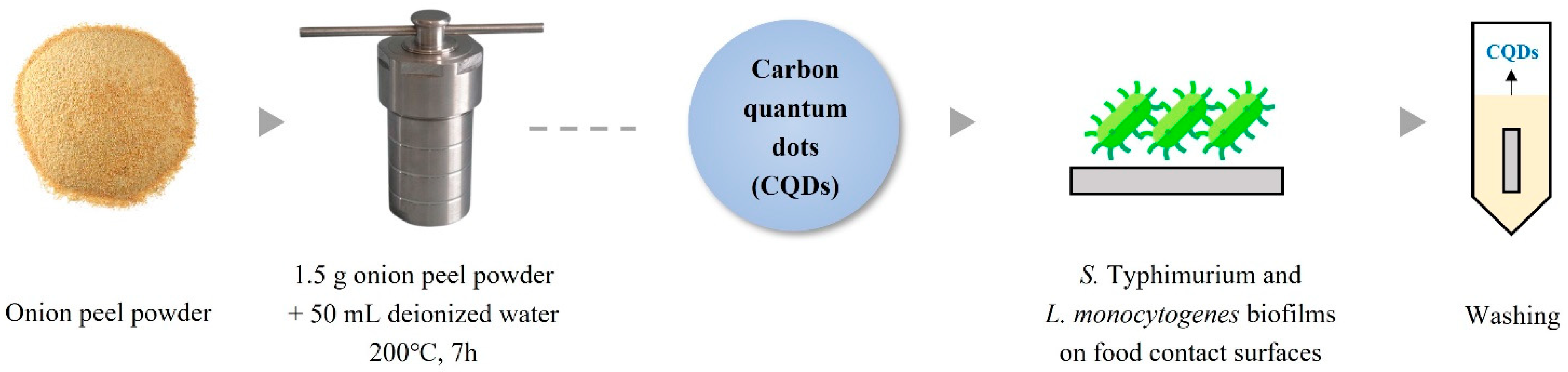
2.1. Synthesis of the Carbon Quantum Dots (CQDs)
2.2. Characterization of the Carbon Quantum Dots
2.3. Antimicrobial Activity of the Carbon Quantum Dots
2.3.1. Minimum Inhibitory Concentrations (MICs) and Minimum Bactericidal Concentrations (MBCs) of the CQDs
2.3.2. Time-Kill Assay
2.4. Antioxidant Activity of the Carbon Quantum Dots
2.5. Analysis of Biofilm Formation on Food Contact Surfaces
2.5.1. Preparation of Strains for Biofilm
2.5.2. Biofilm Formation
2.6. Assessing the Sanitizing Efficiency of Carbon Quantum Dots on Food Contact Surfaces
2.7. Statistical Analysis
3. Results and Discussion
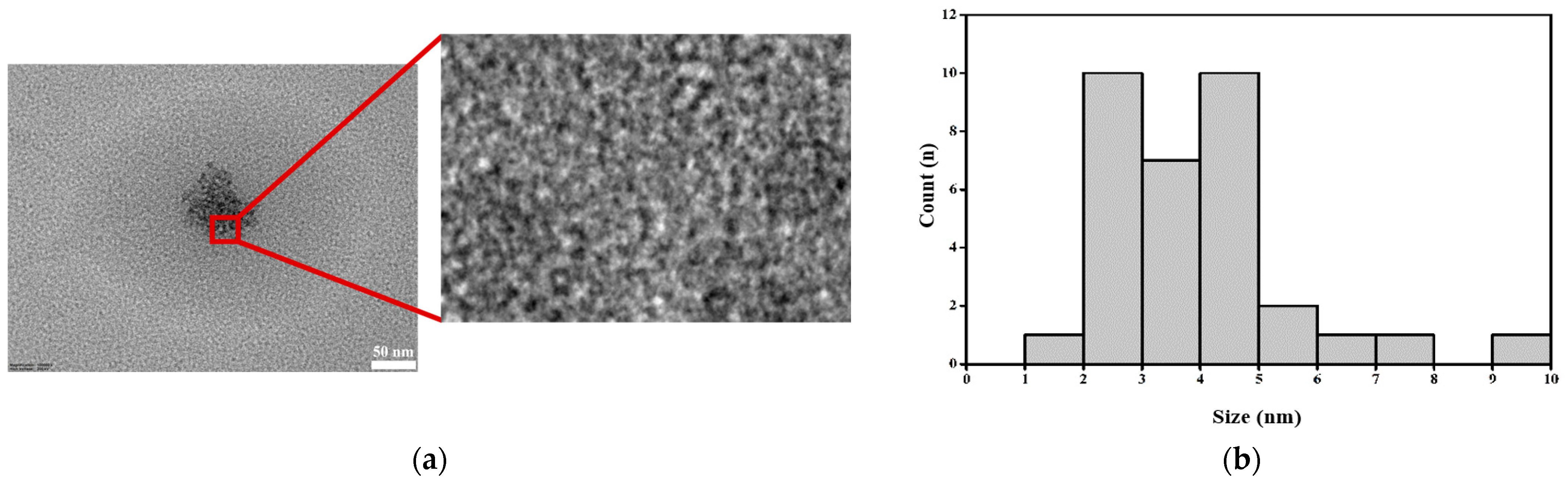
3.1. Morphology of the Onion-Peel Derived Carbon Quantum Dots
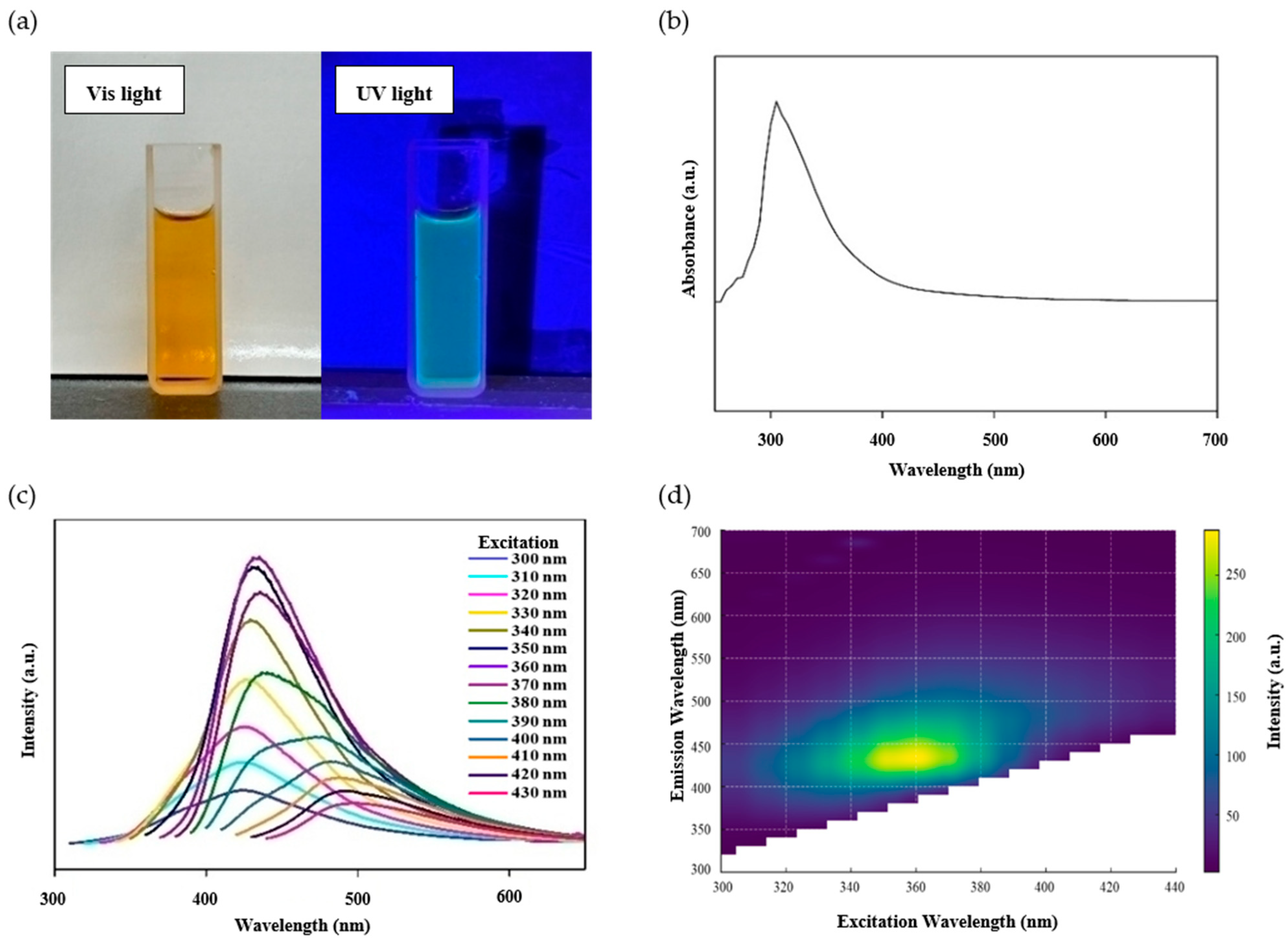
3.2. Optical Properties of Onion-Peel-Derived Carbon Quantum Dots
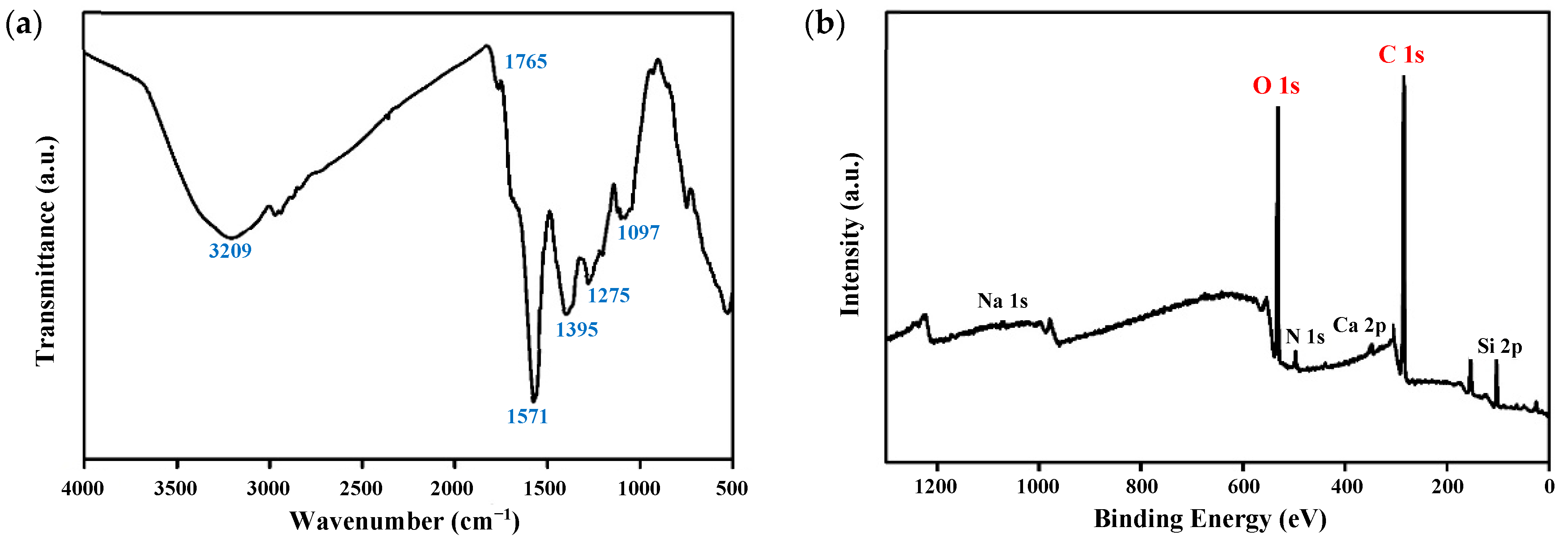
3.3. FT-IR and XPS Analysis
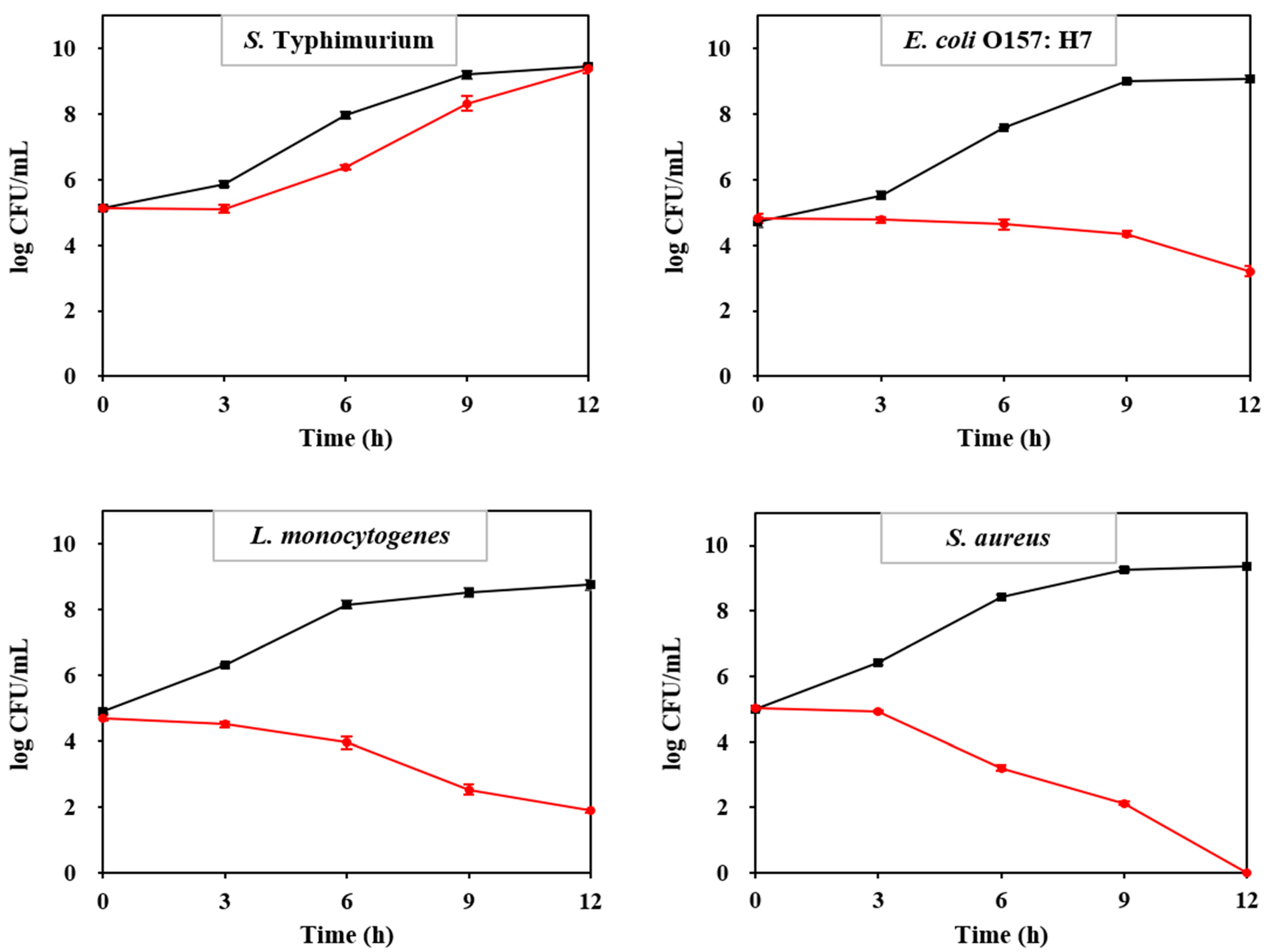
3.4. Antimicrobial Activity of Onion-Peel-Derived Carbon Quantum Dots
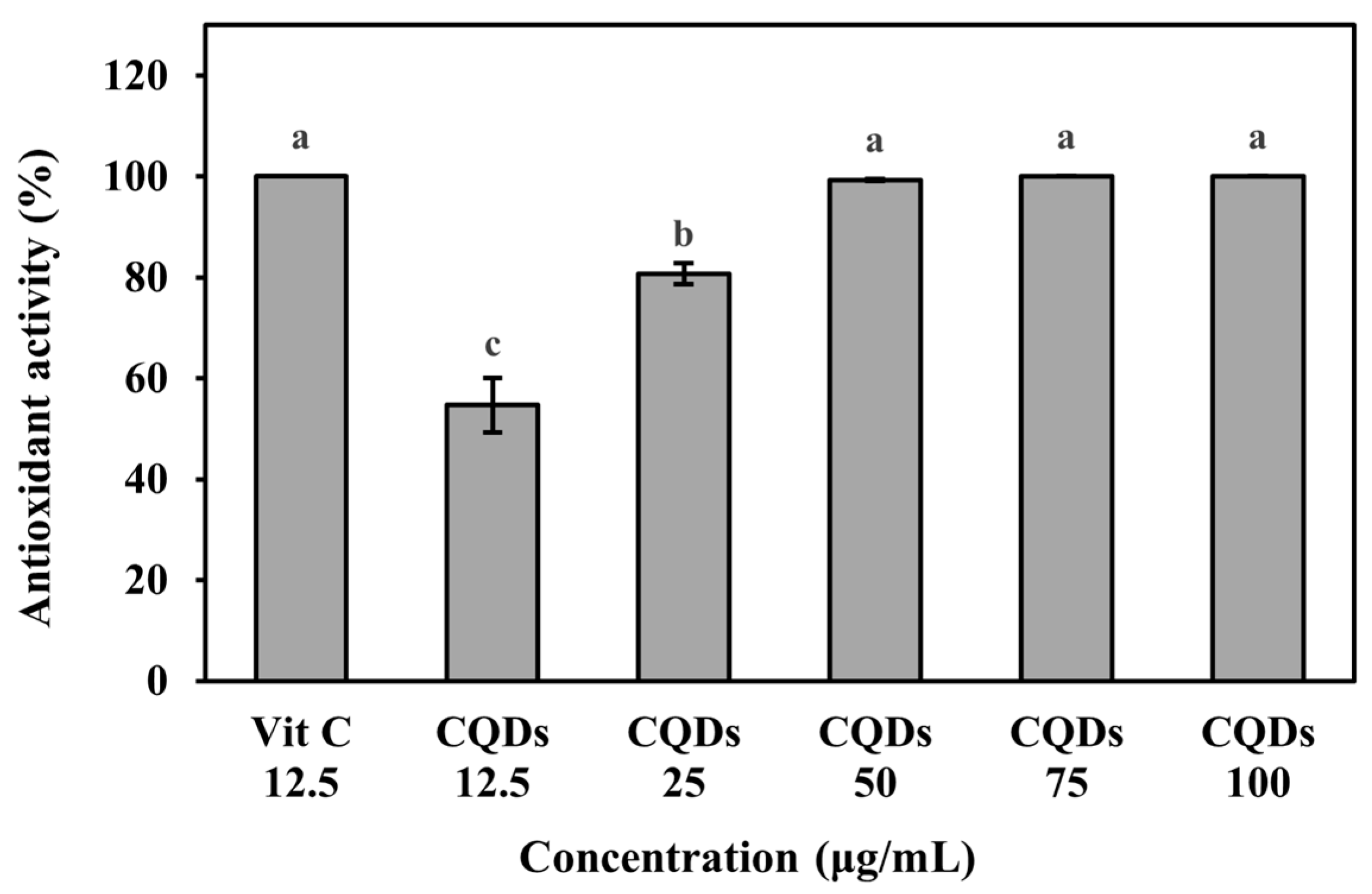
3.5. Antioxidant Activity of Onion-Peel-Derived Carbon Quantum Dots
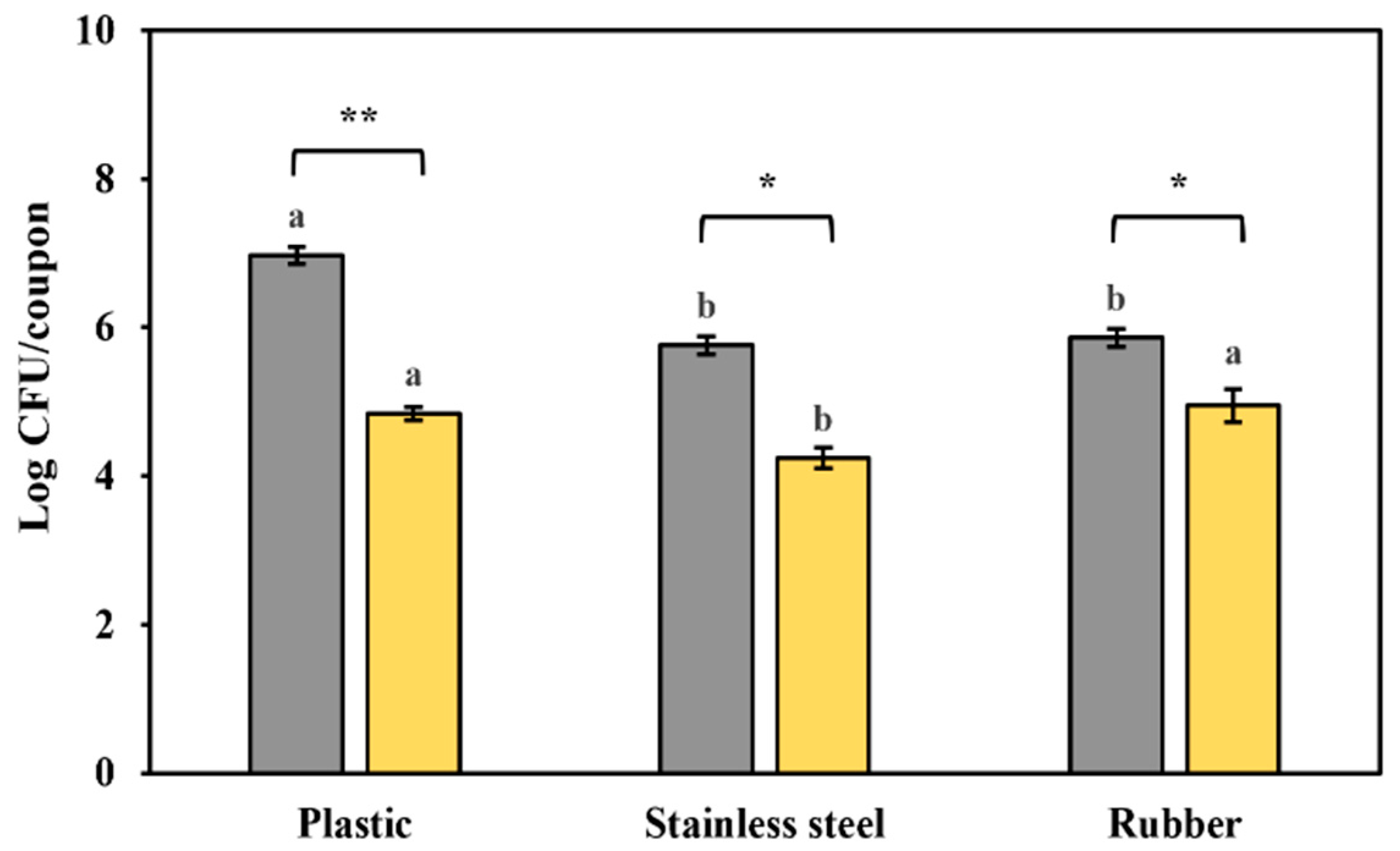
3.6. Biofilm Formation on Food Contact Surfaces
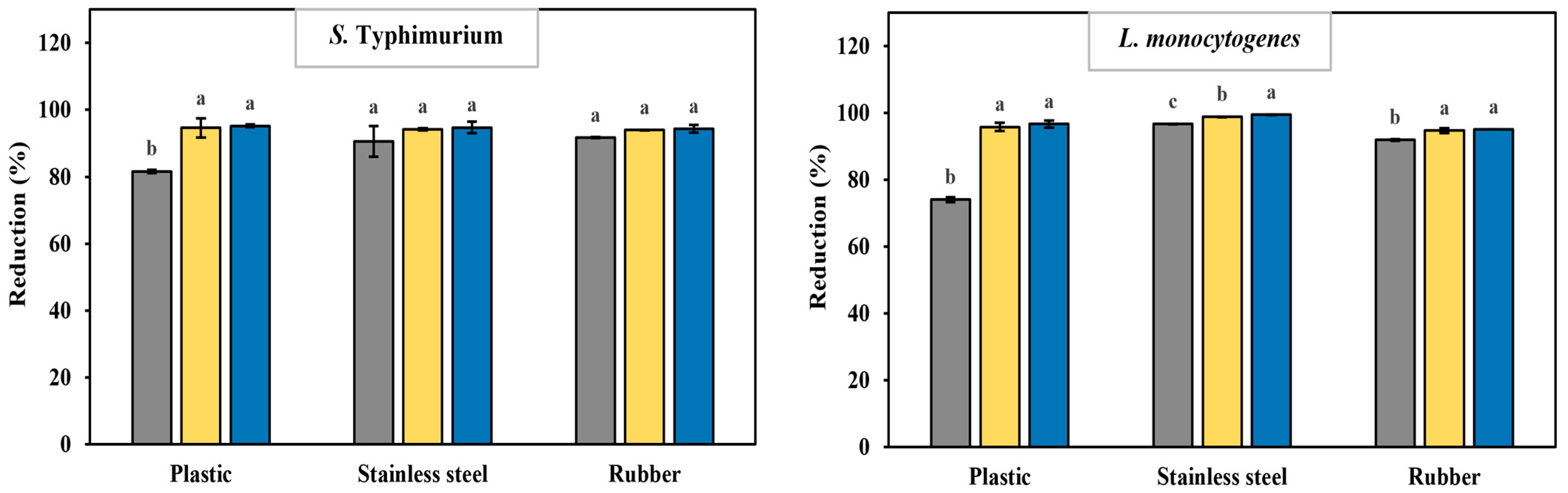
3.7. Sanitizing Efficacy of Carbon Quantum Dots on Biofilm Removal
4. Conclusions
Author Contributions
Funding
Institutional Review Board Statement
Informed Consent Statement
Data Availability Statement
Conflicts of Interest
References
- Gustavsson, J.; Cederberg, C.; Sonesson, U.; van Otterdijk, R.; Meybeck, A. Global Food Losses and Food Waste; Food and Agriculture Organization of the United Nations (FAO): Rome, Italy, 2011. [Google Scholar]
- Sharma, K.; Mahato, N.; Nile, S.H.; Lee, E.T.; Lee, Y.R. Economical and environmentally-friendly approaches for usage of onion (Allium cepa L.) waste. Food Funct. 2016, 7, 3354–3369. [Google Scholar] [CrossRef]
- Korea Health Industry Development Institute (KHIDI). Frequently Consumed Foods. 2023. Available online: https://www.khidi.or.kr/kps/dhraStat/result3?menuId=MENU01654&gubun=&year=2023 (accessed on 9 June 2024).
- National Institute of Agricultural Science (NAS). Discarded Onion Peels Increase Immunity and Reduce Stress. 2024. Available online: https://www.rda.go.kr/board/board.do?mode=view&prgId=day_farmprmninfoEntry&dataNo=100000794636 (accessed on 1 June 2025).
- Kumar, M.; Barbhai, M.D.; Hasan, M.; Punia, S.; Dhumal, S.; Radha; Rais, N.; Chandran, D.; Pandiselvam, R.; Kothakota, A.; et al. Onion (Allium cepa L.) peels: A review on bioactive compounds and biomedical activities. Biomed. Pharmacother. 2022, 146, 112498. [Google Scholar] [CrossRef] [PubMed]
- Ferreira, S.M.; Pereira, B.M.; Oliveira, J.M.; Tavares, L.; Santos, L. Enhancing Cream Cheese Nutritional Value and Shelf Life with the Incorporation of Free and Microencapsulated Onion Peel Extract. Waste Biomass Valoriz. 2025, 1–16. [Google Scholar] [CrossRef]
- Umeda, W.M.; Jorge, N. Oxidative stability of soybean oil added of purple onion (Allium cepa L.) peel extract during accelerated storage conditions. Food Control 2021, 127, 108130. [Google Scholar] [CrossRef]
- Sagar, N.A.; Pareek, S. Fortification of multigrain flour with onion skin powder as a natural preservative: Effect on quality and shelf life of the bread. Food Biosci. 2021, 41, 100992. [Google Scholar] [CrossRef]
- Ju, A.; Song, K.B. Incorporation of yellow onion peel extract into the funoran-based biodegradable films as an antioxidant packaging material. Int. J. Food Sci. Technol. 2020, 55, 1671–1678. [Google Scholar] [CrossRef]
- Karygianni, L.; Ren, Z.; Koo, H.; Thurnheer, T. Biofilm matrixome: Extracellular components in structured microbial communities. Trends Microbiol. 2020, 28, 668–681. [Google Scholar] [CrossRef]
- Chylkova, T.; Cadena, M.; Ferreiro, A.; Pitesky, M. Susceptibility of Salmonella biofilm and planktonic bacteria to common disinfectant agents used in poultry processing. J. Food Prot. 2017, 80, 1072–1079. [Google Scholar] [CrossRef]
- Ashrafudoulla, M.; Na, K.W.; Byun, K.H.; Kim, D.H.; Yoon, J.W.; Mizan, M.F.R.; Kang, I.; Ha, S.D. Isolation and characterization of Salmonella spp. from food and food contact surfaces in a chicken processing factory. Poult. Sci. 2021, 100, 101234. [Google Scholar] [CrossRef]
- Hua, Z.; Zhu, M.J. Comprehensive strategies for controlling Listeria monocytogenes biofilms on food-contact surfaces. Compr. Rev. Food Sci. Food Saf. 2024, 23, e13348. [Google Scholar]
- Bland, R.; Brown, S.R.; Waite-Cusic, J.; Kovacevic, J. Probing antimicrobial resistance and sanitizer tolerance themes and their implications for the food industry through the Listeria monocytogenes lens. Compr. Rev. Food Sci. Food Saf. 2022, 21, 1777–1802. [Google Scholar] [CrossRef]
- Obe, T.; Nannapaneni, R.; Sharma, C.S.; Kiess, A. Homologous stress adaptation, antibiotic resistance, and biofilm-forming ability of Salmonella enterica serovar Heidelberg ATCC8326 on different food-contact surfaces following exposure to sublethal chlorine concentrations. Poult. Sci. 2018, 97, 951–961. [Google Scholar] [CrossRef]
- Bridier, A.; Sanchez-Vizuete, P.; Guilbaud, M.; Piard, J.C.; Naitali, M.; Briandet, R. Biofilm-associated persistence of food-borne pathogens. Food Microbiol. 2015, 45, 167–178. [Google Scholar] [CrossRef]
- dos Santos Rodrigues, J.B.; de Carvalho, R.J.; de Souza, N.T.; de Sousa Oliveira, K.; Franco, O.L.; Schaffner, D.; de Souza, E.L.; Magnani, M. Effects of oregano essential oil and carvacrol on biofilms of Staphylococcus aureus from food-contact surfaces. Food Control 2017, 73, 1237–1246. [Google Scholar] [CrossRef]
- Rossi, C.; Maggio, F.; Chaves-López, C.; Valbonetti, L.; Berrettoni, M.; Paparella, A.; Serio, A. Effectiveness of selected essential oils and one hydrolate to prevent and remove Listeria monocytogenes biofilms on polystyrene and stainless steel food-contact surfaces. J. Appl. Microbiol. 2022, 132, 1866–1876. [Google Scholar] [CrossRef] [PubMed]
- Touati, A.; Mairi, A.; Ibrahim, N.A.; Idres, T. Essential Oils for Biofilm Control: Mechanisms, Synergies, and Translational Challenges in the Era of Antimicrobial Resistance. Antibiotics 2025, 14, 503. [Google Scholar] [CrossRef]
- Baker, S.N.; Baker, G.A. Luminescent carbon nanodots: Emergent nanolights. Angew. Chem. Int. Ed. 2010, 49, 6726–6744. [Google Scholar] [CrossRef]
- Ezati, P.; Priyadarshi, R.; Rhim, J.-W. Prospects of sustainable and renewable source-based carbon quantum dots for food packaging applications. Sustain. Mater. Technol. 2022, 33, e00494. [Google Scholar] [CrossRef]
- Kurian, M.; Paul, A. Recent trends in the use of green sources for carbon dot synthesis—A short review. Carbon Trends 2021, 3, 100032. [Google Scholar] [CrossRef]
- Kim, Y.H.; Khan, A.; Ahn, J.M.; Lee, J.H.; Yoon, K.S.; Rhim, J.-W. Effect of carbon quantum dots derived from tangerine peel on emetic and diarrheal type of Bacillus cereus of packaged tofu. Food Control 2025, 175, 111303. [Google Scholar] [CrossRef]
- Riahi, Z.; Khan, A.; Rhim, J.-W.; Shin, G.H.; Kim, J.T. Sustainable packaging film based on cellulose nanofibres/pullulan impregnated with zinc-doped carbon dots derived from avocado peel to extend the shelf life of chicken and tofu. Int. J. Biol. Macromol. 2024, 258, 129302. [Google Scholar] [CrossRef]
- Sul, Y.; Ezati, P.; Rhim, J.W. Preparation of chitosan/gelatin-based functional films integrated with carbon dots from banana peel for active packaging application. Int. J. Biol. Macromol. 2023, 246, 125600. [Google Scholar] [CrossRef] [PubMed]
- Kang, J.W.; Kim, J.Y.; Kang, D.H. Synthesis of carbon quantum dot synthesized using spent coffee ground as a biomass exhibiting visible-light-driven antimicrobial activity against foodborne pathogens. J. Food Eng. 2024, 365, 111820. [Google Scholar] [CrossRef]
- Hikal, W.M.; Said-Al Ahl, H.A.; Bratovcic, A.; Tkachenko, K.G.; Sharifi-Rad, J.; Kačániová, M.; Elhourri, M.; Atanassova, M. Banana peels: A waste treasure for human being. Evid.-Based Complement. Altern. Med. 2022, 2022, 7616452. [Google Scholar] [CrossRef]
- Iñiguez-Moreno, M.; Pizaña-Aranda, J.J.P.; Ramírez-Gamboa, D.; Ramírez-Herrera, C.A.; Araújo, R.G.; Flores-Contreras, E.A.; Iqbal, H.M.; Parra-Saldívar, R.; Melchor-Martínez, E.M. Enhancing pectin extraction from orange peel through citric acid-assisted optimization based on a dual response. Int. J. Biol. Macromol. 2024, 263, 130230. [Google Scholar] [CrossRef]
- Shabir, I.; Pandey, V.K.; Dar, A.H.; Pandiselvam, R.; Manzoor, S.; Mir, S.A.; Shams, R.; Dash, K.K.; Fayaz, U.; Khan, S.A.; et al. Nutritional profile, phytochemical compounds, biological activities, and utilisation of onion peel for food applications: A review. Sustainability 2022, 14, 11958. [Google Scholar] [CrossRef]
- Sagar, N.A.; Pareek, S.; Gonzalez-Aguilar, G.A. Quantification of flavonoids, total phenols and antioxidant properties of onion skin: A comparative study of fifteen Indian cultivars. J. Food Sci. Technol. 2020, 57, 2423–2432. [Google Scholar] [CrossRef]
- Trigueros, E.; Benito-Román, Ó.; Oliveira, A.P.; Videira, R.A.; Pinto, E.; Andrade, P.B.; Sanz, M.T.; Beltrán, S. Non-edible onion skin waste as a source of bioactive agents for functional foods development: Chemical composition and multifunctional bioactivity. Food Chem. X 2025, 29, 102794. [Google Scholar] [CrossRef]
- Bankoti, K.; Rameshbabu, A.P.; Datta, S.; Das, B.; Mitra, A.; Dhara, S. Onion derived carbon nanodots for live cell imaging and accelerated skin wound healing. J. Mater. Chem. B 2017, 5, 6579–6592. [Google Scholar] [CrossRef]
- Khan, A.; Riahi, Z.; Kim, J.T.; Rhim, J.W. Carrageenan-based multifunctional packaging films containing Zn-carbon dots/anthocyanin derived from Kohlrabi peel for monitoring quality and extending the shelf life of shrimps. Food Chem. 2024, 432, 137215. [Google Scholar] [CrossRef] [PubMed]
- Kim, Y.H.; Yoon, K.S.; Lee, S.J.; Park, E.J.; Rhim, J.-W. Synthesis of fully deacetylated quaternized chitosan with enhanced antimicrobial activity and low cytotoxicity. Antibiotics 2022, 11, 1644. [Google Scholar] [CrossRef] [PubMed]
- Khan, A.; Priyadarshi, R.; Bhattacharya, T.; Rhim, J.W. Carrageenan/alginate-based functional films incorporated with Allium sativum carbon dots for UV-barrier food packaging. Food Bioprocess Technol. 2023, 16, 2001–2015. [Google Scholar] [CrossRef]
- Jeon, H.R.; Kwon, M.J.; Yoon, K.S. Control of Listeria innocua biofilms on food contact surfaces with slightly acidic electrolyzed water and the risk of biofilm cells transfer to duck meat. J. Food Prot. 2018, 81, 582–592. [Google Scholar] [CrossRef] [PubMed]
- Desai, M.A.; Soni, K.A.; Nannapaneni, R.; Schilling, M.W.; Silva, J.L. Reduction of Listeria monocytogenes biofilms on stainless steel and polystyrene surfaces by essential oils. J. Food Prot. 2012, 75, 1332–1337. [Google Scholar] [CrossRef]
- Shahraki, H.S.; Ahmad, A. Synthesis, characterization of carbon dots from onion peel and their application as absorbent and anticancer activity. Inorg. Chem. Commun. 2023, 150, 110514. [Google Scholar] [CrossRef]
- Sul, Y.; Khan, A.; Rhim, J.-W. Effects of coffee bean types on the characteristics of carbon dots and their use for manufacturing cellulose nanofibers-based films for active packaging of meat. Food Packag. Shelf Life 2024, 43, 101282. [Google Scholar] [CrossRef]
- Min, S.; Ezati, P.; Rhim, J.-W. Gelatin-based packaging material incorporated with potato skins carbon dots as functional filler. Ind. Crops Prod. 2022, 181, 114820. [Google Scholar] [CrossRef]
- Huh, A.J.; Kwon, Y.J. “Nanoantibiotics”: A new paradigm for treating infectious diseases using nanomaterials in the antibiotics resistant era. J. Control. Release 2011, 156, 128–145. [Google Scholar] [CrossRef]
- Fatahi, Z.; Esfandiari, N.; Ranjbar, Z. A new anti-counterfeiting feature relying on invisible non-toxic fluorescent carbon dots. J. Anal. Test. 2020, 4, 307–315. [Google Scholar] [CrossRef]
- Ding, H.; Wei, J.S.; Xiong, H.M. Nitrogen and sulfur co-doped carbon dots with strong blue luminescence. Nanoscale 2014, 6, 13817–13823. [Google Scholar] [CrossRef]
- Liu, J.H.; Li, R.S.; Yuan, B.; Wang, J.; Li, Y.F.; Huang, C.Z. Mitochondria-targeting single-layered graphene quantum dots with dual recognition sites for ATP imaging in living cells. Nanoscale 2018, 10, 17402–17408. [Google Scholar]
- Khan, A.; Ezati, P.; Kim, J.T.; Rhim, J.-W. Biocompatible carbon quantum dots for intelligent sensing in food safety applications: Opportunities and sustainability. Mater. Today Sustain. 2023, 21, 100306. [Google Scholar] [CrossRef]
- Khan, A.; Ezati, P.; Rhim, J.W. Chitosan/gelatin-based multifunctional film integrated with green tea carbon dots to extend the shelf life of pork. Food Packag. Shelf Life 2023, 37, 101075. [Google Scholar] [CrossRef]
- Ayiania, M.; Smith, M.; Hensley, A.J.; Scudiero, L.; McEwen, J.S.; Garcia-Perez, M. Deconvoluting the XPS spectra for nitrogen-doped chars: An analysis from first principles. Carbon 2020, 162, 528–544. [Google Scholar] [CrossRef]
- Barr, T.L. An XPS study of Si as it occurs in adsorbents, catalysts, and thin films. Appl. Surf. Sci. 1983, 15, 1–35. [Google Scholar] [CrossRef]
- Jansen, R.J.J.; Van Bekkum, H. XPS of nitrogen-containing functional groups on activated carbon. Carbon 1995, 33, 1021–1027. [Google Scholar] [CrossRef]
- Singh, P.; Kumar, V.; Sharma, A. Interaction of silicon with cell wall components in plants: A review. J. Appl. Nat. Sci. 2023, 15, 480–497. [Google Scholar] [CrossRef]
- Contescu, C.; Contescu, A.; Schramm, C.; Sato, R.; Schwarz, J.A. The influence of electropositive and electronegative elements on proton binding to gamma Al2O3 in aqueous suspensions. J. Colloid Interface Sci. 1994, 165, 66–71. [Google Scholar] [CrossRef]
- Ouchi, T.; Kim, H.; Spatocco, B.L.; Sadoway, D.R. Calcium-based multi-element chemistry for grid-scale electrochemical energy storage. Nat. Commun. 2016, 7, 10999. [Google Scholar] [CrossRef] [PubMed]
- Rossmoore, H.W. Nitrogen compounds. In Disinfection, Sterilization, and Preservation; Lippincott Williams & Wilkins: Philadelphia, PA, USA, 1983; pp. 290–321. [Google Scholar]
- Allinger, N.L.; Schäfer, L.; Siam, K.; Klimkowski, V.J.; Van Alsenoy, C. The effect of electronegative atoms on the structures of hydrocarbons. ab initio calculations on molecules containing fluorine or (carbonyl) oxygen. J. Comput. Chem. 1985, 6, 331–342. [Google Scholar] [CrossRef]
- Feng, L.I. The effect of carbonyl, carboxyl and hydroxyl groups on the capacitance of carbon nanotubes. New Carbon Mater. 2011, 26, 224–228. [Google Scholar] [CrossRef]
- Li, W.; Zhang, W.; Xu, Y.; Wang, G.; Xu, T.; Nie, S.; Si, C. Lignin-derived materials for triboelectric nanogenerators with emphasis on lignin multifunctionality. Nano Energy 2024, 128, 109912. [Google Scholar] [CrossRef]
- Zou, K.; Deng, W.; Silvester, D.S.; Zou, G.; Hou, H.; Banks, C.E.; Li, L.; Hu, J.; Ji, X. Carbonyl chemistry for advanced electrochemical energy storage systems. ACS Nano 2024, 18, 19950–20000. [Google Scholar] [CrossRef]
- Nikolaou, A.; Salvador, M.; Wright, I.; Wantock, T.; Sandison, G.; Harle, T.; Carta, D.; Gutierrez-Merino, J. The ratio of reactive oxygen and nitrogen species determines the type of cell death that bacteria undergo. Microbiol. Res. 2025, 292, 127986. [Google Scholar] [CrossRef]
- Anand, A.; Unnikrishnan, B.; Wei, S.C.; Chou, C.P.; Zhang, L.Z.; Huang, C.C. Graphene oxide and carbon dots as broad-spectrum antimicrobial agents–a minireview. Nanoscale Horiz. 2019, 4, 117–137. [Google Scholar] [CrossRef]
- Yuan, L.; Feng, W.; Zhang, Z.; Peng, Y.; Xiao, Y.; Chen, J. Effect of potato starch-based antibacterial composite films with thyme oil microemulsion or microcapsule on shelf life of chilled meat. LWT—Food Sci. Technol. 2021, 139, 110462. [Google Scholar] [CrossRef]
- Slavin, Y.N.; Asnis, J.; Hńfeli, U.O.; Bach, H. Metal nanoparticles: Understanding the mechanisms behind antibacterial activity. J. Nanobiotechnol. 2017, 15, 65. [Google Scholar] [CrossRef] [PubMed]
- Xia, W.; Wu, Z.; Hou, B.; Cheng, Z.; Bi, D.; Chen, L.; Chen, W.; Yuan, H.; Koole, L.H.; Qi, L. Inactivation of antibiotic resistant bacteria by nitrogen-doped carbon quantum dots through spontaneous generation of intracellular and extracellular reactive oxygen species. Mater. Today Bio 2025, 30, 101428. [Google Scholar] [CrossRef] [PubMed]
- Khan, A.; Riahi, Z.; Kim, J.T.; Rhim, J.W. Carboxymethyl cellulose/gelatin film incorporated with eggplant peel waste-derived carbon dots for active fruit packaging applications. Int. J. Biol. Macromol. 2024, 271, 132715. [Google Scholar] [CrossRef] [PubMed]
- Murru, C.; Badía-Laíño, R.; Díaz-García, M.E. Synthesis and characterization of green carbon dots for scavenging radical oxygen species in aqueous and oil samples. Antioxidants 2020, 9, 1147. [Google Scholar] [CrossRef]
- Pompermayer, D.M.; Gaylarde, C.C. The influence of temperature on the adhesion of mixed cultures of Staphylococcus aureus and Escherichia coli to polypropylene. Food Microbiol. 2000, 17, 361–365. [Google Scholar] [CrossRef]
- Sommer, P.; Martin-Rouas, C.; Mettler, E. Influence of the adherent population level on biofilm population, structure and resistance to chlorination. Food Microbiol. 1999, 16, 503–515. [Google Scholar] [CrossRef]
- Stepanović, S.; Ćirković, I.; Ranin, L.; Svabić-Vlahović, M. Biofilm formation by Salmonella spp. and Listeria monocytogenes on plastic surface. Lett. Appl. Microbiol. 2004, 38, 428–432. [Google Scholar] [CrossRef]
- Donlan, R.M. Biofilms: Microbial life on surfaces. Emerg. Infect. Dis. 2002, 8, 881. [Google Scholar] [CrossRef]
- Sinde, E.; Carballo, J. Attachment of Salmonella spp. and Listeria monocytogenes to stainless steel, rubber and polytetrafluorethylene: The influence of free energy and the effect of commercial sanitizers. Food Microbiol. 2000, 17, 439–447. [Google Scholar] [CrossRef]
- Cunliffe, D.; Smart, C.A.; Alexander, C.; Vulfson, E.N. Bacterial adhesion at synthetic surfaces. Appl. Environ. Microbiol. 1999, 65, 4995–5002. [Google Scholar] [CrossRef]
- Aksoy, D. Determination of in vitro biofilm formation abilities of food-borne Salmonella enterica isolates. Trak. Univ. J. Nat. Sci. 2019, 20, 57–62. [Google Scholar] [CrossRef]
- Tomihama, T.; Nishi, Y.; Arai, K. Biofilm formation and resistance to bactericides of Pseudomonas syringae pv. theae. J. Gen. Plant Pathol. 2007, 73, 193–196. [Google Scholar] [CrossRef]
- Campoccia, D.; Montanaro, L.; Arciola, C.R. Extracellular DNA (eDNA). A major ubiquitous element of the bacterial biofilm architecture. Int. J. Mol. Sci. 2021, 22, 9100. [Google Scholar] [CrossRef]
- Colagiorgi, A.; Di Ciccio, P.; Zanardi, E.; Ghidini, S.; Ianieri, A. A look inside the Listeria monocytogenes biofilms extracellular matrix. Microorganisms 2016, 4, 22. [Google Scholar] [CrossRef] [PubMed]
- Steenackers, H.; Hermans, K.; Vanderleyden, J.; De Keersmaecker, S.C. Salmonella biofilms: An overview on occurrence, structure, regulation and eradication. Food Res. Int. 2012, 45, 502–531. [Google Scholar] [CrossRef]
- Byun, K.H.; Han, S.H.; Yoon, J.W.; Park, S.H.; Ha, S.D. Efficacy of chlorine-based disinfectants (sodium hypochlorite and chlorine dioxide) on Salmonella Enteritidis planktonic cells, biofilms on food contact surfaces and chicken skin. Food Control 2021, 123, 107838. [Google Scholar] [CrossRef]
- Corcoran, M.; Morris, D.; De Lappe, N.; O’Connor, J.; Lalor, P.; Dockery, P.; Cormican, M. Commonly used disinfectants fail to eradicate Salmonella enterica biofilms from food contact surface materials. Appl. Environ. Microbiol. 2014, 80, 1507–1514. [Google Scholar] [CrossRef]
- Singla, R.; Goel, H.; Ganguli, A. Novel synergistic approach to exploit the bactericidal efficacy of commercial disinfectants on the biofilms of Salmonella enterica serovar Typhimurium. J. Biosci. Bioeng. 2014, 118, 34–40. [Google Scholar] [CrossRef]
- Joseph, B.; Otta, S.K.; Karunasagar, I.; Karunasagar, I. Biofilm formation by Salmonella spp. on food contact surfaces and their sensitivity to sanitizers. Int. J. Food Microbiol. 2001, 64, 367–372. [Google Scholar] [CrossRef] [PubMed]
- da Silva Meira, Q.G.; de Medeiros Barbosa, I.; Athayde, A.J.A.A.; de Siqueira-Júnior, J.P.; de Souza, E.L. Influence of temperature and surface kind on biofilm formation by Staphylococcus aureus from food-contact surfaces and sensitivity to sanitizers. Food Control 2012, 25, 469–475. [Google Scholar] [CrossRef]
- Wang, H.; Su, W.; Tan, M. Endogenous fluorescence carbon dots derived from food items. Innovation 2020, 1, 100009. [Google Scholar] [CrossRef]


Disclaimer/Publisher’s Note: The statements, opinions and data contained in all publications are solely those of the individual author(s) and contributor(s) and not of MDPI and/or the editor(s). MDPI and/or the editor(s) disclaim responsibility for any injury to people or property resulting from any ideas, methods, instructions or products referred to in the content. |
© 2025 by the authors. Licensee MDPI, Basel, Switzerland. This article is an open access article distributed under the terms and conditions of the Creative Commons Attribution (CC BY) license (https://creativecommons.org/licenses/by/4.0/).
Share and Cite
Ahn, J.M.; Kim, Y.H.; Rhim, J.-W.; Yoon, K.S. Onion-Peel Carbon Quantum Dots: Antimicrobial Effect and Biofilm Control on Food Contact Surfaces. Foods 2025, 14, 4296. https://doi.org/10.3390/foods14244296
Ahn JM, Kim YH, Rhim J-W, Yoon KS. Onion-Peel Carbon Quantum Dots: Antimicrobial Effect and Biofilm Control on Food Contact Surfaces. Foods. 2025; 14(24):4296. https://doi.org/10.3390/foods14244296
Chicago/Turabian StyleAhn, Ji Min, Yeon Ho Kim, Jong-Whan Rhim, and Ki Sun Yoon. 2025. "Onion-Peel Carbon Quantum Dots: Antimicrobial Effect and Biofilm Control on Food Contact Surfaces" Foods 14, no. 24: 4296. https://doi.org/10.3390/foods14244296
APA StyleAhn, J. M., Kim, Y. H., Rhim, J.-W., & Yoon, K. S. (2025). Onion-Peel Carbon Quantum Dots: Antimicrobial Effect and Biofilm Control on Food Contact Surfaces. Foods, 14(24), 4296. https://doi.org/10.3390/foods14244296