


Abstract
Flowers have played a significant role in society, focusing on their aesthetic value rather than their food potential. This study’s goal was to look into flowering plants for everything from health benefits to other possible applications. This review presents detailed information on 119 species of flowers with agri-food and health relevance. Data were collected on their family, species, common name, commonly used plant part, bioremediation applications, main chemical compounds, medicinal and gastronomic uses, and concentration of bioactive compounds such as carotenoids and phenolic compounds. In this respect, 87% of the floral species studied contain some toxic compounds, sometimes making them inedible, but specific molecules from these species have been used in medicine. Seventy-six percent can be consumed in low doses by infusion. In addition, 97% of the species studied are reported to have medicinal uses (32% immune system), and 63% could be used in the bioremediation of contaminated environments. Significantly, more than 50% of the species were only analysed for total concentrations of carotenoids and phenolic compounds, indicating a significant gap in identifying specific molecules of these bioactive compounds. These potential sources of bioactive compounds could transform the health and nutraceutical industries, offering innovative approaches to combat oxidative stress and promote optimal well-being.
1. Introduction
Since time immemorial, flowers have played a fundamental role in society. They are appreciated for their beauty and used for ornamental purposes in various spaces, whether in pots, gardens, landscaping, or as cut flower arrangements in containers. Grown specifically for their striking appearance, distinctive foliage, and delicate fragrance, ornamental plants add charm and distinction to any environment. Their presence goes beyond mere aesthetics, as throughout history, flowers have been symbols of emotion, used in celebrations, expressions of love, condolences, and religious rituals, and providing benefits for emotional well-being and mental health [1].
In recent years, the market for edible flowers has experienced remarkable growth. This phenomenon can be attributed to several reasons, including the increasing availability of information on their nutritional value and bioactive potential [2,3]. In addition, there has been a growing interest in the potential health benefits of specific secondary metabolites and other compounds commonly found in flowers, such as carotenoids, phenolic compounds, vitamins C and E, saponins, or phytosterols [4]. Carotenoids and phenolic compounds are responsible for the different colours of flowers [5,6] stand out for their health properties and versatility in agri-food and health applications [7,8,9,10].
Flowers are used in gastronomy for their pigments (such as carotenoids, flavonoids, and betalains), which improve the appearance of dishes [11], and for their characteristic flavours and odours, which make them an alternative food source [12]. Some societies, such as Asian, Greek, Ancient Roman, French, and Italian, have a long-standing tradition of eating flowers [3]. However, for a flower to be edible, it must not contain dangerous levels of toxic compounds that could affect the health of those who consume it [13,14]. On the other hand, the consumption of parts of plants is typical in traditional medicine, mainly in medicinal infusions or decoctions [15,16]. Flowers are recognised as alternative food sources to improve health and contribute to food security [4]. As sustainability is a global priority, especially in food production, which is considered the most significant human pressure on the Earth [17], using cultivated flowers for gastronomic purposes can be aligned with a responsible approach towards the environment and general well-being.
This review aimed to collect relevant information on ornamental plant flowers with potential health promotion as botanicals, foods, or other uses, following sustainability principles and the circular economy. Plants from fifty families are covered, including Asteraceae, Lamiaceae, Fabaceae, and Malvaceae, as well as plants with edible flowers from the families Asteraceae, Apiaceae, Brassicaceae, Oleacaceae, Malvaceae, and Ranunculaceae. Therefore, Table 1 contains a compilation of common plants characterised by their flowers, with detailed information on the family, common name, place of origin, part of the commonly used plant, uses in bioremediation, main chemical compounds, medicinal uses, gastronomic uses, and concentration of carotenoids and phenolic compounds, together with the technique used for each flower species. In addition, data on carotenoids and phenolic compounds in different flower species are presented in Table 2 and Table 3, respectively. This review aims to provide a comprehensive overview of flower possibilities and benefits in other areas, highlighting their potential in harmony with nature and general well-being.
Table 1.
Description, relevant synonymous, phytoremediation uses, toxic compounds, medicinal, and gastronomic uses of flowers.
Table 2.
Methods for quantifying and concentrating carotenoids and phenolics in studied plants.
Table 3.
Some common carotenoids present in flowers.
2. Conceptualization
2.1. Use of Flowers for Therapeutic and Nutritional Purposes throughout History
The use of flowers in food and medicine has a long history dating back to antiquity. The earliest records of these uses date back to 4000 BC in Mesopotamian and Egyptian cultures [439]. An emblematic example of the traditional use of a flower for medicinal purposes is chamomile (Chamomilla recutita L.), whose dried flowers have been used since ancient times to treat menstrual disorders, insomnia, ulcers, haemorrhoids, and other ailments [440]. Similarly, cannabis (Cannabis sativa L.), known for its soothing and anticonvulsant properties, has been used therapeutically in many cultures. This plant was even included in the British and later American pharmacopoeia but was eliminated in the 20th century because of concerns about the risk of abuse and intoxication [441]. Similarly, flowers of the Asteraceae family (Achillea millefolium L., Arnica montana L., Bellis perennis L., Calendula officinalis L., Chamaemelum nobile (L.) All., Helichrysum stoechas (L.) Moench, and Taraxacum officinale L.) have been traditionally used in folk medicine for various therapeutic purposes [442].
Around 180 plant species belonging to 97 families have been reported as producing edible flowers [3]. The use of flowers in gastronomy is documented in various cultures, such as Roman, Greek, Chinese, Indian, and Central European [443,444], where they are used to enhance both the presentation and nutritional value of food. In ancient Rome, several roses were often used in omelettes and purées. In mediaeval France, marigolds were a common ingredient in salads. The stigmas of the saffron flower are one of the most commonly used colouring and flavouring agents in cooking. Similarly, violet petals were used to make sweets and colour sugar, while dandelion flowers were used in drinks and salads [12]. Furthermore, in the Mediterranean diet, some commonly consumed vegetables are flowers, such as artichokes, capers, broccoli, or cauliflower. Worldwide, edible flowers such as pansy, marigold, borage, nasturtium, mini rose, torenia, mini daisy, cosmos, clitoria, craving, begonia, sunflower, snapdragon, and squash blossom are appreciated and consumed in different countries such as Brazil, the United States, France, Italy, Portugal, China, and Japan [4].
Nowadays, thanks mainly to globalisation, the use of flowers in gastronomy is growing steadily (Figure 1). The inclusion of flowers in the culinary creations of renowned innovative chefs has attracted great attention in this field, leading to the emergence of companies specialising in producing flowers for this booming market [445]. Although flowers are now widely used as condiments, decorative elements, or for flavouring dishes, their potential as a source of nutrients or other valuable nutritional compounds must be further explored [446]. It is important to note that although there are several reviews documenting the use of many flowers as food or for therapeutic purposes [12,444,447]. To date, no official list of edible flowers has been developed, and no specific legislation on their use and applicability has been established by international bodies such as the FAO, WHO, FDA, or EFSA. As interest in the culinary use of flowers grows, an informed and responsible approach is needed to ensure their safety and sustainably exploit their nutritional and medicinal potential.
Figure 1.
Parts of the plant used in food (A) and frequency of use in different dishes (B).
2.2. Post-Harvest Treatments Applied to Flowers
Thanks to the undoubted increase in demand for edible flowers, there is a growing body of research on how to extend their shelf life and improve their overall quality by enhancing post-harvest treatments [2,448,449]. This could benefit our health and improve their industrial development [2]. However, nowadays, despite their short life (early petal abscission and discoloration, flower wilt, dehydration, and tissue browning), edible flowers are usually sold fresh and chilled without any other postharvest treatment. In addition to refrigeration, other common post-harvest methods include crystallisation, freeze-drying, sugar canning, and preservation in distillates [4,450].
Several new food preservation technologies have been investigated to increase the shelf life of edible flowers. Among them are high hydrostatic pressure (HHP), irradiation, ultraviolet, ionising radiation, and new packaging alternatives [2,4]. On the other hand, other studies have evaluated how post-harvest treatments can affect bioactive compounds present in edible plants. For example, it has been shown that freeze-drying decreases the loss of carotenoids (in daylilies and marigolds), caffeic acid derivatives, and total phenolics (in purple coneflower) compared to hot-air drying [451,452,453].
2.3. Forms of Consumption
Edible flowers are mainly used fresh as decoration or a garnish for some meals, such as salads or light curry, adding colour and fragrance. In addition, they are also used for other culinary purposes, such as ingredients in bread, pancakes, sauces, jellies, syrups, vinegar, honey, oils, soups, infusions, flower-scented sugars, candied flowers, cheeses, ice cream, crisps, juices, rice, cakes, butter, pasta, wine, and flavoured liqueurs. Edible flowers can even be consumed dried, in ice cubes in cocktails, directly as vegetables, or in stir-fried dishes [3,4,12,454]. The flowers are typically eaten whole, but there are some species of which only some parts are adequate for consumption. For example, some parts of flowers are too bitter, such as the white parts of the roses and the base of the chrysanthemum petals, or too rough, such as some parts of the blueweed (Echium vulgare L.). Other examples of flowers that are not eaten whole include tulips (Tulipa spp.) and chrysanthemums (Chrysanthemum) (only the petals are consumed), daisies (Bellis perennis L.) and garden nasturtium (Tropaeolum majus L.) (only the flower buds), and pumpkins (Cucurbita spp.) (only the tiny and undeveloped fruits with flowers) [12,444]. Information about the use of flowers for food is summarised in Table 1.
2.4. Relevant Compounds with an Interest in Nutrition, Health Promotion, and Cosmetics
Using flowers as food is not exclusively for aesthetic reasons; the nutritional contribution should also be considered. Flowers provide important elements for nutrition and health. Some flowers contain proteins, fats, carbohydrates, vitamins A, B, C, and E, mineral elements, and bioactives [447]. The concentration of minerals in flowers is such that, taking into account the Dietary Reference Intakes for an adult for magnesium (375 mg/day), phosphorus (700 mg/day), and potassium (2000 mg/day), it can be concluded that the consumption of some edible flowers could help to meet these daily requirements [444], although the boiling process of some flowers significantly reduces the mineral concentration [455].
The presence of compounds with nutritional interest differs across floral structures. Pollen has high concentrations of proteins, amino acids, carbohydrates, and lipids, among other nutrients. Nevertheless, the amount of pollen in the flower is very small, and in addition, it has a flat taste without individual characteristics. Nectar, which typically has a sweet taste, contains a balanced mixture of sugars (fructose, glucose, and sucrose), amino acids (mainly prolin), proteins, inorganic ions, lipids, organic acids, alkaloids, etc. Lastly, the petals and the rest of the flower may also be significant sources of vitamins, minerals, and bioactive compounds [12,444].
Although before 2000, studies on edible flowers focused mainly on their nutrients, recent research has revealed the importance of studying compounds with bioactive properties. Phenolic compounds (flavonols, flavones, anthocyanins, and phenolic acids) and carotenoids are among the main bioactive compounds. The concentration of carotenoids and phenolic compounds in plants is detailed in Table 2, while the techniques used for quantification are shown in Figure 2. For both carotenoids (60.8%) and phenolics (54.4%), spectrophotometric techniques have been used. In the case of carotenoids, the focus has been on the study of leaves, while phenols have been studied in flowers. In addition, the chromatographic techniques used for carotenoids were mainly RRLC (55.0%) and HPLC (35%), while for phenols, the main techniques were HPLC (44.9%) and UHPLC (28.6%). In addition, information about carotenoids and phenolic compounds present in flowers is summarised in Table 3 and Table 4, respectively.
Figure 2.
Study the distribution of carotenoids (A) and phenolic compounds (B) in different parts of the plant using spectrophotometric (ST) and chromatographic techniques (CT).
Table 4.
Some common phenolics present in flowers.
These compounds usually account for their colour, either directly or indirectly through copigmentation [3,6,447]. In a recent study in which 125 flower species (of which 111 were edible) were surveyed for their colour (white, yellow, orange, pink, red, lilac, and blue), carotenoids, and phenolic compounds, it was observed that overall, flowers with high carotenoid contents did not contain high phenolic contents and vice versa [366]. Quercetin, kaempferol, isorhamnetin, myricetin, and their derivatives have been reported to be significant flavonols in flowers and represent their main class of flavonoids. The second major class of flavonoids in edible flowers is that of flavones, such as luteolin, apigenin, acacetin, and chrysoeriol. Among the anthocyanins, the most common in flowers are pelargonidin, cyanidin, and delphinidin. The phenolic acids in edible flowers include chlorogenic acid, caffeic acid, caffeoylquinic acid, protocatechuic acid, and gallic acid (Table 4). Lastly, carotenoids are also common in flowers, mainly hydroxy xanthophylls, such as lutein, β-cryptoxanthin, and zeaxanthin, and xanthophylls containing hydroxyl and epoxide groups, such as violaxanthin, anteraxanthin, neoxanthin, and lutein-5,6-epoxide (Table 3). Provitamin A carotenes, such as α- and β-carotene, can also be found in flowers, as well as the colourless carotene phytoene [366], which has been largely neglected together with the colourless phytofluene in food science and nutrition but is attracting increasing attention [461]. Extraordinary high levels of the provitamin A carotenoids α-(1451.9 µg/g DW) and β-carotene (1362.2 µg/g DW) have recently been reported in Renealmia alpinia (Rottb.) Maas [366].
Both phenolic compounds and carotenoids have been attracting a great deal of interest in recent decades about their possible health-promoting biological actions [462], hence their interest in the development of innovative products for health or well-being, including nutricosmetics [8,463,464] (Figure 3).
Figure 3.
Potential uses of flowers.
Phytosterols (β-sitosterol), alkaloids, lignans, neolignanes, coumarins, and bisabolol oxides A and B are other phytochemicals distributed in edible flowers. However, these compounds are usually present in smaller concentrations [3,447].
2.5. Beneficial Effects
Among the beneficial actions attributed to various flowers are antioxidants, anti-inflammatory, anti-carcinogenic, anti-obesity, hepatoprotective, neuroprotective, gastroprotective, antidiarrheal, anti-infective, antitumor, antispasmodic, analgesic, and astringent, among others [3,12,465] (Figure 4). However, studies have focused on the benefits these species can provide to the immune (31.5%), infectious (26.0%), and gastrointestinal (14.2%) systems. The flowers of begonias, roses, garden nasturtiums, daylily, calendula, Japanese rose, Daurian rose, daylily, and chrysanthemum might protect against oxidation, as there are studies indicating that they exhibit antioxidant capacity in vitro [6,12,447,466].
Figure 4.
Plant species have activities beneficial to human health. Note: NS, Nervous system; RS, Respiratory system; US, Urinary system; CS, Cardiovascular system; (DS), Dermatological system; ES, Endocrine system; GS, Gastrointestinal system; HS, Haematological system; IFS, Infectious system; IS, Immune system; MSS, Musculoskeletal system.
Some studies indicate that certain edible flowers can exhibit anti-carcinogenic activity against liver, colon, brain, skin, bladder, prostate, or breast cancers [3,12,444]. Examples are flowers from hibiscus, rose, chrysanthemum, tagetes, cosmos (Cosmos sulphureus Cav.), coral vine (Antigonon leptopus Hook. & Arn.), lesser bougainvillea (Bougainvillea glabra Choisy), jasmine, honeysuckle rose, cassia fistula, chives, calendula, and pomegranate [3,6,444,447,467].
Several flowers may exhibit anti-inflammatory activity. Examples are Roselle, Hangzhou white chrysanthemum, wild chrysanthemum, honeysuckle, and daylily. Antiobesity effects have been observed in flowers such as Roselle, magnolia, and waterlily. According to the literature, other beneficial effects that can be derived from the consumption of flowers include neuroprotective, visceral injury prevention, anti-diabetic, and antimicrobial effects, among others [3,12,110,444,468]. Edible flowers have also been suggested as fibre food sources, which may be attractive for developing dietary supplements for athletes [468].
Others, such as Hibiscus rosa-sinensis L., Chrysanthemum spp., Dahlia coccinea Cav., and Citrullus lanatus (Thunb.) Matsum. & Nakai, could protect against diseases linked to obesity (such as, for example, sleep apnea, hypertension, hyperlipidaemia and type 2 diabetes), neurological (Alzheimer and Parkinson) [469] and liver and gastrointestinal disorders [435].
Finally, the carotenoids lutein and zeaxanthin, present in high concentrations in the petals of the tagete flowers (Tagetes erecta L.), can act as a filter that protects the macula from blue light and oxidative damage. Thus, various studies have suggested that they could reduce the risk of ocular pathologies, especially age-related macular degeneration [447]. These carotenoids also attract attention as they could be involved in cognitive benefits [470]. Information about the medical uses of flowers is summarised in Table 1.
2.6. Antinutrients or Toxic Compounds
Although there is a wide variety of edible flowers, care must be taken since some flowers are poisonous or contain antinutrients. In any case, it is essential to consider that there are some techniques that people have learned over the years to eliminate or diminish antinutrients and toxic compounds. For example, people reduce the toxicity of flowers from Erythrina species (4.9 and 6.3 trypsin inhibitors/mg sample) caused by alkaloids by cooking the flowers and eliminating the cooking water [455].
Regarding the possible effects of the toxic flowers, these can vary from minor effects on the skin (such as skin allergies, dermatitis, or skin lesions) to death when ingested. The toxicity of plants is mainly due to compounds such as alkaloids, tannins, alcohols, phytotoxins, glycosides, resins, nitrites, photosensitising substances, and calcium oxalates. Toxic compounds may be present in plants naturally or due to environmental pollution (pesticides, heavy metals, hydrocarbons, etc.), living agents, or diseases [447]. Examples of natural toxicity in flowers are the Adonis flower (Adonis aestivalis L.), which contains cardioactive steroids resembling digitalis, or Chrysanthemum (Chrysanthemum species), which contains sesquiterpene lactones [471]. Information on the toxicity of plants can be found in European Regulation EC No. 258/97. Examples of induced toxicity in flowers are Amaranthus hybridus (500.0 mg Pb/kg plant) and Medicago sativa L. (720.0 mg Pb/kg plant), species used for phytoremediation processes (recovery of heavy metals and other pollutants) [14]. On the other hand, since flowers are often consumed fresh or minimally processed, they can pose microbiological risks [472].
Antinutrients are substances that have a negative impact on our nutrition by preventing the absorption or assimilation of a nutrient or inactivating its effect [473]. Some antinutrients found in flowers are tannins, phytic acid, oxalate, lectins, and saponins. Tannins are phenolic compounds that inhibit the metabolism of digested and absorbed proteins. The flowers of the genus Rosa usually contain high levels of tannins, such as gallotannins and ellagitannins. The flowers of Woodfordia fruticosa Salisb. (0.2 g/100 g DW) and Ensete superbum (Roxb.) Cheesman (0.003 g/100 g DW) also have tannins [466,473] Phytic acid, which is present, for example, in E. superbum (0.1 g/100 g DW), decreases the bioavailability of some minerals and proteins, but its content can be reduced by processing [473]. On the other hand, oxalate hinders calcium absorption and stimulates the formation of kidney stones. Although in low concentration, oxalate is present in edible flowers such as Parkia biglobosa, usually consumed in Nigeria; E. superbum (0.03 g/100 g DW); and Woodfordia fruticosa (0.06 g/100 g DW) [473,474]. Lectins, a major family of protein antinutrients, are found, for example, in the flower of A. xalapensis [455]. Saponins reduce glucose and cholesterol uptake, among other nutrients [473], and are present in the flowers of A. salmiana and Y. filifera [455]. In any case, it is important to note that compounds traditionally considered antinutrients could also exert beneficial effects. For example, under certain conditions, reducing the absorption of nutrients such as glucose or specific lipids could be desirable [475]. Information about toxic compounds in flowers is summarised in Table 1.
2.7. Flowers, Climate Change, Sustainability, and the Circular Economy
Flowers can become alternative sources of health-promoting dietary sources and sustainably contribute to food security, as suggested in an insightful review that addresses important topics of the 17 goals of the United Nations to transform our world included in the 2030 Agenda for Sustainable Development [4]. The agri-food industry is responsible for the biggest pressure caused by humans on Earth, especially due to its global freshwater land usage and contribution to greenhouse gas emissions. Paradoxically, 820 million people have insufficient food, and many more have unhealthy dietary patterns that considerably increase the risk of developing diseases and premature death. In this sense, global scientific goals towards a worldwide transformation of the agri-food system, aligned with global agendas, including the United Nations Sustainable Development Goals and the Paris Agreement, are being advocated [17]. In this scenario, the classical ‘take-make-consume and dispose’ linear economy model needs to be replaced by a circular economy model that ‘keeps the added value in products for as long as possible and eliminates waste’ [476].
2.7.1. Flowers and Biodiversity
Taking advantage of biodiversity (the variety of life at the genetic, species, and ecosystem levels) is very important in this scenario. Biodiversity for food and agriculture is a subset that contributes directly and indirectly to agri-food. It encompasses “domesticated plants and animals raised in crop, livestock, forest, and aquaculture systems; harvested forest and aquatic species; wild relatives of domesticated species; other wild species harvested for food and other products; and what is known as ‘associated biodiversity’, the wide range of organisms that live in and around food and agricultural production systems, sustaining them and contributing to their production. Agriculture is considered here to include crop and livestock production, forestry, fisheries, and aquaculture. The importance of biodiversity in this context is at different levels, as many untapped edible species are very nutritious, are adapted to diverse edaphoclimatic conditions, and provide important ecosystem services [477]. Flowers play a relevant role in maintaining and promoting biodiversity, acting as pollen sources visited by bees and other social insects [4].
2.7.2. Flowers and Phytoremediation of Soils and Wastewater
Food production is estimated to account for ~40% of land and 70% of freshwater use, which are precious and increasingly scarce resources. Therefore, contamination of soil and water is an important problem. More specifically, the elevated presence of heavy metals, other minerals, or organic pollutants in soils used for food production is an important environmental problem, a great threat to life on earth, and poses health risks when they enter the food chain. Being non-biodegradable, heavy metals accumulate in the environment and enter the food chain. This is undesirable from environmental and health standpoints, as some heavy metals are carcinogenic, mutagenic, teratogenic, and endocrine disruptors, while others cause neurological and behavioural changes. Naturally present or derived from anthropogenic sources, such metals can be reduced using physical and chemical approaches. However, these are costly and laborious and can lead to disturbances in physicochemical and microbial soil characteristics. Phytoremediation is gaining importance due to its public acceptance, efficiency, cost-effectiveness, and eco-friendliness. It can also reduce organic pollutants such as polynuclear aromatic hydrocarbons, polychlorinated biphenyls, and pesticides [478].
It uses green plants and associated microbes to minimise the toxic effects of potential contaminants in the environment. There are several ways to remediate. Phytostabilisation or phytoimmobilisation refers to the decrease in the mobility or/and bioavailability of a metal, which impairs its leaching to water or its entry into the food chain. Once uptaken by roots, a specific heavy metal may either be phytoimmobilised there or translocated to aerial parts. Phytovolatilisation involves the conversion of the metal into a volatile form and its release into the atmosphere through stomata. This technique is primarily helpful for Hg, although the volatilised metal can eventually return to the soil through precipitation. Phytodegradation is the degradation of organic pollutants by plants with the help of enzymes. Rhizodegradation refers to the breakdown of organic contaminants in the soil by microorganisms in the rhizosphere. Phytodesalination refers to the use of halophytic plants for the removal of salts from salt-affected soils to enable them to support normal plant growth [478,479]. Plants are categorised based on their metal uptake mechanisms: excluders restrict heavy metal uptake and accumulation to the shoot; indicators/accumulators accumulate them in aerial parts comparatively the same as the soil levels; and hyperaccumulators uptake and translocate the metals to shoots and leaves without toxic symptoms. Different detoxification strategies include compartmentalisation, deposition, distribution, and stabilisation within cell walls, vacuoles, and metabolically inactive tissues. Plants of great value in floriculture from the Asteraceae family (for instance, Tagetes erecta, Calendula officinalis, and Chrysanthemum indicum) have been reported to tolerate heavy metal soil pollution [480].
Phytoextraction is considered the most important phytoremediation approach and can be more suitable for commercial applications. Ideally, plants selected for phytoextraction should be widely distributed, easy to cultivate, rapidly grow, produce important amounts of biomass, and be poly-harvest. About metals, they should be hyperaccumulators of heavy metals, translocate them from root to shoot, and tolerate their toxic effects well. Additionally, plants should be resistant to biotic stresses, well adapted to edaphoclimatic conditions, and not attractive to herbivores to avoid the entry of heavy metals into the food chain. Although promising, phytoremediation has yet to be widely used at a large scale due to limitations of diverse nature (slow-growing species, low bioavailability of the metals, and long times to achieve decontamination, among others). New approaches are being evaluated, including assistance with chelators, biochar, bacteria, fungi, microbes, and transgenic plants [479,480].
Plant biomass enriched with phytoextracted heavy metals can be incinerated for energy and ash recovery. The latter can be considered bio-ore and be further processed for extracting heavy metals, a process called phytomining [478,480].
Phytoremediation has also been proven to be cost-effective and technically feasible in the remediation of heavy metal pollution in water quality issues, including wastewater treatment [478,480]. Reusing cut flowers and floral waste as a neat bio-adsorbent and activated carbon for removing the antibiotic levofloxacin and lead ions from water with promising results has been recently described [481].
As can be seen in Table 1, there are many reported uses of plants with ornamental flowers in the phytoremediation of various pollutants (heavy metals, radioactive elements, polycyclic aromatics and other hydrocarbons, benzene, textile dyes, oils, fertilisers, carbamazepine, insecticides, herbicides, and dioxins), which widens the use of such plants beyond ornamental, nutritional, or culinary purposes, which is an advantage in a circular economy model where the use of resources for several applications is desired. Interestingly, they can be found in locations with marked edaphoclimatic conditions, including arctic regions (Canada, Siberia), temperate regions (Mediterranean Basin, Central and Eastern Europe), or subtropical or tropical regions (Caribbean Basin) (Table 1).
Although the uptake of heavy metals and other pollutants could sometimes affect the use of flowers for human consumption (in those cases where contaminants are transferred to aerial plants from the roots and they are rich in unsafe concentrations), others are feasible, including pot plants, cut flowers, essential oils, perfumes, air freshener production, metal phytomining, and feedstock in silk production [480].
2.7.3. Flowers and Dying Fabrics
The replacement of synthetic dyes with more natural alternatives in textiles is gaining acceptance to reduce the negative environmental impacts and toxicity associated with the latter. Besides, some natural extracts can exhibit properties (antioxidative, antimicrobial, UV-light absorption, etc.), which can be interesting for developing functional fabrics with added value. The application of natural dyes in the textile industry is gaining popularity due to the increasing awareness of the environmental, ecological, and pollution caused by synthetic dyes. Different conditions of pH, temperature, salt, time, chemical levels, and biomordants have been tested for the dying of wool with rose flowers. As a result, different colour hues were obtained, some with good colour strength. [482]. Kigelia africana flowers have also been studied as possible materials for the functional colouration of textile materials, with promising results in terms of fastness, colour strength, antibacterial, antioxidant, and UV-protection properties [483].
2.7.4. Other Potential Uses
Waste jasmine flowers have recently been tested to produce bioethanol mediated by immobilised yeasts. Pretreatments that included alkalinisation, heating, and enzymatic hydrolysis were evaluated to favour the accessibility of the carbohydrate fraction, and response surface methodology was applied to assess the interactions of different variables to better understand the bioethanol yield [484].
Saffron purple petals have been evaluated as a possible environmental-friendly additive for bentonite-based drilling fluids, and significant enhanced rheological, filtration, and corrosion protection properties were observed.
Drilling fluids are circulated in boreholes to help perform an efficient drilling operation with minimal damage to prospective formations [485].
Porous carbon nanosheets have been obtained from the carbonisation of a paper flower. The materials exhibited interesting properties for their potential use in energy storage and dye removal [486].
3. Conclusions and Future Recommendations
Flowers have played a fundamental role in human culture over the centuries, finding value in both their aesthetic appeal and their nutritional and therapeutic properties. A vivid example of this duality is theprized Tagetes erecta, whose flowers are commercially exploited both for their exquisite ornamental beauty and for their remarkable lutein content, a valuable carotenoids widely used in industry as a dye and as a key component of health-promoting dietary supplements. In a similar context, the flowers of Renealmia alpinia have emerged as botanical gems, standing out as rich sources of provitamin A carotenoids such as α- and β-carotene [9,366]. This discovery has led to growing interest both in the culinary field, where they are used to enrich dishes, and in the search for health-promoting bioactive compounds [3,6,444]. However, it is important to recognise that while flowers offer a wealth of benefits, some of them contain potentially toxic compounds, which means that their use in gastronomy and therapy must be approached with caution. One particularly promising aspect is the medicinal potential of a group of 115 species of flowers, all of which have properties that suggest their usefulness in the treatment of various conditions. This opens an exciting field of research where new molecules may be discovered.
However, they can also be used for other purposes at different points in their life cycles, including as phytoremediators [480], dying agents for textiles [483], or feedstocks for bioethanol production, among others [484]. Although recent research on these topics is promising to pave the way for the circular use of flowers to produce sustainable and health-promoting foods, there is still a long way to go. Of course, lifecycle assessments must be performed, and more scientific evidence is required to bridge the gap between traditional uses, safety, and mechanical effects.
Some questions remain, such as:
- -
- How bioavailable are health-promoting compounds from flowers? And how do post-harvest, industrial, or culinary treatments affect such bioavailability? Can ingesting large amounts of flowers significantly raise plasma and tissue levels of health-promoting compounds?
- -
- Can post-harvest, industrial, or culinary treatments make potentially toxic flowers edible? Can biorefinery approaches be used to obtain added-value products from potentially toxic flowers?
- -
- What plants can be used for phytoremediation and to provide health-promoting rich flowers without posing health risks due to excessive accumulation of pollutants in edible parts?
- -
- What amount of floral waste is necessary for its alternative circular use to be economically viable? How can smaller amounts of waste be used alternatively?
- -
- What floral species can be used to cultivate areas with harsh edaphoclimatic conditions and/or enrich biodiversity by attracting pollinators?
Author Contributions
Conceptualization, E.C.-C., A.J.M.-M. and M.C.; methodology, P.M.-B.; software, G.M. investigation, M.M. and M.V.; resources, E.C.-C. and A.J.M.-M.; writing—original draft preparation, E.C.-C.; writing—review and editing, E.C.-C.; supervision, A.J.M.-M., I.M.V. and P.R.-S.; project administration, E.C.-C. and A.J.M.-M.; funding acquisition, E.C.-C. and A.J.M.-M. All authors have read and agreed to the published version of the manuscript.
Funding
This research was funded by the Ecuadorian Corporation for the Development of Research and the Academy CEDIA within the CEPRA-XIII-2019-09-Flores Project “Caracterización físico-química y pruebas de bioactividad de especies florales andinas con potencial alimenticio y efecto preventive de ciertas enfermedades humanas ”; the Spanish State Secretariat of Research, Development and Innovation (Ministry of Economy and Competitiveness (CaRed, BIO2015-71703-REDT) and the Spanish Ministry of Economy, Industry, and Competitiveness (CaRed, BIO2017-90877-REDT); the Ibero-American Programme for Science, Technology and Development (CYTED, http://www.cyted.org) for the funding of the IBERCAROT network (http://carotenoides.us.es/ref.112RT445) and USFQ-COCIBA grants.
Data Availability Statement
The datasets generated for this study are available on request to the corresponding author.
Acknowledgments
PMB holds a postdoctoral contract within the framework of the Aid Program for the recruitment, incorporation, and mobility of human capital in R+D+I, an action financed by the Consejería de Transformación Económica, Industria, Conocimiento, and Universidades de la Junta de Andalucía (Ref. POSTDOC_21_00352).
Conflicts of Interest
A.J.M.-M. carries out consultancy work for agro-food, cosmetic, and biotechnological companies. The remaining authors declare no conflict of interest concerning this study.
References
- De-Ron, A.; Martínez, A. Geología y Biología; Madrid, España, 2003; ISBN 84-665-1891-6. Available online: https://books.google.es/books?id=D13gGEL1ZhwC&lpg=PA18&dq=c%C3%B3mo%20se%20define%20una%20planta%20ornamental&hl=es&pg=PA18#v=onepage&q=c%C3%B3mo%20se%20define%20una%20planta%20ornamental&f=false (accessed on 8 October 2023).
- Fernandes, L.; Saraiva, J.A.; Pereira, J.A.; Casal, S.; Ramalhosa, E. Post-Harvest Technologies Applied to Edible Flowers: A Review: Edible Flowers Preservation. Food Rev. Int. 2019, 35, 132–154. [Google Scholar] [CrossRef] [Scilit]
- Lu, B.; Li, M.; Yin, R. Phytochemical Content, Health Benefits, and Toxicology of Common Edible Flowers: A Review (2000–2015). Crit. Rev. Food Sci. Nutr. 2016, 56, S130–S148. [Google Scholar] [CrossRef] [Scilit] [PubMed]
- Barros, L.; Sarmento, K.; Bisconsin-Junior, A.; Santos, J.; Magnani, M.; Rodriguez, I.; Rodrigo, N.; Tiengo, A.; Maróstica, M. The Use of Alternative Food Sources to Improve Health and Guarantee Access and Food Intake. Food Res. Int. 2021, 149, 110709. [Google Scholar] [CrossRef] [Scilit]
- Ohmiya, A. Diversity of Carotenoid Composition in Flower Petals. JPN Agric. Res. Q. 2011, 45, 163–171. [Google Scholar] [CrossRef] [Scilit]
- Pires, T.; Dias, M.; Barros, L.; Calhelha, R.; Alves, M.; Oliveira, M.; Santos-Buelga, C.; Ferreira, I. Edible Flowers as Sources of Phenolic Compounds with Bioactive Potential. Food Res. Int. 2018, 105, 580–588. [Google Scholar] [CrossRef] [Scilit]
- Del-Rio, D.; Rodriguez-Mateos, A.; Spencer, J.; Tognolini, M.; Borges, G.; Crozier, A. Dietary (Poly)Phenolics in Human Health: Structures, Bioavailability, and Evidence of Protective Effects against Chronic Diseases. Antioxid. Redox Signal. 2013, 18, 1818–1892. [Google Scholar] [CrossRef] [Scilit]
- Albuquerque, B.; Heleno, S.; Oliveira, M.; Barros, L.; Ferreira, I. Phenolic Compounds: Current Industrial Applications, Limitations and Future Challenges. Food Funct. 2021, 12, 14–29. [Google Scholar] [CrossRef] [Scilit]
- Meléndez-Martínez, A.; Böhm, V.; Borge, G.; Cano, M.; Fikselová, M.; Gruskiene, R.; Lavelli, V.; Loizzo, M.; Mandić, A.; Mapelli-Brahm, P.; et al. Carotenoids: Considerations for Their Use in Functional Foods, Nutraceuticals, Nutricosmetics, Supplements, Botanicals and Novel Foods in the Context of Sustainability, Circular Economy and Climate Change. Annu. Rev. Food Sci. Technol. 2021, 12, 433–460. [Google Scholar] [CrossRef] [Scilit]
- Meléndez-Martínez, A.J.; Mandić, A.I.; Bantis, F.; Böhm, V.; Borge, G.I.A.; Brnčić, M.; Bysted, A.; Cano, M.P.; Dias, M.G.; Elgersma, A.; et al. A Comprehensive Review on Carotenoids in Foods and Feeds: Status Quo, Applications, Patents, and Research Needs. Crit. Rev. Food Sci. Nutr. 2022, 62, 1999–2049. [Google Scholar] [CrossRef] [Scilit]
- Wessinger, C. A Genetic Route to Yellow Flowers. New Phytol. 2015, 206, 1193–1195. [Google Scholar] [CrossRef] [Scilit]
- Mlcek, J.; Rop, O. Fresh Edible Flowers of Ornamental Plant—A New Source of Nutraceutical Foods. Trends Food Sci. Technol. 2011, 22, 561–569. [Google Scholar] [CrossRef] [Scilit]
- Alasalvar, C.; Pelvan, E.; Özdemir, K.S.; Kocada, T. Compositional, Nutritional, and Functional Characteristics of Instant Teas Produced from Low- and High-Quality Black. J. Agric. Food Chem. 2013, 61, 7529–7536. [Google Scholar] [CrossRef] [Scilit] [PubMed]
- Coyago, E.; Bonilla, S. Absorción de Plomo de Suelos Altamente Contaminados en Especies Vegetativas Usadas Para Consumo Animal y Humano. La Granja 2016, 23, 35–46. [Google Scholar] [CrossRef] [Scilit]
- Guimarães, R.; Barros, L.; Carvalho, A.; Ferreira, I. Infusions and Decoctions of Mixed Herbs Used in Folk Medicine: Synergism in Antioxidant Potential. Phyther. Res. 2011, 25, 1209–1214. [Google Scholar] [CrossRef] [Scilit] [PubMed]
- Petrovska, B. Historical Review of Medicinal Plants’ Usage. Pharmacogn. Rev. 2012, 6, 1. [Google Scholar] [CrossRef] [Scilit] [PubMed]
- Willett, W.; Rockström, J.; Loken, B.; Springmann, M.; Lang, T.; Vermeulen, S.; Garnett, T.; Tilman, D.; DeClerck, F.; Wood, A.; et al. Food in the Anthropocene: The EAT–Lancet Commission on Healthy Diets from Sustainable Food Systems. Lancet 2019, 393, 447–492. [Google Scholar] [CrossRef] [Scilit]
- WFO. The World Flora Online. Available online: https://wfoplantlist.org/plant-list (accessed on 8 October 2023).
- Poole, R.; Runger, W. Handbook of Flowering, 1st ed.; CRC Press: Boca Raton, FL, USA, 2017; ISBN 9781351072533. [Google Scholar]
- Coyago-Cruz, E.; Baldeón, M. Novel List of Ecuadorian Flowers with Antimicrobial Activity. In Medicinal Plants of Ecuador; CRC Press: Boca Raton, FL, USA; Taylor Francis Group: New York, NY, USA, 2022; ISBN 9780367775865. [Google Scholar]
- Awan, A.; Ahmed, C.; Uzair, M.; Aslam, M.; Farooq, U.; Ishfaq, K. Family Acanthaceae and Genus Aphelandra: Ethnopharmacological and Phytochemical Review. Int. J. Pharm. Pharm. Sci. 2014, 6, 44–55. [Google Scholar]
- Baumeler, A.; Hesse, M.; Werner, C. Benzoxazinoids-Cyclic Hydroxamic Acids, Lactams and Their Corresponding Glucosides in the Genus Aphelandra (Acanthaceae). Phytochemistry 2000, 53, 213–222. [Google Scholar] [CrossRef] [Scilit]
- Dätwyler, P.; Bosshardt, H.; Bernhard, H.O.; Hesse, M.; Johne, S. Die Struktur Des Spermin-alkaloides Aphelandrin Aus Aphelandra squarrosa NEES. Helv. Chim. Acta 1978, 61, 2646–2671. [Google Scholar] [CrossRef] [Scilit]
- Todorova, M.; Werner, C.; Hesse, M. Enzymatic Phenol Oxidation and Polymerization of the Spermine Alkaloid Aphelandrine. Phytochemistry 1994, 37, 1251–1256. [Google Scholar] [CrossRef] [Scilit]
- Javaid, A.; Shahzad, M.; Bashir, C.; Uzair, M. In-Vitro Biological Evaluation of Crude Extract of Aerial Parts of Aphelandra squarrosa. Indian Res. J. Pharm. Sci. 2014, 1, 75–79. [Google Scholar]
- Corrêa, G.; Alcântara, A. Chemical Constituents and Biological Activities of Species of Justicia: A Review. Rev. Bras. Farmacogn. 2012, 22, 220–238. [Google Scholar] [CrossRef] [Scilit]
- Rahmatullah, M.; Khatun, A.; Morshed, N.; Kumar, P.; Ahmed, S.; Hossan, S.; Junrut, M.; Jahan, R.; Rahmatullah, M.; Khatun, M.A.; et al. A Randomized Survey of Medicinal Plants Used by Folk Medicinal Healers of Sylhet Division, Bangladesh. Adv. Nat. Appl. Sci. 2010, 4, 52–62. [Google Scholar]
- Abdela, J. In Vivo Antimalarial Activity of Solvent Fractions of the Leaf of Justicia Schimperiana Hochst. Ex Nees (Acanthaceae) against. Master’s Thesis, Adaba University, Addis, Ethiopia, 2014. [Google Scholar]
- Johnson, A.; Johnson, S. Garden Plants Poisonous to People. Primefact 2006, 9, 12. [Google Scholar]
- Matak, S.; Hashemabadi, D.; Kaviani, B. Changes in Postharvest Physio-Biochemical Characteristics and Antioxidant Enzimes Activity of Cut Alsteroemeria Aurantiaca Flower as Affected by Cycloheximide, Coconut Water and 6-Benzyladenine. Biosci. J. Uberlandia 2017, 33, 321–332. [Google Scholar]
- Estomba, D.; Ladio, A.; Lozada, M. Medicinal Wild Plant Knowledge and Gathering Patterns in a Mapuche Community from North-Western Patagonia. J. Ethnopharmacol. 2006, 103, 109–119. [Google Scholar] [CrossRef] [Scilit]
- Sanso, A. El Género Alstroemeria (Alstroemeriaceae) en Argentina. Darwiniana 2016, 1996, 349–382. [Google Scholar]
- Surse, S.N.; Shrivastava, B.; Sharma, P.; Gide, P.S.; Sana, A. Celosia Cristata: Potent Pharmacotherapeutic Herb—A Review. Int. J. Pharm. Phytopharm. Res. 2015, 6084, 787–796. [Google Scholar] [CrossRef] [Scilit]
- Tobar-Vargas, A.; Gavio, B.; Fernández, J.L. New Records of Plants for San Andres and Old Providence Islands (International Biosphere Reserve Seaflower), Caribbean Colombia. Check List 2013, 9, 1361–1366. [Google Scholar] [CrossRef] [Scilit]
- Varadharaj, V.; Muniyappan, J. Phytochemical and Phytotherapeutic Properties of Celosia Species—A Review. Int. J. Pharmacogn. Phytochem. Res. 2017, 9, 820–825. [Google Scholar] [CrossRef] [Scilit]
- Badawy, E.S.; Kandil, M.; Mahgoub, M.; Shanan, N.; Hegazi, N. Chemical Constituents of Celosia argentea va. Cristata L. Plants as Affected by Foliar Application of Putrescine and Alpha-Tocopherol. Int. J. ChemTech Res. 2015, 8, 464–470. [Google Scholar]
- Islam, S.; Shajib, M.S.; Ahmed, T. Antinociceptive Effect of Methanol Extract of Celosia cristata Linn. in Mice. BMC Complement. Altern. Med. 2016, 16, 400. [Google Scholar] [CrossRef] [Scilit] [PubMed]
- Santhoshkumar, M.; Mahakavi, T.; Baskaran, L. Isolation and Identification of Bacteria from Chlorpyrifos Polluted Soil. Int. Lett. Nat. Sci. 2015, 45, 23–26. [Google Scholar] [CrossRef] [Scilit]
- Kim, Y.S.; Hwang, J.W.; Sung, S.H.; Jeon, Y.J.; Jeong, J.H.; Jeon, B.T.; Moon, S.H.; Park, P.J. Antioxidant Activity and Protective Effect of Extract of Celosia cristata L. Flower on Tert-Butyl Hydroperoxide-Induced Oxidative Hepatotoxicity. Food Chem. 2015, 168, 572–579. [Google Scholar] [CrossRef] [Scilit] [PubMed]
- Andarwulan, N.; Kurniasih, D.; Apriady, R.A.; Rahmat, H.; Roto, A.V.; Bolling, B.W. Polyphenols, Carotenoids, and Ascorbic Acid in Underutilized Medicinal Vegetables. J. Funct. Foods 2012, 4, 339–347. [Google Scholar] [CrossRef] [Scilit]
- Al-Snafi, A.E. Pharmacological Effects of Allium Species Grown in Iraq. An Overview. Int. J. Pharm. Health Care Res. 2013, 1, 132–155. [Google Scholar]
- Al-Snafi, A. Phenolics and Flavonoids Contents of Medicinal Plants, as Natural Ingredients for Many Therapeutic Purposes—A Review. IOSR J. Pharm. 2020, 10, 42–81. [Google Scholar]
- Kong, H. The Use of Plants and Wildflowers as Bioremediation for Contaminated Soils in the Hong Kong S.A.R. Open J. Soil Sci. 2014, 4, 305–311. [Google Scholar] [CrossRef]
- Parvu, A.E.; Parvu, M.; Vlase, L.; Miclea, P.; Mot, A.C. Anti-Inflammatory Effects of Allium schoenoprasum L. Leaves. J. Physiol. Pharmacol. 2014, 65, 309–315. [Google Scholar]
- Rose, P.; Whiteman, M.; Moore, K.; Zhun, Y. Bioactive S-Alk(En)Yl Cysteine Sulfoxide Metabolites in the Genus Allium: The Chemistry of Potential Therapeutic Agents. Nat. Prod. Rep. 2005, 22, 351–368. [Google Scholar] [CrossRef] [Scilit]
- Singh, Y.; Baijnath, H. Agapanthus Campanulatus. Curtis’s Bot. Mag. 2018, 35, 106–124. [Google Scholar] [CrossRef] [Scilit]
- Duncan, A.; Jager, A.; Van-Staden, J. Screening of Zulu Medicinal Plants for Angiotensin Converting Enzyme (ACE) Inhibitors. J. Ethnopharmacol. 1999, 68, 63–70. [Google Scholar] [CrossRef] [Scilit]
- Sandoval-Herazo, L.C.; Alvarado-Lassman, A.; Marín-Muñiz, J.L.; Méndez-Contreras, J.M.; Zamora-Castro, S.A. Effects of the Use of Ornamental Plants and Different Substrates in the Removal of Wastewater Pollutants through Microcosms of Constructed Wetlands. Sustainability 2018, 10, 1594. [Google Scholar] [CrossRef] [Scilit]
- Miyahara, T.; Takahashi, M.; Ozeki, Y.; Sasaki, N. Isolation of an Acyl-Glucose-Dependent Anthocyanin 7-O-Glucosyltransferase from the Monocot Agapanthus africanus. J. Plant Physiol. 2012, 169, 1321–1326. [Google Scholar] [CrossRef] [Scilit] [PubMed]
- Kamara, B.I.; Manong, D.T.L.; Brandt, E.V. Isolation and Synthesis of a Dimeric Dihydrochalcone from Agapanthus africanus. Phytochemistry 2005, 66, 1126–1132. [Google Scholar] [CrossRef] [Scilit]
- Kaido, T.L.; Veale, D.J.H.; Havlik, I.; Rama, D.B.K. Preliminary Screening of Plants Used in South Africa as Traditional Herbal Remedies during Pregnancy and Labour. J. Ethnopharmacol. 1997, 55, 185–191. [Google Scholar] [CrossRef] [Scilit] [PubMed]
- University-of-Pretoria. Background Information on the Selected Plants. 2018. Available online: https://repository.up.ac.za/bitstream/handle/2263/25744/02chapter2.pdf?sequence=3&isAllowed=y (accessed on 8 October 2023).
- Van-Wyk, B. A Review of Commercially Important African Medicinal Plants. J. Ethnopharmacol. 2015, 176, 118–134. [Google Scholar] [CrossRef] [Scilit]
- Shawky, E. Phytochemical and Biological Investigation of Clivia Nobilis Flowers Cultivated in Egypt. Iran. J. Pharm. Res. 2016, 15, 531–535. [Google Scholar]
- Pérez, V.; Cambi, V.; Rueda, M.; Calfuán, M. Consequences of the Loss of Traditional Knowledge: The Risk of Injurious and Toxic Plants Growing in Kindergartens. Etnobotany Res. Appl. 2012, 10, 77–94. [Google Scholar] [CrossRef] [Scilit]
- Cimmino, A.; Masi, M.; Evidente, M.; Superchi, S.; Evidente, A. Amaryllidaceae Alkaloids: Absolute Configuration and Biological Activity. Chirality 2017, 29, 486–499. [Google Scholar] [CrossRef] [Scilit]
- Onder, A. Coriander and Its Phytoconstituents for the Beneficial Effects. IntechOpen 2018, 9, 165–185. [Google Scholar] [CrossRef] [Scilit]
- Barros, L.; Dueñas, M.; Dias, M.I.; Sousa, M.J.; Santos-Buelga, C.; Ferreira, I.C.F.R. Phenolic Profiles of In Vivo and In Vitro Grown Coriandrum sativum L. Food Chem. 2012, 132, 841–848. [Google Scholar] [CrossRef] [Scilit]
- Sahib, N.G.; Anwar, F.; Gilani, A.; Hamid, A.A.; Saari, N.; Alkharfy, K.M. Coriander (Coriandrum sativum L.): A Potential Source of High-Value Components for Functional Foods and Nutraceuticals—A Review. Phyther. Res. 2012, 27, 1439–1456. [Google Scholar] [CrossRef] [Scilit] [PubMed]
- Gaur, N.; Kukreja, A.; Yadav, M.; Tiwari, A. Assessment of Phytoremediation Ability of Coriander Sativum for Soil and Water Co-Contaminated with Lead and Arsenic: A Small-Scale Study. 3 Biotech 2017, 7, 196. [Google Scholar] [CrossRef] [Scilit] [PubMed]
- Laskar, M.; Ali, S.; Siddiqui, S. The Potential of Coriandrum sativum L. Seeds in the Remediation of Waste Water. Int. J. Adv. Sci. Technol. 2016, 86, 41–50. [Google Scholar] [CrossRef] [Scilit]
- Al-Snafi, A. Medicinal Plants with Central Nervous Effects (Part 2): Plant Based Review. Sch. Acad. J. Pharm. 2016, 5, 175–193. [Google Scholar] [CrossRef] [Scilit]
- Aydogan, A.; Sezer, K.; Ozmen, O.; Haligur, M.; Albay, M. Clinical and Pathological Investigations of Accidental Catharanthus Roseus Toxicity in Sheep. Isr. J. Vet. Med. 2015, 70, 51–56. [Google Scholar]
- Ikeura, H.; Kawasaki, Y.; Kaimi, E.; Nishiwaki, J.; Noborio, K.; Tamaki, M. Screening of Plants for Phytoremediation of Oil-Contaminated Soil. Int. J. Phytoremediat. 2016, 18, 460–466. [Google Scholar] [CrossRef] [Scilit]
- Ehsan, N.; Nawaz, R.; Ahmad, S.; Musaa, M.; Hayat, J.; Ehsan, N.; Nawaz, R.; Ahmad, S.; Khan, M.M.; Hayat, J. Phytoremediation of Chromium-Contaminated Soil by an Ornamental Plant, Vinca (Vinca rosea L.). J. Environ. Agric. Sci. 2016, 7, 29–34. [Google Scholar]
- Ramulondi, M.; Wet, H.D.; Vuuren, S. Van Toxicology of Medicinal Plants and Combinations Used in Rural Northern KwaZulu-Natal (South Africa) for the Treatment of Hypertension. Perspect. Med. 2018, 16, 100251. [Google Scholar] [CrossRef] [Scilit]
- Nugraha, A.; Keller, P.A. Revealing Indigenous Indonesian Traditional Medicine: Anti-Infective Agents. Nat. Prod. Commun. 2011, 6, 1953–1966. [Google Scholar] [CrossRef] [Scilit] [PubMed]
- Castillo, F.; Hernández, D.; Gallegos, G.; Rodríguez, R.; Aguilar, C. Antifungal Properties of Bioactive Compounds Form Plants. Intech Open 2014, 2, 64. [Google Scholar] [CrossRef] [Scilit]
- Bandara, V.; Weinstein, S.A.; White, J.; Eddleston, M. A Review of the Natural History, Toxinology, Diagnosis and Clinical Management of Nerium oleander (Common Oleander) and Thevetia peruviana (Yellow Oleander) Poisoning. Toxicon 2010, 56, 273–281. [Google Scholar] [CrossRef] [Scilit] [PubMed]
- Sharma, S.; Tiwari, S.; Hasan, A.; Saxena, V.; Pandey, L.M. Recent Advances in Conventional and Contemporary Methods for Remediation of Heavy Metal—Contaminated Soils. 3 Biotech 2018, 8, 216. [Google Scholar] [CrossRef] [Scilit] [PubMed]
- Amrita, P.; Krishnaveni, K.; Neha, K.; Neethu, T.; Shanmugasundaram, R.; Sambathkumar, R. A Review on Management of Common Oleander and Yellow Oleander Poisoning. World J. Pharm. Pharm. Sci. 2016, 5, 493–503. [Google Scholar] [CrossRef]
- Arya, V.; Kumar, D.; Gautam, M. Phytopharmacological Review on Flowers: Source of Inspiration for Drug Discovery. Biomed. Prev. Nutr. 2014, 4, 45–51. [Google Scholar] [CrossRef] [Scilit]
- Balkan, I.A.; Doğan, H.T.; Zengin, G.; Colak, N.; Ayaz, F.A.; Gören, A.C.; Kırmızıbekmez, H.; Yeşilada, E. Enzyme Inhibitory and Antioxidant Activities of Nerium oleander L. Flower Extracts and Activity Guided Isolation of the Active Components. Ind. Crops Prod. 2018, 112, 24–31. [Google Scholar] [CrossRef] [Scilit]
- Zhang, J.; Yin, Z.-Q.; Liang, J.-Y. A New Isoflavonoid Glycoside from the Aerial Parts of Trachelospermum jasminoides. Chin. J. Nat. Med. 2013, 11, 274–276. [Google Scholar] [CrossRef] [Scilit]
- Sheu, M.J.; Chou, P.Y.; Cheng, H.C.; Wu, C.H.; Huang, G.J.; Wang, B.S.; Chen, J.S.; Chien, Y.C.; Huang, M.H. Analgesic and Anti-Inflammatory Activities of a Water Extract of Trachelospermum jasminoides (Apocynaceae). J. Ethnopharmacol. 2009, 126, 332–338. [Google Scholar] [CrossRef] [Scilit]
- Zhao, Z.; He, X.; Zhao, Y.; Sun, Y.; Chen, X.; Cun, Y.; Huang, L.; Bai, Y.; Zheng, X. Phytochemistry, Pharmacology and Traditional Uses of Plants from the Genus Trachelospermum L. Molecules 2017, 22, 1406. [Google Scholar] [CrossRef] [Scilit]
- Swith, S. In Vitro Studies with Aglaonema Commutatum Schott. 2014. Available online: https://plants.ces.ncsu.edu/plants/aglaonema-commutatum/ (accessed on 8 October 2023).
- Dahanayake, K.; Chow, C. Moisture Content, Ignitability, and Fire Risk of Vegetation in Vertical Greenery Systems. Fire Ecol. 2018, 14, 125–142. [Google Scholar] [CrossRef] [Scilit]
- Fokou, P.V.T.; Nyarko, A.K.; Appiah-Opong, R.; Yamthe, L.R.T.; Addo, P.; Asante, I.K.; Boyom, F.F. Ethnopharmacological Reports on Anti-Buruli Ulcer Medicinal Plants in Three West African Countries. J. Ethnopharmacol. 2015, 172, 297–311. [Google Scholar] [CrossRef] [Scilit]
- Clark, B.; Bliss, B.; Suzuki, J.; Borris, R. Chemotaxonomy of Hawaiian Anthurium Cultivars Based on Multivariate Analysis of Phenolic Metabolites. J. Agric. Food Chem. 2014, 62, 11323–11334. [Google Scholar] [CrossRef] [Scilit]
- Li, C.; Yang, G.; Huang, S.; Lü, D.; Wang, C.; Chen, J.; Yin, J. Characterisation of Flavonoids in Anthurium Spathes and Their Contribution to Spathe Colouration. J. Hortic. Sci. Biotechnol. 2013, 88, 208–215. [Google Scholar] [CrossRef] [Scilit]
- Benitez, M. Huertos Familiares y Alimentación de Grupos Domésticos Cafetaleros de La Sierra Madre de Chiapas. ECOSUR El Col. La Front. Sur 2017, 80. Available online: https://dialnet.unirioja.es/servlet/articulo?codigo=7556620 (accessed on 8 October 2023).
- Mounika, K.; Panja, B.; Saha, J. Diseases of Peace Lily [Spathiphyllum sp.] Caused by Fungi, Bacteria and Viruses: A Review. Pharma Innov. J. 2017, 6, 103–106. [Google Scholar]
- Rajkapoor, B.; Burkan, Z.E.; Senthilkumar, R. Oxidants and Human Diseases: Role of Antioxidant Medicinal Plants-A Review. Pharmacologyonline 2010, 1, 1117–1131. [Google Scholar]
- Bondareva, N.; Timchenko, L.; Dobrynya, Y.; Avanesyan, S.; Piskov, S.; Rzhepakovsky, I.; Kozlova, M.; Areshidze, D.; Lyhvar, A. Influence of the Chlorophytum Comosum Leaves Hydroalcoholic Extract on Some Representatives of Intestinal Microflora of Rats. J. Pharm. Sci. Res. 2017, 9, 874–877. [Google Scholar]
- Chauhan, R.; Quraishi, A.; Jadhav, S.K.; Keshavkant, S. A Comprehensive Review on Pharmacological Properties and Biotechnological Aspects of Genus Chlorophytum. Acta Physiol. Plant. 2016, 38, 116. [Google Scholar] [CrossRef] [Scilit]
- Pettit, T.; Irga, P.J.; Torpy, F.R. Towards Practical Indoor Air Phytoremediation: A Review. Chemosphere 2018, 208, 960–974. [Google Scholar] [CrossRef] [Scilit]
- Das, S.; Shil, P. Phytoremediation: A Cost-Effective Clean up Technique for Soil and Ground Water Contaminants. J. Environ. Res. Dev. 2012, 6, 1087–1091. [Google Scholar]
- Gawrońska, H.; Bakera, B. Phytoremediation of Particulate Matter from Indoor Air by Chlorophytum Comosum L. Plants. Air Qual. Atmos. Health 2015, 8, 265–272. [Google Scholar] [CrossRef] [Scilit] [PubMed]
- Aberoumand, A. Assessment of Proximate and Phytochemical Composition for Evaluation of Nutritive Values of Some Plant Foods Obtained from Iran and India; Nokkoul, D.R., Ed.; In Tech: Rijeka, Croatia, 2011; ISBN 0958-3440. [Google Scholar]
- Machaca, F. Efecto Toxicológico Del Jincho Jincho (Heracium Neoherrerae), Altamisa (Ambrosia Arborescens), Diente de León (Taraxacum Officinale), Huira Huira (Pseudognaphalium Spicatum) y Mishico (Bidens Andicola) En Ratas (Wistar). Rev. Investig. Altoandinas-J. High Andean Res. 2014, 16, 43–50. [Google Scholar] [CrossRef] [Scilit]
- Bussmann, R.; Paniagua, N.; Moya, L.; Hart, R. Changing Markets-Medicinalplants in the Markets of La Paz and El Alto, Bolivia. J. Ethnopharmacol. 2016, 193, 76–95. [Google Scholar] [CrossRef] [Scilit] [PubMed]
- De-Feo, V.; Urrunaga, R. Medicinal Plants and Phytotherapy in Traditional Medicine of Paruro Province, Cusco Department, Peru. Pharmacologyonline 2012, 1, 154–219. [Google Scholar]
- Vinueza, D.R.; López, E.; Acosta, K.; Abdo, S. Assessment of Anti-Inflammatory Activity and Cytotoxicity of Freeze Dried Hydroalcoholic Extract of Bidens Andicola on Isolated Neutrophils. Asian J. Pharm. Clin. Res. 2017, 10, 160–163. [Google Scholar] [CrossRef] [Scilit]
- Ordónez, P.; Vega, M.; Malagón, O. Phytochemical Study of Native Plant Species Used in Traditional Medicine in Loja Province. Lyonia A J. Ecol. Appl. 2006, 10, 65–71. [Google Scholar]
- Castillo, M.; Quinatoa, E.; Risco, D.; Arnelas, I. Preliminary Phytochemical Screening of Some Andean Plants. Prelim. Phytochem. Screen. Some Andean Plants 2011, 2, 35–37. [Google Scholar]
- Shah, P.J.; Williamson, M.T. Antibacterial and Synergistic Activity of Calendula Officinalis Methanolic Petal Extract on Klebsiella Pneumoniae Co-Producing ESBL and AmpC Beta Lactamase. Int. J. Curr. Microbiol. Appl. Sci. 2015, 4, 107–117. [Google Scholar]
- Baskaran, K. Pharmacological Activities of Calendula Officinalis. Int. J. Sci. Res. 2015, 6, 43–47. [Google Scholar]
- Sausserde, R.; Kampuss, K. Composition of Carotenoids in Calendula (Calendula officinalis L.) Flowers. Foodbalt 2014, 2014, 13–18. [Google Scholar] [CrossRef] [Scilit]
- Hristozkova, M.; Geneva, M.; Stancheva, I.; Boychinova, M.; Djonova, E. Contribution of Arbuscular Mycorrhizal Fungi in Attenuation of Heavy Metal Impact on Calendula officinalis Development. Appl. Soil Ecol. 2016, 101, 57–63. [Google Scholar] [CrossRef] [Scilit]
- Santos, C.; Pereyra, A.; Patriarca, A.; Mazzobre, M.; Polak, T.; Abram, V.; Buera, M.; Poklar, N. Phenolic Compounds in Extracts from Eucalyptus Globulus Leaves and Calendula officinalis Flowers. J. Nat. Prod. Resour. 2016, 2, 53–57. [Google Scholar]
- Toiu, A.; Benedic, D.; Duda, M.; Hanganu, D.; Oniga, I. Determination of Total Carotenoid Content in Some Calendula officinalis and Tagestes patula Varieties. Hop Med. Plants 2016, XXIV, 57–62. [Google Scholar]
- Honório, I.C.G.; Bonfim, F.P.G.; Montoya, S.G.; Casali, V.V.D.; Leite, J.P.V.; Cecon, P.R. Growth, Development and Content of Flavonoids in Calendula (Calendula officinalis L.). Acta Sci. Agron. 2016, 38, 69. [Google Scholar] [CrossRef] [Scilit]
- Shoeb, M. Cytotoxic Compounds from the Genus Centaurea. Ph.D. Thesis, University of Aberdeen, Aberdeen, Scotland, 2017. [Google Scholar]
- Bruno, M.; Bancheva, S.; Rosselli, S.; Maggio, A. Sesquiterpenoids in Subtribe Centaureinae (Cass.) Dumort (Tribe Cardueae, Asteraceae): Distribution, 13C NMR Spectral Data and Biological Properties. Phytochemistry 2013, 95, 19–93. [Google Scholar] [CrossRef] [Scilit]
- Azzini, E.; Maiani, G.; Garaguso, I.; Polito, A.; Foddai, M.S.; Venneria, E.; Durazzo, A.; Intorre, F.; Palomba, L.; Rauseo, M.L.; et al. The Potential Health Benefits of Polyphenol-Rich Extracts from Cichorium intybus L. Studied on Caco-2 Cells Model. Oxid. Med. Cell. Longev. 2016, 2016, 1594616. [Google Scholar] [CrossRef] [Scilit] [PubMed]
- Bahmani, M.; Shahinfard, N.; Rafieian-Kopaei, M.; Saki, K.; Shahsavari, S.; Taherikalani, M.; Ghafourian, S.; Baharvand-Ahmadi, B. Chicory: A Review on Ethnobotanical Effects of Cichorium intybus L. J. Chem. Pharm. Sci. 2015, 8, 672–682. [Google Scholar]
- Derakhshani, Z.; Hassani, A.; Pirzad, A.; Abdollahi, R. Evaluation of Phenolic Content and Antioxidant Capacity in Some Medicinal Herbs Cultivated in Iran. Bot. Serbica 2012, 36, 117–122. [Google Scholar]
- Montefusco, A.; Semitaio, G.; Marrese, P.P.; Iurlaro, A.; De Caroli, M.; Piro, G.; Dalessandro, G.; Lenucci, M.S. Antioxidants in Varieties of Chicory (Cichorium intybus L.) and Wild Poppy (Papaver rhoeas L.) of Southern Italy. J. Chem. 2015, 2015, 923142. [Google Scholar] [CrossRef] [Scilit]
- Park, C.; Chae, S.; Park, S.; Kim, J.; Kim, Y.; Chung, S.; Arasu, M.; Al-Dhabi, N.; Park, S. Anthocyanin and Carotenoid Contents in Different Cultivars of Chrysanthemum (Dendranthema grandiflorum Ramat.) Flower. Molecules 2015, 20, 11090–11102. [Google Scholar] [CrossRef] [Scilit] [PubMed]
- Han, A.-R.; Kim, H.; So, Y.; Nam, B.; Lee, I.-S.; Nam, J.-W.; Jo, Y.; Kim, S.; Kim, J.-B.; Kang, S.-Y.; et al. Quantification of Antioxidant Phenolic Compounds in a New Chrysanthemum Cultivar by High-Performance Liquid Chromatography with Diode Array Detection and Electrospray Ionization Mass Spectrometry. Int. J. Anal. Chem. 2017, 2017, 1254721. [Google Scholar] [CrossRef] [Scilit] [PubMed]
- Chen, N.; Wei, S. Factors Influencing Consumers’ Attitudes towards the Consumption of Edible Flowers. Food Qual. Prefer. 2017, 56, 93–100. [Google Scholar] [CrossRef] [Scilit]
- Sandhya, D.; Sowjanya, L.; Laxmi, S.; Sulakshana, M. Edible Flowers—A Review Article. Int. J. Adv. Res. Sci. Technol. 2014, 3, 51–57. [Google Scholar]
- Liang, Y.; Liu, J.; Zhang, S.P.; Wang, S.J.; Guo, W.H.; Wang, R.Q. Genetic Diversity of the Invasive Plant Coreopsis Grandiflora at Different Altitudes in Laoshan Mountain, China. Can. J. Plant Sci. 2008, 88, 831–837. [Google Scholar] [CrossRef] [Scilit]
- Valadon, L.; Summery, R. Carotenoids of Compositae Flowers. Phytochemistry 1971, 10, 2349–2353. [Google Scholar] [CrossRef] [Scilit]
- Hua, C.; Jian, L.; Yongli, Z.; Qiang, W.; Xiuli, G.; Yinghua, W.; Renqing, W. Influence of Invasive Plant Coreopsis Grandiflora on Functional Diversity of Soil Microbial Communities. J. Environ. Biol. 2011, 32, 567–572. [Google Scholar]
- Alsayari, A.; Muhsinah, A.B.; Hassan, M.Z.; Ahsan, M.J.; Alshehri, J.A.; Begum, N. Aurone: A Biologically Attractive Scaffold as Anticancer Agent. Eur. J. Med. Chem. 2019, 166, 417–431. [Google Scholar] [CrossRef] [Scilit]
- Eser, F.; Yaglioglu, A.S.; Dolarslan, M.; Aktas, E.; Onal, A. Dyeing, Fastness, and Cytotoxic Properties, and Phenolic Constituents of Anthemis tinctoria Var. Tinctoria (Asteraceae). J. Text. Inst. 2016, 108, 1489–1495. [Google Scholar] [CrossRef] [Scilit]
- Ozturk, M.; Sakcali, S.; Gucel, S.; Tombuloglu, H. Boron and Plants. In Plant Adaptation and Phytoremediation; Springer: Dordrecht, The Netherland, 2010; ISBN 978-90-481-9369-1. [Google Scholar]
- Rodrigues, N.; Ueda-Nakamura, T.; Dias, B.; Nakamura, C. Antitrypanosomal Activity of a Semi-Purified Subfraction Rich in Labdane Sesquiterpenes, Obtained from Flowers of Anthemis tinctoria, against Trypanosoma cruzi. Pharmacol. Pharm. 2011, 02, 47–55. [Google Scholar] [CrossRef]
- Hanganu, D.; Pintea, A.; Marculescu, A.; Toma, C.; Mirel, S. Chemical Research of Carotenoids from Anthemis tinctoria L. (Asteracea). Farmacia 2008, 56, 344–351. [Google Scholar]
- Lara-Cortés, E.; Martín-Belloso, O.; Osorio-Díaz, P.; Barrera-Necha, L.L.; Sánchez-López, J.A.; Bautista-Baños, S. Actividad Antioxidante, Composición Nutrimetal y Funcional de Flores Comestibles de Dalia. Rev. Chapingo Ser. Hortic. 2014, 20, 101–116. [Google Scholar] [CrossRef] [Scilit]
- Zhang, K.; Wang, J.; Guo, M.; Du, W.; Wu, R.; Wang, X. Short-Day Signals Are Crucial for the Induction of Anthocyanin Biosynthesis in Begonia semperflorens under Low Temperature Condition. J. Plant Physiol. 2016, 204, 1–7. [Google Scholar] [CrossRef] [Scilit]
- Lara-Cortés, E.; Troncoso-Rojas, R.; Hernández-López, M.; Bautista-Baños, S. Evaluation of the Antimicrobial Activity of Cinnamaldehyde in the Preservation of Edible Dahlia Flowers, under Different Storage Conditions. Rev. Chapingo Ser. Hortic. 2016, XXII, 177–189. [Google Scholar] [CrossRef] [Scilit]
- Munhoz, V.M.; Longhini, R.; Souza, J.R.; Zequi, J.A.; Mello, E.V.; Lopes, G.C.; Mello, J.C. Extraction of Flavonoids from Tagetes Patula: Process Optimization and Screening for Biological Activity. Braz. J. Pharmacogn. 2014, 24, 576–583. [Google Scholar] [CrossRef] [Scilit]
- Ortiz, D. Plantas Ornamentales de Noguera (Teruel) Angiospermas Dicotiledoneas (Ii). 2009, pp. 67–83. Available online: https://dialnet.unirioja.es/descarga/articulo/3097850.pdf (accessed on 8 October 2023).
- Santos, P.C.; Santos, V.H.M.; Mecina, G.F.; Andrade, A.R.; Fegueiredo, P.A.; Moraes, V.M.O.; Silva, L.P.; Silva, R.M.G. Phytotoxicity of Tagetes erecta L. and Tagetes patula L. on Plant Germination and Growth. South Afr. J. Bot. 2015, 100, 114–121. [Google Scholar] [CrossRef] [Scilit]
- Patel, M.; Newkar, B.; Baghel, P.; Pandey, B. Phytoremediation of Chemicals by Wedeliatrilobata, Tecomastans and Tageteserecta. Indian J. Sci. Res. 2014, 4, 165–169. [Google Scholar]
- Wei, J.L.; Lai, H.Y.; Chen, Z.S. Chelator Effects on Bioconcentration and Translocation of Cadmium by Hyperaccumulators, Tagetes patula and Impatiens walleriana. Ecotoxicol. Environ. Saf. 2012, 84, 173–178. [Google Scholar] [CrossRef] [Scilit]
- Park, Y.J.; Park, S.Y.; Arasu, M.V.; Al-Dhabi, N.A.; Ahn, H.G.; Kim, J.K.; Park, S.U.; Iriti, M. Accumulation of Carotenoids and Metabolic Profiling in Different Cultivars of Tagetes Flowers. Molecules 2017, 22, 313. [Google Scholar] [CrossRef] [Scilit]
- Gong, Y.; Liu, X.; He, W.; Xu, H.; Yuan, F.; Gao, Y. Investigation into the Antioxidant Activity and Chemical Composition of Alcoholic Extracts from Defatted Marigold (Tagetes erecta L.) Residue. Fitoterapia 2012, 83, 481–489. [Google Scholar] [CrossRef] [Scilit]
- Gakuubi, M.; Wanzala, W.; Wagacha, J. Bioactive Properties of Tagetes minuta L. (Asteraceae) Essential Oils: A Review. Am. J. Essent. Oils Nat. Prod. 2016, 4, 27–36. [Google Scholar]
- Deshmukh, V.; Rothe, S. Exotic Medicinal Plants from West Vidarbha Region VI. Biolife 2013, 2, 387–391. [Google Scholar]
- Jerves-Andrade, L.; León-Tamariz, F.; Peñaherrera, E.; Cuzco, N.; Tobar, V.; Ansaloni, R.; Maes, L.; Wilches, I. Medicinal Plants Used in South Ecuador for Gastrointestinal Problems: An Evaluation of Their Antibacterial Potential. J. Med. Plant Res. 2014, 8, 1310–1320. [Google Scholar] [CrossRef]
- Uqab, B.; Mudasir, S.; Nazir, R. Review on Bioremediation of Pesticides. J. Bioremediation Biodegrad. 2016, 7, 3–7. [Google Scholar] [CrossRef]
- Saciragie, S. Taraxacum Officinale Weber as Heavy Metal Absorber in Phytoremediation of Agricultural Land. Herbol. Int. J. Weed Res. Control 2011, 12, 20–21. [Google Scholar]
- Martínez, M.; Poirrier, P.; Chamy, R.; Prufer, D.; Schulze-GRonover, C.; Jorquera, L.; Ruiz, G. Taraxacum Officinale and Related Species an Ethnopharmacological Review and Its Potential as a Commercial Medicinal Plant. J. Ethnopharmacol. 2015, 169, 244–262. [Google Scholar] [CrossRef] [Scilit]
- Pădureţ, S.; Amariei, S.; Gutt, G.; Piscuc, B. The Evaluation of Dandelion (Taraxacum officinale) Properties as a Valuable Food Ingredient. Rom. Biotechnol. Lett. 2016, 21, 11569–11575. [Google Scholar]
- Huang, J.; Huang, C.; Liebman, M.; Assimos, D.G.; Huang, J.; Huang, C.; Liebman, M. Oxalate Contents of Commonly Used Chinese Medicinal Herbs. J. Tradit. Chin. Med. 2015, 196, 137–138. [Google Scholar] [CrossRef] [Scilit]
- Jaramillo, C.J.; Espinoza, A.J.; D’Armas, H.; Troccoli, L.; de Astudillo, L.R. Concentraciones de Alcaloides, Glucósidos Cianogénicos, Polifenoles y Saponinas En Plantas Medicinales Seleccionadas En Ecuador y Su Relación Con La Toxicidad Aguda Contra Artemia Salina. Rev. Biol. Trop. 2016, 64, 1171–1184. [Google Scholar] [CrossRef] [Scilit]
- Mohamed, A.H.; Ahmed, F.A.; Ahmed, O.K. Hepatoprotective and Antioxidant Activity of Zinnia Elegans Leaves Ethanolic Extract. Int. J. Sci. Eng. Res. 2015, 6, 154–161. [Google Scholar]
- Szewczyk, K.; Zidorn, C.; Biernasiuk, A.; Komsta, Ł.; Granica, S. Polyphenols from Impatiens (Balsaminaceae) and Their Antioxidant and Antimicrobial Activities. Ind. Crops Prod. 2016, 86, 262–272. [Google Scholar] [CrossRef] [Scilit]
- Grzeszczuk, M.; Stefaniak, A.; Anna, P.; Pachlowska, A.; Grzeszcsuk, M. Biological Value of Various Edible Flower Species. Acta Sci. Pol. Hortorum Cultus 2016, 15, 109–119. [Google Scholar]
- Sandgrid, S. Breeding of Begonia Tuberhybrida Using Modern Biotechnology. Masther´s Thesis, Norwegian University of Life Sciences, Aas, Norway, 2017. Available online: https://nmbu.brage.unit.no/nmbu-xmlui/bitstream/handle/11250/2459605/Sandgrind%20Sjur%20Master%27s%20thesis%20150817%20Breeding%20of%20Begonia%20tuberhybrida%20using%20modern%20biotechnology.pdf?sequence=1&isAllowed=y (accessed on 22 October 2023).
- Darwish, M.; Nassar, R.; Abdel-aziz, N.; Abdel-aal, A. Riboflavin Minimizes the Deleterious Effects of Salinity Stress on Growth, Chloroplast Pigments, Free Proline, Activity of Antioxidant Enzyme Catalase and Leaf Anatomy of Tecoma capensis (Thumb.) Lindl. Middle East J. Agric. 2017, 6, 757–765. [Google Scholar]
- Saini, N.K.; Singhal, M.; Srivastava, B. Evaluation of Antioxidant Activity of Tecomaria Capensis Leaves Extract. Inven. Rapid Ethnopharmacol 2014, 2011, 117. [Google Scholar]
- Verloove, F.; Salas-Pascual, M.; Rodríguez, Á.M. New Records of Alien Plants for the Flora of Gran Canaria (Canary Islands, Spain). Flora Mediterr. 2018, 28, 119–135. [Google Scholar] [CrossRef] [Scilit]
- Gidey, M.; Beyene, T.; Signorini, M.A.; Bruschi, P.; Yirga, G. Traditional Medicinal Plants Used by Kunama Ethnic Group in Northern Ethiopia. J. Med. Plants Res. 2015, 9, 494–509. [Google Scholar] [CrossRef] [Scilit]
- Hamed, M.; Mohamed, M.; Ibrahim, M. Cytotoxic Activity Assesment of Secondary Metabolites from Tecomaria capensis v. Aurea. Int. J. Pharmacogn. Phytochem. Res. 2016, 8, 1173–1182. [Google Scholar]
- Stafford, G.I.; Pedersen, M.E.; van Staden, J.; Jäger, A.K.; Staden, J.V.; Jäger, A.K.; van Staden, J.; Jäger, A.K. Review on Plants with CNS-Effects Used in Traditional South African Medicine against Mental Diseases. J. Ethnopharmacol. 2008, 119, 513–537. [Google Scholar] [CrossRef] [Scilit]
- Aguilar-Santamaría, L.; Ramírez, G.; Nicasio, P.; Alegría-Reyes, C.; Herrera-Arellano, A. Antidiabetic Activities of Tecoma stans (L.) Juss. Ex Kunth. J. Ethnopharmacol. 2009, 124, 284–288. [Google Scholar] [CrossRef] [Scilit]
- Sbihi, H.M.; Mokbli, S.; Nehdi, I.A. Physico-Chemical Properties of Tecoma stans Linn. Seed Oil: A New Crop for Vegetable Oil. Nat. Prod. Res. 2015, 29, 1249–1255. [Google Scholar] [CrossRef] [Scilit]
- Govindappa, M.; Sadananda, T.S.; Channabasava, R.; Jeevitha, M.K.; Pooja, K.S.; Vinay, B. Antimicrobial, Antioxidant Activity and Phytochemical Screening of Tecoma stans (L.) Juss. Ex Kunth. J. Phytol. 2011, 38, 68–76. [Google Scholar]
- Kays, S.J.; Hatch, J.; Dong, S.Y. Volatile Floral Chemistry of Heliotropium arborescens L. ‘Marine’. HortScience 2005, 40, 1237–1238. [Google Scholar] [CrossRef] [Scilit]
- Subramanian, P.; Rao, P.; Sudhakar, P.; Reddy, T.; Reddy, P. Pharmacognostic Evaluation of Heliotropium peruvianum L.: A Homoeopathic Drug. Indian J. Res. Homoeopath. 2013, 7, 103. [Google Scholar] [CrossRef] [Scilit]
- Zozomová-lihová, J.; Marhold, K.; Španiel, S. Taxonomy and Evolutionary History of Alyssum Montanum (Brassicaceae) and Related Taxa in Southwestern Europe and Morocco: Diversification Driven by Polyploidy, Geographic and Ecological Isolation. Taxon 2014, 63, 562–591. [Google Scholar] [CrossRef] [Scilit]
- Barzanti, R.; Colzi, I.; Arnetoli, M.; Gallo, A.; Pignattelli, S.; Gabbrielli, R.; Gonnelli, C. Cadmium Phytoextraction Potential of Different Alyssum Species. J. Hazard. Mater. 2011, 196, 66–72. [Google Scholar] [CrossRef] [Scilit] [PubMed]
- Rajkumar, M.; Prasad, M.N.V.; Swaminathan, S.; Freitas, H. Climate Change Driven Plant-Metal-Microbe Interactions. Environ. Int. 2013, 53, 74–86. [Google Scholar] [CrossRef] [Scilit] [PubMed]
- Ramos-Bueno, R.P.; Rincón-Cervera, M.A.; González-Fernández, M.J.; Guil-Guerrero, J.L. Phytochemical Composition and Antitumor Activities of New Salad Greens: Rucola (Diplotaxis tenuifolia) and Corn Salad (Valerianella locusta). Plant Foods Hum. Nutr. 2016, 71, 197–203. [Google Scholar] [CrossRef] [Scilit]
- Nicoletti, R.; Raimo, F.; Miccio, G. Diplotaxis Tenuifolia: Biology, Production and Properties. Eur. J. Plant Sci. Biotechnol. 2007, 1, 36–43. [Google Scholar]
- Ozturk, M.; Sakcali, S.; Celik, A. A Biomonitor of Heavy Metals on Ruderal Habitats in Turkey-Diplotaxis tenuifolia (L.) DC. Sains Malays. 2013, 42, 1371–1376. [Google Scholar]
- Bennett, R.; Rosa, E.; Mellon, F.; Kroon, P. Ontogenic Profiling of Glucosinolates, Flavonoids, and Other Secondary Metabolites in Eruca sativa (Salad Rocket), Diplotaxis erucoides (Wall Rocket), Diplotaxis tenuifolia (Wild Rocket), and Bunias orientalis (Turkish Rocket). J. Agric. Food Chem. 2006, 54, 4005–4015. [Google Scholar] [CrossRef] [Scilit]
- Pasini, F.; Verardo, V.; Caboni, M.F.; D’Antuono, L.F. Determination of Glucosinolates and Phenolic Compounds in Rocket Salad by HPLC-DAD-MS: Evaluation of Eruca sativa Mill. and Diplotaxis tenuifolia L. Genetic Resources. Food Chem. 2012, 133, 1025–1033. [Google Scholar] [CrossRef] [Scilit]
- Giordano, S.; Molinaro, A.; Spagnuolo, V.; Muscariello, L.; Ferrara, R.; Cennamo, G.; Aliotta, G. In Vitro Allelopathic Properties of Wild Rocket (Diplotaxis tenuifolia DC) Extract and of Its Potential Allelochemical S-Glucopyranosyl Thiohydroximate. J. Plant Interact. 2005, 1, 51–60. [Google Scholar] [CrossRef] [Scilit]
- Rasool, N.; Afzal, S.; Riaz, M.; Rashid, U.; Rizwan, K.; Zubair, M.; Ali, S.; Shahid, M. Evaluation of Antioxidant Activity, Cytotoxic Studies and GC-MS Profiling of Matthiola incana (Stock Flower). Legum. Res. 2013, 36, 21–32. [Google Scholar]
- Hadland, S.; Knigh, J.; Harris, S. Medical Marijuana: Review of the Science and Implications for Developmental Behavioral Pediatric Practice. J. Dev Behav Peatric 2015, 36, 115–123. [Google Scholar] [CrossRef] [Scilit] [PubMed]
- Citterio, S.; Santagostino, A.; Fumagalli, P.; Prato, N.; Ranalli, P.; Sgorbati, S. Heavy Metal Tolerance and Accumulation of Cd, Cr and Ni by Cannabis sativa L. Plant Soil 2016, 1621, 36–43. [Google Scholar] [CrossRef] [Scilit]
- Tatsuzawa, F.; Saito, N.; Toki, K.; Shinoda, K.; Honda, T. Flower Colors and Their Anthocyanins in Matthiola Incana Cultivars (Brassicaceae). J. Jpn. Soc. Hortic. Sci. 2012, 81, 91–100. [Google Scholar] [CrossRef] [Scilit]
- Anna, S.; Premoli, M.; Tambaro, S.; Kumar, A.; Maccarinelli, G.; Memo, M.; Mastinu, A. Cannabis Sativa: A Comprehensive Ethnopharmacological Review of a Medicinal Plant with a Long History. J. Ethnopharmacol. 2018, 227, 300–315. [Google Scholar] [CrossRef] [Scilit]
- Koduru, S.; Grierson, D.S.; Afolayan, A.J. Ethnobotanical Information of Medicinal Plants Used for Treatment of Cancer in the Eastern Cape Province, South Africa. Curr. Sci. 2007, 92, 906–908. [Google Scholar] [CrossRef] [Scilit]
- Mansouri, H.; Asrar, Z.; Szopa, J. Effects of ABA on Primary Terpenoids and Δ9-Tetrahydrocannabinol in Cannabis sativa L. at Flowering Stage. Plant Growth Regul. 2009, 58, 269–277. [Google Scholar] [CrossRef] [Scilit]
- Andrade-Mahecha, M.; Tapia-Blácido, D.; Menegalli, F. Physical-Chemical, Thermal, and Functional Properties of Achira (Canna indica L.) Flour and Starch from Different Geographical Origin. Starch/Staerke 2012, 64, 348–358. [Google Scholar] [CrossRef] [Scilit]
- George, J. Screening and Antimicrobial Activity of Canna Indica against Clinical Pathogens Bioactive. Int. J. Life Sci. Educ. Res. 2014, 2, 85–88. [Google Scholar]
- Al-Snafi, A. Bioactive Components and Pharmacological Effects of Canna Indica—An Overview. Int. J. Pharmacol. Toxicol. 2015, 5, 71–75. [Google Scholar]
- Gaur, A.; Boruah, M.; Tyagi, D.K. Antimicrobial Potentials of Canna Indica Linn. Extracts against Selected Bacteria. J. Environ. Sci. Toxicol. Food Technol. 2014, 8, 22–23. [Google Scholar] [CrossRef] [Scilit]
- Chandra, S.; Rawat, D.S.; Chandra, D.; Rastogi, J. Nativity, Phytochemistry, Ethnobotany and Pharmacology of Dianthus caryophyllus. Res. J. Med. Plant 2016, 10, 1–9. [Google Scholar] [CrossRef] [Scilit]
- Ohmiya, A.; Tanase, K.; Hirashima, M.; Yamamizo, C.; Yagi, M. Analysis of Carotenogenic Gene Expression in Petals and Leaves of Carnation (Dianthus caryophyllus L.). Plant Breed. 2013, 132, 423–429. [Google Scholar] [CrossRef] [Scilit]
- Amrouche, T.; Yang, X.; Capanoglu, E.; Huang, W.; Chen, Q.; Wu, L.; Zhu, Y.; Liu, Y.; Wang, Y. Contribution of Edible Flowers to the Mediterranean Diet: Phytonutrients, Bioactivity Evaluation and Applications. Food Front. 2022, 3, 592–630. [Google Scholar] [CrossRef] [Scilit]
- Leven, M.; Berghe, D.; Mertens, F.; Vlietinck, A.; Lammens, E. Screening of Higher Plants for Biological Activities I. Antimicrobial Activity. J. Med. Plant Res. 1979, 36, 311–321. [Google Scholar] [CrossRef] [Scilit]
- Rop, O.; Mlcek, J.; Jurikova, T.; Neugebauerova, J.; Vabkova, J. Edible Flowers—A New Promising Source of Mineral Elements in Human Nutrition. Molecules 2012, 17, 6672–6683. [Google Scholar] [CrossRef] [Scilit]
- Nho, K.J.; Chun, J.M.; Kim, H.K. Ethanol Extract of Dianthus chinensis L. Induces Apoptosis in Human Hepatocellular Carcinoma HepG2 Cells in Vitro. Evid. Based Complement. Altern. Med. 2012, 2012, 573527. [Google Scholar] [CrossRef] [Scilit]
- Mahgoub, M.H.; Aziz, G.A.; Abu-zied, K.M.; Mohamed, T.K. Effect of Khellinone Derivatives on Growth and Flowering of Dianthus chinensis L. Plant. Int. J. Adv. Res. 2015, 3, 130–138. [Google Scholar]
- Han, J.; Wang, Z.; Zheng, Y.; Zeng, G.; He, W.; Tan, N. New Dicyclopeptides from Dianthus chinensis. Acta Pharm. Sin. 2014, 49, 656–660. [Google Scholar] [CrossRef] [Scilit]
- Chou, S.-C.; Everngam, M.; Beck, J. Allelochemical Phenolic Acids from Gypsophila paniculata. J. Undergrad. Chem. Res. 2008, 7, 2–4. [Google Scholar]
- Mustafa, K.; Hasan, O. Economic Importance of Gypsophila L., Ankyropetalum fe nzl and Saponaria L. (Caryophyllaceae) Taxa of Turkey. Afr. J. Biotechnol. 2011, 10, 9533–9541. [Google Scholar] [CrossRef] [Scilit]
- Yücekutlu, A.N.; Bildacı, I. Determination of Plant Saponins and Some of Gypsophila Species: A Review of the Literature. Hacet. J. Biol. Chem. 2008, 36, 129–135. [Google Scholar]
- Smułek, W.; Zdarta, A.; Pacholak, A.; Zgoła-Grześkowiak, A.; Marczak, Ł.; Jarzębski, M.; Kaczorek, E. Saponaria officinalis L. Extract: Surface Active Properties and Impact on Environmental Bacterial Strains. Colloids Surf. B Biointerfaces 2017, 150, 209–215. [Google Scholar] [CrossRef] [Scilit]
- Kucukkurt, I.; Ince, S.; Enginar, H.; Eryavuz, A.; Fidan, A.F.; Kargioglu, M. Protective Effects of Agrostemma githago L. and Saponaria officinalis L. Extracts against Ionizing Radiation-Induced Oxidative Damage in Rats. Rev. Med. Vet. Toulouse 2011, 162, 289–296. [Google Scholar]
- Sengul, M.; Ercisli, S.; Yildiz, H.; Gungor, N.; Kavaz, A.; Cetin, B. Antioxidant, Antimicrobial Activity and Total Phenolic Content within the Aerial Parts of Artemisia absinthum, Artemisia santonicum and Saponaria officinalis. Iran. J. Pharm. Res. 2011, 10, 49–56. [Google Scholar] [PubMed]
- Ruiz-Riaguas, A.; Fernández-de Córdova, M.L.; Llorent-Martínez, E.J. Phenolic Profile and Antioxidant Activity of Euonymus japonicus Thunb. Nat. Prod. Res. 2020, 36, 3445–3449. [Google Scholar] [CrossRef] [Scilit]
- Chen, F.; Yao, Q.; Tian, J. Review of Ecological Restoration Technology. Eng. Rev. 2016, 36, 115–121. [Google Scholar]
- Jinbo, Z.; Mingan, W.; Wenjun, W.; Zhiqing, J.; Zhaonong, H. Insecticidal Sesquiterpene Pyridine Alkaloids from Euonymus Species. Phytochemistry 2002, 61, 699–704. [Google Scholar] [CrossRef] [Scilit]
- Hrichi, S.; Chaabane-Banaoues, R.; Giuffrida, D.; Mangraviti, D.; Oulad El Majdoub, Y.; Rigano, F.; Mondello, L.; Babba, H.; Mighri, Z.; Cacciola, F. Effect of Seasonal Variation on the Chemical Composition and Antioxidant and Antifungal Activities of Convolvulus althaeoides L. Leaf Extracts. Arab. J. Chem. 2020, 13, 5651–5668. [Google Scholar] [CrossRef] [Scilit]
- Hassine, M.; Znati, M.; Flamini, G.; Ben, H. Chemical Composition, Antibacterial and Cytotoxic Activities of the Essential Oil from the Flowers of Tunisian Convolvulus althaeoides L. Nat. Prod. Res. 2014, 28, 769–775. [Google Scholar] [CrossRef] [Scilit] [PubMed]
- Hassawi, D.; Kharma, A. Antimicrobial Activity of Some Medicinal Plants against Candida albicans. J. Biol. Sci. 2006, 6, 109–114. [Google Scholar]
- Al-Snafi, A.E. The Chemical Constituents and Pharmacological Effects of Convolvulus arvensis and Convolvulus scammonia—A Review. Indian J. Pharm. Sci. Res. 2015, 5, 172–185. [Google Scholar]
- Tawfeeq, A.; Hassan, I.; Mohammed, H.; AbdulHaffiD, Z.; Tawfeeq, A.; Hassan, I.; Al-Deen, H.; Kadhim, M.T.; AbdulHaffiD, Z. Convolvulus scammonia Crude Alkaloids Extract Induces Apoptosis through Microtubules Destruction in Mice Hepatoma H22 Cell Line. Iraqi J. Cancer Med. Genet. 2007, 5, 1. [Google Scholar] [CrossRef] [Scilit]
- Kulligowska, K.; Lutken, H.; Lopes, L.; Dibbern, M.; Nymark, J. Kalanchoe. Ornam. Crops 2018, 11, 453–479. [Google Scholar]
- Milad, R.; El-ahmady, S.; Singab, A.N. Genus Kalanchoe (Crassulaceae): A Review of Its Ethnomedicinal, Botanical, Chemical and Pharmacological Properties. Eur. J. Med. Plants 2014, 4, 86–104. [Google Scholar] [CrossRef] [Scilit]
- Nielsen, A.H.; Olsen, C.E. Flavonoids in Flowers of 16 Kalanchoë Blossfeldiana Varieties. Phytochemistry 2005, 66, 2829–2835. [Google Scholar] [CrossRef] [Scilit]
- Habibur, R.; Puramsetti, P.; Thumma, L.; Nukabathini, S.; Kumar, P.R. A Review on Ethnobotany, Phytochemistry and Pharmacology of Citrullus lanatus L. Int. Res. J. Pharm. Appl. Sci. 2013, 3, 77–81. [Google Scholar]
- Harith, S.S.; Mazlun, M.H.; Mydin, M.M.; Nawi, L.; Saat, R. Studies on Phytochemical Constituents and Antimicrobial Properties of Citrullus Lanatus Peels. Malays. J. Anal. Sci. 2018, 22, 151–156. [Google Scholar]
- Erhirhie, E.; Ekene, N. Medicinal Values on Citrullus lanatus (Watermelon): Pharmacological Review. Int. J. Res. Pharm. Biomed. Sci. 2013, 4, 1305–1312. [Google Scholar]
- Giwa, A.; Bello, I.; Oladipo, M.; Adeoye, D. Removal of Cadmium from Waste—Water by Adsorption Using the Husk of Melon (Citrullus Lanatus) Seed. Int. J. Basic Appl. Sci. 2013, 2, 110–123. [Google Scholar]
- Azevedo-Meleiro, C.H.; Rodriguez-Amaya, D.B. Qualitative and Quantitative Differences in Carotenoid Composition among Cucurbita moschata, Cucurbita maxima, and Cucurbita pepo. J. Agric. Food Chem. 2007, 55, 4027–4033. [Google Scholar] [CrossRef] [Scilit] [PubMed]
- Zheng, J.; Yu, X.; Maninder, M.; Xu, B. Total Phenolics and Antioxidants Profiles of Commonly Consumed Edible Flowers in China. Int. J. Food Prop. 2018, 21, 1524–1540. [Google Scholar] [CrossRef] [Scilit]
- Popescu, R.; Kopp, B. The Genus Rhododendron: An Ethnopharmacological and Toxicological Review. J. Ethnopharmacol. 2013, 147, 42–62. [Google Scholar] [CrossRef] [Scilit]
- Han, J.; He, G.-W.; Chen, Z.-W. Protective Effect and Mechanism of Total Flavones from Rhododendron simsii Planch on Endothelium-Dependent Dilatation and Hyperpolarization in Cerebral Ischemia-Reperfusion and Correlation to Hydrogen Sulphide Release in Rats. Evid. Based Complement. Altern. Med. 2014, 2014, 904019. [Google Scholar] [CrossRef] [Scilit]
- Gapuz, M.; Besagas, R. Phytochemical Profiles and Antioxidant Activities of Leaf Extracts of Euphorbia Species. Phytochem. Profiles Antioxid. Act. Leaf Extr. Euphorbia Species 2018, 12, 59–65. [Google Scholar]
- Pascal, O.; Virgyle, A.; Esaie, T.; Mawulé, H.-A.; Eloi, A. A Review of the Ethnomedical Uses, Phytochemistry and Pharmacology of the Euphorbia Genus. Pharma Innov. J. 2017, 6, 34–39. [Google Scholar] [CrossRef] [Scilit]
- Qaisar, M.; NaeemuddinGilani, S.; Farooq, S.; Rauf, A.; Naz, R.; Perveez, S. Preliminary Comparative Phytochemical Screening of Euphorbia Species. J. Agric. Environ. Sci. 2012, 12, 1056–1060. [Google Scholar] [CrossRef]
- Sierra, L.; Mejía, J.; Gualteros, L.; Córdoba, Y.; Martínez, J.; Stashenko, E. Combinación de Técnicas de Extracción y de Análisis Cromatográfico Para La Determinación de Metabolitos Secundarios en Flores Tropicales. Sci. Chromatogr. 2018, 10, 21–38. [Google Scholar]
- Bergius, P. Brownea Rosa-de-Monte. Láminas X XI XII XIII XIV 1916, 63, 2795. [Google Scholar]
- Coyago-Cruz, E.; Corell, M.; Meléndez-Martínez, A. Estudio Sobre el Contenido en Carotenoides y Compuestos Fenólicos de Tomates y Flores en el Contexto de la Alimentación Funcional; Punto Rojo Libros, S.L.: Sevilla, España, 2017; ISBN 9788417148096. [Google Scholar]
- Elansary, H.; Szopa, A.; Kubica, P.; Ekiert, H.; Ali, H.; Elshikh, M.; Abdel-salam, E.; El-Esawi, M.; El-Ensary, D. Bioactivities of Traditional Medicinal Plants in Alexandria. Evid. Based Complement. Altern. Med. 2018, 2018, 1463579. [Google Scholar] [CrossRef] [Scilit] [PubMed]
- Yuniarto, A.; Sukandar, E.; Fidrianny, I.; Setiawan, F.; Adnyana, I. Antiobesity, Antidiabetic and Antioxidant Activities of Senna (Senna alexandrina Mill.) and Pomegranate (Punica granatum L.) Leaves Extracts and Its Fractions. Int. J. Pharm. Phytopharm. Res. 2018, 8, 18–24. [Google Scholar]
- Alcaráz, L.; Mattana, C.; Satorres, S.; Petenatti, E.; Petenatti, M.; Del-Vitto, L.; Laciar, A. Antibacterial Activity of Extracts Obtained from Senna Corymbosa and Tipuana Tipu. Pharmacologyonline 2012, 3, 158–161. [Google Scholar]
- Del-Vitto, L.; Petenatti, E.; Petenatti, M. Recursos Herbolarios de San Luis (República Argentina) Primera Parte: Plantas Nativas. Mutequina 1997, 6, 49–66. [Google Scholar]
- Jeruto, P.; Arama, P.; Anyango, B.; Maroa, G. Phytochemical Screening and Antibacterial Investigations of Crude Methanol Extracts of Senna. J. Appl. Biosci. 2017, 11357–11367. [Google Scholar] [CrossRef] [Scilit]
- Nyamwamu, L.B.; Ngeiywa, M.; Mulaa, M.; Lelo, A.E.; Ingonga, J.; Kimutai, A. Acute Toxicity of Senna Didymobotrya Fresen Irwin Roots Used as a Traditional Medicinal Plant in Kenya. Am. Int. J. Contemp. Res. 2015, 5, 74–77. [Google Scholar]
- Nyaberi, M. Studies on the Use of Herbs to Preserve Meat and Milk among the Pastoral Communities of West Pokot in Kenya; Jomo Kenyatta University of Agriculture and Technology: Nairobi, Kenya, 2009. [Google Scholar]
- Chinchilla, M.; Valerio, I.; Sánchez, R.; Mora, V.; Bagnarello, V.; Martínez, L.; Gonzalez, A.; Vanegas, J.C.; Apestegui, Á. In Vitro Antimalarial Activity of Extracts of Some Plants from a Biological Reserve in Costa Rica. Rev. Biol. Trop. 2012, 60, 881–891. [Google Scholar] [CrossRef] [Scilit]
- Thabit, S.; Handoussa, H.; Roxo, M.; Azevedo, B.C.D.; Sayed, N.S.E.E.; Wink, M. Styphnolobium japonicum (L.) Schott Fruits Increase Stress Resistance and Exert Antioxidant Properties in Caenorhabditis Elegans and Mouse Models. Molecules 2019, 24, 2633. [Google Scholar] [CrossRef] [Scilit]
- He, X.; Bai, Y.; Zhao, Z.; Wang, X.; Fang, J.; Huang, L.; Zeng, M.; Zhang, Q.; Zhang, Y.; Zheng, X. Local and Traditional Uses, Phytochemistry, and Pharmacology of Sophora japonica L.: A Review. J. Ethnopharmacol. 2016, 187, 160–182. [Google Scholar] [CrossRef] [Scilit]
- Amer, M.; Ahmad, R.; Awwad, A. Biosorption of Cu(II), Ni(II), Zn(II) and Pb(II) Ions from Aqueous Solution by Sophora japonica Pods Powder. Int. J. Ind. Chem. 2015, 6, 67–75. [Google Scholar] [CrossRef] [Scilit]
- Yang, J.; Yao, D.; Li, X.; Zhang, Z. Research on Effect of Woody Plants Remediation Heavy Metal; Springer: Berlin/Heidelberg, Germany, 2013. [Google Scholar]
- Wang, F.; Miao, M.; Xia, H.; Yang, L.; Wang, S.; Sun, G. Antioxidant Activities of Aqueous Extracts from 12 Chinese Edible Flowers In Vitro and In Vivo. Food Nutr. Res. 2016, 61, 1265324. [Google Scholar] [CrossRef] [Scilit] [PubMed]
- Tava, A.; Pecio, Ł.; Scalzo, R.L.; Stochmal, A.; Pecetti, L. Phenolic Content and Antioxidant Activity in Trifolium germplasm from Different Environments. Molecules 2019, 24, 298. [Google Scholar] [CrossRef] [Scilit] [PubMed]
- Kolodziejczyk-Czepas, J. Trifolium Species—The Latest Findings on Chemical Profile, Ethnomedicinal Use and Pharmacological Properties Phytochemical Profile of Trifolium. Pharm. Pharmacol. 2016, 68, 845–861. [Google Scholar] [CrossRef] [Scilit] [PubMed]
- Saraswathi, J.; Venkatesh, K.; Baburao, N.; Hilal, M.H.; Rani, A.R. Phytopharmacological Importance of Pelargonium Species. J. Med. Plants Res. 2011, 5, 2587–2598. [Google Scholar]
- Mohammed, F. Phytochemical and Biological Study of Pelargonium peltatum (L.) L ’ Her. Family Geraniaceae Cultivated in Egypt. Master´s Thesis, Cairo University, Giza, Egypt, 2019. [Google Scholar]
- Singab, A.N.B.; El-Hefnawy, H.M.; El-Kolobby, D.G. Biological Studies Concerning the Antioxidant and Antimicrobial Activities of Pelargonium Species Cultivated in Egypt (Family-Geraniaceae). Int. Curr. Pharm. J. 2015, 4, 340–342. [Google Scholar] [CrossRef] [Scilit]
- Zawadzińska, A.; Salachna, P. Growth, Flowering and Photosyntetic Pigments of Pelargonium × Hortorum L.H. Bailey “Survivor Hot Pink” and “Graffiti Fire” Grown in Substrates Containing Sewage Sludge Compost. J. Ecol. Eng. 2015, 16, 168–176. [Google Scholar] [CrossRef] [Scilit]
- Gul, I.; Manzoor, M.; Ahmad, I.; Kallerhoff, J.; Arshad, M. Phytoaccumulation of Cadmium by Pelargonium × Hortorum—Tolerance and Metal Recovery. Environ. Sci. Pollut. Res. 2023, 30, 32673–32682. [Google Scholar] [CrossRef] [Scilit]
- Li, A.N.; Li, S.; Li, H.B.; Xu, D.P.; Xu, X.R.; Chen, F. Total Phenolic Contents and Antioxidant Capacities of 51 Edible and Wild Flowers. J. Funct. Foods 2014, 6, 319–330. [Google Scholar] [CrossRef] [Scilit]
- Wang, Z.; Ren, J.; Wang, Z. Current Status and Future Direction of Chinese Herbal Medicine. Trends Pharmacol. Sci. 2002, 23, 347–348. [Google Scholar] [CrossRef] [Scilit]
- Held, D.W.; Potter, D.A. Characterizing Toxicity of Pelargonium spp. and Two Other Reputedly Toxic Plant Species to Japanese Beetles (Coleoptera: Scarabaeidae). Plant Insect Interact. 2003, 32, 873–880. [Google Scholar] [CrossRef] [Scilit]
- He, B.; Guo, T.; Huang, H.; Xi, W.; Chen, X. Physiological Responses of Scaevola Aemula Seedlings under High Temperature Stress. South Afr. J. Bot. 2017, 112, 203–209. [Google Scholar] [CrossRef] [Scilit]
- Jo, S.; Kim, J.; Lee, N. Anti-Inflammatory and Anti-Bacterial Active Ingredients Derived from the Extract of the Leaves of Hydrangea Petiolaris. J. Soc. Cosmet. Sci. Korea 2020, 46, 207–218. [Google Scholar] [CrossRef]
- Cantor, M.; Tolety, J. Gladiolus. In Wild Crop Relatives: Genomic and Breeding Resources; Springer: Berlin/Heidelberg, Germany, 2020; pp. 1–23. ISBN 2013206534. [Google Scholar]
- Hasan, H.; Battikhi, A.; Qrunfleh, M. Impacts of Treated Wastewater Reuse on Some Soil Properties and Production of Gladiolus Communis. J. Hortic. 2014, 01, 1103–1118. [Google Scholar] [CrossRef]
- Zhang, H.; Wang, Z.; Xia, P. Rugao Area Pterocarya Stenoptera Leaves Tannin Extraction Technology Research. Adv. Mater. Res. 2015, 1076, 210–215. [Google Scholar] [CrossRef] [Scilit]
- Cheng, H.-Y.; Lin, T.-C.; Yang, C.-M.; Wang, K.-C.; Lin, C.-C. Mechanism of Action of the Suppression of Herpes Simplex Virus Type 2 Replication by Pterocarnin A. Microbes Infect. 2004, 6, 738–744. [Google Scholar] [CrossRef] [Scilit]
- Kuo, P.-L.; Hsu, Y.-L.; Lin, T.-C.; Lin, L.-T.; Lin, C.-C. Induction of Apoptosis in Human Breast Adenocarcinoma MCF-7 Cells by Pterocarnin A from the Bark of Pterocarya Stenoptera via the Fas-Mediated Pathwar. Preclin. Rep. 2007, 18, 555–562. [Google Scholar] [CrossRef] [Scilit]
- Zielińska, S.; Matkowski, A. Phytochemistry and Bioactivity of Aromatic and Medicinal Plants from the Genus Agastache (Lamiaceae). Phytochem. Rev. 2014, 13, 391–416. [Google Scholar] [CrossRef] [Scilit]
- Ebadollahi, A.; Safaralizadeh, M.; Pourmirza, A.; Gheibi, S. Toxicity of Essential Oil of Agastache Foeniculum (Pursh) Kuntze to Oryzephilus surinamensis L. and Lasioderna serricorne F. J. Plant Prot. Res. 2010, 50, 215–219. [Google Scholar] [CrossRef] [Scilit]
- Yadikar, N.; Bobakulov, K.M.; Eshbakova, K.A.; Aisa, H.A. Phenolic Compounds from Lavandula angustifolia. Chem. Nat. Compd. 2017, 53, 562–564. [Google Scholar] [CrossRef] [Scilit]
- Nurzyńska-Wierdak, R.; Zawiślak, G. Chemical Composition and Antioxidant Activity of Lavender (Lavandula angustifolia Mill) Aboveground Parts. Acta Sci. Pol. Hortorum Cultus 2016, 15, 225–241. [Google Scholar]
- González-Tejero, M.; Casares-Porcel, M.; Sánchez-Rojas, C.; Ramiro-Gutiérrez, J.; Molero-Mesa, J.; Pieroni, A.; Giusti, M.; Censorii, E.; Pasquale, C.; Della, A.; et al. Medicinal Plants in the Mediterranean Area: Synthesis of the Results of the Project Rubia. J. Ethnopharmacol. 2008, 116, 341–357. [Google Scholar] [CrossRef] [Scilit] [PubMed]
- Del-Vitto, L.; Petenatti, E.; Petenatti, M. Recursos Herbolarios de San Luis (Argentina). Segunda Parte. Plantas Exóticas Cultivadas, Adventicias y/o Naturalizadas. Mutequina 1998, 7, 29–48. [Google Scholar]
- Pietrella, D.; Angiolella, L.; Vavala, E.; Rachini, A.; Mondello, F.; Ragno, R.; Bistoni, F.; Vecchiarelli, A. Beneficial Effect of Mentha Suaveolens Essential Oil in the Treatment of Vaginal Candidiasis Assessed by Real-Time Monitoring of Infection. BMC Complement. Altern. Med. 2011, 11, 18. [Google Scholar] [CrossRef] [Scilit]
- Oumzil, H.; Ghoulami, S.; Rhajaoui, M.; Ilidrissi, A.; Fkih-Tetouani, S.; Paid, M.; Benjouad, A. Antibacterial and Antifungal Activity of Essential Oils of Mentha Suaveolens. Phyther. Res. 2002, 16, 727–731. [Google Scholar] [CrossRef] [Scilit]
- Straumite, E.; Kruma, Z.; Galoburda, R. Pigments in Mint Leaves and Stems. Agron. Res. 2015, 13, 1104–1111. [Google Scholar]
- Ziarati, P.; Iranzad-asl, S.; Asgarpanah, J. Companion Pelargonium roseum and Rosmarinus officinalis in Cleaning up Contaminated Soil by Phytoextraction Technique the Role of Companion Plants in Boosting Phytoremediation Potential. Int. J. Plant Anim. Environ. Sci. 2014, 4, 424–430. [Google Scholar]
- Dumbravă, D.; Moldovan, C.; Raba, D.; Popa, M. Vitamin C, Chlorophylls, Carotenoids and Xanthophylls Content in Some Basil (Ocimum basilicum L.) and Rosemary (Rosmarinus officinalis L.) Leaves Extracts. J. Agroaliment. Process. Technol. 2012, 18, 253–258. [Google Scholar]
- Pradhita, O.; Manurung, R.; Inderaja, B.M.; Abduh, M.Y.; Hanifah, R. Factors Affecting Biomass Growth and Production of Essential Oil from Leaf and Flower of Salvia leucantha Cav. J. Essent. Oil Bear. Plants 2018, 21, 1021–1029. [Google Scholar] [CrossRef] [Scilit]
- Shaheen, U.Y.; Hussain, M.H.; Ammar, H.A. Cytotoxicity and Antioxidant Activity of New Biologically Active Constituents from Salvia lanigra and Salvia splendens. Pharmacogn. J. 2011, 3, 36–48. [Google Scholar] [CrossRef] [Scilit]
- Marchioni, I.; Najar, B.; Ruffoni, B.; Copetta, A.; Pistelli, L.; Pistelli, L. Bioactive Compounds and Aroma Profile of Some Lamiaceae Edible Flowers. Plants 2020, 9, 691. [Google Scholar] [CrossRef] [Scilit] [PubMed]
- Kandil, M.M.; Ibrahim, M.M.; El-Hanafy, S.H.; El-Sabwah, M.M. Effect of Putrescine and Uniconazole on Some Flowering Characteristics, and Some Chemical Constituents of Salvia splendens F. Plant. Int. J. ChemTech Res. 2015, 8, 174–186. [Google Scholar]
- Mathew, J.; Thoppil, J.E. Chemical Composition and Mosquito Larvicidal Activities of Salvia Essential Oils. Pharm. Biol. 2011, 49, 456–463. [Google Scholar] [CrossRef] [Scilit] [PubMed]
- Rajendran, R.; Prabha, A.L. AgNPs Synthesis, Characterization and Antibacterial Activity from Salvia splendens Sellow Ex Roem. & Schult. Plant Extract. Int. J. Sci. Res. 2013, 14, 2319–7064. [Google Scholar]
- Adrover, M.; Vadell, J.; Moya, G.; Martinez, A. Selection of Woody Species for Wastewater Enhancement and Restoration of Riparian Woodlands. J. Environ. Biol. 2008, 29, 357–361. [Google Scholar]
- Latoui, M.; Aliakbarian, B.; Casazza, A.A.; Seffen, M.; Converti, A.; Perego, P. Extraction of Phenolic Compounds from Vitex agnus-castus L. Food Bioprod. Process. 2012, 90, 748–754. [Google Scholar] [CrossRef] [Scilit]
- Van-Die, M.; Burger, H.; Teede, H.; Bone, K. Vitex Agnus-Castus Extracts for Female Reproductive Disorders: A Systematic Review of Clinical Trials. Planta Medica 2012, 79, 562–575. [Google Scholar] [CrossRef] [Scilit]
- Ghannadi, A.; Bagherinejad, M.R.; Abedi, D.; Jalali, M.; Absalan, B.; Sadeghi, N. Antibacterial Activity and Composition of Essential Oils from Pelargonium Graveolens L’Her and Vitex agnus-castus L. Iran. J. Microbiol. 2012, 4, 171–176. [Google Scholar]
- Souto, E.B.; Durazzo, A.; Nazhand, A.; Lucarini, M.; Zaccardelli, M.; Souto, S.B.; Silva, A.M.; Severino, P. Vitex agnus-castus L.: Main Features and Nutraceutical Perspectives. Forests 2020, 11, 761. [Google Scholar] [CrossRef] [Scilit]
- Wang, C.; Chen, L.; Yang, L. Antitumor Activity of Four Macrocyclic Ellagitannins from Cuphea hyssopifolia. Cancer Lett. 1999, 140, 195–200. [Google Scholar] [CrossRef] [Scilit]
- Elgindi, M.; Ayoub, N.; Milad, R.; Mekky, R. Antioxidant and Cytotoxic Activities of Cuphea hyssopifolia Kunth (Lythraceae) Cultivated in Egypt. J. Pharmacogn. Phytochem. 2012, 1, 68–78. [Google Scholar]
- Wang, S.; Wang, P.; Gao, L.; Yang, R.; Li, L.; Zhang, E.; Wang, Q.; Li, Y.; Yin, Z. Characterization and Complementation of a Chlorophyll-Less Dominant Mutant GL1 in Lagerstroemia indica. DNA Cell Biol. 2017, 36, 354–366. [Google Scholar] [CrossRef] [Scilit] [PubMed]
- Sivakumar, D.; Dhananjeyan, V.; Sathish Kumar, S.; Ashok Kumar, S.M. Fluoride Removal from Groundwater Using Lagerfstroemia indica L. Seed Powder. J. Chem. Pharm. Sci. 2015, 8, 784–789. [Google Scholar]
- Ashnagar, A.; Motakefpour, M.; Abbas, A.; Mehregan, I.; Grannadi, A. Persian Common Crape Myrtle Leaves; Phytochemical Screening and Flavonoid Patterns. J. Curr. Chem. Pharm. Sci. 2012, 2, 240–243. [Google Scholar]
- Chandra, M. Antimicrobial Activity of Medicinal Plants against Human Pathogenic Bacteria. Int. J. Biotechnol. Bioeng. Res. 2013, 4, 653–658. [Google Scholar]
- Wafa, B.A.; Makni, M.; Ammar, S.; Khannous, L.; Hassana, A.B.; Bouaziz, M.; Es-Safi, N.E.; Gdoura, R. Antimicrobial Effect of the Tunisian Nana Variety Punica granatum L. Extracts against Salmonella enterica (Serovars Kentucky and Enteritidis) Isolated from Chicken Meat and Phenolic Composition of Its Peel Extract. Int. J. Food Microbiol. 2017, 241, 123–131. [Google Scholar] [CrossRef] [Scilit]
- Kuppusamy, S.; Thavamani, P.; Megharaj, M.; Naidu, R. Bioremediation Potential of Natural Polyphenol Rich Green Wastes: A Review of Current Research and Recommendations for Future Directions. Environ. Technol. Innov. 2015, 4, 17–28. [Google Scholar] [CrossRef] [Scilit]
- Hajimahmoodi, M.; Moghaddam, G.; Ranjbar, A.M.; Khazani, H.; Sadeghi, N.; Oveisi, M.R.; Jannat, B. Total Phenolic, Flavonoids, Tannin Content and Antioxidant Power of Some Iranian Pomegranate Flower Cultivars (Punica granatum L.). Am. J. Plant Sci. 2013, 2013, 1815–1820. [Google Scholar] [CrossRef]
- Shaygannia, E.; Bahmani, M.; Zamanzad, B.; Rafieian-Kopaei, M. A Review Study on Punica granatum L. J. Evid. Based Complement. Altern. Med. 2015, 21, 221–227. [Google Scholar] [CrossRef] [Scilit]
- Sokkar, N.M.; Rabeh, M.A.; Ghazal, G.; Slem, A.M. Determination of Flavonoids in Stamen, Gynoecium, and Petals of Magnolia grandiflora L. and Their Associated Antioxidant and Hepatoprotection Activities. Quim. Nova 2014, 37, 667–671. [Google Scholar] [CrossRef] [Scilit]
- Malik, S.; Ahmad, M.; Khan, F. Qualititative and Quantitative Estimation of Terpenoid Contents in Some Important. Pak. J. Sci. 2017, 69, 2017. [Google Scholar]
- Krüger, C.; Malheiros, C.; Sayonara, J.; Silva, B.; Hofmann, T.C.; Messina, T.M.; Manfredini, V.; Escobar, C.; Flávio, L.; Oliveira, S.; et al. Preliminary in Vitro Assessment of the Potential Toxicity and Antioxidant Activity of Ceiba speciosa (A. St. -Hill) Ravenna (Paineira). Braz. J. Pharm. Sci. 2015, 53, 1–12. [Google Scholar]
- Vankar, P.; Sarswat, R.; Sahu, R. Biosorption of Zinc Ions from Aqueous Solutions onto Natural Dye Waste of Hibiscus rosa Sinensis: Thermodynamic and Kinetic Studies. Environ. Prog. Sustain. Energy 2011, 79, 975–979. [Google Scholar] [CrossRef] [Scilit]
- Pillai, S.S.; Mini, S. Polyphenols Rich Hibiscus Rosa Sinensis Linn. Petals Modulate Diabetic Stress Signalling Pathways in Streptozotocin-Induced Experimental Diabetic Rats. J. Funct. Foods 2016, 20, 31–42. [Google Scholar] [CrossRef] [Scilit]
- Sharma, K.; Pareek, A.; Chauhan, E. Evaluation of Hyperglycemic and Hyperlipidemic Mitigating Impact of Hibiscus rosa Sinensis (Gudhal) Flower in Type II Diabetes Mellitus Subjects. Int. J. Appl. Biol. Pharm. Technol. 2016, 2000, 223–229. [Google Scholar]
- Pooja, A.; Shruti, D.; Rohit, C.; Hemalata, S.; Vikas, B.; Vinod, C.; Anil, K. Antimicrobial Activity of Ethno-Medicinal Plants against Cariogenic Pathogens. J. Med. Plants Stud. 2016, 4, 283–290. [Google Scholar]
- Mohd-Esa, N.; Hern, F.S.; Ismail, A.; Yee, C.L. Antioxidant Activity in Different Parts of Roselle (Hibiscus sabdariffa L.) Extracts and Potential Exploitation of the Seeds. Food Chem. 2010, 122, 1055–1060. [Google Scholar] [CrossRef] [Scilit]
- Da-Costa-Rocha, I.; Bonnlaender, B.; Sievers, H.; Pischel, I.; Heinrich, M. Hibiscus sabdariffa L.—A Phytochemical and Pharmacological Review. Food Chem. 2014, 165, 424–443. [Google Scholar] [CrossRef] [Scilit]
- Younes, M.A.; Nicaise, L.A.; Bertrand, M.B. Polymerization Degree of Phytochelatin in Contaminated Soil Phytoremediation of Manganese in Hibiscus sabdariffa Linn Var Sabdariffa. Eur. Sci. J. 2016, 12, 482–492. [Google Scholar] [CrossRef] [Scilit]
- Riaz, G.; Chopra, R. A Review on Phytochemistry and Therapeutic Uses of Hibiscus sabdariffa L. Biomed. Pharmacother. 2018, 102, 575–586. [Google Scholar] [CrossRef] [Scilit]
- Teixeira, M.; Tao, W.; Fernandes, A.; Faria, A.; Ferreira, I.M.; He, J.; de Freitas, V.; Mateus, N.; Oliveira, H. Anthocyanin-Rich Edible Flowers, Current Understanding of a Potential New Trend in Dietary Patterns. Trends Food Sci. Technol. 2023, 138, 708–725. [Google Scholar] [CrossRef] [Scilit]
- Yang, J.E.; Ngo, H.T.T.; Hwang, E.; Seo, S.A.; Park, S.W.; Yi, T.H. Dietary Enzyme-Treated Hibiscus syriacus L. Protects Skin against Chronic UVB-Induced Photoaging via Enhancement of Skin Hydration and Collagen Synthesis. Arch. Biochem. Biophys. 2019, 662, 190–200. [Google Scholar] [CrossRef] [Scilit] [PubMed]
- Vasudeva, N.; Sharma, S.K. Biologically Active Compounds from the Genus Hibiscus. Pharm. Biol. 2008, 46, 145–153. [Google Scholar] [CrossRef] [Scilit]
- Sharma, A.; Flores-Vallejo, R.; Cardoso-Taketa, A.; Villarreal, M. Antibacterial Activities of Medicinal Plants Used in Mexican Traditional Medicine. J. Ethnopharmacol. 2017, 208, 264–329. [Google Scholar] [CrossRef] [Scilit]
- Abdelhafez, O.; Fawzy, M.; Fahim, J.; Desoukey, S.; Krischke, M.; Mueller, M.; Abdelmohsen, U. Hepatoprotective Potential of Malvaviscus Arboreus against Carbon Tetrachloride-Induced Liver Injury in Rats. PLoS ONE 2018, 13, e0202362. [Google Scholar] [CrossRef] [Scilit] [PubMed]
- Yasunaka, K.; Abe, F.; Nagayama, A.; Okabe, H.; Lozada-P, L.; Edith, L.; Mu, E.E. Antibacterial Activity of Crude Extracts from Mexican Medicinal Plants and Purified Coumarins and Xanthones. J. Ethnopharmacol. 2005, 97, 293–299. [Google Scholar] [CrossRef] [Scilit]
- Allah, M.; Mohamed, B.E.; Halim, A. Phytochemical and Biological Study of Bougainvillea Spectabilis Family Nyctaginaceae Growing in Egypt. Master´s Thesis, Cairo University, Giza, Egypt, 2016. [Google Scholar]
- Juson, A.; Martinez, M.; Ching, J. Accumulation and Distribution of Heavy Metals in Leucaena Leucocephala Lam. and Bougainvillea spectabilis Willd. Plant Systems. J. Exp. Biol. Agric. Sci. 2016, 4, 1–6. [Google Scholar] [CrossRef] [Scilit]
- Petrova, I.; Petkova, N.; Ivanov, I. Five Edible Flowers—Valuable Source of Antioxidants in Human Nutrition. Int. J. Pharmacogn. Phytochem. Res. 2016, 8, 604–610. [Google Scholar] [CrossRef] [Scilit]
- Bhat, M.; Zinjarde, S.; Bhargava, S.; Kumar, A.; Joshi, B. Antidiabetic Indian Plants: A Good Source of Potent Amylase Inhibitors. Evid. Based Complement. Altern. Med. 2011, 2011, 810207. [Google Scholar] [CrossRef] [Scilit]
- Khalid, D.; Sarray, A.; Horiacha, L.M.; Zhuravel, I.O.; Fedosov, A.I. HPLC Study of Phenolic Compounds in Mirabilis jalapa Raw Material. Pharmacia 2020, 67, 145–152. [Google Scholar] [CrossRef] [Scilit]
- Gogoi, J.; Nakhuru, K.; Policegoudra, R.; Chattopadhyay, P.; Rai, A.; Veer, V. Isolation and Characterization of Bioactive Components from Mirabilis jalapa L. Radix. J. Tradit. Complement. Med. 2016, 6, 41–47. [Google Scholar] [CrossRef] [Scilit] [PubMed]
- Nath, L.; Manjunath, K.; Savadi, R.; Akki, K. Anti-Inflammatory Activity of Mirabilis jalapa Linn. Leaves. J. Basic Clin. Pharm. 2010, 1, 93–96. [Google Scholar] [PubMed]
- Sabharwal, S.; Sudan, S.; Ranjan, V. Jasminum sambac Linn (Motia) a Review. Int. J. Pharm. Res. Bio Sci. 2013, 2, 108–130. [Google Scholar]
- Mandal, A.; Purakayastha, T.J.; Ramana, S.; Neenu, S.; Bhaduri, D.; Chakraborty, K.; Manna, M.C.; Rao, A.S. Status on Phytoremediation of Heavy Metals in India—A Review. Int. J. Bio Resour. Stress Manag. 2014, 5, 553. [Google Scholar] [CrossRef] [Scilit]
- Tom, K.M.; Benny, P.J. A Review of Phytopharmacological Studies on Some Common Flowers. Int. J. Curr. Pharm. Rev. Res. 2016, 7, 171–180. [Google Scholar]
- Jordheim, M.; Skaar, I.; Lunder, H.; Andersen, Ø.M. Anthocyanins from Fuchsia Flowers. Nat. Prod. Commun. 2011, 6, 35–40. [Google Scholar] [CrossRef] [Scilit] [PubMed]
- Lucrecia, A.N.A.; John, E.D.E.M.Y. Diversidad, Distribución e Importancia Económica de Passifloraceae de Guatemala. Biodiversidad 2014, 2, 17–33. Available online: https://www.researchgate.net/publication/263149293_Diversidad_distribucion_e_importancia_economica_de_Passifloraceae_de_Guatemala (accessed on 8 October 2023).
- Abourashed, E.A.; Vanderplank, J.R.; Khan, I.A. High-Speed Extraction and HPLC Fingerprinting of Medicinal Plants—I. Application to Passiflora Flavonoids. Pharm. Biol. 2002, 40, 81–91. [Google Scholar] [CrossRef] [Scilit]
- González-Barrio, R.; Periago, M.J.; Luna-Recio, C.; Garcia-Alonso, F.J.; Navarro-González, I. Chemical Composition of the Edible Flowers, Pansy (Viola wittrockiana) and Snapdragon (Antirrhinum majus) as New Sources of Bioactive Compounds. Food Chem. 2018, 252, 373–380. [Google Scholar] [CrossRef] [Scilit]
- Cui, S.; Zhang, T.; Zhao, S.; Li, P. Evaluation of Three Ornamental Plants for Phytoremediation of Pb Contamined Soil. Int. J. Phytoremediation 2013, 15, 299–306. [Google Scholar] [CrossRef] [Scilit]
- Liu, R.; Jadeja, R.; Zhou, Q.; Liu, Z. Treatment and Remediation of Petroleum-Contaminated Soils Using Selective Ornamental Plants. Environ. Eng. Sci. 2012, 29, 494–501. [Google Scholar] [CrossRef] [Scilit] [PubMed]
- Schrader, K.K.; Andolfi, A.; Cantrell, C.L.; Cimmino, A.; Duke, S.O.; Osbrink, W.; Wedge, D.E.; Evidente, A. A Survey of Phytotoxic Microbial and Plant Metabolites as Potential Natural Products for Pest Management. Chem. Biodivers. 2010, 7, 2261–2280. [Google Scholar] [CrossRef] [Scilit] [PubMed]
- Graf, B.; Rojas-Silva, P.; Baldeón, M. Discovering the Pharmacological Potential of Ecuadorian Market Plants Using a Screens-to-Nature Participatory Approach. J. Biodivers. Bioprospect. Dev. 2016, 3, 1–9. [Google Scholar] [CrossRef]
- Mahmood, Q.; Rashid, A.; Ahmad, S.; Azim, M.; Bilal, M. Current Status of Toxic Metals Addition to Environment and Its Consequences. Environmental Pollition. 2021, pp. 1–27. Available online: https://link.springer.com/chapter/10.1007/978-94-007-3913-0_2 (accessed on 8 October 2023).
- Fitsiou, E.; Mitropoulou, G.; Spyridopoulou, K.; Tiptiri-Kourpeti, A.; Vamvakias, M.; Bardouki, H.; Panayiotidis, M.; Galanis, A.; Kourkoutas, Y.; Chlichlia, K.; et al. Phytochemical Profile and Evaluation of the Biological Activities of Essential Oils Derived from the Greek Aromatic Plant Species Ocimum basilicum, Mentha spicata, Pimpinella anisum and Fortunella margarita. Molecules 2016, 21, 1069. [Google Scholar] [CrossRef] [Scilit] [PubMed]
- Lichtenthaler, H.K. Chlorophylls and Carotenoids: Pigments of Photosynthetic Biomembranes. Methods Enzymol. 1987, 148, 350–382. [Google Scholar] [CrossRef] [Scilit]
- Chen, G.-L.; Chen, S.-G.; Xiao, Y.; Fu, N.-L. Antioxidant Capacities and Total Phenolic Contents of 30 Flowers. Ind. Crops Prod. 2018, 111, 430–445. [Google Scholar] [CrossRef] [Scilit]
- Evci, G.; Pekcan, V.; Yilmaz, I.; Citak, N.; Tuna, N.; Ay, O.; Pilash, A.; Kaya, Y. Determination of Yield Performances of Oleic Type Sunflower (Helianthus annuus L.) Hybrids Resistant to Broomrape and Downy Mildew. Ekin J. Crop Breed. Genet. 2016, 2, 45–50. [Google Scholar]
- Nirola, R.; Megharaj, M.; Beecham, S.; Aryal, R.; Thavamani, P.; Vankateswarlu, K.; Saint, C. Remediation of Metalliferous Mines, Revegetation Challenges and Emerging Prospects in Semi-Arid and Arid Conditions. Environ. Sci. Pollut. Res. 2016, 23, 20131–20150. [Google Scholar] [CrossRef] [Scilit]
- Jaradat, N.A.; Zaid, A.N.; Hussein, F. Investigation of the Antiobesity and Antioxidant Properties of Wild Plumbago Europaea and Plumbago Auriculata from North Palestine. Chem. Biol. Technol. Agric. 2016, 3, 31. [Google Scholar] [CrossRef] [Scilit]
- Singh, K.; Naidoo, Y.; Baijnath, H. A Comprehensive Review on the Genus Plumbago with Focus on Plumbago auriculata (Plumbaginaceae). Afr. J. Tradit. Complement. Altern. Med. 2018, 15, 199–215. [Google Scholar] [CrossRef] [Scilit]
- Tudorel Olaru, O.; Iuliana Anghel, A.; Istudor, V.; Viorel Ancuceanu, R.; Dinu, M.; Tudorel, O.; Anghel, A.I.; Istudor, V.; Ancuceanu, R.V. Contributions to the Pharmacognostical and Phytobiological Study of Fallopia aubertii (L. Henry) Holub. (Polygonaceae). Farmacia 2013, 61, 991–999. [Google Scholar]
- Alyazouri, A.; Jewsbury, R.; Tayim, H.; Humphreys, P.; Al-Sayah, M. Phytoextraction of Cr ( VI ) from Soil Using Portulaca oleracea. Toxicol. Environ. Chem. 2013, 95, 1338–1347. [Google Scholar] [CrossRef] [Scilit]
- Wang, Y.; Fujinami, K.; Zhang, R.; Wan, C.; Wang, N.; Ba, Y.; Koumoto, K. Antibacterial Attributes of Apigenin, Isolated from Portulaca oleracea L. Int. J. Bacteriol. 2014, 3, 031101. [Google Scholar] [CrossRef] [Scilit]
- Habibian, M.; Sadeghi, G.; Karimi, A. Phytochemicals and Antioxidant Properties of Solvent Extracts from Purslane (Portulaca oleracea L.): A Preliminary Study. Food Sci. Eng. 2020, 1, 1–12. [Google Scholar] [CrossRef] [Scilit]
- Ramadan, B.K.; Schaalan, M.F.; Tolba, A.M. Hypoglycemic and Pancreatic Protective Effects of Portulaca Oleracea Extract in Alloxan Induced Diabetic Rats. BMC Complement. Altern. Med. 2017, 17, 37. [Google Scholar] [CrossRef] [Scilit]
- Takamura, T.; Morino, T. Coloration and Pigmentation in Petals of Some Cyanic Ranunculus Cultivars. Acta Hortic. 2019, 1237, 251–257. [Google Scholar] [CrossRef] [Scilit]
- Ali, B.; Shanab, A.; Adwan, G.M.; Adwan, K.M.; Bassam, F. Efficacy of Aqueous and Ethanol Extracts of Some Palestinian Medicinal Plants for Potential Antibacterial Activity. Islam. Univ. J. 2008, 16, 77–86. [Google Scholar]
- Giampieri, F.; Alvarez-Suarez, J.; Mazzoni, L.; Romandini, S.; Bompadre, S.; Diamanti, J.; Capocasa, F.; Mezzetti, B.; Quiles, J.; Ferreiro, M.; et al. The Potential Impact of Strawberry on Human Health. Nat. Prod. Res. 2013, 27, 448–455. [Google Scholar] [CrossRef] [Scilit]
- Dos-Santos, A.; Silva, E.; Dos-Santos, W.; Da-Silva, E.; Dos-Santos, L.; Bruna, B.; Maria, M.; Dos-Santos, W. Evaluation of Minerals, Toxic Elements and Bioactive Compounds in Rose Petals (Rosa spp.) Using Chemometric Tools and Artificial Neural Networks. Microchem. J. 2018, 138, 98–108. [Google Scholar] [CrossRef] [Scilit]
- Schmitzer, V.; Veberic, R.; Stampar, F. Prohexadione-Ca Application Modifies Flavonoid Composition and Color Characteristics of Rose (Rosa hybrida L.) Flowers. Sci. Hortic. 2012, 146, 14–20. [Google Scholar] [CrossRef] [Scilit]
- Lee, J.H.; Lee, H.J.; Choung, M.G. Anthocyanin Compositions and Biological Activities from the Red Petals of Korean Edible Rose (Rosa hybrida Cv. Noblered). Food Chem. 2011, 129, 272–278. [Google Scholar] [CrossRef] [Scilit]
- Uddin, R.; Saha, M.R.; Subhan, N.; Hossain, H.; Jahan, I.A.; Akter, R. HPLC-Analysis of Polyphenolic Compounds in Gardenia jasminoides and Determination of Antioxidant Activity by Using Free Radical Scavenging Assays. Adv. Pharm. Bull. 2014, 4, 273–281. [Google Scholar] [PubMed]
- Zheng, N.; Zhao, Y.; Song, Q.; Jia, L.; Fang, W. Biomass Assisted Synthesis of Alumina by Gardenia jasminoides Ellis and Their Application for Removal of Ni (II) from Aqueous Solution. J. Hazard. Mater. 2013, 260, 1057–1063. [Google Scholar] [CrossRef] [Scilit] [PubMed]
- Chen, L.; Li, M.; Yang, Z.; Tao, W.; Wang, P.; Tian, X.; Li, X.; Wang, W. Gardenia jasminoides Ellis: Ethnopharmacology, Phytochemistry, and Pharmacological and Industrial Applications of an Important Traditional Chinese Medicine. J. Ethnopharmacol. 2020, 257, 112829. [Google Scholar] [CrossRef] [Scilit] [PubMed]
- Dontha, S.; Kamurthy, H.; Mantripragada, B. Phytochemical and Pharmacological Profile of Ixora: A Review. Int. J. Pharm. Sci. Res. 2015, 6, 567–584. [Google Scholar] [CrossRef]
- Bhosale, S.; Rathor, B.; Dhabe, A. Survey of Medicinal Plants Used on Wounds by Local People of Shirol Tahasil of Maharashtra State, India. Int. J. Curr. Res. Acad. Rev. 2016, 4, 81–86. [Google Scholar] [CrossRef] [Scilit]
- Anolieto, G.; Ikhajiagbe, B.; Okonokhua, B.; Edegbai, B.; Obasuyi, D. Metal Tolerant Species Distribution and Richness in and around the Metal Based Industries: Possible Candidates for Phytoremediation. Full Length Res. Pap. 2008, 2, 360–370. [Google Scholar]
- Duncan, E.J. A Review on Warszewiczia Coccinea (Vahl) Klotzsch—The ‘Chaconia’. Living World J. Trinidad Tobago F. Nat. Club 2007, 1, 1–7. [Google Scholar]
- Sadilova, E.; Stintzing, F.C.; Carle, R. Anthocyanins, Colour and Antioxidant Properties of Eggplant (Solanum melongena L.) and Violet Pepper (Capsicum annuum L.) Peel Extracts. Z. Fur Naturforsch. Sect. C J. Biosci. 2006, 61, 527–535. [Google Scholar] [CrossRef] [Scilit]
- Alcántara, E.; Barra, R.; Benlloch, M.; Ginhas, A.; Jorrín, J.; López, J.; Lora, Á.; Ojeda, M.; Puig, M.; Pujadas, A.; et al. Phytoremediation of a Metal Contaminated Area in Southern Spain. Minerva Biotecnol. 2001, 13, 33–36. [Google Scholar]
- Teerakun, M.; Reungsang, A. Determination of Plant Species for the Phytoremediation of Carbofuran Residue in Rice Field Soils. Songklanakarin J. Sci. Technol. 2005, 27, 967. [Google Scholar]
- Srinivasan, K. Biological Activities of Red Pepper (Capsicum annuum) and Its Pungent Principle Capsaicin: A Review. Crit. Rev. Food Sci. Nutr. 2015, 56, 1488–1500. [Google Scholar] [CrossRef] [Scilit] [PubMed]
- Rashed, K.; Sahuc, M.-E.; Deloison, G.; Calland, N.; Brodin, P.; Rouillé, Y.; Séron, K. Potent Antiviral Activity of Solanum Rantonnetii and the Isolated Compounds against Hepatitis C Virus In Vitro. J. Funct. Foods 2014, 11, 185–191. [Google Scholar] [CrossRef] [Scilit]
- Bondareva, L.; Teisserenc, R.; Pakharkova, N.; Shubin, A.; Le Dantec, T.; Renon, L.; Svoboda, I. Assessment of the Bioavailability of Cu, Pb, and Zn through Petunia axillaris in Contaminated Soils. Int. J. Ecol. 2014, 2014, 378642. [Google Scholar] [CrossRef] [Scilit]
- Cna’ani, A.; Shavit, R.; Ravid, J.; Aravena-Calvo, J.; Skaliter, O.; Masci, T.; Vainstein, A. Phenylpropanoid Scent Compounds in Petunia × Hybrida Are Glycosylated and Accumulate in Vacuoles. Front. Plant Sci. 2017, 8, 1898. [Google Scholar] [CrossRef] [Scilit]
- Jonsson, L.M.V.; Aarsman, M.E.G.; Schram, A.W.; Bennink, G.J.H. Methylation of Anthocyanins by Cell-Free Extracts of Flower Buds of Petunia hybrida. Phytochemistry 1982, 21, 2457–2459. [Google Scholar] [CrossRef] [Scilit]
- Molesini, B.; Treggiari, D.; Dalbeni, A.; Minuz, P. Plant Cystine-Knot Peptides: Pharmacological Perspectives. Br. J. Clin. Pharmacol. 2017, 83, 63–70. [Google Scholar] [CrossRef] [Scilit]
- Dorais, M.; Ehret, D.; Papadopoulos, A. Tomato (Solanum lycopersicum) Health Components: From the Seed to the Consumer. Phytochem. Rev. 2008, 7, 231–250. [Google Scholar] [CrossRef] [Scilit]
- Bergougnoux, V. The History of Tomato: From Domestication to Biopharming. Biotechnol. Adv. 2014, 32, 170–189. [Google Scholar] [CrossRef] [Scilit]
- Uera, R.B.; Paz-Alberto, A.M.; Sigua, G.C. Phytoremediation Potentials of Selected Tropical Plants for Ethidium Bromide. Environ. Sci. Pollut. Res. 2007, 14, 505–509. [Google Scholar] [CrossRef] [Scilit]
- Malamas, M.; Marselos, M. The Tradition of Medicinal Plants in Zagori, Epirus (Northwestern Greece). J. Ethnopharmacol. 1992, 37, 197–203. [Google Scholar] [CrossRef] [Scilit] [PubMed]
- Bahramsoltani, R.; Rostamiasrabadi, P.; Shahpiri, Z.; Marques, A.M.; Rahimi, R.; Farzaei, M.H. Aloysia Citrodora Paláu (Lemon verbena): A Review of Phytochemistry and Pharmacology. J. Ethnopharmacol. 2018, 222, 34–51. [Google Scholar] [CrossRef] [Scilit] [PubMed]
- Zoghlami, R.I.; Hamdi, H.; Boudabbous, K.; Hechmi, S.; Khelil, M.N.; Jedidi, N. Seasonal Toxicity Variation in Light-Textured Soil Amended with Urban Sewage Sludge: Interaction Effect on Cadmium, Nickel, and Phytotoxicity. Environ. Sci. Pollut. Res. 2018, 25, 3608–3615. [Google Scholar] [CrossRef] [Scilit] [PubMed]
- Benzarti, S.; Lahmayer, I.; Dallali, S.; Chouchane, W.; Hamdi, H. Allelopathic and Antimicrobial Activities of Leaf Aqueous and Methanolic Extracts of Verbena officinalis L. and Aloysia citrodora L. (Verbenaceae): A Comparative Study. Med. Aromat. Plants 2016, 5, 1–9. [Google Scholar] [CrossRef]
- Oukerrou, M.A.; Tilaoui, M.; Mouse, H.A.; Leouifoudi, I.; Jaafari, A.; Zyad, A. Chemical Composition and Cytotoxic and Antibacterial Activities of the Essential Oil of Aloysia Citriodora Palau Grown in Morocco. Adv. Pharmacol. Sci. 2017, 2017, 7801924. [Google Scholar] [CrossRef] [Scilit]
- Kalita, S.; Kumar, G.; Karthik, L.; Rao, K.V.B. A Review on Medicinal Properties of Lantana camara Linn. Res. J. Pharm. Technol. 2012, 5, 711–715. [Google Scholar]
- Waoo, A.A.; Khare, S.; Ganguly, S. Evaluation of Phytoremediation Potential of Lantana Camara for Heavy Metals in an Industrially Polluted Area in Bhopal, India. Int. J. Eng. Appl. Sci. 2014, 1, 258035. [Google Scholar]
- Ndossi, B.; Chacha, M. Comparative Antibacterial and Antifungal Efficacy of Selected Tanzania Medicinal Plants. Eur. J. Med. Plants 2016, 14, 1–10. [Google Scholar] [CrossRef] [Scilit]
- Ghisalberti, E. Review Lantana camara L. (Verbenaceae). Fitoterapia 2000, 71, 467–486. [Google Scholar] [CrossRef] [Scilit]
- Skowyra, M.; Calvo, M.I.; Gallego, M.G.; Azman, N.A.M.; Almajano, M.P. Characterization of Phytochemicals in Petals of Different Colours from Viola × Wittrockiana Gams. and Their Correlation with Antioxidant Activity. J. Agric. Sci. 2014, 6, 93–105. [Google Scholar] [CrossRef] [Scilit]
- Vega, J.; Ruiz-Espinosa, H.; Luna-Guevara, J.; Luna-Guevara, M.; Hernández-Carranza, P.; Ávila-Sosa, R.; Ochoa-Velasco, C. Effect of Solvents and Extraction Methods on Total Anthocyanins, Phenolic Compounds and Antioxidant Capacity of Renealmia alpinia (Rottb.) Maas Peel. Czech J. Food Sci. 2017, 35, 456–465. [Google Scholar] [CrossRef] [Scilit]
- Santa-Cruz, Ó. Validación Del Extracto Del Exocarpo de Renealmia Alpinia (Kumpia) Como Colorante Nuclear Tisular. Bachelor’s Thesis, Universidad Norbert Wiener, Lima, Peru, 2014. Available online: https://repositorio.uwiener.edu.pe/handle/20.500.13053/96?locale-attribute=es (accessed on 8 October 2023).
- Gómez-Betancur, I.; Benjumea, D. Traditional Use of the Genus Renealmia and Renealmia alpinia (Rottb.) Maas (Zingiberaceae)—A Review in the Treatment of Snakebites. Asian Pac. J. Trop. Med. 2014, 7, S574–S582. [Google Scholar] [CrossRef] [Scilit] [PubMed]
- Collaço, R.; Cogo, J.; Rodrigues-Simioni, L.; Rocha, T.; Oshima-Franco, Y.; Randazzo-Moura, P. Protection by Mikania laevigata (Guaco) Extract against the Toxicity of Philodryas Olfersii Snake Venom. Toxicon 2012, 60, 614–622. [Google Scholar] [CrossRef] [Scilit] [PubMed]
- Fernández, M.; Ortiz, W.; Pereáñez, J.; Martínez, D. Evaluación de Las Propiedades Antiofídicas Del Extracto Etanólico y Fracciones Obtenidas de Renealmia Alpinia (Rottb) Mass (Zingiberaceae) Cultivad in Vitro. Vitae Rev. La Fac. Química Farm. 2010, 17, 75–82. [Google Scholar]
- Jimenez-Gonzalez, O.; Ruiz-Espinosa, H.; Luna-Guevara, J.J.; Ochoa-Velasco, C.E.; Luna Vital, D.; Luna-Guevara, M.L. A Potential Natural Coloring Agent with Antioxidant Properties: Microencapsulates of Renealmia alpinia (Rottb.) Maas Fruit Pericarp. NFS J. 2018, 13, 1–9. [Google Scholar] [CrossRef] [Scilit]
- Meléndez-Martínez, A.; Benítez, A.; Corell, M.; Hernanz, D.; Mapelli-Brahm, P.; Stinco, C.; Coyago-Cruz, E. Screening for Innovative Sources of Carotenoids and Phenolic Antioxidants among Flowers. Foods 2021, 10, 2625. [Google Scholar] [CrossRef] [Scilit]
- Li, S.; Li, S.-K.; Gan, R.-Y.; Song, F.-L.; Kuang, L.; Li, H.-B. Antioxidant Capacities and Total Phenolic Contents of Infusions from 223 Medicinal Plants. Ind. Crops Prod. 2013, 51, 289–298. [Google Scholar] [CrossRef] [Scilit]
- Grzeszczuk, M.; Weso, A.; Jadczak, D.; Jakubowska, B. Nutritional Value of Chive Edible Flowers. Acta Sci. Pol. Hortorum Cultus 2011, 10, 85–94. [Google Scholar] [CrossRef] [Scilit]
- López-García, J.; Kuceková, Z.; Humpolícek, P.; Mlcek, J.; Sáha, P. Polyphenolic Extracts of Edible Flowers Incorporated onto Atelocollagen Matrices and Their Effect on Cell Viability. Molecules 2013, 18, 13435–13445. [Google Scholar] [CrossRef] [Scilit]
- Bloor, S.; Falshaw, R. Covalently Linked Anthocyanin-Flavonol Pigments from Blue Agapanthus Flowers. Phytochemistry 2000, 53, 575–579. [Google Scholar] [CrossRef] [Scilit]
- Viljoen, C.D.; Snyman, M.C.; Spies, J.J. Identification and Expression Analysis of Chalcone Synthase and Dihydroflavonol 4-Reductase in Clivia Miniata. South Afr. J. Bot. 2013, 87, 18–21. [Google Scholar] [CrossRef] [Scilit]
- Divya, P.; Puthusseri, B.; Neelwarne, B. Carotenoid Content, Its Stability during Drying and the Antioxidant Activity of Commercial Coriander (Coriandrum sativum L.) Varieties. Food Res. Int. 2012, 45, 342–350. [Google Scholar] [CrossRef] [Scilit]
- Divya, P.; Puthusseri, B.; Neelwarne, B. The Effect of Plant Regulators on the Concentration of Carotenoids and Phenolic Compounds in Foliage of Coriander. LWT Food Sci. Technol. 2014, 56, 101–110. [Google Scholar] [CrossRef] [Scilit]
- Martins, N.; Barros, L.; Santos-Buelga, C.; Ferreira, I.C.F.R. Antioxidant Potential of Two Apiaceae Plant Extracts: A Comparative Study Focused on the Phenolic Composition. Ind. Crops Prod. 2016, 79, 188–194. [Google Scholar] [CrossRef] [Scilit]
- Misra, N.N.; Misra, R.; Mariam, A.; Yusuf, K.; Yusuf, L. Salicylic Acid Alters Antioxidant and Phenolics Metabolism in Catharanthus Roseus Grown under Salinity Stress. Afr. J. Tradit. Complement. Altern. Med. 2014, 11, 118. [Google Scholar] [CrossRef] [Scilit] [PubMed]
- Jaleel, C.A.; Manivannan, P.; Lakshmanan, G.M.A.; Gomathinayagam, M.; Panneerselvam, R. Alterations in Morphological Parameters and Photosynthetic Pigment Responses of Catharanthus Roseus under Soil Water Deficits. Colloids Surf. B Biointerfaces 2008, 61, 298–303. [Google Scholar] [CrossRef] [Scilit] [PubMed]
- Demmig, B.; Winter, K.; Kruger, A.; Czygan, F.-C. Zeaxanthin and the Heat Dissipation of Excess Light Energy in Nerium Oleander Exposed to a Combination of High Light and Water Stress. Plant Physiol. 2008, 87, 17–24. [Google Scholar] [CrossRef] [Scilit]
- Knoth, R. Ultrastructure of Lycopene Containing Chromoplasts in Fruits of Aglaonema commutatum Schott (Araceae). Protoplasma 1981, 106, 249–250. [Google Scholar] [CrossRef] [Scilit]
- Collette, V.; Jameson, P.; Schwinn, K.; Umaharan, P.; Davies, K. Temporal and Spatial Expression of Flavonoid Biosynthetic Genes in Flowers of Anthurium andraeanum. Physiol. Plant. 2004, 122, 297–304. [Google Scholar] [CrossRef] [Scilit]
- Gupta, S.; Agarwal, A.; Kumar, K.; Arya, M.; Nasim, M. Physiochemical Response of Air Purifying Indoor Plants under Cold Stress. J. Biochem. Int. 2015, 2, 1–7. [Google Scholar]
- Zheng, L.; Van Labeke, M.C. Chrysanthemum Morphology, Photosynthetic Efficiency and Antioxidant Capacity Are Differentially Modified by Light Quality. J. Plant Physiol. 2017, 213, 66–74. [Google Scholar] [CrossRef] [Scilit] [PubMed]
- Khalil, M.; Raila, J.; Ali, M.; Islam, K.M.S.; Schenk, R.; Krause, J.P.; Schweigert, F.J.; Rawel, H. Stability and Bioavailability of Lutein Ester Supplements from Tagetes Flower Prepared under Food Processing Conditions. J. Funct. Foods 2012, 4, 602–610. [Google Scholar] [CrossRef] [Scilit]
- Dudek, G.; Strzelewicz, A.; Krasowska, M.; Rybak, A.; Turczyn, R. A Spectrophotometric Method for Plant Pigments Determination and Herbs Classification. Chem. Pap. 2014, 68, 579–583. [Google Scholar] [CrossRef] [Scilit]
- Kucekova, Z.; Mlcek, J.; Humpolicek, P.; Rop, O. Edible Flowers—Antioxidant Activity and Impact on Cell Viability. Cent. Eur. J. Biol. 2013, 8, 1023–1031. [Google Scholar] [CrossRef] [Scilit]
- Kishimoto, S.; Sumitomo, K.; Yagi, M.; Nakayama, M.; Ohmiya, A.; Nakamura, M.; Ohmiya, A. Three Routes to Orange Petal Color via Carotenoid Components in 9 Compositae Species. J. Jpn. Soc. Hortic. Sci. 2007, 76, 250–257. [Google Scholar] [CrossRef] [Scilit]
- Szewczyk, K.; Olech, M. Optimization of Extraction Method for LC–MS Based Determination of Phenolic Acid Profiles in Different Impatiens Species. Phytochem. Lett. 2017, 20, 322–330. [Google Scholar] [CrossRef] [Scilit]
- Muthu, K.; Borse, L.; Thangatripathi, D.R.; Borse, S. Antimicrobial Activity of Heartwood of Tecoma Stans. Int. J. Pharm. Pharm. Sci. 2012, 4, 384–386. [Google Scholar]
- Wiszniewska, A.; Hanus-Fajerska, E.; Muszyńska, E.; Smoleń, S. Comparative Assessment of Response to Cadmium in Heavy Metal-Tolerant Shrubs Cultured In Vitro. Water. Air. Soil Pollut. 2017, 228, 304. [Google Scholar] [CrossRef] [Scilit] [PubMed]
- Žnidarčič, D.; Ban, D.; Šircelj, H. Carotenoid and Chlorophyll Composition of Commonly Consumed Leafy Vegetables in Mediterranean Countries. Food Chem. 2011, 129, 1164–1168. [Google Scholar] [CrossRef] [Scilit]
- Ferrante, A.; Vernieri, P.; Serra, G.; Tognoni, F. Changes in Abscisic Acid during Leaf Yellowing of Cut Stock Flowers. Plant Growth Regul. 2004, 43, 127–134. [Google Scholar] [CrossRef] [Scilit]
- Chen, T.; He, J.; Zhang, J.; Li, X.; Zhang, H.; Hao, J.; Li, L. The Isolation and Identification of Two Compounds with Predominant Radical Scavenging Activity in Hempseed (Seed of Cannabis sativa L.). Food Chem. 2012, 134, 1030–1037. [Google Scholar] [CrossRef] [Scilit] [PubMed]
- Tinoi, J.; Rakariyatham, N.; Deming, R. Determination of Major Carotenoid Constituents in Petal Extracts of Eight Selected Flowering Plants in the North of Thailand. Chiang Mai J. Sci. 2006, 33, 327–334. [Google Scholar]
- Vankar, P.S.; Srivastava, J. Ultrasound-Assisted Extraction in Different Solvents for Phytochemical Study of Canna Indica. Int. J. Food Eng. 2010, 6. [Google Scholar] [CrossRef] [Scilit]
- Stefaniak, A.; Grzeszczuk, M. Nutritional and Biological Value of Five Edible Flower Species. Not. Bot. Horti Agrobot. Cluj Napoca 2019, 47, 128–134. [Google Scholar] [CrossRef] [Scilit]
- Lee, J.; Seo, Y.; Lee, J.; Ju, J. Antioxidant Activities of Dianthus chinensis L. Extract and Its Inhibitory Activities against Nitric Oxide Production and Cancer Cell Growth and Adhesion. J. Korean Soc. Food Sci. Nutr. 2016, 45, 44–51. [Google Scholar] [CrossRef] [Scilit]
- Price, H.; Zuker, A.; Danziger, G. Gypsophila Plants Having Elevated Amount of Beta-Carotene and Methods for Obtaining the Same. U.S. Patent 10,918,043, 28 December 2017. [Google Scholar]
- Al-Rifai, A.A.; Aqel, A.; Al-Warhi, T.; Wabaidur, S.M.; Al-Othman, Z.A.; Badjah-Hadj-Ahmed, A.Y. Antibacterial, Antioxidant Activity of Ethanolic Plant Extracts of Some Convolvulus Species and Their DART-ToF-MS Profiling. Evid. Based Complement. Altern. Med. 2017, 2017, 5694305. [Google Scholar] [CrossRef] [Scilit]
- Chandrika, U.; Fernando, K.; Ranaweera, K. Carotenoid Content and in Vitro Bioaccessibility of Lycopene from Guava (Psidium guajava) and Watermelon (Citrullus lanatus) by High-Performance Liquid Chromatography Diode Array Detection. Int. J. Food Sci. Nutr. 2009, 60, 558–566. [Google Scholar] [CrossRef] [Scilit] [PubMed]
- Saadawy, F.; Abdel-Moniem, A. Effect of Some Factors on Growth and Development of Euphorbia milii Var. Longifolia. Middle East J. Agric. Res. 2015, 4, 613–628. [Google Scholar]
- Biesiada, A.; Sokół-Łetowska, A.; Kucharska, A. The Effect of Nitrogen Fertilization on Yielding and Antioxidant Activity of Lavender (Lavandula angustifolia Mill.). Acta Sci. Pol. Hortorum Cultus 2008, 7, 33–40. [Google Scholar]
- Carmen, S.; Mărghitaş, L.A. Changes in Major Bioactive Compounds with Antioxidant Activity of Agastache foeniculum, Lavandula angustifolia, Melissa officinalis and Nepeta cataria: Effect of Harvest Time and Plant Species. Ind. Crops Prod. 2015, 77, 499–507. [Google Scholar] [CrossRef] [Scilit]
- Radulescu, C.; Stihi, C.; Ilie, M.; Lazurcă, D.; Gruia, R.; Olaru, O.T.; Bute, O.C.; Dulama, I.D.; Stirbescu, R.M.; Teodorescu, S.; et al. Characterization of Phenolics in Lavandula Angustifolia. Anal. Lett. 2017, 50, 2839–2850. [Google Scholar] [CrossRef] [Scilit]
- Morales-serna, A.; Morales-serna, J.A.; García-ríos, E.; Madrigal, D.; Cárdenas, J.; Salmón, M. Constituents of Organic Extracts of Cuphea hyssopifolia. J. Mex. Chem. Soc. 2011, 55, 62–64. [Google Scholar]
- Sravanthi, T.; Rao, G. Evaluation of Antioxidant-Phytochemical Compounds in Punica grantum. Int. J. Pharm. Sci. Res. 2015, 6, 5295–5300. [Google Scholar] [CrossRef]
- Rummun, N.; Somanah, J.; Ramsaha, S.; Bahorun, T.; Neergheen-Bhujun, V. Bioactivity of Nonedible Parts of Punica granatum L.: A Potential Source of Functional Ingredients. Int. J. Food Sci. 2013, 2013, 602312. [Google Scholar] [CrossRef] [Scilit] [PubMed]
- Fellah, B.; Bannour, M.; Rocchetti, G.; Lucini, L.; Ferchichi, A. Phenolic Profiling and Antioxidant Capacity in Flowers, Leaves and Peels of Tunisian Cultivars of Punica granatum L. J. Food Sci. Technol. 2018, 55, 3606–3615. [Google Scholar] [CrossRef] [Scilit]
- Wang, N.; Zhang, C.; Bian, S.; Chang, P.; Xuan, L.; Fan, L.; Yu, Q.; Liu, Z.; Gu, C. Flavonoid Components of Different Color Magnolia Flowers and Their Relationship to Cultivar Selections. Am. Soc. Hortic. Sci. 2019, 54, 404–408. [Google Scholar] [CrossRef] [Scilit]
- Afify, A.; Hassan, H. Free Radical Scavenging Activity of Three Different Flowers-Hibiscus Rosa-Sinensis, Quisqualis Indica and Senna Surattensis. Asian Pac. J. Trop. Biomed. 2016, 6, 771–777. [Google Scholar] [CrossRef] [Scilit]
- Kostic, A.; Milincic, D.; Gasic, U.; Nedic, N.; Stanojevic, S.; Tesic, Z.; Pesic, M. Polyphenolic Profile and Antioxidant Properties of Bee-Collected Pollen from Sunflower (Helianthus annuus L.) Plant. LWT Food Sci. Technol. 2019, 112, 108244. [Google Scholar] [CrossRef] [Scilit]
- Rezende, F.; Sande, D.; Coelho, A.C.; Geane, P.; Amélia, M.; Boaventura, D.; Takahashi, J.A. Edible Flowers as Innovative Ingredients for Future Food Development: Anti-Alzheimer, Antimicrobial and Antioxidant Potential. Chem. Eng. Trans. 2019, 75, 337–342. [Google Scholar] [CrossRef] [Scilit]
- Matea, C.T.; Soran, M.-L.; Pintea, A.; Bele, C. Analytical Determination of Carotenoids in Inland Ocimum basilicum L. Bull. UASVM Agric. 2010, 67, 1843–5386. [Google Scholar] [CrossRef] [Scilit]
- Singh, S.; Singh, R.; Ashish, N.; Salim, K.M. Estimation of Phytochemicals and Antioxidant Activity in Hibiscus Sabdariffa L. Progress. Hortic. 2013, 45, 174–181. [Google Scholar]
- Jung, E.; Joo, N. Physicochemical Properties and Antimicrobial Activity of Roselle (Hibiscus sabdariffa L.). J. Sci. Food Agric. 2013, 93, 3769–3776. [Google Scholar] [CrossRef] [Scilit] [PubMed]
- Kandylis, P. Phytochemicals and Antioxidant Properties of Edible Flowers. Appl. Sci. 2022, 12, 9937. [Google Scholar] [CrossRef] [Scilit]
- Hanny, B.; Henson, R.; Thompson, A.; Gueldner, R.; Hedin, P. Identification of Carotenoid Constituents in Hibiscus syriacus L. J. Agric. Food Chem. 1972, 20, 914–916. [Google Scholar] [CrossRef] [Scilit]
- Geng, M.; Ren, M.; Liu, Z.; Shang, X. Free Radical Scavenging Activities of Pigment Extract from Hibiscus syriacus L. Petals in Vitro. Afr. J. Biotechnol. 2012, 11, 429–435. [Google Scholar] [CrossRef] [Scilit]
- Zachariah, S.M.; Aleykutty, N.A.; Viswanad, V.; Jacob, S.; Prabhakar, V. In-Vitro Antioxidant Potential of Methanolic Extracts of Mirabilis jalapa Linn. Free Radic. Antioxid. 2011, 1, 82–86. [Google Scholar] [CrossRef] [Scilit]
- Johnson, C.E.; Lin, L.; Harnly, J.M.; Oladeinde, F.O. Identification of the Phenolic Components of Vernonia amygdalina and Russelia equisetiformis. J. Nat. Prod. 2011, 4, 57–64. [Google Scholar]
- Hanhineva, K.; Rogachev, I.; Kokko, H.; Mintz-Oron, S.; Venger, I.; Kärenlampi, S.; Aharoni, A. Non-Targeted Analysis of Spatial Metabolite Composition in Strawberry (Fragaria × Ananassa) Flowers. Phytochemistry 2008, 69, 2463–2481. [Google Scholar] [CrossRef] [Scilit]
- Torey, A.; Sasidharan, S.; Latha, L.Y.; Sudhakaran, S.; Ramanathan, S. Antioxidant Activity and Total Phenolic Content of Methanol Extracts of Ixora coccinea. Pharm. Biol. 2010, 48, 1119–1123. [Google Scholar] [CrossRef] [Scilit]
- Matteo, R.; Luis, B.; Manuel, P.; Cerda, J.; Andrea, T.; Andrea, R.; Matteo, C. Determinación de Polifenoles En Cinco Especies Amazónicas Con Potencial Antioxidante. Rev. Amaz. Cienc. Y Tecnol. 2017, 6, 55–64. [Google Scholar]
- Murakami, Y.; Fukui, Y.; Watanabe, H.; Kokubun, H.; Toya, Y.; Ando, T. Distribution of Carotenoids in the Flower of Non-Yellow Commercial Petunia. J. Hortic. Sci. Biotechnol. 2003, 78, 127–130. [Google Scholar] [CrossRef] [Scilit]
- Gamsjaeger, S.; Baranska, M.; Schulz, H.; Heiselmayer, P.; Musso, M. Discrimination of Carotenoid and Flavonoid Content in Petals of Pansy Cultivars (Viola × Wittrockiana) by FT-Raman Spectroscopy. J. Raman Spectrosc. 2011, 42, 1240–1247. [Google Scholar] [CrossRef] [Scilit]
- Moliner, C.; Barros, L.; Dias, M.I.; Reigada, I.; Ferreira, I.C.; López, V.; Langa, E.; Rincón, C.G. Viola × Wittrockiana: Phenolic Compounds, Antioxidant and Neuroprotective Activities on Caenorhabditis Elegans. J. Food Drug Anal. 2019, 27, 849–859. [Google Scholar] [CrossRef] [Scilit] [PubMed]
- Chae, S.; Lee, S.; Kim, J.; Park, W.; Uddin, M.; Kim, H.; Park, S.; Chaem, S.; Lee, S.; Kim, J.; et al. Variation of Carotenoid Content in Agastache rugosa and Agastache foeniculum. Asian J. Chem. 2013, 25, 4364–4366. [Google Scholar] [CrossRef] [Scilit]
- Ohmiya, A. Qualitative and Quantitative Control of Carotenoid Accumulation in Flower Petals. Sci. Hortic. 2013, 163, 10–19. [Google Scholar] [CrossRef] [Scilit]
- Nan, M.; Pintea, A.; Bunea, A.; Esianu, S.; Tamas, M. HPLC Analysis of Carotenids from Inula helenium L. Flowers and Leaves. Farmacia 2012, 60, 501–509. [Google Scholar]
- Lafountain, A.M.; Frank, H.A.; Yuan, Y.W. Carotenoid Composition of the Flowers of Mimulus lewisii and Related Species: Implications Regarding the Prevalence and Origin of Two Unique, Allenic Pigments. Arch. Biochem. Biophys. 2015, 573, 32–39. [Google Scholar] [CrossRef] [Scilit]
- Kishimoto, S.; Oda-Yamamizo, C.; Ohmiya, A. Comparison of Petunia and Calibrachoa in Carotenoid Pigmentation of Corollas. Breed. Sci. 2019, 69, 117–126. [Google Scholar] [CrossRef] [Scilit]
- Yuan, H.; Zhang, J.; Nageswaran, D.; Li, L. Carotenoid Metabolism and Regulation in Horticultural Crops. Hortic. Res. 2015, 2, 15036. [Google Scholar] [CrossRef] [Scilit]
- Zhang, C.; Wang, Y.; Fu, J.; Bao, Z.; Zhao, H. Transcriptomic Analysis and Carotenogenic Gene Expression Related to Petal Coloration in Osmanthus Fragrans ‘Yanhong Gui’. Trees Struct. Funct. 2016, 30, 1207–1223. [Google Scholar] [CrossRef] [Scilit]
- Xiao, Z.; Su, J.; Liu, X.; Sun, X.; He, L.; Zhou, H.; Li, C. Overexpression of RmLCYB from Rhododendron Molle Increases Carotenoid in Nicotiana Tabacum. Acta Physiol. Plant. 2022, 44, 71. [Google Scholar] [CrossRef] [Scilit]
- Qing, H.S.; Qian, J.Y.; Chen, J.H.; Jiang, L.L.; Fu, J.X.; Huang, X.Q.; Zhang, C. Carotenoid Analysis and Functional Characterization of Lycopene Cyclases in Zinnia elegans L. Ind. Crops Prod. 2022, 188, 115724. [Google Scholar] [CrossRef] [Scilit]
- Fernandes, L.; Pereira, J.A.; Saraiva, J.A.; Ramalhosa, E.; Casal, S. Phytochemical Characterization of Borago officinalis L. and Centaurea cyanus L. during Flower Development. Food Res. Int. 2019, 123, 771–778. [Google Scholar] [CrossRef] [Scilit] [PubMed]
- Alarcón-Alonso, J.; Zamilpa, A.; Alarcón, F.; Herrera-Ruiz, M.; Tortoriello, J.; Jimenez-Ferrer, E. Pharmacological Characterization of the Diuretic Effect of Hibiscus sabdariffa Linn (Malvaceae) Extract. J. Ethnopharmacol. 2012, 139, 751–756. [Google Scholar] [CrossRef] [Scilit]
- Hegde, A.S.; Gupta, S.; Sharma, S.; Srivatsan, V.; Kumari, P. Edible Rose Flowers: A Doorway to Gastronomic and Nutraceutical Research. Food Res. Int. 2022, 162, 111977. [Google Scholar] [CrossRef] [Scilit]
- Niizu, P.; Rodriguez-Amaya, D. Flowers and Leaves of Tropaeolum majus L. as Rich Sources of Lutein. J. Food Sci. 2005, 70, 605–609. [Google Scholar] [CrossRef] [Scilit]
- Cornea-Cipcigan, M.; Bunea, A.; Bouari, C.M.; Pamfil, D.; Páll, E.; Urcan, A.C.; Mărgăoan, R. Anthocyanins and Carotenoids Characterization in Flowers and Leaves of Cyclamen Genotypes Linked with Bioactivities Using Multivariate Analysis Techniques. Antioxidants 2022, 11, 1126. [Google Scholar] [CrossRef] [Scilit]
- Leonti, M.; Verpoorte, R. Traditional Mediterranean and European Herbal Medicines. J. Ethnopharmacol. 2017, 199, 161–167. [Google Scholar] [CrossRef] [Scilit]
- Srivastava, J.K.; Shankar, E.; Gupta, S. Chamomile: A Herbal Medicine of the Past with a Bright Future (Review). Mol. Med. Rep. 2010, 3, 895–901. [Google Scholar]
- Madras, B.K. Update of Cannabis and Its Medical Use. Alcohol. Drug Abus. Res. 2015, 5, 1–41. [Google Scholar]
- Garcia-Oliveira, P.; Barral, M.; Carpena, M.; Gullón, P.; Fraga-Corral, M.; Otero, P.; Prieto, M.; Simal-Gandara, J. Traditional Plants from Asteraceae Family as Potential Candidates for Functional Food Industry. Food Funct. 2021, 12, 2850–2873. [Google Scholar] [CrossRef] [Scilit]
- Rodrigues, H.; Spence, C. Looking to the Future, by Studying the History of Edible Flowers. Int. J. Gastron. Food Sci. 2023, 34, 100805. [Google Scholar] [CrossRef] [Scilit]
- Fernandes, L.; Casal, S.; Pereira, J.A.; Saraiva, J.A.; Ramalhosa, E. Edible Flowers: A Review of the Nutritional, Antioxidant, Antimicrobial Properties and Effects on Human Health. J. Food Compos. Anal. 2017, 60, 38–50. [Google Scholar] [CrossRef] [Scilit]
- Vega, G.; Dumas, C.; Kahn, B.; Mana, J. KaBloom!: Revolution in the Flower Industry. N. Engl. J. Entrep. 2011, 14, 61–77. [Google Scholar] [CrossRef] [Scilit]
- Cunningham, E. What Nutritional Contribution Do Edible Flowers Make? J. Acad. Nutr. Diet. 2015, 115, 856. [Google Scholar] [CrossRef] [Scilit]
- Lara-Cortés, E.; Osorio-Díaz, P.; Jiménez-Aparicio, A.; Bautista-Baños, S. Contenido Nutricional, Propiedades Funcionales y Conservación de Flores Comestibles. Revisión. Arch. Latinoam. Nutr. 2013, 63, 197–208. [Google Scholar]
- Fallahi, H.-R.; Aghhavani-Shajari, M.; Sahabi, H.; Behdani, M.; Sayyari-Zohan, M.; Vatandoost, S. Influence of Some Pre and Post-Harvest Practices on Quality of Saffron Stigmata. Sci. Hortic. Amst. 2021, 278, 109846. [Google Scholar] [CrossRef] [Scilit]
- Terry, M.I.; Ruiz-Hernández, V.; Águila, D.; Weiss, J.; Egea-Cortines, M. The Effect of Post-Harvest Conditions in Narcissus sp. Cut Flowers Scent Profile. Front. Plant Sci. 2021, 11, 540821. [Google Scholar] [CrossRef] [Scilit]
- Kelley, K.M.; Cameron, A.C.; Biernbaum, J.A.; Poff, K.L. Effect of Storage Temperature on the Quality of Edible Flowers. Postharvest Biol. Technol. 2003, 27, 341–344. [Google Scholar] [CrossRef] [Scilit]
- Tai, C.; Chen, B.H. Analysis and Stability of Carotenoids in the Flowers of Daylily (Hemerocallis Disticha) as Affected by Various Treatments. J. Agric. Food Chem. 2000, 48, 5962–5968. [Google Scholar] [CrossRef] [Scilit]
- Siriamornpun, S.; Kaisoon, O.; Meeso, N. Changes in Colour, Antioxidant Activities and Carotenoids (Lycopene, β-Carotene, Lutein) of Marigold Flower (Tagetes erecta L.) Resulting from Different Drying Processes. J. Funct. Foods 2012, 4, 757–766. [Google Scholar] [CrossRef] [Scilit]
- Lin, S.-D.; Sung, J.-M.; Chen, C.-L. Effect of Drying and Storage Conditions on Caffeic Acid Derivatives and Total Phenolics of Echinacea Purpurea Grown in Taiwan. Food Chem. 2011, 125, 226–231. [Google Scholar] [CrossRef] [Scilit]
- Diva, F.; Almeida, L.; Faria, W.; Souza, R.; Tiwari, B.K.; Cullen, P.J.; Maria, J.; Bourke, P.; Fernandes, F.A.N.; Rodrigues, S. Fructooligosaccharides Integrity after Atmospheric Cold Plasma and High—Pressure Processing of a Functional Orange Juice. Food Res. Int. 2017, 102, 282–290. [Google Scholar] [CrossRef] [Scilit]
- Sotelo, A.; López-García, S.; Basurto-Peña, F. Content of Nutrient and Antinutrient in Edible Flowers of Wild Plants in Mexico. Plant Foods Hum. Nutr. 2007, 62, 133–138. [Google Scholar] [CrossRef] [Scilit]
- Weisz, G.M.; Kammerer, D.R.; Carle, R. Identification and Quantification of Phenolic Compounds from Sunflower (Helianthus annuus L.) Kernels and Shells by HPLC-DAD/ESI-MS N. Food Chem. 2009, 115, 758–765. [Google Scholar] [CrossRef] [Scilit]
- Liu, F.; Wang, M.; Wang, M. Phenolic Compounds and Antioxidant Activities of Flowers, Leaves and Fruits of Five Crabapple Cultivars (Malus Mill. Species). Sci. Hortic. 2018, 235, 460–467. [Google Scholar] [CrossRef] [Scilit]
- Tocci, N.; Weil, T.; Perenzoni, D.; Narduzzi, L.; Madriñán, S.; Crockett, S.; Nürk, N.M.; Cavalieri, D.; Mattivi, F. Phenolic Profile, Chemical Relationship and Antifungal Activity of Andean Hypericum Species. Ind. Crops Prod. 2018, 112, 32–37. [Google Scholar] [CrossRef] [Scilit]
- Navarro-González, I.; González-Barrio, R.; García-Valverde, V.; Bautista-Ortín, A.; Periago, M. Nutritional Composition and Antioxidant Capacity in Edible Flowers: Characterisation of Phenolic Compounds by HPLC-DAD-ESI/MSn. Int. J. Mol. Sci. 2015, 16, 805–822. [Google Scholar] [CrossRef] [Scilit]
- Lewis, D.H.; Arathoon, H.S.; Swinny, E.E.; Huang, S.C.; Funnell, K.A. Anthocyanin and Carotenoid Pigments in Spathe Tissue from Selected Zantedeschia Hybrids. XXVI Int. Hortic. Congr. Elegant Sci. Floric. 2002, 624, 147–154. [Google Scholar] [CrossRef] [Scilit]
- Mapelli-Brahm, P.; Meléndez-Martínez, A. The Colourless Carotenoids Phytoene and Phytofluene: Sources, Consumption, Bioavailability and Health Effects. Curr. Opin. Food Sci. 2021, 41, 201–209. [Google Scholar] [CrossRef] [Scilit]
- Meléndez-Martínez, A. An Overview of Carotenoids, Apocarotenoids and Vitamin A in Agro-Food, Nutrition, Health and Disease. Mol. Nutr. Food Res. 2019, 63, 1801045. [Google Scholar] [CrossRef] [Scilit]
- Meléndez-Martínez, A.; Stinco, C.; Mapelli-Brahm, P. Review Skin Carotenoids in Public Health and Nutricosmetics: The Emerging Roles and Applications of the UV Radiation-Absorbing Colourless Carotenoids Phytoene and Phytofluene. Nutrients 2019, 11, 1093. [Google Scholar] [CrossRef] [Scilit]
- Pérez-Sánchez, A.; Barrajón-Catalán, E.; Herranz-López, M.; Micol, V. Nutraceuticals for Skin Care: A Comprehensive Review of Human Clinical Studies. Nutrients 2018, 10, 403. [Google Scholar] [CrossRef] [Scilit]
- Chagas, R.; Santana, J.; Correa, U.; Santos, C.; Ribeiro, Y.; Matos, T.; Pedreira, J.; Carvalho, N.; Santos, H.; Narain, N. Phytochemicals Screening, Antioxidant Capacity and Chemometric Characterization of Four Edible Flowers from Brazil. Food Res. Int. 2020, 130, 108899. [Google Scholar] [CrossRef] [Scilit]
- Cai, Y.-Z.; Xing, J.; Sun, M.; Zhan, Z.-Q.; Corke, H. Phenolic Antioxidants (Hydrolyzable Tannins, Flavonols, and Anthocyanins) Identified by LC-ESI-MS and MALDI-QIT-TOF MS from Rosa Chinensis Flowers. J. Agric. Food Chem. 2005, 53, 9940–9948. [Google Scholar] [CrossRef] [Scilit]
- Chang, Y.; Huang, H.; Hsu, J.; Yang, S.; Wang, C. Hibiscus Anthocyanins Rich Extract-Induced Apoptotic Cell Death in Human Promyelocytic Leukemia Cells. Toxicol. Appl. Pharmacol. 2005, 205, 201–212. [Google Scholar] [CrossRef] [Scilit]
- Jakubczyk, K.; Koprowska, K.; Gottschling, A.; Janda-Milczarek, K. Edible Flowers as a Source of Dietary Fibre (Total, Insoluble and Soluble) as a Potential Athlete’s Dietary Supplement. Nutrients 2022, 14, 2470. [Google Scholar] [CrossRef] [Scilit]
- Kim, I.S.; Koppula, S.; Park, P.-J.; Kim, E.H.; Gil Kim, C.; Choi, W.S.; Lee, K.H.; Choi, D.-K. Chrysanthemum Morifolium Ramat (CM) Extract Protects Human Neuroblastoma SH-SY5Y Cells against MPP+ -Induced Cytotoxicity. J. Ethnopharmacol. 2009, 126, 447–454. [Google Scholar] [CrossRef] [Scilit]
- Johnson, E. Role of Lutein and Zeaxanthin in Visual and Cognitive Function throughout the Lifespan. Nutr. Rev. 2014, 72, 605–612. [Google Scholar] [CrossRef] [Scilit]
- Nelson, L.S.; Shih, R.D.; Balick, M.J. Handbook of Poisonous and Injurious Plants, 2nd ed.; Nelson, L.S., Shih, R.D., Balick, M.J., Eds.; Springer: New York, NY, USA, 2007; ISBN 9780387312682. [Google Scholar]
- Wilczyńska, A.; Kukułowicz, A.; Lewandowska, A. Preliminary Assessment of Microbial Quality of Edible Flowers. Lwt 2021, 150, 111926. [Google Scholar] [CrossRef] [Scilit]
- Mahadkar, S.; Valvi, S.; Rathod, V. Screening of Anti-Nutritional Factors from Some Wild Edible Plants. J. Nat. Prod. Plant Resourse 2012, 2, 251–255. [Google Scholar]
- Hassan, L.; Bagudo, B.; Aliero, A.; Umar, K.; Sani, N. Evaluation of Nutrient and Anti-Nutrient Contents of Parkia biglobosa (L.) Flower. Niger. J. Basic Appl. Sci. 2011, 19, 76–80. [Google Scholar] [CrossRef] [Scilit]
- Popova, A.; Mihaylova, D. Antinutrients in Plant-Based Foods: A Review. Open Biotechnol. J. 2019, 13, 68–76. [Google Scholar] [CrossRef] [Scilit]
- European-Comission Communication from the Commission to the European Parliament, the Council, the European Economic and Social Committee and the Committee of the Regions. 2014. Available online: https://ec.europa.eu/environment/circular-economy/pdf/circular-economy-communication.pdf (accessed on 8 October 2023).
- FAO. The State of the World’s Biodiversity for Food and Agriculture; Bélanger, J., Pilling, D., Eds.; FAO Commission on Genetic Resources for Food and Agriculture Assessments: Rome, Italy, 2019; ISBN 9789251312704. [Google Scholar]
- Ali, H.; Khan, E.; Sajad, M.A. Phytoremediation of Heavy Metals-Concepts and Applications. Chemosphere 2013, 91, 869–881. [Google Scholar] [CrossRef] [Scilit] [PubMed]
- Sarwar, N.; Imran, M.; Shaheen, M.R.; Ishaque, W.; Kamran, M.A.; Matloob, A.; Rehim, A.; Hussain, S. Phytoremediation Strategies for Soils Contaminated with Heavy Metals: Modifications and Future Perspectives. Chemosphere 2017, 171, 710–721. [Google Scholar] [CrossRef] [Scilit] [PubMed]
- Khan, A.H.A.; Kiyani, A.; Mirza, C.R.; Butt, T.A.; Barros, R.; Ali, B.; Iqbal, M.; Yousaf, S. Ornamental Plants for the Phytoremediation of Heavy Metals: Present Knowledge and Future Perspectives. Environ. Res. 2021, 195, 110780. [Google Scholar] [CrossRef] [Scilit] [PubMed]
- Sabri, M.A.; Ibrahim, T.H.; Khamis, M.I.; Ludwick, A.; Nancarrow, P. Sustainable Management of Cut Flowers Waste by Activation and Its Application in Wastewater Treatment Technology. Environ. Sci. Pollut. Res. 2021, 28, 31803–31813. [Google Scholar] [CrossRef] [Scilit]
- Adeel, S.; Salman, M.; Usama, M.; Rehman, F.; Ahmad, T.; Amin, N. Sustainable Isolation and Application of Rose Petals Based Anthocyanin Natural Dye for Coloration of Bio-Mordanted Wool Fabric: Short Title: Dyeing OfbBio Mordanted Wool with Rose Petal Extract. J. Nat. Fibers 2021, 19, 6089–6103. [Google Scholar] [CrossRef] [Scilit]
- Sheikh, J.; Singh, N.; Pinjari, D. Sustainable Functional Coloration of Linen Fabric Using Kigelia Africana Flower Colorant. J. Nat. Fibers 2021, 18, 888–897. [Google Scholar] [CrossRef] [Scilit]
- Khammee, P.; Unpaprom, Y.; Chaichompoo, C.; Khonkaen, P.; Ramaraj, R. Appropriateness of Waste Jasmine Flower for Bioethanol Conversion with Enzymatic Hydrolysis: Sustainable Development on Green Fuel Production. 3 Biotech 2021, 11, 216. [Google Scholar] [CrossRef] [Scilit]
- Ghaderi, S.; Haddadi, S.A.; Davoodi, S.; Arjmand, M. Application of Sustainable Saffron Purple Petals as an Eco-Friendly Green Additive for Drilling Fluids: A Rheological, Filtration, Morphological, and Corrosion Inhibition Study. J. Mol. Liq. 2020, 315, 113707. [Google Scholar] [CrossRef] [Scilit]
- Veerakumar, P.; Maiyalagan, T.; Raj, B.G.S.; Guruprasad, K.; Jiang, Z.; Lin, K.C. Paper Flower-Derived Porous Carbons with High-Capacitance by Chemical and Physical Activation for Sustainable Applications. Arab. J. Chem. 2020, 13, 2995–3007. [Google Scholar] [CrossRef] [Scilit]
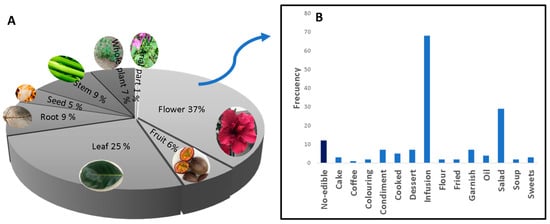
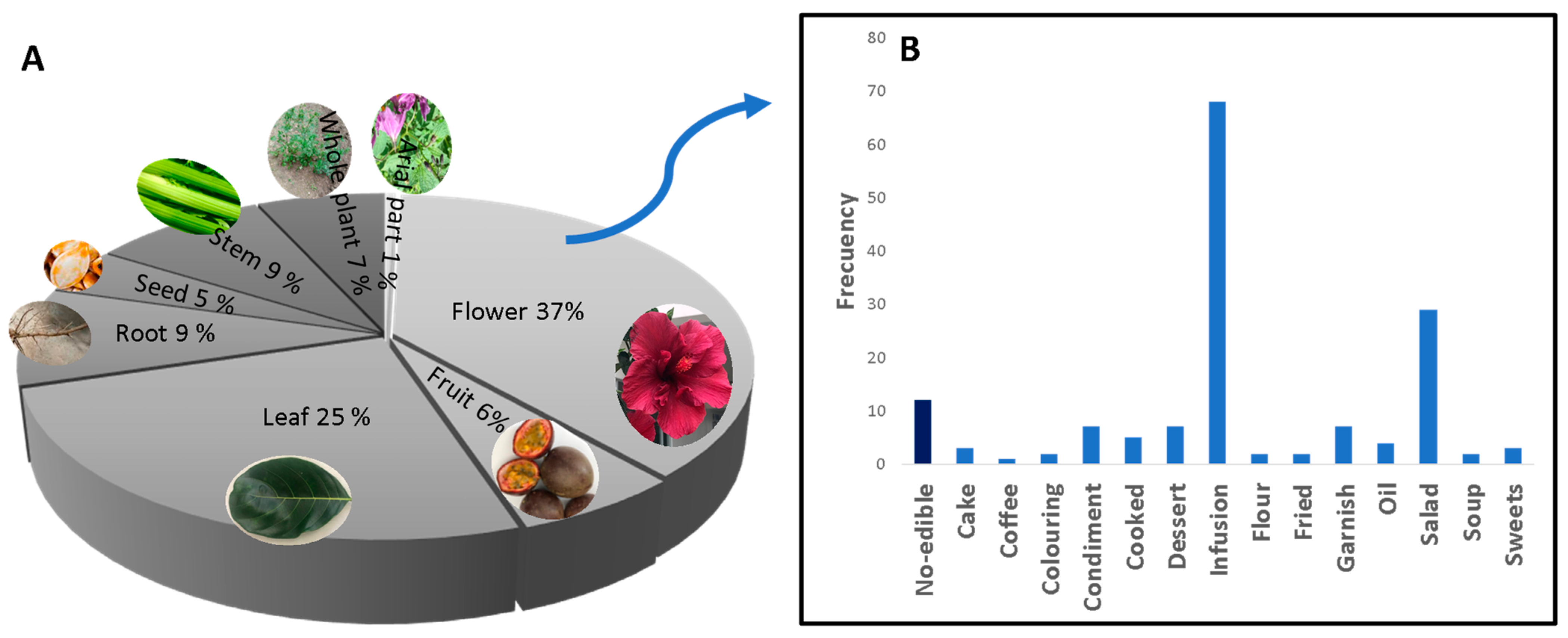
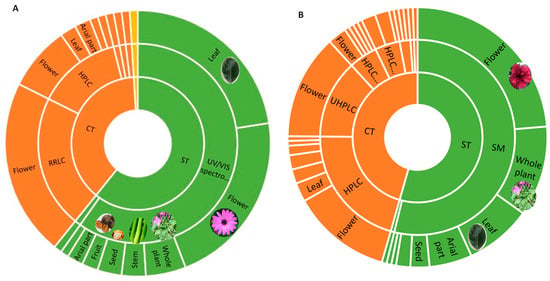
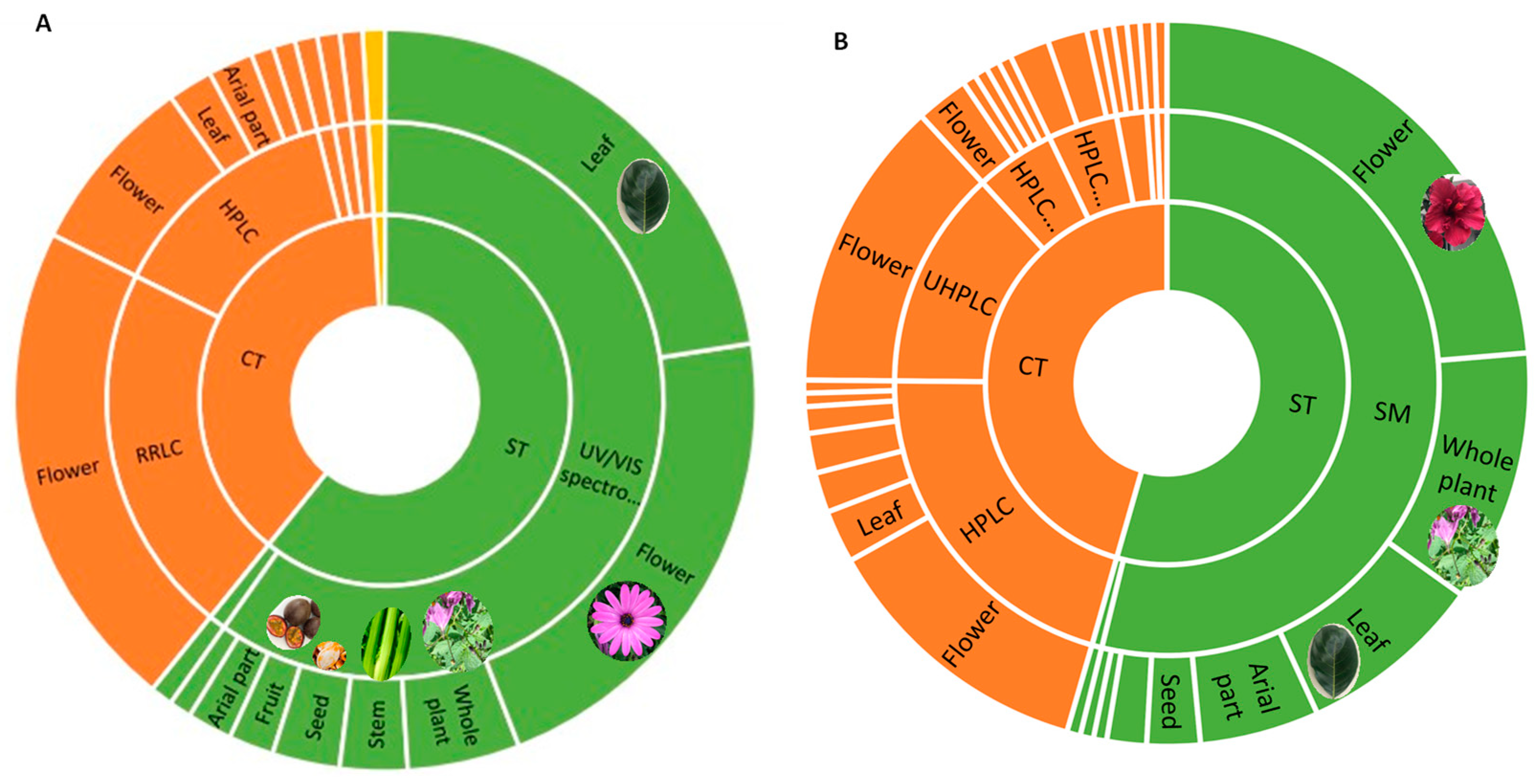
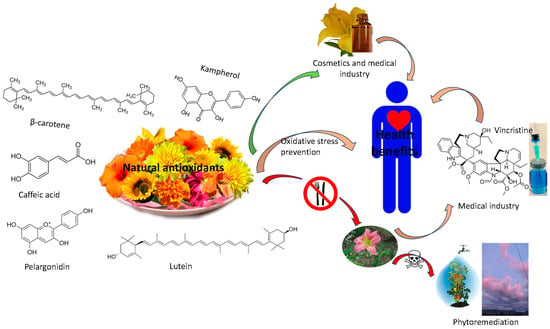
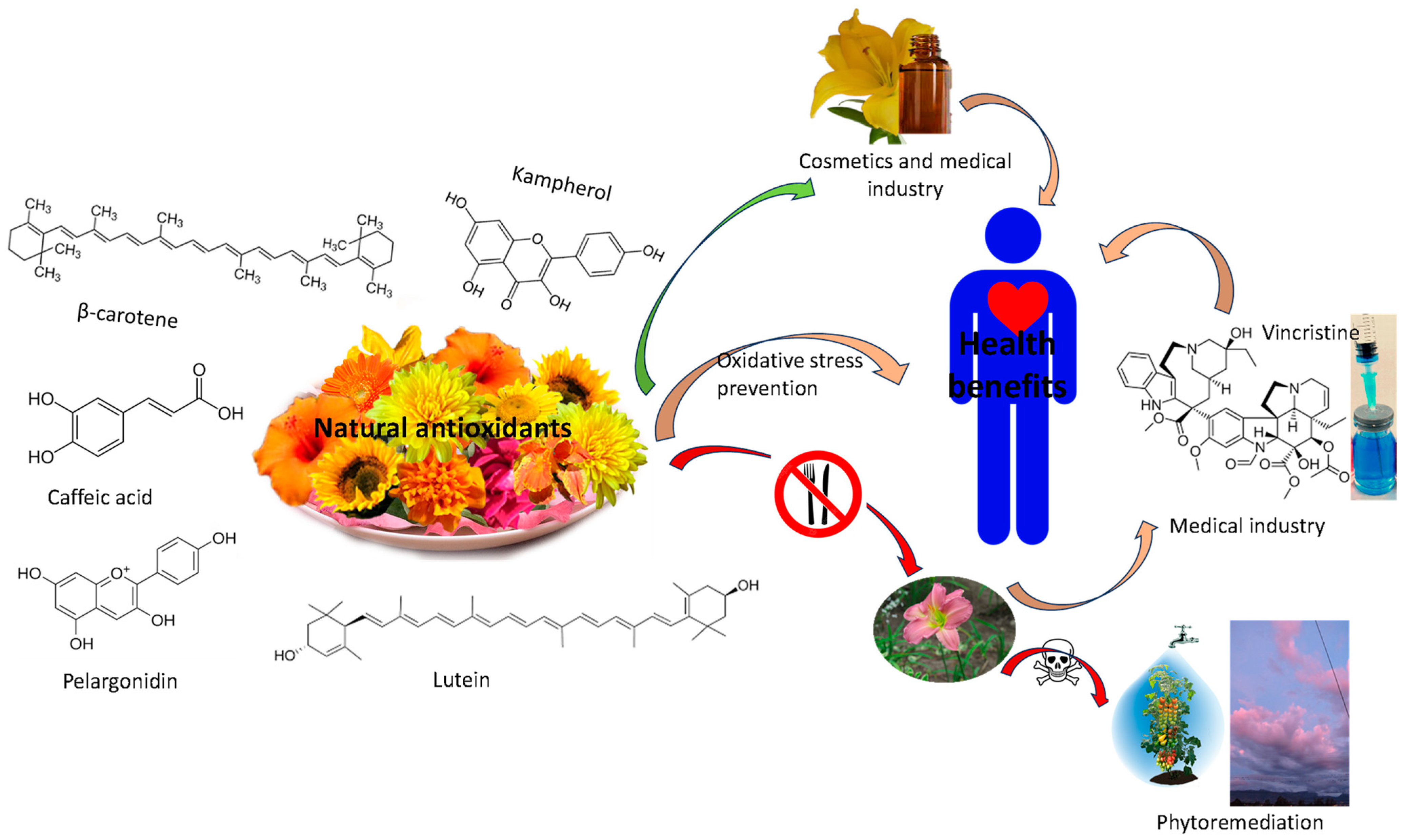
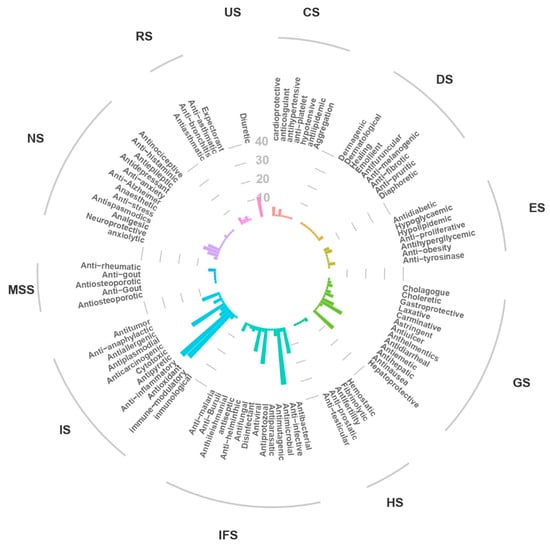
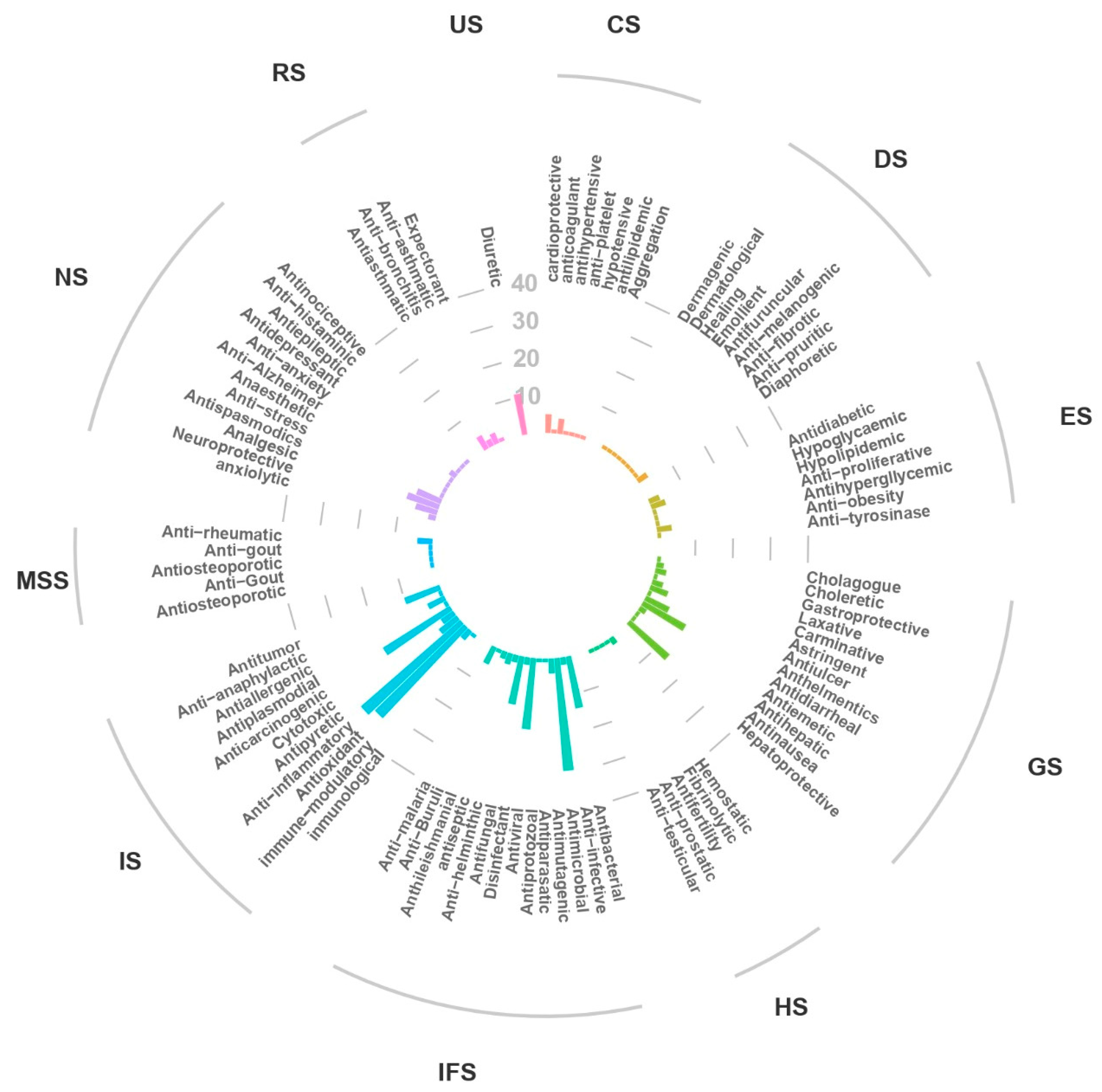



Disclaimer/Publisher’s Note: The statements, opinions and data contained in all publications are solely those of the individual author(s) and contributor(s) and not of MDPI and/or the editor(s). MDPI and/or the editor(s) disclaim responsibility for any injury to people or property resulting from any ideas, methods, instructions or products referred to in the content. |
© 2023 by the authors. Licensee MDPI, Basel, Switzerland. This article is an open access article distributed under the terms and conditions of the Creative Commons Attribution (CC BY) license (https://creativecommons.org/licenses/by/4.0/).