
Article

Supporting the University Research Enterprise via Open Access Publishing: Case Study from a Carnegie Research 2 University

by
Rachel Elizabeth Scott
University Library, University of Illinois Urbana-Champaign, Urbana, IL 61801, USA
Publications 2026, 14(1), 10; https://doi.org/10.3390/publications14010010
Submission received: 21 December 2025 / Revised: 24 January 2026 / Accepted: 30 January 2026 / Published: 5 February 2026
(This article belongs to the Special Issue Academic Libraries in Supporting Research)

Abstract

Academic libraries support the mission and vision of their institution; in the case of most universities, this means providing a variety of services and resources in support of the research enterprise. This case study documents one library’s support for open access publishing to explore how it directly supports the research mission of a Carnegie Research 2 university. By leveraging relationships and investing existing collections resources and workflows—the sequence of decisions and labor through which librarians make scholarly and artistic works discoverable, accessible, and support their preservation—in open access publishing, the library has materially increased the visibility of locally produced scholarship and become a more visible campus collaborator.

1. Introduction

Academic librarians position themselves for success when their work aligns with the mission and vision of their institution. Given the strategic importance of research to most universities, many academic libraries have developed additional services and support to ensure the centrality of libraries throughout the entire research lifecycle. In the United States, library support for open science—and especially open access (OA) publishing—has increased considerably over the past five years as institutions have entered into OA publishing agreements with publishers at an accelerating rate (ESAC, 2026).
This case study documents the experience of a library at a public, Carnegie R2 university located in the United States to make the case for the role of the library within the academic research enterprise, and specifically for the importance of OA publishing support. By outlining the relationships, infrastructure and workflows academic librarians have developed to support the OA publishing of research produced by campus scholars, the author demonstrates how the library has increased the visibility and impact of local scholarship and strengthened campus collaborations in the process.

2. Literature Review

2.1. The Evolving Role of Libraries in the Academic Research Enterprise

A recent news piece, tellingly entitled “The Case for Viewing Libraries as Research Infrastructures,” underlines that stakeholders outside of academic libraries may not see libraries as integral to the research enterprise (Knowledge Rights 21, 2025). The author of the piece outlines four areas in which the European Commission’s European Strategy for Research and Technology Infrastructures links to libraries: (1) the tradition of cooperation between libraries through tools such as interlibrary loan; (2) the coordination of collections policies and collections specializations; (3) the provision of access and support for accessibility; and (4) the alignment of shared needs with other research infrastructures, allowing for mutual benefits in the identification of provision and skills gaps, and ways to respond (Knowledge Rights 21, 2025). By defining research infrastructures as “facilities that provide resources and services for research communities to conduct research and foster innovation,” the European Commission lends credibility to the role of libraries as research infrastructures (European Commission, 2019).
Nonetheless, librarians have faced challenges with their perceived contributions to and role in the academic research enterprise. Significant changes in how research is conducted within universities—and specifically, how research results are discovered—led to a perceived reduction in the relevance of libraries to university-based scholars in the late 2000s. The 2009 Ithaka S + R US Faculty Survey, for example, reported, “Basic scholarly information use practices have shifted rapidly in recent years and, as a result, the academic library is increasingly being disintermediated from the discovery process, risking irrelevance in one of its core areas” (Schonfeld & Housewright, 2010). A 2008 Council on Libraries and Information Resources report similarly recommended reconceiving the library in response to the changing needs of researchers and the academic research enterprise (CLIR, 2008).
In that environment—one in which the relevance and future of libraries was openly questioned—Bourg et al. (2009) issued a call to action with ten steps to ensure the centrality of academic librarians to scholarly research and publishing. To summarize, these included studying the needs of researchers; developing services around the research process; embedding library content, services and staff within researchers’ workflows; reframing reference as research consultation; aligning library positions with skills and experience to support research; providing metadata and organization to content discovered outside of libraries; focusing on unique services and resources while streamlining common services and resources; demonstrating the value of library services and resources while making them seamless to researchers; identifying research data that merit preservation and access services; and offering publishing and dissemination platforms that are integrated with preservation services.
The profession took note of this “manifesto” and responded in the literature and in practice with an explicit attunement to the needs of local researchers. Multiple reports addressed libraries’ creation of new roles in response to the need for enterprise research support. The Association of Research Libraries and Research Libraries UK both issued reports that emphasized the importance of new positions and skills in academic libraries to support research (ARL, 2010; Auckland, 2012). The Ithaka 2009 Faculty Survey report similarly indicated that libraries were “taking on new research-support roles, providing digital information curation and management services and even establishing a new professional identity for themselves as ‘informationists’” (Schonfeld & Housewright, 2010).
Hickerson et al. (2022) report on a five-year project at the University of Calgary funded by The Andrew W. Mellon Foundation to understand new roles for libraries within an evolving research ecosystem. Through their engagement—via researcher workshops, funded, collaborative research projects, and a multistakeholder symposium—the library invested in digital media and analytical tools, moved from disciplinary to functional support roles, shifted focus to “the nature of research today, rather than on acquisition of those resources that libraries have invested in historically,” and focused on building relationships in all stages of the research lifecycle, reducing the cost of research via shared resources, and offering collaborative spaces.
Another outcome of this Mellon Foundation-funded project was the symposium Critical Roles for Libraries in Today’s Research Enterprise (Brosz, 2020). At the event, librarians, research administrators, and other university stakeholders gathered for panels and sessions on how to bring the library into better alignment with current and future research needs. Research administrators from three research-intensive universities offered a variety of perspectives on finding such alignment. Susan Morgan, University of Miami, suggested librarians could assist cross-disciplinary teams in selecting publication venues, identifying reviewers, and communicating their research across disciplinary differences; Pat Limabach, University of Cincinnati, reiterated the importance of focusing on impact and working and establishing priorities in collaboration with research offices; and Penny Pexman, University of Calgary, indicated that librarians could contribute by lending their expertise to familiarize faculty with new methodologies or common ways to frame data.

2.2. Academic Library Positions Supporting Research

Publication and scholarly communications services have proven key to library support within the academic research enterprise. Many libraries experienced an expansion of campus demand for publishing services; as Hahn (2008) noted, “Service development is being driven by campus demand, largely from authors and editors. Scholars and researchers are taking their unmet needs to the library” (p. 7). Lippincott (2016) documented how librarians leveraged their skills and existing infrastructures to advance library-based publishing initiatives and filled gaps in the scholarly publishing system.
Numerous studies consider the services libraries have provided or could provide in support of enterprise research. Bibliometrics and research data management services emerged as common services that academic libraries provided to support university research (Corrall et al., 2013). Research impact services have deepened librarians’ relationships with scholars and facilitated engagement across the research enterprise (Tavernier & Jamieson, 2022). There is also a role for librarians in helping to address the reproducibility crisis in research; core areas of academic librarianship—data management, scholarly communication, and methodological support for systematic reviews and data-intensive research—align with recommendations for improving reproducibility (Sayre & Riegelman, 2019). Academic librarians can also help ensure robust identifiers for local scholars and contribute to the broader identifier ecosystem. This work plays a crucial role in scholarly communication by enabling the correct attribution of authorship, allowing authors and their institutions to get credit for their work, and facilitating the promotion and discovery of scholarly outputs (Long, 2025).
Although libraries’ research data management services have matured and expanded considerably, librarians still encounter challenges, including “institutional commitment, collaboration, academic engagement, technological infrastructure development, lack of policies, funding, and storage, skills, and competencies” (Sheikh et al., 2025, p. 305). This reiterates what an OCLC research report on the role of partnerships in the academic research enterprise found, namely the importance of social interoperability among the stakeholders that support research: academic affairs, communications, faculty affairs and governance, information and communication technology, the library, and research administration. Productive collaboration is required among almost all these areas to advance research data management, research information management, research analytics, and ORCiD adoption (Bryant et al., 2020).

2.3. Linking Library Support to Research Outcomes

Scholars have taken a variety of approaches to investigate the relationship between libraries’ research support and research outcomes. Franklin (2001) “found a high correlation between total research and development funding at an educational institution and total library expenditures at research universities” (p. 111). Kaufman (2008) reported on a study conducted at the University of Illinois to measure the institution’s return on its investment in the library. They investigated grant income generated by faculty using library materials and found a “return on investment of $4.38 for every dollar invested in the library” (p. 433).
Funding for expanded research support in libraries has also been discussed in the literature. Franklin (2007) documented that public university research libraries increasingly reported receiving a share of their universities’ indirect cost revenues beginning in the late 2000s. More recently, a Scholarly Kitchen post reported on a survey of libraries’ exploration of cost recovery models for research services (Craiglow et al., 2025). Of thirty-two academic libraries that responded to their survey, 90 percent were not considering any form of direct charge for general services, but 25 percent reported that they either currently charge or are considering charging for at least one specialized service. With 34 percent of participants indicating that they either currently charge or are considering charging, Research Data Services and Systematic Review and Evidence Synthesis were the two specialized services for which cost recovery is most viable.
A 2018 review of research administration and library and information science publications found, “The literature of each profession demonstrated little awareness of the activities and concerns of the other” (Bradley, 2018, p. 16). Nonetheless, some recent research identifies partnerships among librarians and campus research offices as an explicit strategy to advance the centrality of the library to the research enterprise. Reporting on their survey investigating opportunities for librarians to support scholarly research, Tran and Chan (2020) indicated that some participants reiterated the importance of library administrators having research portfolios. One participant shared, this has “facilitated the integration of the library into broader campus discussions about research, its infrastructure, and associated initiatives” (p. 20). Healy (2010) outlined several of the strategies taken at Wayne State University to enhance the visibility of libraries among researchers and research administrators, including assisting with research profile databases, participating on institutional review board, serving as a liaison to the Office of Technology Transfer, and collaborating with postdoctoral organizations and the graduate school.

2.4. Open Access as Enterprise Research Support

Rogers (2014), Director of Research and Enterprise at University of Stirling, identified open scholarship as “one of the most profound influences on the research landscape. It is shaping institutional policy and strategy, changing scholarly behavior and raising substantial questions about infrastructure and investment” (p. 243). As Rogers stated, open scholarship allows resources to “be released to be reinvested back into research itself” (p. 242). Rogers called for the research sector and individual institutions to invest in open scholarship “to take full advantage of the range of exciting possibilities that open scholarship presents” (p. 242). National Academies of Sciences, Medicine, Global Affairs, Board on Research Data and Committee on Toward an Open Science Enterprise (2018) similarly endorsed open science in their vision for the future of research.
Such endorsements of open science and OA are unsurprising; OA offers benefits to authors, their employers, and the research enterprise. Several studies have demonstrated an open access citation advantage, both at the institutional level and globally, while also acknowledging that these claims should be qualified rather than generalized (Rawlins & Scott, 2025; Piwowar et al., 2018). There is no denying that OA content is more easily accessed and engaged with, however (Björk, 2017). This creates opportunities for impact to a larger degree than paywalled content (McKiernan et al., 2016). Studies have also identified benefits such as facilitating altruism, promoting replicability, and creating affordable teaching content (Heaton et al., 2019; Willinsky, 2005; Scott & Shelley, 2023).
Although there is broad support for OA in theory, there is considerably more hesitation about the specific models and approaches to realizing it. Writing about transformative agreements, agreements under which publishing and reading costs are bundled in a single agreement, Aspesi and Brand (2020) wrote, “Such transformative deals may accelerate the transition to OA, but discounted article processing charges also have the potential to influence where researchers opt to publish their work, contravening basic principles of academic freedom” (p. 575). Authors’ concerns have tended to focus on equity, financial, opportunity, reputational, and time costs rather than restrictions on their academic freedom (Skaggs et al., 2026). Librarians’ concerns tend to focus on shifting payment from reading to publishing and resulting concerns about costs, equity, and sustainability (Rawlins, 2024).
A recent study of transformative agreement press releases found that librarians (customers) cited improvements to equity, cost effectiveness, research dissemination, the facilitation of the transition to OA publishing, and workflow management (Laakso & Ayeni, 2025). Scott et al. (2023) noted that the OA agreements, regardless of their model, are locally negotiated and reiterated that “approaches to OA must be informed by the needs and resources of local stakeholders based on their institutional principles and strategies.” They encouraged librarians “to engage in sustained conversation with a variety of stakeholders and to take a flexible, iterative and multifaceted approach to OA” (p. 11).
In addition to providing OA opportunities via agreements with publishers, librarians also fund OA infrastructure, provide and administer institutional repositories and publishing platforms, help authors comply with open and public access mandates, and offer education and training related to OA publishing. Lewis (2017) called upon librarians to invest a portion of their annual budgets in the open scholarly commons. Institutional repositories are an example of infrastructure that allow librarians to support the dissemination of local scholarship (Armstrong, 2014). Open or public access to research may be required by funders or in preparation for evaluation; institutional librarians frequently support this work (Krzak & Tate, 2016). The considerable pressure faculty face to publish, the increase in OA publishing mandates, and the complexity of OA publishing have created a role for librarians to empower authors to make informed choices in a dynamic and intricate scholarly communication landscape (Zhao, 2014).

2.5. Transition to Case Study

The literature documents the need for librarians to proactively understand and support the research needs of their community. Although there are several examples of how individual libraries have accomplished this, the needs of each institution differ considerably, as do the opportunities. This case study highlights that several services documented in the literature can be scaled down for smaller, less research-intensive institutions.

3. Case Study

3.1. Institutional Context

Illinois State University (ISU) is a public university with a fall 2025 headcount of 21,994, only 2481 (less than 9 percent) of which are graduate students. Since 2015, the university has been classified with the Carnegie Research Activity Designation Research 2: High Research Spending and Doctorate Production (Carnegie Classification of Institutions of Higher Education, 2026). Established as a normal school, the university has maintained strong teacher training programs and remains professions-focused, rather than research-focused or mixed. The first goal in the 2024–2030 strategic plan is “Increase the Impact of Our Scholarly and Creative Productivity,” which is attended by the objective to “Pursue important and wide-reaching outlets to showcase research and creative productivity within each discipline or areas of expertise.” (ISU, 2025).
ISU faculty and staff engage in a variety of research and creative activities. Although numerous faculty have received external grant funding, the number of funded researchers and the amounts of funding are lower at ISU than at Carnegie R1 institutions. In fiscal year 2025, for example, ISU was awarded a total of $31,727,303 in research funding. Of this amount, $5,828,128 was federal, $5,425,616 was federal flow through, $18,944,565 was awarded by the state, $11,400 was local, $106,591 was industry, $1,309,884 was awarded by non-profit agencies, and $101,117 was awarded by college or universities (ISU, 2026). Further, of 150 total research awards, only 64 were for research activities (ISU, 2026).
Research expenditures at ISU are similarly less than those at R1 institutions. The National Science Foundation ranks United States institutions by their research expenditures based on responses to the Higher Education Research and Development (HERD) Survey. Over the past ten years, the HERD ranking of ISU fluctuated between 212 and 278 of 426 to 459 respondents.
Until the summer of 2025, the Office of Research and the Graduate School (ORGS) reported to the Associate Vice President for Research and Graduate Studies. ORGS reinvests a portion of the external funding in programs to support scholarly and creative activities on campus. Internal grants and collaborative research initiatives are the largest investment, followed by cost sharing and (credit hour buyouts), grant and writing support programs, intellectual property, unit publications, regional innovation network efforts, publication and creative work subventions, researcher awards, and finally, costs associated with speaker series. As shown in Table 1, the total expenditures for publication and creative work subvention have ranged from $5558.05 to $11,593.99 over the past seven years.

3.2. Library Support for the Research Enterprise

As demonstrated in the literature review, academic libraries provide an array of services in support of the research enterprise. The focus of this study is libraries’ engagement with and support for OA publishing services. Support for OA publishing aligns with several of ISU library’s established services and workflows and allows librarians to leverage their relationships and infrastructure in direct support of the research enterprise.

3.2.1. Office of Research Relationships

One of Milner Library’s two Associate Deans serves as the College Research Coordinator, is afforded a seat on the University Research Council, and meets monthly with the Associate Vice President for Research (AVPR). These opportunities allow for communicating information about library services that support research, engaging with campus scholars and administrators with the goal of advancing the research enterprise, and sharing back information from across campus on research needs.
Having shared goals and regular contact empowered the Associate Dean to advocate directly to the AVPR for additional funding for OA publishing support. The AVPR is aware that his office is closely associated with funded research and is eager to provide material support for scholars without external funding. By demonstrating how one of Milner Library’s OA agreements had benefited scholars from a broad range of disciplines across all ISU Colleges, the AVPR was willing to top off the fund at a discounted rate negotiated by the Associate Dean when the APC funding was running out. The AVPR and Associate Dean also collaborated with the relevant Department Chair and Dean to secure matching funds to support an OA book publishing initiative for which an ISU faculty member’s recent monograph was selected.
These are just two examples of how the two worked together to assess campus needs and opportunities, both drawing on their experience, expertise, and professional networks. The AVPR held the respect and authority of his role, tenure on campus, and experience as a seasoned scholar in his discipline. The Associate Dean contributed by leveraging her knowledge of library acquisitions and her established relationships with library publishers.

3.2.2. Publisher Relationships

Academic libraries have historically purchased and provided access to content that supports the teaching and research missions of their institutions. Librarians have accordingly had the opportunity to develop relationships with the publishers and providers of scholarly content as they conduct this work. In many cases, the publishers from which librarians purchase and license content are the same as those that publish the intellectual and creative work of institutional authors.
Academic librarians often work with representatives of publishers to understand campus engagement across the publisher’s portfolio. This may mean looking not only at the cost of content licensed by the library and its usage data, but also considering adoptions of the publisher’s textbooks, how often and in which venues local authors have published, article processing charges (and other fees) associated with publishing in these venues, participation of campus scholars on editorial boards, and campus requests for content. Seeing the bigger picture of engagement with a publisher enables librarians to make more informed decisions about content acquisition, renewal, and negotiation.
Negotiating OA agreements is a more recent activity in academic libraries, and particularly in the United States. Milner Library at ISU entered into its first OA publishing agreement in 2021 and has added agreements every year since, when they are near cost neutral. The relatively low publishing output of ISU allows this, because the allotted publications included in the agreements are based on historical publishing trends. Although transformative, or read and publish, agreements including hybrid or both gold and hybrid journals have been the most common model Milner Library has signed on to, a variety of models have been pursued including Subscribe to Open, OA memberships, and even negotiating several OA publishing waivers to participate in an evidence-based e-book acquisitions program. The librarians’ pre-existing relationships with publishers allowed them to jump into the negotiations mid-stream, already having a shared language, history of licensing content, and understanding of the processes involved.

3.2.3. Infrastructure and Workflows

Acquisitions
Libraries typically have a budget for providing academic resources. In the case of ISU, the collections budget of around $4,000,000 far exceeds the budget for publication support offered by ORGS. Although OA publishing charges can be paid directly by the authors, or through other external or campus offices, there are benefits to centralizing these through the library. Because academic libraries already have workflows in place for working with campus offices to pay publishers, the library can add value and gain a more holistic understanding by overseeing OA publishing payments.
Authors have appreciated that the library handles the payment of OA publishing charges, which saves them the time of seeking funding and payment via their department, College, or the Office of Research. Being able to pay from a single fund is also an efficiency; the Office of Research typically requested matching funds from an author’s department and their college. Multiple transfers of funds are obviously cumbersome to manage.
Admittedly, using collections funds to pay for OA publishing instead of a subscription to read content is still relatively new in the US context. ISU is among the US public institutions at which OA agreements have received additional scrutiny and require additional explanation and justification. As an example, the Purchasing Office asked, “What process will be used by the library to ensure the author has necessary rights to publish?” The Associate Dean had to explain that the library does not mediate the publishing process, but rather the journal editor, after managing the peer-review process, decides to accept or decline the manuscript. Although it seemed obvious to library personnel that academic freedom requires that authors negotiate their publishing agreements independent of Milner Library, Purchasing, or any other office on campus, it was not obvious to others.
Author Experience
Workflows supporting the publishing side of OA agreements were relatively new to Milner Library and, beginning before a manuscript is even submitted, take considerable time and resources. The Scholarly Communication Librarian liaises with authors, receives and approves OA publishing requests, gathers data, and conducts ongoing assessment of author experience. On average, the Scholarly Communication Librarian receives about fifteen emails each month from faculty with questions about OA publishing eligibility and agreement availability; she also maintains a LibGuide with information about OA agreements and title lists of eligible titles. Several agreements require manual intervention to approve or deny requests, and she follows up with authors to confirm approval. In some cases, this had the added benefit of informing authors that the library funded their publication, rather than a nebulous campus entity.
Authors also reach out with questions after a manuscript has been accepted for publication, requesting guidance on how to make use of the agreement or with questions about license options. Each of the OA agreements is different, and publishers use different messaging about how to make use of the agreements. Some ISU authors have been reluctant to make use of the agreements, thinking the library would be incurring additional expenses if they “request use” of the agreement. Others have expressed concerns about taking away opportunities from ISU colleagues. Due to such concerns or general confusion, some articles have been converted to OA after they were published behind a paywall. Accordingly, the Scholarly Communication Librarian monitors opt-outs and reaches out to authors.
Managing Milner Library’s twelve active agreements currently requires the use of seven platforms: five publishers have proprietary dashboards, four publishers use the Copyright Clearance Center, and the remaining three publishers provide spreadsheets with usage data. Each source is different; some include all authors, not just the eligible corresponding author; some include the APC list price while others do not; some include the selected license type. Because publishers have not standardized this information, the Scholarly Communication Librarian must gather it from multiple sources. Paid tools such as ConsortiaManager’s Transformative Agreement Manager and SciFree’s Journal Search Tool are cropping up to manage this gap on the publishing side of OA agreements. The benefit of such a high-touch workflow is that the Scholarly Communications Librarian is an ideal representative of the library; every interaction serves as a reminder that Milner Library is interested in helping authors achieve their goals and increase their impact.
Collection Assessment
Librarians review the performance of their agreements with publishers on an ongoing basis. The work typically involves reviewing the costs, usage, known issues (platform downtime, accessibility concerns, etc.), and campus engagement. The assessment allows librarians to make more informed decisions about renewals, cancelations, adding new content, and agreement negotiations.
By adding new considerations and metrics, OA agreements add complexity to the assessment of an agreement. Where the assessment of the read side of an agreement is well-documented and best practices have been established, assessment of the publish side of an OA agreement has not. The Scholarly Communication Librarian created a dashboard to facilitate the assessment of the publishing side of Milner Library’s OA agreements and to bring visibility to their impact. As shown in Figure 1, the total APC avoidance for four years of OA agreements is well over $700,000—far outpacing the publication support offered by ORGS featured in Table 1. This amount includes articles in hybrid and gold OA journals, depending on the publisher and agreement.
The multi-page dashboard provides a centralized tool for the visualization of all OA journal publishing agreements by publisher, journal title, acceptance year, APC, ISU author department and rank, student status and student level, and the institutions of co-authors. In addition to providing insights into the agreements for renewal and renegotiation purposes, the Scholarly Communication Librarian used the underlying data to create a second dashboard to allow the Milner Library Business Manager to see the costs associated with student-authored publications, required reporting when tapping into a specific university fund benefiting student-facing initiatives.
Discovery and Access
Libraries typically provide access to content they have purchased or licensed, facilitating its discovery and access. In the case of OA publishing agreements, publishers most commonly provide resources to support their discovery and access. They commonly do so by providing MARC records, sharing metadata with major discovery platforms such as Ex Libris, EBSCO, and WorldShare, or ensuring indexing in major platforms. Librarians have established workflows to ensure that the content for which they are paying—and increasingly content that is freely available but deemed to be worth curating—is discoverable for their users.
Given that many scholars identify sources outside of library catalogs and databases, librarians increasingly integrate library-licensed content into the researchers’ preferred workflow (Scott et al., 2025b). A variety of open source and paid tools have been developed to ensure that when university affiliated users discover an article, book, or other content licensed by the library, they can seamlessly authenticate and gain access.
Institutional Repository
The institutional repository (IR) provides essential OA publishing infrastructure. The Scholarly Communication Librarian administers the locally branded Digital Commons instance. Because ISU does not have an OA policy or even an official position on OA, all engagement with OA depositing is voluntary. Authors may deposit in disciplinary or other external repositories, but the opportunity exists to deposit scholarly and creative outputs in most file formats in the IR.
The Scholarly Communication Librarian maintains a collection in the IR that features articles published under the library’s OA agreements. This is an additional manual process that is largely managed by student workers. The intention is that this familiarizes authors with the IR, showing them its benefits and making them more open to depositing their other work. This collection is easy to point to when library personnel want to show the range of topics supported by the OA agreements and demonstrate the library’s alignment with strategic campus initiatives to elevate institutional excellence.
Digital Commons includes journal publishing and peer-review software. Milner Library currently hosts five OA journals and is in the process of adding two new OA journals to its instance of Digital Commons. The Scholarly Communication Librarian and Associate Dean have worked with ISU affiliated editors and editorial board members to move their journals, establishing a memorandum of understanding outlining mutual expectations in the process. Editors have asked for assistance with indexing, submitting applications to DOAJ, and for guidance on complying with OA best practices. The IR’s journal hosting services have provided a bridge to connect editorial boards with librarians experienced in publishing workflows. Once the journal is live, Elsevier handles many of the workflows associated with these, such as customizing the journal landing page, setting up authorized users with the appropriate permissions, registering DOIs with Crossref, and more.
Last year, the IR also became the default deposit site for ISU dissertations. The Copyright Librarian worked closely with Graduate School personnel to define workflows within Digital Commons. The process uses the peer-review features within Digital Commons, which allows the appropriate personnel to review the documents before they are published online.

3.3. Summary of Findings

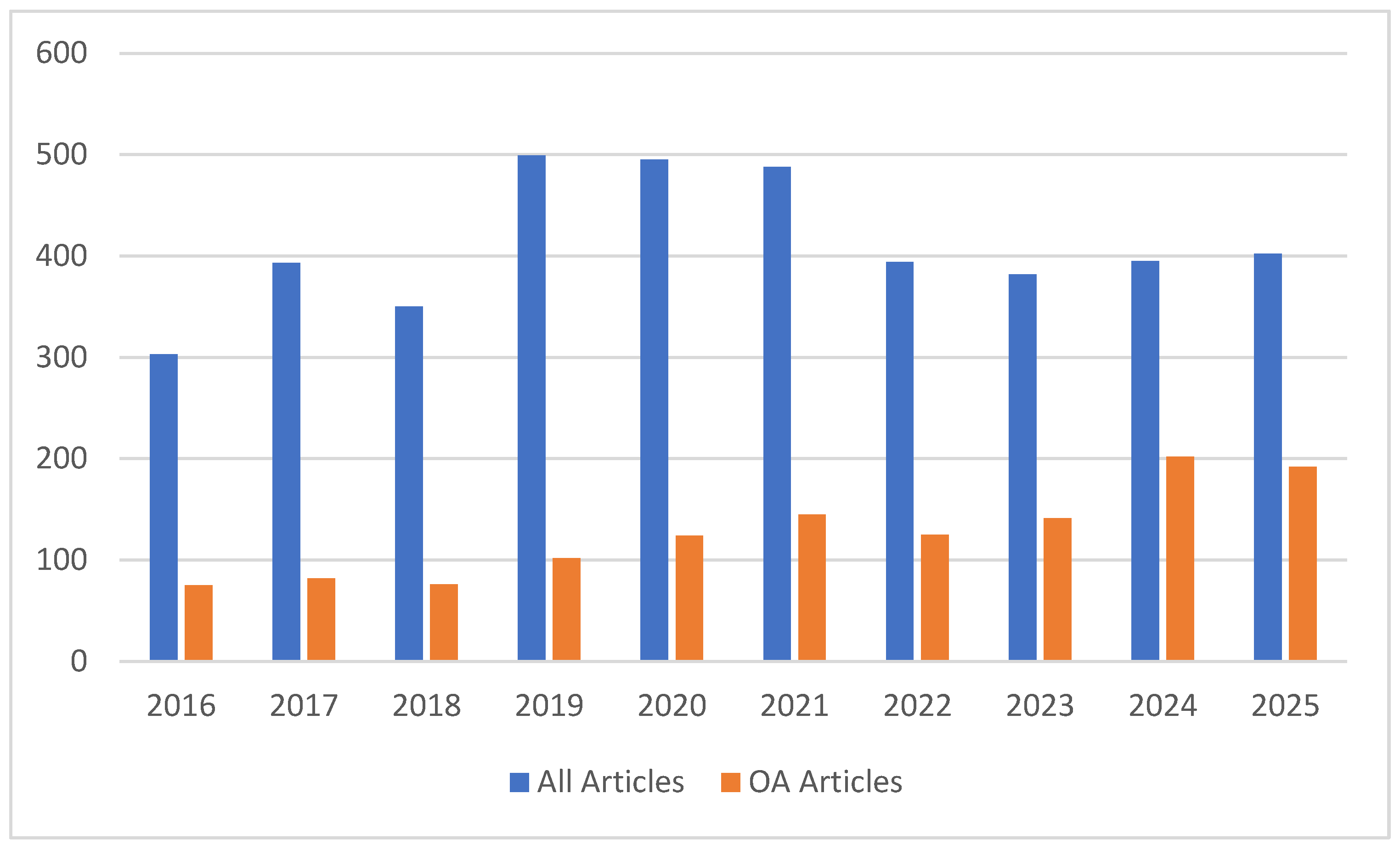
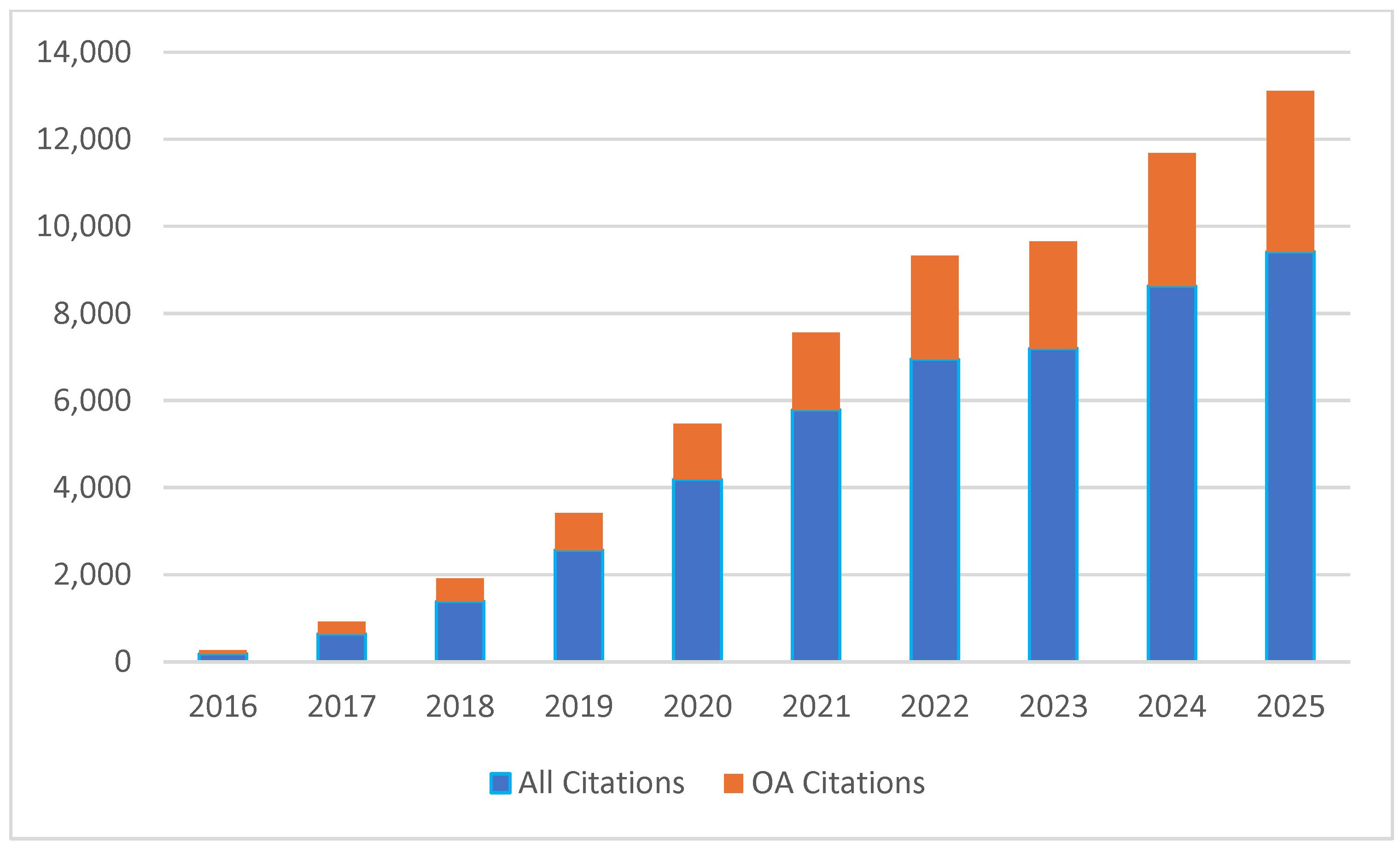
In the case of Milner Library, supporting open access publishing has led to a variety of positive outcomes. Web of Science data for articles published between 2016 and 2025 by ISU-affiliated authors, shown in Table 2, demonstrate that engagement with OA publishing at ISU has increased significantly over the past ten years. These data additionally show increasing proportions of OA to non-OA publishing and citations (Figure 2 and Figure 3) as well as a modest OA citation advantage (with an average of 13.09 citations per article) over non-OA articles (11.54) during this period.
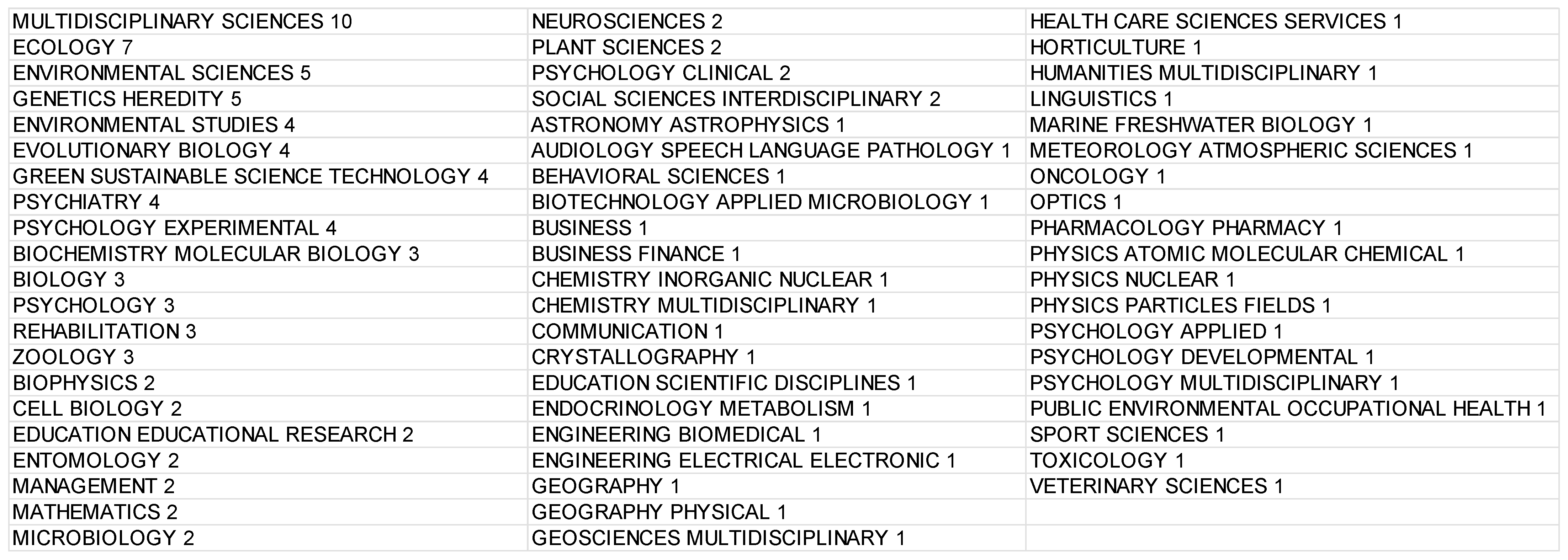
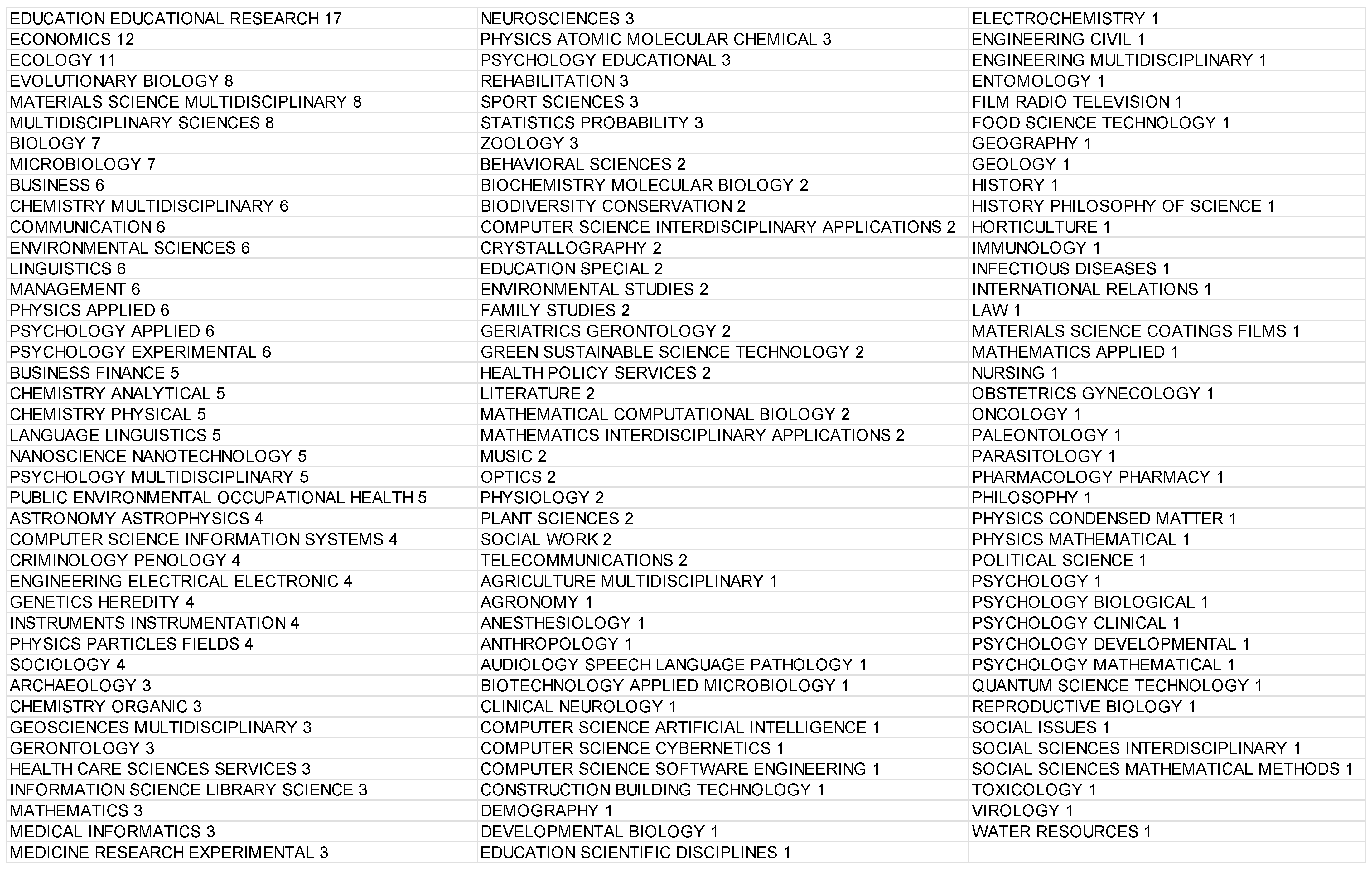
Not only did engagement with open access increase, but also the opportunity to publish open access across disciplines. As shown in Figure 4 and Figure 5, the distinct Web of Science categories represented in ISU-authored articles (followed in parentheses by the number of articles in that category) doubled from 61 in 2016 to 122 in 2024. Further, disciplines outside of science, which were hardly represented in 2016, were well represented in 2024. The opportunity to support ISU scholars as they publish their art, social work, history, philosophy, sociology, and literature research open access is an outcome that Milner Library celebrates.
By creating opportunities for scholars across disciplines to publish their research open access, the library has played a role in increasing the visibility and impact of local scholarship. By collaborating with scholars across so many departments, colleges, and schools, Milner librarians have improved the visibility of library services and resources, strengthening campus collaborations.

4. Discussion

Given the University’s objective to “Pursue important and wide-reaching outlets to showcase research and creative productivity within each discipline or areas of expertise,” the library’s investment in supporting the dissemination of locally produced scholarly and creative outputs is strategic. This investment has been appreciated not only by the authors who have published OA under library agreements, publish their journal via the IR, or reach global audiences by depositing their work in the IR, but also by campus administrators, such as the dean and department head who identified OA support as the most valuable and essential service the library currently offers.
Milner Library’s OA agreements have had a variety of positive outcomes. On the read side, access to the complete journal portfolio of several publishers has helped meet faculty requests for expanded access, created an information-rich environment, driven down cost-per-use, and saved around $40,000 a year on document delivery services.
On the publish side, 459 authors of 218 articles have benefited from the increased visibility of their scholarship. A recent survey of authors who have published under Milner Library’s OA agreements reported examples of increased visibility such as, “[My OA article] has much more activity than other articles at the journal published online around the same time. I attribute this to the OA provided by the agreement with Milner,” and “It has led to more publicity for my articles. Reporters have contacted me because the open access agreement made my work public” (Scott et al., 2025a).
Over a third of authors on these articles are ISU students, which contributes to their academic success and helps them achieve professional goals (Skaggs & Scott, 2025). The availability of ISU dissertations via the IR also advances institutional research. By moving these from a paywalled platform and promoting public access to research outputs, Milner Library has showcased the productivity of student scholars across disciplines.
Publishing OA journals via the IR is also deeply appreciated, even if the number of journals on the platform remains modest. Editors have reported, for example, that migrating from a WordPress site to Digital Commons adds legitimacy to their journal and attracts stronger submissions. The readership of these journal articles is international in scope, and the lack of a paywall means that the content reaches independent scholars and individuals without the privilege of access to a research library.
Institutions seeking to expand their support for OA publishing must consider the risks and the benefits. Milner Library’s expansion of OA publishing support has become one of its most valued programs, and one that has brought visibility to other library services, such as copyright education. Several conditions enabled the expansion of OA publishing services at Milner Library, most notably the explicit support for open access and research impact in University and Library strategic plans. Another condition has been the possibility of negotiating agreements that are near cost-neutral based on relatively low publishing output. Some agreements have carried additional costs, however, and this has meant additional scrutiny of other subscriptions and ongoing costs. It is essential to weigh these costs against the value added by directly supporting research dissemination and strengthening relationships across campus.
The case study presented here may not be generalized to different contexts. Acquisitions budgets, publishing outputs, campus support for OA, and staffing levels differ considerably from one university to the next. Libraries supporting Carnegie R1 universities have demonstrated that certain OA publishing models are not worth the cost (Rawlins, 2024). Future research might explore best practices for libraries serving primarily undergraduate, or less research-intensive colleges and universities to provide OA publishing support and surface additional relationships, infrastructure, and workflows that librarians can leverage to serve the research community on their campuses.

5. Conclusions

Milner Library strives to play an important role in the success of all campus scholars, regardless of their academic discipline. Facilitating the OA publishing of ISU scholarship aligns with the University’s strategic objective to “showcase research and creative productivity,” and has generated goodwill with ISU authors. Authors care deeply about their research and offering material support as they disseminate their work has elevated the profile of Milner Library. In lieu of an official OA policy from the University, Milner Library’s multifaceted support for OA publishing has created opportunity for authors without funding to disseminate their work widely while also supporting any mandates authors have to make their work OA or publicly available. Milner Library’s OA publishing support has strengthened partnerships with the Office of Research and enhanced relationships across the research enterprise, allowing stakeholders to recognize that librarians do indeed add value to the proposition.

Funding

This research received no external funding and the APC was waived.

Data Availability Statement

Restrictions apply to the availability of these data. Data were obtained from Web of Science and are available only via licensed access to that resource.

Acknowledgments

The author has reviewed and edited the output and takes full responsibility for the content of this publication. The author is indebted to Lindsey Skaggs for insight into her expert work as Scholarly Communication Librarian and to Craig McLauchlan for his inclusive and thoughtful approach to supporting researchers across disciplines.

Conflicts of Interest

The author declares no conflicts of interest.

Abbreviations

The following abbreviations are used in this manuscript:
APCArticle processing charge
AVPRAssociate Vice President for Research
OAOpen access
TATransformative agreement

References

  1. Armstrong, M. (2014). Institutional repository management models that support faculty research dissemination. OCLC Systems & Services, 30(1), 43–51. [Google Scholar] [CrossRef]
  2. Aspesi, C., & Brand, A. (2020). In pursuit of open science, open access is not enough. Science, 368(6491), 574–577. [Google Scholar] [CrossRef] [PubMed]
  3. Association of Research Libraries. (2010). New roles for new times: An ARL report series in development [written by Janice M. Jaguszewski and Karen Williams]. Available online: http://www.arl.org/component/content/article/6/2893 (accessed on 29 January 2026).
  4. Auckland, M. (2012). Re-skilling for research: An investigation into the role and skills of subject and liaison librarians required to effectively support the evolving information needs of researchers. Available online: http://www.rluk.ac.uk/files/RLUK%20Re-skilling.pdf (accessed on 29 January 2026).
  5. Björk, B. C. (2017). Open access to scientific articles: A review of benefits and challenges. Internal and Emergency Medicine, 12, 247–253. [Google Scholar] [CrossRef]
  6. Bourg, C., Coleman, R., & Erway, R. (2009). Support for the research process, an academic library manifesto. OCLC Research. Available online: https://ses.library.usyd.edu.au/handle/2123/12828 (accessed on 29 January 2026).
  7. Bradley, C. (2018). Research support priorities of and relationships among librarians and research administrators: A content analysis of the professional literature. Evidence Based Library and Information Practice, 13(4), 15–30. [Google Scholar] [CrossRef]
  8. Brosz, J. (2020, January 28). Critical roles for libraries in today’s research enterprise. 2019 Critical Roles for Libraries in Today’s Research Enterprise Symposium, Washington, DC, USA. [Google Scholar] [CrossRef]
  9. Bryant, R., Dortmund, A., & Lavoie, B. (2020). Social interoperability in research support: Cross-campus partnerships and the university research enterprise [OCLC research report]. OCLC Online Computer Library Center, Inc. Available online: https://www.oclc.org/research/areas/research-collections/institutional-stakeholders-in-research-support.html (accessed on 29 January 2026).
  10. Carnegie Classification of Institutions of Higher Education. (2026). Available online: https://carnegieclassifications.acenet.edu/institution/illinois-state-university/ (accessed on 29 January 2026).
  11. Corrall, S., Kennan, M. A., & Afzal, W. (2013). Bibliometrics and research data management services: Emerging trends in library support for research. Library Trends, 61(3), 636–674. [Google Scholar] [CrossRef]
  12. Council on Library and Information Resources. (2008). No brief candle: Reconceiving research libraries for the 21st century. Available online: https://www.clir.org/wp-content/uploads/sites/6/2016/09/pub142.pdf (accessed on 29 January 2026).
  13. Craiglow, H., Vitale, C. H., & McGeary, T. (2025, December 8). Guest post—Funding research services: How libraries are exploring cost recovery models. Scholarly Kitchen. Available online: https://scholarlykitchen.sspnet.org/2025/12/08/guest-post-funding-research-services-how-libraries-are-exploring-cost-recovery-models/ (accessed on 29 January 2026).
  14. Efficiency and Standards for Article Charges (ESAC). (2026). Registry initiative registry tracks open access agreements across publishers and institutions. Although it is not comprehensive, it is a useful tool for seeing the significant increase in open access agreements. ESAC, Registry. Available online: https://esac-initiative.org/about/transformative-agreements/agreement-registry/ (accessed on 29 January 2026).
  15. European Commission. (2019). Research and innovation, European research infrastructures. Available online: https://research-and-innovation.ec.europa.eu/strategy/strategy-research-and-innovation/our-digital-future/european-research-infrastructures_en#:~:text=Research%20Infrastructures%20are%20facilities%20that,sited%2C%20distributed%2C%20or%20virtual (accessed on 29 January 2026).
  16. Franklin, B. (2001, August 12–16). Academic research library support of sponsored research in the United States. 4th Northumbria International Conference on Performance Measurement in Libraries and Information Services (pp. 105–111), Pittsburgh, PA, USA. [Google Scholar]
  17. Franklin, B. (2007). The privatization of public university research libraries. Portal: Libraries and the Academy, 7(4), 407–414. [Google Scholar] [CrossRef]
  18. Hahn, K. L. (2008). Research library publishing services: New options for university publishing (pp. 1–40). Association of Research Libraries. Available online: https://eric.ed.gov/?id=ED500889 (accessed on 29 January 2026).
  19. Healy, A. M. (2010). Increasing the visibility of the library within the academic research enterprise. Issues in Science and Technology Librarianship, 63. [Google Scholar] [CrossRef]
  20. Heaton, R., Burns, D., & Thoms, B. (2019). Altruism or self-interest? Exploring the motivations of open access authors. College & Research Libraries, 80(4), 485–507. [Google Scholar] [CrossRef]
  21. Hickerson, H. T., Brosz, J., & Crema, L. (2022). Creating new roles for libraries in academic research: Research conducted at the University of Calgary, 2015–2020. College & Research Libraries, 83(1), 129–146. [Google Scholar] [CrossRef]
  22. Illinois State University. (2025). Excellence by design: 2024–2030 Illinois State University’s strategic plan. Available online: https://strategicplan.illinoisstate.edu/ (accessed on 29 January 2026).
  23. Illinois State University. (2026). Office of research 2025 annual report. Available online: https://research.illinoisstate.edu/downloads/FY25%20ORGS%20Annual%20Report.pdf (accessed on 29 January 2026).
  24. Kaufman, P. T. (2008). The library as strategic investment. Liber Quarterly, 18(3/4), 424–436. [Google Scholar] [CrossRef]
  25. Knowledge Rights 21. (2025, November 17). The case for viewing libraries as research infrastructures. Available online: https://www.knowledgerights21.org/news-story/libraries-as-research-infrastructures/ (accessed on 29 January 2026).
  26. Krzak, A., & Tate, D. (2016). Large scale implementation of open access: A case study at the University of Edinburgh’s College of Medicine & Veterinary Medicine. Journal of EAHIL, 12(2), 8–12. Available online: https://era.ed.ac.uk/bitstream/handle/1842/16058/EAHIL%20Krzak%20Tate.pdf (accessed on 29 January 2026).
  27. Laakso, M., & Ayeni, P. (2025). Why engage with transformative agreements in scholarly publishing? Analysis of customer and publisher press release statements. Journal of Documentation, 81(7), 420–442. [Google Scholar] [CrossRef]
  28. Lewis, D. W. (2017). The 2.5% commitment [position paper]. IU Indianapolis Scholarworks, University Library Faculty and Staff Works. [Google Scholar] [CrossRef]
  29. Lippincott, S. K. (2016). The Library Publishing Coalition: Organizing libraries to enhance scholarly publishing. Insights: The UKSG Journal, 29(2), 186–191. [Google Scholar] [CrossRef]
  30. Long, C. E. (2025). Boosting the identifier ecosystem of the University of Colorado Boulder faculty. Library Resources & Technical Services, 69(1), 1–24. [Google Scholar] [CrossRef]
  31. McKiernan, E. C., Bourne, P. E., Brown, C. T., Buck, S., Kenall, A., Lin, J., McDougall, D., Nosek, B. A., Ram, K., Soderberg, C. K., & Spies, J. R. (2016). How open science helps researchers succeed. eLife, 5, e16800. [Google Scholar] [CrossRef]
  32. National Academies of Sciences, Medicine, Global Affairs, Board on Research Data and Committee on Toward an Open Science Enterprise. (2018). Open science by design: Realizing a vision for 21st century research. National Academies Press. [Google Scholar]
  33. Piwowar, H., Priem, J., Larivière, V., Alperin, J. P., Matthias, L., Norlander, B., Farley, A., West, J., & Haustein, S. (2018). The state of OA: A large-scale analysis of the prevalence and impact of Open Access articles. PeerJ, 6, E4375. [Google Scholar] [CrossRef] [PubMed]
  34. Rawlins, B. (2024). Are transformative agreements worth it? An analysis of open access publication data at the University of Kentucky. Library Resources & Technical Services, 68(1–2), 1–20. [Google Scholar] [CrossRef]
  35. Rawlins, B., & Scott, M. (2025). Open access and citation impact: Modality, funding, publisher, and disciplinary trends at the University of Kentucky. Library Resources & Technical Services, 69(3), 1–19. [Google Scholar] [CrossRef]
  36. Rogers, J. (2014). Open scholarship and research management. Insights: The UKSG Journal, 27(3), 239–243. [Google Scholar] [CrossRef]
  37. Sayre, F., & Riegelman, A. (2019). Replicable services for reproducible research: A model for academic libraries. College & Research Libraries, 80(2), 260–272. [Google Scholar] [CrossRef]
  38. Schonfeld, R., & Housewright, R. (2010). US faculty survey 2009: Key insights for libraries, publishers, and societies (pp. 1–35). Ithaka S+R. [Google Scholar] [CrossRef]
  39. Scott, R. E., Murphy, J. A., Thayer-Styes, C., Buckley, C. E., & Shelley, A. (2023). Exploring faculty perspectives on open access at a medium-sized, American doctoral university. Insights: The UKSG Journal, 36(1), 14. [Google Scholar] [CrossRef]
  40. Scott, R. E., Scott, M., Rawlins, B., & Skaggs, L. (2025a). Sailing into and against the wind: Principled opposition to and acceptance of transformative agreements. Presentation given at the Charleston Conference in Charleston, SC on 6 November 2025. Faculty and Staff Publications—Milner Library. Available online: https://ir.library.illinoisstate.edu/fpml/289 (accessed on 29 January 2026).
  41. Scott, R. E., & Shelley, A. (2023). ‘Having a textbook locks me into a particular narrative’: Affordable and open educational resources in music higher education. Notes, the Quarterly Journal of the Music Library Association, 79(3), 303–332. [Google Scholar] [CrossRef]
  42. Scott, R. E., Shelley, A., Buckley, C. E., Thayer-Styes, C., & Murphy, J. A. (2025b). “I’ll wait zero seconds”: Faculty perspectives on serials access, sharing, and immediacy. College & Research Libraries, 86(1), 7–30. [Google Scholar] [CrossRef]
  43. Sheikh, A., Malik, A., & Adnan, R. (2025). Evolution of research data management in academic libraries: A review of the literature. Information Development, 41(2), 305–319. [Google Scholar] [CrossRef]
  44. Skaggs, L., & Scott, R. E. (2025). From negotiating to assessing impact: Centering student authors in open access agreements. Presentation given at Electronic Resources & Libraries. Available online: https://ir.library.illinoisstate.edu/fpml/261 (accessed on 29 January 2026).
  45. Skaggs, L., Scott, R. E., & Cilento, C. (2026). Not just monetary: Arts and humanities scholars’ perspectives on the costs of open access publishing. College & research libraries. Available online: https://ir.library.illinoisstate.edu/fpml/268 (accessed on 29 January 2026).
  46. Tavernier, W., & Jamieson, L. M. (2022). Value added: A case study of research impact services. portal: Libraries and the Academy, 22(4), 919–942. [Google Scholar] [CrossRef]
  47. Tran, N.-Y., & Chan, E. K. (2020). Supporting scholarly research: Current and new opportunities for academic libraries. Available online: https://scholarworks.sjsu.edu/lib_pub/163/ (accessed on 29 January 2026).
  48. Willinsky, J. (2005). The unacknowledged convergence of open Source, open access, and open science. First Monday, 10(8). Available online: https://firstmonday.org/ojs/index.php/fm/article/download/1265/1185?inline=1 (accessed on 29 January 2026).
  49. Zhao, L. (2014). Riding the Wave of open access: Providing library research support for scholarly publishing literacy. Australian Academic & Research Libraries, 45(1), 3–18. [Google Scholar] [CrossRef]
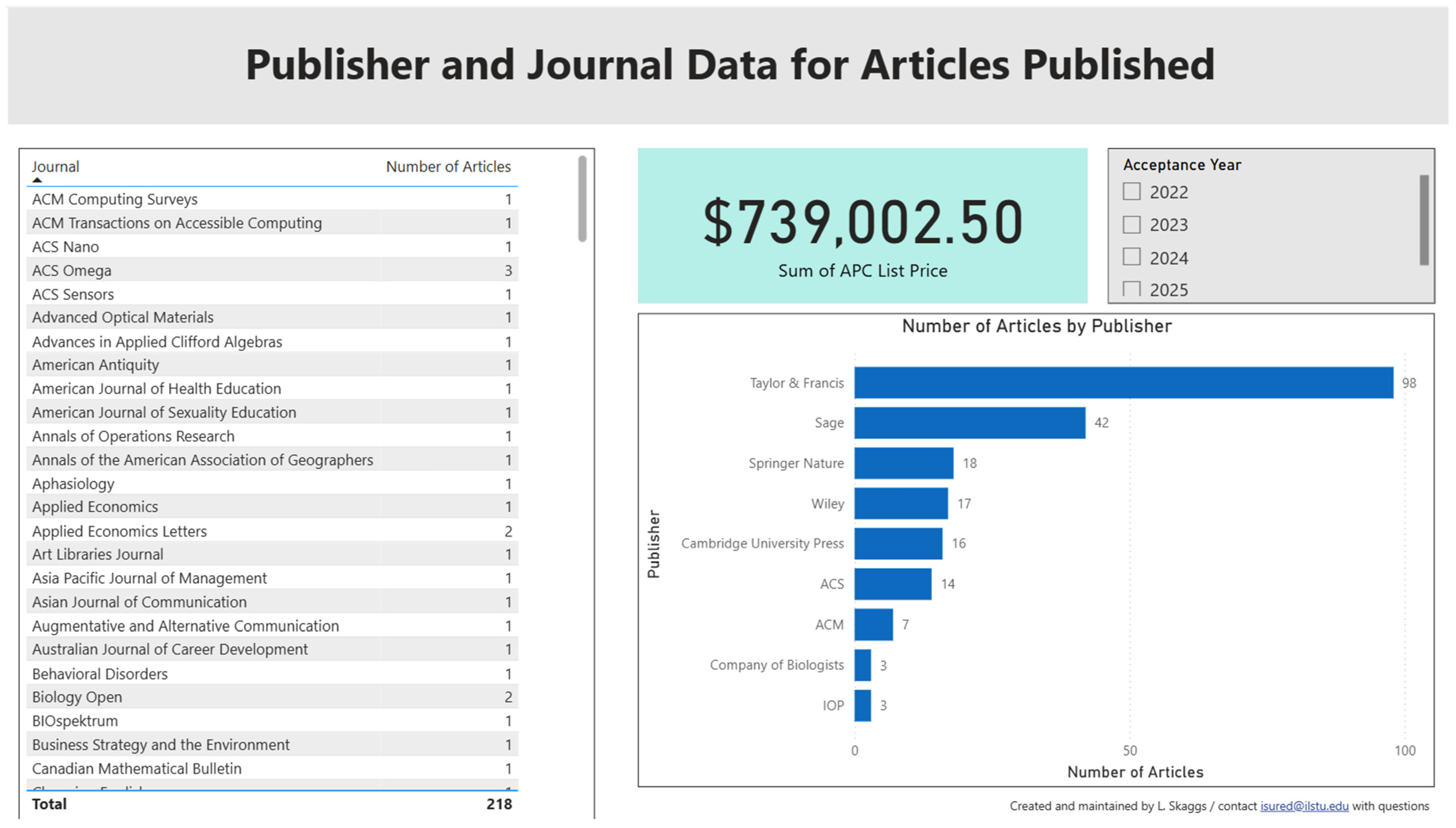
Figure 1. Power-BI Dashboard created by Assistant Professor and Scholarly Communication Librarian Lindsey Skaggs.
Publications 14 00010 g001
Figure 2. ISU-Affiliated Articles Published 2016–2025.
Publications 14 00010 g002
Figure 3. ISU-Affiliated Article Citations, 2016–2025.
Publications 14 00010 g003
Figure 4. Web of Science Categories represented in ISU articles published in 2016.
Publications 14 00010 g004
Figure 5. Web of Science Categories represented in ISU articles published in 2024.
Publications 14 00010 g005
Table 1. ORGS Publication/Subvention Expenses by Fiscal Year.
Fiscal YearCountPublication SupportCountBook SubventionTotal
FY1920$3268.006$3368.30$6636.30
FY2027$4948.915$2144.00$7092.91
FY2125$4624.536$3309.50$7934.03
FY2218$3773.736$2875.00$6648.73
FY2323$4811.002$747.05$5558.05
FY2424$6196.505$1550.00$7746.50
FY2530$7707.396$3886.60$11,593.99
Table 2. ISU Authored Journal Articles in Web of Science.
2016201720182019202020212022202320242025
All ISU Authored Articles303393350499495488394382395402
All ISU Article Citations18164313862564418757836949719386279416
OA ISU Authored Articles758276102124145125141202192
OA ISU Article Citations89276532853128717832381246430603695
Disclaimer/Publisher’s Note: The statements, opinions and data contained in all publications are solely those of the individual author(s) and contributor(s) and not of MDPI and/or the editor(s). MDPI and/or the editor(s) disclaim responsibility for any injury to people or property resulting from any ideas, methods, instructions or products referred to in the content.