
Open Educational Resources (OERs) at European Higher Education Institutions in the Field of Library and Information Science during COVID-19 Pandemic


Abstract
1. Introduction and Theoretical Background
- Raising awareness of the role and importance of OERs in higher education,
- Encouraging the development of higher education policies and strategies that support the use and development of OERs during crisis situations and in general,
- Identifying critical success factors regarding OER implementation, testing these factors via case studies, and implementing them in practice,
- Emphasizing the necessity for DE and OERs ongoing optimization according to the dynamics and changing nature of education in crisis situations,
- Encouraging the adoption of OERs in LIS subject areas in which they are largely overlooked,
- Gaining insight into different methods for enhancing opportunities to create high-quality OERs and increase their availability,
- Building the appropriate framework for apprenticeship during crisis situations, and
- Contributing to the future of higher education in crisis situations in general.
- IO1—Survey of the use and policy-making documents on OERs at European HEIs during the COVID-19 crisis. The aim was to investigate the strategies that HEIs adopted in relation to innovation objectives in making OERs better used during the crisis and otherwise.
- IO2—Appraisal of digital education and quality perception by students, teachers, and trainers at the partner HEIs during the COVID-19 crisis. The aim was to gain insights about the attitudes of students and teachers/trainers towards DE and OERs, mainly during the COVID-19 crisis, compared to their pre-pandemic experiences.
- IO3—A list of critical success factors and their typological classification for the evaluation of OERs. The aim was to prepare a list of critical success factors to assess the quality of existing OERs and to present a typological classification for the evaluation of OERs’ quality.
- IO4—Case study on how the critical success factors work in practice. The aim was to map the success factors to the practices at partner HEIs through case studies at each partner HEI.
- IO5—Optimization of OERs. The aim was for the DECriS consortium to apply the success factors to the existing OERs from the EINFOSE project (http://einfose.ffos.hr, accessed on 27 May 2023) to improve them and test how the success factors could be applied in practice.
- IO6—Apprenticeship framework for crisis situations. The aim was to explore how the HEIs organized apprenticeship and fieldwork during the crisis and how these could be improved in an online setting.
[…] learning, teaching, and research materials in any format and medium that reside in the public domain or are under copyright that have been released under an open license, permitting no-cost access, re-use, re-purposing, adaptation, and redistribution by others [7].
[…] the practice and culture that draws upon open technologies and high-quality OERs to facilitate collaborative and flexible learning. This may involve student participation in online peer production communities within activities intended to support learning, or more broadly, any context where access to educational opportunities through freely available online content and services is the norm [14].
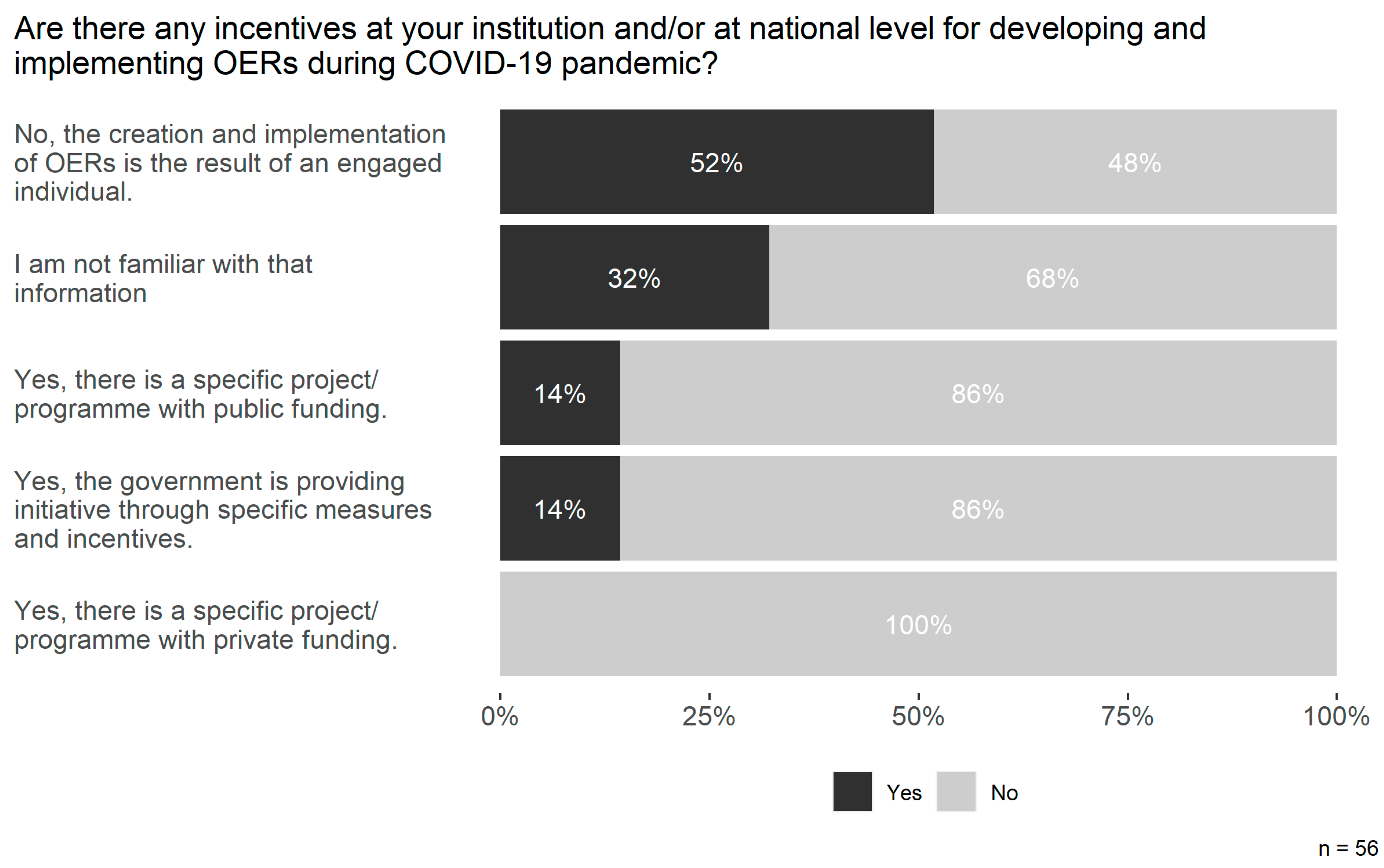
1.1. Institutional and National Incentives for Developing and Implementing OERs
1.2. Institutional Policy Regarding OERs
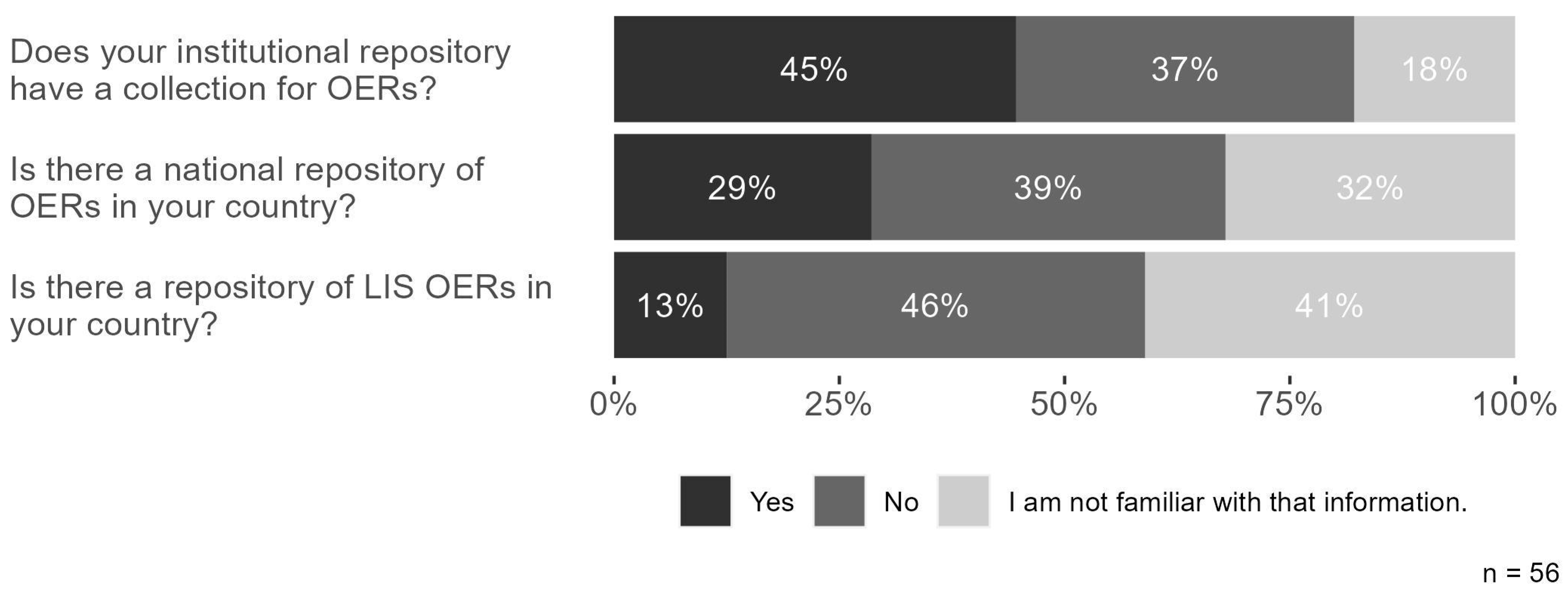
1.3. OER Repositories
1.4. Searching and Finding OERs
1.5. OER Evaluation and Peer-Review
1.6. Adopting, Implementing and Using OERs
1.7. Curation and Management of OERs
1.8. Software and OERs
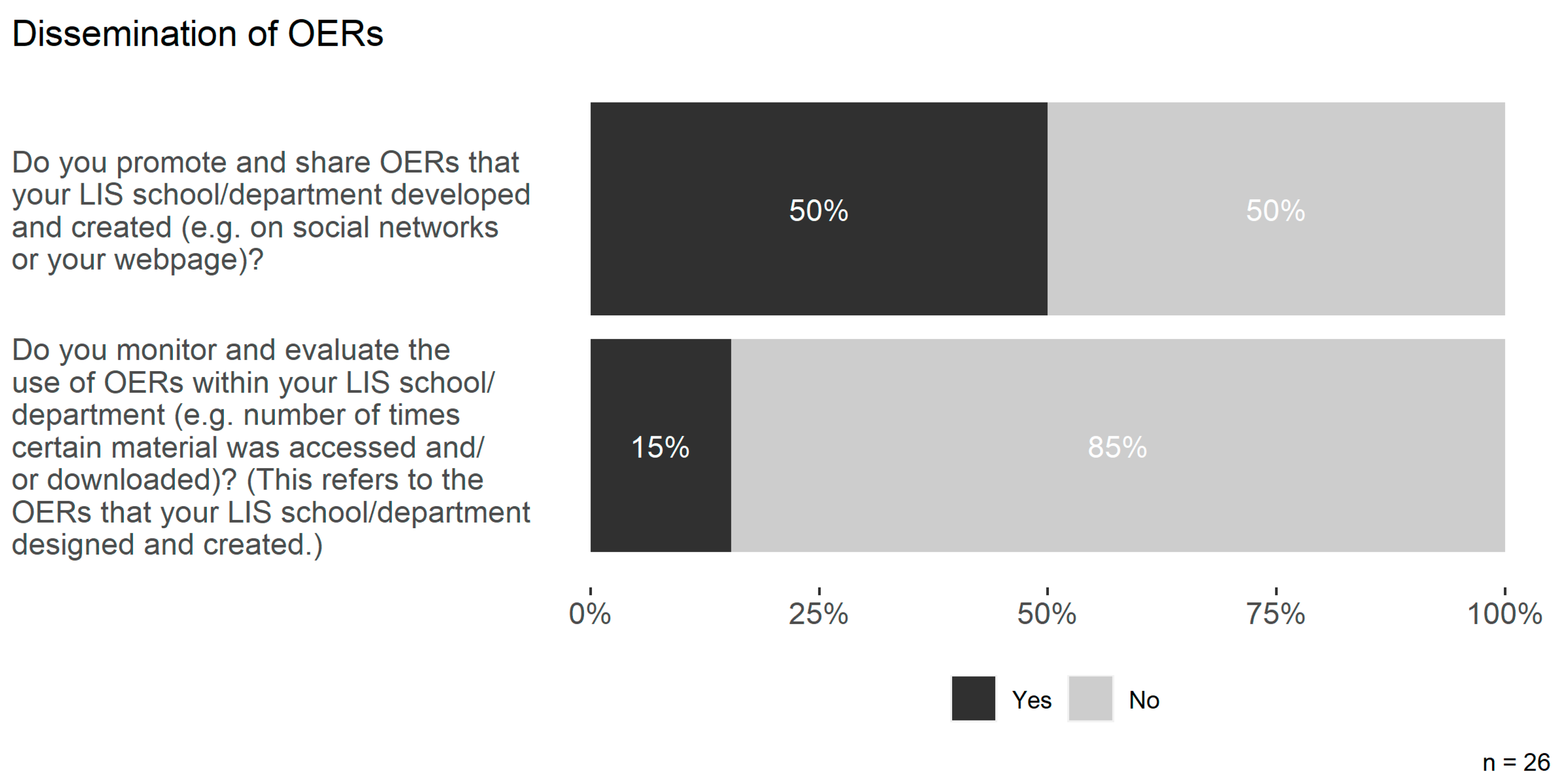
1.9. Promoting and Sharing OERs
1.10. (Academic) Libraries and Adoption of OERs
1.11. OERs and LIS
2. Materials and Methods
2.1. Participants
2.2. Material
- The implementation of DE during the COVID-19 pandemic,
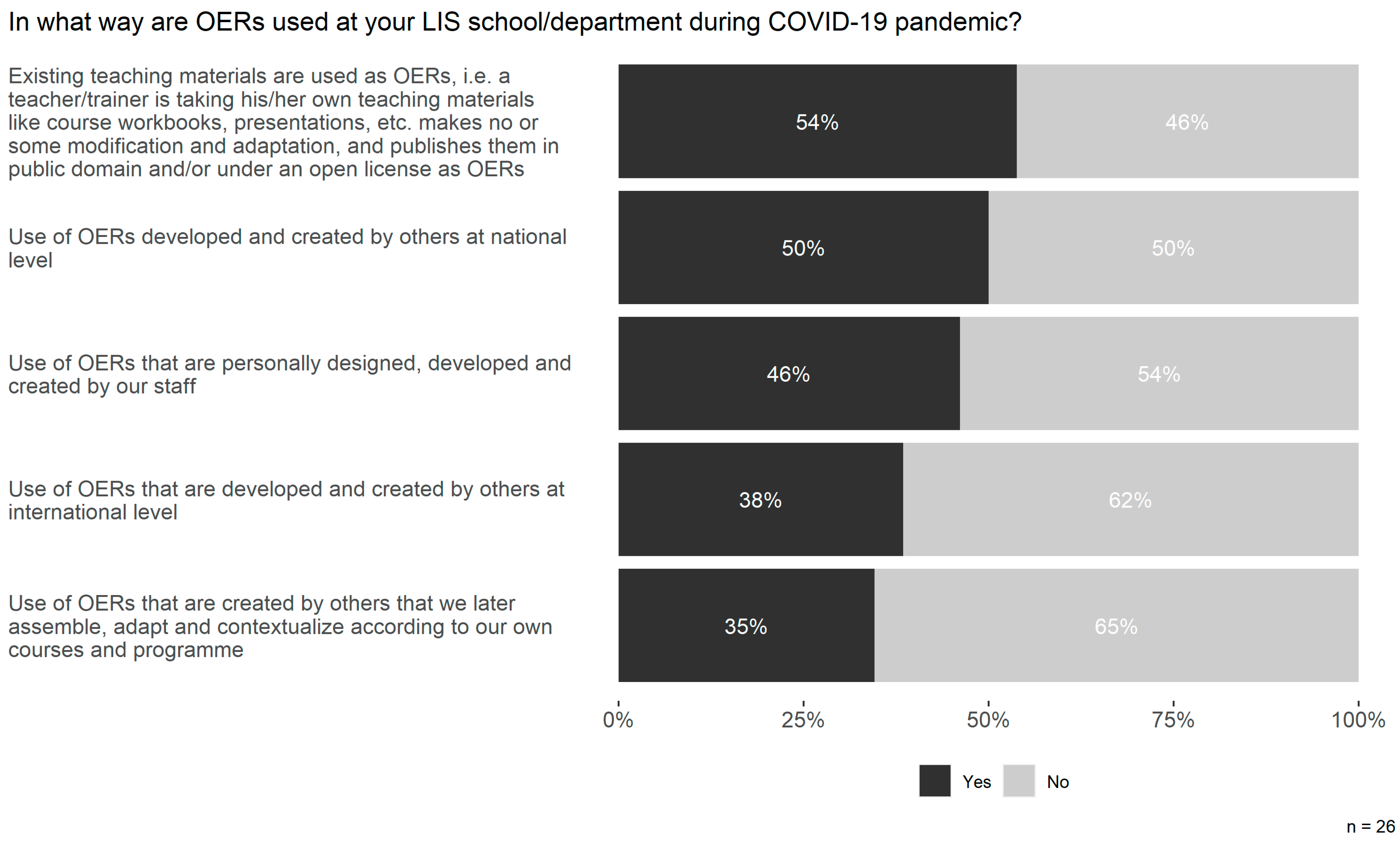
- The implementation and modes of use of OERs during the COVID-19 pandemic,
- Institutional support provided to LIS schools/departments regarding both DE and OERs during the COVID-19 pandemic.
2.3. Research Questions
- What is the current situation regarding the implementation of OERs in the context of the COVID-19 pandemic, specifically in the field of LIS? This includes the issue of institutional and national incentives and policies regarding OERs.
- What are the primary reasons for not using OERs, and what factors would contribute to their future use?
- What are the main reasons for developing, adapting, or using OERs, and which factors contribute to their implementation in the curriculum?
- Which aspects of OERs have been successfully implemented, and which aspects need further development and improvement? The aspects examined include searching for and finding OERs, monitoring, evaluating and peer-reviewing OERs, curating and managing OERs, promoting and sharing OERs, publishing and licensing OERs, and software issues.
- What role do libraries play in developing, adapting, or using OERs in higher education in the field of LIS?
- What impact do OERs have on higher education in the field of LIS?
2.4. Procedure
2.5. Results
3. Results
4. Discussion
5. Concluding Remarks
Supplementary Materials
Author Contributions
Funding
Data Availability Statement
Acknowledgments
Conflicts of Interest
References
- Digital Education for Crisis Situations: Times When There Is No Alternative. Available online: https://decris.ffos.hr/ (accessed on 27 May 2023).
- Wiley, D.; Gurrell, S. A decade of development. Open Learn. J. Open Distance E-Learn. 2009, 24, 11–21. [Google Scholar] [CrossRef] [Scilit]
- Peter, S.; Deimann, M. On the role of openness in education: A historical reconstruction. Open Prax. 2013, 5, 7–14. [Google Scholar] [CrossRef] [Scilit]
- DeRosa, R.; Jhangiani, R. Open Pedagogy. In A Guide to Making Open Textbooks with Students; Mays, E., Ed.; The Rebus Community for Open Textbook Creation: Montreal, QC, Canada, 2017; pp. 7–20. [Google Scholar]
- Open Society Institute; Shuttleworth Foundation. The Cape Town Open Education Declaration. Available online: https://www.capetowndeclaration.org/read/ (accessed on 27 May 2022).
- UNESCO. The Paris OER Declaration 2012. Available online: https://en.unesco.org/oer/paris-declaration (accessed on 27 May 2022).
- UNESCO. Recommendation on Open Educational Resources (OER). Available online: https://www.unesco.org/en/legal-affairs/recommendation-open-educational-resources-oer (accessed on 24 May 2022).
- Hilton, J.L.; Wiley, D.; Stein, J.; Johnson, A. The four ‘R’s of openness and ALMS analysis: Frameworks for open educational resources. Open Learn. J. Open Distance e-Learn. 2010, 25, 37–44. [Google Scholar] [CrossRef] [Scilit]
- Wiley, D.; Bliss, T.J.; McEwen, M. Open Educational Resources: A Review of the Literature. In Handbook of Research on Educational Communications and Technology; Spector, J.M., Merrill, M.D., Elen, J., Bishop, M.J., Eds.; Springer: New York, NY, USA, 2014; pp. 781–789. [Google Scholar]
- Wiley, D. The Access Compromise and the 5th R. Available online: https://opencontent.org/blog/archives/3221 (accessed on 24 May 2022).
- Sabadie, J.M.A.; Muñoz, J.C.; Punie, Y.; Redecker, C.; Vuorikari, R. OER: A European policy perspective. J. Interact. Media Educ. 2014, 2014, 5. [Google Scholar] [CrossRef] [Scilit]
- Inamorato Dos Santos, A.; Punie, Y.; Castaño Muñoz, J. Opening Up Education: A Support Framework for Higher Education Institutions; Publications Office of the European Union: Luxembourg, 2016.
- UNESCO & Commonwealth of Learning. Guidelines for Open Educational Resources (OER) in Higher Education; UNESCO COL: Paris, France, 2015; p. 2. [Google Scholar]
- Cronin, C. Openness and Praxis: Exploring the Use of Open Educational Practices in Higher Education. Int. Rev. Res. Open Distrib. Learn. 2017, 18, 1–21. [Google Scholar] [CrossRef] [Scilit]
- Commonwealth of Learning. Open Educational Resources in the Commonwealth 2021; Commonwealth of Learning (COL): Burnaby, BC, Canada, 2022. [Google Scholar]
- Meng, X.; Cui, C.; Wang, X. Looking Back Before We Move Forward: A Systematic Review of Research on Open Educational Resources. In Proceedings of the Ninth International Conference of Educational Innovation through Technology (EITT), Porto, Portugal, 13–17 December 2020; pp. 92–96. [Google Scholar]
- Tlili, A.; Burgos, D.; Huang, R.; Mishra, S.; Sharma, R.C.; Bozkurt, A. An Analysis of Peer-Reviewed Publications on Open Educational Practices (OEP) from 2007 to 2020: A Bibliometric Mapping Analysis. Sustainability 2021, 13, 10798. [Google Scholar] [CrossRef] [Scilit]
- Mishra, M.; Dash, M.K.; Sudarsan, D.; Santos, C.A.G.; Mishra, S.K.; Kar, D.; Bhat, I.A.; Panda, B.K.; Sethy, M.; Silva, R.M.d. Assessment of trend and current pattern of open educational resources: A bibliometric analysis. J. Acad. Librariansh. 2022, 48, 102520. [Google Scholar] [CrossRef] [Scilit]
- Belikov, O.M.; Bodily, R. Incentives and barriers to OER adoption: A qualitative analysis of faculty perceptions. Open Prax. 2016, 8, 235–246. [Google Scholar] [CrossRef] [Scilit]
- Katz, S.; Van Allen, J. Evolving into the Open: A Framework for Collaborative Design of Renewable Assignments. In Open Pedagogy Approaches; Davies Hoffman, K., Clifton, A., Eds.; Milne Publishing: New York, NY, USA, 2020. [Google Scholar]
- Nagashima, T.; Hrach, S. Motivating Factors among University Faculty for Adopting Open Educational Resources: Incentives Matter. J. Interact. Media Educ. 2021, 2021, 19. [Google Scholar] [CrossRef] [Scilit]
- UNESCO. COVID-19 Crisis: UNESCO Call to Support Learning and Knowledge Sharing through Open Educational Resources. Available online: https://www.unesco.org/en/articles/covid-19-crisis-unesco-call-support-learning-and-knowledge-sharing-through-open-educational (accessed on 10 June 2022).
- Van Allen, J.; Katz, S. Teaching with OER during pandemics and beyond. J. Multicult. Educ. 2020, 14, 209–218. [Google Scholar] [CrossRef] [Scilit]
- Zhang, X.; Tlili, A.; Huang, R.; Chang, T.; Burgos, D.; Yang, J.; Zhang, J. A Case Study of Applying Open Educational Practices in Higher Education during COVID-19: Impacts on Learning Motivation and Perceptions. Sustainability 2020, 12, 9129. [Google Scholar] [CrossRef] [Scilit]
- Doi, C.; Lucky, S.; Rubin, J. Open Educational Resources in the Time of COVID-19: Two Case Studies of Open Video Design in the Remote Learning Environment. KULA Knowl. Creat. Dissem. Preserv. Stud. 2022, 6, 1–15. [Google Scholar] [CrossRef] [Scilit]
- Tlili, A.; Nascimbeni, F.; Burgos, D.; Zhang, X.; Huang, R.; Chang, T.-W. The evolution of sustainability models for Open Educational Resources: Insights from the literature and experts. Interact. Learn. Environ. 2023, 31, 1421–1436. [Google Scholar] [CrossRef] [Scilit]
- Miao, F.; Mishra, S.; Orr, D.; Janssen, B. Guidelines on the Development of Open Educational Resources Policies; UNESCO COL: Paris, France; Burnaby, BC, Canada, 2019. [Google Scholar]
- Stevens, J.; Bradbury, S.; Hutley, S. Open Education in Practice—How Policy Can Lead to Positive Change. J. Aust. Libr. Inf. Assoc. 2017, 66, 249–258. [Google Scholar] [CrossRef] [Scilit]
- Skidmore, J.M.; Provida, M. A Place for Policy: The Role of Policy in Supporting Open Educational Resources and Practices at Ontario’s Colleges and Universities; eCampus Ontario: Toronto, ON, Canada, 2019. [Google Scholar]
- Allen, N.; Browne, D.; Forward, M.L.; Green, C.; Tarkowski, A. Foundation for OER Strategy Development. Available online: http://www.oerstrategy.org/home/read-the-doc/ (accessed on 1 June 2022).
- Santos-Hermosa, G.; Ferran-Ferrer, N.; Abadal, E. Repositories of Open Educational Resources: An Assessment of Reuse and Educational Aspects. Int. Rev. Res. Open Distrib. Learn. 2017, 18, 84–120. [Google Scholar] [CrossRef] [Scilit]
- Altaher, A.; Khomsi, A.; Khashkusha, A.; Madi, H. Quality Evaluation of Open Educational Resources based on Academic and Technical Aspects: State of the Art Review. J. Pure Appl. Sci. 2020, 19, 32–36. [Google Scholar] [CrossRef]
- Singh, S. Role of National Digital Library of India (NDLI) for facilitating open access resources (OARs): An investigation on COVID-19 research repository. Digit. Libr. Perspect. 2022, 38, 493–507. [Google Scholar] [CrossRef] [Scilit]
- Kalz, M.; Drachsler, H.; van Bruggen, J.; Hummel, H.; Koper, R. Wayfinding Services for Open Educational Practices. Int. J. Emerg. Technol. Learn. 2008, 3, 24–28. [Google Scholar] [CrossRef]
- Wenk, B. Open educational resources (OER) inspire teaching and learning. In Proceedings of the IEEE EDUCON 2010 Conference, Madrid, Spain, 14–16 April 2010; pp. 435–442. [Google Scholar]
- Luo, T.; Hostetler, K.; Freeman, C.; Stefaniak, J. The power of open: Benefits, barriers, and strategies for integration of open educational resources. Open Learn. J. Open Distance E-Learn. 2020, 35, 140–158. [Google Scholar] [CrossRef] [Scilit]
- Shank, J.D. Interactive Open Educational Resources: A Guide to Finding, Choosing, and Using What’s Out There to Transform College Teaching; Jossey-Bass: San Francisco, CA, USA, 2014. [Google Scholar]
- Butcher, N.; Moore, A. Understanding Open Educational Resources; Commonwealth of Learning: Vancuver, BC, Canada, 2015; p. 50. [Google Scholar]
- Grégoire, R.; Youga Dieng, P. OER Trainer’s Guide v 1.1: Competency Framework Open Educational Resources; Organisation Internationale de la Francophonie: Paris, France, 2016. [Google Scholar]
- Clements, K.I.; Pawlowski, J.M. User-oriented quality for OER: Understanding teachers’ views on re-use, quality, and trust. J. Comput. Assist. Learn. 2012, 28, 4–14. [Google Scholar] [CrossRef] [Scilit]
- Gordillo, A.; López-Fernández, D.; Verbert, K. Examining the Usefulness of Quality Scores for Generating Learning Object Recommendations in Repositories of Open Educational Resources. Appl. Sci. 2020, 10, 4638. [Google Scholar] [CrossRef] [Scilit]
- Marín, V.I.; Zawacki-Richter, O.; Aydin, C.H.; Bedenlier, S.; Bond, M.; Bozkurt, A.; Conrad, D.; Jung, I.; Kondakci, Y.; Prinsloo, P.; et al. Faculty perceptions, awareness and use of open educational resources for teaching and learning in higher education: A cross-comparative analysis. Res. Pract. Technol. Enhanc. Learn. 2022, 17, 11. [Google Scholar] [CrossRef] [Scilit]
- Baas, M.; van der Rijst, R.; Huizinga, T.; van den Berg, E.; Admiraal, W. Would you use them? A qualitative study on teachers’ assessments of open educational resources in higher education. Internet High. Educ. 2022, 54, 2–14. [Google Scholar] [CrossRef] [Scilit]
- Almendro, D.; Silveira, I.F. Quality Assurance for Open Educational Resources: The OERTrust Framework. Int. J. Learn. Teach. Educ. Res. 2018, 17, 1–14. [Google Scholar] [CrossRef] [Scilit]
- Atenas, J.; Havemann, L. Questions of quality in repositories of open educational resources: A literature review. Res. Learn. Technol. 2014, 22, 20889. [Google Scholar] [CrossRef] [Scilit]
- Camilleri, A.; Ehlers, U.; Pawlowski, J. State of the Art Review of Quality Issues Related to Open Educational Resources (OER); Publications Office: Luxemburg, 2014. [Google Scholar]
- Güler, C.; Altun, A. Teacher Trainees as Learning Object Designers: Problems and Issues in Learning Object Development Process. Turk. Online J. Educ. Technol. 2010, 9, 118–127. [Google Scholar]
- Custard, M.; Sumner, T. Using Machine Learning to Support Quality Judgments. D-Lib Mag. 2005, 11, 1082–9873. [Google Scholar] [CrossRef] [Scilit]
- Hylén, J. Open Educational Resources: Opportunities and Challenges; OECD’s Centre for Educational Research and Innovation: Paris, France, 2006. [Google Scholar]
- McGreal, R. Creating, Using and Sharing Open Educational Resources; Commonwealth of Learning: Vancuver, BC, Canada, 2013. [Google Scholar]
- OECD. Giving Knowledge for Free: The Emergence of Open Educational Resources; OECD Publishing: Paris, France, 2007. [Google Scholar]
- Villavicencio, M.; Revelo, H.V.; Pincay, J. Towards the evaluation of open educational resources for learning software engineering. In Proceedings of the 2016 XLII Latin American Computing Conference (CLEI), Valparaiso, Chile, 10–14 October 2016; pp. 1–9. [Google Scholar]
- Leacock, T.L.; Nesbit, J.C. A Framework for Evaluating the Quality of Multimedia Learning Resources. J. Educ. Technol. Soc. 2007, 10, 44–59. [Google Scholar]
- Kawachi, P. Quality Assurance Guidelines for Open Educational Resources: TIPS Framework; Commonwealth Educational Media Centre for Asia: New Delhi, India, 2014. [Google Scholar]
- Yuan, M.; Recker, M. Not All Rubrics Are Equal: A Review of Rubrics for Evaluating the Quality of Open Educational Resources. Int. Rev. Res. Open Distrib. Learn. 2015, 16, 16–38. [Google Scholar] [CrossRef] [Scilit]
- Ward, E.J.; Lindshield, B.L. Performance, behaviour and perceptions of an open educational resource-derived interactive educational resource by online and campus university students. Res. Learn. Technol. 2020, 28, 1–18. [Google Scholar] [CrossRef] [Scilit]
- Hilton, J. Open educational resources, student efficacy, and user perceptions: A synthesis of research published between 2015 and 2018. Educ. Technol. Res. Dev. 2020, 68, 853–876. [Google Scholar] [CrossRef] [Scilit]
- Hollister, C. Using Open Pedagogy to Engage LIS Students: A Case Study. J. Librariansh. Sch. Commun. 2020, 8, 2357. [Google Scholar] [CrossRef] [Scilit]
- Cozart, D.; Horan, E.M.; Frome, G. Rethinking the Traditional Textbook. Teach. Learn. Inq. 2021, 9, 1–17. [Google Scholar] [CrossRef] [Scilit]
- McGreal, R. A Survey of OER Implementations in 13 Higher Education Institutions. Int. Rev. Res. Open Distrib. Learn. 2019, 20, 141–145. [Google Scholar] [CrossRef] [Scilit]
- Lee, D.; Lee, E. International perspectives on using OER for online learning. Educ. Technol. Res. Dev. 2021, 69, 383–387. [Google Scholar] [CrossRef] [Scilit]
- Kelly, H. Learning Everywhere: Open Educational Resources in the COVID-19 Era. Available online: https://www.calstate.edu/csu-system/news/Pages/OER-Helps-COVID-Era.aspx (accessed on 23 June 2023).
- Rolfe, V. Open educational resources: Staff attitudes and awareness. Res. Learn. Technol. 2012, 20, 1–13. [Google Scholar] [CrossRef] [Scilit]
- Allen, I.E.; Seaman, J. Opening the Curriculum: Open Educational Resources in U.S. Higher Education; Babson Survey Research Group: Boston MA, USA, 2014; pp. 1–42. [Google Scholar]
- Allen, T. Awareness and Future Use of Open Educational Resources by Music Faculty. Update Appl. Res. Music Educ. 2023, 41, 48–59. [Google Scholar] [CrossRef] [Scilit]
- Christoforidou, A.; Georgiadou, E. Awareness and Use of OER by Higher Education Students and Educators within the Graphic Arts Discipline in Greece. Educ. Sci. 2022, 12, 16. [Google Scholar] [CrossRef] [Scilit]
- Friesen, N. Open Educational Resources: New Possibilities for Change and Sustainability. Int. Rev. Res. Open Distrib. Learn. 2009, 10, 1–13. [Google Scholar] [CrossRef] [Scilit]
- Murphy, A. Open educational practices in higher education: Institutional adoption and challenges. Distance Educ. 2013, 34, 201–217. [Google Scholar] [CrossRef] [Scilit]
- Windle, R.J.; Wharrad, H.; McCormick, D.; Laverty, H.; Taylor, M.G. Sharing and reuse in OER: Experiences gained from open reusable learning objects in health. J. Interact. Media Educ. 2010, 2010, 4. [Google Scholar] [CrossRef] [Scilit]
- Yang, Z.Y.; Li, Y. University Faculty Awareness and Attitudes towards Open Access Publishing and the Institutional Repository: A Case Study. J. Librariansh. Sch. Commun. 2015, 3, eP1210. [Google Scholar] [CrossRef] [Scilit]
- Ozdemir, O.; Bonk, C. Turkish Teachers’ Awareness and Perceptions of Open Educational Resources. J. Learn. Dev. 2017, 4, 307–321. [Google Scholar] [CrossRef] [Scilit]
- Mishra, K.; Boland, M.V.; Woreta, F.A. Incorporating a virtual curriculum into ophthalmology education in the coronavirus disease-2019 era. Curr. Opin. Ophthalmol. 2020, 31, 380–385. [Google Scholar] [CrossRef] [Scilit]
- Saadeh, K.; Henderson, V.; Paramasivam, S.J.; Jeevaratnam, K. To what extent do preclinical veterinary students in the UK utilize online resources to study physiology. Adv. Physiol. Educ. 2021, 45, 160–171. [Google Scholar] [CrossRef] [Scilit] [PubMed]
- Gerard, L.; Wiley, K.; Debarger, A.H.; Bichler, S.; Bradford, A.; Linn, M.C. Self-directed Science Learning During COVID-19 and Beyond. J. Sci. Educ. Technol. 2022, 31, 258–271. [Google Scholar] [CrossRef] [Scilit]
- Molera, L.; Sánchez-Alcázar, E.J.; Faura-Martínez, Ú.; Lafuente-Lechuga, M.; Llinares-Ciscar, J.V.; Marín-Rives, J.L.; Martín-Castejón, P.J.; Puigcerver-Peñalver, M.C.; Sánchez-Antón, M.C. Embedding Sustainability in the Economics Degree of the Faculty of Economics and Business of the University of Murcia: A Methodological Approach. Sustainability 2021, 13, 8844. [Google Scholar] [CrossRef] [Scilit]
- Risquez, A.; Mcavinia, C.; Desmond, Y.; Bruen, C.; Ryan, D.; Coughlan, A. Towards a Devolved Model of Management of OER? The Case of the Irish Higher Education Sector. Int. Rev. Res. Open Distrib. Learn. 2020, 21, 99–111. [Google Scholar] [CrossRef] [Scilit]
- Caeiro-Rodríguez, M.; Pérez-Rodríguez, R.; García-Alonso, J.; Manso-Vázquez, M.; Llamas-Nistal, M. AREA: A social curation platform for open educational resources and lesson plans. In Proceedings of the 2013 IEEE Frontiers in Education Conference (FIE), Oklahoma City, OK, USA, 23–26 October 2013; pp. 795–801. [Google Scholar]
- Vuckovic, B.; Martin, C. Free and Open Source Software (FOSS) and OER. In Open Educational Resources: Conversations in Cyberspace; D’Antoni, S., Savage, C., Eds.; UNESCO: Paris, France, 2009; pp. 105–126. [Google Scholar]
- Glennie, J.; Harley, K.; Butcher, N. Conclusion: Reflections on Practice. In Open Educational Resources and Change in Higher Education: Reflections from Practice; Glennie, J., Harley, K., Butcher, N., van Wyk, T., Eds.; Commonwealth of Learning (COL), United Nations Educational, Scientific and Cultural Organization Section for Higher Education (UNESCO): Vancouver, BC, Canada, 2012; pp. 283–290. [Google Scholar]
- Banzato, M. Barriers to teacher educators seeking, creating and sharing open educational resources: An empirical study of the use of OER in education in Italy. In Proceedings of the 2012 15th International Conference on Interactive Collaborative Learning (ICL), Villach, Austria, 26–28 September 2012; pp. 1–6. [Google Scholar]
- Conole, G. Integrating OER into Open Educational Practices. In Open Educational Resources and Change in Higher Education: Reflections from Practice; Glennie, J., Harley, K., Butcher, N., van Wyk, T., Eds.; The Commonwealth of Learning: Vancouver, BC, Canada, 2012; pp. 111–124. [Google Scholar]
- Orr, D.; Rimini, M.; Van Damme, D. Open Educational Resources: A Catalyst for Innovation; OECD: Paris, France, 2015. [Google Scholar]
- van Wyk, T. Taking OER Beyond the OER Community: Policy Issues and Priorities. In Open Educational Resources and Change in Higher Education: Reflections from Practice; Glennie, J., Harley, K., Butcher, N., van Wyk, T., Eds.; The Commonwealth of Learning: Vancouver, BC, Canada, 2012; pp. 13–25. [Google Scholar]
- Stafford, D. Promoting Open Educational Resources: A Beginner’s Playbook. Pa. Libr. Res. Pract. 2020, 8, 103–114. [Google Scholar] [CrossRef] [Scilit]
- Gumb, L. An open impediment: Navigating copyright and OER publishing in the academic library. Coll. Res. Libr. News 2019, 80, 202. [Google Scholar] [CrossRef] [Scilit]
- Seibert, H.; Miles, R.; Geuther, C. Navigating 21st-Century Digital Scholarship: Open Educational Resources (OERs), Creative Commons, Copyright, and Library Vendor Licenses. Ser. Libr. 2019, 76, 103–109. [Google Scholar] [CrossRef] [Scilit]
- Krishnan, M.S. Copyrights in OER publishing in India: The case of the National Programme on Technology-Enhanced Learning. In Open Educational Resources: Policy, Costs and Transformation; Miao, F., Mishra, S., McGreal, R., Eds.; UNESCO COL: Paris, France, 2016; pp. 99–104. [Google Scholar]
- Hess, J.I.; Nann, A.J.; Riddle, K.E. Navigating OER: The Library’s Role in Bringing OER to Campus. Ser. Libr. 2016, 70, 128–134. [Google Scholar] [CrossRef] [Scilit]
- Reed, J.B.; Jahre, B. Reviewing the Current State of Library Support for Open Educational Resources. Collect. Manag. 2019, 44, 232–243. [Google Scholar] [CrossRef] [Scilit]
- Thompson, S.D.; Muir, A. A case study investigation of academic library support for open educational resources in Scottish universities. J. Librariansh. Inf. Sci. 2020, 52, 685–693. [Google Scholar] [CrossRef] [Scilit]
- Essmiller, K.; Thompson, P.; Alvarado-Albertorio, F. Performance Improvement Technology for Building a Sustainable OER Initiative in an Academic Library. TechTrends 2020, 64, 265–274. [Google Scholar] [CrossRef] [Scilit]
- Miller, R.; Homol, L. Building an Online Curriculum Based on OERs: The Library’s Role. J. Libr. Inf. Serv. Distance Learn. 2016, 10, 349–359. [Google Scholar] [CrossRef] [Scilit]
- Goodsett, M.; Loomis, B.; Miles, M. Leading campus OER initiatives through library–faculty collaboration. Coll. Undergrad. Libr. 2016, 23, 335–342. [Google Scholar] [CrossRef] [Scilit]
- George, K.W.; Casey, A.M. Collaboration between Library, Faculty, and Instructional Design to Increase All Open Educational Resources for Curriculum Development and Delivery. Ref. Libr. 2020, 61, 97–112. [Google Scholar] [CrossRef] [Scilit]
- Sweet, C.A.; Clarage, E.C. Library consortia contributing to college affordability: Collection and OER initiatives in the Consortium of Academic and Research Libraries in Illinois. Ref. Serv. Rev. 2020, 48, 433–445. [Google Scholar] [CrossRef] [Scilit]
- Santos-Hermosa, G.; Atenas, J. Building Capacities in Open Knowledge: Recommendations for Library and Information Science Professionals and Schools. Front. Educ. 2022, 7, 866049. [Google Scholar] [CrossRef] [Scilit]
- Hate Vibhavari, B. LIS Professionals on Open Access Educational resources. Int. Res. J. Sci. Eng. 2020, Special Issue A7, 756–761. [Google Scholar]
- Wiche, H.; Ogunbodede, K.F. Awareness and Use of Open Educational Resources by Library and Information Science Students of Ignatius Ajuru University of and Information Science Students of Ignatius Ajuru University of Education, Rivers State, Nigeria Education, Rivers State. Nigeria. Libr. Philos. Pract. (E-J.) 2021, 5373. [Google Scholar]
- Charbonneau, D.H.; Vardell, E. Health sciences librarian research and instruction services in pandemic information environments. J. Acad. Librariansh. 2022, 48, 102553. [Google Scholar] [CrossRef] [Scilit] [PubMed]
- Mery, Y.; Vieger, R.; Zeidman-Karpinski, A. Reuse and Remix: Creating and Adapting Open Educational Tutorials for Information Literacy. Portal Libr. Acad. 2022, 22, 559–569. [Google Scholar] [CrossRef] [Scilit]
- Katz, S. The Case for OER in LIS Education. Libr. Trends 2020, 69, 419–434. [Google Scholar] [CrossRef] [Scilit]
- Bell, S.J. Taking OER to the LIS: Designing and Developing an Open Education Course for Library Science Students. Int. J. Open Educ. Resour. 2021, 4, 61–77. [Google Scholar] [CrossRef] [Scilit]
- Tsabedze, V.w. MOOCs and OER: A Model for Library and Information Science Education. Internet Ref. Serv. Q. 2021, 25, 87–106. [Google Scholar] [CrossRef] [Scilit]
- Seo, G.; Sandy, H.M.; Wilson, G. Open Educational Resources: Barriers and Benefits in LIS Education. In Proceedings of the Library and Information Science Education Annual Conference: ALISE 2019, Knoxville, TN, USA, 24–26 September 2019; pp. 96–100. [Google Scholar]


| Division | Survey Content | Method |
|---|---|---|
| General information | Name of LIS school/department | Open-ended question |
| Position | Open-ended question | |
| Country | Open-ended question | |
| Number of teachers | Numeric value | |
| Number of students | Numeric value | |
| Number of study programmes | Numeric value | |
| Types of study programmes | Selection | |
| Other study programmes | Open-ended question | |
| OERs during COVID 19 pandemic | Availability of national, institutional or LIS OERs repositories during COVID-19 | Yes/No question and Open-ended question |
| Incentives at the institutional and national level for developing and implementing OERs | Multiple selection | |
| Usage of OERs during COVID-19 (The following are conditional questions:) | Yes/No question | |
| Number of courses implemented OERs during COVID-19 | Numeric value | |
| Reasons for not using OERs during COVID-19 | Open-ended question | |
| Institutional motivation and incentives to start using OERs | Open-ended question | |
| Teaching staff motivation and incentives to start using OERs | Yes/No question and Open-ended question | |
| Availability of alternatives to OERs | Multiple selection | |
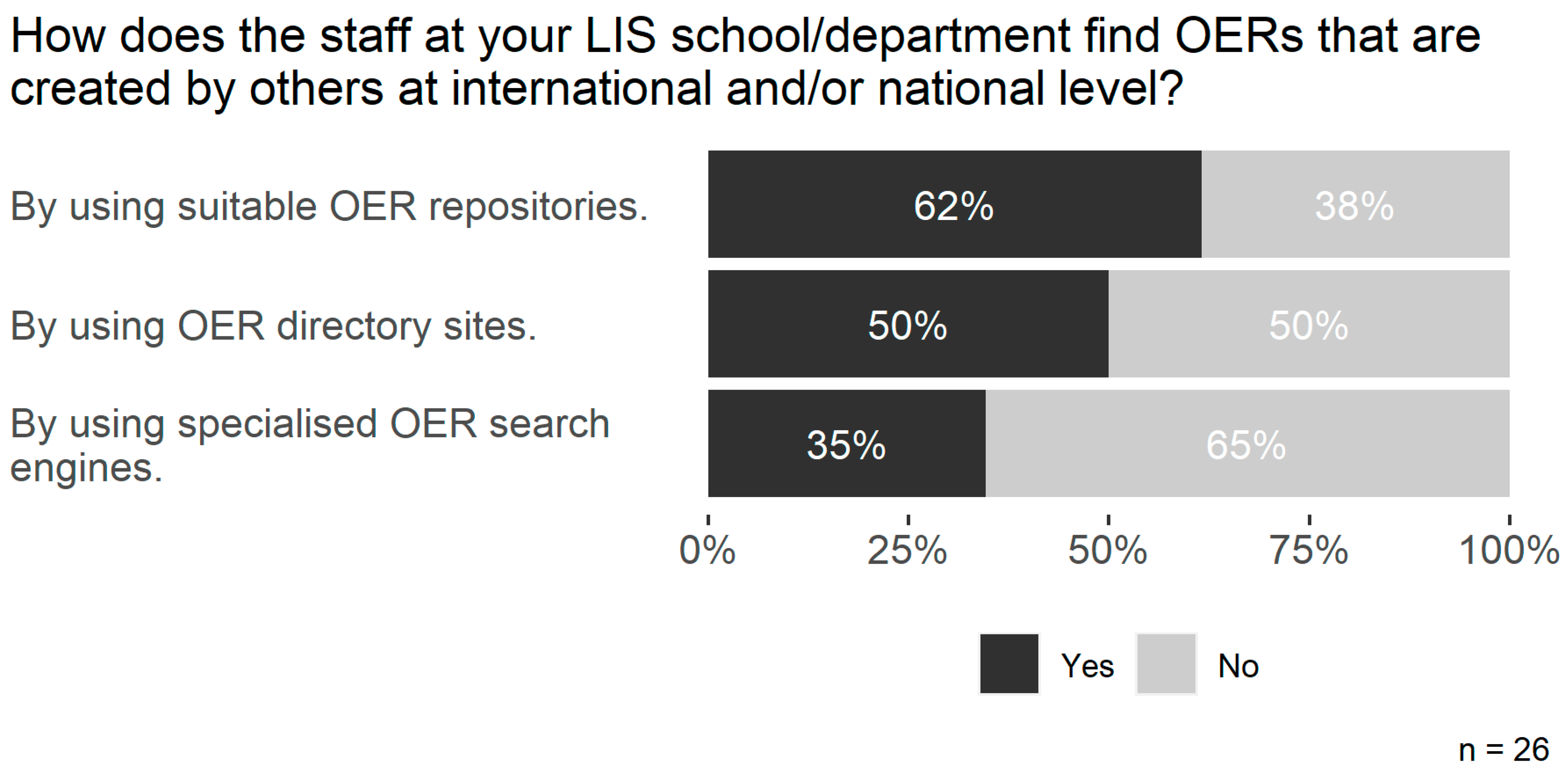
| Ways of finding OERs during COVID-19 by teaching staff | Multiple selection | |
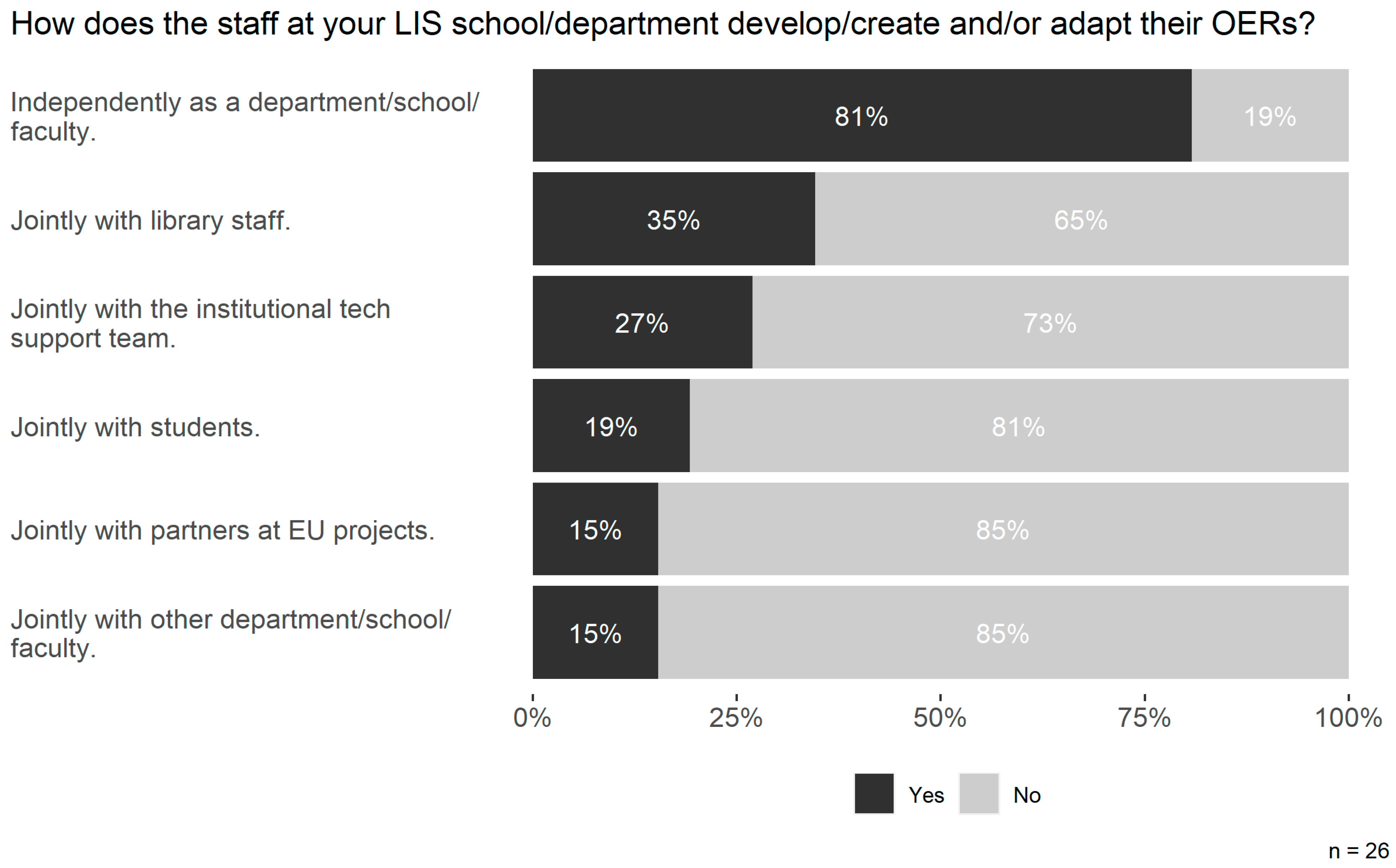
| Ways of developing/creating and/or adapting OERs by teaching staff | Yes/No question | |
| Availability of institutional OER policy | Multiple selection | |
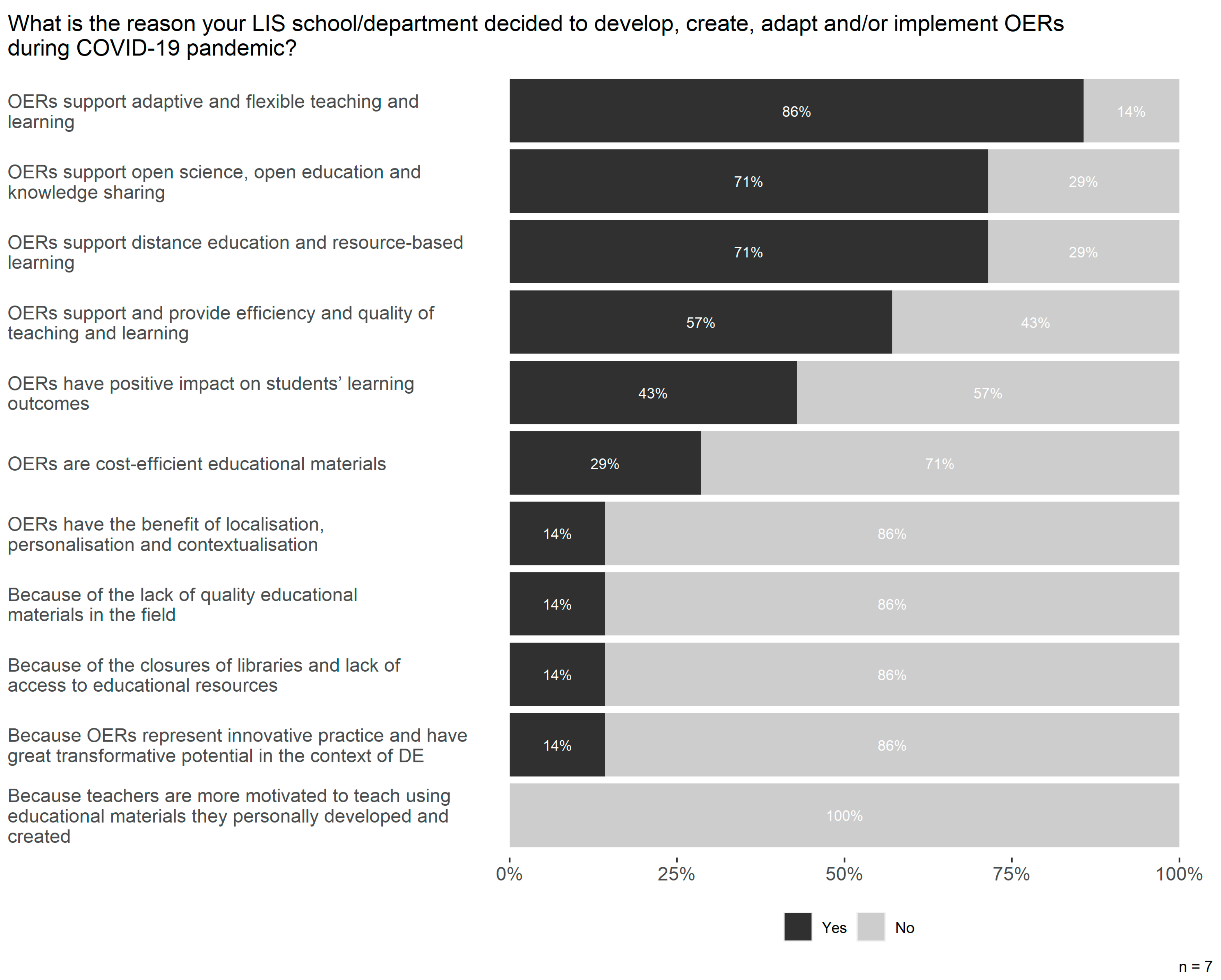
| Reasons to develop, create, adapt and/or implement OERs during COVID-19 | Multiple selection | |
| Ways of ensuring peer-review of OERs | Multiple selection | |
| Responsibility for the curation and management of OERs | Multiple selection and Open-ended question | |
| Software for creation, adoption and management of OERs | Single selection | |
| Ways of publishing OERs | Multiple selection | |
| Collaboration with academic library regarding OERs | Yes/No question | |
| Promoting and sharing OERs | Yes/No question | |
| Monitoring and evaluating the use of OERs | Multiple selection and Open-ended |
Disclaimer/Publisher’s Note: The statements, opinions and data contained in all publications are solely those of the individual author(s) and contributor(s) and not of MDPI and/or the editor(s). MDPI and/or the editor(s) disclaim responsibility for any injury to people or property resulting from any ideas, methods, instructions or products referred to in the content. |
© 2023 by the authors. Licensee MDPI, Basel, Switzerland. This article is an open access article distributed under the terms and conditions of the Creative Commons Attribution (CC BY) license (https://creativecommons.org/licenses/by/4.0/).
Share and Cite
Mićunović, M.; Rako, S.; Feldvari, K. Open Educational Resources (OERs) at European Higher Education Institutions in the Field of Library and Information Science during COVID-19 Pandemic. Publications 2023, 11, 38. https://doi.org/10.3390/publications11030038
Mićunović M, Rako S, Feldvari K. Open Educational Resources (OERs) at European Higher Education Institutions in the Field of Library and Information Science during COVID-19 Pandemic. Publications. 2023; 11(3):38. https://doi.org/10.3390/publications11030038
Chicago/Turabian StyleMićunović, Milijana, Sabina Rako, and Kristina Feldvari. 2023. "Open Educational Resources (OERs) at European Higher Education Institutions in the Field of Library and Information Science during COVID-19 Pandemic" Publications 11, no. 3: 38. https://doi.org/10.3390/publications11030038
APA StyleMićunović, M., Rako, S., & Feldvari, K. (2023). Open Educational Resources (OERs) at European Higher Education Institutions in the Field of Library and Information Science during COVID-19 Pandemic. Publications, 11(3), 38. https://doi.org/10.3390/publications11030038