Article

Association Between the Spheno-Occipital Synchondrosis and Mandibular Condyle Periphery Maturation in Relation to Chronological Age


by
Zanda Bokvalde
1,2,*,
Elizabete Domokejeva
3 and
Laura Neimane
1,2,4
1
Department of Conservative Dentistry, Institute of Stomatology, Riga Stradins University, LV-1007 Riga, Latvia
2
Department of General Dentistry, Riga Stradins University, LV-1007 Riga, Latvia
3
Dental Clinic “Perle”, LV-1069 Riga, Latvia
4
Department of Diagnostic Radiology, Institute of Stomatology, Riga Stradins University, LV-1007 Riga, Latvia
*
Author to whom correspondence should be addressed.
Dent. J. 2026, 14(5), 298; https://doi.org/10.3390/dj14050298
Submission received: 23 March 2026 / Revised: 2 May 2026 / Accepted: 9 May 2026 / Published: 14 May 2026

Abstract

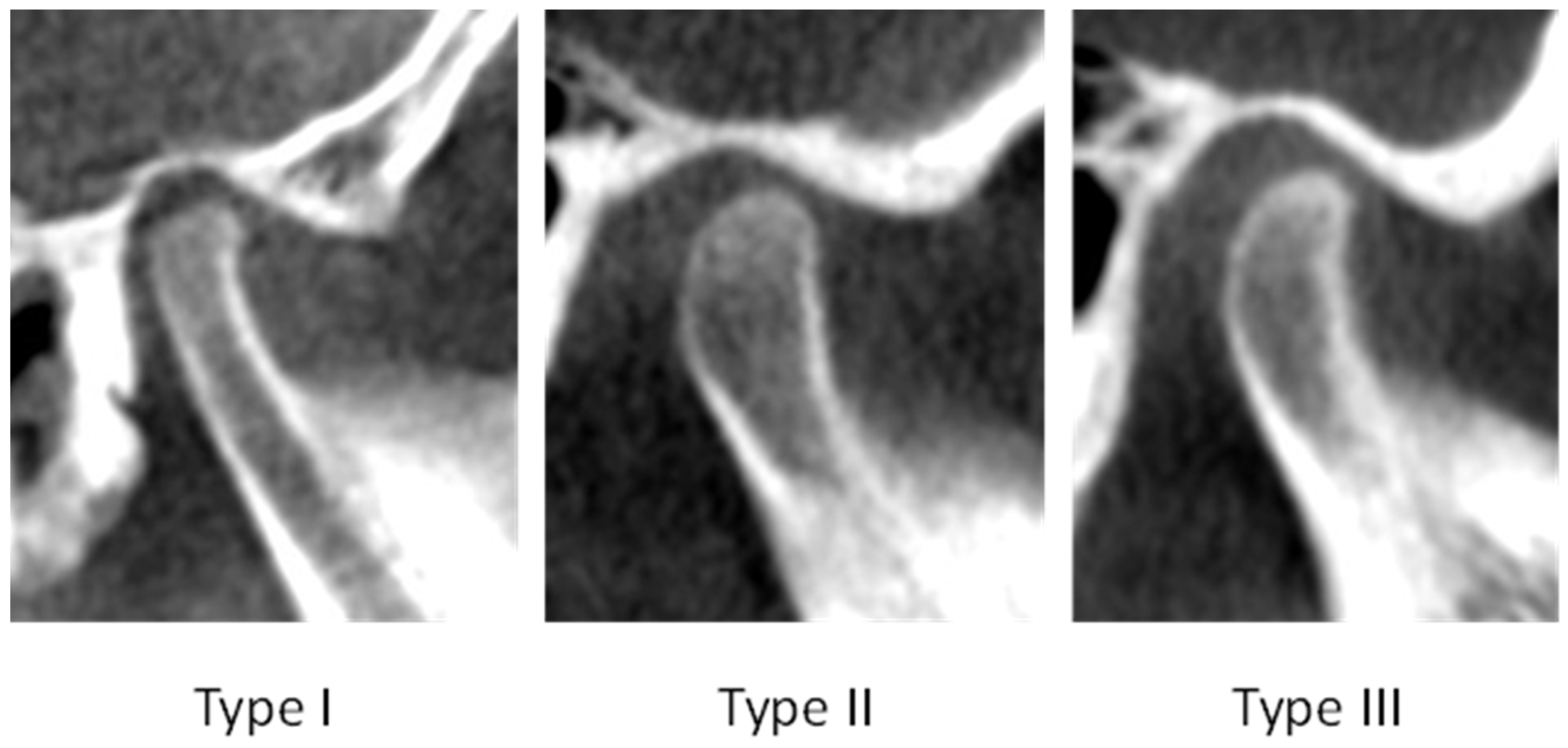
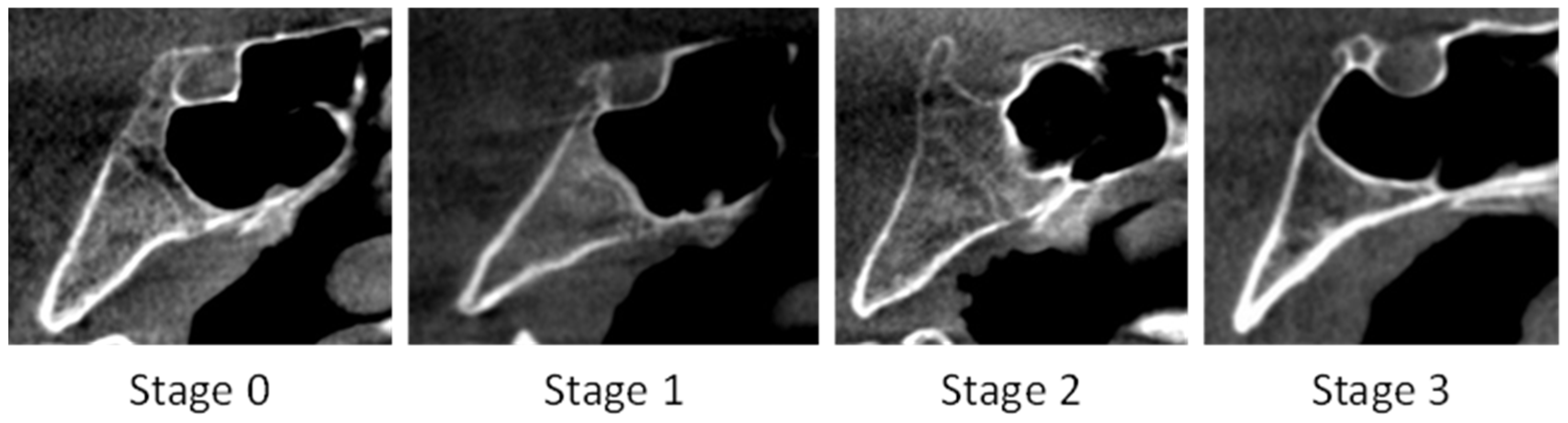
Background: Investigation of craniofacial growth and maturation, particularly of structures such as the spheno-occipital synchondrosis (SOS) and mandibular condyle cortication (MCC), provides valuable insight into late adolescent development. These markers may serve as valuable tools in age assessment, especially in legal and forensic contexts, where accurate determination of the 18-year threshold is critical. In addition, understanding their maturation can support more accurate assessment of skeletal development and improve clinical decision-making in growth-related dental treatments. Methods: This retrospective observational cross-sectional study was conducted to evaluate the stage of SOS and MCC maturation on a group of 230 individuals aged 14–22 years. Data was acquired from the mid-sagittal and sagittal sections of CBCT images representing, respectively, the SOS and the condyles. MCC was assessed bilaterally using a three-type system (Types I–III), and SOS fusion was evaluated using a four-stage system (Stages 0–3). Statistical analysis was performed to evaluate the association and correlation between the variables. Results: The Kruskal–Wallis test showed statistically significant differences in the age distribution of right and left MCC types, as well as SOS fusion stages (p < 0.001). Statistically significant differences were found in age distributions between all four SOS fusion stages in the MCC Type II groups of both condyles in both sexes, as well as Type III groups of the right condyle in both sexes and the left condyle in females (p < 0.001). Statistically significant differences were not observed in the MCC Type I group of the right and left condyle in both sexes and in the Type III group of the left condyle in males (p > 0.05). Spearman’s correlation analysis showed that the correlation between SOS fusion stages and MCC types was positive and statistically significant both between the parameters and with chronological age between sexes (rs = 0.461–0.534, p < 0.001). Conclusions: This study revealed a statistically significant association and correlation between the maturation of the SOS, the MCC and chronological age. Simultaneous MCC Type III and SOS Stage 3 maturation was predominantly observed in individuals aged 18 years or older, although a small number of cases were identified below this threshold. SOS fusion and MCC may serve as skeletal parameters for age assessment; thus, they could be used as an adjunct method in a multifactorial age assessment procedure.
Keywords: mandibular condyle cortication (MCC); spheno-occipital synchondrosis (SOS); cone-beam computed tomography (CBCT); age assessment; craniofacial growth; forensic medicine mandibular condyle cortication (MCC); spheno-occipital synchondrosis (SOS); cone-beam computed tomography (CBCT); age assessment; craniofacial growth; forensic medicine