
Probiotics and Ozonated Olive Oil to Maintain Oral Eubiosis in Stage I and II Periodontitis Patients: A Randomized Triple-Blind Clinical Trial

 , , , ,
  ,
,  and
and 
Abstract
1. Introduction
2. Materials and Methods
2.1. Protocol
- Identification of the reference population: the study included only patients who required professional therapy for periodontal disease, classified as stage 1 or 2 according to the 2017 classification of periodontal diseases [2].
- Randomization: a software (Research Randomizer, by Geoffrey C. Urbaniak and Scott Plous, Version 4.0, available at https://www.randomizer.org, accessed on 8 October 2025) generated a randomization list (A, B, C) provided by the study coordinator that was used to assign patients to the study groups at the end of the active phase.
- Allocation: Individuals involved in the clinical work, as active therapy providers or parameter evaluators, were unaware of the type of treatment administered to the patient. Identical packaging was prepared for mouthwash, toothpaste, and probiotic tablets, identifiable only by barcodes corresponding to the assignment group (A, B, C), which was known only to the study coordinator. Patient assignment was determined by opening the envelope containing the barcode.
- Blinding: A single-blinded investigator/evaluator collected all data for the study. The evaluator could confer with the active therapy provider, provided that the latter remained unaware of the type of product delivered. To ensure blinding, the key to the anonymized products was kept by the study coordinator until the end of the study. Patients were also unaware of their group assignment. The statistician and the sponsor liaison (RE) were not informed of the specific patient group assignments until the study and statistical analysis were completed.
2.2. Sampling
- Male or female, aged between 18 and 70 years, of any race;
- Diagnosis of stage I or II periodontitis according to the American Academy of Periodontology and the European Federation of Periodontology 2017 classification of periodontal diseases;
- Good general health;
- Ability to understand and comprehend the study’s instructions and sign the informed consent form.
- Pregnancy and breastfeeding;
- Periodontal or antibiotic therapy in the last two months;
- Systemic diseases that could influence the severity of periodontal disease or therapeutic success (e.g., Down syndrome, HIV, and Diabetes Mellitus);
- Smoking > 10 cigarettes per day;
- Need for antibiotic prophylaxis for dental procedures;
- Chronic use of anti-inflammatory drugs, calcium channel blockers, antidepressants, and antiepileptics.
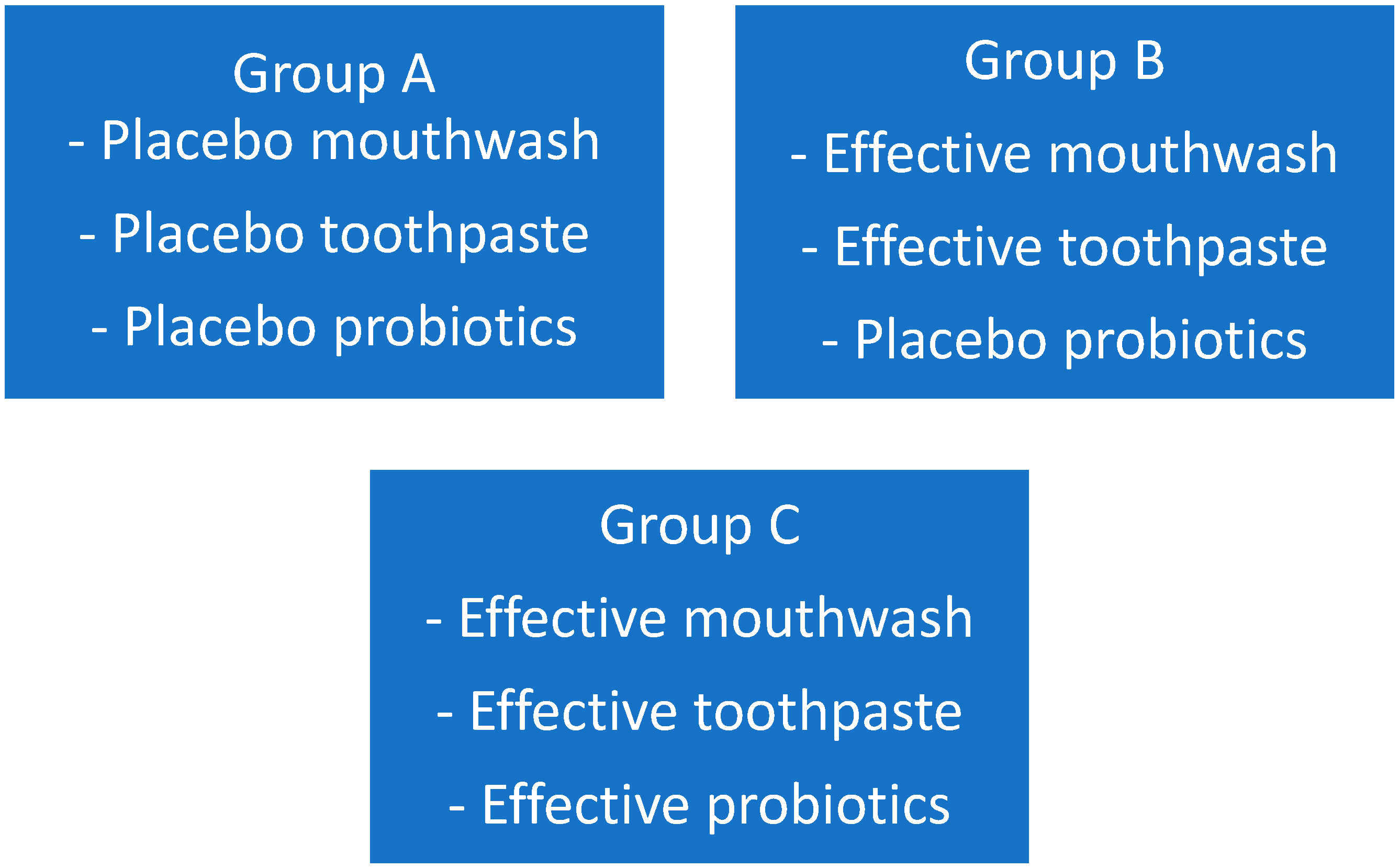
2.3. Arms Description
2.4. Operational Sequence
- T0 Screening Visit: Inclusion and exclusion criteria were identified. During this visit, the demographic variables were recorded in the first periodontal chart. If the patient can be enrolled, they will receive standardized domiciliary oral hygiene instructions. Toothbrushes and interdental brushes were Curasept Soft 012® and Curasept Proxi® (Curasept, Saronno, 21047, Italy), respectively. Clinicians took initial photographs.
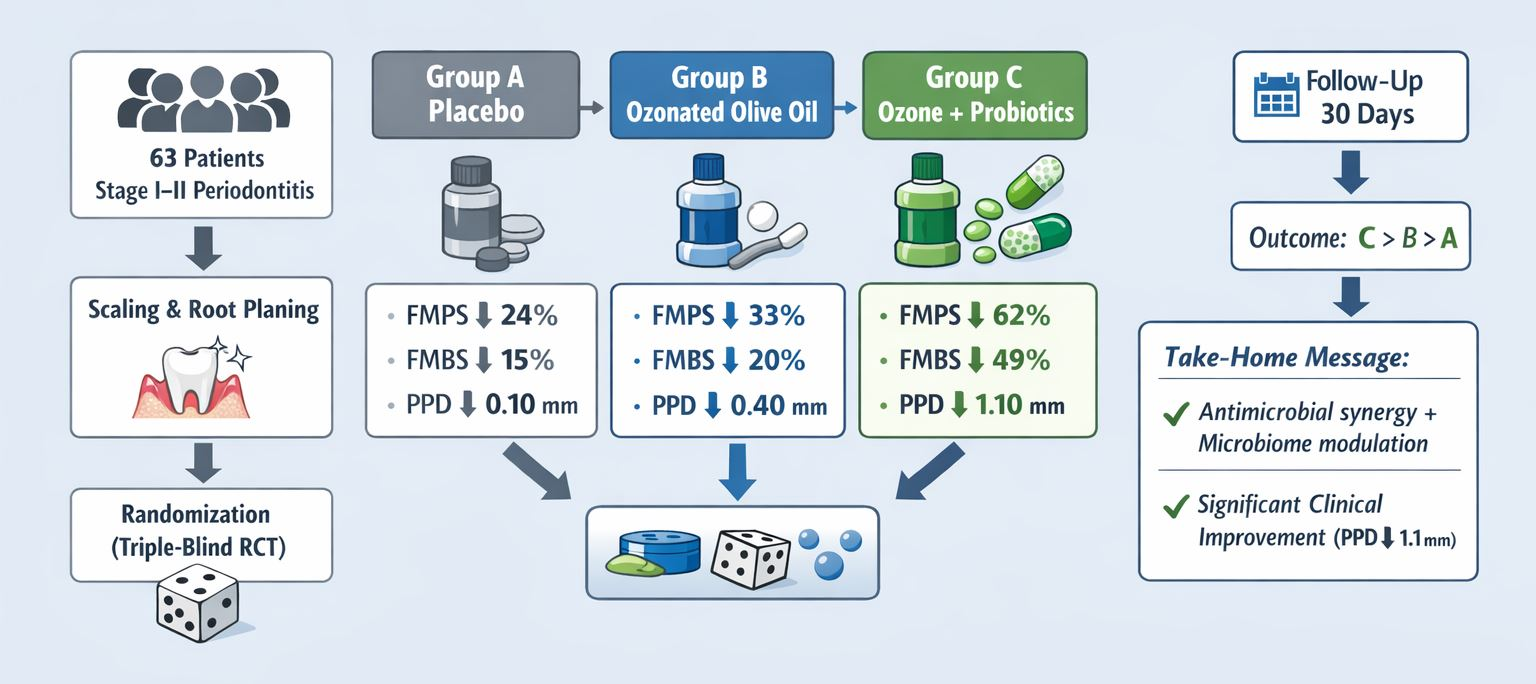
- T1 Active Visit: After 10 days from the T0 Screening Visit, two expert clinicians evaluated the adherence to the hygiene instructions given at T0, recording further study variables and completing the periodontal chart. Non-surgical periodontal therapy was performed within 24 h by a single-blind operator. Supragingival and subgingival scaling and root planning were performed using manual instruments (Gracey’s curettes) and/or ultrasonic inserts (Cavitron®, Dentsply Sirona, Charlotte, NC, USA). Finally, each patient was randomly assigned to one of the three study groups, and the study coordinator gave them toothpaste, mouthwash, and probiotics. The toothpaste was used twice daily, in the morning and evening, followed by rinsing with undiluted mouthwash for 1 min. After rinsing, the patient did not rinse further with water and refrained from eating, drinking, and smoking for at least one hour. Domiciliary maneuvers and probiotic assumption were continued, without modification, for 30 days.
- T2 Follow-Up Visit: This visit was conducted at 30 days after the T1 Active Visit. During the visit, adherence was checked, and any adverse events or side effects of the provided therapy were recorded. The study variables were measured again, and the periodontal chart was completed. Final photographs were taken. At the end of the 30th day, the clinical protocol was considered completed.
- Drop-Outs: Each patient could drop out at any time. All cases of study withdrawal were recorded in the patient’s medical record. If a patient withdrew from the study before the follow-up visit, the data were considered invalid, and the patient was excluded.
2.5. Outcome Evaluation
- PPD (Probing Pocket Depth): The depth of the pocket at four sites per tooth, measured from the free gingival margin to the base of the pocket using a UNC15 periodontal probe. Periodontal pockets were classified as moderate (PPD = 4–6 mm) or deep (PPD ≥ 7 mm) and analyzed as subgroups.
- The Full-Mouth Plaque Score (FMPS) and Full-Mouth Bleeding Score (FMBS) were percentage indices based on dichotomous recordings (absence/presence of plaque or bleeding, respectively) at four sites per tooth, evaluating the patient’s oral hygiene and inflammation status.
- Adherence: The quality of adherence to prescribed therapies was verified at each visit. Adherence was assessed as “valid” or “invalid.”
2.6. Statistical Analysis
3. Results
4. Discussion
Limitations and Future Directions
- This study provides a small sample of 63 patients, which does not allow for drawing definitive conclusions. Further studies with a larger sample are mandatory to confirm our findings.
- Short-term follow-up: The 30-day observation period is sufficient to observe acute changes in inflammatory indices, but it is inadequate to assess the crucial long-term stability of PPD gains or the actual efficacy of the combined protocol in preventing disease recurrence. Further research must have extended follow-up periods (e.g., 3, 6, and 12 months) to confirm the sustained therapeutic benefits.
- Another critical limitation is the absence of molecular microbiological data (e.g., quantitative PCR or next-generation sequencing) on the subgingival biofilm to confirm how ozonated olive oil influences the establishment of beneficial probiotic strains or to determine which synergistic action most effectively suppresses specific pathogenic species.
5. Conclusions
Author Contributions
Funding
Institutional Review Board Statement
Informed Consent Statement
Data Availability Statement
Conflicts of Interest
Appendix A

| Section/Topic | No | CONSORT 2025 Checklist Item Description | Reported on Page No. |
|---|---|---|---|
| Title and abstract | |||
| Title and structured abstract | 1a | Identification as a randomized trial | 1 |
| 1b | Structured summary of the trial design, methods, results, and conclusions | 1 | |
| Open science | |||
| Trial registration | 2 | Name of trial registry, identifying number (with URL) and date of registration | 3 |
| Protocol and statistical analysis plan | 3 | Where the trial protocol and statistical analysis plan can be accessed | 3–7 |
| Data sharing | 4 | Where and how the individual de-identified participant data (including data dictionary), statistical code and any other materials can be accessed | No |
| Funding and conflicts of interest | 5a | Sources of funding and other support (e.g., supply of drugs), and role of funders in the design, conduct, analysis and reporting of the trial | No |
| 5b | Financial and other conflicts of interest of the manuscript authors | No | |
| Introduction | |||
| Background and rationale | 6 | Scientific background and rationale | 2–3 |
| Objectives | 7 | Specific objectives related to benefits and harms | 3 |
| Methods | |||
| Patient and public involvement | 8 | Details of patient or public involvement in the design, conduct and reporting of the trial | 3–4 |
| Trial design | 9 | Description of trial design including type of trial (e.g., parallel group, crossover), allocation ratio, and framework (e.g., superiority, equivalence, non-inferiority, exploratory) | 3 |
| Changes to trial protocol | 10 | Important changes to the trial after it commenced including any outcomes or analyses that were not prespecified, with reason | No |
| Trial setting | 11 | Settings (e.g., community, hospital) and locations (e.g., countries, sites) where the trial was conducted | 3 |
| Eligibility criteria | 12a | Eligibility criteria for participants | 4 |
| 12b | If applicable, eligibility criteria for sites and for individuals delivering the interventions (e.g., surgeons, physiotherapists) | No | |
| Intervention and comparator | 13 | Intervention and comparator with sufficient details to allow replication. If relevant, where additional materials describing the intervention and comparator (e.g., intervention manual) can be accessed | 4–5 |
| Outcomes | 14 | Pre-specified primary and secondary outcomes, including the specific measurement variable (e.g., systolic blood pressure), analysis metric (e.g., change from baseline, final value, time to event), method of aggregation (e.g., median, proportion), and time point for each outcome | 6 |
| Harms | 15 | How harms were defined and assessed (e.g., systematically, non-systematically) | 6–7 |
| Sample size | 16a | How sample size was determined, including all assumptions supporting the sample size calculation | 6–7 |
| 16b | Explanation of any interim analyses and stopping guidelines | No | |
| Randomisation | |||
| Sequence generation | 17a | Who generated the random allocation sequence and the method used | 4 |
| 17b | Type of randomisation and details of any restriction (e.g., stratification, blocking and block size) | No | |
| Allocation concealment mechanism | 18 | Mechanism used to implement the random allocation sequence (e.g., central computer/telephone; sequentially numbered, opaque, sealed containers), describing any steps to conceal the sequence until interventions were assigned | 4 |
| Implementation | 19 | Whether the personnel who enrolled and those who assigned participants to the interventions had access to the random allocation sequence | No |
| Blinding | 20a | Who was blinded after assignment to interventions (e.g., participants, care providers, outcome assessors, data analysts) | 3 |
| 20b | If blinded, how blinding was achieved and description of the similarity of interventions | No | |
| Statistical methods | 21a | Statistical methods used to compare groups for primary and secondary outcomes, including harms | 6–7 |
| 21b | Definition of who is included in each analysis (e.g., all randomized participants) and in which group | 4 | |
| 21c | How missing data were handled in the analysis | No | |
| 21d | Methods for any additional analyses (e.g., subgroup and sensitivity analyses), distinguishing prespecified from post hoc | No | |
| Results | |||
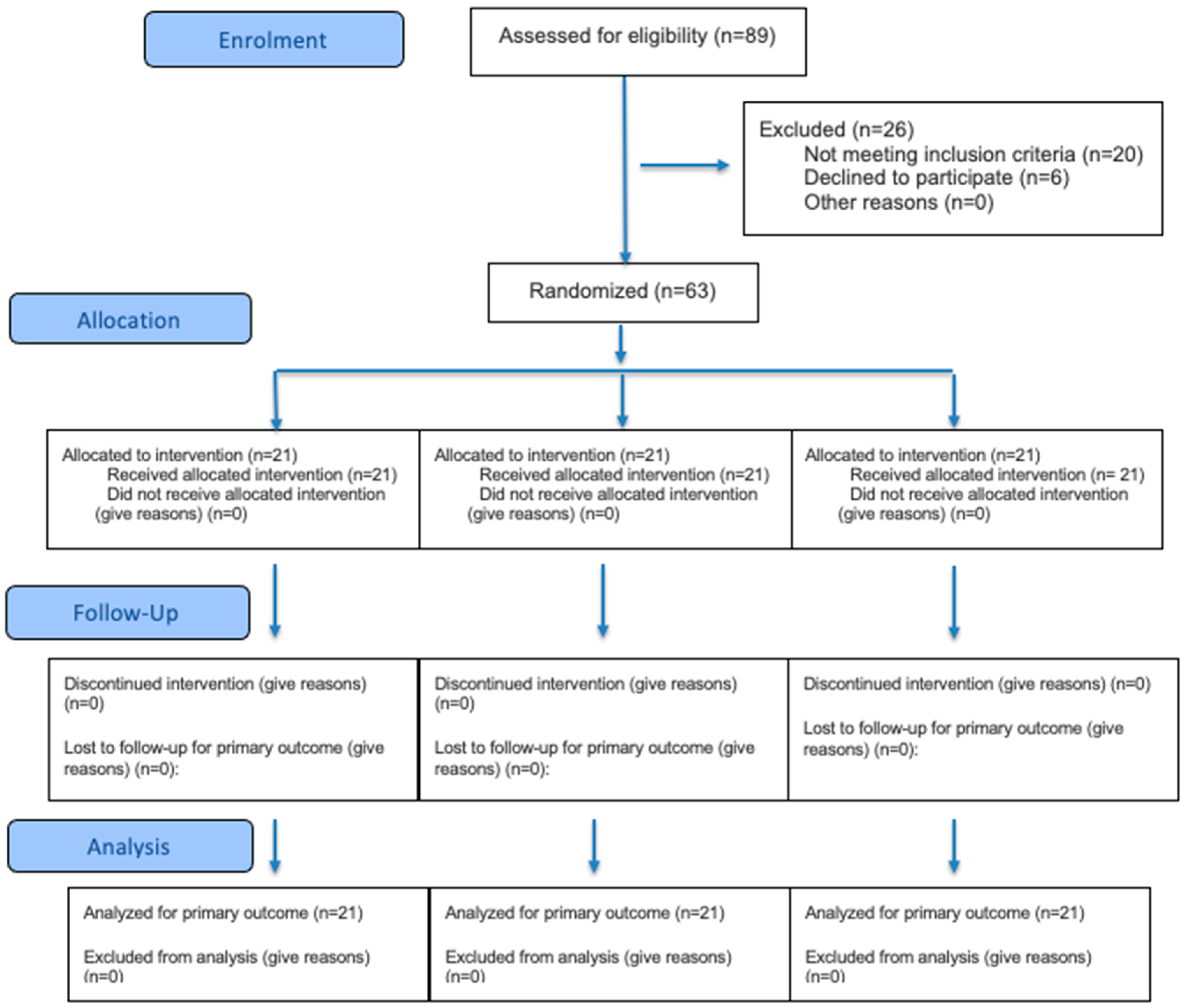
| Participant flow, including flow diagram | 22a | For each group, the numbers of participants who were randomly assigned, received intended intervention, and were analyzed for the primary outcome | 7–8 |
| 22b | For each group, losses and exclusions after randomization, together with reasons | No | |
| Recruitment | 23a | Dates defining the periods of recruitment and follow-up for outcomes of benefits and harms | 5 |
| 23b | If relevant, why the trial ended or was stopped | No | |
| Intervention and comparator delivery | 24a | Intervention and comparator as they were actually administered (e.g., where appropriate, who delivered the intervention/comparator, how participants adhered, whether they were delivered as intended [fidelity]) | 3–4 |
| 24b | Concomitant care received during the trial for each group | No | |
| Baseline data | 25 | A table showing baseline demographic and clinical characteristics for each group | 8 |
| Numbers analyzed, outcomes and estimation | 26 | For each primary and secondary outcome, by group:
| 7–8 |
| Harms | 27 | All harms or unintended events in each group | No |
| Ancillary analyses | 28 | Any other analyses performed, including subgroup and sensitivity analyses, distinguishing pre-specified from post hoc | No |
| Discussion | |||
| Interpretation | 29 | Interpretation consistent with results, balancing benefits and harms, and considering other relevant evidence | 9–11 |
| Limitations | 30 | Trial limitations, addressing sources of potential bias, imprecision, generalizability, and, if relevant, multiplicity of analyses | 10–11 |
References
- Italy: Prevalence of Periodontal Diseases. Available online: https://www.statista.com/statistics/970405/prevalence-of-periodontal-diseases-in-italy/?srsltid=AfmBOorbkCDPU01aep-lLO6D6hnWJ-kgOVEu0sawi2KZPid7VBU028bF (accessed on 2 December 2025).
- Tonetti, M.S.; Greenwell, H.; Kornman, K.S. Staging and Grading of Periodontitis: Framework and Proposal of a New Classification and Case Definition. J. Periodontol. 2018, 89, S159–S172. [Google Scholar] [CrossRef] [Scilit]
- Sanz, M.; Herrera, D.; Kebschull, M.; Chapple, I.; Jepsen, S.; Berglundh, T.; Sculean, A.; Tonetti, M.S. EFP Workshop Participants and Methodological Consultants Treatment of Stage I–III Periodontitis—The EFP S3 Level Clinical Practice Guideline. J. Clin. Periodontol. 2020, 47, 4–60. [Google Scholar] [CrossRef] [Scilit]
- Cui, Z.; Wang, P.; Gao, W. Microbial Dysbiosis in Periodontitis and Peri-Implantitis: Pathogenesis, Immune Responses, and Therapeutic. Front. Cell. Infect. Microbiol. 2025, 15, 1517154. [Google Scholar] [CrossRef] [Scilit]
- Giordano-Kelhoffer, B.; Lorca, C.; March Llanes, J.; Rábano, A.; Del Ser, T.; Serra, A.; Gallart-Palau, X. Oral Microbiota, Its Equilibrium and Implications in the Pathophysiology of Human Diseases: A Systematic Review. Biomedicines 2022, 10, 1803. [Google Scholar] [CrossRef] [Scilit]
- Malcangi, G.; Inchingolo, A.M.; Casamassima, L.; Trilli, I.; Ferrante, L.; Inchingolo, F.; Palermo, A.; Inchingolo, A.D.; Dipalma, G. Effectiveness of Herbal Medicines with Anti-Inflammatory, Antimicrobial, and Antioxidant Properties in Improving Oral Health and Treating Gingivitis and Periodontitis: A Systematic Review. Nutrients 2025, 17, 762. [Google Scholar] [CrossRef] [Scilit]
- Di Stefano, M.; Polizzi, A.; Santonocito, S.; Romano, A.; Lombardi, T.; Isola, G. Impact of Oral Microbiome in Periodontal Health and Periodontitis: A Critical Review on Prevention and Treatment. Int. J. Mol. Sci. 2022, 23, 5142. [Google Scholar] [CrossRef] [Scilit] [PubMed]
- Nambiar, S.; Malothu, S.; Karmakar, S.; Varkey, A.; Chandra, D.; Chava, V.K. Comparison of Ozonated Olive Oil and Chlorhexidine Gel as an Adjunct to Nonsurgical Periodontal Therapy for the Treatment of Chronic Periodontitis: A Randomized Controlled Clinical Trial. J. Pharm. Bioallied Sci. 2022, 14, S94–S98. [Google Scholar] [CrossRef] [Scilit]
- Antonacci, A.; Praino, E.; Abbinante, A.; Favia, G.; Rotondo, C.; Bartolomeo, N.; Giotta, M.; Iannone, F.; Orrù, G.; Agneta, M.T.; et al. Orofacial Manifestation of Systemic Sclerosis: A Cross-Sectional Study and Future Prospects of Oral Capillaroscopy. Diagnostics 2024, 14, 437. [Google Scholar] [CrossRef] [Scilit] [PubMed]
- Annisa, Z.U.; Sulijaya, B.; Tadjoedin, E.S.S.; Hutomo, D.I.; Masulili, S.L.C. Effectiveness of Chlorhexidine Gels and Chips in Periodontitis Patients after Scaling and Root Planing: A Systematic Review and Meta-Analysis. BMC Oral Health 2023, 23, 819. [Google Scholar] [CrossRef] [Scilit] [PubMed]
- Pignatelli, P.; Nuccio, F.; Piattelli, A.; Curia, M.C. The Role of Fusobacterium Nucleatum in Oral and Colorectal Carcinogenesis. Microorganisms 2023, 11, 2358. [Google Scholar] [CrossRef] [Scilit] [PubMed]
- Fernandes, G.V.O.; Mosley, G.A.; Ross, W.; Dagher, A.; Martins, B.G.D.S.; Fernandes, J.C.H. Revisiting Socransky’s Complexes: A Review Suggesting Updated New Bacterial Clusters (GF-MoR Complexes) for Periodontal and Peri-Implant Diseases and Conditions. Microorganisms 2024, 12, 2214. [Google Scholar] [CrossRef] [Scilit]
- Poppolo Deus, F.; Ouanounou, A. Chlorhexidine in Dentistry: Pharmacology, Uses, and Adverse Effects. Int. Dent. J. 2022, 72, 269–277. [Google Scholar] [CrossRef] [Scilit]
- James, P.; Worthington, H.V.; Parnell, C.; Harding, M.; Lamont, T.; Cheung, A.; Whelton, H.; Riley, P. Chlorhexidine Mouthrinse as an Adjunctive Treatment for Gingival Health. Cochrane Database Syst. Rev. 2017, 3, CD008676. [Google Scholar] [CrossRef] [Scilit]
- Ambrosio, F.D.; Caggiano, M.; Acerra, A.; Pisano, M.; Giordano, F. Is Ozone a Valid Adjuvant Therapy for Periodontitis and Peri-Implantitis? A Systematic Review. J. Pers. Med. 2023, 13, 646. [Google Scholar] [CrossRef] [Scilit] [PubMed]
- Sen, S.; Sen, S. Ozone Therapy a New Vista in Dentistry: Integrated Review. Med. Gas Res. 2020, 10, 189. [Google Scholar] [CrossRef] [Scilit]
- El Meligy, O.A.; Elemam, N.M.; Talaat, I.M. Ozone Therapy in Medicine and Dentistry: A Review of the Literature. Dent. J. 2023, 11, 187. [Google Scholar] [CrossRef] [Scilit] [PubMed]
- Veneri, F.; Filippini, T.; Consolo, U.; Vinceti, M.; Generali, L. Ozone Therapy in Dentistry: An Overview of the Biological Mechanisms Involved (Review). Biomed. Rep. 2024, 21, 115. [Google Scholar] [CrossRef] [Scilit]
- Liu, J.; Huang, Y.; Huang, J.; Yang, W.; Tao, R. Effects of Ozone Therapy as an Adjuvant in the Treatment of Periodontitis: A Systematic Review and Meta-Analysis. BMC Oral Health 2025, 25, 335. [Google Scholar] [CrossRef] [Scilit]
- AlMogbel, A.A.; Albarrak, M.I.; AlNumair, S.F. Ozone Therapy in the Management and Prevention of Caries. Cureus 2023, 15, e37510. [Google Scholar] [CrossRef] [Scilit] [PubMed]
- Kollmar, T.; Schepers, M.; Nogueira, A.V.B.; Deschner, J.; Müller-Heupt, L.K. Oxygen-Based Adjunct Therapies in Periodontitis: A Systematic Review and Meta-Analysis Within the Framework of Hypoxia and Inflammation. Biomedicines 2025, 14, 9. [Google Scholar] [CrossRef] [Scilit]
- Grassi, R.; Ciccone, F.; De Falco, D.; Castaldi, M.; Agneta, M.T.; Nardi, G.M.; Petruzzi, M. Clinical and Microbiological Study on Local Application of an Ozonated Olive Oil Gel in the Periodontal Pockets: A Randomized Double-Blind Trial. J. Clin. Med. 2025, 14, 5182. [Google Scholar] [CrossRef] [Scilit]
- Seminario-Amez, M.; López-López, J.; Estrugo-Devesa, A.; Ayuso-Montero, R.; Jané-Salas, E. Probiotics and Oral Health: A Systematic Review. Med. Oral Patol. Oral Cir. Bucal 2017, 22, e282–e288. [Google Scholar] [CrossRef] [Scilit] [PubMed]
- de Mendonça, C.D.; da Mata, A.D.S.P.; Azevedo, L.F.R.; Marques, J.F.; Silveira, J.M.L.; Marques, D.N.d.S. Probiotics in the Non-Surgical Treatment of Periodontitis: A Systematic Review and Network Meta-Analysis. BMC Oral Health 2024, 24, 1224. [Google Scholar] [CrossRef] [Scilit] [PubMed]
- Nie, Q.; Wan, X.; Tao, H.; Yang, Q.; Zhao, X.; Liu, H.; Hu, J.; Luo, Y.; Shu, T.; Geng, R.; et al. Multi-Function Screening of Probiotics to Improve Oral Health and Evaluating Their Efficacy in a Rat Periodontitis Model. Front. Cell. Infect. Microbiol. 2023, 13, 1261189. [Google Scholar] [CrossRef] [Scilit]
- Doucette, H.; Ward, R.; Wheeldon, C.; Whelan, A. The Impact of Prebiotics and Probiotics on the Oral Microbiome of Individuals with Periodontal Disease: A Scoping Review. Can. J. Dent. Hyg. 2024, 58, 182–195. [Google Scholar] [PubMed]
- Nardi, G.M.; Cesarano, F.; Papa, G.; Chiavistelli, L.; Ardan, R.; Jedlinski, M.; Mazur, M.; Grassi, R.; Grassi, F.R. Evaluation of Salivary Matrix Metalloproteinase (MMP-8) in Periodontal Patients Undergoing Non-Surgical Periodontal Therapy and Mouthwash Based on Ozonated Olive Oil: A Randomized Clinical Trial. Int. J. Environ. Res. Public Health 2020, 17, 6619. [Google Scholar] [CrossRef] [Scilit]
- Bustamante, M.; Oomah, B.D.; Mosi-Roa, Y.; Rubilar, M.; Burgos-Díaz, C. Probiotics as an Adjunct Therapy for the Treatment of Halitosis, Dental Caries and Periodontitis. Probiotics Antimicro. Prot. 2020, 12, 325–334. [Google Scholar] [CrossRef] [Scilit]
- Ercan, N.; Olgun, E.; Kisa, Ü.; Yalim, M. Effect of Synbiotics in the Treatment of Smokers and Non-smokers with Gingivitis: Randomized Controlled Trial. Aust. Dent. J. 2020, 65, 210–219. [Google Scholar] [CrossRef] [Scilit]
- Gandhi, K.K.; Cappetta, E.G.; Pavaskar, R. Effectiveness of the Adjunctive Use of Ozone and Chlorhexidine in Patients with Chronic Periodontitis. BDJ Open 2019, 5, 17. [Google Scholar] [CrossRef] [Scilit]
- Swarna Meenakshi, P.; Rajasekar, A. A Review on Ozone Therapy in Periodontitis. Bioinformation 2022, 18, 634–639. [Google Scholar] [CrossRef] [Scilit]
- Tasdemir, Z.; Oskaybas, M.N.; Alkan, A.B.; Cakmak, O. The Effects of Ozone Therapy on Periodontal Therapy: A Randomized Placebo-controlled Clinical Trial. Oral Dis. 2019, 25, 1195–1202. [Google Scholar] [CrossRef] [Scilit]
- Khare, M.; Sangal Jain, K.; Sharma, N. Comparative Evaluation of Effects of Subgingival Application of Ozonated Olive Oil versus Chlorhexidine in Patients with Chronic Periodontitis: A Clinico- Microbiological Randomised Trial. J. Dent. Spec. 2020, 7, 95–101. [Google Scholar] [CrossRef] [Scilit]
- López-Valverde, N.; López-Valverde, A.; Blanco Rueda, J.A. Systematic Review and Meta-Analysis on the Effect of Olive Oil in the Treatment of Periodontal Diseases. Front. Oral Health 2025, 6, 1735845. [Google Scholar] [CrossRef] [Scilit]
- Pietrocola, G.; Ceci, M.; Preda, F.; Poggio, C.; Colombo, M. Evaluation of the Antibacterial Activity of a New Ozonized Olive Oil against Oral and Periodontal Pathogens. J. Clin. Exp. Dent. 2018, 10, e1103–e1108. [Google Scholar] [CrossRef] [Scilit]
- Mehrotra, R.; Gupta, S.; Siddiqui, Z.R.; Chandra, D.; Ikbal, S.A. Clinical Efficacy of Ozonated Water and Photodynamic Therapy in Non-Surgical Management of Chronic Periodontitis: A Clinico- Microbial Study. Photodiagnosis Photodyn. Ther. 2023, 44, 103749. [Google Scholar] [CrossRef] [Scilit]
- Nardi, G.M.; Fais, S.; Casu, C.; Mazur, M.; Di Giorgio, R.; Grassi, R.; Grassi, F.R.; Orrù, G. Mouthwash Based on Ozonated Olive Oil in Caries Prevention: A Preliminary In-Vitro Study. Int. J. Environ. Res. Public Health 2020, 17, 9106. [Google Scholar] [CrossRef] [Scilit]
- Mukherjee, K.; Amaranath, B.J.; Das, N.; Dhanai, A.; Pallavi, K.; Katiyar, P. Efficacy of Olive Oil, Ozonated Olive Oil, and Chlorhexidine Gel as an Adjunct to Scaling and Root Planing in Chronic Periodontitis: A Clinical Study. J. Pharm. Bioallied Sci. 2024, 16, S3332–S3334. [Google Scholar] [CrossRef] [Scilit]
- Puxeddu, S.; Scano, A.; Scorciapino, M.A.; Delogu, I.; Vascellari, S.; Ennas, G.; Manzin, A.; Angius, F. Physico-Chemical Investigation and Antimicrobial Efficacy of Ozonated Oils: The Case Study of Commercial Ozonated Olive and Sunflower Seed Refined Oils. Molecules 2024, 29, 679. [Google Scholar] [CrossRef] [Scilit]
- İnce, G.; Gürsoy, H.; İpçi, Ş.D.; Cakar, G.; Emekli-Alturfan, E.; Yılmaz, S. Clinical and Biochemical Evaluation of Lozenges Containing Lactobacillus reuteri as an Adjunct to Non-Surgical Periodontal Therapy in Chronic Periodontitis. J. Periodontol. 2015, 86, 746–754. [Google Scholar] [CrossRef] [Scilit]
- De Oliveira, A.M.; Lourenço, T.G.B.; Colombo, A.P.V. Impact of Systemic Probiotics as Adjuncts to Subgingival Instrumentation on the Oral-gut Microbiota Associated with Periodontitis: A Randomized Controlled Clinical Trial. J. Periodontol. 2022, 93, 31–44. [Google Scholar] [CrossRef] [Scilit]
- Paul, G.; Gandhimadhi, D.; Babu, S.K.K. A Double-Blind, Placebo Controlled Study to Assess the Clinical and Microbiological Effects of a Probiotic Lozenge as an Adjunctive Therapy in the Management of Chronic Periodontitis. CHRISMED J. Health Res. 2019, 6, 57. [Google Scholar] [CrossRef] [Scilit]
- Haas, A.N.; Furlaneto, F.; Gaio, E.J.; Gomes, S.C.; Palioto, D.B.; Castilho, R.M.; Sanz, M.; Messora, M.R. New Tendencies in Non-Surgical Periodontal Therapy. Braz. Oral Res. 2021, 35, e095. [Google Scholar] [CrossRef] [Scilit]
- Kumar, V.; Singhal, R.; Rastogi, P.; Lal, N.; Pandey, S.; Mahdi, A.A. Localized Probiotic-Guided Pocket Recolonization in the Treatment of Chronic Periodontitis: A Randomized Controlled Clinical Trial. J. Periodontal Implant. Sci. 2021, 51, 199. [Google Scholar] [CrossRef] [Scilit]
- Lang, N.P.; Bartold, P.M. Periodontal Health. J. Periodontol. 2018, 89, S9–S16. [Google Scholar] [CrossRef] [Scilit]
- Teughels, W.; Loozen, G.; Quirynen, M. Do Probiotics Offer Opportunities to Manipulate the Periodontal Oral Microbiota? J. Clin. Periodontol. 2011, 38, 159–177. [Google Scholar] [CrossRef] [Scilit]
- Alessandra, L.; Daniela, D.V.; Saverio, C.; Vanja, G.; Giuseppe, B.; Massimo, C. Use of Lactobacillus Reuteri DSM 17938 in the Treatment of Stage II-III Periodontitis: Longitudinal Study of 36 Patients. J. Clin. Adv. Dent. 2024, 8, 001–008. [Google Scholar] [CrossRef] [Scilit]
- Gruner, D.; Paris, S.; Schwendicke, F. Probiotics for Managing Caries and Periodontitis: Systematic Review and Meta-Analysis. J. Dent. 2016, 48, 16–25. [Google Scholar] [CrossRef] [Scilit]
- Pelekos, G.; Acharya, A.; Eiji, N.; Hong, G.; Leung, W.K.; McGrath, C. Effects of Adjunctive Probiotic L. Reuteri Lozenges on S/RSD Outcomes at Molar Sites with Deep Pockets. J. Clin. Periodontol. 2020, 47, 1098–1107. [Google Scholar] [CrossRef] [Scilit]
- Benavides-Reyes, C.; Cabello, I.; Magán-Fernández, A.; Rodríguez-Barranco, M.; Usta, S.N.; Mesa, F. Clinical Effects of Probiotics on the Treatment of Gingivitis and Periodontitis: A Systematic Review and Meta-Analysis. BMC Oral Health 2025, 25, 490. [Google Scholar] [CrossRef] [Scilit]
- Antonacci, A.; Bizzoca, C.; Barile, G.; Andriola, V.; Vincenti, L.; Bartolomeo, N.; Abbinante, A.; Orrù, G.; Corsalini, M. Evaluation of Periodontitis and Fusobacterium Nucleatum Among Colorectal Cancer Patients: An Observational Cross-Sectional Study. Healthcare 2024, 12, 2189. [Google Scholar] [CrossRef] [Scilit]


| Procedures | Screening (T0) | Active Phase (T1) | Follow-Up (T2) |
|---|---|---|---|
| Day-7 | Day 0 | Day 30 | |
| Inclusion and Exclusion Criteria | ✓ | ||
| “Informed Consent Delivery and Explanation” | ✓ | ||
| Photographs | ✓ | ✓ | |
| Signature of Informed Consent | ✓ | ||
| Standardized Oral Hygiene Instructions | ✓ | ✓ | |
| Delivery of Toothbrush and Interdental Brush | ✓ | ||
| FMPS (Full-Mouth Plaque Score) | ✓ | ✓ | ✓ |
| FMBS (Full-Mouth Bleeding Score) | ✓ | ✓ | ✓ |
| PPD (Periodontal Probing Depth) | ✓ | ✓ | |
| Active Phase of Periodontal Therapy | ✓ | ||
| Randomization | ✓ | ||
| Delivery of Products Corresponding to Groups A, B, and C | ✓ | ||
| Adherence Monitoring | ✓ | ✓ | |
| Recording of Adverse Events | ✓ |
| Parameter | All (n = 63) | Group A (n = 21) | Group B (n = 21) | Group C (n = 21) | p |
|---|---|---|---|---|---|
| Mean Age [Range] | 53 [44–59] | 54 [42–58] | 52 [45–59] | 54 [44–63] | 0.9210 |
| Sex | |||||
| F (%) | 34 (54.0%) | 11 (52.4%) | 11 (52.4%) | 12 (57.1%) | 0.9381 |
| M (%) | 29 (40.0%) | 10 (47.6%) | 10 (47.6%) | 9 (42.9%) | |
| Periodontitis Stage | |||||
| I (%) | 16 (25.4%) | 7 (33.3%) | 3 (14.3%) | 6 (28.6%) | 0.3365 |
| II (%) | 47 (74.6%) | 14 (66.7%) | 18 (85.7%) | 15 (71.4%) | |
| Mean FMPS | |||||
| T1% [Range] | 69 [58–80] | 78 [70–88] | 61 [55–72] | 68 [57–75] | 0.0030 |
| T2% [Range] | 22 [5–42] | 50 [35–69] | 23 [20–32] | 4 [2–8] | <0.0001 |
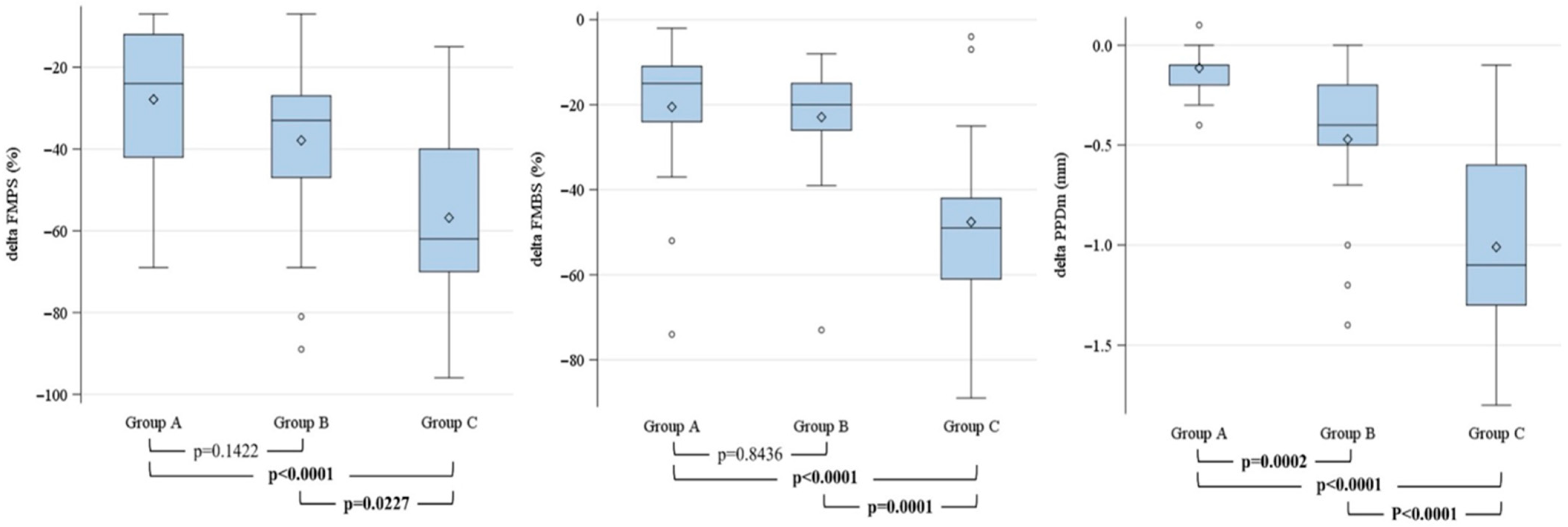
| Delta (T2-T1) | −34 [−62;−24] | −24 [−42;−12] | −33 [−47;−27] | −62 [−70;−40] | 0.0002 |
| Mean FMBS | |||||
| T1% [Range] | 51 [31–63] | 61 [40–70] | 38 [27–44] | 56 [42–63] | 0.0058 |
| T2% [Range] | 10 [2–22] | 43 [17–48] | 16 [6–19] | 2 [0–5] | <0.0001 |
| Delta (T2-T1) [Range] | −24 [−47;−14] | −15 [−24;−11] | −20 [−26;−15] | −49 [−61;−42] | <0.0001 |
| Mean PPD | |||||
| T1 mm [Range] | 2.1 [1.8–2.8] | 1.9 [1.8–2.2] | 2.2 [2.0–2.5] | 2.5 [1.7–2.9] | 0.2060 |
| T2 mm [Range] | 1.8 [1.6–2.0] | 1.8 [1.7–2.0] | 1.8 [1.6–2.0] | 1.3 [1.2–1.8] | 0.0013 |
| Delta (T2-T1) [Range] | −0.4 [−0.9;−0.1] | −0.1 [−0.2;−0.1] | −0.4 [−0.5;−0.2] | −1.1 [−1.3;−0.6] | <0.0001 |
Disclaimer/Publisher’s Note: The statements, opinions and data contained in all publications are solely those of the individual author(s) and contributor(s) and not of MDPI and/or the editor(s). MDPI and/or the editor(s) disclaim responsibility for any injury to people or property resulting from any ideas, methods, instructions or products referred to in the content. |
© 2026 by the authors. Licensee MDPI, Basel, Switzerland. This article is an open access article distributed under the terms and conditions of the Creative Commons Attribution (CC BY) license.
Share and Cite
Abbinante, A.; Barile, G.; Antonacci, A.; Basso, M.; Pascale, F.; Bartolomeo, N.; Agneta, M.T.; D’Albis, G.; Corsalini, T.; Capodiferro, S.; et al. Probiotics and Ozonated Olive Oil to Maintain Oral Eubiosis in Stage I and II Periodontitis Patients: A Randomized Triple-Blind Clinical Trial. Dent. J. 2026, 14, 203. https://doi.org/10.3390/dj14040203
Abbinante A, Barile G, Antonacci A, Basso M, Pascale F, Bartolomeo N, Agneta MT, D’Albis G, Corsalini T, Capodiferro S, et al. Probiotics and Ozonated Olive Oil to Maintain Oral Eubiosis in Stage I and II Periodontitis Patients: A Randomized Triple-Blind Clinical Trial. Dentistry Journal. 2026; 14(4):203. https://doi.org/10.3390/dj14040203
Chicago/Turabian StyleAbbinante, Antonia, Giuseppe Barile, Anna Antonacci, Matteo Basso, Francesca Pascale, Nicola Bartolomeo, Maria Teresa Agneta, Giuseppe D’Albis, Tommaso Corsalini, Saverio Capodiferro, and et al. 2026. "Probiotics and Ozonated Olive Oil to Maintain Oral Eubiosis in Stage I and II Periodontitis Patients: A Randomized Triple-Blind Clinical Trial" Dentistry Journal 14, no. 4: 203. https://doi.org/10.3390/dj14040203
APA StyleAbbinante, A., Barile, G., Antonacci, A., Basso, M., Pascale, F., Bartolomeo, N., Agneta, M. T., D’Albis, G., Corsalini, T., Capodiferro, S., & Corsalini, M. (2026). Probiotics and Ozonated Olive Oil to Maintain Oral Eubiosis in Stage I and II Periodontitis Patients: A Randomized Triple-Blind Clinical Trial. Dentistry Journal, 14(4), 203. https://doi.org/10.3390/dj14040203