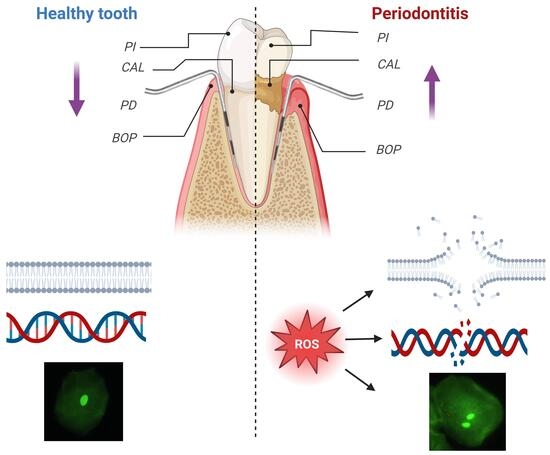
1. Introduction
Periodontitis is one of the most prevalent chronic inflammatory diseases worldwide, affecting 20–50% of the global population and representing a significant public health burden because of its association with tooth loss, masticatory dysfunction, and systemic conditions such as cardiovascular disease and diabetes [
1,
2]. In Mexico, the Epidemiological Surveillance System for Oral Pathologies (SIVEPAB 2019) reported that 60% of adults have some degree of periodontitis, with the prevalence increasing with age, whereas 9% to 10% suffer from the severe form of the disease [
3,
4,
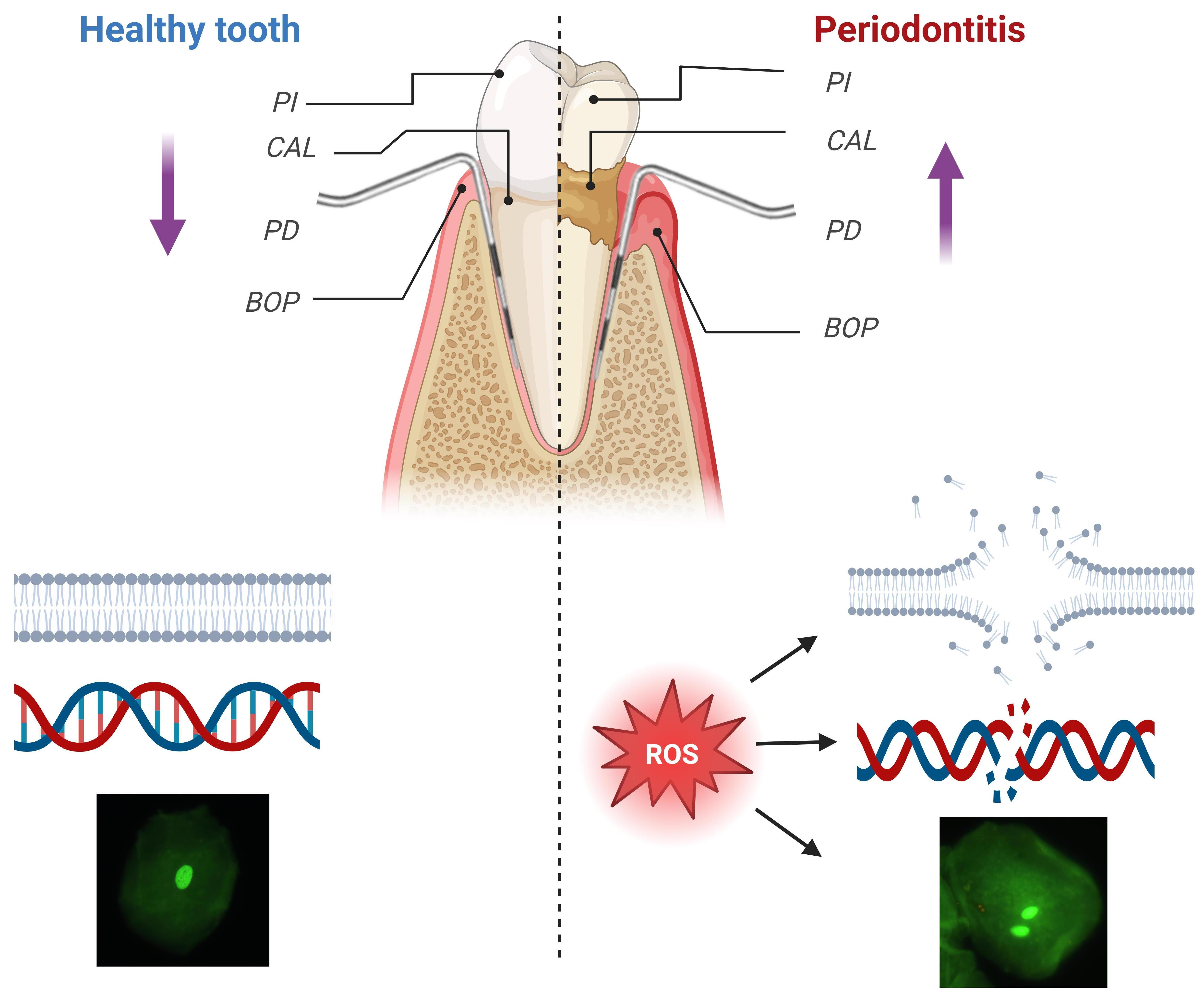
5]. Conventional diagnostic methods, such as probing depth (PD), the presence of bleeding on probing (BOP), the plaque index (PI) and the clinical attachment level (CAL) [
2,
6], often detect the disease in advanced stages, highlighting the need for biomarkers that enable early diagnosis and accurate monitoring of disease progression.
Oxidative stress (OS) plays a critical role in the pathophysiology of periodontitis. An imbalance between reactive oxygen species (ROS) and antioxidant defenses leads to damage to biomolecules such as lipids, proteins and DNA [
7,
8,
9]. This imbalance is caused by an increase in ROS production or reduced antioxidant mechanisms [
10,
11,
12]. In periodontitis, OS released by polymorphonuclear cells in response to periodontopathogenic bacteria contributes to tissue destruction and chronic inflammation [
13,
14,
15]. ROS-induced lipid peroxidation compromises the integrity of cell membranes, leading to direct cellular damage and impaired function [
8]. At the DNA level, OS causes single or double-strand breaks and nitrogenous base modifications, disrupting cellular homeostasis and promoting apoptosis or necrosis [
8,
16]. Consequently, the sustained generation of ROS drives extensive cellular destruction, which further exacerbates and perpetuates the chronic inflammation and tissue degradation characteristic of periodontitis [
8,
14].
OS is also linked to chronic inflammatory diseases, such as atherosclerosis, cancer, Alzheimer’s disease and diabetes mellitus [
14,
15]. The key biomarkers for oxidative damage include 8-hydroxy-2-deoxiguanosine (8-OHdG) and malondialdehyde (MDA). 8-OHdG, a DNA damage marker, results from hydroxyl radical interactions with guanine, which leads to the formation of adducts and malformations in nitrogenous bases, reflecting the loss of cellular homeostasis [
7,
8,
17]. MDA, a lipid peroxidation end product, disrupts cell membranes and damages DNA and proteins [
18,
19]. It is quantified using colorimetric techniques such as the thiobarbituric acid reaction, allowing its quantification via spectrophotometry [
20].
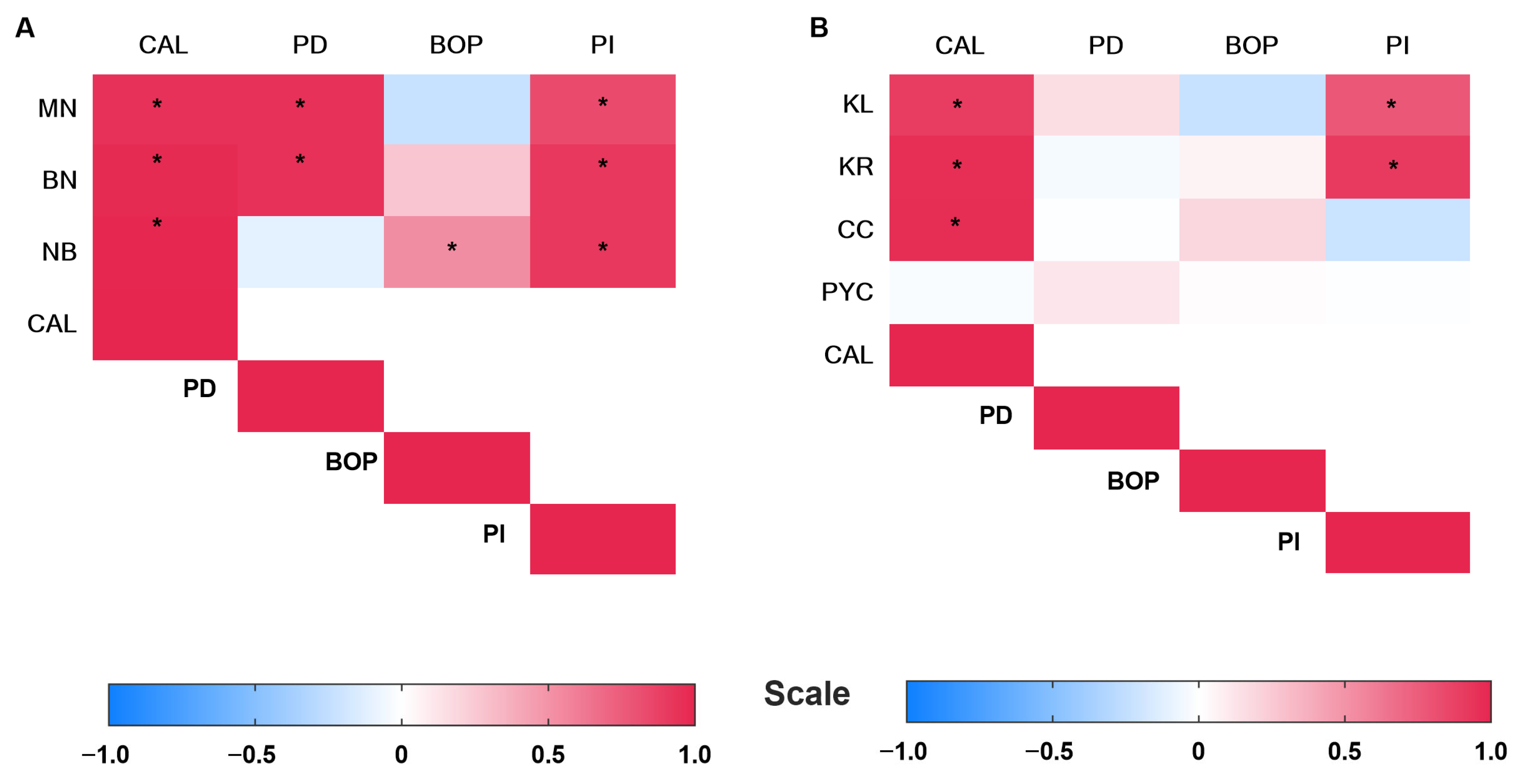
The assay of nuclear abnormalities (NAs) in oral mucosal cells is a valuable tool for assessing genotoxic and cytotoxic damage linked to OS. NAs, including micronuclei (MN), binucleated cells (BN), nuclear buds (NBs), karyolysis (KL), condensed chromatin (CC), karyorrhexis (KR), and pyknosis (PYC), serve as markers of DNA damage and cell death [
21,
22]. These alterations are associated with chronic inflammatory processes such as periodontitis and reflect the impact of OS on periodontal tissues [
23].
Saliva, a noninvasive biological fluid, contains biomarkers such as 8-OHdG and MDA, which are useful for evaluating OS and tissue damage in periodontal diseases [
24]. Similarly, the analysis of NAs in buccal mucosa cells provides a minimally invasive method to monitor genotoxic and cytotoxic damage [
23]. Previous studies have independently shown an increase in NAs and 8-OHdG levels in patients with periodontal disease [
23], confirming their individual relevance. However, despite the recognized value of these markers, a comprehensive analysis that simultaneously correlates the levels of oxidative damage (8-OHdG, MDA) and genotoxic-cytotoxic effects (NAs) with the standard clinical parameters of periodontitis is lacking. It remains unclear how this specific combination of biomarkers reflects the clinical severity of the disease in an integrated manner. Therefore, this study aims to correlate the levels of 8-OHdG and MDA and the frequency of NAs with the clinical parameters in individuals with chronic periodontitis.
The alternative hypothesis of this in vivo study was that the levels of 8-hydroxy-2-deoxyguanosine, malondialdehyde, and the number of nuclear abnormalities correlate with clinical periodontal parameters in individuals with chronic periodontitis, whereas the null hypothesis was that the levels of 8-hydroxy-2-deoxyguanosine, malondialdehyde, and the number of nuclear abnormalities do not correlate with clinical periodontal parameters in individuals with chronic periodontitis
4. Discussion
CP is an inflammatory disease characterized by increased production of ROS and an imbalance in the endogenous antioxidant system, which plays a fundamental role in tissue destruction [
8,
28]. Studies have demonstrated that markers of OS, such as 8-OHdG, an indicator of oxidative DNA damage, and MDA, an indicator of lipid peroxidation, are elevated in patients with PC [
29,
30]. The oral cavity serves as a reflection of an individual’s general health, as the characteristics of the oral mucosa can reveal changes indicative of systemic or chronic degenerative diseases, such as periodontal disease. The epithelium of the oral mucosa, which undergoes constant cell division, is an ideal tissue for biomonitoring health because of the ease of obtaining samples in a minimally invasive and painless manner. This facilitates the use of techniques such as the analysis of the NAs assay. NAs (MN, NBs, KL, KR, BC, PYC) reflect genotoxic and cytotoxic damage [
23,
31]. These alterations are indicative of the effect of OS on periodontal tissues and may be associated with the severity of the disease, as determined by clinical parameters [
32,
33,
34].
This effect could be attributed to the inflammation-induced recruitment of neutrophils, which release ROS, although the respiratory burst but also generate more ROS. Additionally, neutrophils promote the citrullination of bacteria present in the CP. This effect results in the formation of immune complexes with anti-citrullinated protein antibodies (ACPAs) and increases the expression of the enzymes peptidylarginine deiminase 2 and 4 (PAD2 and PAD4), which enhances the inflammatory response and causes cytotoxic and genotoxic damage, ultimately leading to the formation of ANs [
35,
36].
Within the damage caused by periodontitis, one of the molecules involved is Matrix Metalloproteinases (MMPs). Since collagen is the main protein of bone, cementum and periodontal ligament, its degradation is the key event in attachment loss. In periodontitis, it has been proposed that the relationship between ROS and MMPs is bidirectional; the increase in ROS activates latent MMPs, specifically collagenase MMP-8 and gelatinase MMP-9, which are directly responsible for collagen breakdown [
37]. Furthermore, MMPs (such as MMP-2) can induce increased ROS production, creating a feedback loop that perpetuates oxidative stress and tissue destruction [
38].
8-OHdG is a sensitive parameter for detecting DNA damage and is the most extensively studied base damage product [
8]. In this study, salivary 8-OHdG levels were significantly greater in individuals with CP than in periodontally healthy controls, supporting the concept of increased OS in CP patients. These findings align with studies such as those of Gurbuz (2024) [
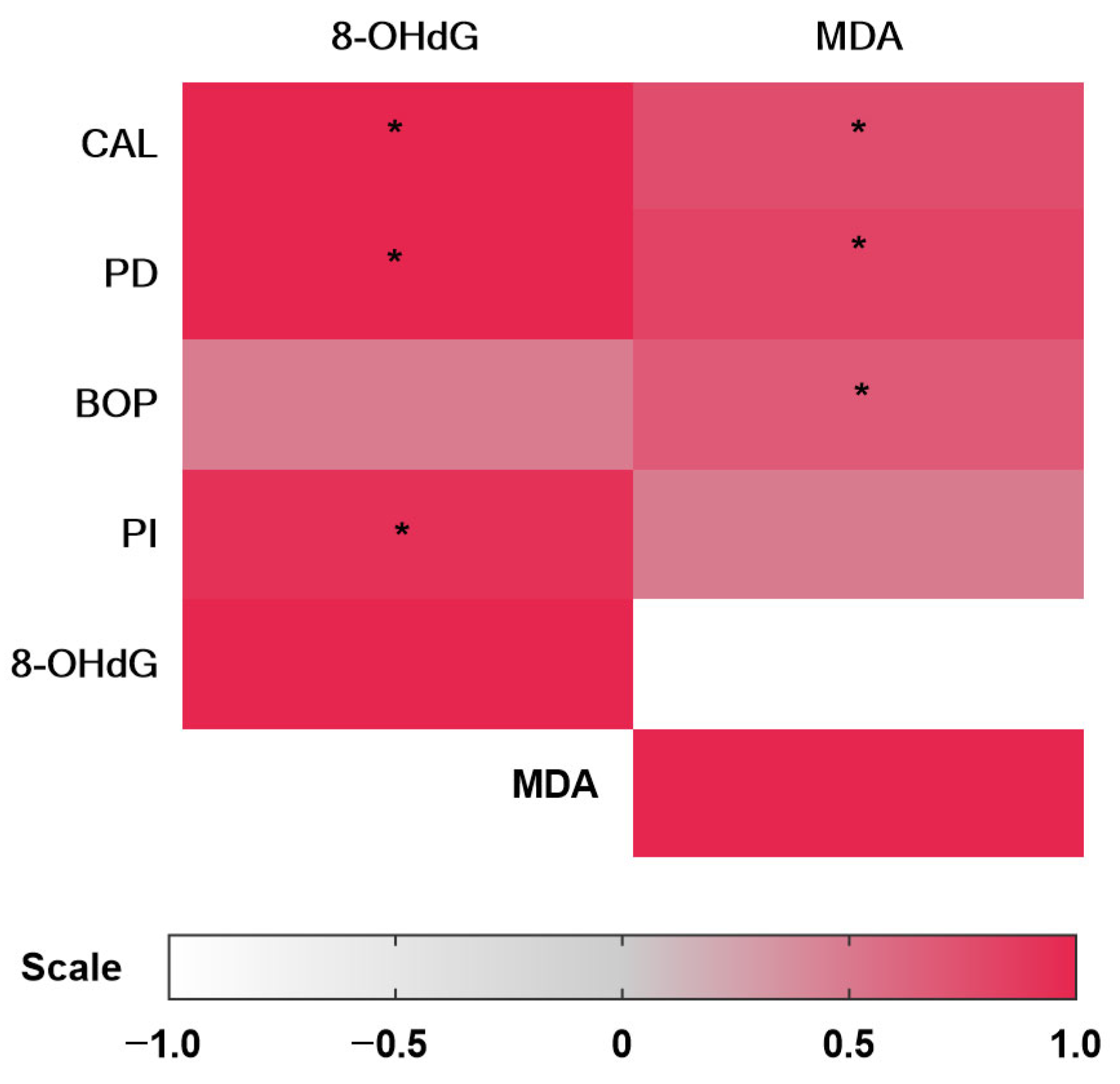
17] who suggested that 8-OHdG levels are significantly correlated with clinical parameters such as PD, BOP, the PI, and the CAL. This correlation is associated with the accumulation of oxidative DNA damage in tissues affected by periodontal injury [
17]. Our results revealed a positive correlation between salivary 8-OHdG levels and clinical parameters such as CAL, PD and IP. Notably, the levels of CAL and PD, which are markers of periodontal inflammation and tissue destruction, were strongly positively correlated with salivary 8-OHdG levels. These findings are consistent with those of Sezer et al., who also reported a positive correlation between PD and CAL. The CAL is a clinically relevant parameter as it reflects the severity of periodontal disease and may be influenced by oxidative DNA damage in periodontal tissue. Bacterial invasion and the resulting inflammation can cause direct damage to the epithelial cells of periodontal tissues, further exacerbating OS. Similarly, Yang (2016) [
39], Önder (2017) [
18] and Gurbuz (2024) [
17] who reported a significant correlation between 8-OHdG levels in saliva and several clinical parameters, suggest that 8-OHdG could be a useful marker of CP severity because of the increase in free radicals and the damage they generate in the cell, leading to cell death [
17,
18,
39,
40]. However, some studies, such as that of Takane et al., reported no significant correlation between salivary 8-OHdG levels and clinical parameters. These discrepancies may arise because 8-OHdG levels in gingival crevicular fluid provide more localized information about oxidative damage in specific areas of inflammation, whereas salivary 8-OHdG levels reflect overall oxidative damage in the oral cavity, including contributions from multiple sources such as oral tissues and salivary glands [
8,
37].
MDA has been established as an important marker of OS in individuals with CP [
41]. In the present study, salivary MDA levels were significantly greater in the CP group than in the non-CP group, similar to the findings for 8-OHdG. A significant positive correlation was observed between salivary MDA levels and clinical parameters such as CAL, PD and BOP. These results agree with those published by Trivedi (2014) [
42] who reported positive correlations between MDA and PI, PD, and CAL; meanwhile, Gautam (2022) [
34] reported a positive correlation between CAL and 8-OHdG and MDA markers. These findings support the hypothesis that MDA reflects oxidative tissue damage and could serve as a useful marker for assessing the degree of tissue destruction in periodontal disease [
34,
42]. This increase in MDA levels as periodontal tissue destruction progresses is attributed to OS induced by ROS, which damages cell membrane lipids and promotes inflammation, thereby accelerating tissue destruction [
43]. Salivary MDA levels exhibit good specificity for CP in systemically healthy individuals, suggesting their potential utility in assessing the local effect of periodontal disease.
NAs are indicators of genotoxic damage caused by inflammation, infection, OS, or exposure to external agents such as tobacco. They are also associated with altered regenerative processes and cellular dysplasia, which may have preneoplastic implications. In this study, the number of NAs (MN, NBs, PN, KL, and KR) in oral mucosa cells was significantly greater in individuals with CP than in those without CP. These findings indicate that NAs reflect the genotoxic and cytotoxic damage associated with chronic inflammation.
Previous studies have linked NAs to the cell destruction observed in affected periodontal tissues, suggesting that their monitoring could provide an additional indicator of tissue health in patients with CP [
23,
44,
45]. In this study, a significant positive correlation was observed between genotoxicity markers and CAL, PD and PI. Cytotoxicity markers also correlated significantly with CAL and PI. Although there are no direct comparisons with other studies, these results suggest that the correlation between NAs and clinical parameters, particularly CAL and PD, may be due to chronic inflammation and bacterial invasion associated with CP. These processes generate OS, lipid damage and DNA damage, leading to an increase in NAs [
23]. Additionally, tissue damage increases mitotic activity, which can result in errors during cell division, further contributing to the presence of NAs [
46].
Finally, the correlation of these biomarkers with the clinical parameters of CP suggests that, in addition to traditional clinical methods, the evaluation of OS biomarkers (8-OHdG, MDA) and cellular damage markers (NAs) could provide valuable additional information for the diagnosis and monitoring of periodontal disease [
7,
8]. These markers also serve as indicators of disease progression, reflecting the degree of inflammation and cellular damage in CP [
22,
23]. Furthermore, they could be used to assess systemic risk, as CP is associated with systemic diseases such as diabetes and cancer. Elevated levels of 8-OHdG, MDA, and NAs may reinforce this connection [
14,
15]. Additionally, these biomarkers could be useful for monitoring the effectiveness of periodontal treatment, as a reduction in their posttreatment levels may indicate decreased genotoxic stress and inflammation [
24]. Consistent with these findings, the statistically significant differences observed between the groups provide sufficient evidence to reject the null hypothesis, thereby supporting that chronic periodontitis is associated with increased oxidative stress and genotoxic damage.
The biological relevance of these correlations is interpreted with caution, given the cross-sectional design of the study. Rather than implying causality, the correlations suggest that greater clinical severity of periodontitis is accompanied by a higher burden of molecular damage. CAL and PD showed moderate correlations with 8-OHdG and MDA levels, indicating that loss of periodontal support and deep pocket formation are associated with increased oxidative DNA damage and lipid peroxidation. These processes may compromise fibroblast viability and cell membrane integrity, thereby favoring collagen breakdown. Moreover, the positive correlation between PI and nuclear abnormalities supports the notion that a sustained bacterial load is associated with cytotoxic effects on the oral epithelium and with cell death–related changes (such as KR and KL), which could weaken the mucosal barrier and facilitate further bacterial invasion. Taken together, these findings indicate that traditional clinical parameters are not only clinical descriptors but also reflect an underlying biological burden of oxidative and genotoxic stress within periodontal tissues. However, due to the cross-sectional nature of the study, these associations should be interpreted as indicative and hypothesis-generating, and they warrant confirmation in longitudinal studies.
Among the strengths of the study is the integrated evaluation and correlation of a panel of biomarkers reflecting different aspects of the pathogenesis of periodontitis (8-OHdG, MDA, and ANs). Unlike other investigations that often correlate these markers with four key indicators (PD, CAL, PI and BOP) for each biomarker. This not only provides robust evidence for the association but also directly links molecular damage at the DNA, lipid and cytotoxicity levels to the clinical severity of the disease.
Diet is known to be related to the modulation of oxidative stress. Diets high in glucose and saturated fats, which promote hyperglycemia, activate pro-inflammatory pathways, exacerbating the release of reactive oxygen species. This generates oxidative stress in gingival fibroblasts, hindering healing and accelerating tooth attachment loss [
47]. These diets also increase markers of systemic inflammation and, consequently, oxidative stress markers such as 8-OHdG [
48]. Furthermore, poor oral hygiene habits allow for biofilm accumulation, which promotes chronic inflammation and the formation of reactive oxygen species.
As has also been demonstrated, fatty degeneration within the jawbone results in the differentiation of osteoblasts into adipocytes in the jaw instead of bone. During this differentiation process, reactive oxygen species (ROS) are produced as a byproduct of the metabolism of these new fat cells, generating an oxidative stress environment that accelerates bone loss and hinders the improvement of periodontal disease [
49]. However, it is worth mentioning that care was taken to ensure that our participants did not present any of these factors that could interfere with pr alter our results, through the questionnaire administered at the beginning of the study.
Regarding the study limitation, the cross-sectional design does not allow for establishing a direct causal relationship between CP and the increase in biomarkers It cannot be determined whether oxidative and genotoxic damage is a cause or a consequence of the disease. The sample size, although 30 subjects per group exceeded the minimum requirement of 13 determined by the initial power calculation to detect significant differences, this size may still limit the generalizability of the results to larger or more diverse populations. Furthermore, unlike some studies, our work did not evaluate marker levels following non-surgical periodontal treatment. Therefore, it is proposed for future research to include this assessment, as it would help demonstrate the reversibility of damage and strengthen the association found.




 ,
,