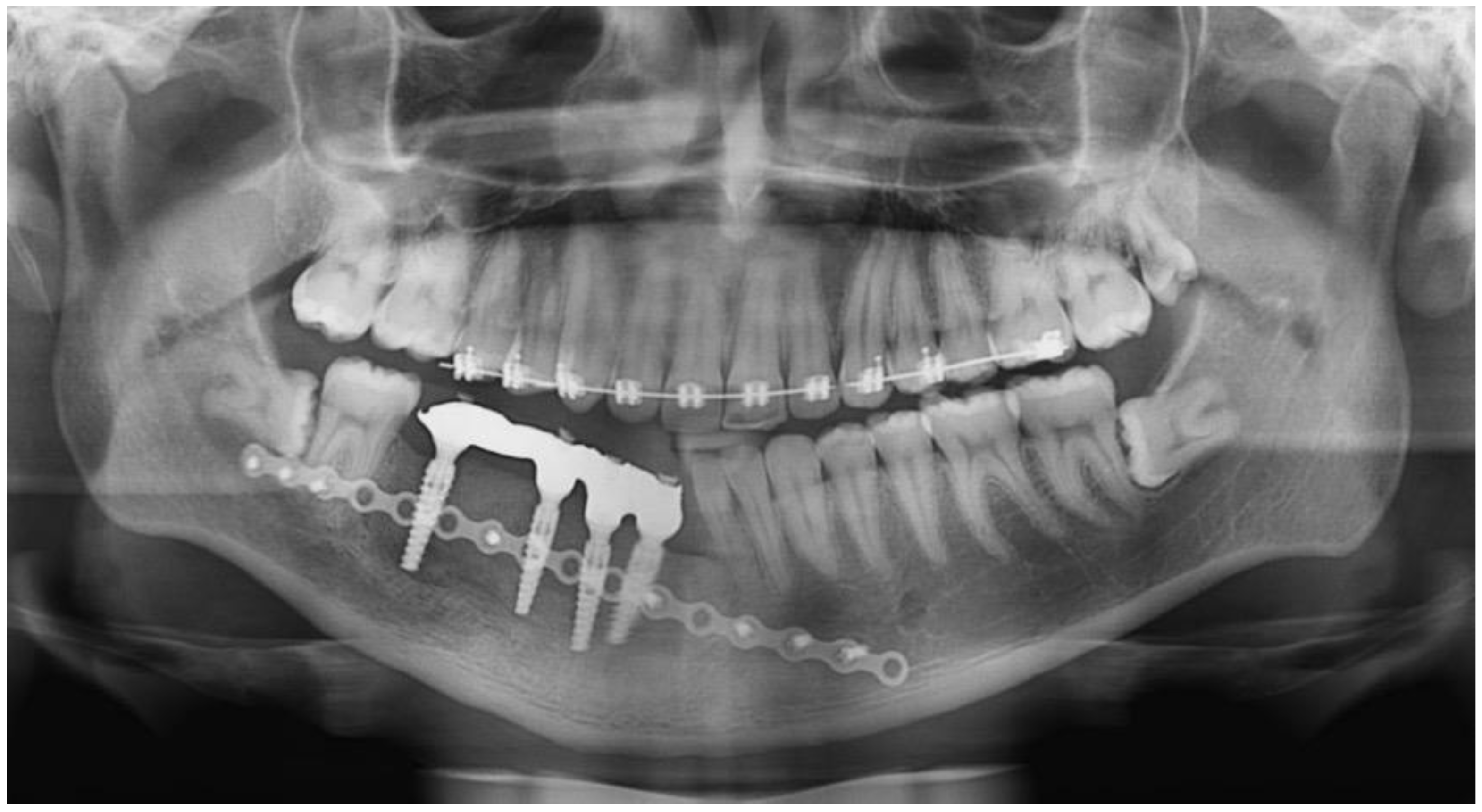


Digital Implant-Supported Restoration Planning Placed in Autologous Graft Using Titanium Implants Produced by Additive Manufacturing
 , ,
, ,  and
and 
Abstract
Share and Cite
Louro, R.S.; Moraschini, V.; Melhem-Elias, F.; Sturzinger, G.P.S.; Amad, R.A.; Shibli, J.A. Digital Implant-Supported Restoration Planning Placed in Autologous Graft Using Titanium Implants Produced by Additive Manufacturing. Dent. J. 2024, 12, 192. https://doi.org/10.3390/dj12070192
Louro RS, Moraschini V, Melhem-Elias F, Sturzinger GPS, Amad RA, Shibli JA. Digital Implant-Supported Restoration Planning Placed in Autologous Graft Using Titanium Implants Produced by Additive Manufacturing. Dentistry Journal. 2024; 12(7):192. https://doi.org/10.3390/dj12070192
Chicago/Turabian StyleLouro, Rafael Seabra, Vittorio Moraschini, Fernando Melhem-Elias, George Patrick Sotero Sturzinger, Renata Augusto Amad, and Jamil A. Shibli. 2024. "Digital Implant-Supported Restoration Planning Placed in Autologous Graft Using Titanium Implants Produced by Additive Manufacturing" Dentistry Journal 12, no. 7: 192. https://doi.org/10.3390/dj12070192
APA StyleLouro, R. S., Moraschini, V., Melhem-Elias, F., Sturzinger, G. P. S., Amad, R. A., & Shibli, J. A. (2024). Digital Implant-Supported Restoration Planning Placed in Autologous Graft Using Titanium Implants Produced by Additive Manufacturing. Dentistry Journal, 12(7), 192. https://doi.org/10.3390/dj12070192