
Novel Nanomaterials for Indoor Air Chemical Purification: A Review

Abstract
1. Introduction
2. Characteristics of Indoor Air Pollutants and Typical Purification Application Scenarios
2.1. Major Indoor Air Pollutants
2.1.1. Volatile Organic Compounds
2.1.2. Inorganic Hazardous Gases
2.1.3. Bioaerosols and Microbial Pollutants
2.1.4. Particulate Pollutants
2.2. Typical Application Scenarios and Core Requirements
2.2.1. Civil Residential Scenarios
2.2.2. Public Building Scenarios
2.2.3. Confined and Restricted Space Scenarios
3. Core Value of Indoor Air Purification Technologies and Novel Nanomaterials
3.1. Core Differences Between Physical Purification and Chemical Purification
3.2. Core Advantages of Novel Nanomaterials
3.2.1. Ultrahigh Specific Surface Area and Abundant Active Sites
3.2.2. Controllability of Morphology and Electronic Structure
3.2.3. Excellent Room-Temperature Catalytic Activity and Multifunctional Synergy
3.2.4. Favorable Environmental Stability and Scenario Adaptability
4. Novel Nanomaterial Systems for Indoor Air Chemical Purification
4.1. Noble Metal-Based Novel Nanomaterials
4.2. Non-Noble Metal-Based Novel Nanomaterials
4.3. Novel Porous Nanoframe Materials
4.3.1. MOFs
4.3.2. COFs
4.4. Novel Two-Dimensional Nanomaterials
4.5. Novel Multifunctional Composite Nanomaterials
5. Core Catalytic Systems of Novel Nanomaterials for Indoor Air Chemical Purification
5.1. Photocatalytic Purification System
5.2. Room-Temperature Thermal Catalytic Purification System
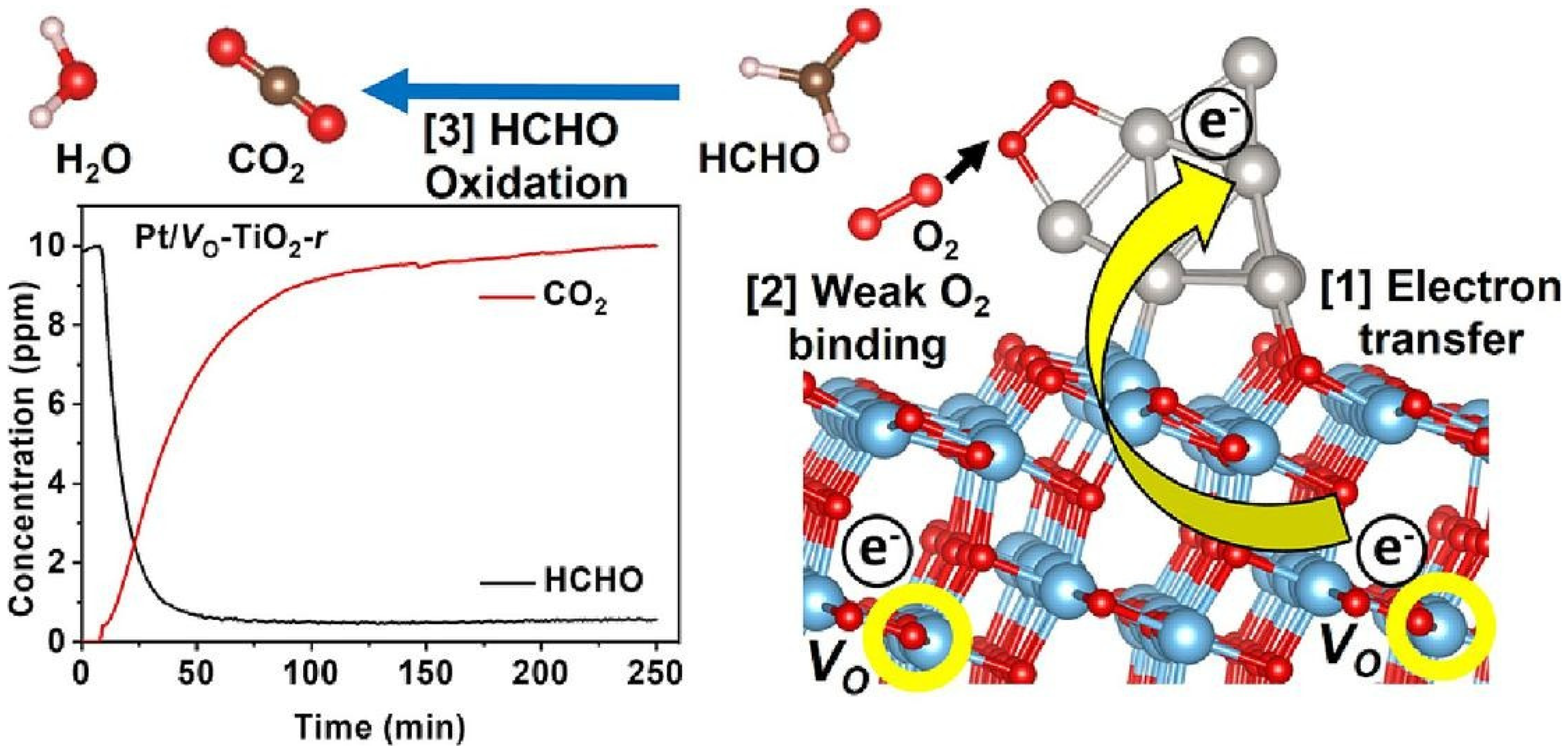
5.2.1. Room-Temperature Thermal Catalysis over Noble Metal-Based Materials
5.2.2. Non-Noble Metal-Based Materials for Room-Temperature Thermal Catalysis
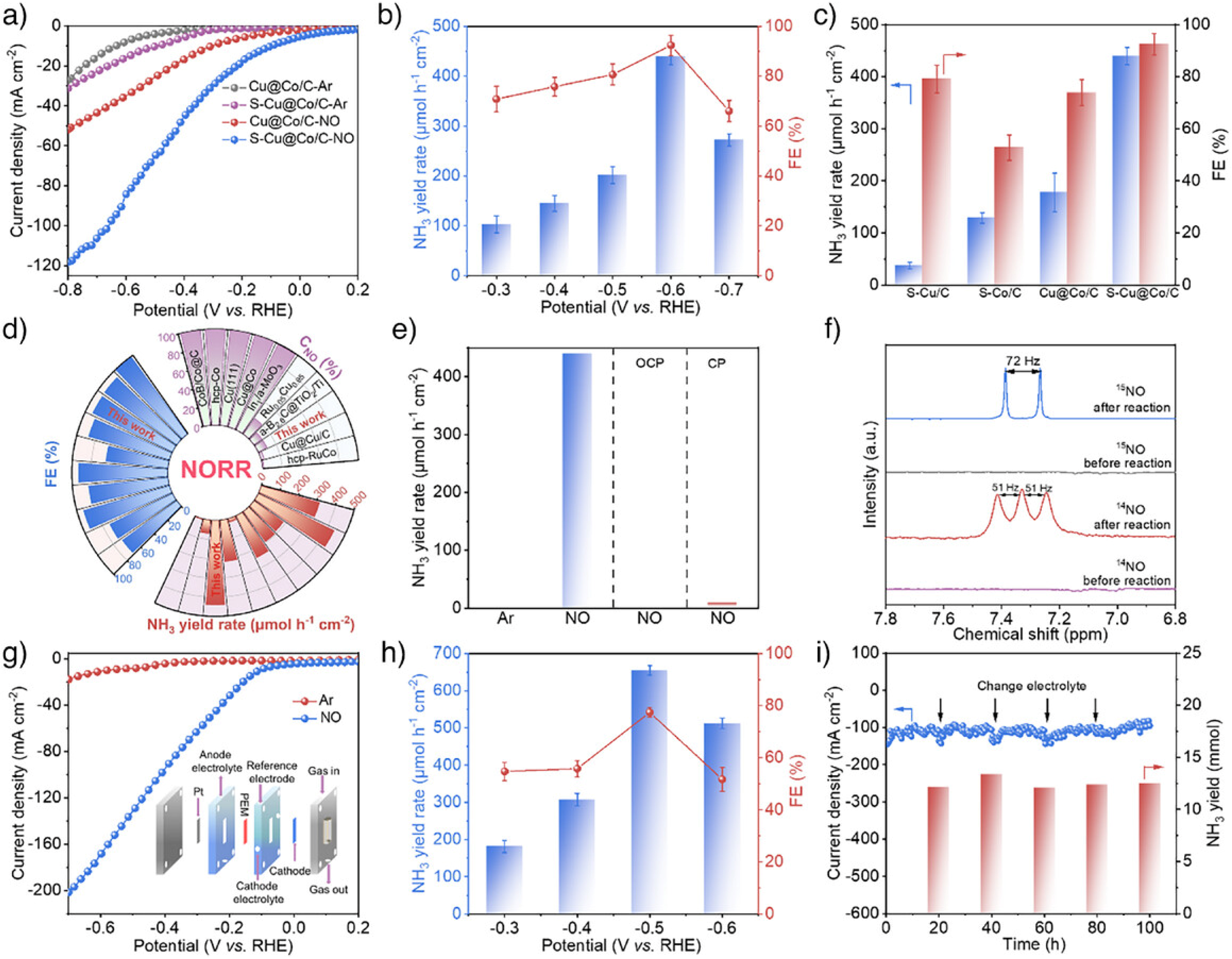
5.3. Electrocatalytic Purification System
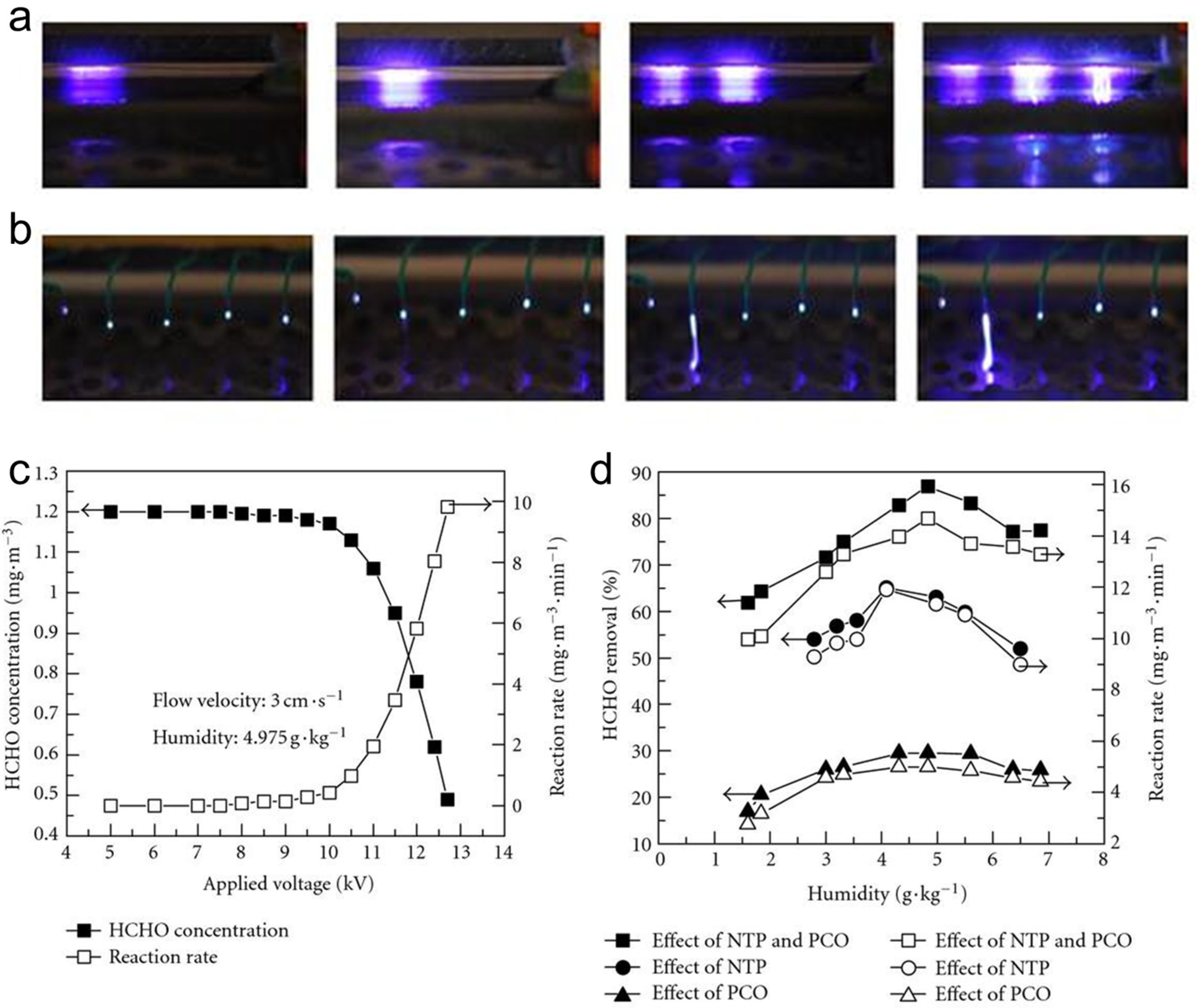
5.4. Non-Thermal Plasma Synergistic Catalytic Purification System
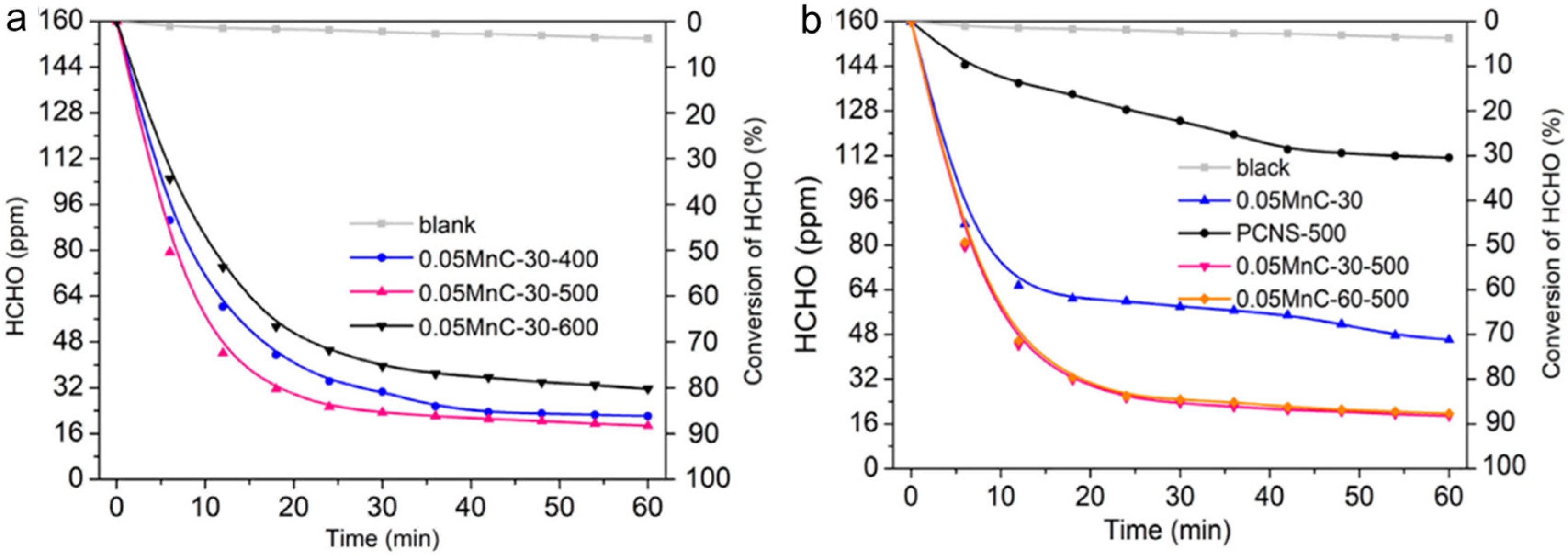
5.5. Novel Synergistic Catalytic Purification System
5.6. Priority Recommendation of Catalytic Systems
6. Challenges and Future Perspectives
6.1. Challenges
6.2. Future Development Directions
7. Conclusions
Author Contributions
Funding
Data Availability Statement
Conflicts of Interest
References
- Fleck, R.; Gill, R.L.; Pettit, T.; Irga, P.J.; Williams, N.L.R.; Seymour, J.R.; Torpy, F.R. Characterisation of fungal and bacterial dynamics in an active green wall used for indoor air pollutant removal. Build. Environ. 2020, 179, 106987. [Google Scholar] [CrossRef]
- Ali, M.U.; Lin, S.; Yousaf, B.; Abbas, Q.; Munir, M.; Rashid, A.; Zheng, C.; Kuang, X.; Wong, M.H. Pollution characteristics, mechanism of toxicity and health effects of the ultrafine particles in the indoor environment: Current status and future perspectives. Crit. Rev. Environ. Sci. Technol. 2022, 52, 436–473. [Google Scholar] [CrossRef]
- Namieśnik, J.; Górecki, T.; Łukasiak, J. Indoor air quality (IAQ), pollutants, their sources and concentration levels. Build. Environ. 1992, 27, 339–356. [Google Scholar] [CrossRef]
- Schalm, O.; Carro, G.; Jacobs, W.; Lazarov, B.; Stranger, M. The inherent instability of environmental parameters governing indoor air quality on board ships and the use of temporal trends to identify pollution sources. Indoor Air 2023, 2023, 7940661. [Google Scholar] [CrossRef]
- Besis, A.; Katsaros, T.; Samara, C. Concentrations of volatile organic compounds in vehicular cabin air–Implications to commuter exposure. Environ. Pollut. 2023, 330, 121763. [Google Scholar] [CrossRef]
- Kim, H.H.; Park, G.Y.; Lee, J.H. Concentrations of particulate matter, carbon dioxide, VOCs and risk assessment inside Korean taxis and ships. Environ. Sci. Pollut. R. 2019, 26, 9619–9631. [Google Scholar] [CrossRef]
- Dang, J.; Wang, T.; Liu, Y.; Hu, J.; Liu, S.; Xue, Y. Phosphate Removal by Surface-Modified Ceramsite Derived from the Synergistic Use of Multiple Solid Wastes. Materials 2026, 19, 834. [Google Scholar] [CrossRef]
- Zhang, C.; Pei, K.; Sheng, T.; Zhang, M.; Zhao, Z.; Huang, W.; Li, Y.; Ai, S.; Guo, Z. Metal oxides engineering: Toward sustainable superhydrophobic surfaces. Adv. Funct. Mater. 2026, 36, e12239. [Google Scholar] [CrossRef]
- Zhigalenok, Y.; Tazhibayeva, A.; Kokhmetova, S.; Starodubtseva, A.; Kan, T.; Isbergenova, D.; Malchik, F. Hexavalent chromium at the crossroads of science, environment and public health. RSC Adv. 2025, 15, 21439–21464. [Google Scholar] [CrossRef]
- Baruah, N.P.; Goswami, M.; Sarma, N.; Chowdhury, D.; Devi, A. Pioneering technologies over time to rehabilitate crude oil–contaminated ecosystems: A review. Environ. Sci. Pollut. Res. 2024, 31, 63576–63602. [Google Scholar] [CrossRef]
- Notardonato, I.; Di, F.C.; Avino, P. Methodologies Used to Determine the Main Markers of Indoor Air Quality. Purification 2025, 1, 3. [Google Scholar] [CrossRef]
- Wang, J.; Ma, J.; Zhuang, Z.; Liang, Z.; Jis, K.; Ji, G.; Zhou, G.; Cheng, H.M. Toward direct regeneration of spent lithium-ion batteries: A next-generation recycling method. Chem. Rev. 2024, 124, 2839–2887. [Google Scholar] [CrossRef] [PubMed]
- Stein, A.; Wang, Z.; Fierke, M.A. Functionalization of porous carbon materials with designed pore architecture. Adv. Mater. 2009, 21, 265–293. [Google Scholar] [CrossRef]
- Zhang, W.; Gao, C. Morphology transformation of self-assembled organic nanomaterials in aqueous solution induced by stimuli-triggered chemical structure changes. J. Mater. Chem. A 2017, 5, 16059–16104. [Google Scholar] [CrossRef]
- Li, Y.; Fu, Z.Y.; Su, B.L. Hierarchically structured porous materials for energy conversion and storage. Adv. Funct. Mater. 2012, 22, 4634–4667. [Google Scholar] [CrossRef]
- Zhang, Y.; Liu, X.; Wang, S.; Li, L.; Dou, S. Bio-nanotechnology in high-performance supercapacitors. Adv. Energy Mater. 2017, 7, 1700592. [Google Scholar] [CrossRef]
- Zhang, Y.; Hu, H.; Yan, Y.; Huang, K.; Mu, Y.; Zou, Z.; Zheng, K.; Yi, Z.; Zhao, Y.; Zhang, M.; et al. Probing Electrode–Electrolyte Synergy and Bottleneck Breakthrough of Zinc-Ion Capacitors from Two Key Configurations. Nano-Micro Lett. 2026, 18, 256. [Google Scholar] [CrossRef]
- Li, J.; Hui, L.; Zhang, W.; Lu, Y.; Yang, Y.; Feng, H. Scalable production of ultra small TiO2 nano crystal/activated carbon composites by atomic layer deposition for efficient removal of organic pollutants. Adv. Powder Technol. 2021, 32, 728–739. [Google Scholar] [CrossRef]
- Zhang, J.; Liu, Y.; Zhang, Z. Nanoconfined catalytic water purification within CoFeCu LDH-assembled membrane nanochannels. Appl. Catal. B-Environ. Energy 2024, 357, 124290. [Google Scholar] [CrossRef]
- Wang, J.; Yang, C.; Ye, D.; Hu, Y. The mechanism of effective photocatalytic degradation of toluene by Zr/Ti bimetallic metal-organic framework derivatives loaded with TiO2. Appl. Catal. B-Environ. Energy 2025, 361, 124635. [Google Scholar] [CrossRef]
- Weng, S.; Liu, L.; Tian, J.; Zhong, X.; Yang, C.; Ren, Q.; Fu, M. Insights into the morphology-dependent interfacial structures of CeO2 supports for enhancing toluene oxidation over CuO/CeO2 catalysts. Catal. Today 2026, 468, 115735. [Google Scholar] [CrossRef]
- Zhang, C.; He, H.; Tanaka, K. Perfect catalytic oxidation of formaldehyde over a Pt/TiO2 catalyst at room temperature. Catal. Commun. 2005, 6, 211–214. [Google Scholar] [CrossRef]
- Ching, W.H.; Leung, M.; Leung, D.Y.C. Solar photocatalytic degradation of gaseous formaldehyde by sol–gel TiO2 thin film for enhancement of indoor air quality. Sol. Energy 2004, 77, 129–135. [Google Scholar] [CrossRef]
- Ho, S.S.H.; Ip, H.S.S.; Ho, K.F.; Ng, L.P.T.; Dai, W.; Cao, J.; Chan, C.S.; Ho, L.B. Evaluation of hazardous airborne carbonyls on a university campus in southern China. J. Air Waste Manag. 2014, 64, 903–916. [Google Scholar] [CrossRef]
- Ogbodo, J.O.; Arazu, A.V.; Iguh, T.C.; Onwodi, N.J.; Ezike, T.C. Volatile organic compounds: A proinflammatory activator in autoimmune diseases. Front. Immunol. 2022, 13, 928379. [Google Scholar] [CrossRef]
- Zhu, H.; Dronamraju, V.; Xie, W.; More, S.S. Sulfur-containing therapeutics in the treatment of Alzheimer’s disease. Med. Chem. Res. 2021, 30, 305–352. [Google Scholar] [CrossRef]
- Raub, J.A.; Mathieu-Nolf, M.; Hampson, N.B.; Thom, S.R. Carbon monoxide poisoning—A public health perspective. Toxicology 2000, 145, 1–14. [Google Scholar] [CrossRef]
- Nam, K.M.; Waugh, C.J.; Paltsev, S.; Reilly, J.M.; Karplus, V.J. Carbon co-benefits of tighter SO2 and NOx regulations in China. Glob. Environ. Chang. 2013, 23, 1648–1661. [Google Scholar] [CrossRef]
- Yu, S. Fog geoengineering to abate local ozone pollution at ground level by enhancing air moisture. Environ. Chem. Lett. 2019, 17, 565–580. [Google Scholar] [CrossRef]
- Ma, X.; Yang, L.; Wu, H. Removal of volatile organic compounds from the coal-fired flue gas by adsorption on activated carbon. J. Clean. Prod. 2021, 302, 126925. [Google Scholar] [CrossRef]
- Wang, D.; Chen, Q.; Zhang, X.; Cao, C.; Wang, B.; Huang, X.; Peng, Y.; Li, J.; Lu, C.; Crittenden, J. Multipollutant control (MPC) of flue gas from stationary sources using SCR technology: A critical review. Environ. Sci. Technol. 2021, 55, 2743–2766. [Google Scholar] [CrossRef] [PubMed]
- Kumar, P.; Kausar, M.A.; Singh, A.B.; Singh, R. Biological contaminants in the indoor air environment and their impacts on human health. Air Qual. Atmos. Health 2021, 14, 1723–1736. [Google Scholar] [CrossRef] [PubMed]
- Hanada, N.; Kiguchi, M.; Fujishima, A. Current Status and Future Prospects of Photocatalytic Technology for Water Sterilization. Catalysts 2026, 16, 40. [Google Scholar] [CrossRef]
- Gong, J.; Zhu, T.; Kipen, H.; Wang, G.; Hu, M.; Guo, Q.; Ohman-Strickland, P.; Lu, S.E.; Wang, Y.; Zhu, P.; et al. Comparisons of ultrafine and fine particles in their associations with biomarkers reflecting physiological pathways. Environ. Sci. Technol. 2014, 48, 5264–5273. [Google Scholar] [CrossRef]
- Li, W.; Xu, P.; Wang, Z.; He, Y.; Qin, H.; Zeng, Y.; Li, Y.; Zhang, Z.; Guo, J. MOFs meet membrane: Application in water treatment and separation. Mater. Chem. Front. 2023, 7, 5140–5170. [Google Scholar] [CrossRef]
- Viswanathan, G.; Kane, D.B.; Lipowicz, P.J. High efficiency fine particulate filtration using carbon nanotube coatings. Adv. Mater. 2004, 16, 2045–2049. [Google Scholar] [CrossRef]
- Lee, H.; Park, S.J.; Lim, H.W.; Kim, J.T. Scenario-based smart services for single-person households. Indoor Built Environ. 2013, 22, 309–318. [Google Scholar] [CrossRef]
- Lv, X.; Yuan, H.; Sun, K.; Shi, W.; Li, C.; Guo, F. Construction of a visible-light-response photocatalysis–self-fenton degradation system of coupling industrial waste red mud to resorcinol–formaldehyde resin. Molecules 2024, 29, 1514. [Google Scholar] [CrossRef]
- Dancer, S.J. Importance of the environment in meticillin-resistant Staphylococcus aureus acquisition: The case for hospital cleaning. Lancet Infect. Dis. 2008, 8, 101–113. [Google Scholar] [CrossRef]
- Dirks, K.N.; Talbot, N.; Salmond, J.A.; Costello, S.B. In-cabin vehicle carbon monoxide concentrations under different ventilation settings. Atmosphere 2018, 9, 338. [Google Scholar] [CrossRef]
- Cao, X.; Pan, J.; Cai, G.; Hu, Y.; Zhang, X.; Dong, Z. Degradation mechanisms of corrosion and biofouling resistance of superhydrophobic coatings in harsh marine conditions. Prog. Org. Coat. 2022, 173, 107222. [Google Scholar] [CrossRef]
- Sharmila, V.G.; Kumar, M.D.; Tamilarasan, K. Machine learning-driven advances in metal-organic framework nanomaterials for wastewater treatment: Developments and challenges. Sep. Purif. Rev. 2026, 55, 35–55. [Google Scholar] [CrossRef]
- Améduri, B.; Hori, H. Recycling and the end of life assessment of fluoropolymers: Recent developments, challenges and future trends. Chem. Soc. Rev. 2023, 52, 4208–4247. [Google Scholar] [CrossRef]
- Iranmanesh, M.; Hulliger, J. Magnetic separation: Its application in mining, waste purification, medicine, biochemistry and chemistry. Chem. Soc. Rev. 2017, 46, 5925–5934. [Google Scholar] [CrossRef] [PubMed]
- Gahlot, S.; Dappozze, F.; Mishra, S.; Guillard, C. High surface area g-C3N4 and g-C3N4-TiO2 photocatalytic activity under UV and visible light: Impact of individual component. J. Environ. Chem. Eng. 2021, 9, 105587. [Google Scholar] [CrossRef]
- Yang, K.; Xue, F.; Sun, Q.; Yue, R.; Ling, D. Adsorption of volatile organic compounds by metal-organic frameworks MOF-177. J. Environ. Chem. Eng. 2013, 1, 713–718. [Google Scholar] [CrossRef]
- Yang, K.; Sun, Q.; Xue, F.; Lin, D. Adsorption of volatile organic compounds by metal–organic frameworks MIL-101: Influence of molecular size and shape. J. Hazard. Mater. 2011, 195, 124–131. [Google Scholar] [CrossRef]
- Suhong, L.U.; Fan, W.; Canchang, C.; Kelun, L. Catalytic oxidation of formaldehyde over CeO2-Co3O4 catalysts. J. Rare Earth 2017, 35, 867–874. [Google Scholar]
- Sun, Y.; Zhang, Y.; Hou, B.; He, Y.; Weng, W.; Zhu, Y.; Wang, Z. Catalytic Ozonation of Formaldehyde with an Oxygen-Vacancy-Rich MnOx/γ-Al2O3 Catalyst at Room Temperature. Catalysts 2024, 14, 885. [Google Scholar] [CrossRef]
- Liou, Y.S.; Liao, Y.C.; Age, Y.; Yoshida, M.; Wang, K.-H.; Nguyen, V.-H.; Lin, K.; Hu, C. Oxygen vacancies in MnO2 as active sites for photothermal catalytic degradation of formaldehyde. J. Environ. Chem. Eng. 2025, 13, 120161. [Google Scholar] [CrossRef]
- Zhao, Z.; Sun, Y.; Dong, F. Graphitic carbon nitride based nanocomposites: A review. Nanoscale 2015, 7, 15–37. [Google Scholar] [CrossRef]
- Nath, R.K.; Zain, M.F.M.; Jamil, M. An environment-friendly solution for indoor air purification by using renewable photocatalysts in concrete: A review. Renew. Sustain. Energy Rev. 2016, 62, 1184–1194. [Google Scholar] [CrossRef]
- Lin, Y.; Cao, Y.; Yao, Q.; Chai, O.J.H.; Xie, J. Engineering noble metal nanomaterials for pollutant decomposition. Ind. Eng. Chem. Res. 2020, 59, 20561–20581. [Google Scholar] [CrossRef]
- Quan, Z.; Wang, Y.; Fang, J. High-index faceted noble metal nanocrystals. Acc. Chem. Res. 2013, 46, 191–202. [Google Scholar] [CrossRef] [PubMed]
- Zhao, S.; Hu, F.; Li, J. Hierarchical core–shell Al2O3@ Pd-CoAlO microspheres for low-temperature toluene combustion. ACS Catal. 2016, 6, 3433–3441. [Google Scholar] [CrossRef]
- Zhu, J.; Mu, S. Active site engineering of atomically dispersed transition metal–heteroatom–carbon catalysts for oxygen reduction. Chem. Commun. 2021, 57, 7869–7881. [Google Scholar] [CrossRef]
- Zhang, Y.; Liu, Y.; Xie, S.; Huang, H.; Guo, G.; Dai, H.; Deng, J. Supported ceria-modified silver catalysts with high activity and stability for toluene removal. Environ. Int. 2019, 128, 335–342. [Google Scholar] [CrossRef]
- Li, R.; Zhang, L.; Zhu, S.; Fu, S.; Dong, X.; Ida, S.; Zhang, L.; Guo, L. Layered δ-MnO2 as an active catalyst for toluene catalytic combustion. Appl. Catal. A-Gen. 2020, 602, 117715. [Google Scholar] [CrossRef]
- Li, K.; Chen, C.; Zhang, H.; Hu, X.; Sun, T.; Jia, J. Effects of phase structure of MnO2 and morphology of δ-MnO2 on toluene catalytic oxidation. Appl. Surf. Sci. 2019, 496, 143662. [Google Scholar] [CrossRef]
- Xu, T.; Wang, L.; Lv, L.; Jiang, B.; Zhang, Z.; Sun, Z. Nest-like δ-MnO2 nanobelts for catalytic decomposition of low concentration toluene: Efficiency and catalytic mechanism. Fuel 2025, 380, 133133. [Google Scholar] [CrossRef]
- Huang, Q.; Lu, Y.; Si, H.; Yang, B.; Tao, T.; Zhao, Y.; Chen, M. Study of complete oxidation of formaldehyde over MnOx–CeO2 mixed oxide catalysts at ambient temperature. Catal. Lett. 2018, 148, 2880–2890. [Google Scholar] [CrossRef]
- Dai, S.; Xiao, L.; Li, Q.; Hao, G.; Hu, Y.; Jiang, W. 0D/1D Co3O4 quantum dots/surface hydroxylated g-C3N4 nanofibers heterojunction with enhanced photocatalytic removal of pharmaceuticals and personal care products. Sep. Purif. Technol. 2022, 297, 121481. [Google Scholar] [CrossRef]
- Wang, J.; Chen, Z.; Cao, T.; Yang, J.; Kuang, Y.; Kang, J. The Effect of Adding Different Elements (Mg, Fe, Cu, and Ce) on the Properties of NiCo2OX for CO-Catalyzed Oxidation. Materials 2025, 18, 2554. [Google Scholar] [CrossRef] [PubMed]
- Qu, W.; Liu, X.; Chen, J.; Dong, Y.; Tang, X.; Chen, Y. Single-atom catalysts reveal the dinuclear characteristic of active sites in NO selective reduction with NH3. Nat. Commun. 2020, 11, 1532. [Google Scholar] [CrossRef]
- Heinl, S.; Scheer, M. Activation of group 15 based cage compounds by [Cp BIG Fe(CO)2] radicals. Chem. Sci. 2014, 5, 3221–3225. [Google Scholar] [CrossRef]
- Manivannan, R.; Pandurangan, A. Formation of ethyl benzene and styrene by side chain methylation of toluene over calcined LDHs. Appl. Clay Sci. 2009, 44, 137–143. [Google Scholar] [CrossRef]
- Jujam, M.; Rajak, R.; Kumar, N.; Ghule, V.D.; Dharavath, S. Exploring Hydrogen-Bonded 3D MOFs: High-Performance, Thermally Stable Self-Assembled Iodine-Encapsulated Frameworks with Optimal Energetic Potential. Chem.-Eur. J. 2025, 31, e202501984. [Google Scholar] [CrossRef]
- Furukawa, H.; Cordova, K.E.; O’Keeffe, M.; Yaghi, O.M. The chemistry and applications of metal-organic frameworks. Science 2013, 341, 1230444. [Google Scholar] [CrossRef]
- Kong, G.Q.; Han, Z.D.; He, Y.; Ou, S.; Zhou, W.; Yildirim, T.; Krishna, R.; Zou, C.; Chen, B.; Wu, C.D. Expanded organic building units for the construction of highly porous metal–organic frameworks. Chem. Eur. J. 2013, 19, 14886–14894. [Google Scholar] [CrossRef]
- Park, D.; Lee, G.; Yoon, M.; Jhung, S.H. Phosphinic acid-functionalized MOF, MIL-101-PO2H2: Remarkable adsorbent to selectively remove cationic dyes from water. Chem. Eng. J. 2025, 520, 165742. [Google Scholar] [CrossRef]
- Lian, T.; Peng, R.; Xiao, Z.; Tang, X.; Xu, P.; Hu, Y.; Qiu, P. MOF-on-MOF nanomaterial (Fe-MOF@ UiO-66)-based ratiometric fluorescence/colorimetric dual-mode sensor for ultrasensitive detection of uric acid. Anal. Chim. Acta 2025, 1368, 344325. [Google Scholar] [CrossRef] [PubMed]
- Tong, W.; Liu, J.; Liu, S.; Huang, Z.; Huang, Z.; Chen, D.; Xiao, F.; Yang, S. ZIF-8-induced fluorescence-enhanced multifunctional MOF-on-MOF hydrogels for efficient adsorption and sensitive detection of uranyl ions in water. Talanta 2025, 295, 128299. [Google Scholar] [CrossRef] [PubMed]
- Chen, L.; Ye, X.; Zhang, T.; Qin, H.; Cheng, H.; Qi, Z. Fast assembly of metal organic framework UiO-66 in acid-base tunable deep eutectic solvent for the acetalization of benzaldehyde and methanol. Molecules 2022, 27, 7246. [Google Scholar] [CrossRef] [PubMed]
- Wang, Y.; Bi, F.; Wang, Y.; Jia, M.; Tao, X.; Jin, Y.; Zhang, X. MOF-derived CeO2 supported Ag catalysts for toluene oxidation: The effect of synthesis method. Mol. Catal. 2021, 515, 111922. [Google Scholar] [CrossRef]
- Qian, C.; Zhao, X. Two-dimensional heteropore covalent organic frameworks: From construction to functions. Acc. Chem. Res. 2025, 58, 1192–1209. [Google Scholar] [CrossRef]
- Tu, K.; Xu, X.; Li, J.; Zhu, W.; Chen, Z. Thin-Layer Covalent Organic Framework-Coated Gold Superstructures for Label-Free Raman Spectroscopic Monitoring of Multiple Volatile Organic Compounds. Anal. Chem. 2025, 97, 15173–15180. [Google Scholar] [CrossRef]
- Chen, Y.J.; Zhuo, H.Y.; Pan, Y.; Liang, J.X.; Liu, C.G. Triazine COF-supported single-atom catalyst (Pd1/trzn-COF) for CO oxidation. Sci. China Mater. 2021, 64, 1939–1951. [Google Scholar] [CrossRef]
- Srinivasan, P.; Dhingra, K.; Kailasam, K. A critical insight into porous organic polymers (POPs) and its perspectives for next-generation chemiresistive exhaled breath sensing: A state-of-the-art review. J. Mater. Chem. A 2023, 11, 17418–17451. [Google Scholar] [CrossRef]
- Zito, C.A.; Perfecto, T.M.; Volanti, D.P. Impact of reduced graphene oxide on the ethanol sensing performance of hollow SnO2 nanoparticles under humid atmosphere. Sens. Actuat B-Chem. 2017, 244, 466–474. [Google Scholar] [CrossRef]
- Ghosh, R.; Nayak, A.K.; Santra, S.; Pradhan, D.; Guha, P.K. Enhanced ammonia sensing at room temperature with reduced graphene oxide/tin oxide hybrid films. RSC Adv. 2015, 5, 50165–50173. [Google Scholar] [CrossRef]
- Winayu, B.N.R.; Mao, W.H.; Chu, H. Combination of rGO/S, N/TiO2 for the enhancement of visible light-driven toluene photocatalytic degradation. Sustain. Environ. Res. 2022, 32, 34. [Google Scholar] [CrossRef]
- Wu, L.; Zhu, Y.; Yuan, J.; Guo, X.; Zhang, Q. Advances in adsorption, absorption, and catalytic materials for VOCs generated in typical industries. Energies 2024, 17, 1861. [Google Scholar] [CrossRef]
- Wang, C.; Xu, T.; Xu, H.; Yuan, Y.; Gu, Q.; Zhang, X.; Zhu, B. Synergistic plasma-catalysis over porous Fe-doped CeO2 for the enhanced removal of toluene. Chem. Eng. J. 2026, 531, 174346. [Google Scholar] [CrossRef]
- Friesen, C.M.; Pulfer, J. Fluoropolymers in medical applications: Recent progress and development. Chem. Rev. 2025, 125, 7389–7489. [Google Scholar] [CrossRef]
- Le, T.S.; Dao, T.H.; Nguyen, D.C.; Nguyen, H.C.; Balikhin, I.L. Air purification equipment combining a filter coated by silver nanoparticles with a nano-TiO2 photocatalyst for use in hospitals. Adv. Nat. Sci-Nanosci. 2015, 6, 015016. [Google Scholar] [CrossRef]
- Serpone, N. Is the band gap of pristine TiO2 narrowed by anion-and cation-doping of titanium dioxide in second-generation photocatalysts? J. Phys. Chem. B 2006, 110, 24287–24293. [Google Scholar] [CrossRef]
- Binas, V.; Venieri, D.; Kotzias, D.; Kiriakidis, G. Modified TiO2 based photocatalysts for improved air and health quality. J. Mater. 2017, 3, 3–16. [Google Scholar]
- Ding, J.; Yang, Y.; Liu, J.; Wang, Z. Catalytic reaction mechanism of formaldehyde oxidation by oxygen species over Pt/TiO2 catalyst. Chemosphere 2020, 248, 125980. [Google Scholar] [CrossRef]
- Ahmad, W.; Jeong, H.; Nahm, H.H.; Lee, Y.; Park, E.; Lee, H.; Ali, G.; Kim, Y.H.; Jurng, J.; Oh, Y. Metal-anchoring, metal oxidation-resistance, and electron transfer behavior of oxygen vacancy-rich TiO2 in supported noble metal catalyst for room temperature HCHO conversion. Chem. Eng. J. 2023, 467, 143412. [Google Scholar] [CrossRef]
- Zong, Z.; Chen, D.; Zhao, C.; Tang, G.; Ji, Y.; Zhang, H.; Lv, Z. Application of Ce–Eu/TiO2 phase change material as the wall material to improve the indoor environment: Z. Zong et al. J. Mater. Res. 2021, 36, 615–627. [Google Scholar] [CrossRef]
- Durante, C.; Huang, B.; Isse, A.A.; Gennaro, A. Electrocatalytic dechlorination of volatile organic compounds at copper cathode. Part II: Polychloroethanes. Appl. Catal. B-Environ. Energy 2012, 126, 355–362. [Google Scholar] [CrossRef]
- Wang, Z.; Duan, H.; Qu, W.; Han, D.; Li, X.; Zhu, L.; Jiang, X.; Cheng, D.; Shen, Y.; Xie, M.; et al. Sulfur Mediated Interfacial Proton-Directed Transfer Boosts Electrocatalytic Nitric Oxide Reduction to Ammonia over Dual-Site Catalysts. Angew. Chem. Int. Ed. 2025, 64, e202511398. [Google Scholar] [CrossRef] [PubMed]
- Mista, W.; Kacprzyk, R. Decomposition of toluene using non-thermal plasma reactor at room temperature. Catal. Today 2008, 137, 345–349. [Google Scholar] [CrossRef]
- Liang, W.J.; Ma, L.; Liu, H.; Li, J. Toluene degradation by non-thermal plasma combined with a ferroelectric catalyst. Chemosphere 2013, 92, 1390–1395. [Google Scholar] [CrossRef] [PubMed]
- Lu, Y.; Wang, D.; Wu, Y.; Ma, C.; Zhang, X.; Yang, C. Synergistic effect of nanophotocatalysis and nonthermal plasma on the removal of indoor HCHO. Int. J. Photoenergy 2012, 2012, 354032. [Google Scholar] [CrossRef]
- Roland, U.; Holzer, F.; Kopinke, F.D. Improved oxidation of air pollutants in a non-thermal plasma. Catal. Today 2002, 73, 315–323. [Google Scholar] [CrossRef]
- Liu, W.; Shi, L.; Yin, R.; Sun, P.; Ren, J.; Wang, Y. Efficient Photothermal Elimination of Formaldehyde under Visible Light at Room Temperature by a MnOx-Modified Multi-Porous Carbon Sphere. Materials 2022, 15, 4484. [Google Scholar] [CrossRef]
- Wang, Z.; Yu, H.; Zhang, L.; Guo, L.; Dong, X. Photothermal conversion of graphene/layered manganese oxide 2D/2D composites for room-temperature catalytic purification of gaseous formaldehyde. J. Taiwan Inst. Chem. Eng. 2020, 107, 119–128. [Google Scholar] [CrossRef]
- Li, Y.; Karimi, M.; Gong, Y.N.; Dai, N.; Safarifard, V.; Jiang, H.L. Integration of metal-organic frameworks and covalent organic frameworks: Design, synthesis, and applications. Matter 2021, 4, 2230–2265. [Google Scholar] [CrossRef]
- Wei, R.J.; Luo, X.; Ning, G.H.; Li, D. Covalent metal–organic frameworks: Fusion of covalent organic frameworks and metal–organic frameworks. Acc. Chem. Res. 2025, 58, 746–761. [Google Scholar] [CrossRef]



| Catalytic System | Core Applicable Catalyst Materials | Core Advantages for Industrial Application | Priority Adaptation Scenarios |
|---|---|---|---|
| Room-Temperature Thermal Catalytic Purification | 1. Noble metal-based: Low-loading Pt/Pd/Ag nano/single-atom catalysts 2. Non-noble metal-based: Mn-Ce composite oxides, Mn-based oxides, spinel-type composite oxides | Full-time purification without light/heat input; no secondary pollution, human-friendly; mature process, compatible with existing equipment; non-noble metal systems, cost-effective | Civil residential buildings, office buildings, schools, and other daily indoor scenarios with long-term human occupancy |
| Photocatalytic Purification | 1. Transition metal-doped TiO2 composite catalysts 2. g-C3N4-based composite photocatalysts 3. MOFs/COFs-based visible-light photocatalysts | Mild conditions, visible-light-driven, low energy consumption; synchronous degradation and sterilization; can be made into passive purification coatings/building materials; modified TiO2 has mature production and ultra-low cost | Civil residential buildings, public buildings with good lighting conditions, passive purification building materials, and household small air purifiers |
| Non-Thermal Plasma Synergistic Catalytic Purification | Mn/Ce-based composite oxides, Fe-doped CeO2, BaTiO3-supported catalysts, honeycomb monolith catalysts | Fast reaction, strong large air volume processing capacity, high pollution shock resistance; synchronous purification, sterilization and dust removal | Confined and restricted spaces, industrial workshops, and public buildings with intermittent high pollution load |
| Electrocatalytic Purification | Transition metal dual-site catalysts, metal sulfide/phosphide electrocatalysts, all-solid-state gas diffusion electrode catalysts | Strong controllability, no light limitation, adjustable degradation rate; excellent high-concentration pollutant degradation efficiency; can realize pollutant resource utilization | Industrial indoor environments with high-concentration NOx pollution and special confined spaces with controllable energy supply |
| Adsorption–Catalysis Integrated Composite System | MOFs-derived materials, activated carbon/zeolite-supported catalysts, porous carbon-based composite catalysts | Adsorption–catalysis cycle solves low-concentration pollutant treatment pain point; synchronous removal of particulate and gaseous pollutants; pore structure designable for targeted purification | Industrial environments with characteristic pollutants, high-end civil purification equipment, and hospital high-efficiency sterilization and purification scenarios |
Disclaimer/Publisher’s Note: The statements, opinions and data contained in all publications are solely those of the individual author(s) and contributor(s) and not of MDPI and/or the editor(s). MDPI and/or the editor(s) disclaim responsibility for any injury to people or property resulting from any ideas, methods, instructions or products referred to in the content. |
© 2026 by the authors. Licensee MDPI, Basel, Switzerland. This article is an open access article distributed under the terms and conditions of the Creative Commons Attribution (CC BY) license.
Share and Cite
Yan, Y.; Xu, T.; Wang, C.; Fu, Y.; Zhu, B. Novel Nanomaterials for Indoor Air Chemical Purification: A Review. Inorganics 2026, 14, 111. https://doi.org/10.3390/inorganics14040111
Yan Y, Xu T, Wang C, Fu Y, Zhu B. Novel Nanomaterials for Indoor Air Chemical Purification: A Review. Inorganics. 2026; 14(4):111. https://doi.org/10.3390/inorganics14040111
Chicago/Turabian StyleYan, Yan, Tong Xu, Chenlong Wang, Yuhan Fu, and Bin Zhu. 2026. "Novel Nanomaterials for Indoor Air Chemical Purification: A Review" Inorganics 14, no. 4: 111. https://doi.org/10.3390/inorganics14040111
APA StyleYan, Y., Xu, T., Wang, C., Fu, Y., & Zhu, B. (2026). Novel Nanomaterials for Indoor Air Chemical Purification: A Review. Inorganics, 14(4), 111. https://doi.org/10.3390/inorganics14040111