1. Introduction
The surface spacing between optical elements is a key parameter in the manufacturing and assembly of optical lens systems. Accurate determination of the surface spacing of optical elements in multi-lens systems is vital to achieving the designed performance of systems [
1,
2,
3,
4,
5,
6,
7]. This spacing not only governs the mechanical stability of the system’s geometric configuration but also directly influences the optical path state, wavefront evolution, and ultimately the imaging or transmission characteristics. Therefore, developing a high-resolution, high-stability, and robust measurement system for the surface spacing of optical elements has become a technically significant challenge with broad application prospects and substantial research value. Optical interferometry [
8,
9] is a precise, non-contact, non-destructive, and highly sensitive technique for optical component characterization. Driven by advances in light sources, optical fibers, photodetectors, and digital signal processing, low-coherence optical interferometry has become the predominant method for measuring surface spacing between optical elements [
10,
11,
12,
13]. By employing a wide bandwidth, low-coherence technology achieves a short coherence length—typically on the order of micrometers—enabling unambiguous identification of individual reflection interfaces and effectively suppressing parasitic interference and system noise. Compared with long-coherence interferometric systems, low-coherence systems demonstrate superior performance in multilayer thin-film characterization, biological tissue imaging (e.g., OCT), thickness metrology of transparent materials, and interference measurement of optical element surfaces [
14], particularly for high-resolution distance measurements spanning sub-micrometer to millimeter scales [
15,
16].
The French company Fogale Nanotech has investigated low-coherence fiber interferometers for lens thickness measurement. Their system employed a 1310 nm SLD as the light source and integrated fiber collimators, optical delay lines, and fiber couplers to realize a fully fiber-optic architecture. Lens surface positioning was achieved by extracting the interference envelope using Kieran Larkin’s five-step phase-shifting algorithm [
17]. In Germany, the research team at Trioptics has advanced low-coherence interferometry through system-level optimization. Building upon the OptiCentric platform, they developed the OptiSurf series of metrology instruments, which implement the same five-step phase-shifting algorithm to attain an alignment and positioning accuracy of 0.1 μm, a maximum measurement range of 800 mm, and a center thickness measurement accuracy of 0.15 μm [
18]. Peng et al. adopted an ultracompact broadband spectral source (470–1700 nm, 1230 nm bandwidth) in a low-coherence setup for lens surface-spacing measurement. With a coherence length of approximately 0.42 μm, this source enhances sensitivity and near-zero optical path difference, enabling more precise localization of the interference fringe center; the resulting system achieves a measurement accuracy of 0.2 μm over a dynamic range of 1.5 m [
19]. Xu et al. addressed the weak interference contrast arising from intensity imbalance between the reference and sample arms by designing a Michelson-type interferometer with asymmetric beam splitting ratios—specifically, higher incident power in the sample arm. To mitigate asymmetrical broadening of the interference envelope induced by chromatic dispersion in the test lens, they applied the K-means clustering algorithm to robustly identify and extract multiple interference peak positions, thereby improving measurement fidelity [
20]. Shi et al. proposed a cavity-based common-path architecture integrating both low-coherence positioning and high-coherence ranging modules within a shared reference arm. Within this structure, the low-coherence module supports either Michelson or MZ configurations—the former offers simplicity but lower accuracy and stability, whereas the latter employs balanced photodetectors to suppress both common-mode and local noise, yielding superior measurement precision. A key advantage of the cavity design is its ability to directly determine lens center thickness without prior knowledge of the material’s refractive index. Furthermore, to reconcile the trade-off between measurement range and displacement-stage resolution, a MEMS optical switch-based multi-channel delay line was incorporated to effectively double the measurable range [
10]. Phase shifting remains a widely adopted technique for demodulating interference phase information [
21,
22]. In current low-coherence surface-spacing metrology of optical elements, the five-step phase-shifting algorithm is predominant for envelope reconstruction and axial positioning. Since the phase shift interval corresponds to π/2 at the equivalent center wavelength recorded by the detector, precise control of the mechanical delay line stepping distance is essential.
This work introduces a dedicated four-quadrant phase/envelope detection component optimized for surface spacing measurement between optical elements. By monolithically integrating four-quadrant polarizers with corresponding four-quadrant photodetectors, the component enables concurrent, co-located detection of both phase difference and envelope modulation in fiber-coupled interference signals. Relative to polarization cameras, the four-quadrant detector offers superior spatial confinement—making it ideal for monitoring phase variations at a single, fixed location—or enhanced temporal fidelity for tracking envelope dynamics. Compared with multi-point detector configurations, the four-quadrant architecture achieves higher optical–electrical integration density—particularly in the front-end signal conversion stage—and facilitates inherent inter-channel synchronization and quadrant-wise intensity normalization.
This paper proposes an optical element surface-spacing measurement method based on low-coherence four-quadrant phase shift detection. A servo motor drives the delay line to perform precise optical path scanning. An orthogonal polarization MZ fiber interferometer is constructed, and real-time calibration of the delay line is achieved using a spatially resolved polarization four-quadrant phase detector. The envelope of the low-coherence interference signal is thereby extracted, enabling high-precision surface-spacing measurement of optical components without requiring strict π/2 phase shift step control.
2. Principle
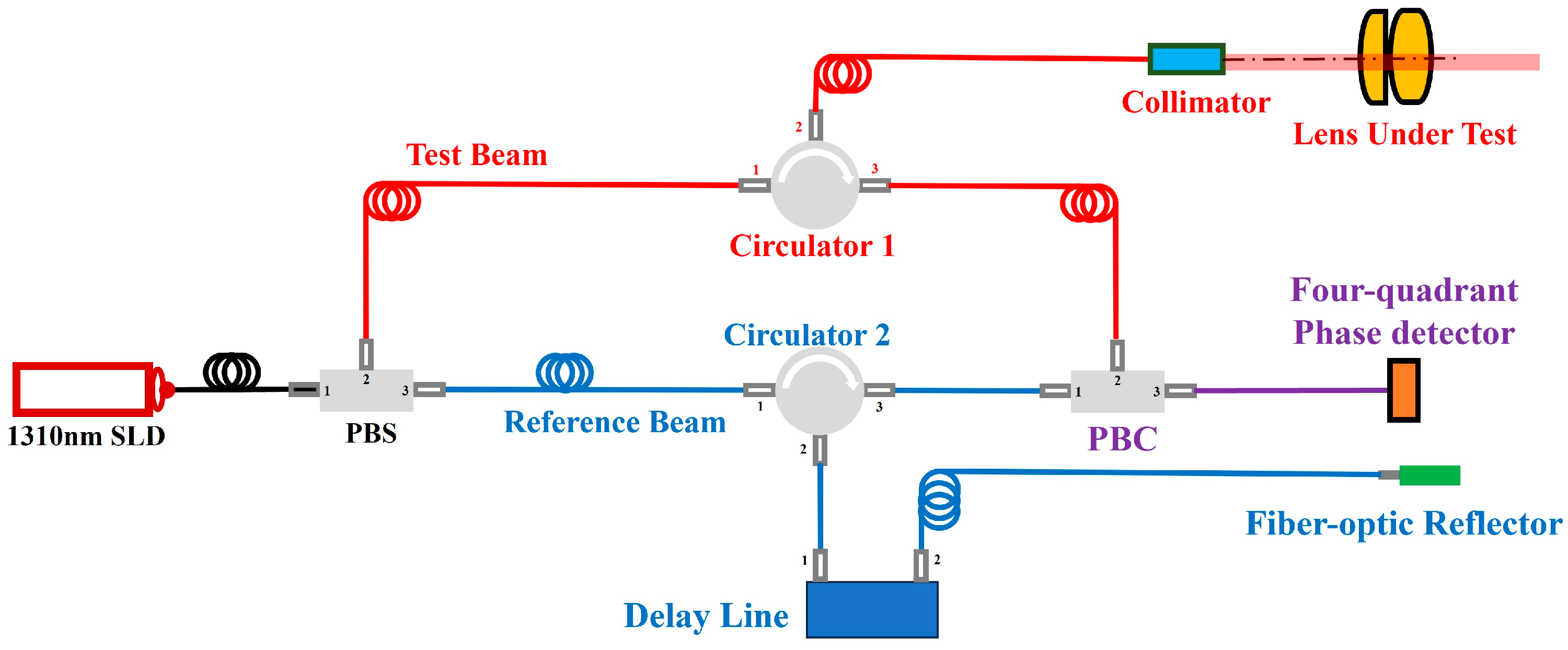
To reduce the low-coherence optical element surface-spacing measurement system’s dependence on precise scanning step control, we designed and constructed a MZ-type measurement system based on low-coherence four-quadrant envelope detection, as illustrated in
Figure 1. Free-space polarized MZ interferometric configurations are widely used for fiber mode diagnosis [
23] and also for high-precision displacement measurement. The MZ system in this work consists of a broadband SLD source with a central wavelength of 1310 nm, a polarization beam splitter (PBS), a polarization beam combiner (PBC), two polarization-maintaining circulators, a delay line, and a spatial four-quadrant modulation/demodulation module. The 1310 nm broadband light is split by the PBS into two linearly polarized beams. One beam (test beam) passes through Circulator 1 and a collimator, then exits to focus on the optical element under test, with reflected light returning to the system via the same path. The other beam (reference beam) travels through Circulator 2 and the delay line, then is reflected back by a Fiber-optic Reflector. The two beams finally converge at the PBC, forming orthogonally polarized beams that are directed to the spatial four-quadrant modulation/demodulation module. Given the SLD’s extremely short coherence length, distinct interference signals only form when the optical path difference (OPD) between the two arms falls within the coherence length range. This channel thus primarily enables rough positioning of the optical element’s surface spacing and effective matching of the interference path.
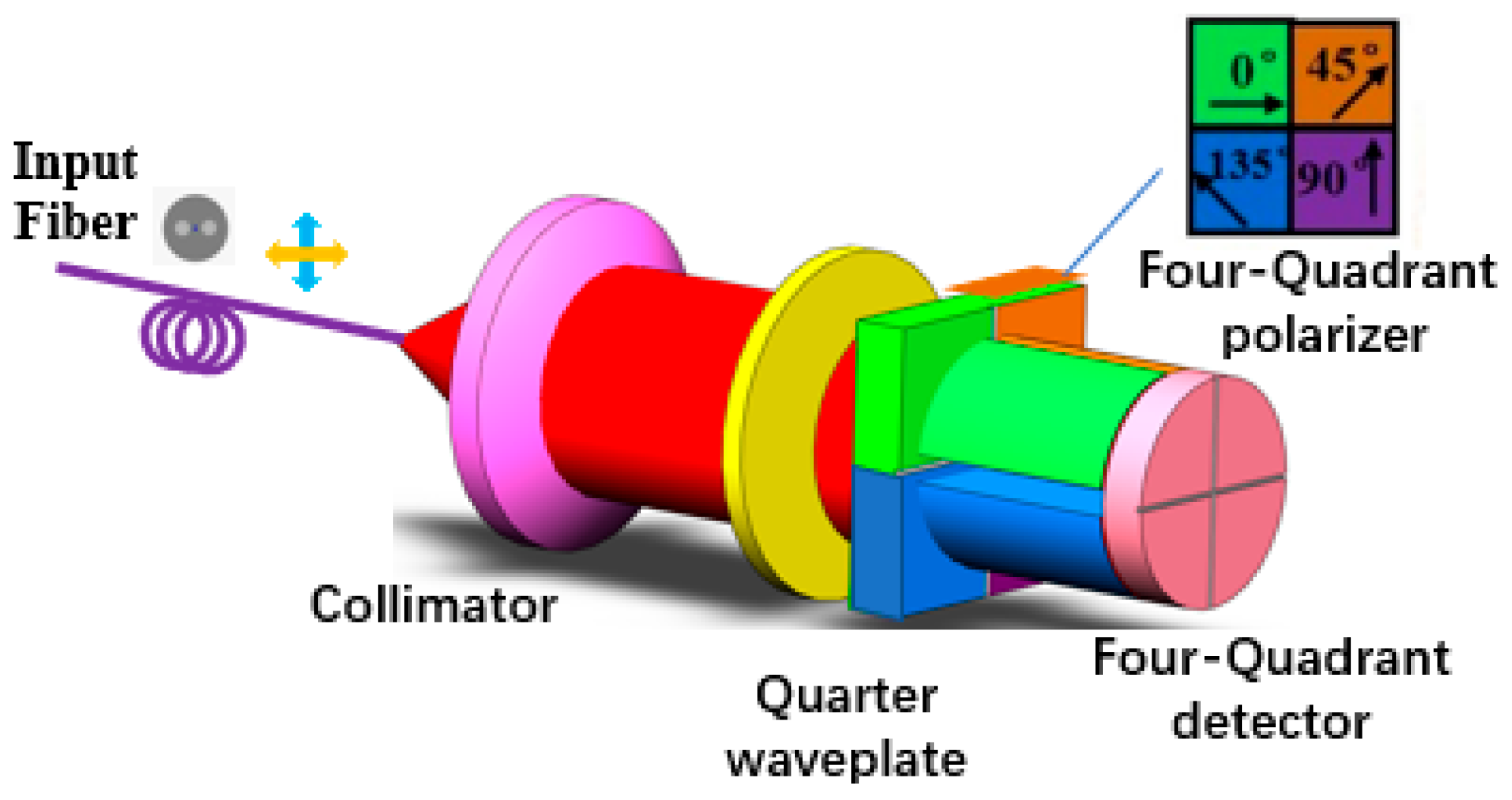
Compared with traditional low-coherence measurement systems that rely on the five-step phase-shifting method to extract interference envelope information, this system achieves envelope demodulation via spatial synchronous phase-shifting technology (
Figure 2). The two orthogonally polarized beams carrying the target phase information, output by the fibers of PBC, enter the spatial four-quadrant phase shift detection module. This module consists of a collimating lens, a quarter-wave plate, a four-quadrant aperture, a four-quadrant polarizer, and a four-quadrant detector. By using a polarization array to perform spatial synchronous phase shifting on the two circularly polarized beams, four-channel phase-shifted interference signals are obtained. The interference signals detected by the four-quadrant detector are collected by a high sampling rate multi-channel analog-to-digital converter (ADC). The interference signal of the
k-th quadrant
can be expressed as [
24] by Formula (1):
where
denotes the background component of the interference signal at the
t-th time point, related to source intensity fluctuations and fiber device insertion loss;
represents the interference signal envelope, primarily determined by the delay line-scanned OPD
between the reference and test beams. The envelope reaches its maximum when the OPD is zero at time
t;
is the angle between the polarizer’s transmission axis and the
x direction, set to 0°, 45°, 90°, and 135° respectively;
n is the medium refractive index; and
λ is the source central wavelength. The interference signal envelope
can be expressed as [
25] by Formula (2):
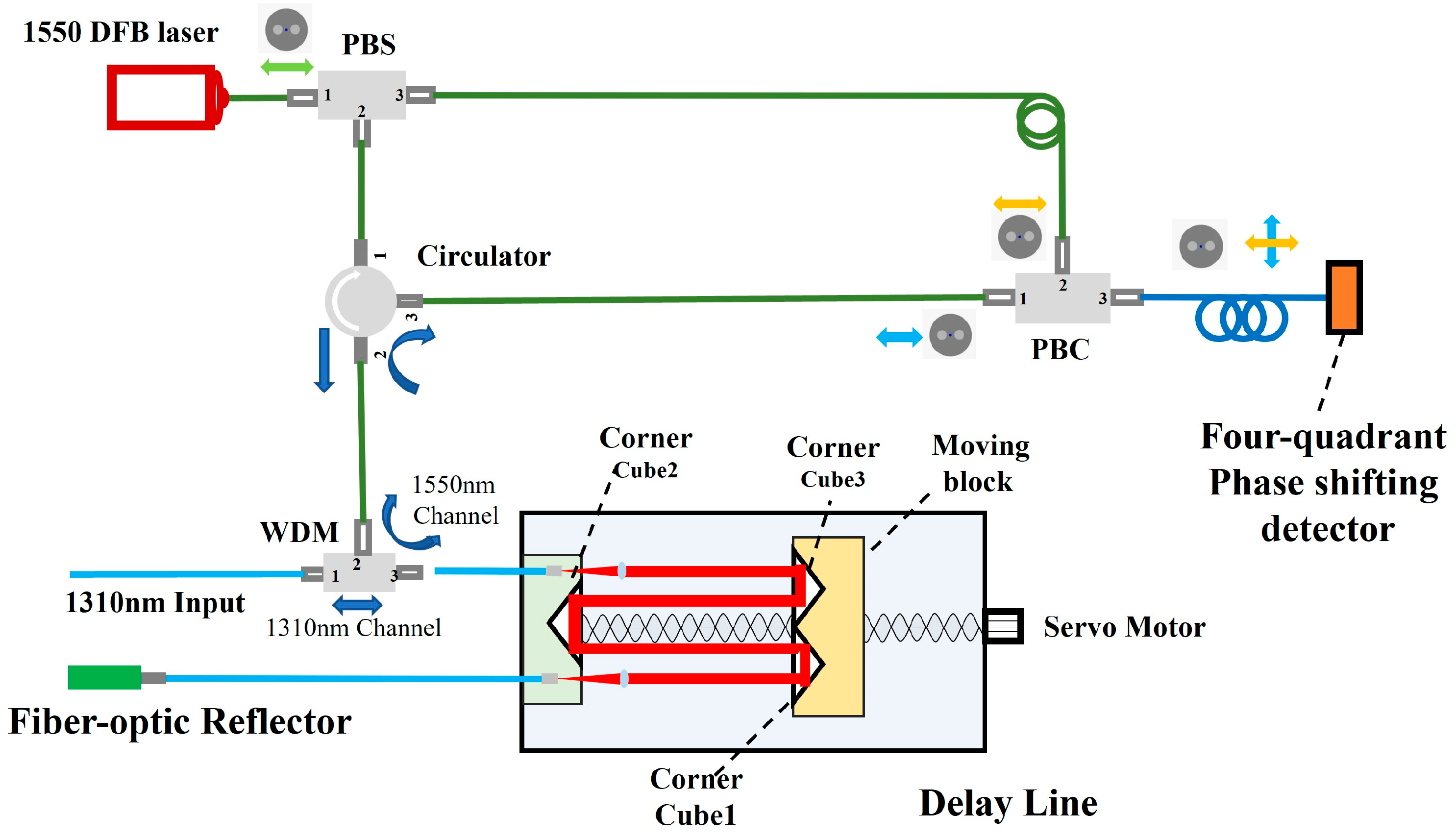
Beyond extracting the time-varying envelope of low-coherence optical interference signals, accurately measuring the OPD variation between reference and test beams during scanning, and real-time calibrating the delay line, are also critical to achieving high-precision optical component surface-spacing measurement. This work designs two delay line calibration optical paths, both leveraging a high-coherence 1550 nm light source combined with a four-quadrant phase-shift modulation structure to enable high-resolution displacement measurement (
Figure 3 and
Figure 4, respectively).
Figure 3 illustrates the WDM-based calibration method: a 1550 nm calibration laser is coupled into the delay line’s measurement path via a WDM. The narrow-linewidth output of the 1550 nm Distributed feedback (DFB) laser is split by a PBS into two polarized beams. One beam enters the WDM’s 1550 nm channel through a circulator, passes through the delay line to be calibrated and an Fiber-optic Reflector (for reflection), then recombines with the other PBS split beam to form a MZ test path. The output light is detected by a four-quadrant phase detector, and the upper computer demodulates the phase difference between the two arms to calibrate the delay line’s OPD variation. Note that this method was previously reported by Shi et al. [
10]. Its key feature is that the 1310 nm low-coherence light and 1550 nm calibration laser share the same optical path in the delay line, expressed as by Formula (3):
where
and
are the phases demodulated by the four-quadrant phase shift detector,
and
are the central wavelengths of 1310 nm SLD source and 1550 nm laser, respectively. The calibrated OPD of the 1550 nm path thus synchronously reflects the reference beam’s OPD variation in the 1310 nm optical component surface-spacing measurement system (
Figure 1).
While the WDM-based method ensures consistent optical path changes for low-coherence light and the calibration laser during delay line movement, their small wavelength difference leads to nearly identical interference signal distortions induced by rapid delay line motion. Notably, the envelope distortion of low-coherence interference signals is less sensitive to rapid delay line scanning than the phase distortion of laser interference signals—making the WDM method unsuitable for high-speed calibration of the optical component surface-spacing measurement system. To address this limitation, a dual-path delay line calibration method is designed (
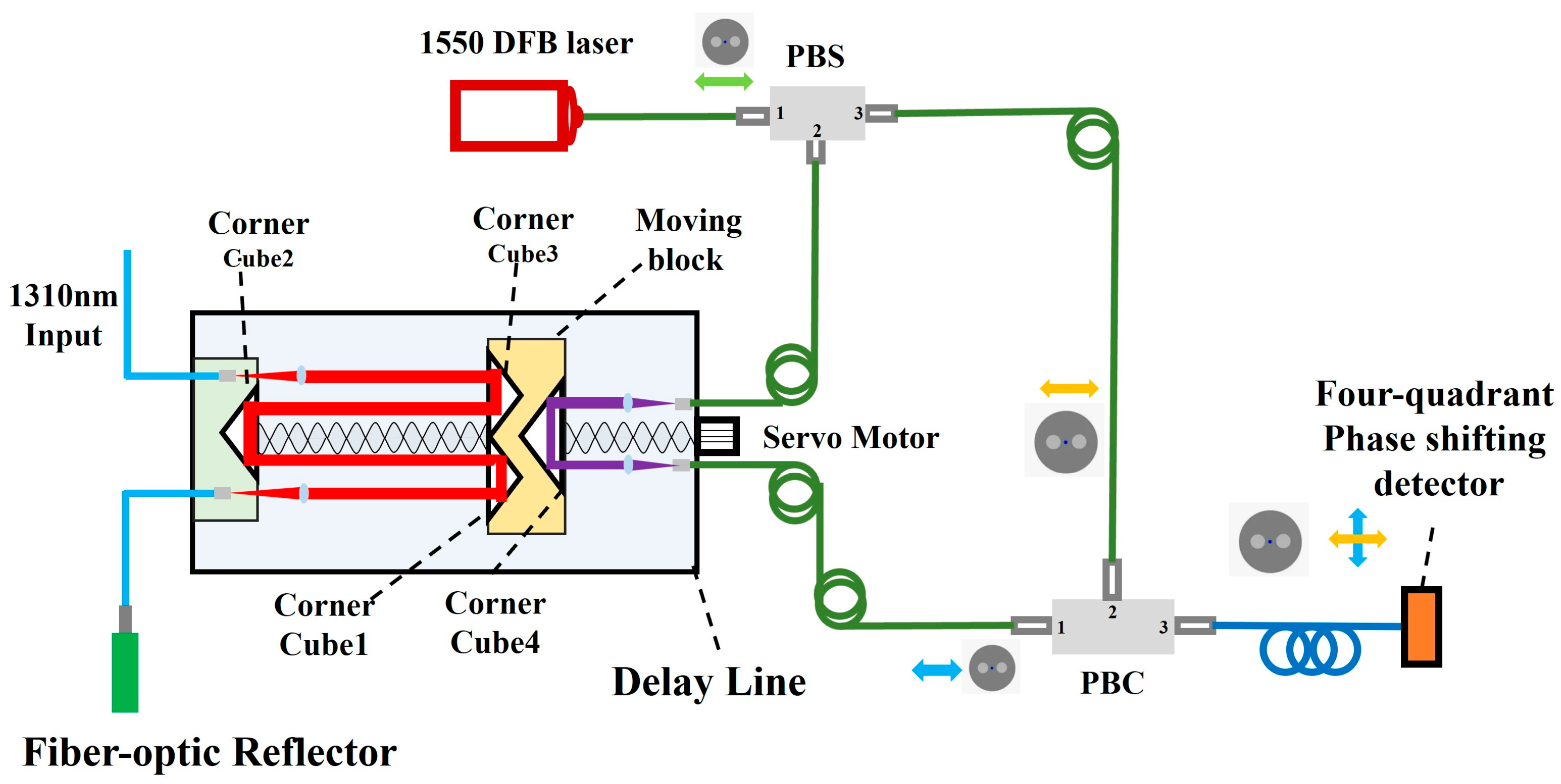
Figure 4). Corner cubes are mounted at both ends of the delay line’s moving block: the 1550 nm calibration laser propagates through an MZ optical path and is detected by a four-quadrant phase detector, while the 1310 nm test path and 1550 nm calibration path share the same moving block. The phase changes of the two paths are expressed as by Formulas (4) and (5):
where
denotes the moving block’s displacement variation.
In the 1550 nm calibration channel of the delay line, the Corner Cube 4 introduces a double-pass optical path change for the test beam due to its reflective geometry (as illustrated by the purple ray path in
Figure 4); consequently, the relationship between the phase change of the test light and the displacement of the moving block is expressed by Formula (5)—hence the coefficient 2 in Formula (5). In contrast, in the 1310 nm test channel, the combined reflection from Corner Cubes 1, 2, and 3 results in a one-way optical path change equal to four times the displacement of the moving block (as shown by the red ray path in
Figure 4). Further, owing to the self-collimating property of the Fiber-optic Reflector, this path change is effectively doubled again upon retro-reflection, yielding a total optical path change eight times the displacement—thus justifying the coefficient 8 in Formula (4). During high-speed scanning, the 1550 nm laser signal remains phase distortion-free even when critical envelope distortion occurs in the low-coherence test signal—facilitating high-speed calibration and acquisition of optical component surface spacing.
3. Experimental Setup
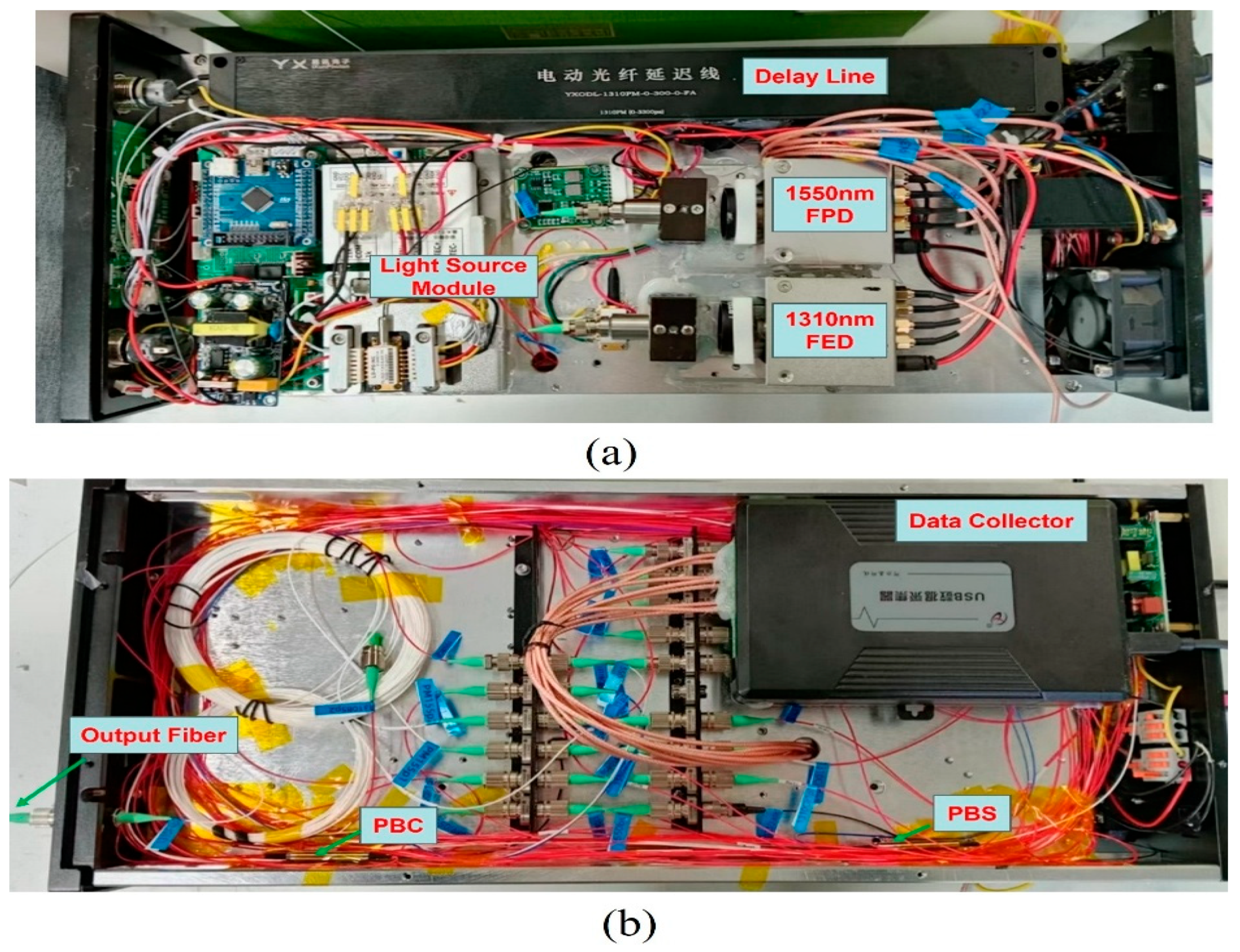
The low-coherence four-quadrant envelope detection-based optical component surface-spacing measurement system was constructed as shown in
Figure 5. Two interference paths (for measurement and calibration) were built, both adopting polarization-maintaining (PM) fiber-based MZ configurations. The system employed a dual-sided layout design. A SLD (LD-PD INC, Singapore, Singapore, PL-SLD-1310-B-A81-PA; central wavelength: 1316 nm, spectral width: 51 nm) served as the system light source. It was output via a single-mode PM fiber (Nufern PM-1300-XP, Shanghai, China, slow-axis aligned), with a fiber output power of ~19 mW and a maximum operating current of 500 mA. The PBS (MC Light, Shenzhen, China, MCPBS-1310)—fabricated by tapering PM fibers—output two slow-axis-aligned linearly polarized beams, which acted as the reference and test beams. After entering PM Circulator 1 (MC-CIR), the test beam at Port 2 of Circulator 1 was collimated by a collimating lens, reflected back by the optical component under test, and then output via Port 3 of Circulator 1. For the reference beam: after entering Circulator 2, the beam at Port 2 of Circulator 2 passed through a delay line (Yixun Photonics, Mianyang, China, delay: 3300 ps), was reflected by a fiber reflector, and then reached Port 3 of Circulator 2. The reference and test output beams passed through a PBC (MC Light, MCPBS-1310)—integrated with a spatial polarization prism and coupled fibers—and were output from the fiber with mutually orthogonal polarization states. The interference signal envelope, which carries the surface-spacing information of the optical component under test, was detected by 1310 nm four-quadrant envelope detector (1310 nm FED). This detector primarily consists of a collimating lens, a broadband quarter-wave plate, a four-quadrant polarizer (Guangyu, Suzhou, China, thin-sheet type), and a four-quadrant detector (Ouguang, Shanghai, China, IGQ5000-IT; target surface size: 5 mm × 5 mm, bandwidth: 200 kHz).
In the calibration optical path, a laser (LD-PD INC, Singapore, PL-SLD-1550-B-A81-PA; central wavelength: 1550 nm, linewidth: 300 kHz) was used as the calibration light source for real-time calibration of the delay line’s delay amount. For the WDM scheme, a WDM introduces the 1550 nm calibration laser into the delay line; for the dual-path calibration scheme, the calibration light source is directly connected to the delay line’s calibration fiber. Both schemes employ a PBS for beam splitting and a PBC for beam combining, with the orthogonally polarized beams formed by the PBC received by 1550 nm four-quadrant phase detector (1550 nm FPD). Interference signals from a total of 8 channels (across the two phase-shifting components) were collected by a multi-channel ADC (Altai Technology, Beijing, China, USB3202N) with a sampling frequency of 250 kHz, and then recorded by a personal computer (Lenovo Legion, Beijing, China, equipped with an Intel I7 processor).
4. Experimental Data and Analysis
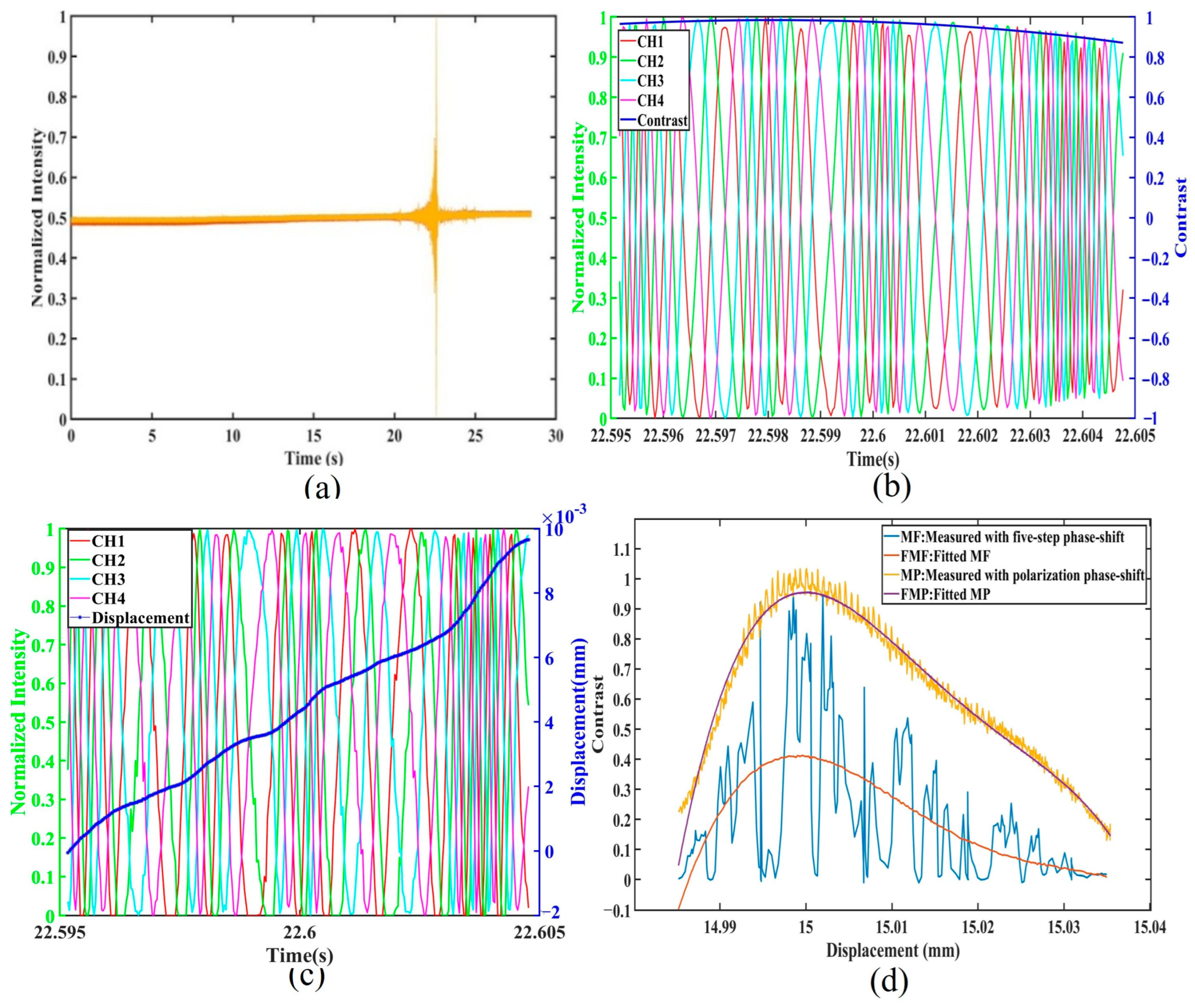
Figure 6a presents the phase-shifted interference signals collected by the low-coherence four-quadrant phase shift detection-based optical component surface-spacing measurement system. The measured object is an aluminum-coated mirror with ~90% reflectivity. The delay line’s optical path scanning speed is defined by the number of pulses emitted per second, with a scanning pulse rate of ~5000 pulses s
−1. The system collected signals for ~28 s, with a single channel acquiring ~900,000 intensity data points; the maximum intensity signal occurs at 22.6 s.
Figure 6b shows the four-channel intensity signals and envelope within 10 ms near the maximum intensity. A distinct phase shift exists between the four-channel signals, as four-quadrant polarizers with 22.5° transmission axis intervals are placed in front of each detector quadrant. Unlike near-infrared micro-polarizers fabricated from metal gratings [
26], this work uses low-cost four-quadrant polarizers (polarization directions: 0°, 45°, 90°, 135°) fabricated by cutting a polymer substrate, with an extinction ratio > 30 dB in the near-infrared region.
Figure 6c displays the 1550 nm laser phase-shifted interference signals collected by the four-quadrant phase detector in the WDM calibration device over the same period. A single channel shows ~13 cycles of interference intensity variation; the blue curve in
Figure 6c represents the delay line’s optical path change (~10 μm) demodulated via the four-step polarization phase-shifting method. Since the delay line’s scanning servo motor is not perfectly linear, the optical path’s time-dependent slope fluctuates—highlighting the necessity of real-time calibration for high-precision measurements.
Figure 6d compares the interference envelope changes with delay line displacement, calculated via the polarization phase-shifting method and the five-step phase-shifting method. When the delay line’s optical path is scanned to 15 mm, the reference test arm OPD of the surface-spacing measurement system reaches zero. The five-step method uses single-channel interference intensity data (sampling one point every 7 data points) to achieve an ~π/2 phase shift interval, with its envelope shown as the blue curve in
Figure 6d. However, due to the nonlinear response of the delay line stepping motor, the actual phase intervals between adjacent samples deviate from the ideal π/2, resulting in a distorted and less smooth interference envelope. To quantitatively assess the signal-to-noise ratio (SNR) of the interference envelope, we applied polynomial fitting to the envelopes obtained by both methods and computed the standard deviation (STD) of the fitting residuals as a robust metric of envelope noise. The residual STD is 0.031 for the polarization phase-shifting method and 0.19 for the five-step method. This indicates that—without motor nonlinearity correction—the polarization phase-shifting method yields an interference envelope with significantly higher SNR, thereby enabling more accurate envelope peak localization.
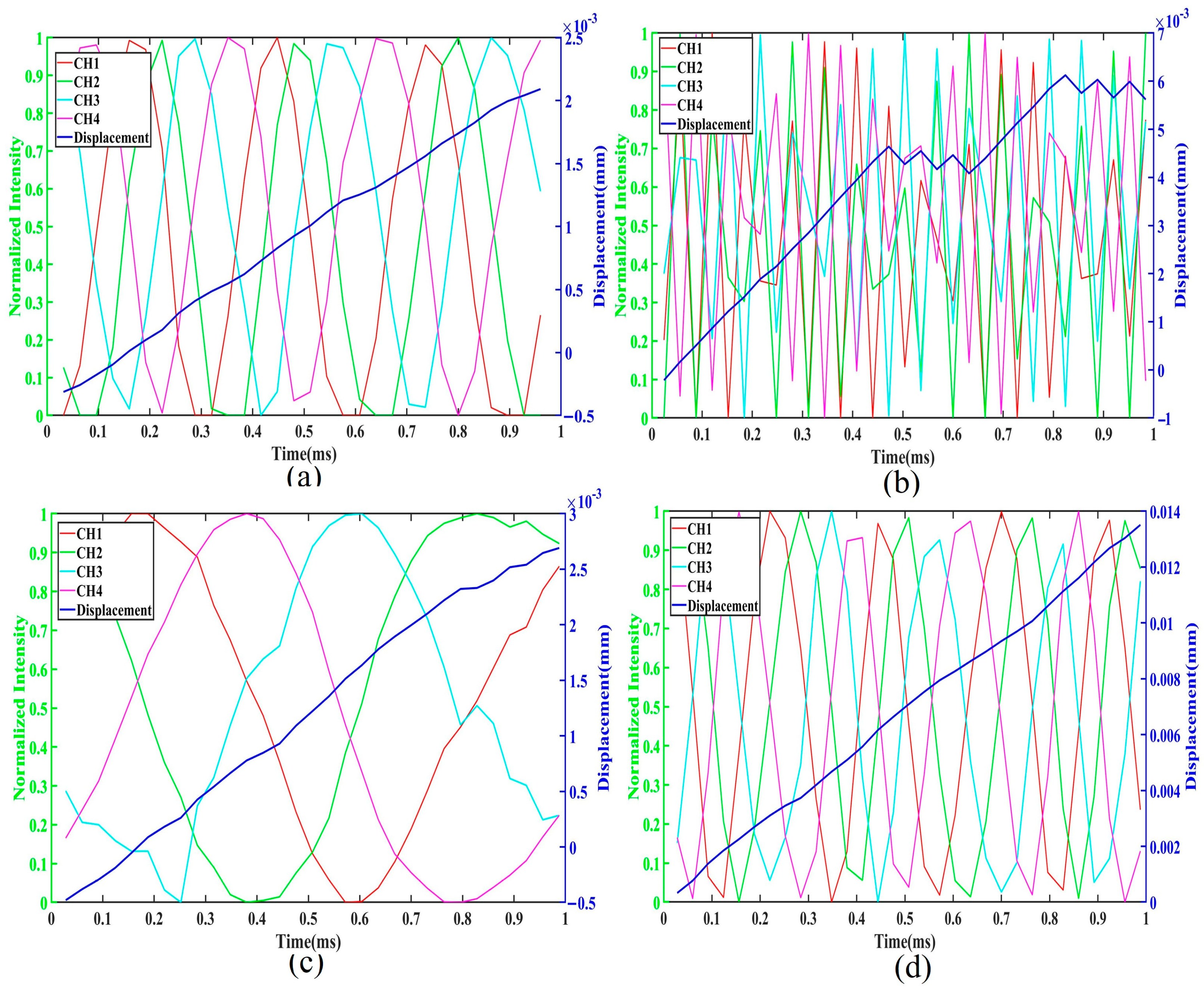
Figure 7 compares the calibration performance of the WDM and dual optical path methods for characterizing the delay line’s optical path variation. The measured object is a sapphire thin sheet, with the system collecting signals over ~1 ms.
Figure 7a,b present the 1550 nm laser phase-shift interference signals acquired via the WDM calibration method at delay line scanning pulse speeds of 10,000 pulses s
−1 and 50,000 pulses s
−1, respectively. At 10,000 pulses s
−1, the four calibration signals exhibit distinct phase shifts, and the four-step polarization phase-shifting method demodulates a delay line optical path change of ~2.4 μm over this period. However, at 50,000 pulses s
−1, the WDM interference intensity changes rapidly—exceeding the signal acquisition card’s sampling limit, which prevents accurate displacement calibration signal extraction.
Figure 7c,d show the phase shift interference signals and corresponding delay line optical path changes obtained via the dual-path calibration method at 10,000 pulses s
−1 and 80,000 pulses s
−1, respectively. At 10,000 pulses s
−1, the delay line produces an optical path change of ~3.17 μm; the deviation from the displacement in
Figure 7a is primarily attributed to motor speed differences during acceleration/deceleration phases. At 80,000 pulses s
−1 (
Figure 7d), the signals still maintain significant phase shifts, indicating the motor-scanning-induced intensity changes do not reach the sampling limit, with a demodulated optical path change of ~13.18 μm. The inconsistent ratio of displacement change to pulse speed between
Figure 7c,d may also stem from motor speed variations during acceleration/deceleration. In contrast, the stripe change amount within the same time period for the dual-path architecture is lower than that of the WDM architecture. As a result, the stripe frequency is reduced under the same delay line scanning rate, eliminating the undersampling issue of the calibration signal. Evidently, compared with the WDM method, the dual-path calibration method is less sensitive to scanning speed and enables higher-speed surface spacing measurement of optical components.
In this paper, a brief quantitative estimation of the stripe frequency can be discussed. The delay line motor advances one full revolution per 6400 pulses (neglecting transient acceleration and deceleration phases). Each revolution translates to a mechanical displacement of 0.3 mm for the Corner Cube, resulting in an optical path change of 1.2 mm. At a pulse rate of 50,000 pulses s−1, the motor rotates at approximately 7.81 revolutions per second; given that each revolution produces a 1.2 mm optical path change, the resulting optical path scanning velocity is 9.375 mm/s. Under the WDM-based calibration scheme, the calibration light traverses the delay line twice—so over a 1 ms interval, the total accumulated optical path change amounts to 18.75 µm. Expressed in terms of interference fringe cycles at the calibration wavelength of 1550 nm, this path difference corresponds to approximately 12.1 fringe periods. Given an overall ADC sampling rate of 250 kHz shared equally across 8 parallel channels, the sampling rate allocated to each channel is 31.25 kHz. Over the 1 ms interval, each channel therefore acquires approximately 31.25 samples; since roughly 12.1 fringe cycles occur in that interval, the average number of digitized samples per fringe cycle is about 2.6. This confirms that the stripe signal is undersampled—leading to potential aliasing and reduced fidelity in calibration signal reconstruction. In contrast, the stripe generation rate in the dual-path architecture is lower than that of the WDM architecture under identical delay line scanning conditions. Consequently, the calibration signal remains fully Nyquist-sampled—eliminating undersampling and ensuring robust signal reconstruction.
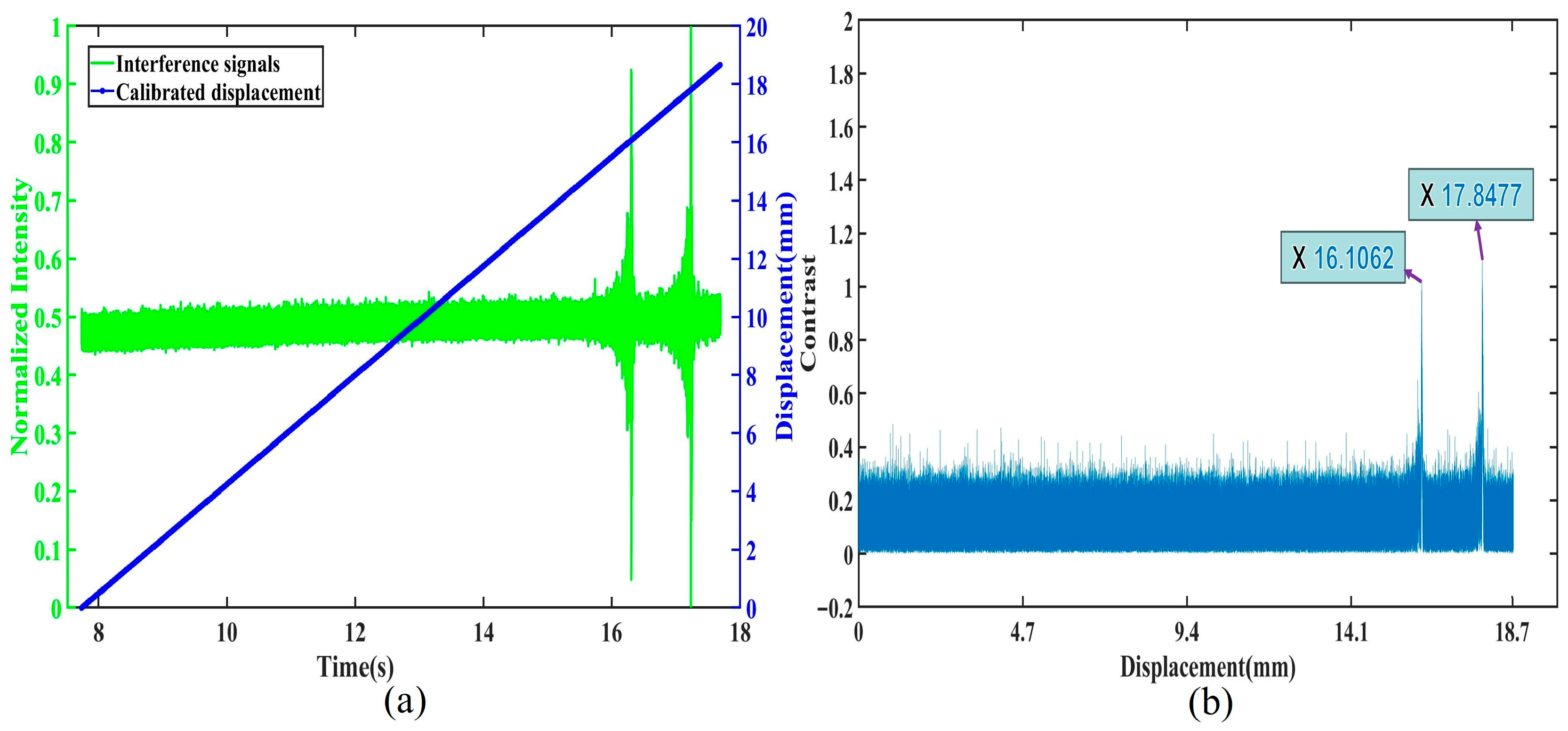
The four-quadrant low-coherence phase shift detection system was employed to measure the front-to-back surface distance of a sapphire thin sheet with a nominal thickness of ~1 mm. The green curve in
Figure 8a represents the sheet’s interference signals collected by the four-quadrant phase detector during the delay line scanning process. The total scanning duration was ~18 s, with two distinct zero-path-difference interference signals observed near 16 s and 17 s. The blue curve in
Figure 8a denotes the time-resolved optical path variation in the delay line, calibrated via the WDM method; the total optical path change during acquisition was ~20 mm.
The interference envelope, which varies with the delay line’s optical path, was calculated using Formula (2) shown in
Figure 8b. Fitting was then performed to determine the peak positions of the zero-path-difference interference envelopes: the front surface peak appeared when the delay line’s optical path reached 16.1062 mm, while the rear surface peak was observed at 17.8477 mm. The OPD between the two surfaces was thus 1.7415 mm. Given the refractive index of sapphire at 1310 nm (1.75) [
27], the inter-surface distance of the sample was calculated to be 0.9951 mm.
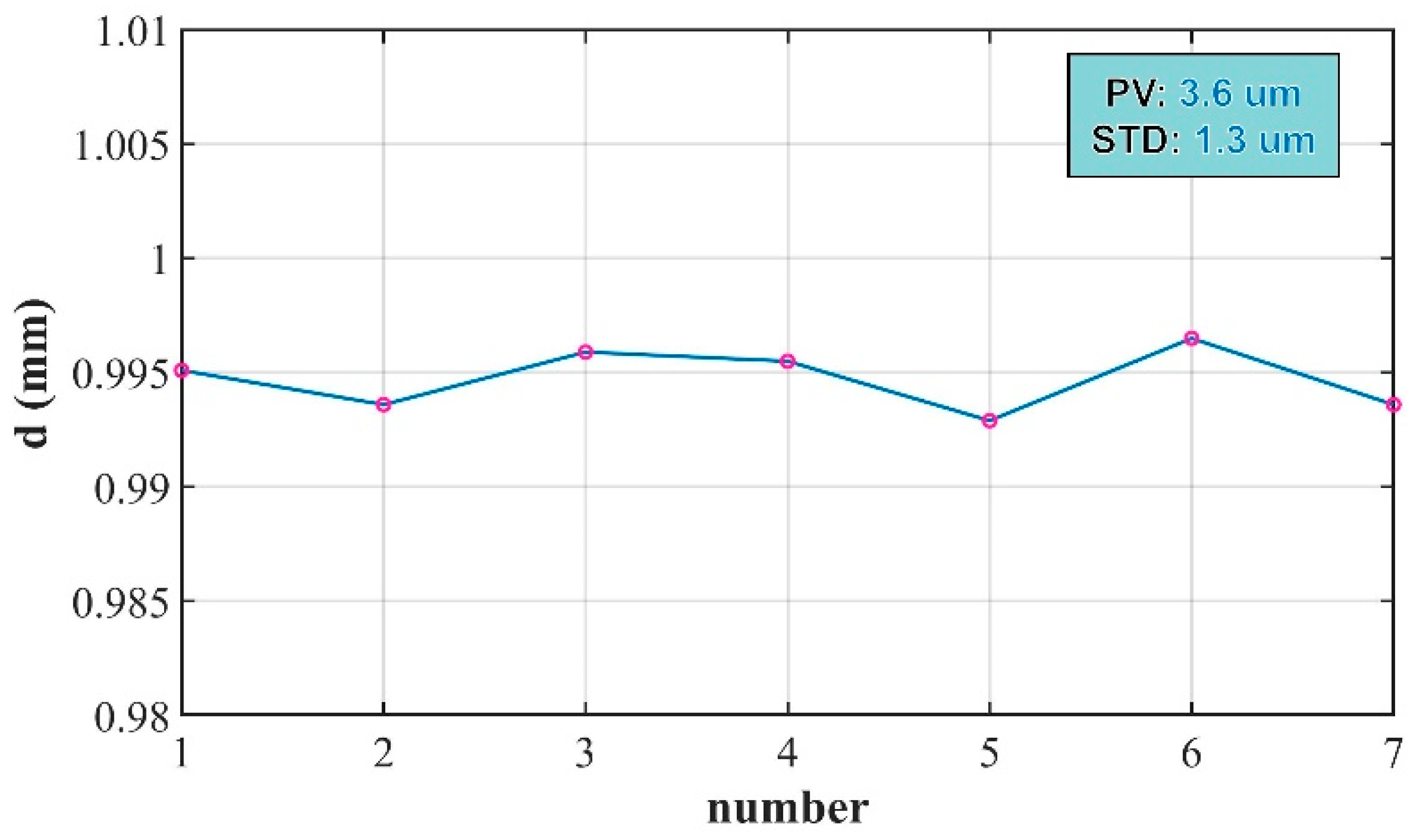
Repeat measurements of the front-to-back surface distance of the sapphire sheet were performed at a delay line scanning pulse rate of 10,000 s
−1, with results presented in
Figure 9. The peak-to-valley (PV) variation in the measured distances was 3.6 μm, and the STD was 1.3 μm—indicating that the system achieves micrometer-level measurement accuracy.
The front-to-back surface distance of a sapphire thin sheet (nominal thickness: ~1 mm) was measured under different delay line scanning pulse rates using two calibration methods: WDM and dual-path. The results are summarized in
Table 1, where the scanning pulse rates are set to 10,000, 30,000, 50,000, and 80,000 s
−1 (denoted as 1, 3, 5, 8 in units of ×10
4 pulses s
−1 for brevity). Here, d1 and d2 represent the sheet’s inter-surface distances measured via the WDM-based and dual-path-based calibration methods, respectively. At relatively low scanning rates, the WDM method exhibits higher measurement accuracy. However, when the scanning rate exceeds 50,000 pulses s
−1, the measured surface distance deviates significantly from the nominal value (e.g., d1 = 0.7229 mm at 80,000 s
−1). In contrast, the dual-path calibration method maintains consistent accuracy across all tested rates—with (d2) values ranging from 0.9936 to 0.9964 mm, closely matching the nominal thickness. These results confirm that the dual-path method is insensitive to the delay line’s scanning rate and enables high-speed, reliable measurement of optical thin sheet surface distances.
5. Discussion
The SNR of our prototype is limited by three primary factors: the optical bandwidth of the light source, polarization-dependent dispersion within the interferometric setup, and the noise of the detector. Further improvement in measurement precision necessitates targeted mitigation of these limitations. Among the factors, the impact of sapphire chromatic dispersion on the interference envelope has been analyzed and discussed.
The wavelength-dependent refractive index of the sapphire plate is modeled using the Sellmeier equation:
where
is 1.4313493,
is 0.65054713,
is 5.3414021,
is 0.0726631;
is 0.1193242,
is 18.028251, respectively.
Owing to the wavelength-dependent refractive index of sapphire in the measurement optical path, the OPD introduced by the sapphire plate is likewise wavelength-dependent. Consequently, the interference intensity at a given wavelength can be expressed as:
where
denotes the spectral weight of the interference signal—governed by the light source’s spectral distribution, the system’s transmission spectrum, and the detector’s responsivity spectrum.
represents the interference contrast; its spectral dependence is neglected herein.
describes the time-varying OPD between the reference and test arms induced by the delay line scan.
denotes the physical thickness of the sapphire plate. Spectral integration of Formula (7) yields the interference intensity variation versus the OPD scanned by the delay line—now incorporating the chromatic dispersion effect of the sapphire plate—as:
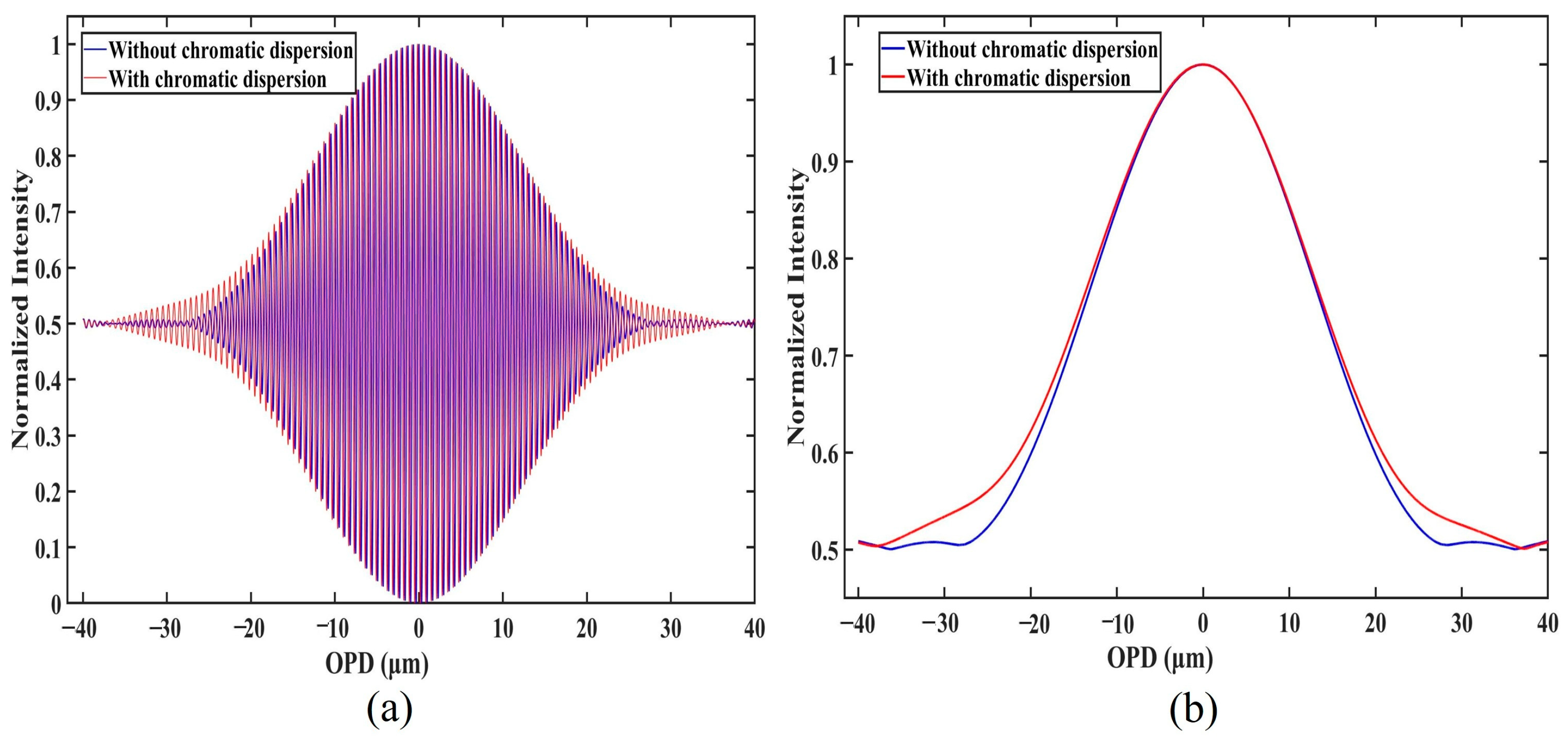
Based on Formulas (1) and (8) in the revised manuscript, numerical simulations were performed to quantify the influence of sapphire chromatic dispersion on the interference envelope.
Figure 10a shows the influence of sapphire chromatic dispersion on the broadband interference signal versus delay-line-scanned OPD variation. As shown, inclusion of the dispersion effect leads to noticeable broadening of the interference envelope. We quantified this effect by extracting the envelope and computing its full width at half maximum (FWHM). With dispersion accounted for, the FWHM increases from 27.5 µm to 28.3 µm shown in
Figure 10b. As noted by the reviewer, chromatic dispersion arising from both the sapphire sample and other optical elements in the interferometric path contributes to envelope broadening—and consequently degrades the accuracy of envelope peak localization.
In addition, temperature fluctuations and mechanical vibrations also contribute to the overall measurement uncertainty. As the refractive index of optical fibers exhibits greater sensitivity to temperature variations than that of air, thermal drift poses a more significant source of error during scanning. To mitigate this effect, we increased the scanning speed as much as practicable—thereby reducing the exposure time to ambient thermal transients. Furthermore, selecting structural materials with low coefficients of thermal expansion constitutes an effective strategy for suppressing thermally induced dimensional changes. Finally, to minimize vibration-induced perturbations to the optical path, the experimental setup was isolated from environmental mechanical disturbances during data acquisition.