Article

Enhanced 311 nm (NB-UVB) Emission in Gd2O3-Doped Pb3O4-Sb2O3-B2O3-Bi2O3 Glasses: A Promising Platform for Photonic and Medical Phototherapy Applications

1
Department of Physics, Ramachandra College of Engineering, Eluru 534007, AP, India
2
Department of Chemistry, KBN College, Vijayawada 520001, AP, India
3
Department of Physics, DVR & Dr HS MIC College of Technology, Kanchikacharla 521180, AP, India
4
Department of Chemistry, Ch.S.D.St. Theresa’s College for Women (A), Eluru 534003, AP, India
5
Department of Chemistry, Government Degree College, Ramachandrapuram 533255, AP, India
6
Department of Mechanical Engineering, Yeungnam University, Gyeongsan-si 38541, Republic of Korea
*
Authors to whom correspondence should be addressed.
Photonics 2025, 12(12), 1177; https://doi.org/10.3390/photonics12121177
Submission received: 23 October 2025 / Revised: 20 November 2025 / Accepted: 27 November 2025 / Published: 29 November 2025
(This article belongs to the Special Issue Photoluminescence: Advances and Applications)

Abstract

A novel series of Gd2O3-doped Pb3O4–Sb2O3–B2O3–Bi2O3 glasses was synthesized via the conventional melt-quenching technique to explore their structural, thermal, and optical properties for potential photonic and medical phototherapy applications. X-ray diffraction and SEM analyses confirmed the amorphous and homogeneous nature of the samples, while their FTIR spectra revealed characteristic Pb–O, Sb–O, Bi–O, and B–O vibrational bands indicative of a stable glass network. Differential scanning calorimetry (DSC) demonstrated good thermal stability, suitable for high-temperature optical applications. Optical absorption and emission studies indicated the presence of prominent Gd3+ ion transitions, with a strong and sharp ultraviolet emission at 311 nm (6P7/28S7/2) when excited at 274 nm. The emission intensity and lifetime increased with Gd2O3 concentrations of up to 1.0 mol%, beyond which concentration quenching was observed. The optimized composition exhibited a reduced optical band gap and enhanced NB-UVB emission efficiency, suggesting efficient energy transfer with minimal non-radiative losses. These results establish the designed glass system as a promising multifunctional material for NB-UVB-based phototherapy, UV-laser generation, scintillation, and other next-generation photonic devices.

1. Introduction

Rare-earth-doped glasses have attracted significant attention as functional optical materials due to their ability to exhibit sharp, stable, and host-sensitive emission features. Among various dopants, gadolinium oxide (Gd2O3) has emerged as a valuable activator due to its notable luminescent and magnetic properties. The half-filled 4f7 electronic configuration of Gd3+ ions provides well-defined energy levels and stable ultraviolet (UV) emissions. In particular, the narrowband ultraviolet-B (NB-UVB) emission around 311 nm (6P7/28S7/2 transition) is highly suitable for medical phototherapy applications, especially for treating skin disorders such as psoriasis and vitiligo [1,2,3,4,5,6]. Beyond phototherapy, Gd2O3-based glasses are also promising for radiation shielding (γ, X-ray, neutron radiation) and advanced photonic devices such as luminescent materials, optical amplifiers, and white light-emitting diodes (W-LEDs). Incorporation of Gd2O3 enhances neutron attenuation, luminescence efficiency, optical efficiency, and structural compactness, thereby making the glass system multifunctional for optical, biomedical, and nuclear technologies [7,8,9,10].
Incorporating Gd2O3 into suitable glass matrices provides an effective route to develop transparent, thermally stable, and optically active materials. The host glass matrix strongly influences the local coordination environment, clustering tendency, and overall luminescence efficiency of Gd3+ ions. Among various hosts, antimonite, borate, and heavy-metal oxide glasses offer distinct advantages, including high rare-earth solubility, low phonon energy, and favorable structural flexibility, which make them excellent platforms for enhancing UV emission [11,12].
Furthermore, the incorporation of heavy metal oxides such as Pb3O4 significantly improves the structural integrity and physical stability of the glass network compared with other heavy metal oxide systems, including PbO–B2O3, TeO2–WO3 and Bi2O3–ZnO–B2O3 glasses [13,14,15]. The present glass matrix, Pb3O4–Sb2O3–B2O3–Bi2O3, provides an optimized combination of high optical density, broad UV transparency, and superior thermal stability, leading to reduced non-radiative losses and enhanced optical performance, NB-UVB (311 nm) emission intensity, and lifetime of Gd3+ ions. This multicomponent configuration synergistically integrates the unique benefits of Pb3O4, Sb2O3, B2O3, and Bi2O3, making the system highly versatile for applications in UV lasers, display devices, radiation shielding, and medical phototherapy.
The novelty of this work lies in the design of a multifunctional heavy-metal oxide glass system (Pb3O4–Sb2O3–B2O3–Bi2O3) tailored for efficient Gd2O3 incorporation, enabling remarkable enhancement of a narrowband 311 nm (NB-UVB) emission intensity and lifetime compared to conventional borate and antimonite glasses. The presently developed system demonstrates exceptional versatility, combining optical, thermal, and biomedical functionalities for next-generation photonic applications such as targeted phototherapy, scintillation, and UV-laser sources.

2. Experimental

In this work, glass samples with the compositional formula 10Pb3O4–20Sb2O3–10Bi2O3–(60–x)B2O3x Gd2O3 (x = 0.1, 0.5, 1.0, 1.5, 2.0 mol%) were synthesized via the traditional melt-quenching method, as shown in Figure 1. The raw chemicals, viz., Pb3O4 (99.99% pure, Thermo Fisher Scientific, Mumbai, India), Sb2O3, H3BO3, Bi2O3 (99.99% pure, Loba, Mumbai, India), and Gd2O3 (Metall Rare Earth Ltd., Hong Kong, China, 99.99% pure), were used for the preparation of the glass samples. These samples were labeled as Gd1, Gd5, Gd10, Gd15, and Gd20, based on the content of Gd2O3. The sample preparation process involved accurately weighing the high-purity raw materials according to the desired molar composition and then uniformly mixing them in an agate mortar. The homogenized batch was then melted at 1350 °C for 30 min in a silica crucible, followed by casting in a preheated brass mold. Finally, the samples were annealed at 420 °C to relieve internal thermal stresses.
The amorphous nature of the glass samples was verified through X-ray diffraction (XRD) analysis carried out using a Rigaku D/Max ULTIMA III diffractometer (Rigaku Corporation, Tokyo, Japan) utilizing CuKα radiation. For optical characterization, the specimens were polished to dimensions of 1.0 cm × 1.0 cm in area with a thickness of 0.25 cm.
The density of the prepared glass samples was determined using Archimedes’ principle, with o-xylene as the immersion liquid to serve as the immersion medium, and measurements taken with an Ohaus digital balance with an accuracy of ±0.002 g. The refractive index (nd) was assessed at a wavelength of 589.3 nm using an Abbe refractometer, with mono-bromonaphthalene applied as the contact fluid. By using a Tescan scanning electron microscope (Model VEGA3 LMU), the surface morphology of the glass samples was analyzed. A Mettler TGA/DSC 3+ thermo balance was used to record DSC (Differential scanning calorimetry) traces. The surface features of the samples were investigated using a Tescan VEGA3 LMU scanning electron microscope (SEM).
Optical absorption spectrum measurements were carried out across a 200–2000 nm wavelength range using a JASCO UV–Vis–NIR spectrophotometer. Photoluminescence spectra were recorded using a SP-2357 monochromator with a Thorlabs DET10C InGaAs detector. Luminescence decay characteristics were recorded with a 250 Hz pulsed laser diode and a fast response system (0.1 μs rise time). Fourier-transform infrared spectra (300–2000 cm−1) were recorded using a Shimadzu IR Affinity-1S spectrophotometer.

3. Results and Discussion

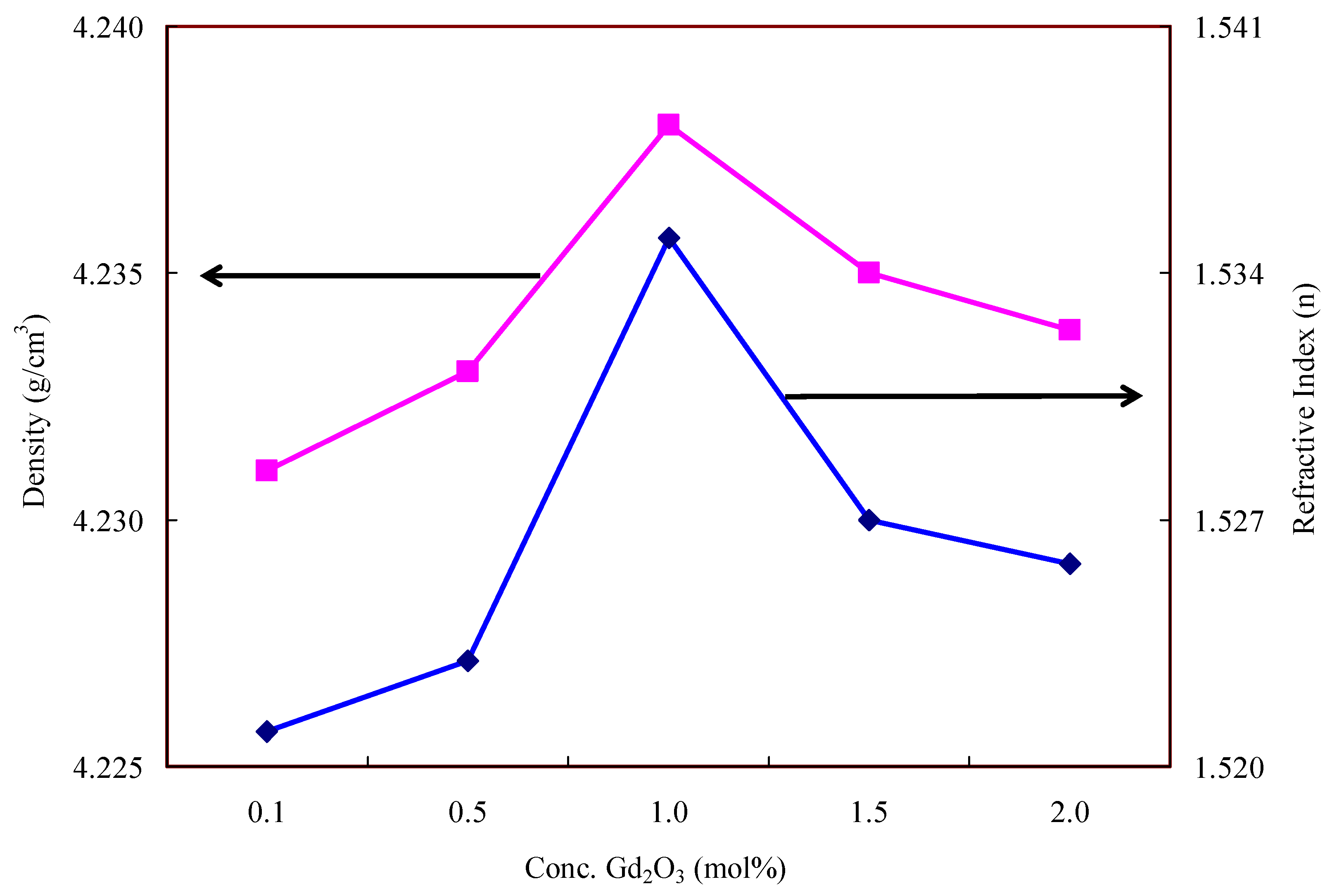
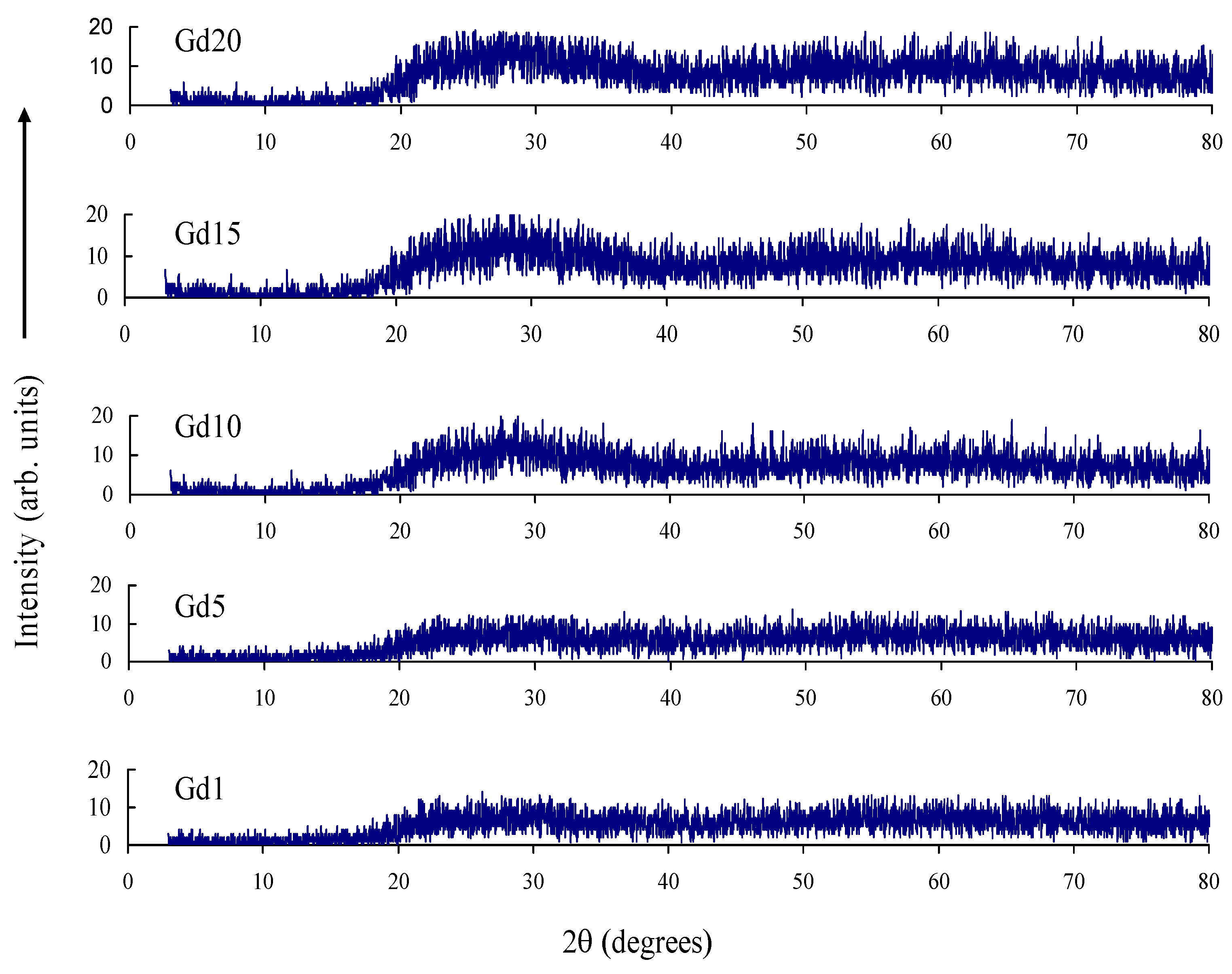
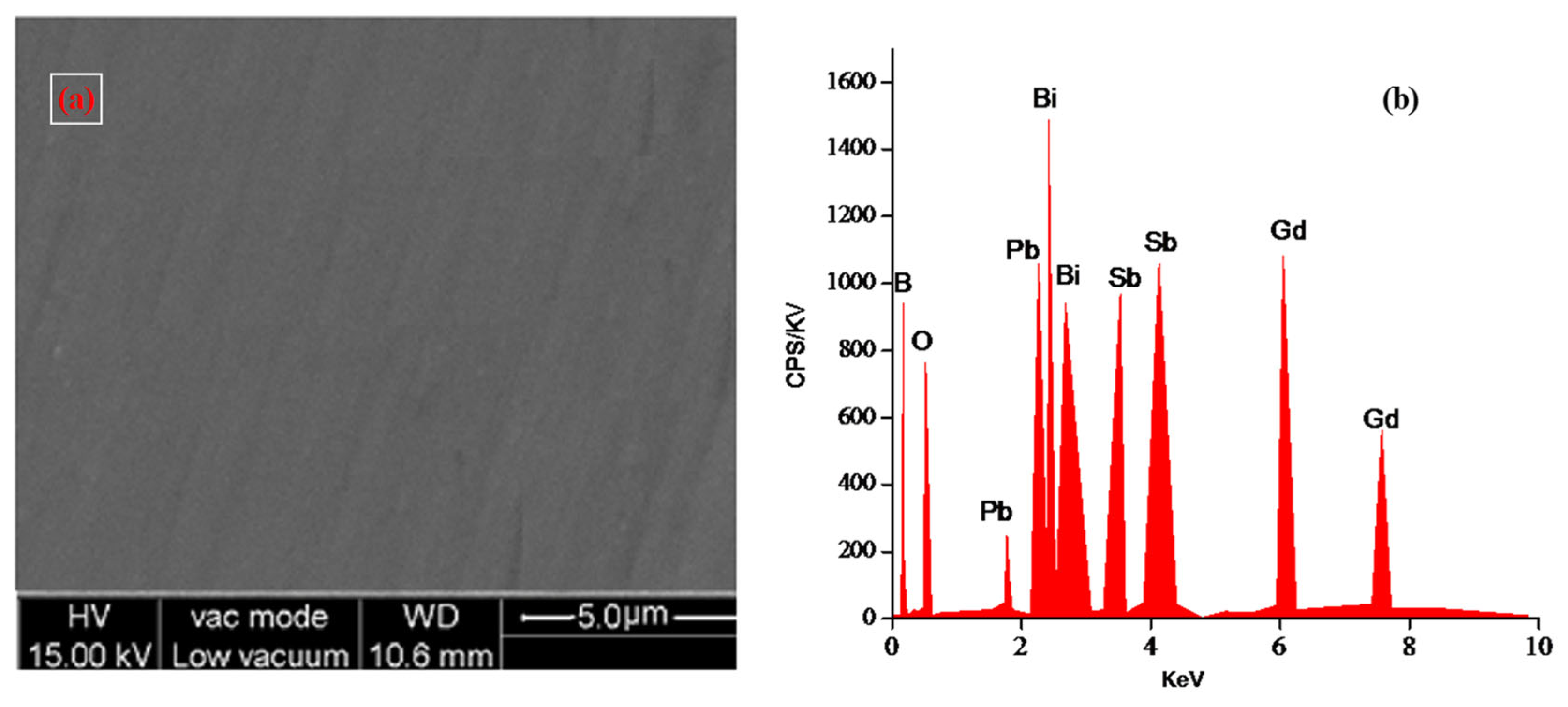
The physical and optical properties of the Pb3O4–Sb2O3–Bi2O3–B2O3–Gd2O3 glass system, incorporating varying concentrations of Gd3+ ions (0.1 to 2.0 mol%), were assessed using established methods [16,17,18,19]. These methods considered the average molecular weight (M), density (d), and refractive index (nd) of the glass samples, with the resulting values presented in Table 1. By observing the physical values of the glasses, it is evident that the sample doped with 1.0 mol% of Gd3+ ions exhibits the highest values among all compositions. Figure 2 shows the variation of density d (g/cm3) and refractive index nd as a function of Gd2O3 concentrations. The decrease in both density and refractive index at higher dopant (1.5 and 2.0 mol% of Gd2O3) levels can be attributed to the formation of non-bridging oxygen (NBO) sites or possible clustering, reducing the glass compactness and altering its local field effects, leading to a lower density and refractive index. The X-ray diffraction (XRD) patterns of both the undoped and Gd2O3-doped glass samples exhibit only a broad diffuse hump without any sharp diffraction peaks, confirming their fully amorphous nature. The incorporation of Gd3+ ions does not induce any crystalline phase formation, indicating that the dopant is uniformly accommodated within the glass network without altering its structural amorphousness (see Figure 3). Figure 4 represents the SEM picture for Gd10 glass, and it does not show any grains, confirming the amorphous nature of the glass. The EDS analysis performed on the Gd3+ ion-doped Pb3O4–Sb2O3–B2O3–Bi2O3 glass matrix (Figure 4b) offers clear information on the elemental composition and spatial distribution of the dopant ions. The EDS elemental mapping confirms that the Gd3+ ions are uniformly dispersed throughout the glass, which supports the attainment of stable and consistent optical characteristics. The absence of any detectable phase separation indicates that the Gd3+ ions are well accommodated within the glass network, and it demonstrates their effective solubility in the host matrix.
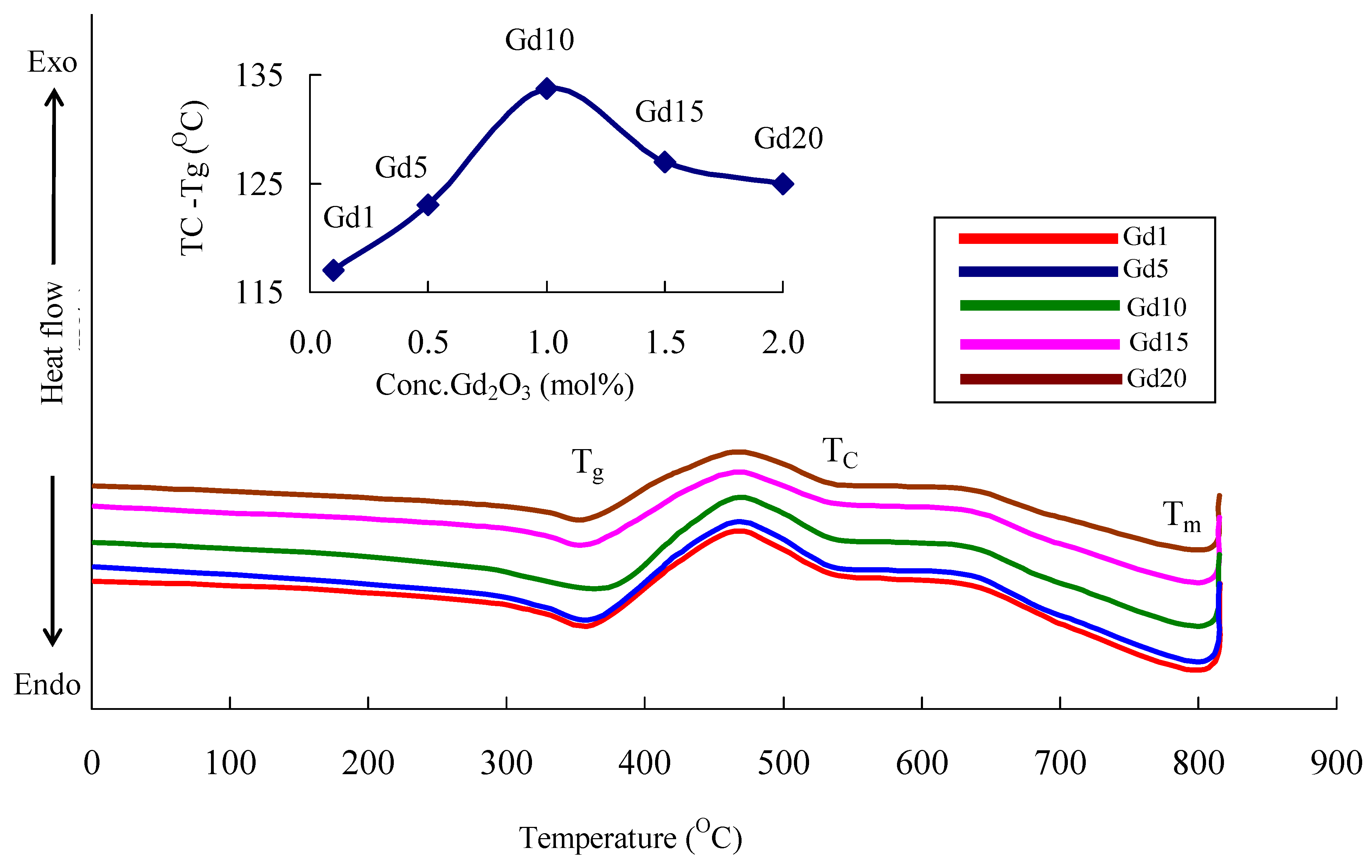
Thermal analysis DSC (Differential scanning calorimetry) was employed to investigate the thermal behavior of the prepared glass samples. Figure 5 shows the DSC traces for all the glass samples recorded at temperatures of up to 1000 °C, revealing an endothermic glass transition temperature (Tg) in the range of 350–400 °C, an exothermic crystallization temperature (Tc) between 450 and 470 °C, and an endothermic peak observed at about Tm ≈ 800 °C (melting temperature). The difference between Tc and Tg reflects the thermal stability of the glass. The inset in Figure 5 shows that the Gd10 glass exhibits the highest Tc-Tg (°C) value compared to the other glass samples. This enhanced thermal stability can be attributed to its optimal concentration of Gd2O3 (1.0 mol%), which strengthens the glass network through increased Gd–O bond formation and improved structural compactness. At this level, Gd3+ ions act as effective intermediate/conditional network formers, reducing the mobility of structural units and delaying the onset of crystallization. However, at higher Gd2O3 concentrations (more than 1.0 mol%), Gd3+ ions begin to distort the network, creating non-bridging oxygens and reducing overall stability. Thus, the Gd10 composition represents an optimal balance between network reinforcement and structural homogeneity, resulting in the highest thermal stability. All finalized samples remain homogeneous and fully amorphous with good resistance against crystallization.
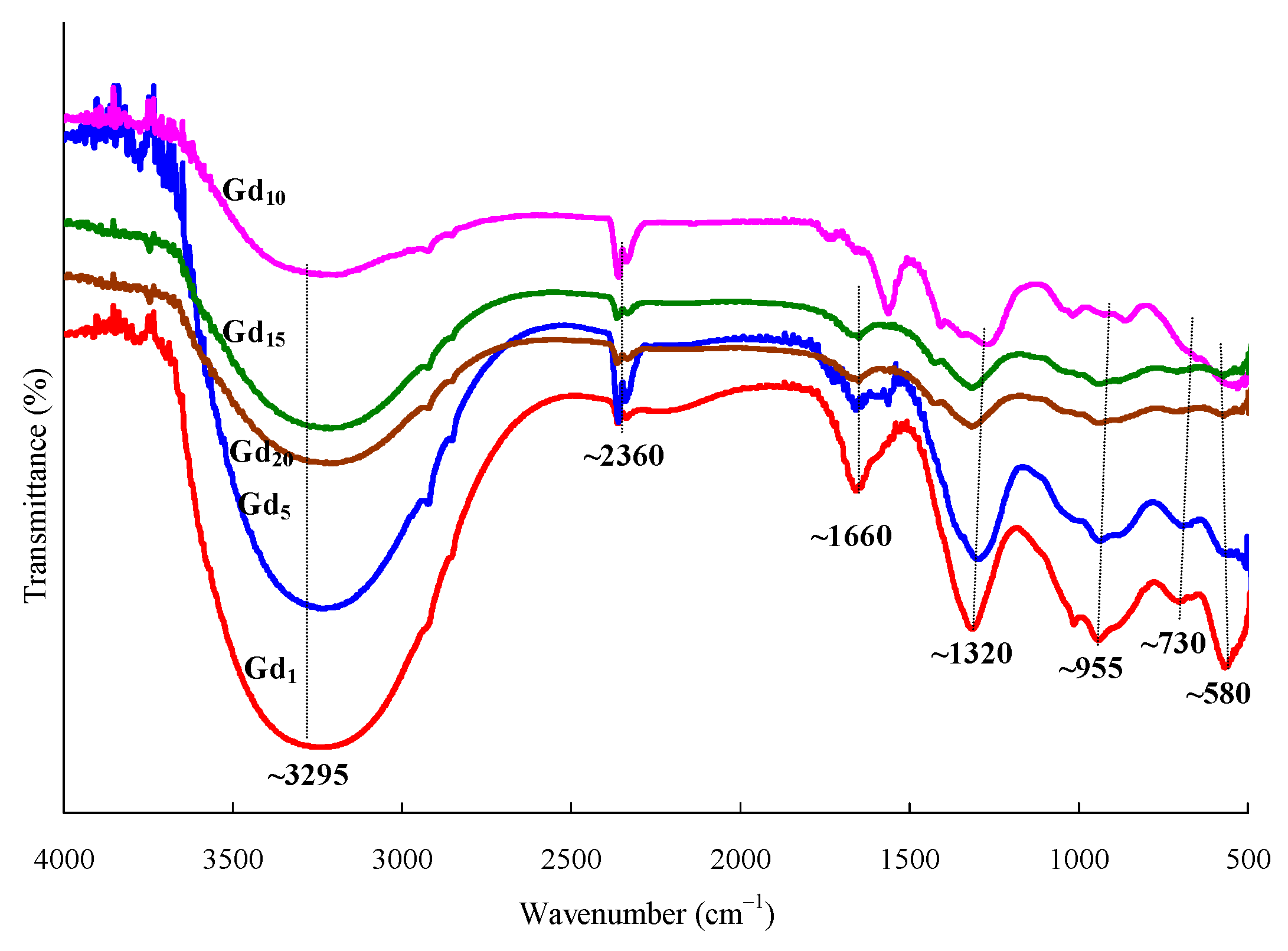
Figure 6 shows that the FTIR spectra of the glasses containing various concentrations of gadolinium ions exhibit several characteristic absorption bands, corresponding to the vibrational modes of the structural units within the glass network. A band at about 580 cm−1 is associated with the PbO4 and SbO3 structural units [20,21]. The peak near 755 cm−1 is attributed to the stretching vibrations of Sb–O/Pb–O/Bi–O units [22,23,24,25]. Additionally, a band is present at 960 cm−1 that is associated with B–O–B linkages in borate groups of symmetric stretching vibrations. Another band observed at approximately 1330 cm−1 is related to O–B–O (BO4) stretching vibrations [26]. A band observed at 1680 cm−1 is attributed to O–H (H2O), and the deformation mode of the water molecule. The broad bands observed at 2360 cm−1 and 3295 cm−1 are symmetric stretching vibrations of the hydrogen band and the O–H groups. It is noteworthy that the bands associated with asymmetric vibrations exhibit their highest intensity in the glass sample doped with 1.0 mol% of Gd3+ ions, indicating a greater extent of network depolymerization in this composition [27,28,29].
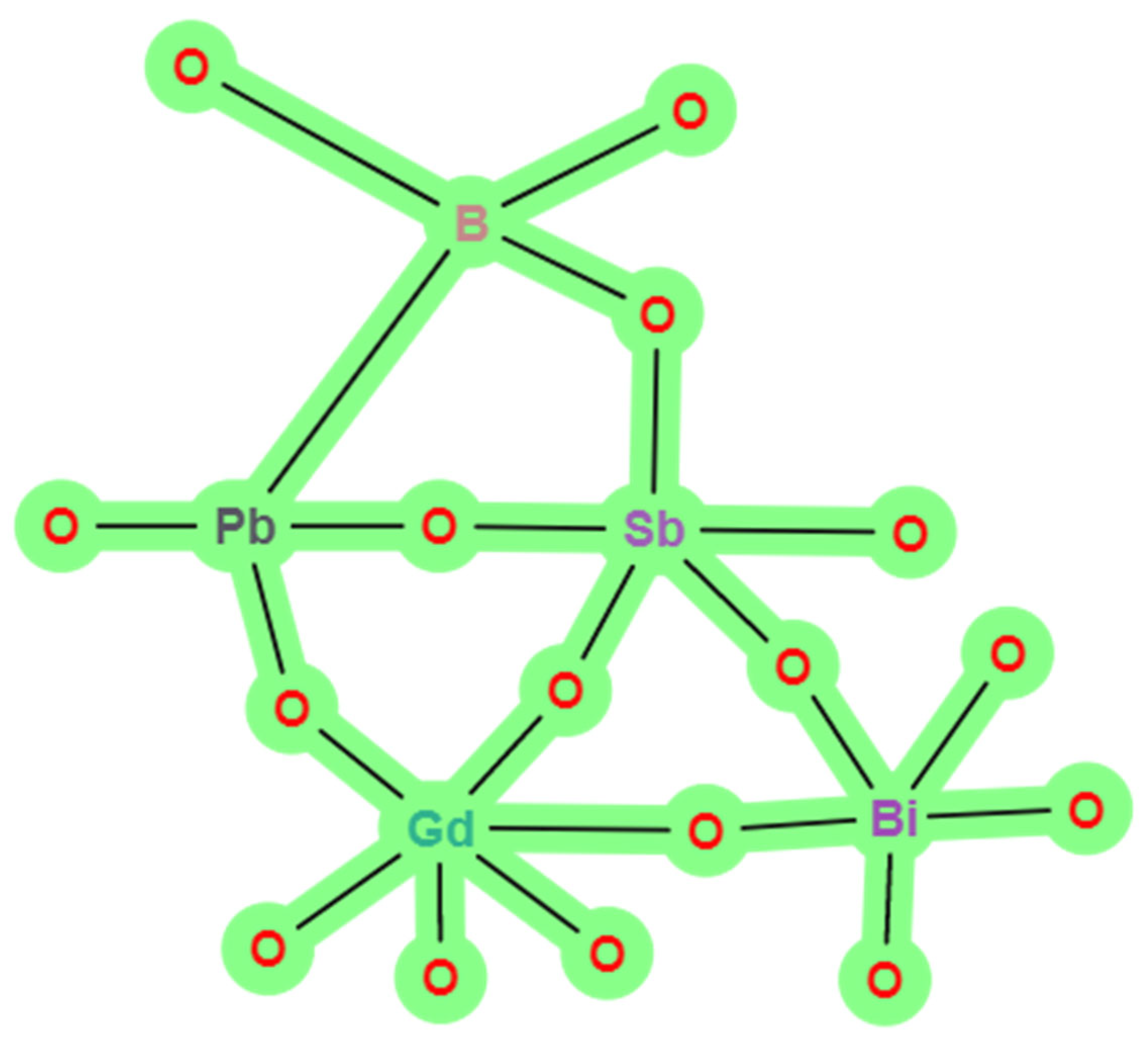
Figure 7 represents a schematic demonstration of the chemical composition of the Pb3O4–Sb2O3–B2O3–Bi2O3–Gd2O3 glass system, highlighting the structural arrangement and bonding interactions among the constituent oxides. The multicomponent glass system demonstrates that a complex network is formed by Pb, Sb, B, and Bi linked through oxygen bridges, while Gd3+ ions are incorporated into the mixture through the surrounding oxygen atoms. This structural arrangement highlights the stabilization of the glass framework and tailors its optical and photonic properties. The following diagram serves as a visual framework for understanding the micro-structural organization and the contribution of individual components to the overall glass network.
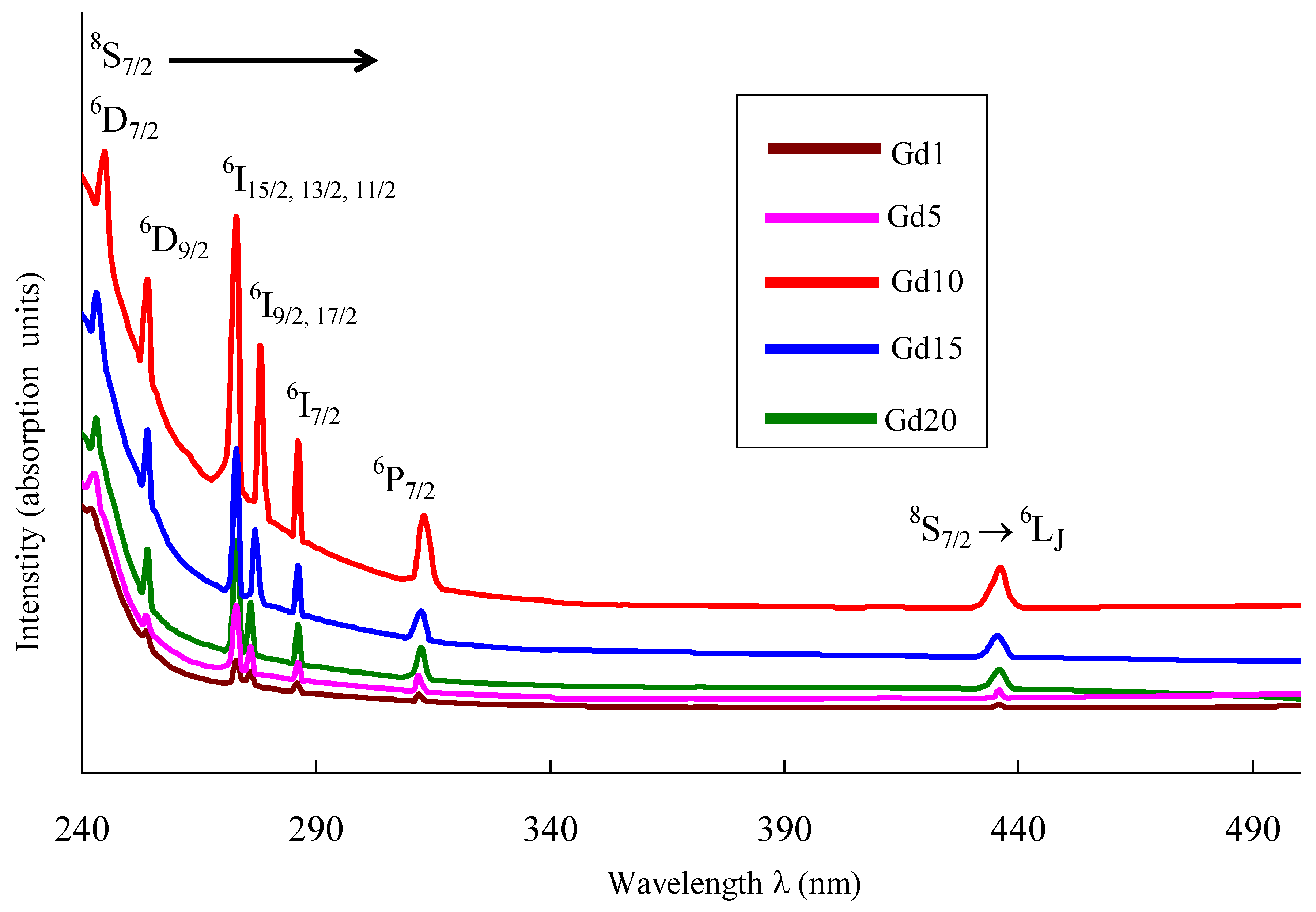
The optical absorption (OA) spectra of Pb3O4–Sb2O3–B2O3–Bi2O3 glasses with different concentrations of Gd3+ ions added to them are recorded in the spectral range from 200 to 2000 nm, as shown in Figure 8. The spectra revealed multiple absorption bands originating from the ground state 8S7/2 to various excited states of Gd2O3 corresponding to 8S7/26D7/2, 6D9/2, 6I15/2,13/2,11/2, 6I9/2,17/2, 6I7/2, 6P7/2, 6I9/2, 17/2, and 8S7/26LJ transitions, respectively. With an increase in the concentration of Gd2O3 of up to 1.0 mol%, a significant increase in the intensity of the absorption peaks was observed in the Gd10 glass. However, at higher doping contents (1.5 and 2.0 mol%) of Gd3+ ions, a noticeable decrease in the band intensities was observed. This reduction is attributed to concentration-quenching effects, which become predominant at elevated Gd3+ ion concentrations. Such effects arise from non-radiative energy transfer, cross-relaxation processes, and ion clustering, which hinder the effective participation of Gd3+ ions in optical absorption [30,31].
The characteristics of the Gd3+ ions in the absorption bands in the UV region not only validate the successful incorporation of Gd3+ ions into the host lattice but also highlight the potential of these glasses for ultraviolet photonic devices, UV lasers, scintillators, and advanced optoelectronic and biomedical applications [31,32].
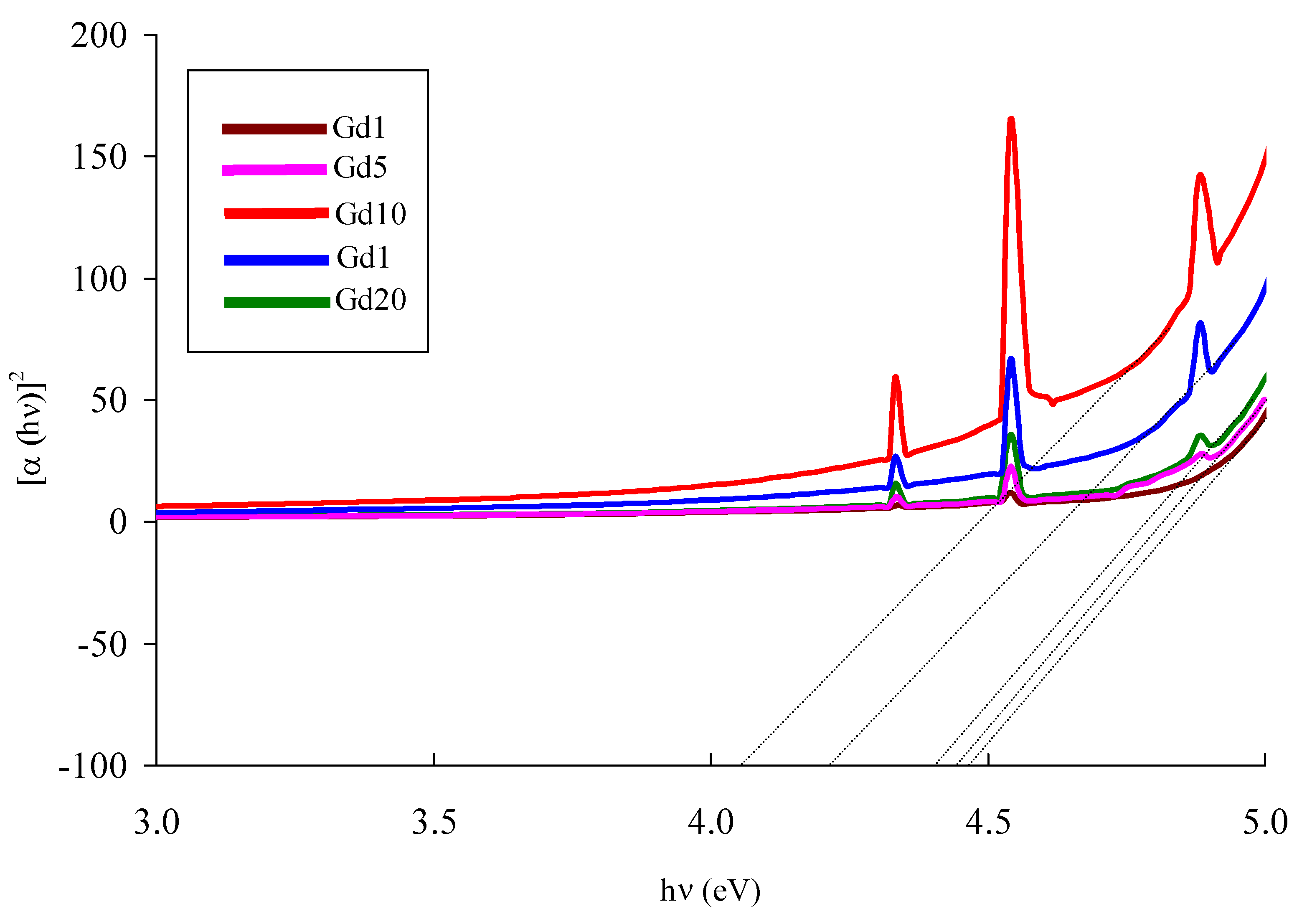
The optical band gap (E0) is essential for understanding the electronic structure and optical behavior of glass materials. The host glasses doped with Gd3+ ions with band gaps can be estimated from their UV-Vis spectra using Tauc’s plot (Figure 9). Incorporating rare-earth ions of up to 1.0 mol% reduces the band structure, resulting in a decrease in the E0 value and an increase in the Gd3+ ion content [33]. These results suggest that the incorporation of Gd3+ ions increases the number of non-bridging oxygen (NBO) sites and enhances the structural disorder within the glass network. By studying E0 values confirms these structural changes indicating that Gd3+ ions doped glasses possess promising characteristics for medical phototherapy and next-generation photonic applications [34].
The relation between the absorption coefficient α and E0 is
α(hν) ∝ B (hν − Eopt)1/2
In the above equation, where B is a band-tailing parameter, and hν is the photon energy. The low value of E0 observed for the Gd10 glass (Table 1) suggests a high degree of disorder in the glass network.
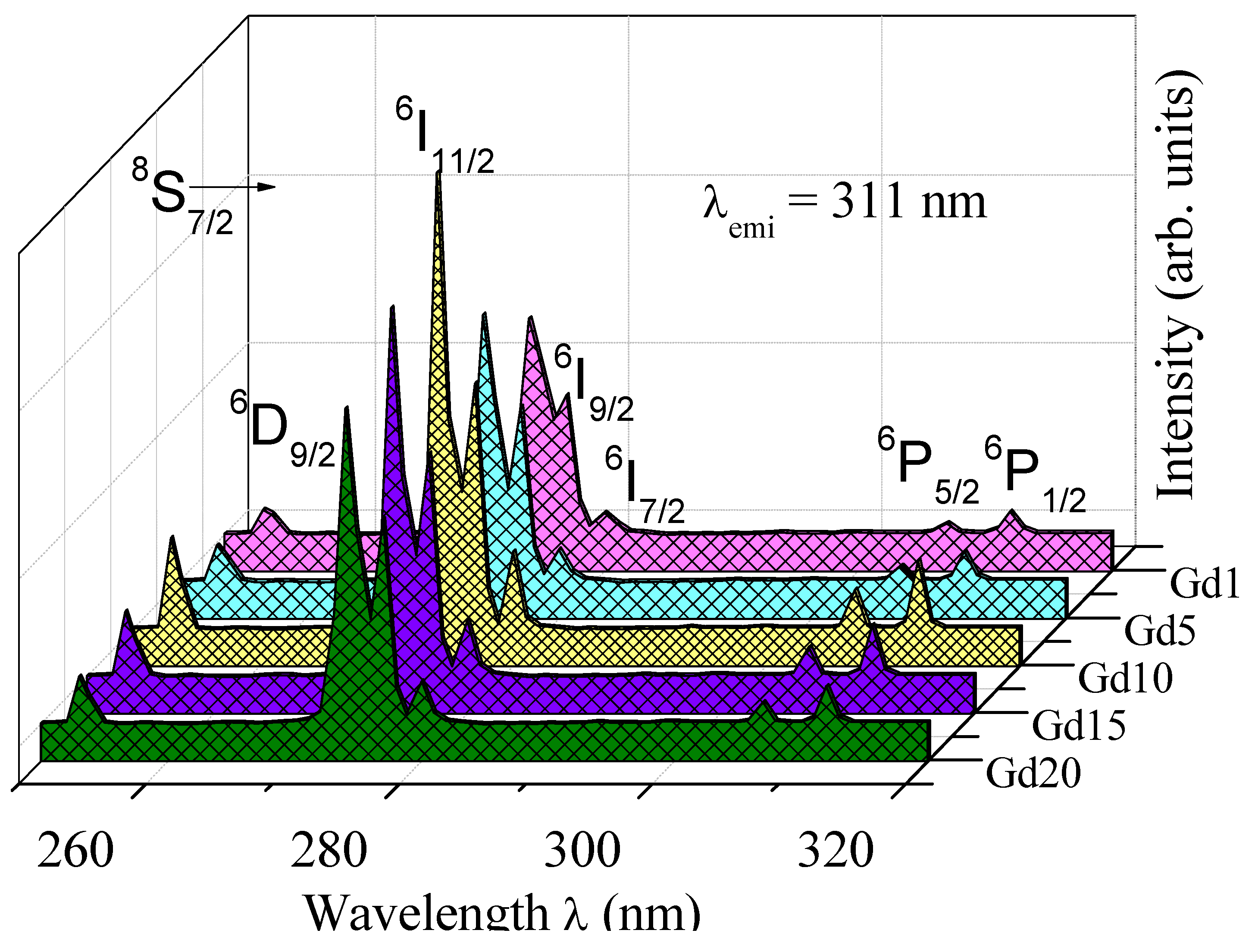
The ultraviolet emission from Gd3+ ions in the Pb3O4–Sb2O3–B2O3–Bi2O3 glass originates from 4f to 4f electronic transitions. Although these transitions are normally parity forbidden, they become partially allowed due to the asymmetric local ligand field in the amorphous glass network, which causes a slight mixing of the 4f energy level. The excitation spectra (Figure 10) of all glasses recorded were monitored at λem = 311 nm, corresponding to the following exhibited transitions: 8S7/26D9/2 (253 nm), 6I11/2 (274 nm), 6I7/2 (280 nm), 6P5/2 (307 nm), and 6P7/2 (312 nm). Out of these, 8S7/26I11/2 had the most intense peak, and the same method was used to record the emission spectra in the UV-visible region.
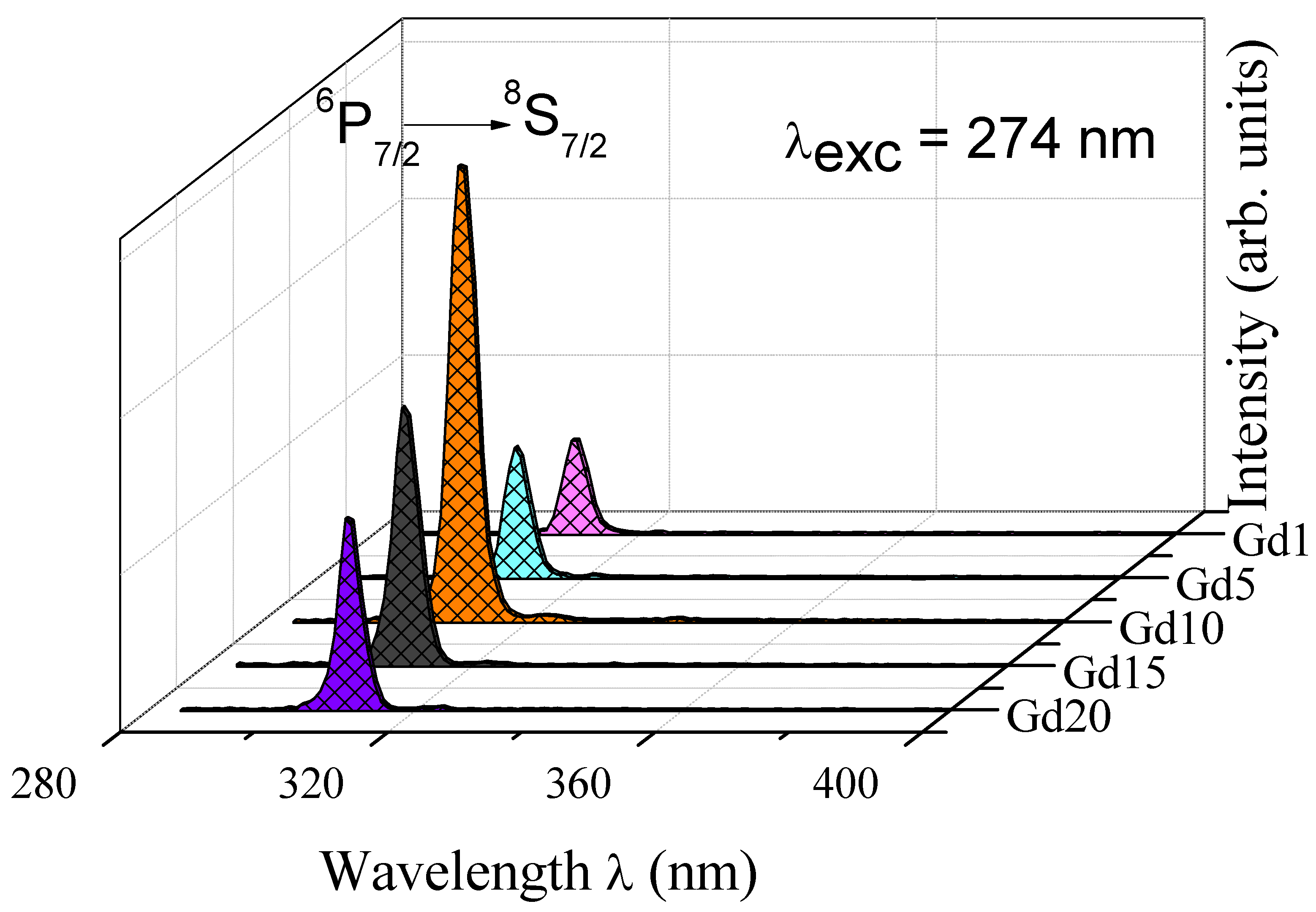
The emission spectra (Figure 11) recorded (λex = 274 nm) for all the glass samples revealed a sharp emission band in the ultraviolet spectral region corresponding to the 6P7/28S7/2 (~311 nm) transition of the Gd3+ ions [12,35]. The emission intensity increased significantly with Gd3+ ion concentrations of up to 1.0 mol%, beyond which a gradual decrease was observed with an increasing concentration of Gd3+ ions. This process is governed by minimal multi-phonon relaxation due to the low-phonon-energy environment created by heavy metal oxides (Pb3O4, Bi2O3, Sb2O3), which suppresses non-radiative energy losses through cross-relaxation and multi-phonon interactions and enhances ultraviolet emission efficiency. The mechanism is consistent with the transition scheme reported in similar Gd3+ ion-activated heavy metal oxide systems [36].
Thus, the strong emission transition of 6P7/28S7/2 (~311 nm) not only confirms the successful incorporation of Gd3+ ions into the Pb3O4–Sb2O3–B2O3–Bi2O3 glass matrix but also highlights their potential as candidates for medical UV lasers (especially UV near ~311 nm, which is invisible to the eye, but biologically significant), phototherapy devices, scintillators, and energy transfer-based next-generation photonic applications.
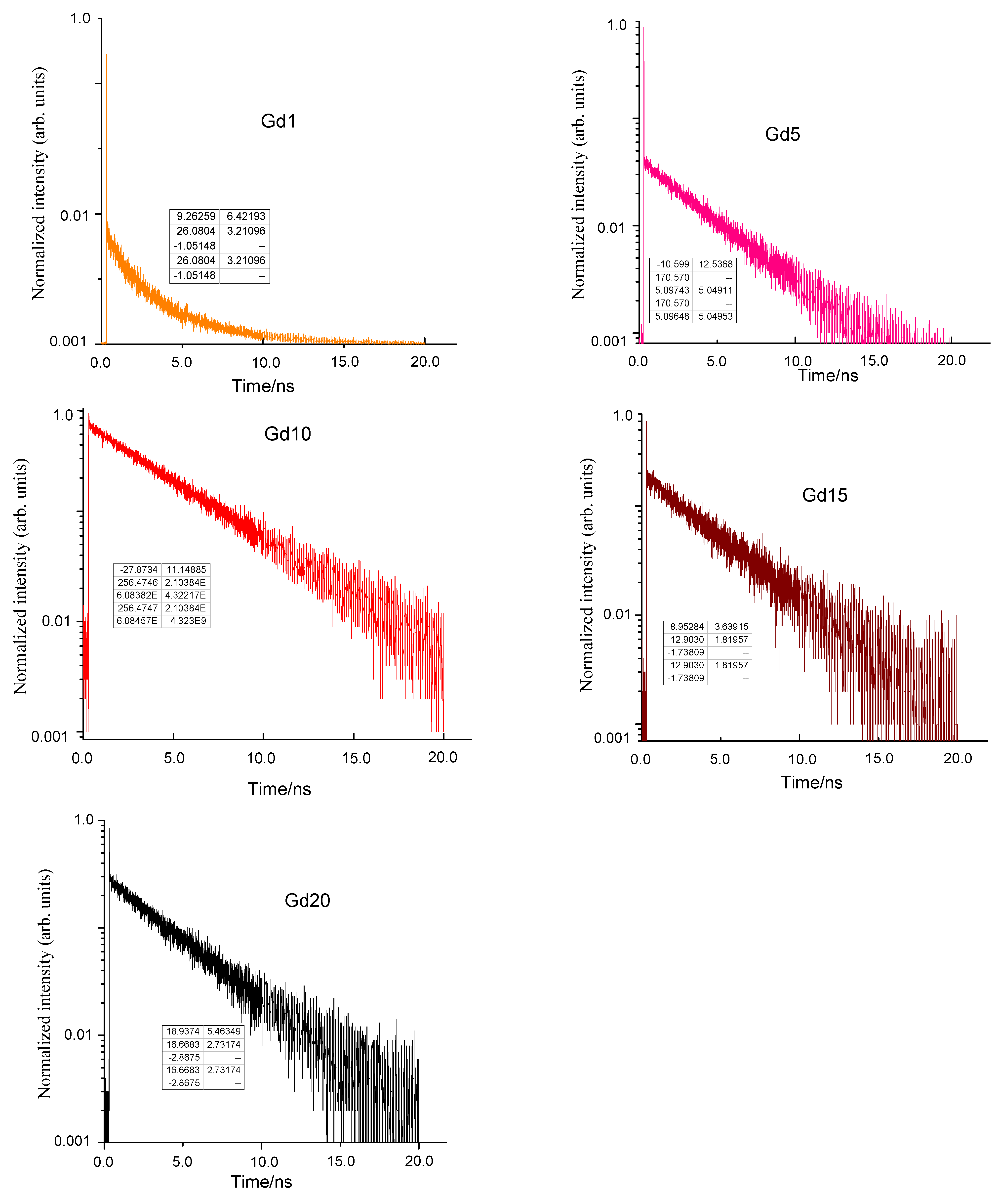
Figure 12 shows the decay profile of Gd3+ ion-doped Pb3O4–Sb2O3–B2O3–Bi2O3 glasses recorded at room temperature from the 6P7/2 level (λex = 274 nm and λem = 311 nm) and their different transitions to measure their experimental lifetimes. The decay curves were fitted by using a single exponential function, and the corresponding average lifetime (τavg) values were obtained and are presented in Table 2.
To substantiate the novelty of the present Gd3+-doped Pb3O4–Sb2O3–B2O3–Bi2O3 glass system, a comparative analysis with previously reported Gd3+ ion-doped borate, phosphate, and heavy metal-oxide glasses was carried out. Table 3 summarizes the key optical parameters, such as emission wavelength, lifetime, and band gap, as reported in the literature [37,38,39,40] and compares them with the optimized Gd10 sample. The data clearly show that the present system exhibits a lifetime that is comparable to, or higher than, many borate hosts and similar to phosphate/fluorophosphate systems, while simultaneously offering higher density, strong emission intensity, and better thermal stability. These results confirm that the proposed multicomponent matrix provides a distinct performance advantage and validates its designation as a promising platform for UV-emitting and NB-UVB (311 nm) applications.
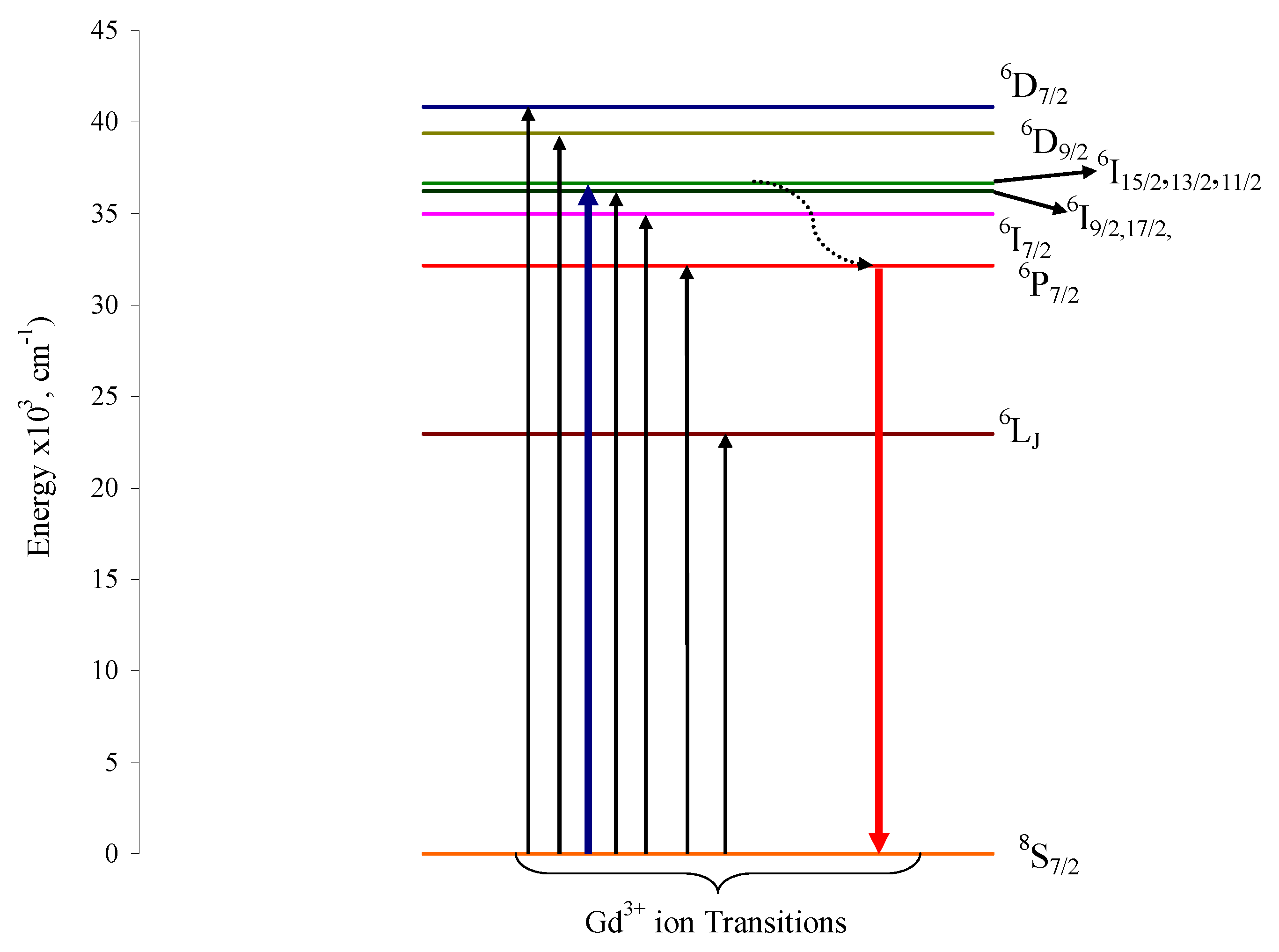
The measured lifetimes and emission intensities surpass those reported for conventional antimonite and borate glasses, underlining the potential applicability of the present system for medical phototherapy, scintillators, and next-generation photonic applications [41,42,43,44]. Figure 13 represents the energy level diagram of the Gd10 glass. The diagram illustrates the electronic energy states of the Gd3+ ions within the glass matrix and highlights the absorption and emission transitions. The upward and downward arrows represent the radiative excitation and emission transitions, in which the ions return to lower energy states, releasing photons. This schematic helps in understanding the optical behavior of the glass and its potential suitability for next-generation photonic applications. Thus, our findings provide a new perspective in the design of rare-earth Gd2O3-doped glasses with tailored structural and optical characteristics.

4. Conclusions

Gd2O3-doped Pb3O4–Sb2O3–B2O3–Bi2O3 glasses were successfully synthesized using the conventional melt-quenching technique, and their structural, thermal, and optical properties were systematically investigated. XRD and SEM analysis confirmed the amorphous nature and homogeneous surface morphology of all the glass samples. FTIR spectra revealed the presence of Pb–O, Sb–O, Bi–O, and B–O structural units, indicating the development of a stable and interconnected glass network. Among all the compositions, the glass containing 1.0 mol% of Gd2O3 exhibited optimal physical parameters, enhanced UV absorption, and the most intense emission at 311 nm, corresponding to the 6P7/28S7/2 transition. The improvement in emission intensity and lifetime behavior up to this concentration demonstrates efficient energy transfer and minimal non-radiative losses, whereas higher Gd3+ ion concentrations resulted in concentration-quenching effects. The thermal analysis revealed good stability, confirming the suitability of this host matrix for high-temperature optical applications.
Overall, the combination of high density, broad optical transparency, and pronounced NB-UVB emission identifies this glass system as a strong candidate for medical phototherapy (psoriasis and vitiligo treatment), UV-based laser sources, radiation scintillators, and next-generation photonic devices. The present investigation establishes a reliable foundation for developing multifunctional rare-earth-activated glass materials integrating optical performance with structural robustness.

Author Contributions

V.R.K.: Conceptualization, Methodology, Investigation, Data curation, Writing original draft, Formal analysis, & Supervision; P.E.S.B.: Methodology & Data curation; K.K.K.: Methodology & Data curation; V.S.: Methodology; V.N.: Data curation; V.G.: Methodology; L.V.: Methodology, Investigation, Data curation, Writing original draft, Formal analysis, & Supervision; J.L.: Methodology. All authors have read and agreed to the published version of the manuscript.

Funding

This research received no external funding.

Data Availability Statement

Data will be available from the corresponding author upon request.

Conflicts of Interest

The author has no conflict of interest.

References

  1. Singh, V.; Swapna, K.; Kaur, S.; Rao, A.S.; Rao, J.L. Narrow-Band UVB-Emitting Gd-Doped SrY2O4 Phosphors. J. Electron. Mater. 2020, 49, 3025–3030. [Google Scholar] [CrossRef]
  2. Reddy, L. Exploring Gd3+-activated calcium-based host materials for phototherapy lamps: A comprehensive review. Heliyon 2024, 10, e34477. [Google Scholar] [CrossRef] [PubMed]
  3. Vijayalakshmi, L.; Kumar, K.N.; Baek, J.D. Narrow-band UVB emission from non-cytotoxic Gd3+-activated glasses for phototherapy lamps and UV-LED applications. J. Mater. Sci. Mater. Electron. 2022, 33, 11938–11945. [Google Scholar] [CrossRef]
  4. Shan, X.; Lv, X.; Chen, D.; Zhang, Y.; Ning, L.; Liang, Y. A narrowband ultraviolet-B-emitting LiCaPO4:Gd3+ phosphor with super-long persistent luminescence for over 100 h. Inorg. Chem. Front. 2024, 11, 8314–8323. [Google Scholar] [CrossRef]
  5. Zhang, Y.; Liang, Y.; Shan, X.; Chen, D.; Miao, S.; Shi, R.; Xie, F.; Wang, W. X-ray-Excited Long-Lasting Narrowband Ultraviolet-B Persistent Luminescence from Gd3+-Doped Sr2P2O7 Phosphor. Inorg. Chem. 2022, 61, 20647–20656. [Google Scholar] [CrossRef]
  6. Wang, X.; Chen, Y.; Kner, P.A.; Pan, Z. Gd3+-activated narrowband ultraviolet-B persistent luminescence through persistent energy transfer. Dalton Trans. 2021, 50, 3499–3505. [Google Scholar] [CrossRef]
  7. Kalpana, T.; Gandhi, Y.; Sanyal, B.; Sudarsan, V.; Bragiel, P.; Piasecki, M.; Kumar, V.R.; Veeraiah, N. Influence of alumina on photoluminescence and thermoluminescence characteristics of Gd3+ doped barium borophosphate glasses. J. Lumin. 2016, 179, 44–49. [Google Scholar] [CrossRef]
  8. Gu, X.; Gong, X.; Zhang, C.G.; Gu, Y.; Wang, C.; Wang, G.; Guo, W. Drilled-hole number effects on energy and acoustic emission characteristics of brittle coal. J. Mater. Res. Technol. 2023, 23, 3892–3903. [Google Scholar] [CrossRef]
  9. Yang, Q.; Wang, G.; Wu, H.; Beshiwork, B.A.; Tian, D.; Zhu, S.; Yang, Y.; Lu, X.; Ding, Y.; Ling, Y.; et al. A high-entropy perovskite cathode for solid oxide fuel cells. J. Alloy. Compd. 2021, 872, 159633. [Google Scholar] [CrossRef]
  10. Walo, M.; Przybytniak, G.; Sadło, J. EPR studies of gamma irradiated poly (ether-urethane)s. Radiat. Phys. Chem. 2020, 171, 108669. [Google Scholar] [CrossRef]
  11. Li, X.; Wang, J.; Qin, J.; Dong, B.; Pan, S. The structural–magnetic properties relationship of amorphous pure Fe revealed by the minimum coordination polyhedron. J. Non-Cryst. Solids 2019, 513, 70–75. [Google Scholar] [CrossRef]
  12. Madshal, M.A.; Abdelghany, A.M.; Abdelghany, M.I.; El-Damrawi, G. Biocompatible borate glasses doped with Gd2O3 for biomedical applications. Eur. Phy. J. Plus. 2022, 137, 1014. [Google Scholar] [CrossRef]
  13. Ullah, I.; Sarumaha, C.S.; Angnanon, A.; Khan, I.; Shoaib, M.; Khattak, S.A.; Mukamil, S.; Kothan, S.; Shah, S.K.; Wabaidur, S.M.; et al. Gd2O3-modulated borate glass for the enhancement of near-infrared emission via energy transfer from Gd3+ to Nd3+. RSC Adv. 2024, 14, 16501–16509. [Google Scholar] [CrossRef]
  14. Azam, M.; Rai, V.K. Effect of the Addition of Pb3O4 and TiO2 on the Optical Properties of Er3+/Yb3+: TeO2–WO3 Glasses. ACS Omega 2019, 4, 16280–16291. [Google Scholar] [CrossRef]
  15. Soraya, M.M.; Ahmed, F.B.; Mahasen, M.M. Enhancing the physical, optical and shielding properties for ternary Sb2O3–B2O3–K2O glasses. J. Mater. Sci. Mater. Electron. 2022, 33, 22077–22091. [Google Scholar] [CrossRef]
  16. Vlasenko, V.; Nowagiel, M.; Wasiucionek, M.; Pietrzak, T.K. Stabilization of δ-like Bi2O3 Phase at Room Temperature in Binary and Ternary Bismuthate Glass Systems with Al2O3, SiO2, GeO2, and B2O3. Materials 2024, 17, 4023. [Google Scholar] [CrossRef]
  17. Rao, K.J. Structural Chemistry of Glasses; Elsevier: Amsterdam, The Netherlands, 2002. [Google Scholar]
  18. Rao, M.R.C.; Hariprasad, D.; Jyothi, B.; Kumar, D.P.; Naresh, P.; Lakshmi, G.V.; Nagarjuna, M.; Kumar, V.R.; Gandhi, Y.; Veeraiah, N. Luminescence properties of Ho3+ ions inPb3O4- B2O3- P2O5- ZnO-AIIIx (AIIIx=Al2O3, Ga2O3, andIn2O3) glasses. Optik 2025, 328, 172315. [Google Scholar]
  19. Damdee, B.; Kaewnuam, E.; Kirdsiri, K.; Yamanoi, K.; Sarukura, N.; Shinohara, K.; Angnanon, A.; Intachai, N.; Kothan, S.; Kaewkhao, J. Concentration-dependent physical, optical, and photoluminescence features of Pr3+-doped borate glasses. Radiat. Phys. Chem. 2024, 225, 112092. [Google Scholar] [CrossRef]
  20. Bai, K.; Chen, X.; Mao, J.; Pan, Y.; Sun, Y.; Wang, Y.; Zhou, H.; Lv, P.; Wang, T.; Peng, H. Coupling effects in borosilicate glass leaching: A study on La/V doping. J. Nucl. Mater. 2024, 593, 155005. [Google Scholar] [CrossRef]
  21. Bai, K.; Chen, X.; Mao, J.; Pan, Y.; Sun, Y.; Wang, Y.; Zhou, H.; Lv, P.; Wang, T.; Peng, H. Effect of tin ions on enhancing the intensity of narrow luminescenceline at 311 nm of Gd3+ ions in Li2O-PbO-P2O5 glass system. Opt. Mater. 2016, 57, 39–44. [Google Scholar]
  22. Marzouk, M.A.; Ali, I.S. Gamma irradiation Effects on Photoluminescence and Semiconducting Properties of Non-Conventional Heavy Metal Binary PbO–Bi2O3 Glasses. Sci. Rep. 2024, 14, 1679. [Google Scholar] [CrossRef]
  23. AEl-Moneim, A.A.; Azooz, M.A.; Hashem, H.A.; Fayad, A.M.; Elwan, R.L. XRD, FTIR And Ultrasonic Investigations Of Cadmium Lead Bismuthate Glasses. Sci. Rep. 2023, 14, 12788. [Google Scholar] [CrossRef]
  24. El Batal, H.A.; El Batal, F.H.; Azooz, M.A.; Marzouk, M.A.; El Kheshen, A.A.; Ghoneim, N.A.; El Din, F.E.; Abdelghany, A.M. Comparative Shielding Behavior Of Binary PbO-B2O3 and Bi2O3-B2O3 Glasses with High Heavy Metal Oxide Contents Towards Gamma Irradiation Revealed By Collective Optical, FTIR And ESR Measurements. J. Non-Cryst. Solids 2021, 572, 121090. [Google Scholar] [CrossRef]
  25. Aditya Vamshi, B.; Vardhani, C.P.; Theerukachi, S. Synthesis, Characterization, and Optical Properties of Gadolinium Doped Bismuth Borate Glasses. J. Appl. Phy. 2025, 17, 10–18. [Google Scholar]
  26. Hussein, E.M.A.; Madbouly, A.M. Fabrication and characterization of different PbO borate glass systems as radiation-shielding containers. Sci. Rep. 2024, 14, 2638. [Google Scholar] [CrossRef] [PubMed]
  27. Elsad, R.; Abdel-Aziz, A.M.; Ahmed, E.M.; Rammah, Y.; El-Agawany, F.; Shams, M. FT-IR, ultrasonic and dielectric characteristics of neodymium (III)/ erbium (III) lead-borate glasses: Experimental studies. J. Mater. Res. Technol. 2021, 13, 1363–1373. [Google Scholar] [CrossRef]
  28. Rada, S.; Dan, V.; Rada, M.; Culea, E. Gadolinium-environment in borate–tellurate glass ceramics studied by FTIR and EPR spectroscopy. J. Non-Cryst. Solids 2009, 356, 474–479. [Google Scholar] [CrossRef]
  29. Toderaş, M.; Filip, S.; Ardelean, I. Structural study of the Fe2O3-B2O3-BaO glass system by FTIR spectroscopy. J. Adv. Mater. 2006, 8, 1121–1123. [Google Scholar]
  30. Ciceo-Lucacel, R.; Ardelean, I. FT-IR and Raman Study of Silver Lead Borate-Based Glasses. J. Non-Cryst. Solids 2007, 353, 2020–2024. [Google Scholar] [CrossRef]
  31. Madshal, M.A.; El-Damrawi, G.; Abdelghany, A.M.; Abdelghany, M.I. Structural studies and physical properties of Gd2O3-doped borate glass. J. Mater. Sci. Mater. Electron. 2021, 32, 14642–14653. [Google Scholar] [CrossRef]
  32. Manyum, P.; Rittisut, W.; Wantana, N.; Ruangtaweep, Y.; Rujirawat, S.; Kamonsuangkasem, K.; Yimnirun, R.; Prasatkhetragarn, A.; Intachai, N.; Kothan, S.; et al. Structural and luminescence properties of transparent borate glass co-doped with Gd3+/Pr3+ for photonics application. Mater. Today Commun. 2023, 32, 14642–14653. [Google Scholar] [CrossRef]
  33. Singh, V.; Watanabe, S.; Rao, T.G.; Lakshminarayana, G. Structural, paramagnetic centres and luminescence investigations of the UV radiation-emitting BaZrO3:Gd3+ perovskite ceramic prepared via sol-gel route. Mater. Sci. Eng. B 2021, 264, 114971. [Google Scholar] [CrossRef]
  34. Wantana, N.; Kaewnuam, E.; Chanlek, N.; Kim, H.J.; Kaewkhao, J. Influence of Gd3+ on structural and luminescence properties of new Eu3+-doped borate glass for photonics material. Radat. Phy. Chem. 2023, 207, 110812. [Google Scholar] [CrossRef]
  35. D’Souza, A.N.; Sayyed, M.I.; Kamath, S.D. Impact of Gd2O3 Incorporation in Structural, Optical, Thermal, Mechanical, and Radiation Blocking Nature in HMO Boro-Tellurite Glasses. Eng. Proc. 2023, 55, 97. [Google Scholar]
  36. Lee, J.-K.; Bhat, A.A.; Watanabe, S.; Rao, T.; Singh, V. Unveiling the photoluminescence and electron paramagnetic resonance of Gd3+-Doped CaYAl3O7 phosphor emitting narrowband ultraviolet B radiation. Ceram. Int. 2025, 51, 10415–10422. [Google Scholar] [CrossRef]
  37. Rao, Y.D.; Kumar, V.R.; Purnachand, N.; Sekhar, A.V.; Venkatramaiah, N.; Baskaran, G.S.; Veeraiah, N. Enhanced UVB 311 emission in Sb2O3–SiO2 glasses doped with Gd2O3 and tailored Pb3O4 content for potential phototherapy. Opt. Mater. 2024, 152, 115503. [Google Scholar]
  38. Kumar, A.; Rai, D.; Rai, S. The effect of modifiers on the fluorescence and life-time of Gd3+ ions doped in borate glasses. Spectrochim. Acta Part A Mol. Biomol. Spectrosc. 2001, 57, 2587–2591. [Google Scholar] [CrossRef]
  39. Galleani, G.; Lodi, T.A.; Conner, R.L.; Jacobsohn, L.G.; de Camargo, A.S. Photoluminescence and X-ray induced scintillation in Gd3+-Tb3+ co-doped fluoride-phosphate glasses, and derived glass-ceramics containing NaGdF4 nanocrystals. Opt. Mater. X 2024, 21, 100288. [Google Scholar] [CrossRef]
  40. D’Souza, A.N.; Madivala, S.G.; Saraswathi, A.V.; Sayyed, M.I.; Rashad, M.; Kamath, S.D. Impact of Co-doping Eu3+ and Gd3+ in HMO-Based Glasses for Structural and Optical Properties and Radiation Shielding Enhancement. Luminescence 2025, 40, e70045. [Google Scholar] [CrossRef]
  41. Fuks-Janczarek, I.; Miedzinski, R.; Kassab, L.R. Optical characterization and thermal analysis of rare earth-doped PbO-GeO2-G glasses embedded with gold nanoparticles. J. Alloy. Compd. 2024, 1002, 175221. [Google Scholar] [CrossRef]
  42. Ramteke, D.; Gedam, R. Luminescence properties of Gd3+ containing glasses for ultra-violet (UV) light. J. Rare Earths 2013, 32, 389–393. [Google Scholar] [CrossRef]
  43. Zagrai, M.; Unguresan, M.; Rada, S.; Zhang, J.; Pica, M.; Culea, E. Local structure in gadolinium-lead-borate glasses and glass-ceramics. J. Non-Crystalline Solids 2020, 546, 120259. [Google Scholar] [CrossRef]
  44. Kaur, P.; Singh, K.; Thakur, S.; Kurudirek, M.; Rafiei, M.M. Structural investigations and nuclear radiation shielding ability of bismuth lithium antimony borate glasses. J. Phys. Chem. Solids 2021, 150, 109812. [Google Scholar] [CrossRef]
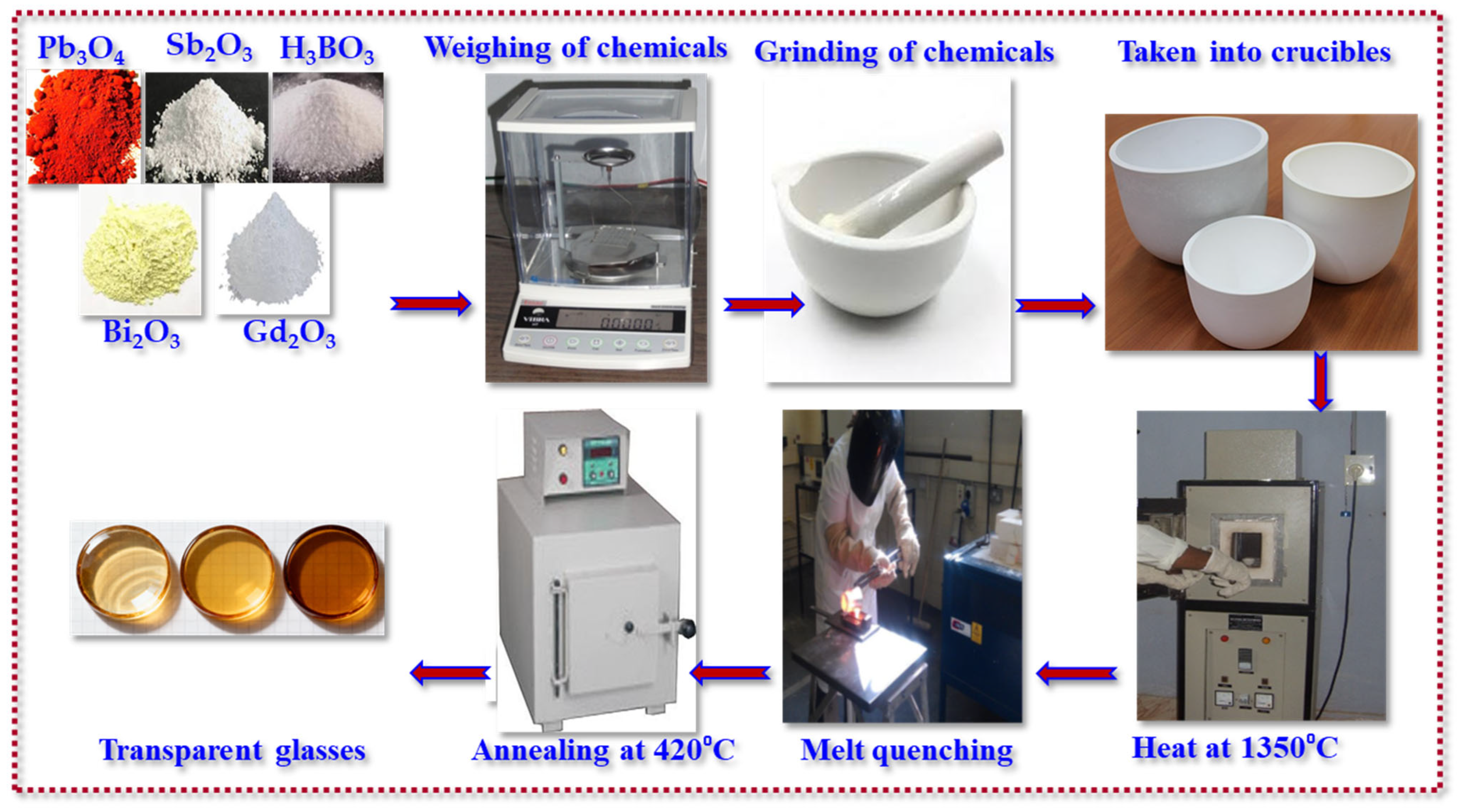
Figure 1. Schematic representation of the synthesis of the Gd3+ ion-doped Pb3O4–Sb2O3–B2O3–Bi2O3 glasses.
Photonics 12 01177 g001
Figure 2. Variation in density (g/cm3) (Pink color line) and refractive index (n) (Blue color line) of Gd3+ ion-doped Pb3O4–Sb2O3–B2O3–Bi2O3 glasses.
Photonics 12 01177 g002
Figure 3. X-ray diffractograms of Pb3O4–Sb2O3–B2O3–Bi2O3–Gd2O3 glasses.
Photonics 12 01177 g003
Figure 4. (a) SEM photograph of Gd10 glass. (b) EDS spectra of Pb3O4–Sb2O3–B2O3–Bi2O3–Gd2O3 glasses.
Photonics 12 01177 g004
Figure 5. DSC patterns of Pb3O4–Sb2O3–B2O3–Bi2O3–Gd2O3 glasses. Inset graph is drawn between them. Tc-Tg (°C) vs. Conc. of Gd3+ ions.
Photonics 12 01177 g005
Figure 6. FT-IR spectra of Pb3O4–Sb2O3–B2O3–Bi2O3–Gd2O3 glasses.
Photonics 12 01177 g006
Figure 7. An illustration of a structural fragment of Gd3+ ion-doped Pb3O4–Sb2O3–B2O3–Bi2O3 glasses.
Photonics 12 01177 g007
Figure 8. Optical absorption spectra of Gd3+ ion-doped Pb3O4–Sb2O3–B2O3–Bi2O3 glasses in the UV-Vis region.
Photonics 12 01177 g008
Figure 9. Tauc plots of Pb3O4–Sb2O3–B2O3–Bi2O3–Gd2O3 glasses.
Photonics 12 01177 g009
Figure 10. Excitation spectra (λem = 311 nm) of Pb3O4–Sb2O3–B2O3–Bi2O3–Gd2O3 glasses.
Photonics 12 01177 g010
Figure 11. Emission spectra (λexc = 274 nm) of Gd3+ ion-doped Pb3O4–Sb2O3–B2O3–Bi2O3 glasses in the UV-visible region.
Photonics 12 01177 g011
Figure 12. Decay profiles of (λexc = 274 nm & λemi = 311 nm) 6P7/2 emission level of Gd3+ ion-doped Pb3O4–Sb2O3–B2O3–Bi2O3 glasses.
Photonics 12 01177 g012
Figure 13. The energy level diagram involving emission transitions for Gd10 glass.
Photonics 12 01177 g013
Table 1. Physical parameters of Gd3+ ion-doped Pb3O4–Sb2O3–B2O3–Bi2O3 glasses.
Glass SampleDensity d (g/cm3)Gd3+ Ion Conc. (Ni) (×1019/cm3) ± 0.001Gd3+ Inter Ionic
Distance (Ri) nm ± 0.001
Polaron Radius RP (nm)Field Strength, Fi (×1014, cm−2) Refractive Index, nE0 (eV)
Gd14.2311.1844.3870.9180.3461.5214.45
Gd54.2331.2972.5691.5860.3251.5234.43
Gd104.2381.4742.0431.9720.2311.5354.05
Gd154.2351.7522.3872.2540.1771.5274.20
Gd204.2332.3232.4262.4770.1461.5254.40
Table 2. Summary of lifetimes evaluated from decay profiles of 6P7/2 emitted level of Gd3+ ion-doped Pb3O4–Sb2O3–B2O3–Bi2O3 glasses.
Composition/Host TypeGd3+ Conc. (mol%)Emission λ (nm)Lifetime τ (ns)Optical Band Gap E0 (eV)
Pb3O4–Sb2O3–B2O3–Bi2O3 (Present work)1.03114.824.05
Sb2O3–SiO2 with Pb3O4 tuning [37]1.0311~4–5
Borate glasses with modifiers [38]Varied311–312~3–5~4.0–5.0
Fluorophosphate/phosphate-based glasses [39]Varied311~4–8~3.5–4.5
Pb-containing HMO/lead-borate glasses [40]0.5–2.0311–312~3.5–6~3.8–4.5
Table 3. Comparison of emission characteristics (λem), radiative lifetime (τ), and optical band gap (E0) of Gd3+ ion-doped glasses from different host systems.
Glass Sampleτ (ns)
Gd13.61
Gd53.83
Gd104.82
Gd154.36
Gd204.07
Disclaimer/Publisher’s Note: The statements, opinions and data contained in all publications are solely those of the individual author(s) and contributor(s) and not of MDPI and/or the editor(s). MDPI and/or the editor(s) disclaim responsibility for any injury to people or property resulting from any ideas, methods, instructions or products referred to in the content.