1. Introduction
Neurological symptoms can arise secondary to diseases of other organs. This report describes the investigations and management of an elderly woman with a rare condition which required extensive work-up.
Congenital portosystemic venous shunts (CPSS) are rare vascular malformations resulting in a communication between portal and systemic blood. Hyperammonemia is a common laboratory abnormality [
1]. We report the case of an elderly woman who was hospitalized for presenting new neurological signs and was ultimately diagnosed with a portosystemic shunt.
2. Case Presentation
A previously independent 74-year-old woman with known medical history of atrial fibrillation and asthma-COPD overlap syndrome, was brought to the emergency department (ED) by her daughter because of a cognitive decline in the previous two months. Shortly before admission, she experienced periods of confusion and sleep disturbance. On examination, her blood pressure was 185/90 mm Hg and heart rate was 130 bpm. She was lethargic and had negative myoclonus in the upper limbs. General examination was otherwise unremarkable. In the ED, the heart rate was controlled with amiodarone.
We performed extended laboratory tests including leucocyte count (6300 cell/m
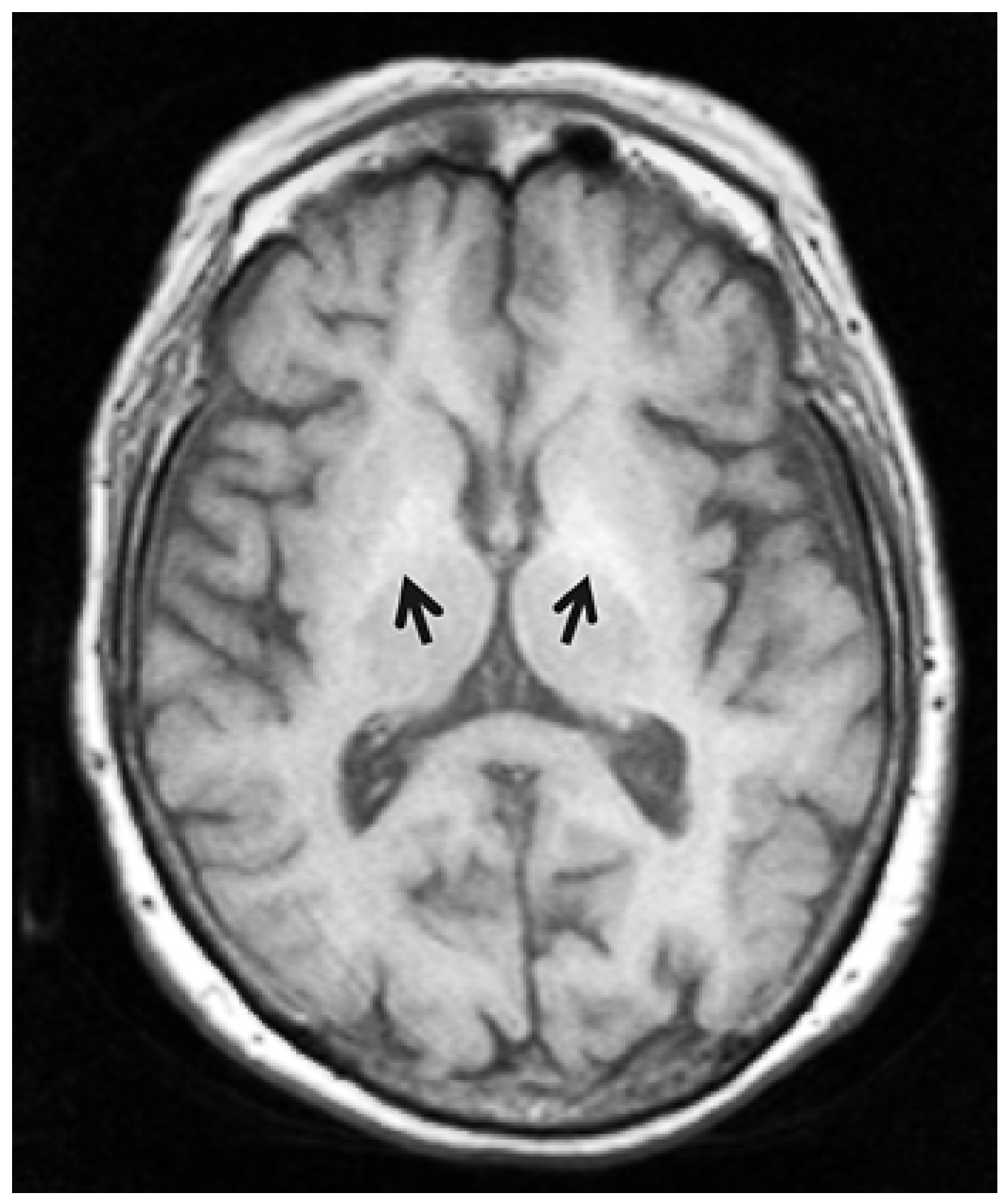
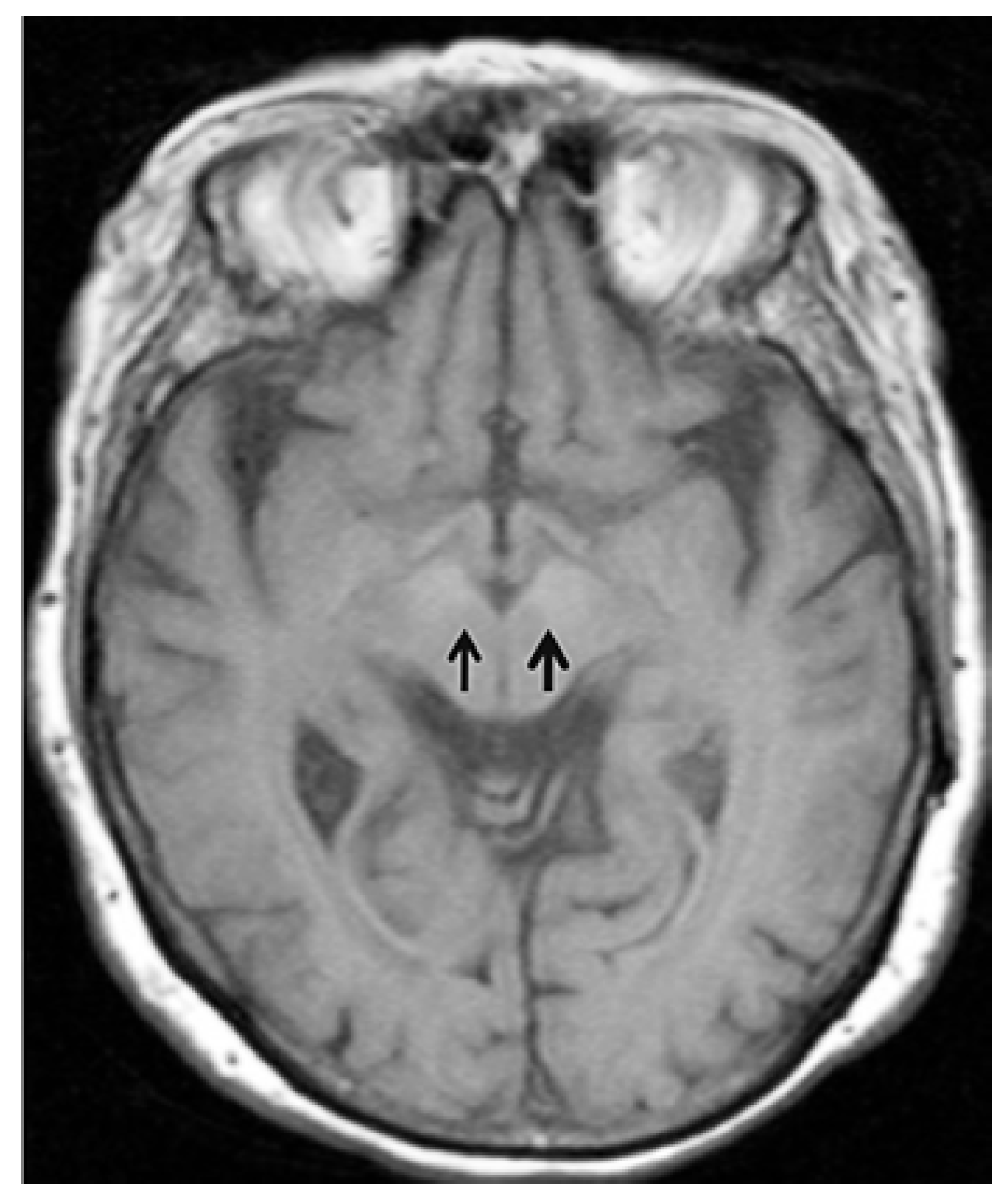
3; 3600–10,500/mm3), hemoglobin (15.7 g/dL; 11.8–15.8 g/dL), platelet count (186,000/mm3; 140,000–440,000/mm3), international normalized ratio (2.7; 0.98–1.13), creatinine (0.76 mg/dL; 0.55–1.02 mg/dL), albumin (2.9 g/dL; 3.5–4.8 g/dL), total protein (5.1 mg/dL; 6.6–8.3 mg/dL), aspartate aminotransferase (35 U/L; <31 U/L), alanine aminotransferase (32 U/L; <34 U/L), alkaline phosphatase (74 U/L; 30–120 U/L), gamma-glutamyl transferase (37 U/L; 5–40 U/L), total bilirubin (2.6 mg/dL; 0.2–1.8 mg/dL), direct bilirubin (1.2 mg/dL; <0.5 mg/dL) and ammonia levels (58 µmol/L; 27–68 µmol/L). Screening for viral hepatitis was negative. Thyroid tests were normal. Ceruloplasmin and ferritin values were within normal range. Treponemal test was negative. Computed tomography (CT) of the head was unremarkable. Blood and urine cultures were both negative. Cerebrospinal fluid analysis was normal, and bacterial and viral cultures were negative. Investigation for autoimmune and paraneoplastic encephalitis was negative. The electroencephalography report described a diffuse encephalopathy in the broad sense (grade 3 of 5), with no recording of epileptic activity or ictal patterns during examination. The patient underwent a magnetic resonance imaging of the brain which revealed a T1-weighted symmetric hypersignal in the globus pallidus (
Figure 1
) and both cerebral peduncles (
Figure 2
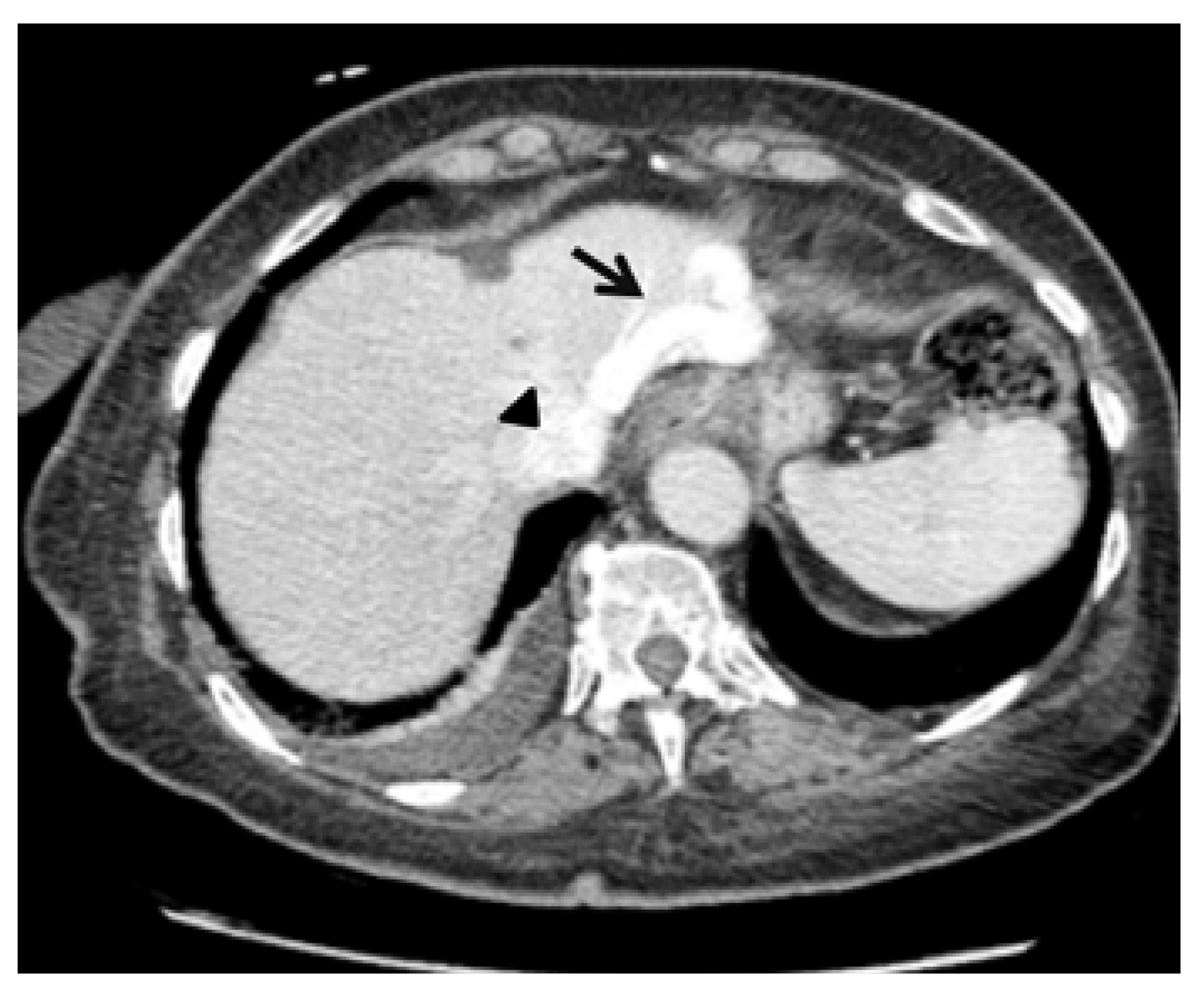
), suggesting a hepatic encephalopathy. A CT of the abdomen and the chest was performed revealing a large portosystemic shunt between the left branch of the portal vein and the inferior vena cava (maximum caliber of 11 mm). The right branch of the portal vein was described as filiform (caliber of 4 mm) (
Figure 3
).
After introduction of lactulose and rifaximin the patient showed a remarkable clinical improvement. The case was discussed with our interventional radiology team. Closure of the portocaval shunt was successfully performed with an Amplatzer™ vascular plug . Afterwards, the patient was discharged from the hospital with a scheduled follow-up appointment
.
The patient benefited from only one follow-up visit three months after shunt closure. She had regained pre-admission levels of independence and no longer showed signs of neurological dysfunction
3. Discussion
Our patient presented with clinical symptoms suggesting a metabolic encephalopathy, but was later confirmed to be the result of a newly discovered congenital portosystemic shunt. There are a few similar cases published. To our knowledge, no case with normal serum ammonia levels has been publicized yet. Other markers of liver dysfunction, such as gamma-aminobutyric acid (GABA) blood levels, ratio between GABA and homocarnosine or alpha-aminobutyric acid blood levels were not measured as it is not possible to perform these analyses in our laboratory. An interesting case of a 69-year-old woman with portosystemic encephalopathy masked as a depression was described by Asakura et al. Similar to our case, the patient did not have liver cirrhosis, however she did have high ammonia levels (228 µg/dL) [
2].
CPSS are abnormal vascular communications between portal and systemic blood flows. When the shunt ratio exceeds 30%, hepatic encephalopathy can appear at any time [
3,
4]. Hepatic encephalopathy initially manifests with abnormal behavior and cognition. The complex pathophysiology is explained by increased ammonia levels that result in neuronal dysfunction due to cerebral edema, cerebral manganese deposits, the influence of other metabolites such as mercaptans or short fatty acids, and the disturbance of the glutaminergic synaptic function. Initial treatment involves reducing ammonia absorption and altering the intestinal microbiota with rifaximin 550 mg. In fulminant cases, reduction of cerebral edema with osmotic diuretics may be warranted [
5].
4. Conclusions
Congenital portosystemic shunts discovered late in life can cause encephalopathy. Diagnosis is extremely important and requires high clinical suspicion. Given that medical and surgical treatment is available for this entity, it deserves its place on the neurologist’s list of differential diagnoses of metabolic encephalopathy.
5. Patient’s Perspective
I felt something was wrong especially in the last few weeks, but I couldn’t explain what it was. I thought the hand tremors were a result of my growing frailty rather than a treatable disease. When my daughter decided to bring me to the emergency department, I felt sad because I had no hope of getting better. My biggest fear was not being able to return home. During hospitalization I experienced periods of extreme drowsiness. The surgery gave me what I had lost—my independence. I am grateful to the team that took care of me, and I am happy to contribute to the advancement of science.
Author Contributions
M.A. conceived the presented idea, and draft the article in consultation with P.S., J.C., and F.M., P.S. and J.C. provided substantial corrections to the article and analysed the images. F.M. provided a substantial critical review of the article after the input of all other authors.
Institutional Review Board Statement
Written informed consent was obtained.
Conflicts of Interest
No financial support and no other potential conflict of interest relevant to this article was reported.
References
- Bahadori, A.; Kuhlmann, B.; Debray, D.; Franchi-Abella, S.; Wacker, J.; Beghetti, M.; Wildhaber, B.E.; McLin, V.A. on behalf of the IRCPSS. Presentation of Congenital Portosystemic Shunts in Children. Children 2022, 9, 243. [Google Scholar] [CrossRef] [PubMed]
- Asakura, T.; Ito, N.; Sohma, T.; Mori, N. Portosystemic Encephalopathy without Liver Cirrhosis Masquerading as Depression. Intern. Med. 2015, 54, 1619–1622. [Google Scholar] [CrossRef] [PubMed]
- Sokollik, C.; Bandsma, R.H.; Gana, J.C.; van den Heuvel, M.; Ling, S.C. Congenital portosystemic shunt: characterization of a multisystem disease. J. Pediatr. Gastroenterol. Nutr. 2013, 56, 675–81. [Google Scholar] [CrossRef] [PubMed]
- Uchino, T.; Matsuda, I.; Endo, F. The long-term prognosis of congenital portosystemic venous shunt. J. Pediatr. 1999, 135, 254–256. [Google Scholar] [CrossRef] [PubMed]
- Wijdicks, E.F. Hepatic Encephalopathy. N. Engl. J. Med. 2016, 375, 1660–1670. [Google Scholar] [CrossRef] [PubMed]
This is an open-access article distributed under the terms of the Creative Commons Attribution Non-Commercial No Derivatives (CC BY-NC-ND) 4.0 License.