Introduction
Opioid Maintenance Treatment (OMT) is the most effective treatment for opioid use disorder (OUD) [1] allowing the reduction or disappearance of withdrawal and craving symptoms [2]. On the one hand, OMT is effective in reducing illicit opioid use [3,4] and improving general health [5], on the other hand many patients receiving OMT are polysubstance users [6,7]. Specifically, many heroin users also report using cocaine [8]. Concurrent use of cocaine and heroin is known to increase the risk of death from overdose, as this combination leads, among others, to an increase in the amount and frequency of opioids use [9]. Persistence of cocaine use during OMT is therefore of considerable clinical concern [1,10,11].
Addictions, regardless of the substances used, are conceptualized as a unitary phenomenon because of their many clinical and biological similarities. However, stimulants such as cocaine and opiates may be differently associated to impulsivity [12]. While impulsivity is a common feature of all addictions [13], it seems that different levels of impulsivity lead to different types of risky behaviours and use.
Notably, it is recognized that high levels of impulsivity are associated with the use of multiple substances [14,15]. In heroin and cocaine users, high levels of impulsivity and risky behavior have been extensively reported [6,16]. The literature is, though, not unequivocal, as some studies found individuals with cocaine use more impulsive and with a higher propensity to take risks than heroin users [17], while others did not find such differences [7,18]. These inconsistencies may be due to significant methodological differences in the way impulsivity is assessed, e.g. by psychometric tests or by laboratory tasks [6,17,18]. Impulsivity has several components, for each of which an assessment tool has been developed [19].
Impulsivity reflects a tendency to act prematurely without foresight [20,21]. Psychometric measures evaluate impulsivity as a personality trait, whereas laboratory tasks are considered to measure state impulsivity [21,22]. The UPPS-P is a self-report questionnaire which assesses the impulsivity-facets Positive Urgency (PU), Negative Urgency (NU), Lack of Premeditation (LPr), Lack of Perseverance (LPe) and Sensation Seeking (SS) [23,24]. Laboratory tasks address such behavioral aspects as the inability to suppress inappropriate behavior (motor impulsivity), risk-taking (risky behaviors), and the inability to defer a gratification (impulsive choice) [25]. Motor impulsivity, evaluated by the Stop Signal Reaction Time (SSRT), refers to the ability to inhibit a prepotent motor response [26]. The Delay Discounting Task is designed to assess impulsive decision-making. Accepting a smaller reward in order to obtain the reward immediately is associated with high-impulsive subjects [27]. The Balloon Analogue Risk Task (BART) is an assessment of risk-taking behaviors. Through this task, as in real-world situations, risk-taking is rewarded up until a certain point, beyond which excessive risk-taking leads to greater negative consequences [28,29]. Addictions have been found to correlate with all these impulsivity components, but cocaine users were reported to present more significant deficits in response inhibition compared to heroin users [6].
The OUD population is known to engage in polysubstance abuse [30]. Indeed, many people who use heroin also report using cocaine [8]. Concurrent use of cocaine and heroin, such as “speedball,” is known to increase the risk of death from overdose, as this combination leads to an increase in the amount and frequency of opioids used [9]. In addition, polysubstance abuse such as heroin and cocaine, is associated with poor clinical outcomes [1,10]. Thus, additional cocaine use appears to be a risky behavior in itself. In addition, if cocaine use is frequently associated to heroin use, its consumption persists after people have engaged in OMT. Indeed, persistence of cocaine use in the OUD population receiving OMT during treatment initiation and after is a longknown fact and still a clinical concern [11]. The pursuit of studies, about what distinguishes people with a cocaine use disorder (CUD) and those without among the OUD population, is necessary.
Regarding these different findings, we emitted the hypothesis that in patients with OUD receiving OMT, those with an additional cocaine use would show a higher impulsivity level and risk taking. Answering to this question in naturalistic conditions can lead to a better comprehension of their addictive trajectory and also help to define a therapeutic strategy. To determine whether cocaine users in the OUD population receiving OMT are more impulsive, we included a group of patients with OUD receiving the same OMT, the “Slow Release Oral Morphine” (SROM). SROM is a recently developed OMT available in Switzerland. It has been suggested as an alternative treatment in OUD, especially for individuals that do not tolerate other OMT [31]. The choice of SROM over other OMTs was made in view of its lesser side effects [32,33], and its wide use in our department. In addition, limiting our inclusions to one type of OMT helps to limit bias. We assessed impulsivity state (BART, Stop Signal Task, and Delay Discounting Task) and trait (UPPS-P), and compared them according to their cocaine status.
Discussion/Conclusion
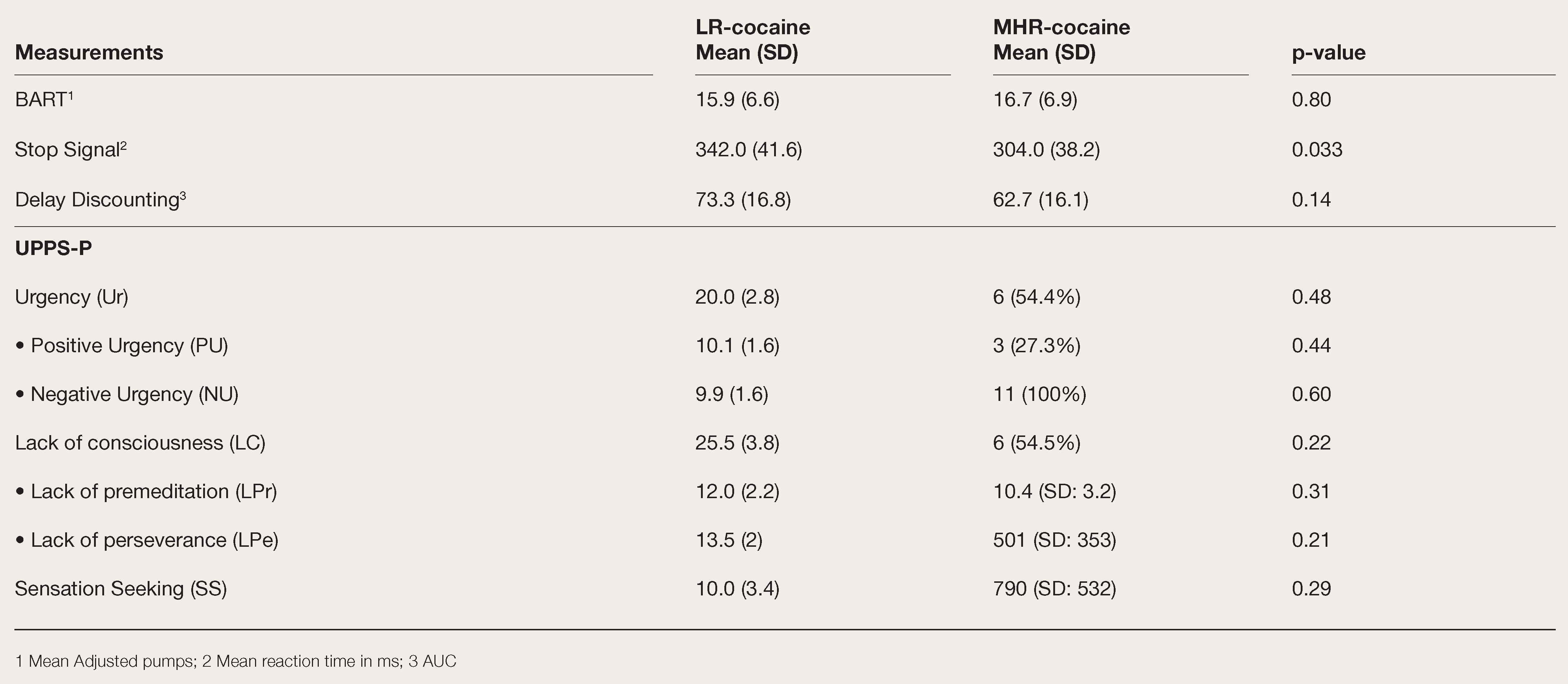
This study aimed to explore several dimensions of impulsivity in patients receiving OMT, distinguishing between those with and without concomitant cocaine abuse. We expected the former to show higher levels of impulsivity. Drug use, and in particular cocaine use, had previously been identified as a factor that can induce, both through its acute and long-term effects, an increase in impulsivity and, consequently, an increase in risky behaviours such as unprotected and unsafe sex [39,40]. Surprisingly, in the present study, while both groups showed a similar impulsivity profile, one impulsivity component, motor impulsivity, resulted to be significantly higher in the group without cocaine use. Although this result may appear counterintuitive at first sight, we found many evidences in literature that could explained it.
It is well-known that with ADHD and comorbid CUD have a higher motor impulsivity than those with ADHD only.
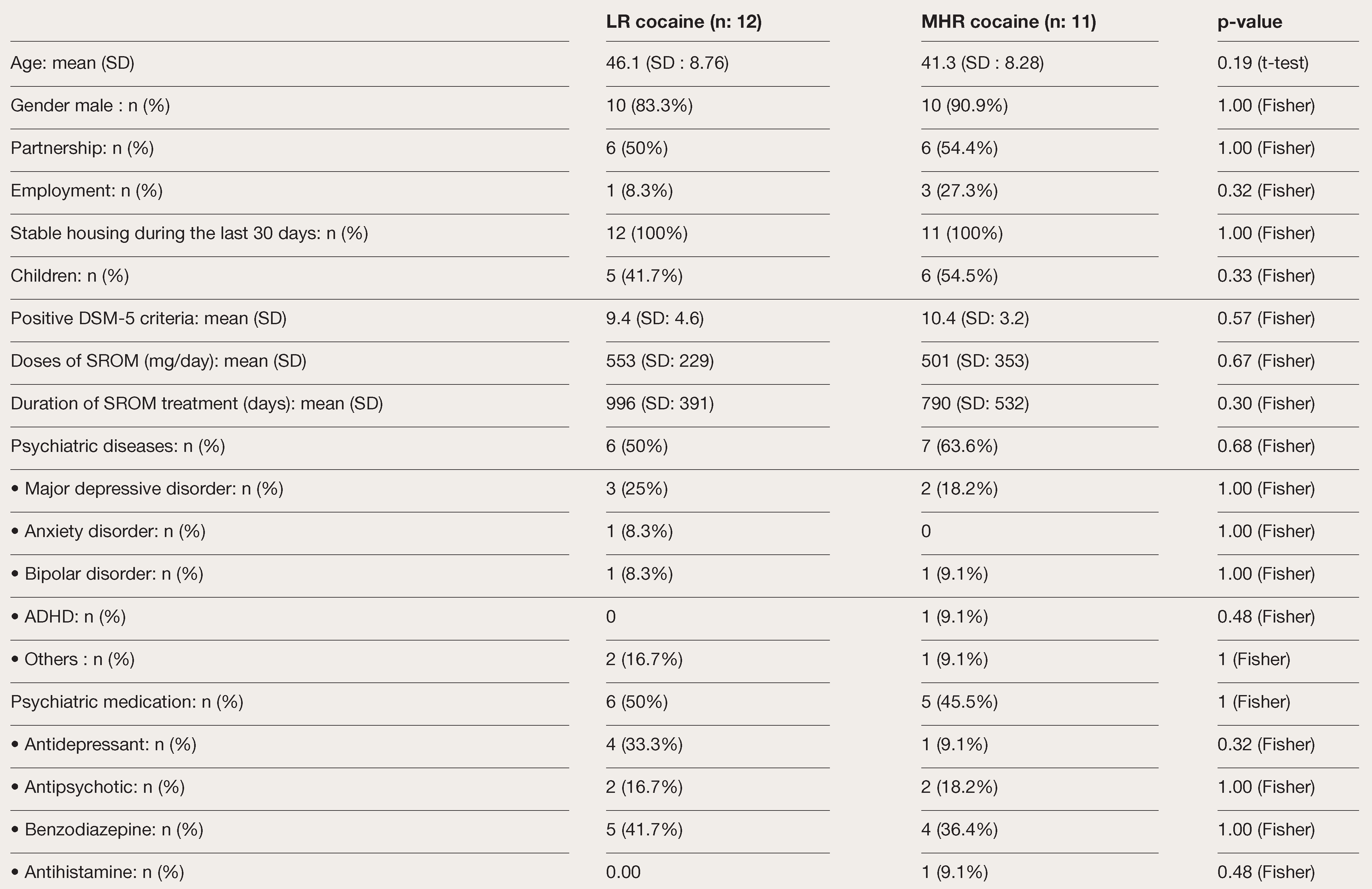
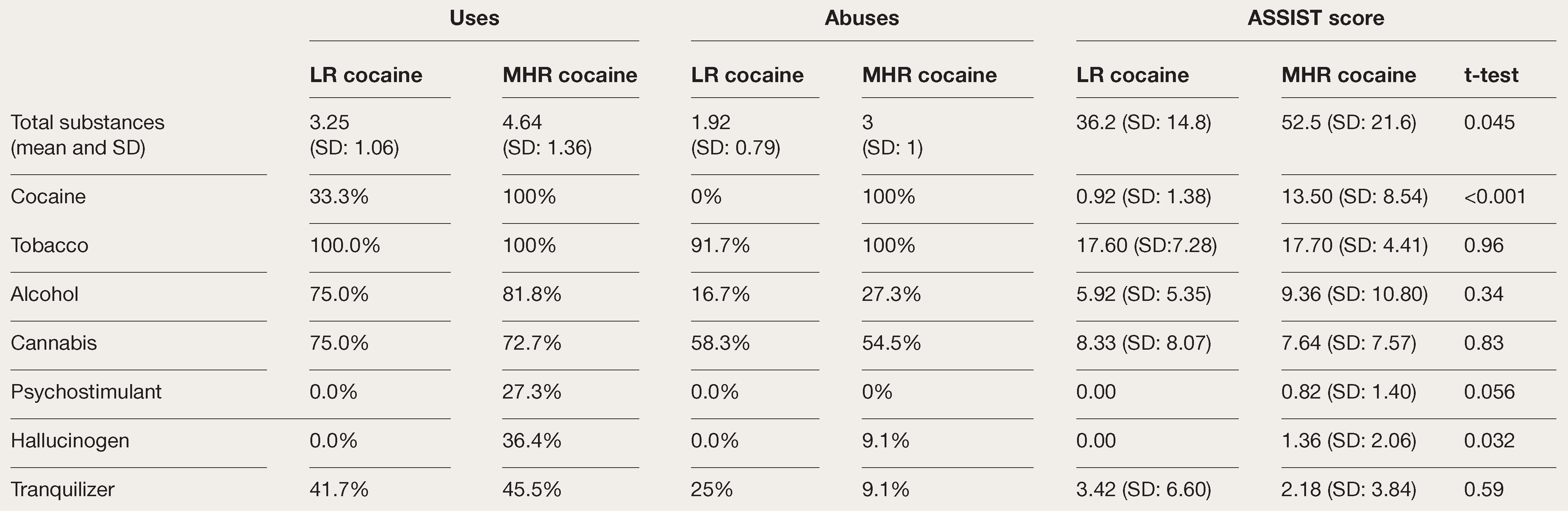
It is commonly accepted that all addictions, SUDs and behavioral addictions, are associated with motor inhibitory deficits. Often, these observations are made by comparing populations without distinguishing causal factors, or chronic/acute effects of substances [41]. Studies which focused on the acute effect of substance on motor impulsivity showed different impacts depending on the substance. For example, alcohol [42] or cannabis [41] impairs inhibitory control, whereas psychostimulants improve it [42]. This improvement of the inhibitory control induced by psychostimulants is observed on subjects whose initial SSRT were slow, and/ or subjects with Attention Deficit Hyperactivity Disorder (ADHD) [40,43]. Also, in a study on patients with CUD where the SSRT was administered during a period of abstinence from cocaine, an alteration in performance was found [44]. These impaired performances in motor inhibition have been commonly observed in users of stimulants such as amphetamine [12]. On the other hand, injection of methylphenidate compared to saline improves the performance of SSRT in CUD, showing a better inhibitory control induced by the psychostimulant [45]. These studies provide information on the acute effect of drugs and not on the chronic effect. In the light of these data, the significantly lower motor impulsivity in the MHR cocaine group and their tendency to have a greater appetite for psychostimulants led us to hypothesize that the participants in this group were attempting to self-medicate their deficit. Nevertheless, this hypothesis cannot be verified due to our methodological limitations. Indeed, we ignore participants’ last cocaine use, although due to their difficulty in controlling their cocaine use, it can be assumed that their consumption was closer than for the LR cocaine use group. In order to conclude on the self-therapeutic dimension of cocaine use and its acute effect on neurocognitive performance, it would be necessary at least to know if participants were under cocaine influence during task performances, and at best to know the performance without cocaine and just after cocaine use, a maneuver which may be difficult to realize for ethical reasons. The higher tendency to consume psychostimulants in the MHR cocaine use group could be another argument in favor of the self-medication hypothesis. But, this aspect must be balanced by the observation of a significantly higher tendency of the MHR cocaine group to use hallucinogens. In line with this hypothesis, there are many arguments in the literature around the self-medication hypothesis in the CUD, with the notion that ADHD is a risk factor for cocaine use and CUD [46]. Moreover, if the acute administration of psychostimulants is associated with behavioral inhibition, it is important to highlight that chronic exposure may lead to long-term sequelae that result in a defect of motor inhibition [47]. Furthermore, this hypothesis is put forward without being able to make a hypothesis on the origin of this deficit, i.e. to answer the question of whether the deficit is prior to cocaine intake, as is the case in ADHD, or consecutive to chronic cocaine intake. Despite this, it is well-known that patients with ADHD and comorbid CUD have a higher motor impulsivity than those with ADHD only [48], which implies that the two causes could be intertwined. Nevertheless, this only partially explains why the LR cocaine group showed higher impulsivity. Another reason that could explain why the LR cocaine group showed higher impulsivity is the influence of several substances they use, which we have seen could negatively affect impulsivity, such as alcohol or cannabis [41,42]. However, LR cocaine group did not consume more alcohol, cannabis or others substances than MHR cocaine group. Another explaination could be an undiagnosed comorbid ADHD. Thus, presence of ADHD in a proportion of our sample could explained our results, since ADHD has been associated with altered motor inhibition [49]. It is important to remember that the psychiatric disease control provided information of only one participant with a diagnosis of ADHD in the MHR cocaine group. But this information does not mean that other participants could not have ADHD, it only means that one participant has already been diagnosed with ADHD. Indeed, if the ADHD is particularly associated in the literature at the CUD, this disease is also too associated to the others substance use disorder [50,51]. Specifically, it has been reported that in the OUD population the proportion of ADHD could be estimated to be between 11% and 33%, but this disease remains underestimated with currently a low proportion of patients having received medication for ADHD [52].
Risky decisions and behaviors could be explained by the inability to differ rewards.
Both heroin and cocaine users are known to show poorer performance in decision-making and higher risk-taking than controls [6,53]. In our study, risk-taking as assessed by the BART was similar in both groups, with and without cocaine use. This result is in agreement with a previous study that found no difference in risk-taking propensity between subjects receiving OMT with cocaine use and abstainers [7]. Yet, it has previously been suggested that different risk profiles may mediate the orientation of substance choice, with higher risk-taking at BART for cocaine rather than for heroin users [17,54]. Thus, heroin dependent individuals have been characterized in a study published by Ahn et al. [12] to be lesser risk-taking individuals than stimulant users. However, in contrast to our study, the subjects included in the Ahn et al. study were abstinent, and described as having only a problematic use whereas our participants were mainly polydrug users [12,17,54]. Risky decisions and behaviors could be explained by the inability to differ rewards. Delayed discounting was used to assess a behavioral economic index of impulsivity, that is, the extent to which a reward is devalued by its delayed receipt in the future. The use of stimulants such as cocaine is associated in the literature with delay aversion, leading authors to identify it as a stimulant use endophenotype [12,55,56]. Primary cocaine users were previously found to have a higher preference for small, immediate rewards compared to primary heroin users [17]. In the present study, we did not find differences in delay discounting between our both groups. Cocaine use did not seem to affect delay discounting here. Most studies that found cocaine users to exhibit greater impulsivity than heroin users examined single use situations. In addition to being associated with substance choice, delay discounting may also be associated with polysubstance use. Thus, individuals using two or more substances use exhibited higher impulsive decision-making than individuals with single substance use, but there was no further cumulative effect with the number of substances used beyond two drugs [57]. In addition, recent meta-analyzes have shown that the delay discounting appears to be affected by SUDs and severity of their addiction its, but is not affected by substance type [58,59]. The presence of comorbid psychiatric illness could also affect the discounting of delays [58]. However, our two groups are equivalent whether be for the severity of addiction assessed by the number of DSM-5 criteria, or for psychiatric diseases. One could thus tentatively conclude, based on the results of our present study, that the impulsivity components measured by the BART and the Delay Discounting Task are more related to the polysubstance use than the substance choice. In the present sample of polysubstance users receiving OMT a general high level of impulsivity may have masked possible differences between cocaine users and non-users.
It is possible that our sample, engaged in treatment for more than three months, was less impulsive than those not in treatment.
The different facets of impulsivity, as assessed by the UPPS, have been found to be vulnerability factors for showing risky behavior and developing substance use disorders [60,61,62]. If stimulant use would be correlated with predominant sensation-seeking behavior, and heroin use would be more associated with a higher propensity to feel a negative urgency, in our case we found no difference in UPPS between the two groups. But, these results are difficult to compare with ours since the subjects were mono-consumers and abstinent without OMT [12]. However, other studies that found a higher impulsivity in subjects receiving OMT than in controls, found no difference regarding their CUD status [18]. Furthermore, it is important to highlight that our LR cocaine use group is not cocaine abstinent and has shown that they use cocaine recreationally, at least 33% of them. It is important to take this aspect into account because a previous study showed that all cocaine users (recreational and addicted) had the same level of impulsive trait. Moreover, it would seem that impulsivity traits are more associated to the depressive symptoms severity or ADHD [63], diseases which do not differ between the two groups or which are not sufficiently controlled.
Several limitations are to be considered when interpreting the results of the present study, mainly the limited sample size and the lack of information about the last use of cocaine. The polysubstance use status of our sample may also have blurred the results. Most previous studies focused on one substance, considering polysubstance use as an exclusion criterion. If selecting a single substance use disorder can limit some bias, it does not reflect the reality of most heroin users, who are engaged in long-lasting poly-drug use [64]. Duration of the OMT cure/treatment could represent another limitation. Individuals in our sample had been in treatment for more than three months (mean 996 days for LR and 790 for MHR). Furthermore, it is known that impulsivity is related to the duration of treatment. On the one hand, the duration of treatment can have a downward influence on the level of impulsivity [65,66]. On the other hand, higher impulsivity is associated with problems in the effectiveness of psychotherapy, including poorer outcomes and lower retention in treatment [67]. It is possible that our sample, engaged in treatment for more than three months, was less impulsive than those not in treatment. However, controlling for dosage and duration of treatment provides a good indicator of stability in treatment and allows comparison between the two groups. Another limitation is the lower proportion of females compared to males included in our sample. However, this underrepresentation of women appears to be consistent with epidemiological data that show a lower proportion of women in the OUD population [68,69]. A final limitation, is represented by the comorbid psychiatric diseases and medication used by participants. If we did not find any differences between our groups, it is important to specify that these information’s are only declarative. Thus, participants may have omitted data or simply did not know it.
In conclusion, if a higher global impulsivity profile in SUD compared to non-users has been established consistently before, the present study led to the hypothesis that cocaine use could be considered as a self-medication attempt. Future studies on impulsivity should not ignore the existence of comorbid ADHD, and should also monitor precisely when cocaine was last used.