Next Article in Journal
Aphasia following a stroke: recovery and recommendations for rehabilitation
Previous Article in Journal
Lésions cérébrales focales et aphasie: présentations cliniques et évaluations
 
 
Swiss Archives of Neurology, Psychiatry and Psychotherapy is published by MDPI from Volume 176 Issue 1 (2026). Previous articles were published by another publisher in Open Access under a CC-BY (or CC-BY-NC-ND) licence, and they are hosted by MDPI on mdpi.com as a courtesy and upon agreement with Editores Medicorum Helveticorum (EMH).
Review

Language capacities in dementia

by
Frédéric Assal
1,* and
Joseph Ghika
2
1
Unité de Neuropsychologie, Neurologie, Département de Neurosciences cliniques, HUG et Faculté de Médecine, Genève, Switzerland
2
Service de Neurologie, Hôpitaux du Valais, Sion, Switzerland
*
Author to whom correspondence should be addressed.
Swiss Arch. Neurol. Psychiatry Psychother. 2013, 164(8), 280-285; https://doi.org/10.4414/sanp.2013.00208
Published: 1 January 2013

Simple Summary

Language capacities in dementia are increasingly studied. Major advances in cognitive neuro psychology and functional neuroanatomy have shown extensive language networks in frontal, parietal and temporal cortex and their subcortical connections mainly, but not exclusively, in the left hemisphere. The main aphasias following strokes or brain tumours that correspond to the classic Wernicke- Lichtheim connectionism model are, therefore, rarely encountered. Moreover, degenerative pathology is never restricted to a focal location and often associates both motor and semantic aspects of speech and language. Primary progressive aphasias including agrammatic/non-fluent, logopenic and semantic variants served as models of relatively pure language deficits and helped our understanding of other dementias. Agrammatic/nonfluent aphasia and/or speech apraxia constitute clinical criteria for corticobasal degeneration and supranuclear palsy, and can occur in isolation before corticobasal or supranuclear syndromes emerge. In the classic form of Alzheimer’s disease, word-retrieval anomia is frequent, as a result of lexico-semantic difficulties. Alterations in pragmatics are increasingly recognised. Verbal fluencies constitute the main language difficulties in sub cortical vascular dementia, which is still poorly studied. In the continuum Parkinson’s disease / Parkinson’s disease with dementia / dementia with Lewy bodies, executive and working memory deficits at least partly explain discourse organisation difficulties and impaired sentence processing. Patients with the behavioural variant of frontotemporal dementia show verbal communication deficits secondary to pragmatic difficulties. In the near future, better phenotype-genotype correlations made using modern cognitive neuropsychological models and computerised magnetic resonance imaging (MRI), functional MRI and in-vivo molecular neuro imaging will improve our diagnostic accuracy of the main dementias, help better to follow up patients and benefit communication of caregivers with patients.
Keywords:
language; dementias

Introduction

Dementia classically impairs multiple cognitive domains, which results in a decline in social and occupational functioning. Most clinical research has been focused on the memory difficulties (and more specifically on episodic memory) that are the core clinical feature of Alzheimer’s disease (AD), the most frequent sporadic form of dementia worldwide. Nevertheless, in the last decade, language has been increasingly recognised as a marker for distinguishing between various dementias, because of major advances in cognitive neuropsychology, aphasiology and the functional neuroanatomy of language. Apart from diagnosis, a better understanding of language in dementia is extremely important. Obviously, patients with communication difficulties and dementia are going to increase in the next decade, because of the growth of the older segment of the population. A better selection of patients who will benefit from speech therapy is required. Finally, it may help to teach caregivers since communication is crucial in the patient’s care, management and interactions. After a few words on main language domains and functional neuroanatomy, we will focus on language findings in the main dementias. We will briefly summarise current data on primary progressive aphasias (PPA), which are heterogeneous diseases deriving from non-Alzheimer’s and Alzheimer's pathologies, and then discuss language capacities in the main dementias, which are AD, fronto-temporal dementias (FTD), vascular dementia (VaD), and dementia with Lewy body (DLB). Language capacities in amyotrophic lateral sclerosis (ALS), Parkinson’s disease (PD), Huntington’s disease (HD) and Creutzfeldt-Jakob disease (CJD) will be only briefly pre sented, because of clinical and neuropathological overlaps with the main dementias and/or special interest for neurologists.

Modern aphasiology and functional neuroanatomy

Language is no longer understood as the classic Wernicke- Lichtheim connectionism model (i.e. receptive aphasia, expressive aphasia and conduction aphasia resulting from disconnection in the arcuate fasciculus), but as a complex cognitive function that is widely distributed in the brain. It includes phonology (the system that deals with phonemes or sounds of language), syntax (the rules and principles of language including grammar), semantics (the meaning and relation between words) and pragmatics (the way we infer the meaning depending on the context, including emotion, inference, implicature, conversational competence, social distance etc.), as well as attention and resource capacity, phonological loop (short-term memory which stores verbal data/phonemes over brief intervals of time) and episodic buffer (the system that links working memory to episodic memory). Contemporary cognitive neuropsychology and advances in neuroanatomical tools using magnetic resonance imaging (MRI) and functional MRI (fMRI) have provided a new understanding of the language network that not only encompasses classic language areas in the left hemisphere (Wernicke’s area, Broca’s area, arcuate fasciculus), but also their cortical and subcortical connections. The reader may refer to Price, who recently reviewed the functional neuroanatomy of language [1]. In sum, auditory processing involves bilateral superior temporal gyrus around Heschl’s gyrus including the left inferior frontal cortex, temporo- parietal cortex and left planum temporale. Speech sound (or phonological) processing is mainly associated with activations in the left posterior superior temporal cortex and the left anterior superior temporal gyrus, the left inferior frontal gyrus and the ventral supramarginal gyrus. Speech comprehension (when familiar sounds are recognised and mapped onto their meaning or semantics) mainly occurs in the left anterior temporal pole, but also in the left posterior temporal areas, ventral inferior frontal and possibly the dorsal superior frontal cortex and angular gyrus. For speech production, word retrieval from semantics is associated with activations in the left middle frontal and the left middle and inferior temporal cortices, the cerebellum and the anterior insular cortex when retrieval becomes more difficult; covert articulation (processing occurring prior to overt articulation, i.e. silent) involves the ventral pars opercularis, the ventral premotor cortex and the cerebellum; overt articulation (or producing the sound of speech, i.e. speaking aloud) activates the sensorimotor cortex (which controlls orofacial muscles, laryngeal activity, phonation and voluntary control of breath ing), the thalamus, the supplementary motor areas (SMA), the left caudate and the left putamen. Auditory motor feedback during speech production (useful for monitoring and correcting speech errors) probably occurs in the main core language areas in the temporal lobe (superior temporal sulcus, superior temporal gyrus and planum temporale). The written word (visual processing) involves a large region in the ventral occipito-temporal cortex. Converting spelling (orthography) to sound (phonology) is complex since it involves sublexical, lexical and semantic routes; lexico-semantic reading is located in the left ventral occipitotemporal and left ventral inferior frontal gyrus; non-semantic phonological reading links the superior temporal and ventral inferior parietal to the dorsal precentral gyrus.

Language examination

Examination of patients presenting with language difficulties is beyond the scope of this review and the reader may refer to the article of Martory et al. in this issue. In brief, clinical assessment starts with the history of language difficulties. When did the symptoms start? Were they isolated or accompanied by other cognitive symptoms? Did the patient present with emotional and/or behavioral symptoms? Did the patient complain of neurological symptoms, especially dysarthria, micrographia, abnormal movements (tremor, myoclonus, …), rigidity, dystonia, hypokinesia, loss of balance or falls? Clinical language assessment includes spontaneous speech (language appetency, fluency, pauses, circumlocutions, phonological transformations), confrontation naming and designation, oral comprehension, writing, reading (written comprehension), repetition (using monosyllabic and polysyllabic words / non words as well as short and long sentences), pragmatics (prosody, metaphor comprehension, metacognition) and general meaning of discourse. Carrying out complex movements of the face on demand in order to look for orofacial apraxia is required, as well as basic motor examination of facial, lingual and laryngeal muscles for dysarthria. Both orofacial apraxia and dysarthria may accompany or mask, when severe, language difficulties. It is obviously extremely important to repeat the clinical assessment of language, as well as other cognitive and behavioural functions, over time.

Primary progressive aphasias

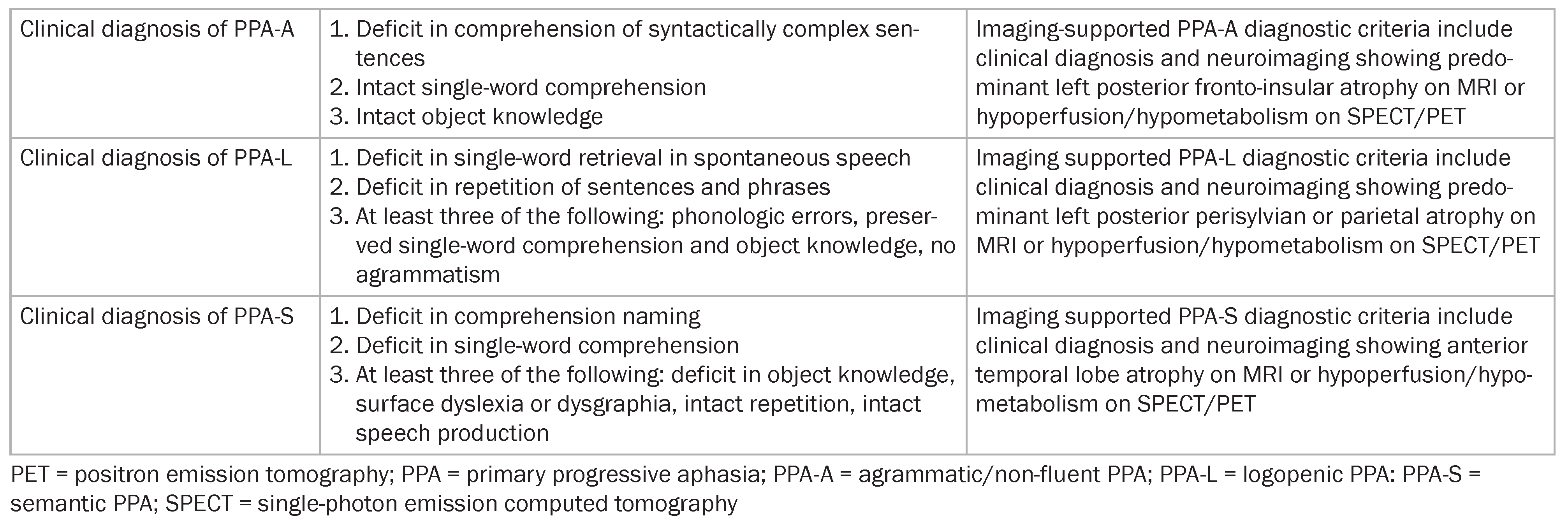
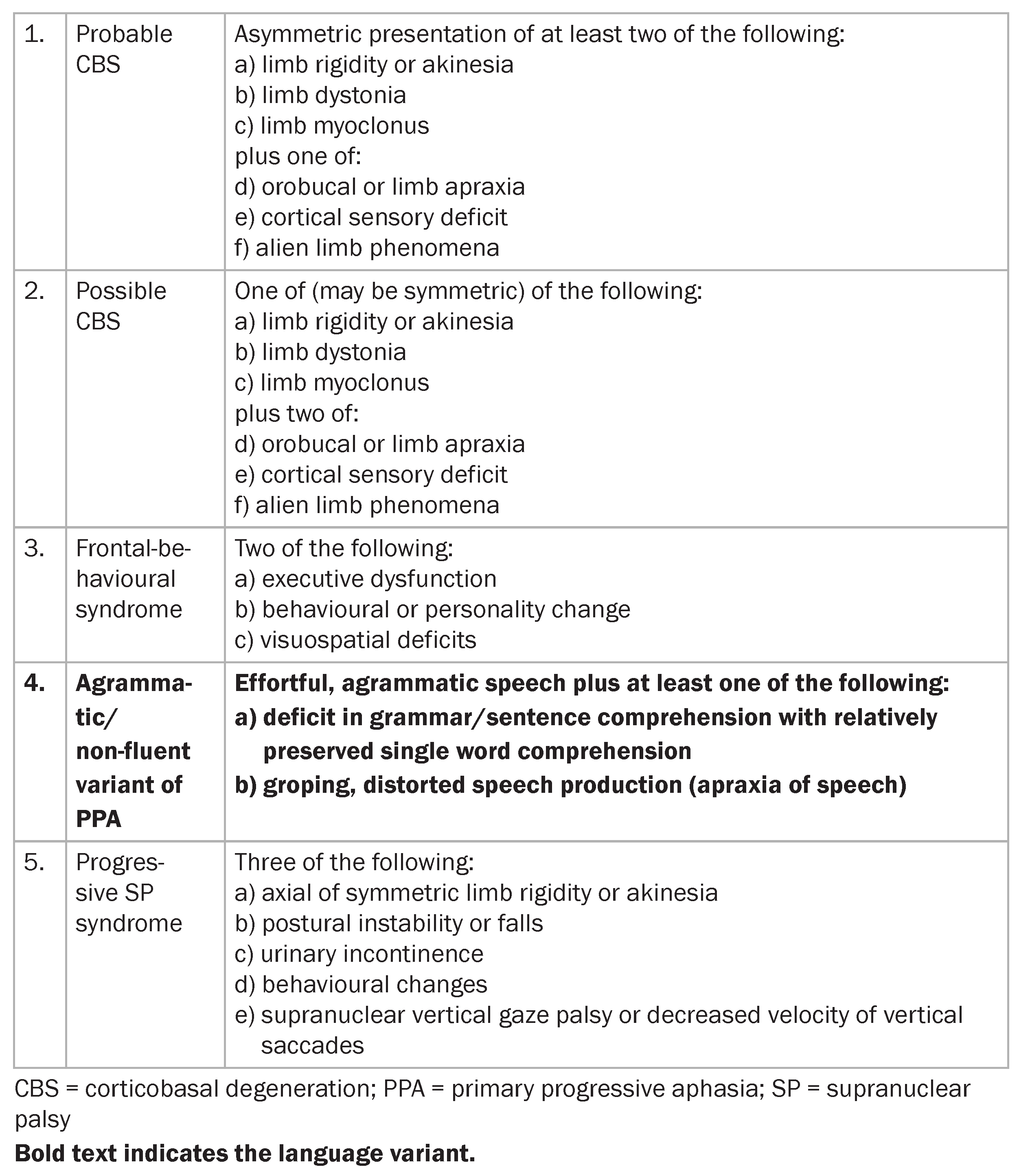
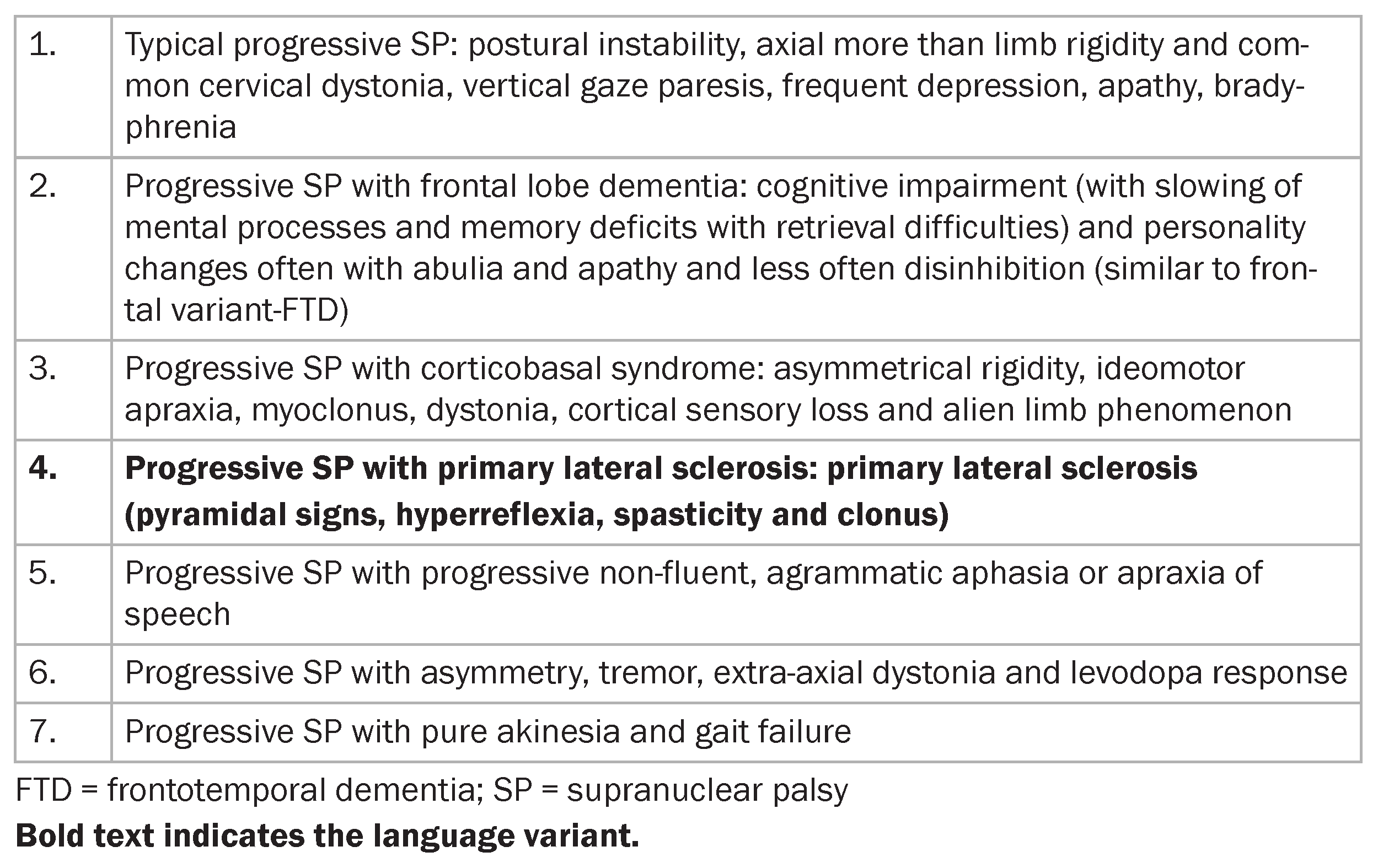
Primary progressive aphasias (PPAs) are heterogeneous entities that were initially described in the 80’s by Mesulam, who distinguished two main subtypes (non-fluent and fluent PPA). After more than 20 years of debate and controversy, consensus diagnostic criteria for the three main variants were established in 2011 [2]: the agrammatic/non-fluent, the semantic and the logopenic primary progressive aphasias (PPA-A, PPA-S and PPA-L, respectively; see Table 1 for diagnostic criteria and linguistic features). Since language deficits have an impact on other cognitive functions and most neuropsychological tests depend on verbal commands, the PPAs are often misdiagnosed as dementia: verbal memory tests depend on language capacities and detect deficits in two cognitive domains, therefore fulfilling the criteria for a dementia diagnosis although patients have normal or nearnormal daily activities. In advanced stages, aphasia is global with severe loss of fluency or mutism, and intense or complete comprehension deficits. When output is preserved, it is restricted to single words, palilalic syllables or meaningless logorrhoea (phonemic jargon). Neurological signs and behavioral symptoms frequently appear. PPA cases must be followed up over time because corticobasal or supranuclear palsy syndromes (CBS and SPS, respectively) and/or behavioural symptoms may appear during the course of the disease [3] and orient the diagnosis. Language features are now part of the clinical phenotypes of most common tau neuropathologies such as corticobasal degeneration (CBD) [4] and supranuclear palsy (SP) [5], usually agrammatic/non-fluent aphasia or speech apraxia or their combination (Table 2 and Table 3).

Alzheimer’s disease

AD neuropathology (beta amyloid and tau lesions) might be the most common pathology underlying PPA-L, and the majority of patients with this subtype of aphasia progress to full clinical AD over time [2]. Patients with the classic sporadic form of AD often present at an early stage with wordretrieval anomia, literal and neologistic errors, reduction in phrase length, difficulties in sentence repetition, and impaired comprehension, mainly of written sentences [6]. The patient then typically show deficits at the level of oral production, semantic dissociations, and both quantitative and qualitative discourse impoverishment [7]. Declines in written production and in comprehension are usually observed later in the disease, and the severity of language deficits globally parallels global cognitive impairment [8]. Language impairments in AD remain, however, heterogeneous, and their dynamics show a high degree of variability. Language deficits could manifest at the onset [9], or later in the course of the disease [10,11]. Oral and written picture description impairs discourse because of word findings difficulties, diminished pictorial themes and informative contents, and error monitoring difficulties. Patients use more frequent pauses and hesitations [12], “ohs” and “ums” and longer formulaic phrases [13], or increased use of self-referential tags, or checks of the certainty of the question [14]. Some authors favour impairment at the lexico-semantic (or microlinguistic) level [15] and others at the macro-linguistic supra-sentential one (i.e. thematic coherence) [16]. Rousseaux et al. found word comprehension difficulties, and to a lesser extent paraphasias suggesting lexico-semantic difficulties and moderate impairment in pragmatics (response to open questions and presentation of new information); speech outflow, speech articulation and syntax and non-verbal communication were grossly intact [17], but their sample did not include advanced stages of the disease. In the early stage of autopsy-confirmed AD, semantic processing (i.e. semantic units of discourse samples) was altered, particularly for actions and subjects rather than for locations and objects [18]. Pragmatics, assesssed with a referential communication task (trial repetition in order to achieve common references), was not intact in a small sample of AD patients, as compared with healthy controls: although AD patients benefited from the task repetition, they were significantly worse at integrating previous shared information and referential expressions [19]. This alteration was not associated with executive deficits. Interestingly, the percentage of conversational gestures was globally reduced, suggesting parallelism between speech and gesture degradation [20].

Dementia with Lewy bodies

Both Parkinson’s disease (PD), Parkinson’s disease with dementia (PDD) and dementia with Lewy bodies (DLB) belong to a family of degenerative diseases secondary to alpha-synuclein inclusions named Lewy bodies in the substantia nigra, the cortex and the brain stem. PD patients do not have prominent cognitive deficits, unlike PDD and DLB, which broadly share similar executive, visuospatial and memory difficulties.
In PD, language difficulties have been reported only recently (for a review see [21]). PD patients are less accurate in the processing of long complex sentences, which is probably secondary to impaired verbal working memory, executive resources, sequencing abilities, semantic priming and set switching. PD patients also show verb generation and metaphoric understanding difficulties.
Aphasia is not a core cognitive feature of DLB, but language capacities are not entirely normal. When 16 DLB patients were compared with 16 AD patients matched for age and level of dementia, confrontation naming, letter and category fluencies, repetition, and oral and written comprehension showed a similar degree of impairment [22]. More recently, DLB patients were described who had script comprehension difficulties (loss of accuracy in ordering judgment and significantly slower) when compared with normal controls and patients with PD, which were correlated with executive deficits and frontal atrophy [23]. The same group found sentence processing difficulties related to working memory deficits and impairment of speech fluency that both correlated with the measure of brain atrophy [24]. Executive impairments probably also explained organisation difficulties of narrative discourse in non-aphasic DLB patients [25]. Since the most common form of DLB is not the pure Lewy body form but the mixed variant (including both Alzheimer’s and Lewy body pathologies), cases of PPA followed by hallucinations, delusions and Parkinsonism have been described [26,27]. In the first case, Alzheimer’s pathology in the left temporoparietal cortex was found. In the second, although AD cerebrospinal fluid biomarkers were negative, language anomalies (corresponding to the logo penic variant, see above) strongly suggested AD neuro pathology.

Vascular dementia

Strokes and/or small-vessel disease (diffuse leucoaraiosis) both lead to vascular cognitive impairment and dementia (VaD). Strategic strokes resulting in dementia and aphasia are mainly located in the left central paramedian nucleus of the thalamus, disrupting frontal- basal ganglia-thalamus loops [28]. In patients matched for severity of dementia, multi-infarct dementia patients were more impaired in word recognition, naming and repetition than AD patients who had more difficulties understanding grammatical structures [29]. Sub cortical small-vessel disease or diffuse leukoaraiosis is a frequent finding, commonly leading to executive dysfunction of various severities. Clear-cut neuroanatomical correlations with clinical findings are often equivocal and largely unresolved since co-existent neurodegenerative pathology may occur. In mild to severe dementia patients, repetition difficulties were more impaired in AD then VaD [30]. When patients within the AD/VaD spectrum, very early dementia and with various degree of leucoaraiosis that were correlated to neuropsychological functions, no leucoaraiosis threshold was found for the language measures (verbal fluency), unlike working memory and executive functions [31].

Frontotemporal dementia

Frontotemporal syndromes include the language variants (PPA-A, PPA-S, see above) and the behavioural variant (bv- FTD) that belong to tauopathies or TDP-43 proteinopathies. In the latter, language deficits contribute to the differential diagnosis from AD. In longitudinal follow-up bv-FTD patients showed a faster decline than AD patients and shared several linguistic overlaps with PPA, suggesting they belong to the same spectrum of disorders [32]. Bv-FTD patients have decreased speech output and conversational initiation, echolalia, word finding difficulties and semantic paraphasias [33], verbal stereotypia (such as ah, ah, ah), sentence comprehension deficits in relation to syntactic complexity and discourse difficulties (fewer accurate events and more incomplete events, diminished global and local connectedness, difficulties in maintaining the theme of the story) [34]. Unexpectedly, patients with bv-FTD were severely more impaired than matched AD patients in personal communication (greeting, attention, communication) and verbal communication, because of pragmatic problems [17].

Motoneurone disease

Amyotrophic lateral sclerosis (ALS) belongs to a spectrum ranging from pure ALS to ALS with dementia and more specifically FTD (FTD-ALS), because of common molecular neuropathology (TDP-43 proteinopathy) and neurogenetics. In ALS patients without dementia compared with agematched controls using a brief cognitive and behavioural battery, language difficulties were even more prevalent (35%) – and more specifically impaired spelling – than executive deficits (23%) [35]. Another group replicated this finding, with mild impairment of language in non-demented FTD patients occurring in 43% of their sample, compared with 31% of patients with executive deficits [36]. Language deficits did not correlate with bulbar-onset disease. More interestingly, both language and executive deficits shared only 44% of variance in terms of performance, suggesting dissociable phenotypes. In this sample, category fluency and semantic associations were not significantly different from normal controls. Hexanucleotide repeat expansions in the C9orf72 gene being a major cause of both ALS and FTD, when C9orf72 positive ALS patients where compared with C9orf72 negative ones, apathy, disinhibition and loss of empathy were significantly more prevalent in the first group, but no differences were found in terms of language and cognitive impairment [37].

Huntington's Disease

Language capacities are not classically altered in early Huntington’s disease (HD) patients. In genetically confirmed HD, verbal fluency, oral comprehension, repetition, oral agility, reading comprehension and narrative writing were impaired [38]. Various motor speech difficulties have been described, such as deviations in phonation (increased pitch, harsh voice), reduced coordination of tongue and lips, impaired speech timing and abnormal prosody, verbal stereotypia, which usually worsen in parallel with disease severity [39]. In gene-positive presymptomatic individuals, speech rate significantly differed from controls [40]. They were slower to produce words and left longer silences between and within words. Syntactic difficulties not due to working memory impairment were attributed to striatum damage [41].

Creutzfeldt-Jakob disease

In Creutzfeldt-Jakob disease (CJD), various poorly described aphasia subtypes or linguistic deficits may occur, rarely in isolation and mimicking neurodegenerative PPA [42]. More recently, PPA-A with speech apraxia [43] and PPA-L [44] have been described. These rare cases underlie the importance of diffusion weighted imaging-sequence MRI in any patient presenting with subacute or atypical language difficulties.

Conclusion

Neurodegenerative diseases are heterogeneous conditions that disrupt neuroanatomical language networks at different levels and, therefore, overpass classic aphasia syndrome. Language is increasingly recognised as a clinical marker of neurodegenerative diseases (not only in AD but also in CBD, SP and DLB). Nevertheless, although clinical phenotypes may be related to distinct neuropathological processes, most phenotypes are not specific and many clinical overlaps exist between different neuropathological entities [45]. Structural and molecular neuroimaging as well as CSF markers pinpointing the neuromolecular pathology correlated with more quantified language analysis will probably allow a better understand language deficits in vivo in the future, and improve rehabilitation techniques and communication with caregivers.

Funding / potential competing interests

No financial support and no other potential conflict of interest relevant to this article was reported.

References

  1. Price CJ. A review and synthesis of the first 20 years of PET and fMRI studies of heard speech, spoken language and reading. Neuroimage. 2012;62(2):816–47.
  2. Gorno-Tempini ML, Hillis AE, Weintraub S, Kertesz A, Mendez M, Cappa SF, et al. Classification of primary progressive aphasia and its variants. Neurology. 2011;76(11):1006–14.
  3. Kertesz A, McMonagle P, Blair M, Davidson W, Munoz DG. The evolution and pathology of frontotemporal dementia. Brain. 2005;128(Pt 9): 1996–2005.
  4. Armstrong MJ, I Litvan, AE Lang, TH Bak, KP Bhatia, B Borroni, et al. Criteria for the diagnosis of corticobasal degeneration. Neurology. 2013;80(5):496–503.
  5. Dickson DW, Ahmed Z, Algomv, Tsuboi Y, Josephs KA. Neuropathology of variants of progressive supranuclear palsy. Curr Opin Neurol. 2010;23(4): 394–400.
  6. Mendez MF, Clark DG, Shapira JS, Cummings JL. Speech and language in progressive nonfluent aphasia compared with early Alzheimer’s disease. Neurology. 2003; 61(8):1108–13.
  7. Ripich DN, Terrell BY. Patterns of discourse cohesion and coherence in Alzheimer’s disease. J Speech Hear Disord. 1988;53(1):8–15.
  8. Bschor T, Kuhl KP, Reischies FM. Spontaneous speech of patients with dementia of the Alzheimer type and mild cognitive impairment. Int Psychogeriatr. 2001;13(3):289–98.
  9. Goldblum MC, Tzortzis C, Michot JL, Panisset M, Boller F. Language impairment and rate of cognitive decline in Alzheimer’s disease. Dementia. 1994;5(6):334–8.
  10. Cummings JL, Benson F, Hill MA, Read S. Aphasia in dementia of the Alzheimer type. Neurology. 1985;35(3):394–7.
  11. Selnes OA, Carson K, Rovner B, Gordon B. Language dysfunction in earlyand late-onset possible Alzheimer’s disease. Neurology. 1988;38(7):1053–6.
  12. Gayraud F, Lee HR, Barkat-Defradas M. Syntactic and lexical context of pauses and hesitations in the discourse of Alzheimer patients and healthy elderly subjects. Clin Linguist Phon. 2011;25(3):198–209.
  13. Davis BH, Maclagan M. Examining pauses in Alzheimer’s discourse. Am J Alzheimers Dis Other Demen. 2009;24(2):141–54.
  14. Asp E, Song X, Rockwood K. Self-referential tags in the discourse of people with Alzheimer’s disease. Brain Lang. 2006;97(1):41–52.
  15. Venneri A, Forbes-Mckay KE, Shanks MF. Impoverishment of spontaneous language and the prediction of Alzheimer’s disease. Brain. 2005;128(Pt 4): E27.
  16. Glosser G, Deser T. Patterns of discourse production among neurological patients with fluent language disorders. Brain Lang. 1991;40(1):67–88.
  17. Rousseaux M, Seve A, Vallet M, Pasquier F, Mackowiak-Cordoliani MA. An analysis of communication in conversation in patients with dementia. Neuropsychologia. 2010;48(13):3884–90.
  18. Ahmed S, de Jager CA, Haigh AM, Garrard P. Semantic processing in connected speech at a uniformly early stage of autopsy-confirmed Alzheimer’s disease. Neuropsychology. 2013;27(1):79–85.
  19. Feyereisen P, Berrewaerts J, Hupet M. Pragmatic skills in the early stages of Alzheimer’s disease: an analysis by means of a referential communication task. Int J Lang Commun Disord. 200; 42(1):1–17.
  20. Carlomagno S, Pandolfi M, Marini A, Di Iasi G, Cristilli C. Coverbal gestures in Alzheimer’s type dementia. Cortex. 2005;41(4):535–46.
  21. Bastiaanse R, Leenders KL. Language and Parkinson’s disease. Cortex. 2009;45(8):912–4.
  22. Noe E, Marder K, Bellv, Jacobsv, JJ Manly, Stern Y. Comparison of dementia with Lewy bodies to Alzheimer’s disease and Parkinson’s disease with dementia. Mov Disord. 2004;19(1):60–7.
  23. Gross RG, McMillanv, Chandrasekaran K, Dreyfuss M, Ash S, Avants B, et al. Sentence processing in Lewy body spectrum disorder: the role of working memory. Brain Cogn. 2012;78(2):85–93.
  24. Ash S, McMillan C, Gross RG, Cook P, Gunawardena D, Morgan B, et al. Impairments of speech fluency in Lewy body spectrum disorder. Brain Lang. 2012;120(3):290–302.
  25. Ash S, Xie SX, Gross RG, Dreyfuss M, Boller A, Camp E, et al. The organization and anatomy of narrative comprehension and expression in Lewy body spectrum disorders. Neuropsychology. 2012;26(3):368–84.
  26. Caselli RJ, Beach TG, Sue LI, Connor DJ, Sabbagh MN. Progressive aphasia with Lewy bodies. Dement Geriatr Cogn Disord. 2002;14(2):55–8.
  27. Teichmann M, Migliaccio R, Kas A, Dubois B. Logopenic progressive aphasia beyond Alzheimer’s--an evolution towards dementia with Lewy bodies. J Neurol Neurosurg Psychiatry. 2013;84(1):113–4.
  28. Lanna ME, Alves CE, Sudo FK, Alves G, Valente L, Moreira DM, et al. Cognitive disconnective syndrome by single strategic strokes in vascular dementia. J Neurol Sci. 2012;322(1-2):176–83.
  29. Kontiola P, Laaksonen R, Sulkava R, Erkinjuntti T. Pattern of language impairment is different in Alzheimer’s disease and multi-infarct dementia. Brain Lang. 1990;38(3):364–83.
  30. Kertesz A, Clydesdale S. Neuropsychological deficits in vascular dementia vs Alzheimer’s disease. Frontal lobe deficits prominent in vascular dementia. Arch Neurol. 1994;51(12):1226–31.
  31. Price CC, Mitchell SM, Brumback B, Tanner JJ, Schmalfuss I, Lamar M, et al. MRI-leukoaraiosis thresholds and the phenotypic expression of dementia. Neurology. 2012;79(8):734–40.
  32. Blair M, Marczinski CA, Davis-Faroque N, Kertesz A. A longitudinal study of language decline in Alzheimer’s disease and frontotemporal dementia. J Int Neuropsychol Soc. 2007;13(2):237–45.
  33. Pasquier F, Lebert F, Lavenu I, Guillaume B. The clinical picture of frontotemporal dementia: diagnosis and follow-up. Dement Geriatr Cogn Disord. 1999;10 (Suppl 1):10-4.
  34. Ash S, Moore P, Antani S, McCawley G, Work M, Grossman M. Trying to tell a tale: discourse impairments in progressive aphasia and frontotemporal dementia. Neurology. 2006;66(9):1405–13.
  35. Abrahams S, Newton J, Niven E, Foley J, Bak TH. Screening for cognition and behaviour changes in ALS. Amyotroph Lateral Scler Frontotemporal Degener. 2013 Jun 19. [Epub ahead of print].
  36. Taylor LJ, Brown RG, Tsermentseli S, Al-Chalabi A, Shaw CE, Ellis CM, et al. Is language impairment more common than executive dysfunction in amyotrophic lateral sclerosis? J Neurol Neurosurg Psychiatry. 2013;84(5): 494–8.
  37. Snowden JS, Harris J, Richardson A, Rollinson S, Thompson JC, Neary D, et al. Frontotemporal dementia with amyotrophic lateral sclerosis: a clinical comparison of patients with and without repeat expansions in C9orf72. Amyotroph Lateral Scler Frontotemporal Degener. 2013; 14(3):172–6.
  38. Azambuja MJ, Radanovic M, Haddad MS, Adda CC, Barbosa ER, Mansur LL. Language impairment in Huntington’s disease. Arq Neuropsiquiatr. 2012;70(6):410–5.
  39. Saldert C, Fors A, Stroberg S, Hartelius L. Comprehension of complex discourse in different stages of Huntington’s disease. Int J Lang Commun Disord. 2010;45(6):656–69.
  40. Vogel AP, Shirbin C, Churchyard AJ, Stout JC. Speech acoustic markers of early stage and prodromal Huntington’s disease: a marker of disease onset? Neuropsychologia. 2012;50(14):3273–8.
  41. Sambin S, Teichmann M, de Diego Balaguer R, Giavazzi M, Sportiche D, Schlenker P, et al. The role of the striatum in sentence processing: disentangling syntax from working memory in Huntington’s disease. Neuropsychologia. 2012;50(11):2625–35.
  42. Krasnianski A, Meissner B, Schulz-Schaeffer W, Kallenberg K, Bartl M, Heinemann U, et al. Clinical features and diagnosis of the MM2 cortical subtype of sporadic Creutzfeldt-Jakob disease. Arch Neurol. 2006;63(6): 876–80.
  43. Kobylecki C, Thompson JC, Jones M, Mills SJ, Shaunak S, Ironside JW, et al. Sporadic Creutzfeldt-Jakob Disease Presenting as Progressive Nonfluent Aphasia With Speech Apraxia. Alzheimer Dis Assoc Disord. 2013;27(4): 384–6.
  44. Martory MD, Roth S, Lovblad KO, Neumann M, Lobrinus JA, Assal F. Creutzfeldt-Jakob disease revealed by a logopenic variant of primary progressive aphasia. Eur Neurol. 2012;67(6):360–2.
  45. Arnold SE, Toledo JB, Appleby DH, Xie SX, Wang LS, Baek Y, et al. A comparative survey of the topographical distribution of signature molecular lesions in major neurodegenerative diseases. J Comp Neurol. 2013 Jul 23. doi: 10.1002/cne.23430. [Epub ahead of print].
Table 1. Clinical diagnosis of the three variants of primary progressive aphasia (adapted from [2]).
Sanpp 164 00280 g001
Table 2. Clinical syndromes associated with corticobasal degeneration neuropathology (adapted from [4]).
Sanpp 164 00280 g002
Table 3. Clinical syndromes associated with supranuclear palsy neuropathology (adapted from [5]).
Sanpp 164 00280 g003