Syndrome de déficit en transporteur du glucose de type 1
Abstract
Introduction
Physiopathologie et présentations cliniques

 |
Description initiale – le phénotype classique
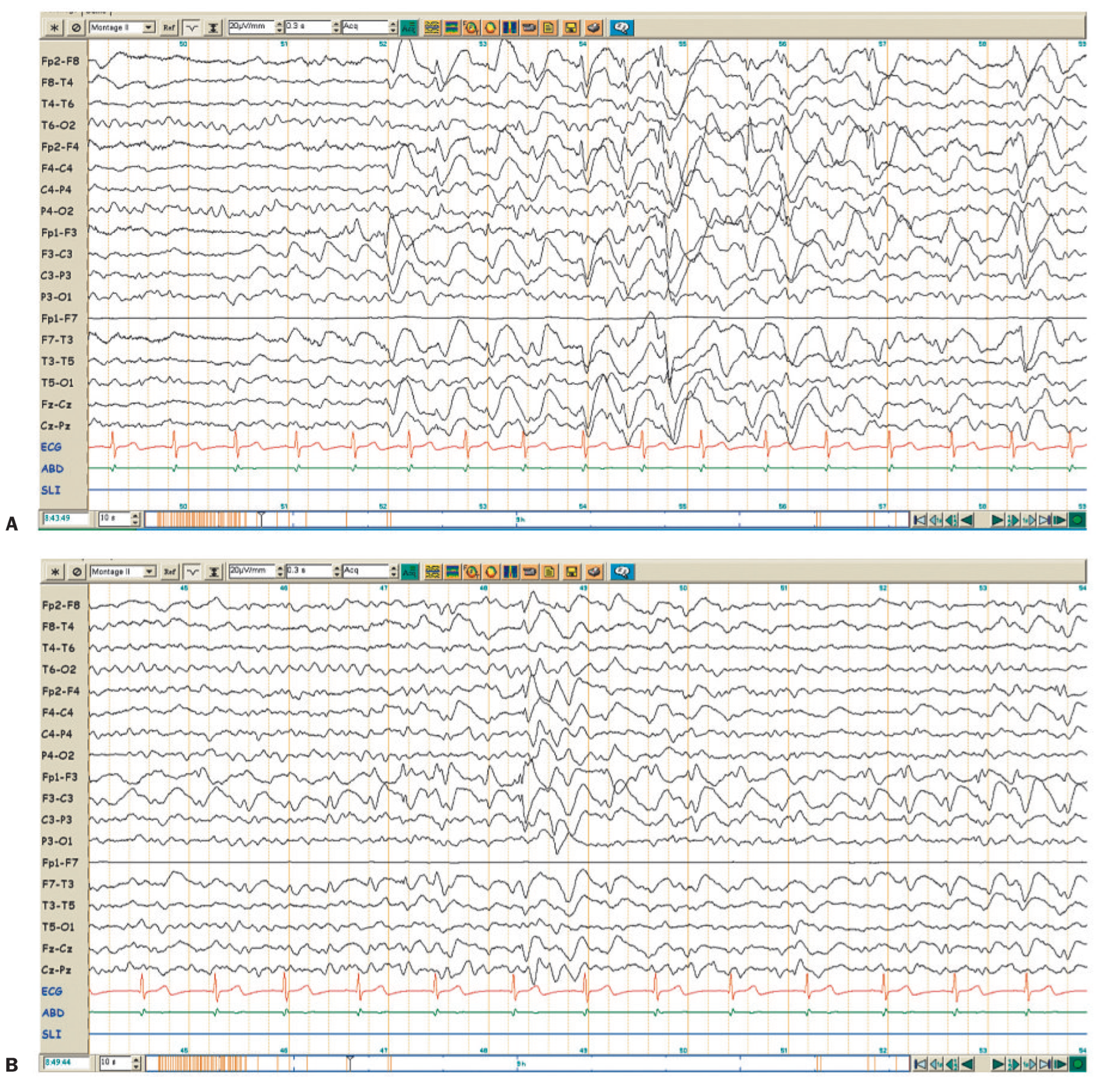
Crises et EEG
Evolution du concept
Epilepsies généralisées idiopathiques «atypiques»
Déficit en GLUT-1 sans épilepsie
Déficit en GLUT-1 transitoire
Dyskinésies
Déficit en GLUT-1 chez l’adulte
Diagnostic
Laboratoire
Imagerie
Génétique
Traitement
Pronostic
Résumé
Remerciements
Funding/potential conflict of interest
References
- De Vivo, DC; Trifiletti, RR; Jacobson, RI; Ronen, GM; Behmand, RA; Harik, SI. Defective glucose transport across the blood-brain barrier as a cause of persistent hypoglycorrhachia, seizures, and developmental delay. N Engl J Med. 1991, 325(10), 703–709. [Google Scholar] [CrossRef] [PubMed]
- Brockmann, K; Wang, D; Korenke, CG; von Moers, A; Ho, YY; Pascual, JM; et al. Autosomal dominant glut-1 deficiency syndrome and familial epilepsy. Ann Neurol. 2001, 50(4), 476–485. [Google Scholar] [CrossRef] [PubMed]
- Pons, R; Collins, A; Rotstein, M; Engelstad, K; De Vivo, DC. The spectrum of movement disorders in Glut-1 deficiency. Mov Disord. 2010, 25(3), 275–281. [Google Scholar] [CrossRef]
- Leen, WG; Klepper, J; Verbeek, MM; Leferink, M; Hofste, T; van Engelen, BG; et al. Glucose transporter-1 deficiency syndrome: the expanding clinical and genetic spectrum of a treatable disorder. Brain 2010, 133 Pt 3, 655–670. [Google Scholar] [CrossRef]
- Leary, LD; Wang, D; Nordli, DR, Jr.; Engelstad, K; De Vivo, DC. Seizure characterization and electroencephalographic features in Glut-1 deficiency syndrome. Epilepsia 2003, 44(5), 701–7. [Google Scholar] [CrossRef]
- von Moers, A; Brockmann, K; Wang, D; Korenke, CG; Huppke, P; De Vivo, DC; et al. EEG features of glut-1 deficiency syndrome. Epilepsia 2002, 43(8), 941–5. [Google Scholar] [CrossRef]
- Roulet-Perez, E; Ballhausen, D; Bonafe, L; Cronel-Ohayon, S; Maeder-Ingvar, M. Glut-1 deficiency syndrome masquerading as idiopathic generalized epilepsy. Epilepsia 2008, 49(11), 1955–8. [Google Scholar] [CrossRef]
- Akman, CI; Engelstad, K; Hinton, VJ; Ullner, P; Koenigsberger, D; Leary, L; et al. Acute hyperglycemia produces transient improvement in glucose transporter type 1 deficiency. Ann Neurol. 2010, 67(1), 31–40. [Google Scholar] [CrossRef]
- Hasselbalch, SG; Knudsen, GM; Capaldo, B; Postiglione, A; Paulson, OB. Blood-brain barrier transport and brain metabolism of glucose during acute hyperglycemia in humans. J Clin Endocrinol Metab. 2001, 86(5), 1986–90. [Google Scholar] [CrossRef]
- Suls, A; Mullen, SA; Weber, YG; Verhaert, K; Ceulemans, B; Guerrini, R; et al. Early-onset absence epilepsy caused by mutations in the glucose transporter GLUT1. Ann Neurol. 2009, 66(3), 415–9. [Google Scholar] [CrossRef]
- Overweg-Plandsoen, WC; Groener, JE; Wang, D; Onkenhout, W; Brouwer, OF; Bakker, HD; et al. GLUT-1 deficiency without epilepsy—an exceptional case. J Inherit Metab Dis. 2003, 26(6), 559–63. [Google Scholar] [CrossRef]
- Brockmann, K. The expanding phenotype of GLUT1-deficiency syndrome. Brain Dev. 2009, 31(7), 545–52. [Google Scholar] [CrossRef] [PubMed]
- Klepper, J; De Vivo, DC; Webb, DW; Klinge, L; Voit, T. Reversible infantile hypoglycorrhachia: possible transient disturbance in glucose transport? Pediatr Neurol. 2003, 29(4), 321–5. [Google Scholar] [CrossRef] [PubMed]
- Klepper, J; Leiendecker, B. GLUT1 deficiency syndrome—2007 update. Dev Med Child Neurol. 2007, 49(9), 707–16. [Google Scholar] [CrossRef] [PubMed]
- Weber, YG; Storch, A; Wuttke, TV; Brockmann, K; Kempfle, J; Maljevic, S; et al. GLUT1 mutations are a cause of paroxysmal exertion-induced dyskinesias and induce hemolytic anemia by a cation leak. J Clin Invest. 2008, 118(6), 2157–68. [Google Scholar] [CrossRef]
- Suls, A; Dedeken, P; Goffin, K; Van Esch, H; Dupont, P; Cassiman, D; et al. Paroxysmal exercise-induced dyskinesia and epilepsy is due to mutations in SLC2A1, encoding the glucose transporter GLUT1. Brain 2008, 131 Pt 7, 1831–44. [Google Scholar] [CrossRef]
- Veggiotti, P; Teutonico, F; Alfei, E; Nardocci, N; Zorzi, G; Tagliabue, A; et al. Glucose transporter type 1 deficiency: ketogenic diet in three patients with atypical phenotype. Brain Dev 32(5), 404–8. [CrossRef]
- Klepper, J; Engelbrecht, V; Scheffer, H; van der Knaap, MS; Fiedler, A. GLUT1 deficiency with delayed myelination responding to ketogenic diet. Pediatr Neurol. 2007, 37(2), 130–3. [Google Scholar] [CrossRef]
- Pascual, JM; Van Heertum, RL; Wang, D; Engelstad, K; De Vivo, DC. Imaging the metabolic footprint of Glut1 deficiency on the brain. Ann Neurol. 2002, 52(4), 458–64. [Google Scholar] [CrossRef]
- Klepper, J; Scheffer, H; Elsaid, MF; Kamsteeg, EJ; Leferink, M; Ben-Omran, T. Autosomal recessive inheritance of GLUT1 deficiency syndrome. Neuropediatrics 2009, 40(5), 207–10. [Google Scholar] [CrossRef]
- Wang, D; Pascual, JM; Yang, H; Engelstad, K; Mao, X; Cheng, J; et al. A mouse model for Glut-1 haploinsufficiency. Hum Mol Genet. 2006, 15(7), 1169–79. [Google Scholar] [CrossRef] [PubMed]
- Ohtsuki, S; Kikkawa, T; Hori, S; Terasaki, T. Modulation and compensation of the mRNA expression of energy related transporters in the brain of glucose transporter 1-deficient mice. Biol Pharm Bull. 2006, 29(8), 1587–91. [Google Scholar] [CrossRef] [PubMed]
- Jensen, PJ; Gitlin, JD; Carayannopoulos, MO. GLUT1 deficiency links nutrient availability and apoptosis during embryonic development. J Biol Chem. 2006, 281(19), 13382–7. [Google Scholar] [CrossRef] [PubMed]
- Park, JL; Heilig, CW; Brosius, FC, 3rd. GLUT1-deficient mice exhibit impaired endothelium-dependent vascular relaxation. Eur J Pharmacol. 2004, 496(1-3), 213–4. [Google Scholar] [CrossRef]
- Heilig, CW; Saunders, T; Brosius, FC, 3rd; Moley, K; Heilig, K; Baggs, R; et al. Glucose transporter-1-deficient mice exhibit impaired development and deformities that are similar to diabetic embryopathy. Proc Natl Acad Sci. USA 2003, 100(26), 15613–8. [Google Scholar] [CrossRef]
- Bough, KJ; Rho, JM. Anticonvulsant mechanisms of the ketogenic diet. Epilepsia 2007, 48(1), 43–58. [Google Scholar] [CrossRef]
- Kossoff, EH; Zupec-Kania, BA; Amark, PE; Ballaban-Gil, KR; Christina Bergqvist, AG; Blackford, R; et al. Optimal clinical management of children receiving the ketogenic diet: recommendations of the International Ketogenic Diet Study Group. Epilepsia 2009, 50(2), 304–17. [Google Scholar] [CrossRef]
- Klepper, J. Glucose transporter deficiency syndrome (GLUT1DS) and the ketogenic diet. Epilepsia 2008, 49 (Suppl 8), 46–9. [Google Scholar] [CrossRef]
- Ito, S; Oguni, H; Ito, Y; Ishigaki, K; Ohinata, J; Osawa, M. Modified Atkins diet therapy for a case with glucose transporter type 1 deficiency syndrome. Brain Dev. 2008, 30(3), 226–8. [Google Scholar] [CrossRef]

This is an open-access article distributed under the terms of the Creative Commons Attribution Non-Commercial No Derivatives (CC BY-NC-ND) 4.0 License.
Share and Cite
Korff, C.M.; Seeck, M. Syndrome de déficit en transporteur du glucose de type 1. Swiss Arch. Neurol. Psychiatry Psychother. 2011, 162, 5-9. https://doi.org/10.4414/sanp.2011.02219
Korff CM, Seeck M. Syndrome de déficit en transporteur du glucose de type 1. Swiss Archives of Neurology, Psychiatry and Psychotherapy. 2011; 162(1):5-9. https://doi.org/10.4414/sanp.2011.02219
Chicago/Turabian StyleKorff, Christian M., and Margitta Seeck. 2011. "Syndrome de déficit en transporteur du glucose de type 1" Swiss Archives of Neurology, Psychiatry and Psychotherapy 162, no. 1: 5-9. https://doi.org/10.4414/sanp.2011.02219
APA StyleKorff, C. M., & Seeck, M. (2011). Syndrome de déficit en transporteur du glucose de type 1. Swiss Archives of Neurology, Psychiatry and Psychotherapy, 162(1), 5-9. https://doi.org/10.4414/sanp.2011.02219