Next Article in Journal
Neurologist-in-training
Previous Article in Journal
10. Jahrestagung der Zerebrovaskulären Arbeitsgruppe der Schweiz (ZAS) 10e Réunion du Groupe suisse de travail pour les maladies cérébrovasculaires (GSC)
 
 
Swiss Archives of Neurology, Psychiatry and Psychotherapy is published by MDPI from Volume 176 Issue 1 (2026). Previous articles were published by another publisher in Open Access under a CC-BY (or CC-BY-NC-ND) licence, and they are hosted by MDPI on mdpi.com as a courtesy and upon agreement with EMH Editores Medicorum Helveticorum.
Case Report

Brain abscess due to infection by pseudomonas †

by
S. Stephanova
1,*,‡ and
A.-H. Sidanib
2
1
Rue de Cordé 2, CH-1957 Ardon
2
Centre d’Imagerie Valaisan, Sion
*
Author to whom correspondence should be addressed.
Stephanov S, Sidani A-H. Brain abscess due to infection by pseudomonas. Schweiz Arch Neurol Psychiatr 2006;157:177–9.
Formerly neurosurgeon at the Regional Hospital of Sion.
Swiss Arch. Neurol. Psychiatry Psychother. 2006, 157(4), 177-179; https://doi.org/10.4414/sanp.2006.01725
Published: 1 January 2006

Abstract

A case of solitary brain abscess in a 60-year-old woman is presented. MRI scan confirmed the clinical impression and showed an abscess in the right fronto-parietal region, the central sulcus. The longest diameter of the abscess was about 3 cm and it was easily localised intra-operatively under ultrasound guidance and successfully aspirated. The cultured pus grew pseudomonas vesicularis. The rarity of this neurologic pathogen is discussed.

Introduction

The most common organisms reported in cases of brain abscess have been streptococci, staphylococci and anaerobic bacteria. Pseudomonas are rarely found in brain abscess [1]. These bacteria are considered occasional neurologic pathogen [2]. In reviewing the literature, the incidence of pseudomonas is found to be very low: only 17 cases have been described [1,3,4,5,6]. In many large series of brain abscesses there was not a single case where pseudomonas was reported [7,8,9].
The purpose of this paper is to report the case of a brain abscess due to pseudomonas bacteria diagnosed by MRI and successfully treated by aspiration under ultrasound guidance.

Case report

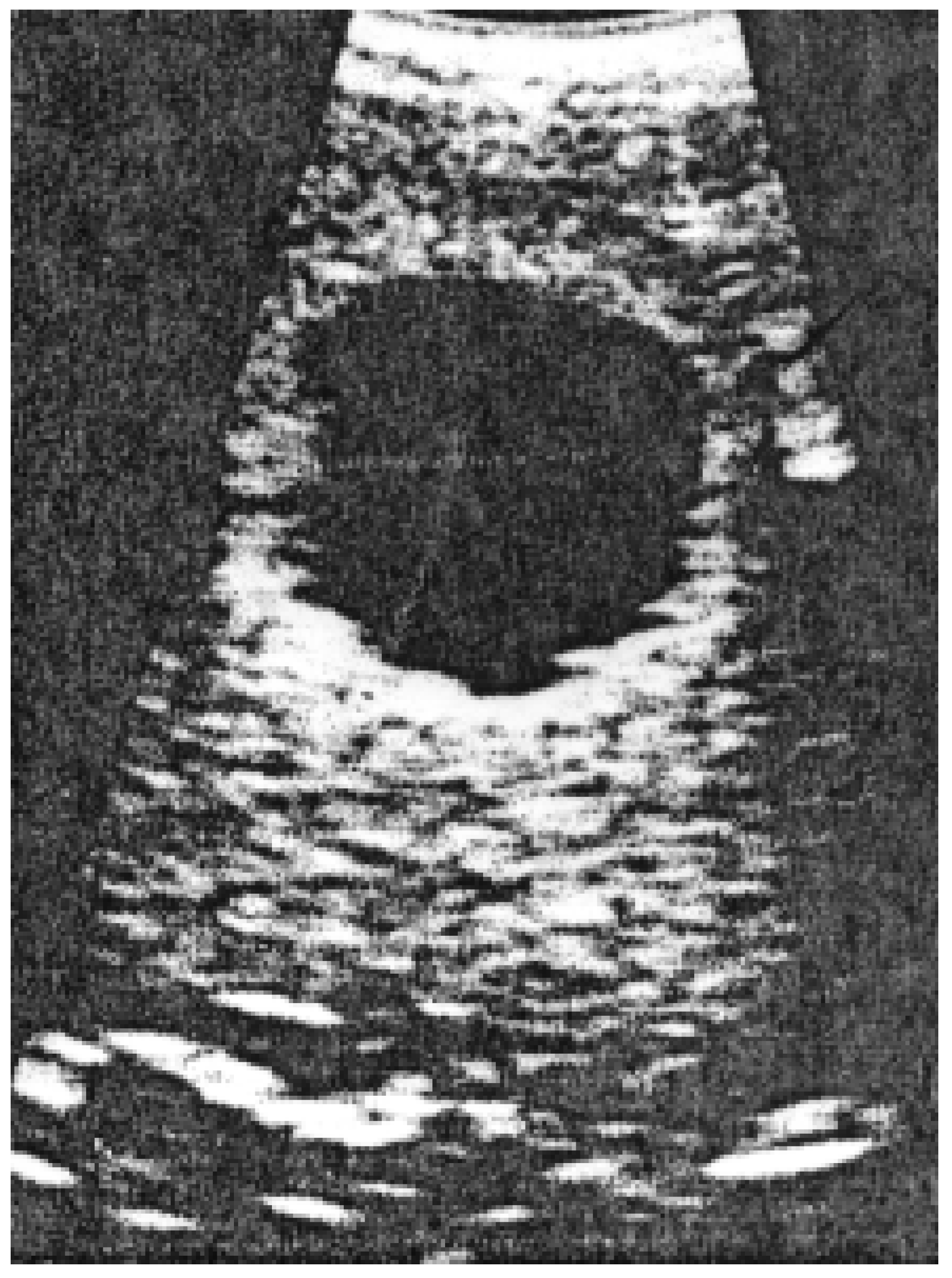
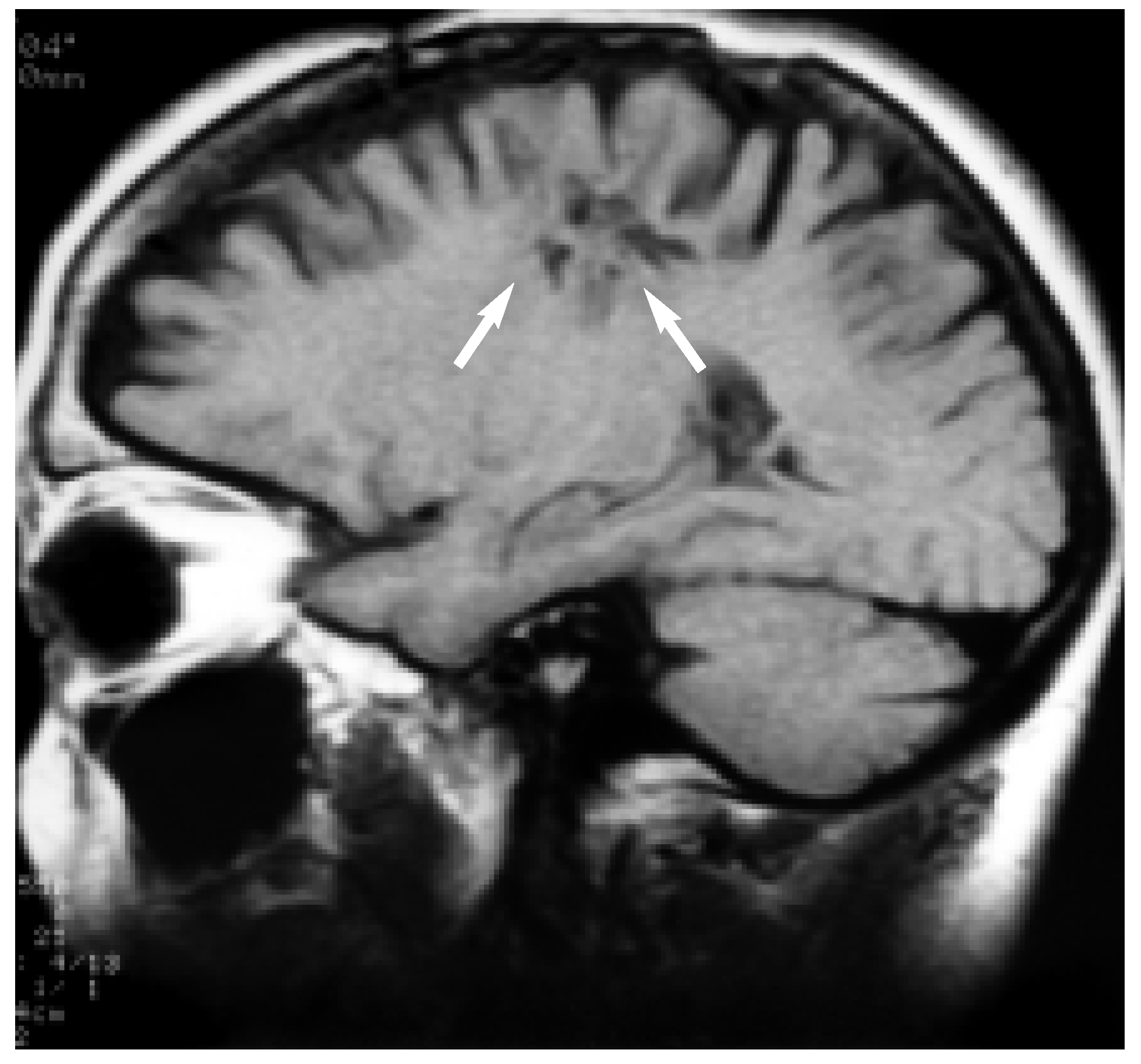
A 60-year-old woman was admitted to the referring hospital because of headache, nausea, fever, left hemiparesis and hemihypaesthesia. Examination of the chest, abdomen and genito-urinary tract revealed no abnormality.A CT scan was performed which showed a small ring-like lesion in the right fronto-parietal region interpreted as an abscess or glioma. The consulted infectious disease specialist suggested broad-spectrum antibiotic therapy (Fortam®, Floxapen®, Flagyl®) and a new CT scan after 10 days. The new CT scan showed slight enlargement of the brain lesion and the patient was sent to our neurosurgical service. On admission, April 3, 1992, she was conscious, with left hemiparesis, facio-brachial type predominantly, and left hemihypaesthesia. Periodontal disease and extensive dental caries were noted. On the following day a simple aspiration of the abscess was unsuccessfully attempted. Then, an MRI was requested which showed the superb imaging of a solitary brain abscess, its precise localisation and volume (Figures 1 and 2). The abscess had a well-developed capsule, the longest diameter being about 3 cm, subcortically situated in the right fronto-parietal (central sulcus) region and surrounded by a mild oedema. The patient was taken to the operating room and under general anaesthesia a small frontoparietal craniotomy was performed. Under ultrasound guidance the abscess was easily and rapidly localised (Figure 3). About 3.5 ml of thick pus was aspirated. Then, we entered into the abscess cavity with a fine aspirator and with gentle and restricted movements of the aspirator, under ultrasound guidance, additional pus was aspirated. The purulent material was sent for bacteriologic examination. Later, cultures grew pseudomonas vesicularis. Antibiotic therapy was continued for 6 more weeks (Tienam®, Fenoxypen®). Sequential CT scans showed no recurrence. After 4 months of rehabilitation the patient became completely independent. An MRI performed one year after the operation showed complete resolution of the brain abscess (Figure 4).

Discussion

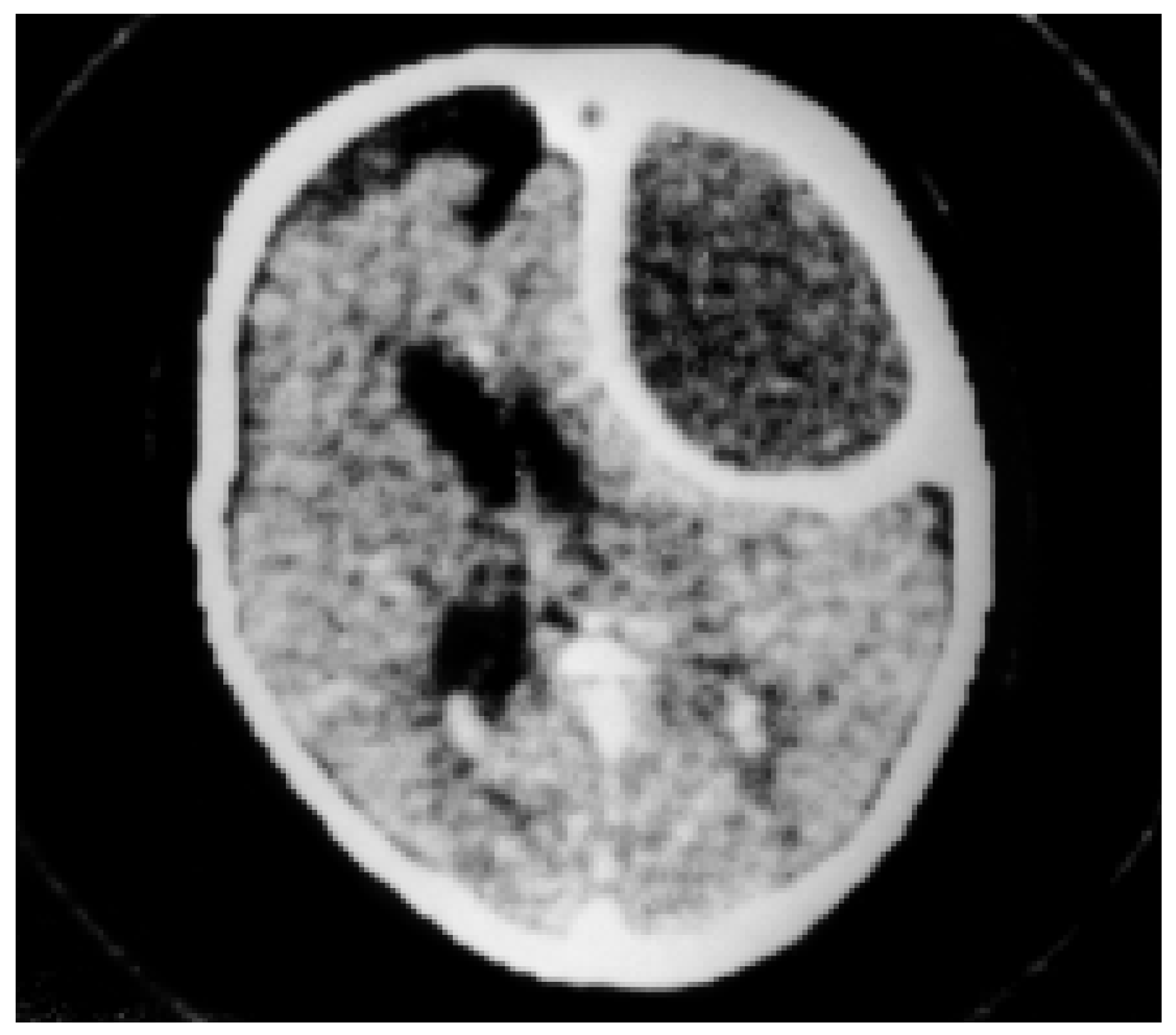
Pyogenic brain abscess continues to be a medical and surgical problem. The introduction and widespread use of CT scanning represents the single most important change in brain abscess management. A variety of surgical methods have been described over the years for treating brain abscess [10]. Of all operative methods, aspiration and excision represent the cornerstones of surgical treatment. For many years simple (free-hand) aspiration has been the most frequently used technique for surgical drainage. In large and superficially localised abscesses this technique (the simple aspiration) is the one of choice as we illustrate in Figure 5. However, in small deep-seated location (brainstem, thalamus, basal ganglia), in multiple abscesses and in those located in eloquent areas, the simple aspiration is not suitable.
In the last few years two new techniques have been introduced to help neurosurgeons: ultrasonically guided aspiration [11,12,13] and CT-guided stereotactic aspiration [14,15]. Both techniques are safe and effective for small and deep-seated abscesses [16]. Ultrasound-guided aspiration is a simple rapid efficient and cost-effective method for aspiration of a brain abscess that provides reliable results [16]. This technique has the advantage of monitoring the progress of the abscess aspiration intraoperatively, as it happens [12]. The ultrasoundguidance technique requires a small craniotomy or craniectomy, while CT-guided stereotactic aspiration can be carried out through a burr hole [14]. The primary source of infection is unknown in our patient despite multiple examinations. However, in view of her chronic periodental disease and extensive dental caries, and the fronto-parietal localisation (the central sulcus), frequent site of odontogenic abscesses [3], we can presume that the dental disease was the origin of the abscess. Since the aspirated pus was thick, re-entry into the abscess cavity with a fine aspirator under ultrasound guidance seems to have been a useful manoeuvre.
The authors of the largest series of brain abscesses with pseudomonas [1], consisting of seven cases, concluded that these bacteria are resistant to most of the antibiotics and could account for the high mortality. Four of their seven patients died. Our patient died 10 years after the operation from a disease unrelated to her brain abscess.

Acknowledgments

The authors are grateful to Pierre-Alain Coquoz for his technical assistance.

References

  1. Gupta, SK; Mohanti, S; Tandon, SC. Brain abscess: with special reference to infection by pseudomonas. Br J Neurosurg 1990, 4, 279–85. [Google Scholar] [CrossRef] [PubMed]
  2. Coyle, PK. Bacterial infections. In Textbook of Neurology; Bogousslavsky, J, Fisher, M, Eds.; Butterworth Heinemann: Boston, etc., 1998; p. 580. [Google Scholar]
  3. Ingham, HR; Sisson, PR; Mendelow, AD; Kalbag, RM; McAllister, VL. Pyogenic Neurosurgical infections; Edward Arnold: London, Melbourne, Auckland, 1991. [Google Scholar]
  4. Kiser, JL; Kending, JH. Intracranial suppuration. J Neurosurg 1963, 20, 494–511. [Google Scholar] [CrossRef] [PubMed]
  5. Beller, AJ; Sahar, A; Praiss, I. Review of 89 cases over a period of 30 years. J Neurol Neurosurg Psychiatry 1973, 36, 757–68. [Google Scholar] [CrossRef] [PubMed]
  6. Bhatia, R. Brain abscess in children. Ind J Pediatrics 1983, 50, 571–97. [Google Scholar] [CrossRef] [PubMed]
  7. Yang, SY. Brain abscess. A review of 400 cases. J Neurosurg 1981, 55, 794–9. [Google Scholar] [CrossRef] [PubMed]
  8. Yang, SY; Zhao, CS. Review of 140 patients with brain abscess. Surg Neurol 1993, 39, 290–6. [Google Scholar] [CrossRef] [PubMed]
  9. Domingo, Z; Peter, JC. Brain abscess in childhood. A 25-year experience. S Afr Med J 1994, 84, 13–5. [Google Scholar] [PubMed]
  10. Stephanov, S. Surgical treatment of brain abscess. Neurosurgery 1988, 22, 724–30. [Google Scholar] [CrossRef] [PubMed]
  11. Dohrmann, GJ; Rubin, JM. Use of ultrasound in neurosurgical operations: a preliminary report. Surg Neurol 1981, 16, 362–6. [Google Scholar] [CrossRef] [PubMed]
  12. Rubin, JM; Dohrmann, GJ. Use of ultrasonically guided probes and catheters in neurosurgery. Surg Neurol 1982, 18, 143–8. [Google Scholar] [CrossRef] [PubMed]
  13. Loftus, CM; Biller, J. Brain abscess. In Principles of Neurosurgery; Rengachary, SS, Wilkins, RH, Eds.; Wolfe: London, St-Louis, Baltimore, 1994. [Google Scholar]
  14. Nauta, HJW; Contreras, FL; Weiner, RL; Crofford, MJ. Brain-stem abscess managed with computed tomography-guided stereotactic aspiration. Neurosurgery 1987, 20, 476–80. [Google Scholar] [CrossRef] [PubMed]
  15. Dyste, GN; Hitchon, PW; Menezes, AH; Van Gilder, JC; Greene, GM. Stereotaxic surgery in the treatment of multiple brain abscesses. J Neurosurg 1988, 69, 188–94. [Google Scholar] [CrossRef] [PubMed]
  16. Zeidman, SM. Pyogenic brain abscess. In Infections in Neurological surgery. Diagnosis and management; Osenbach, RK, Zeidman, SM, Eds.; Lippincott-Raven: Philadelphia, New York, 1999; pp. 101–18. [Google Scholar]
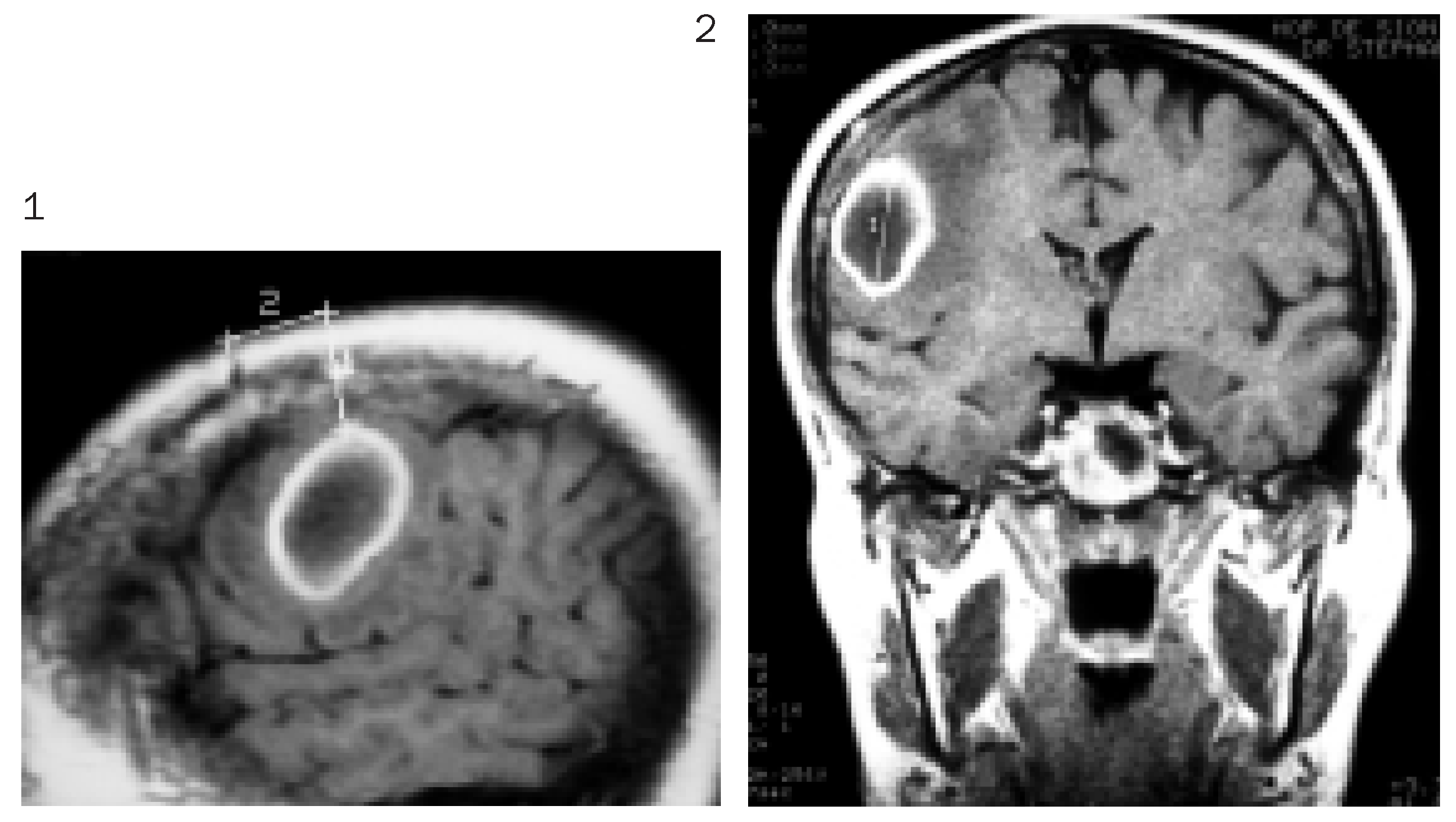
Figures 1 and 2. Sagittal and coronal T1-weighted images after contrast enhancement show a solitary brain abscess in the right fronto-parietal (central sulcus) region (cf. text).
Sanpp 157 00177 g001
Figure 3. Intraoperative ultrasound image of the abscess: the hypoechoic centre is pus and necrotic brain surrounded by a ring which represents the collagen capsule.
Sanpp 157 00177 g002
Figure 4. The sagittal T1-weighted image shows complete resolution of the abscess one year after the operation (arrows).
Sanpp 157 00177 g003
Figure 5. CT scan of an infant showing a large sinusitic right frontal brain abscess with thick capsule displacing the ventricular system. The abscess was successfully treated by two consecutive simple aspirations.
Sanpp 157 00177 g004